Belly-button hedgehog
Hydnum umbilicatumsyn. Dentinum umbilicatum, Hydnum repandum var. umbilicatum
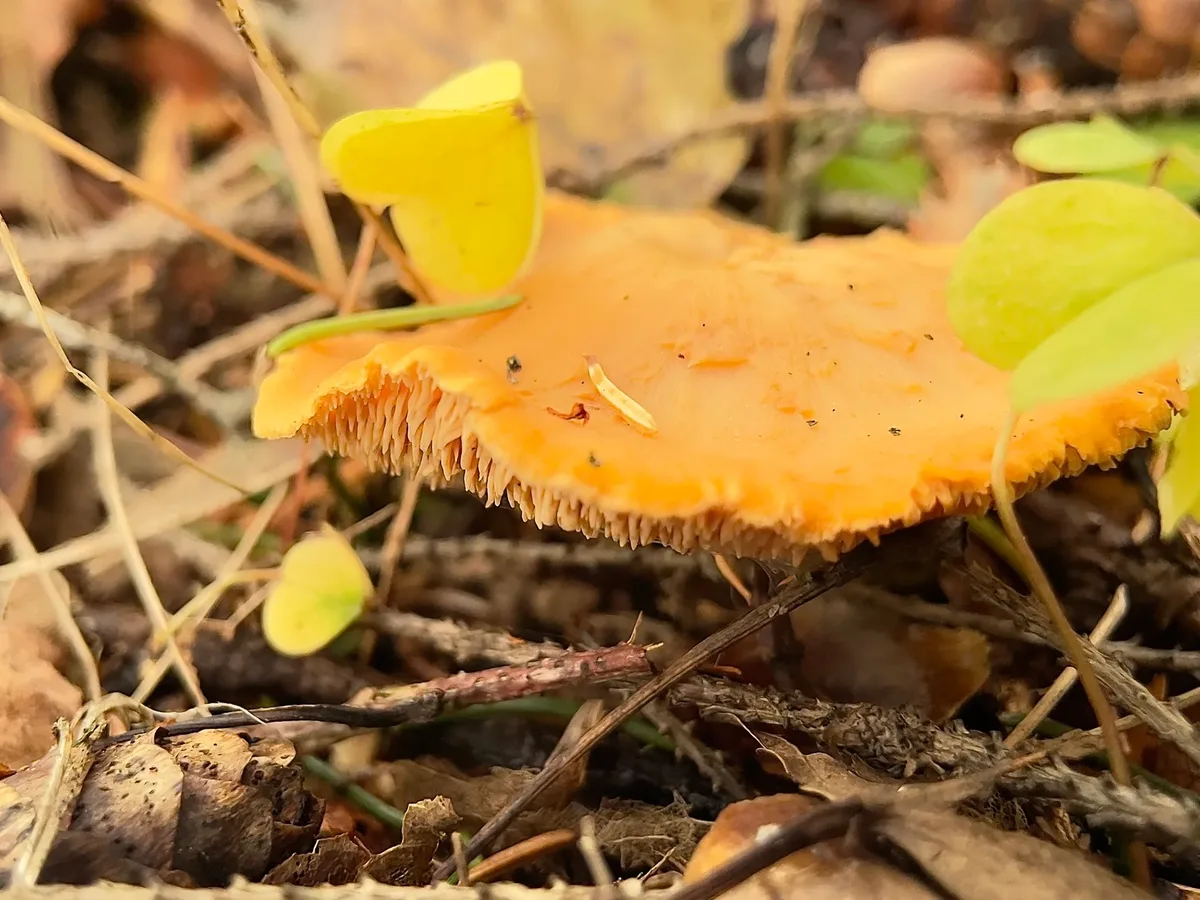 © Heinähukka (CC BY 4.0)
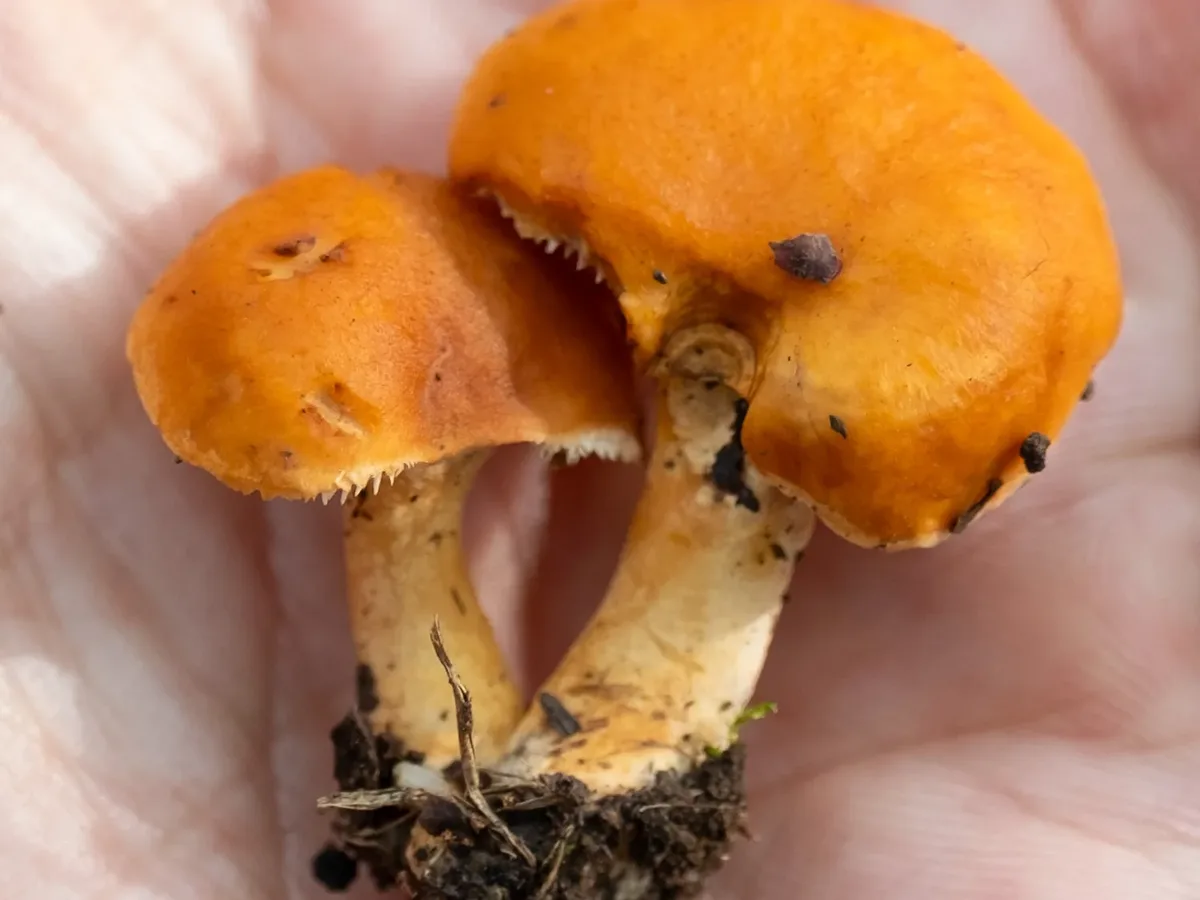 © Alex Abair (CC BY)
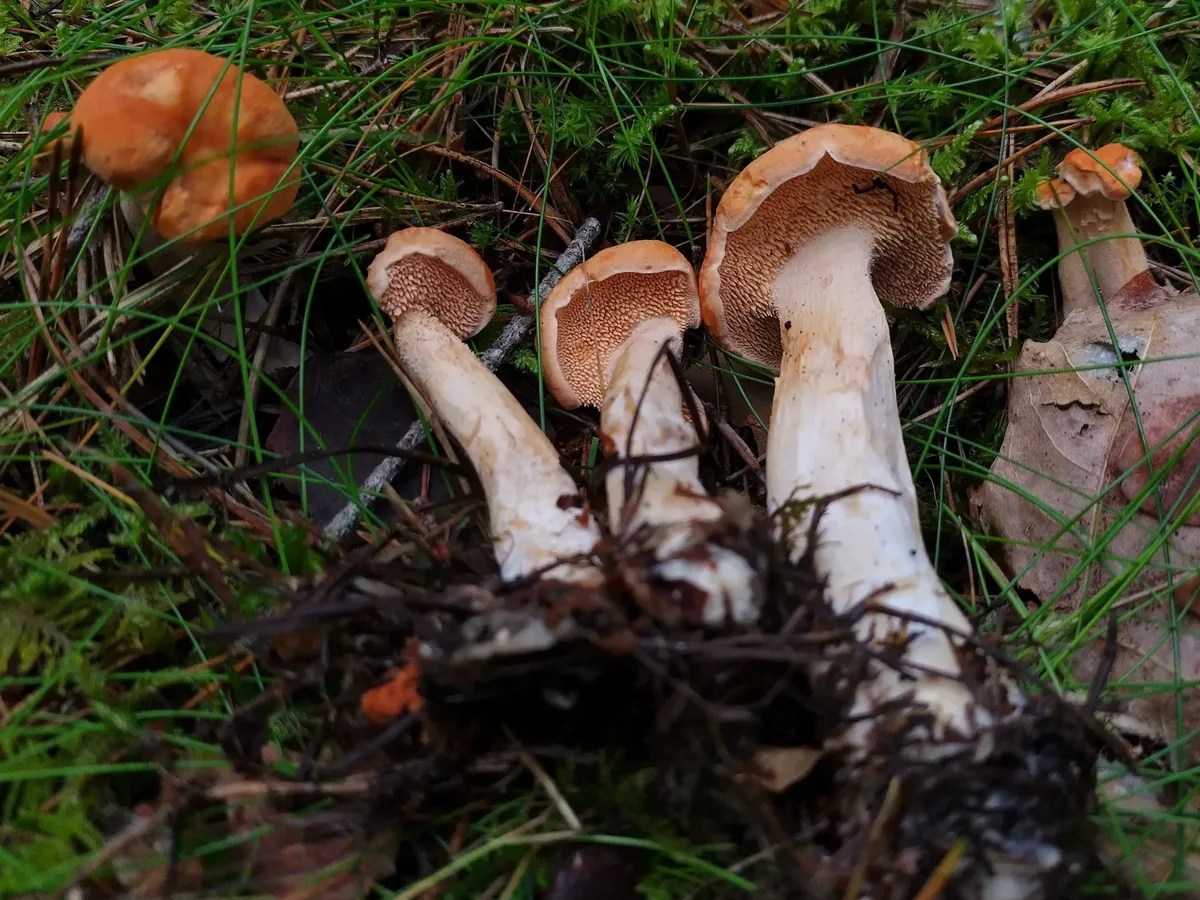 © Sebastian Källman (CC BY-SA)
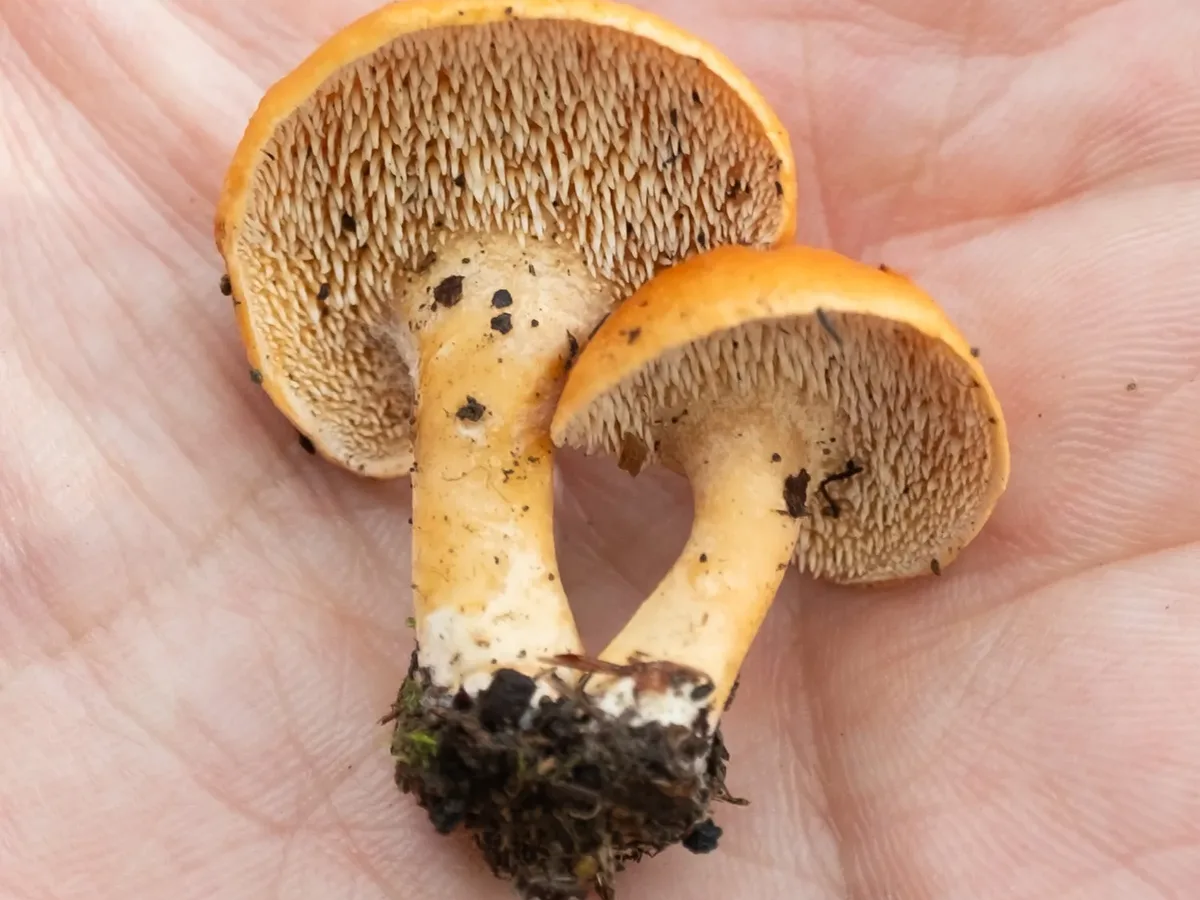 © Alex Abair (CC BY)
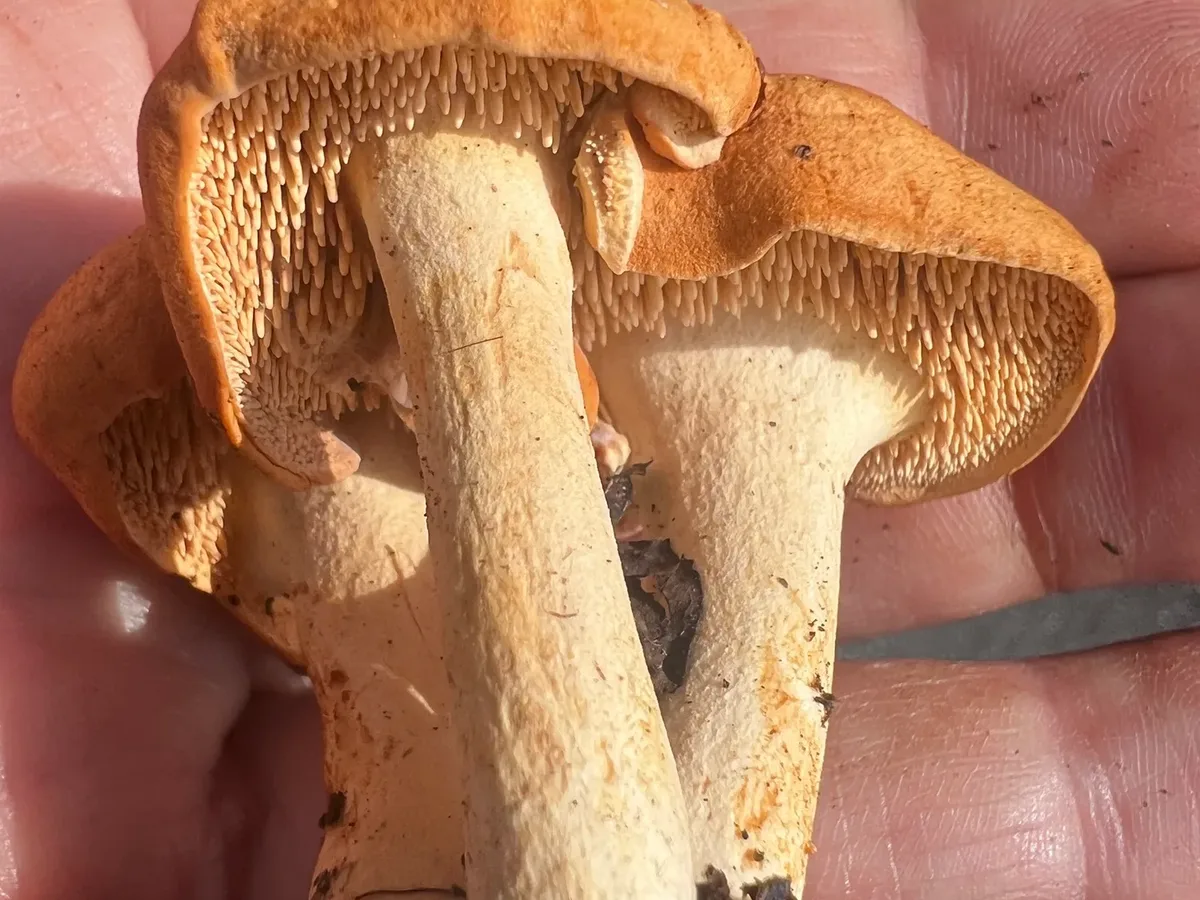 © Mark Richman (CC BY)
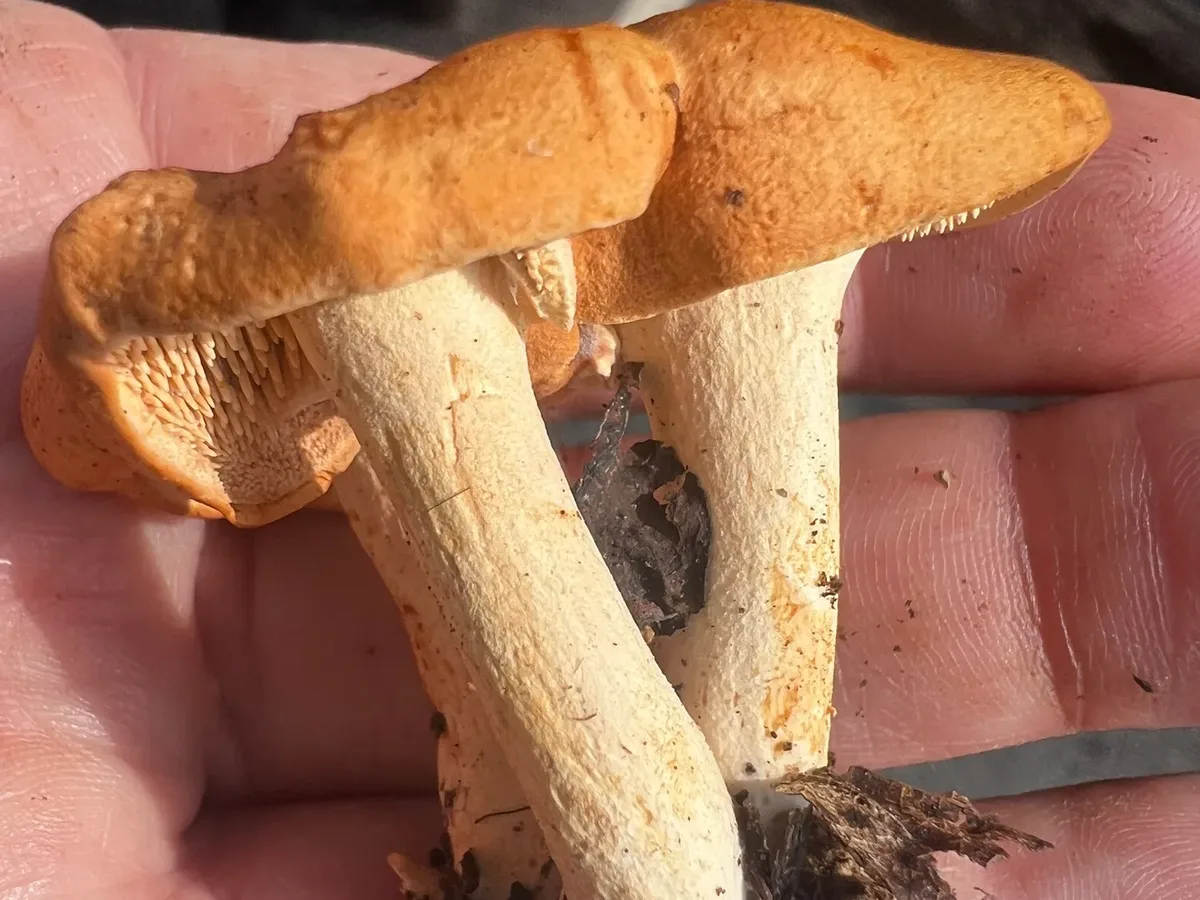 © Mark Richman (CC BY)
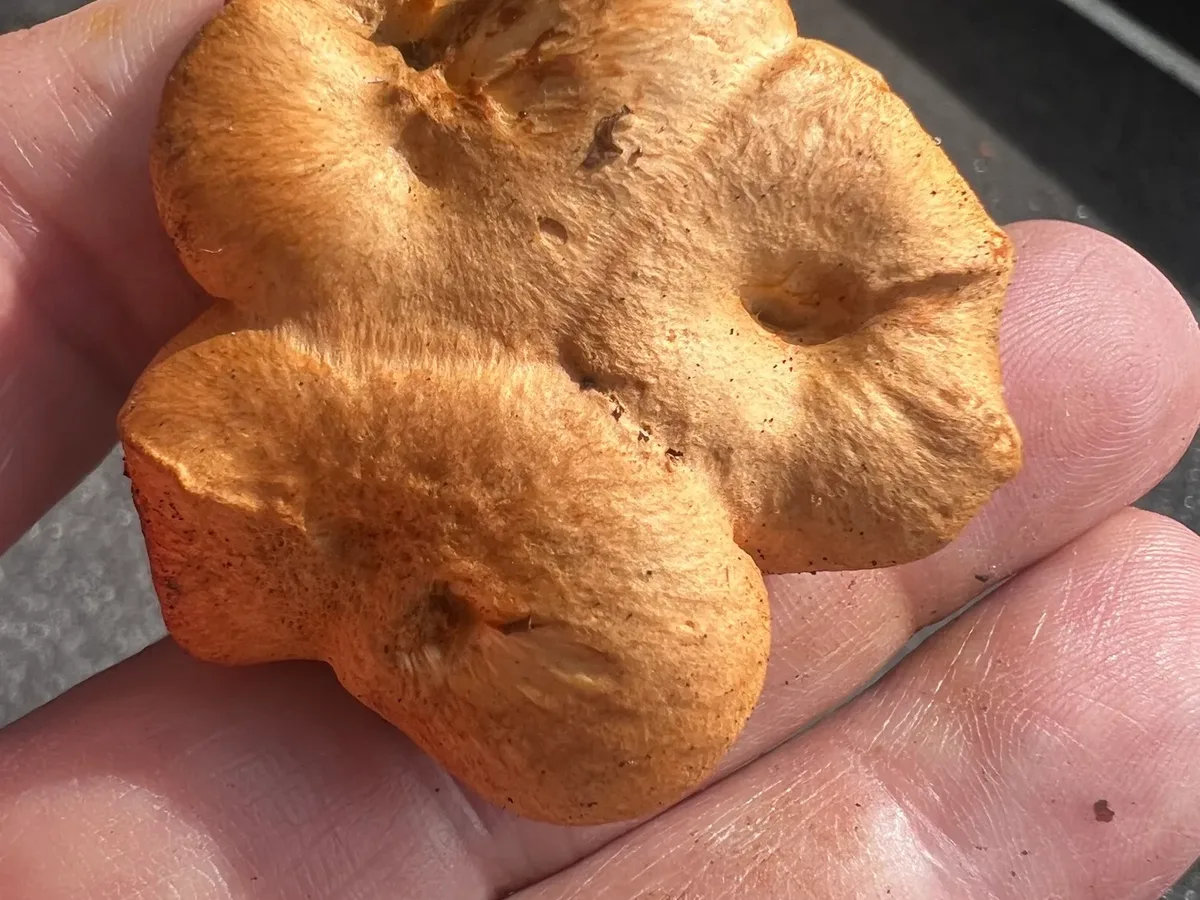 © Mark Richman (CC BY)
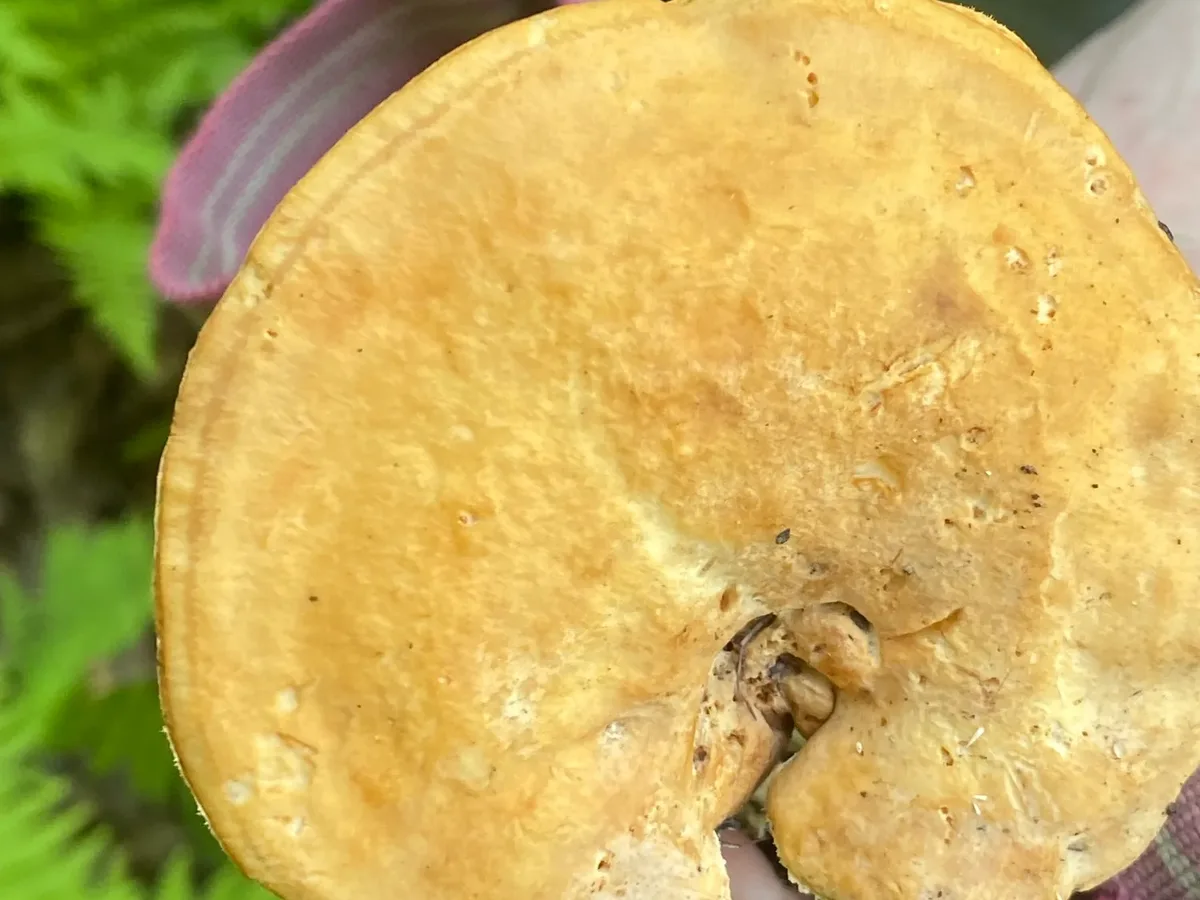 © Doug Suitor (CC BY 4.0)
 © Annie Weissman (CC BY 4.0)© Heinähukka (CC BY 4.0)© Alex Abair (CC BY)
One of the best mushrooms you can bring home - once you are certain of the identification.
How to recognise it
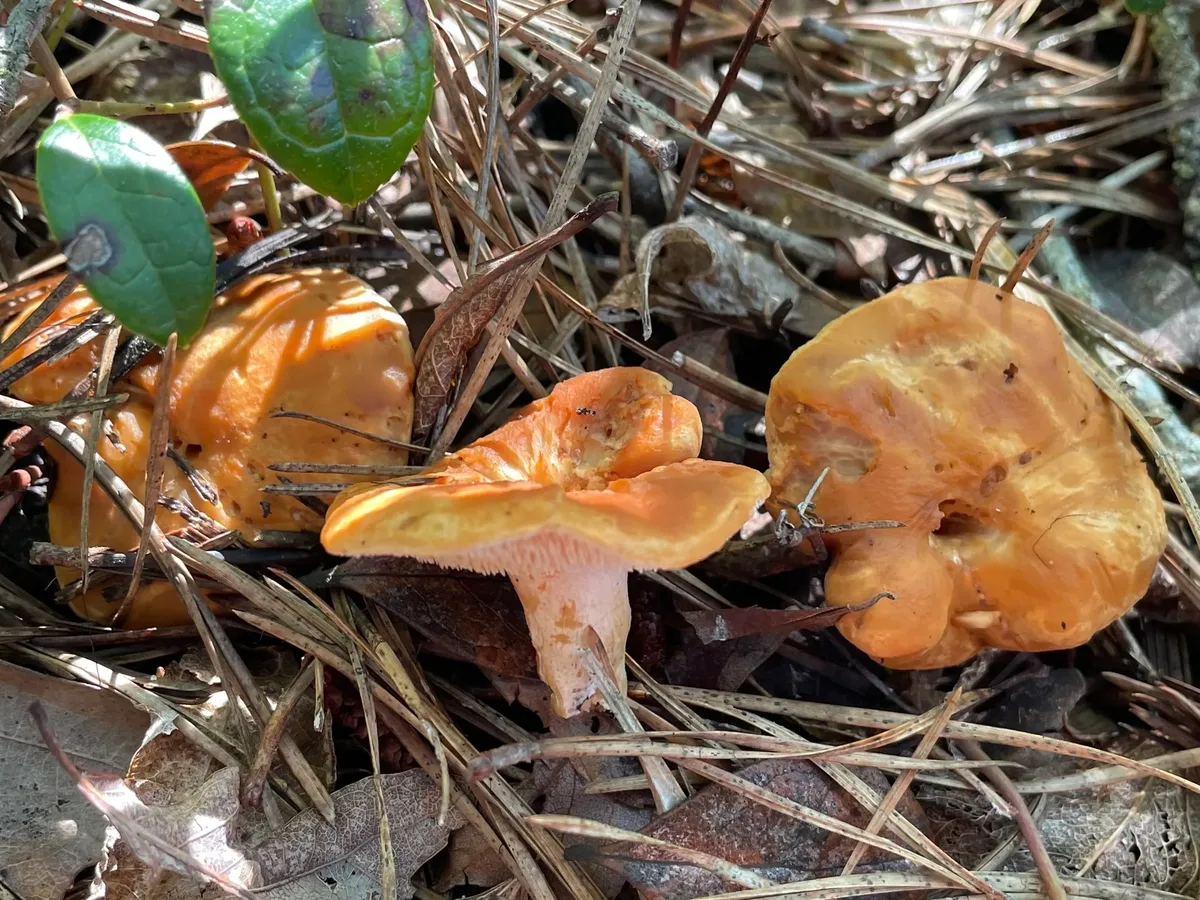
The belly-button hedgehog is easy to love once you know its trick: flip the cap and you find teeth instead of gills - dense, cream-white spines 3-6 mm long hanging like a tiny fringe from the underside.
This tooth-bearing surface is what makes the whole Hydnum genus distinctive, and H. umbilicatum adds one feature of its own: a neat navel-like dimple (umbilicus) pressed into the centre of the cap, visible even in young buttons.
Cap
The cap is 2-7 cm across, dry, smooth to finely downy, and coloured anywhere from pale buff through warm apricot-orange to light tawny-ochre. The margins are irregular and wavy, sometimes split or lobed.
Size is a handy field clue: H. umbilicatum runs consistently smaller and more orange than its close relative H. repandum.
Gills / Pores
The spines run slightly down the stem (decurrent) and are tightly packed, pale cream to whitish.
Stem
Stem 2-6 cm tall and 0.5-2 cm thick, solid, roughly the same colour as the cap or slightly paler, sometimes a little club-shaped at the base.
Flesh
Flesh firm and white, not discolouring when cut. Spore print white; spores subglobose, 7-9 µm.
Smell & taste
Smell is mild and faintly fruity; taste mild with only a slight raw bitterness that vanishes on cooking.
Where & when it grows
Habitat
A mycorrhizal partner with conifers and mixed-forest trees, H. umbilicatum thrives in cool, moist coniferous and mixed forests dominated by spruce, fir, hemlock, and white pine. It also occurs with northern hardwoods such as beech, maple, and birch.
Look for it on the forest floor in humus-rich soil cushioned with needle duff, moss, or decaying leaf litter, often in ravines, hollows, or along shaded stream banks where moisture accumulates.
It fruits singly or in scattered groups, occasionally in fairy-ring arcs where the underground mycelium expands outward.
In eastern North America it is widespread from Appalachia north through New England and the boreal forests of Canada. It also occurs in the Pacific Northwest, northern Europe, and montane Asia in ecologically analogous habitats.
When
In eastern North America, fruiting runs from late August through November, peaking in the September-to-mid-October window when cool rains follow the summer dry spell.
What sets this species apart from many autumn mushrooms is its frost-hardiness. Fruitbodies carry on appearing after light freezes and, because the firm flesh resists deterioration, frosted caps can still be worth collecting if they remain solid.
It is one of the last edibles still worth looking for when the forest floor starts to quiet down for winter.
- In the southern Appalachians the window stretches from late July at altitude to November in sheltered hollows.
- In boreal Canada it compresses to August-September.
Rain-driven second flushes are common throughout the range, so a wet spell in October can bring a fresh crop even from spots that seemed finished.
How it grows
Fruitbodies emerge singly or in scattered troops from the forest floor, pushed up by a perennial mycelial mat that threads quietly through the soil and needle duff year-round.
The mycelium is long-lived - a good patch can fruit from the same spot for many years in a row, each autumn pulling nutrients from the root partnership it holds with nearby conifers.
Growth is unhurried. Buttons take several days to open to full size in cool autumn air, and the firm flesh is slow to decay, so fruitbodies last well past the stage when softer mushrooms would have collapsed.
Individual caps rarely top 7 cm and tend to turn up in loose, unhurried groups rather than dense clumps - unlike the closely related H. repandum, which sometimes fruits in larger flushes.
Fruiting conditions
Responds to autumn rain events following summer drought; cool soil temperatures (4-15 °C) are optimal. Frost-tolerant; fruitbodies may persist through light freezes. Second flushes common after successive rain events in September-October.
Look-alikes
Hydnum repandum (common hedgehog / sweet tooth) is the most frequent confusion species. It is larger (cap 5-15 cm), more cream to buff with a pale pinkish hue, and - crucially - lacks the central umbilicus.
The cap of H. repandum is typically convex to irregular but not distinctly navel-indented. Taste of H. repandum can be more noticeably bitter when raw. Both are edible, so confusion here carries no health risk.
Hydnum albidum and Hydnum albomagnum (North American white hedgehogs) are larger and pale whitish to cream throughout. Dentinum repandum in older literature = H. repandum.
The teeth-bearing surface is entirely unique among common forest mushrooms and eliminates:
- chanterelles (which bear blunt forked false-gills)
- Sarcodon imbricatus (brown scaly cap, much larger, bitter to peppery)
- Phellodon and Hydnellum species (tougher, corky flesh, often strong scent, inedible)
No deadly species bears the combination of a tan to orange umbilicate cap, white pendant spines, and white spore print.
H. repandum is consistently larger (cap 5-15 cm vs 2-7 cm), more cream to pale buff in colour (less orange), and the cap is convex to irregular but lacks the distinctive central navel-like depression (umbilicus) that is the hallmark of H. umbilicatum. Confusion is harmless as both are excellent edibles.
Much larger (cap to 30 cm), grey-brown with coarse uplifted scales on the cap, spines grey-brown (not white), flesh firm and tough with a strong peppery or bitter taste. Shares the tooth-bearing hymenophore but is entirely different in scale, colour, and taste.
Hydnellum species have tough, corky, inedible flesh, concentric zones on cap, and a distinctive sweet or peppery smell. Spines are typically blue-grey to brown at maturity. Not edible but not dangerous.
Uniformly white to pale cream cap and spines, lacking the orange-apricot tones; cap may be umbilicate but the pale colour is distinctive. Also edible.
In the kitchen
Picking & cleaning
- Twist-and-pull or cut at the base with a knife; the firm flesh handles well.
- Slice through the stem base to check for insect larvae, which are less common than in many edible species.
- Carry in a basket or breathable bag - the spines interlock and detach if fruitbodies are crowded in a sealed container.
- Shake or gently brush off soil and debris in the field.
- Because H. umbilicatum is often partly buried, probe gently in needle duff around the button when you see the cap edge.
- Avoid collecting old or waterlogged specimens: fresh caps are dry and firm; old ones become soft and develop a faint sour odour.
- Clean promptly in the kitchen: the spines trap grit, so a dry brush or quick cold rinse works well.
- Do not peel - the cap skin is edible.
Cooking
Hydnum umbilicatum has mild, nutty, slightly sweet flesh with a pleasant firm texture that holds up well to heat.
Sauté in butter over medium-high heat with a pinch of salt until golden and the liquid evaporates; finish with garlic, thyme, and a splash of white wine for a classic preparation.
The firm texture suits risotto, pasta, cream sauces, and omelettes equally well. Because the spines can trap butter or oil and become slightly gelatinous if underdone, cook until fully golden rather than just softened.
Pairs particularly well with aged cheeses, lemon, and fresh herbs.
Dries acceptably - sliced thin and dried at low heat - reconstituting with a mildly earthy note. Suitable for pickling. Any mild bitterness in raw specimens disappears completely with cooking.
Good to know
Hydnum umbilicatum has no known toxins and an excellent safety record. It lacks dangerous lookalikes - the spine-bearing hymenophore (a feature unique to the Hydnum / Sarcodon family among common gilled-appearing mushrooms) is unmistakable.
Mild bitterness in raw specimens disappears on cooking. Always cook before eating.
A very small number of individuals report mild digestive sensitivity when eating large amounts raw; proper cooking eliminates this risk.
No cross-reactivity with deadly Amanita species is possible given the completely different morphology. Suitable for all ages when properly cooked.
A reference guide - never an edibility guarantee. When in doubt, leave it out.