Terracotta hedgehog
Hydnum rufescenssyn. Dentinum rufescens, Hydnum repandum var. rufescens
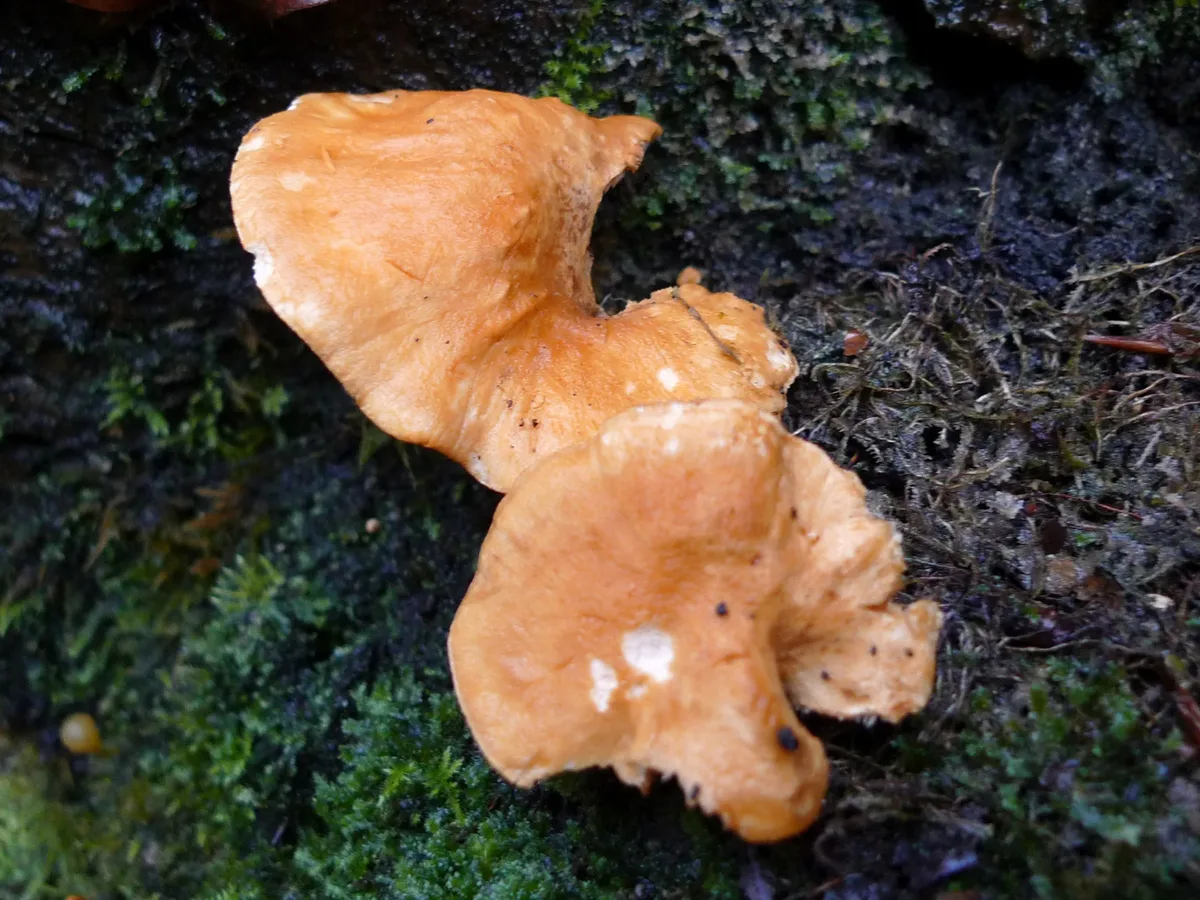 © Dave Hernon (CC BY 4.0)
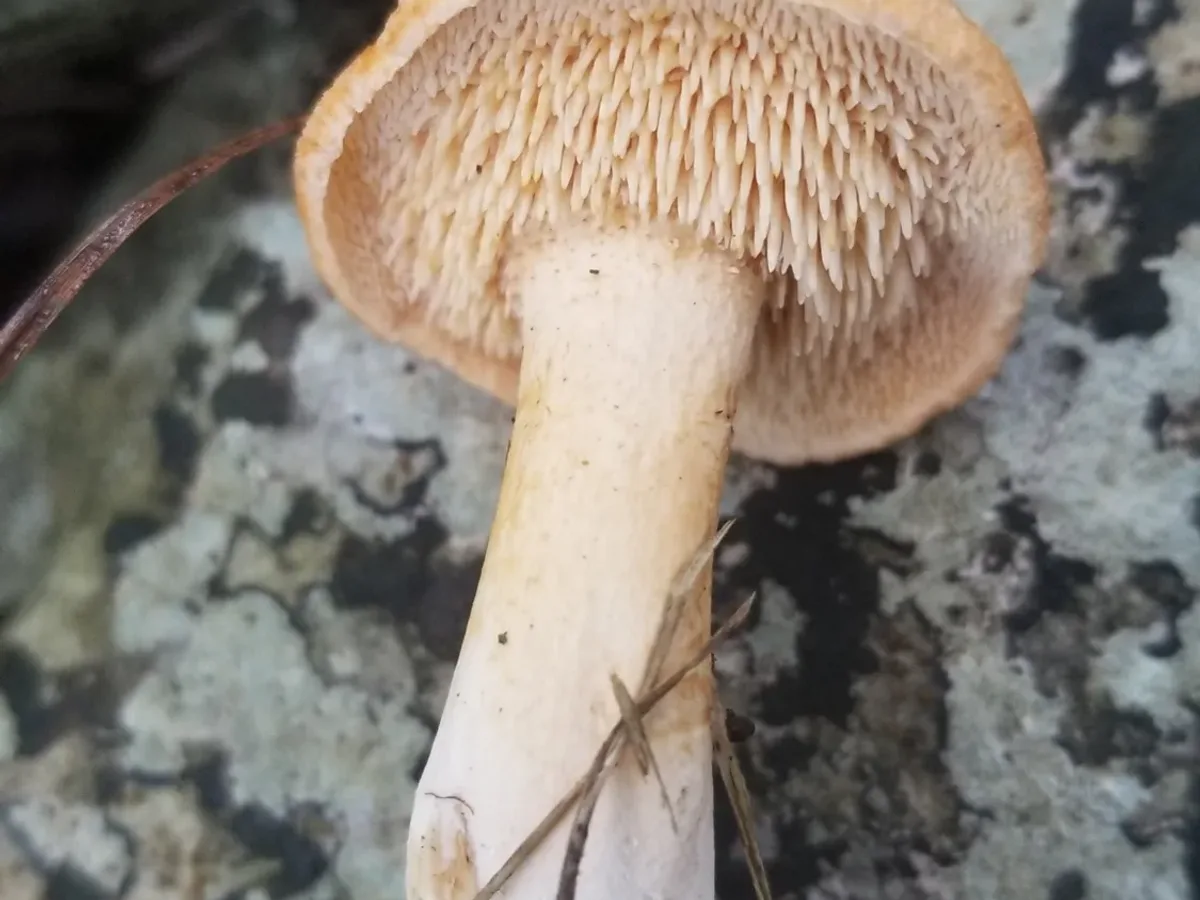 © Simon (CC BY 4.0)
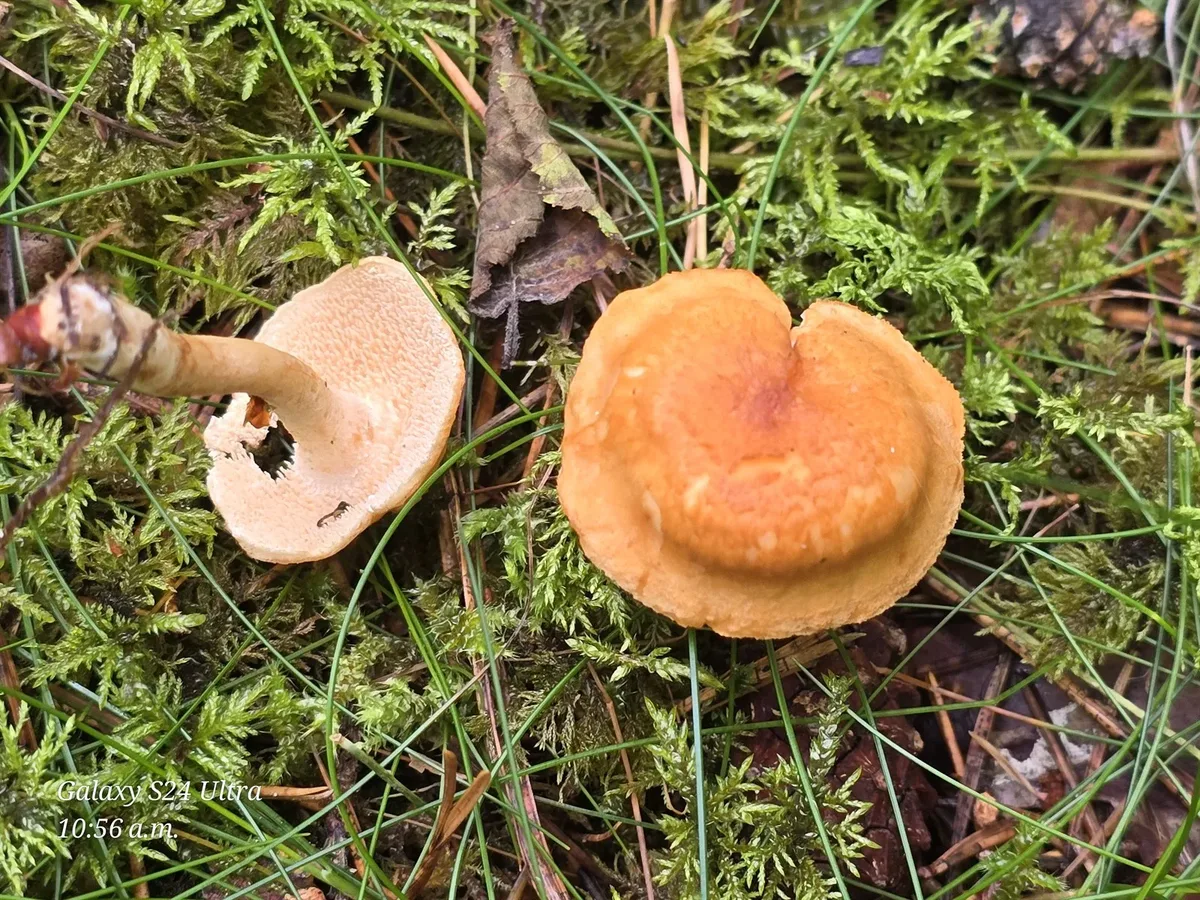 © Nils Edvard Stokke (CC BY)
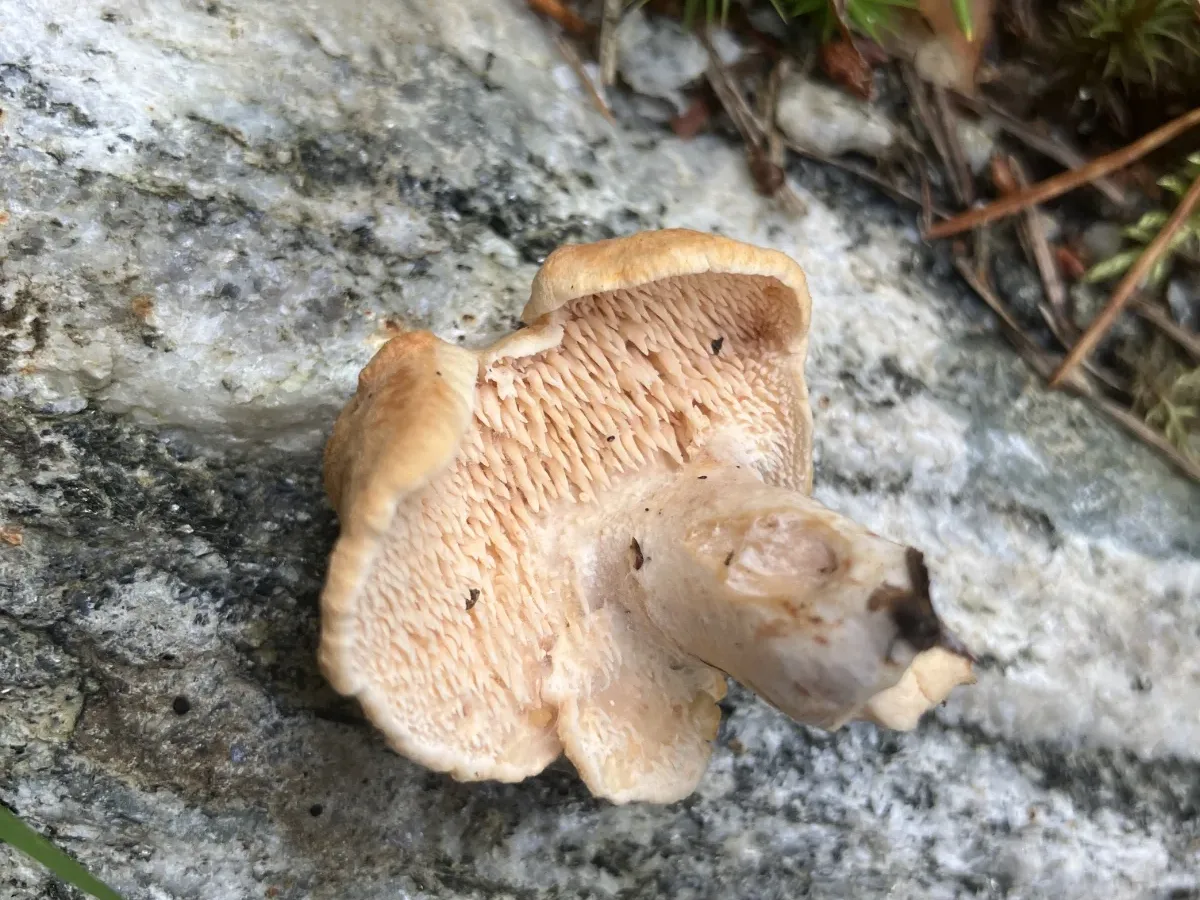 © Jonas Heggedal (CC BY)
 © Jonas Heggedal (CC BY)
 © Nadja Berglund (CC BY)
 © Nadja Berglund (CC BY)
 © Sigmund Ås (CC BY)
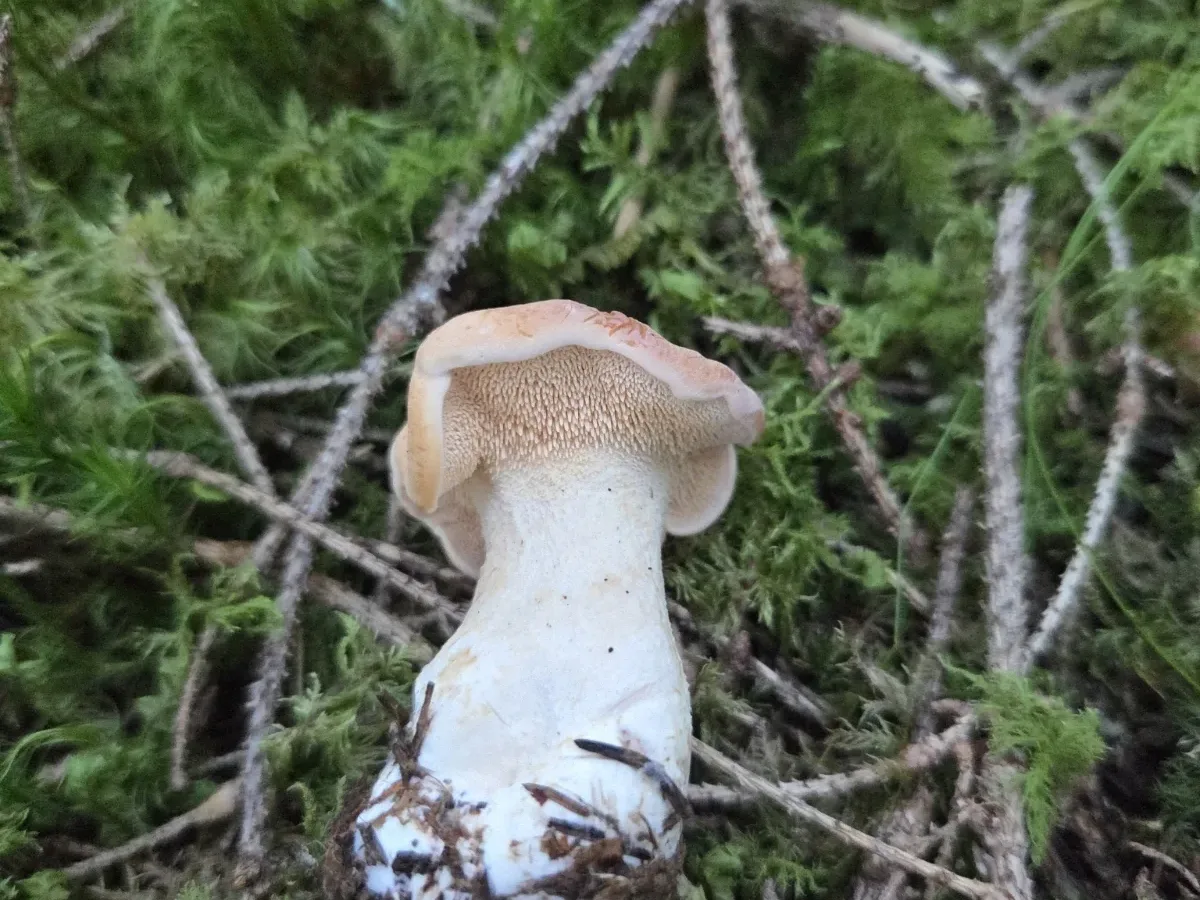 © Sigmund Ås (CC BY)© Dave Hernon (CC BY 4.0)© Simon (CC BY 4.0)
Good to eat, once you have identified it with certainty and cooked it through.
Never eat a mushroom you are not 100% sure of - check the look-alikes below, and always cook wild mushrooms.
How to recognise it
The terracotta hedgehog is one of the easier mushrooms to learn - once you've found it, that warm brick-red cap is hard to forget.
Cap
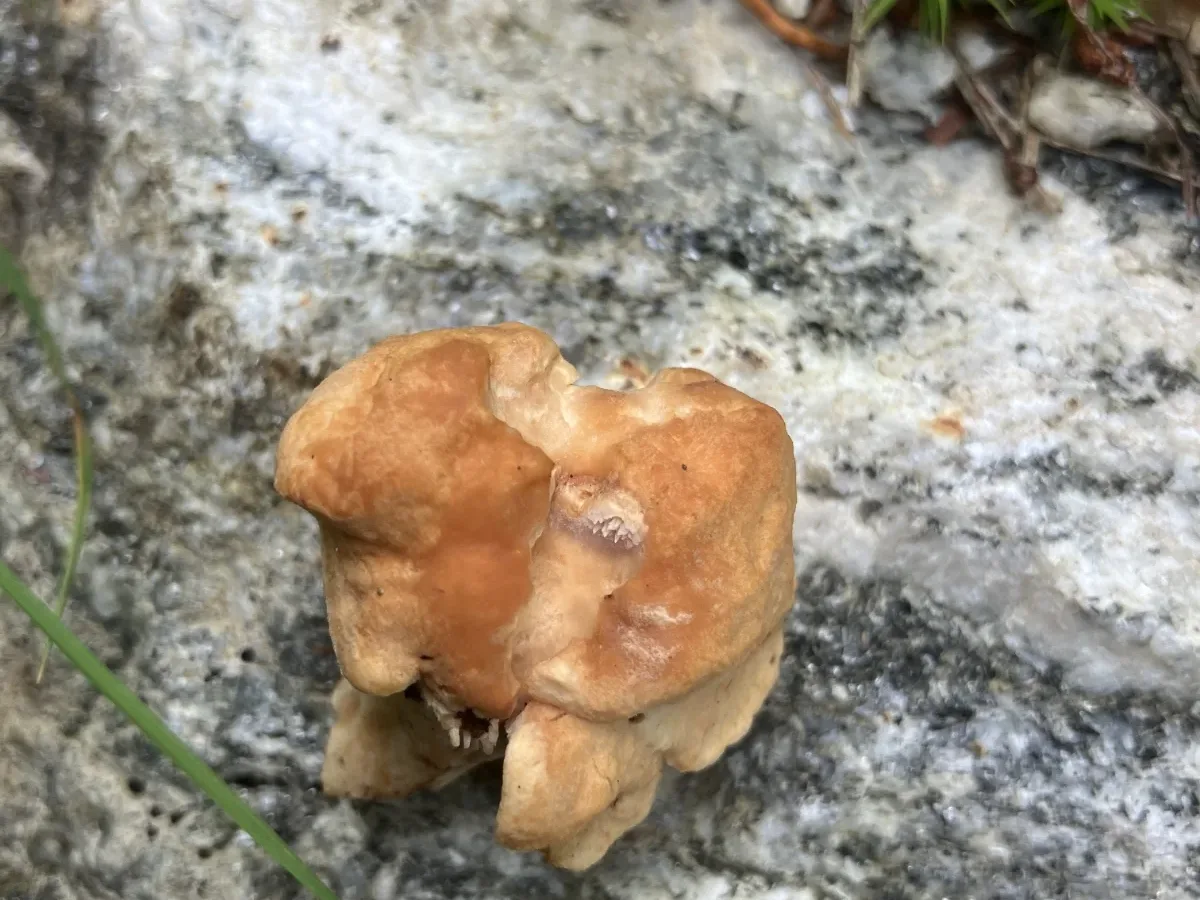
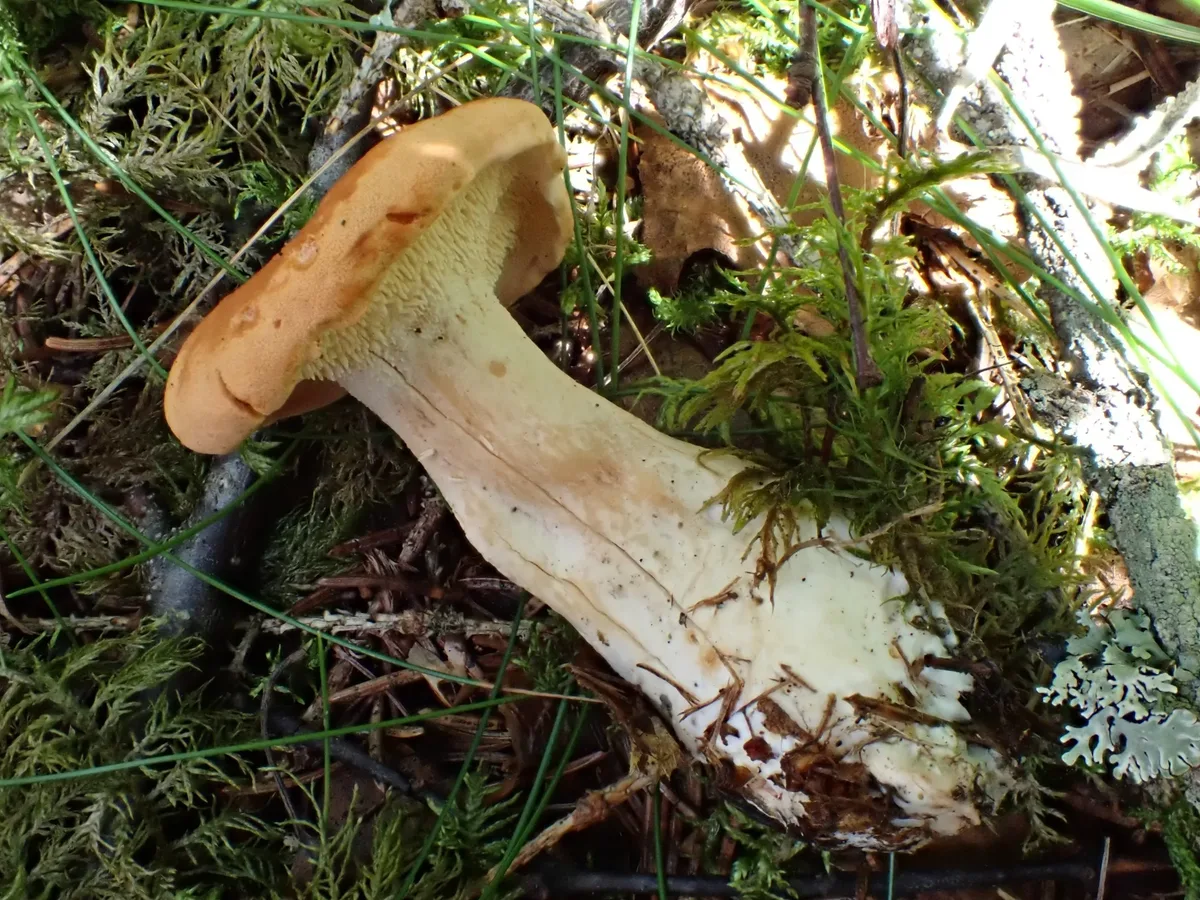
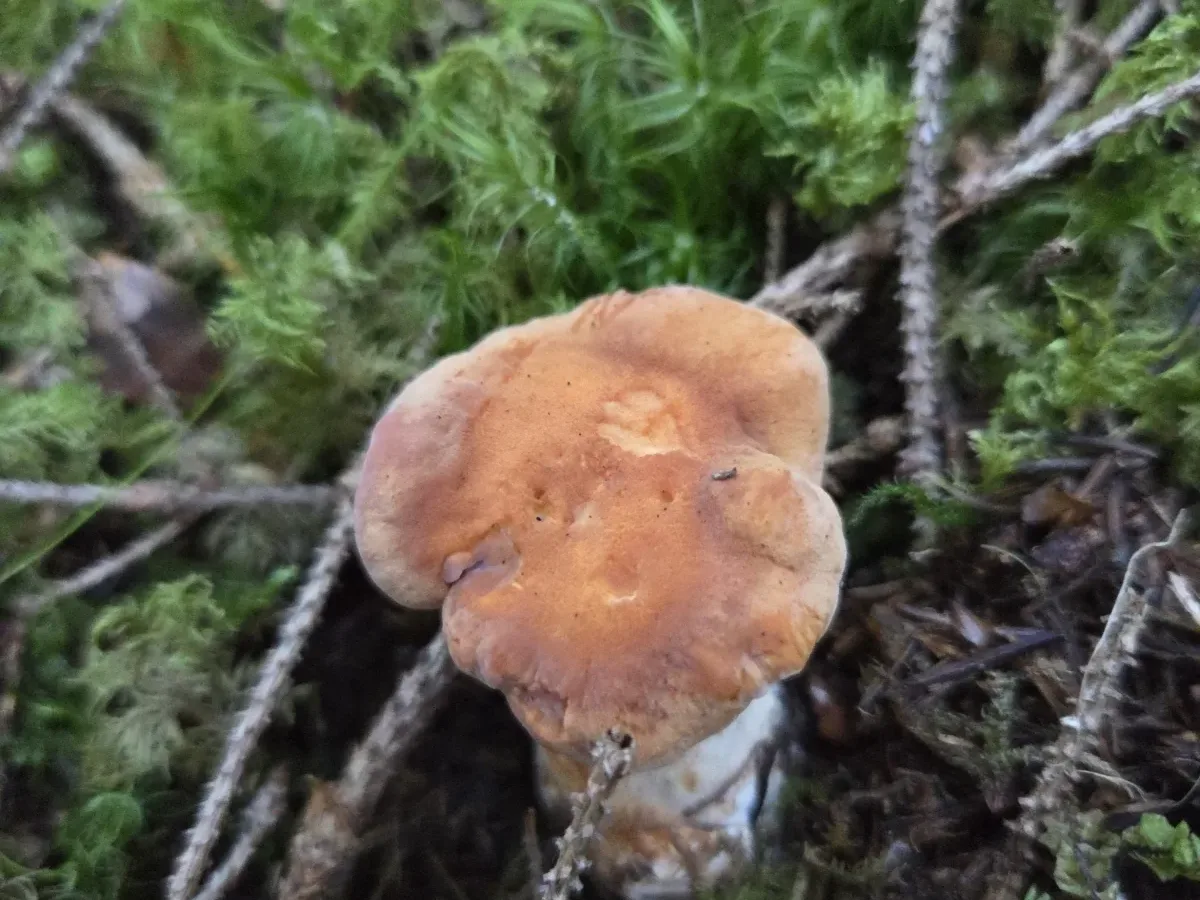
The cap is 2-7 cm across, noticeably smaller than its close cousin H. repandum, and begins life convex and boss-like before flattening and often sinking into a shallow central hollow.
The margin stays tightly inrolled for much of the mushroom's life, gradually becoming wavy and lobed as it matures. The upper surface is completely dry and suede-soft, holding a rich rusty-cinnamon or fox-red hue that barely shifts with handling.
Spines
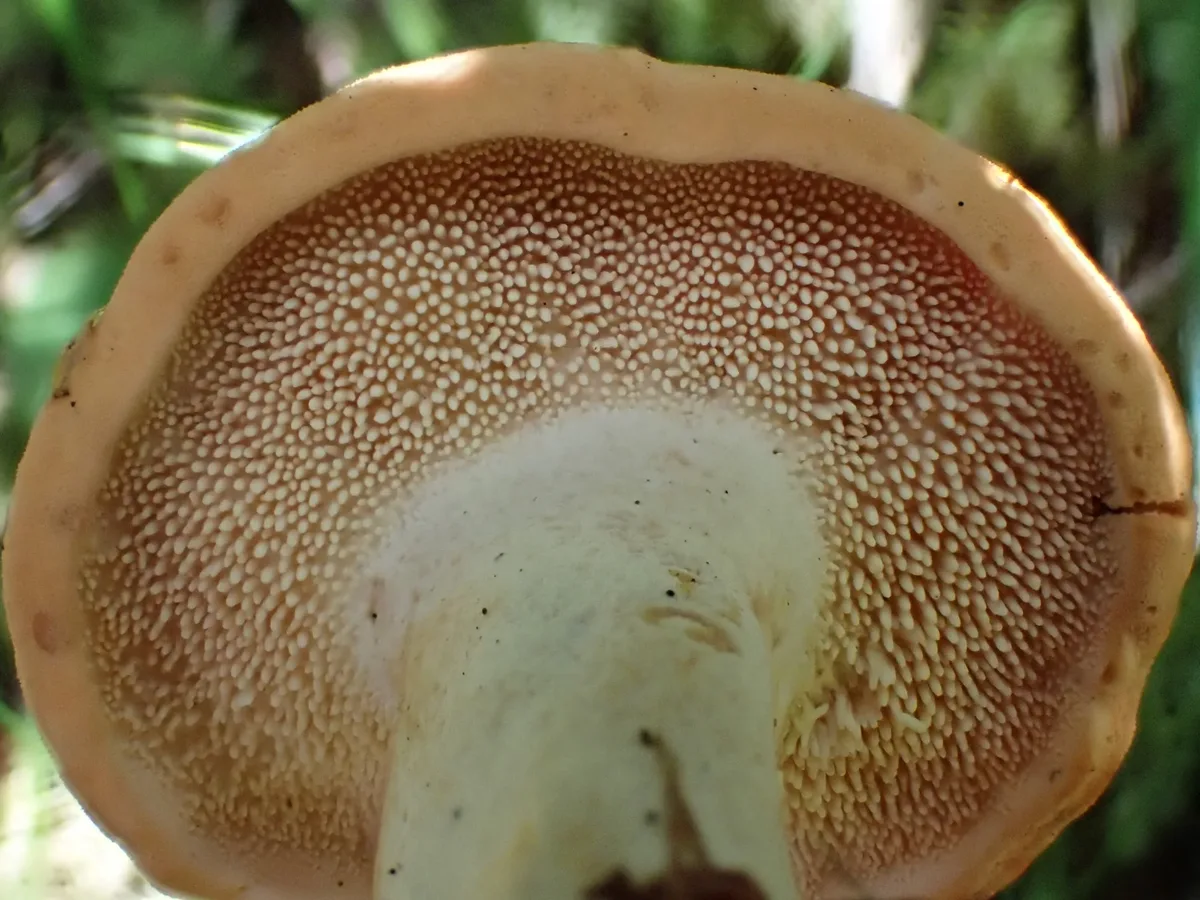
Flip it over and you find the feature that sets all hedgehog fungi apart: rows of pale, fragile spines 2-5 mm long hang from the underside where gills would be on most mushrooms. They start cream-white, darken to match the cap with age, and run slightly down the stem.
Stem
The stem is solid and sturdy - 2-6 cm tall, concoloured with the cap or a shade paler.
Flesh
Break the flesh and it stays white to pale pinkish-buff throughout, with no colour change, a mild mealy scent, and a pleasantly firm texture.
Spore print white; spores broadly ellipsoid to nearly round, 6-8 × 5-7 µm.
Where & when it grows
Habitat
A mycorrhizal forest species distributed across temperate Europe from Scandinavia to the Mediterranean foothills.
It grows singly, scattered, or in loose troops through deciduous and mixed forests dominated by beech (Fagus sylvatica), oaks, birch, and various conifers including spruce and fir.
It tolerates a wider range of soil pH than H. repandum but does best on moderately acidic, well-drained loamy soils with a good leaf-litter or moss layer.
One of the pleasures of this species is that it returns to the same spots reliably - once you've found a productive corner of woodland, it's likely to fruit there again the following autumn.
It's more tightly tied to genuine woodland interior than H. repandum, so parkland and field edges are less productive ground.
When
The main season varies by region:
- Central-western Europe: August through November, with a clear peak in October-November.
- Scandinavia: fruiting can begin in late July during warm summers.
- Mild maritime climates (Atlantic coast, UK): fruiting regularly pushes into December.
Look for it during warm days following steady rain, once soil temperatures have dropped below approximately 15 °C.
How it grows
Hydnum rufescens is mycorrhizal - it lives in partnership with the roots of the trees around it, trading soil water and minerals for sugars the tree produces through photosynthesis.
This underground alliance can persist for many years, which is why the same spots tend to fruit reliably season after season.
What you see above ground is only a small part of the story: most of the fungus exists as a web of fine threads threaded through the leaf litter and soil.
Fruiting bodies emerge singly or in small groups and develop slowly compared to many gill mushrooms, often taking 7-14 days to reach full size. That unhurried growth is good news for foragers - the mushrooms tend to stay in good condition longer in the field.
Fruiting conditions
Favours a sustained period of moderate rainfall followed by cooling temperatures in early autumn. Unlike many species that flush rapidly after a single rain event, H. rufescens develops slowly and benefits from consistently moist soil conditions. Peak flushes typically occur 7-14 days after meaningful rain once nighttime temperatures drop below 10 °C.
Look-alikes
The only realistic confusion is with Hydnum repandum (common hedgehog):
- paler, cream to buff or salmon-buff cap
- usually larger (cap up to 15 cm)
- a less saturated, non-terracotta colour
The two species are equally edible and often grow in the same woodland; misidentification has no safety consequences.
Sarcodon imbricatus (scaly hedgehog) has similar spines but is much larger, has a distinctive scaly brown cap, and a bitter taste - inedible. No other toothed fungi in the European temperate zone are easily confused with H. rufescens.
The bright orange colour might momentarily suggest Hygrocybe or Cantharellus species, but the presence of spines rather than gills, folds, or a smooth hymenium immediately rules these out.
In theory, a very young Paxillus involutus (roll-rim) might be encountered in similar colour territory; P. involutus is DEADLY with repeated consumption. Always confirm spines (not gills) on the underside before eating any orange-brown woodland mushroom.
DEADLY with repeated consumption - causes immune-mediated haemolytic anaemia that has killed people. Young Paxillus buttons can be similar in colour, but have true gills (forking, crowded, decurrent, yellowish-brown that bruise brown) NOT spines, and the cap is strongly inrolled for a long time. Always inspect the underside: spines on H. rufescens versus gills on P. involutus make confusion impossible for anyone who checks.
H. repandum has a larger cap (up to 15 cm), pale cream to buff or salmon colour - never the deep terracotta-orange of H. rufescens. Both are equally edible. No safety risk.
Much larger (cap 5-30 cm), conspicuously scaly brown-black cap with distinct overlapping brown scales radiating from centre; spines are grey-brown rather than white; flesh is bitter and the species is considered inedible to mildly toxic when consumed in quantity. Distinguished by size, dark scaly surface, and bitter taste.
Hydnellum species have tough, corky or woody flesh that cannot be cut cleanly; their spines are often zoned or patchy in colour and the entire fruitbody is much tougher. The flesh of H. rufescens is brittle and white throughout. Hydnellum species are unpalatable but not deadly.
In the kitchen
Picking & cleaning
Select young to medium-aged specimens, where:
- the teeth are still pale
- the cap is firm
- the flesh shows no worm tunnels
Older caps with darkened teeth and softened flesh should be left.
Cut cleanly at the base with a knife and brush off debris immediately - the teeth trap leaf litter readily. Carry in a breathable basket; the spines are fragile and a dense plastic bag crushes them, releasing bitter flavour.
Because this is a mycorrhizal species, do not disturb the soil around the base more than necessary. Established fruiting sites are slow to recover if the mycelium is repeatedly damaged.
Cooking
The terracotta hedgehog is a versatile and well-regarded edible. Its flesh is firm enough to sauté without becoming watery, and it holds together well in risottos, pasta sauces, and soups.
Any residual bitterness (more common in older specimens) is eliminated entirely by cooking.
The standard preparation is to sauté sliced caps in butter or olive oil over medium-high heat for 5-7 minutes until golden, seasoning with salt, pepper, garlic, and parsley. The spines can be left on; they soften on cooking and add no off-flavour.
It dries well: thread on string or use a dehydrator at 40 °C until brittle, then store in an airtight jar and reconstitute in warm water. Dried H. rufescens adds concentrated umami depth to stocks and sauces.
It pairs well with thyme, juniper, cream, and aged hard cheeses.
Good to know
Hydnum rufescens is considered a safe, beginner-friendly edible fungus because it has no dangerous lookalikes that share the distinctive downward-pointing pale spines. The unmistakable spine hymenium distinguishes it from every poisonous species.
Some individuals experience mild digestive discomfort when consuming large quantities raw - always cook before eating.
As with all wild mushrooms, eat a small amount for the first time to rule out personal intolerance.
Always check the underside: spines (not gills) confirm identity and eliminate confusion with toxic species.
A reference guide - never an edibility guarantee. When in doubt, leave it out.