White hedgehog
Hydnum albidumsyn. Hydnum repandum var. albidum
 © Alan Rockefeller (CC BY 4.0)
 Sigrid Jakob (CC0)
 Sigrid Jakob (CC0)
 Sigrid Jakob (CC0)
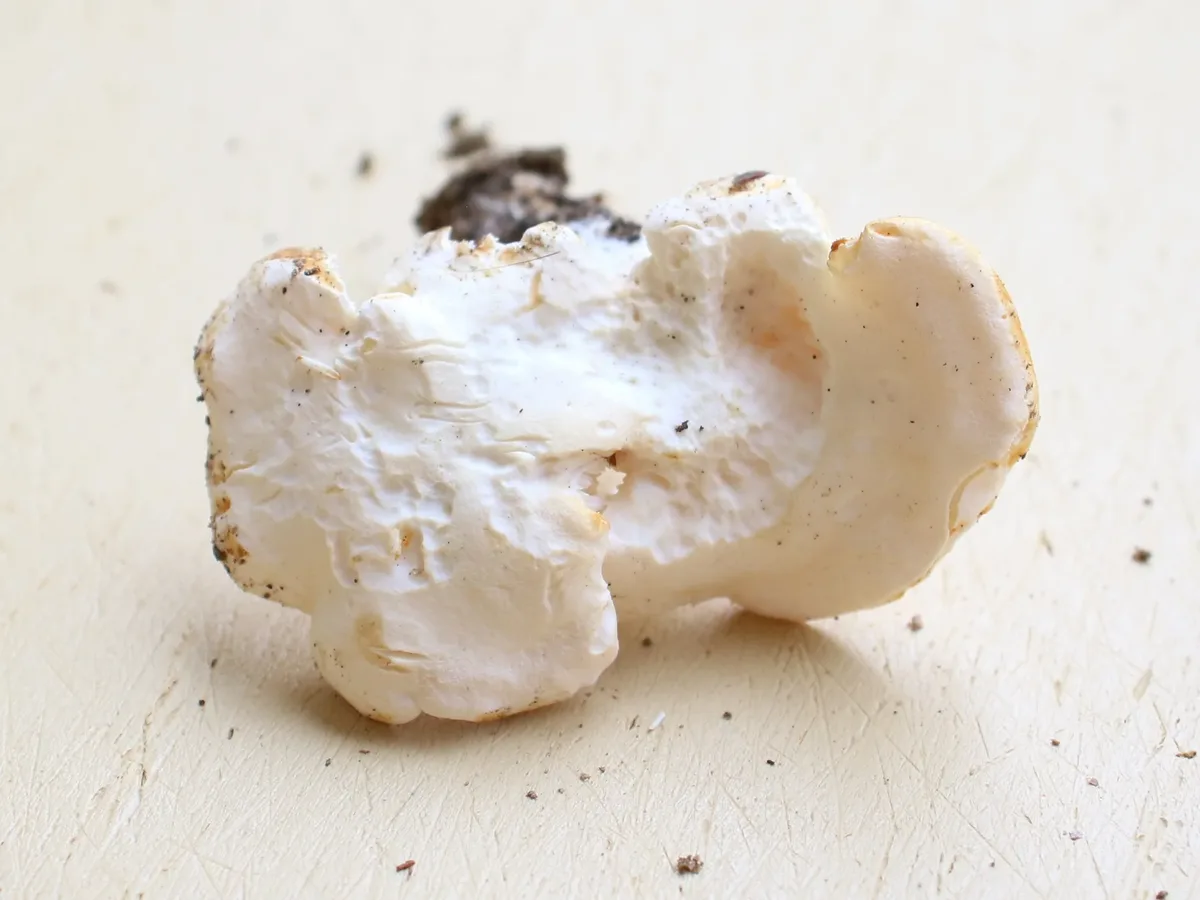 Sigrid Jakob (CC0)
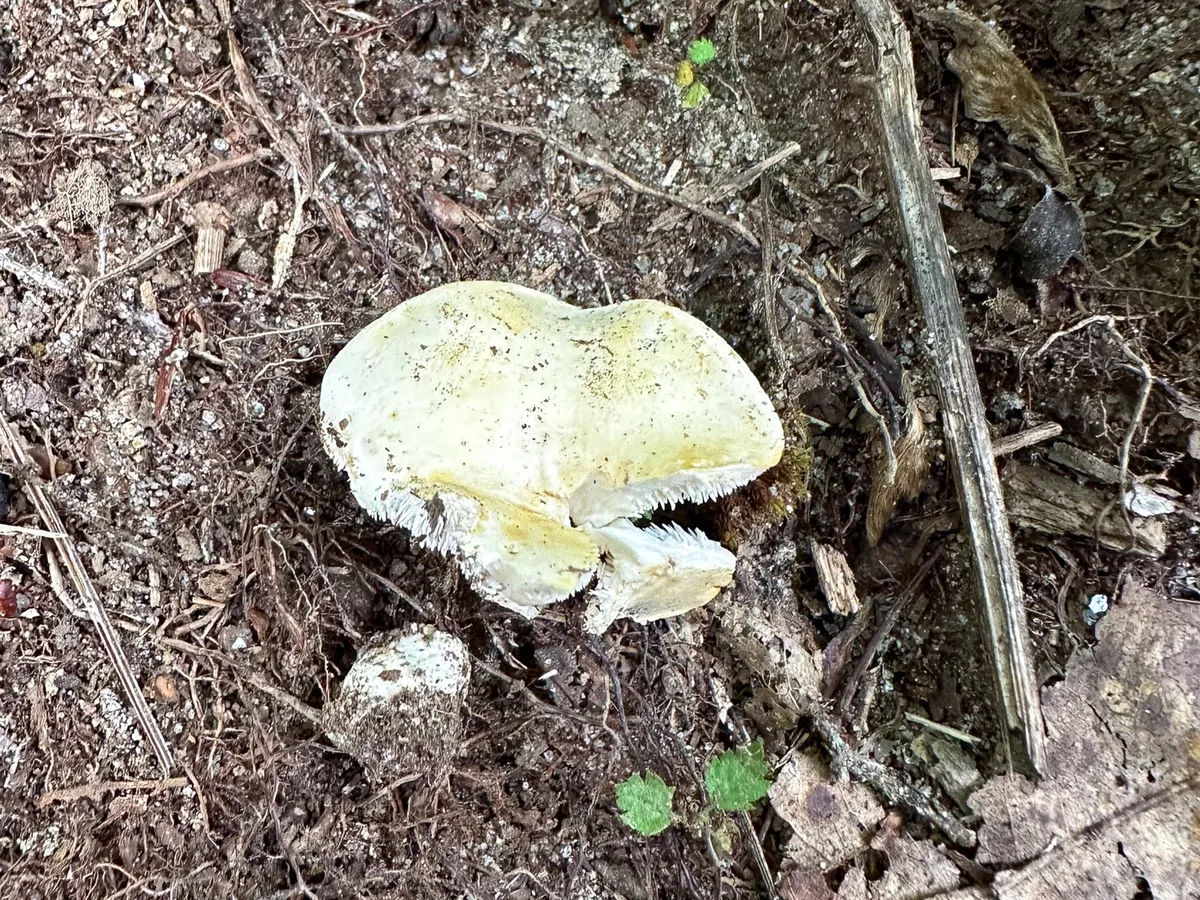 © Richard Jacob (CC BY)
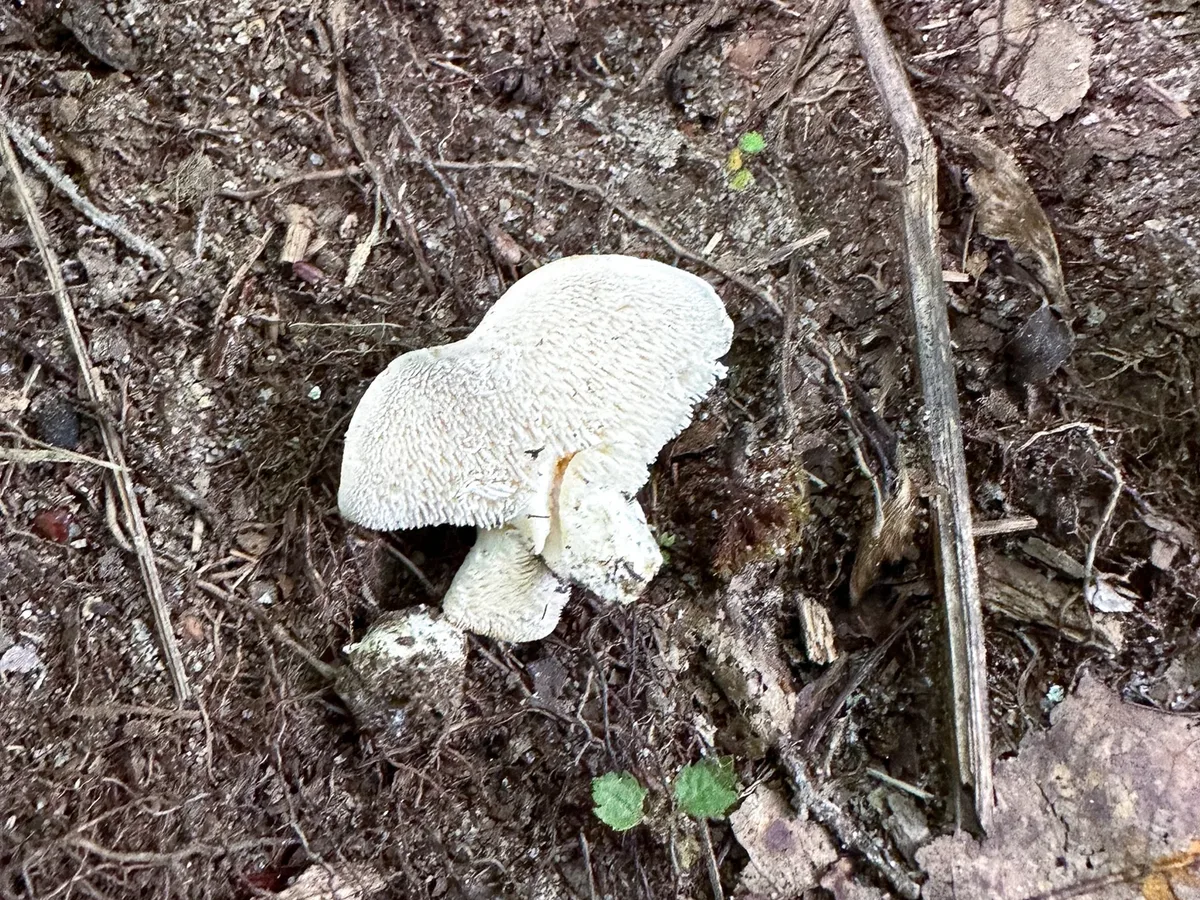 © Richard Jacob (CC BY)
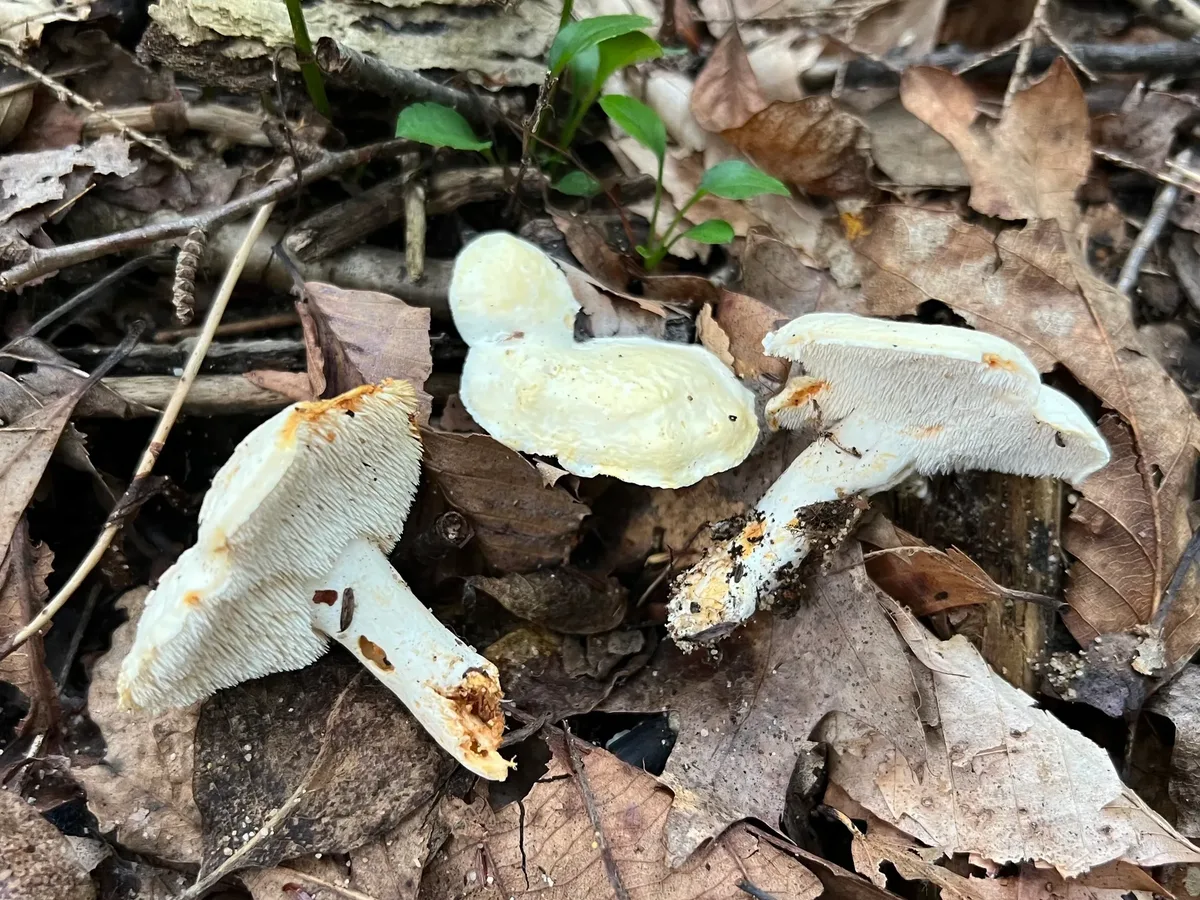 © Annie Weissman (CC BY)
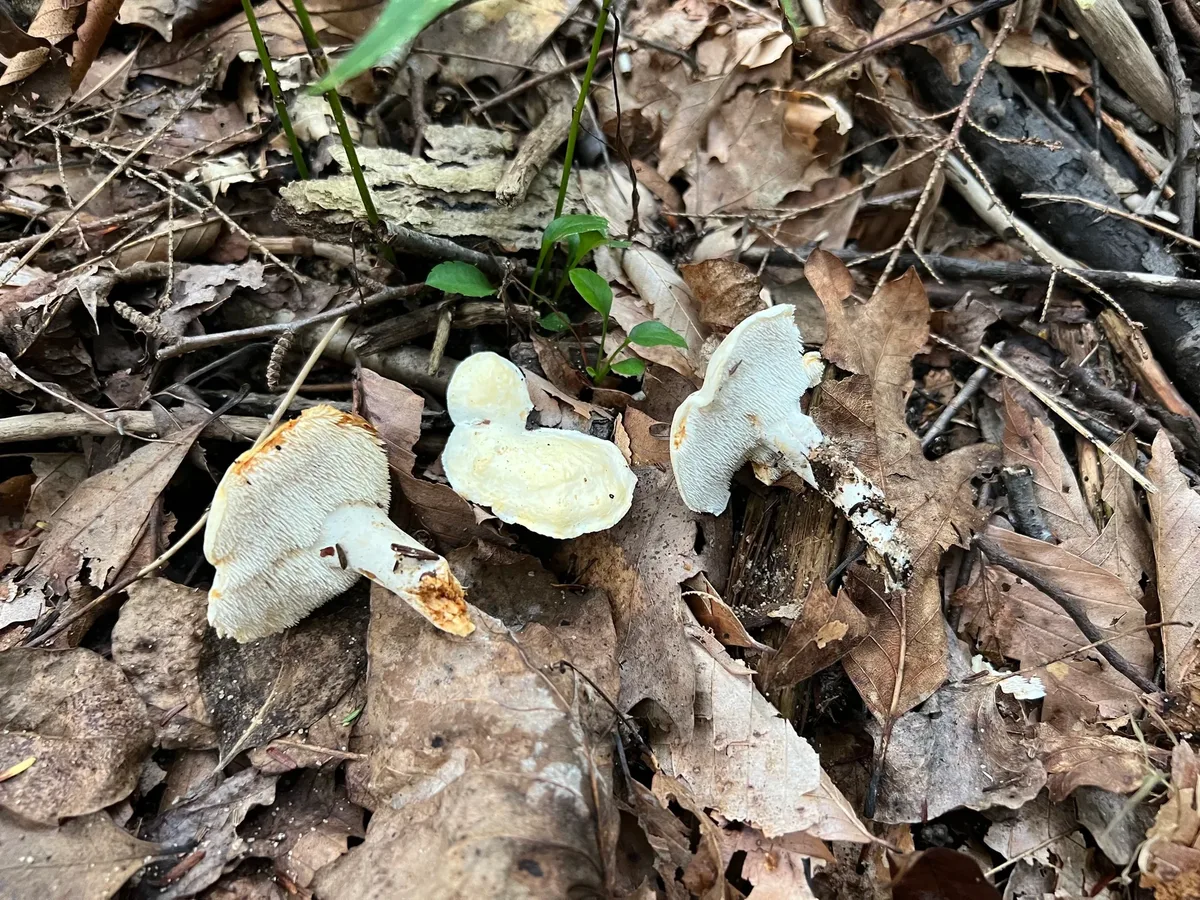 © Annie Weissman (CC BY)
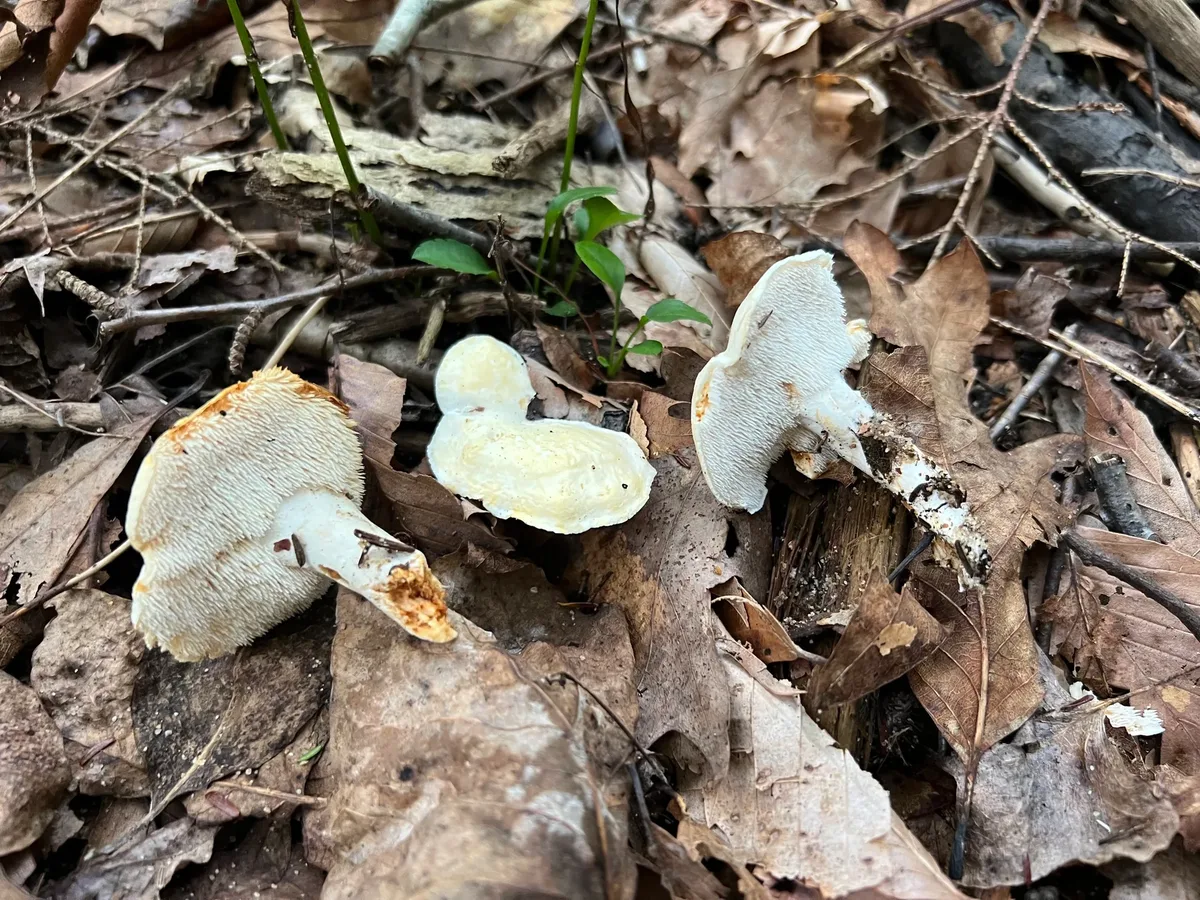 © Annie Weissman (CC BY)
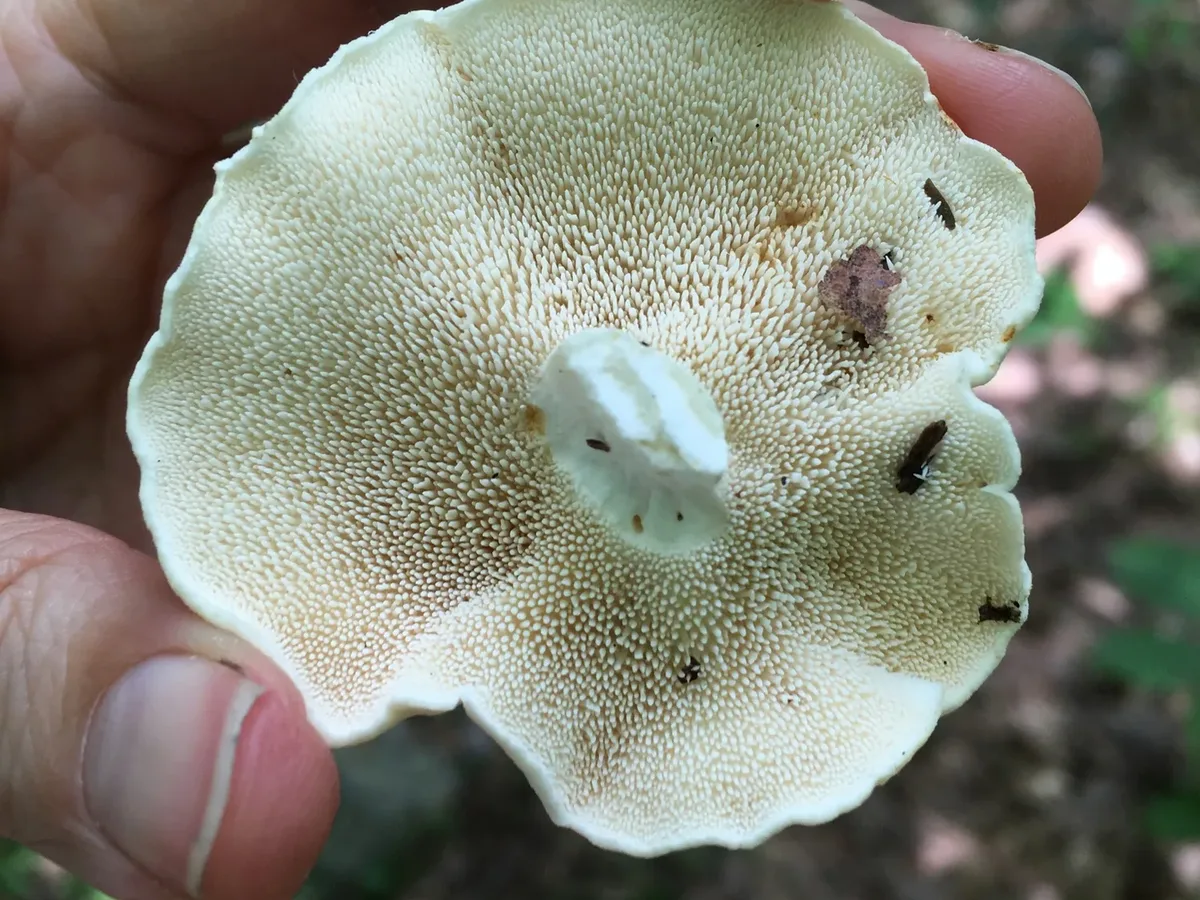 © Sigrid Jakob (CC BY 4.0)
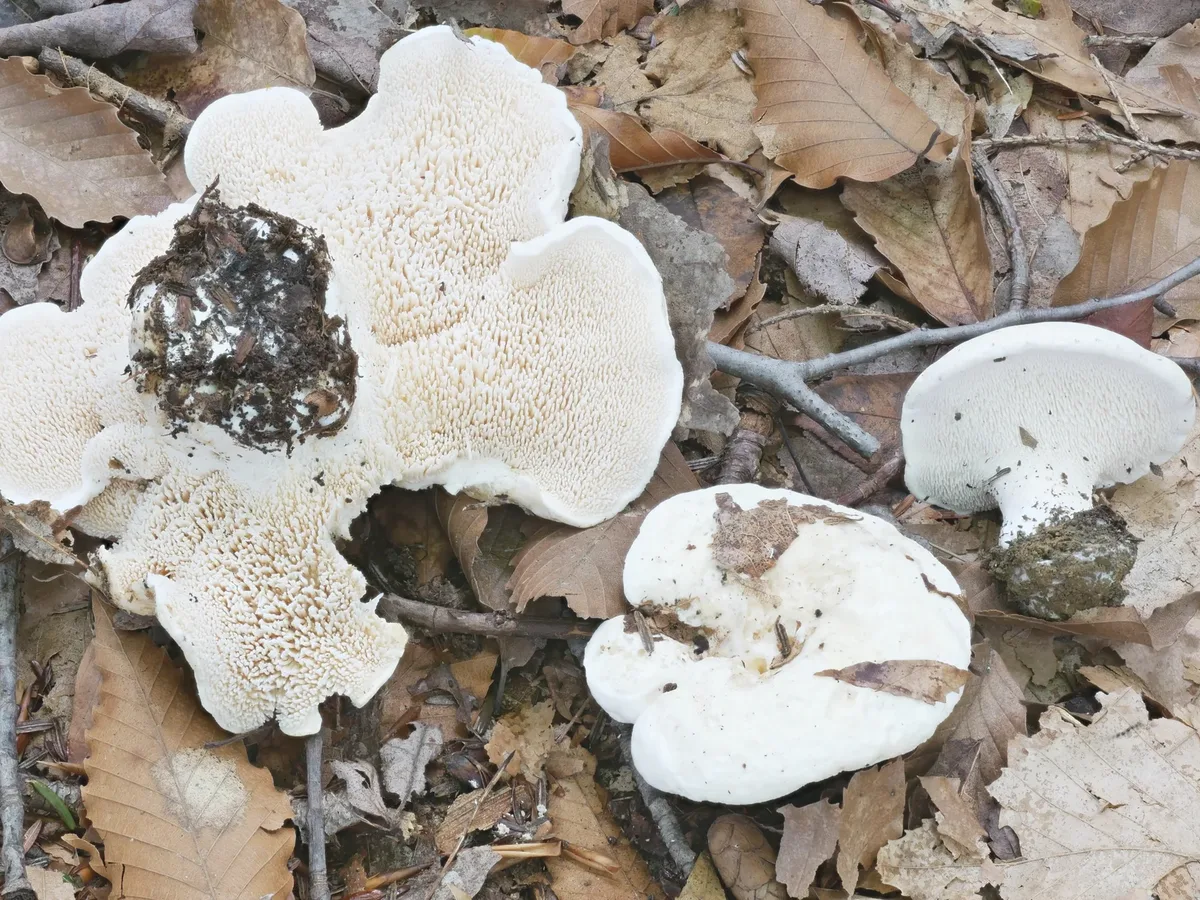 Garrett Taylor (CC0)© Alan Rockefeller (CC BY 4.0)Sigrid Jakob (CC0)
One of the best mushrooms you can bring home - once you are certain of the identification.
How to recognise it
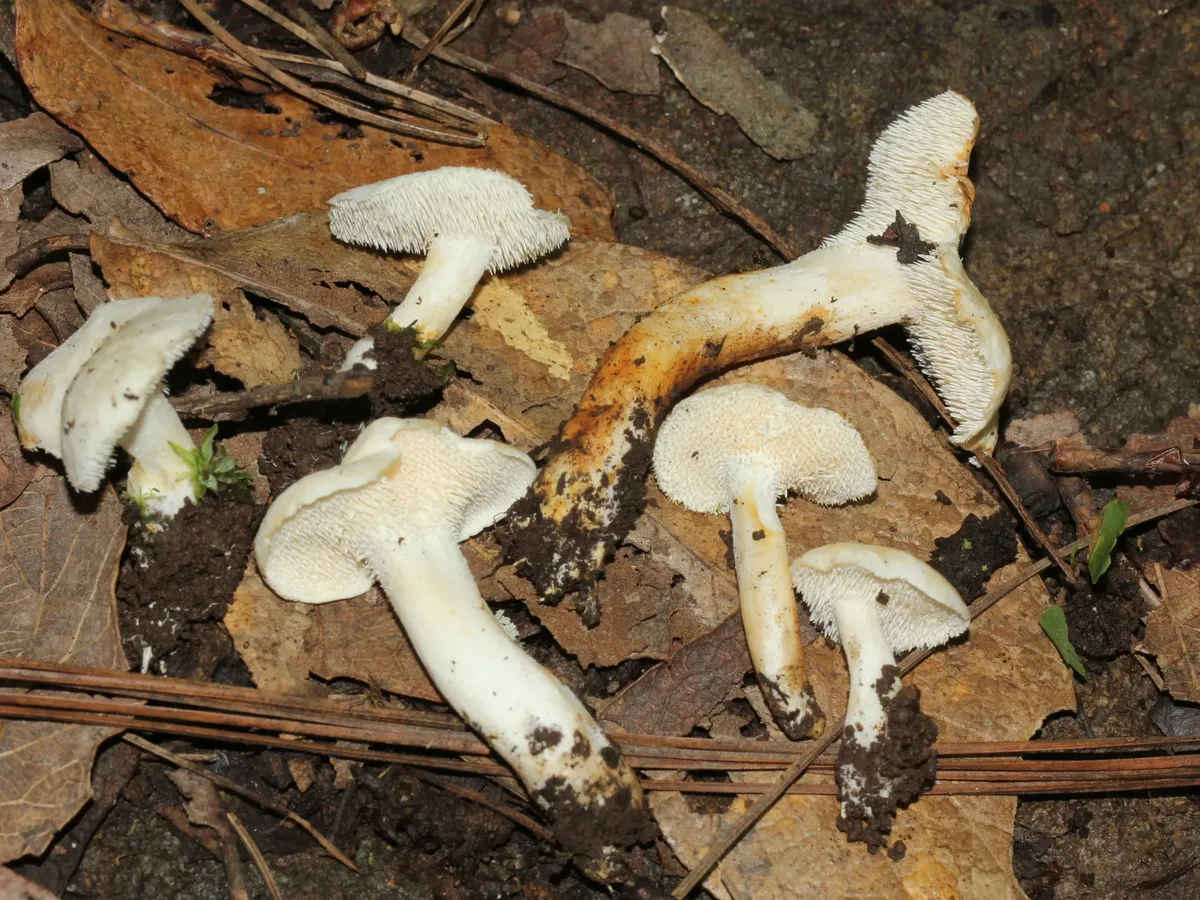
The white hedgehog is the palest member of the Hydnum repandum complex.
Cap
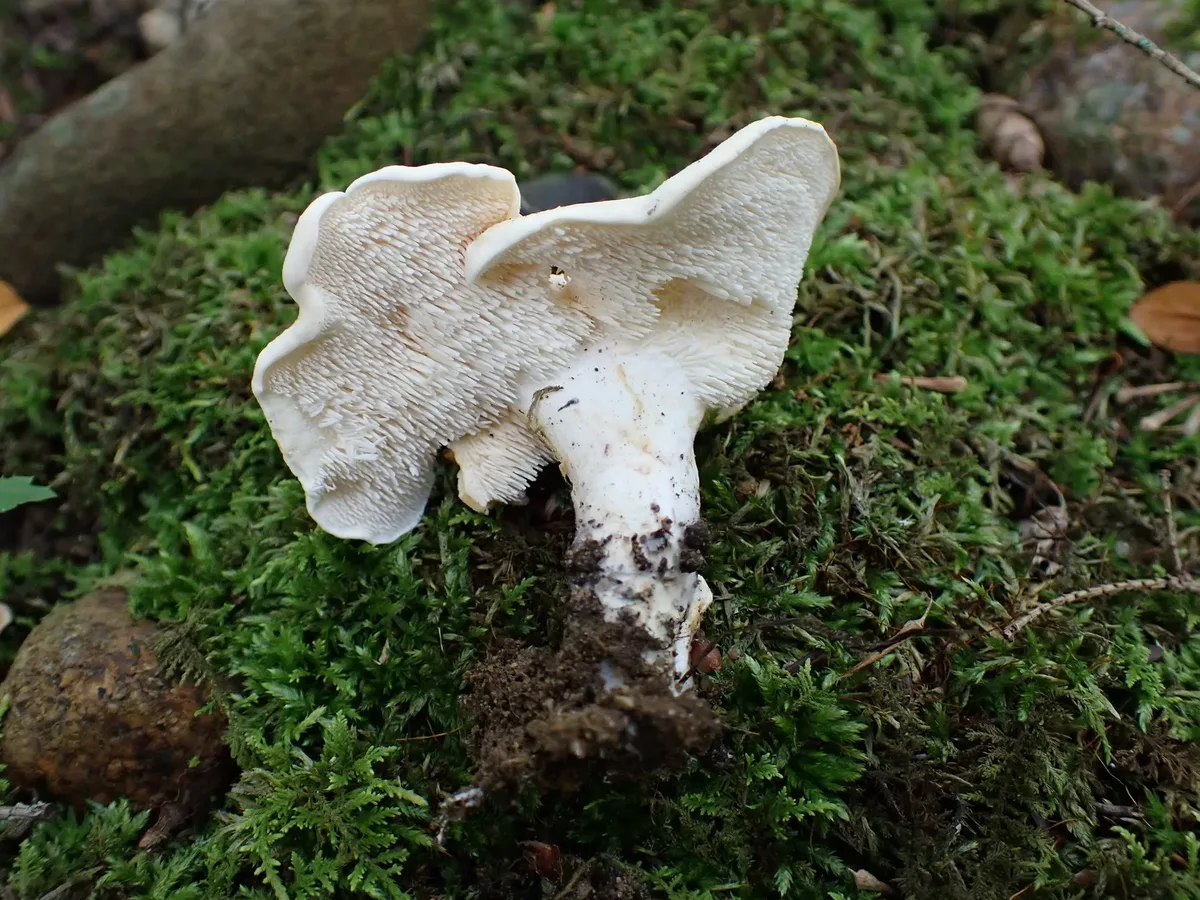
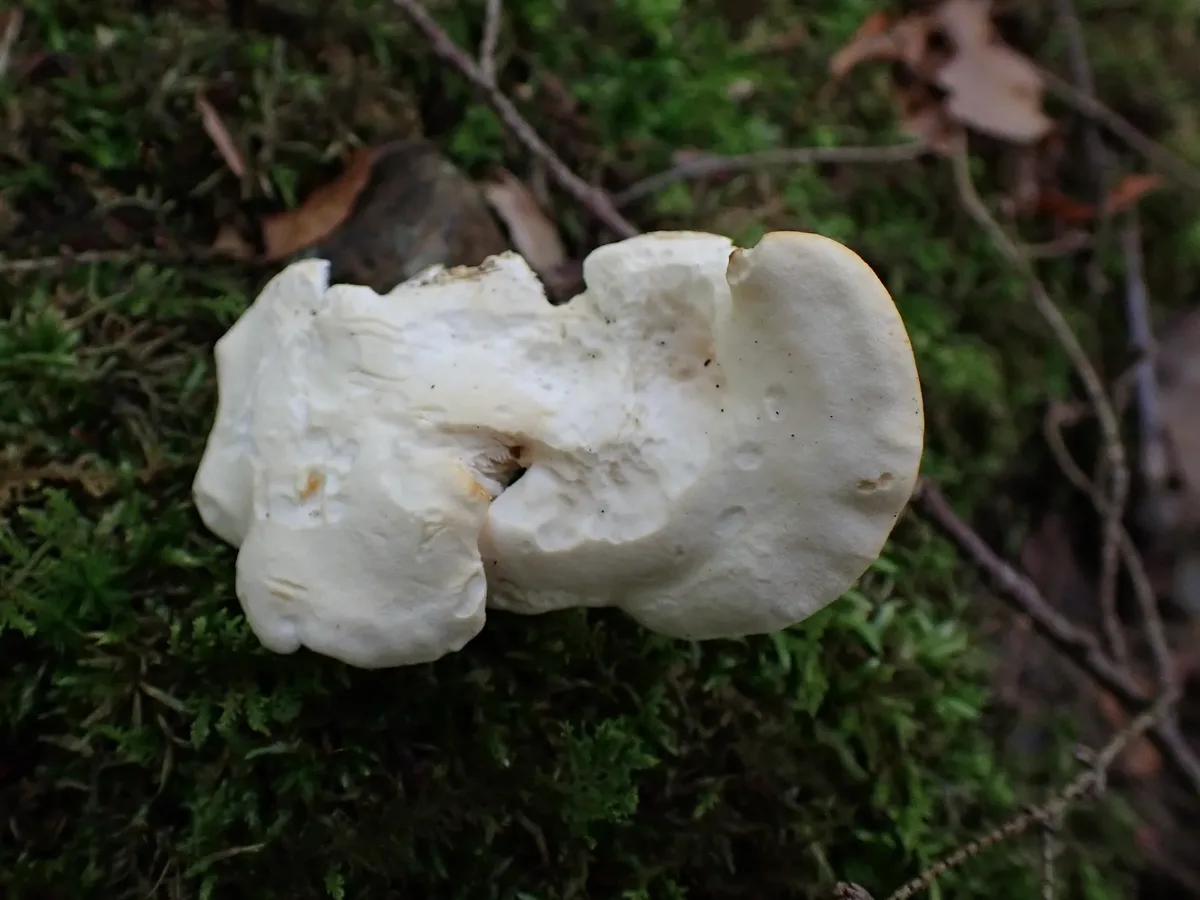
Cap 3-12 cm, irregularly convex with a characteristically wavy and often lobed margin, white to cream-white - rarely discolouring to pale buff in dry conditions or old age.
The surface is dry, occasionally finely felty at the centre.
Gills / Pores
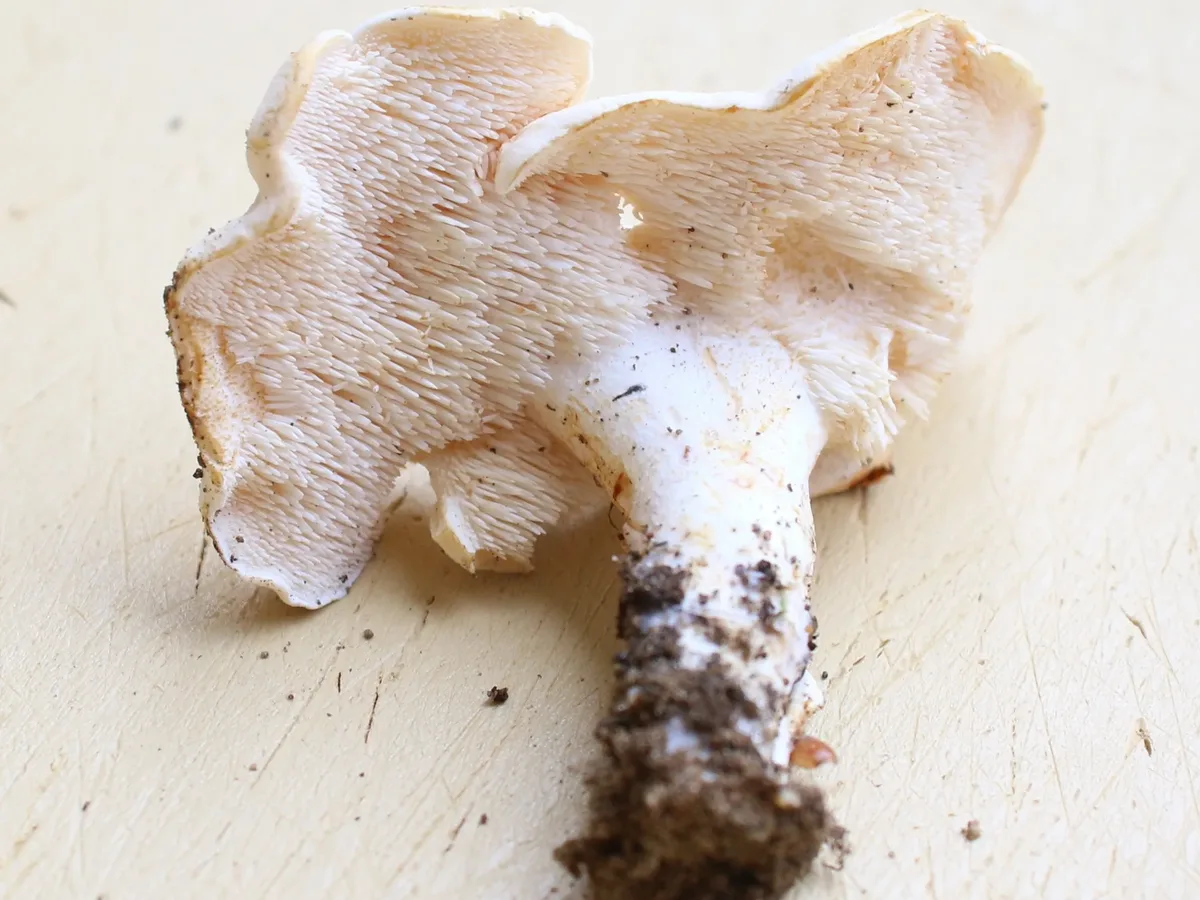
The defining identification character is the underside: instead of gills or pores, it bears dense, soft, brittle white spines (teeth) 2-6 mm long that run slightly down the stem (decurrent) and come away cleanly when touched.
Stem
The stem is stout, often eccentric, white, solid, and firm.
Flesh
Flesh is uniformly white, not discolouring when cut, with a mild mealy-fruity scent. Spore print white.
The combination of an all-white fruitbody with a spiny hymenium is effectively diagnostic.
Where & when it grows
Habitat
Strictly mycorrhizal, forming long-term underground partnerships with forest trees - it cannot be grown artificially or found in open grassland.
In eastern North America it fruits primarily under American beech, oaks (especially red oak), and sugar maple, but also associates with eastern hemlock and pines in mixed stands.
Look for it in mature, moist woodlands on well-drained humus-rich soils, often appearing in the same patches year after year.
It frequently grows alongside the closely related Hydnum repandum (buff-coloured) and Hydnum rufescens (orange-tan, smaller), since all three share similar host and habitat requirements.
When
A mid-to-late autumn fruiter in eastern North America.
First fruitbodies typically emerge in August in cooler northern areas (New England, eastern Canada), with the main flush peaking in September and October through the Appalachians and mid-Atlantic states.
A late flush can persist into November, especially in sheltered hollows.
Cold nights and saturating autumn rains trigger the main flush; sustained dry spells suppress fruiting entirely.
How it grows
Mycorrhizal and gregarious - fruitbodies emerge in loose groups or small clustered patches, occasionally as singletons.
What you see above the leaf litter is only the tip of something much older: the mycelium has been threading through the soil for years, quietly partnered with the roots of a beech or oak, and it will fruit the same patch again next autumn and the one after that.
Fruitbodies develop slowly relative to gilled mushrooms and hold together well, persisting for one to two weeks if the weather stays cool and moist.
Once you find a good spot, mark it - it is likely to reward you for years.
Fruiting conditions
Mycorrhizal late-summer to autumn fruiter; flushes follow sustained autumn rains once soil temperature drops below about 16 °C. Peak productivity at 8-12 °C soil temperature. Tolerates the first light frosts. Dry spells strongly suppress fruiting.
Look-alikes
The spiny underside makes Hydnum albidum one of the easiest edible mushrooms to confirm - no deadly or seriously harmful species bears the same combination of white colour and spiny hymenium.
The main visual confusions arise before you check the underside:
- 1Hydnum repandum - the standard hedgehog mushroom - is buff to salmon-tan and slightly larger, but equally edible; overlap in colour means pale H. repandum can look like H. albidum.
- 2Hydnum rufescens - terracotta hedgehog - is distinctly orange-tan and smaller with a more central stem; also edible.
- 3Pale Clitocybe species such as Clitocybe dealbata (ivory funnel) are all-white with a faint mealy smell and can grow nearby, but they have thin crowded gills - not spines - and are poisonous (muscarine). Always flip the fruitbody and confirm spines.
- 4Leucopaxillus albissimus (white Leucopaxillus) is a large white mushroom of conifer forests with a bitter taste and gills; again, gills not spines.
Once you have seen the spines, no misidentification with a dangerous species is possible.
Buff to salmon-tan (never pure white); otherwise nearly identical in form and equally edible. Pale specimens of H. repandum overlap with H. albidum. Both are fine to eat.
White to ivory, similar size, and can grow in the same vicinity, but has crowded gills (never spines) and is poisonous (muscarinic). Always check the underside for spines to rule this out.
Distinctly orange-tan cap, smaller (2-6 cm), more slender stem, and more central positioning; also edible.
Large, white, bitter-tasting mushroom of conifer forests with densely crowded white gills - not spines. Bitter flavour, gilled underside, and conifer preference distinguish it.
In the kitchen
Picking & cleaning
- Cut the stem at the base with a knife rather than pulling, to avoid disturbing the mycelium network.
- The spines are fragile and break off during collection, so handle gently and collect in a wide basket rather than a bag.
- Young to mid-aged specimens are far superior: old fruitbodies develop bitterness and a mealy off-flavour that survives cooking.
- Brush or blow off debris in the field; washing is rarely necessary.
- Check the underside: the spines should be clean and white, not darkened or slimy.
Cooking
Firm, meaty texture that holds its shape through extended cooking - an advantage over the more delicate chanterelle.
The flavour is mild, nutty, and slightly sweet, making it versatile.
Best uses:
- Sautéed in butter with garlic and thyme
- Added to autumn risotto or pasta
- Dried and used as a flavour base for soups and stocks (drying concentrates the nuttiness)
The firm spines soften pleasantly when cooked and integrate into the dish texture.
Unlike some hedgehog relatives, H. albidum does not require pre-cooking to remove bitterness in fresh young specimens.
Good to know
Hydnum albidum has no documented toxicity and is well regarded by foragers across eastern North America.
The spiny hymenium is unique enough that confusion with dangerous species is essentially impossible once you inspect the underside.
The only practical risk is collecting old specimens, which develop significant bitterness; this does not cause harm but makes for an unpleasant dish. A brief blanch in salted water discards the bitterness if needed.
As with all wild mushrooms, do not consume if uncertain of identification.
A reference guide - never an edibility guarantee. When in doubt, leave it out.