Devil's tooth
Hydnellum peckiisyn. Hydnum peckii Banker, Calodon peckii (Banker) Snell & E.A. Dick
 © Casey Helton Photography (CC BY 2.0)
 © Casey Helton Photography (CC BY 2.0)
 © Mandy Hackney (CC BY)
 © Arvel Hernandez (CC BY)
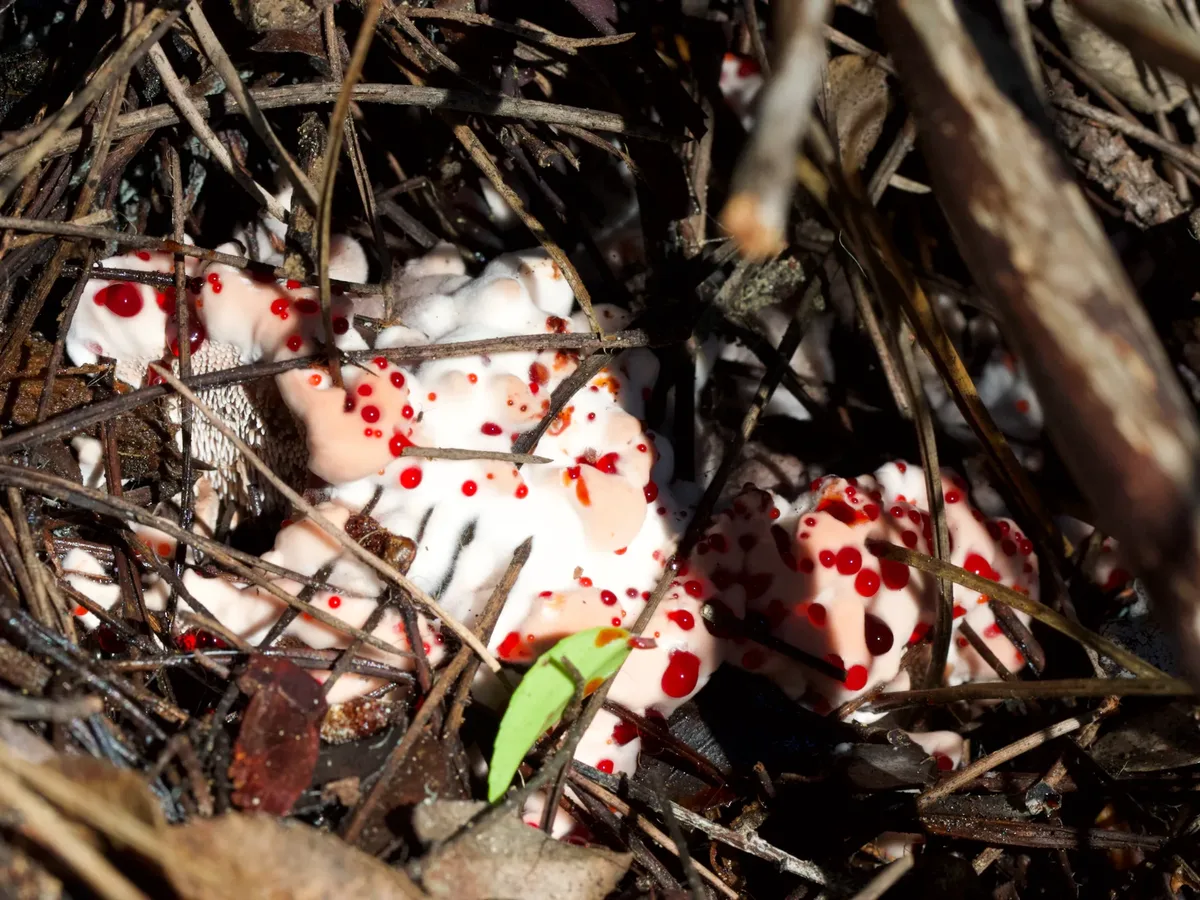 © Arvel Hernandez (CC BY)
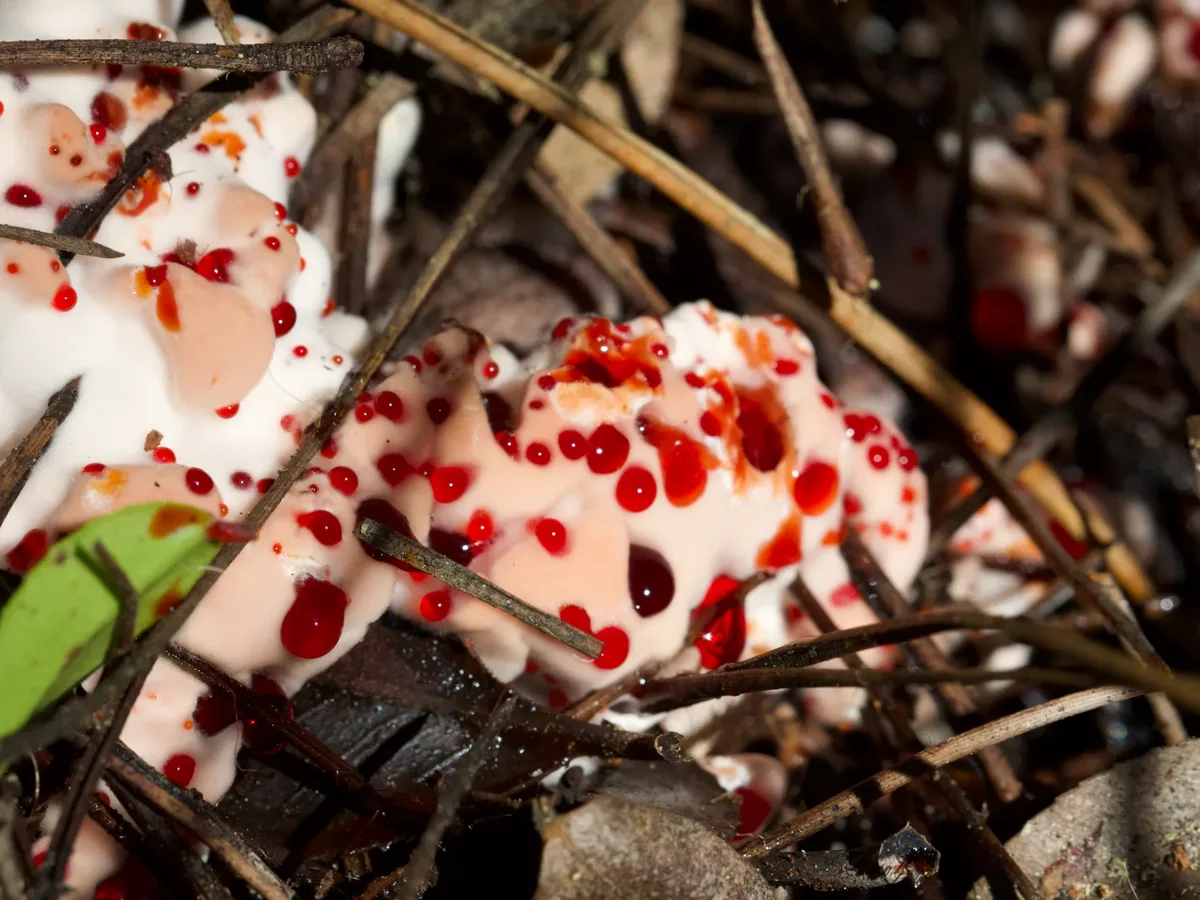 © Arvel Hernandez (CC BY)
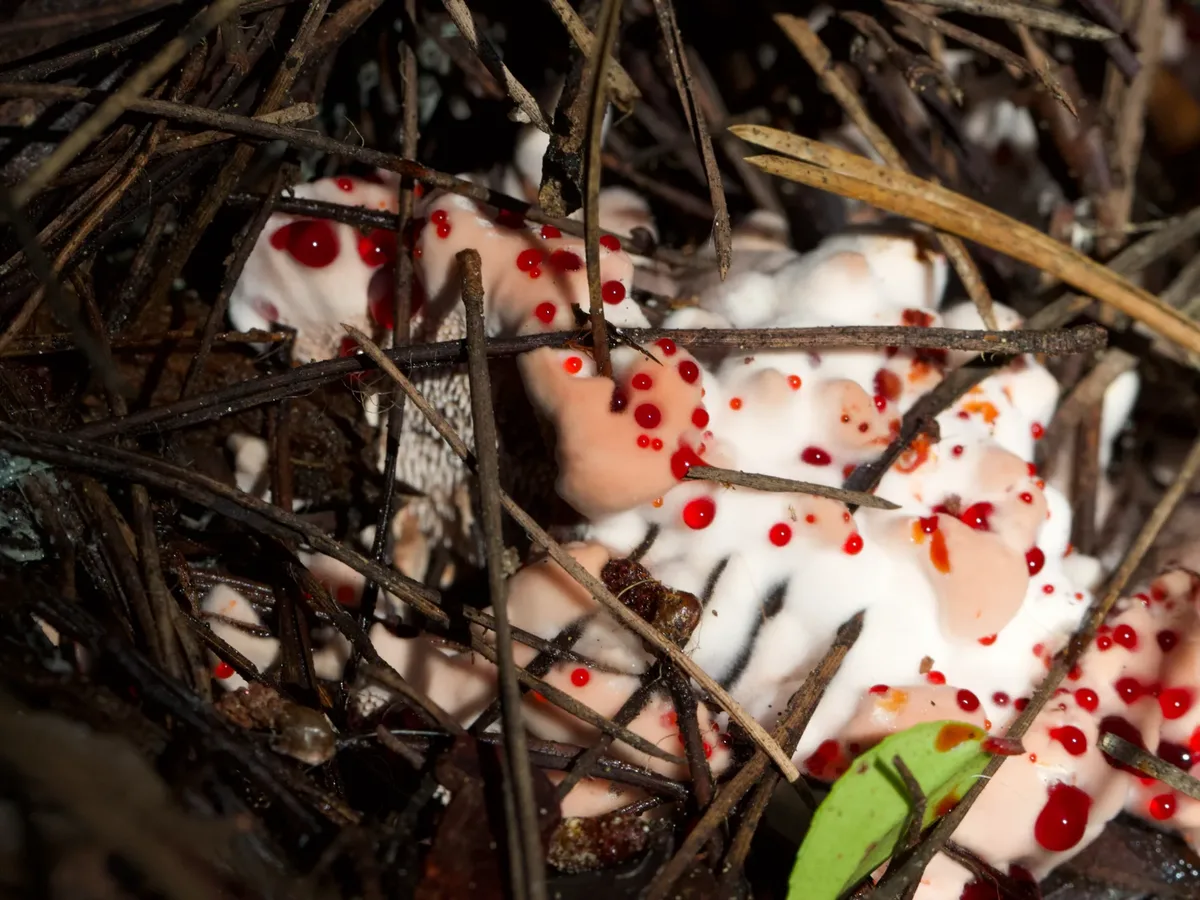 © Arvel Hernandez (CC BY)
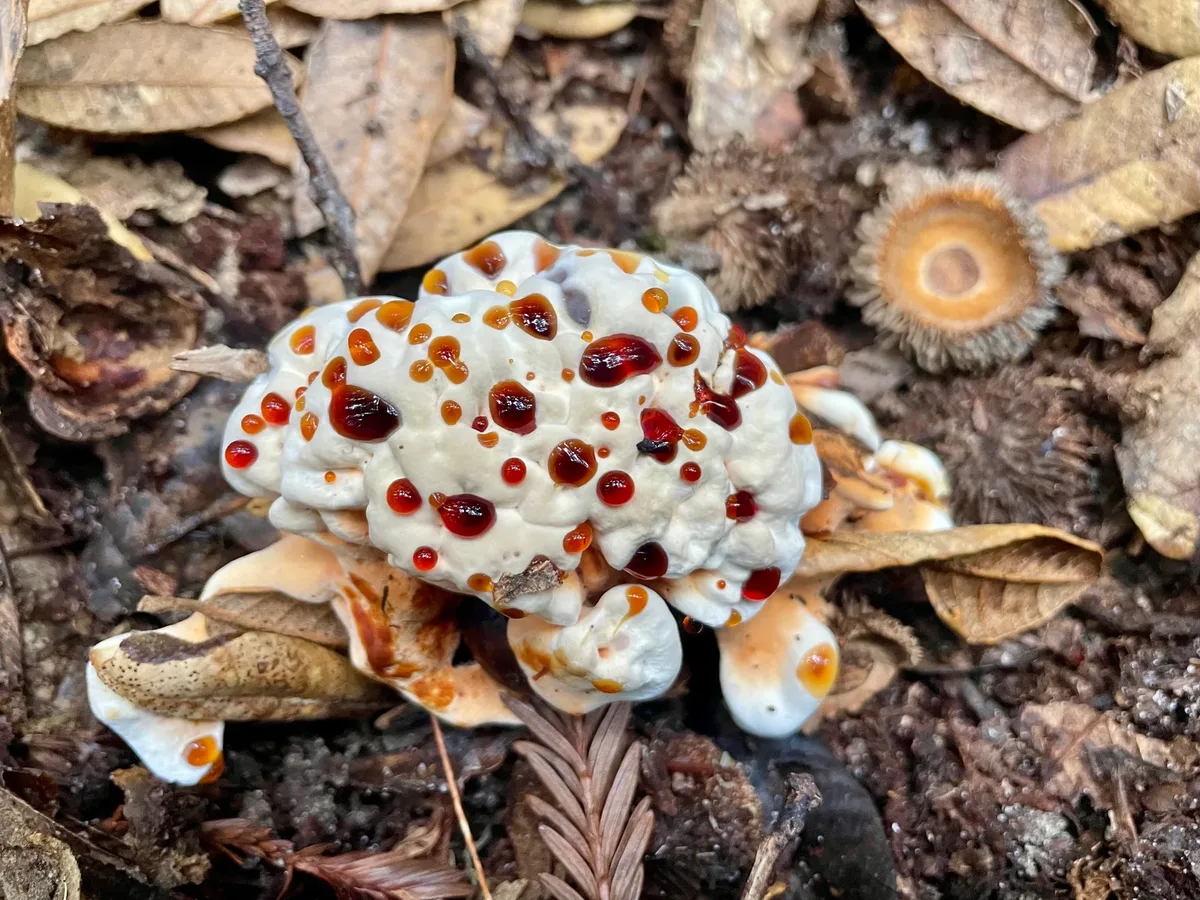 © Dutza K. (CC BY)
 © Nils Edvard Stokke (CC BY)
 © Nils Edvard Stokke (CC BY)© Casey Helton Photography (CC BY 2.0)© Casey Helton Photography (CC BY 2.0)
Not poisonous, but not worth eating - too tough, bitter, or bland for the pot.
How to recognise it
Hydnellum peckii is one of the most visually arresting mushrooms in northern forests.
Cap
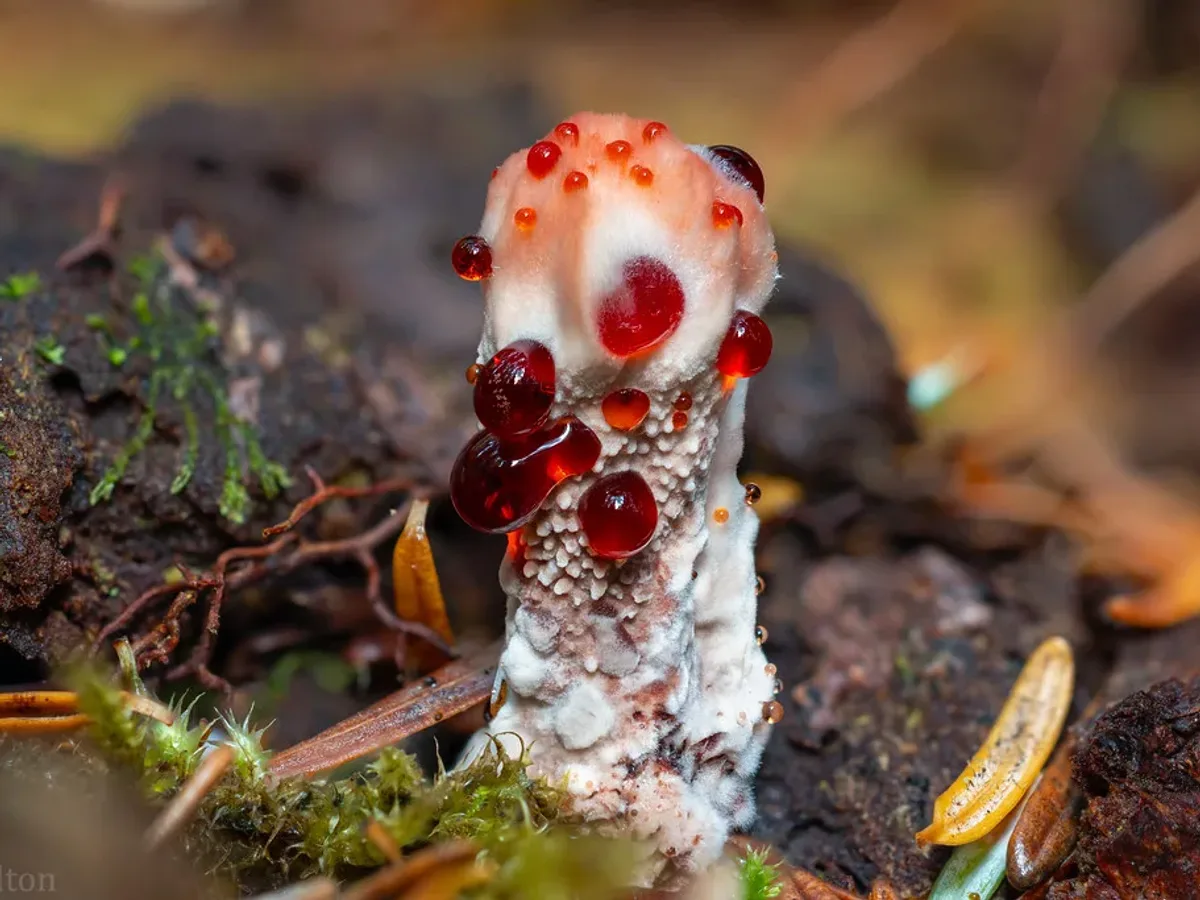
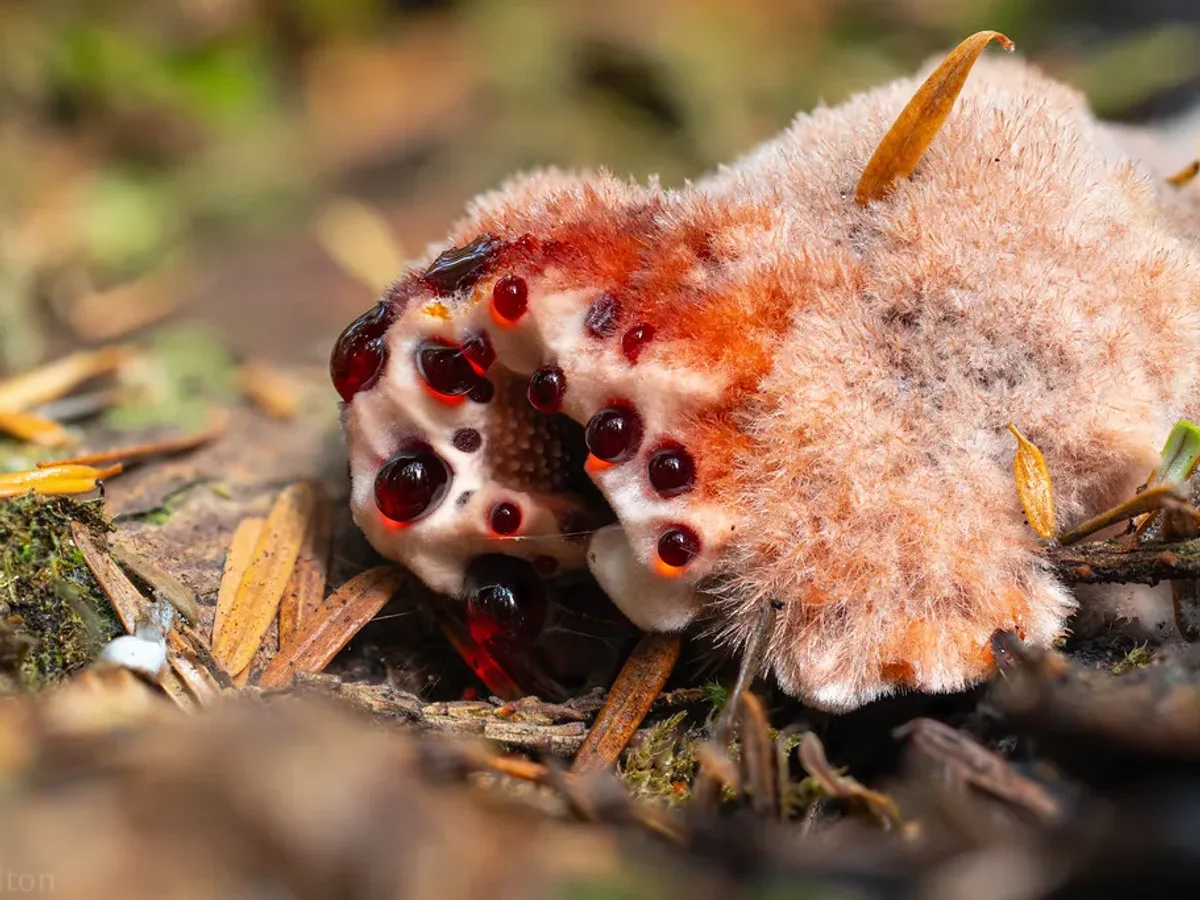
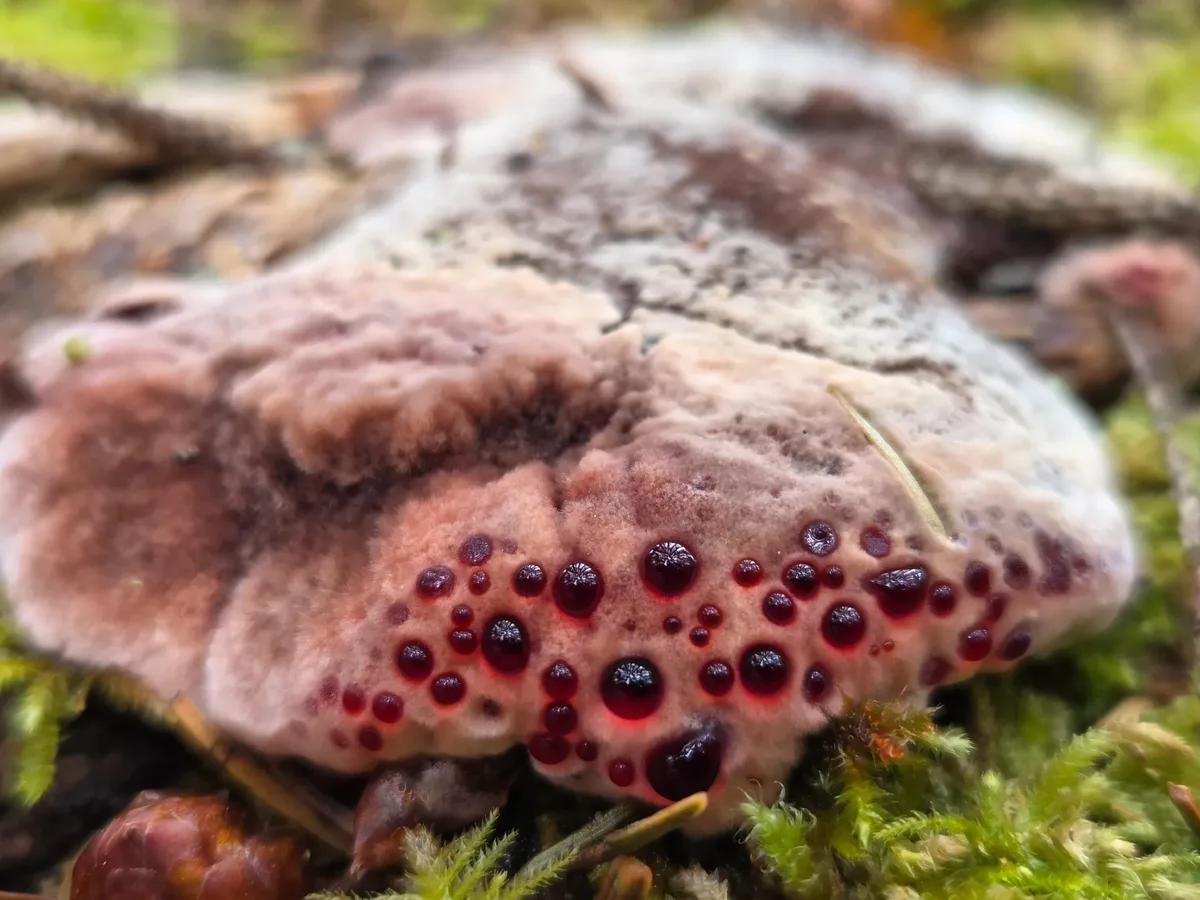
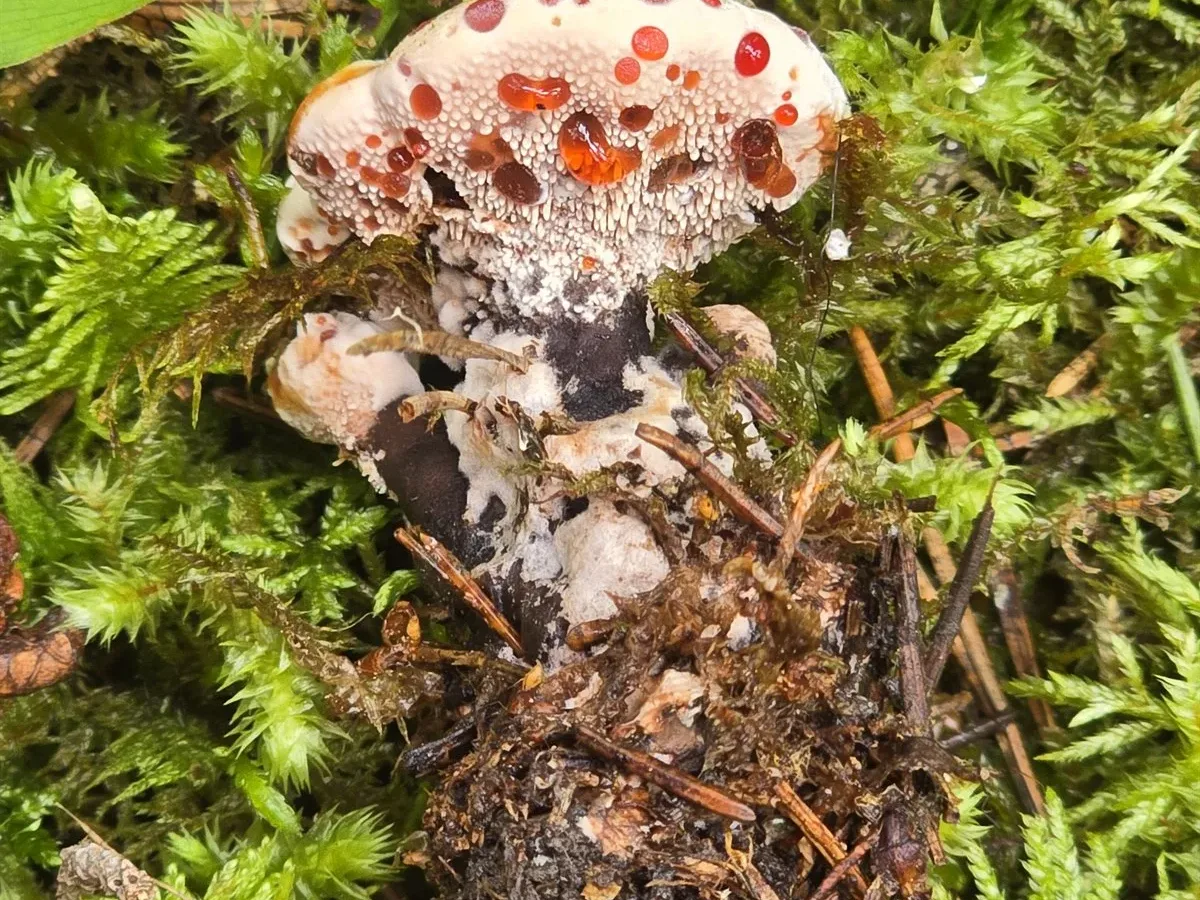
Young fruitbodies, while the cap is still cushion-shaped and white to cream, exude vivid scarlet to blood-red droplets of fluid from specialised pores across the cap surface - the pigmented guttation fluid that inspired every one of its common names.
This exudate is driven by osmotic and hydrostatic pressure within the growing mycelium and fruitbody tissue. Lay observers sometimes describe it as haemolymph, though it is simply a pigment-rich sap unique to this species and its close relatives.
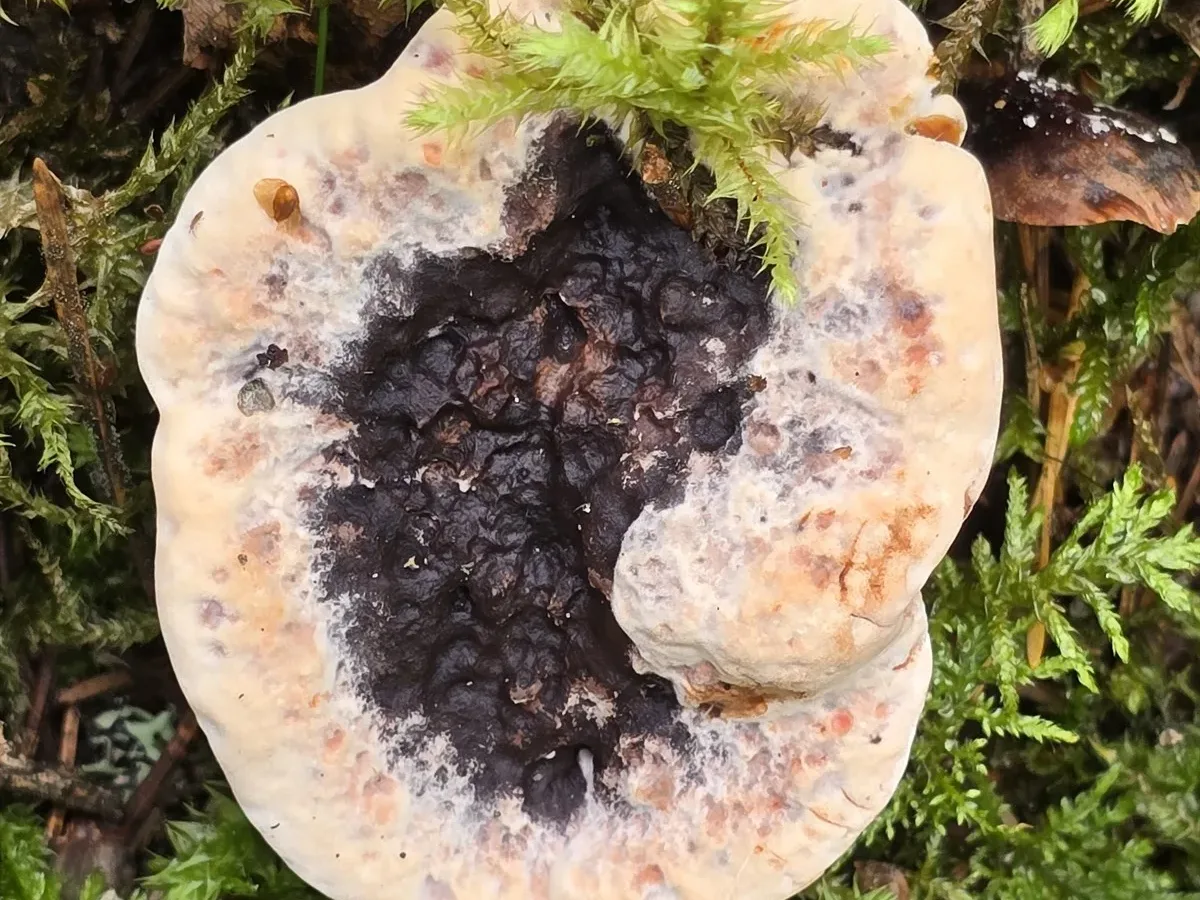
As the fruitbody matures, the white pileus gradually takes on concentric tawny-brown zones, the tomentose (velvety) surface becomes roughened, and the red fluid dries to rusty stains.
The underside bears densely packed spines or teeth - up to 7 mm long, initially white then pale brown - that set the genus Hydnellum apart from smooth or pored fungi.
Stem
The stout, often compound stem is buried in litter and encrusted at its base.
Flesh
Flesh is pale grey-white, firm and corky in the cap, tougher toward the base, and extraordinarily bitter - a single small piece placed on the tongue is an unmistakable identification character.
Spore print brown; spores tuberculate and brown-walled under the microscope.
Where & when it grows
Habitat
Hydnellum peckii forms ectomycorrhizal partnerships with conifers, almost exclusively pines in Europe and a broader range of conifers (pine, spruce, fir, Douglas-fir) in western North America.
It is characteristic of old, undisturbed forest with deep acidic humus and sparse ground vegetation.
In Scandinavia and central Europe, stands of Scots pine (Pinus sylvestris) on sandy or podsolised soils are the primary habitat, and the species is considered an old-growth indicator used in conservation assessments.
In the Pacific Northwest, mature Douglas-fir and pine forests from coastal lowlands to montane zones support the species.
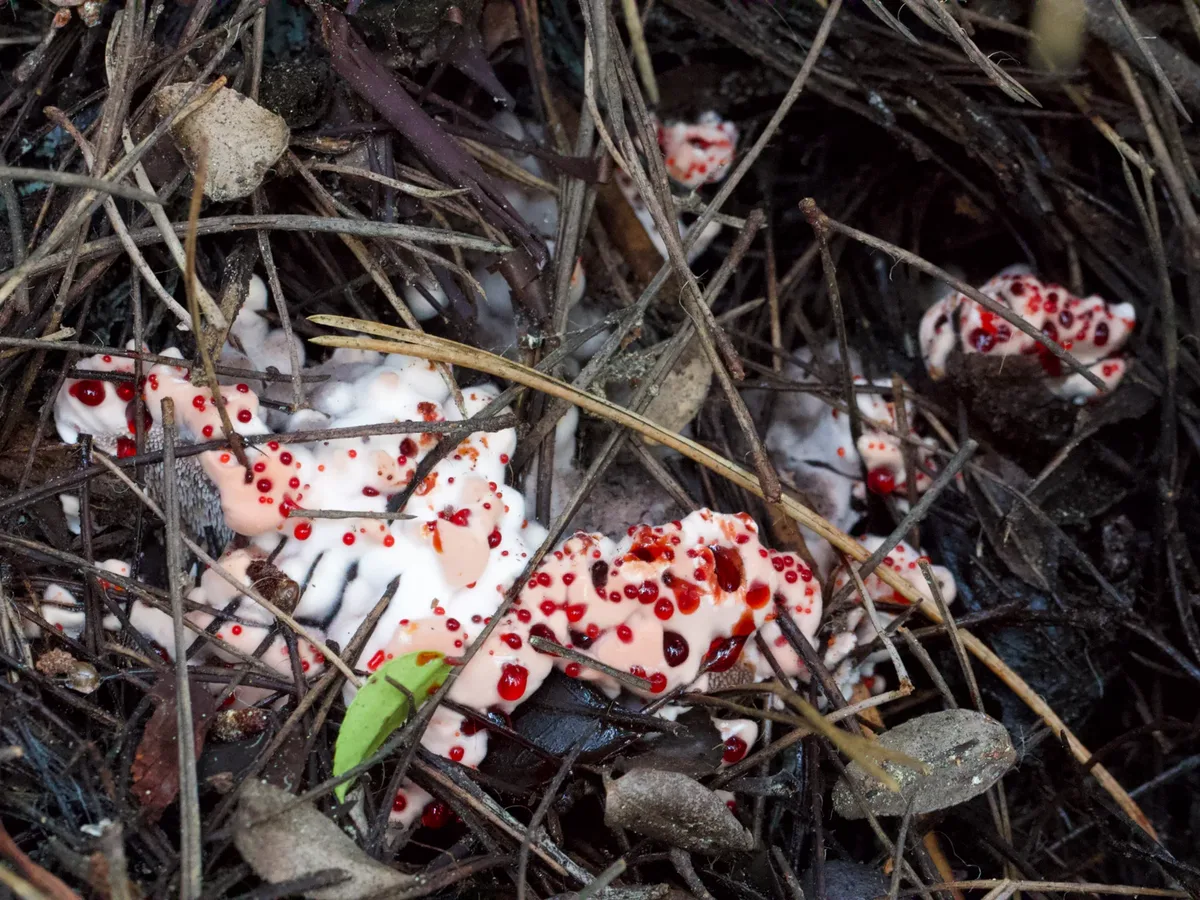
Look for it among mosses, heathers, and bilberry in northern Europe, and in the deep duff of old-growth conifers in the Pacific Northwest. It is typically encountered in small clusters arising from a shared mycelial mat.
When
Fruiting occurs from midsummer through late autumn - July to November across its northern range.
The iconic red-droplet stage is seen on fresh young caps during cool, moist weather; this feature vanishes as caps age and dry out.
Peak fruiting is late August through October in most regions. It is not a spring fungus.
How it grows
Fruitbodies develop from a common basal mycelium, often forming compound masses of two to four individual caps fused at the base.
They grow slowly from a tiny, pale cushion, progressively widening and developing spine-bearing undersurface as the cap expands.
The tomentose cap surface and concentric zonation become more pronounced with age. Guttation is most dramatic in young, rapidly growing specimens under high humidity.
Fruiting conditions
Most likely to fruit after cool, wet autumn weather following a warm late summer; requires sustained soil moisture and relatively stable cool temperatures. Guttation most visible within 24-72 hours after overnight rain on young fruitbodies.
Look-alikes
In the Pacific Northwest and montane Europe, several other stipitate hydnoid fungi (toothed fungi with a central stem) may cause confusion:
- Hydnellum aurantiacum - orange-brown cap and orange flesh without red guttation droplets; its flesh is less extremely bitter.
- Hydnellum suaveolens - similarly dark cap but distinctively sweet, anise-like smell.
- Hydnellum caeruleum - blue-grey tones in the cap and flesh.
- Bankera violascens - similar general form but paler cap and distinctly spicy smell.
None of these are dangerous confusions, as all stipitate hydnoids are inedible and no species in this group is known to be toxic in the typical culinary sense.
The genus Phellodon (with white-fleshed species) and Sarcodon (which has scaly caps) could superficially resemble Hydnellum species but differ in texture, smell, and flavour.
The distinctive red guttation of fresh H. peckii is essentially diagnostic among northern European and Pacific Northwest species.
H. caeruleum shows conspicuous blue-grey zones in the cap and flesh, distinguishing it from the predominantly white-to-brown H. peckii.
H. aurantiacum has a distinctly orange to rust-orange cap and orange-tinted flesh; it lacks the vivid blood-red guttation droplets of H. peckii. Both are inedible.
Sarcodon imbricatus has a large, prominently dark brown scaly cap (scales recurved like roof tiles), longer spines, and lacks any guttation; flesh is firmer and less bitter. Also inedible - some populations cause gastrointestinal upset.
H. suaveolens has a similar dark-brown cap but emits a strong, pleasant anise or sweet smell quite unlike the faint mealy odour of H. peckii; also lacks red guttation.
Phellodon species have white to grey flesh (not pale grey-blue) and a spicy to fragrant smell; they do not produce red guttation droplets.
In the kitchen
Picking & cleaning
There is no foraging interest in Hydnellum peckii. The flesh is intensely and persistently bitter - far beyond palatability - making it inedible regardless of cooking method.
Experienced foragers treat it as a prize photographic subject rather than a harvest target.
Leave it in place; it is mycorrhizal and its removal or disturbance is unnecessary.
In several European countries where old-growth coniferous forest biodiversity is under pressure, collecting any part of the fruitbody is discouraged on conservation grounds.
Cooking
Hydnellum peckii must not be eaten. It is classified as inedible - not because it contains a catalogued lethal toxin, but because its flesh carries an intense, acrid bitterness that no culinary technique can neutralise.
The bitter compounds responsible - primarily atromentin and related thelephoric acid derivatives - are heat-stable and water-soluble only to a limited degree.
These methods do not remove the bitterness to any useful extent:
- Boiling and discarding the water
- Repeated blanching
- Drying
- Prolonged marinating
Tasters who have attempted to cook this species consistently report the result as inedible and unpleasant.
Beyond the flavour problem, atromentin has documented biological activity including anticoagulant properties identified in early pharmacological research, and the full spectrum of effects from repeated or concentrated ingestion has not been evaluated in humans.
There is no traditional culinary use of this species anywhere in its range.
Treat it as what it is: a spectacular forest object to observe and photograph, not a food item.
Good to know
Hydnellum peckii is not known to contain lethal toxins. However, it is inedible due to intensely bitter, acrid compounds that persist through cooking and cause significant gastrointestinal discomfort if consumed in any quantity.
There are no documented fatalities attributed to this species.
Research has identified atromentin and related thelephoric acid pigments responsible for the red pigmentation. Atromentin also has biological activity (anticoagulant properties were noted in early pharmacological studies).
There is no evidence that casual skin contact with the guttation fluid is harmful, though it will stain fingers and clothing reddish-brown.
Do not eat this mushroom under any circumstances - not because it is lethal, but because it is genuinely unpalatable and its tissue components have not been fully evaluated for chronic toxicity.
A reference guide - never an edibility guarantee. When in doubt, leave it out.