Ruby bolete
Hortiboletus rubellussyn. Boletus rubellus, Boletus versicolor, Xerocomus rubellus
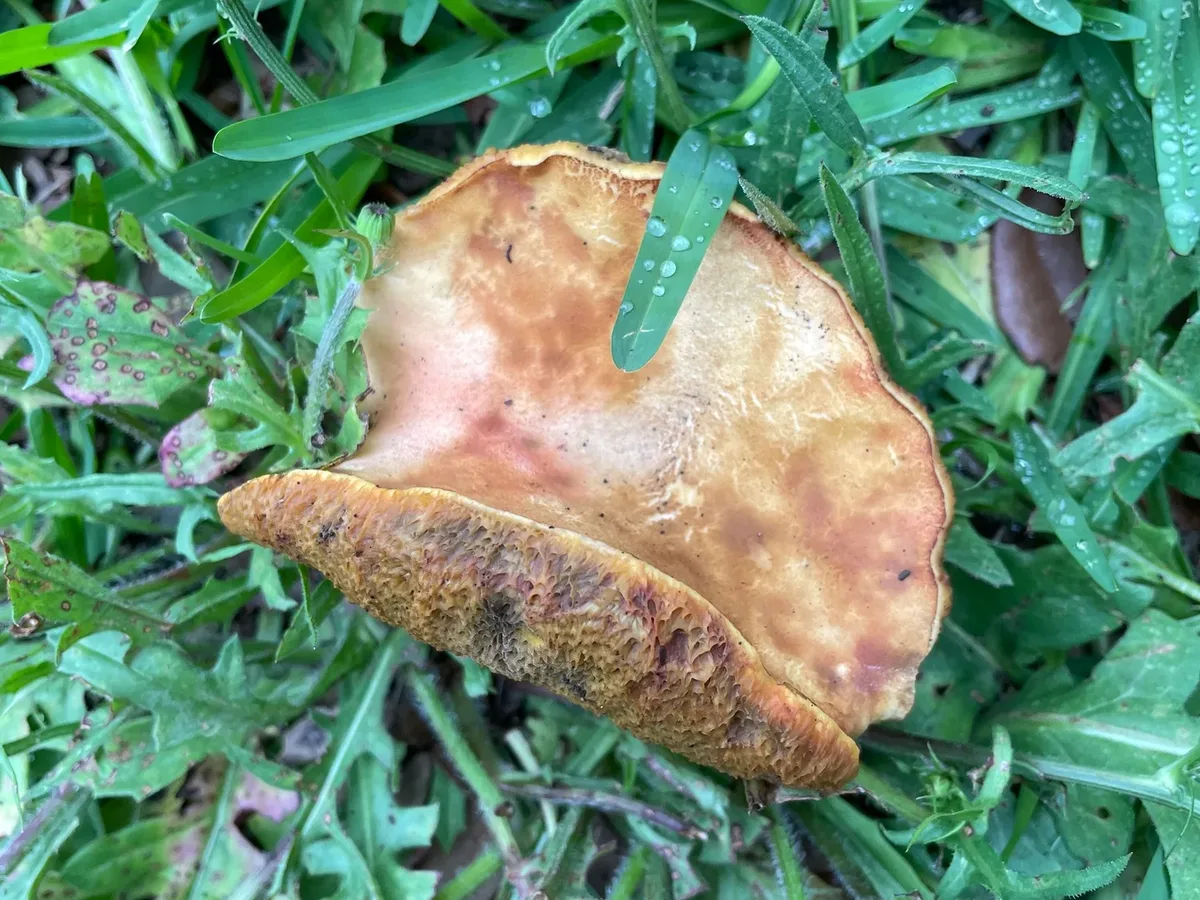 © Bethany Harrison (CC BY 4.0)
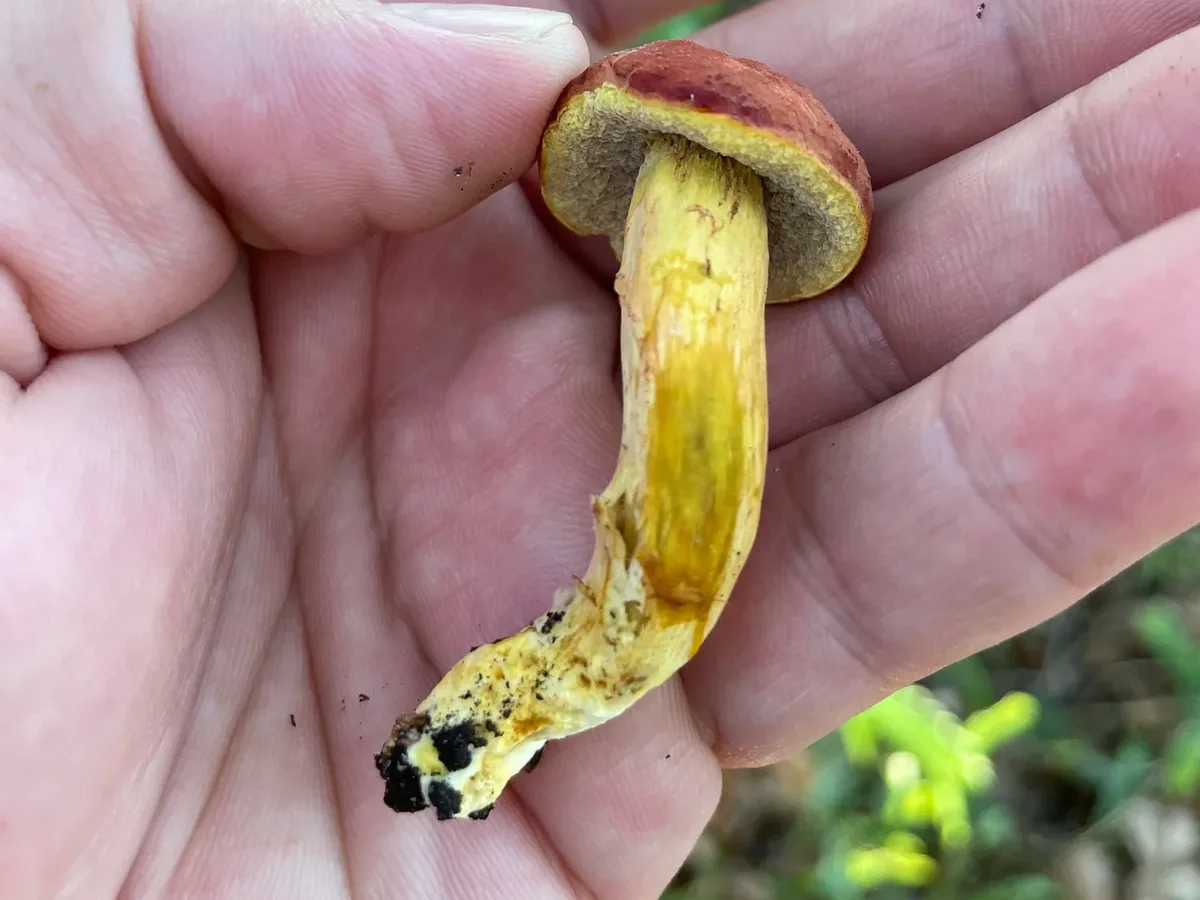 © Tres Fisher (CC BY-SA 4.0)
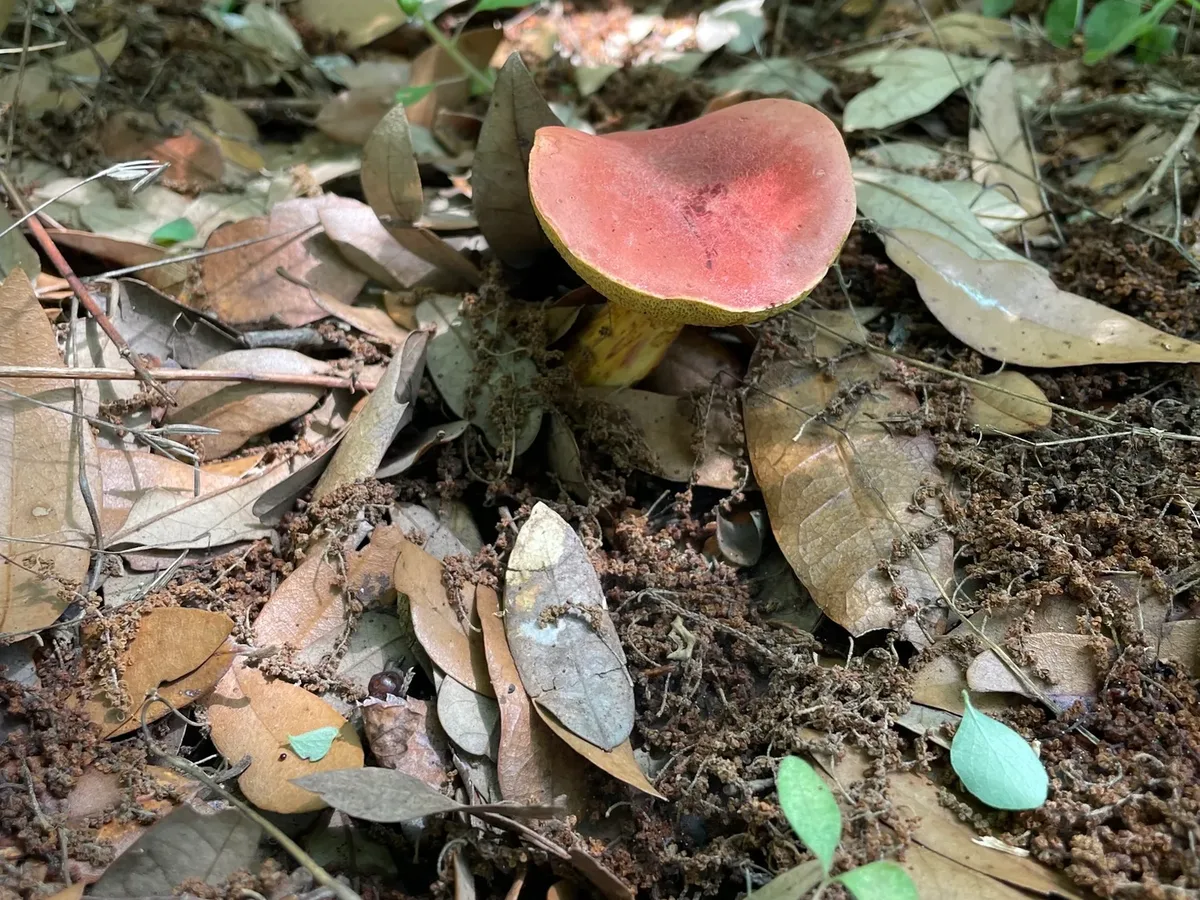 lanechaffin (CC0)
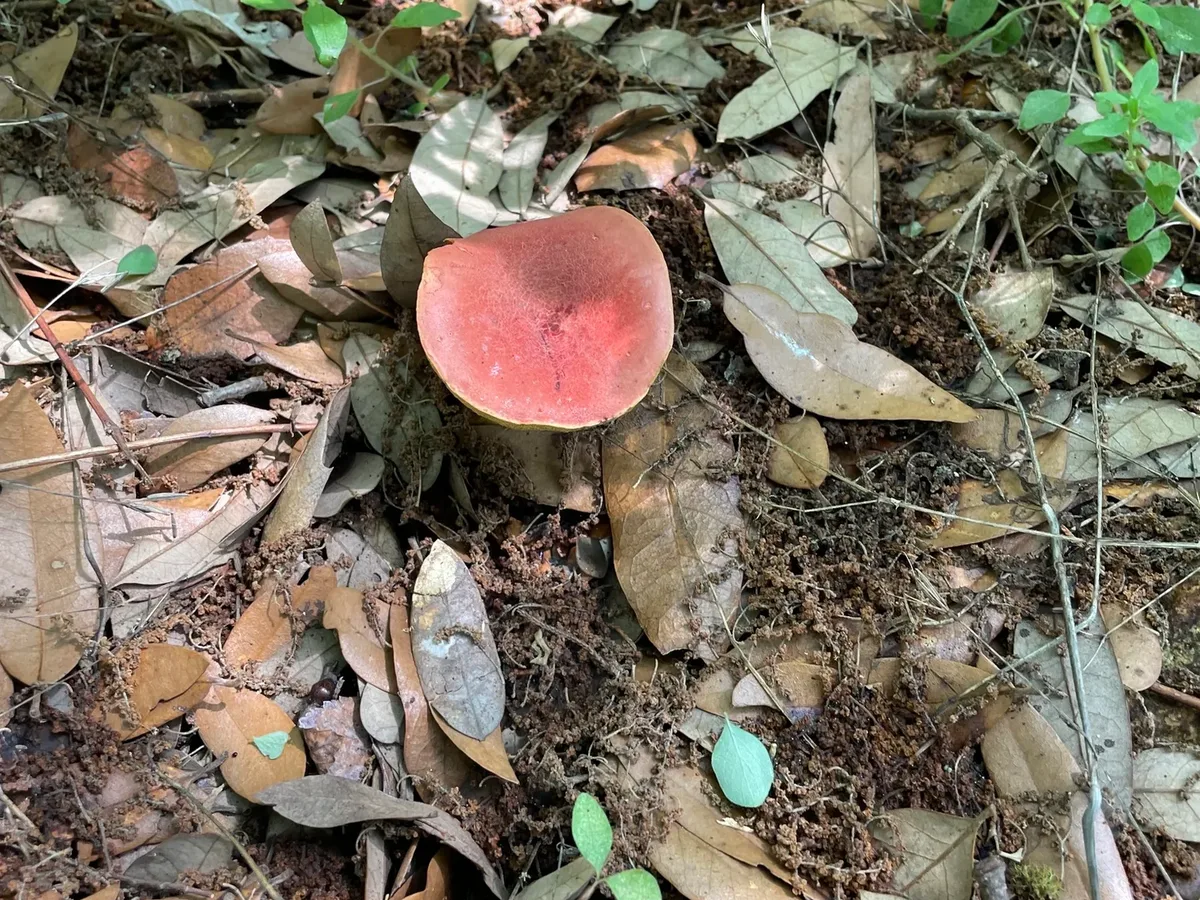 lanechaffin (CC0)
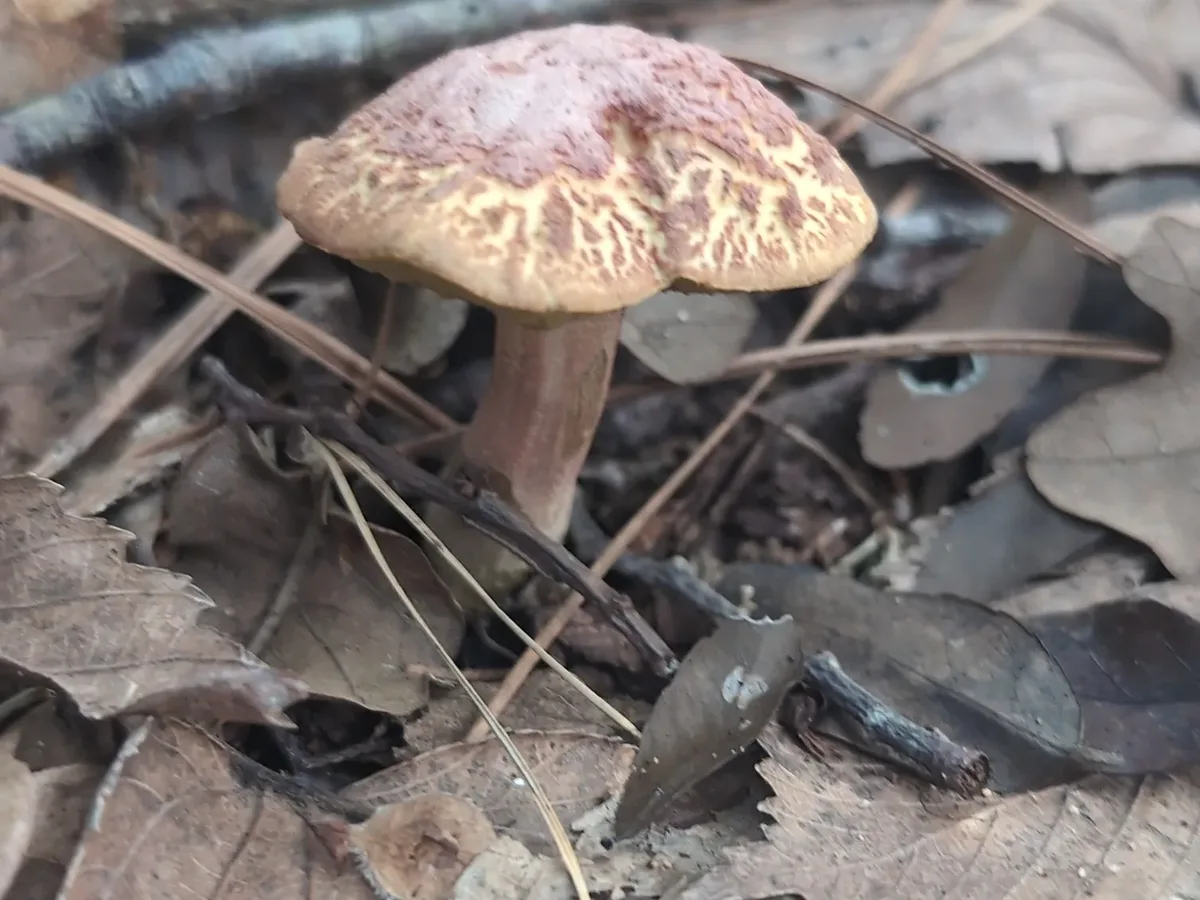 Wendy A (CC0)
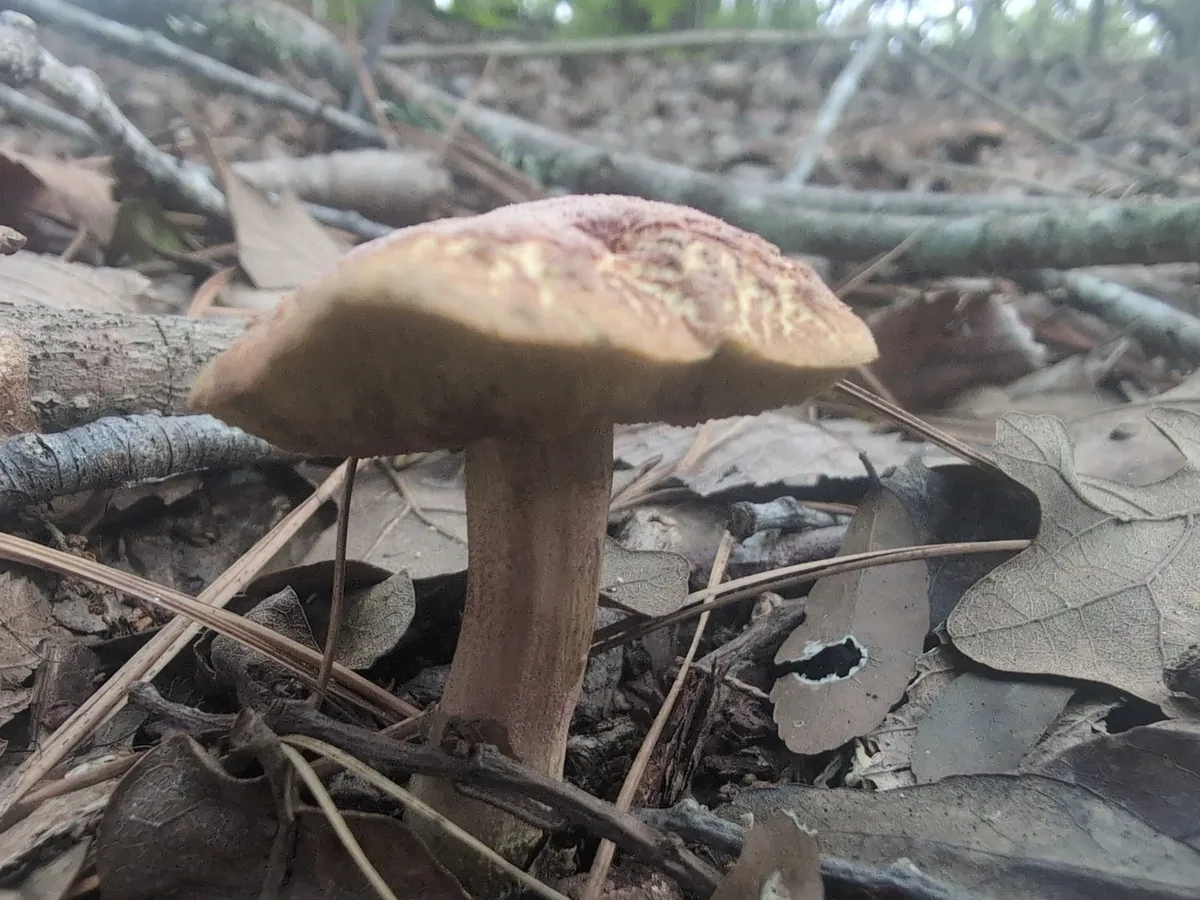 Wendy A (CC0)
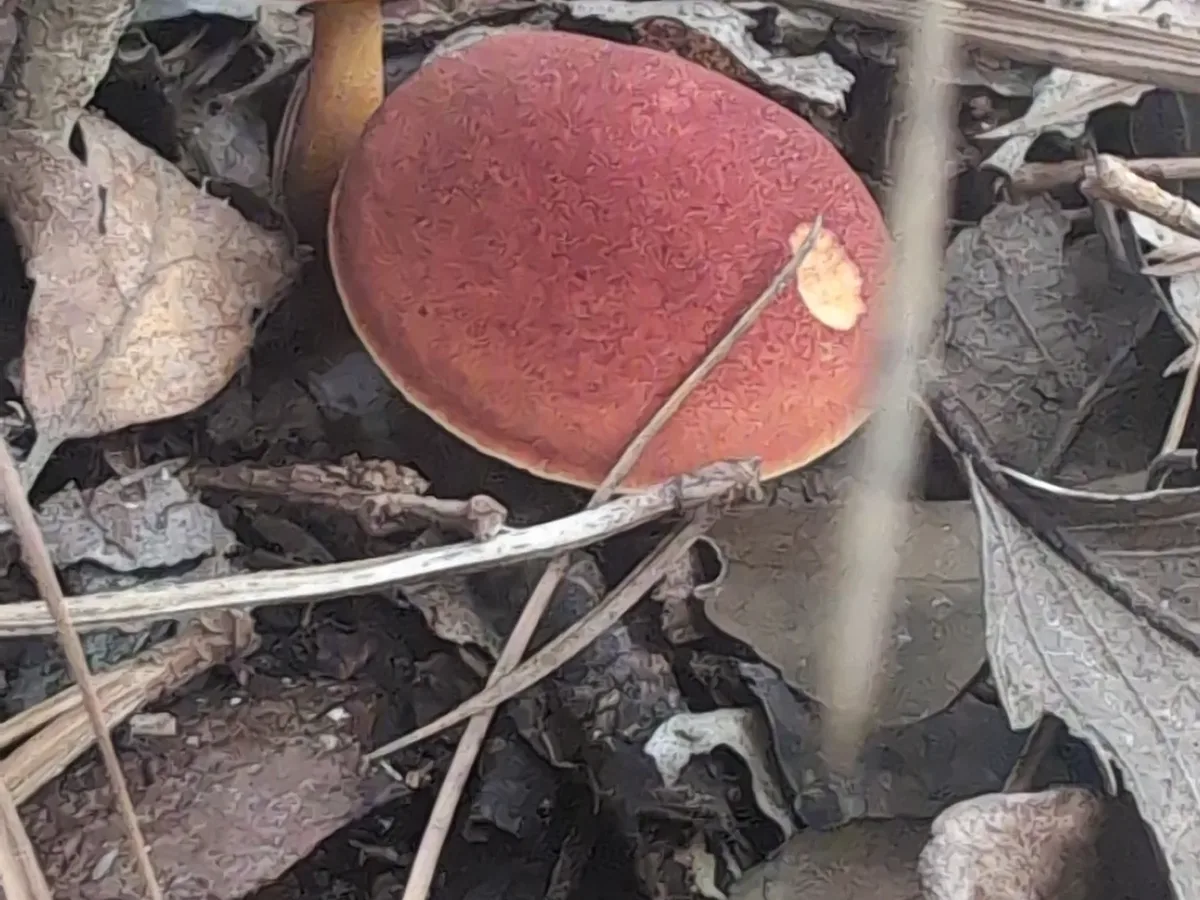 Wendy A (CC0)
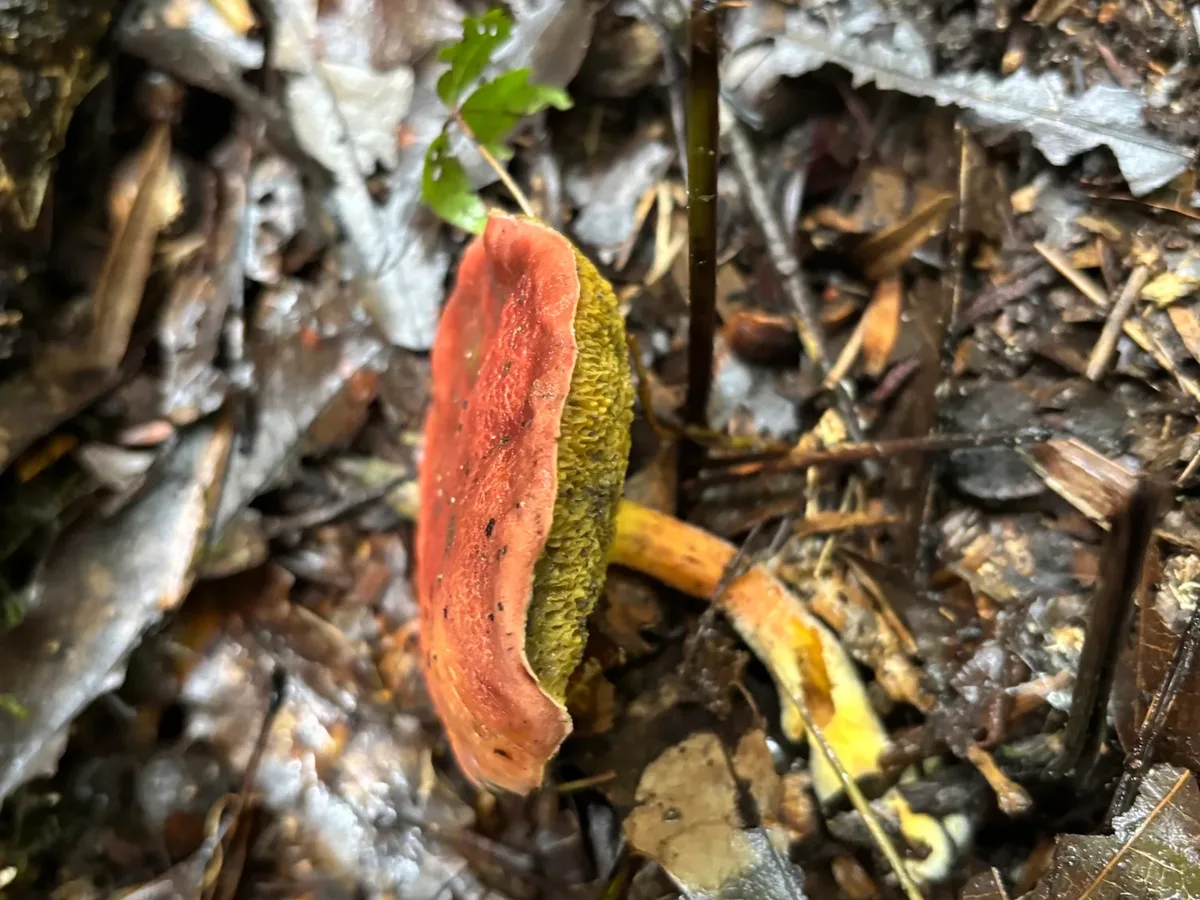 © Alejandra Denisse Hernández (CC BY)
 © Alejandra Denisse Hernández (CC BY)
 © Morten Pettersen (CC BY)© Bethany Harrison (CC BY 4.0)© Tres Fisher (CC BY-SA 4.0)
Edible only with the right preparation - or safe for some people but not others. Learn the caveats first.
Never eat a mushroom you are not 100% sure of - check the look-alikes below, and always cook wild mushrooms.
How to recognise it
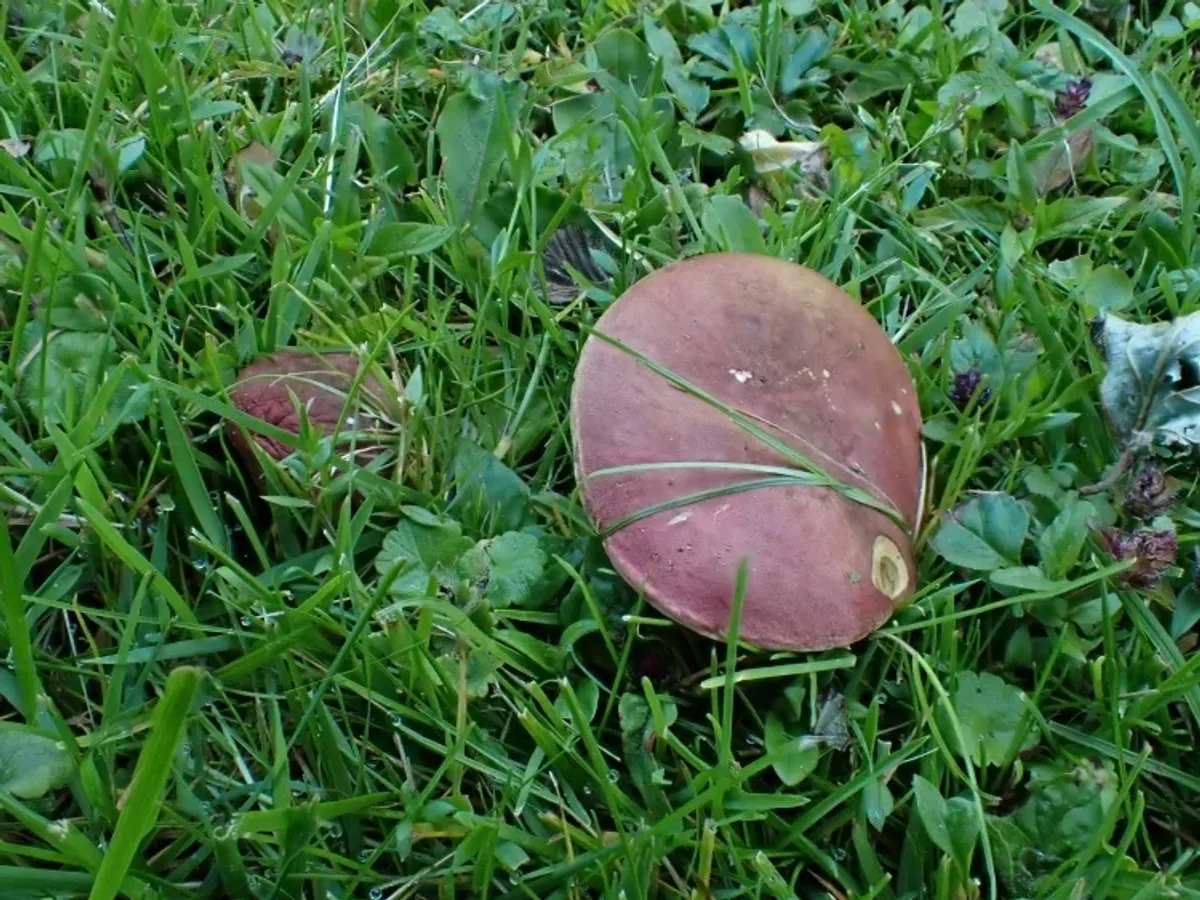
The ruby bolete announces itself clearly: a vivid blood-red to brick-red cap, rarely wider than 8 cm, sitting low in short grass near trees.
Cap
At first it is convex and smooth-felty, but with age the dry red skin splits into irregular polygonal patches - a craquelure of crimson over pale yellow flesh - one of the most reliable ways to confirm what you are looking at. Most specimens you find will be in the 3-5 cm range; this is not a large mushroom.
Pores
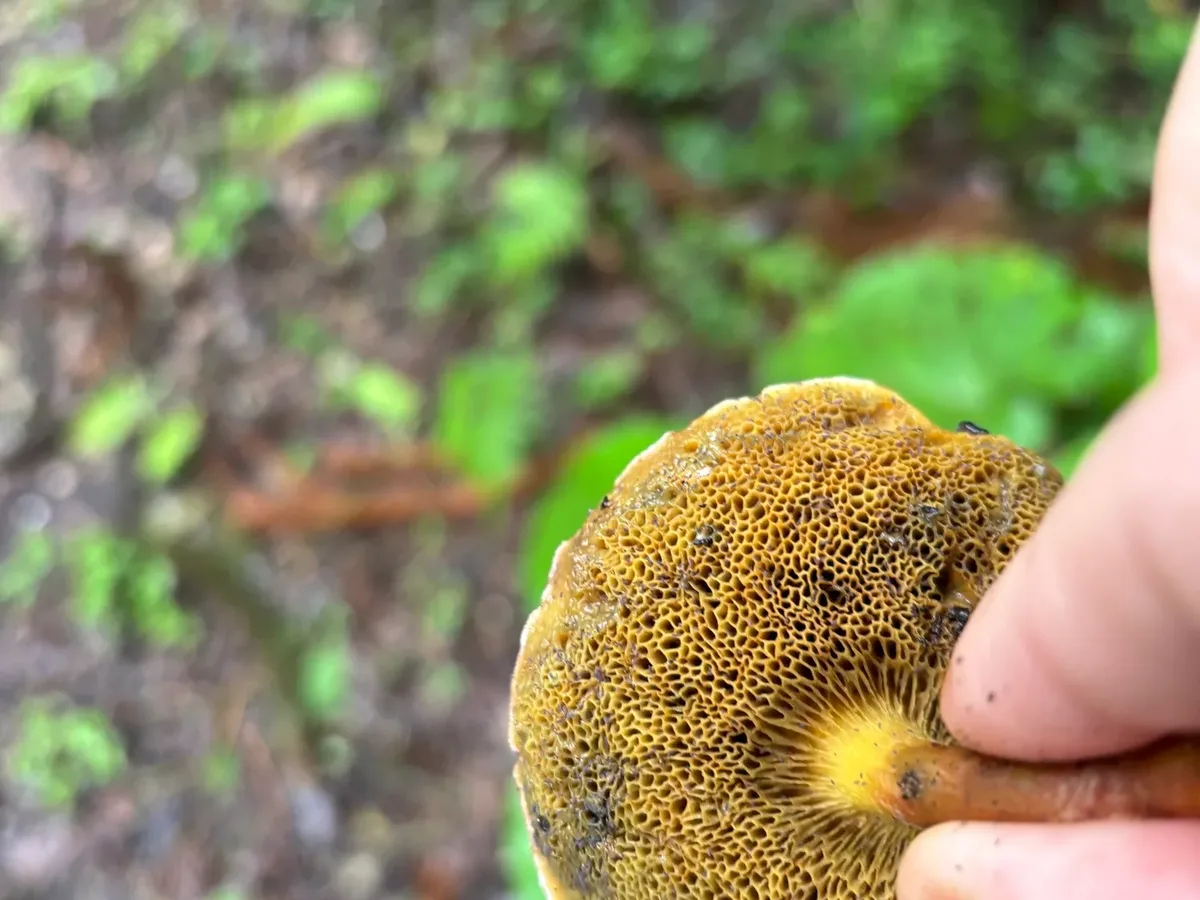
Turn it over and the pore surface is bright lemon-yellow when fresh, slowly going olive-yellow. The yellow flushes gently blue when you press or cut it - the reaction is real but unhurried (allow 20-40 seconds).
Stem
The stem is bicoloured without any reticulate network: yellow at the top, red to reddish-brown below, smooth rather than patterned.
Flesh
Flesh is pale yellow and turns weakly blue when exposed.
The overall impression in the field is of a small, jewel-like red cap on yellow pores, sitting in short grass in the shadow of a tree.
Where & when it grows
Habitat
The ruby bolete is a creature of open, parkland-style places rather than deep forest. It lives its quiet mycorrhizal life in old municipal parks, ancient hedgerows, village commons, road verges with mature oaks, and the grassy fringe where woodland gives way to meadow, threading roots below lawns that have been mown for generations.
It favours neutral to mildly calcareous soils and a mycorrhizal partnership with oak (Quercus spp.) and lime (Tilia spp.), though it has been found under horse chestnut and various Rosaceae shrubs too.
The search image is: scattered mature broadleaf trees plus short, grazed or mown grass. It is far less at home in closed-canopy forest than most other boletes.
When
The ruby bolete fruits earlier in summer than many of its forest-dwelling relatives. First specimens appear from June onward once soil temperatures pass 12-14 °C following rain, and the main flush runs through July and September.
A secondary flush is possible in October during warm autumns. Because its grassy, open habitats warm faster than forest floor, flushes can arrive several days ahead of forest boletes after the same rainfall.
A good rule of thumb: look 7-14 days after significant rainfall (>15 mm) during warm summer conditions.
How it grows
Solitary to scattered, occasionally in loose troops of 3-6 fruiting bodies across a patch of turf.
Like many boletes, it moves fast: caps can push from a button to full size in 48-72 hours under good conditions, and they age and decay just as quickly in warm weather. Prime picking windows can be brief.
Beneath the grass the mycelium maintains shallow ectomycorrhizal connections with tree roots, a partnership that may persist quietly for years between fruiting seasons.
Fruiting conditions
Warm summer rains (>15 mm over 1-3 days) with sustained soil temperatures above 12 °C trigger fruiting; bodies typically appear 7-14 days after precipitation. Open grassy habitats warm faster than forest floor, so flushes can precede those of forest boletes by several days.
Look-alikes
The most dangerous confusion is with Rubroboletus satanas (Satan's bolete) and related species (R. legaliae, R. rhodoxanthus). These share a red cap and yellow/orange-red pores that blue intensely, but differ from the ruby bolete:
- Large: cap up to 30 cm.
- A distinctive red reticulum on the stem.
- A pale to whitish or light-coloured cap, not blood-red.
- A strong carrion-like smell when fresh.
The bluing in satanoid boletes is almost instantaneous and violent.
Suillellus luridus (lurid bolete) has orange-red pores and a reticulate stem and blues intensely; it is toxic raw.
Neoboletus luridiformis (formerly Boletus luridiformis / erythropus) has a similarly red-staining pore surface and blues intensely, but has a dark brown-olivaceous cap without red tones, no cracking, and a stem densely covered in dark red dots (scabers).
Xerocomellus chrysenteron (red-cracking bolete) is extremely similar - also has a red-cracking cap, yellow pores, and bicoloured stem - but the cap tends toward a more brownish-olivaceous red rather than pure blood-red, and it has no bluing reaction or only the faintest trace. Distinguishing Hortiboletus rubellus from X. chrysenteron is genuinely difficult in the field and the two have long been confused in the literature.
Hortiboletus engelii is a closely related segregate with more vivid red, stronger bluing, and slightly different ecological preference.
Careful attention to degree of bluing, cap colour saturation, and habitat is essential.
Similar to R. satanas but somewhat smaller; cap pinkish-grey to rosy-buff, NOT red-cracking; pores intense orange-red bluing violently; stem with red reticulum. Toxic. The cap colour (pinkish-grey) and stem reticulum distinguish it from H. rubellus.
Much larger (cap to 30 cm), cap pale cream-whitish to grey-ochre (NOT blood-red), pores and stem with vivid red network (reticulum), strong carrion smell when mature, pores blue instantaneously and violently. The pale cap colour is the clearest separator. Causes severe gastroenteritis; treat as deadly.
Sister species; very similar appearance; tends toward more vivid vermilion-red, slightly more vigorous bluing, and fruits more in open xerothermic habitats on calcareous soils. Separation requires microscopy or molecular analysis in many cases. Also caution-rated.
Orange-red pores and a coarse red-orange reticulate stem; cap brown-olivaceous without blood-red tones; blues instantly and intensely. Toxic when raw or undercooked - causes severe GI illness. The reticulate stem and orange-red (not yellow) pores distinguish it from H. rubellus.
Cap dark brown-olivaceous without red, never cracking red; stem densely covered in fine dark red dots (no smooth bicoloured stem); bluing instantaneous and very intense. Considered edible when well-cooked but must not be confused with H. rubellus - the brown cap and dotted stem are definitive.
Extremely similar; cap brownish-olivaceous to brownish-red, less pure blood-red; bluing reaction absent or negligible; pores larger, more angular; flesh does not blue. Edibility variable - mild gastrointestinal upsets reported raw. Key separator is lack of bluing and more brownish (less pure red) cap.
In the kitchen
Picking & cleaning
- Harvest only young to middle-aged specimens with firm, un-cracked flesh and bright yellow pores not yet discoloured to olive-green.
- Reject any with blue staining already present before cutting (indicating ageing or insect damage).
- Trim the base cleanly with a knife.
- Carry in an open basket to allow ventilation.
Given the caution-level edibility rating and potential confusion with toxic lookalikes, positive identification of every key feature - red cap with cracking, yellow pores, bicoloured stem without reticulum, slow bluing - is mandatory before collecting for the table.
Cooking
When identity is certain, young specimens can be used like other small boletes:
- Sliced and sautéed in butter with garlic and parsley
- Added to mixed mushroom risotto
- Dried and powdered as a seasoning
The flavour is mild and pleasant but not outstanding. Always cook thoroughly - never eat raw.
Blanching and discarding the water before final cooking is a prudent step given uncertain gastrointestinal reports. The flesh holds its shape reasonably well in pan-frying but is softer than porcini.
Good to know
Hortiboletus rubellus is regarded as edible by many European authors, but it is rated caution here for several compounding reasons:
- 1It shares the red-cap + blue-staining bolete gestalt with genuinely toxic or deadly species such as Rubroboletus satanas.
- 2The separation from Xerocomellus chrysenteron - which is mildly gastrointestinal in some people when raw - requires close attention.
- 3Its own toxicological profile is imperfectly documented and some reports associate it with mild gastrointestinal upset.
- 4Confusion risk is non-trivial for less-experienced foragers.
Never consume any red-capped, blue-staining bolete unless you are fully confident in its identity. Any bolete with a red or orange pore surface that blues immediately should be treated as potentially dangerous. Do not consume raw.
A reference guide - never an edibility guarantee. When in doubt, leave it out.