Shoehorn oyster
Hohenbuehelia petaloidessyn. Pleurotus petaloides, Acanthocystis petaloides, Hohenbuehelia petaloides var. petaloides, Agaricus petaloides, Crepidotus petaloides
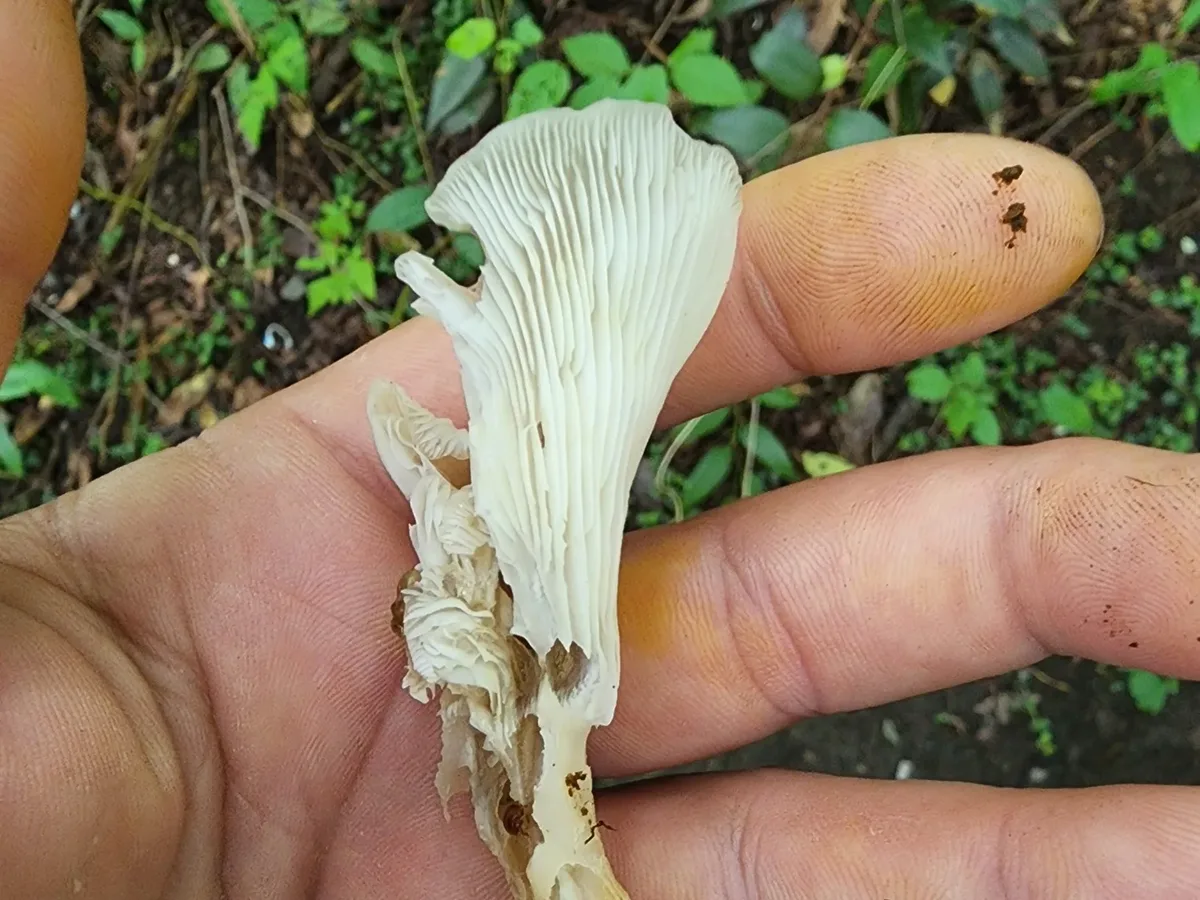 © Eric Hensley (CC BY 4.0)
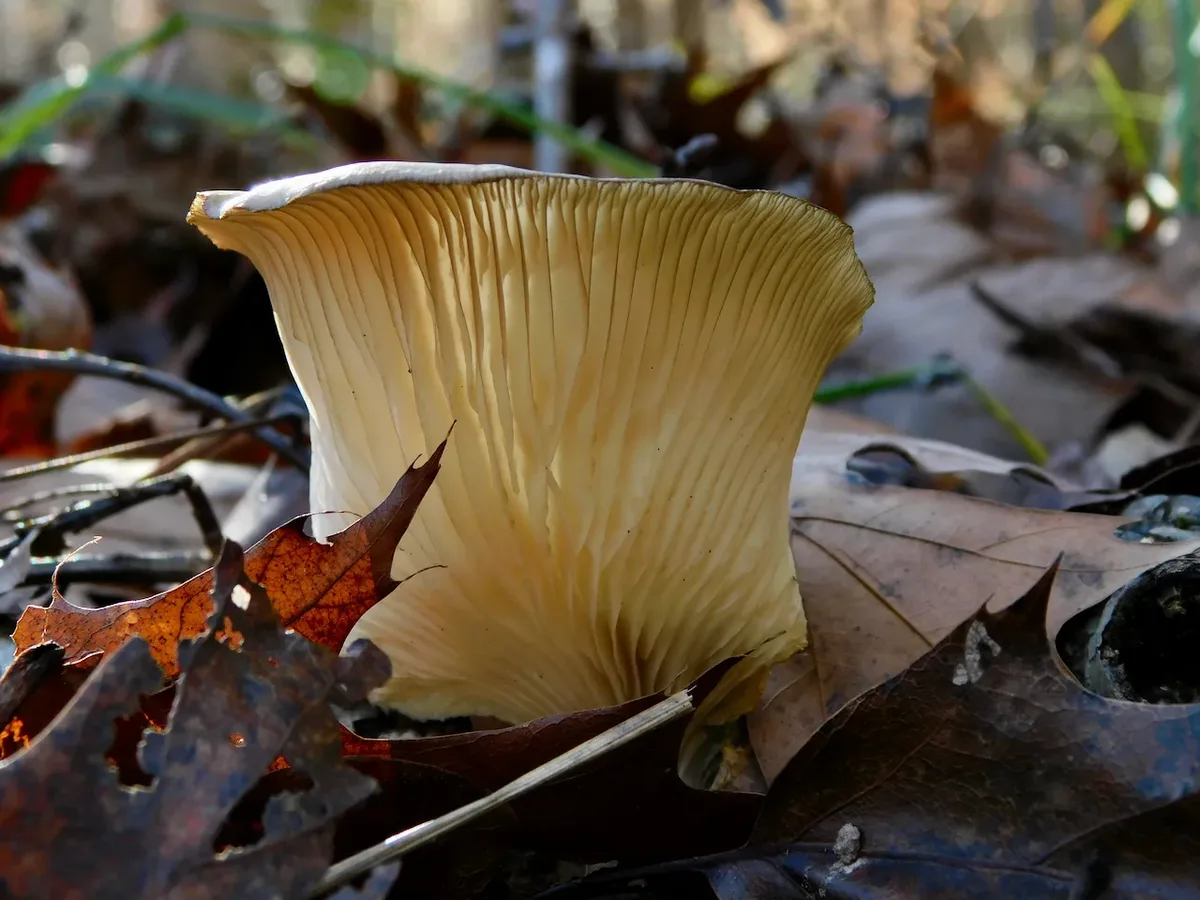 © Michael J. Papay (CC BY)
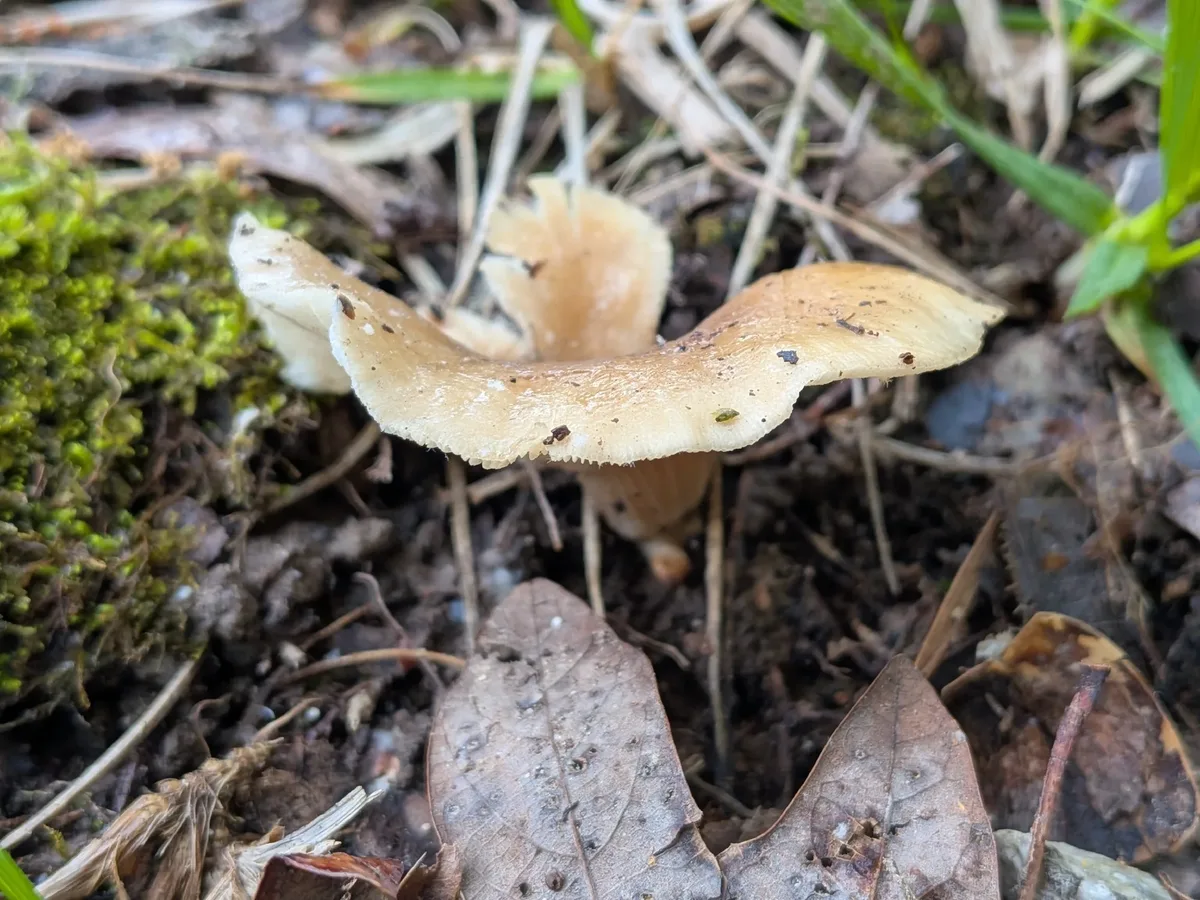 Robert Eberhardt (CC0)
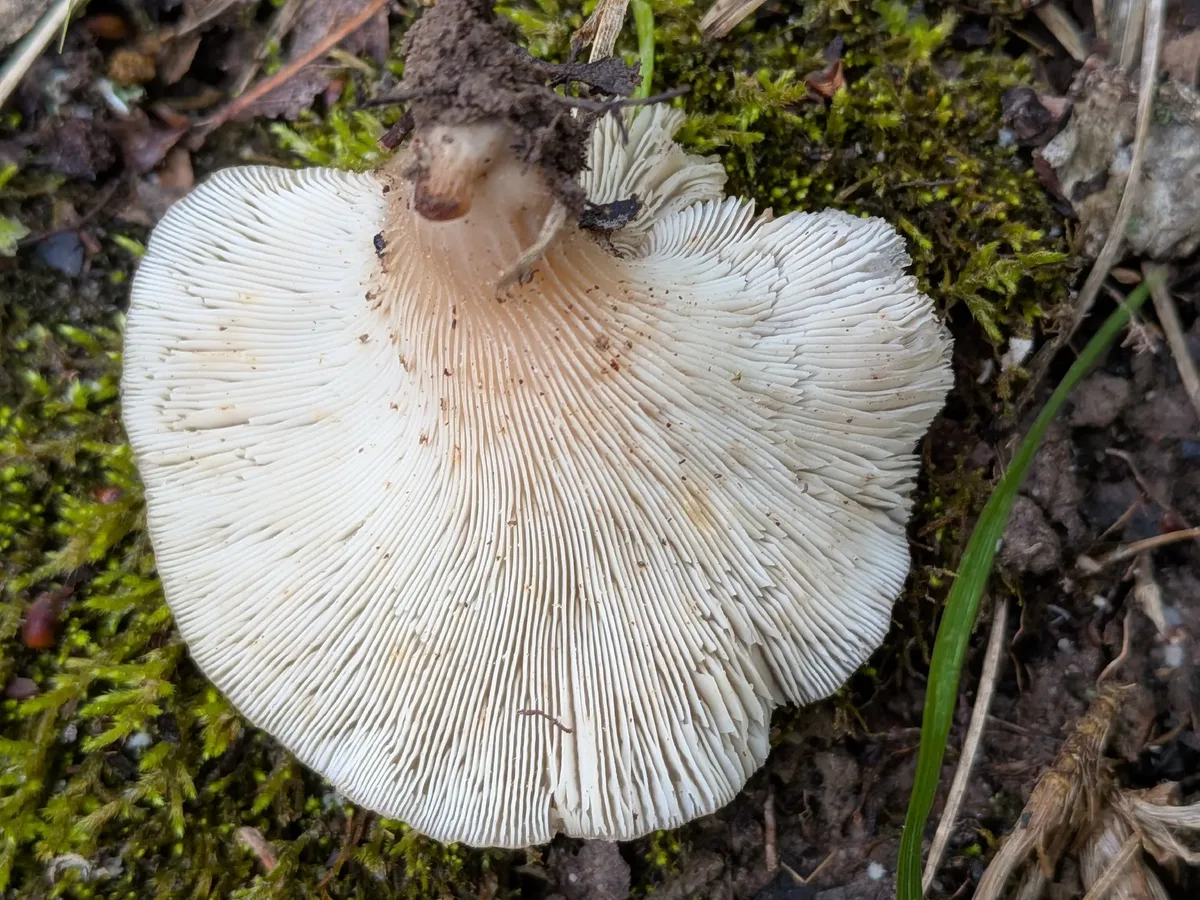 Robert Eberhardt (CC0)
 Robert Eberhardt (CC0)
 © Fluff Berger (CC BY-SA)
 © Fluff Berger (CC BY-SA)
 © Michael J. Papay (CC BY)
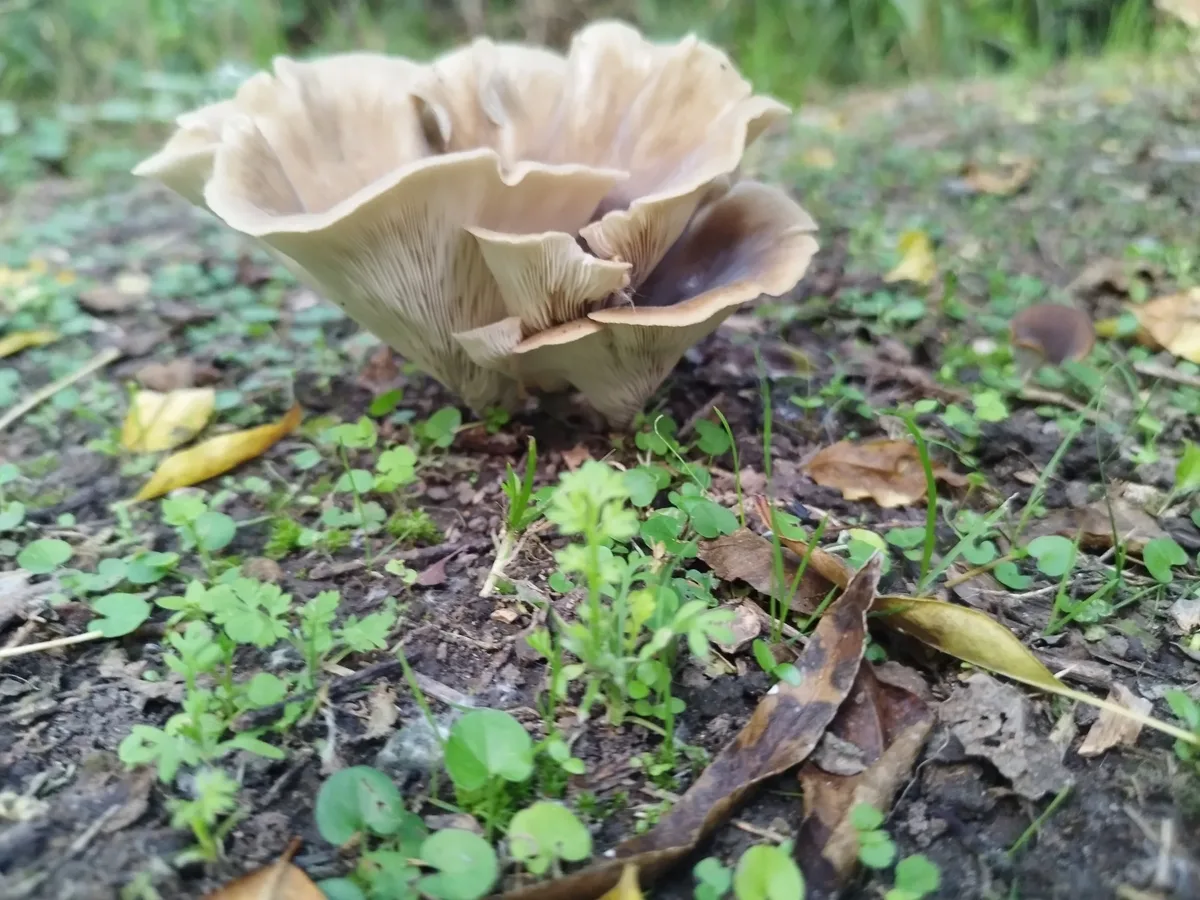 © Sebastián Fornés (CC BY)
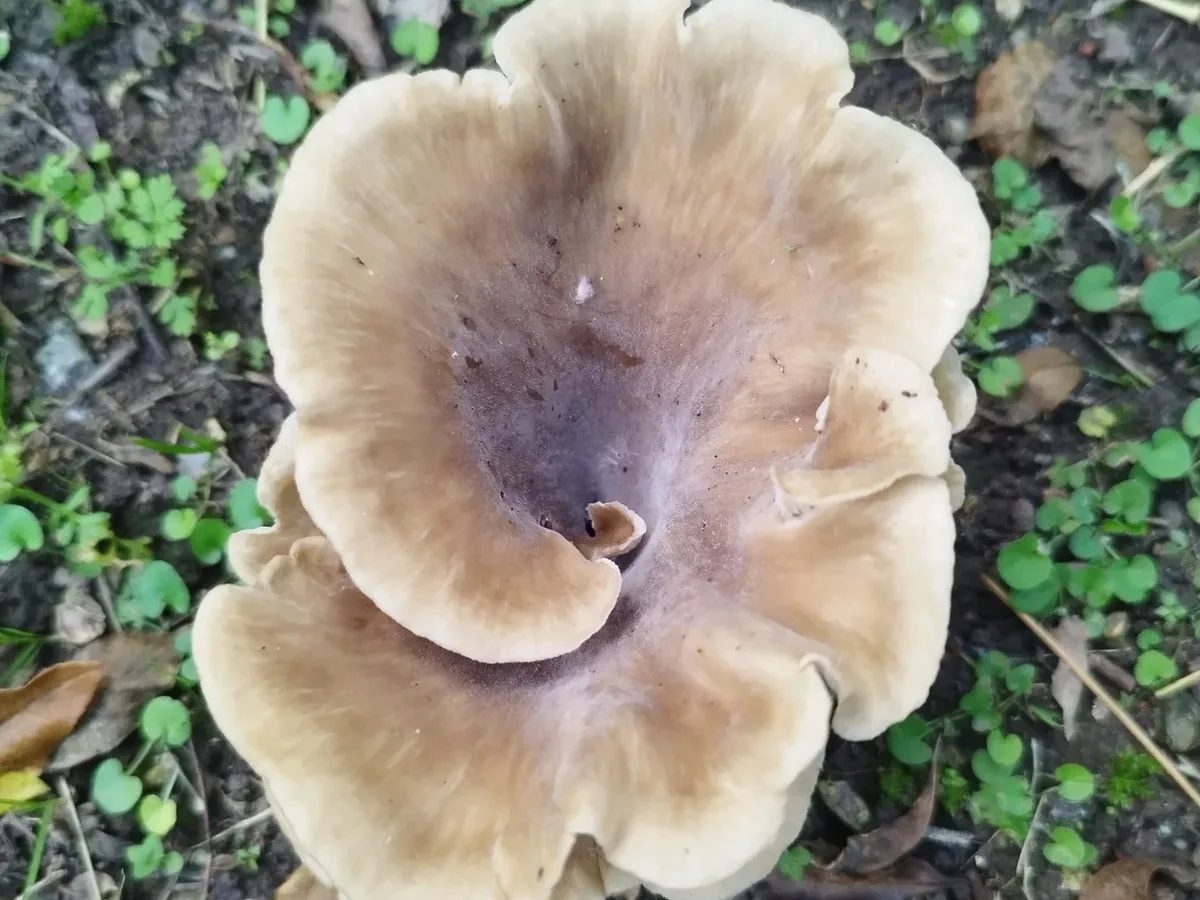 © Sebastián Fornés (CC BY)
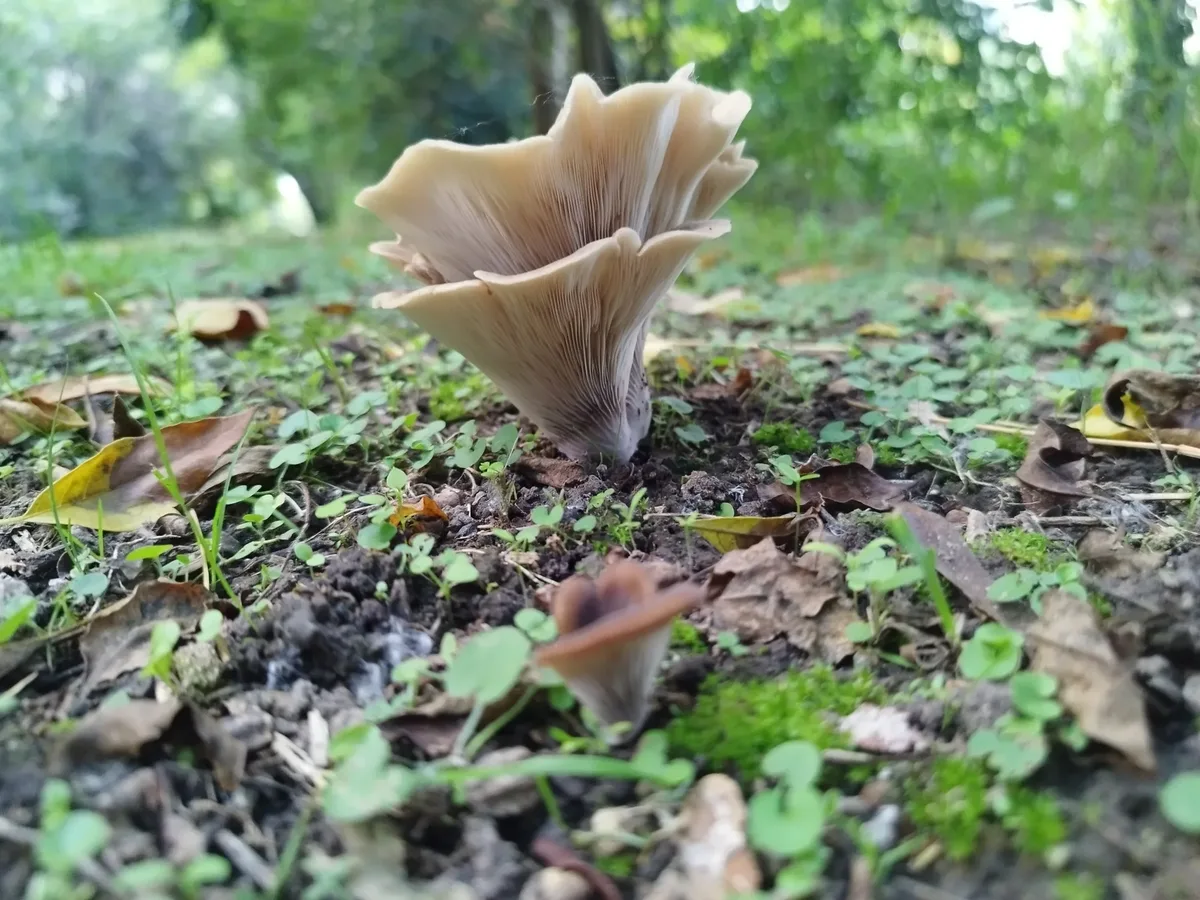 © Sebastián Fornés (CC BY)
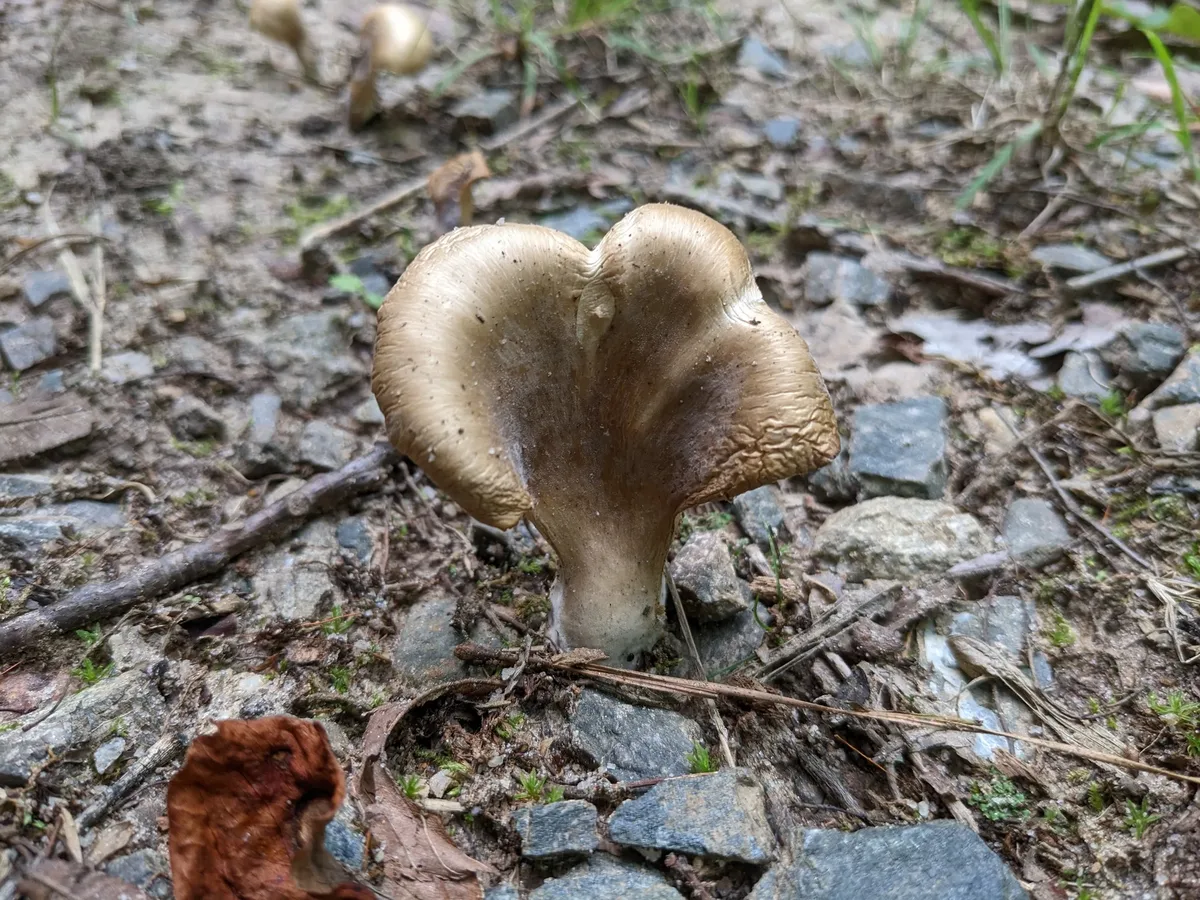 © stephen (CC BY 4.0)
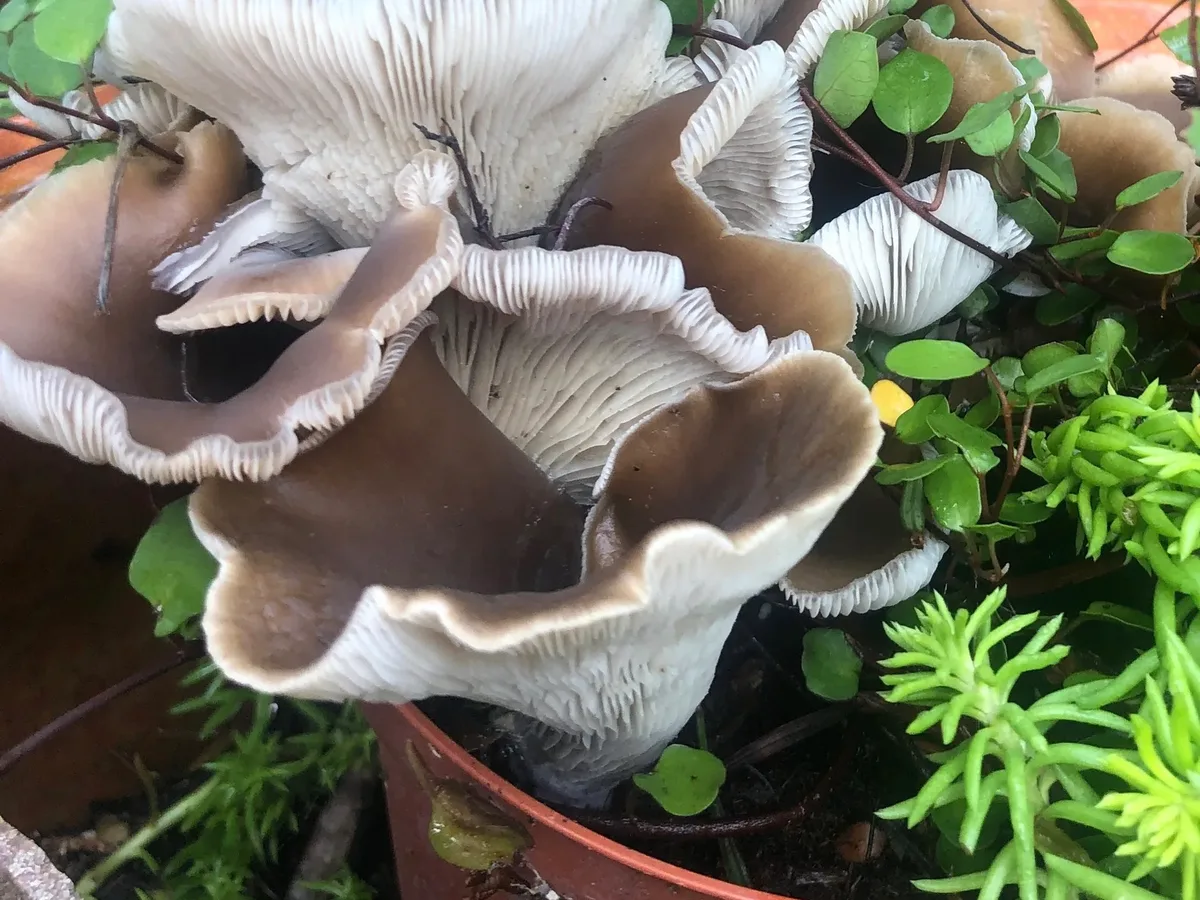 © Barbara Banfield (CC BY 4.0)© Eric Hensley (CC BY 4.0)© Michael J. Papay (CC BY)
Good to eat, once you have identified it with certainty and cooked it through.
Never eat a mushroom you are not 100% sure of - check the look-alikes below, and always cook wild mushrooms.
How to recognise it
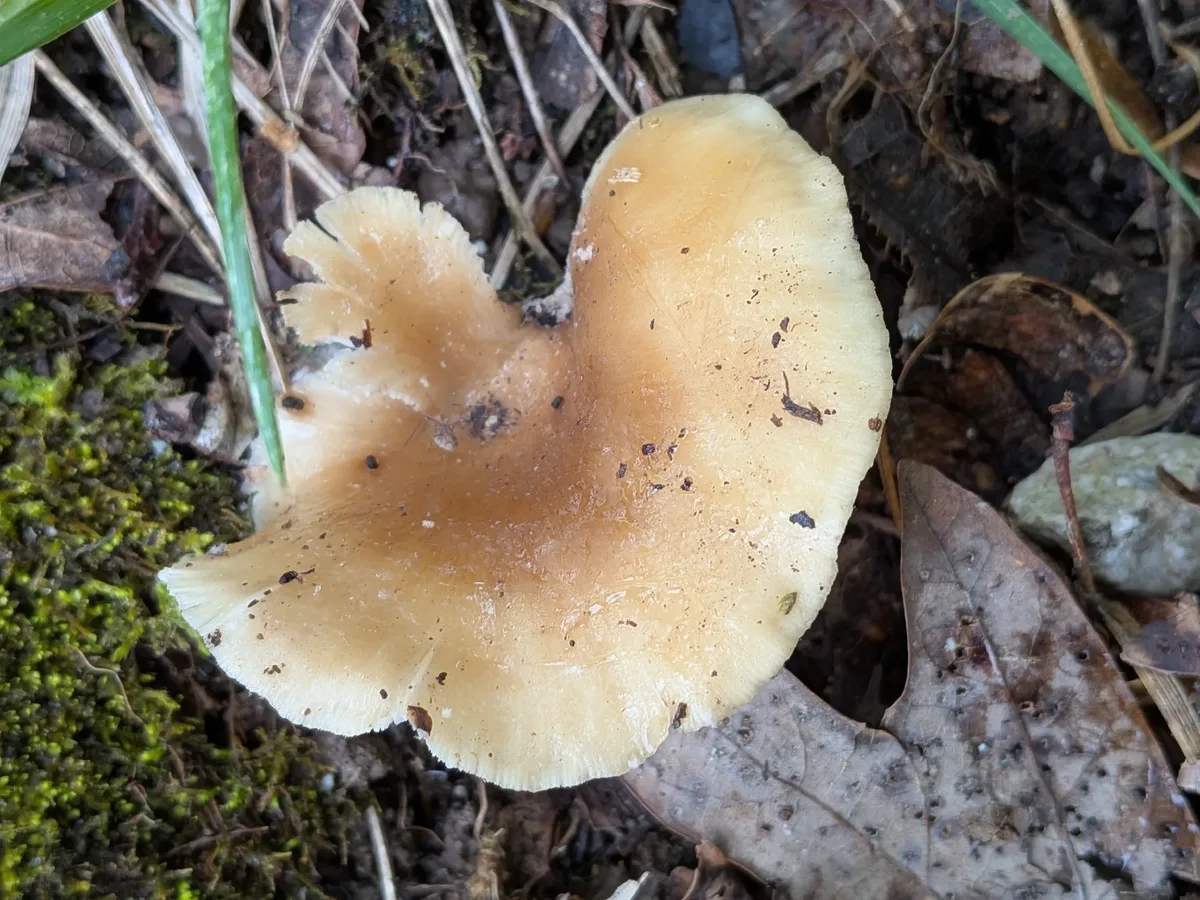
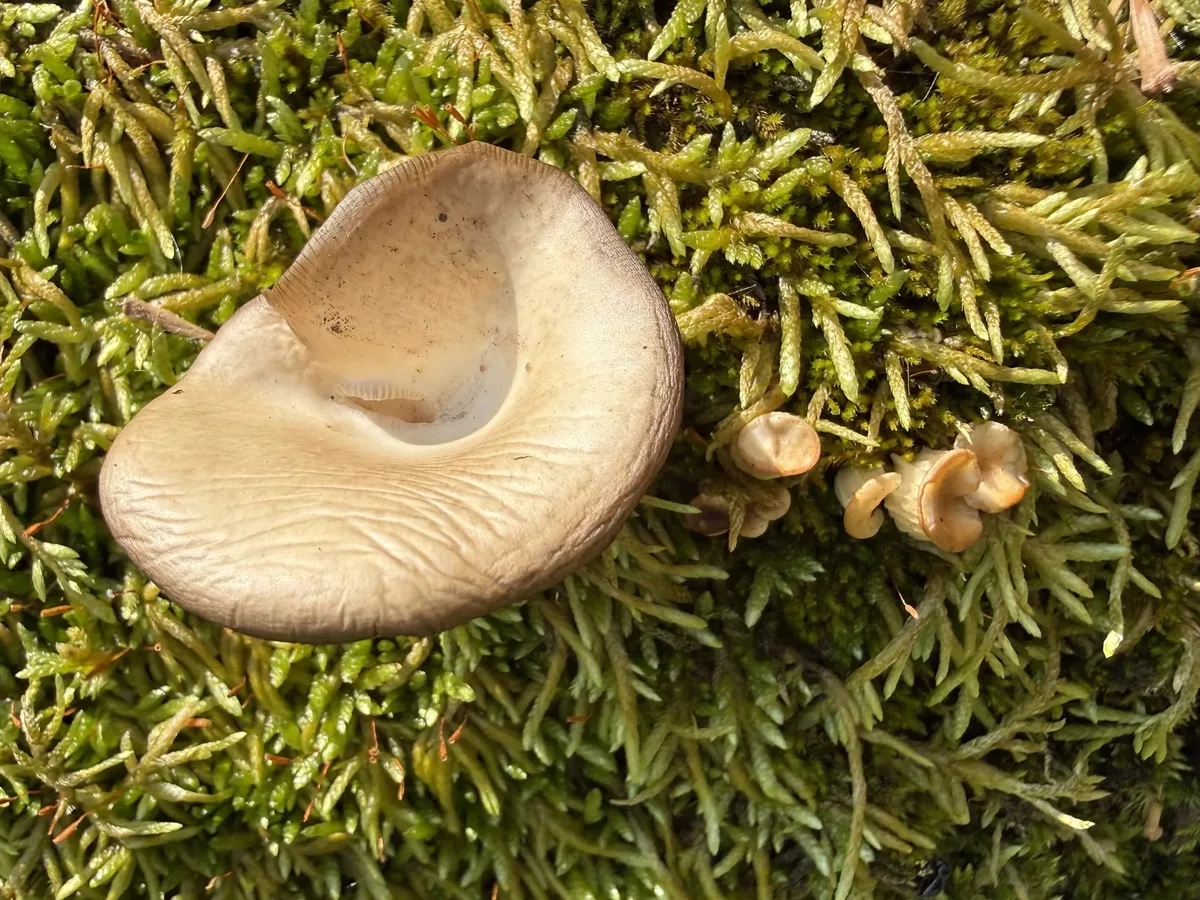
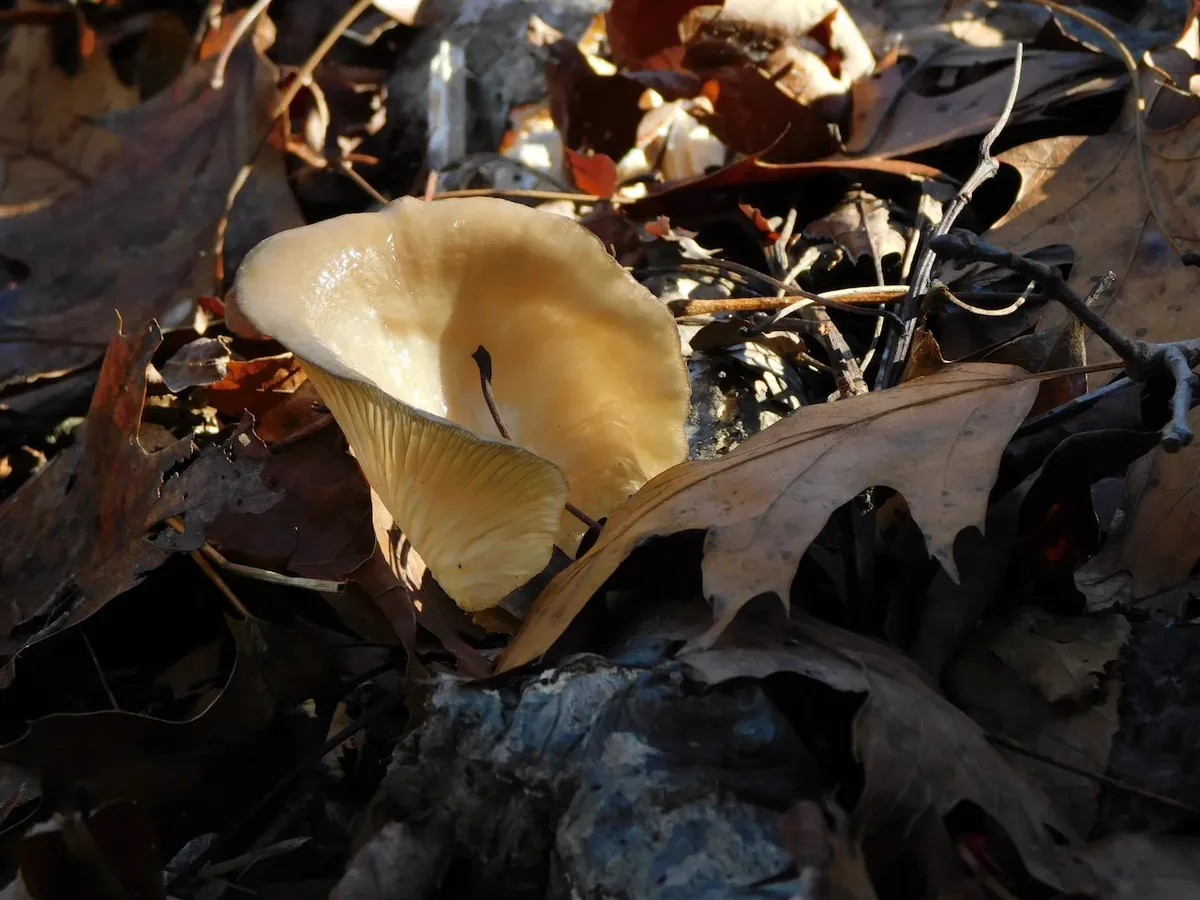
Hohenbuehelia petaloides is immediately recognisable by its distinctive shoehorn or fan shape.
Cap
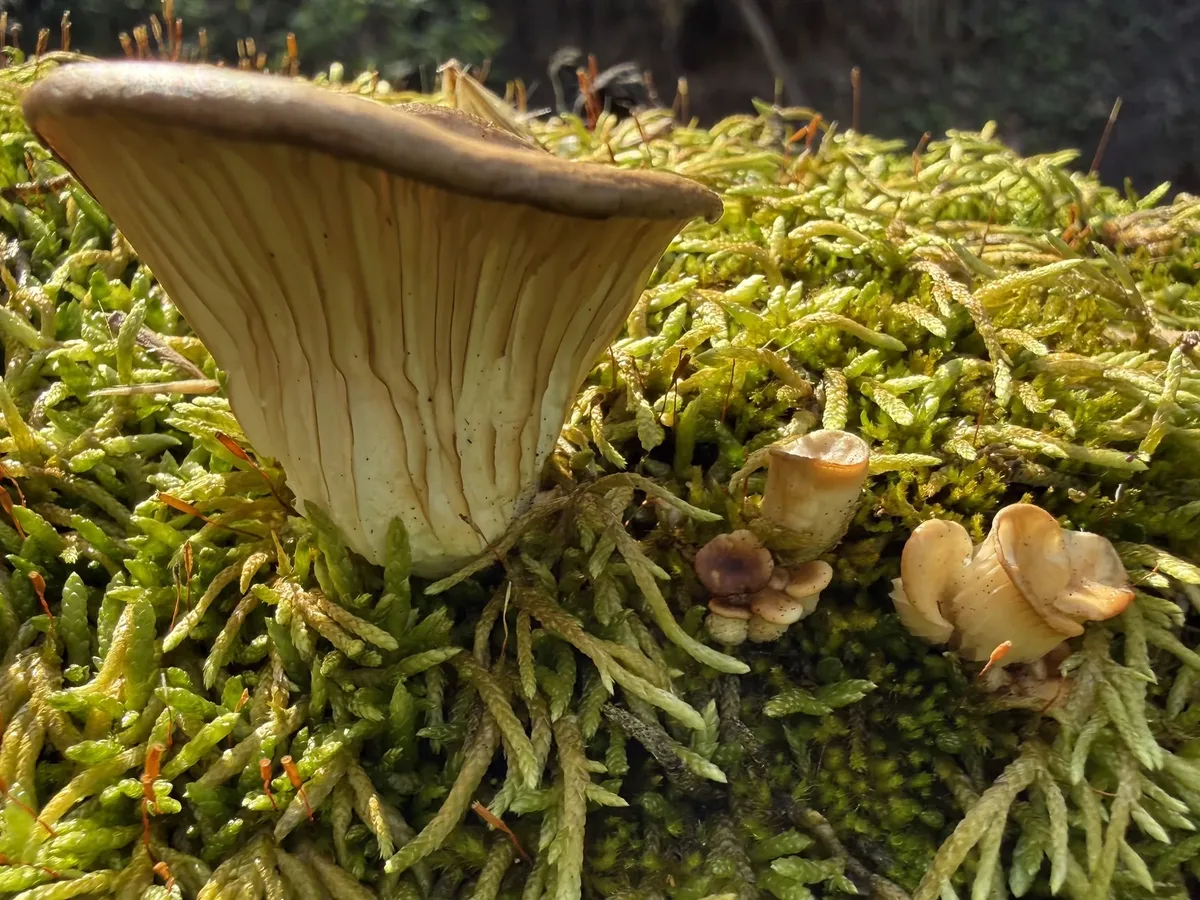
The cap (2-8 cm across) arises laterally from dead wood on a very short, stubby, off-centre stem and fans out broadly, giving the whole fruitbody the profile of a spoon or shoehorn.
The upper surface is smooth to very finely downy, dry or slightly greasy in wet weather, and coloured pale greyish-buff, dirty cream, or pale ochre, often bleaching toward the margin.
The margin is inrolled in young specimens and becomes wavy to lobed with age.
Gills
The gills run down the short stem (decurrent) and are crowded, narrow, pale cream to whitish.
Stem
The stem itself is squat and almost vestigial - rarely more than 1.5 cm long - and is densely hairy (tomentose) at the base where it attaches to the substrate.
Flesh
Flesh is firm, white, and does not discolour when cut.
Smell & taste
There is a mild, pleasant, slightly mealy odour.
Under the microscope, thick-walled, encrusted metuloid cystidia on the gill faces are the key diagnostic character distinguishing Hohenbuehelia from superficially similar genera.
Where & when it grows
Habitat
This species is a wood-rotter (white rot) found almost exclusively on dead and decaying hardwood: logs, stumps, buried roots, and the very bases of standing dead or dying trees.
Beech, oak, alder, elm, ash, and poplar are typical hosts in European settings.
It prefers humid, shaded sites - stream-side ravines, river-bottom forests, and damp mixed deciduous woodland are ideal. In North American populations (often treated as the same species or very closely related) it similarly favours moist lowland hardwood forest. It is seldom encountered on conifer wood.
The fruitbodies often appear to emerge from bare soil when the actual substrate is a deeply buried root; turning over leaf litter near the base will usually reveal rotting wood.
When
In central and western Europe, look for shoehorn oysters from late summer through mid-autumn - broadly July to November, with the best hunting in September and October.
The first fruitings tend to follow warm, wet late-summer spells, and a mild, moist autumn can push the season well into November or even December.
In eastern North America and the Pacific Northwest the species has a longer window, sometimes appearing as early as late spring and continuing through autumn.
How it grows
Fruitbodies arise singly, in small scattered groups, or in loose tiered clusters from the same attachment point.
Beneath the surface, the mycelium has been quietly breaking down the dead wood for far longer than the fruitbodies suggest - dissolving lignin and cellulose through white rot until the log itself crumbles soft and pale.
After a suitable soaking rain the fans can push out within days and may persist for one to two weeks before softening and decaying.
No mycelial cords or rhizomorphs are visible to the naked eye; the fungus keeps most of its life hidden inside the wood.
Fruiting conditions
Flushes reliably after warm-to-cool wet spells in late summer and autumn. Soil temperature dropping below 8 °C significantly slows fruiting. The species benefits from sustained moisture rather than a single heavy rain event, reflecting its colonisation of already-moist decaying wood substrates.
Look-alikes
Several wood-inhabiting fan- or oyster-shaped species can resemble H. petaloides.
- Pleurotus ostreatus (oyster mushroom) is the most commonly confused species: it is larger, typically darker grey to brown on the cap, has a more pronounced lateral stem, and lacks the densely hairy stem base; its spores are lilac-grey in mass.
- Crepidotus species share the lateral attachment and fan shape but have brown spore prints, are generally much smaller (< 3 cm), and have no visible stem.
- Hohenbuehelia atrocaerulea is closely related and very similar but differs in its distinctly grey to dark slate cap colour and microscopic features (longer, differently shaped metuloids); it is also considered edible.
- Panellus stipticus is small, pallid, has a distinctly bitter taste, and its North American form has bioluminescent gills; it is not deadly but unpalatable.
- Galerina marginata (funeral bell) is deadly - it contains amatoxins - but is morphologically remote from H. petaloides: it is a small, convex-umbonate brown mushroom with a fibrous ring and a rust-brown spore print, and shares no structural resemblance with the fan-shaped H. petaloides; the inclusion here is a habitat co-occurrence caution, not a confusion warning.
- Pleurocybella porrigens (angel wings) is the morphologically closer deadly pleurotoid candidate.
- Omphalotus spp. (jack-o'-lantern mushrooms) grow in clusters at the base of trees, but are larger, orange to yellowish, have true gills that may glow faintly in the dark, and cause severe gastrointestinal distress; they do not share the distinctive hairy stem base or shoehorn silhouette.
Confirm a white spore print and the hairy stub-stem base before eating any wood-dwelling fungus.
Direct confusion with H. petaloides is unlikely - the two species belong to entirely different morphological guilds. Galerina marginata is a small, convex-umbonate brown-capped mushroom with a distinct fibrous ring on the stem and a rust-brown spore print; it bears no structural resemblance to the broad, fan-shaped, stemless fruitbody of H. petaloides. This entry is a habitat co-occurrence notice, not a morphological warning: both species can grow on the same decaying hardwood logs. The morphologically closer deadly pleurotoid to be aware of is Pleurocybella porrigens (angel wings). For a genus-level safety check: confirm a fan or shoehorn cap shape, a densely hairy (tomentose) stub-stem base, and a white spore print - any ring, convex cap, or rust-brown spore print rules out H. petaloides and demands the specimen be discarded. Galerina marginata contains amatoxins and is fatal if ingested.
Much smaller, pale tan, with a distinctly bitter taste and bioluminescent gills in North American populations (faintly visible in total darkness). Not deadly but unpalatable. Spore print white but fruitbody tiny and bitter.
Very similar in shape and substrate; H. atrocaerulea has a distinctly slate-grey to dark grey cap compared to the pale buff-brown of H. petaloides. Microscopic examination of metuloid dimensions is needed for definitive separation. Both are edible.
Orange to yellowish, growing in large clusters at tree bases, with true forking gills that may glow faintly in the dark; no hairy stub-stem; causes severe gastrointestinal poisoning. Colour and clustering habit are immediately distinct. Species vary by region: O. olearius in Europe and the Mediterranean, O. illudens in eastern North America, O. olivascens in the Pacific coast.
Pleurotus ostreatus is larger (cap to 20 cm), typically deeper grey to brownish-grey, with a more prominent lateral stem that lacks the dense tomentum (hairiness) at the base; spore print is lilac-grey rather than white; flesh is thicker and the smell more pronounced. No densely hairy base.
Crepidotus species share the lateral, stemless or nearly stemless attachment and fan shape but are much smaller (under 3 cm), have brownish gills and a brown spore print. The spore print colour alone distinguishes them from H. petaloides.
In the kitchen
Picking & cleaning
Select firm, young to mid-aged specimens free of insect damage.
Because the stem is so short and the base is tomentose, it is easiest to slice the fruitbody cleanly from the substrate with a knife rather than pulling, which can tear the flesh. The firm white flesh makes it less prone to crumbling than more delicate oyster relatives.
As with all wood-rotters, avoid heavily water-logged or slimy old specimens.
Check the gill colour and the distinctive hairy stem base to confirm identity before harvesting.
Cooking
The flesh is firm and mild-flavoured, somewhat resembling oyster mushroom (Pleurotus ostreatus) in texture but typically less strongly flavoured.
Clean specimens are best sautéed in butter or oil over medium-high heat until golden, then seasoned simply. Suitable for soups, stir-fries, pasta, and risotto. The slight mealy note dissipates with cooking.
The tough, hairy base of the stem should be trimmed off before cooking. As with all wild mushrooms, avoid eating raw.
Because fruitbodies can be small, they are usually gathered in quantity when found; they can be dried for preservation, though they lose some texture.
Good to know
Hohenbuehelia petaloides is generally considered edible and is consumed in parts of Europe and North America, though it is not widely regarded as a prime edible. There are no records of serious poisoning attributed to this species.
The firm flesh holds up to cooking. No known toxins. Always cook before eating - do not eat raw.
The main safety concern is misidentification with other wood-inhabiting fungi (see Lookalikes). Always confirm:
- densely hairy (tomentose) stub-stem base
- decurrent white gills
- white spore print
- fan/shoehorn cap shape
The deadly Galerina marginata occurs in the same woodland habitats on decaying wood. Although its convex-umbonate shape, ring, and rust-brown spore print make it look nothing like H. petaloides, always check the spore print (white for H. petaloides) before eating any wood-associated mushroom.
Also exclude Crepidotus species (brown spore print). The characteristic metuloid cystidia are confirmatory under a microscope if any doubt remains.
A reference guide - never an edibility guarantee. When in doubt, leave it out.