Coral tooth fungus
Hericium novae-zealandiaesyn. Hericium coralloides (misapplied)
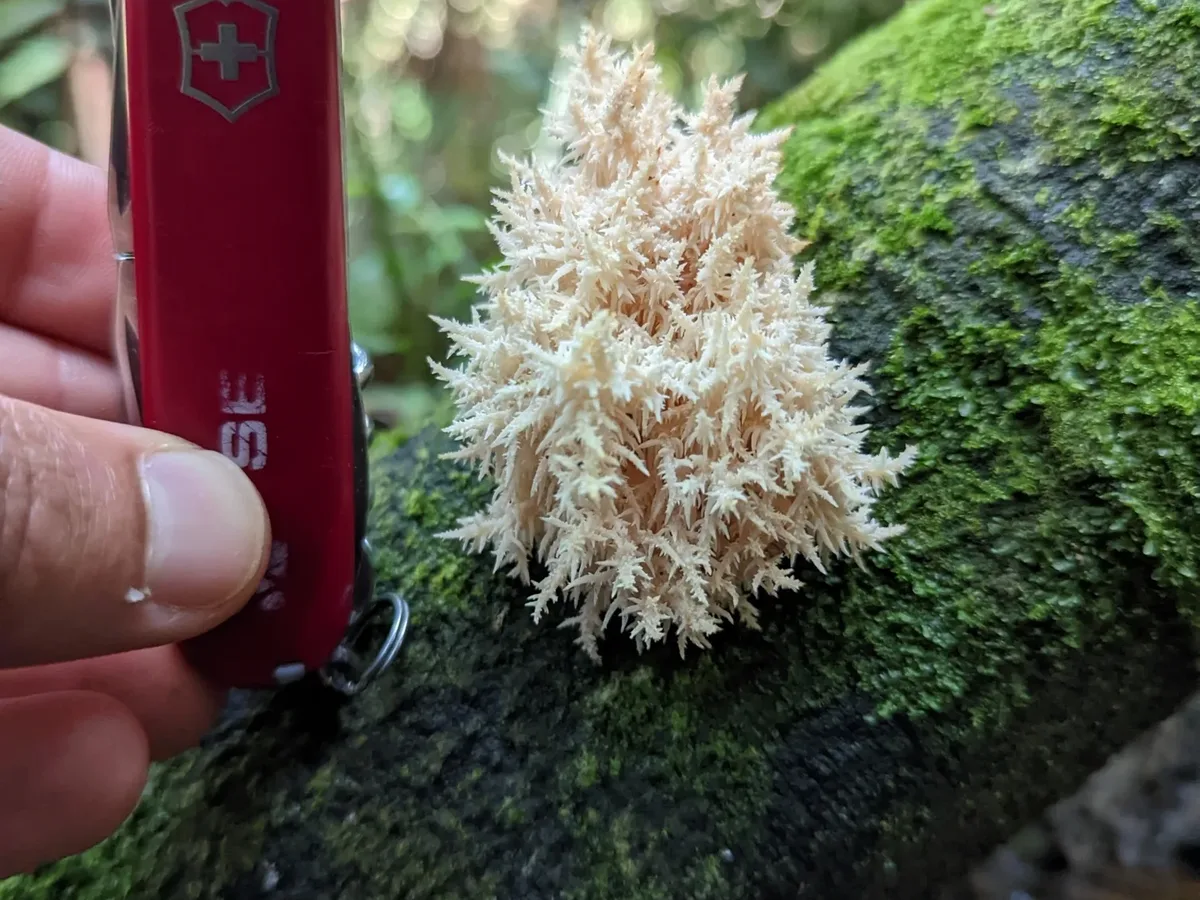 © David Hera (CC BY 4.0)
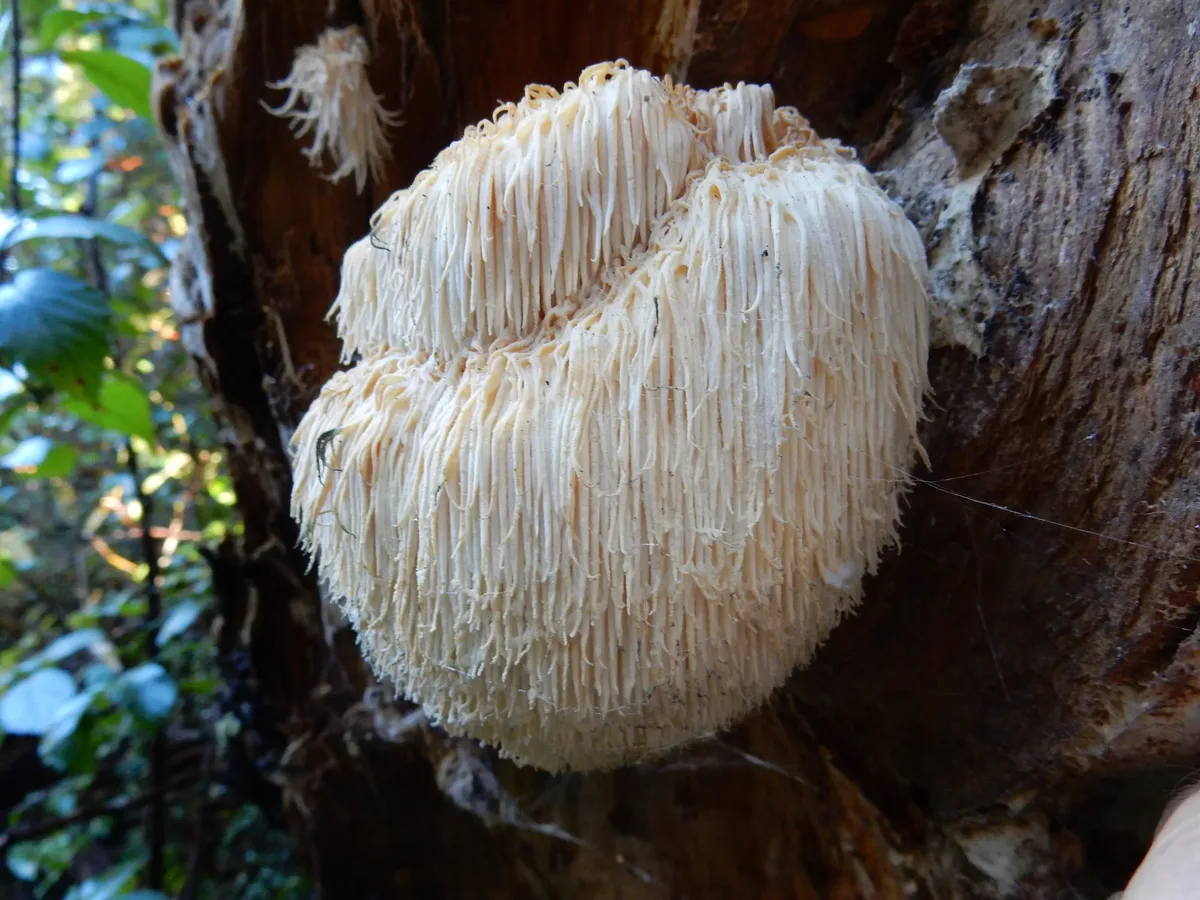 © Ray Jackson (CC BY 4.0)
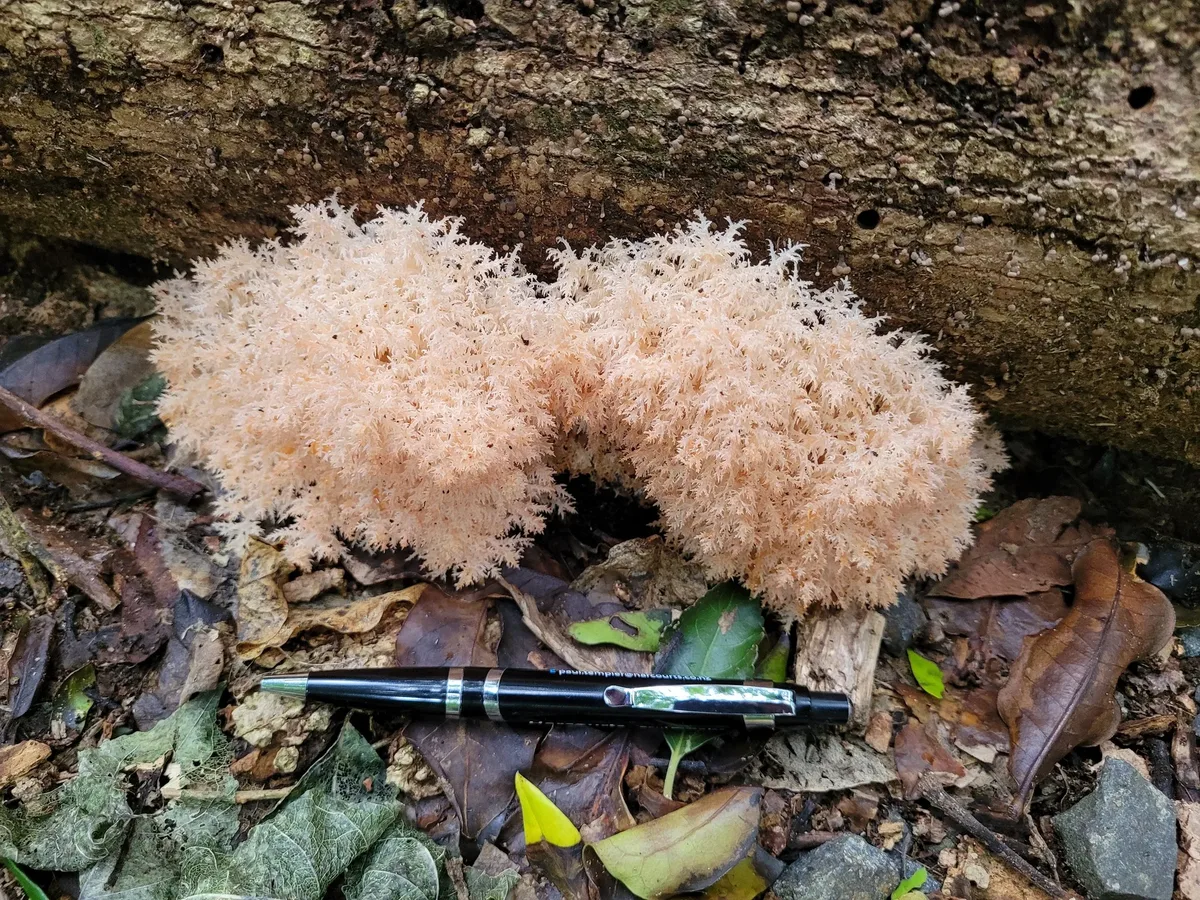 © Doug Miller (CC BY)
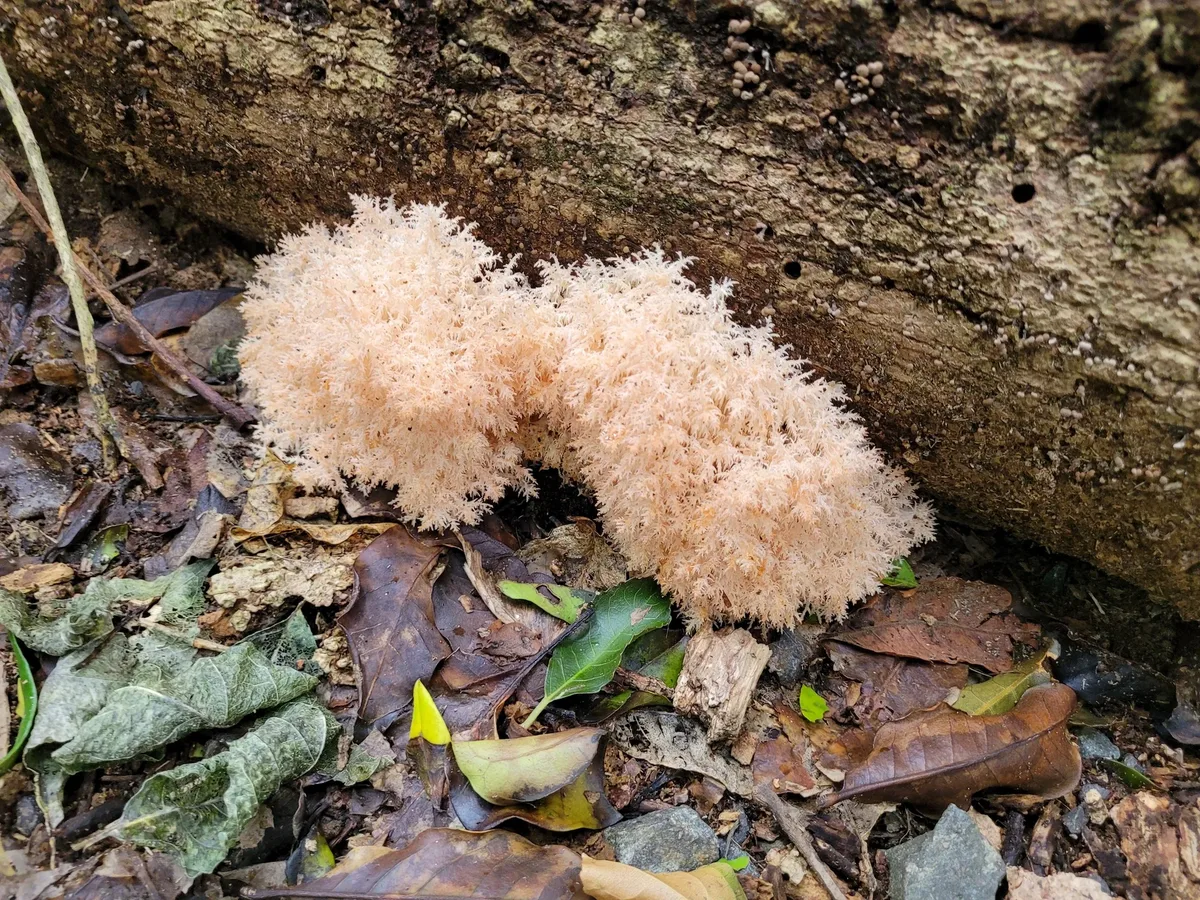 © Doug Miller (CC BY)
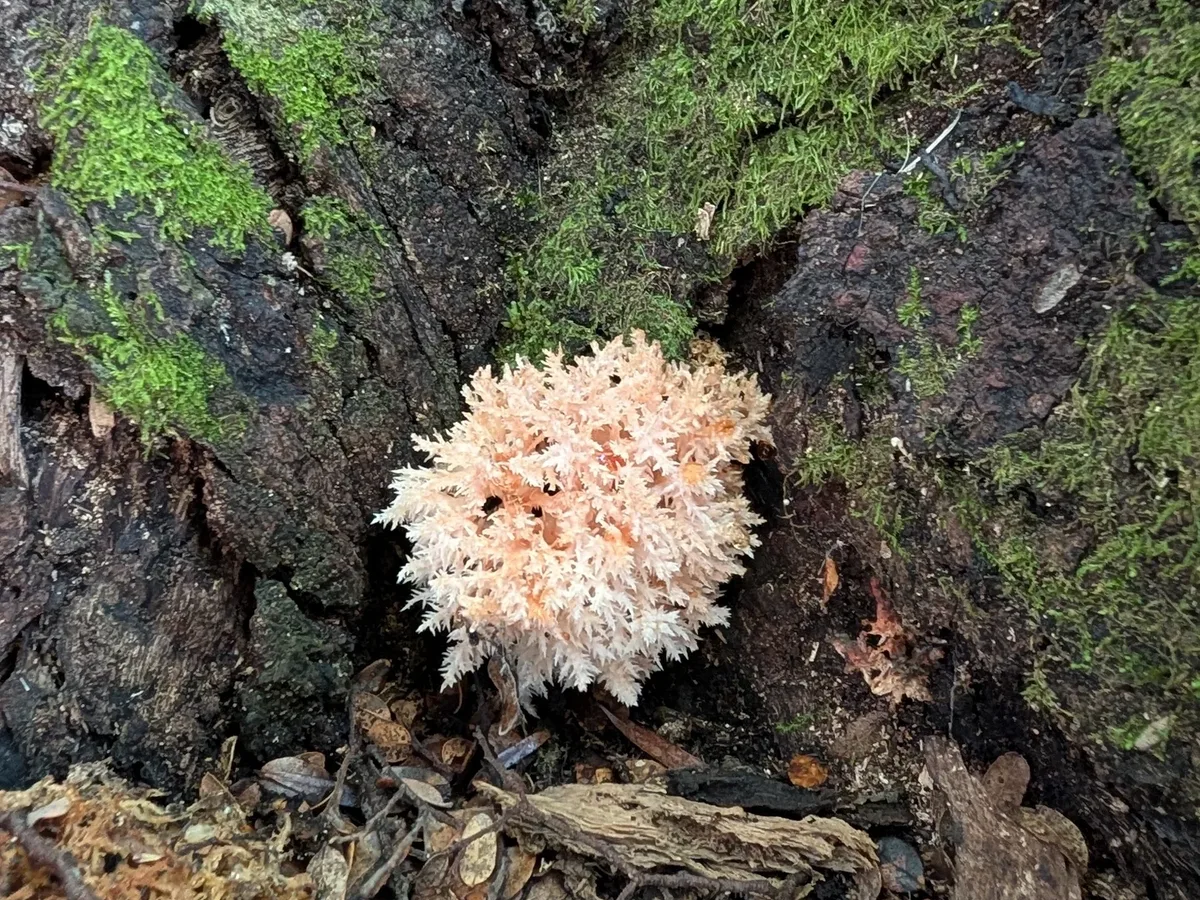 © David Hera (CC BY)
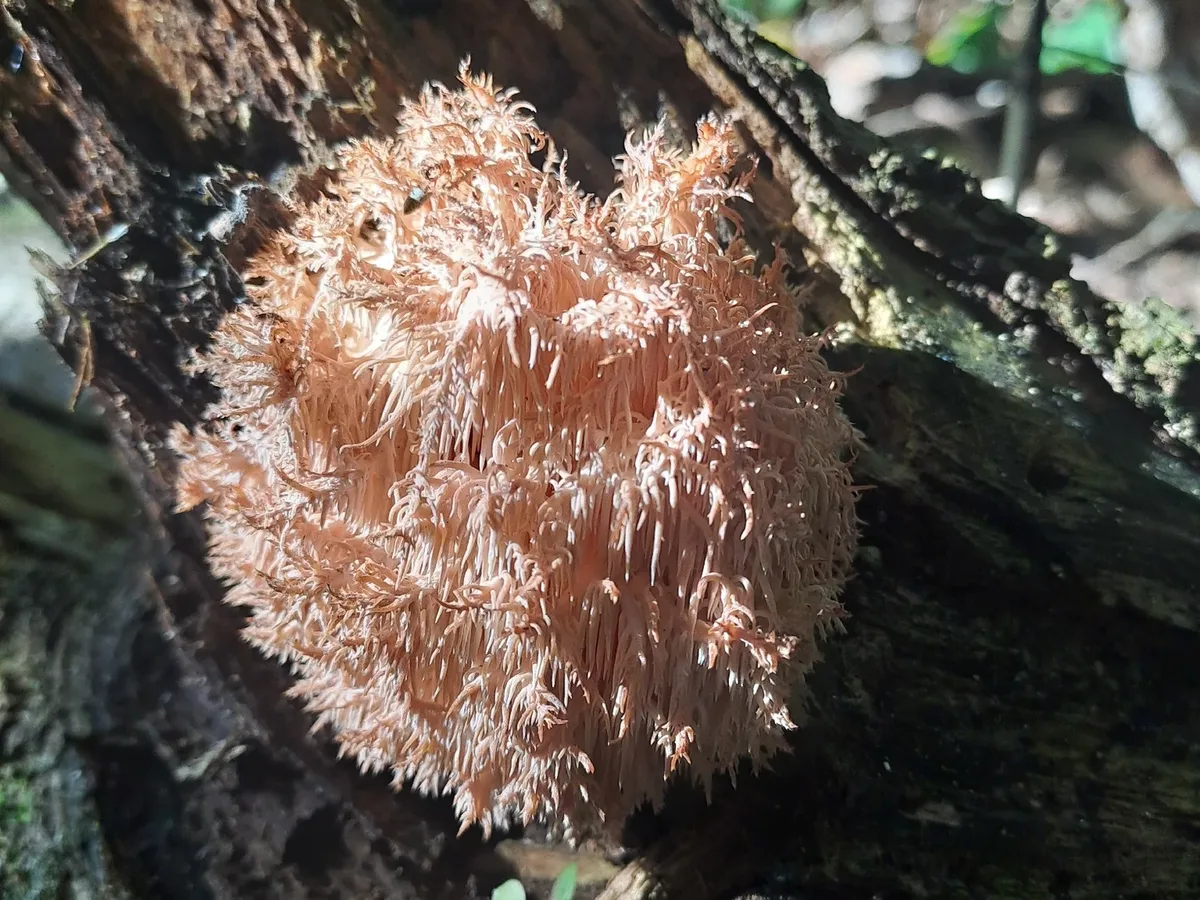 © earmothgirl (CC BY)
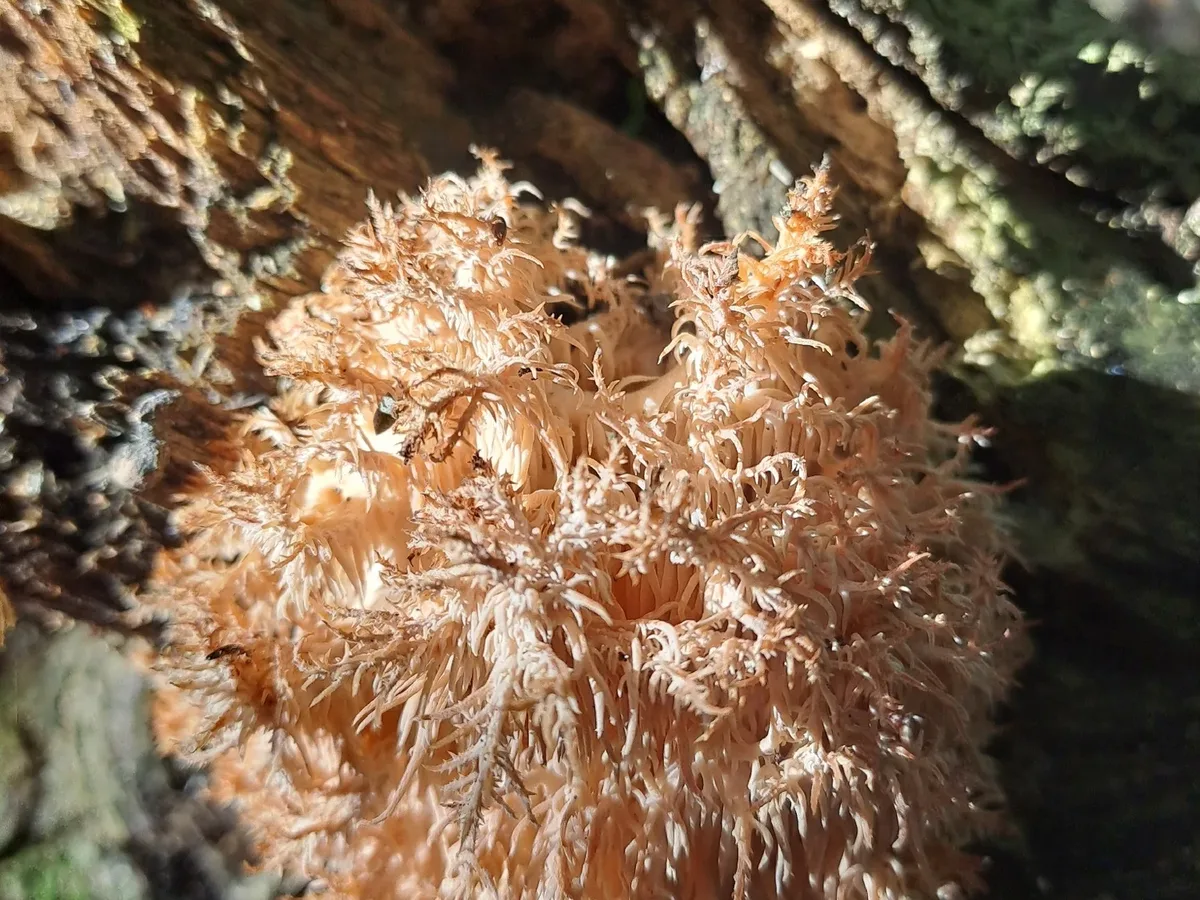 © earmothgirl (CC BY)
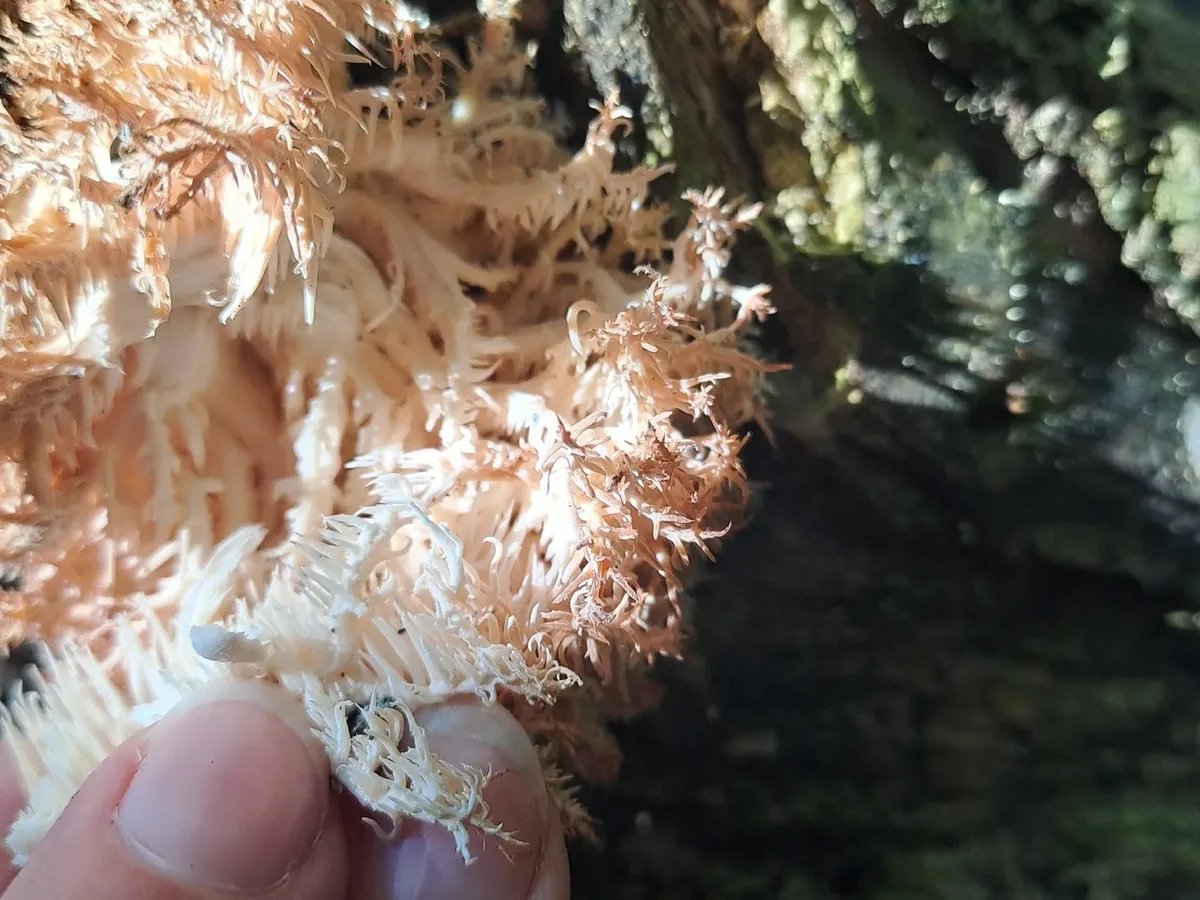 © earmothgirl (CC BY)
 © M Rutherford (CC BY)
 © Luisa Atzei (CC BY)
 © duaneg (CC BY)
 © duaneg (CC BY)
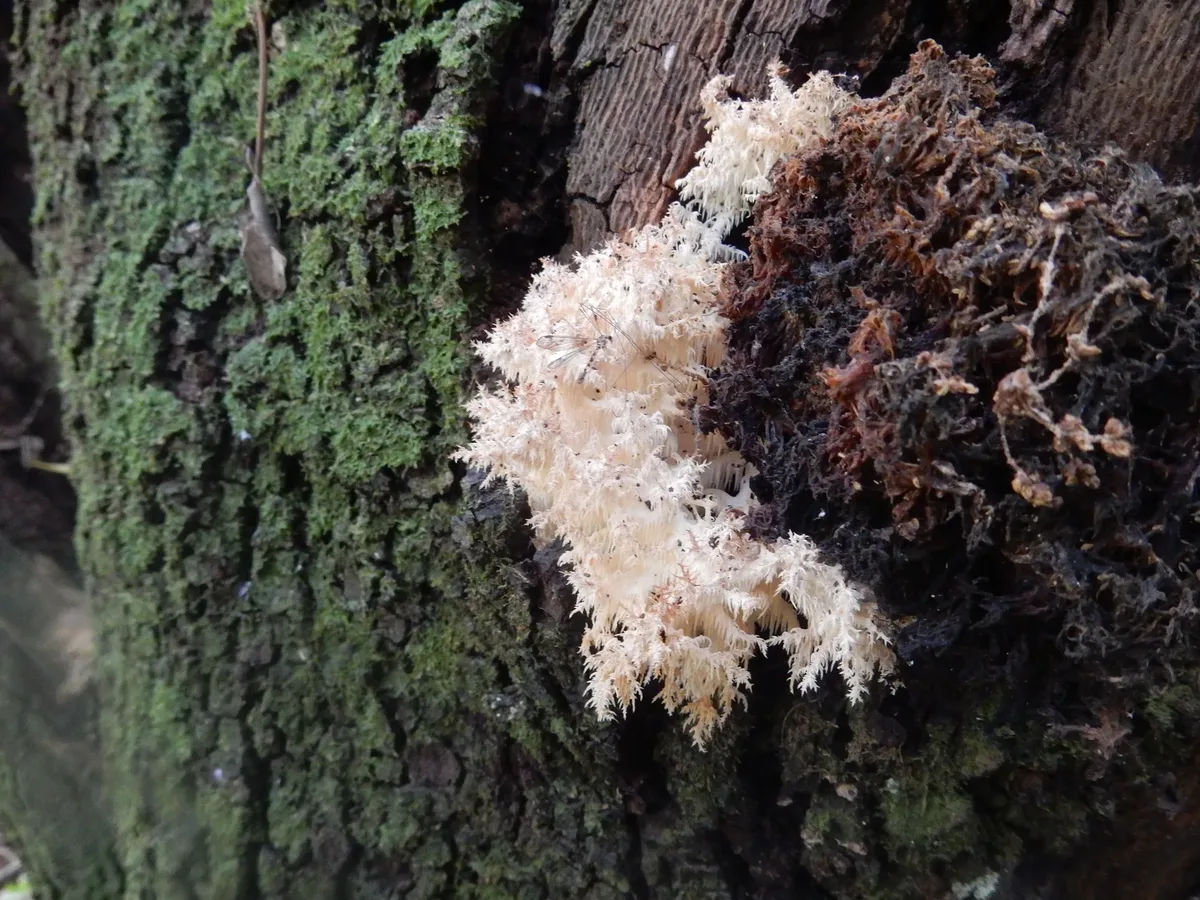 © Ray Jackson (CC BY 4.0)
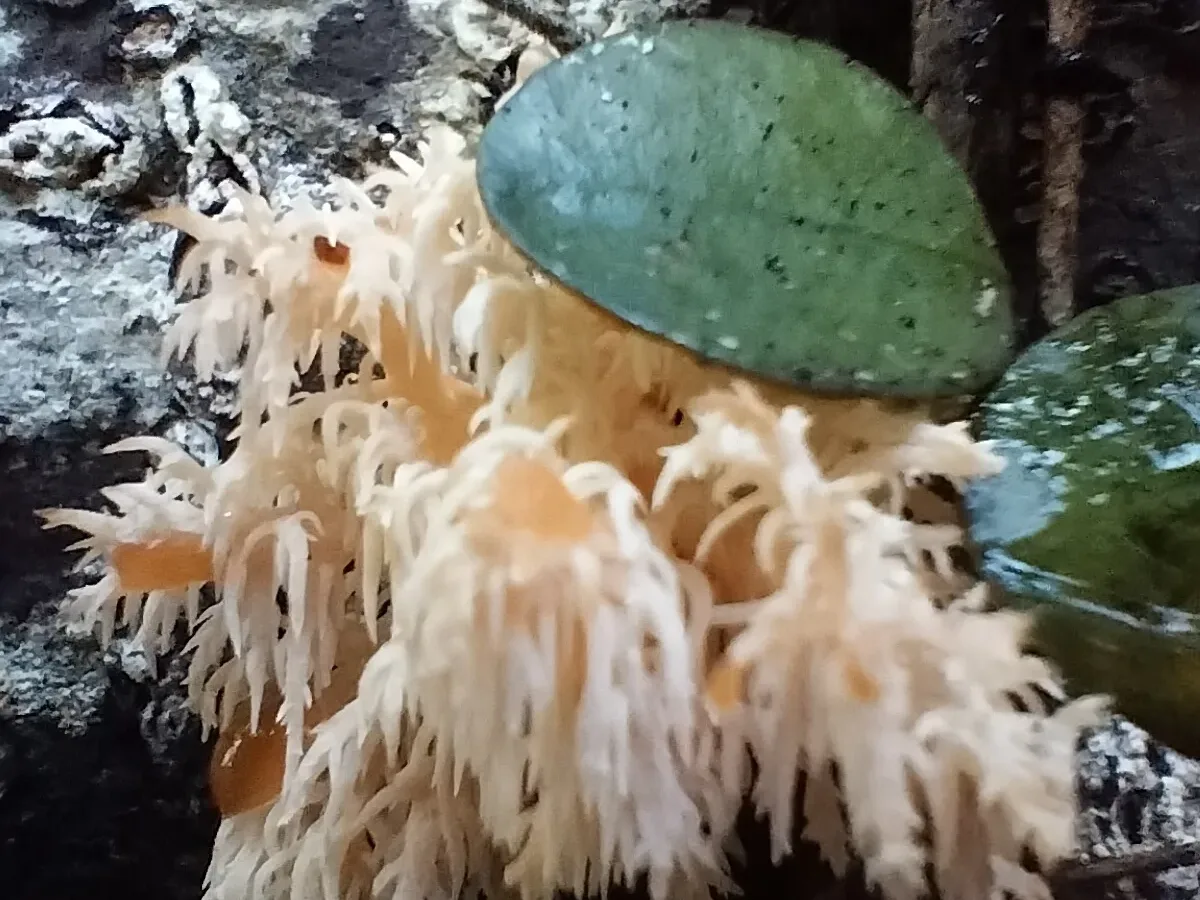 © Alexandra Murphy (CC BY 4.0)
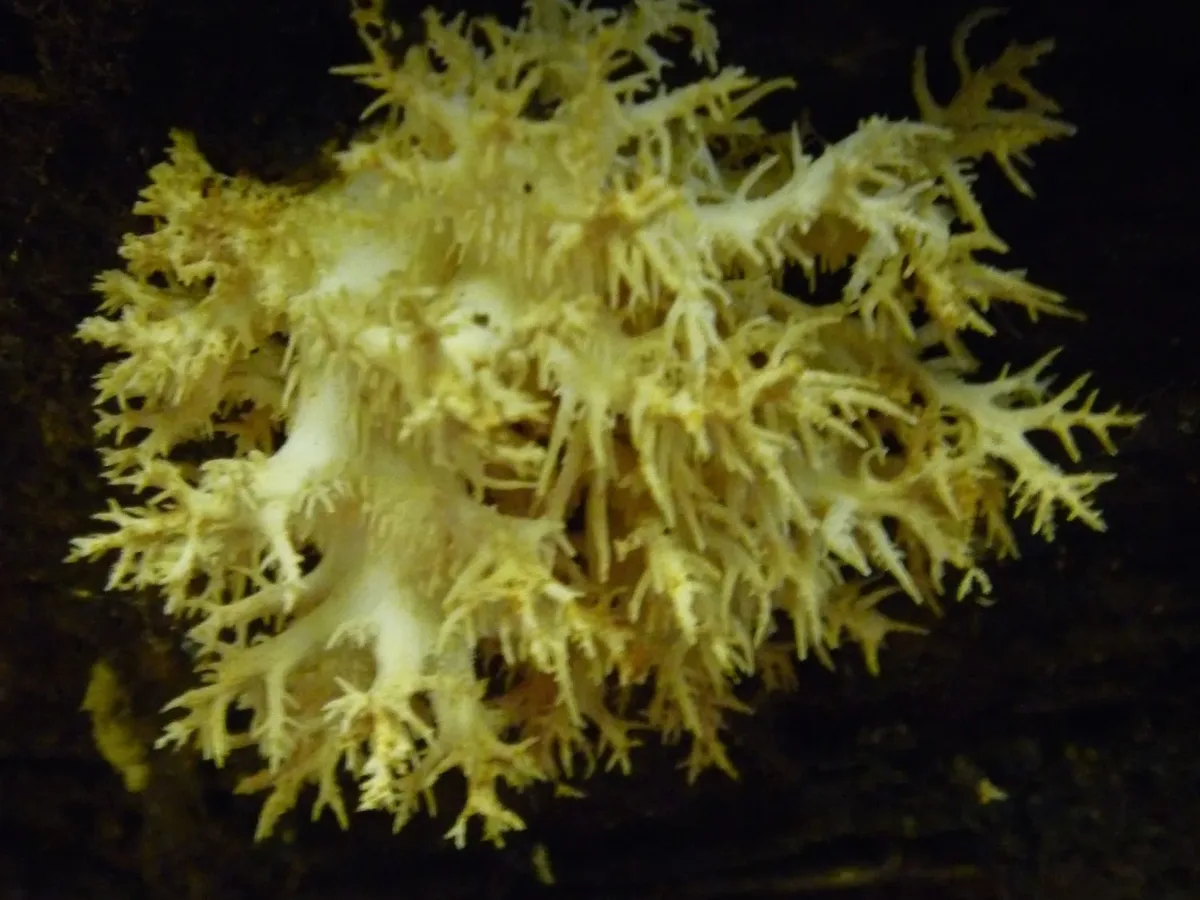 © naturewatchwidow (CC BY 4.0)© David Hera (CC BY 4.0)© Ray Jackson (CC BY 4.0)
Good to eat, once you have identified it with certainty and cooked it through.
How to recognise it
Hericium novae-zealandiae announces itself with a visual language unlike almost any other fungus in the Southern Hemisphere bush.
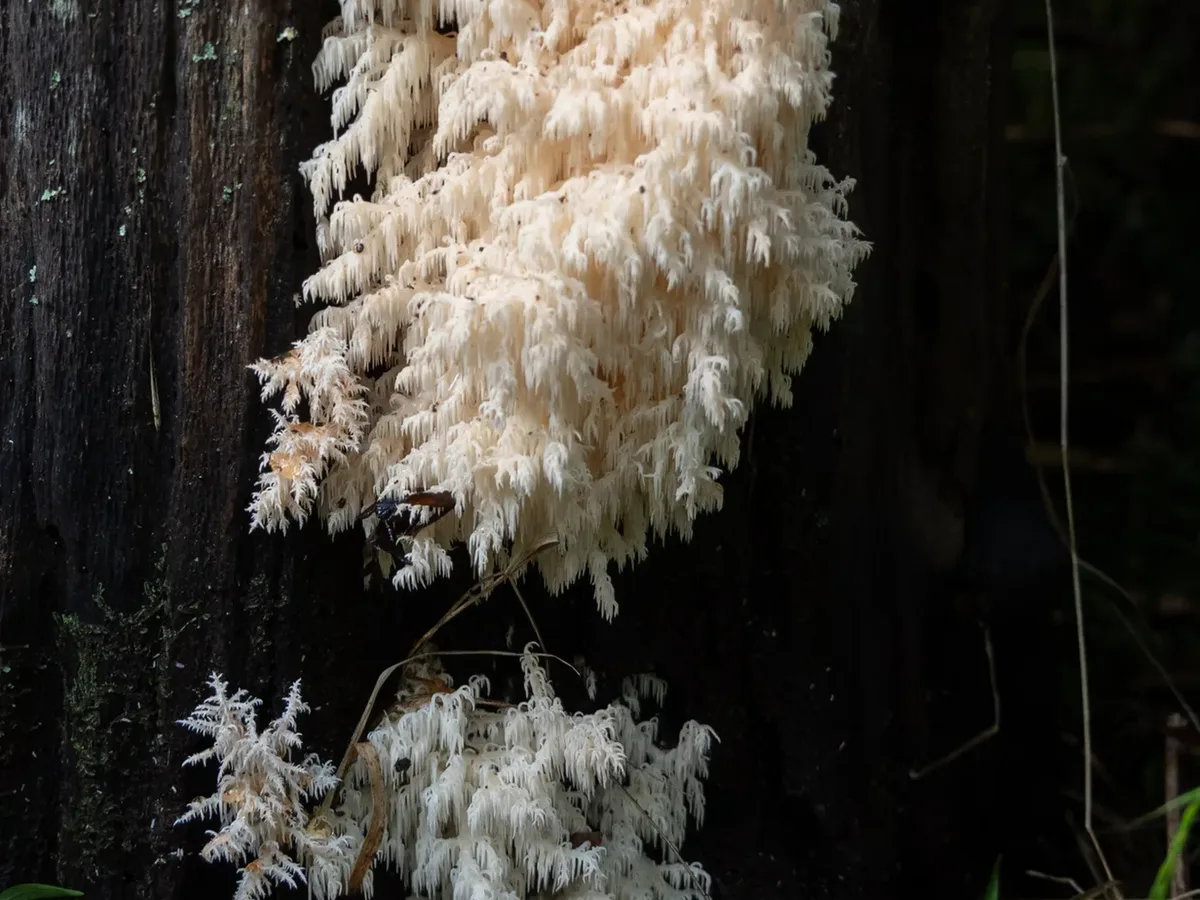
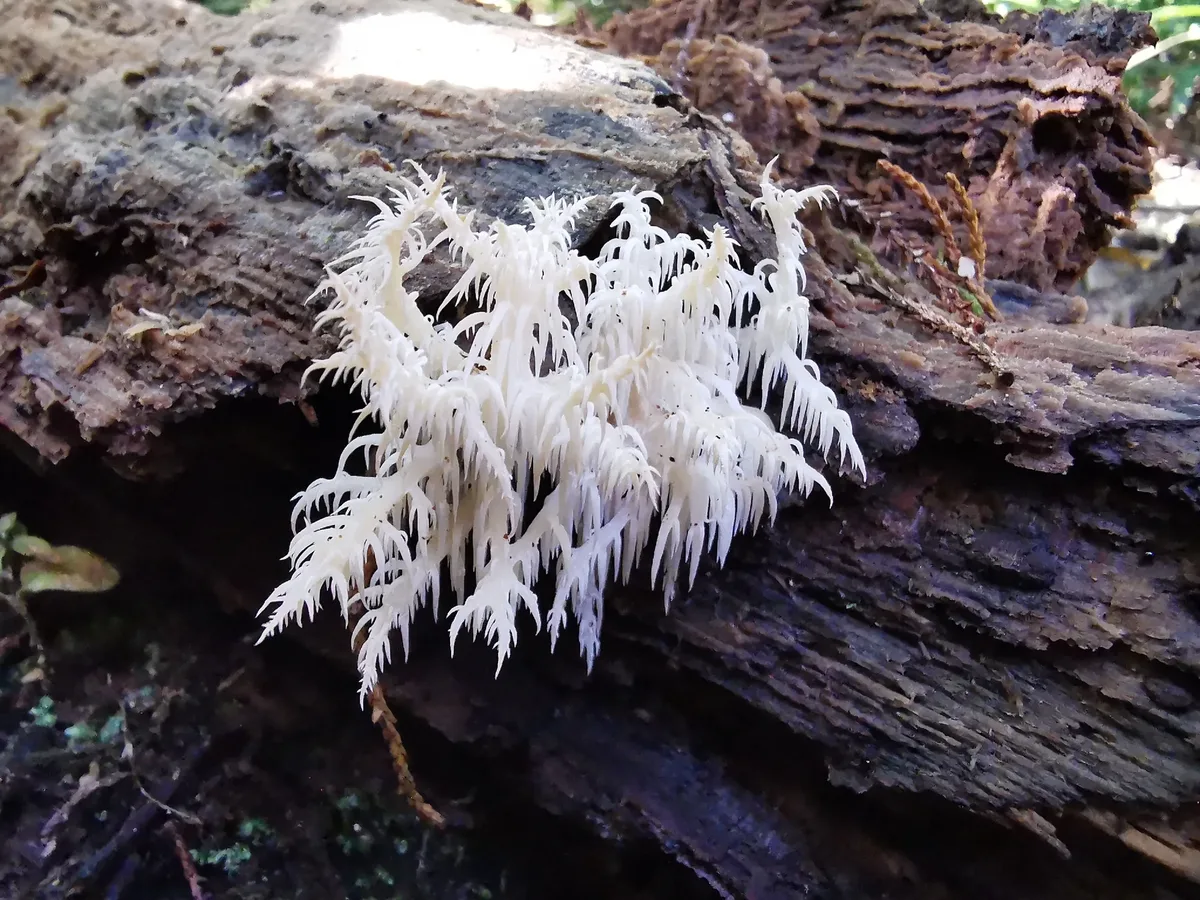
The fruiting body begins as a compact, ivory-white nub emerging from a wound or cut end of dead hardwood, then over several days it unfurls into an elaborate branching scaffold - a cascade of arms that subdivide repeatedly, each terminal branch clothed in dense, fine, downward-hanging spines or teeth, typically 0.5-2 cm long.
The overall form recalls bleached coral washed up on a reef, or the frost-etched branches of a winter tree, or a sea anemone frozen mid-current: all three analogies surface among people encountering it for the first time, and none fully captures it.
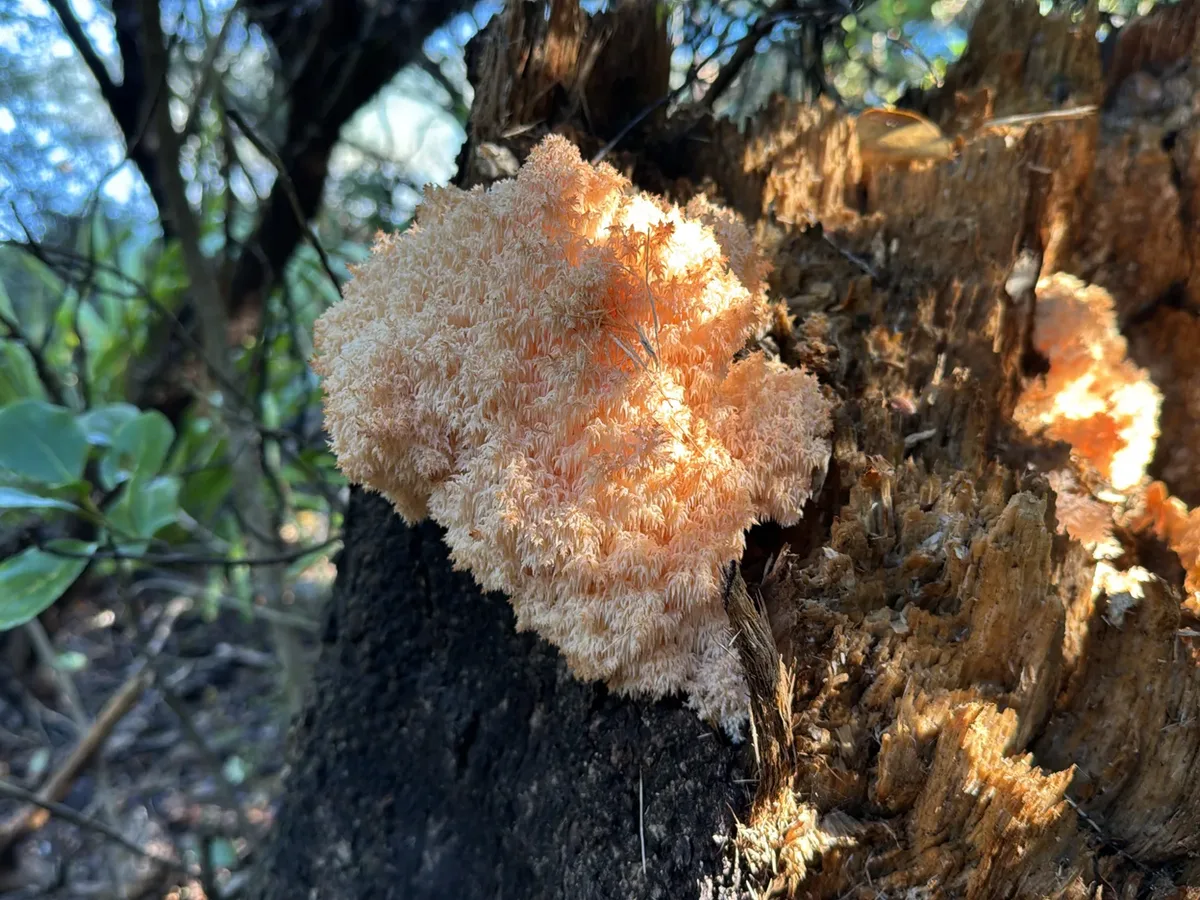
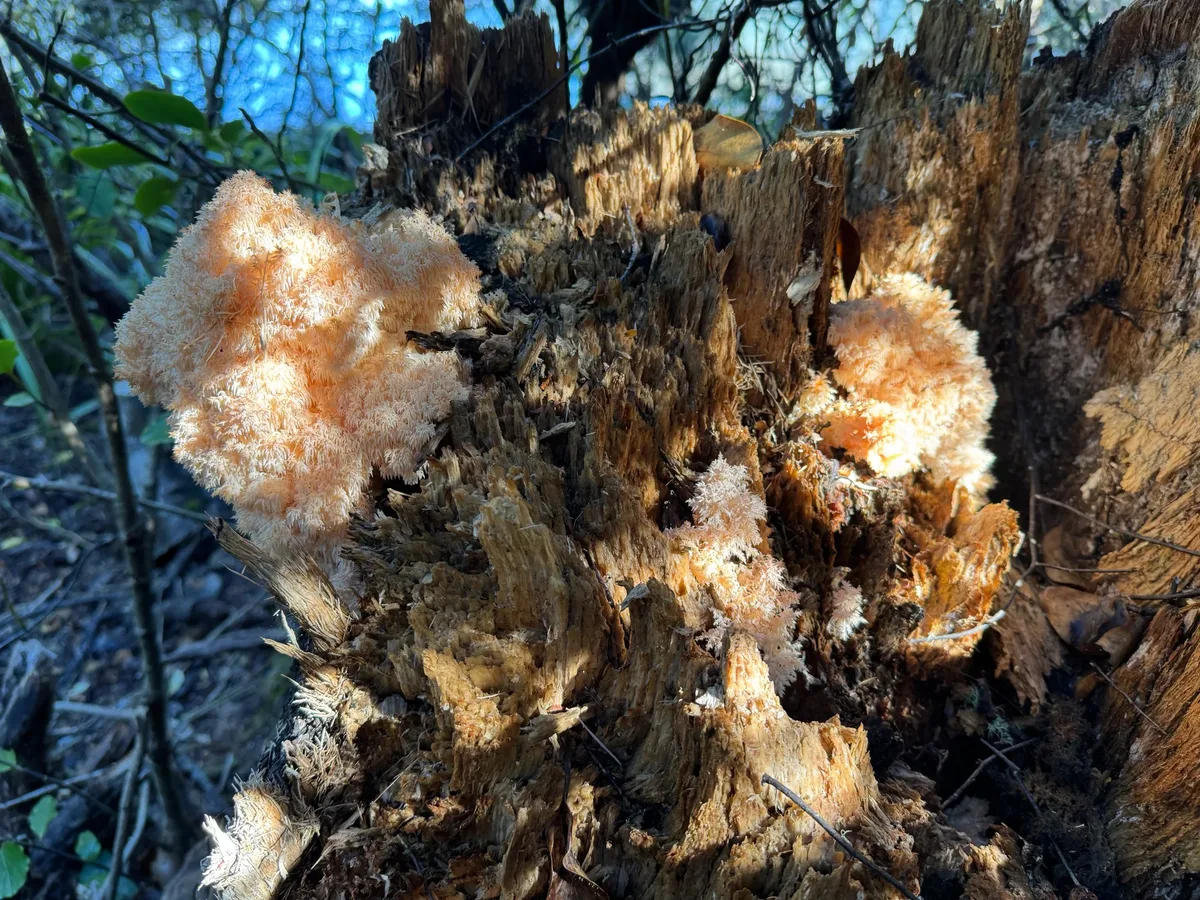
Colour runs from pure chalk-white in young, vigorous specimens to cream and finally to pale yellow-buff as the flesh ages and dries.
The flesh itself is firm but yielding - slightly springy to the press - with a faint sweet, vegetal fragrance described by some as reminiscent of seafood or mild anise.
The spore-bearing surface is the undersides of those pendant teeth; there is no cap, no gills, no ring, no volva: only the branching arms and their hanging teeth, a structure that makes misidentification with gilled or boleted mushrooms essentially impossible.
Where & when it grows
Habitat
In New Zealand, Hericium novae-zealandiae is essentially a creature of the intact native broadleaf forest.
It colonises dead or severely stressed hardwood:
- fallen trunks
- large dead limbs still attached to standing trees
- the exposed heartwood of trees killed by wind or age
The preferred hosts are broad-leaved species characteristic of lowland to montane New Zealand bush: tawa (Beilschmiedia tawa), rewarewa (Knightia excelsa), and various other hardwoods of similar density and moisture-retention.
Beech forest (Nothofagus) may also host it, though records skew toward more diverse broadleaf-podocarp associations.
The fungus is endemic to New Zealand - it does not occur naturally in Australia or elsewhere - and is most reliable in older, undisturbed forest where large logs have had decades to begin the long journey of decomposition, providing the combination of moisture retention, moderate density, and absence of competing organisms that this species seems to prefer.
It is less commonly found in heavily logged or disturbed bush, where the structural complexity of coarse woody debris is reduced.
When
In the Southern Hemisphere calendar, Hericium novae-zealandiae belongs to the autumn and winter months, with fruiting bodies appearing from approximately March through August.
The trigger is a combination of sustained soil and wood moisture - typically following periods of reliable rainfall over at least two to three weeks - coupled with cooling temperatures as the season turns.
The lag between rain and visible fruitbodies is significant: mycelium must saturate the substrate fully before the fruiting signal propagates, and first appearance is often seven to three weeks after the key rain events.
Peak fruiting tends to fall in the cooler mid-autumn to mid-winter window, roughly May-July in most of New Zealand's North Island lowlands and somewhat earlier at higher elevations or in the cooler South Island.
In dry autumns, fruiting is sparse or absent even on otherwise suitable substrate.
A single log or branch can produce fruiting bodies in multiple consecutive years if undisturbed, with the fungus retreating to mycelium during the warmer, drier months.
How it grows
As a saprotrophic wood-rotter, Hericium novae-zealandiae has no photosynthetic plant partner and no mycorrhizal obligation: it feeds entirely by secreting enzymes into dead hardwood and absorbing the resulting breakdown products.
The white-rot mechanism it employs dismantles both lignin and cellulose, leaving the degraded wood soft, spongy, and eventually crumbling - a slow but chemically ambitious process that recycles locked carbon and nutrients back into the forest soil.
The mycelium - a branching network of microscopic filaments - threads through the wood for months to years, largely invisible, before external conditions prompt it to consolidate resources and push a fruiting body to the surface.
That visible structure is metabolically expensive: it represents the fungus investing in spore dispersal, broadcasting millions of smooth, ellipsoidal spores from the tooth surfaces into the forest air.
Once a suitable log is colonised the relationship can persist for a decade or more, with the fungus fruiting repeatedly from the same substrate as long as adequate moisture and suitable wood remain.
There is no symbiosis here with a living tree - only the patient, methodical deconstruction of what was once a living trunk.
Fruiting conditions
Hericium species fruit on dead hardwood after sustained moisture in cooler autumn/winter conditions; values are conservative standard-mycology estimates, not from the source guide.
Look-alikes
The branching, all-white, tooth-bearing form of Hericium novae-zealandiae is sufficiently distinctive that no seriously dangerous lookalike exists in New Zealand.
The closest relative and most relevant comparison is Lion's Mane, Hericium erinaceus, which does not occur naturally in New Zealand but is cultivated and occasionally found naturalised; it differs by forming a compact, unbranched, pompom-like mass rather than the elaborate coral-branching architecture of H. novae-zealandiae. Both are edible, so confusion between them carries no safety risk, only a culinary one.
No native New Zealand species produces a similar white, spiny, coral-branching fruiting body on dead hardwood.
Cauliflower-like white mould growths or slime moulds (Myxomycetes) can superficially coat dead wood in pale masses but lack the organised branching tooth structure and do not have the firm, fibrous flesh of a Hericium.
In practice, once a forager has seen Hericium novae-zealandiae even once, there is little realistic risk of confusion with anything harmful.
A related species; the white spiny coral form of H. novae-zealandiae is distinctive. Few dangerous lookalikes.
In the kitchen
Picking & cleaning
Hericium novae-zealandiae is worth harvesting only in its prime: the window between first emergence and brittleness is measured in days to a week or two, depending on temperature and humidity.
At peak quality the flesh is still chalk-white or very pale cream, springy under finger pressure, and pulls apart in long, fibrous strands rather than crumbling. The teeth should be well-formed but not yet elongated to the point where they begin to look lax or discoloured at the tips.
Use a sharp knife and cut the fruiting body cleanly from the substrate at its base, leaving the mycelium intact so the same location can fruit again in future seasons. Avoid twisting or pulling, which can damage underlying mycelium and disturb the substrate.
If the specimen has already yellowed or become powdery or brittle, leave it - it has already sporulated and the flavour and texture will be poor.
Brush any debris from the tooth surfaces gently in the field; a soft pastry brush works well. Carry in a rigid container to avoid crushing the delicate branching structure.
Cooking
In the kitchen, Hericium novae-zealandiae rewards straightforward treatment that lets its natural character show.
The flesh, when torn or sliced, separates into long, slightly stringy fibres with a texture that closely mimics the grain of crab, lobster, or scallop - a quality that has made it a favoured ingredient in plant-based cooking.
The flavour is mild, sweet, and distinctly umami, with a subtle oceanic or shellfish undertone that intensifies on contact with a hot pan.
The best first preparation is simple:
- 1Tear the fruiting body into palm-sized pieces.
- 2Squeeze out any excess moisture.
- 3Sear over medium-high heat in butter or a neutral oil until the cut surfaces are deep golden-brown and slightly crisp.
Season with salt only after the crust forms - adding salt too early draws out moisture and steams the flesh rather than searing it.
From that base, it integrates well into pasta, risotto, or grain dishes; it pairs naturally with garlic, thyme, miso, soy, or cream sauces.
Avoid boiling or prolonged wet cooking, which dilutes the flavour and collapses the texture.
Dried or frozen specimens lose some textural quality but retain much of the flavour.
Good to know
Hericium novae-zealandiae is a confirmed edible species with a long record of safe use: it is documented as a traditional Māori winter food (pekepeke-kiore), gathered from the bush when other plant and animal foods were scarce during the colder months.
There are no documented toxins, no known adverse reactions in healthy individuals, and no history of confusion-poisoning in New Zealand. The species has no deadly lookalike in its native range.
As with many mushrooms, very sensitive individuals may experience mild gastrointestinal discomfort if consuming large quantities for the first time, so a modest first serving is a sensible precaution.
Collect only from clean forest environments away from roadsides, agricultural runoff, or industrially disturbed soil, as wood-decomposing fungi can bioaccumulate some environmental contaminants.
Freshness matters: eat promptly after harvest, or refrigerate and use within two to three days.
A reference guide - never an edibility guarantee. When in doubt, leave it out.