Coral tooth fungus
Hericium coralloidessyn. Hydnum coralloides Scop., Dryodon coralloides (Scop.) P.Karst., Hericium laciniatum (Leers) Banker, Creolophus coralloides (Scop.) P.Karst.
 Openverse (CC0)
 Bernard Spragg (Public domain)
 Katrina Mccollough (CC0)
 Katrina Mccollough (CC0)
 Katrina Mccollough (CC0)
 Chuck Wilson (CC0)
 Chuck Wilson (CC0)
 © Alex (CC BY)
 © Alex (CC BY)Openverse (CC0)Bernard Spragg (Public domain)
Good to eat, once you have identified it with certainty and cooked it through.
How to recognise it
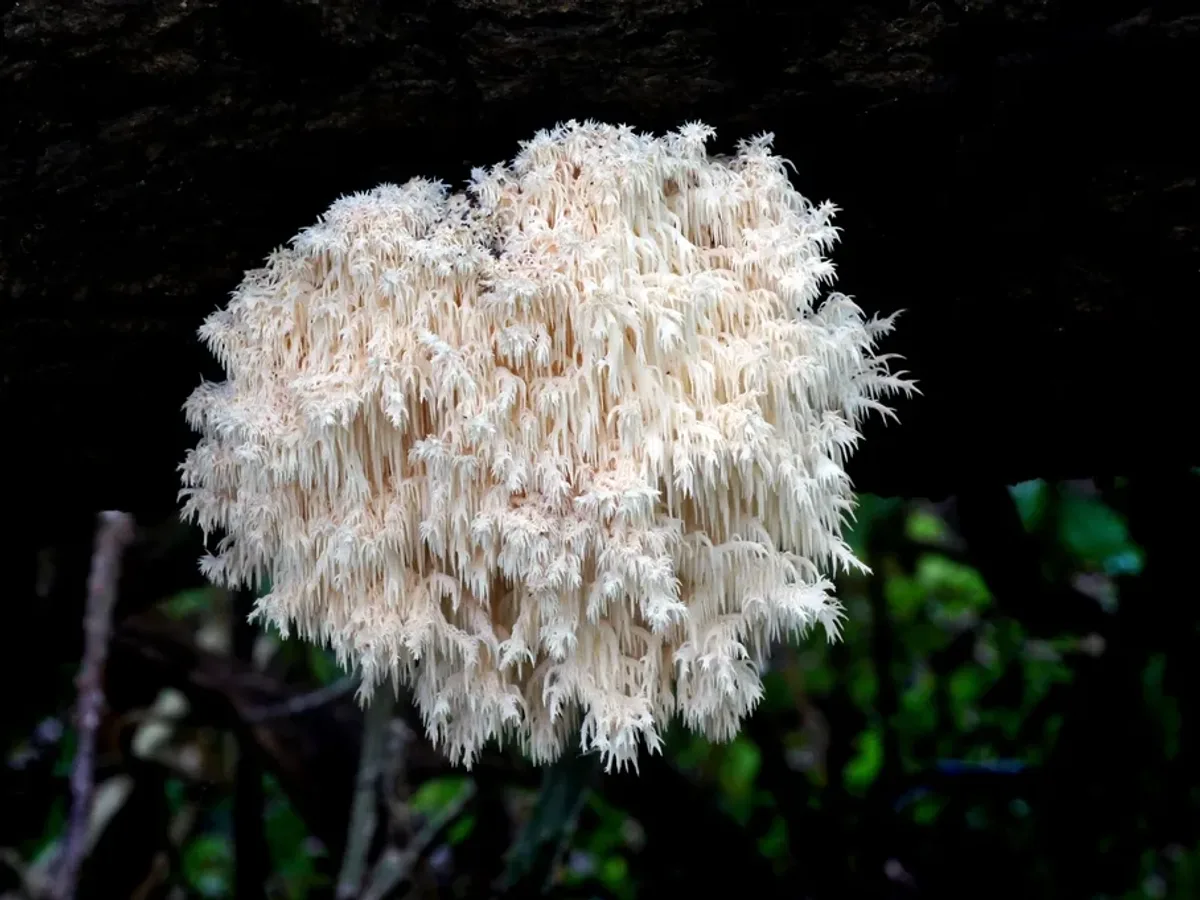
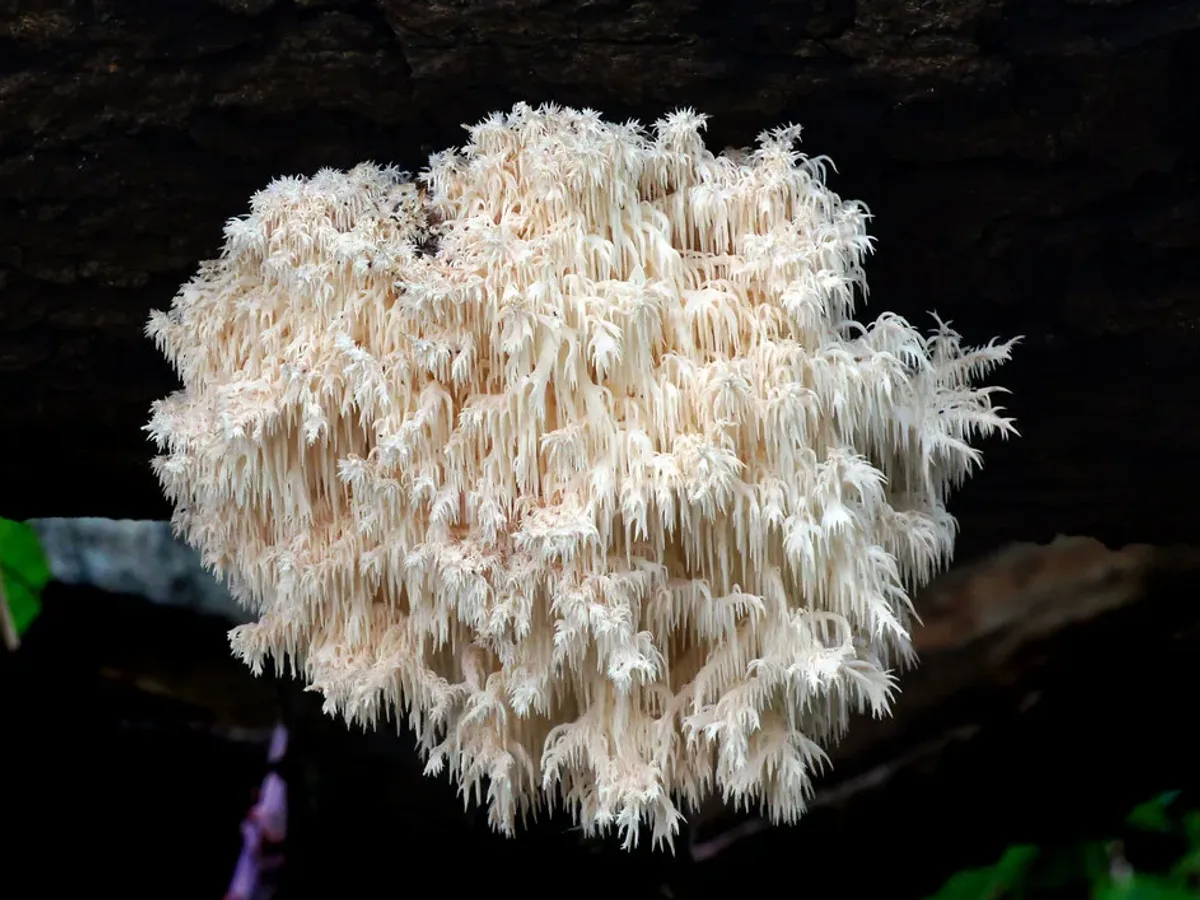
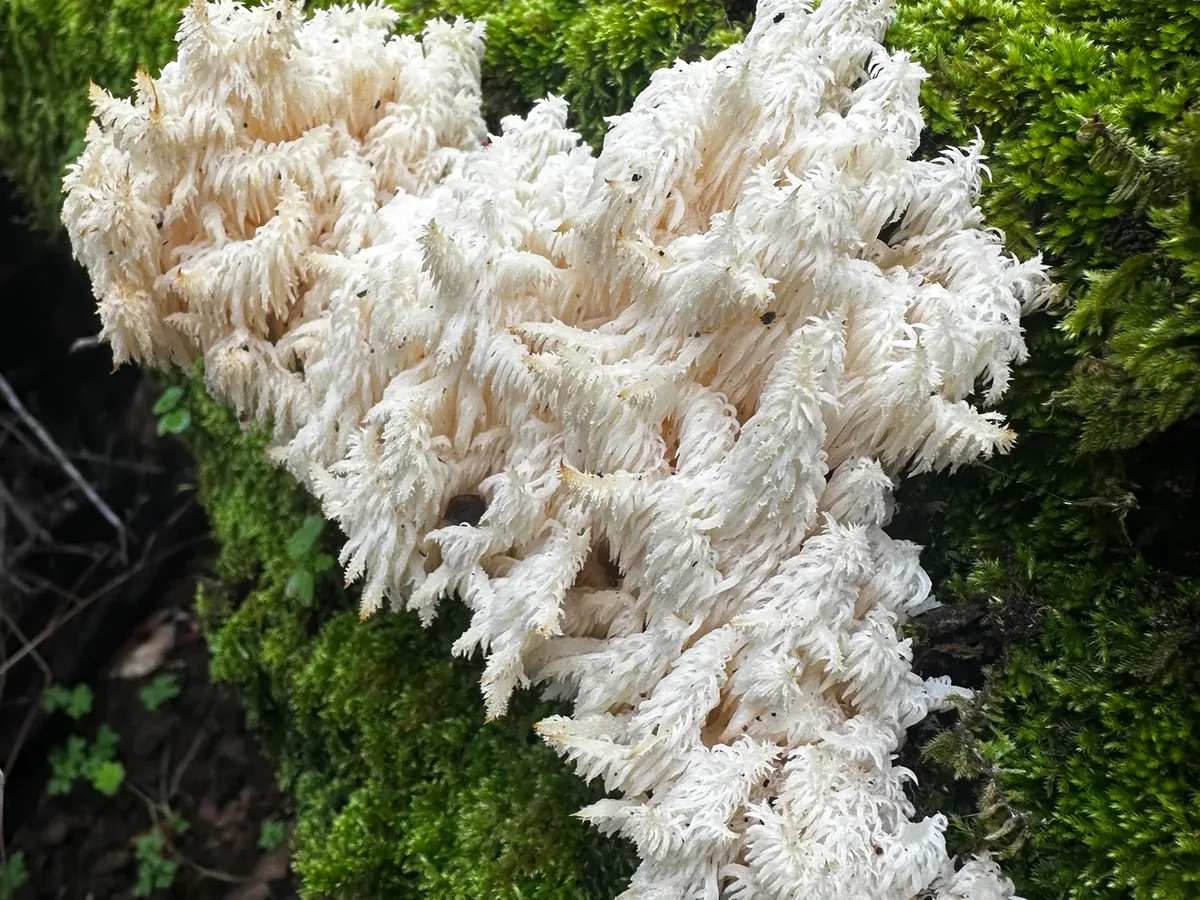
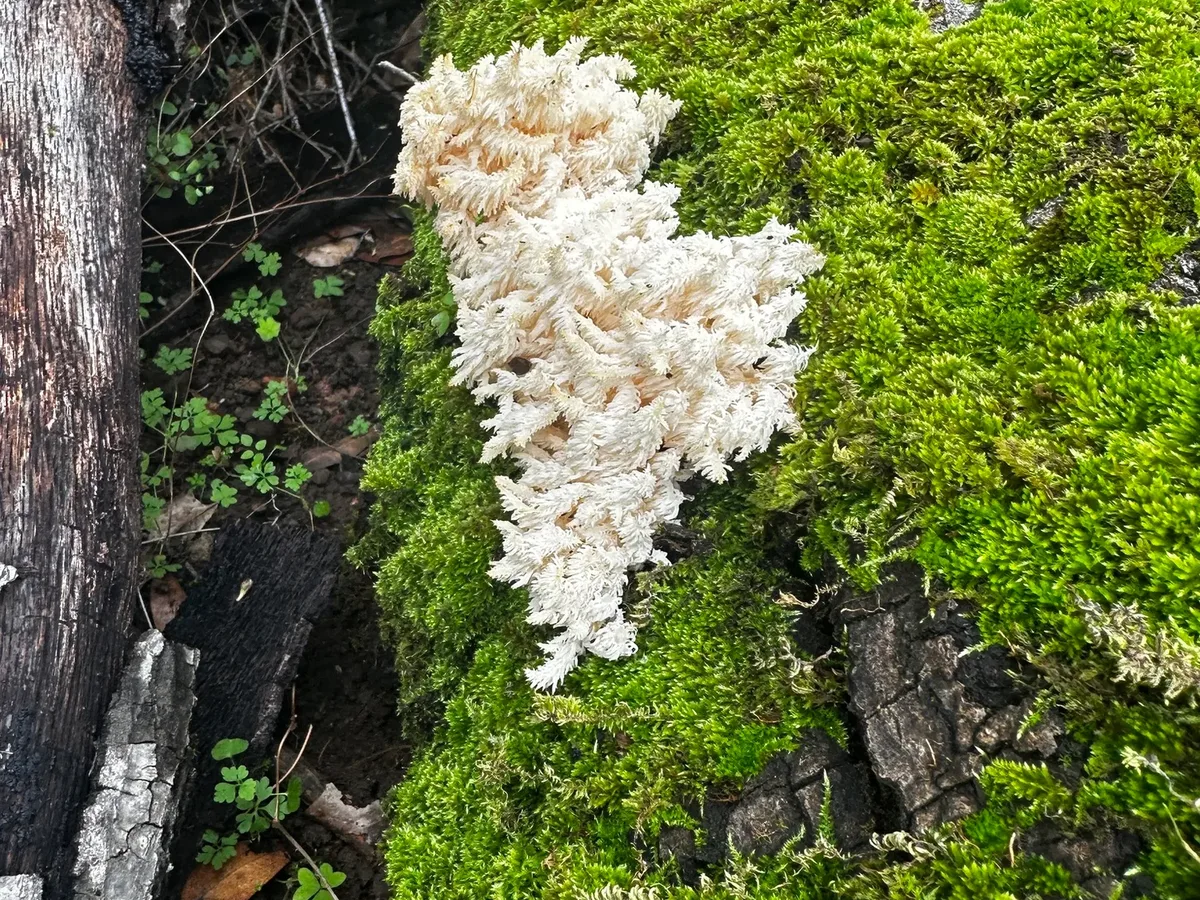
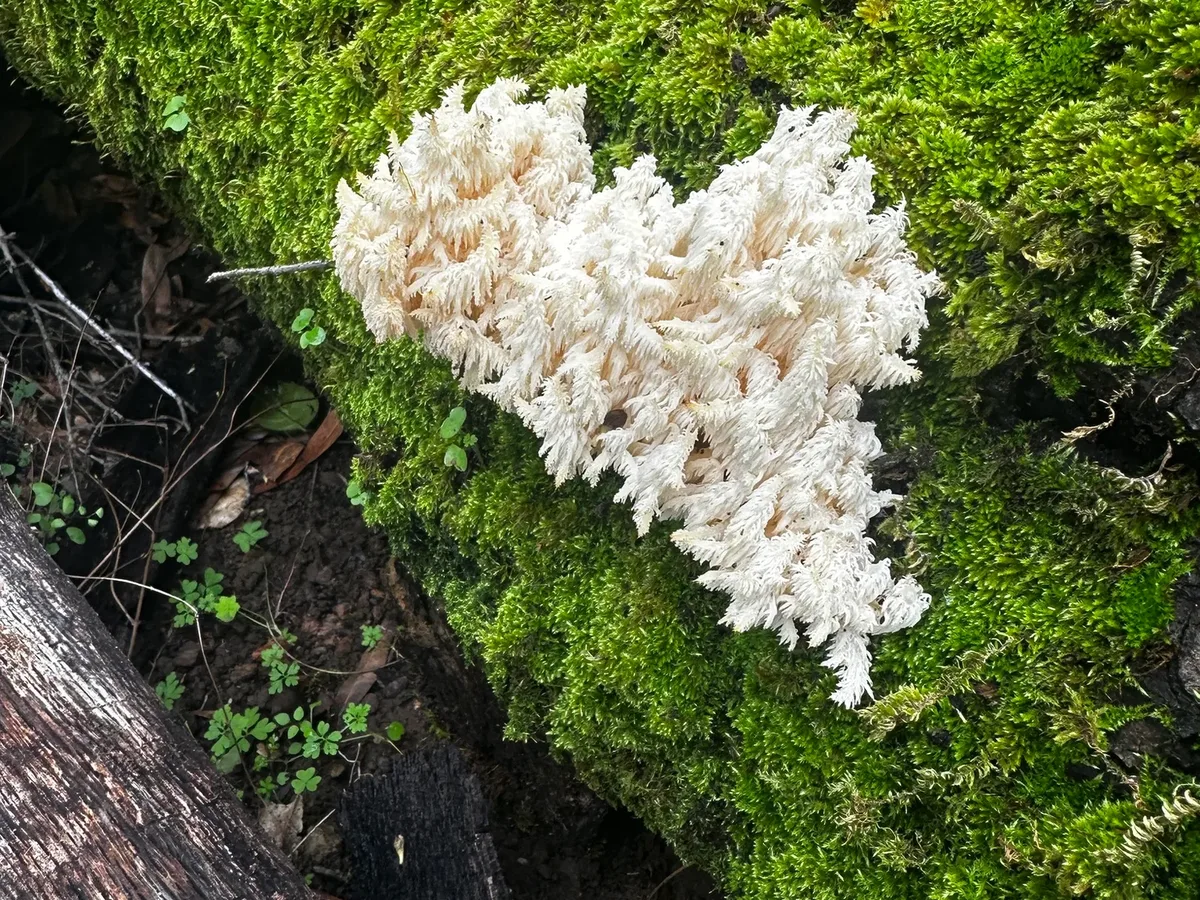
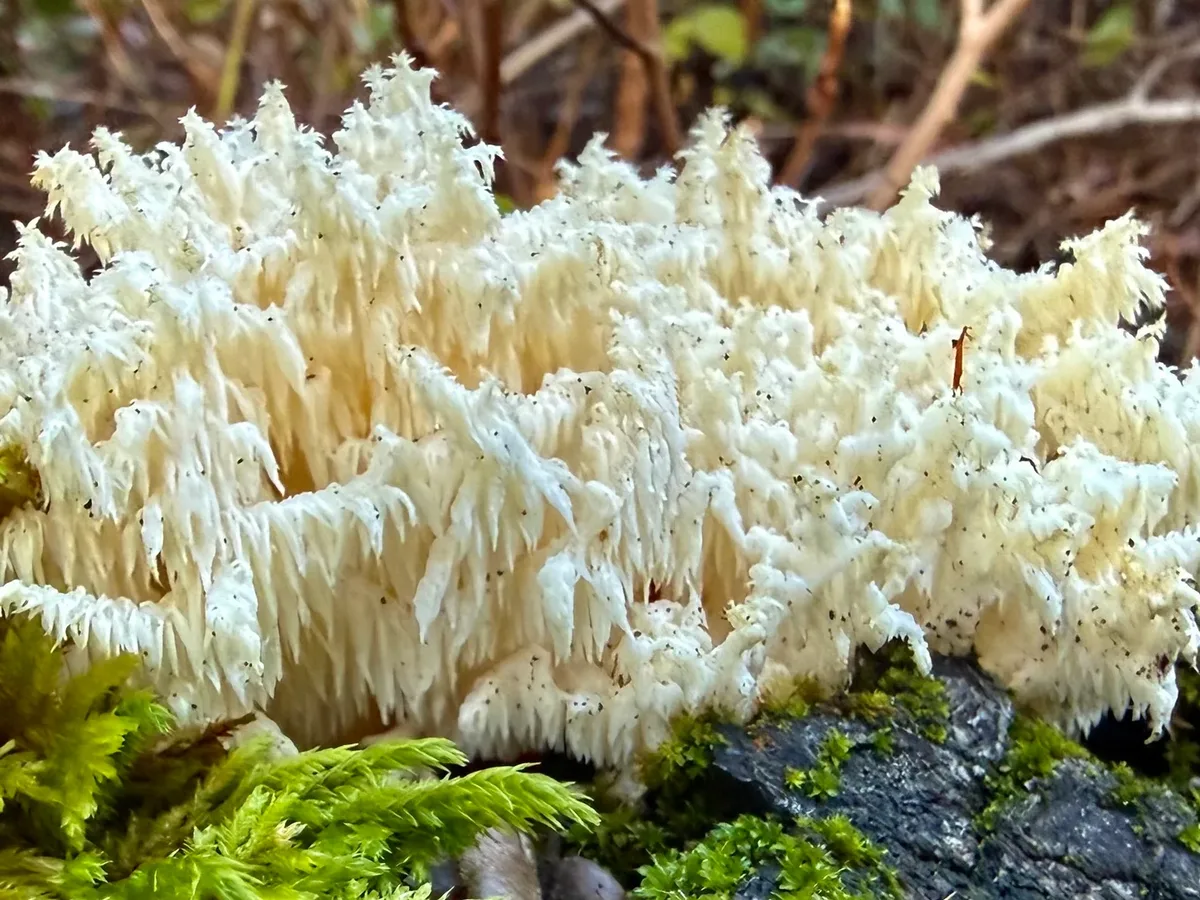
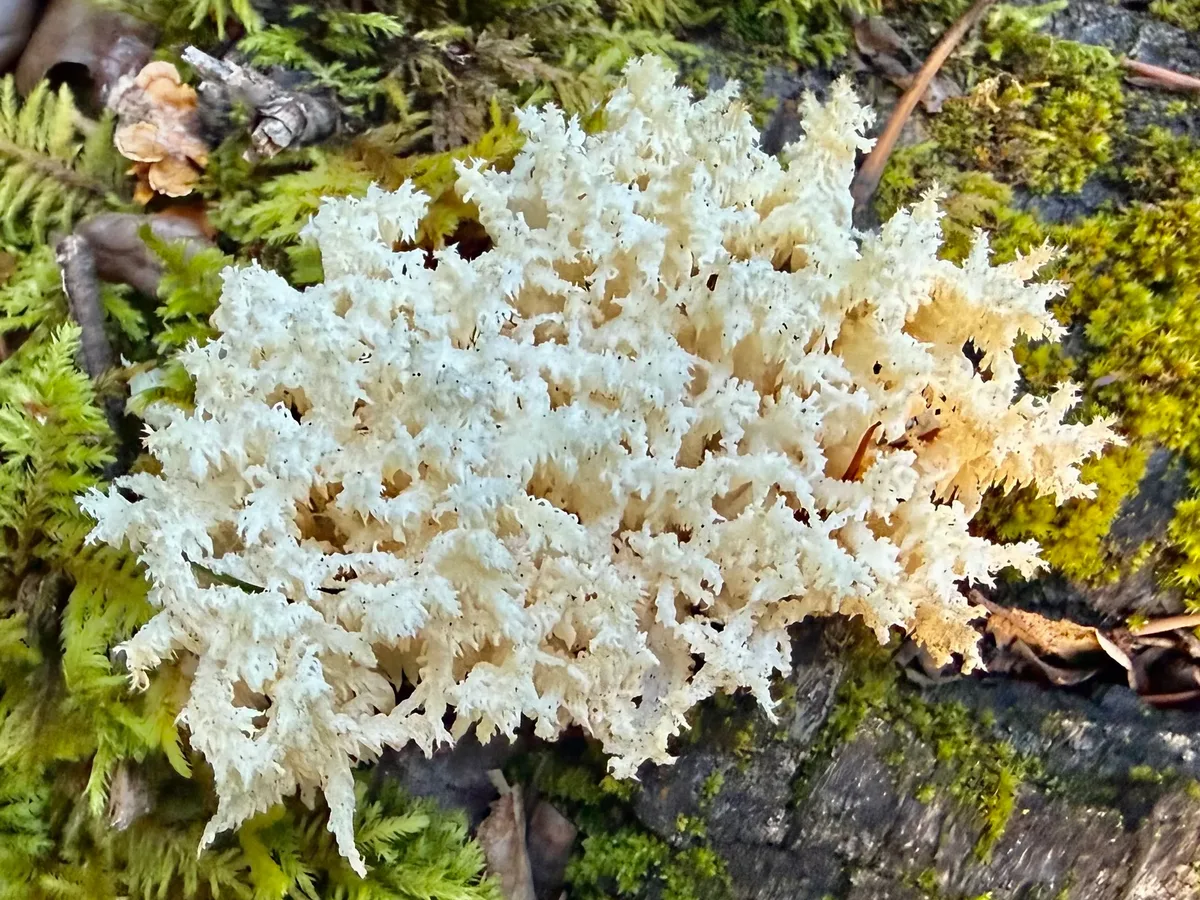
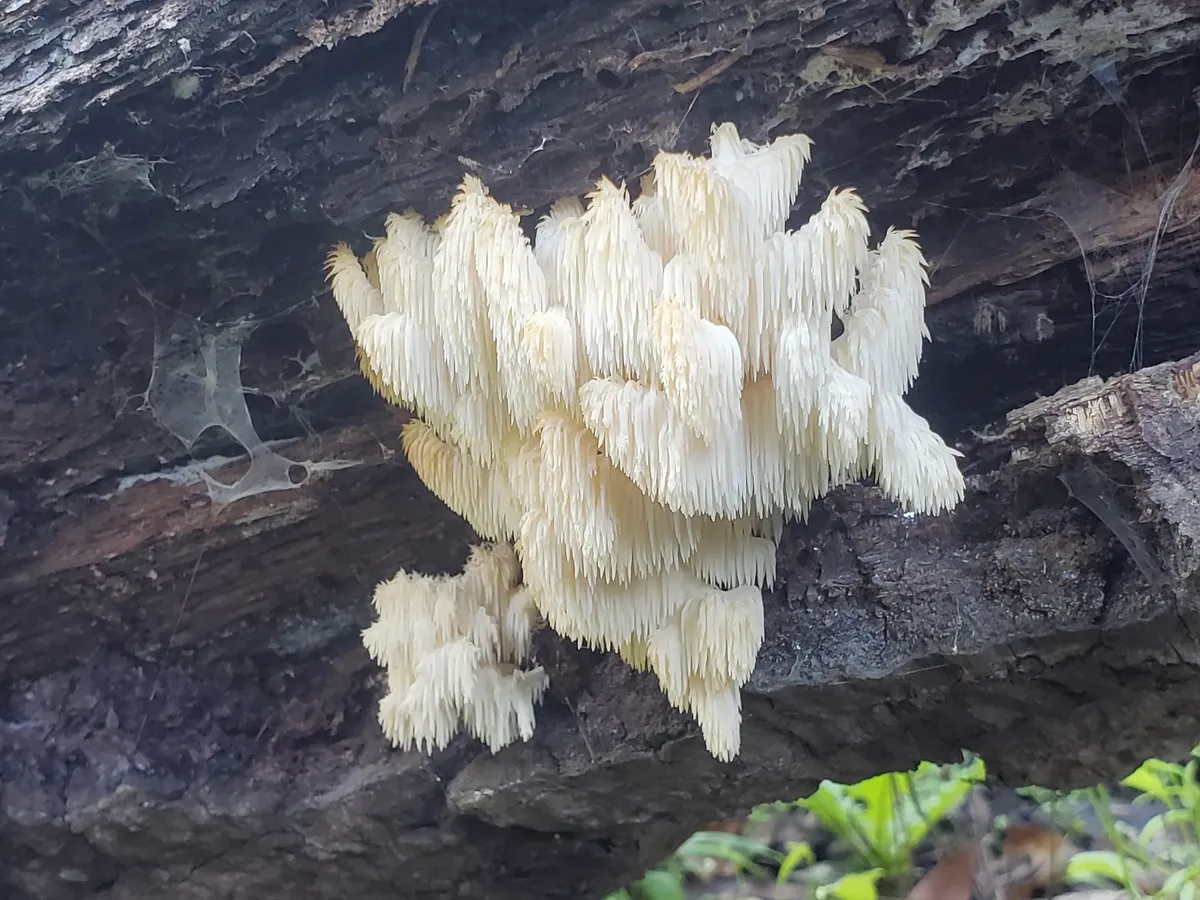
Hericium coralloides is immediately recognizable by its cascading, coral-like architecture.
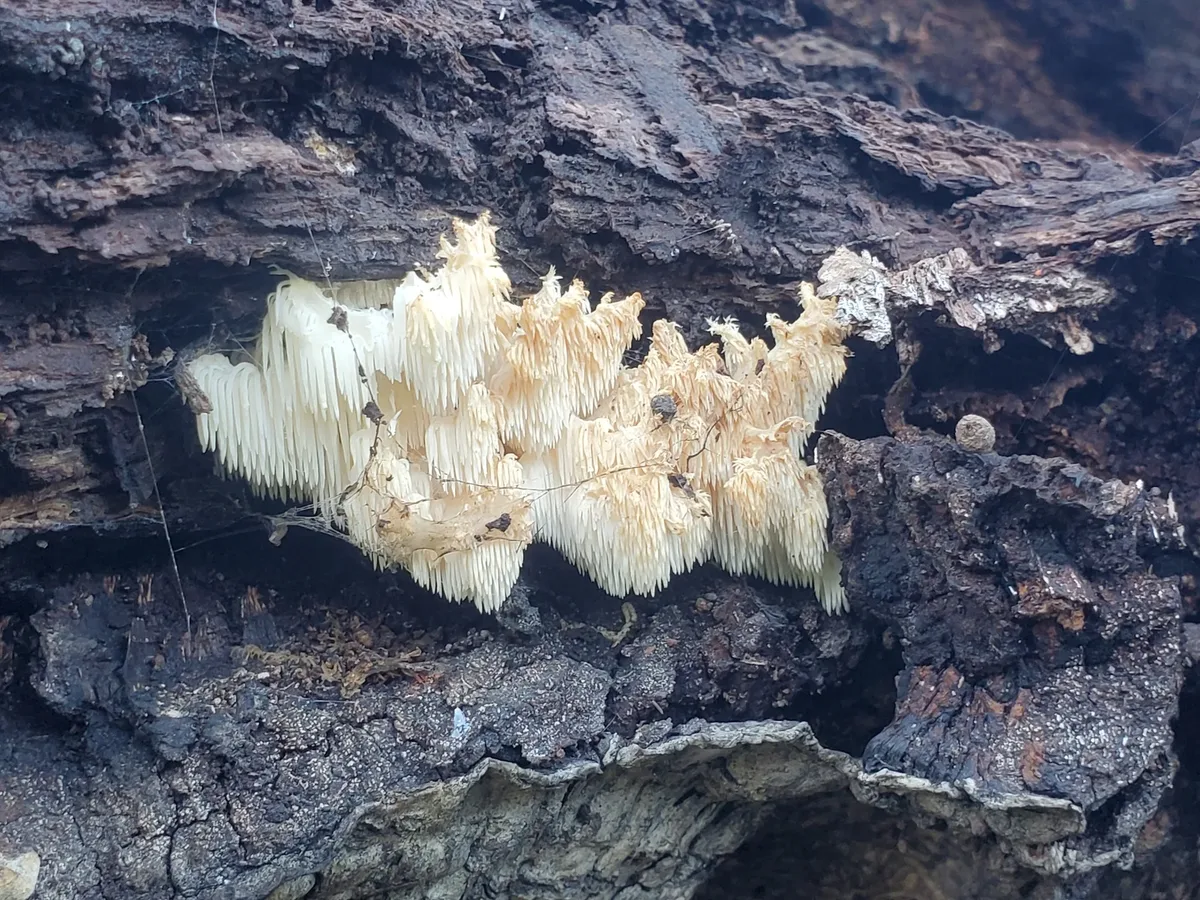
From one or a few stout white attachment points rooted in dead wood, it branches repeatedly and densely, the tips of every branch clothed in long, pendulous white spines (teeth) that point downward like tiny icicles, each 0.5-2 cm long.
The overall fruiting body can reach 40 cm in diameter and weigh over 1 kg.
Fresh specimens are bright white to ivory; with age or on drying they turn cream, pale buff, and eventually dull ochre-yellow.
The flesh is firm, rubbery-gelatinous in youth, white throughout, and does not discolour on cutting.
There are no gills, pores, or ridges; the entire spore-bearing surface lies on the pendant spines. Spore print is white.
Under a hand lens the spines appear smooth and fine.
Microscopically the spores are broadly ellipsoid, 3-5 × 3-4 µm, finely ornamented, and turn blue-black in Melzer's reagent (amyloid). The hyphal system is monomitic with clamp connections.
Where & when it grows
Habitat
H. coralloides is a specialist of ancient, large-diameter broadleaf trees. The most frequent hosts are:
- Beech (Fagus sylvatica)
- Oak (Quercus spp.)
- Hornbeam (Carpinus betulus)
- Maple or sycamore (Acer spp.)
Other veteran broadleaves, including lime, elm, and ash, are recorded hosts.
It grows from dead heartwood exposed by wounds, branch stubs, or lightning strikes, as well as from logs and large fallen trunks.
It is fundamentally a creature of old-growth and near-natural woodland - cathedral beech forests, ancient oak woodlands, park-land with veteran trees, and the like.
Intensively managed forests where old and dying wood is routinely removed will rarely harbour it.
In central Europe it is a red-listed indicator of ecological continuity; finding it implies the site has supported large dead wood for many decades.
When
The main fruiting window spans late July through October across most of central and northern Europe, peaking in August and September.
In warmer, oceanic climates fruitbodies may persist into November.
Individual fruitbodies develop over a period of days, remaining in prime condition for one to three weeks if weather stays cool and moist, then yellowing and toughening as they mature and dry.
The mycelium is perennial in the host wood and will fruit from the same tree for many years, sometimes decades, as long as suitable dead wood remains.
How it grows
Behind the spectacular fruitbody lies years of quiet, invisible work.
H. coralloides is a white-rot saprotroph: its mycelium threads through the heartwood of standing trees and fallen logs, steadily breaking down cellulose and lignin and leaving the wood pale and fibrous. That mycelium can persist in a single tree for many years.
Once conditions are right - cool nights, persistent humidity, summer warmth tapering off - fruitbodies erupt from cracks and exposed surfaces, expanding quickly over a few days.
A large tree may fruit from the same wound site year after year, the same hidden network announcing itself each autumn with a fresh cascade of white spines.
Fruiting conditions
Fruitbody development is triggered by cool, moist conditions following summer warmth; prolonged dry spells in July-August delay or suppress fruiting. Fruitbodies can develop rapidly over 3-5 days during ideal conditions (overnight temperatures 10-15 °C, high humidity). The species is notably adapted to decaying heartwood microclimate, which buffers against surface drying.
Look-alikes
Hericium coralloides belongs to a small and distinctive genus with no deadly lookalikes in Europe.
The most likely confusions are within the Hericium genus itself:
- H. erinaceus (Lion's mane) forms a single, undivided pom-pom mass of downward-pointing spines with no true branching.
- H. alpestre (mountain coral tooth, sometimes treated as a variety of H. coralloides) is very similar but fruits only at high altitude on conifers in Alpine zones, with somewhat shorter spines and a more compact habit.
Ramaria and Clavulina species superficially resemble Hericium from a distance but bear no spines and grow from soil, never producing pendulous teeth from wood.
Artomyces pyxidatus (crown coral) grows on wood but has upward-branching, crown-tipped branches entirely without teeth or spines.
No species confused with H. coralloides in central Europe is dangerous.
White coral fungus growing from soil in woodland; branches are smooth, upright, and crested at tips - no pendant spines, much smaller, completely different habitat (soil vs. wood).
Grows on decaying wood and is similarly branched, but branches terminate in tiny crown-like tips (4-6 teeth pointing upward), never in pendant spines; much smaller overall. Edible but not prized.
H. erinaceus forms a single, undivided, pom-pom-shaped mass of spines without any branching architecture; H. coralloides is always distinctly branched with spines only at the branch tips. Both are edible.
Very similar in branching form but found only at alpine elevations on dead conifers (especially Abies and Picea); spines tend to be shorter and denser. Some authors treat it as a variety of H. coralloides. Also edible.
Coral-shaped but grow from soil, never on wood, and have blunt or rounded branch tips - no pendant teeth or spines whatsoever. Some Ramaria species cause gastric upset, so confirm the pendant spines of Hericium before collecting.
In the kitchen
Picking & cleaning
Harvest young fruitbodies when they are pure white to ivory and the spines are firm and well-formed.
Yellowing or browning flesh is overripe and will be bitter and tough.
Cut cleanly at the base with a sharp knife, leaving the basal attachment in place to minimize disturbance.
Because this species is legally protected in several European countries (e.g., Germany, Poland, UK) due to rarity, CHECK local regulations before collecting.
Where collection is lawful, take only a portion of a large fruitbody to allow further sporulation.
The fruiting site is ecologically valuable; avoid damaging the surrounding bark and wood.
Cooking
Young H. coralloides has a mild, pleasant, slightly sweet flavour reminiscent of seafood or crab, with a firm, meaty texture that holds up well to heat.
It can be sliced or torn into pieces and sautéed in butter or oil until golden - the spines crisp attractively.
It absorbs flavours well and pairs with garlic, cream, lemon, white wine, and gentle herbs such as thyme.
It works excellently in:
- Risotto
- Pasta dishes
- Soups
- Tempura batter
- As a meat substitute in stir-fries
Avoid over-cooking, which makes it rubbery; medium-high heat for 5-8 minutes is usually sufficient.
It dries and reconstitutes reasonably well, though the texture softens.
Good to know
Hericium coralloides has a very good safety record. There are no confirmed toxins and it is not known to cause adverse reactions in typical preparations.
Young, white specimens are the safest choice; overripe yellow-brown material may cause mild gastric upset in sensitive individuals.
Cook thoroughly before eating - eating raw is not advisable for any large fleshy fungus.
Note that collection may be ILLEGAL in your region due to conservation status; check local law before picking.
A reference guide - never an edibility guarantee. When in doubt, leave it out.