Bear's Head
Hericium abietissyn. Hericium coralloides var. abietis Weir, Hericium weirii (Banker) K.A.Harrison
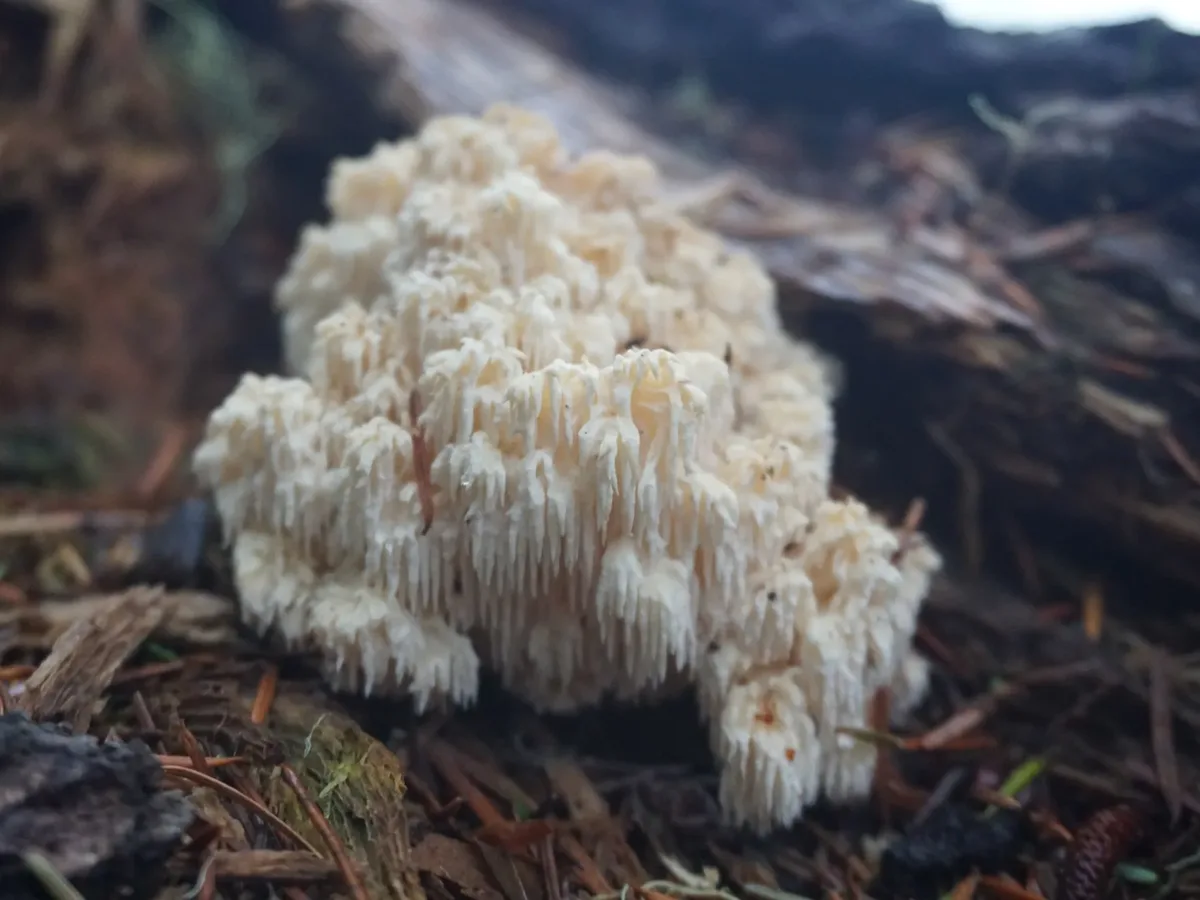 © Murray McGoogan (CC BY)
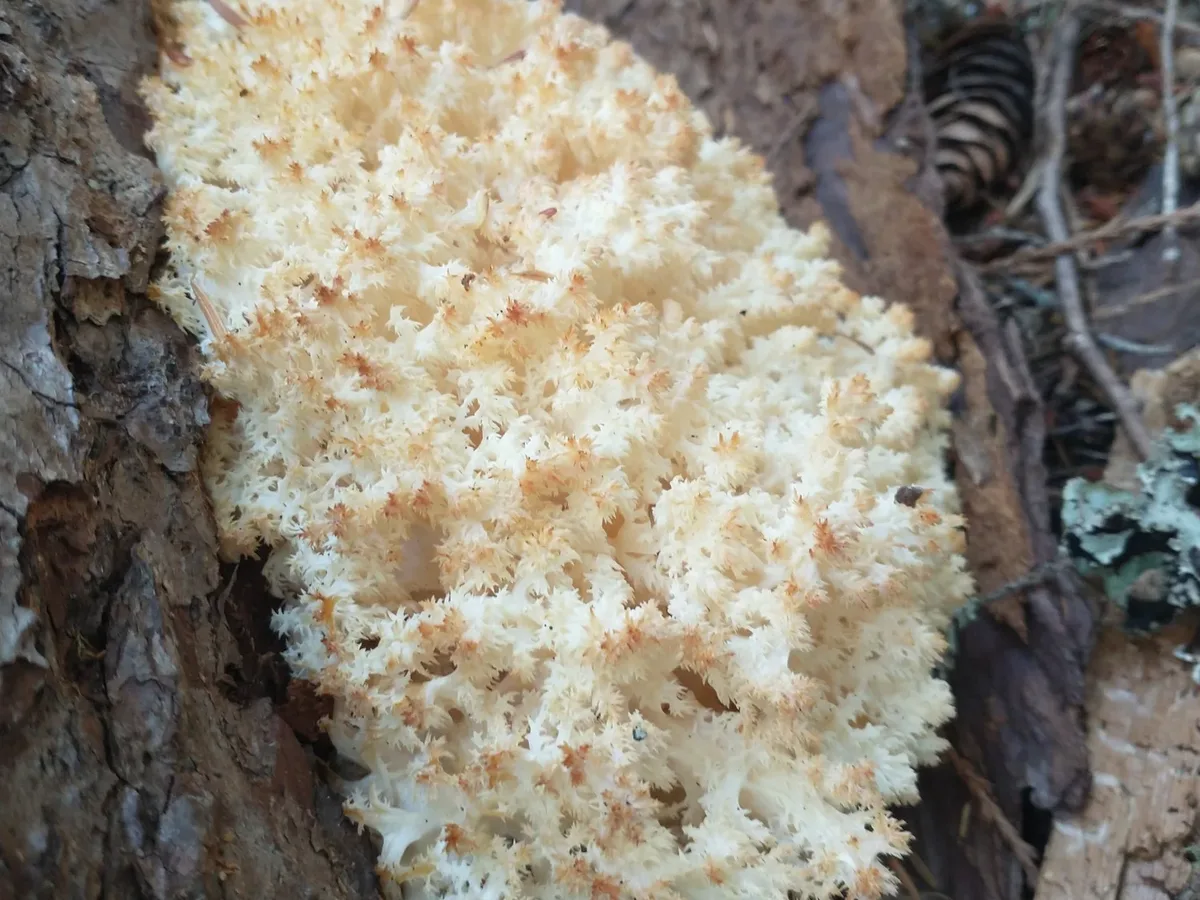 Drew Meyer (CC0)
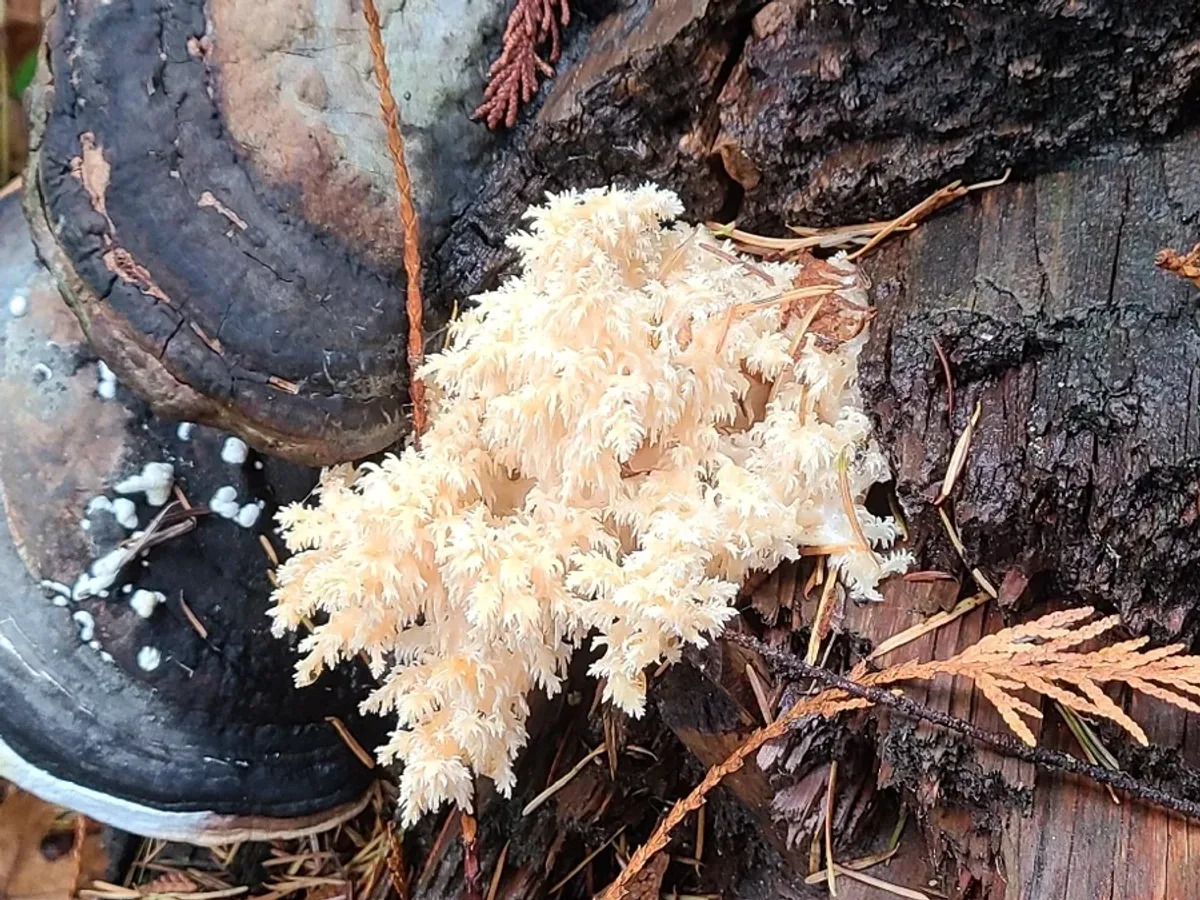 Dusk Storm (CC0)
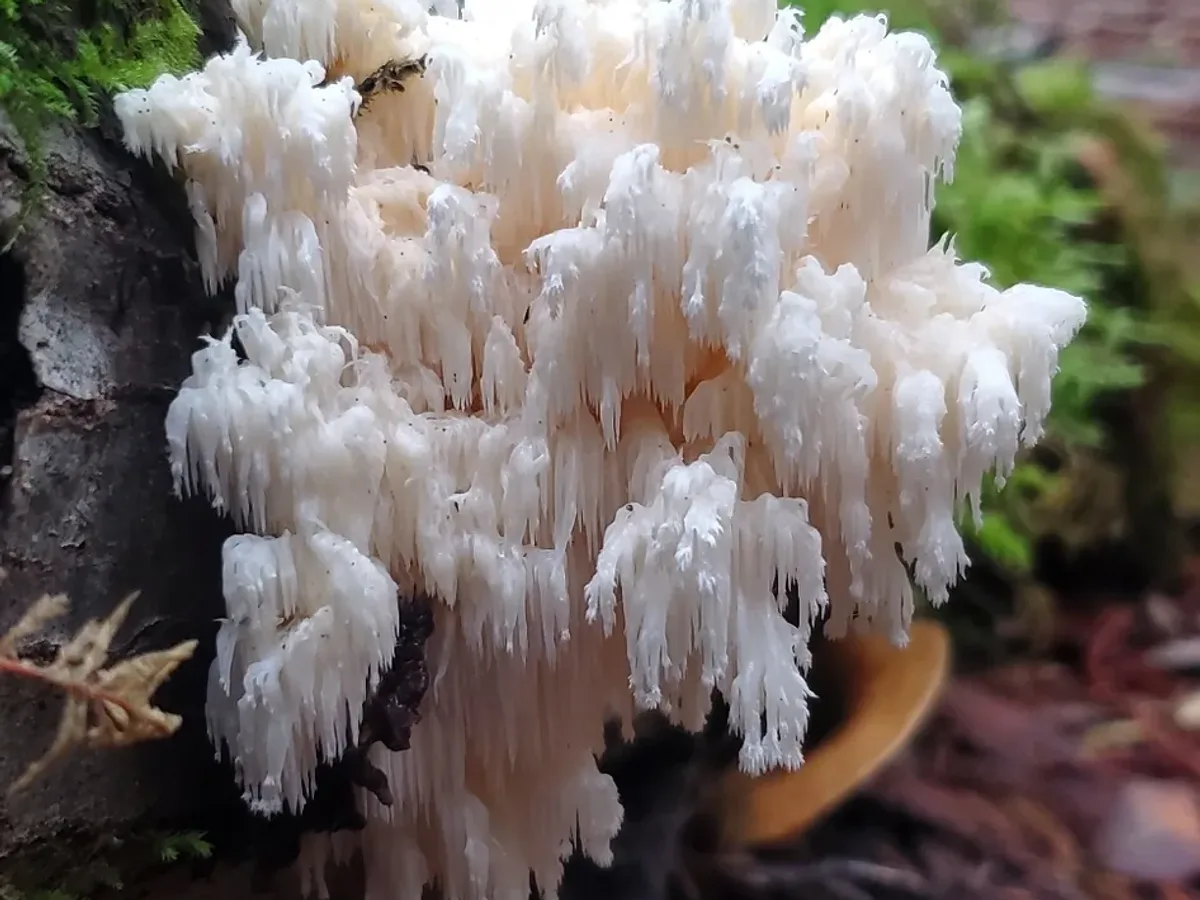 © Eric Austin (CC BY)
 Michael Smith (CC0)
 Michael Smith (CC0)
 © Murray McGoogan (CC BY)© Murray McGoogan (CC BY)Drew Meyer (CC0)
One of the best mushrooms you can bring home - once you are certain of the identification.
How to recognise it
Hericium abietis is one of the most spectacular fungi of the Pacific Northwest forest, and once seen it is impossible to mistake for anything dangerous.
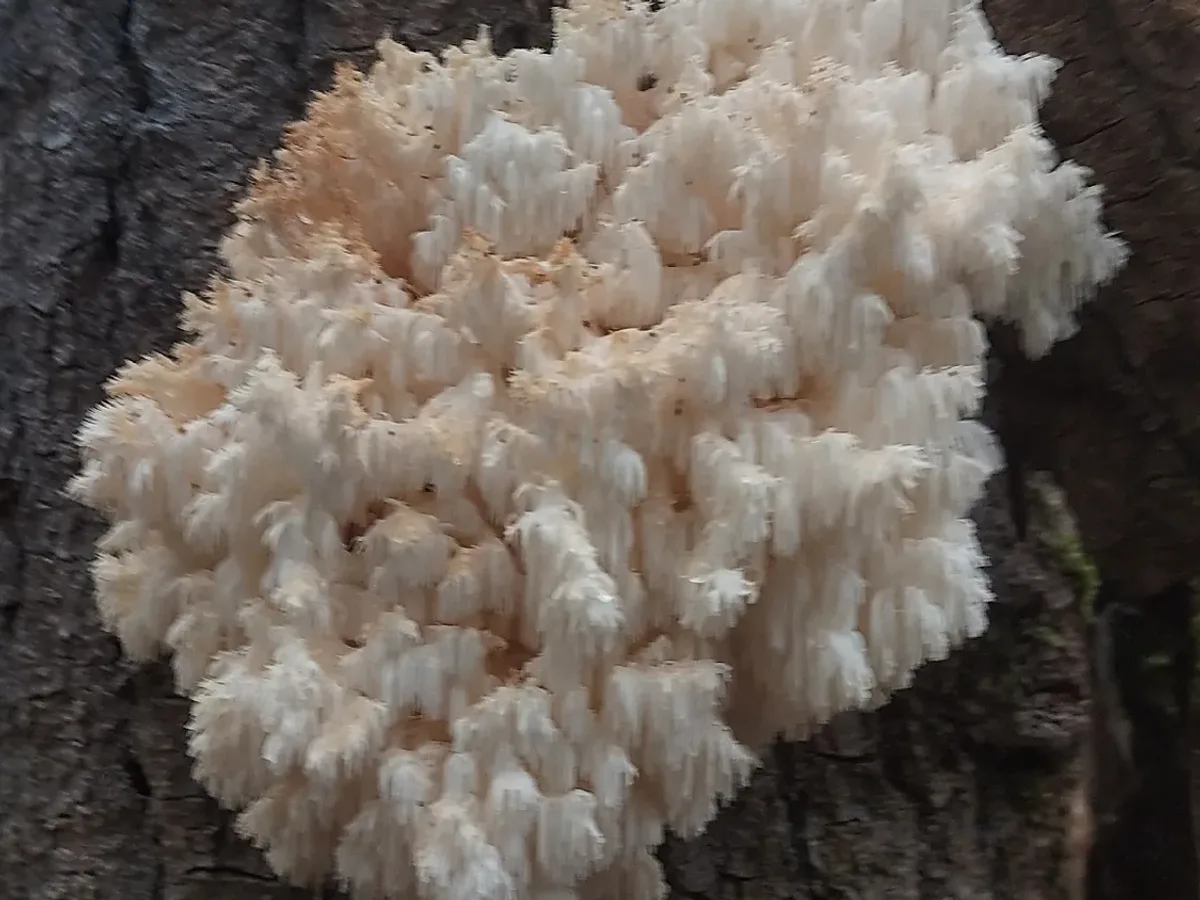
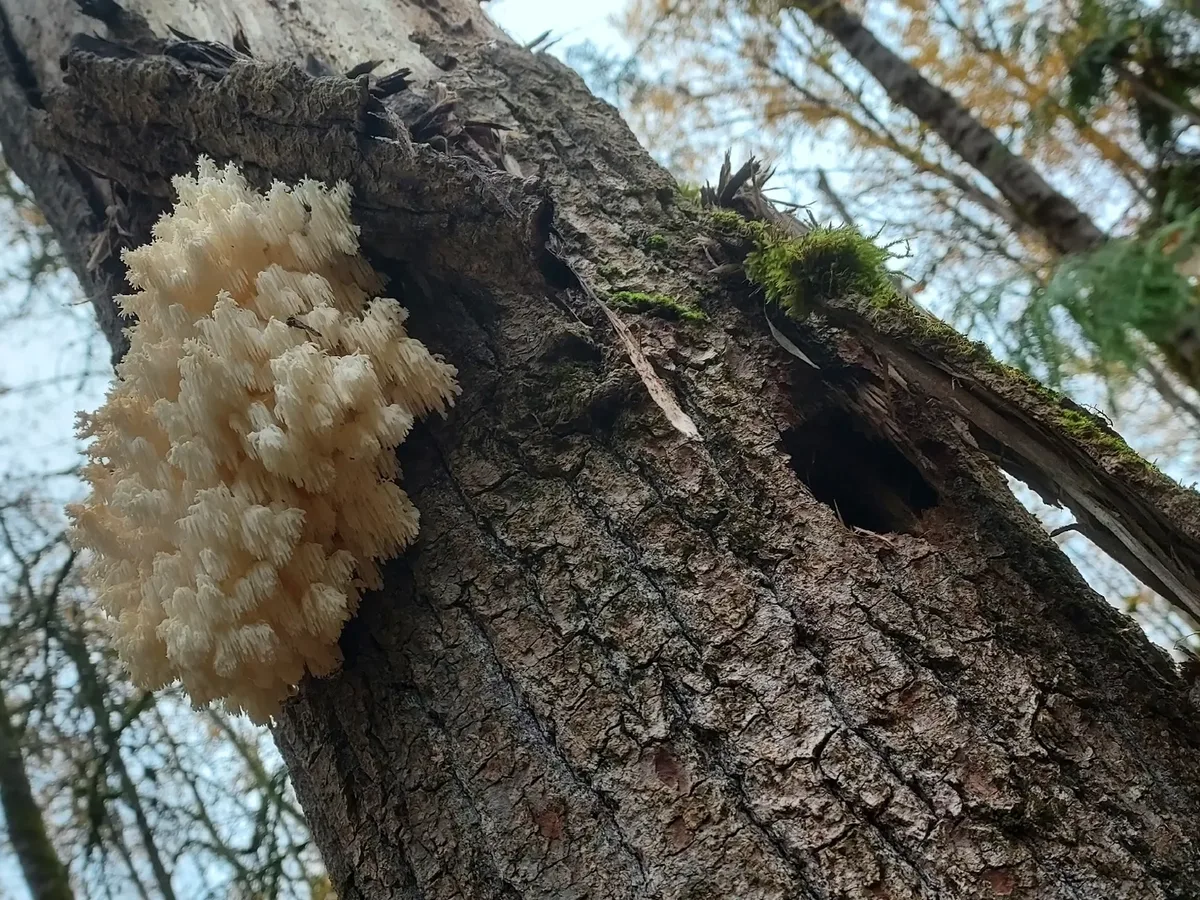
The fruiting body erupts from conifer wood as a dense, branching, cauliflower-like mass - anywhere from a melon-sized cluster to a towering dome half a metre across and weighing up to 4 kg.
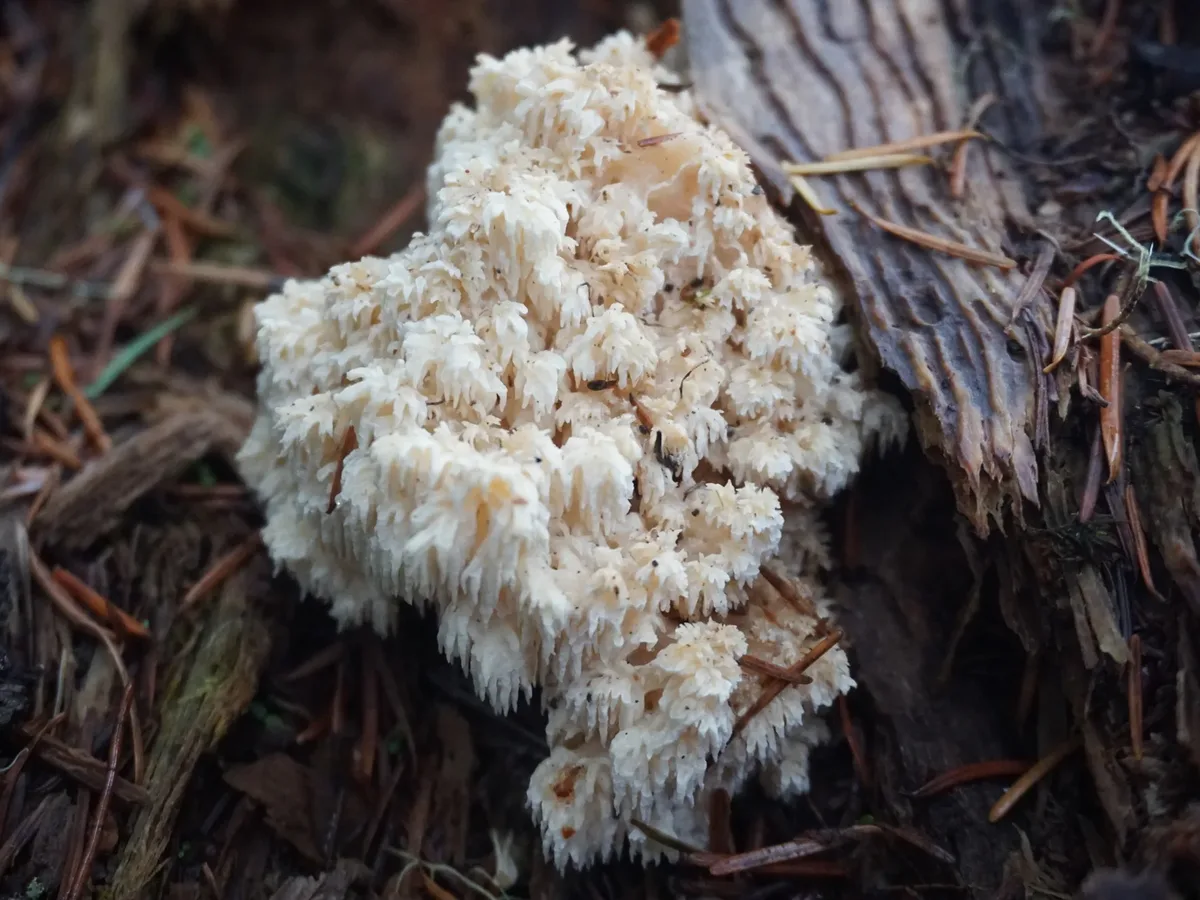
From one or a few thick, pale rooting attachment points in the wood, it branches repeatedly outward, each branch-tip draping downward into long, pendant, icicle-like spines (teeth) typically 1-4 cm in length.
The entire structure - branches and spines alike - is pure white to cream-white when young and fresh, one of the most strikingly clean whites in the fungal kingdom.
As the fruitbody ages it yellows: first at the interior, then spreading outward, turning pale buff and then dull ochre. That colour shift matters: white flesh is choice; yellow flesh is progressively tougher, more bitter, and less rewarding in the kitchen.
There are no gills, no pores, no ridges. The flesh is firm, white, finely fibrous, and moist, exuding a faint pleasant scent - mild, fresh, faintly marine. The spore print is white.
Unlike the related Lion's Mane (Hericium erinaceus), which forms an undivided single pom-pom, and unlike the European coral tooth (H. coralloides), which has noticeably shorter spines on more slender branches, H. abietis is consistently larger, more robust, more heavily branched, and produces longer, more dramatic pendant teeth.
Where & when it grows
Habitat
The key to finding Hericium abietis is large dead conifers.
This is a saprotrophic white-rot fungus: its mycelium quietly consumes the cellulose and lignin of dead heartwood, and eventually, when conditions align, it erupts through a wound, crack, or broken surface as that spectacular white mass.
True firs - Pacific silver fir (Abies amabilis) in particular - are the most frequent hosts in the Pacific Northwest, which is why the species bears the epithet abietis (Latin: of fir). Western hemlock, Sitka spruce, Engelmann spruce, and Douglas-fir are also reliable hosts.
Look for it high on standing snags and broken-top trees as well as at the base of massive fallen logs; it is not shy about fruiting 3-5 metres up a trunk if that is where the exposed heartwood is.
Old-growth and mature second-growth forests of the coast ranges, Olympic Peninsula, and western Cascades are the heartland of this species. In the interior mountain ranges, look in moist hemlock and fir drainages.
Once a piece of wood is colonised the mycelium can persist for years, and the same snag or log will frequently produce new fruitbodies across several seasons until the usable wood is gone - a known 'spot' is worth revisiting annually.
When
August through October is the window to search, with a broad peak in September across most of the Pacific Northwest.
At high elevations in the Cascades, fruiting may not begin until late August and can continue through October. Coastal lowland populations can fruit from late July onward, and mild years push the season into November.
Fruiting is triggered by late-summer warmth followed by sustained moisture. After a typically dry Pacific Northwest summer, the first substantial autumn rains (often in August or September) initiate fruiting, with fruitbodies typically expanding to full size over 5-10 days.
A single fruitbody in good condition can persist for 1-2 weeks.
The biological logic is straightforward. The saprotrophic mycelium in the wood maintains a stable microclimate, so it responds to ambient moisture and temperature independently of surface soil; this often means H. abietis fruits reliably even in years when soil-fruiting species are late.
How it grows
Hericium abietis grows as an individual fruitbody, rarely two or three adjacent clusters from the same piece of wood.
It arises from a compact, rooting basal attachment - a short, stout, white base often partly concealed in a crevice or cavity - and expands outward and downward, the branches progressively subdividing and each terminal branchlet producing that cascade of pendant spines.
The white-rot mycelium that sustains it works slowly, decomposing the lignin of the host wood and leaving it light, pale, and fibrous.
Because the mycelium is established within the wood rather than in soil, the same fallen log or snag can produce fruitbodies at the same or nearby locations for many consecutive seasons. Experienced foragers note promising dead firs and hemlocks and revisit them each autumn.
Fruiting conditions
Fruiting is triggered by late-summer or early-autumn rain following the typically dry Pacific Northwest summer, with fruitbodies developing 5-14 days after sufficient moisture penetrates the host wood. Because the mycelium lives in conifer heartwood (not surface soil), it is somewhat buffered from surface drying and responds to ambient humidity and wood moisture rather than soil temperature alone. Best flushes follow 20+ mm of rain over 14 days with cooling night temperatures, typically August through October.
Look-alikes
Hericium abietis has no deadly lookalikes - a point worth emphasising to beginners. Every member of the genus Hericium is edible. The most likely confusions are with close relatives.
- Hericium erinaceus (Lion's Mane) forms a single, undivided, oval or round pom-pom of downward-pointing spines from a single point of attachment, without any branching whatsoever - instantly distinguishable by its unbranched, solid-globe form.
- Hericium coralloides (coral tooth), primarily a European hardwood species, is very similar in branching form to H. abietis but generally smaller, with shorter, more delicate spines (typically under 1 cm) and an association with broadleaf trees (beech, oak, maple) rather than conifers; H. coralloides is also edible.
- Hericium americanum (American Lion's Mane or Bear's Head) is the eastern North American species often confused with H. abietis; it is similarly branching but typically associated with hardwoods and lacks H. abietis's consistent conifer-substrate habit; it is also an excellent edible.
From a distance, large white bracket fungi or dense clusters of oyster mushrooms (Pleurotus ostreatus and relatives) on wood might attract attention, but up close they have gills - immediately distinguishable from Hericium's pendant teeth.
Ramaria and Clavulina coral fungi grow from soil, never on conifer wood, and have upright, blunt-tipped branches with no pendant spines.
No dangerous species is realistically confused with a large, branching, spine-bearing, white Hericium on conifer wood.
Eastern North American species, very similar in overall appearance; tends to associate with hardwoods (beech, maple, oak) rather than conifers. Range overlap is minimal. Both are choice edibles; confusion is harmless.
Very similar branching form but primarily a European species on broadleaf trees (beech, oak, maple); spines are shorter (typically under 1 cm) and more delicate; fruitbody overall smaller and more open in structure. H. abietis is a PNW conifer specialist with longer, coarser spines and a more compact, heavier fruitbody. Also edible.
Grows on decaying wood and is similarly branched, but branches end in tiny crown-shaped tips (4-6 small teeth pointing upward), never in long pendant spines; much smaller overall, usually cream to pale yellow. Edible.
Forms a single undivided oval or round pom-pom of pendant spines from one attachment point - no branching whatsoever. H. abietis is always multiply branched with spines only at the branch tips. Both are excellent edibles, so confusion is harmless.
Coral fungi grow from soil or buried wood debris and have blunt or club-tipped branches - no pendant spines at all. Often coloured (yellow, ochre, pink, buff). Some Ramaria species cause gastric upset, so always confirm the downward-hanging teeth of Hericium before collecting.
In the kitchen
Picking & cleaning
Harvest only young specimens that remain pure white to pale cream throughout.
The moment the flesh begins to yellow significantly - especially if the yellow is spreading through the interior - quality is declining and bitterness increasing; deeply yellowed specimens are not worth collecting.
Cut cleanly at the base where the fruiting body meets the wood, leaving the basal attachment point in place; this disturbs the mycelium least and gives the best chance of future fruiting from the same site.
The branching architecture does not trap debris and soil the way cauliflower mushroom or hedgehog mushrooms do, but check between the branches for slugs, beetle larvae, and other occupants, which favour the protected interior.
Because fruitbodies can be found several metres up a snag, some finds require patience and a good eye - scan vertical dead wood at height as well as at the base.
A single large specimen easily feeds a family; resist the impulse to take more than you will use within two to three days.
Cooking
An outstanding choice edible with a mild, pleasant flavour often compared to crab, lobster, or seafood - sweet, slightly briny, with a satisfying chewiness that intensifies on cooking.
The texture is firm and meaty: it does not dissolve or wilt like many mushrooms, making it versatile across cooking methods.
Tear or cut into manageable pieces and sauté in butter or olive oil over medium-high heat until the exterior is golden and lightly crisp; the spines become slightly crunchy and nutty while the interior stays moist.
It excels as a seafood substitute - in chowders, as a mock crab cake filling, or stir-fried with ginger and soy sauce. It pairs well with cream sauces, lemon, garlic, fresh herbs (tarragon, thyme, chives), and white wine.
Avoid overcooking, which makes it rubbery; 6-10 minutes of active sautéing is usually ideal.
It can be dried (slice thinly and dry at low heat) and rehydrated, or briefly blanched and frozen.
Any slight bitterness in fresher-but-not-young specimens is reduced by blanching in salted water before the final cooking step. Discard any heavily yellowed portions, which are tough and bitter regardless of preparation.
Good to know
Hericium abietis is considered a safe, well-documented edible with no confirmed toxins and no deadly lookalikes. Its combination of white pendant teeth, branching architecture, and conifer-wood substrate is unique and diagnostic.
The sole practical safety consideration is freshness. Only white to pale cream specimens are desirable and reliably safe from a gastrointestinal standpoint; heavily yellowed old material may cause mild digestive discomfort in sensitive individuals, likely from degradation products in ageing flesh rather than true toxins.
- Always cook before eating - like all fleshy fungi, it is not recommended raw.
- As with any wild mushroom eaten for the first time, try a modest portion to check for personal intolerance before eating a large quantity.
- Because it grows on standing snags and dead logs, verify you are collecting from wood that has not been treated with chemicals or fungicides (unlikely in natural forest settings but a reasonable general precaution).
A reference guide - never an edibility guarantee. When in doubt, leave it out.