Fluted Black Elfin Saddle
Helvella lacunosasyn. Helvella sulcata Afzel., Helvella lacunosa var. sulcata (Afzel.) Quél., Leptopodia lacunosa (Afzel.) Boud., Costapeda lacunosa (Afzel.) Kuntze
 © Atsushi Nakajima (CC BY)
 © Lucian Clanet (CC BY)
 © Chaym Turak (CC BY-SA)
 © Chaym Turak (CC BY-SA)
 © Chaym Turak (CC BY-SA)
 © Chaym Turak (CC BY-SA)
 © Atsushi Nakajima (CC BY)© Atsushi Nakajima (CC BY)© Lucian Clanet (CC BY)
Edible only with the right preparation - or safe for some people but not others. Learn the caveats first.
Never eat a mushroom you are not 100% sure of - check the look-alikes below, and always cook wild mushrooms.
How to recognise it
Helvella lacunosa is one of the most architecturally distinctive of all macrofungi, and once seen it is seldom forgotten.
Cap
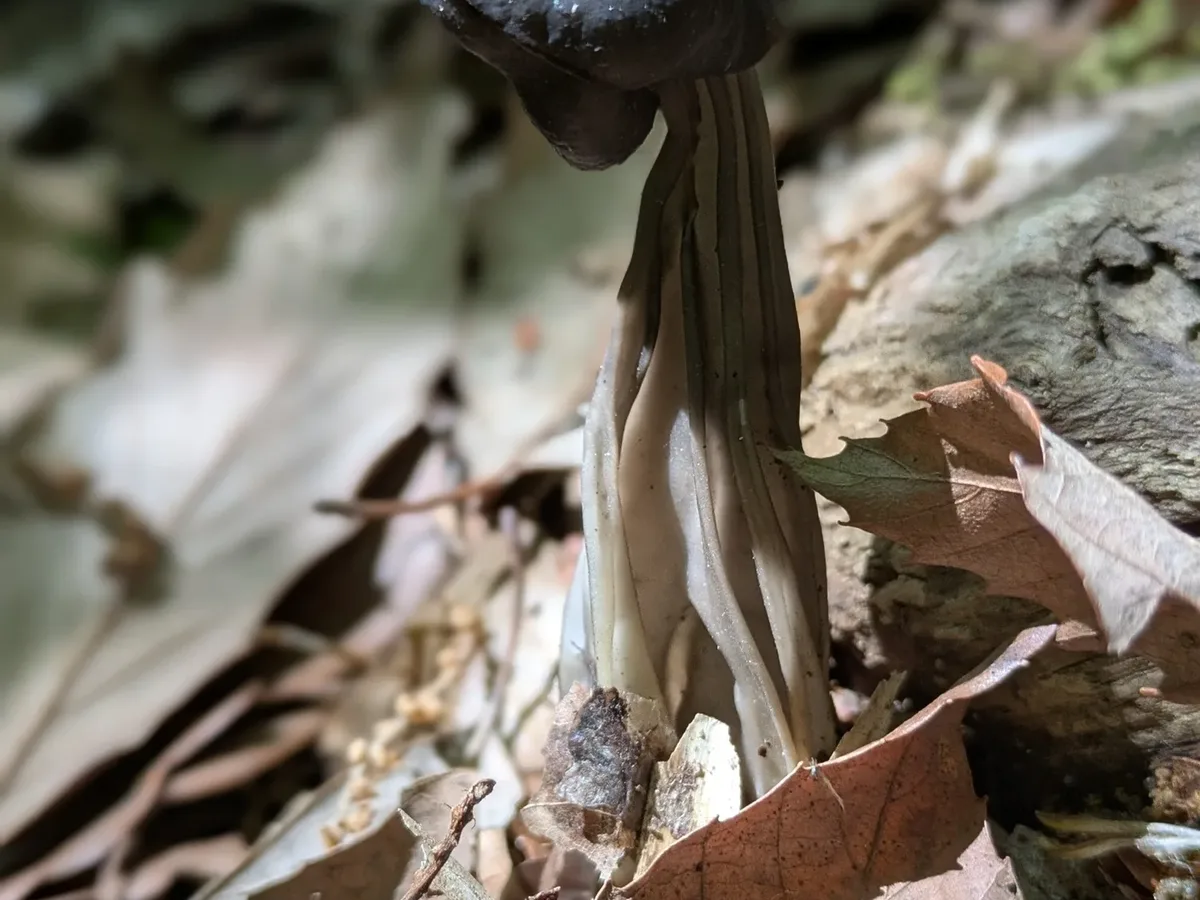
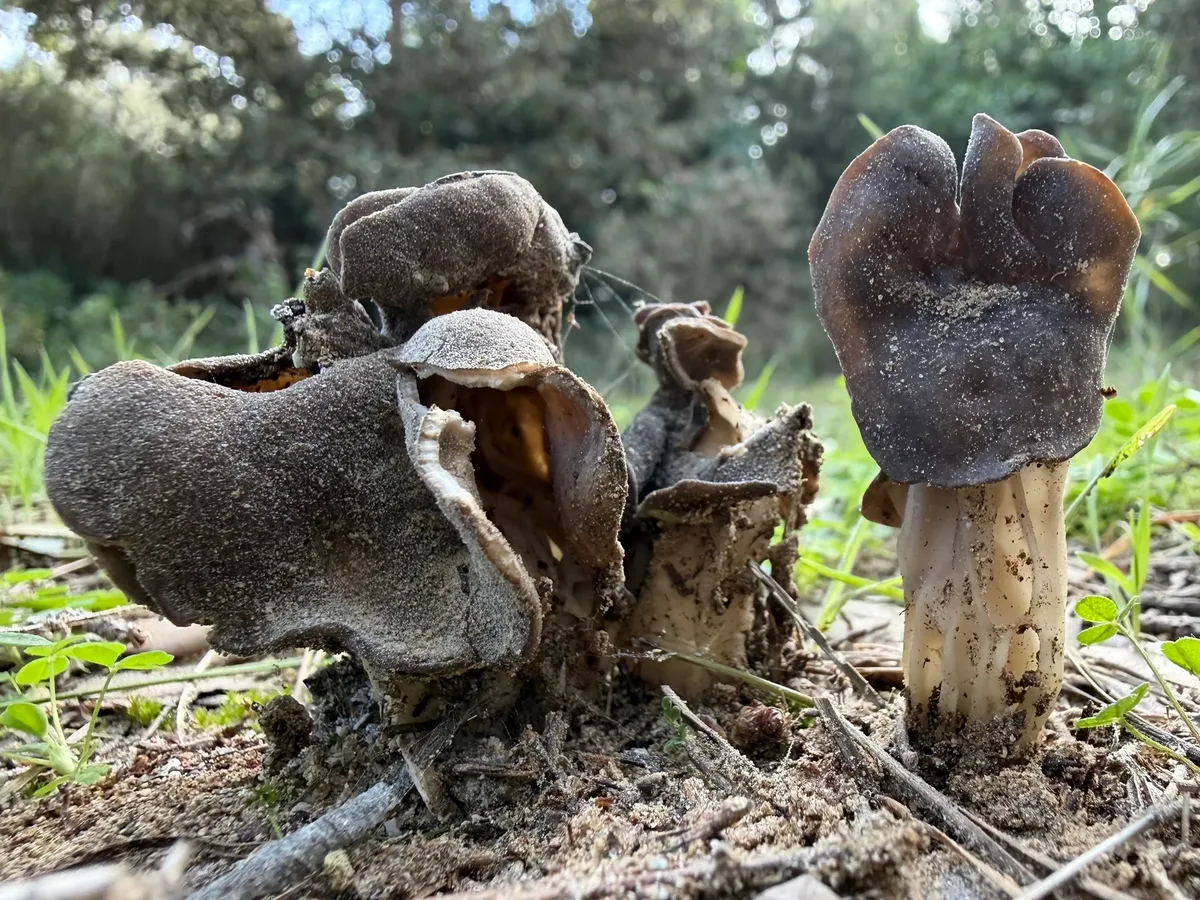
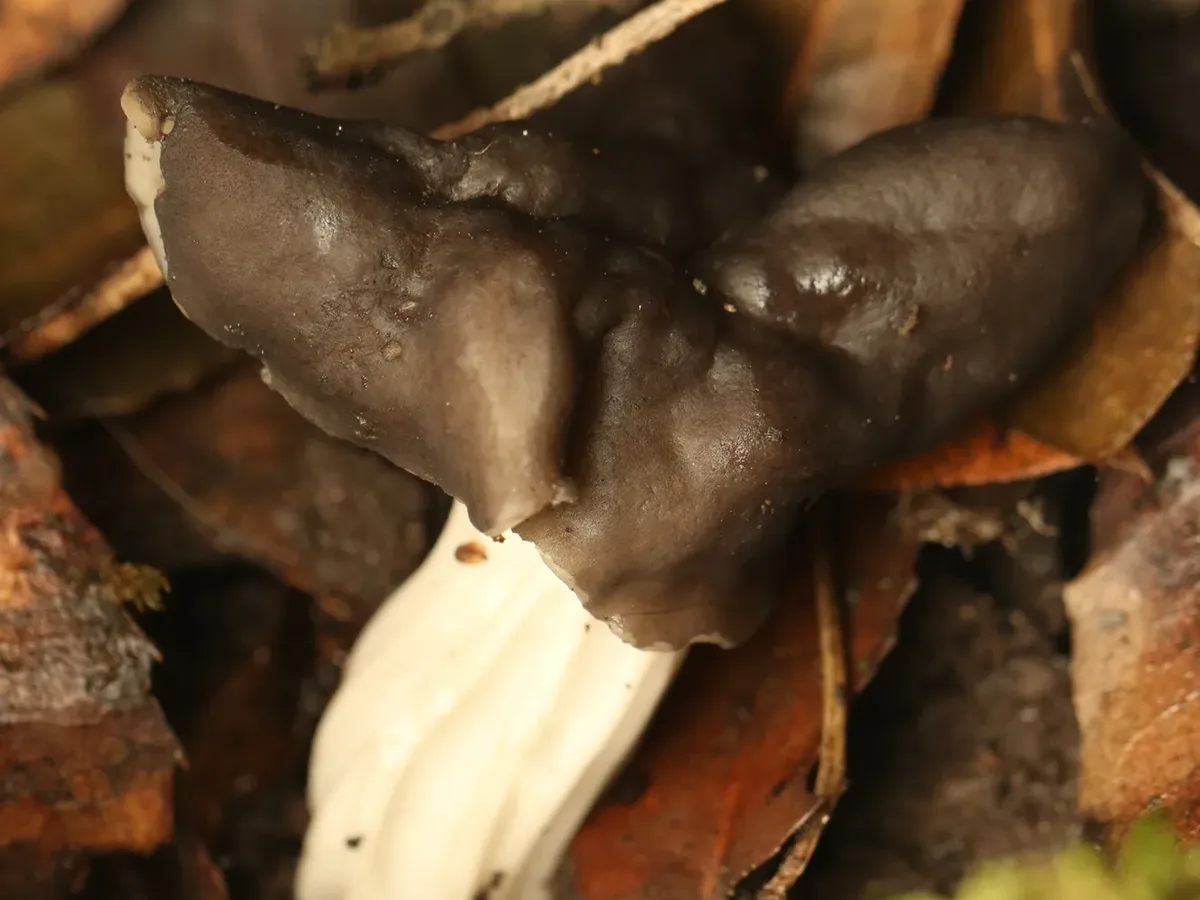
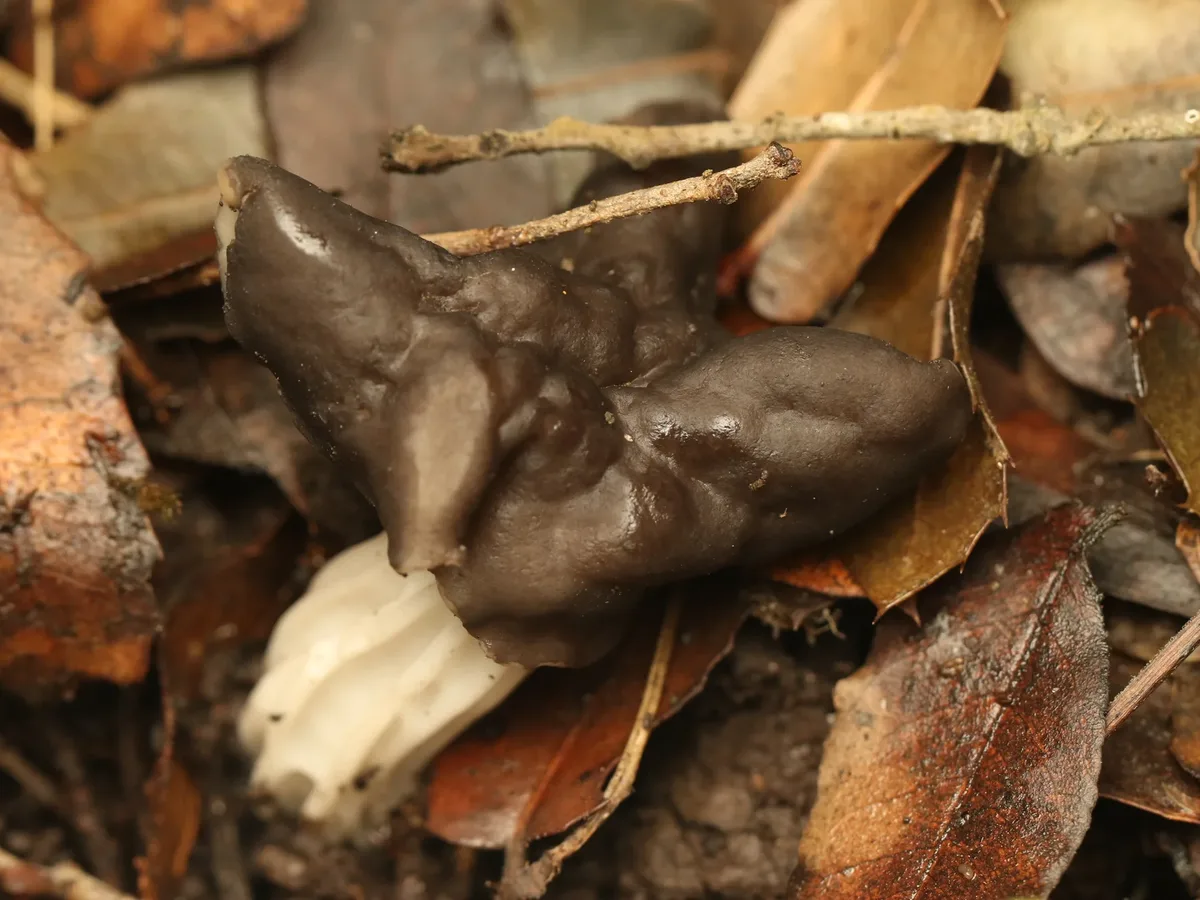
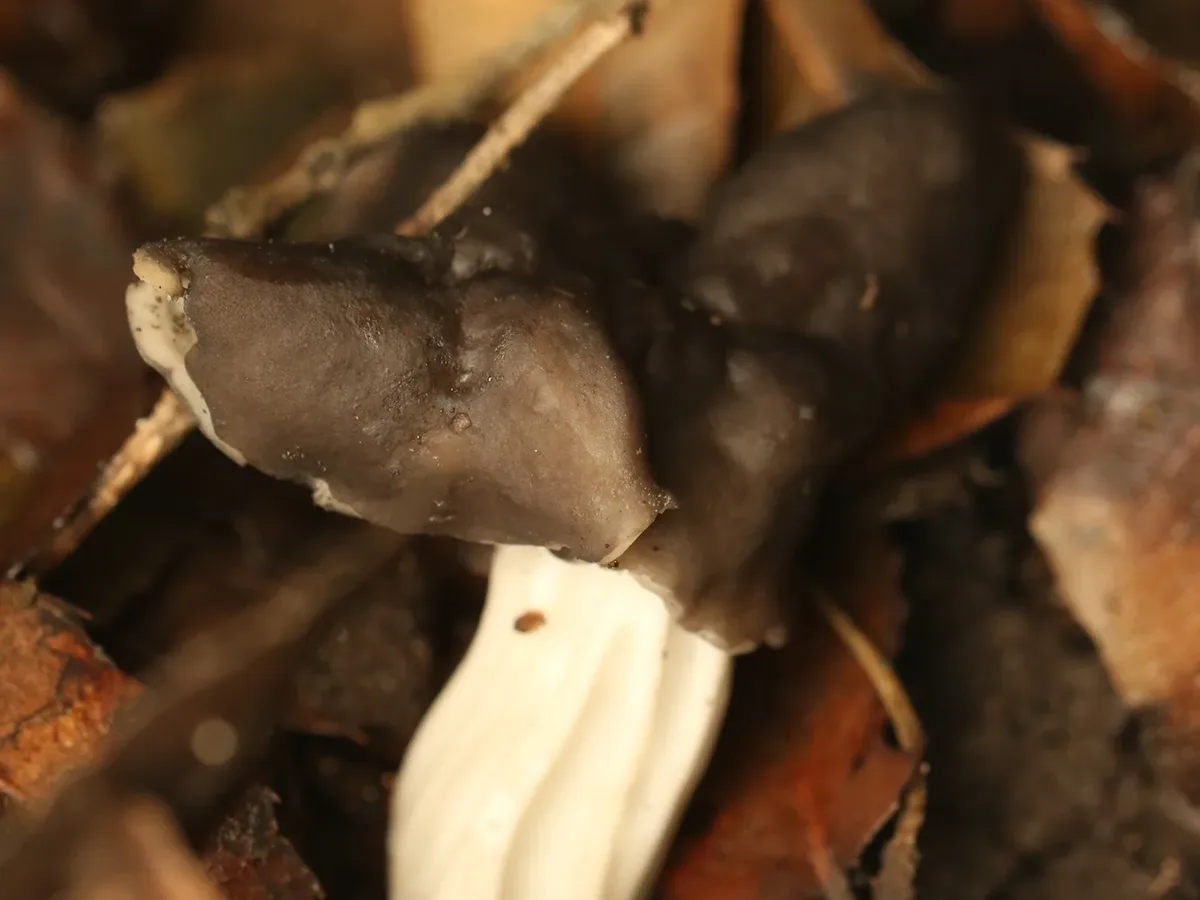
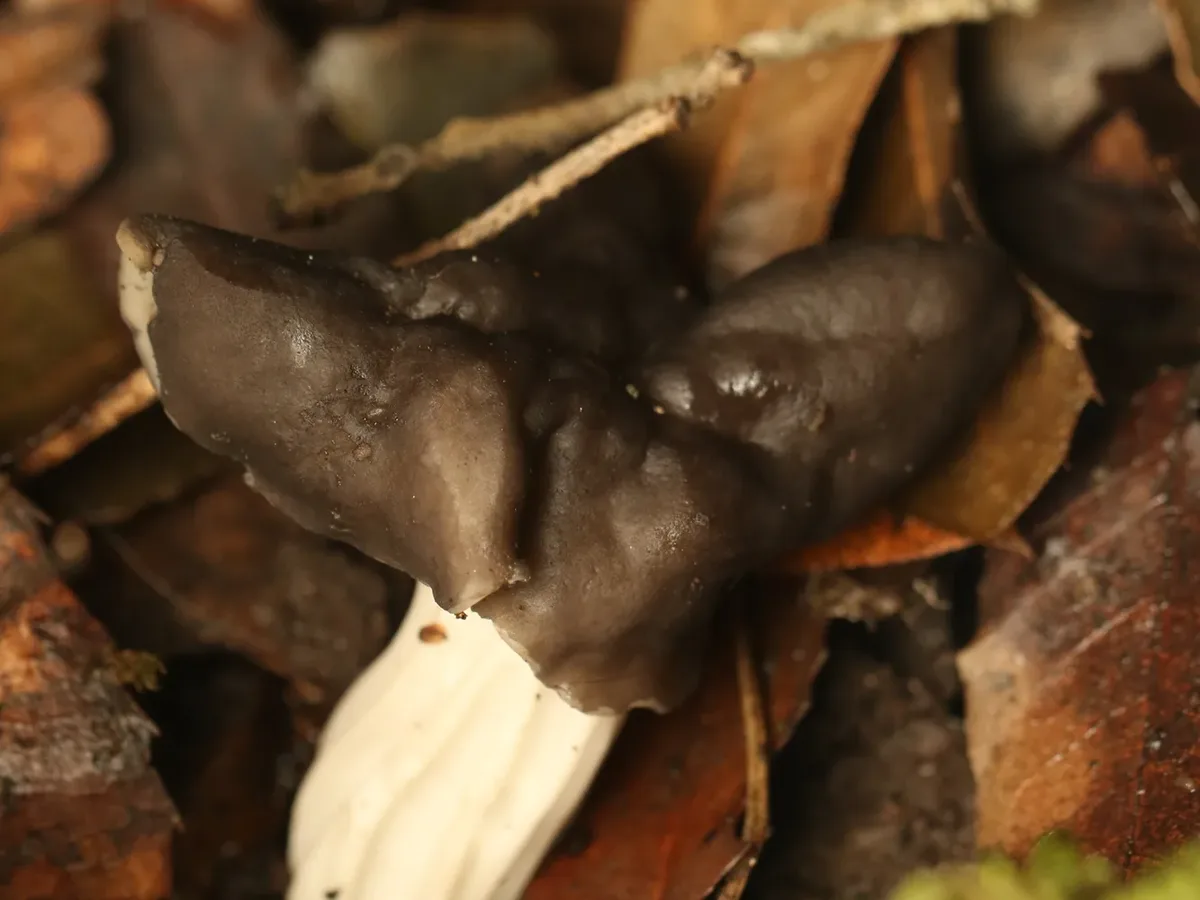
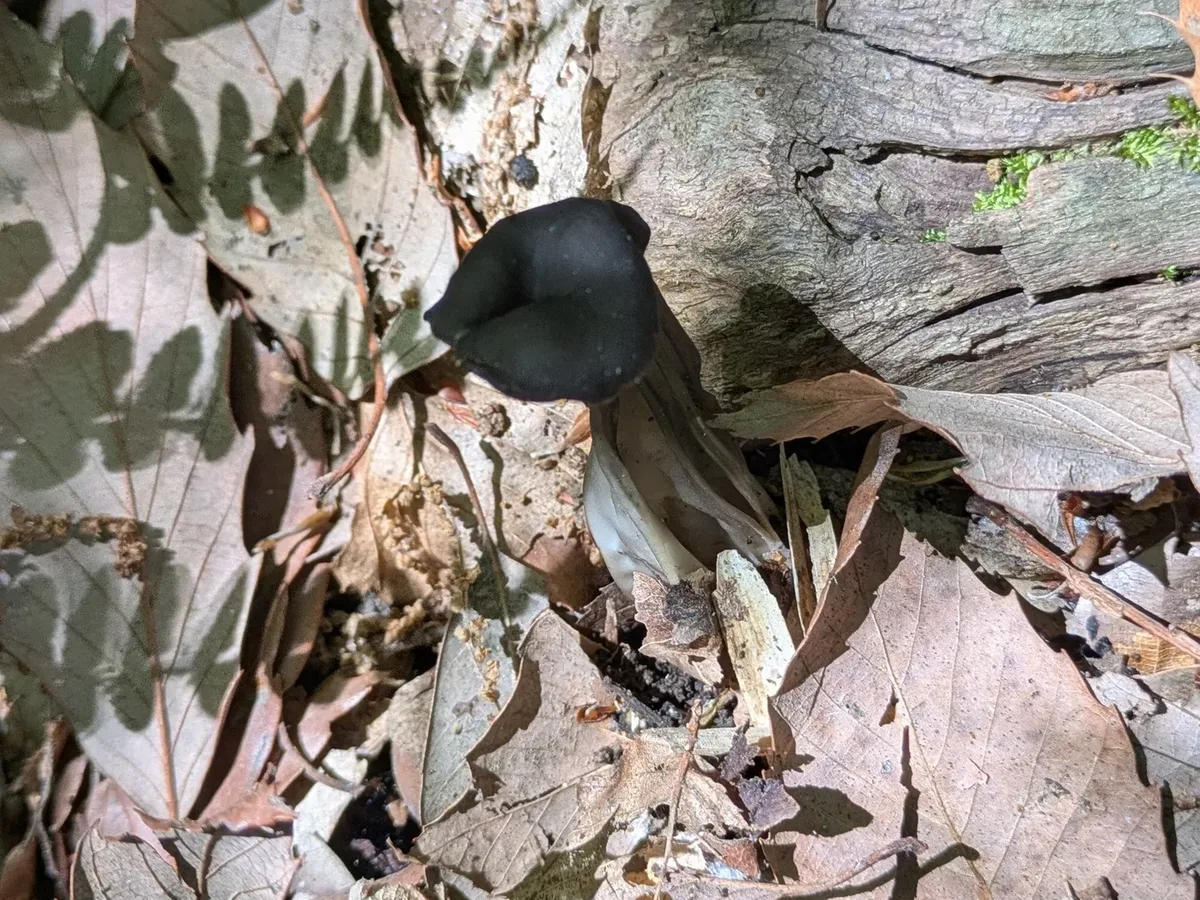
The cap is dark - ranging from deep slate grey through charcoal to near-black, occasionally a paler grey-brown in young specimens or in certain forms - and is shaped like a small, irregularly crumpled saddle.
Unlike the morels, the surface is smooth rather than pitted; unlike the false morels (Gyromitra), it is not brain-like or convoluted in a tight mass, but instead consists of two to four broad, irregular lobes that fold outward and downward.
Critically, the cap is not fully attached to the top of the stipe: instead there are only a few attachment points, and the margins of the cap overhang the stipe freely, leaving visible gaps between the folded cap and the stem. This gives the whole cap a hovering, irregular appearance - as if a crumpled piece of dark cloth has been draped loosely over the stipe.
The underside of the cap is paler, whitish-grey, and sterile.
Stem
The stipe is the species' other showpiece feature: it is whitish to pale grey, conspicuously ribbed longitudinally, and between the ribs the surface is pitted with deep grooves and enclosed chambers - the lacunose (pit-like) texture that gives the species its name.
These pits and chambers are not merely surface texture; they run deep and, in cross section, the interior of the stipe shows a system of enclosed air-filled cavities. The overall impression is of a pale grey sculptured column supporting a dark crumpled cap.
Flesh
Flesh is thin, fragile, watery-white, with no distinctive smell. A clean cross section reveals the hollow or partially chambered interior of both cap and stipe.
Spores are broadly ellipsoid, smooth, hyaline, with a single conspicuous central oil drop, measuring roughly 15-21 × 10-13 µm - characteristic of the genus.
Why it's dangerous
Helvella lacunosa is a genuinely toxic species when raw and should be treated with the caution appropriate to any gyromitrin-containing fungus.
It is not classified as deadly in the clinical literature (no well-documented fatal cases are specifically attributable to H. lacunosa), but it belongs to the same chemical class as the lethal Gyromitra species, and the risk of serious harm - especially with large raw quantities or in vulnerable individuals - is real.
The traditional consumption of this species in Yunnan and other parts of East Asia is always accompanied by cooking; do not interpret traditional use as evidence of raw safety.
Gyromitrin-type toxins are partially removed by boiling (the volatile precursors escape in steam and partition into the water), but this process must be done correctly:
- A large volume of boiling water
- At least one full boil with the water discarded and replaced, ideally two boils
Frying, roasting, or sautéing without prior boiling does not adequately reduce the toxin and has caused poisoning.
Cooking vapours during boiling may contain trace MMH; perform boiling in a well-ventilated space.
Toxin
Gyromitrin-type compounds (N-methyl-N-formylhydrazone derivatives). These are pro-toxins that are hydrolysed by gastric acid to monomethylhydrazine (MMH).
MMH acts as a pyridoxal phosphate (vitamin B6) antagonist, with several effects:
- Interferes with GABA synthesis, causing neurological effects
- Directly hepatotoxic
- Causes haemolysis of red blood cells, producing haemoglobin in the urine
Helvella species also contain thermolabile haemolysins (distinct from the gyromitrin pathway) that are inactivated by adequate heat.
Both classes of toxin are substantially reduced by boiling in water (the gyromitrin partitions into the water and partly volatilises as steam; haemolysins are denatured by heat), but complete elimination cannot be guaranteed and repeated boiling with fresh water is recommended.
The total gyromitrin burden in H. lacunosa is believed to be lower than in the most hazardous Gyromitra species, which is why fatalities have not been attributed specifically to Helvella lacunosa in the medical literature - but the compounds are the same class and the same caution applies.
Symptoms
Raw or inadequately cooked Helvella lacunosa causes gastrointestinal syndrome with delayed onset of 6-12 hours.
Early symptoms:
- Nausea, vomiting, watery or bloody diarrhoea, abdominal cramping
- Headache, dizziness, and malaise
In moderate to severe cases:
- Haemolysis producing dark, reddish, or brown urine (haemoglobinuria)
- Pallor and anaemia
- Elevated liver enzymes (AST, ALT) and bilirubin (jaundice)
Serious cases (rare with adequately cooked specimens, more likely with substantial raw consumption):
- Haemoglobinaemia
- Methemoglobinaemia (cyanosis, dyspnoea)
- Acute hepatic impairment
Fatal outcome from Helvella lacunosa specifically has not been well-documented in the literature - the risk is classified as serious but not routinely lethal with low-to-moderate exposure.
Treatment is supportive; for MMH-mediated neurological effects, intravenous pyridoxine (vitamin B6) is the specific antidote.
Seek emergency medical care immediately if poisoning is suspected - the delayed onset means patients often underestimate the severity until well into the clinical course.
Staying safe
Helvella lacunosa is toxic when raw and must never be eaten without thorough cooking.
Like all Helvella species, it contains gyromitrin-related compounds (N-methyl-N-formylhydrazone derivatives) that are hydrolysed in the gastrointestinal tract to monomethylhydrazine (MMH), a hepatotoxin and haemolytic agent. It additionally contains thermolabile haemolysins that are inactivated by heat.
Raw consumption causes gastrointestinal poisoning (nausea, vomiting, diarrhoea, abdominal cramps) within 6-12 hours; in serious cases, haemolysis, liver enzyme elevation, and systemic toxic effects can follow.
The gyromitrin content in Helvella species is substantially lower than in the most dangerous Gyromitra species (such as G. esculenta), and Helvella lacunosa is not classified as deadly in the mycological literature - but it is genuinely toxic raw and should be treated with the same caution as Gyromitra in preparation.
Thorough boiling substantially reduces the toxin (gyromitrin is water-soluble and thermolabile), and the cooking water should be discarded. Frying or roasting without prior boiling is insufficient to guarantee safety.
In China and East Asia the species is consumed (particularly in Yunnan, where it appears in local markets), but always after cooking - this traditional practice reflects long-standing knowledge of the need to prepare it properly, not evidence that it is safe raw.
Do not serve to children, pregnant women, or individuals with liver disease.
The most important safety hazard beyond the species' own toxicity is confusion with Gyromitra infula (hooded false morel): a broadly saddle-shaped, autumn-fruiting species that grows in the same woodland habitats but has a reddish-brown cap and a smooth, non-lacunose stipe. G. infula contains gyromitrin at levels that have caused fatal poisonings and should never be eaten.
Always confirm the deeply lacunose, ribbed pale stipe of H. lacunosa before collection - a smooth pale stipe on a saddle-cap fungus in autumn is a red flag for Gyromitra.
Where & when it grows
Habitat
Helvella lacunosa is a woodland soil species with an exceptionally wide ecological tolerance.
In East and Southeast Asia it is most frequently encountered in montane mixed forest: the classic habitat is pine or fir forest with an understorey of shrubs or bamboo, on moist but well-drained slopes with a thick humus layer.
It grows from soil, not from wood, and is considered a saprotroph, breaking down soil organic matter and possibly having loose associations with tree roots (some authors suggest facultative ectomycorrhizal tendencies, but this remains unconfirmed for Helvella in general).
The species is equally at home in deciduous forest dominated by oak, beech, or birch, and it appears in relatively open habitats: shaded forest margins, mossy paths, stream banks within forest, and even sheltered urban parks under large trees.
In Yunnan and Sichuan it occurs commonly at elevations of 1500-3500 m, where it is one of the more conspicuous autumn ascomycetes. Across temperate Europe and North America it is similarly catholic in habitat, appearing in both deciduous and coniferous woodland.
It tolerates slightly acid soils and is not strongly calcifuge or calcicole. The dark cap colour means specimens blend into the leaf litter and are easily overlooked unless the pale lacunose stipe catches the eye.
When
Late summer to autumn is the key window for Helvella lacunosa across its range in East and Southeast Asia.
In Yunnan province the species typically appears in earnest in August with the monsoon rains still present, continuing strongly through September and October as the post-monsoon flush drives a broad wave of fungal fruiting across the montane forests.
In Japan and Korea the peak is September through November, with October being the most productive month in most years. In the subtropical lowlands of southern China and Southeast Asia, fruiting may extend into November or even December in wet years.
The fruiting trigger is a combination of:
- Adequate soil moisture (ideally 14-day cumulative rainfall above 30 mm)
- A modest drop in daytime temperatures (from summer highs toward 15-20 °C)
- Stable cool nights
A prolonged dry spell will interrupt fruiting abruptly, but a return of rain can restart a new flush within 7-14 days. Like other autumn Helvella species, it disappears with hard frosts and the drying of the soil.
How it grows
Helvella lacunosa is saprotrophic (or possibly loosely associated with tree roots), and its mycelium lives in the upper mineral-humus horizon of forest soils.
Fruitbodies appear singly or scattered, rarely in close groups, emerging directly from the soil surface. Individual specimens develop over 5-10 days from initial primordium to full size.
They are not long-lived - a fresh specimen will remain presentable for about a week, then soften, collapse, and fade.
Sites where the species has appeared tend to be productive year after year, suggesting a stable underground mycelial network that persists between fruiting seasons.
No mycelial rhizomorphs or mats are typically visible at the surface. Growth is not obviously clumped or clustered as in many gilled fungi; the scattered, solitary habit is characteristic.
Fruiting conditions
In East and Southeast Asia, fruiting is closely tied to the transition from monsoon to post-monsoon conditions: adequate cumulative rainfall (30+ mm over 14 days), dropping daytime temperatures below 20 °C, and stable cool nights. A new flush typically appears 7-14 days after significant rain events. In Japan and Korea, classic autumn fungal weather - cool mornings with mist, moderate rainfall - drives the peak season in September-October. Hard frosts terminate fruiting. Unlike the spring Helvella species, H. lacunosa does not respond to snowmelt; soil warming from summer baseline is not a trigger.
Look-alikes
The combination of a dark grey-to-black irregular saddle cap and a pale, deeply lacunose ribbed stipe is essentially unique among macrofungi and means that Helvella lacunosa is rarely genuinely confused with anything dangerous.
Within the genus Helvella, the closest lookalikes are:
- Helvella lacunosa in its narrow sense is sometimes split from H. atra and H. compressa, but these distinctions are not universally accepted and are of limited field importance.
- Helvella atra has a blacker, sometimes more cylindrical or compressed cap, a shorter and less dramatically lacunose stipe, and typically a smaller fruitbody; some authors treat it as a separate species, others as a variety.
- Helvella lacunosa in the broad sense includes several cryptic forms.
Other Helvella species that could cause confusion:
- Helvella crispa (white saddle) has a similarly lacunose stipe and saddle-shaped cap but is pale cream to white overall, never dark grey or black.
- Helvella elastica (elastic elfin saddle) is slender with a smooth, pale brownish cap and a simple (non-lacunose) smooth stipe - easily distinguished by the absence of the dramatic ribbing.
Gyromitra infula (hooded false morel) also has a saddle-shaped cap but it is reddish-brown, the cap is more tightly folded and convoluted, and the stipe is smooth and pale, not lacunose; it is toxic and fruits in autumn (overlapping in season and habitat).
The autumn overlap with Gyromitra infula (hooded false morel) is the key safety hazard: G. infula is a deadly gyromitrin-containing species with a broadly saddle-shaped cap that can grow in the same woodland at the same time of year.
The reddish-brown colour and smooth (non-lacunose) stipe of G. infula versus the grey-black cap and deeply ribbed lacunose stipe of H. lacunosa make separation straightforward once both characters are checked, but a hasty collector who notes only the saddle shape could mistake one for the other.
Also a saddle-shaped autumn ascomycete that overlaps in season and habitat with H. lacunosa. The cap of G. infula is reddish-brown to chestnut (never grey or black) and the stipe is smooth, pale, and not lacunose - the deeply ridged and pitted lacunose stipe of H. lacunosa immediately distinguishes the two. G. infula contains gyromitrin at levels that have caused fatal poisonings; it should never be eaten. If any autumn saddle-shaped fungus has a smooth pale stipe rather than a deeply lacunose one, treat it as G. infula until proven otherwise.
H. elastica is a slender, smaller species with a pale greyish-brown to buff smooth or slightly ruffled cap and a smooth (not lacunose) stipe that lacks the deep ribs and pits of H. lacunosa. The smooth stipe is the immediate distinguishing character.
Another saddle-shaped false morel, but G. ambigua has a reddish-brown to violaceous-brown cap with more tightly folded lobes and a smooth (not lacunose) whitish stipe. It fruits in spring (not autumn), which is the most reliable separator in the field. Contains gyromitrin at levels sufficient to be fatal; not recommended for consumption.
Very similar and sometimes treated as conspecific or a variety of H. lacunosa. H. atra tends to be smaller with a more uniformly black (not grey) cap, a more compressed or flattened cap form, and a stipe that is less dramatically lacunose. Both are toxic raw and require the same preparation. The distinction is of limited practical importance for foragers.
H. crispa also has a deeply lacunose ribbed stipe and an irregular saddle-shaped cap, but the entire fruitbody is pale cream to white or very pale tan - never dark grey or black. The cap is typically more elaborately ruffled and irregular. Also toxic raw; requires thorough cooking before consumption.
A reference guide - never an edibility guarantee. When in doubt, leave it out.