Elastic Saddle
Helvella elasticasyn. Helvella elastica Bull., Leptopodia elastica (Bull.) Boud., Paxina elastica (Bull.) Kuntze, Cyathipodia elastica (Bull.) Dennis
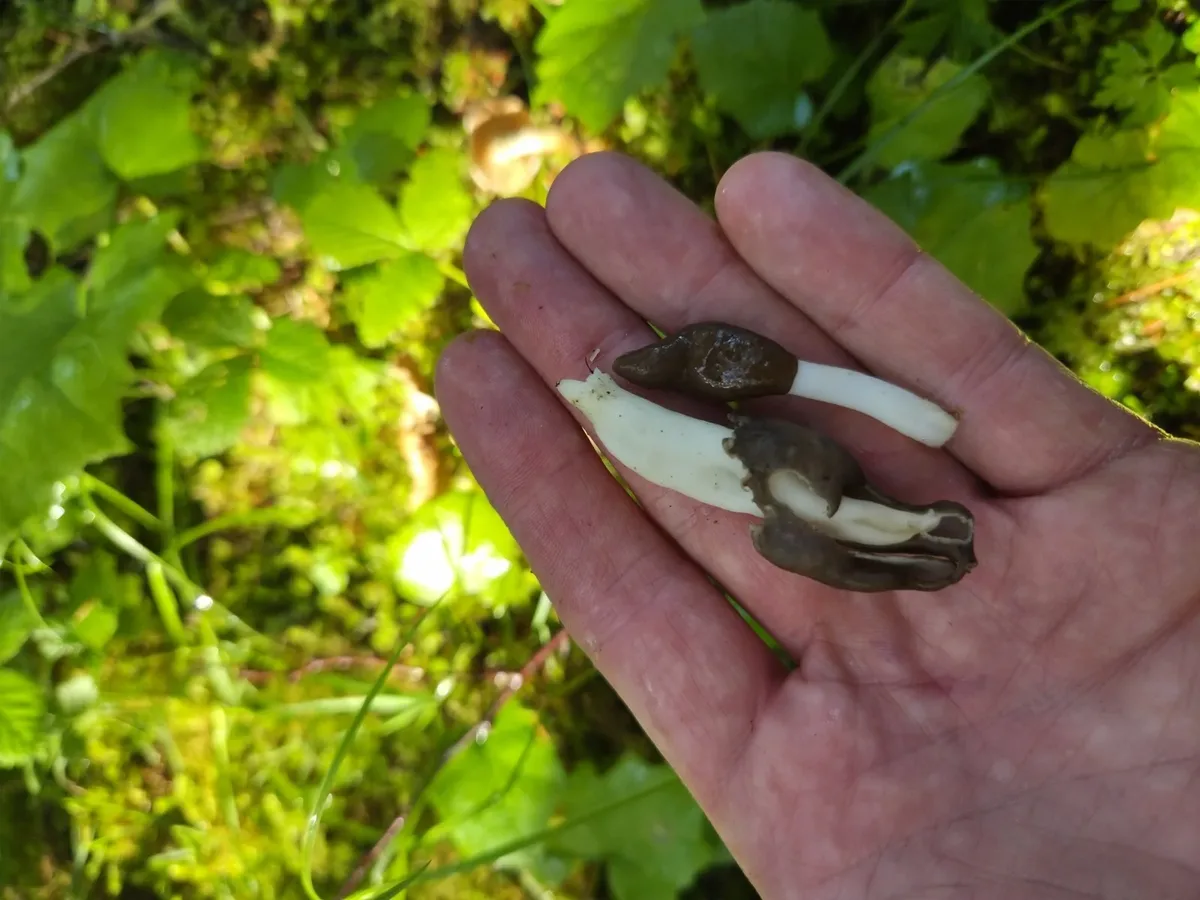 © Sigmund Ås (CC BY)
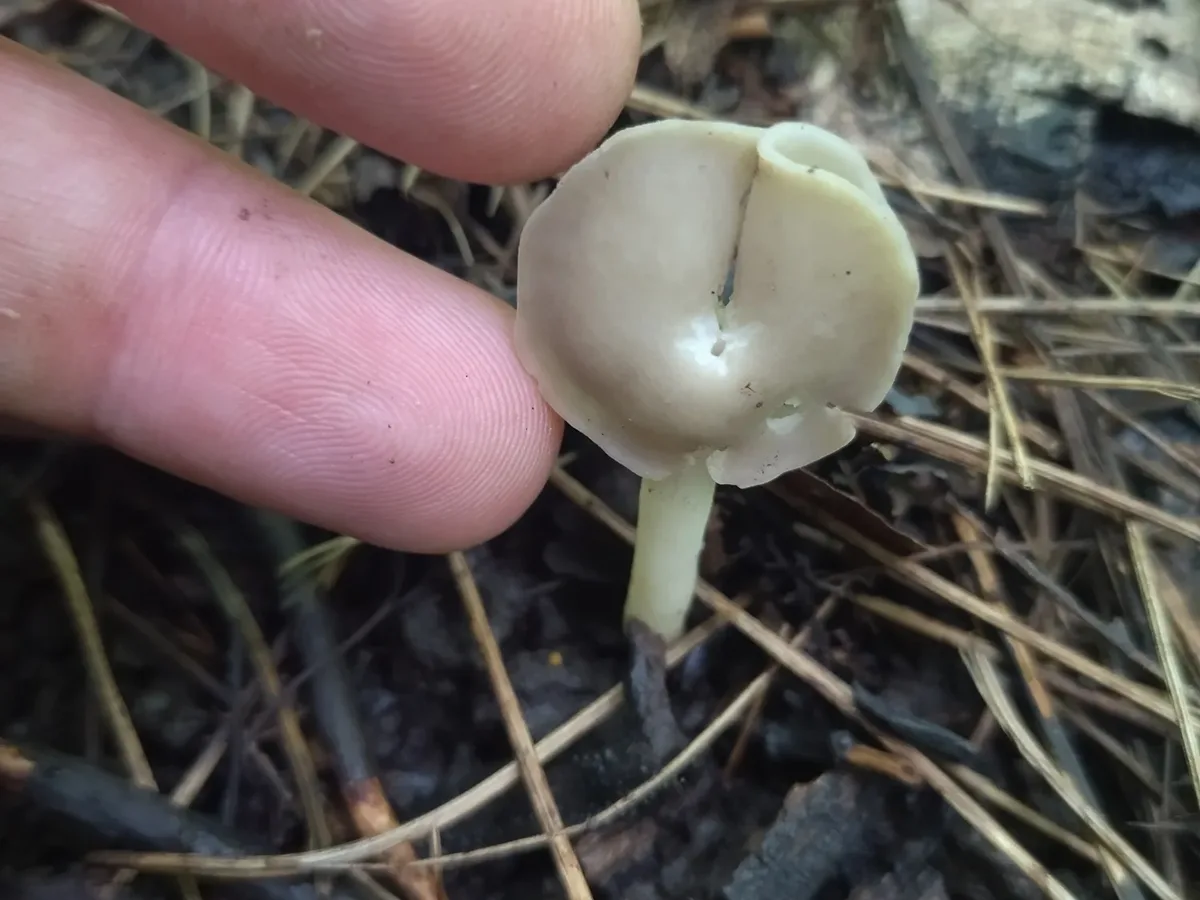 © relew (CC BY)
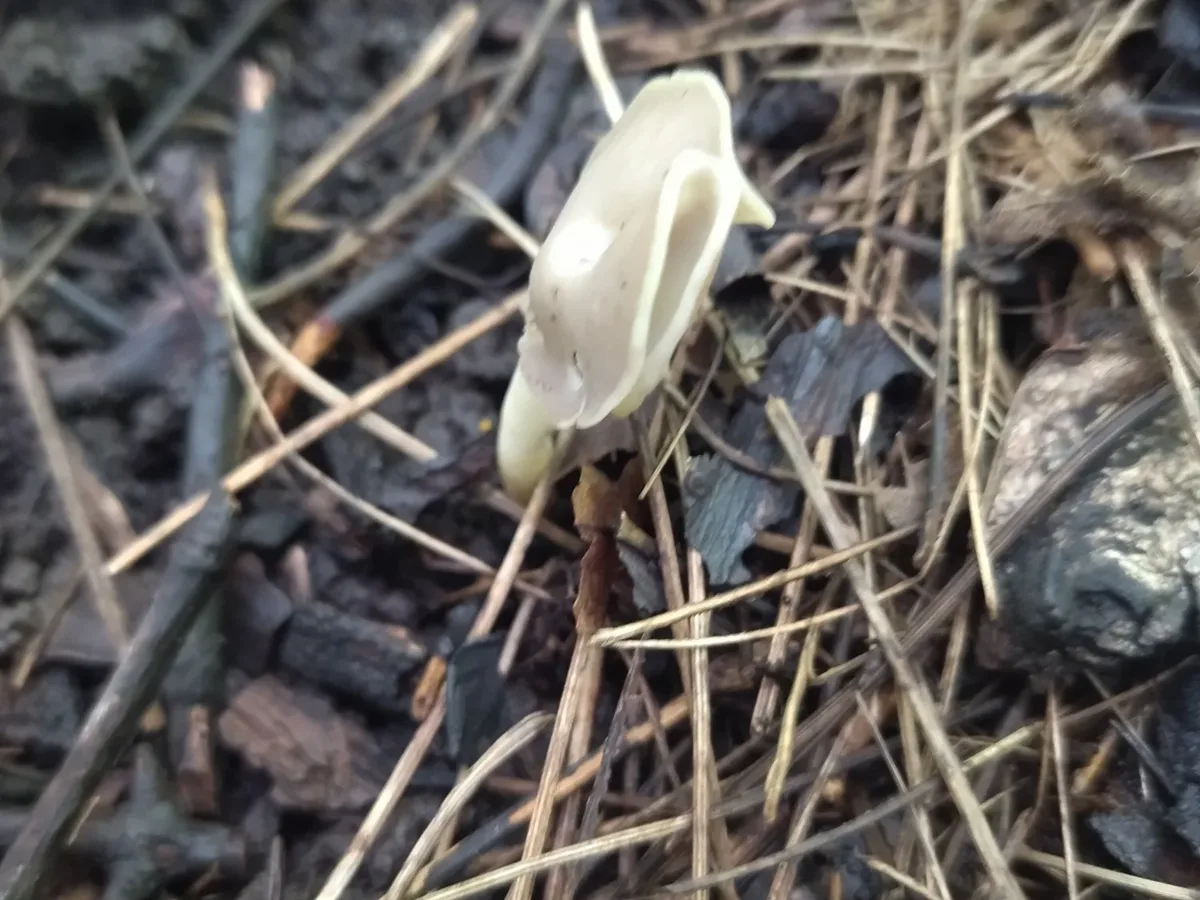 © relew (CC BY)
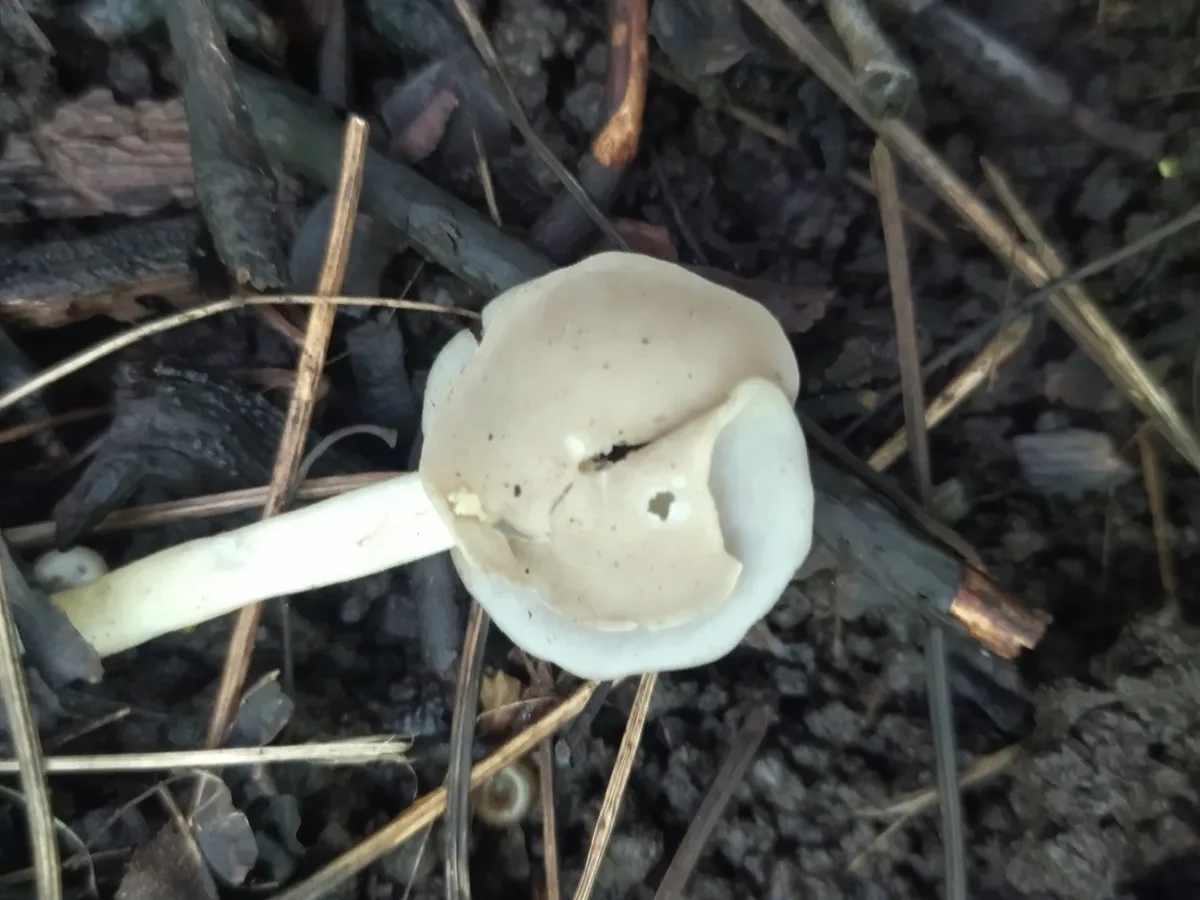 © relew (CC BY)
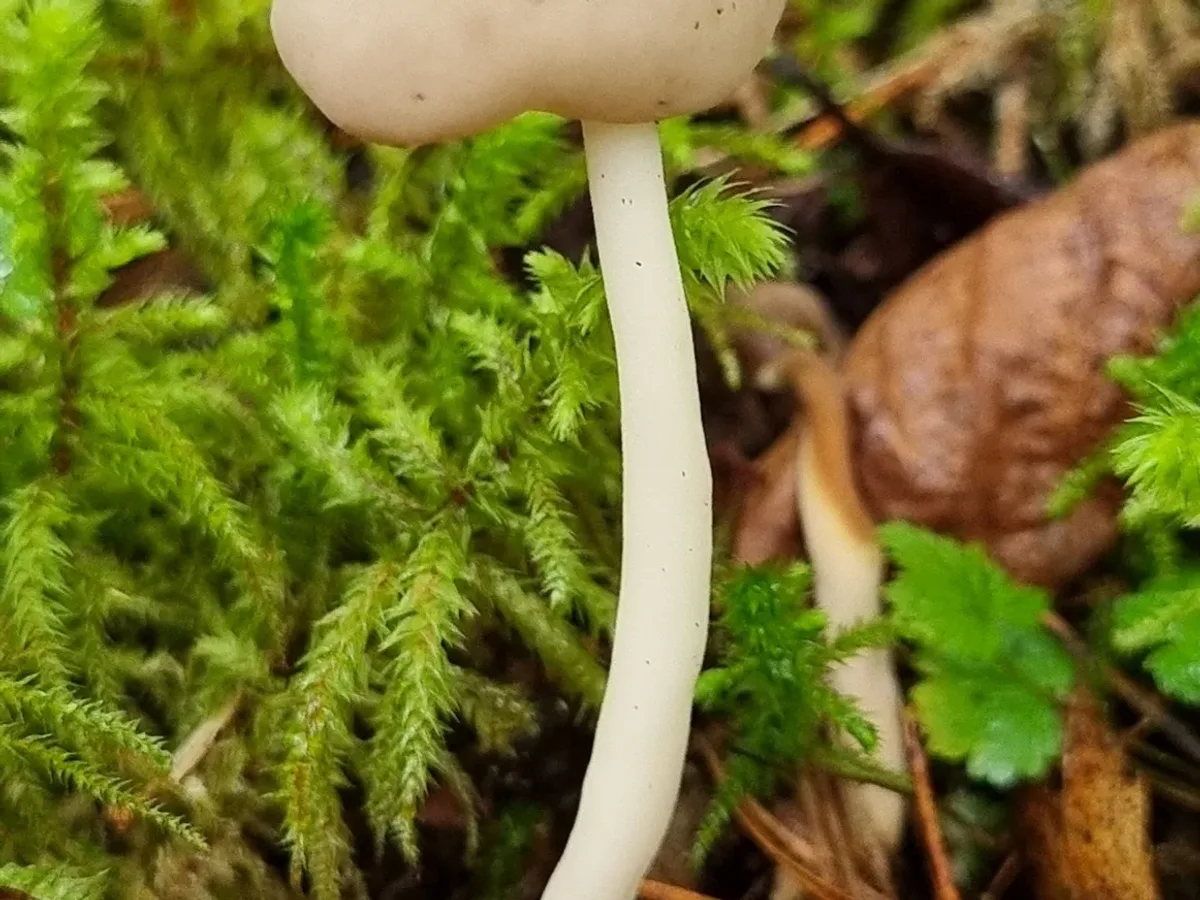 © Andrea Bender (CC BY)
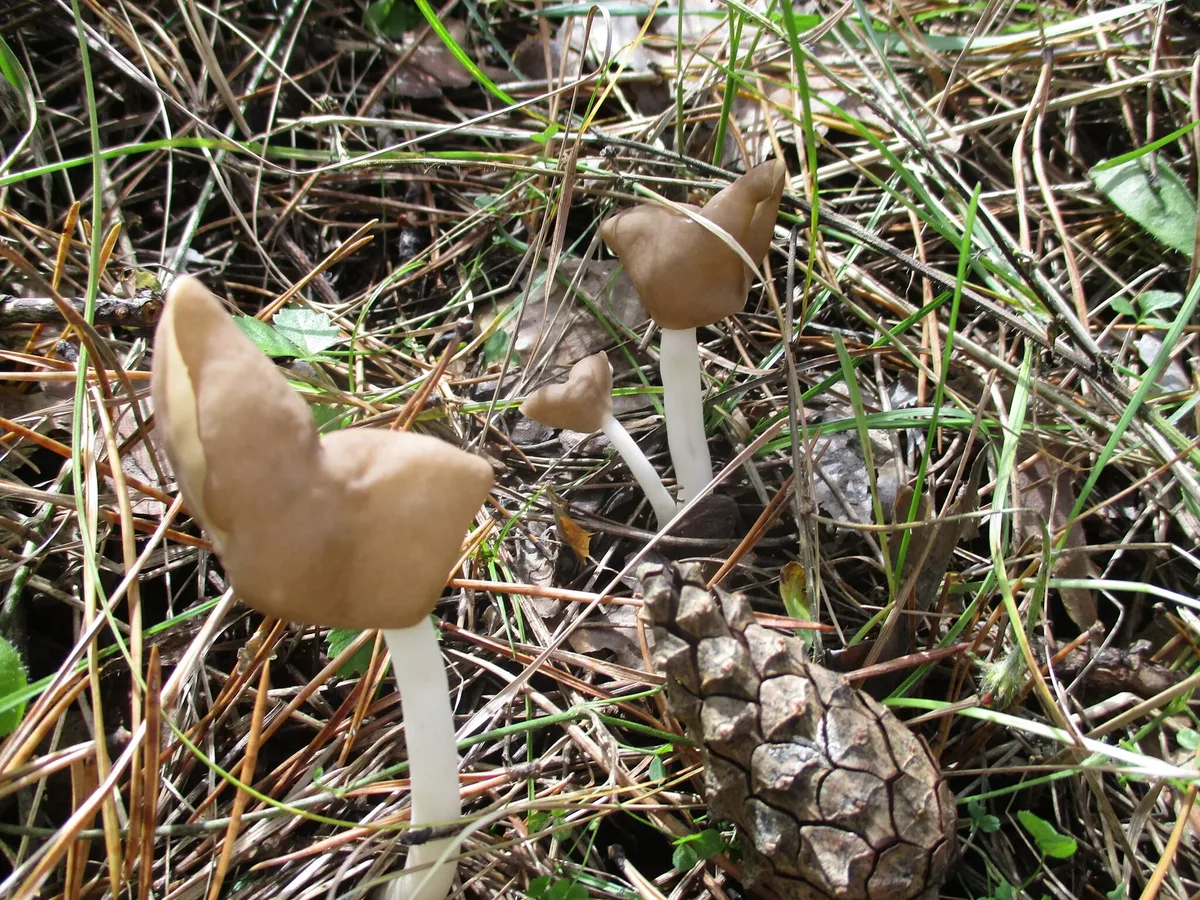 Сергей (CC0)
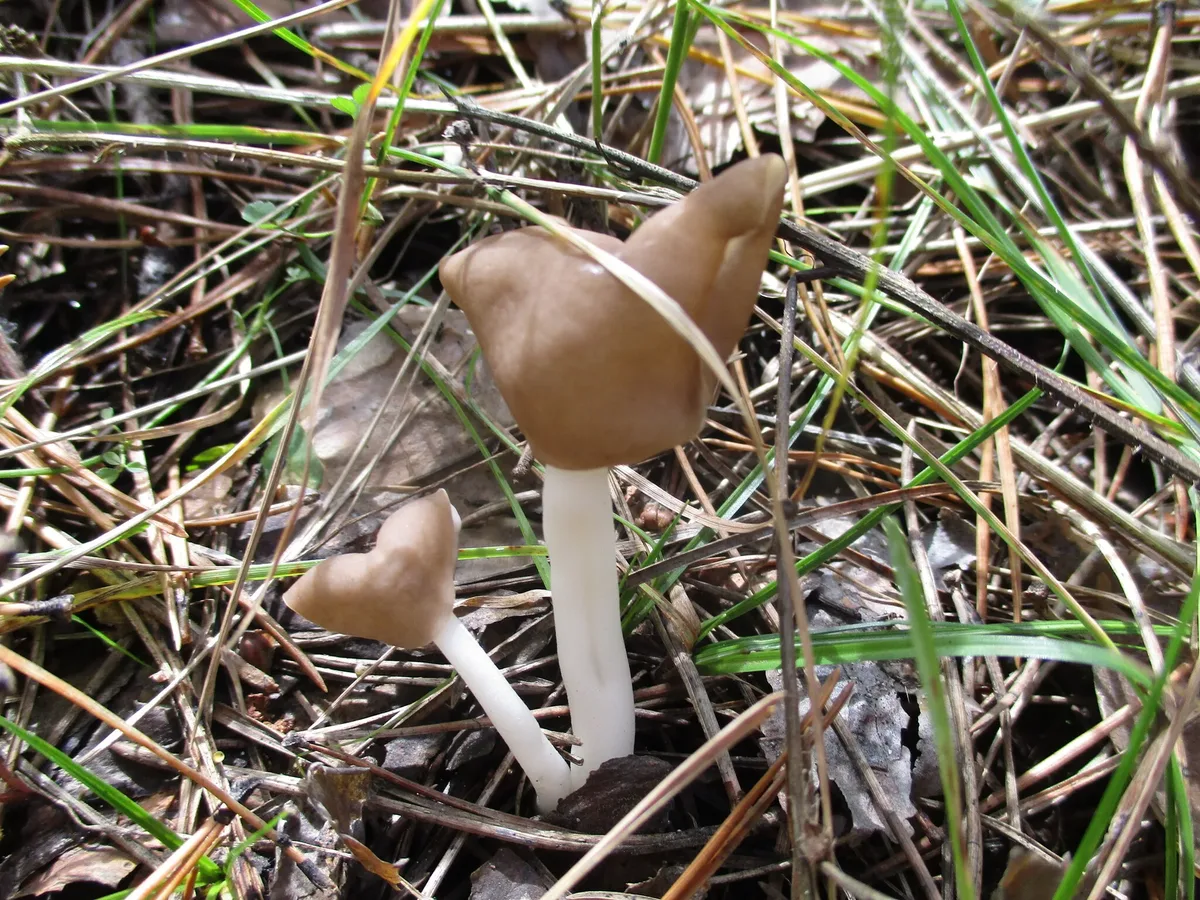 Сергей (CC0)
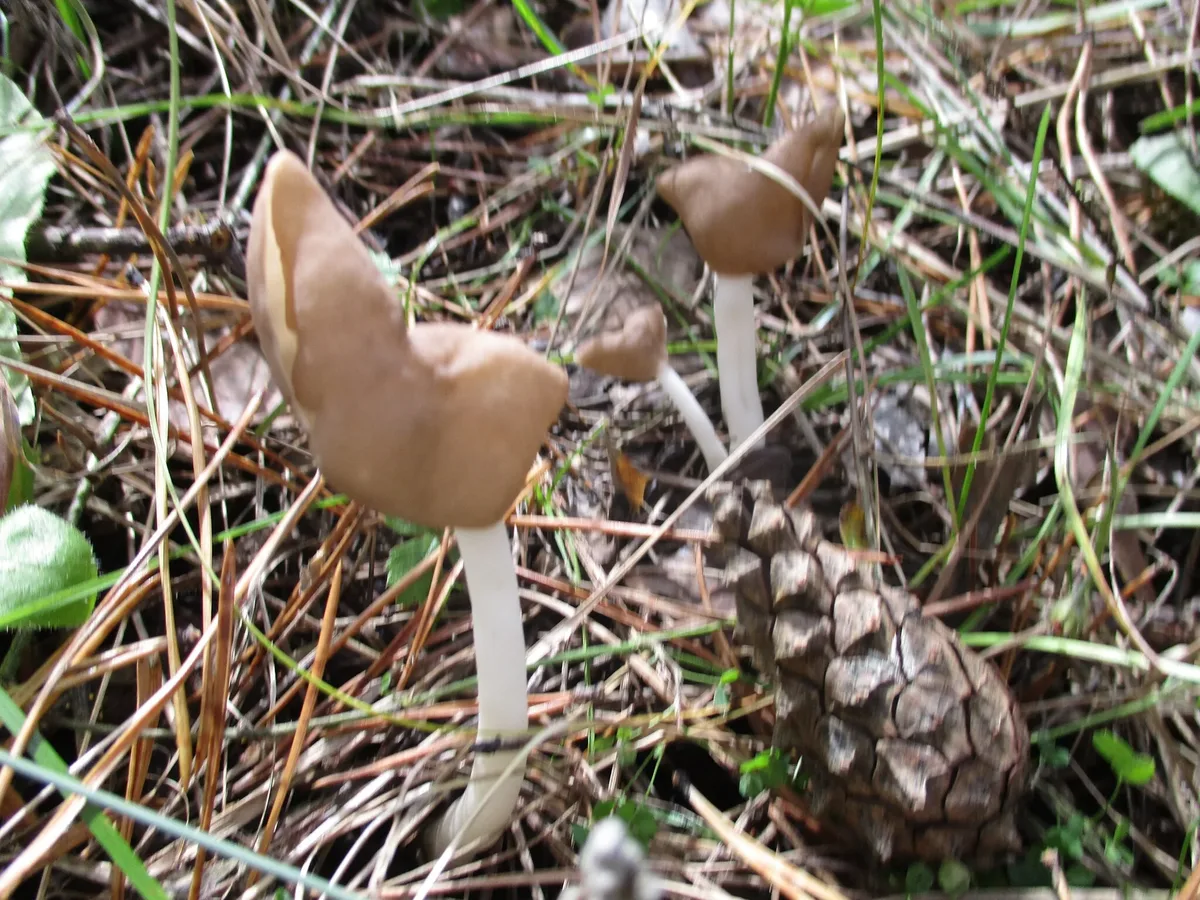 Сергей (CC0)
 Сергей (CC0)© Sigmund Ås (CC BY)© relew (CC BY)
Edible only with the right preparation - or safe for some people but not others. Learn the caveats first.
Never eat a mushroom you are not 100% sure of - check the look-alikes below, and always cook wild mushrooms.
How to recognise it
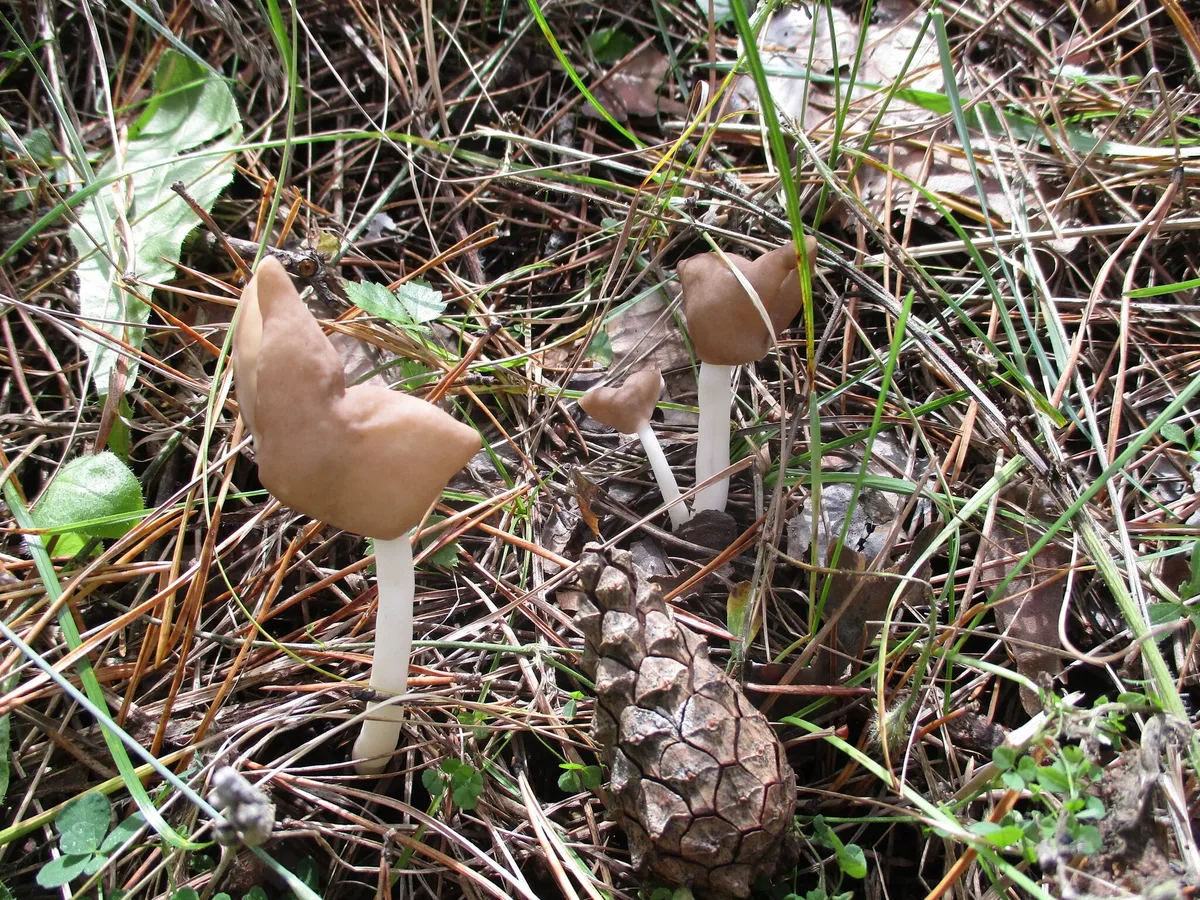
Helvella elastica is one of the most elegantly slender of the saddle fungi - a modest, grey-capped ascomycete that could easily be mistaken for a piece of fallen bark or a dried leaf on the forest floor.
Cap
The cap is the defining feature: a loosely saddle-shaped structure, typically 1-4 cm wide, formed by two irregular, drooping lobes that hang away from the stipe without touching it or fusing to it.
These lobes are smooth - not pitted like a morel, not wrinkled and brain-like like a Gyromitra - and are coloured a soft grey to grey-brown or greyish-tan on the fertile (upper) surface.
The undersurface of the cap lobes is whitish to cream, also smooth and hairless, which is one of the most reliable features distinguishing H. elastica from relatives such as H. crispa (which has a hairy cap undersurface and prominent stipe ribs).
Stem
The stipe is the other diagnostic character: it is notably slender and smooth, 3-10 cm tall and only 3-8 mm wide, cream to pale buff or pale grey, without any ribbing, furrows, or lacunate chambers - in stark contrast to the deeply ribbed and furrowed stipes typical of H. crispa, H. lacunosa, and H. pezizoides.
The stipe is hollow, and the overall impression is of a lightweight, almost ephemeral fungus.
Flesh
Flesh is thin in the cap (easily torn), slightly more fibrous and elastic in the stipe - hence the species epithet.
In older or dry specimens the cap lobes may wilt and droop further, making identification harder.
Microscopically, the large ellipsoid spores (18-22 × 10-13 µm) with a single central oil droplet and 8-spored asci are characteristic of the genus.
Why it's dangerous
Never eat it raw, and never undercook it. The standard precaution is to cook it thoroughly (many foragers parboil first and discard the water).
Because the genus shares the gyromitrin question, some authorities advise avoiding all Helvella for the table. Treat it as a caution species and, if eaten at all, only well-cooked and in moderation.
Toxin
Like several of its relatives, the smooth saddle is unsafe raw. Helvella species carry heat-sensitive, irritating compounds, and the genus is historically linked to gyromitrin-type hydrazines.
Thorough cooking drives off or destroys most of this, but raw or undercooked fruitbodies retain enough to upset the stomach.
The toxin load is much lower and less dangerous than in the true false morels (Gyromitra), which is why it sits at caution rather than higher.
Symptoms
Eating it raw or undercooked typically brings on gastrointestinal upset - nausea, vomiting, abdominal cramps and diarrhoea - usually within a few hours of the meal.
Symptoms are self-limiting in most cases but can be unpleasant and dehydrating; sensitive individuals may react more strongly.
Staying safe
Helvella elastica must never be eaten raw. Raw or undercooked specimens contain heat-labile toxins - shared broadly across the Helvellaceae family and including possible trace gyromitrin precursors - that cause gastrointestinal symptoms: nausea, vomiting, and abdominal cramps.
These compounds are neutralised by thorough cooking (blanching in boiling water with the water discarded, followed by further cooking).
Even when cooked, edibility is disputed. Several current field guides classify H. elastica as 'edibility suspect' or 'mildly toxic,' and the species carries no tradition of widespread safe consumption.
No confirmed fatal poisonings from H. elastica at culinary doses in cooked form are on record, but the genus as a whole has a poor safety track record and the species should be treated with caution.
The most critical safety concern is correct identification. Gyromitra infula (Hooded False Morel), which contains gyromitrin and is potentially deadly, can be confused with Helvella species by less experienced foragers.
Do not eat any saddle fungus without a confident, expert-level species identification. If there is any possibility that the specimen is a Gyromitra, do not eat it.
Where & when it grows
Habitat
Helvella elastica is a woodland soil species of broad ecological tolerance. It grows on humus-rich, moist mineral soil at the bases of trees and on woodland paths, banks, and disturbed ground.
In East and Southeast Asia - its primary range in this app - it is most often found in temperate and subtropical montane deciduous and mixed forest:
- the cool, cloud-mist forests of Yunnan and Sichuan in China
- the beech-oak woodland of the Japanese and Korean mountain zones
- the mixed forest belts of Taiwan's Central Mountain Range
It is not restricted to one tree species or genus, appearing under a variety of broadleafs and sometimes conifers, reflecting either saprotrophic flexibility or loose, facultative mycorrhizal partnerships.
It is particularly characteristic of habitats where soil moisture is reliably sustained: stream margins, valley bottoms, shaded north-facing slopes, and path edges where soil has been compressed and water pools briefly after rain.
It tends to appear singly or in small groups of a few fruitbodies scattered across a patch of moist earth, rather than in dense clusters. It can also occur in parkland and along road cuttings through forest where soil is exposed.
The species is widespread across the Northern Hemisphere temperate zone, but in East and Southeast Asia it is one of the more frequently encountered Helvella species, particularly in the highland regions of China, Japan, and Korea where cool, humid conditions prevail.
When
In East and Southeast Asia, Helvella elastica is essentially a summer and early autumn species, fruiting after the monsoon or rainy season delivers sustained soil moisture.
- Japan and Korea: the period following the summer rainy season (tsuyu / jangma) - typically July through September, peaking in August.
- Yunnan, Sichuan, and other southwestern Chinese highland regions: fruiting aligns with the monsoon (June-September), often peaking July to August.
- Above 2000 m in Taiwan or southwestern China: the season may extend into October as temperatures cool but moisture persists.
- Temperate Europe and North America (where the species also occurs): June through October, peaking in late summer and early autumn.
Helvella elastica is not a spring species. Unlike the false morels (Gyromitra) and the spring-fruiting species of the related genus Disciotis, it belongs firmly to the summer-autumn guild.
Warm soil with adequate moisture is the key trigger; prolonged dry spells delay or suppress fruiting even in warm weather.
How it grows
Fruit bodies arise singly or scattered in small groups of 2-6 from a common mycelial zone in soil or humus, not from visible above-ground mycelial strands.
Individual fruitbodies develop over 5-10 days and are relatively ephemeral, lasting 1-2 weeks before collapsing and darkening.
The asci forcibly discharge ascospores when mature, though in H. elastica this process is less dramatically visible than in the large cup fungi.
There is no perennial above-ground structure; the mycelium persists in the soil between seasons. Sites with appropriate conditions tend to produce fruitbodies reliably in successive years, indicating a stable mycelial network.
Fruiting conditions
In East and Southeast Asia, fruiting is strongly correlated with the monsoon or summer rainy season providing sustained soil moisture and warm temperatures (soil above 12-14 °C at 5 cm depth). A flush of warm rain lasting several days is the primary trigger. The lag between rainfall onset and fruitbody emergence is typically 5-14 days. Does not fruit in dry conditions even when temperatures are suitable. Cooler nights after warm wet days (the diurnal swing common at elevation in Yunnan, Sichuan, and the Korean and Japanese highlands) appear to favour fruiting.
Look-alikes
Several Helvella species share the saddle-shaped cap form and can be confused with H. elastica.
- Helvella crispa (the White Saddle) is the most common confusion: it is larger, with a whitish to cream cap and, critically, a deeply ribbed, lacunate, and prominently furrowed stipe - completely unlike the smooth, slender stipe of H. elastica. H. crispa also has a hairy undersurface on the cap lobes.
- Helvella lacunosa (the Slate Grey Saddle) is darker grey to near-black, has 3-4 lobes that can be more tightly convoluted, and has a deeply lacunate and ribbed stipe.
- Helvella pezizoides has small, shallow cups or saddles with a distinct white woolly undersurface and occurs on soil near conifers.
- Helvella macropus has a distinctly stalked cup shape (not saddle-like) and a densely hairy grey undersurface.
- Gyromitra infula (Hooded False Morel) could confuse an inexperienced forager: it is substantially larger (cap 3-9 cm), darker reddish-brown, with a more convoluted and irregular saddle cap, a stocky ribbed stipe, and fruits primarily in late summer to autumn. Critically, G. infula contains gyromitrin and is potentially deadly - if there is any doubt between H. elastica and G. infula, do not eat the specimen.
- True morels (Morchella spp.) are distinguished by their clearly pitted-and-ridged (honeycomb) cap surface, fully hollow interior with cap fused to stipe at the base, and spring fruiting season.
G. infula is substantially larger (cap 3-9 cm), darker reddish-brown to chestnut, with a more convoluted saddle cap and a stout, ribbed, or chambered stipe. It contains gyromitrin and is potentially life-threatening if eaten improperly. The key separator is size (G. infula noticeably larger), colour (warm reddish-brown vs. pale grey-tan in H. elastica), and stipe texture (prominently ribbed and lacunate vs. smooth and slender). If there is any doubt between these two species, do not eat the specimen.
Morchella has a clearly pitted-and-ridged honeycomb cap surface, never smooth or saddle-like; the cap is fused to the stipe at the base, and the interior is completely hollow. The fruiting season of Morchella is spring, not summer-autumn. No serious confusion is expected for any observer who examines the cap surface carefully.
Helvella juniperi (and several other smooth-stalked Asian Helvella species described in recent monographs) are similar in overall form but differ in cap colour, spore size, and host association (often near conifers). Separation requires microscopy and is primarily of scientific interest; all are treated with the same caution as H. elastica.
H. lacunosa is darker grey to nearly black (never pale grey-tan), has 3-4 lobes that may be tightly convoluted, and a prominently ribbed, deeply lacunate stipe with irregular chambers - again unlike the smooth stipe of H. elastica. A common and widespread species in temperate Eurasia and North America.
H. crispa is larger (cap 2-7 cm), whitish to cream (not grey), and has a stout, deeply ribbed and lacunate stipe with prominent longitudinal channels - completely unlike the smooth, slender stipe of H. elastica. The undersurface of the cap lobes of H. crispa is hairy. Both require cooking before eating.
A reference guide - never an edibility guarantee. When in doubt, leave it out.