Bitter poisonpie
Hebeloma sinapizanssyn. Agaricus sinapizans, Hebeloma maximum, Hebeloma sinapizans var. sinapizans
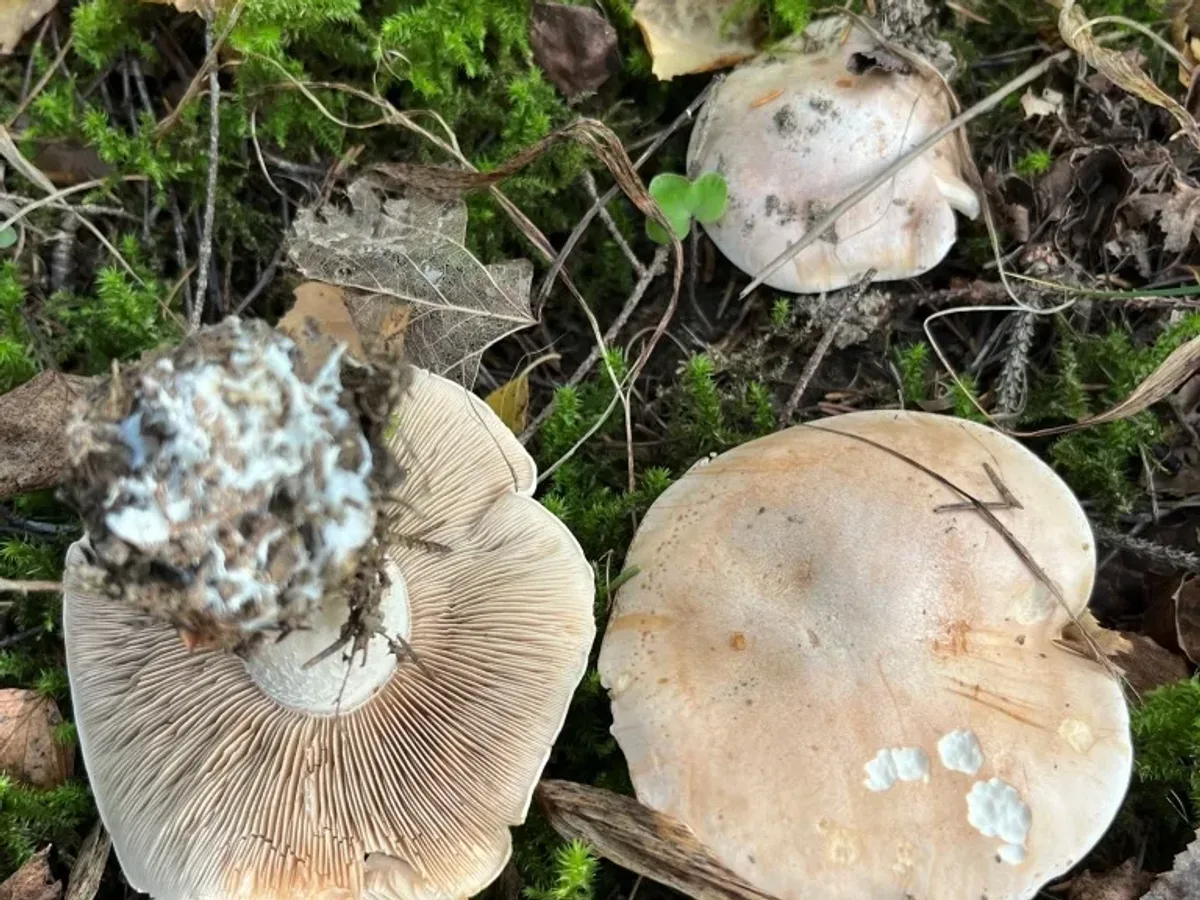 © Siv Moen (CC BY)
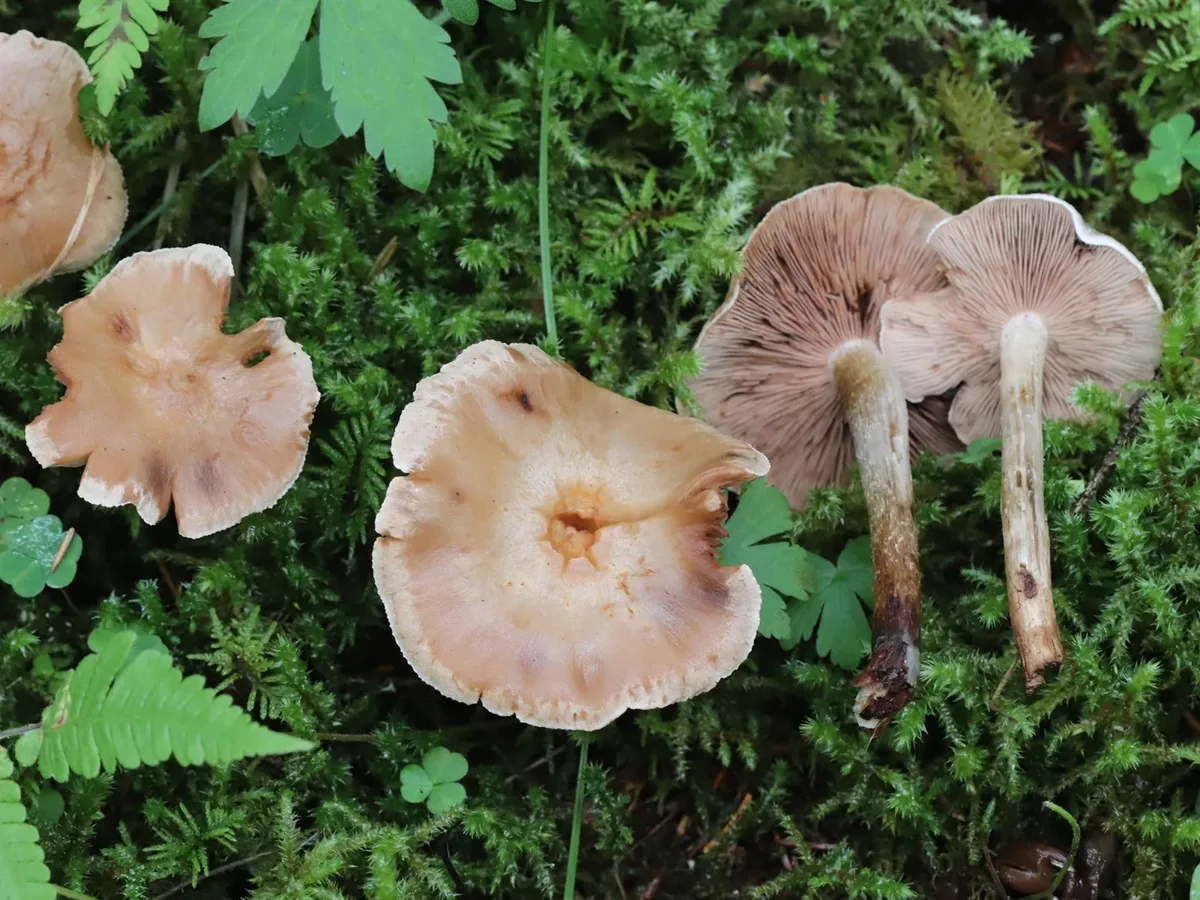 © Rob van Kruining (CC BY)
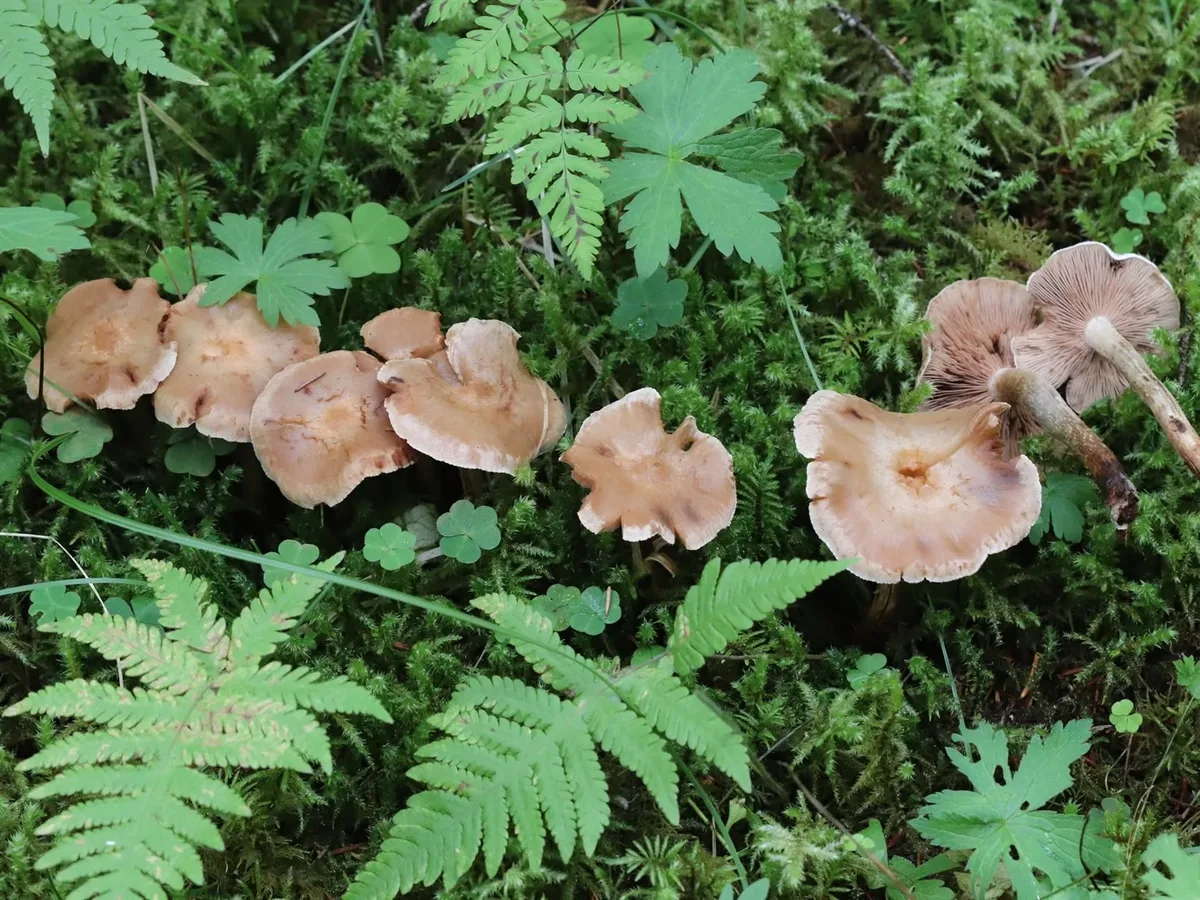 © Rob van Kruining (CC BY)
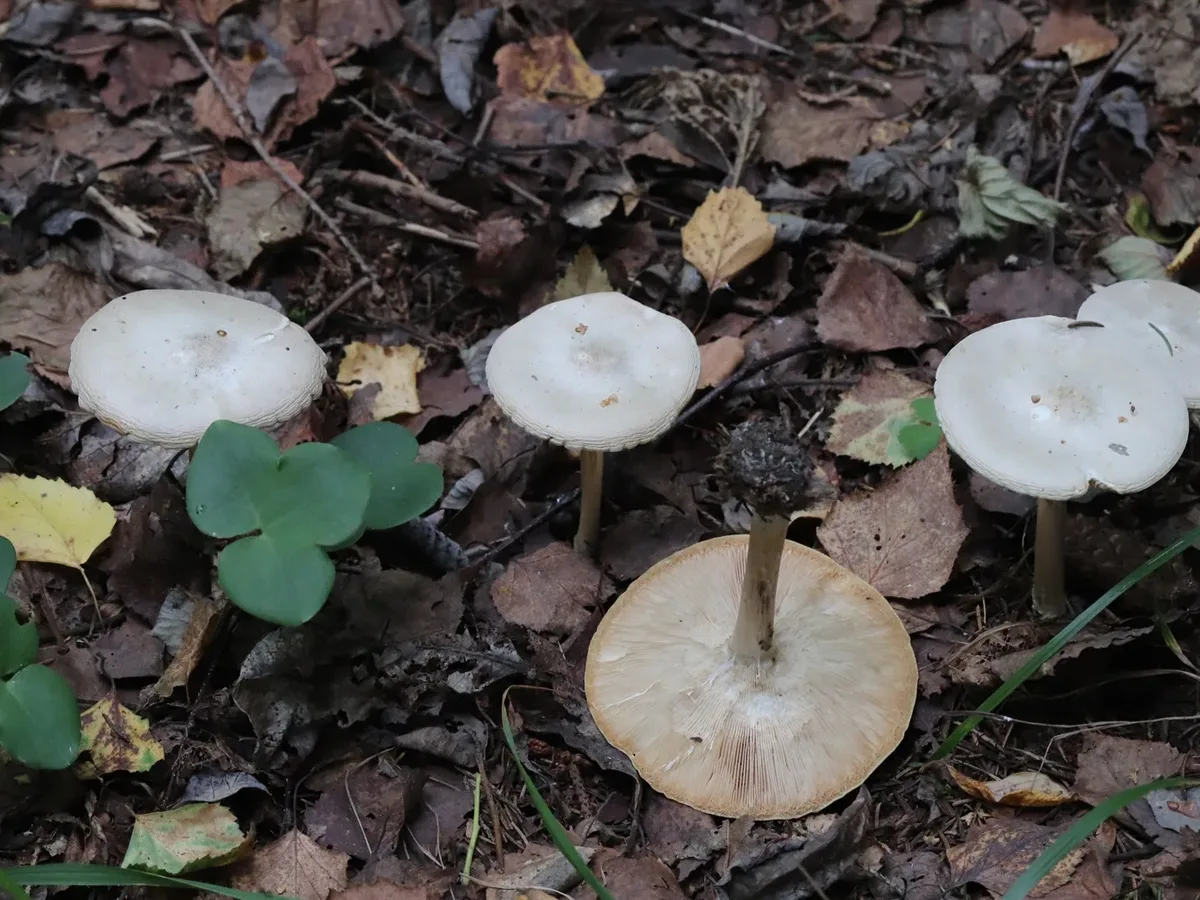 © Rob van Kruining (CC BY)
 © Johan Sirnes (CC BY)
 © Johan Sirnes (CC BY)
 © Johan Sirnes (CC BY)© Siv Moen (CC BY)© Rob van Kruining (CC BY)
Edible only with the right preparation - or safe for some people but not others. Learn the caveats first.
Never eat a mushroom you are not 100% sure of - check the look-alikes below, and always cook wild mushrooms.
How to recognise it
Hebeloma sinapizans is a large, meaty, visually unassuming mushroom whose plain appearance belies its potency. The most immediately striking thing about it is its size: caps of 8-12 cm are common, making it one of the biggest Hebeloma species in Europe and substantially larger than the familiar H. crustuliniforme.
Cap
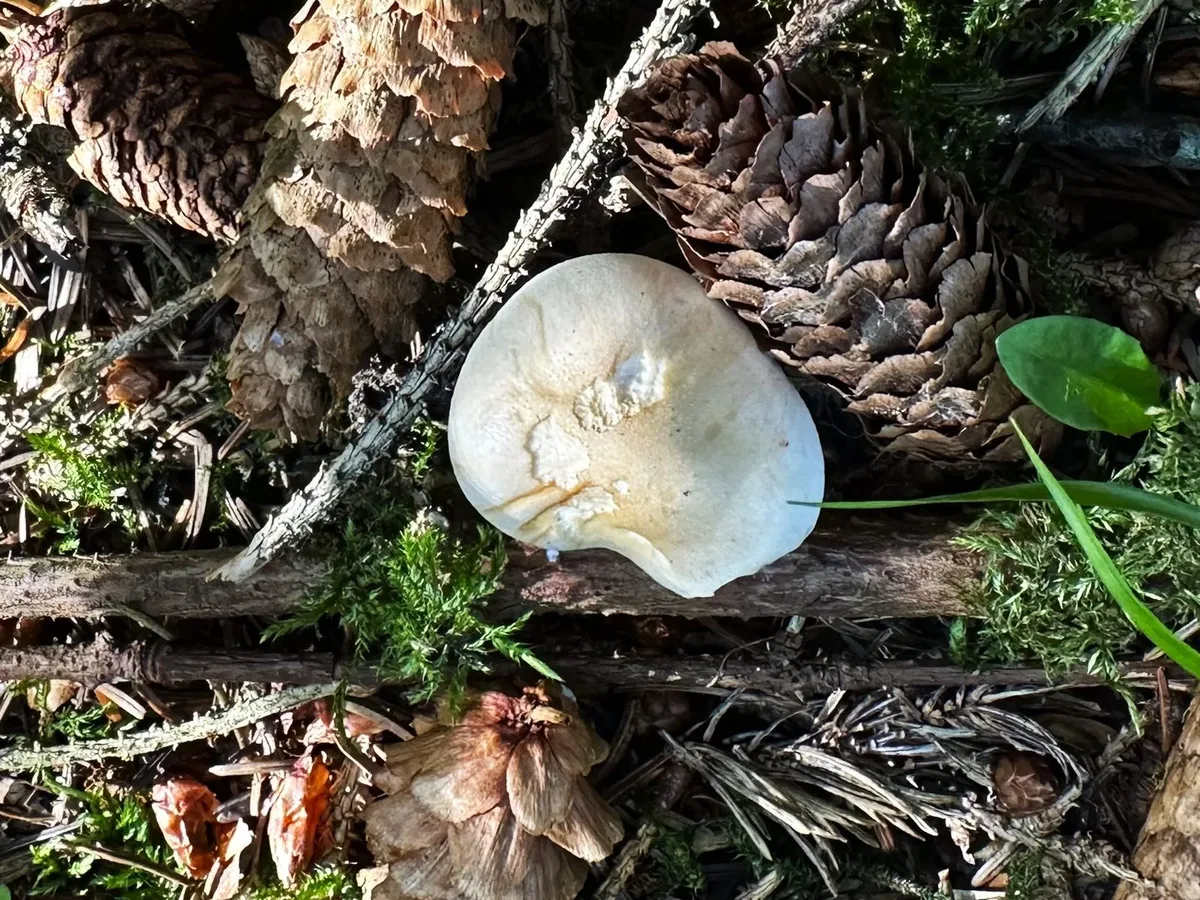
Dome-shaped when young - the classic 'bun' shape of the genus - expanding to broadly convex or nearly flat. It is honey-brown to mid-brown, with a distinctive tacky, viscid surface in damp weather that causes leaf fragments to cling to it. The margin is often a little paler and creamy.
Gills
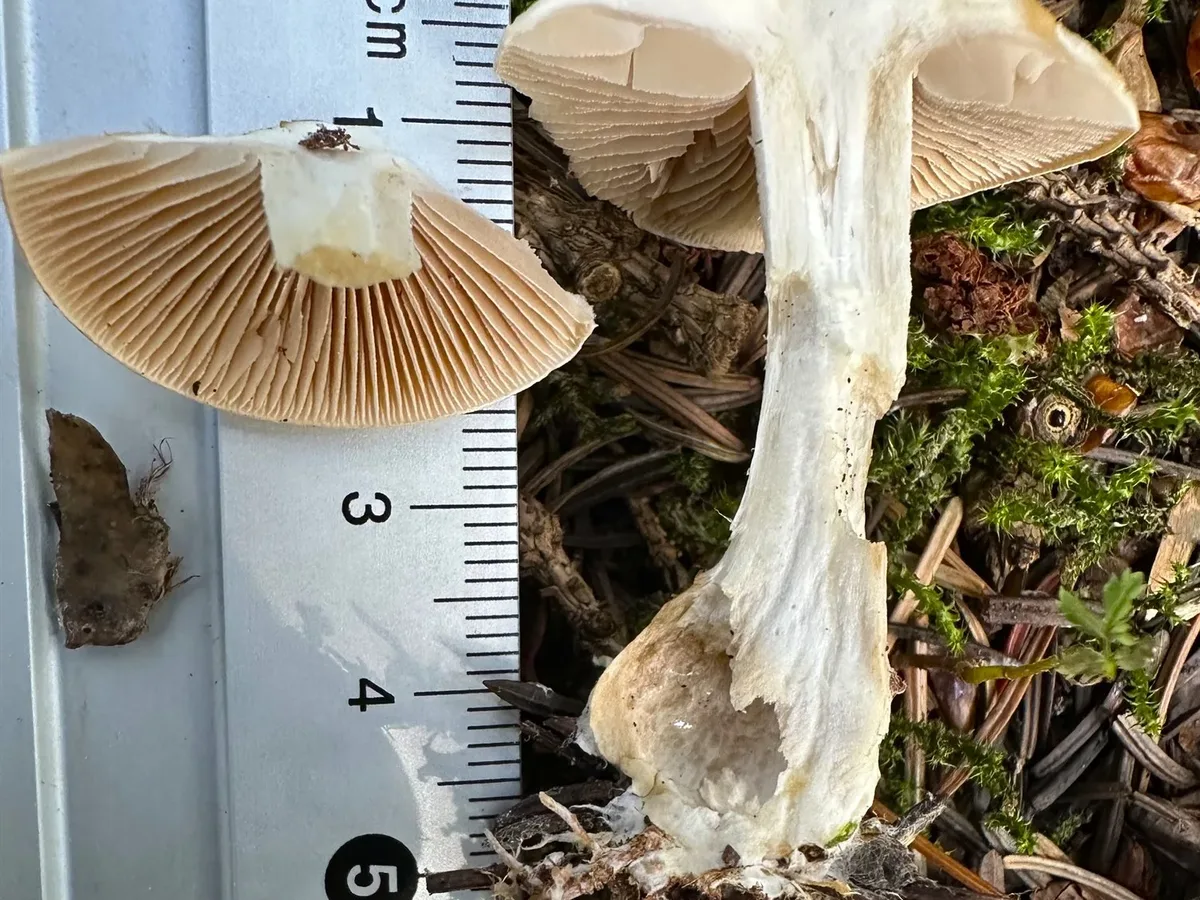
The gills progress from whitish-grey at button stage to clay-buff or pale tobacco as the spores mature.
In fresh specimens, especially in morning humidity, look carefully at the gill edges: small water droplets form and bead there - a 'weeping' characteristic diagnostic of the genus Hebeloma. As the day progresses and moisture drops, these dry to faint brownish spots on the gill edges.
Stem
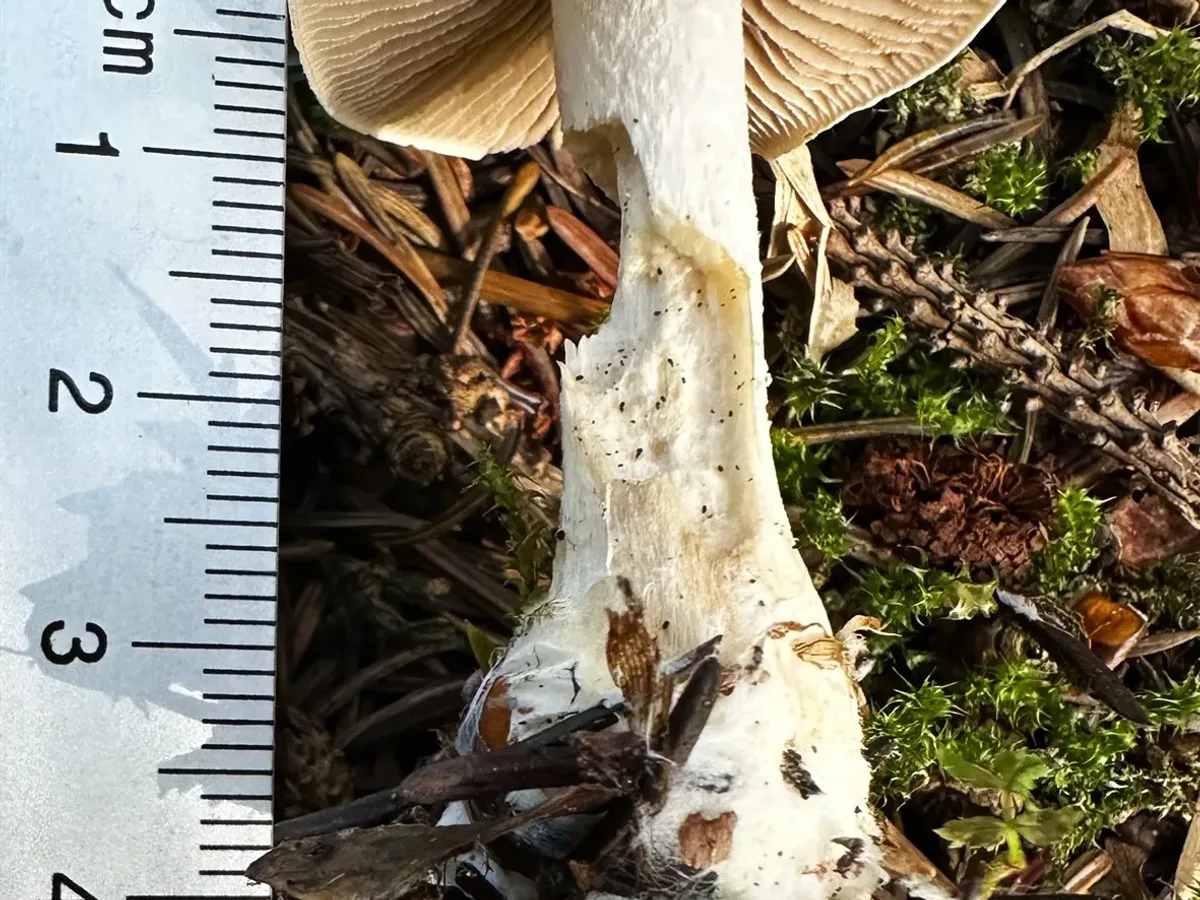
Stout and clavate - distinctly broader at the base than at the top - white and silky-scurfy, firm and solid throughout, without any persistent ring.
Flesh
White, and does not change colour when cut.
Smell & taste
The single most important feature for field identification is the smell: break or bruise the fruitbody and it releases a sharp, acrid odour of mustard or horseradish - much more penetrating and pungent than most woodland mushrooms. This smell alone makes it a poor candidate for the table for the majority of foragers even before toxicity is considered.
Why it's dangerous
The intrinsic danger of H. sinapizans is a reliable but generally non-lethal gastrointestinal illness. The more serious danger is the visual and habitat similarity to deadly species.
In the same beech and oak woodland, Galerina marginata (amatoxins: fatal liver and kidney failure, onset 6-24 hours post-ingestion) may be present on nearby fallen logs. The muted brown-capped, woodland-floor appearance of hebelomas can cause inexperienced collectors to be less cautious than they should be.
Similarly, deadly Cortinarius species - orellanus, rubellus - can occur in the same woodland, and while their spore print and cortina differ, the superficial appearance of large brown autumn woodland mushrooms is overlapping.
The golden rule: any large brown-capped, gilled, woodland mushroom with a clay-brown spore print and no confirmed field marks for a named edible species should never be eaten.
Toxin
Hebeloma sinapizans contains hebelomins - sesquiterpenoid compounds isolated from the genus Hebeloma that have demonstrated cytotoxicity and enzyme-inhibiting properties.
It also produces several other active compounds:
- Volatile sulphur-containing compounds (including isothiocyanate derivatives), responsible for the mustard odour
- Irritant phenolics
- Uncharacterised glycoproteins that act directly on the gastrointestinal mucosa
The toxin chemistry of the genus is not fully resolved; the compounds are more complex than simple GI irritants and individual responses vary. Cooking does not reliably destroy these compounds.
Symptoms
Symptoms are predominantly gastrointestinal:
- Nausea
- Vomiting
- Abdominal cramps
- Diarrhoea
- Sometimes excessive salivation
Onset is typically within 30 minutes to 3 hours of ingestion. In healthy adults the syndrome is self-limiting and resolves within 24 hours, but can be more severe in children, elderly or immunocompromised individuals, and significant dehydration can result.
There are no documented fatalities attributed solely to H. sinapizans, but the severity of the syndrome is variable and medical attention should be sought if symptoms are prolonged or severe.
Staying safe
Hebeloma sinapizans is consistently classed as poisonous across European mycological literature. It causes gastrointestinal illness that, while rarely life-threatening in healthy adults, can be severe and prolonged.
The mustard odour is so prominent that accidental ingestion by adults is uncommon, but children and foragers working quickly in poor light may not smell it before collecting. If any amount is eaten and gastrointestinal symptoms develop within hours, seek medical attention.
Critically, if an unknown large brown-capped mushroom was eaten and symptoms develop, it is essential to rule out amatoxin poisoning (from Galerina or small Lepiota species that might have been collected alongside). The symptom onset for gastrointestinal irritant species (hours) can briefly resemble and mask early amatoxin poisoning - a potentially fatal delay in treatment.
Always try to retain a sample or photograph of anything eaten in error.
Where & when it grows
Habitat
Hebeloma sinapizans is primarily a beech-woodland species across central and western Europe. It has a stronger preference for beech than the generalist H. crustuliniforme, and in deciduous woodland dominated by Fagus sylvatica it is one of the most characteristic large hebelomas.
Base-rich and calcareous soils that support mature beech are strongly favoured. Typical habitats include:
- The Chilterns and the South Downs in England
- The Franconian and Swabian Alb in Germany
- Beech-dominated woodland throughout France, Belgium and the Netherlands
It also grows under oak, hornbeam, hazel, lime and maple, and is found in parks and garden settings wherever mature broadleaved trees are established. It grows on the soil surface among leaf litter, emerging singly or in loose scattered groups.
Unlike H. crustuliniforme, it is less frequently encountered in coniferous plantations, though records exist under conifers where broadleaved trees are also present.
When
Hebeloma sinapizans arrives a little earlier than many autumn mushrooms, appearing once the first significant rains of late summer or early autumn cool the soil down toward the 10-15 °C range the genus favours.
In central and western Europe, fruitbodies can turn up from late August onward, though the main flush runs through September and October, peaking around weeks 39-43 (late September to late October). It is often among the earlier large brown agarics to appear in beech woodland - one of autumn's opening acts rather than its finale.
Fruiting tails off through November, though mild autumns in southern England, Belgium and the Low Countries can extend the season a little. In Scandinavia and alpine zones it finishes earlier as soils cool faster.
How it grows
Like all Hebeloma species, H. sinapizans is an obligate ectomycorrhizal fungus - it cannot complete its life cycle without a living host tree.
The mycelium wraps tree root tips in a sheath, forming a Hartig net through which nutrients flow in both directions: the fungus receives photosynthate (sugars) from the tree and returns mineral nutrients - especially phosphorus and nitrogen - along with improved resistance to drought and some root pathogens.
This partnership may persist for many years, the mycelium threading invisibly through the soil long before a fruitbody ever appears above it. The fruitbodies themselves are just the spore-dispersal stage of that hidden network; the species tends to grow solitarily or in loose groups rather than the tight clusters typical of wood-rotting species.
The piercing mustard odour is produced by volatile isothiocyanate and glucosinolate-like compounds and is thought to deter insect and gastropod grazing. The weeping gill droplets are an active secretion from the gill tissue - not condensation - and are part of the spore-release mechanism.
Fruiting conditions
Flushes follow autumn rains as soil temperatures descend from summer maxima through the 10-15 °C window. Peak fruiting in central Europe corresponds to early to mid October. Earlier-starting than some autumn agarics; the first significant autumn rain event after soil has cooled below about 15 °C typically triggers fruiting.
Look-alikes
Because of its large size, plain brown cap and pale gills, Hebeloma sinapizans sits in a problematic visual niche occupied by several species of varying edibility and toxicity.
The most important lookalike in terms of danger is Galerina marginata (funeral bell): although usually smaller, larger specimens or clustered populations growing in leaf litter near wood can superficially resemble a hebeloma, and Galerina contains deadly amatoxins. The two are distinguishable by:
- Substrate: G. marginata grows on or from decaying wood or its buried remains, not on bare mycorrhizal soil
- Ring: a well-defined, persistent membrane ring on the stem of G. marginata (absent in Hebeloma)
- Smell: Galerina is mild or faintly mealy, not mustard-pungent
Large specimens of Hebeloma sinapizans have also been confused with Tricholoma species (which lack the viscid surface, lack 'weeping' gills and typically have white spores) and occasionally with Cortinarius species (which have rusty-brown spore prints rather than clay-brown, and in youth have a diagnostic cobweb cortina).
The clavate stem and viscid cap surface are good separators from Agrocybe and many Cortinarius. Always confirm by smell, spore print colour and substrate.
DEADLY - contains orellanin, causing irreversible kidney failure with a latency of 2 days to 3 weeks. Smaller to medium-sized, reddish-brown to cinnamon cap (not honey-brown), rusty-brown spore print (not clay-brown), and in young specimens a diagnostic cobweb-like cortina connecting cap margin to stem. Smell is not mustard. Occurs in the same conifer-mixed woodland. The rusty-brown spore print is the critical separator.
DEADLY - also contains orellanin (delayed kidney failure). Tawny-orange to brick-red cap, rusty-brown spore print, young specimens show a cobweb cortina. Favours drier broadleaved woodland (oak-dominated), which overlaps with H. sinapizans range. The saturated orange-tawny colour and rusty spore print are the key separators. Any brown-orange woodland mushroom with a rusty spore print must be treated as a potential deadly Cortinarius.
DEADLY - contains alpha- and beta-amatoxins that destroy the liver and kidneys; has caused fatalities. Usually smaller than adult H. sinapizans but large specimens can overlap. Key separators: G. marginata grows directly on decaying wood or buried woody debris (H. sinapizans grows on soil as a mycorrhizal species), has a persistent membranous ring on the stem (H. sinapizans has no ring), and smells mildly mealy or earthy - never of mustard or horseradish. Spore print rust-brown in Galerina vs. clay-brown in Hebeloma. Never collect any brown-capped, brown-spored agaric from a woodland setting without first confirming it is not Galerina.
Edible. Occasionally confused by beginners due to the similar pale cap and woodland setting. Agaricus campestris has white gills that turn pink and then chocolate-brown (not clay-brown from the start), a distinct persistent ring, smells pleasantly of almonds or fresh mushroom - never of mustard or radish - and typically grows in open grassland rather than woodland. The smell is the fastest separator.
Also poisonous. The most closely related and most similar species - both are toxic hebelomas with radish/mustard smell, clay-brown spore prints and 'weeping' gills. H. sinapizans is distinctly larger (cap to 14 cm vs. typically 4-10 cm), has a more viscid-glutinous cap surface, and a more intensely mustard-pungent smell; H. crustuliniforme tends toward a sharper radish smell. The stem of H. sinapizans is more consistently clavate. Both are poisonous and both should be left alone - the distinction matters for documentation, not for eating.
Edible. A large, pale cream to buff mushroom that can resemble H. sinapizans at first glance. Key differences: C. gambosa fruits in spring (April-June), not autumn; has crowded white gills and a white spore print (not clay-brown); smells strongly of fresh flour or mealy grain, not of mustard. The season difference alone eliminates confusion in the field.
A reference guide - never an edibility guarantee. When in doubt, leave it out.