Sweet poisonpie
Hebeloma sacchariolenssyn. Agaricus sacchariolens, Hebeloma dulce
 © Alan Rockefeller (CC BY 4.0)
 janetgraham84new (CC0)
 © Stuart Fraser (CC BY)
 © Stuart Fraser (CC BY)
 © Bente Rian (CC BY)
 © Bente Rian (CC BY)
 Angelique (CC0)
 Angelique (CC0)
 © Alan Rockefeller (CC BY 4.0)© Alan Rockefeller (CC BY 4.0)janetgraham84new (CC0)
Edible only with the right preparation - or safe for some people but not others. Learn the caveats first.
Never eat a mushroom you are not 100% sure of - check the look-alikes below, and always cook wild mushrooms.
How to recognise it
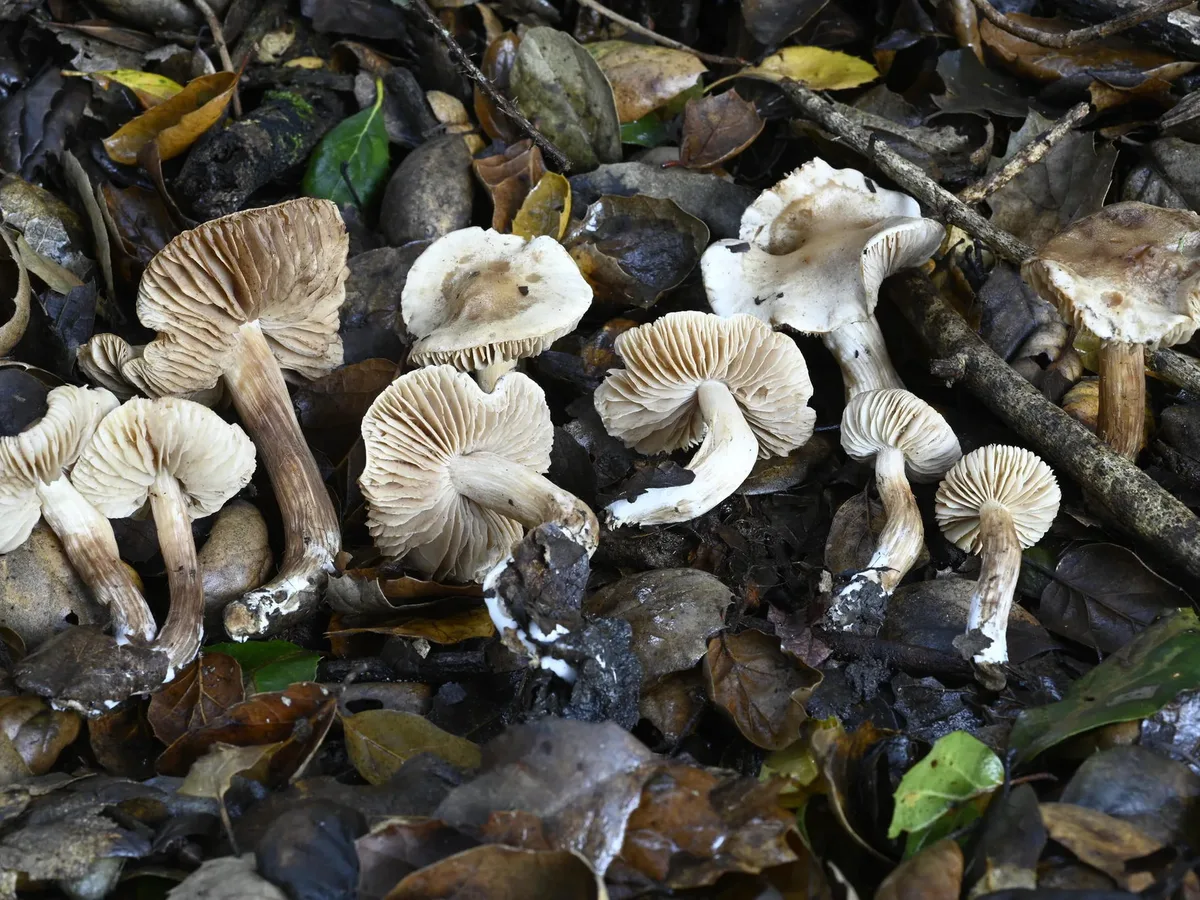
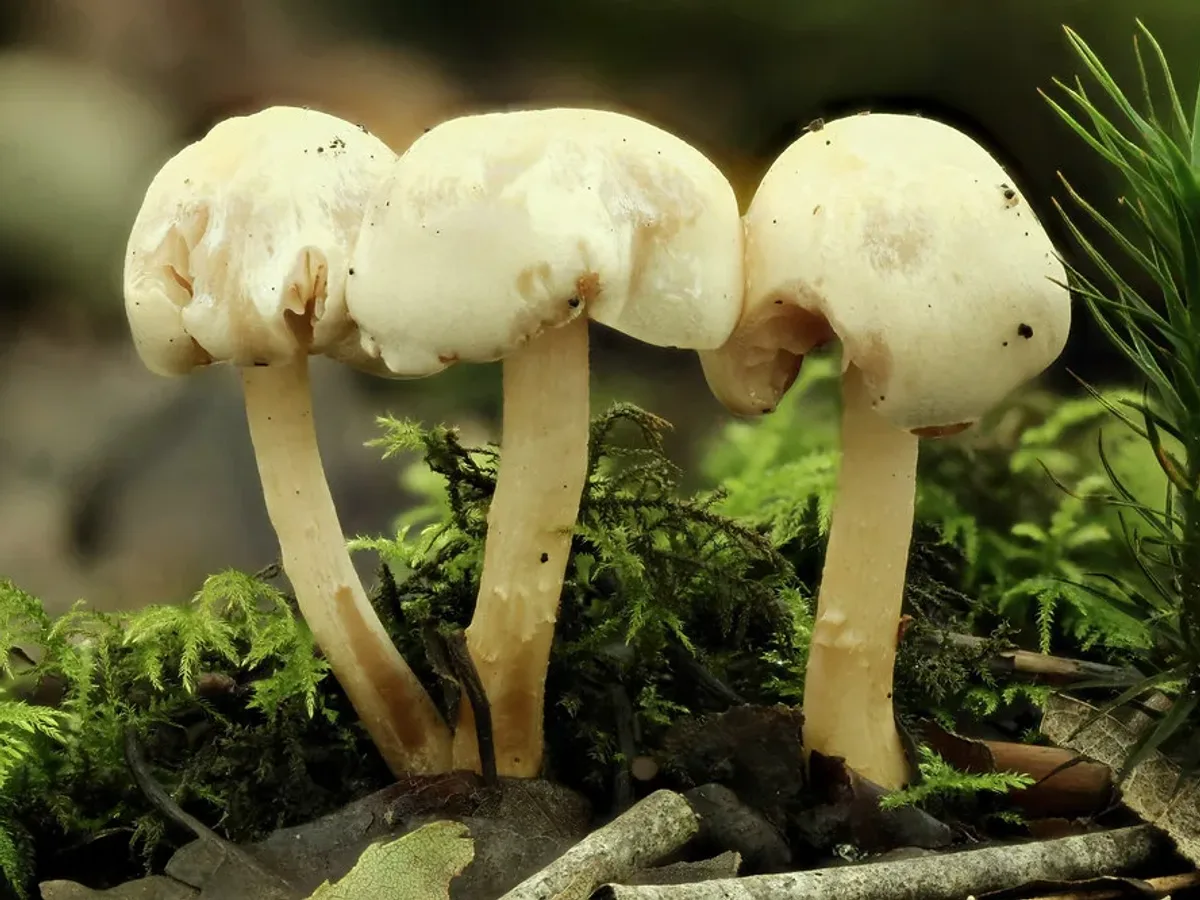
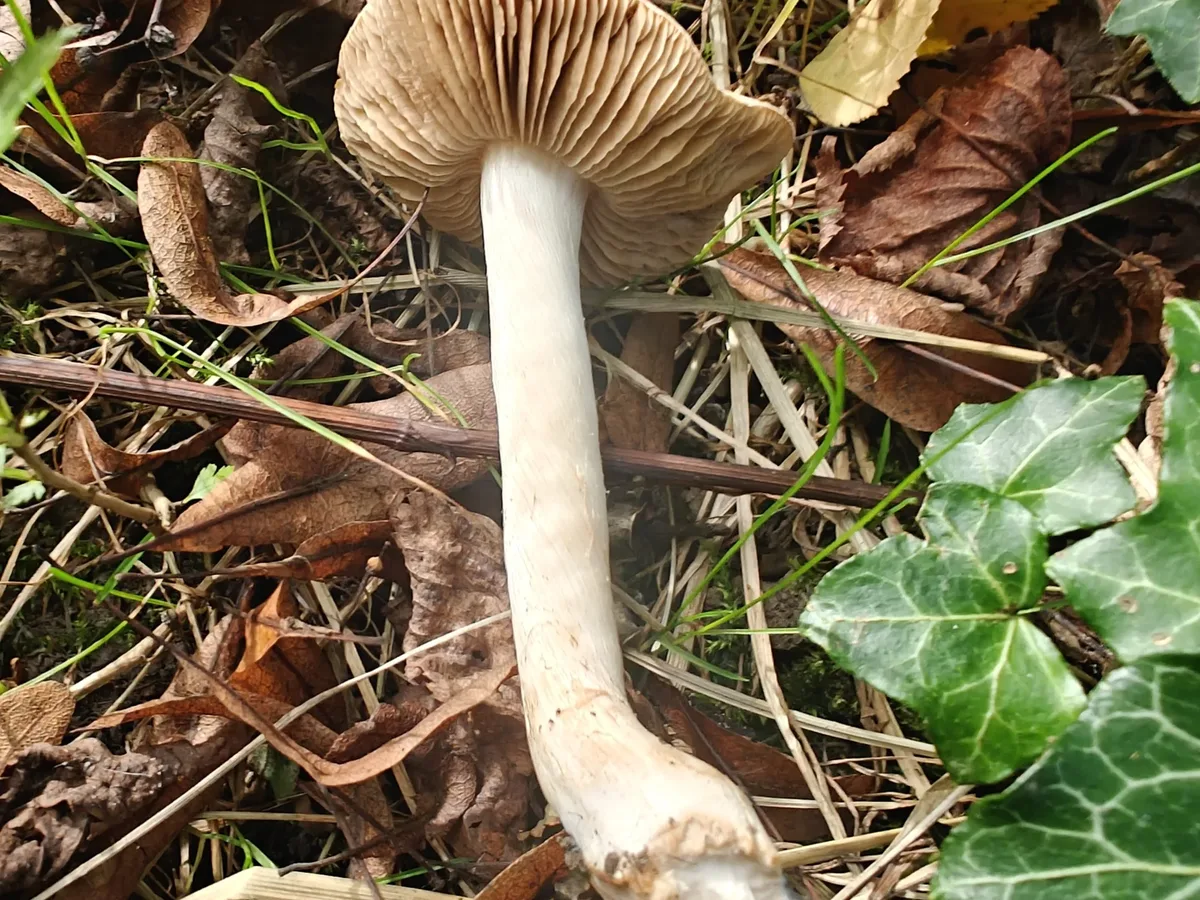
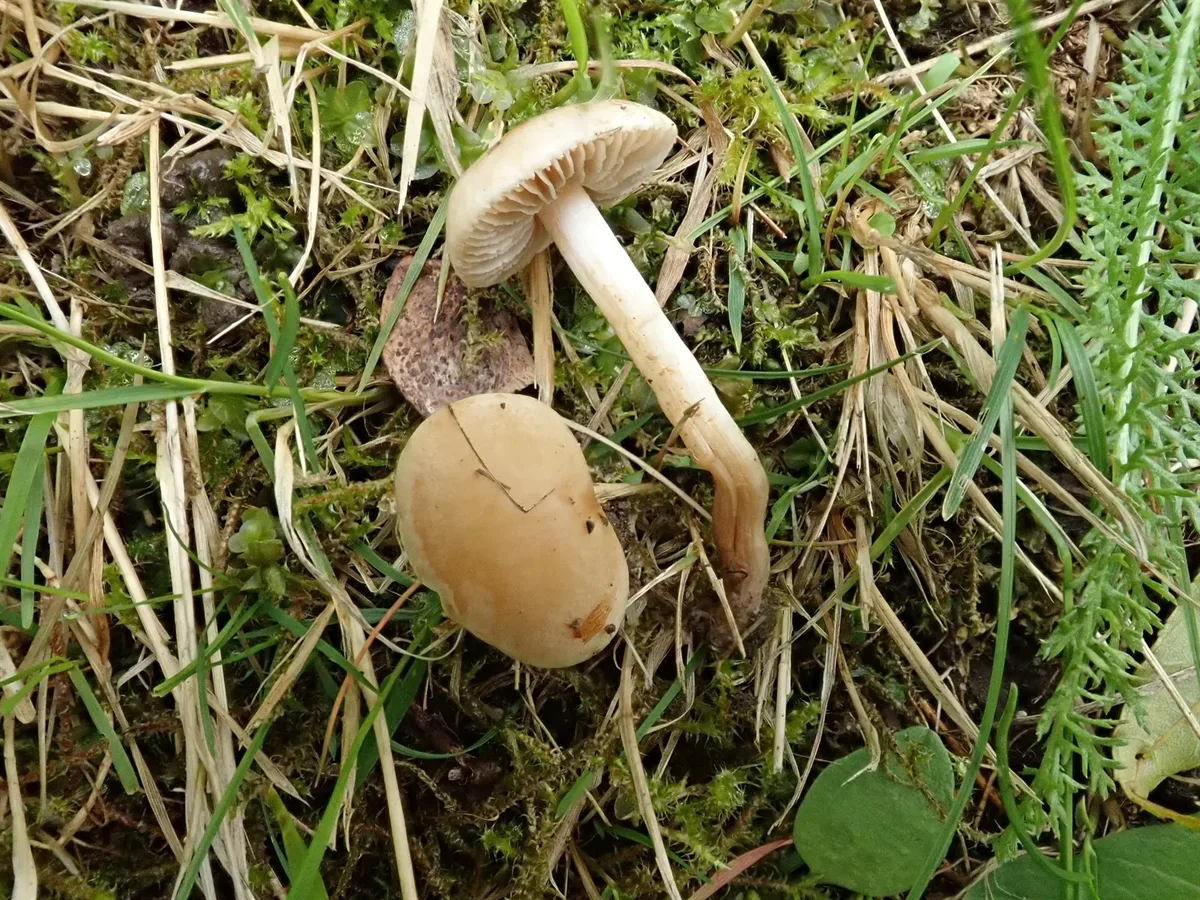
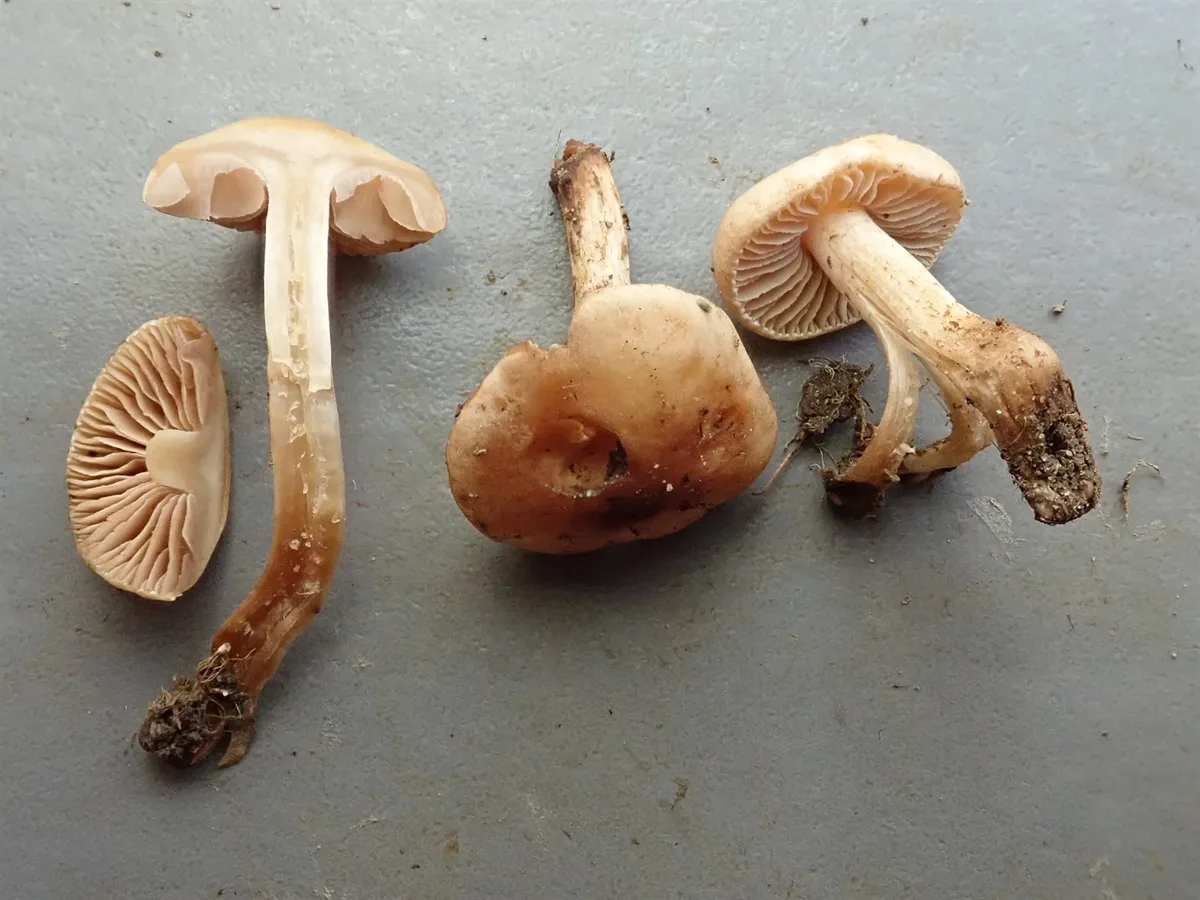
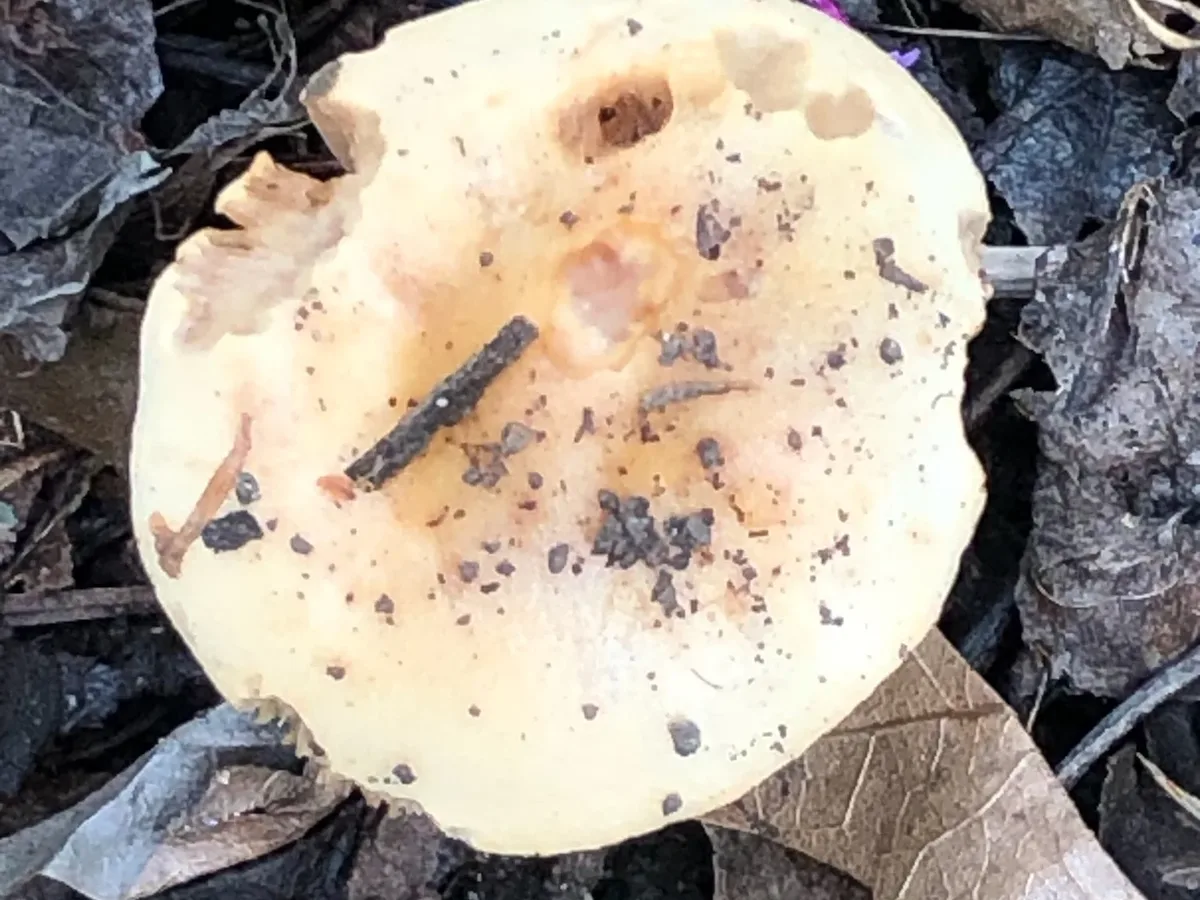
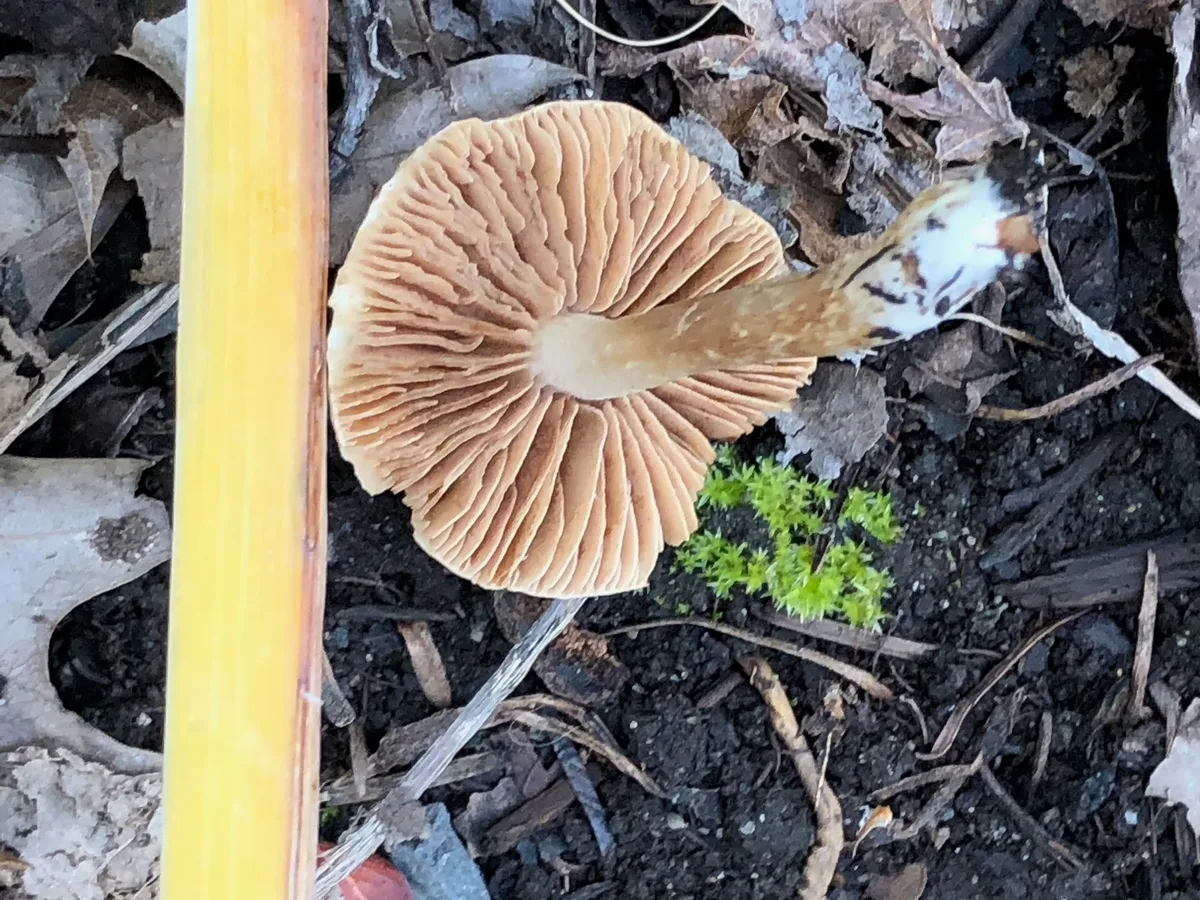
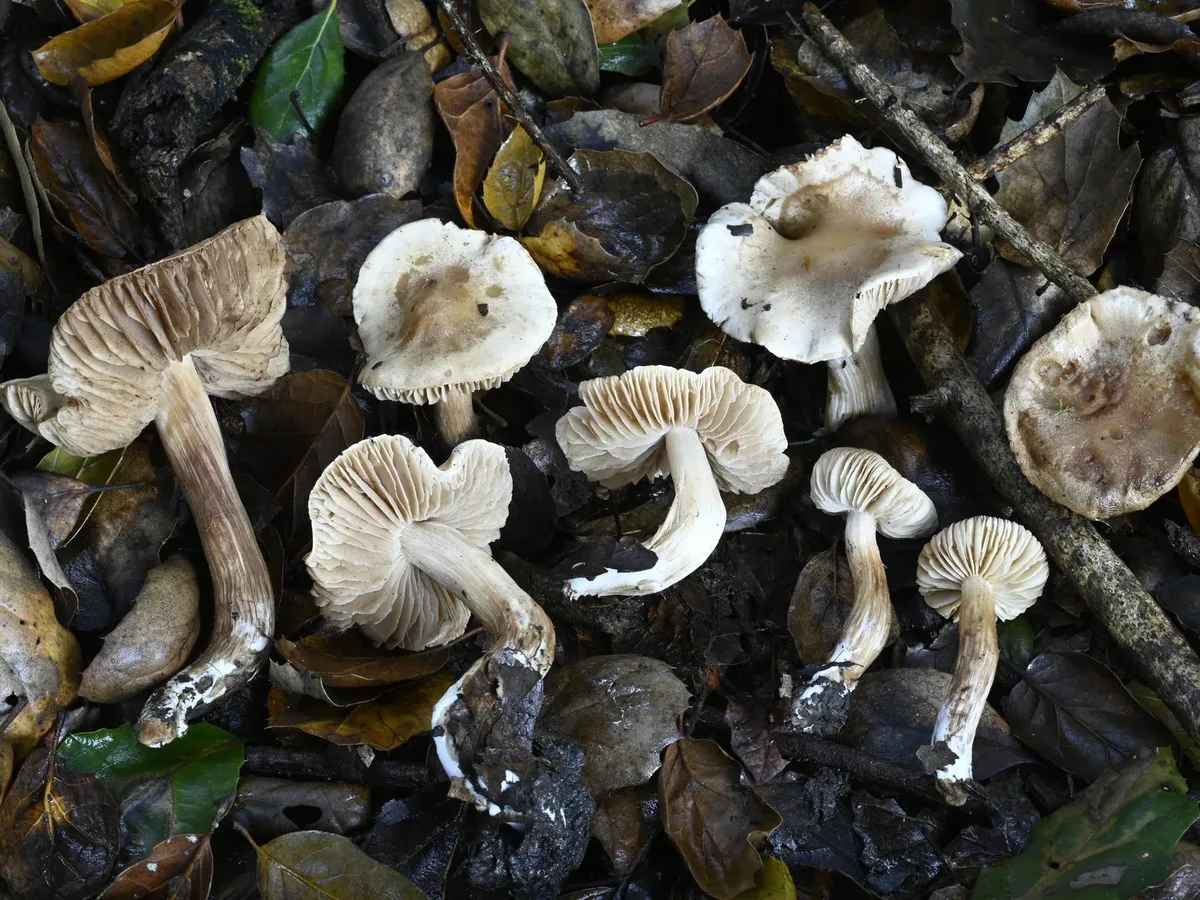
On sight alone, Hebeloma sacchariolens is easy to overlook - a modest tan mushroom with a dome-shaped cap, white gills ageing to clay-brown, and a silky-fibrous stem without a ring. It could be any one of dozens of pale, unassuming woodland agarics.
What sets it apart completely is smell: before you even see it on the forest floor, a wave of sweet confectionery - marzipan, almond essence, candy floss or coconut, depending on the observer - may stop you in your tracks.
The odour comes from benzaldehyde and related aromatic compounds, and in still autumn air it can carry several metres from an undisturbed fruitbody. Experienced mycologists sometimes detect fresh specimens before spotting them.
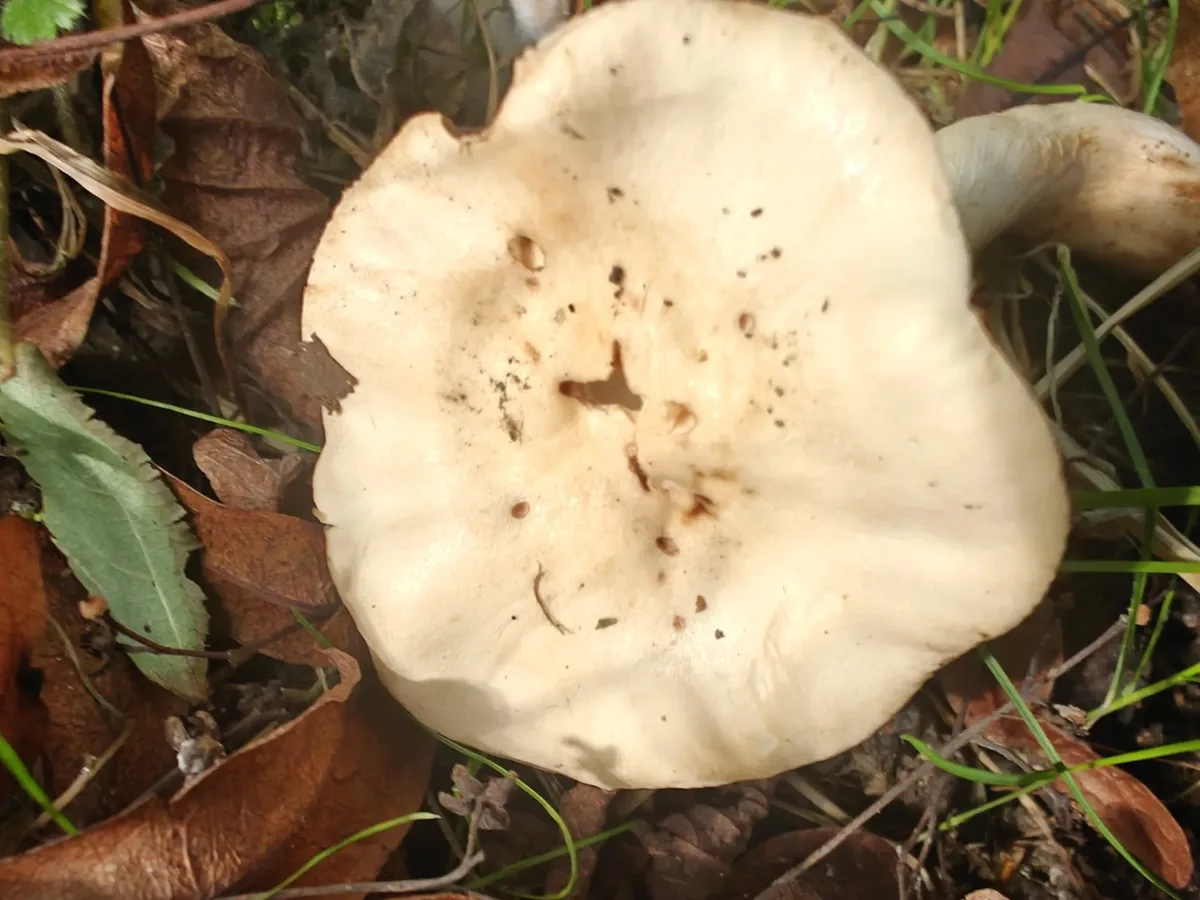
The cap surface is slightly greasy in wet weather but not slimy; it is smooth rather than scaly or fibrous.
The gill edges in fresh specimens occasionally appear faintly 'wet' or weeping, a character common to many Hebeloma species, though less pronounced here than in H. crustuliniforme.
Rubbing the stem apex between two fingers should produce a whitish mealy deposit and intensify the scent.
The pleasant smell is also a warning: novices who associate sweetness with safety may be misled into tasting a fungus that is genuinely toxic.
Why it's dangerous
The intrinsic toxicity of H. sacchariolens causes an unpleasant but typically non-lethal gastrointestinal syndrome.
The more serious danger is false reassurance from the pleasant smell, which may lead a novice to:
- underestimate the risk,
- fail to identify the mushroom correctly,
- or - more critically - fail to apply appropriate caution to nearby mushrooms.
In the same habitat as H. sacchariolens, deadly species may be present, including Galerina marginata (amatoxins, liver and kidney failure, several confirmed fatalities in Europe) and potentially amatoxin-bearing Lepiota species.
Any brown-spored, gilled woodland mushroom that cannot be identified to a known edible species with certainty must not be eaten.
Toxin
Hebeloma sacchariolens contains a combination of irritant compounds shared across the genus:
- Hebelomins - sesquiterpene lactone derivatives with demonstrated cytotoxicity and enzyme-inhibiting activity at the cellular level.
- Irritant glycoproteins that damage the gastrointestinal mucosa.
- Uncharacterised volatile aromatic compounds.
The sweet odour itself is primarily due to benzaldehyde and related aromatic compounds. These are not the main toxins but contribute to the unusual sensory profile.
The gastrointestinal-irritant mechanism operates via direct mucosal irritation and possibly neuroactive effects on the gut, producing rapid-onset symptoms.
The full toxin profile of H. sacchariolens is not exhaustively characterised in the scientific literature. Like most Hebeloma species, it should be assumed to carry the same class of toxins as H. crustuliniforme.
Symptoms
Gastrointestinal syndrome with onset typically 30 minutes to 3 hours after ingestion.
Symptoms include:
- nausea
- vomiting
- abdominal cramps
- diarrhoea
- profuse salivation, which may accompany vomiting
In most otherwise healthy adults the syndrome is self-limiting within 12-24 hours, but can be severe enough to require rehydration. Children, elderly individuals and those with liver or kidney compromise may experience more severe or prolonged illness.
No confirmed fatalities are attributed to H. sacchariolens specifically, but serious illness is possible. The primary risk is identification error leading to ingestion of a co-occurring deadly species such as Galerina marginata.
Staying safe
Hebeloma sacchariolens is poisonous and must never be eaten. The agreeable sweet scent does not indicate safety; it is a characteristic of the toxin-producing metabolism of this species.
These features are collectively diagnostic - learn them to avoid accidental ingestion:
- clay-brown spore print
- mealy-scurfy stem apex
- sinuate gills
- typical Hebeloma growth habit in woodland near trees
Children and pets are particularly at risk because the pleasant odour may invite tasting.
If ingestion is suspected, contact Poison Control immediately and bring a sample or photograph of the mushroom.
Where & when it grows
Habitat
Hebeloma sacchariolens has a mycorrhizal ecology that partly explains its distribution: it tends toward calcareous or nutrient-rich soils and broadleaf woodland hosts, particularly beech on chalk and limestone.
This is ecologically important for identification. It distinguishes the species from Galerina marginata (which fruits on decaying wood) and from many Hebeloma species that prefer acid soils and conifers.
The habitat of mature beech, oak, hornbeam and lime woodland on base-rich soils, particularly in chalk country, is highly characteristic.
In urban contexts it appears in old parkland with mature beech or oak, in lime avenues and cemetery woodland - wherever appropriate mycorrhizal partners grow on suitable soils.
Fruitbodies typically emerge from bare soil or thin leaf litter, in small scattered groups rather than large clusters.
When
Like most of the Hebeloma genus, this species follows the autumn clock: fruiting kicks off once falling soil temperatures and the first substantial autumn rains arrive together.
In central and western Europe, first fruitbodies typically appear in late August or early September and peak through late September and October. The season is slightly earlier and shorter than for H. crustuliniforme.
Once November frosts set in, fruiting usually ends - this species is somewhat less frost-tolerant than some of its relatives.
The best time to encounter it is during the first flush after a dry summer breaks, when cooling soils drop below around 14°C.
How it grows
As a mycorrhizal species, H. sacchariolens forms symbiotic associations with the root tips of host trees, encasing fine roots in a fungal sheath (the Hartig net) and extending the effective absorptive surface of the root system into the surrounding soil.
In exchange for photosynthetically fixed carbon sugars from the tree, the fungus provides water, phosphorus and other minerals.
The fruitbodies arise from subterranean mycelial networks. They are the reproductive, spore-dispersing structures of the colony rather than the organism itself.
The intense sweet volatile compounds produced by this species - unusual and potent compared to most Hebeloma - may serve ecological functions relating to insect attraction for spore dispersal, or may be metabolic by-products of the particular biochemical pathways operating in this species.
Individual fruitbodies develop over several days and may persist for a week or more if undisturbed.
Fruiting conditions
Flushes triggered by autumn rainfall once soil temperatures drop below approximately 14°C. Peak fruiting through September and October across central and western Europe. Less frost-tolerant than H. crustuliniforme; fruiting typically ends before sustained November frosts.
Look-alikes
The overwhelming sweet scent of H. sacchariolens is nearly unique among woodland gilled fungi and substantially reduces the risk of confusion for experienced foragers. However, several dangers remain.
The most important: inexperienced foragers may smell the candy-like odour and assume sweetness implies edibility, not recognising the species at all. Any unfamiliar tan to buff-coloured woodland mushroom with a clay-brown spore print should be treated with extreme caution.
- Galerina marginata (deadly) - shares habitat (woodland, soil near trees, autumn season) and general appearance (brown cap, clay-brown spore print, slender build), but has a mild smell, a persistent membranous ring on the stem and typically fruits on or very near dead wood.
- Other Hebeloma species - including the closely related and equally poisonous H. crustuliniforme - may occur nearby.
- Among edibles, Calocybe gambosa (St. George's mushroom) is a spring species that does not overlap in season.
- Clitopilus prunulus (the mealy plum) has a mealy flour smell, white to pink spores and strongly decurrent gills - confusion is possible for beginners at a glance but the characters are readily separable on examination.
Deadly - contains alpha-amatoxins that destroy the liver and kidneys, responsible for multiple fatalities in Europe and North America. Galerina marginata has a similar brown cap and clay-brown spore print but crucially: (1) it has a persistent membranous ring on the stem, (2) it typically grows ON or immediately adjacent to decaying wood, stumps or buried roots rather than on living-tree mycorrhizal soil, and (3) it has a mild, non-descript smell - never the strong sweet almond/marzipan odour of H. sacchariolens. Any brown-capped, ring-bearing mushroom on dead wood must be treated as potentially G. marginata unless positively identified otherwise.
Edible, but must be identified with absolute certainty. Clitopilus prunulus has a mealy flour smell (not almond/sweet), pink spore print (not clay-brown), strongly decurrent gills running well down the stem (not sinuate), and white to greyish flesh that does not change. Any mushroom suspected of being Clitopilus must have a confirmed pink spore print before eating - confusion with Hebeloma or similar genera is dangerous.
Young Cortinarius species can superficially resemble Hebeloma at a glance, but possess a cobweb-like cortina (remnants visible as rust-brown fibres on the stem) and a rusty-orange to ochraceous-rust spore print - distinctly more orange-rusty than the clay or tobacco-brown of Hebeloma. Some Cortinarius are deadly (e.g. C. rubellus, C. orellanus - orellanin, kidney failure with delayed onset of 2-3 weeks); never eat any Cortinarius without expert verification.
Small, fragile, with a narrow conical cap and thread-like stem - much smaller and structurally very different from Hebeloma. Confusion is only possible at the most inexperienced level. Mycena typically exude white latex when the stem is broken.
Also poisonous (gastrointestinal irritant) and very similar in appearance - same genus, same cap colour range, same clay-brown spore print, same scurfy stem apex. The definitive separator is odour: H. crustuliniforme smells strongly of radish or horseradish (sharp, pungent), while H. sacchariolens smells overwhelmingly sweet (marzipan, candy). Both are toxic and neither should be eaten; distinguishing them is important for understanding symptoms after accidental ingestion but makes no difference to the advice: do not eat either species.
Edible and prized, but seasons do not overlap: Calocybe gambosa fruits in spring (April to June, around St. George's Day) while H. sacchariolens is an autumn species. If a white to cream mushroom with a mealy smell appears in autumn, it is not St. George's mushroom. Calocybe gambosa also has a strong mealy/floury smell, white spores and typically occurs in open grassland or woodland edges rather than under beech on chalky soil.
A reference guide - never an edibility guarantee. When in doubt, leave it out.