Rooting poisonpie
Hebeloma radicosumsyn. Agaricus radicosus, Hebeloma cylindrosporum var. radicosus
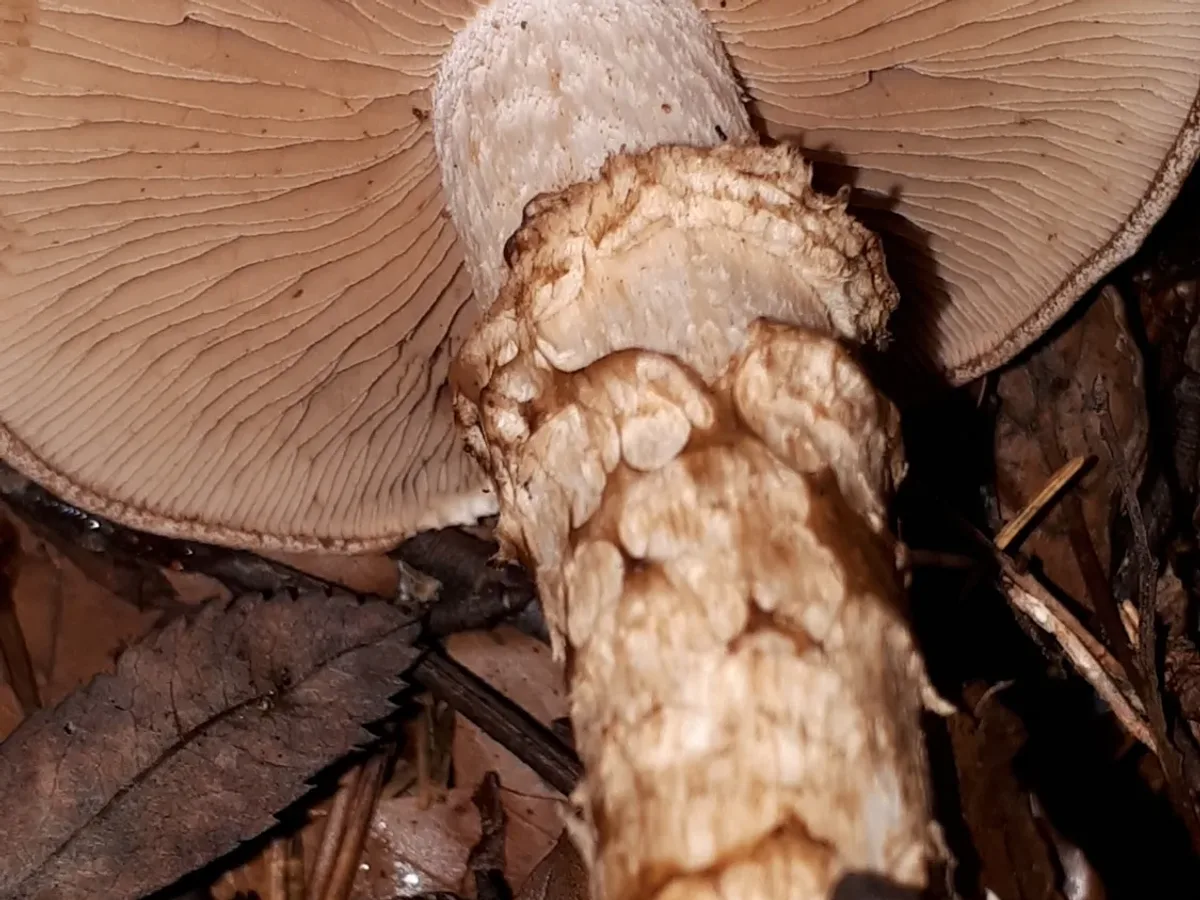 © Markus Krieger (CC BY 4.0)
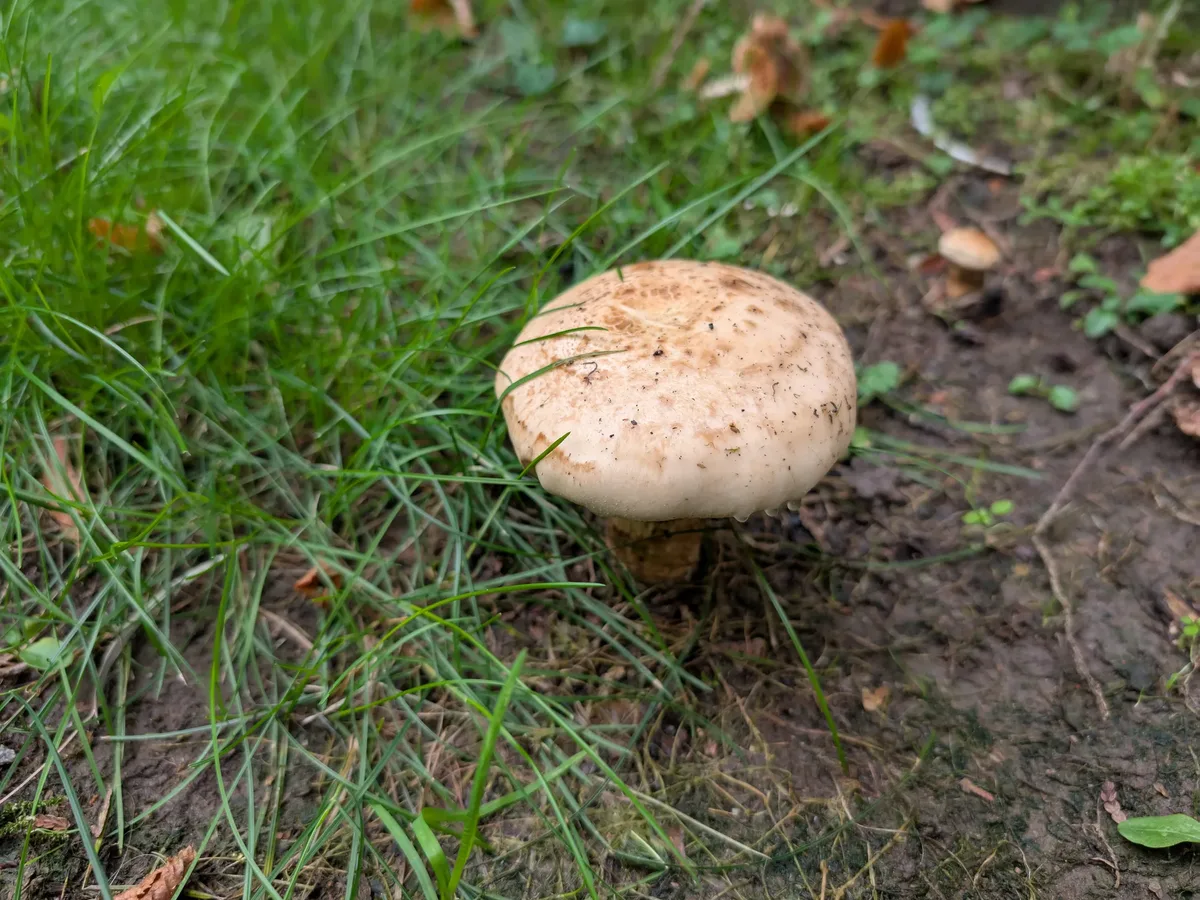 © Petri Roponen (CC BY-SA)
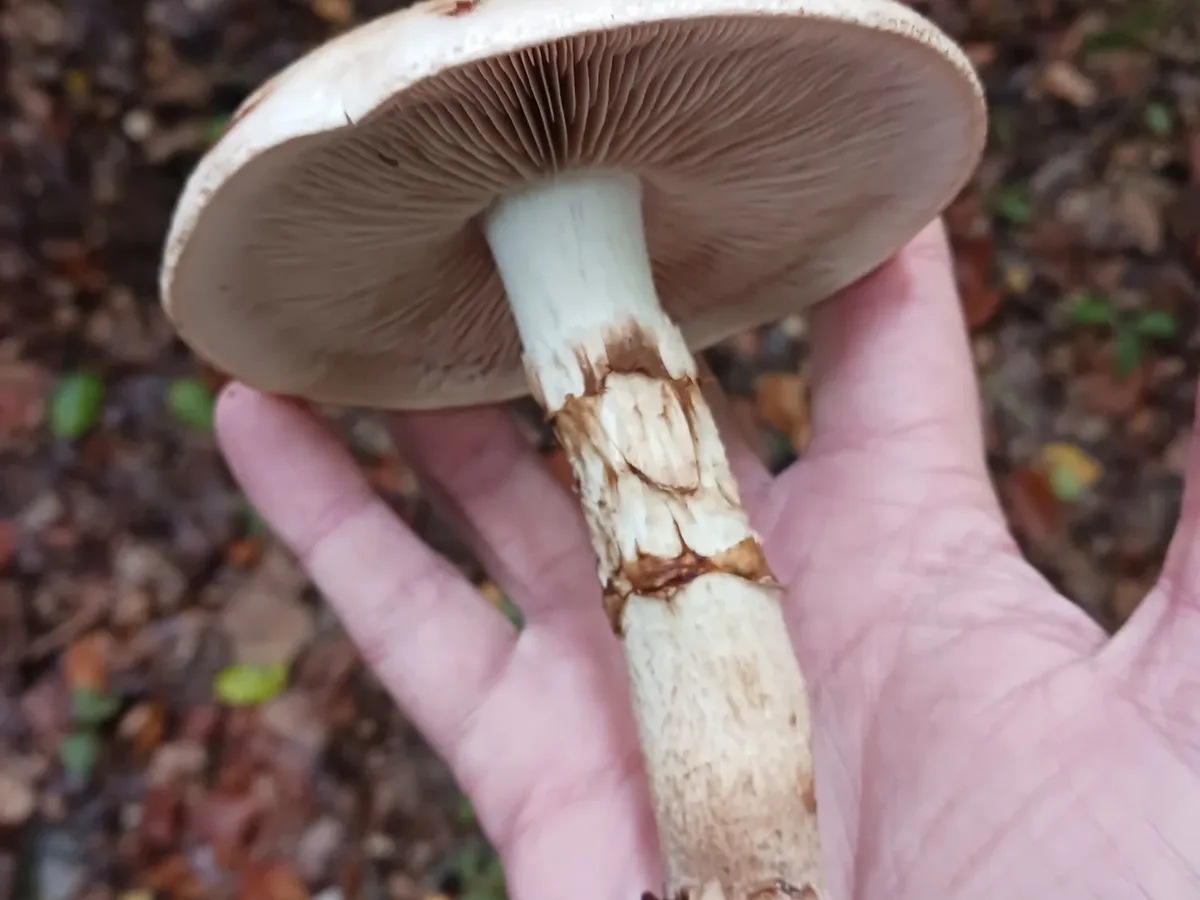 T. Pedro Hafermann (CC0)
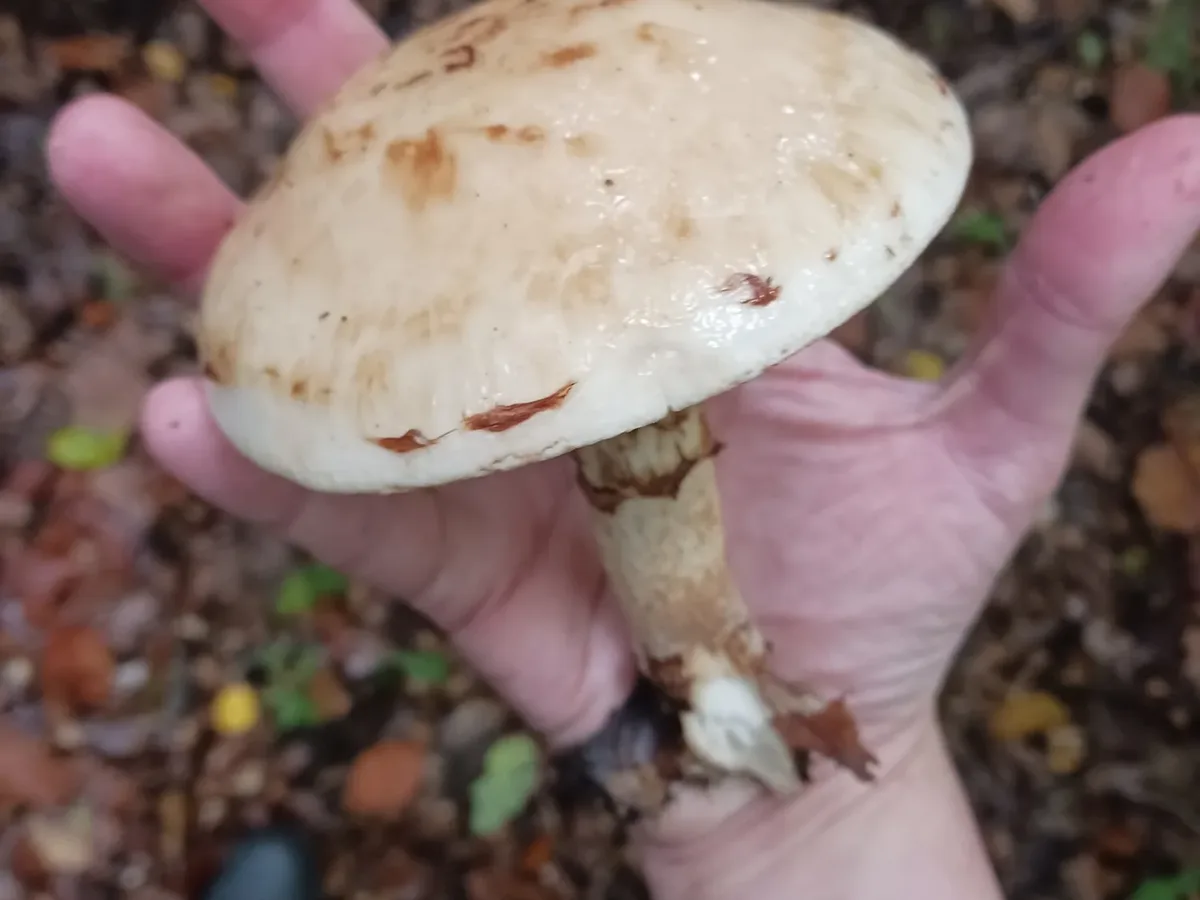 T. Pedro Hafermann (CC0)
 © victor laborde (CC BY)
 © victor laborde (CC BY)
 © victor laborde (CC BY)
 © ionafraser (CC BY)
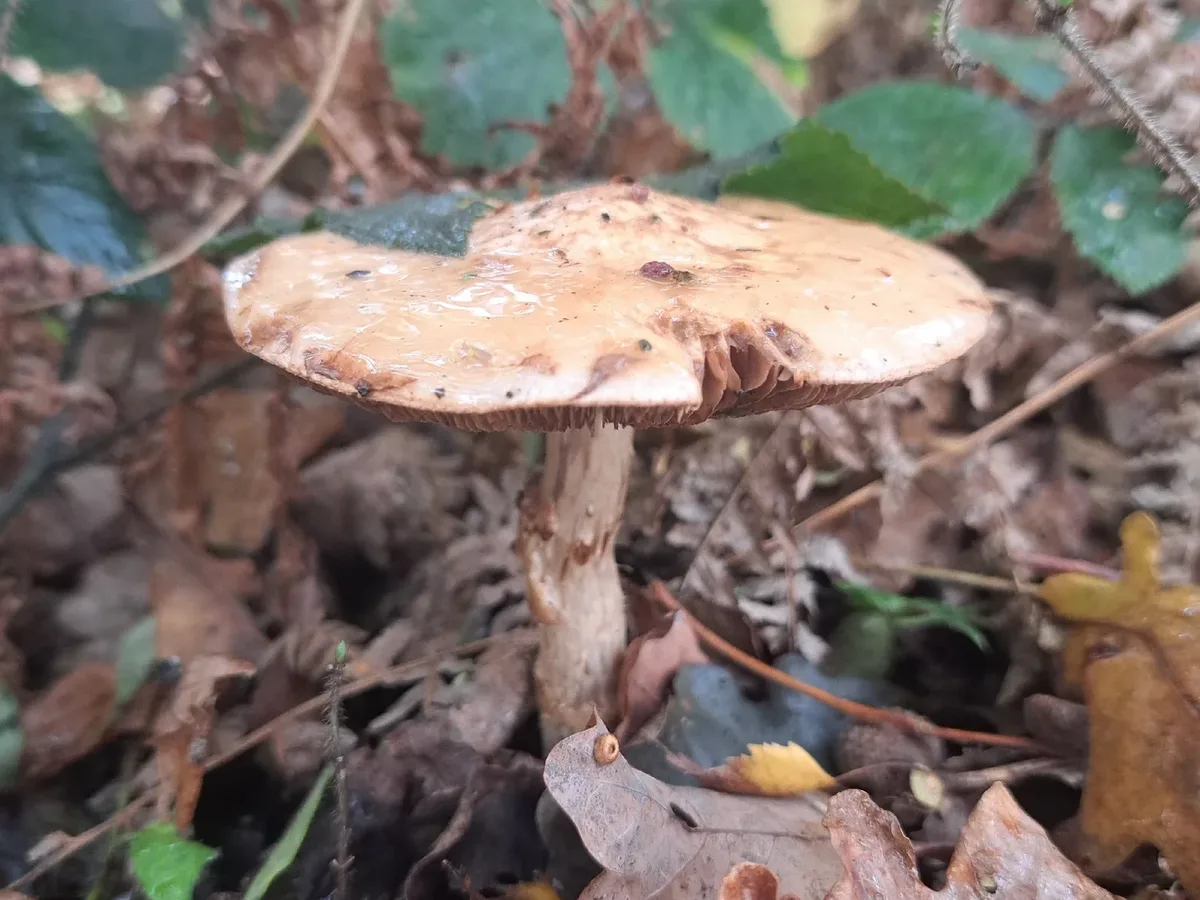 © ionafraser (CC BY)
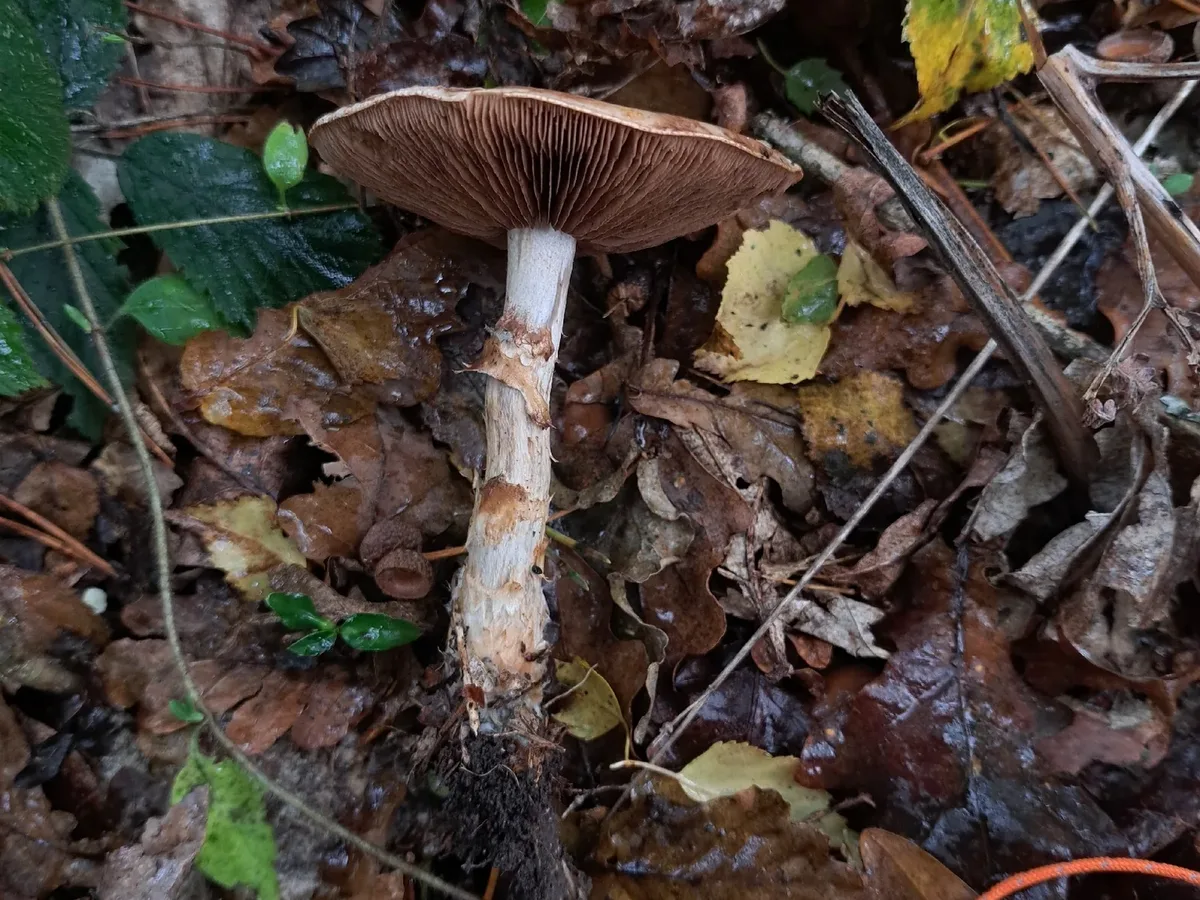 © ionafraser (CC BY)
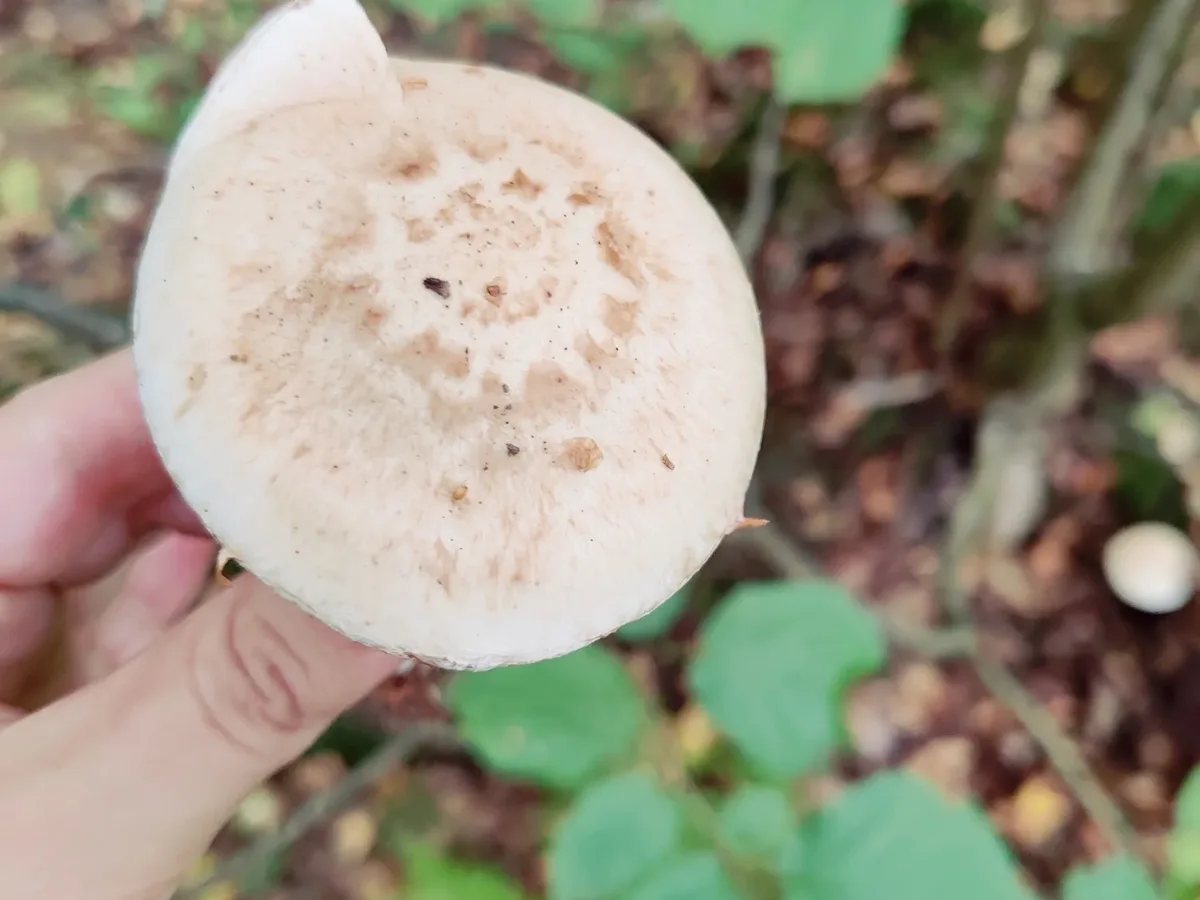 © Ульяна Лалак (CC BY 4.0)© Markus Krieger (CC BY 4.0)© Petri Roponen (CC BY-SA)
Edible only with the right preparation - or safe for some people but not others. Learn the caveats first.
Never eat a mushroom you are not 100% sure of - check the look-alikes below, and always cook wild mushrooms.
How to recognise it
Hebeloma radicosum is one of the most recognisable members of its genus once you know what to look for, because it possesses two characters that are unusual among common woodland agarics: a remarkably deep-rooting stem base and a complex dual smell.
Cap
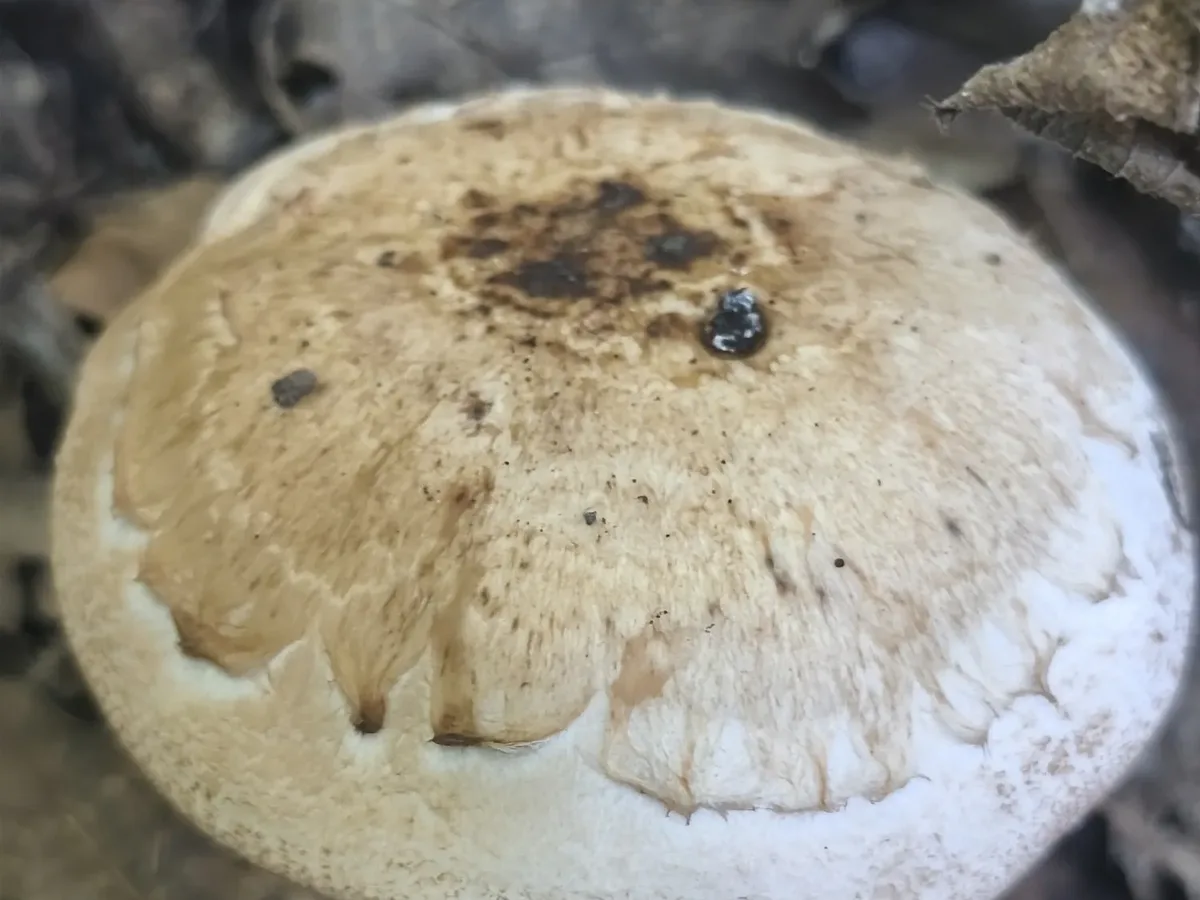
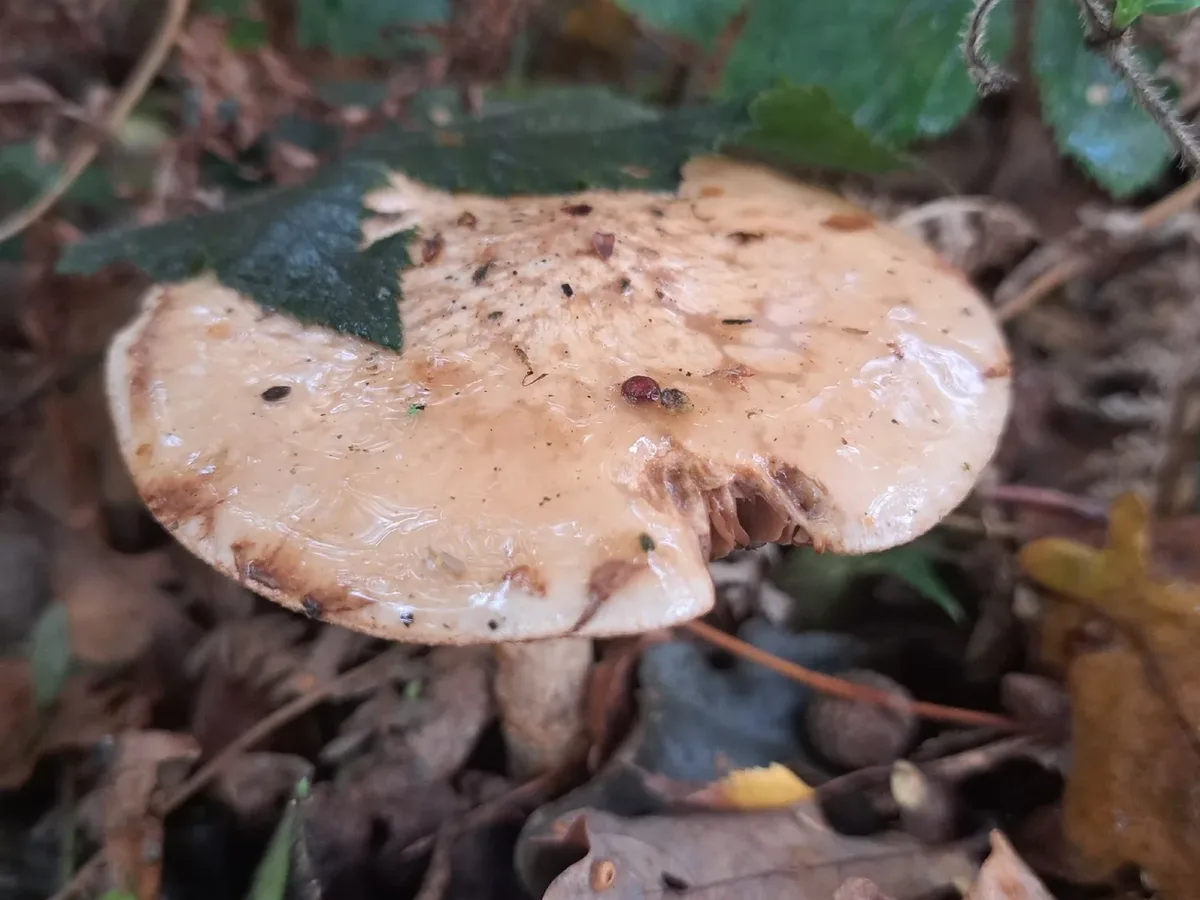
The cap is large for a Hebeloma - up to 12 cm across - broadly domed and smooth, pale ochre-buff, slightly greasy in damp weather.
Gills
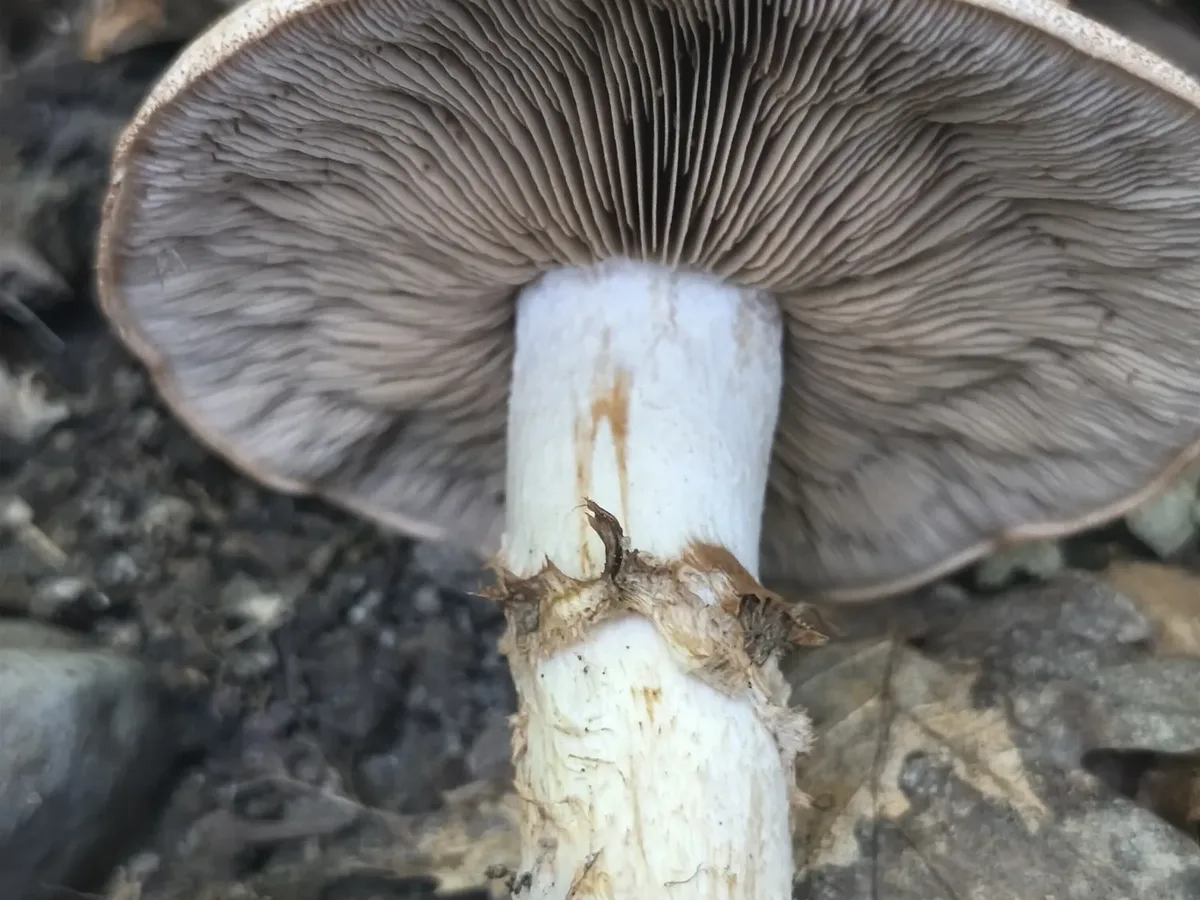
The gills are crowded, pale at first then clay-buff as the spores ripen. The characteristically 'weeping' droplets that mark so many hebelomas can be found on fresh morning specimens.
Stem
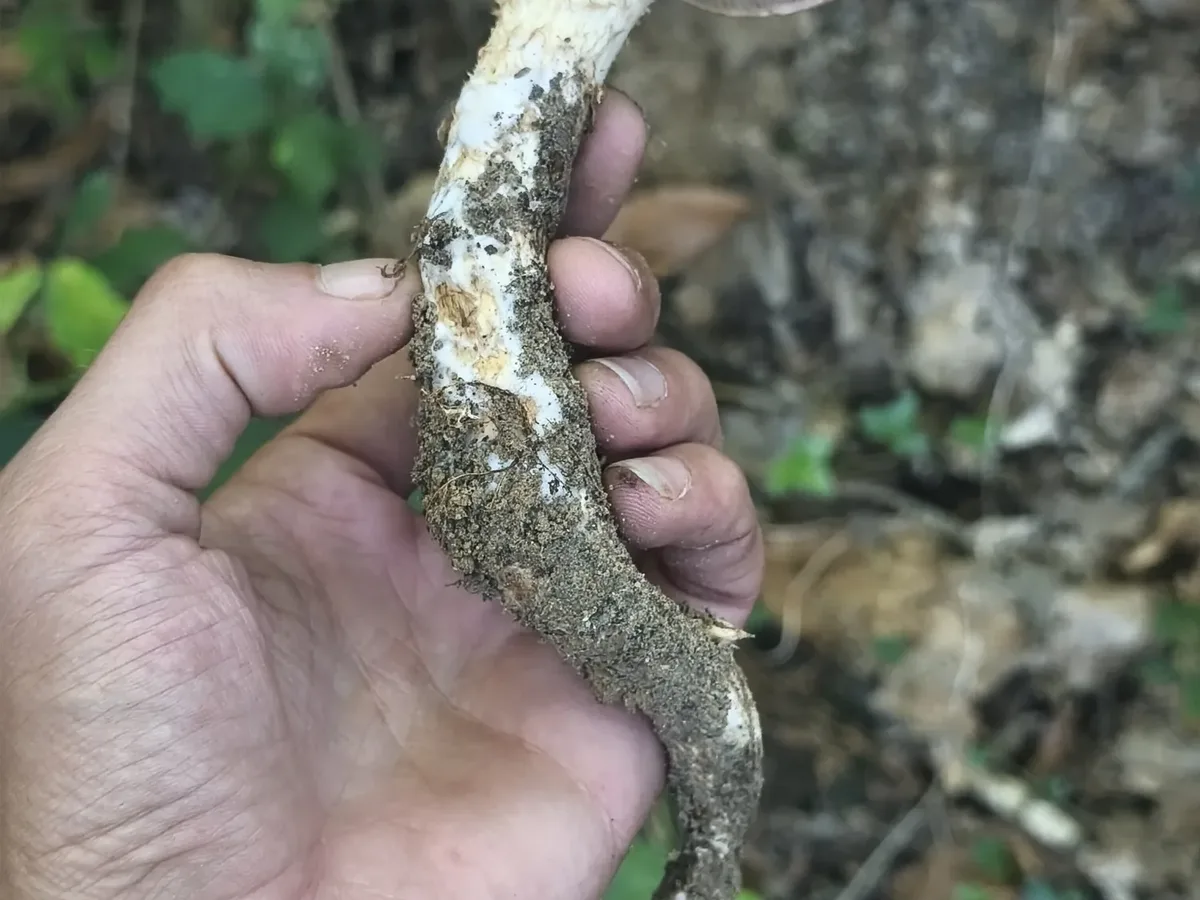
The most important feature to check is the stem base. When you grasp the fruitbody and gently excavate it, instead of the rounded or slightly tapering base of most woodland agarics, you find a hard, cord-like pseudorrhiza that dives several centimetres - sometimes 10 cm or more - down through the soil.
This rooting tail is not a fragile thread but a substantial, tough extension of the solid stem.
There is usually a faint fibrous ring-zone on the upper stem from the veil, but it does not persist as a clear, skirt-like structure.
Smell & taste
The smell is the second key: a sharp radish or horseradish hit layered with a sweetish almond or marzipan note. This combination is both distinctive and unpleasant enough to make eating the mushroom an obviously bad idea.
Why it's dangerous
The primary danger of Hebeloma radicosum is gastrointestinal illness that, while unpleasant, is not normally life-threatening in healthy adults.
The secondary and more serious danger is the existence of deadly lookalikes in the same ecological space. Galerina marginata (amatoxins, potentially fatal) grows in similar woodland settings and shares the clay-brown spore print.
Anyone collecting brown-spored woodland mushrooms without full identification confidence is at risk of a fatal error.
The rule: if you cannot positively identify a brown-spored woodland agaric to species level, it does not go in the basket.
Toxin
The toxic compounds of Hebeloma radicosum are not as well characterised as those of the most dangerous fungal poisons. The genus Hebeloma contains hebelomins - a group of sesquiterpene compounds - as well as various phenolic and volatile irritant substances.
In H. radicosum, the almond scent component suggests benzaldehyde-type or mandelonitrile-related volatile compounds. At low concentrations these are harmless flavour compounds, but they contribute to the overall irritant profile.
The primary toxic action is irritation of the gastrointestinal mucosa, causing relatively rapid-onset nausea, vomiting and diarrhoea.
The syndrome does not involve the delayed-onset hepatotoxicity (amatoxins) or nephrotoxicity (orellanin) of the most dangerous fungal toxins.
Symptoms
Symptoms following ingestion are gastrointestinal and typically begin within 30 minutes to 3 hours:
- Nausea
- Vomiting
- Abdominal cramps
- Diarrhoea
Excessive salivation may occur.
In most otherwise-healthy adults, the syndrome resolves within 24 hours, though significant dehydration can occur. Children, the elderly and individuals with existing gastrointestinal conditions may experience more severe or prolonged symptoms.
If there is any doubt about which species was eaten, seek medical attention immediately - the most important differential to exclude is Amanita phalloides (death cap) or Galerina marginata poisoning, which presents similarly at first but causes devastating liver and kidney failure 24-72 hours later.
Staying safe
Hebeloma radicosum is toxic and must not be eaten. Its large size, relatively pale colour and woodland habitat could lead an inexperienced forager to consider it edible, but the pungent smell should be an immediate deterrent.
The danger of deadly confusion exists within the broader category of brown-spored woodland agarics, which includes the lethal Galerina marginata. Always verify that a brown-spored woodland agaric does not have a persistent ring and does not grow on wood before approaching it as a food candidate.
No amount of cooking neutralises the toxic compounds in H. radicosum. Children and dogs in woodland areas should not be allowed to handle fruitbodies.
Where & when it grows
Habitat
The ecological story of Hebeloma radicosum is one of the more fascinating in European mycology. Unlike most ectomycorrhizal fungi that simply partner with tree roots, H. radicosum has evolved to exploit the nitrogen-rich zones created by moles.
A mole's underground latrine accumulates faecal matter and decomposes organic material, which releases ammonia and generates a hot-spot of bioavailable nitrogen in otherwise nutrient-poor woodland soil. H. radicosum's pseudorrhiza reaches these zones, and the fungus appears to use this additional nitrogen source to support fruitbody production.
As a result, finding a fruitbody of H. radicosum is often a sign that there is an active mole system directly below. This also means the species has a very patchy and unpredictable distribution: it is uncommon at the landscape scale, but locally frequent in woodland with good mole populations.
Look for it in deciduous woodland with loose, deep soil - particularly under oak, beech, hazel and hornbeam - and pay attention to any raised soil ridges or mole hills nearby.
When
Look for Hebeloma radicosum from late summer through mid-autumn. The first fruitbodies can appear as early as August after warm-season rains, and the main flush runs through September and October as soil temperatures cool into the 8-15 °C range.
Like most hebelomas it needs two things to fruit:
- 1Adequate autumn rainfall to recharge soil moisture after the summer.
- 2Falling temperatures to wake the mycelium from summer dormancy.
Fruiting winds down through November. Among its relatives, H. radicosum tends to be slightly earlier and a little shorter-seasoned on average.
How it grows
The pseudorrhiza is a structural adaptation that physically connects the fruitbody to the nutrient source in the mole latrine or decomposing nest material below.
The mycelium grows outward from this substrate and also forms ectomycorrhizal associations with fine roots of nearby trees. The energy for fruitbody production appears to come from both the tree partner and the decomposed organic matter below - a dual nutritional strategy that is unusual and accounts for the large fruitbody size for the genus.
The weeping droplets on the gills are an active secretion from gill cells, not merely condensation - they represent an overflow of cytoplasm through pores in the gill surface. Their ecological function is unclear but may deter insect grazers or assist spore dispersal by creating a wet spore-release surface.
Fruiting conditions
Flushes follow late-summer and early-autumn rainfall as soil temperatures begin to fall below 16 °C. The mole-associated substrate provides additional moisture retention, slightly extending the window. Peak in late September to mid-October across central-western Europe.
Look-alikes
The rooting pseudorrhiza is distinctive enough that an experienced forager who checks the stem base will not confuse H. radicosum with most other species. However, there are realistic confusion risks, particularly for beginners who do not excavate the stem base.
The most dangerous confusion risk is with species of Galerina, particularly Galerina marginata, which is deadly (containing amatoxins) and has a similar brown cap, brown-clay spore print and woodland habitat. Galerina marginata is usually much smaller, grows on wood (not soil), has a true persistent ring, and smells mild - not of radish.
The pale buff cap of H. radicosum could also be confused with:
- Hebeloma crustuliniforme - lacks the rooting base and smells purely of radish with no almond note.
- Hebeloma sinapizans - another large Hebeloma, also rooting or at least tapering at the base, with a stronger horseradish smell and a tendency to produce larger fruitbodies with a more prominent veil.
Beginners in open woodland sometimes confuse large pale Hebelomas with:
- Clitopilus prunulus (edible) - white decurrent gills and a mealy flour-like smell.
- Species of Lepista or Agrocybe.
Always smell the cap, take a spore print, and check the stem base before any collection.
Deadly - contains amatoxins. White overall (cap and gills), with a skirt-like ring, a sack-like volva at the base, and a white spore print. Very different from H. radicosum except perhaps in button stage when the white colouring and pale buff appearance might confuse an extreme beginner. Any all-white or very pale woodland mushroom with a persistent ring and cup-like volva at the base must be immediately treated as potentially deadly.
Deadly - contains amatoxins (alpha-amanitin) that destroy the liver and kidneys and have killed people. Galerina marginata is typically much smaller (cap 2-5 cm), grows on dead wood or woody debris rather than soil, has a clearly persistent, membranous ring on the stem, and smells mild or faintly earthy - never of radish or almond. The spore print is similar (rusty-clay-brown) but the substrate and ring are definitive. Never collect a brown-spored woodland agaric without confirming it grows on soil (not wood) and lacks a persistent membranous ring.
Edible but requires care because it is confused with toxic white-gilled species. The mention here is in the reverse direction: a beginner might pick H. radicosum hoping it is C. prunulus. C. prunulus has white to pinkish, deeply decurrent gills, a pinkish spore print, and smells of fresh flour or cucumber - completely different from the clay-brown spore print and radish-almond smell of H. radicosum.
Also toxic (gastrointestinal irritant). Very similar general appearance but lacks the deep-rooting pseudorrhiza and smells of pure radish or horseradish without the almond note. Usually somewhat smaller fruitbodies. The two species are both poisonous, so confusion between them carries no additional safety risk, but correctly identifying H. radicosum requires checking the stem base and smelling carefully.
Also toxic. Another large Hebeloma with a tapered or slightly rooting stem base and a strong radish-horseradish smell. Typically has a more prominent veil, often leaving scale-like remnants on the stem. The two are closely related and both are poisonous; the distinction matters for scientific records but not for safety - neither should be eaten.
Also toxic. Has a sweetish or soapy smell that can be reminiscent of the almond note in H. radicosum, but lacks the rooting base and is smaller. Take a spore print and check the stem base.
A reference guide - never an edibility guarantee. When in doubt, leave it out.