Small poison pie
Hebeloma pusillumsyn. Agaricus pusillus J.E. Lange, Hebeloma pusillum var. pusillum
 © Michel Langeveld (CC BY 4.0)
 © Lillian Iversen (CC BY)
 © Hans Petter Schwencke (CC BY)
 © Perry Gunnar Larsen (CC BY)
 © Tove Jacobsen (CC BY)
 © Lillian Iversen (CC BY)
 © Tove Jacobsen (CC BY)
 © Morten Pettersen (CC BY)
 © Michel Langeveld (CC BY 4.0)© Michel Langeveld (CC BY 4.0)© Lillian Iversen (CC BY)
Edible only with the right preparation - or safe for some people but not others. Learn the caveats first.
Never eat a mushroom you are not 100% sure of - check the look-alikes below, and always cook wild mushrooms.
How to recognise it
Hebeloma pusillum is the small sibling of the 'poison pie' group - easy to overlook precisely because of its modest size.
Cap
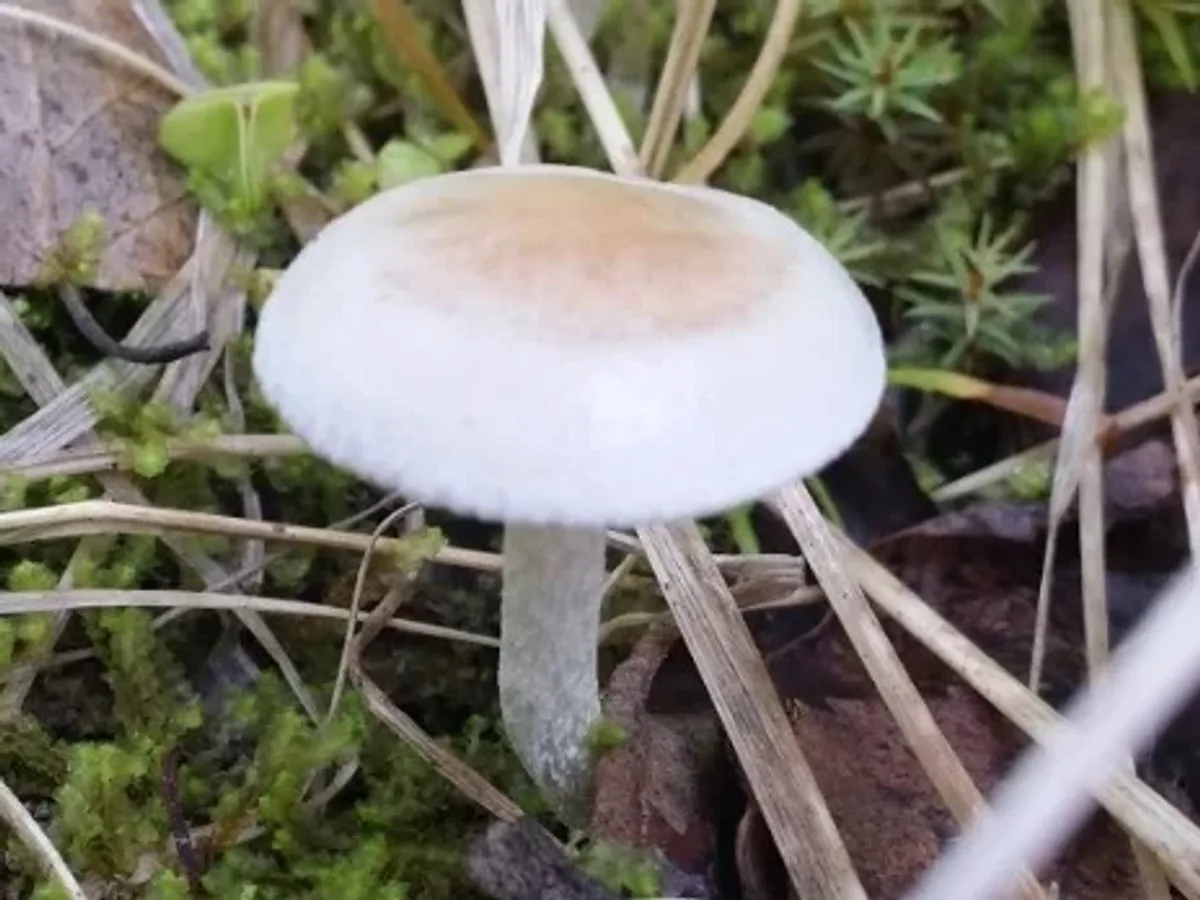
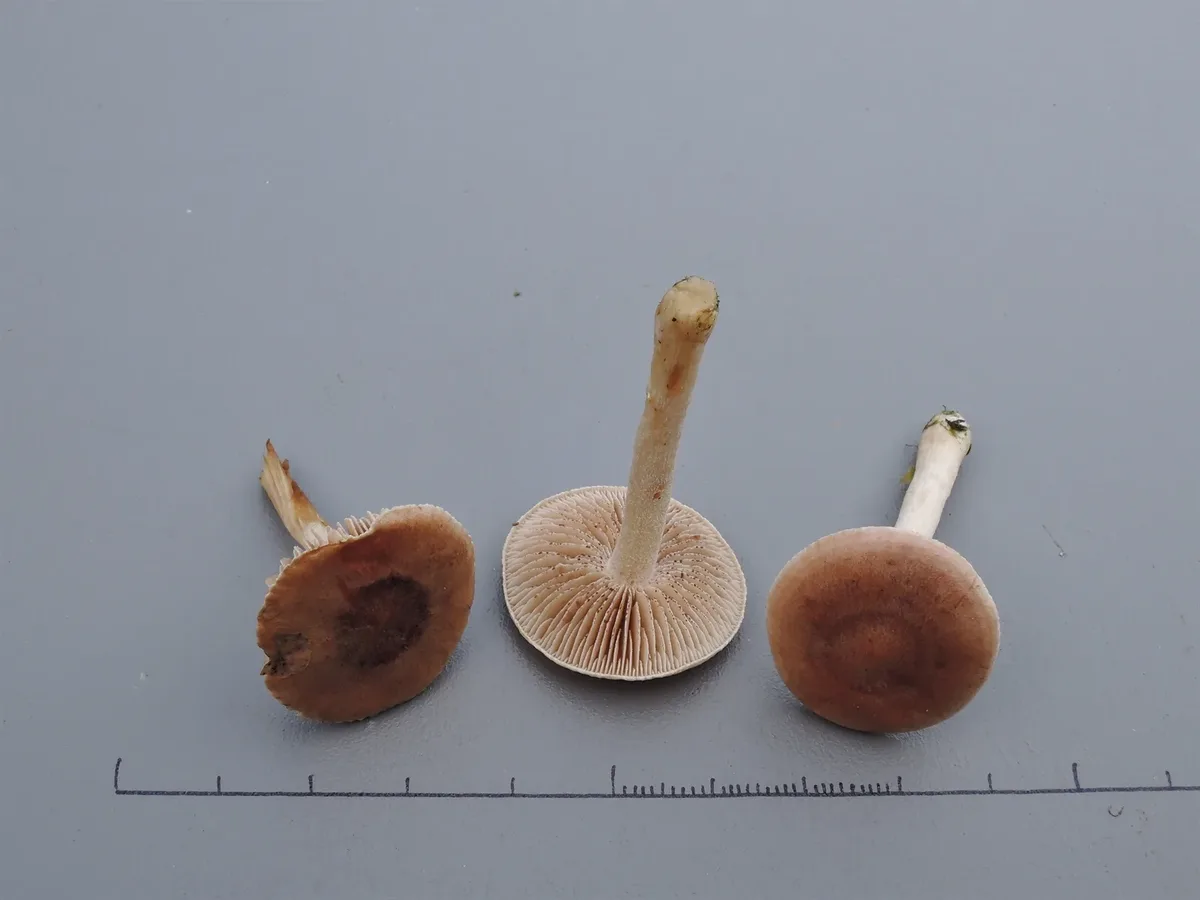
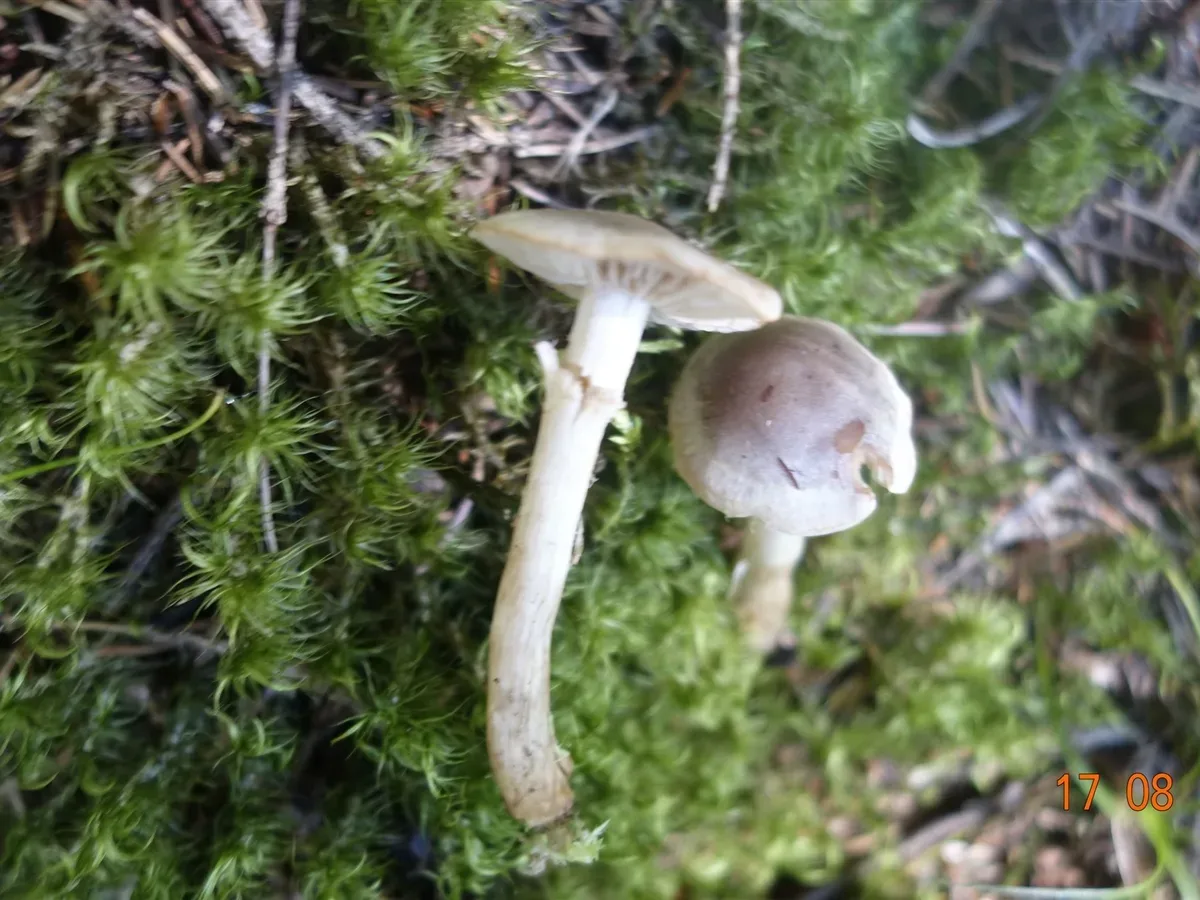
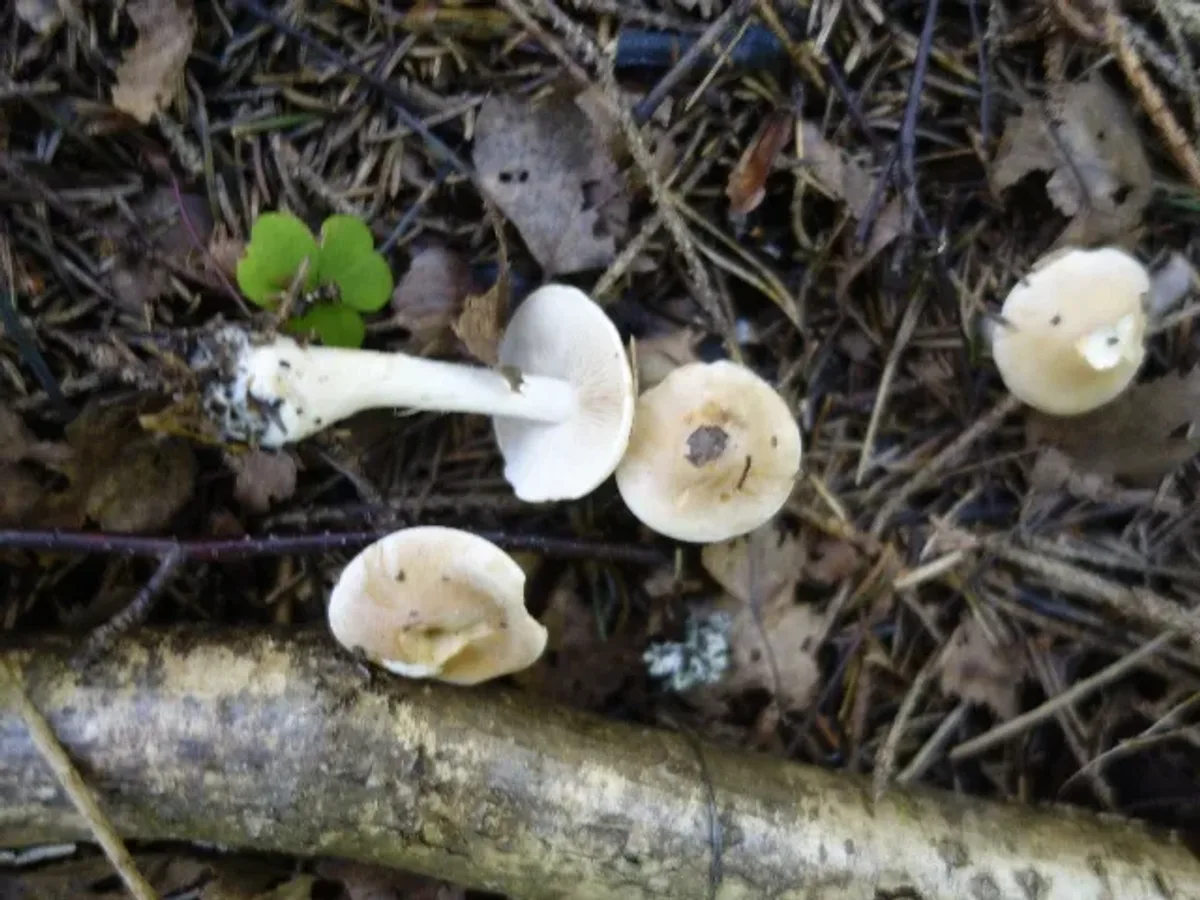
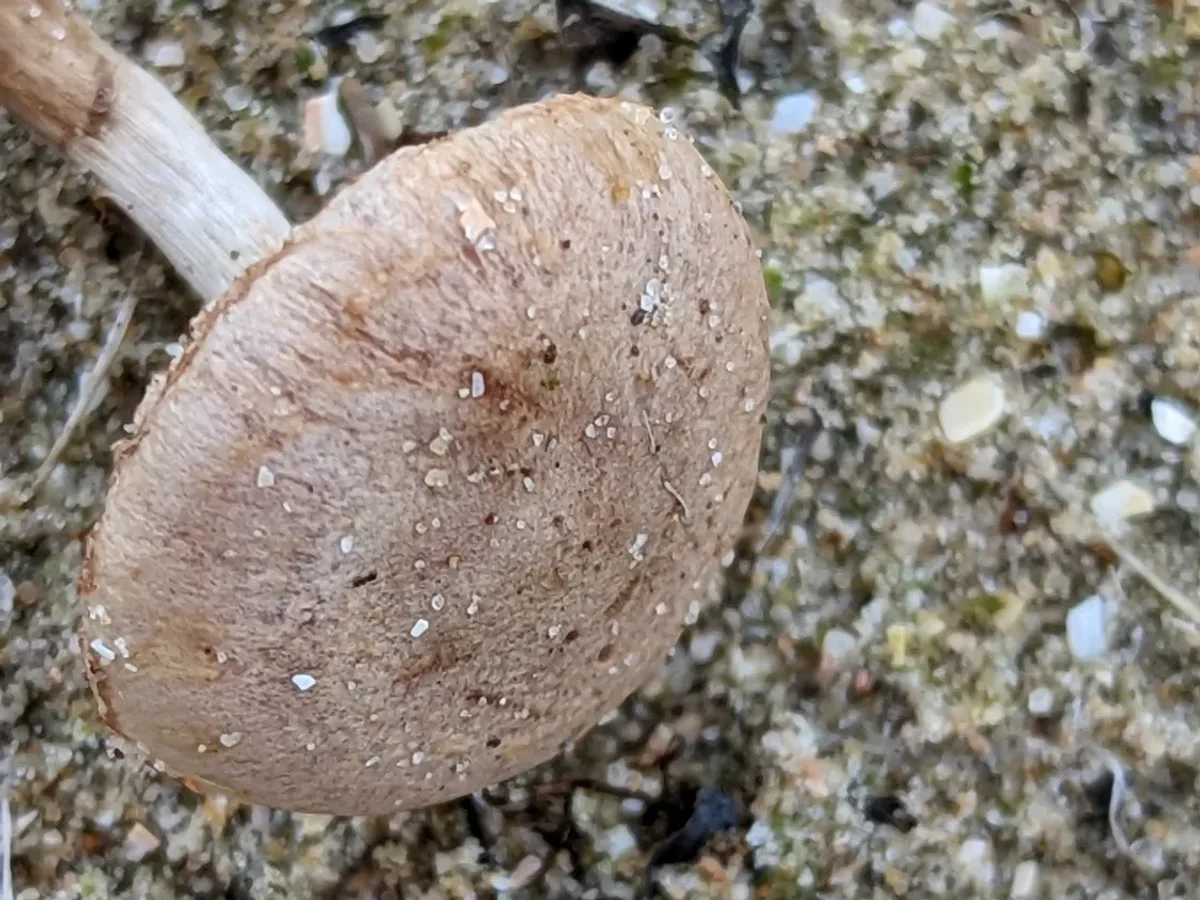
The cap spans only 1-3.5 cm, beginning as a neat dome, pale clay-buff or creamy-ochre, and expanding to broadly convex or almost flat, sometimes with a faint central umbo.
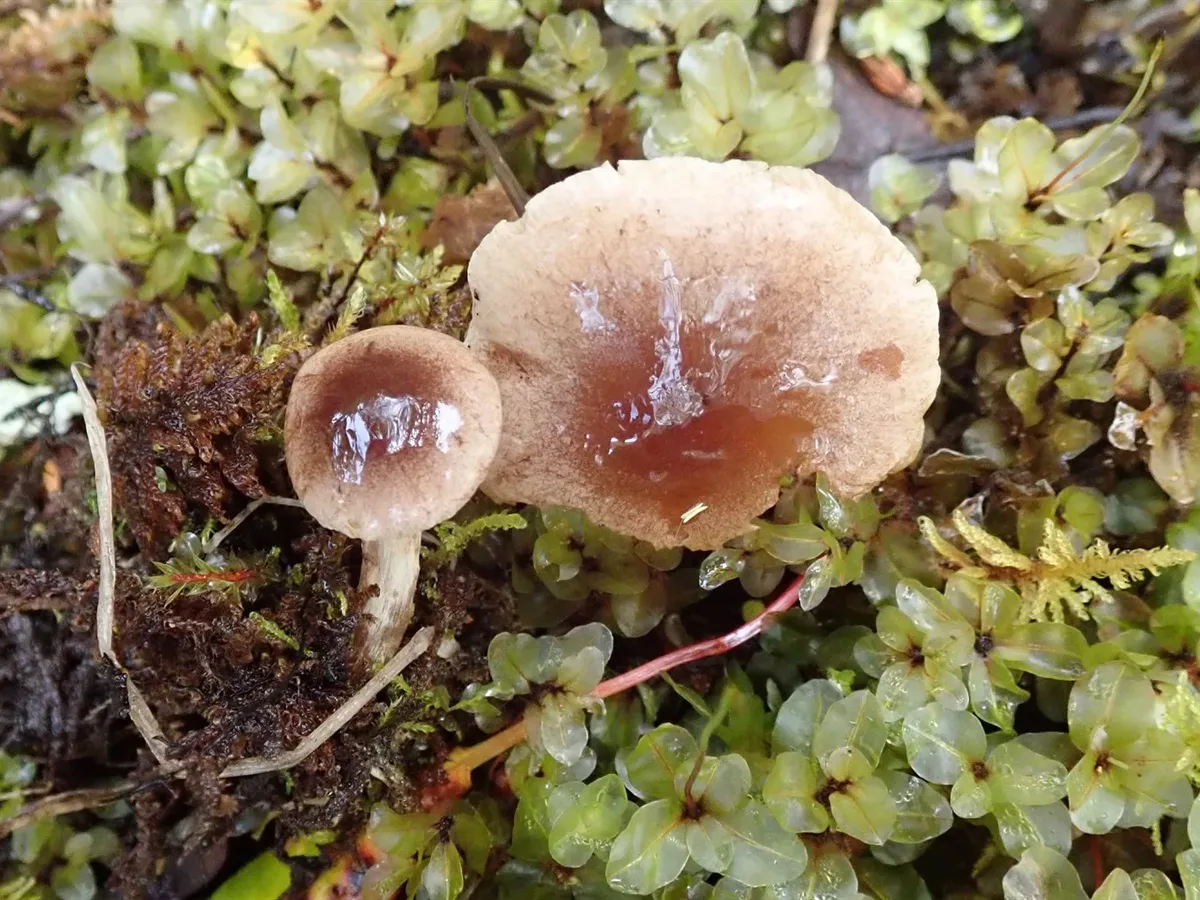
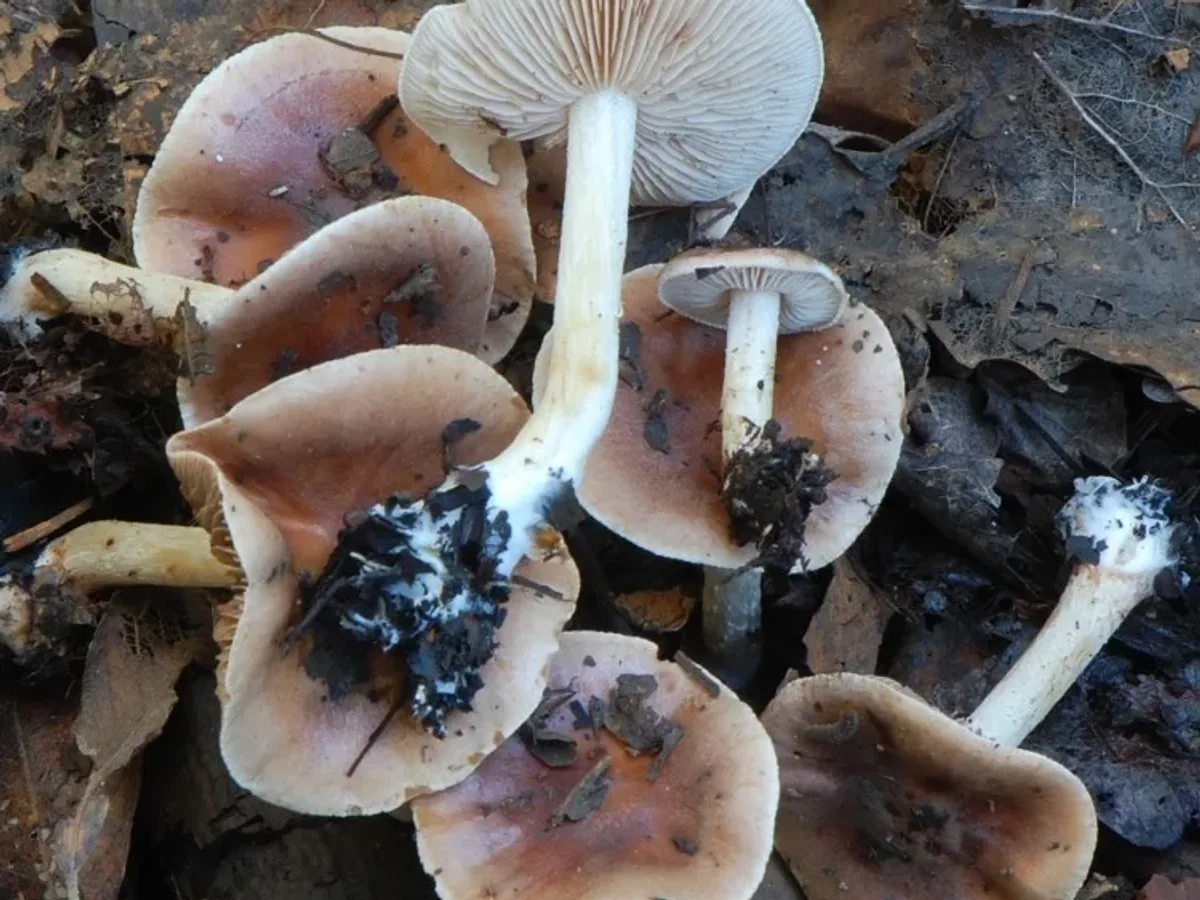
The key textural clue is the hygrophanous cap surface: dry specimens are pale buff and rather innocuous-looking; wet or freshly emerged caps turn distinctly darker honey-brown or greyish-brown, with a slightly translucent, striate margin. This colour-shift with moisture is an important field character.
Gills / Pores
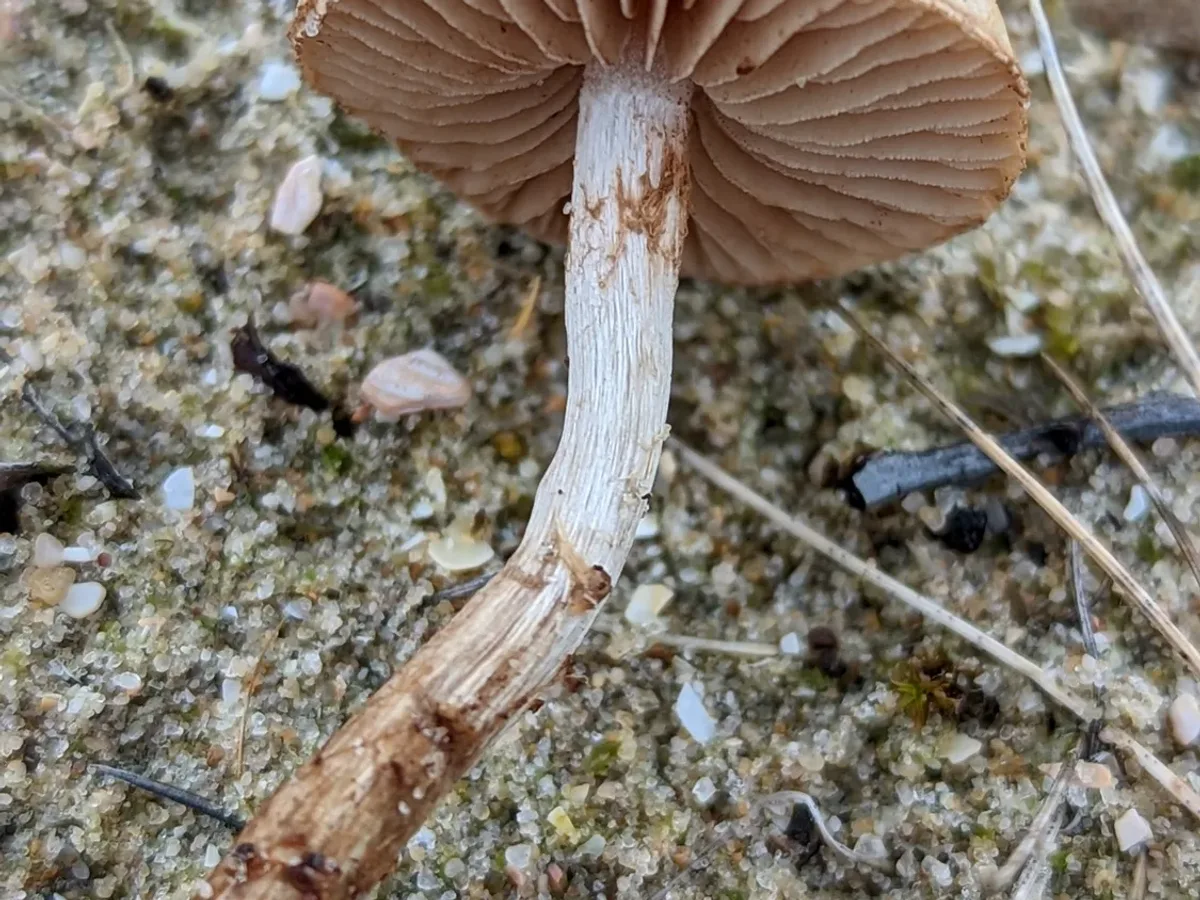
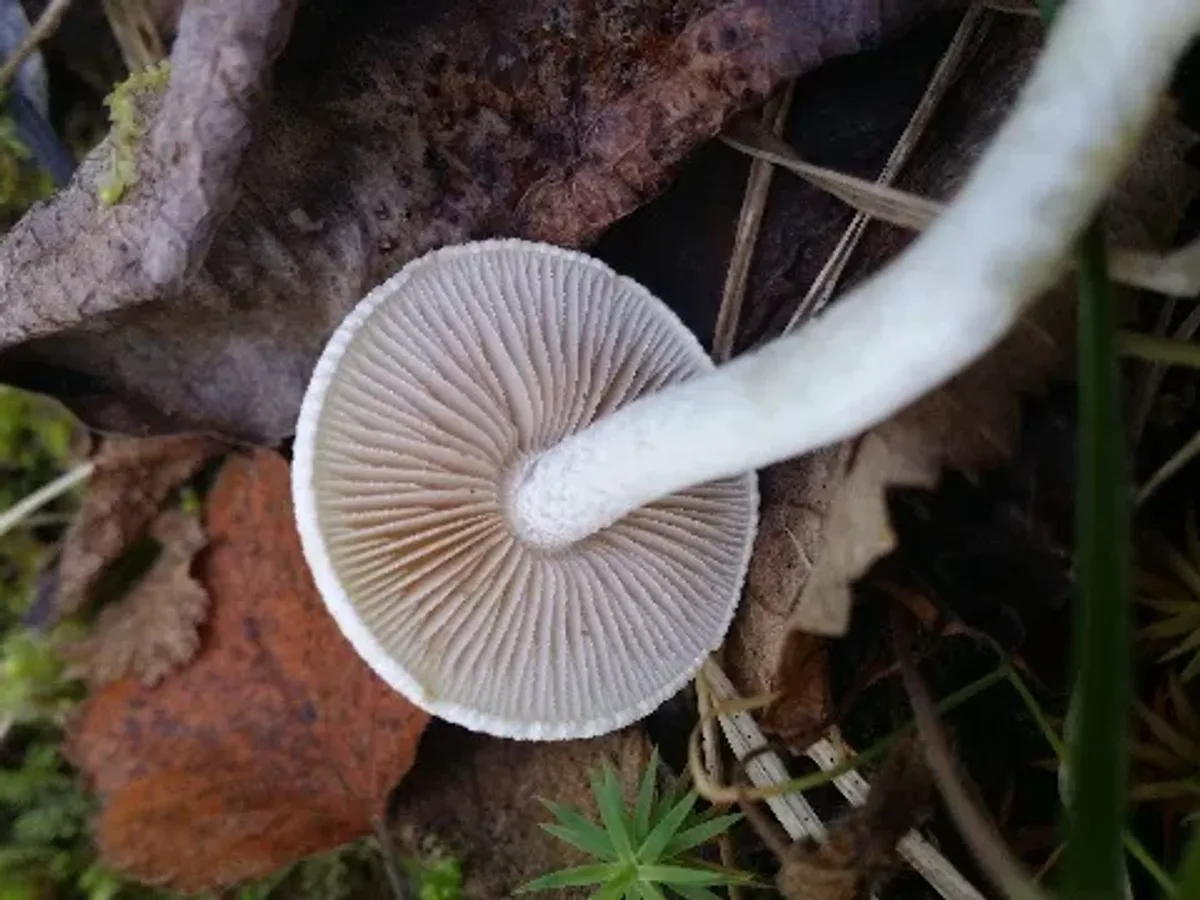
The gills are initially pale clay-buff and become tobacco-brown as the spores mature; they are moderately crowded and attach to the stem with a slight notch.
In fresh, humid specimens, watch for tiny water droplets or 'tears' along the gill edges - a diagnostic feature of the Hebeloma genus that is shared here, though it can be subtle in small caps.
Stem
The stem is slender (3-7 mm wide), white to pale cream, fibrillose-silky, with a mealy or scurfy surface toward the apex; there is no persistent ring.
Flesh
The flesh is thin and white throughout.
Smell & taste
The smell is the most important field character after size and habitat: radish-like or faintly bitter-radish - often less intense than in Hebeloma crustuliniforme, but perceptible on fresh material.
The spore print is clay-brown to tobacco-brown.
Why it's dangerous
The intrinsic toxicity of Hebeloma pusillum causes an unpleasant but usually self-limiting gastrointestinal illness.
The greater danger is ecological: this small Hebeloma occupies wet willow and dune habitats where the deadly Galerina marginata (which contains amatoxins causing fatal liver failure) is also present. A forager who cannot distinguish the two with certainty must assume the worst.
The delay between amatoxin ingestion and symptom onset (6-24 hours, and initial symptoms may temporarily improve before organ failure sets in) means that 'I feel fine' is not a reliable reassurance after eating unidentified small brown mushrooms from a wet woodland habitat.
If there is any possibility that Galerina was eaten alongside or instead of a Hebeloma, seek emergency medical attention immediately - do not wait for symptoms.
Toxin
The specific toxins of Hebeloma pusillum have not been individually characterised. The species shares the hebelomin sesquiterpene chemistry documented across the genus, as well as irritant phenolic and glycoprotein compounds that act on the gastrointestinal mucosa.
These compounds cause rapid-onset (30 minutes to a few hours) gastrointestinal illness. Unlike amatoxins or orellanin, they do not cause delayed hepatorenal failure in the majority of cases.
Symptoms
Symptoms are gastrointestinal in nature and begin within 30 minutes to 3 hours of ingestion:
- nausea
- vomiting
- abdominal cramping
- diarrhoea
Excessive salivation may occur.
Symptoms usually resolve within 12-24 hours in healthy adults, but can be more severe in children, the elderly or immunocompromised individuals, and significant dehydration may develop.
Seek medical attention if symptoms are severe, prolonged or if there is any uncertainty about what was eaten - in wet habitat settings the possibility of Galerina co-ingestion cannot be excluded without a sample.
Staying safe
Hebeloma pusillum, in common with all edible-looking members of Hebeloma, is poisonous. The gastrointestinal irritant syndrome it causes is uncomfortable but not typically life-threatening in healthy adults.
However, the most important safety consideration is not the species itself but the risk of mistaking it for Galerina marginata, which grows in similar wet habitats and is lethally toxic.
Any small, brown-capped, brown-spored mushroom from a damp woodland or dune-slack habitat should be identified to absolute certainty before even considering collection. If in doubt, leave it out.
The clay-brown (not rusty) spore print combined with a radish-like odour and absence of a persistent membranous ring collectively indicate a Hebeloma, but even confirmed hebelomas are not food.
Where & when it grows
Habitat
This species is a wetland specialist among the hebelomas, closely tied to willows and the damp, often sandy or peaty substrates those trees colonise.
Its most characteristic habitat in western Europe is the dune slack - the damp, inter-dune hollow behind a foredune ridge, where willows take hold and water sits close to the surface.
It is also found in:
- willow carr along riverbanks and lake margins
- wet heathland depressions
- boggy clearing edges in mixed woodland where willows fringe the wetter ground
The combination of willow as host and moist open habitat is the clearest ecological indicator.
It is far less common in dry broadleaf woodland or mature conifer plantations, where Hebeloma crustuliniforme and Hebeloma sinapizans are more typical. In dune systems Hebeloma pusillum can appear alongside several other mycorrhizal species associated with dune willow (Salix repens), making careful identification necessary.
When
Hebeloma pusillum is an autumn species, its fruitbodies triggered by the combination of cooling soil and sustained rainfall that sets in from late summer onward.
Early flushes can appear in dune slacks and wet heath as soon as late August or September if rain arrives in time. The main flush runs through September and October, with peak abundance typically falling in the last week of September through mid-October across central and western Europe.
November can still produce fruitbodies in mild years, though numbers drop as temperatures fall further.
Because the sandy and peaty substrates it favours drain relatively quickly, a brief shower is not enough: several days of steady rain are usually needed to raise soil moisture sufficiently to push new fruitbodies through.
How it grows
Hebeloma pusillum is ectomycorrhizal - it lives bound to its host tree in a mutual exchange that has no above-ground sign until autumn brings the fruitbodies up.
The fungus threads its mycelium through the damp soil around willow roots, trading mineral nutrients for the tree's sugars in a partnership that can persist for many years before a single cap appears.
Because of this tight dependency, the mushroom is found only where suitable Salix hosts are established; its distribution mirrors the patchy, linear wetland habitats those willows colonise.
Fruitbodies emerge singly or in small scattered groups pushed up through damp sand, thin peaty soil, or grass tufts - modest in number and easy to miss, but reliably present in the same corners of a dune slack or willow carr year after year once the mycelium is settled.
Fruiting conditions
Flushes in damp sandy or peaty substrates after sustained autumn rainfall as soil temperatures fall below 15 °C. The sandy dune-slack substrates drain quickly, so sustained rather than brief rainfall is needed to trigger fruiting. Standard mycology estimate for a temperate small hebeloma.
Look-alikes
The most serious lookalike risk involves small, brown-capped, clay-to-rust-spored agarics that share the same wet, willow-associated habitat.
Galerina marginata - the deadly funeral bell - is the paramount concern: it contains amatoxins (the same liver-destroying compounds as the death cap) and can appear in comparable damp woodland and scrub habitats, often on mossy or woody substrates. It is slightly smaller on average, but the size overlap is real.
Key separators for Galerina marginata:
- a distinct, persistent membranous ring on the stem
- a milder, less radish-like smell
- it grows preferentially on dead wood or buried wood, not on open soil
Other Hebeloma species - particularly Hebeloma mesophaeum (smaller, with a darker disc and distinct ring-zone) and Hebeloma birrus (pale, mealy smell) - are non-toxic but are poisonous congeners requiring no separation for safety purposes.
Cortinarius species in damp habitats can cause confusion at a glance, but the cobweb-like cortina (when present) and rusty-orange spore print separate them from the clay-brown-spored hebelomas.
Poisonous (causes immune-mediated haemolytic anaemia with repeated ingestion, sometimes fatal). Much larger than Hebeloma pusillum, with a markedly inrolled cap margin that is characteristic even in expanded specimens, buff to ochre-brown gills that bruise brown when touched, and a decurrent gill attachment. Grows in very similar wet willow and birch habitats but the inrolled margin and bruising gills immediately separate it from any Hebeloma.
Several Cortinarius species occupy damp willow and alder habitats; some (including the deadly orellanin-containing species) are rust-brown. Cortinarius is separated from Hebeloma by its rusty-orange to rust-brown spore print (not clay-brown), the presence of a cobweb-like cortina (silky fibres between cap margin and stem, best seen in young specimens) rather than a simple veil, and the lack of a strong radish smell. Never assume a small brown agaric in wet willow habitat is safe without checking spore print colour and cortina.
DEADLY - contains amatoxins (alpha-amanitin) that destroy the liver and kidneys and have killed people. Can occur in the same wet, scrubby habitats as Hebeloma pusillum. Key separators: Galerina marginata usually has a clearly persistent, membranous ring on the stem (sometimes partially collapsed but visible); it grows on dead wood, buried wood fibres or woody debris rather than bare soil or sand; its smell is mild or faintly mealy, not distinctly of radish; and it typically has a slightly more rusty-ochre (less pure clay) spore print. In any situation where a small brown-capped agaric from a damp habitat cannot be definitively confirmed as a Hebeloma - leave it and do not eat it. If Galerina co-ingestion is possible after eating unidentified mushrooms, seek emergency medical attention without waiting for symptoms.
Also poisonous (gastrointestinal irritant). A small, pale Hebeloma with a very white or off-white cap when dry; smells mealy-earthy with less pronounced radish character. Associated with dunes and dry-ish coastal habitats. The paler, more whitish cap is the primary field difference, but both share the clay-brown spore print and absence of a persistent ring.
Also poisonous (gastrointestinal irritant). Very similar in size and shape, but typically shows a distinctly darker brown disc contrasting with a paler cap margin, often has faint darker fibrils or a slight ring-zone on the stem from a more persistent veil, and tends to grow in drier woodland and heath habitats. Both species have clay-brown spore prints and radish-like odour. No separation needed for safety - both are to be avoided - but the contrast between the dark disc and pale margin is the best field pointer.
A reference guide - never an edibility guarantee. When in doubt, leave it out.