Veiled poisonpie
Hebeloma mesophaeumsyn. Agaricus mesophaeum Pers., Hebeloma mesophaeum var. mesophaeum, Hylophila mesophaeum (Pers.) Quél.
 Lutra lutra (CC0)
 © Manuela Fiorini (CC BY)
 © Morten Pettersen (CC BY)
 © Morten Pettersen (CC BY)
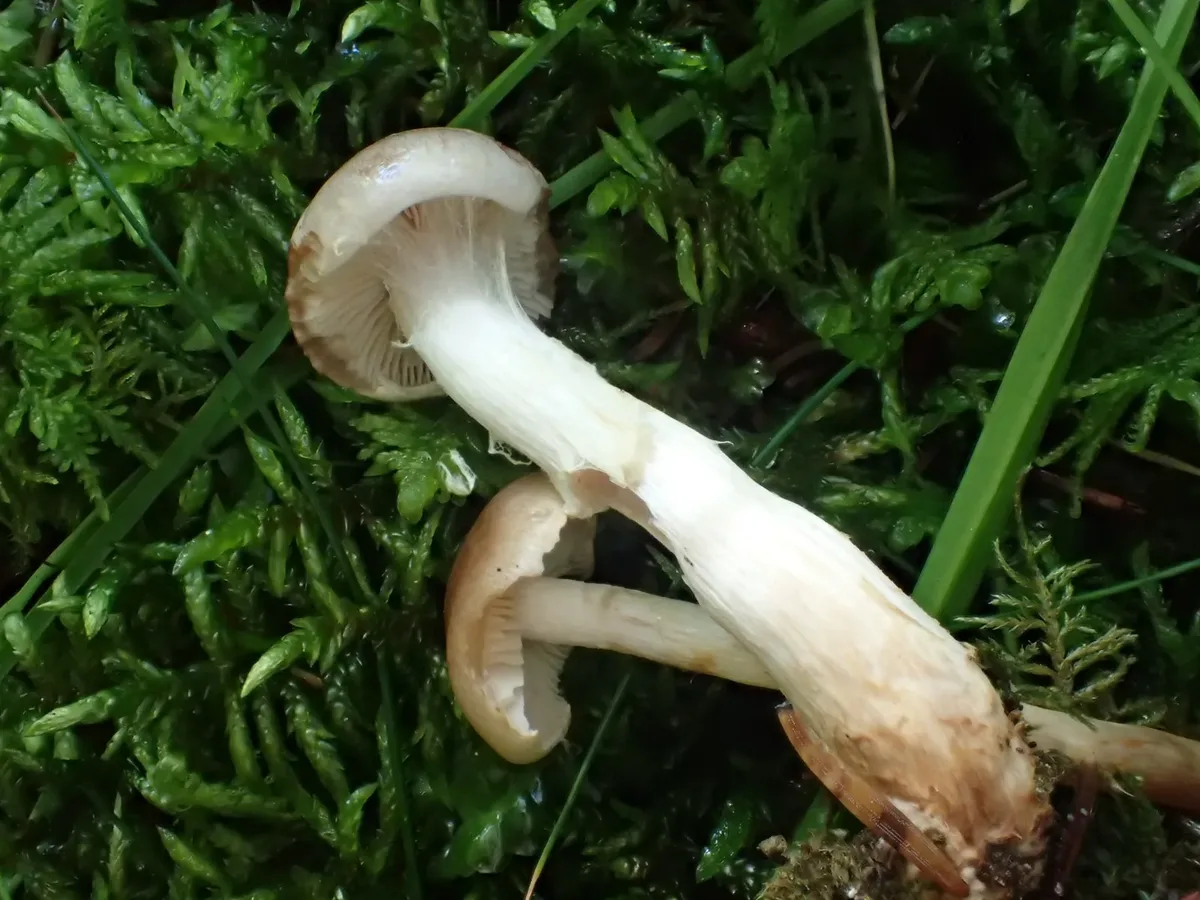 © Kirsti Anne Mandal (CC BY)
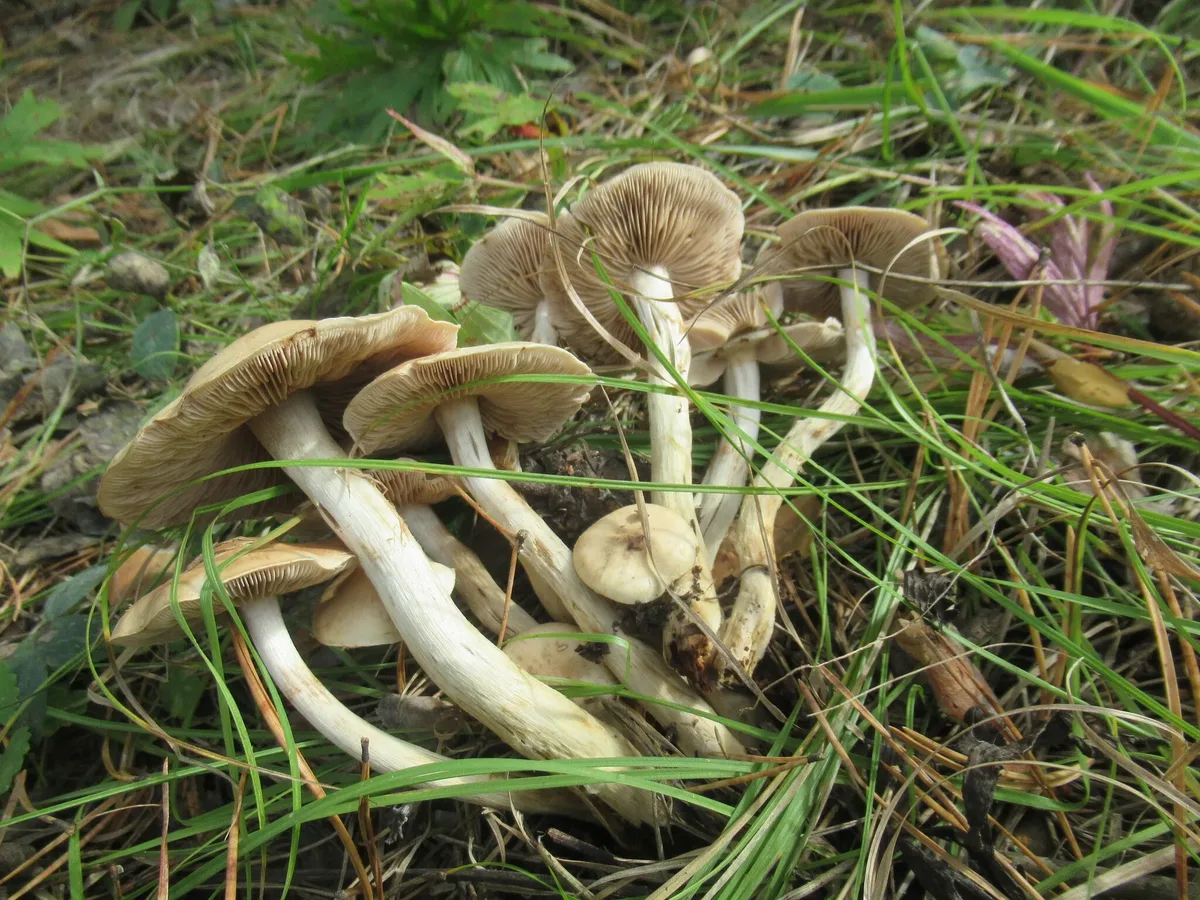 Сергей (CC0)
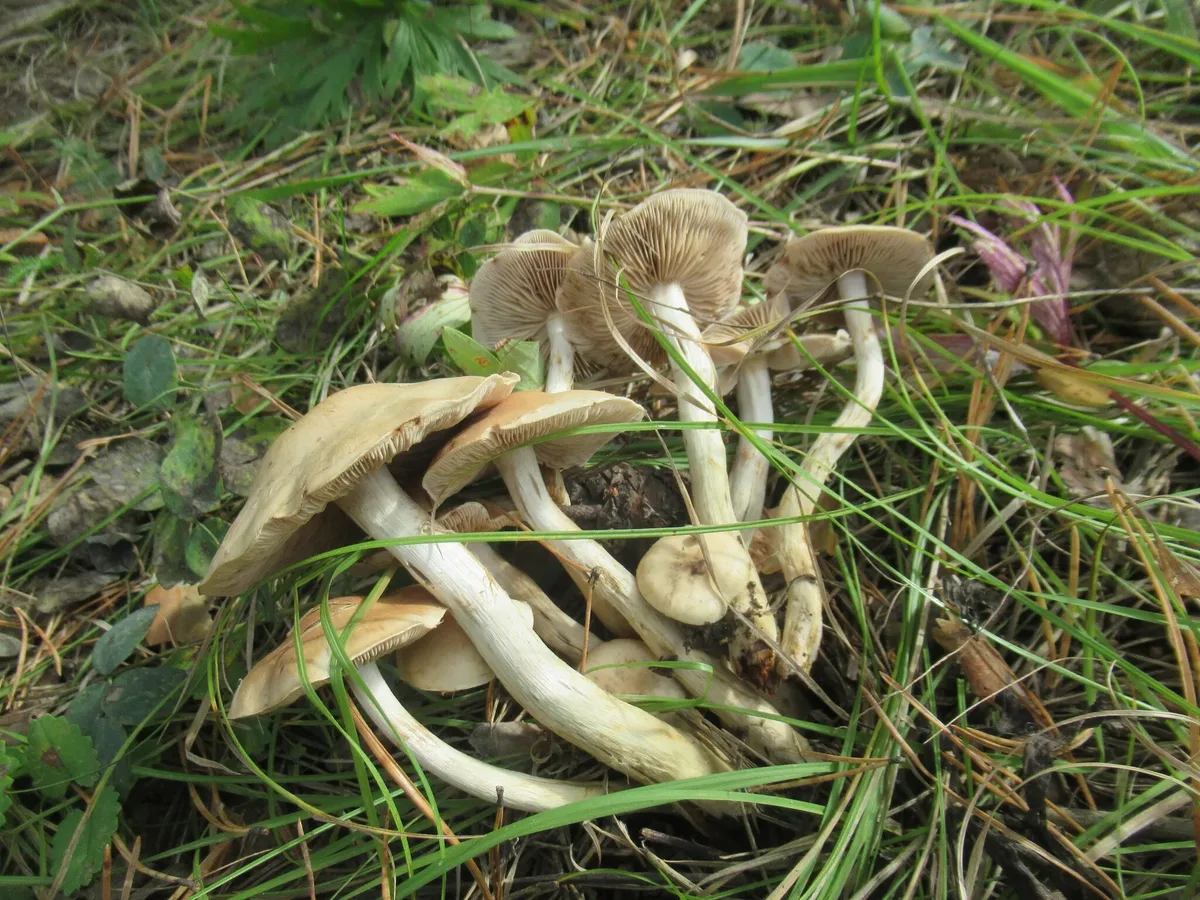 Сергей (CC0)
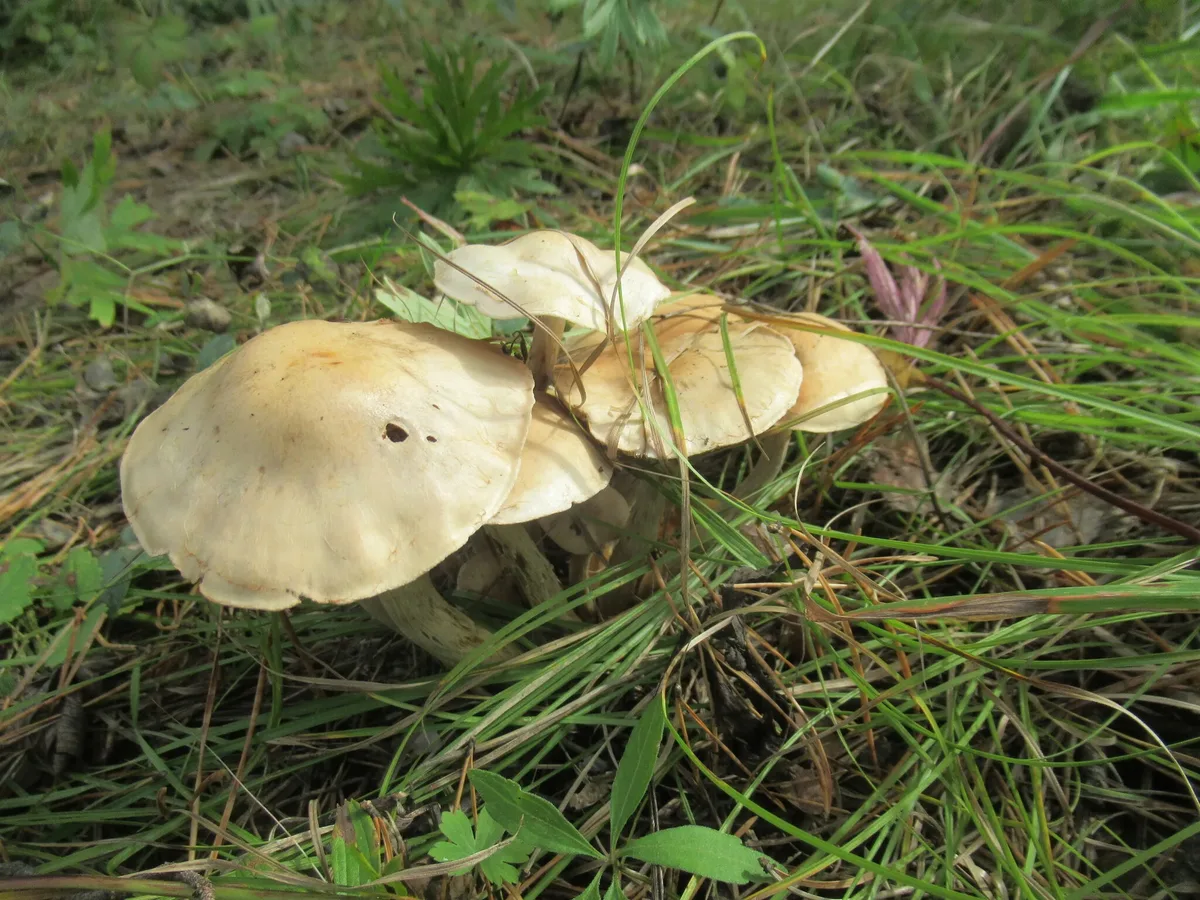 Сергей (CC0)
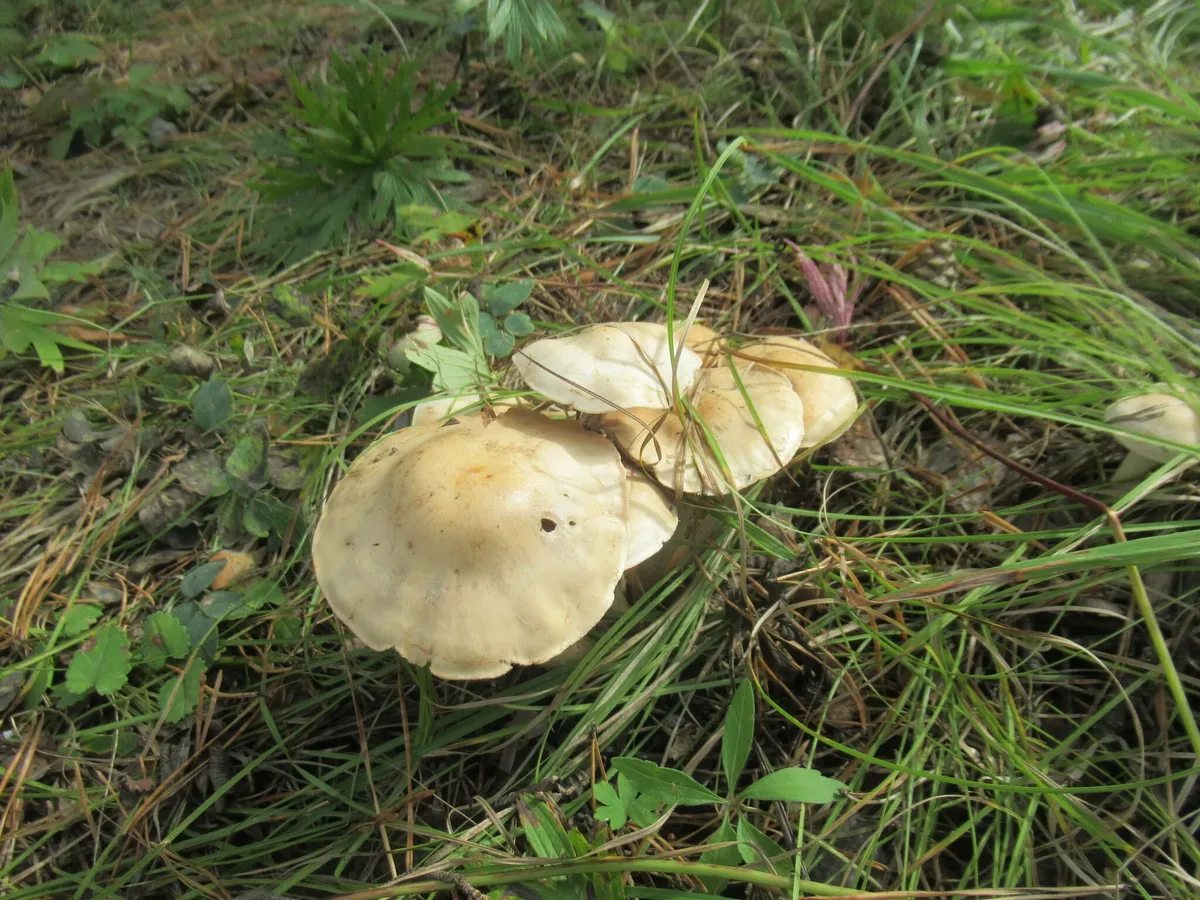 Сергей (CC0)
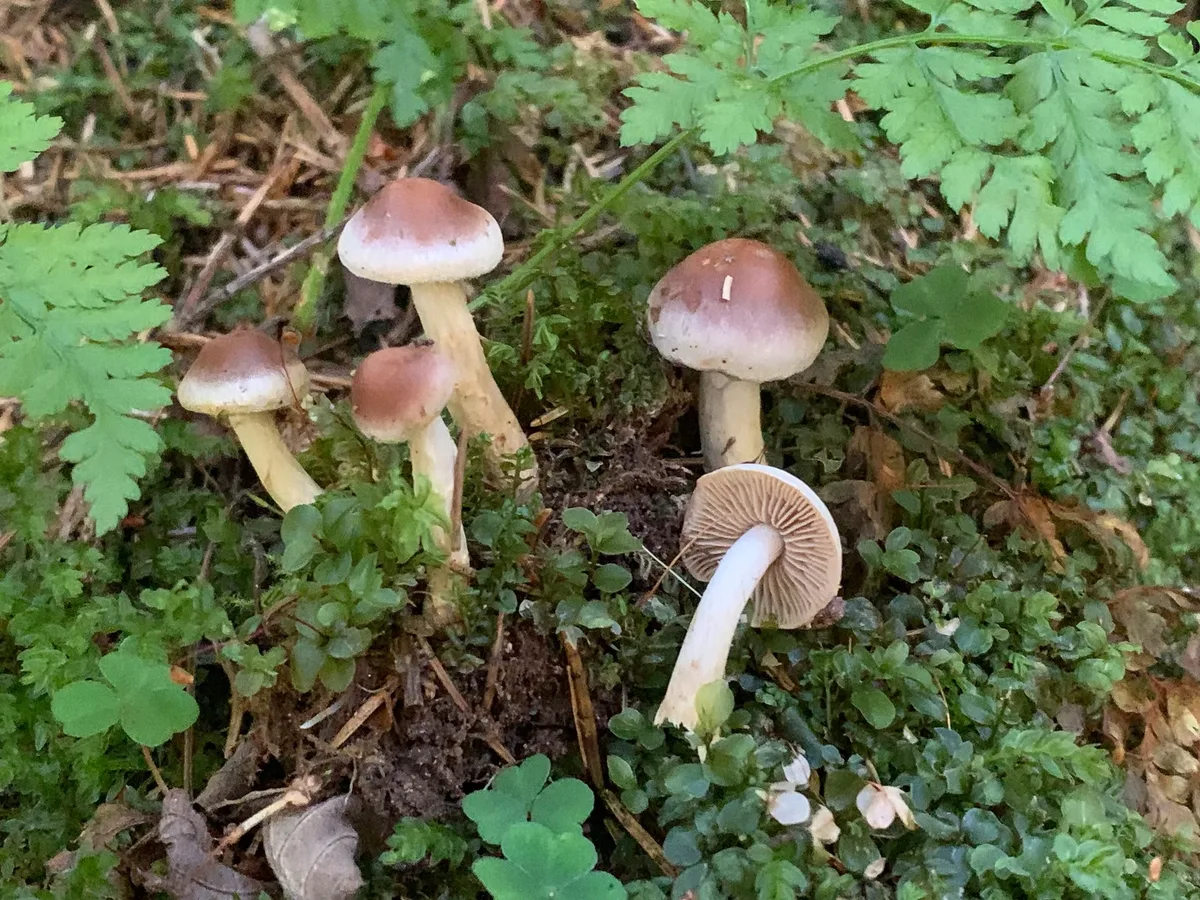 © Manuela Fiorini (CC BY)
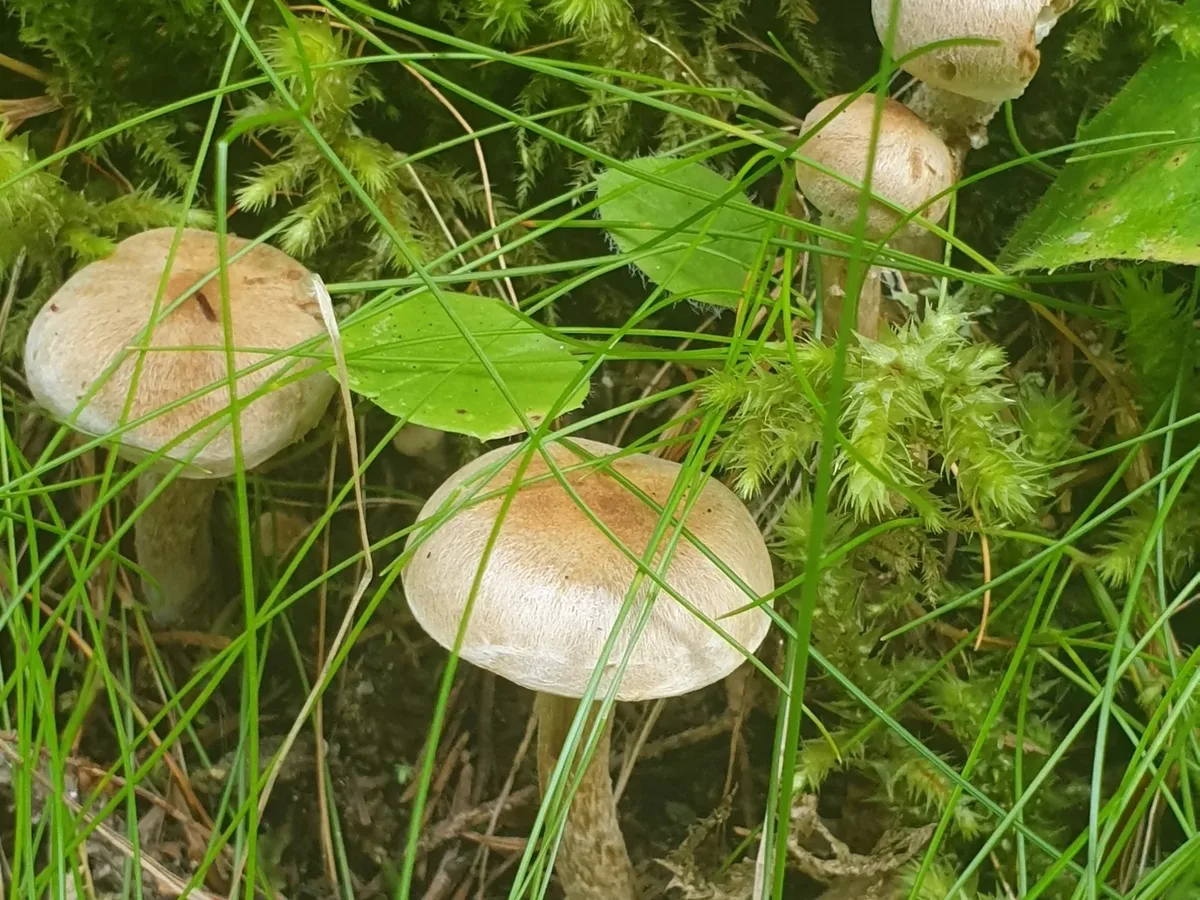 Thomas Hirsch (CC0)Lutra lutra (CC0)© Manuela Fiorini (CC BY)
Edible only with the right preparation - or safe for some people but not others. Learn the caveats first.
Never eat a mushroom you are not 100% sure of - check the look-alikes below, and always cook wild mushrooms.
How to recognise it
Cap
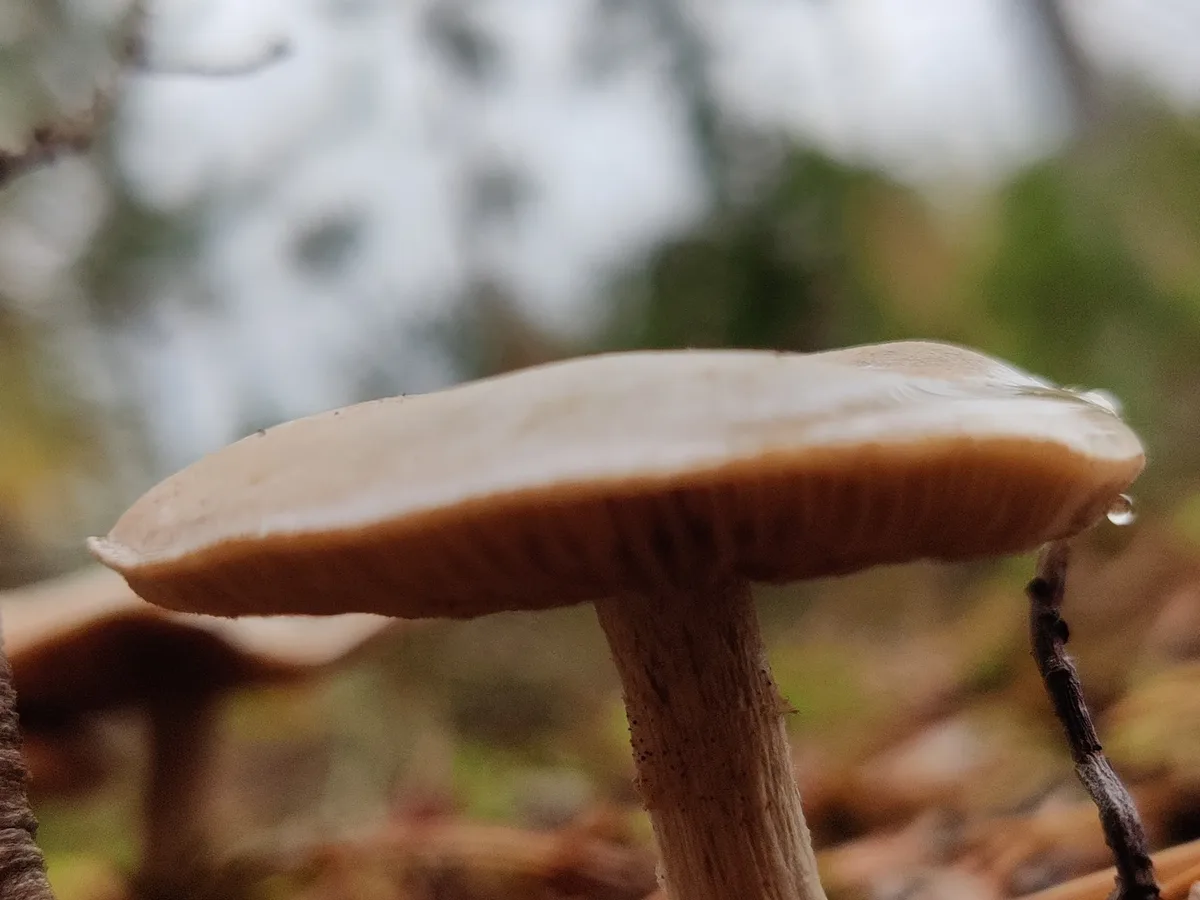
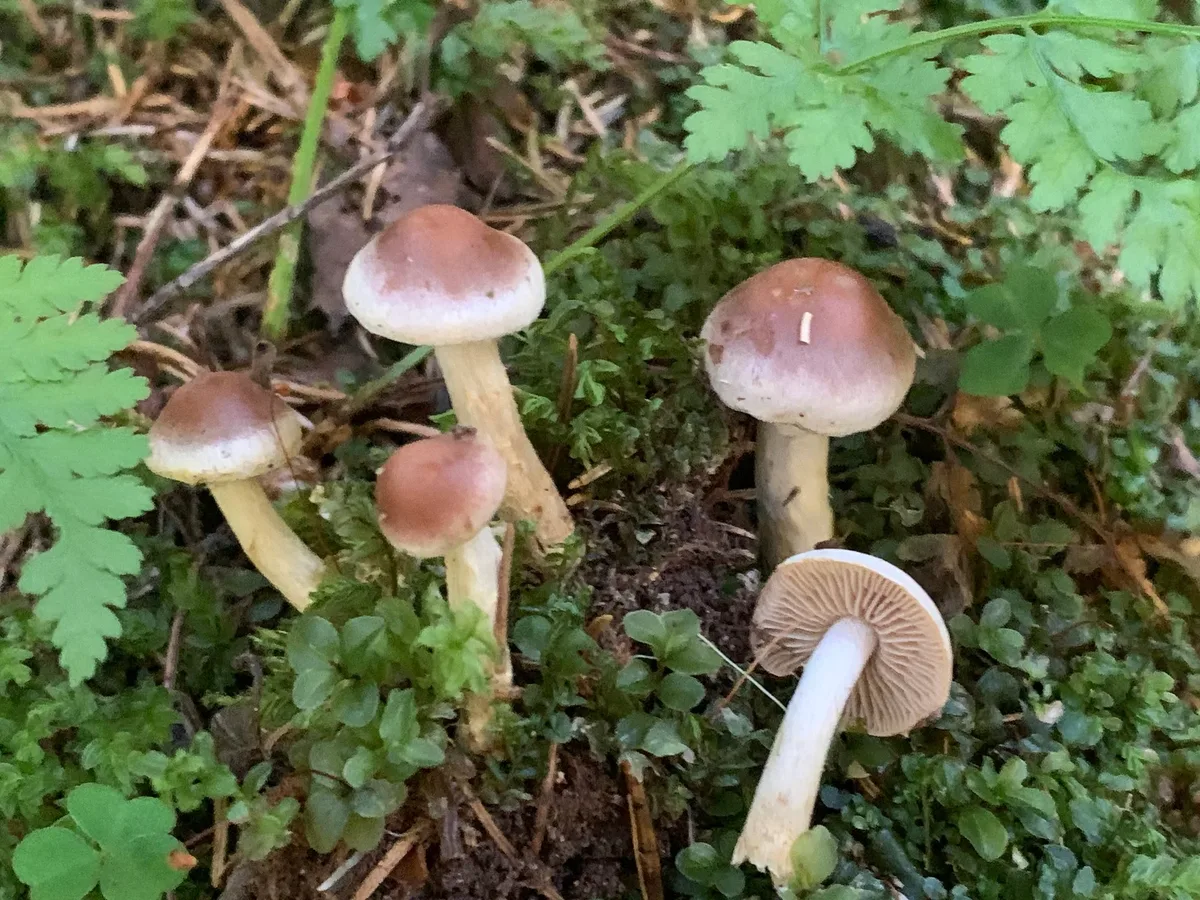
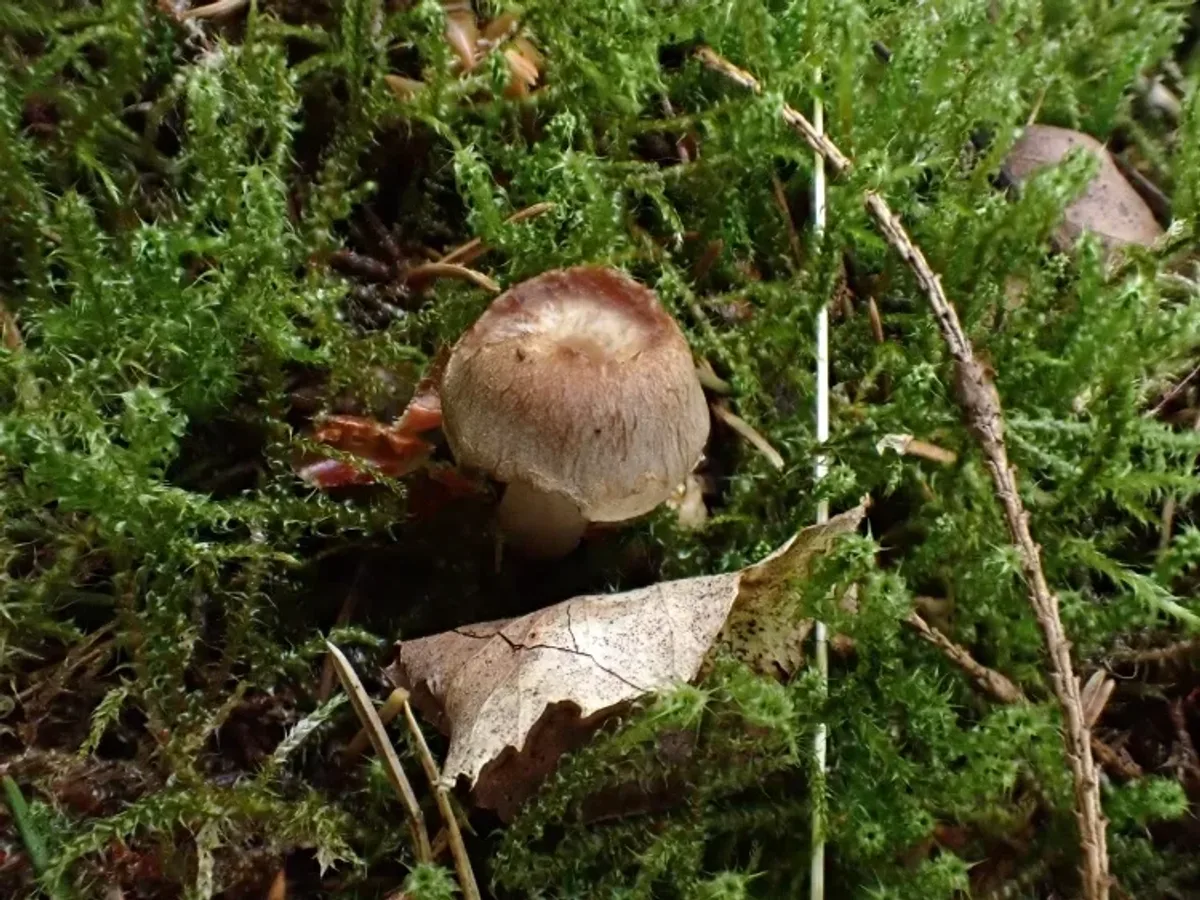
The veiled poisonpie's most recognisable feature is its two-toned cap: the outer zone and margin are clearly paler - pale buff, cream, or light tan - while the disc at the centre is sharply darker, ranging from reddish-brown to medium brown.
This bicolour pattern is consistent and visible in most weather, including when the cap is viscid and wet.
The cap is 2-5 cm across, convex to broadly umbonate, often holding a low central hump well into maturity.
Gills
The gills are clay-brown to greyish-brown; in freshly emerged fruitbodies in humid conditions the gill edges carry small white guttules (watery droplets), a helpful supporting character shared across the Hebeloma genus.
Stem
The name 'veiled' refers to the fragile fibrillose partial veil of young specimens, which stretches between cap margin and stem like a fine cobweb of threads before it collapses. It leaves, at best, a faint ring zone or fibrous girdle on the upper stem - easily overlooked on older fruitbodies, but immediately useful when present.
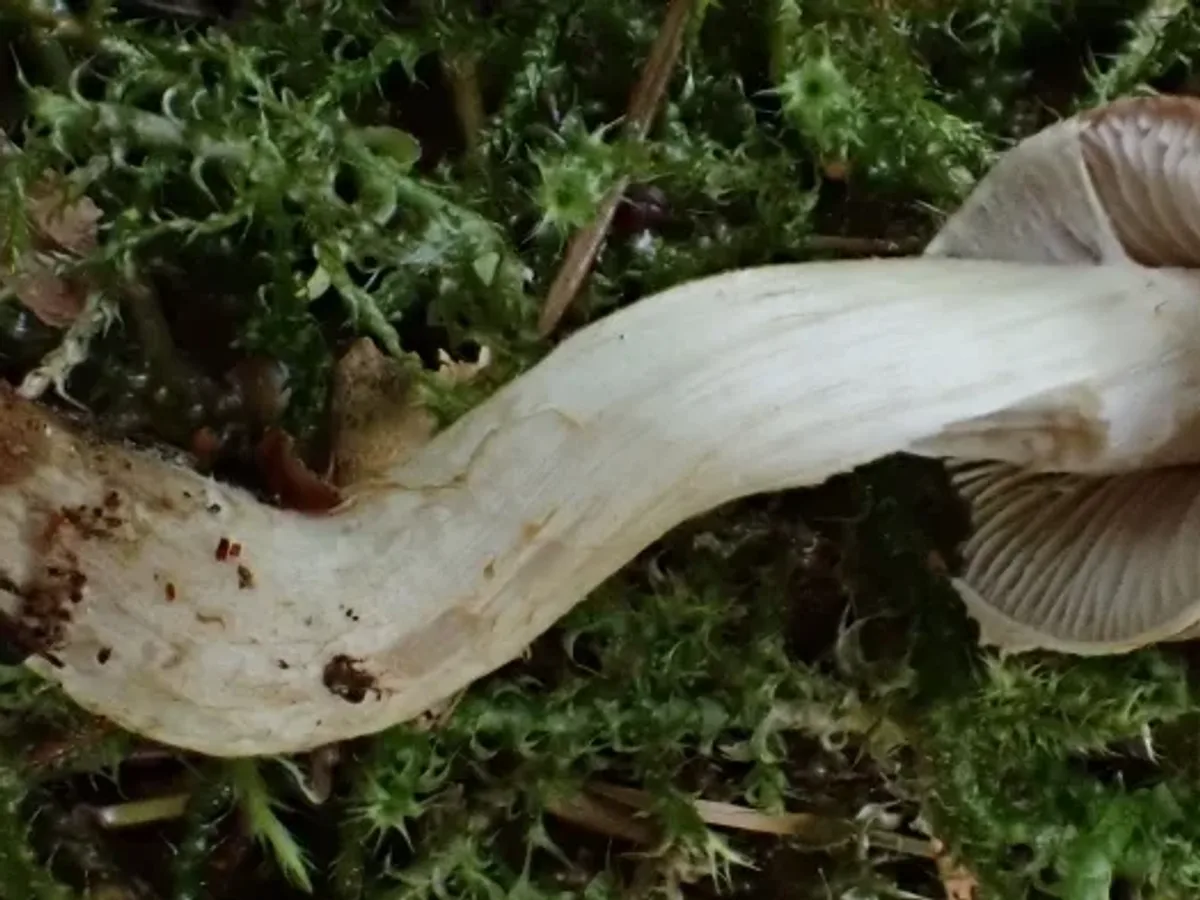
The stem is pale and silky-fibrous, without any bulb or volva at the base.
Flesh
The flesh is white throughout and does not change colour when cut.
Smell & taste
Most telling of all the sensory characters is the smell: strongly and distinctly of radish, caused by volatile isocyanate compounds, persistent and quite unlike most woodland mushrooms. The taste is sharply bitter.
Together, radish smell and bitter taste are among the most reliable field checks for Hebeloma as a genus.
Why it's dangerous
Moderate in isolation - H. mesophaeum itself is not life-threatening to healthy adults. However, the danger rating is elevated by its habitat overlap with the lethally toxic Galerina marginata.
Any mistake in identification in willow or birch scrub could be fatal. Do not eat any small brown ring-bearing mushroom from these habitats without expert-level identification certainty.
If any suspect mushroom from this habitat has been eaten and the consumer develops gastrointestinal symptoms, seek emergency medical care and bring the specimen (or a photograph) for identification - do not assume it was merely the non-lethal Hebeloma.
Toxin
The primary toxins in Hebeloma mesophaeum and related species are hebelomins - a family of sesquiterpene-derived compounds isolated from Hebeloma species. These compounds are gastrointestinal irritants affecting the gut mucosa and inducing vomiting and diarrhoea.
Additional volatile isocyanate compounds produce the characteristic radish smell.
These toxins are not amatoxins and do not cause liver or kidney damage at typical exposure levels.
Some Hebeloma species have shown trace psilocybin in laboratory analysis, but psychotropic effects have not been reported clinically from H. mesophaeum and are not considered a primary concern.
Symptoms
Symptoms begin 30 minutes to 2 hours after ingestion:
- Nausea
- Vomiting
- Profuse diarrhoea
- Abdominal cramps
- General malaise
Symptoms typically resolve within 24 hours in healthy adults. Severe dehydration is possible with large ingestion, particularly in children or the elderly.
Seek medical attention if symptoms are severe or prolonged.
Staying safe
Hebeloma mesophaeum contains hebelomins and related hebelomic acid compounds, a group of sesquiterpene-related GI-irritant substances characteristic of the genus Hebeloma. These compounds cause nausea, vomiting, diarrhoea, and abdominal cramps, typically beginning 30 minutes to 2 hours after ingestion.
Symptoms are self-limiting in healthy adults and resolve within 24 hours, but can be distressing and can lead to dangerous dehydration in children or the elderly. No specific antidote exists; treatment is symptomatic and supportive.
The most serious risk associated with H. mesophaeum is not its own toxicity but the risk of misidentification as Galerina marginata, which is lethally toxic due to amatoxins (the same toxins as Amanita phalloides, the death cap). Galerina marginata causes acute liver failure and death without urgent hospital treatment.
Because both species can grow in overlapping habitats under willows and birches and share broadly similar appearance, any small brown ring-bearing mushroom collected in these habitats must be identified to species with absolute certainty before any consideration of consumption.
The radish smell is absent in Galerina marginata and very strong in Hebeloma - learn this character. Wash hands after handling any Hebeloma.
Where & when it grows
Habitat
Hebeloma mesophaeum is primarily a mycorrhizal partner of willows (Salix spp.) and birches (Betula spp.), and this host association shapes its distribution almost completely.
In the Nordic region it is most characteristic of the willow and dwarf-birch scrub zone of upland and subarctic landscapes - the low, open vegetation that replaces closed forest above the timberline and on exposed coastal and riverine terrain.
It grows in mineral-poor, often thin soils along stream margins, lake shores, roadsides, disturbed heath, and eroded hillsides wherever pioneer willows colonise. At lower altitudes, it occurs in birch woodland and, in the southern boreal zone, also under Scots pine and Norway spruce on well-drained sandy soils.
Because willows and birches are among the first trees to colonise disturbed or degraded ground, H. mesophaeum also appears in urban contexts - gravel beds with ornamental willows, newly planted parks, and road verges with scrub willow.
The species is strongly associated with early-successional habitats and can be abundant in locations where willows are the dominant or near-exclusive trees.
When
In the Nordic region the season runs from July to October, with the main fruiting window in August and September. This pattern follows the summer-autumn transition when soils cool after the peak of summer warmth and autumn moisture arrives.
At high-altitude or subarctic sites (Lapland, Norwegian fjells, Icelandic lowlands) fruitbodies may emerge in late June or July during warm spells. The species is among the more cold-tolerant Hebeloma species and may persist into October in coastal Atlantic locations with mild autumns.
The fruiting is closely tied to adequate soil moisture: after a dry August, emergence is delayed until the first significant September rain.
How it grows
H. mesophaeum is strictly ectomycorrhizal - its mycelium forms a sheath around the fine feeder roots of willow or birch, exchanging carbohydrates from the tree for mineral nutrients the fungus mines from the soil.
This relationship can persist for years within the same root system, the underground network invisible until conditions are right to fruit.
Fruitbodies emerge singly or in small loosely gregarious groups of 2-8, occasionally in diffuse arcs or rings in open ground. Emergence is triggered by declining soil temperatures and rising moisture at the end of summer. Development from pin to mature cap typically takes 5-10 days.
The thin flesh means fruitbodies deteriorate quickly; the cap surface becomes slimy and the gills pale in waterlogged conditions.
Fruiting conditions
Fruiting is triggered by declining soil temperatures at the end of summer combined with adequate moisture. In Nordic regions the critical threshold is soil temperature falling below approximately 15-16°C after adequate summer rainfall; a lag of 5-12 days between triggering rain and emergence is typical. The species tolerates cooler conditions than many temperate Hebeloma species and can fruit at soil temperatures as low as 5°C, explaining its abundance in subarctic willow scrub late into October.
Look-alikes
Several species must be carefully distinguished from Hebeloma mesophaeum.
The most critical is Galerina marginata (deadly Galerina, funeral bell), which shares the same habitat under willows and birches, is similar in size and colour, also has a ring or ring zone on the stem, and carries brownish gills and a brown spore print. It is lethally toxic due to amatoxins and is responsible for numerous fatalities worldwide.
It is distinguished from H. mesophaeum by:
- 1Its typically darker, more uniformly medium-brown cap without the two-tone pale-margin/dark-centre pattern.
- 2Its habitat almost always on decaying wood (stumps, buried roots, woody debris) rather than on bare mineral soil.
- 3The absence of a radish smell (Galerina has a mealy or farinaceous smell, occasionally none).
The two species can co-occur in willow scrub where there is woody debris - any small brown ring-bearing mushroom in this habitat should be assumed dangerous until positively identified.
Agrocybe praecox (spring fieldcap) is edible with caution and similarly sized with a ring and brown spore print. It fruits in spring not autumn, and grows on grass verges, compost-rich soil, and garden beds rather than under willows; its cap lacks the bicolour pattern and has a more whitish-cream to pale tan colour throughout.
Naucoria centunculus (alder scalycap) grows under alder in wet woodland and is similarly coloured. It is toxic (GI irritant) and distinguished by its strong almond-like smell (not radish) and association with Alnus.
Other Hebeloma species - H. crustuliniforme (poison pie), H. sinapizans - share the radish smell and poisonous nature; they are typically larger, lack the bicolour cap pattern, and have different habitat associations. H. crustuliniforme has a uniformly pale to ochre-brown cap without a darker centre.
Kuehneromyces mutabilis (sheathed woodtuft, velvet shank companion) is edible and grows in dense clumps on wood - the clumping habit and woody substrate immediately distinguish it.
DEADLY - contains amatoxins causing fatal liver failure. Grows in the same habitat under willows and birches and is similar in size, colour, and presence of a ring or ring zone. Critical distinctions: Galerina marginata grows on decaying wood or woody debris (stumps, buried roots), not bare mineral soil; its cap is typically a more uniform medium brown without the pale-margin/dark-centre bicolour pattern of H. mesophaeum; it lacks the strong radish smell (has mealy or no smell); its spore print is rusty brown (H. mesophaeum is clay-brown). Never eat any small brown ring-bearing mushroom from willow or birch scrub without absolute species certainty.
Small brown mushroom growing under alder (Alnus) in wet woodland; toxic (GI irritant). Distinguished from H. mesophaeum by its habitat preference for wet alder woodland (not willow scrub), almond-like smell (not radish), and consistently hygrophanous cap that dries paler from the centre.
Closely related and also poisonous; larger (cap 4-10 cm), more uniformly pale ochre-buff without a sharply darker centre, and typically grows under a wider range of broadleaved and conifer trees rather than specialising in willow scrub. Also has the characteristic radish smell. Shares the same caution rating - both are toxic, neither is edible.
A choice edible that grows in dense clusters on decaying wood stumps, not on mineral soil under willows. The clustered (caespitose) habit, woody substrate, and hygrophanous two-tone cap (dark orange-brown at centre fading to pale at margin when wet, reversing as it dries) are distinct from H. mesophaeum, which grows solitarily on soil. The stem base of K. mutabilis is also scaly below the ring.
An edible (with caution) lookalike that also has a ring and brown spore print; fruits in spring (April-June) rather than late summer-autumn; grows in grassy, compost-rich, or disturbed soils rather than under willows or birches; cap pale cream to pale tan throughout without the bicolour pattern; smell farinaceous, not radish-like.
A reference guide - never an edibility guarantee. When in doubt, leave it out.