Poison pie
Hebeloma crustuliniformesyn. Agaricus crustuliniformis, Hebeloma fastibile var. crustuliniforme, Hylophila crustuliniformis
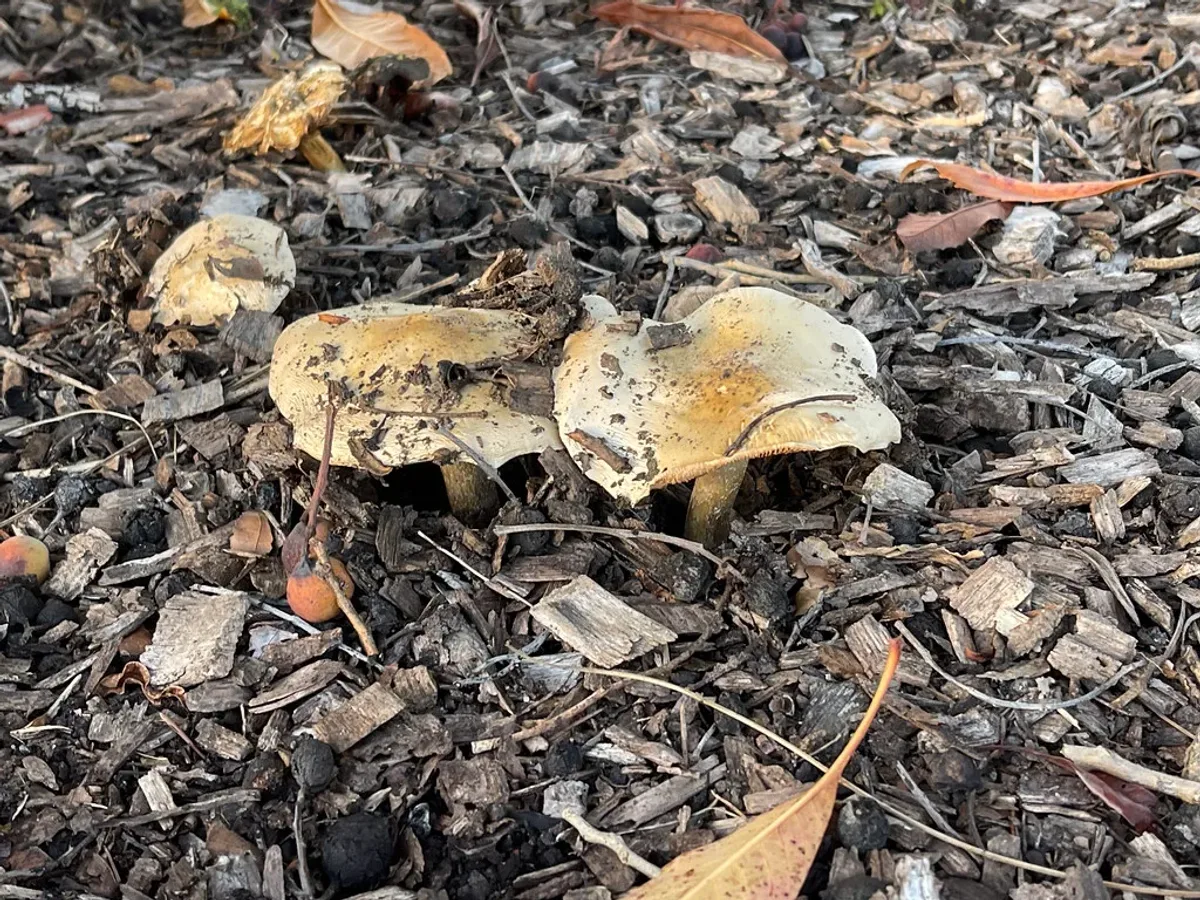 © sarahstierch (CC BY 2.0)
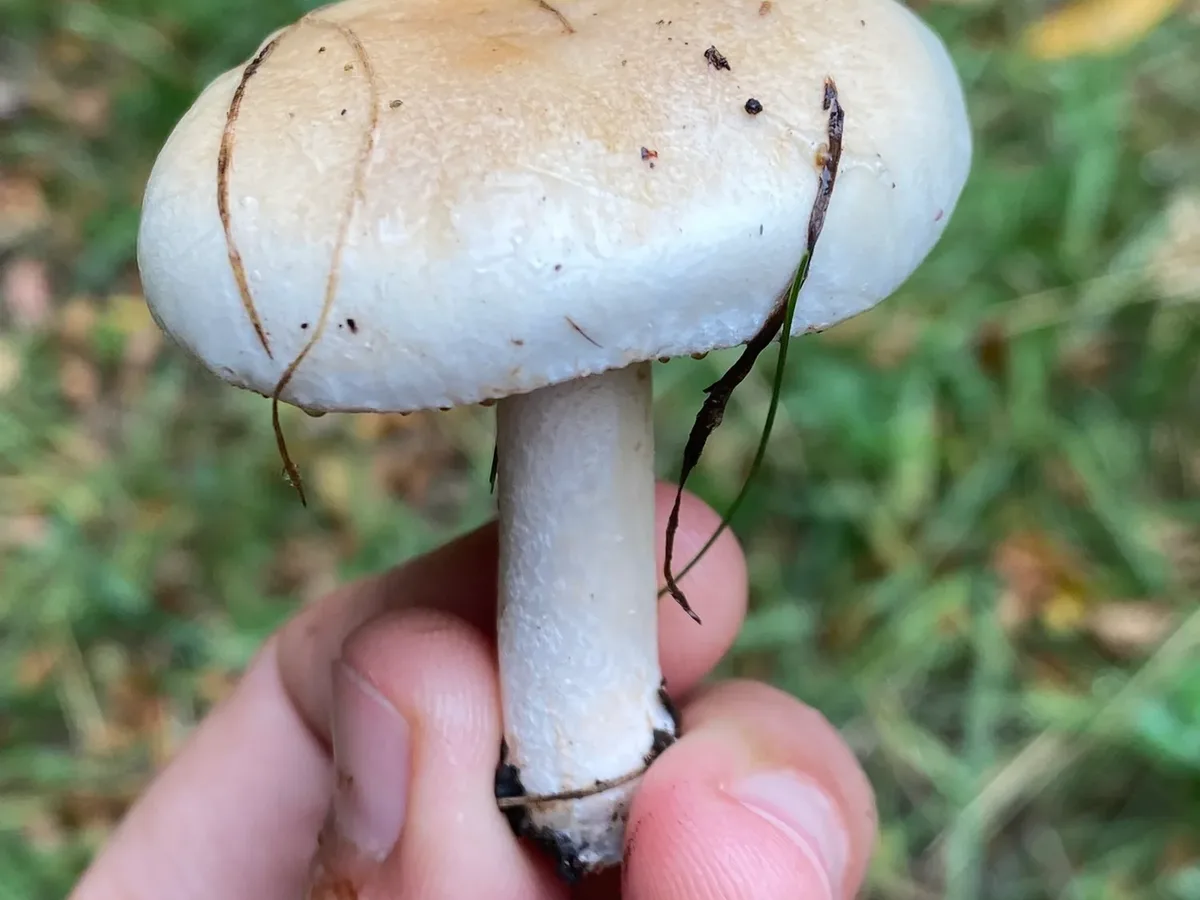 Julia Ariadna (CC0)
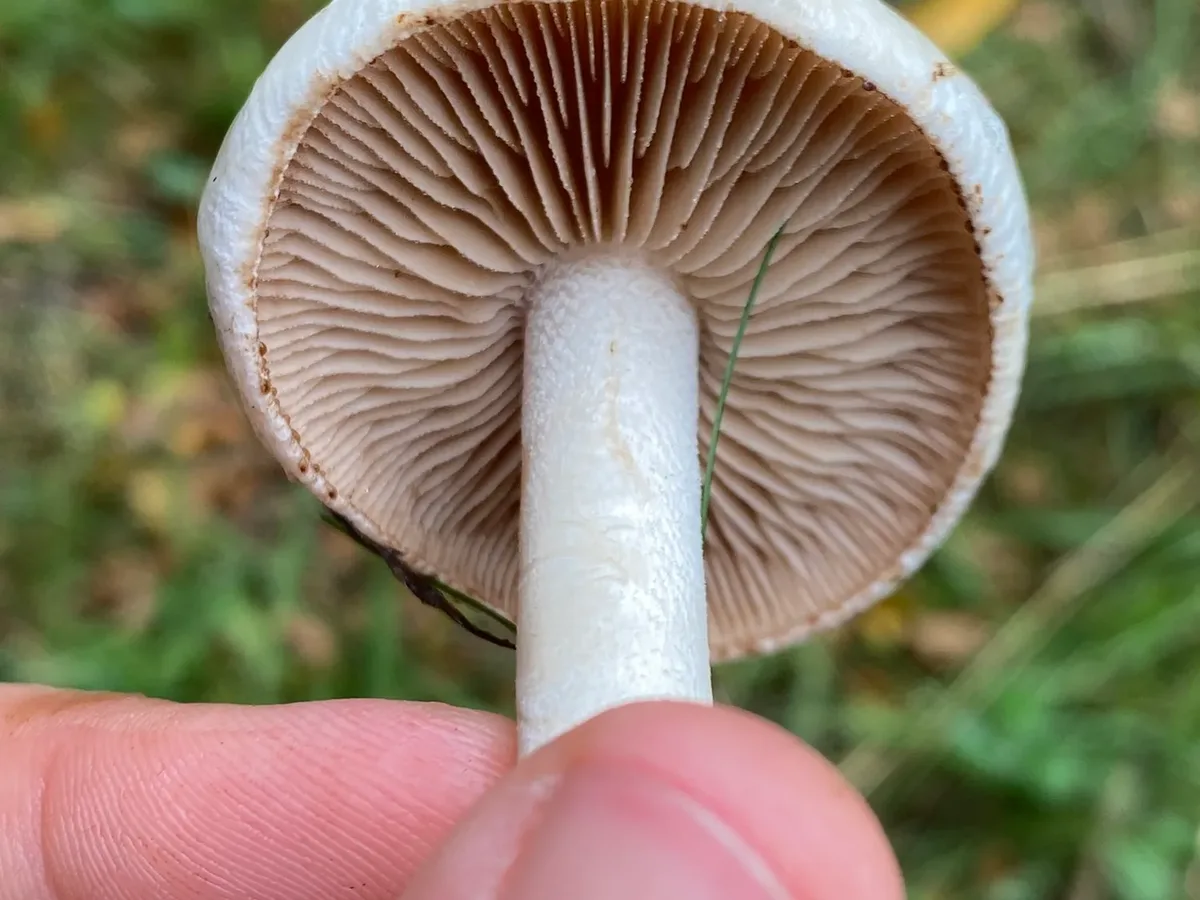 Julia Ariadna (CC0)
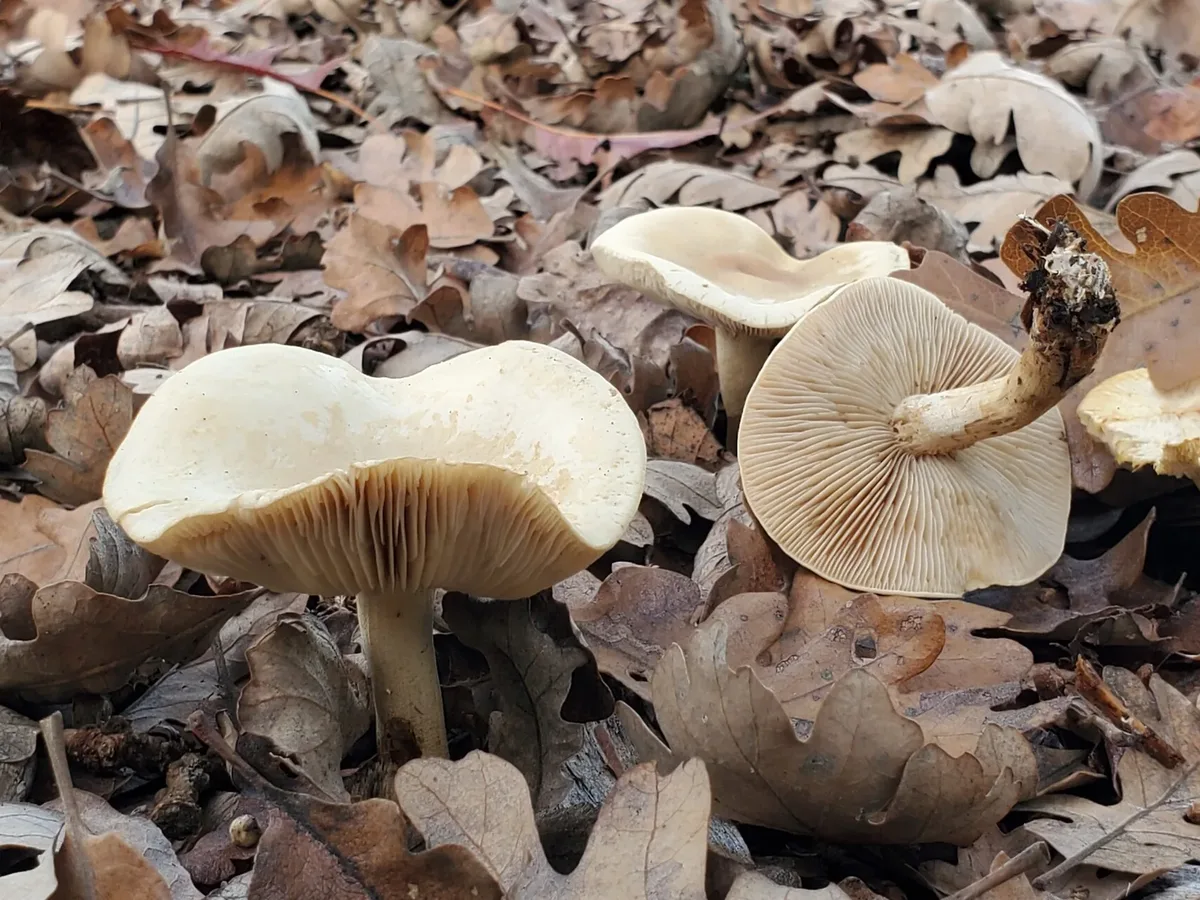 © Alex (CC BY)
 © Konshau Duman (CC BY)
 © Konshau Duman (CC BY)
 © Konshau Duman (CC BY)
 © Sam Bucciarelli (CC BY)
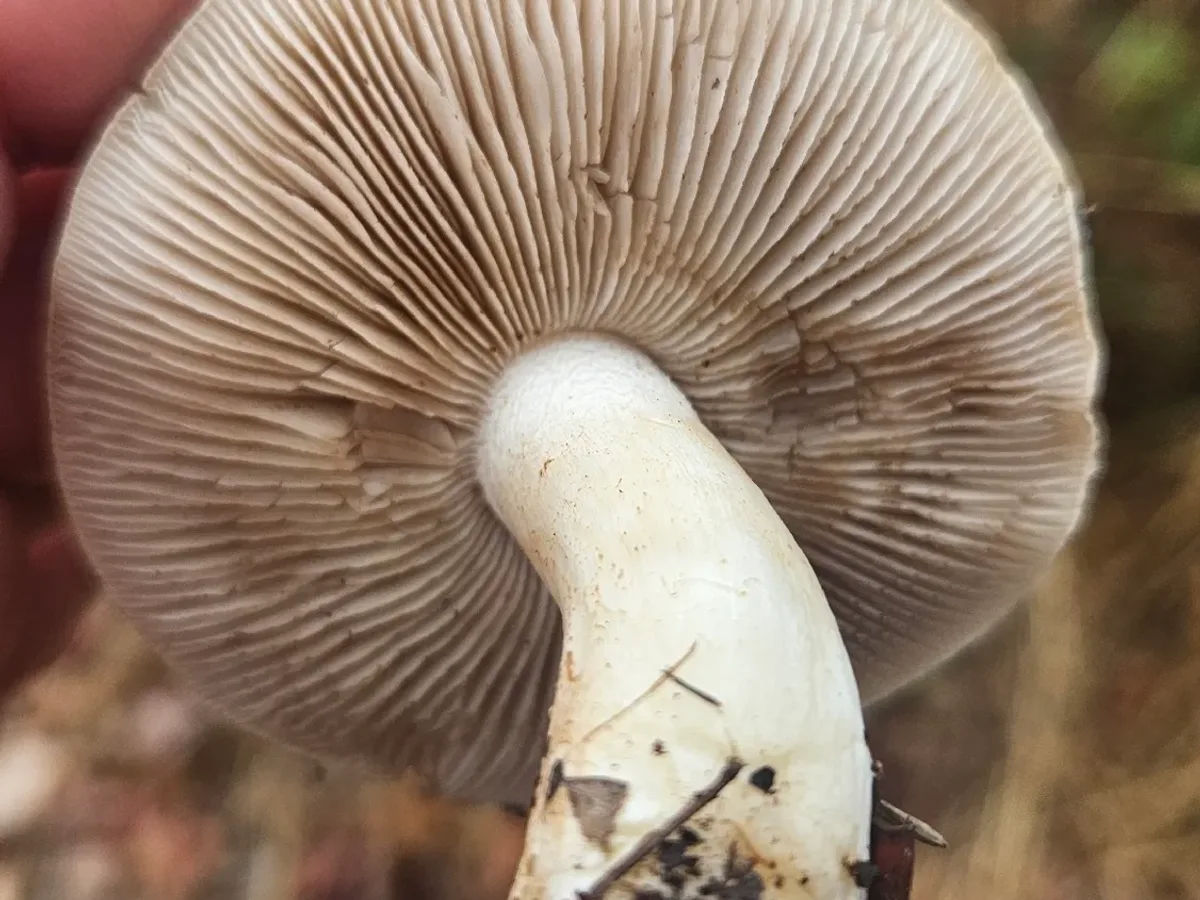 © Sam Bucciarelli (CC BY)
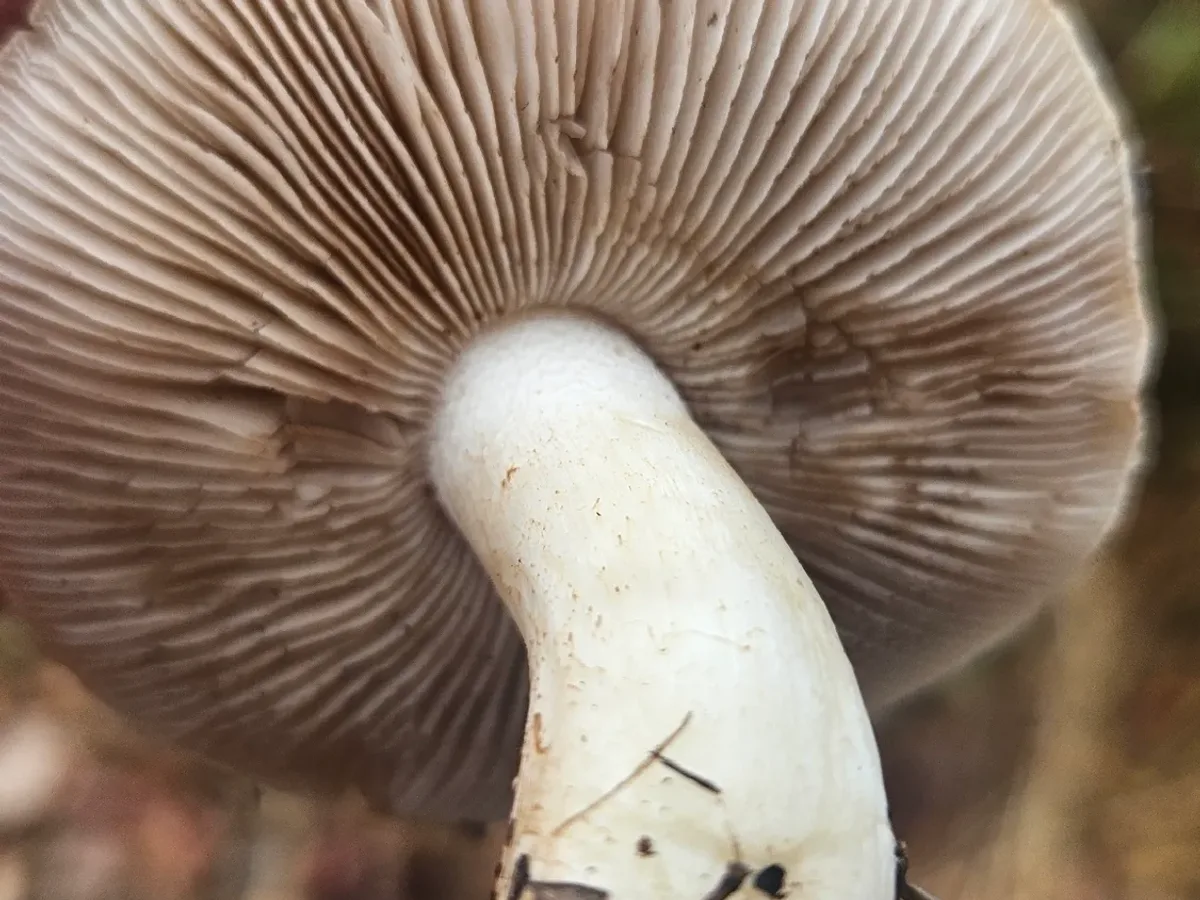 © Sam Bucciarelli (CC BY)
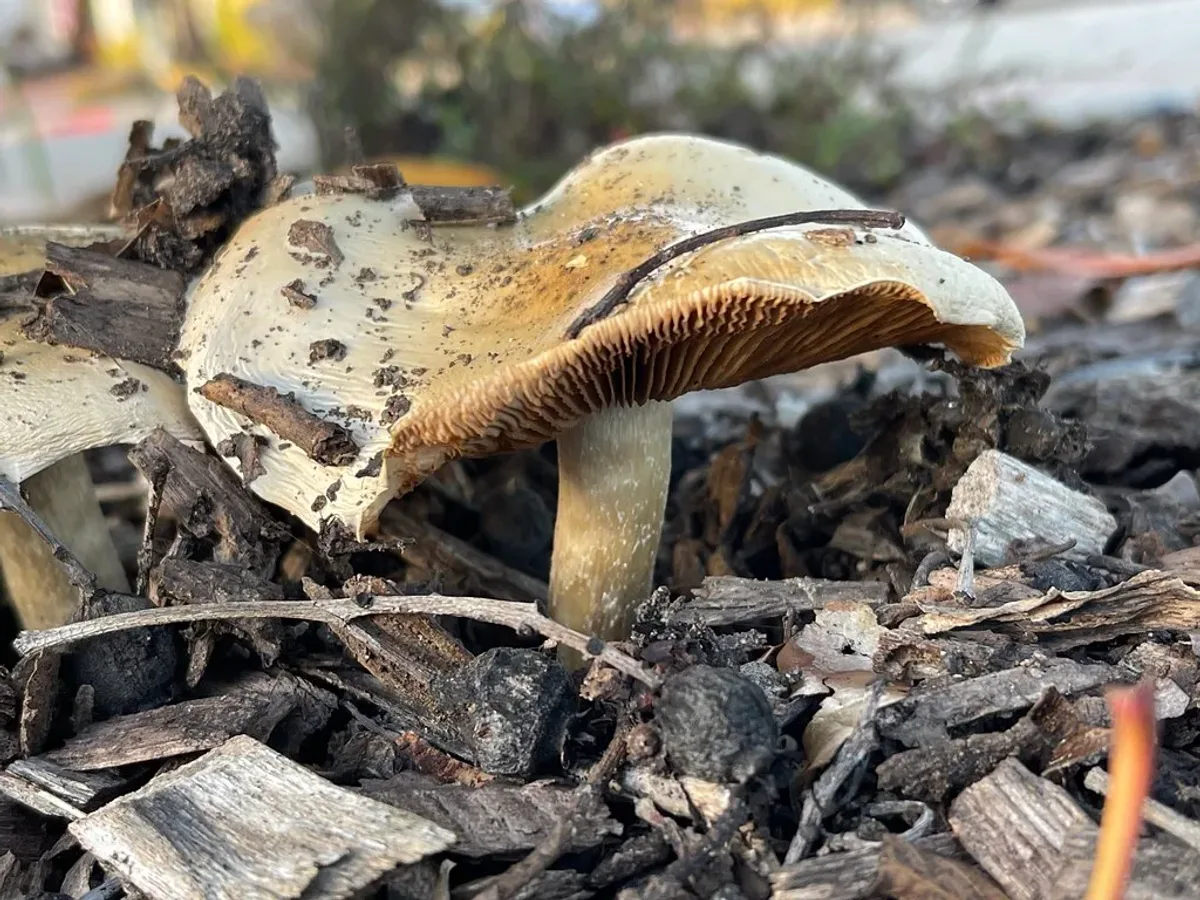 © sarahstierch (CC BY 2.0)© sarahstierch (CC BY 2.0)Julia Ariadna (CC0)
Edible only with the right preparation - or safe for some people but not others. Learn the caveats first.
Never eat a mushroom you are not 100% sure of - check the look-alikes below, and always cook wild mushrooms.
How to recognise it
Hebeloma crustuliniforme looks, at a glance, like an innocent pale bun - which is precisely what makes it dangerous to inexperienced foragers who might mistake it for an edible species.
Cap
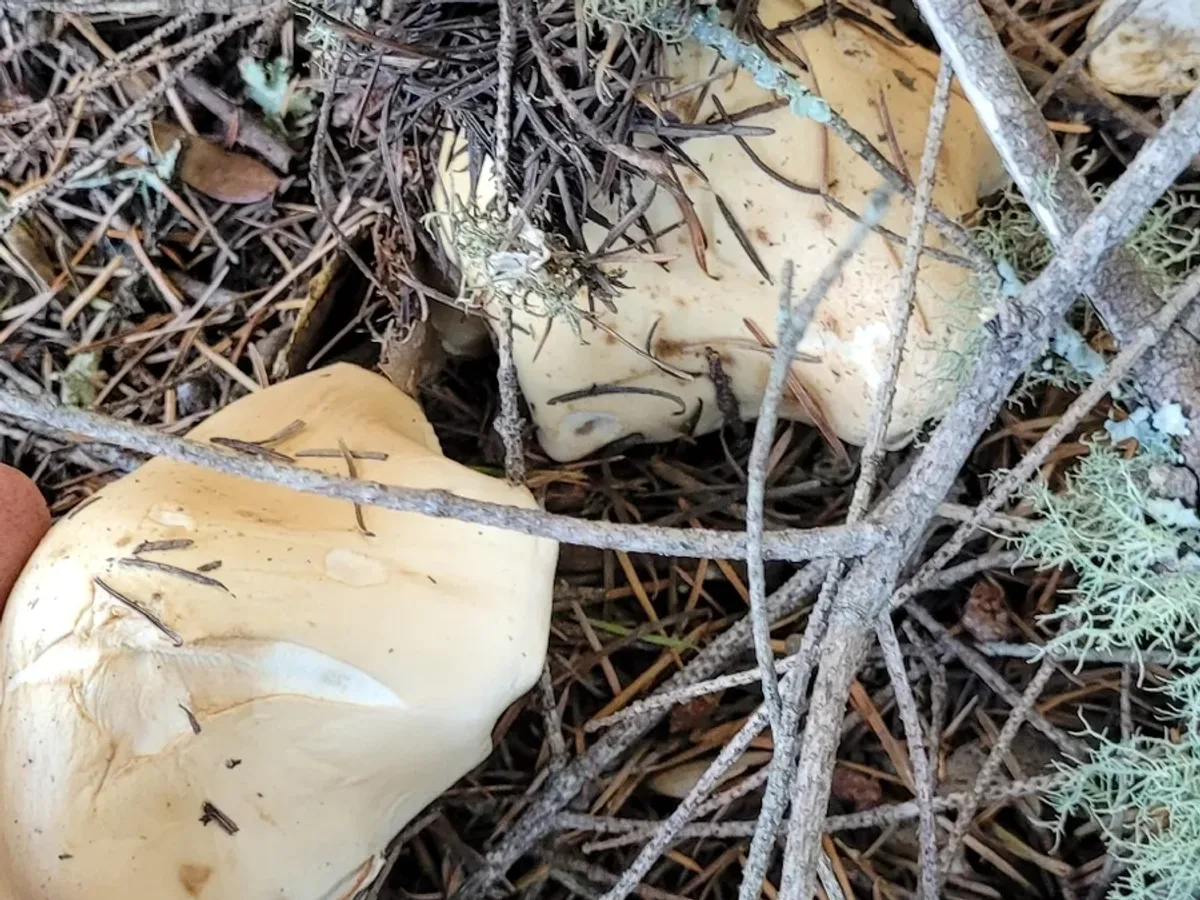
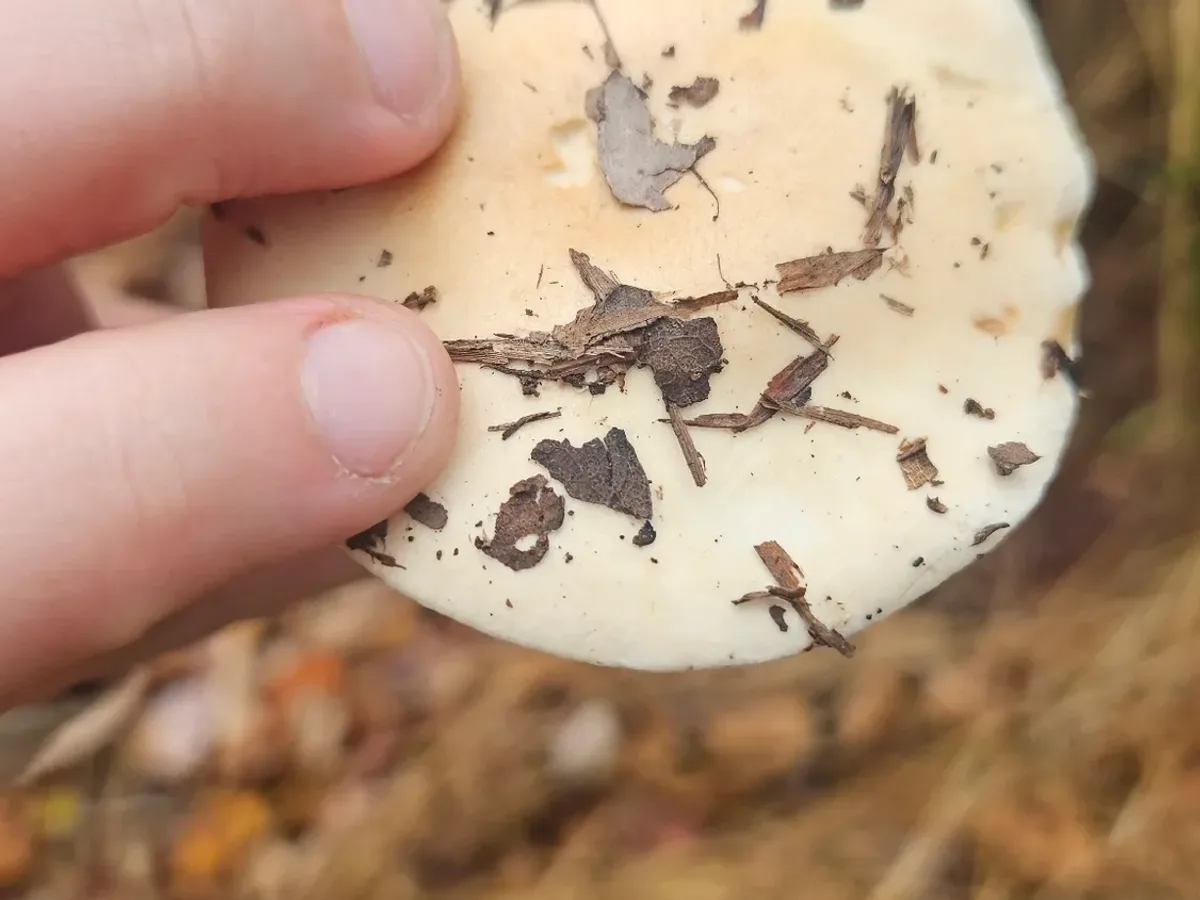
The cap begins as a smooth dome, 4-10 cm across, pale cream to ochre-buff, slightly tacky in damp weather and paler at the margin. As it expands and flattens it remains broadly convex rather than deeply funnelled or wavy, with a slightly darker disc.
Gills
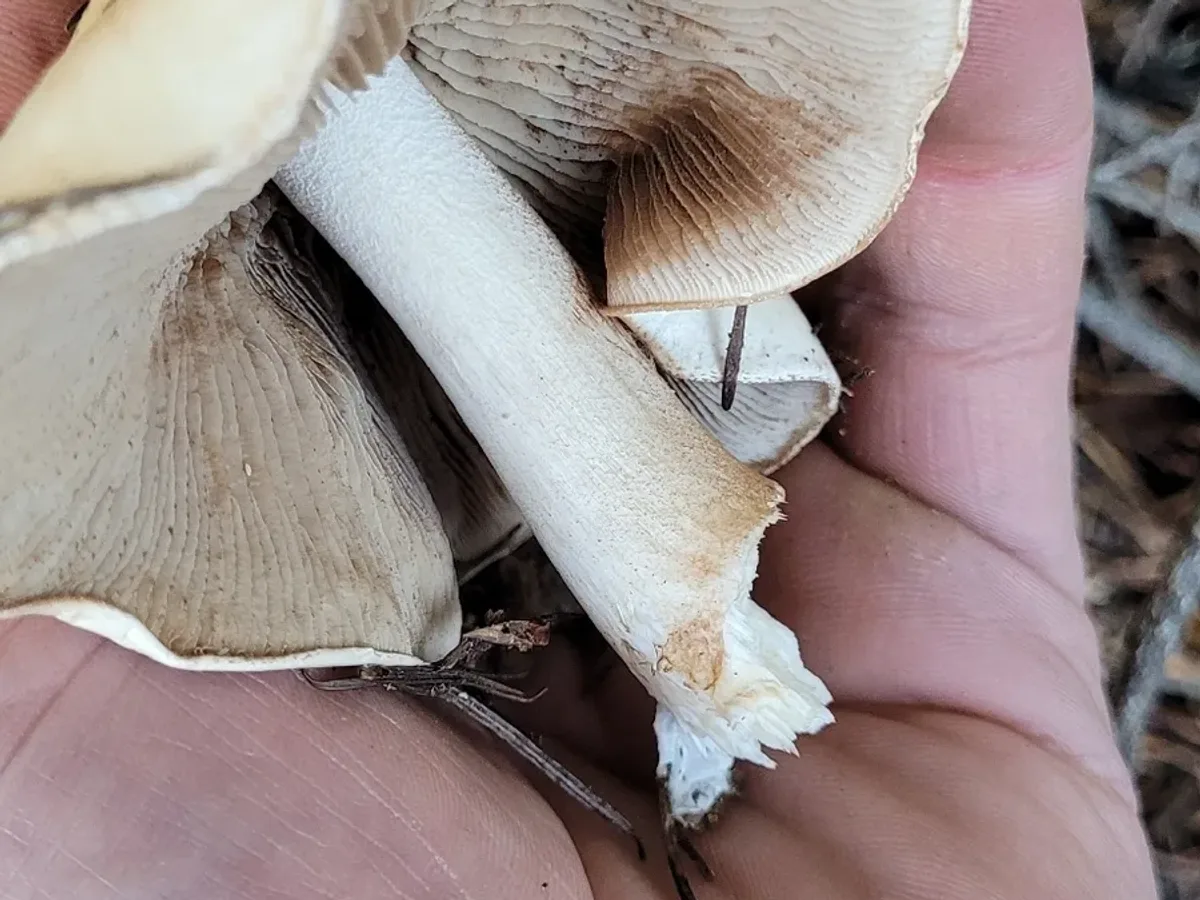
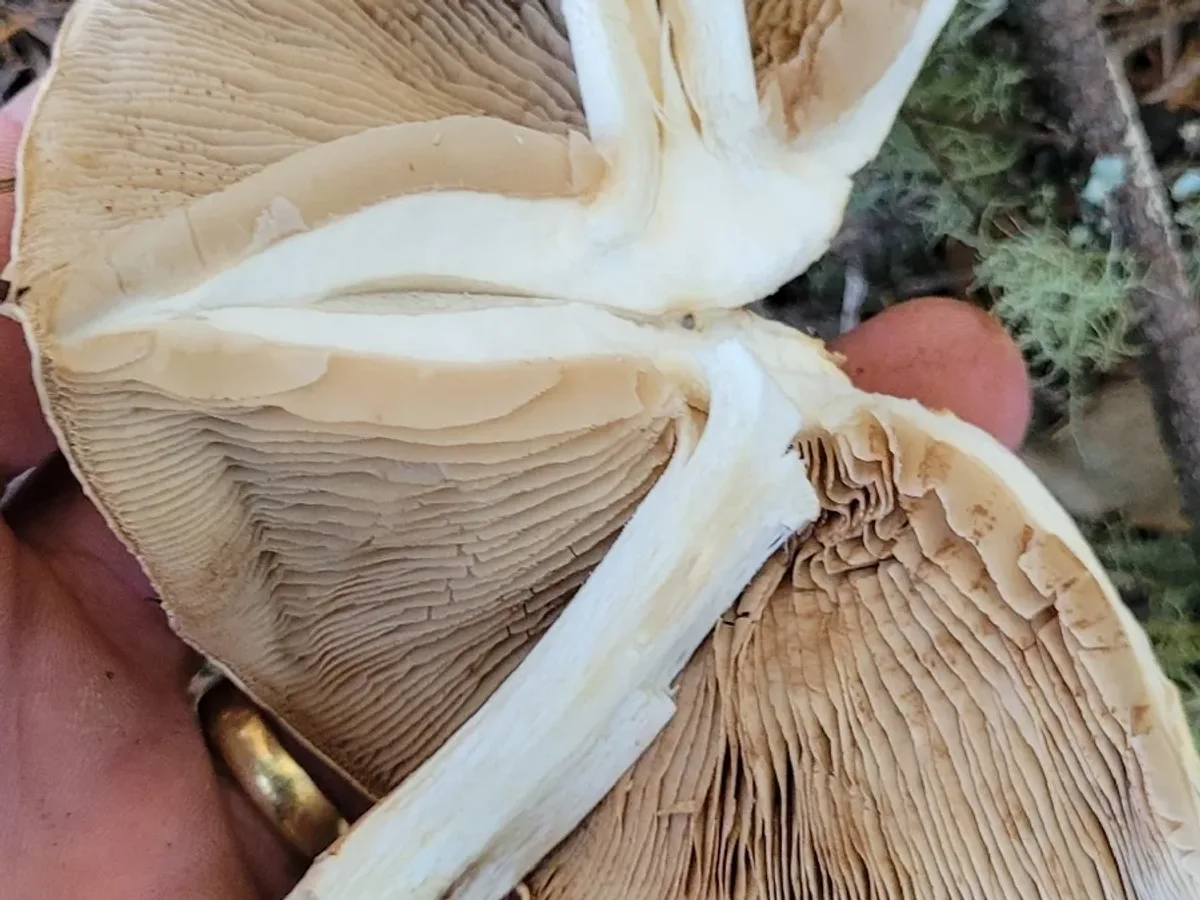
The gills are initially white, then develop a characteristic clay-buff to pale tobacco colour as the spores ripen, and are crowded and sinuate where they meet the stem.
The single most diagnostic feature to look for in fresh field specimens is the 'weeping' gills: tiny water droplets form along the gill edges, best seen in the morning or in humid conditions, which dry to leave faint dark spots on the gills - a feature shared by several Hebeloma species and not found in most lookalikes.
Stem
The stem is white, somewhat silky-scurfy (mealy-powdery toward the top), solid and lacks a persistent ring.
Flesh
The flesh is white throughout and does not change colour when cut.
Smell & taste
The smell is pungent and unmistakable: sharp radish or horseradish, sometimes with a bitter-mealy undertone. This odour alone should halt any temptation to collect it for food.
Why it's dangerous
The intrinsic danger of Hebeloma crustuliniforme is a reliable but generally non-lethal gastrointestinal illness.
The more serious danger is confusion. Its plain brown-capped, medium-sized appearance occupies a problematic niche in beginner identification, and deadly species such as Galerina marginata (containing deadly amatoxins, causing liver and kidney failure, responsible for several fatalities) can potentially be confused with brown hebelomas by the untrained eye.
Any brown-capped, clay-spored woodland mushroom without a definitively confirmed identity should never be eaten. When in doubt, leave it out.
Toxin
Hebeloma crustuliniforme contains a suite of poorly characterised but pharmacologically active compounds:
- Hebelomins (hebelomin A, B, etc.) - sesquiterpene derivatives identified in the genus, with cytotoxic and enzyme-inhibiting activity.
- Uncharacterised volatile thiocyanate and glucosinolate-like compounds - responsible for the radish/isothiocyanate odour.
- Irritant glycoproteins and miscellaneous phenolic compounds - act on the gastrointestinal mucosa.
Unlike the deadly amatoxins or orellanin, these compounds cause a relatively rapid and self-limiting gastrointestinal syndrome rather than delayed organ failure. But the toxins are not fully characterised, individual sensitivity varies, and there have been reports of more severe reactions.
Symptoms
Symptoms are predominantly gastrointestinal and typically begin within 30 minutes to 3 hours of ingestion:
- Nausea
- Vomiting
- Abdominal cramping
- Diarrhoea
- Possible excessive salivation
Symptoms usually resolve within 24 hours in otherwise healthy adults, but can be more prolonged or severe in children, the elderly or people with compromised health.
No reports of fatal outcomes are attributed solely to H. crustuliniforme, but the syndrome can cause significant dehydration and distress. Seek medical attention if symptoms are severe, prolonged or if the identity of what was eaten is uncertain.
Staying safe
Hebeloma crustuliniforme is reliably poisonous and should never be eaten. Its common name 'Poison pie' is both memorable and accurate.
The radish smell is a practical warning signal: develop the habit of smelling every woodland mushroom before it goes in the basket, and treat any strongly radish-smelling brown fungus as suspect. No amount of cooking renders this species safe for consumption.
Children and dogs may be attracted to fruitbodies on the woodland floor - the species is common enough in parks and gardens to represent a genuine accidental ingestion risk.
If a child or pet has eaten an unknown mushroom in a park setting and vomiting or abdominal pain follows within a few hours, seek medical attention and try to bring a sample or photograph of the mushroom.
Where & when it grows
Habitat
Unlike the specialist mycorrhizal partners such as Boletus edulis (limited to a few hosts), Hebeloma crustuliniforme is a generalist that has successfully partnered with a huge range of tree species. This makes it one of the most ubiquitous woodland mushrooms in Europe - it appears wherever trees grow.
It is found in:
- Broadleaf woodland (beech, oak, birch, hazel, willow, lime, poplar).
- Conifer plantations (pine, spruce) and mixed forests.
- Gardens, parks, roadside verges and cemetery plantings wherever ornamental trees are present.
This means it is encountered by novice foragers in urban as well as rural settings. It typically grows on the soil surface in leaf litter or moss, in loose groups or short arcs, with individual caps spaced a few centimetres to a few tens of centimetres apart.
When
Hebeloma crustuliniforme is one of autumn's most reliable fruiting fungi. It tracks the drop in soil temperature and increase in autumn rainfall that begins in late August in northern Europe.
Early flushes appear in September; the main flush runs through October, the peak period across most of central and western Europe.
Fruiting continues into November and December. The fungus is notably frost-tolerant - fruitbodies can survive and continue sporulating through several degrees of frost, making it one of the later autumn species.
How it grows
Like all hebelomas, this species cannot fruit without a living tree partner. Its mycelium threads through the soil and wraps around the fine roots of its host, trading mineral nutrients - phosphorus, nitrogen, water - for sugars the tree fixes by photosynthesis.
The relationship is obligate: no tree, no mushroom. A single mycelial network may quietly sustain the same partnership for many years before sending up fruitbodies.
When conditions are right - autumn rains, cooling soil - individual caps push up across the network as scattered individuals or loose groups rather than a single dense cluster.
The sharp radish odour is thought to function as a chemical deterrent against insects and other invertebrates that would otherwise graze the fruitbodies.
And those 'weeping' droplets on the gill edges are not simply condensation: they are an active secretion, produced by the gill tissue itself - one of the more quietly remarkable things about a species that otherwise wears a very plain face.
Fruiting conditions
Flushes follow autumn rains as soil temperatures fall below about 15 °C. Tolerant of light frost; one of the later-fruiting autumn agarics. Peak in mid to late October across central and western Europe.
Look-alikes
The greatest identification danger runs in the opposite direction from most toxic species: Hebeloma crustuliniforme is a toxic fungus that can be confused WITH edible species by beginners.
Most seriously, it occupies habitat and has a silhouette broadly similar to species of Cortinarius, Agrocybe and various common edible brown-capped agarics.
In the other direction, the danger is that an inexperienced forager might confuse a deadly Galerina marginata (which also has a brown cap, ring-zone on the stem, clay-brown spore print and grows in woodland near woody material) with a Hebeloma if they have not carefully checked all features.
The radish smell is the key separator for Hebeloma crustuliniforme: very few woodland agarics share this pungent character, and Galerina marginata smells mild or faintly earthy/mealy, not of radish. Always take a spore print and note the smell.
Deadly - contains orellanin, which causes irreversible kidney failure with a delayed onset of 2-3 weeks, often after the forager feels they have recovered from initial mild symptoms. Reddish-brown cap with an ochre-rusty spore print (not clay-brown), cobweb-like cortina (not a smooth film), bitter or unremarkable smell (not radish). The delayed onset of orellanin poisoning makes misidentification particularly dangerous.
Deadly - also contains orellanin (kidney failure, delayed onset). Tawny-orange to brick-red cap, rusty-brown spore print, cobweb cortina when young, faint radish or geranium smell - the smell can cause confusion, but the colour is more saturated orange-tawny vs. the pale buff of Hebeloma. Any brown to orange-brown woodland mushroom with a cortina and rusty spore print must be treated as a potential deadly Cortinarius.
Deadly - contains amatoxins that destroy the liver and kidneys, and has killed people. Galerina marginata has a similar brown cap and clay-brown spore print but typically has a distinct, persistent membranous ring on the stem, grows on dead wood or woody debris (not on living-tree mycorrhizal soil), and has a mild smell (not radish/horseradish). Never collect any small- to medium-sized brown-capped, brown-spored mushroom without confirming it is NOT Galerina: check for substrate (wood vs. soil), ring presence, and smell carefully.
A puffball-like structure with thick, warty skin; not a gilled mushroom at all. Listed only because in button stage, pale puffball-like objects on woodland soil are sometimes confused by extreme beginners. Breaking it open reveals dark purple-black interior from a very young stage - immediately diagnostic.
Poisonous (gastrointestinal irritant, also causes reactions with alcohol). Scalier, more ochre-yellow with a prominent ringed stem, typically clustered at tree bases. Not normally confused in the field once cap scales and clustered habit are noted, but both have brown spore prints.
Poisonous (muscarine). Small, silky-white or white cap (there is a lilac variety), conical then low-umbonate - much smaller than most Hebeloma crustuliniforme caps, with a brown spore print (but more tobacco-coloured and less clay). Smells earthy-mealy, not of radish. Muscarinic poisoning causes sweating, salivation, tears and slow pulse - different syndrome from Hebeloma.
A reference guide - never an edibility guarantee. When in doubt, leave it out.