Arctic poison pie
Hebeloma birrussyn. Agaricus birrus Fr., Hylophila birra (Fr.) Quél.
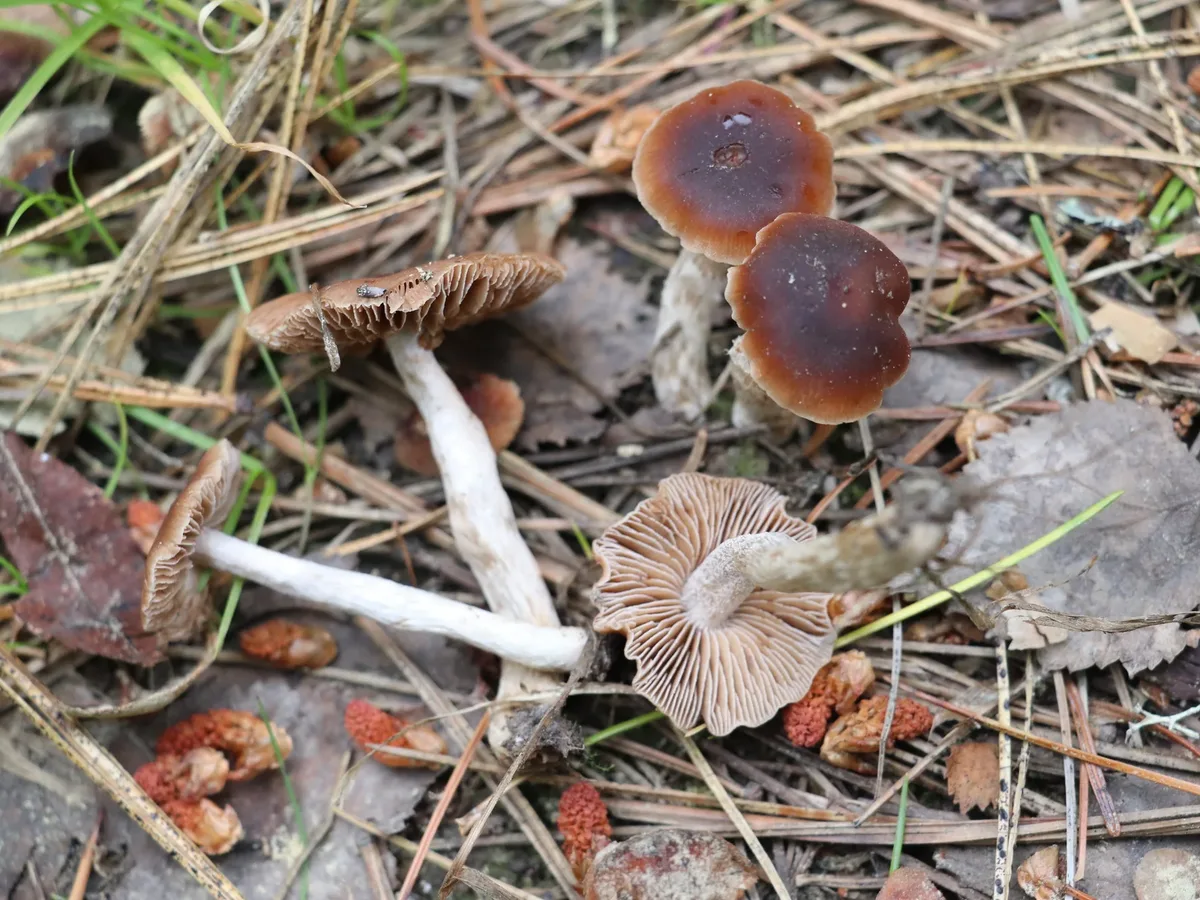 © Nina Filippova (CC BY 4.0)
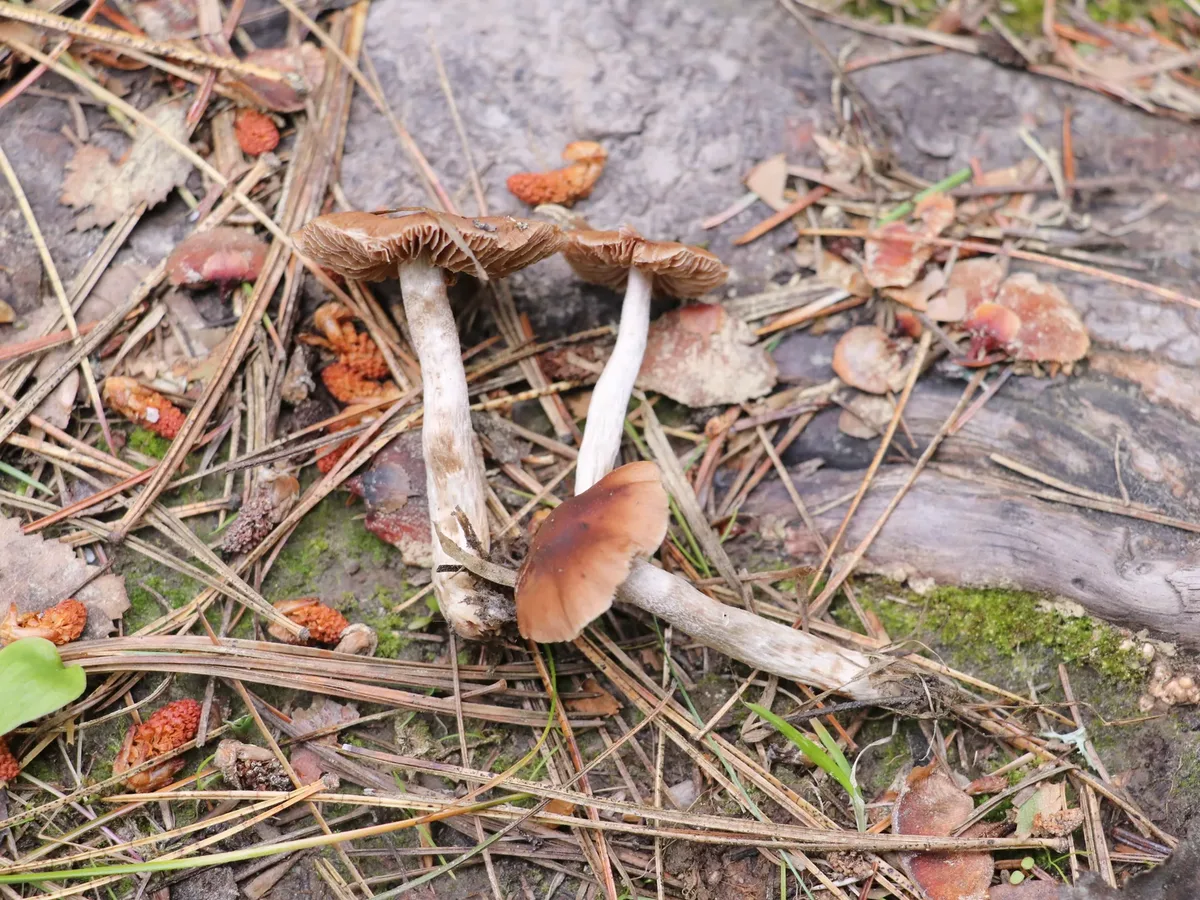 © Nina Filippova (CC BY 4.0)
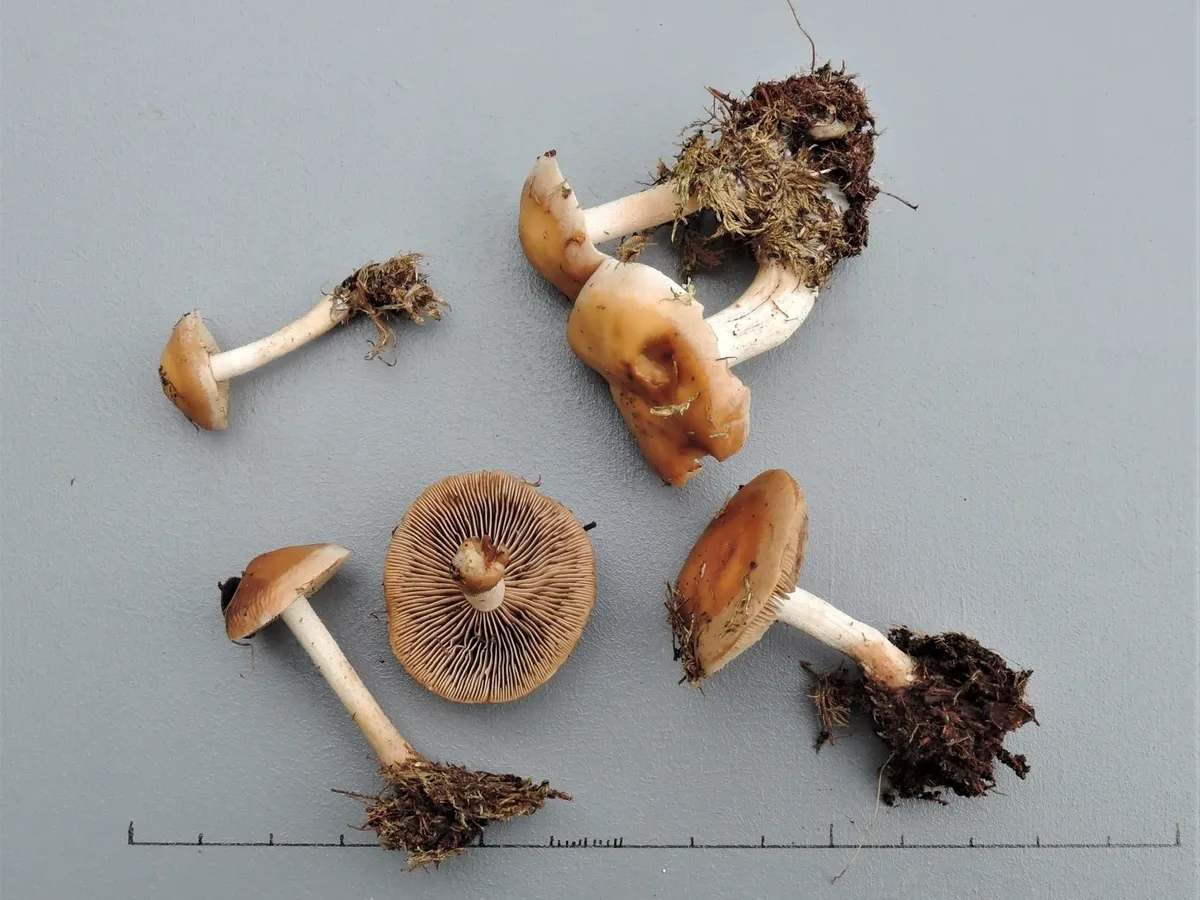 © Ole Christian Hagestad (CC BY)
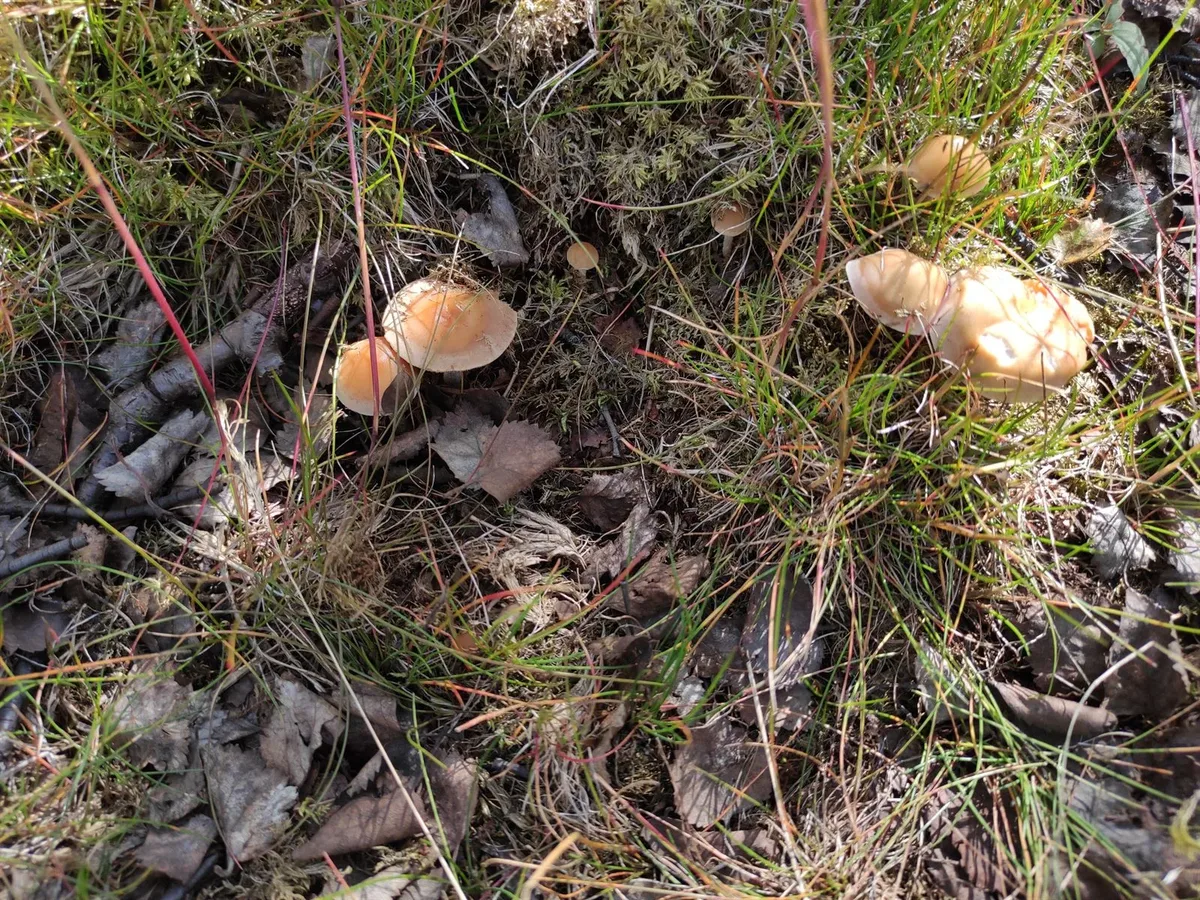 © Ole Christian Hagestad (CC BY)
 © Tove Bakar (CC BY)
 © Perry Gunnar Larsen (CC BY)
 © Nina Filippova (CC BY 4.0)© Nina Filippova (CC BY 4.0)© Nina Filippova (CC BY 4.0)
Edible only with the right preparation - or safe for some people but not others. Learn the caveats first.
Never eat a mushroom you are not 100% sure of - check the look-alikes below, and always cook wild mushrooms.
How to recognise it
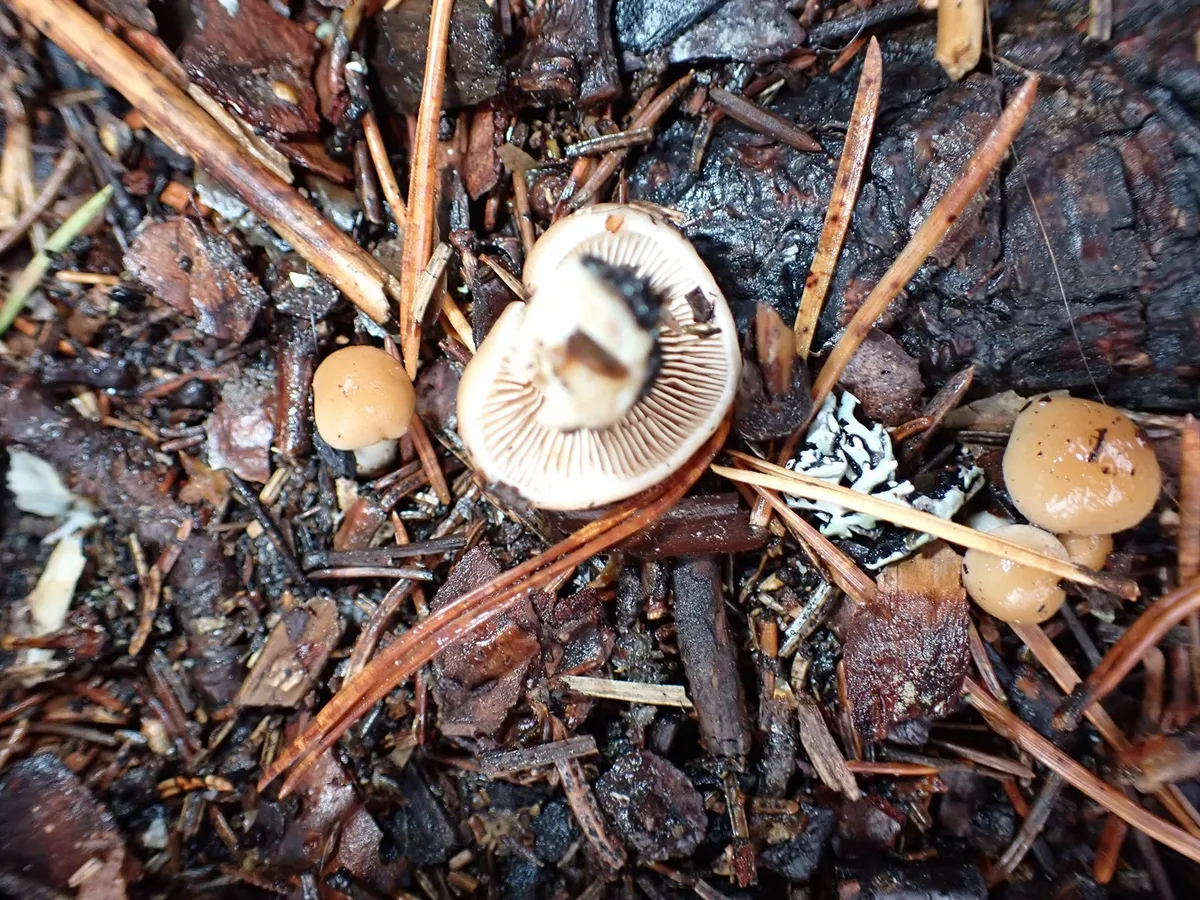
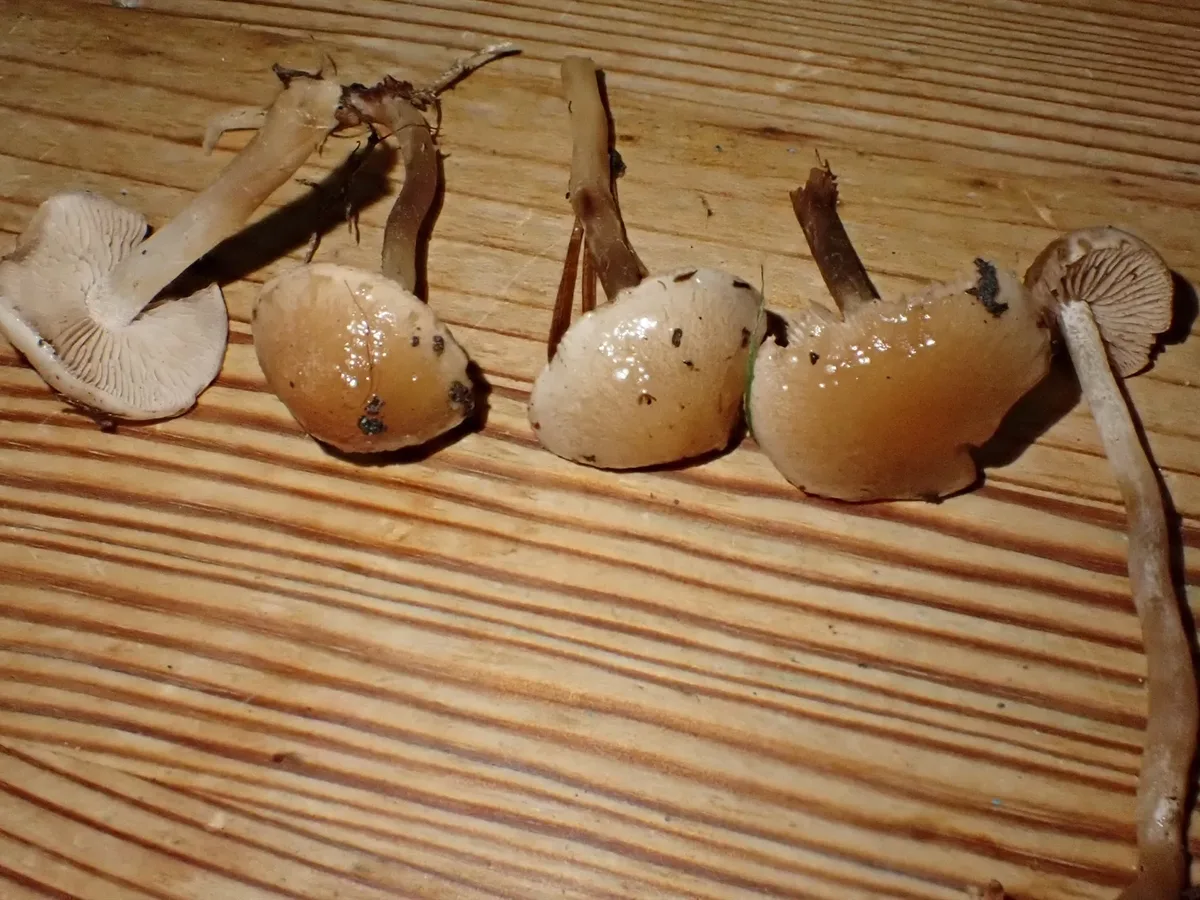
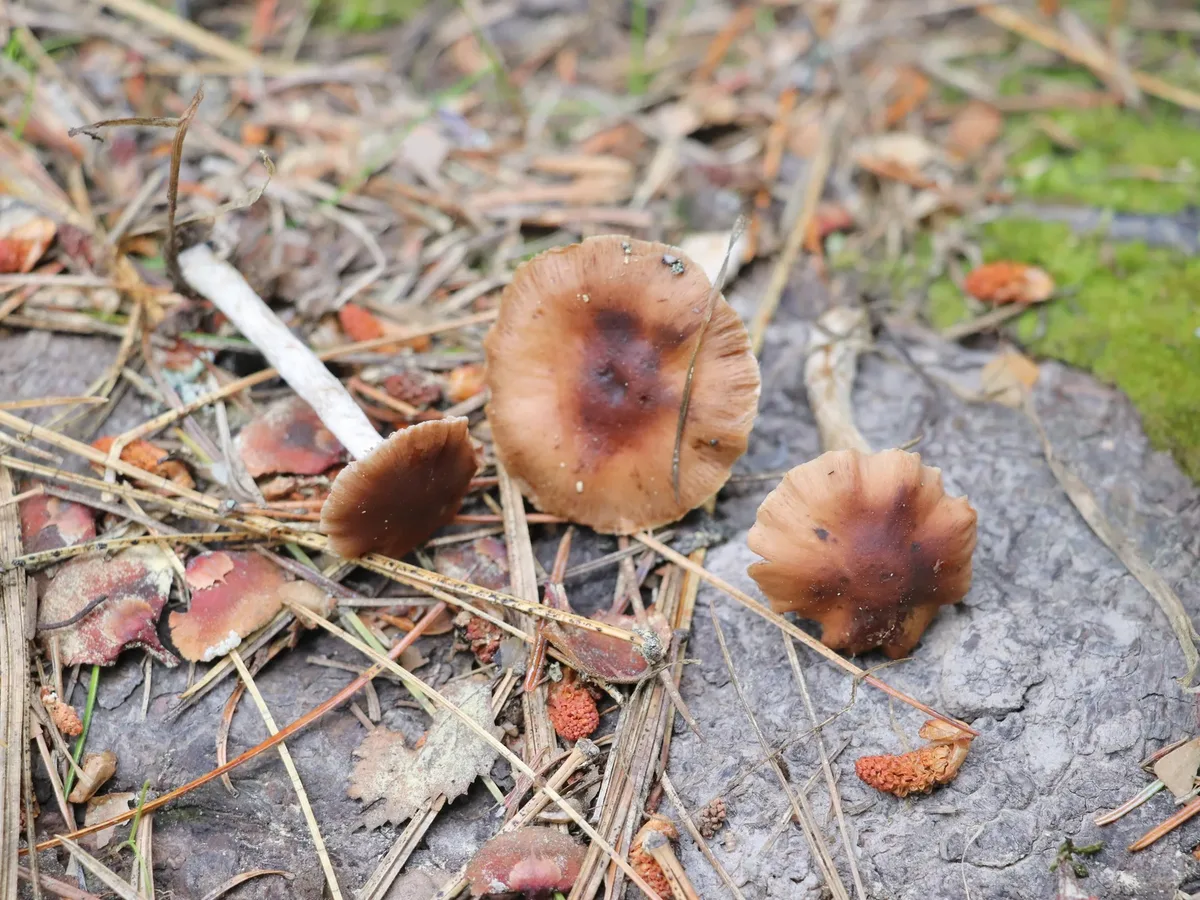
Hebeloma birrus is a small, understated mushroom - easy to walk past among the low vegetation of the fell. It follows the familiar Hebeloma pattern: a rounded pale buff to greyish-brown cap, clay-brown spore print, and a slender fibrous stem without a ring.
What sets it apart is where it grows - on open arctic ground beside prostrate willows and Dryas, far above the tree line, where few other Hebeloma venture.
Cap
The cap is smaller than the common H. crustuliniforme (rarely beyond 6 cm) and somewhat greyer in tone, and the surface lacks the distinctly tacky feel of that species.
Gills
Gills ripen to the characteristic clay-brown of the genus.
Smell & taste
The radish smell is present but subdued, sometimes barely perceptible in dry conditions or older specimens.
Stem
The stem is pale and slender, with fine silky fibrils towards the apex.
Flesh
Flesh stays white and unchanged when cut.
In context, the combination of small grey-buff cap, clay-brown spores, no ring, a faint hint of radish, and the surrounding open arctic landscape effectively identifies this species - no other Hebeloma regularly fruits in treeless high-arctic vegetation.
Why it's dangerous
The inherent toxicity of H. birrus causes unpleasant but generally non-fatal gastrointestinal illness.
The greater risk lies in confusion with genuinely lethal species sharing its habitat: Galerina species containing deadly amatoxins occur in similar boreal and subarctic environments.
The remote, resource-limited setting of arctic-alpine foraging amplifies even moderate illness into a potentially dangerous situation. No small brown mushroom in fell or arctic heathland should be eaten without verified expert identification.
Toxin
The specific toxic compounds in H. birrus have not been individually characterised. But the species belongs to a genus in which several agents collectively cause gastrointestinal illness:
- hebelomins (sesquiterpene-derived compounds)
- irritant glycoproteins
- various secondary metabolites
The volatiles responsible for the faint radish odour are isothiocyanate-like compounds, similar to those in related species.
These are not the same as amatoxins or orellanin. They cause a rapid-onset gastrointestinal syndrome rather than the delayed and organ-destroying toxicity of those other classes.
Symptoms
Gastrointestinal symptoms typically begin within 30 minutes to 3 hours of ingestion:
- nausea
- vomiting
- abdominal pain
- diarrhoea
Symptoms usually resolve within 12-24 hours in healthy adults. Dehydration is the main complication, particularly in vulnerable individuals (children, elderly).
If the identity of the ingested mushroom is uncertain, or if symptoms are severe or prolonged, seek medical attention and retain a sample or photograph of the mushroom.
Staying safe
Hebeloma birrus should never be eaten. Its gastrointestinal irritants cause nausea, vomiting, abdominal cramps and diarrhoea.
Although hebeloma poisoning is generally self-limiting and rarely fatal in itself, the setting in which this species is found - remote arctic and alpine terrain, far from medical care - makes even a non-lethal gastrointestinal illness potentially serious.
The greater hazard is mistaking it, or a co-occurring Galerina species, for something edible. In arctic and boreal contexts, any small brown-capped, clay-brown-spored mushroom without confident, verified identification should be left alone without exception.
Where & when it grows
Habitat
Hebeloma birrus occupies a very specific niche: the ectomycorrhizal community of arctic and alpine dwarf shrubs, particularly prostrate willows and Dryas octopetala.
In the High North, these compact, ground-hugging plants are the primary woody mycorrhizal hosts above the tree line, and H. birrus is one of a suite of agarics that have co-evolved alongside them across millennia.
The species is found across northern Fennoscandia (especially northern Norway, Sweden and Finland above the tree line), Iceland, Svalbard, and in appropriate montane habitats through the Scandinavian mountain chain.
It grows on mineral-rich or peaty well-drained soils in late-snowmelt patches, on fellfield ridges, and in sheltered hollows where Dryas or willow scrub establishes.
Because the host plants are small and widely spaced, fruitbodies appear as scattered individuals with considerable open ground between them.
When
The fruiting season here is genuinely brief - a window of just six to ten weeks between the last snowmelt and the first hard frost.
Snow typically clears from suitable habitats between late June and mid-July, after which soil temperatures rise quickly in the long arctic daylight.
Fruitbodies appear from late July onward, peaking in early August in high-arctic and high-alpine sites.
In subarctic lowland sites - the fell areas of northern Sweden and Finland just below the tree line - the season stretches into September. When that first frost arrives, often in late August at altitude, the season ends abruptly.
In a good August, a short walk across the fell can turn up fruitbodies at every stage at once: pins emerging from the soil, fresh open caps, and spent specimens already going over - all compressed into a single scene.
How it grows
Like all Hebeloma species, H. birrus is an obligate ectomycorrhizal fungus, entirely dependent on living plant partners to complete its life cycle.
Its partners - prostrate arctic willows and Dryas - are long-lived, slow-growing plants that maintain extensive root systems just below the soil surface.
The fungal mycelium threads between these roots, delivering mineral nutrients (especially phosphorus and nitrogen, both scarce in nutrient-poor arctic soils) in exchange for the photosynthate the plants produce.
Because the host plants are dwarf and scattered, the mycelial network may spread over a considerable area before enough resources accumulate to push up fruitbodies.
When conditions align - soil temperature above about 5 °C and adequate soil moisture after snowmelt - fruitbodies emerge singly or in small groups of two to four. Spores are carried by wind across the open landscape to colonise new roots.
Fruiting conditions
Fruiting is triggered by post-snowmelt soil warming above approximately 5 °C combined with adequate soil moisture. Because arctic soils retain meltwater for extended periods, heavy rain is less of a prerequisite than in temperate systems; soil temperature is the primary driver. The fruiting window is short - typically 6-10 weeks between snowmelt and first hard frost - and even minimal rainfall is sufficient once temperatures are adequate.
Look-alikes
The most important lookalike consideration in H. birrus habitat is the deadly Galerina marginata and related Galerina species, which contain amatoxins and can fruit in boreal and subarctic habitats near woody debris or on mossy ground.
Galerina species differ in several ways:
- a distinct membranous ring on the stem
- a mildly mealy-earthy smell (not radish)
- commonly grow on or near decaying wood or peat-moss
In open arctic heathland, several other Hebeloma species (H. arcticum, H. leucosarx) may also occur. They are equally or more poisonous and are separated only by microscopic features and detailed spore morphology. For safety purposes, treat all small brown Hebeloma in this habitat identically: do not eat any of them.
Cortinarius species with rusty-brown spore prints may also occur on arctic heathland. These have a fibrous cortina (cobweb veil) between cap and stem when young, and several contain the deadly nephrotoxin orellanin.
Deadly - contains orellanin, which causes irreversible kidney failure with a treacherously delayed onset of 2-3 weeks after ingestion, often after initial mild symptoms appear to resolve. Cortinarius species in fell and subarctic habitats often have orange-tawny to rusty-brown caps and a cobweb-like cortina (cortina = fibrous partial veil between cap edge and stem) when young, which leaves a rusty-spored zone on the stem. The spore print is distinctly rust-ochre to rust-brown - redder than the clay-buff of Hebeloma. The smell is not radish. Any brown to orange mushroom with cortina remnants in arctic or alpine heathland must be treated as a potential deadly Cortinarius.
Deadly - contains amatoxins (alpha-amanitin) that cause irreversible liver and kidney failure; responsible for numerous fatalities. Galerina marginata has a similar brown cap and clay-brown spore print but carries a distinct, persistent membranous ring on the stem. It grows on dead wood, woody debris or peat-moss (not on live mycorrhizal soil), and smells mildly mealy-earthy, never of radish. In boreal and subarctic habitats, it grows on damp rotting logs, decaying stumps and sphagnum-rich peat rather than under live dwarf shrubs on mineral soil. The presence of a ring is the critical separator - Hebeloma birrus never has a persistent ring. Never collect any small brown-capped, clay-brown-spored agaric in arctic or boreal terrain without confirming it is not a Galerina.
Not deadly but also poisonous - causes the same gastrointestinal syndrome. Distinguishable reliably only by microscopic features (spore dimensions, cheilo- and pleurocystidia morphology) and in some cases by molecular sequencing. In the field, they are essentially indistinguishable from H. birrus without a microscope. For practical foraging purposes they should all be treated identically: do not eat any of them.
Also poisonous, not deadly. Larger (cap 4-10 cm vs. 2-6 cm), with a more distinctly viscid-tacky cap, stronger and more reliable radish smell, and typically associated with taller trees (birch, pine, spruce) rather than prostrate arctic shrubs. Weeping gill droplets more consistently visible. Both species share gastrointestinal toxins - separation has academic rather than practical safety implications: neither should be eaten.
A reference guide - never an edibility guarantee. When in doubt, leave it out.