Hooded false morel
Gyromitra infulasyn. Helvella infula Schaeff., Helvella bicolor Buch.-Ham. ex Cooke, Physomitra infula (Schaeff.) Boud., Neogyromitra infula (Schaeff.) S. Imai
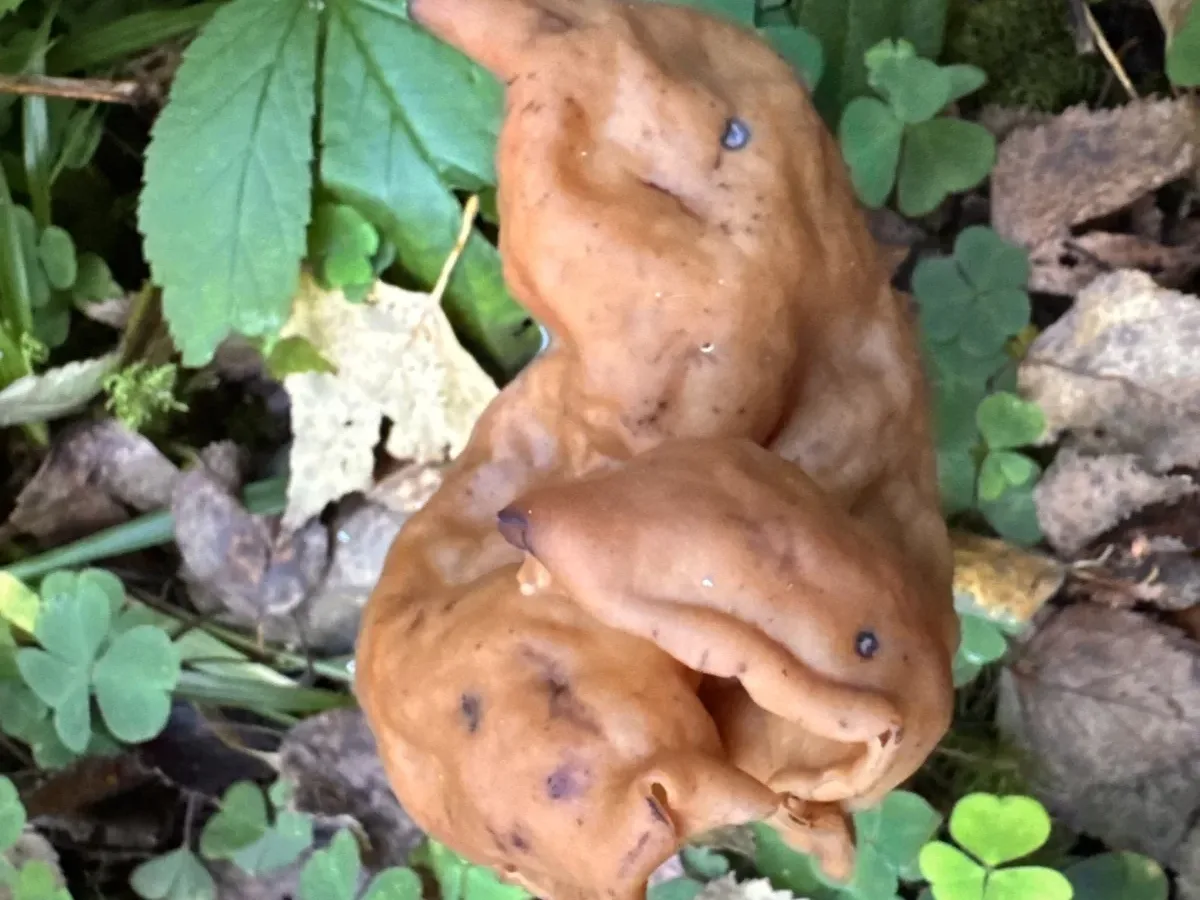 © Paal Pedersen (CC BY)
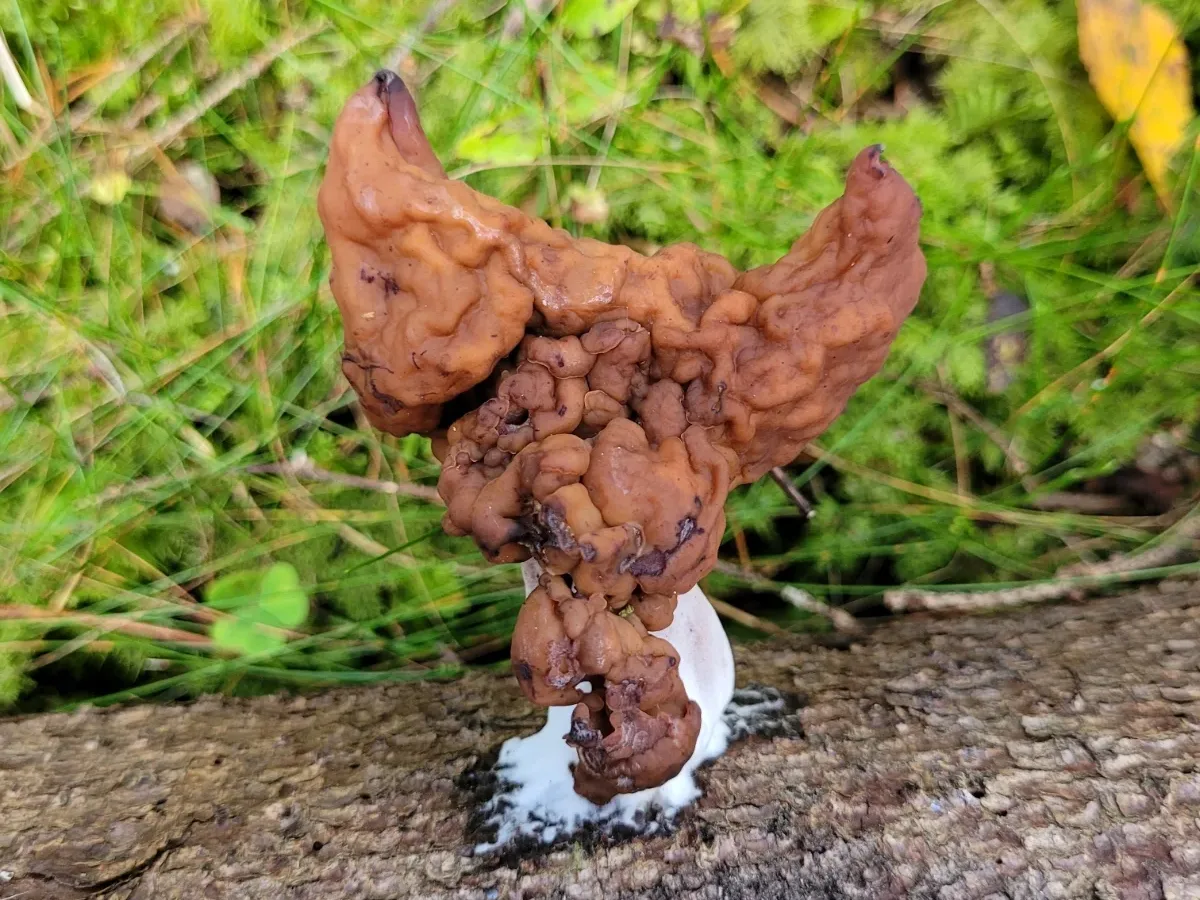 © Ellen Christensen (CC BY)
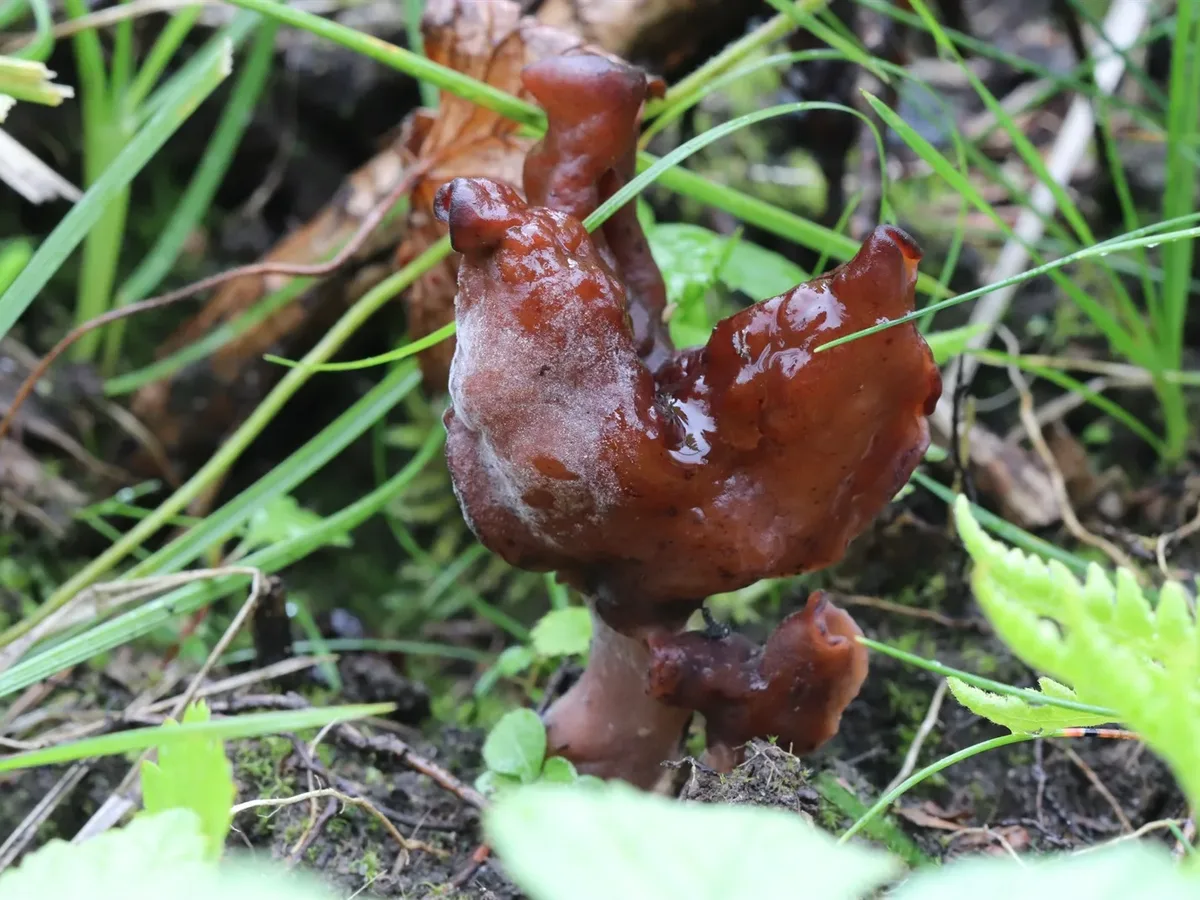 © Rob van Kruining (CC BY)
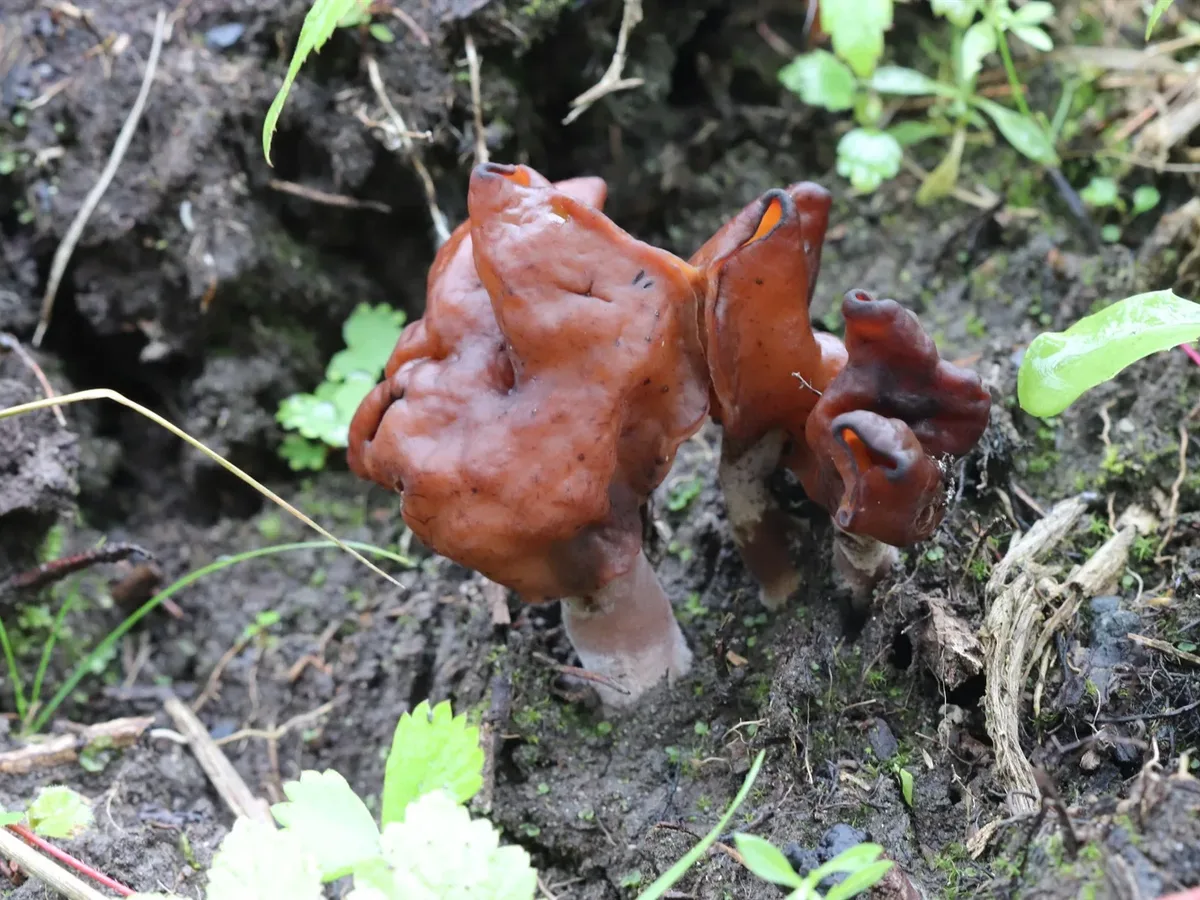 © Rob van Kruining (CC BY)
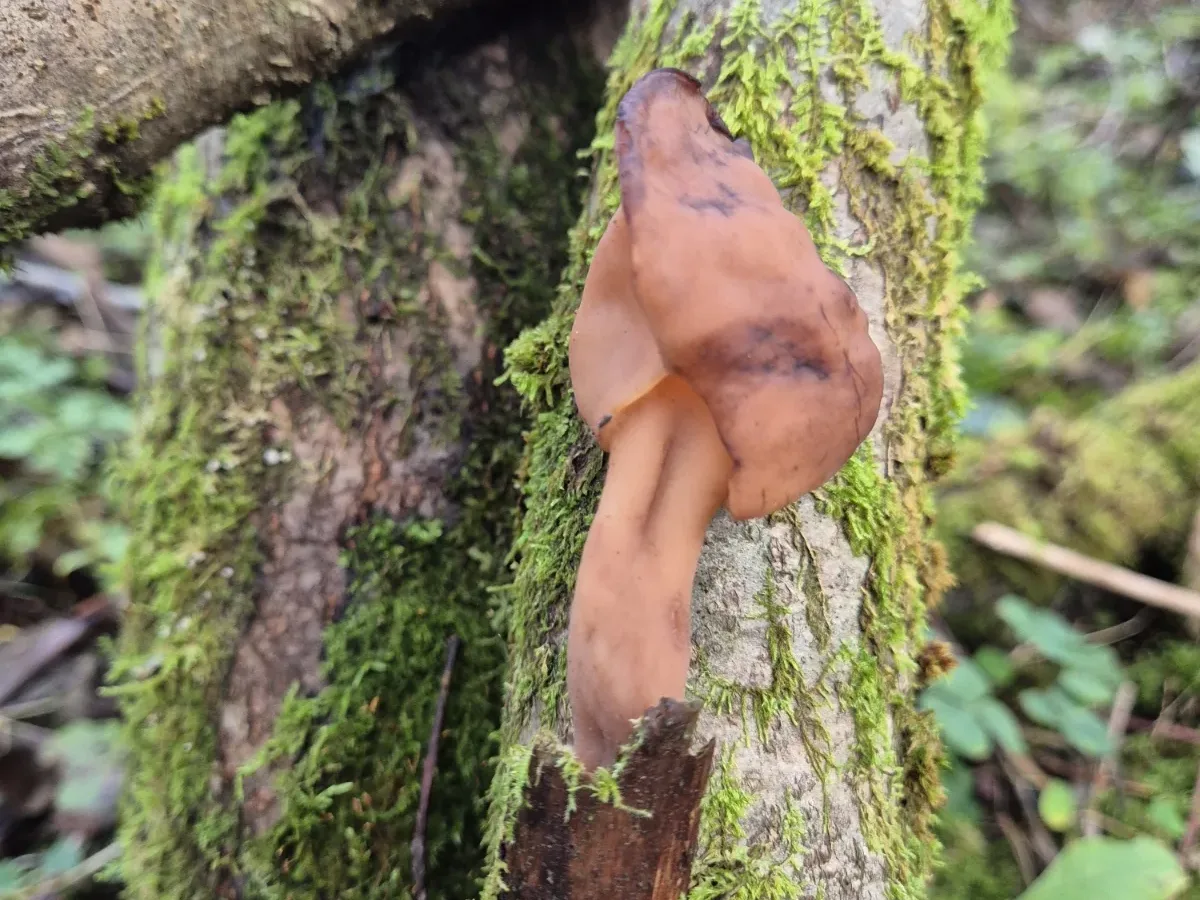 © Grzegorz Górecki (CC BY)
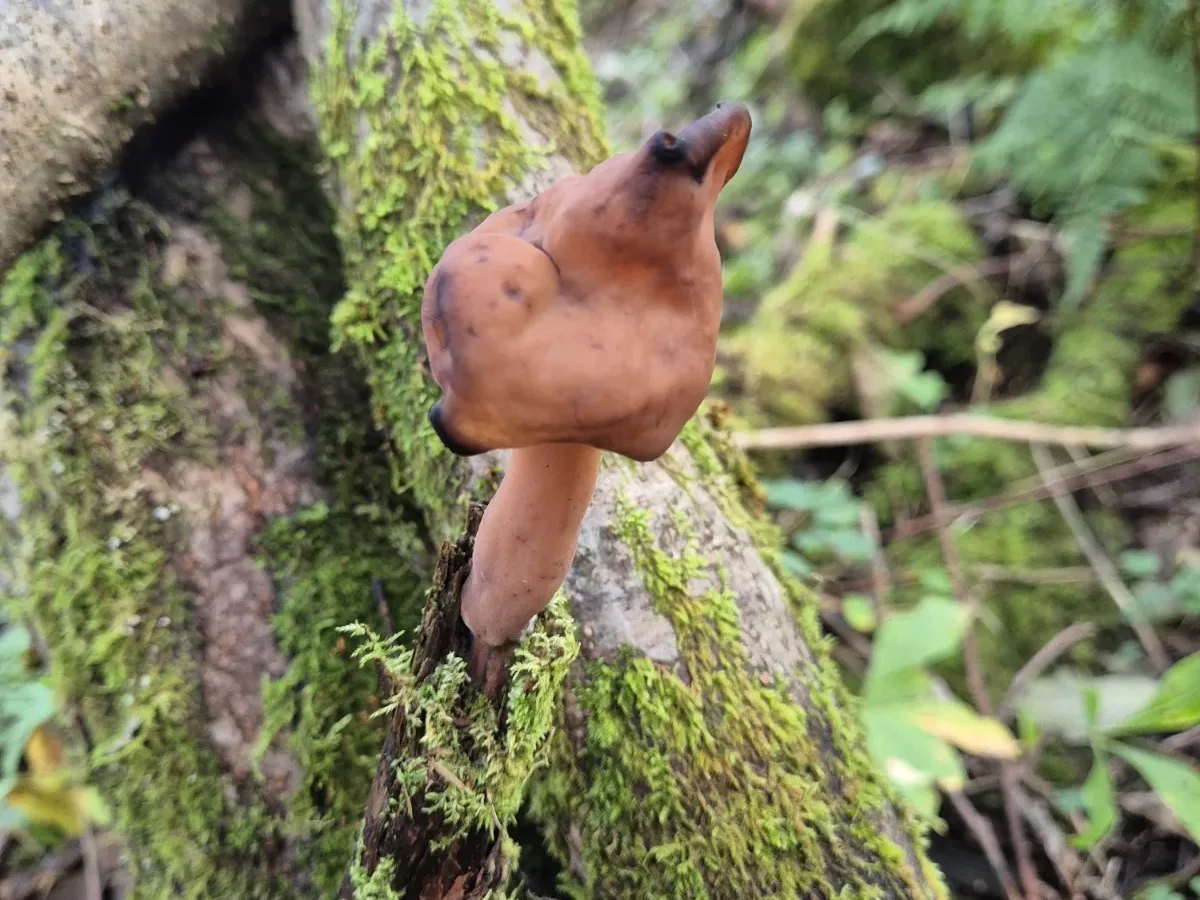 © Grzegorz Górecki (CC BY)
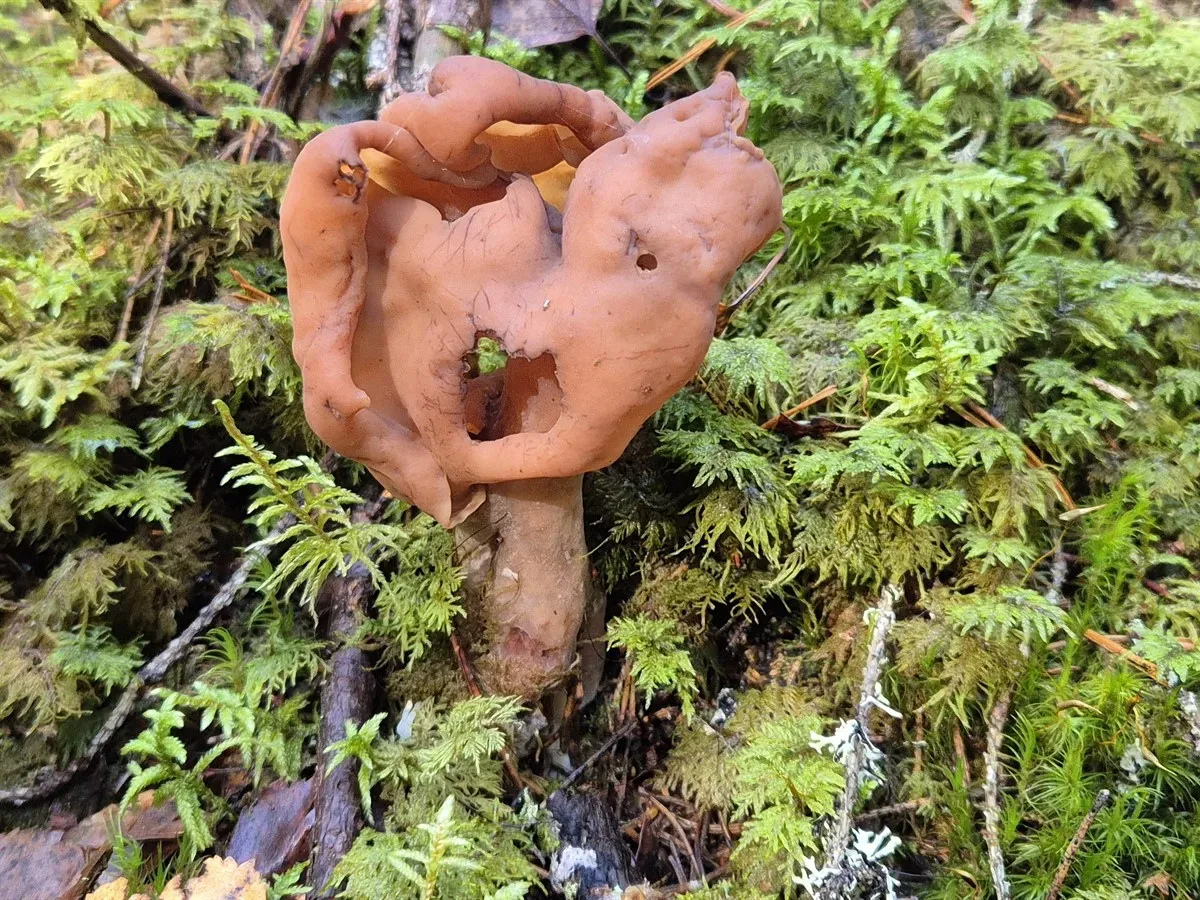 © Inger Kristoffersen (CC BY)
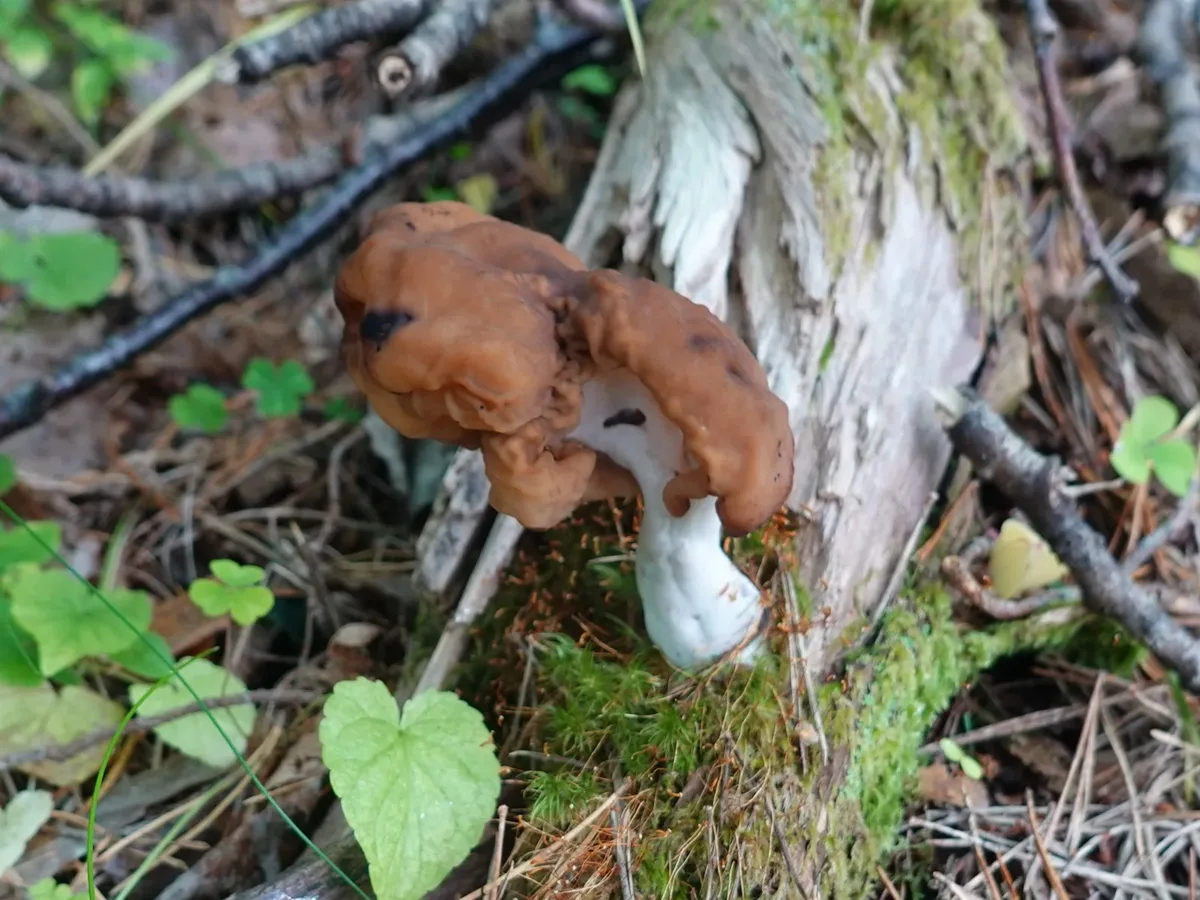 © Perry Gunnar Larsen (CC BY)
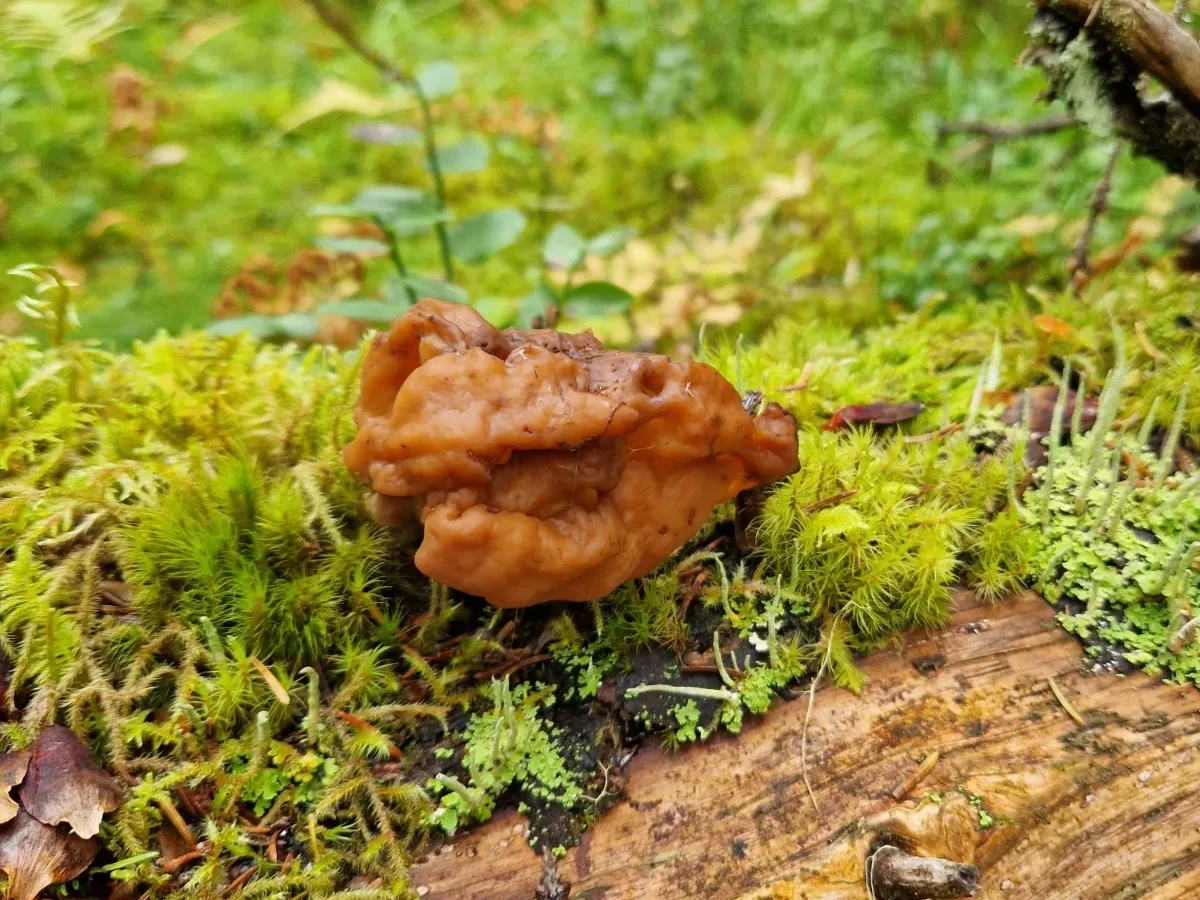 © Noah Lars Gunnar Ehrnstrøm (CC BY-SA)
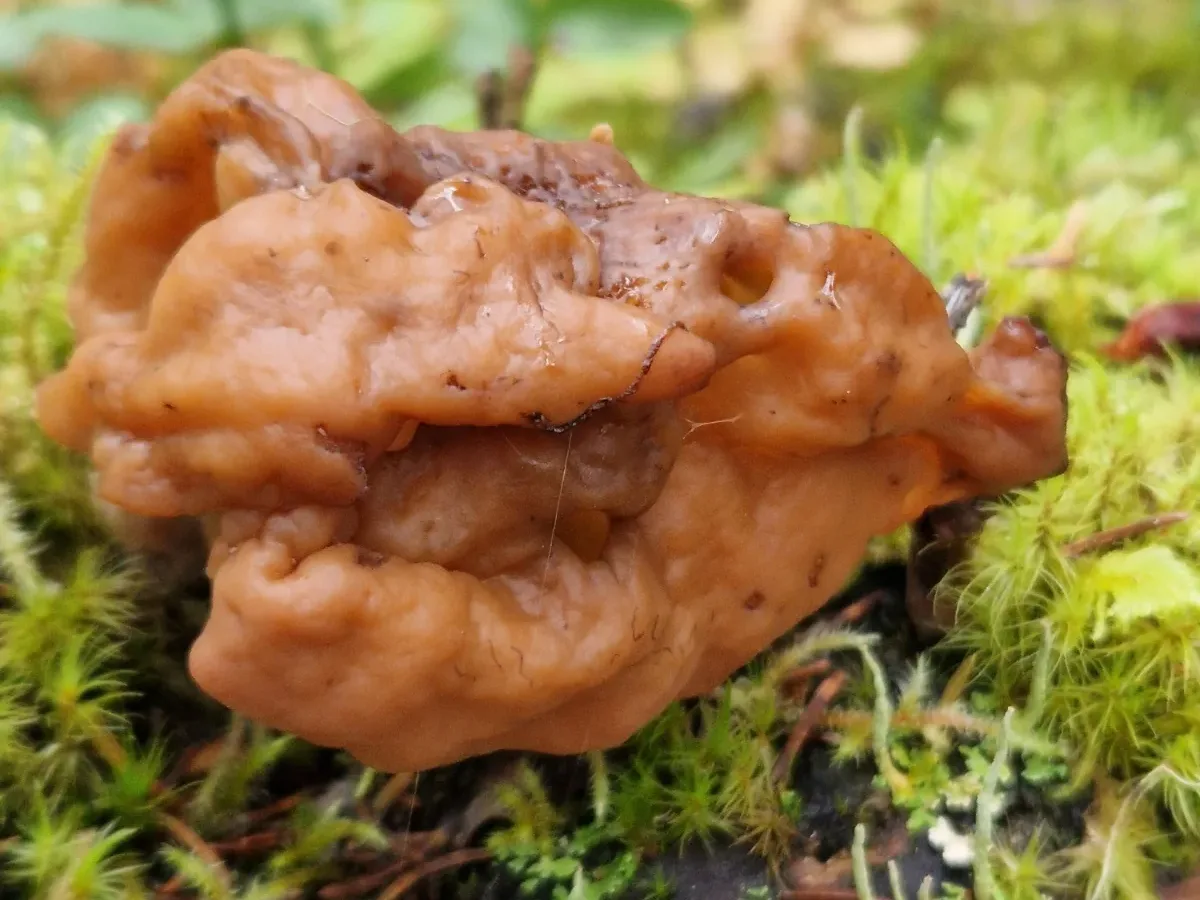 © Noah Lars Gunnar Ehrnstrøm (CC BY-SA)© Paal Pedersen (CC BY)© Ellen Christensen (CC BY)
Toxic - and the most serious cases can be fatal. Never eat it, and wash your hands after handling.
Never eat a mushroom you are not 100% sure of - check the look-alikes below, and always cook wild mushrooms.
How to recognise it
Among the false morels, Gyromitra infula is the one that arrives in autumn - and its shape sets it apart immediately.
Cap
Rather than the tightly crinkled, brain-like mass of its spring relatives, the cap is divided into two or sometimes three broad irregular lobes that droop down on either side of the stipe like an old-fashioned bishop's mitre or a drooping hood. Viewed from the side, the overall impression is of something folded and slightly lopsided, never quite symmetrical.
The lobes run 3-10 cm across and are typically darker than in G. esculenta or G. gigas - reddish-brown, chocolate-brown, and purple-brown all appear, often uneven across a single specimen, with the margins darkest and the upper saddle surface a shade paler.
The inner (under)surface of the lobes is sterile and whitish, irregularly attached to the stipe for much of its length; a cut down the centre reveals a roughly triangular hollow cavity between the cap and the stipe wall - connected but not sealed into the tightly chambered architecture of G. gigas.
Stem
The stipe itself is short and fairly stout (2-6 cm tall, 1-3 cm wide), whitish to pale pinkish-tan, longitudinally furrowed or ribbed, and hollow or nearly so.
Flesh
The flesh is whitish to pale buff, fragile and easily torn, with little or no distinctive smell.
Spore print is white to cream; spores are ellipsoid to fusiform, smooth, 18-26 × 7-10 µm, with one or two small oil droplets.
Why it's dangerous
Fatal poisonings from Gyromitra infula have been documented in Europe and North America. The species is not easily distinguished from other Gyromitra in the field without season and substrate context, and its toxic potential is equivalent to that of the more notorious G. esculenta.
Because the cooking vapours themselves are toxic (MMH is volatile), even preparing the mushroom indoors poses a risk to bystanders. No edibility threshold has been established because gyromitrin content varies unpredictably between individual fruit bodies.
Foragers encountering this species in late summer or autumn should leave it in place and not attempt preparation by any method.
If poisoning is suspected, contact emergency services immediately and inform them of the specific species involved so that appropriate treatment with pyridoxine can be initiated.
Toxin
Gyromitrin (N-methyl-N-formylhydrazone, acetaldehyde methylformylhydrazone). This thermolabile but water-soluble compound is a pro-toxin, rapidly converted to monomethylhydrazine (MMH) in the acidic environment of the stomach.
MMH acts in several ways:
- a potent inhibitor of pyridoxine-dependent enzymes
- a haemolytic agent that destroys red blood cells
- a hepatotoxin causing centrilobular hepatic necrosis
- a methemoglobin-former causing tissue hypoxia
- a probable carcinogen (related compounds are IARC Group 2B)
Gyromitrin concentrations in G. infula are comparable to or somewhat lower than in G. esculenta, but are highly variable between specimens and are sufficient to cause fatal poisoning.
MMH is also volatile and toxic via inhalation - cooking vapours in an enclosed kitchen can cause symptoms.
Symptoms
Symptoms are delayed, appearing 6-12 hours post-ingestion (the delay frequently leads to misdiagnosis or to the cause being overlooked).
- Early phase (6-12 h): nausea, vomiting, watery or bloody diarrhoea, severe abdominal cramping, headache, dizziness, and malaise.
- Intermediate phase (12-48 h in moderate cases): fatigue, continuing gastrointestinal symptoms, liver enzyme elevation on blood tests.
- Severe phase (24-72 h): haemolysis causing dark (cola-coloured) urine and jaundice; hepatomegaly and right upper quadrant pain; rising bilirubin and transaminases; methemoglobinaemia with cyanosis, tachycardia, and dyspnoea.
- Life-threatening phase (severe poisoning): acute hepatic necrosis and acute renal failure; coagulopathy; seizures; coma; death.
Children, elderly individuals, pregnant women, and those with pre-existing liver disease or G6PD deficiency are at significantly greater risk.
Treatment is supportive:
- methylene blue for methemoglobinaemia
- high-dose pyridoxine (vitamin B6) to counter MMH enzyme inhibition
- N-acetylcysteine for hepatoprotection
- in fulminant hepatic failure, liver transplantation may be required
Any suspected ingestion should prompt immediate emergency medical consultation.
Staying safe
Gyromitra infula is a deadly toxic species. It contains gyromitrin (N-methyl-N-formylhydrazone), which is hydrolysed in the acidic stomach environment to monomethylhydrazine (MMH). MMH is a potent hepatotoxin, haemolytic agent, and methemoglobin-former.
Poisoning symptoms typically appear 6-12 hours after ingestion and can progress to hepatic and renal failure in severe cases. Fatalities have been documented in Europe and North America.
Because G. infula does not share the strong culinary tradition of G. esculenta in Scandinavia, there is less established lore about 'safe preparation.'
But no preparation method should be considered reliably safe: gyromitrin is partly volatilised by boiling (making cooking fumes also hazardous) but is not completely eliminated even after repeated parboiling. The species must never be consumed raw.
There are also reports of variable gyromitrin concentrations between individual specimens, which means that even if low-gyromitrin specimens are encountered, there is no way to distinguish them in the field.
This species should be treated with the same extreme caution as G. esculenta and regarded by foragers as off-limits.
Where & when it grows
Habitat
Gyromitra infula lives as a saprotroph - a decomposer that threads its mycelium through dead and dying conifer wood, drawing nutrients from cellulose and lignin as wood breaks down.
Look for it:
- on or right beside decaying conifer logs and stumps
- in logging clearcuts
- along shaded stream banks where fallen timber accumulates
- on wood-rich forest soil where buried roots are rotting away
It has a particular affinity for disturbed ground, which is why it turns up predictably at old log landings and along forest roads through spruce-fir country.
In eastern North America it is at home in spruce-fir forests from New England up through boreal Canada, in hemlock ravines of the Appalachians, and in the mixed forests of the Great Lakes. In Europe it favours montane spruce and fir forests - the Alps, Vosges, Black Forest, Carpathians, and Fennoscandia.
Because it is saprotrophic rather than mycorrhizal it is not strictly tied to a single host tree species, but conifers are strongly preferred.
When
The late-season fruiting of Gyromitra infula is one of its most critical identification features. While G. esculenta and G. gigas fruit in spring, often right after snowmelt, G. infula waits until late summer and autumn.
It appears typically July at the earliest in high-elevation or far-northern sites, with the main flush occurring September through October across temperate North America and Europe. Fruiting continues until the first hard frosts kill the fruit bodies; in mild autumns it can persist into November.
This means there is essentially no seasonal overlap with G. esculenta in most of its range, and a mushroom with a saddle-shaped Gyromitra cap in autumn is almost certainly G. infula.
Fruiting is triggered by:
- cooling temperatures
- adequate soil moisture from autumn rains
- the onset of seasonal decay processes in fallen wood
The season is longer and more spread out than spring Gyromitra species, often lasting 6-8 weeks at a given site.
How it grows
Fruit bodies emerge singly, scattered, or occasionally in small clusters of two to four from shared decaying substrate. They develop over roughly 5-10 days from pinhead to full size, then persist for one to two weeks before collapsing.
In a productive year a single large log or stump can yield dozens of fruit bodies, appearing in successive waves over several weeks as the mycelium works through the wood.
The species can return to the same site year after year as long as there is suitable decaying material left to sustain it.
Fruiting conditions
Fruiting in late summer and autumn is triggered by cooling temperatures and adequate moisture from autumn rainfall, combined with the onset of active wood decay processes as temperatures drop below the summer maximum. Unlike spring Gyromitra species that are driven primarily by snowmelt and soil warming, G. infula fruits after the summer dry period breaks - typically following the first significant autumn rains when soil temperatures are declining from summer highs toward 4-10 °C. A flush lag of 5-14 days after meaningful rainfall (20+ mm over 14 days) is typical.
Look-alikes
The most important lookalikes are other Gyromitra species.
- Gyromitra esculenta (spring false morel or brain mushroom) has a more tightly convoluted, brain-like cap mass that is fully and broadly fused to the stipe, is richly reddish-brown, and fruits exclusively in spring - the season difference (spring vs. autumn) is the single most reliable separator.
- Gyromitra gigas (snow morel) is very large, pale ochre-tan, with a massive, heavily chambered stipe and fused brain-like cap, and is also strictly spring-fruiting.
- Helvella lacunosa (elfin saddle) is a saddle-shaped ascomycete that superficially resembles G. infula; it is distinguished by its deeply ribbed, lacunose grey-to-black stipe, its thinner and less fleshy lobes, and generally darker grey or blackish cap coloration. Helvella species contain their own toxic compounds and should also be avoided raw.
- Helvella crispa (white saddle) has a pale cream to white cap and white ribbed stipe, thinner fleshed, fruiting in similar autumn habitats.
Neither Helvella species contains gyromitrin at significant levels, but both can cause gastrointestinal distress raw.
True morels (Morchella spp.) are not a realistic confusion for experienced observers - they have a honeycomb-pitted, ridged cap that is completely different from the smooth lobed saddle of G. infula, and they fruit only in spring.
G. esculenta has a tightly convoluted, brain-like cap that is broadly fused to the stipe over most of its undersurface, forming distinct internal chambers; cap is reddish-brown, cap surface more densely folded; stipe more deeply ribbed and chambered. Most importantly, G. esculenta fruits exclusively in spring (March-May) while G. infula fruits in late summer and autumn - this season difference alone resolves the confusion in the field.
G. gigas is much larger (cap up to 15 cm), paler ochre to tan (not reddish-purple-brown), with a massive, tightly fused brain-like cap and a very stout, deeply chambered white stipe. Also a strict spring fruiter, appearing near snowmelt - not in autumn.
True morels have a completely different cap surface: a regular honeycomb of pits and ridges rather than smooth broad saddle-lobes. The cap is fully attached to the stipe at the base and the entire fruit body is hollow. Morels fruit only in spring. Not a realistic confusion for anyone who has handled both species, but beginners may try to force a saddle-shaped Gyromitra into the morel category - the season and cap surface pattern resolve this immediately.
Helvella lacunosa shares the saddle-shaped lobed cap but is immediately distinguished by its deeply ribbed and lacunose grey to blackish stipe, its thinner and less fleshy cap lobes, and the darker grey to near-black cap coloration. It is also smaller on average. Helvella species are not considered deadly but contain toxic gyromitrin-related compounds and should not be eaten raw.
Helvella crispa is pale cream to white throughout - cap and stipe - and has thinner, more deeply curled lobes. The stipe is deeply ribbed and chambered but white, not reddish-brown. The overall pale colour is immediately distinctive against the darker reddish-brown of G. infula.
A reference guide - never an edibility guarantee. When in doubt, leave it out.