Snow morel
Gyromitra gigassyn. Helvella gigas Krombh., Discina gigas (Krombh.) Sacc., Gyromitra fastigiata (Krombh.) Rehm, Neogyromitra gigas (Krombh.) S. Imai
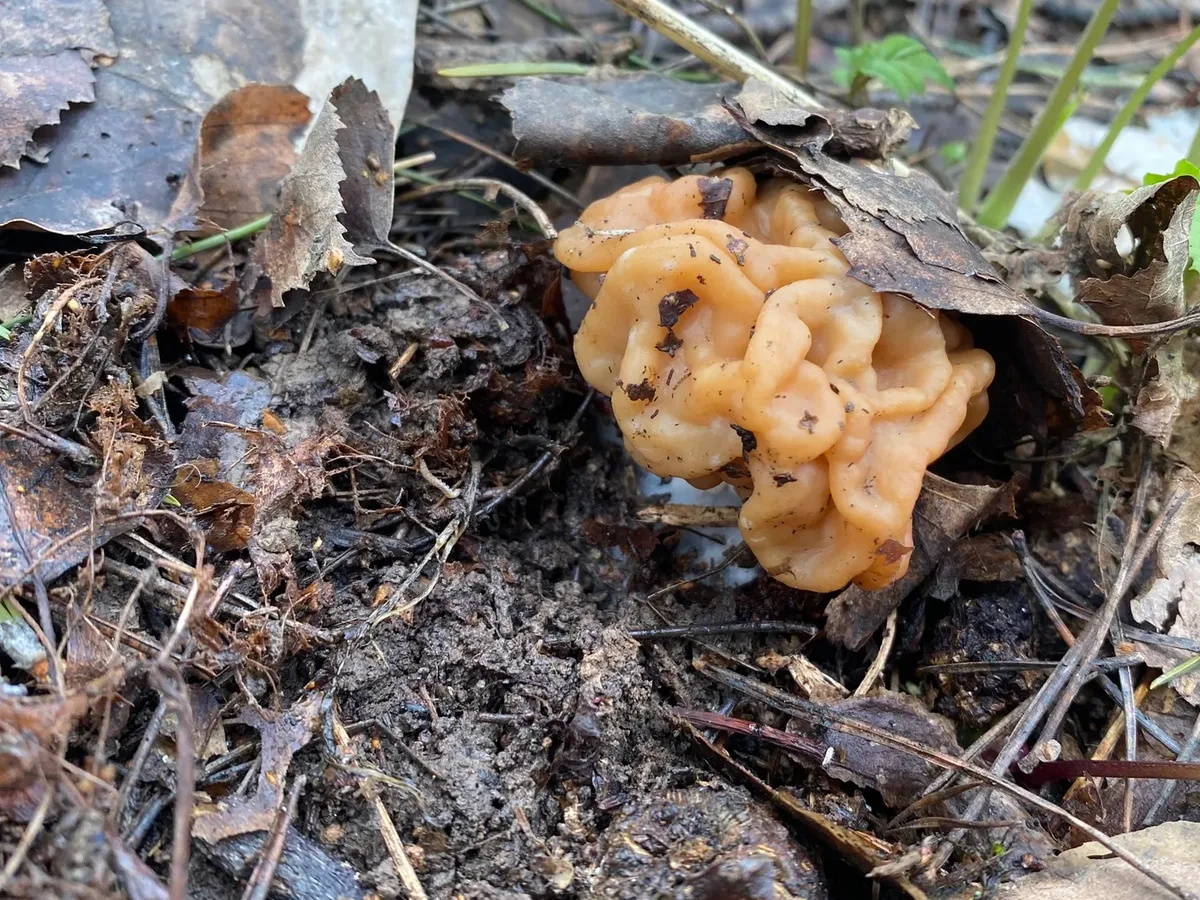 © Илья Руденко (CC BY)
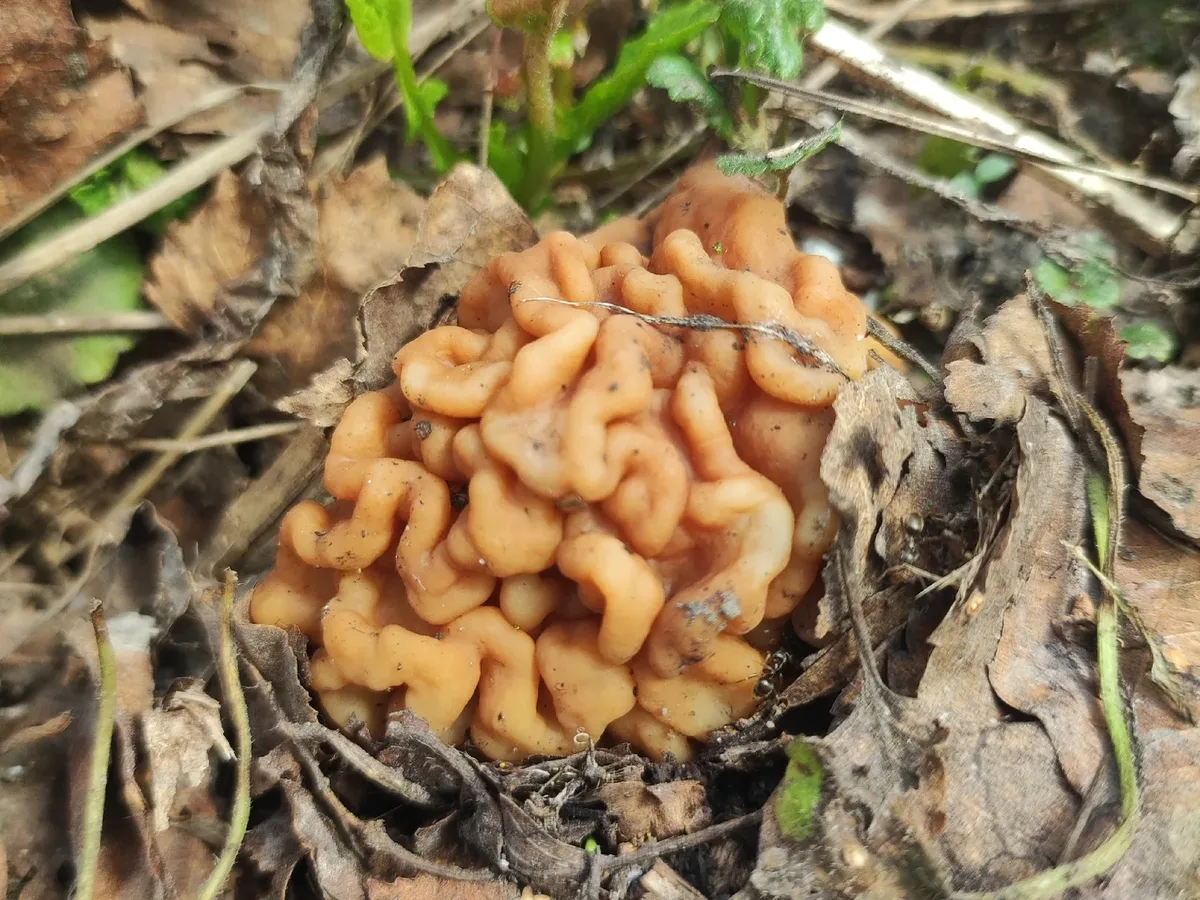 © Anastasiia Samokhvalova (CC BY)
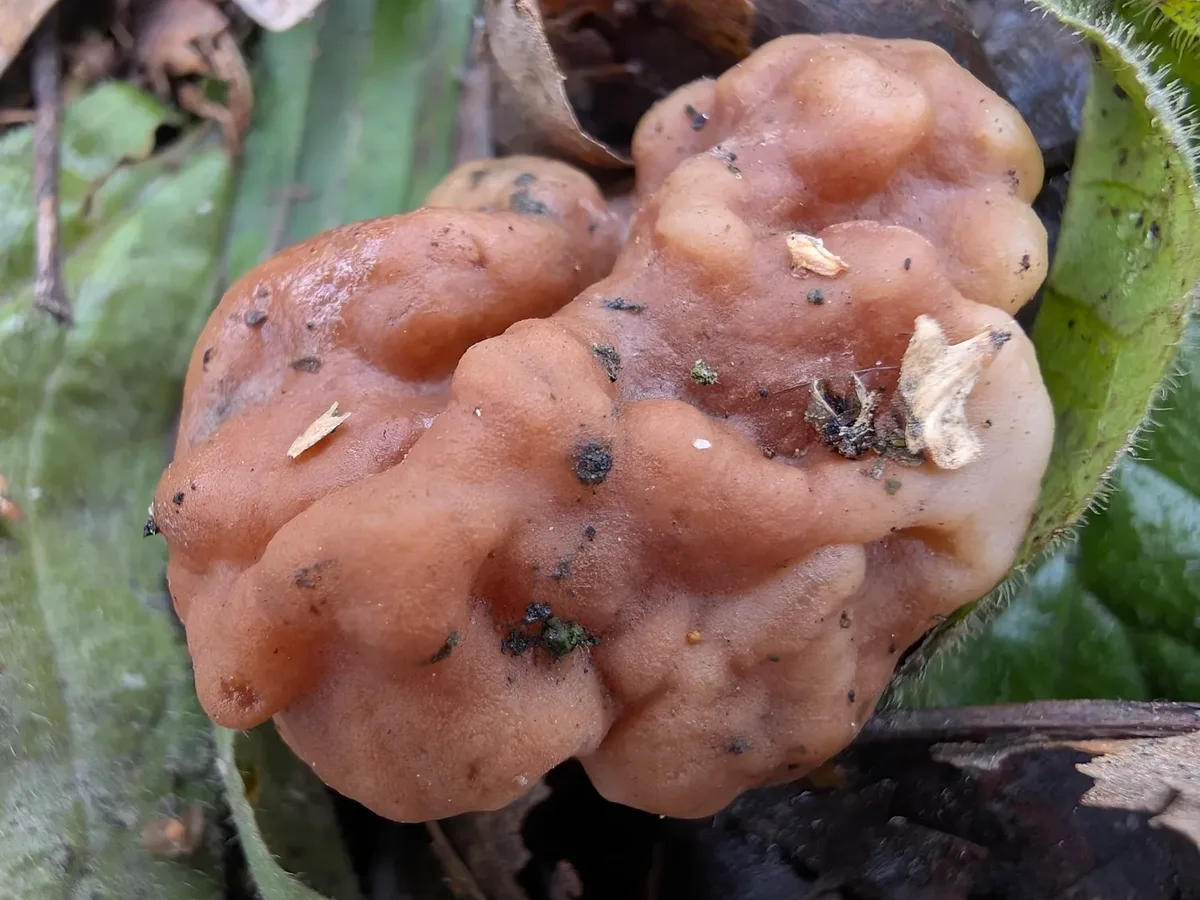 Denis A (CC0)
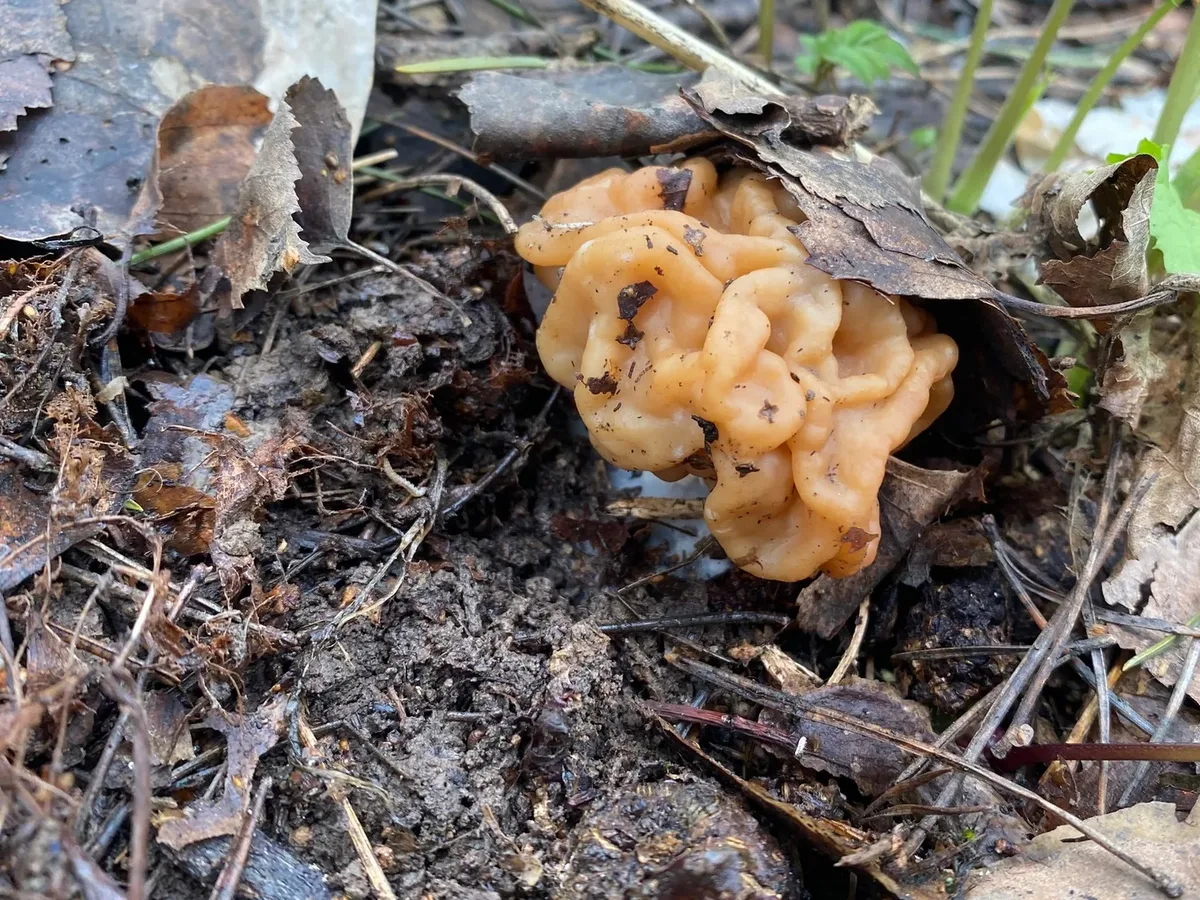 © Илья Руденко (CC BY)
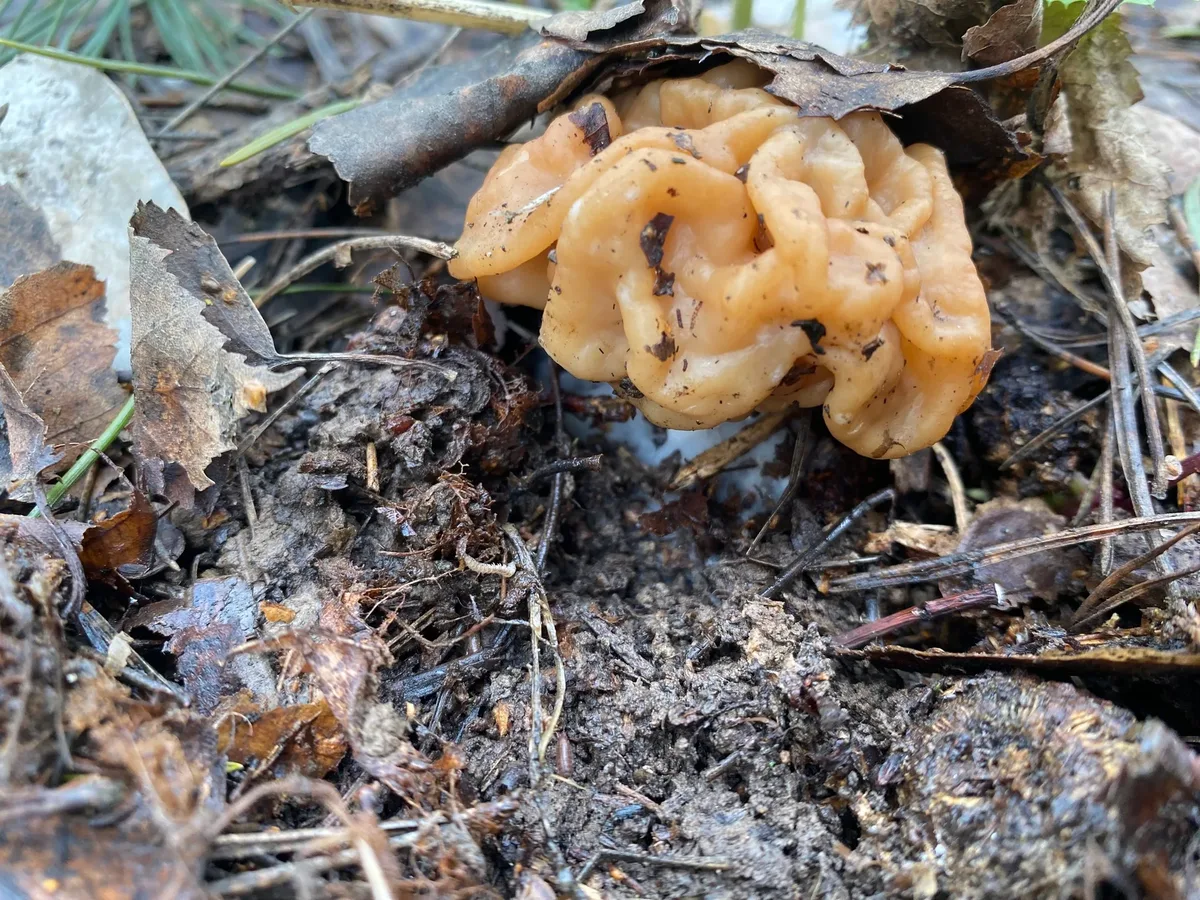 © Илья Руденко (CC BY)
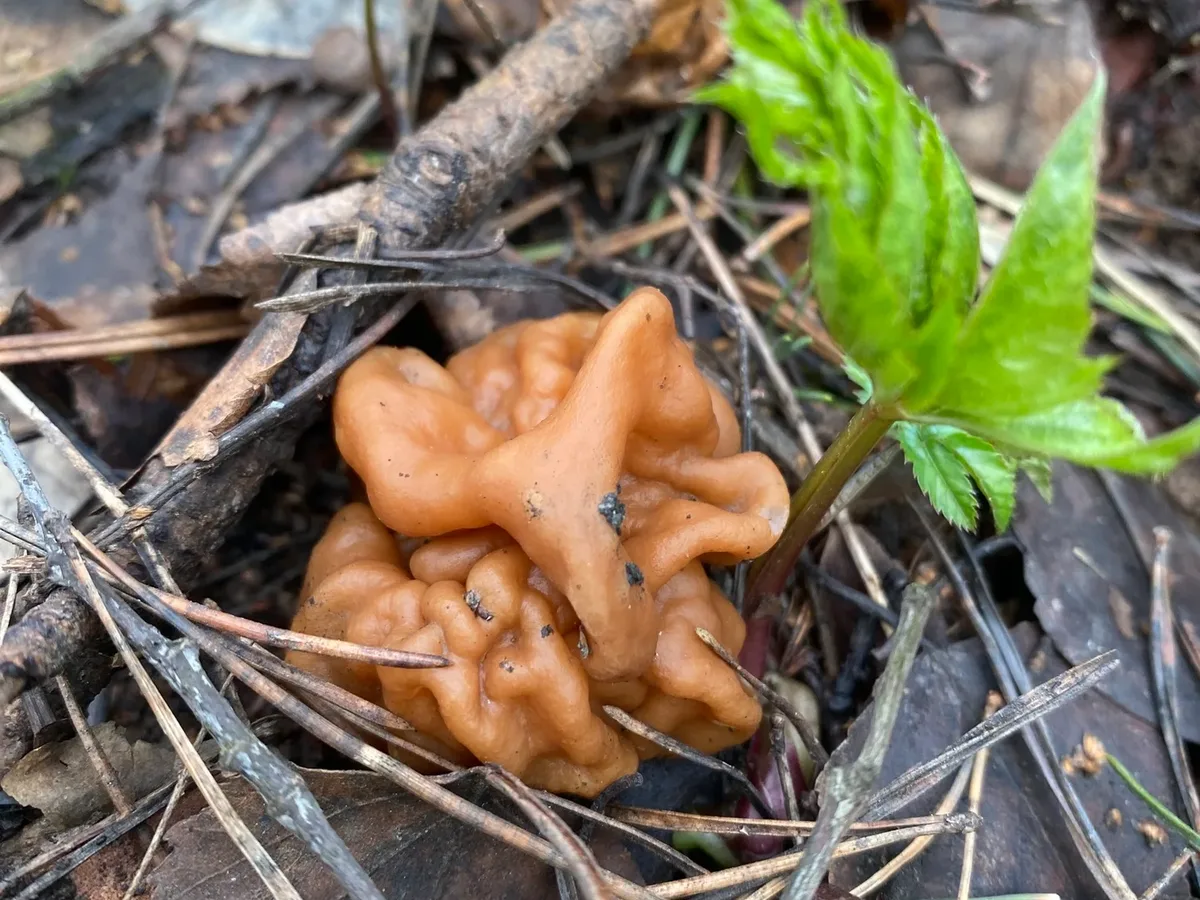 © Илья Руденко (CC BY)
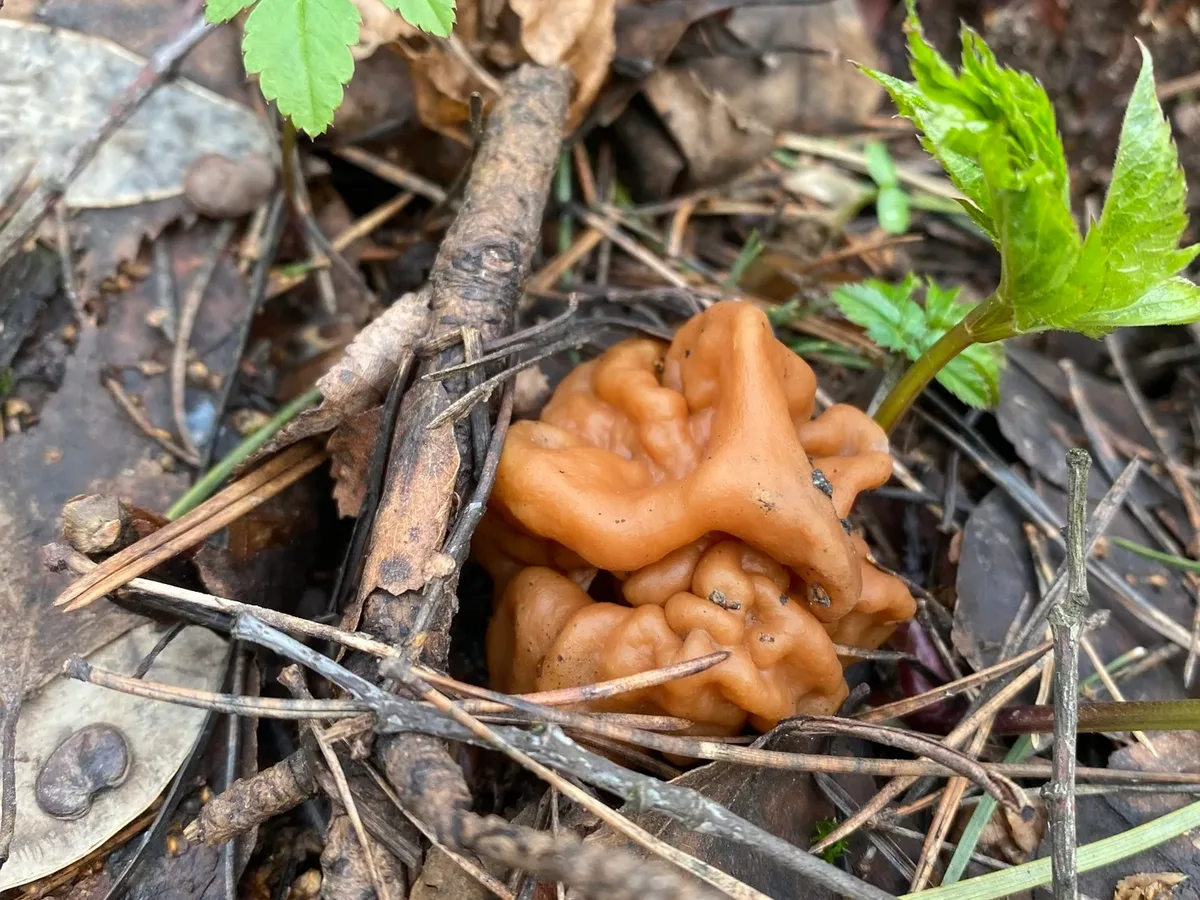 © Илья Руденко (CC BY)© Илья Руденко (CC BY)© Anastasiia Samokhvalova (CC BY)
Toxic - and the most serious cases can be fatal. Never eat it, and wash your hands after handling.
Never eat a mushroom you are not 100% sure of - check the look-alikes below, and always cook wild mushrooms.
How to recognise it
Gyromitra gigas is one of the largest spring ascomycetes in the Northern Hemisphere - a genuinely imposing fungus that can fill both hands.
Cap
The cap is a compound mass of thick, irregular lobes that fold and fuse into a convoluted saddle or brain shape, broadly attached to the stipe over most of its undersurface rather than dangling freely.
Fresh specimens are a warm reddish-brown or chestnut; older or drying ones fade to dull tan or pale ochre.
The cap surface is the fertile hymenium - wrinkled and lobed - while the underside is pale whitish and sterile, divided into irregular air-filled chambers by the fused folds.
Slicing a fruit body vertically reveals this chambered interior clearly; it is one of the most reliable identification characters and worth checking.
Stem
The stipe is stout, 3-8 cm tall and up to 5 cm thick, whitish, with deep longitudinal ribs and furrows that create additional internal cavities; the base is often partly buried in duff or litter.
Flesh
The flesh throughout is pale, thin, fragile, and watery, with only a mild, slightly fruity or farinaceous smell.
Spores
Spores are fusiform, smooth, with two oil droplets, measuring 24-36 × 10-14 µm.
The overall impression in the field is of a large, reddish-ochre brain perched on a short, ribbed white pedestal - unmistakable once encountered in person.
Why it's dangerous
Fatal poisonings have occurred in Europe, primarily from G. esculenta, but also attributed to G. gigas. Children are disproportionately vulnerable to haemolytic effects.
Cooking vapours contain MMH and can cause symptoms in bystanders, particularly in poorly ventilated spaces.
Never eat raw; do not rely on drying alone as the sole detoxification method. If any doubt about preparation adequacy, do not consume.
Toxin
Gyromitrin (N-methyl-N-formylhydrazone, acetaldehyde N-methyl-N-formylhydrazone). This pro-toxin is hydrolysed to monomethylhydrazine (MMH) in the acidic environment of the stomach.
MMH is a potent:
- hepatotoxin
- haemolytic agent
- methemoglobin-former
- probable carcinogen (IARC Group 2B for hydrazines)
It is partly volatilised by boiling but not completely eliminated; it is more completely removed by repeated boiling in fresh water.
Gyromitrin content in G. gigas ranges from traces to several hundred mg/kg fresh weight depending on substrate, microclimate, and developmental stage.
Symptoms
Onset 6-12 hours post-ingestion (delayed presentation means poisoning is often initially overlooked).
- 1Phase 1 (6-12 h): nausea, vomiting, watery diarrhoea, abdominal cramping, bloating, headache, dizziness, weakness.
- 2Phase 2 (24-72 h in severe cases): haemolysis causing dark urine, jaundice, pallor; elevation of liver enzymes; hepatomegaly; methemoglobinaemia with cyanosis and dyspnoea.
- 3Phase 3 (severe poisoning): acute hepatic and renal failure, coagulopathy, seizures, coma, and potentially death.
Fatalities are rare when medical care is available but occur.
Treatment is supportive:
- high-dose pyridoxine (vitamin B6) to counter MMH-mediated enzyme inhibition
- methylene blue for methemoglobinaemia
- liver transplantation in severe cases
Staying safe
Gyromitra gigas contains gyromitrin (N-methyl-N-formylhydrazone), a thermolabile but water-soluble toxin that is converted in the body to monomethylhydrazine (MMH), the same compound used as rocket fuel.
MMH inhibits pyridoxine-dependent enzyme systems, causes haemolysis, and is hepatotoxic and potentially carcinogenic with repeated exposure.
The gyromitrin content of G. gigas is generally considered lower than in G. esculenta, but individual fruit bodies vary enormously and the only safe assumption is that raw specimens are toxic and potentially lethal.
Symptoms appear 6-12 hours after ingestion and include severe gastrointestinal upset, vomiting, diarrhoea, headache, haemolysis, jaundice, and in severe cases liver failure, methemoglobinaemia, and death.
Vapours released during boiling are also toxic - boil in a well-ventilated space or outdoors, never in a closed kitchen.
Children, pregnant women, and anyone with liver disease or G6PD deficiency should not eat this species at all.
Several fatalities have been recorded in Europe from inadequately prepared Gyromitra, and non-fatal poisonings are reported every spring season in Scandinavia. The Finnish and Swedish national food safety authorities issue annual reminders about correct preparation.
Many modern European foraging guides recommend avoiding all Gyromitra as food given the residual risk and the availability of true morels as a safe alternative.
Where & when it grows
Habitat
Gyromitra gigas is a boreal and montane specialist that follows retreating snowbanks with remarkable fidelity.
Look for it in mature coniferous or mixed forest dominated by spruce and fir, especially on north-facing slopes where snow lingers weeks after south-facing exposures are bare. It is commonly found right at the edge of a receding snowpatch, sometimes with the stipe base still frozen in the ground.
It also appears along forest tracks and old skid roads where soil disturbance concentrates organic matter, on humus-rich valley floors in riparian spruce stands, and occasionally in open subalpine meadow margins.
Unlike many Gyromitra species, G. gigas tends not to be strongly associated with any single tree and is regarded as a saprotrophic decomposer of buried organic matter rather than a mycorrhizal partner.
Altitudinal range in the Alps is roughly 800-1,800 m; in Fennoscandia it descends to near sea level in the far north.
When
Gyromitra gigas belongs to that narrow window of early spring when the forest is still half-frozen - one of the first macrofungi to push up after snowmelt.
In Fennoscandia this means April, often appearing alongside Gyromitra esculenta at lower elevations before becoming the dominant Gyromitra higher up and further north. In the Alps, fruiting runs from late April through June depending on altitude.
The window at any single site is short, rarely more than three to four weeks, driven by soil temperature creeping above roughly 3-5 °C just beneath the surface. A late cold snap can stall fruiting temporarily.
By midsummer the fruit bodies are long gone, the mycelium waiting quietly underground for the following spring.
How it grows
Fruit bodies appear singly or scattered, occasionally in loose clusters of two to five arising from a shared buried mycelial base.
Development is rapid - a primordium can swell to full size in five to ten days - but the fruit body's life is equally brief: it soon becomes waterlogged and soft, then collapses and darkens to brown-black as the tissue breaks down.
The species is saprotrophic, quietly decomposing humus and buried woody debris in the upper soil horizon. It forms no obvious rhizomorphs or mycelial mats, though a diffuse pale mycelium is sometimes visible at the base of the stipe.
Fruiting conditions
Fruiting is triggered primarily by soil warming above approximately 2-4 °C following snowmelt rather than by rainfall; the receding snowpack provides sufficient moisture. Warm, sunny days after a cold winter and a good snowpack are the classic conditions. Fruiting can be brief (2-3 weeks per site) and is highly altitude-dependent.
Look-alikes
The most important confusion species is Gyromitra esculenta (false morel), which is smaller, usually darker reddish-brown, has a more tightly brain-like cap with finer convolutions, and a paler, less deeply chambered stipe. It is considered more dangerous because its gyromitrin content is typically higher.
In practice, many collectors treat both as the same 'korvasieni' species and apply identical preparation, but experts distinguish them by cap size and lobe character.
Other species to separate:
- Gyromitra infula (hooded false morel): a distinctly saddle-shaped, two-lobed cap more loosely attached at the apex, a smoother surface, and appears in late summer and autumn rather than spring - the season difference is the easiest separator.
- Morchella (true morels): superficially similar to beginners but have a clearly pitted and ridged cap (honeycomb pattern) rather than a convoluted, brain-like surface, and are fully hollow in cross-section with no internal chambers.
- Verpa bohemica (wrinkled thimble cap): a thimble-shaped cap attached only at the apex of the stipe, much smaller, and coarser vertical folds rather than saddle-lobes.
- Disciotis venosa (cup morel): a shallow cup or disc fungus with veined undersurface, not saddle-shaped.
North American species (eastern North America) containing gyromitrin - toxic, not safe to eat raw. Very large and spring-fruiting like G. gigas but cap more loosely saddle-shaped with thick lobes; geographically largely separated from G. gigas (eastern North America vs. northern Eurasia).
G. esculenta is typically smaller (cap 3-10 cm), darker reddish-brown, with a more tightly convoluted cap surface and finer brain-like folds; stipe less deeply chambered; gyromitrin content generally higher. The two species often grow in the same habitat and season; both require identical cautious preparation.
G. infula has a distinctly two-lobed, saddle-shaped cap loosely attached at the stipe apex, appears in late summer and autumn (not spring), is smaller, and usually darker brown to reddish-purple. Season difference is the key separator.
True morels have a clearly honeycomb-pitted and ridged cap with no brain-like convolutions, and the cap is completely hollow internally with no chambers; cap is attached at the base of the cap margin to the stipe. Not a lookalike to the experienced forager.
Shallow cup or disc form, never saddle-shaped; surface has vein-like ridges; grows flat on soil near snowmelt; also requires boiling before eating.
Smaller, cap is thimble- or bell-shaped and attached only at the apex of the stipe, with coarser vertical folds but not saddle-lobes; appears slightly earlier in spring; also contains gyromitrin and should be prepared with caution.
A reference guide - never an edibility guarantee. When in doubt, leave it out.