Violet false morel
Gyromitra ambiguasyn. Helvella ambigua P. Karst., Gyromitra infula var. ambigua (P. Karst.) Sacc., Neogyromitra ambigua (P. Karst.) S. Imai
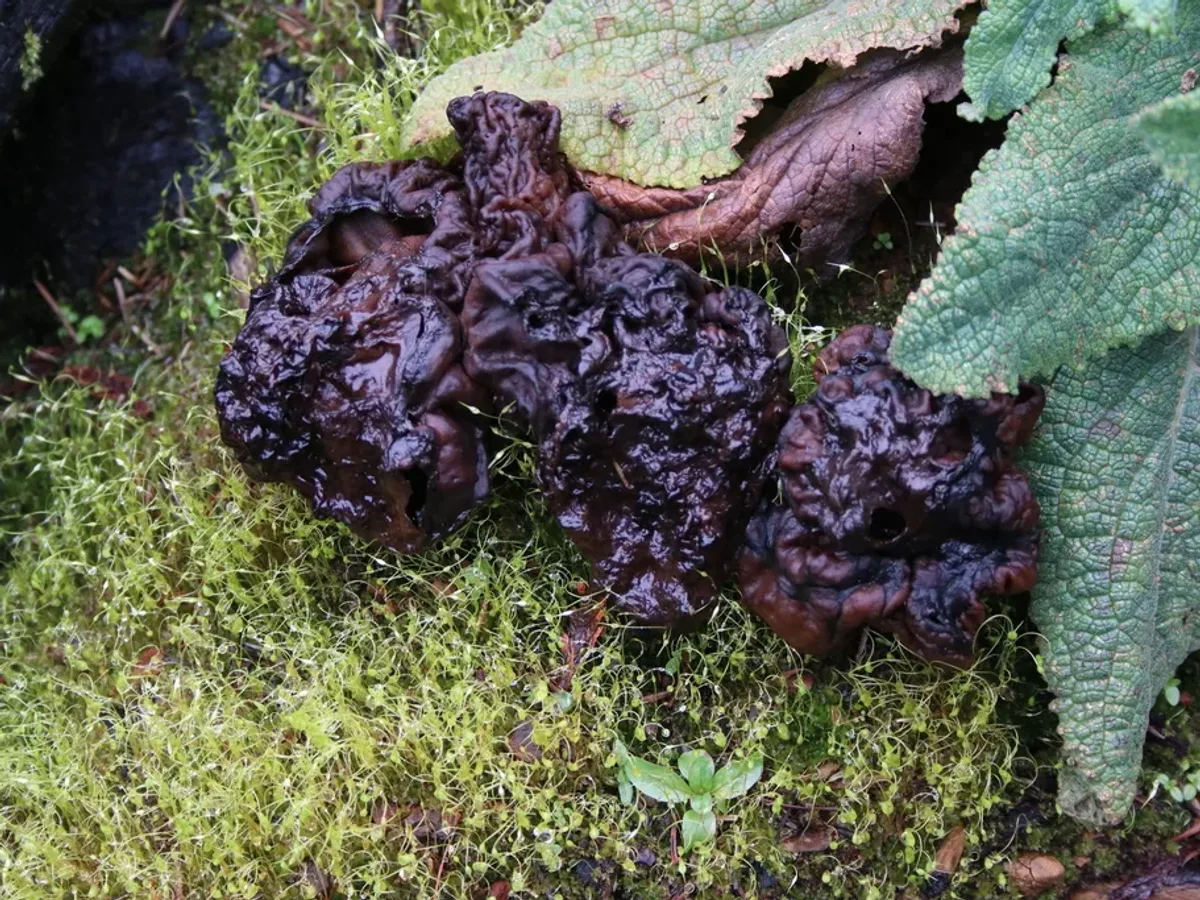 University of Florida Herbarium - Fungi (FLAS-) (CC0)
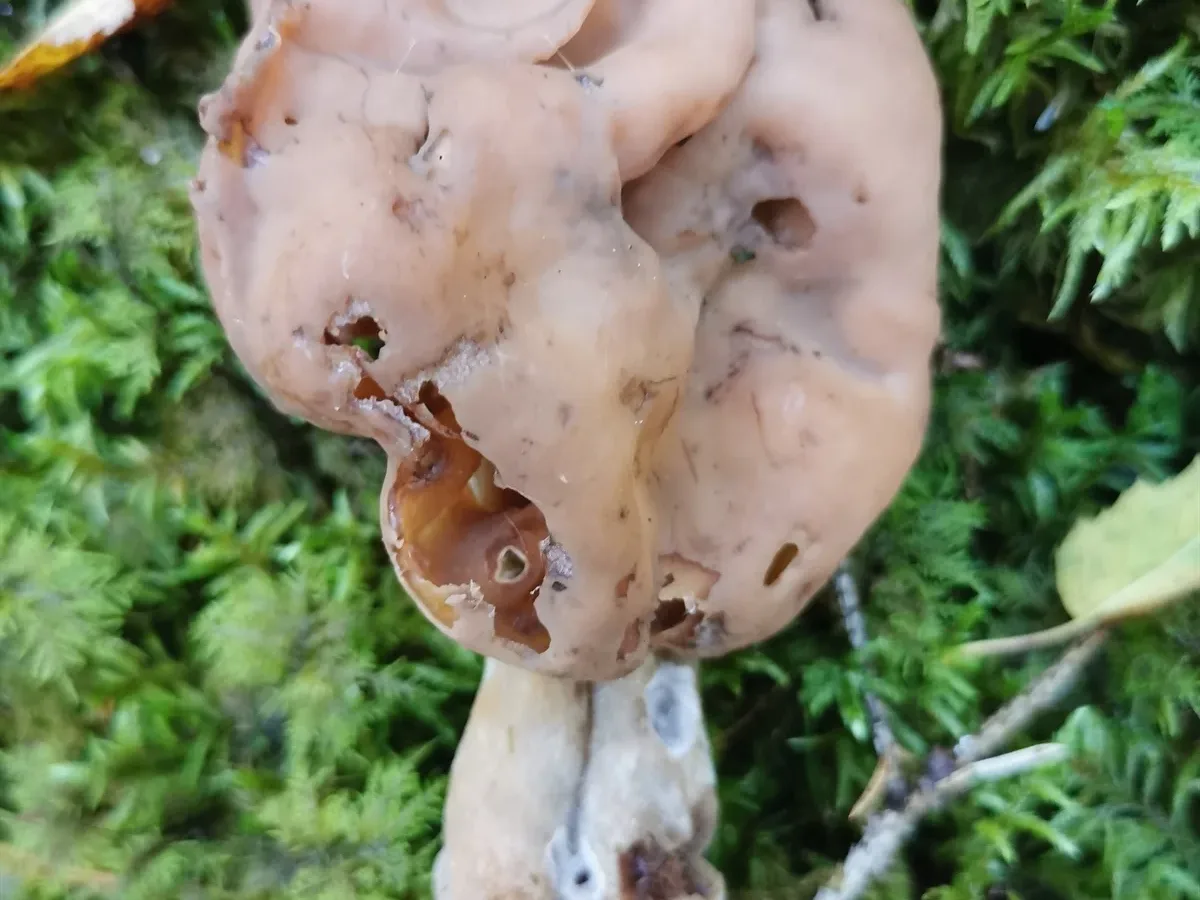 © Lillian Iversen (CC BY)
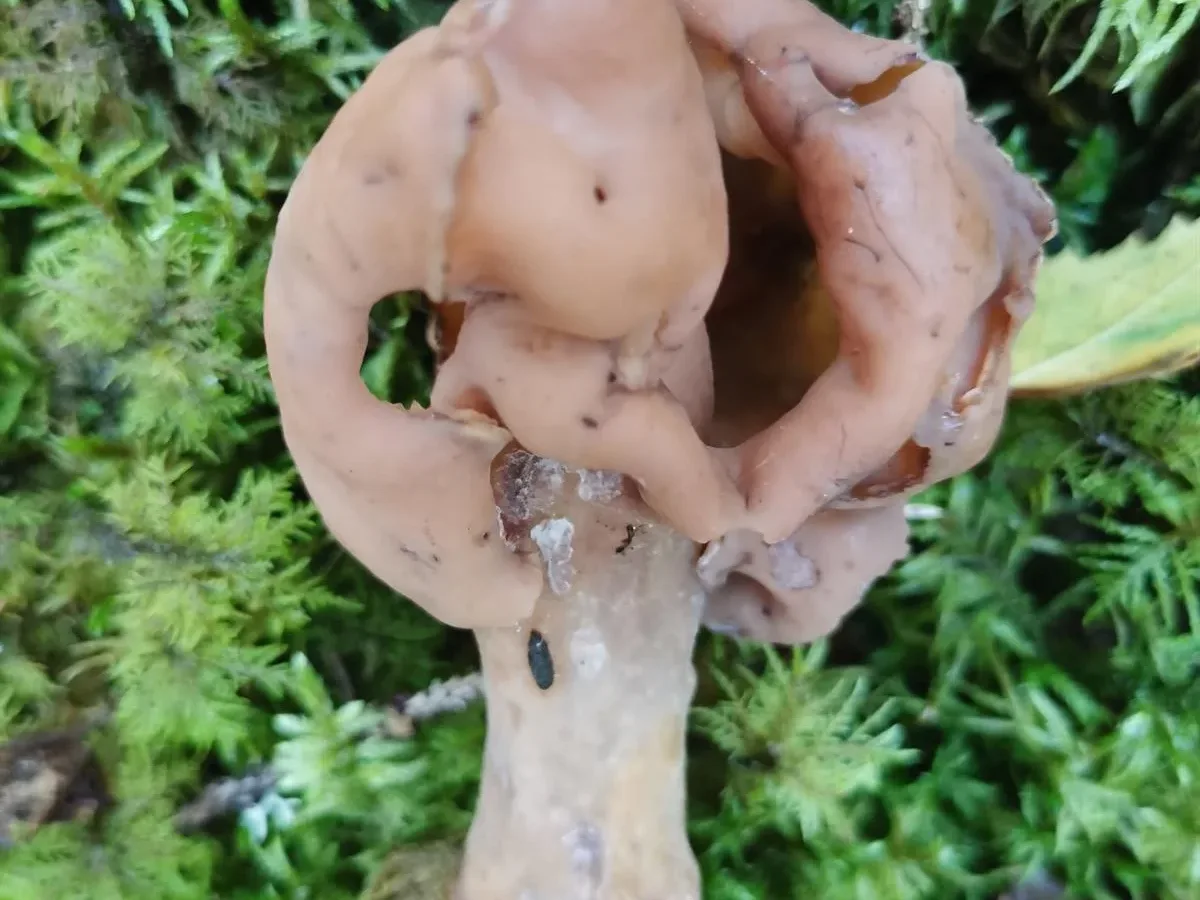 © Lillian Iversen (CC BY)
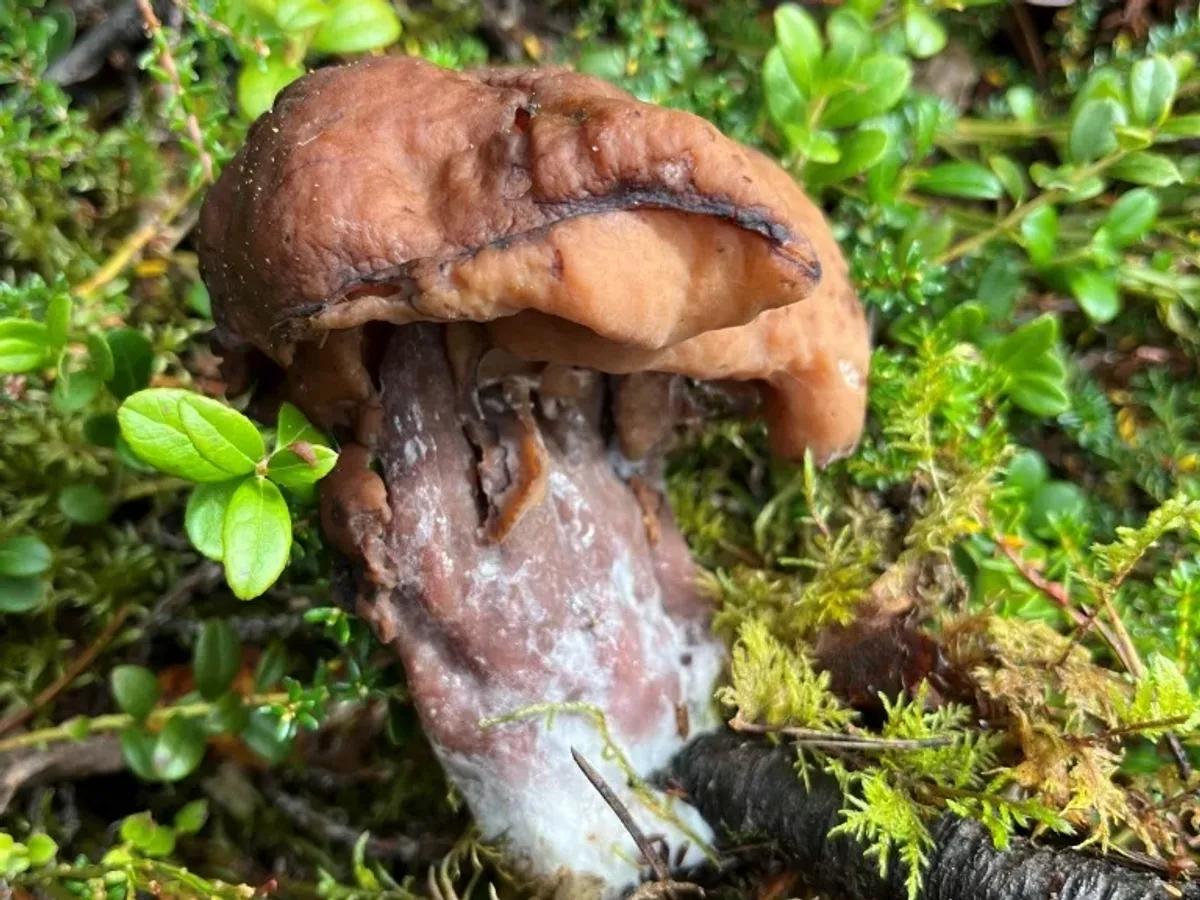 © Siv Moen (CC BY)
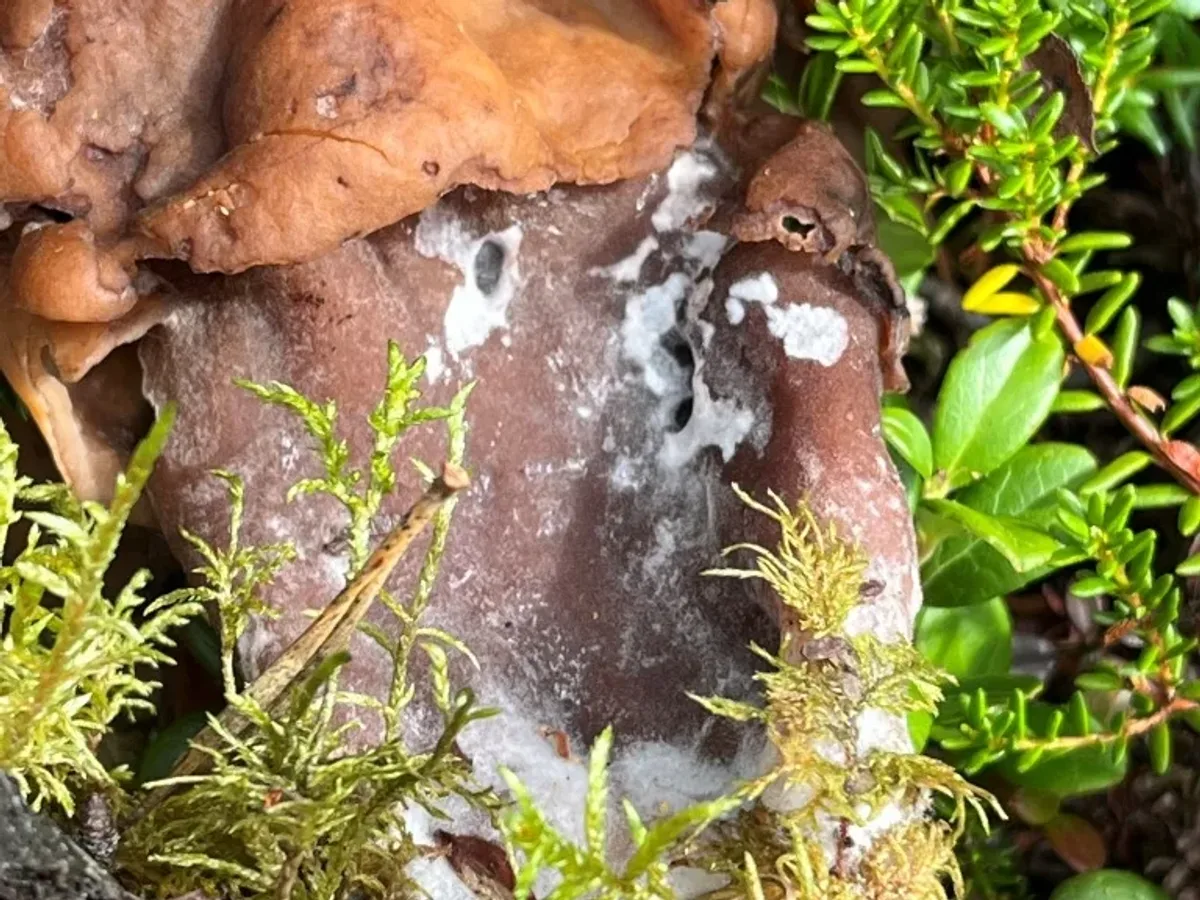 © Siv Moen (CC BY)
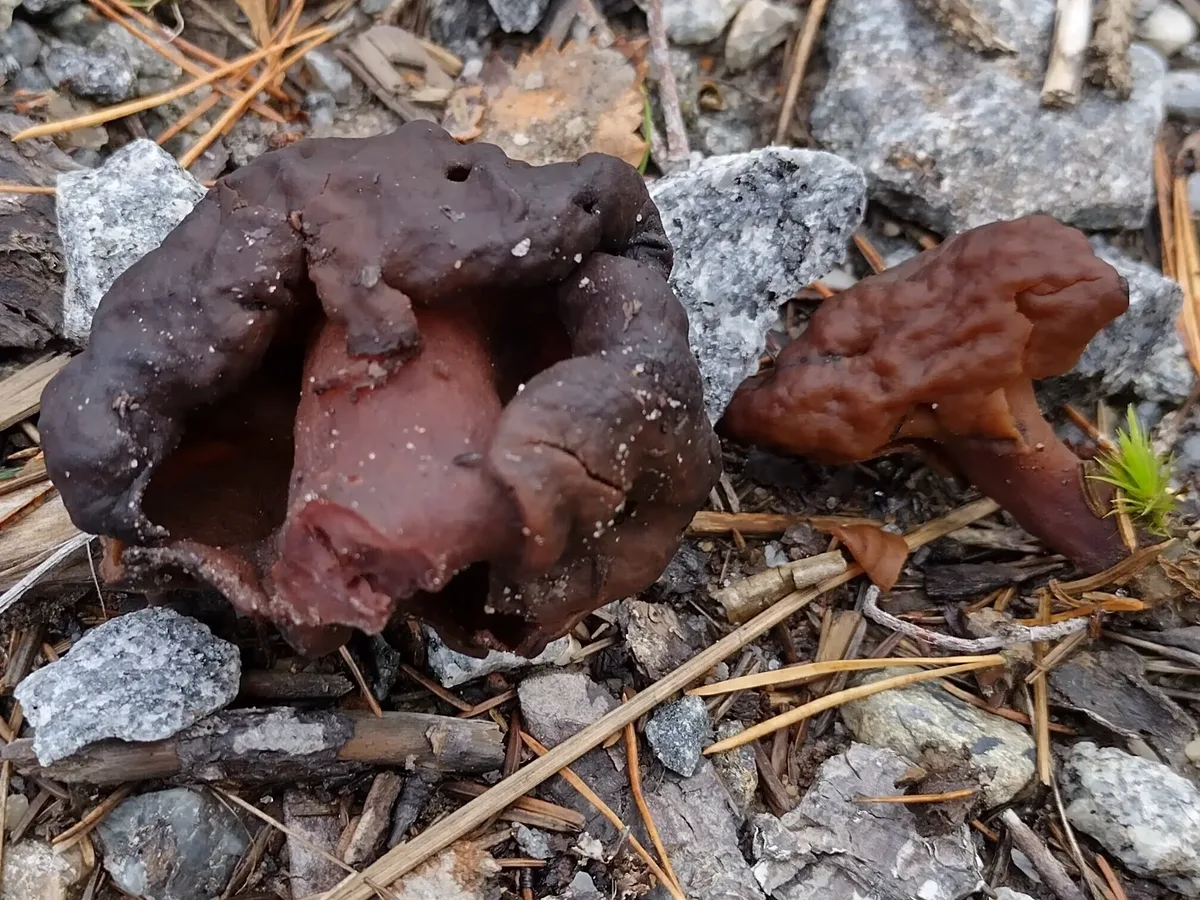 © Sebastian Källman (CC BY-SA)
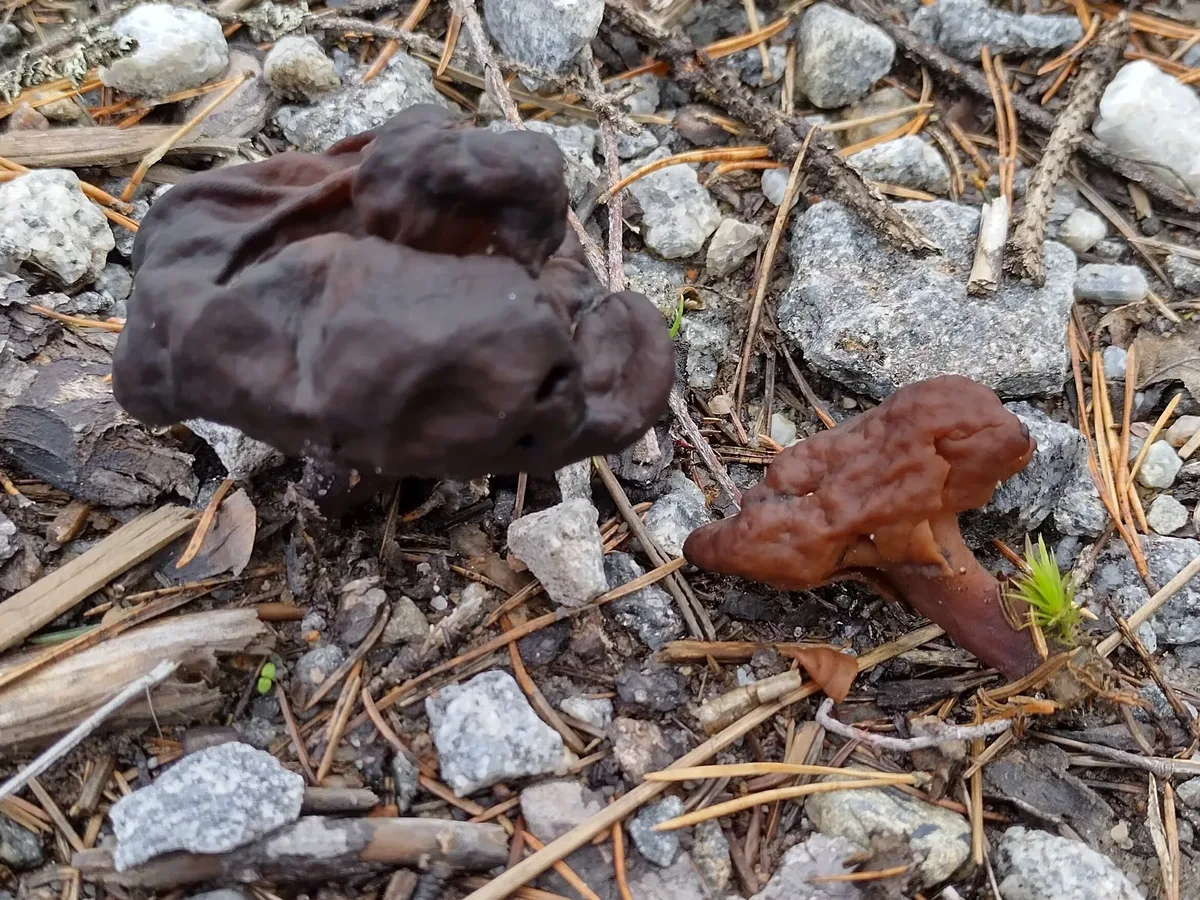 © Sebastian Källman (CC BY-SA)University of Florida Herbarium - Fungi (FLAS-) (CC0)© Lillian Iversen (CC BY)
Toxic - and the most serious cases can be fatal. Never eat it, and wash your hands after handling.
Never eat a mushroom you are not 100% sure of - check the look-alikes below, and always cook wild mushrooms.
How to recognise it
Gyromitra ambigua is a medium-sized spring ascomycete with a distinctive saddle-shaped cap that separates it from the more tightly brain-like G. esculenta.
Cap
The cap consists of two or occasionally three broad, irregular lobes that curve downward and outward in a saddle or mitre form, broadly attached to the stipe across much of the upper surface.
The defining colour character is the violaceous-brown or purplish-chestnut tint of the cap surface when fresh - a clearly more violet or purple-tinged hue than the reddish-mahogany of G. esculenta or the pale tan of G. gigas. The margins of fresh specimens can appear distinctly purple.
This colour fades with age to a dull brown, making older specimens harder to identify confidently.
The undersurface of the cap is pale whitish to cream, sterile, and forms shallow chambers where the folds are fused, though these chambers are less pronounced than in G. gigas.
Stem
The stipe is pale whitish to very faintly lilac, shorter and more slender than the cap is wide, with longitudinal ribs and a surface that is somewhat lacunose.
Flesh
Flesh throughout is white, fragile, and watery, with a faint farinaceous or slightly unpleasant odour.
A clean vertical section reveals that the interior is partially chambered, unlike the fully hollow morels.
Microscopically, spores are ellipsoid-fusiform with two oil droplets, measuring approximately 18-26 × 8-12 µm.
In summary: if you find a spring false morel with a saddle-shaped (not brain-like) cap with a distinctly violet or purplish-brown cast, you most likely have G. ambigua.
Why it's dangerous
Fatal poisonings involving Gyromitra have been documented repeatedly in Scandinavia and central Europe. Many cases involve G. esculenta, and attribution to G. ambigua specifically is complicated by frequent species misidentification in historical records.
The delayed symptom onset (6-12 h) means that patients often do not seek medical care in the critical early window, worsening outcomes.
Cooking vapours are a separate risk: boiling Gyromitra indoors without ventilation has caused symptoms in people who did not eat the mushroom at all.
- Never eat raw specimens.
- Do not rely on drying alone as complete detoxification.
- If uncertain about species identity or preparation, do not eat.
Toxin
Gyromitrin (acetaldehyde N-methyl-N-formylhydrazone) is a pro-toxin. It is hydrolysed by stomach acid to monomethylhydrazine (MMH).
MMH acts in several ways:
- Inhibits pyridoxal phosphate (vitamin B6)-dependent enzymes involved in the GABA pathway, leading to neurological symptoms and seizures.
- Is directly hepatotoxic.
- Causes haemolysis of red blood cells.
- Produces methemoglobin.
Gyromitrin is classified as a probable human carcinogen (IARC Group 2B) based on animal studies.
It is partially removed by boiling in large volumes of water - the toxin partitions into the water and partly volatilises into steam. But multiple boilings with fresh water are required to approach safe levels, and safety cannot be fully guaranteed.
The toxin content in G. ambigua has not been systematically quantified in the literature to the same degree as G. esculenta, but the presence of gyromitrin in all examined Gyromitra species is well established.
Symptoms
Onset is delayed 6-12 hours after ingestion, which is a diagnostically important feature.
Early phase (6-12 h): nausea, severe vomiting, watery diarrhoea, abdominal cramping, headache, dizziness, muscle weakness, and excessive sweating.
Intermediate phase (12-72 h in moderate to severe poisoning):
- Haemolysis causing dark or reddish urine (haemoglobinuria), jaundice, pallor, and anaemia.
- Elevation of liver enzymes (AST, ALT, bilirubin).
- Hepatomegaly.
Severe poisoning:
- Methemoglobinaemia presenting as cyanosis and dyspnoea.
- Acute hepatic and/or renal failure.
- Coagulopathy.
- Neurological deterioration including confusion and seizures.
- Coma and death in the most severe cases.
Death is rare when prompt medical treatment is available but has occurred.
Treatment is supportive:
- High-dose intravenous pyridoxine (vitamin B6, 25 mg/kg) is the specific antidote for MMH-mediated seizures.
- Methylene blue is used for methemoglobinaemia.
- Liver transplantation has been required in rare cases of acute liver failure.
Staying safe
Gyromitra ambigua is a deadly-toxic species that has caused fatal poisonings in Europe. Like all members of the genus Gyromitra, it contains gyromitrin (N-methyl-N-formylhydrazone), which is converted in the gastrointestinal tract to monomethylhydrazine (MMH) - a potent hepatotoxin, haemolytic agent, and probable carcinogen.
The gyromitrin content varies considerably between individual specimens and with environmental conditions, making safe dose thresholds impossible to predict.
Gyromitrin is thermolabile and water-soluble, so vigorous boiling with repeated water changes reduces (but does not eliminate) the toxin. The cooking vapours are themselves toxic due to volatilisation of MMH; boiling must be done outdoors or in very well-ventilated conditions.
Symptoms appear with a characteristic delay of 6-12 hours, meaning that poisoning is often not connected to the meal until the patient is already seriously ill.
The Swedish and Finnish national food safety authorities advise against eating any Gyromitra species without verified preparation by established methods; most modern European foraging guides advise abstaining entirely.
Children, pregnant women, people with liver disease, and those with G6PD deficiency are at particularly elevated risk.
Where & when it grows
Habitat
This species is a boreal and hemiboreal specialist, most characteristic of mature spruce-dominated or mixed coniferous-birch forest on moist ground.
It favours deep humus layers where organic matter is accumulating. Like other Gyromitra it is saprotrophic, breaking down buried woody debris and leaf litter in the upper soil horizon.
It has a particular affinity for:
- Valley-bottom forests with high soil moisture.
- Stream margins.
- Shaded north-facing slopes.
- Hollows where cold air pools.
In Finland and Sweden it is considered more of a lowland to mid-elevation forest species than the high-altitude G. gigas, though the ranges overlap.
It also colonises roadsides and forest tracks where mineral soil is mixed with organic matter, and it can appear in relatively open spruce plantations as well as old-growth forest.
In North America it occurs across the boreal zone from the Pacific Northwest to Quebec, again in moist coniferous settings.
The species is not strongly mycorrhizal and grows equally well near isolated trees as in dense forest, provided the humus substrate is adequate.
When
Gyromitra ambigua is strictly a spring fungus, one of the earlier false morchelloid fungi to appear after the boreal thaw.
In southern Finland and Sweden it may appear from mid-April in warm years, with peak fruiting in late April and throughout May. At more northerly or higher-altitude sites the season shifts into May and June.
The season at any one location is typically short - 2-4 weeks - and closely tied to soil temperature rising above approximately 4-6 °C at 5 cm depth.
This spring timing is ecologically critical for identification. It separates G. ambigua from:
- Gyromitra infula, which appears in late summer and autumn (July-October in Scandinavia).
- Gyromitra esculenta, which tends to peak slightly earlier in April at lower elevations.
All three species can occur at the same site but at different times of year.
How it grows
Fruit bodies appear singly, in small scattered groups, or occasionally in loose clusters of 2-4 from a common mycelial base in humus-rich soil.
Growth from primordium to full size takes approximately 5-10 days. Fully developed specimens deteriorate rapidly, becoming waterlogged and collapsing within a week, especially after rain.
The mycelium is diffuse and non-rhizomorphic. No prominent mycelial mats are usually visible, though a pale white cottony mycelium can sometimes be seen at the stipe base when specimens are carefully removed.
The species is not known to be perennial or to form persistent sclerotia. Sites where it appears tend to produce fruit bodies annually if conditions are suitable, suggesting a stable mycelial network in the soil.
Fruiting conditions
Fruiting is triggered primarily by soil warming above 4-6 °C following snowmelt, with adequate soil moisture from snowmelt or spring rainfall. Unlike autumn species, Gyromitra ambigua does not require a specific rainfall event to initiate; the receding snowpack provides sufficient moisture. Warm sunny days after a cold winter with good snowpack are classic conditions. The flush lag is moderate as the mycelium becomes active with warming temperatures.
Look-alikes
The most important dangerous lookalike is Gyromitra esculenta (the classic false morel or 'stenmurkla'). It has a more tightly convoluted, brain-like cap surface with finer folds, typically a darker reddish-mahogany colour without the violet tint, and tends to fruit slightly earlier in spring.
Both are deadly and both contain gyromitrin, so confusing them poses no additional safety risk - any Gyromitra picked in spring in Scandinavia must be treated as potentially lethal.
- Gyromitra infula (the hooded false morel or 'biskopsmossa'): also has a saddle-shaped, 2-lobed cap and is superficially very similar to G. ambigua in form, but G. infula fruits in late summer and autumn (July-October), not in spring, and tends to have a brighter reddish-brown or chestnut-brown colour without violet tones.
- Gyromitra gigas (snow morel): much larger, with a more massive brain-like cap 5-15 cm wide, pale reddish-ochre to tan colour, and a stout deeply chambered stipe. It overlaps in season and habitat but is distinguished by size and cap architecture.
- True morels (Morchella spp.): sometimes confused by beginners but immediately distinguished by their clearly pitted-and-ridged (honeycomb) cap surface - never saddle-shaped or wrinkled-lobed - and by the interior being completely hollow with no chambers.
- Verpa bohemica (wrinkled thimble cap): has a cap attached only at the stipe apex and a clearly thimble-shaped form, not saddle-like, and also contains gyromitrin.
G. esculenta has a more tightly convoluted, brain-like cap with finer and more numerous folds, a darker reddish-mahogany to chestnut-brown colour without violet tones, and typically fruits slightly earlier (March-April at lower elevations). Both are deadly; confusion does not change the safety outcome but does matter for correct scientific reporting.
G. infula also has a saddle-shaped, 2-lobed cap and is the most morphologically similar species, but it fruits in late summer and autumn (July-October in Scandinavia), not in spring. Its cap tends toward reddish-brown or chestnut without violet pigmentation. Season is the most reliable separator in the field.
G. gigas is substantially larger (cap 5-15 cm), pale reddish-ochre to tan, with a massive brain-like cap more extensively fused to a stout, deeply chambered stipe. It occurs at higher altitudes and near snowbanks. The size difference is usually obvious.
True morels have a clearly honeycomb-pitted and ridged cap surface - never saddle-shaped or wrinkled-lobed. The interior of Morchella is completely hollow with cap attached to the stipe only at the base of the cap margin. Edible when cooked, but see Morchella records for their own precautions.
Verpa bohemica has a much smaller, thimble- or bell-shaped cap attached only at the apex of the stipe, with coarser vertical wrinkles rather than saddle-lobes. Also contains gyromitrin and requires caution, but the cap form is immediately distinguishable.
A reference guide - never an edibility guarantee. When in doubt, leave it out.