Magic Blue Rustgill
Gymnopilus aeruginosussyn. Flammula aeruginosa Peck, Gymnopilus aeruginosus (Peck) Singer
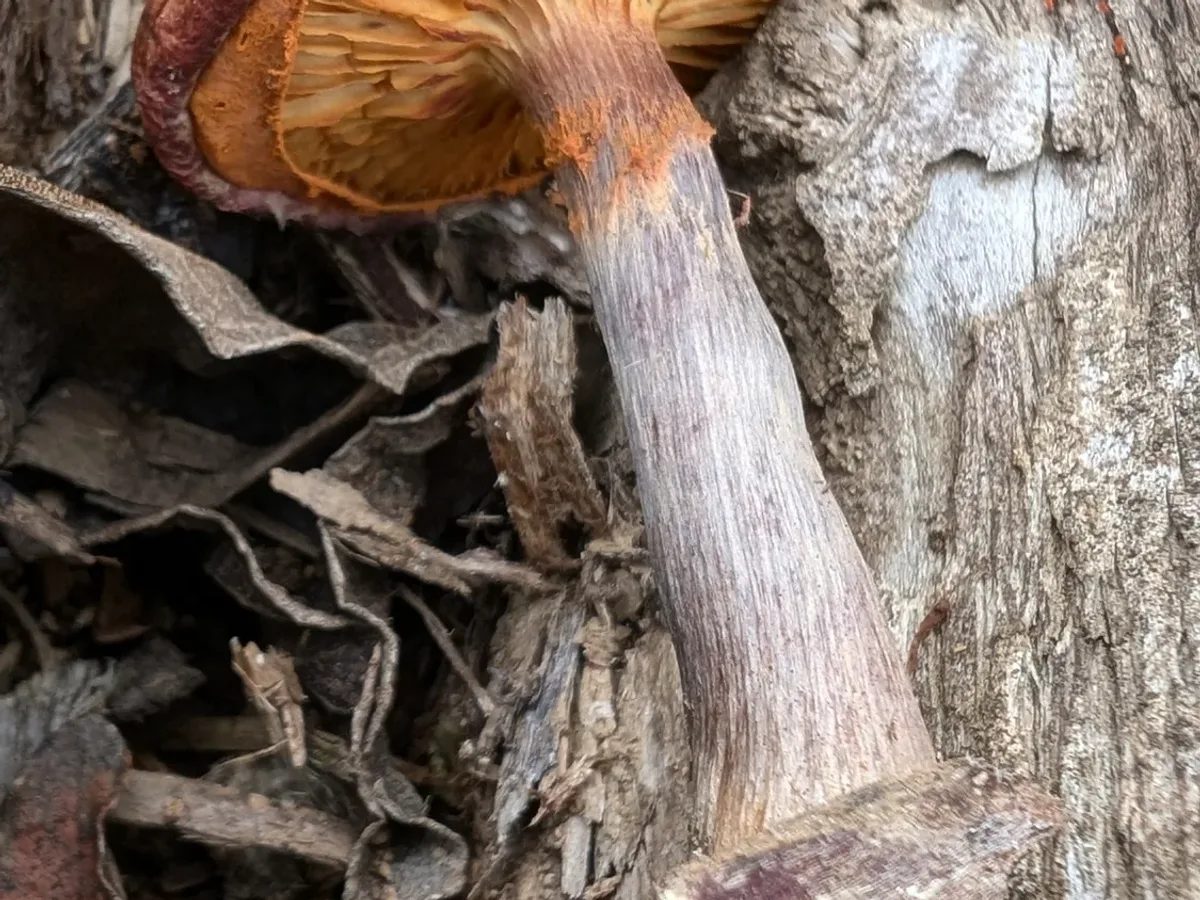 © Atsushi Nakajima (CC BY)
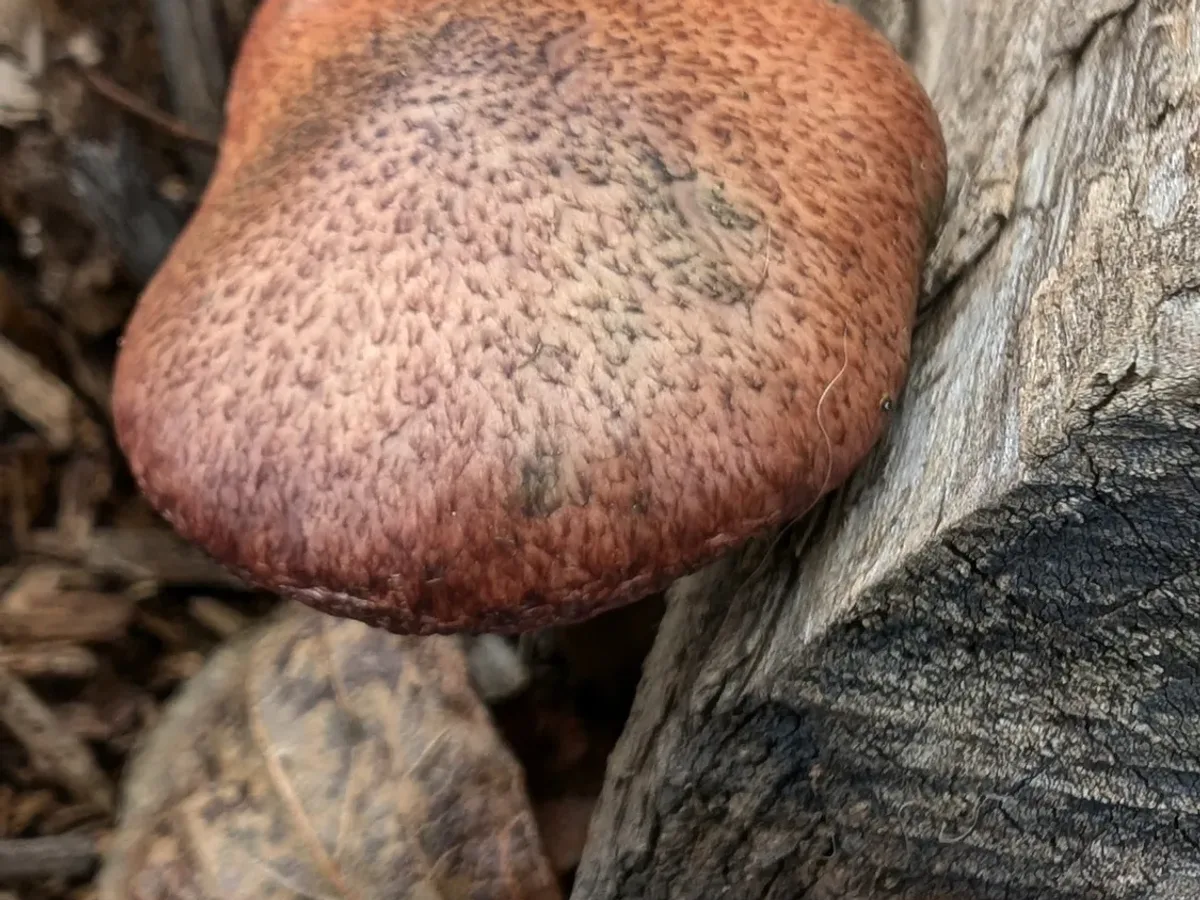 © Atsushi Nakajima (CC BY)
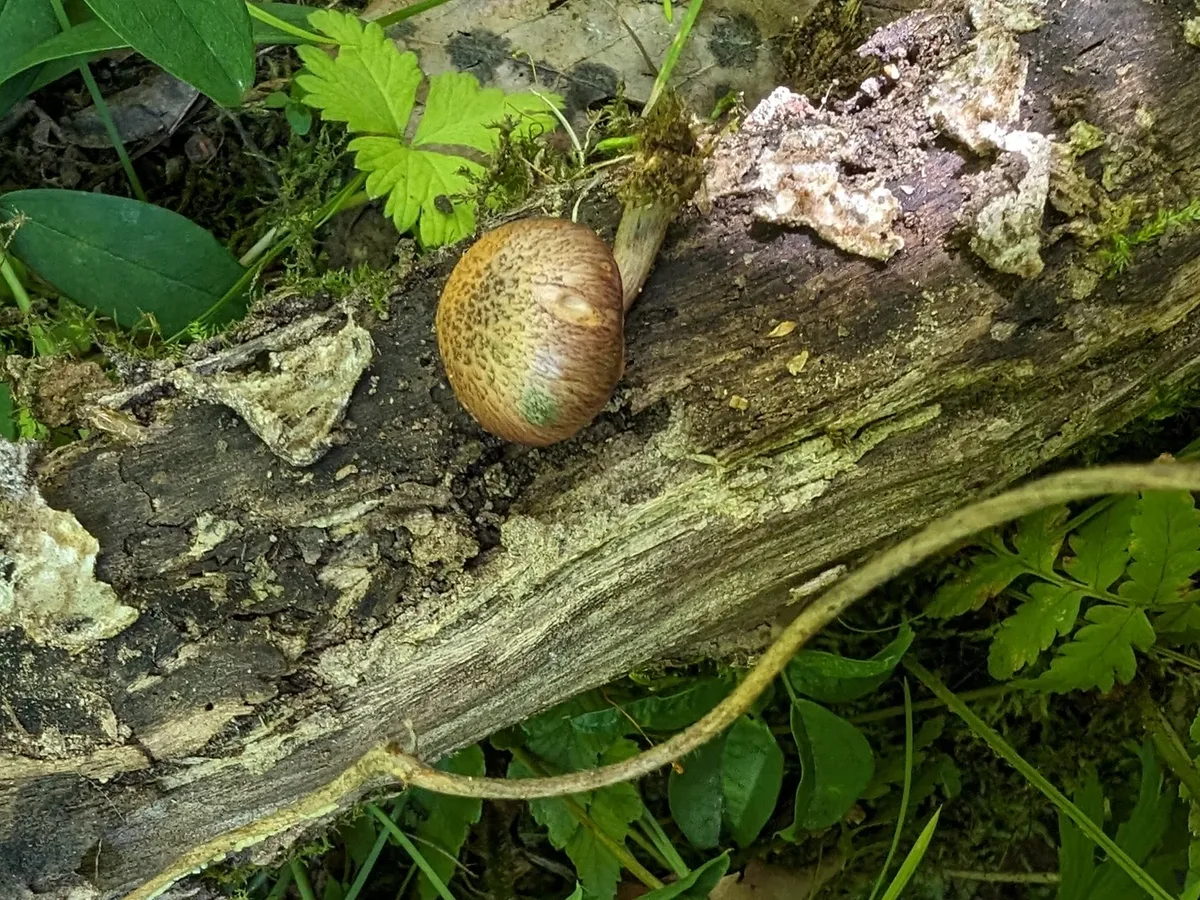 © Atsushi Nakajima (CC BY)
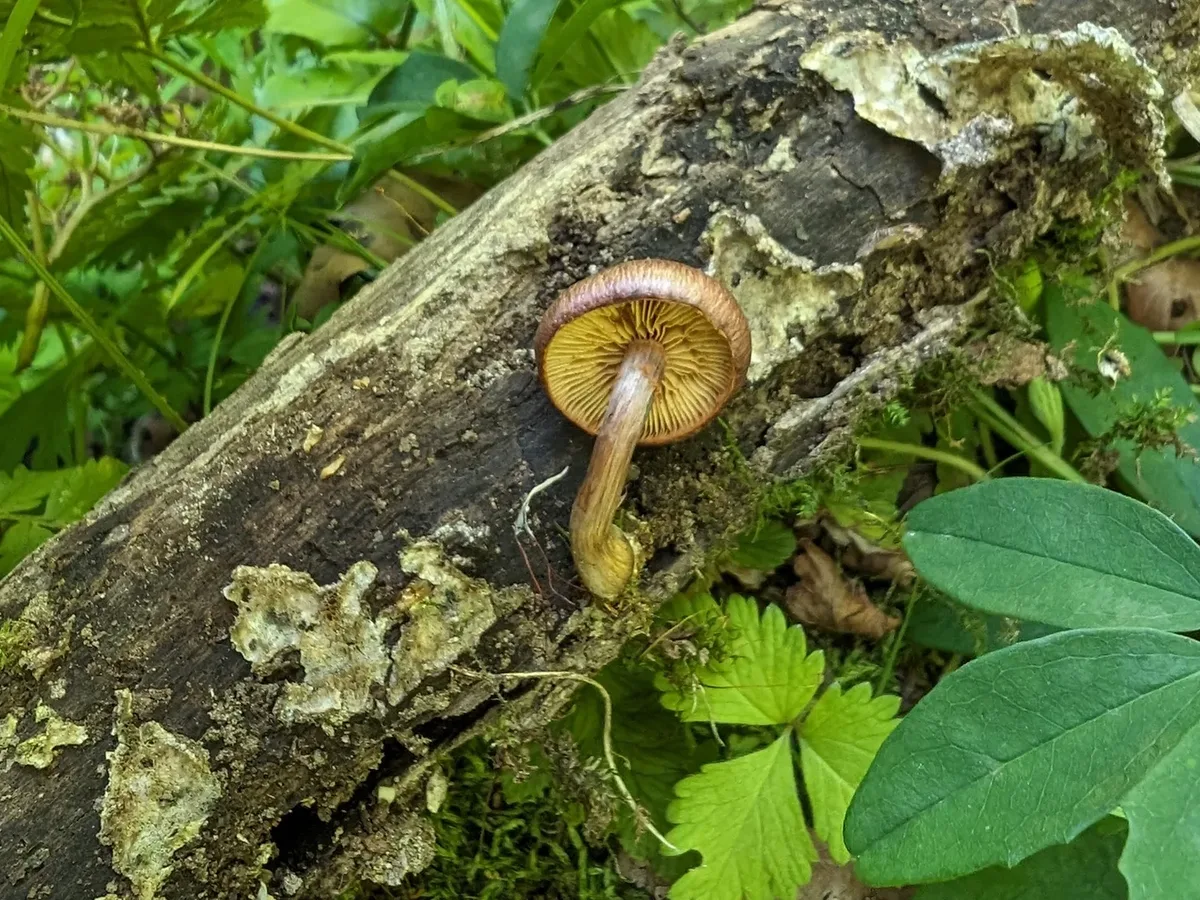 © Atsushi Nakajima (CC BY)
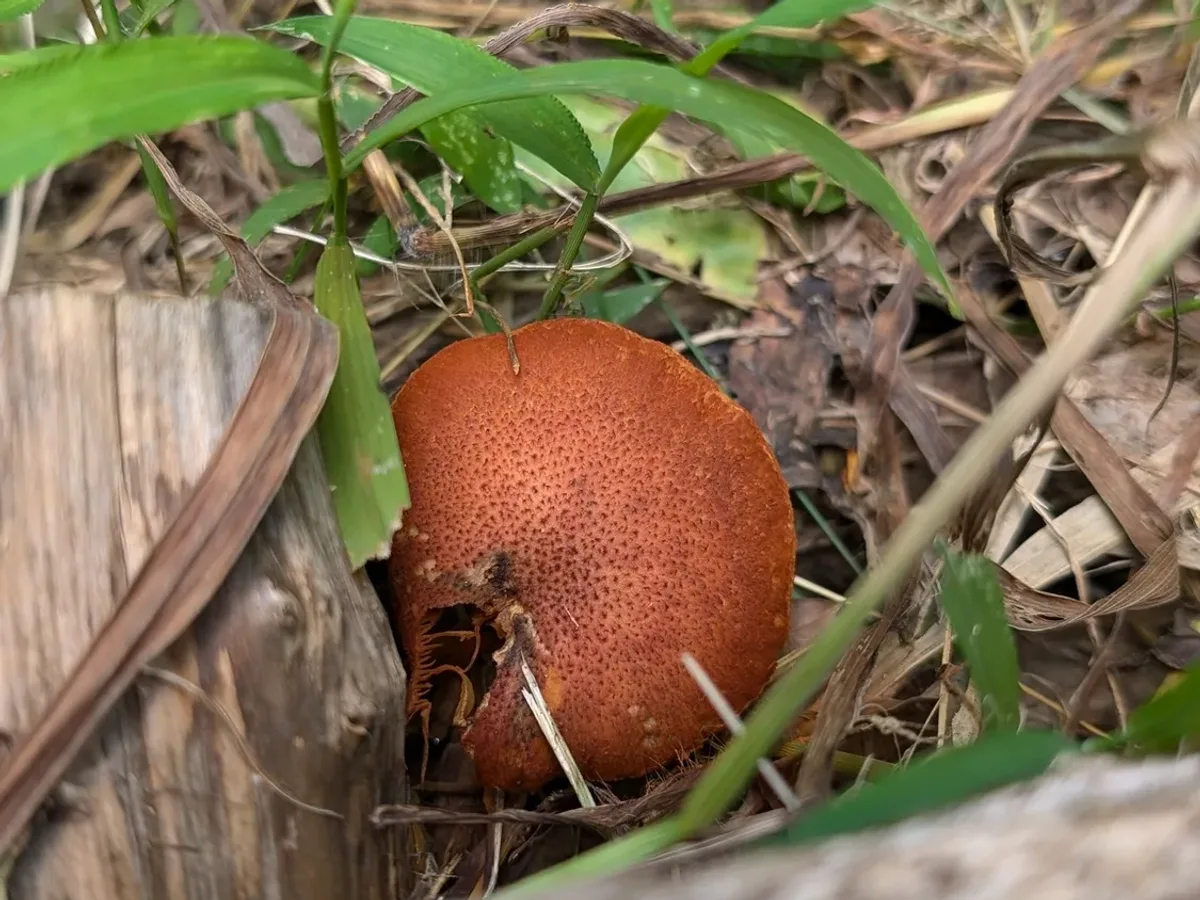 © Atsushi Nakajima (CC BY)
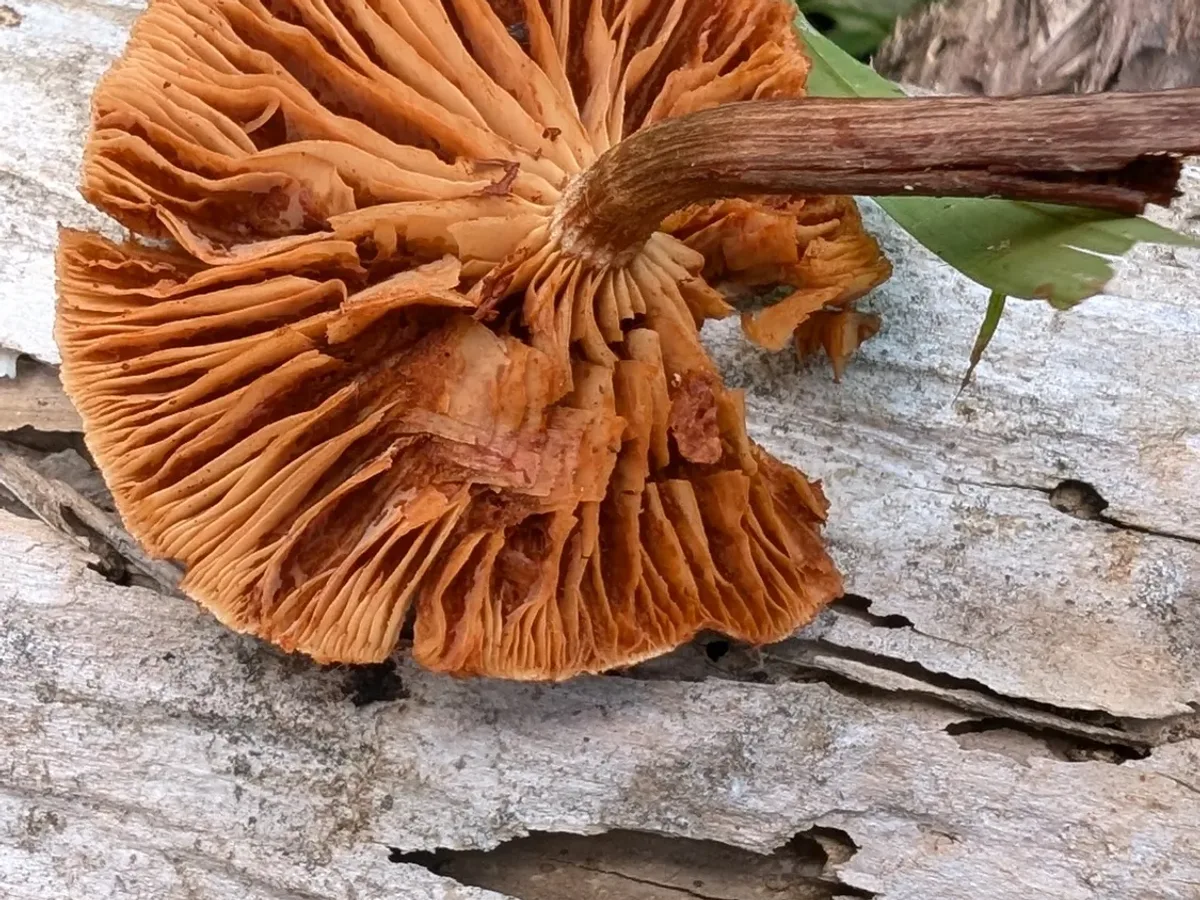 © Atsushi Nakajima (CC BY)
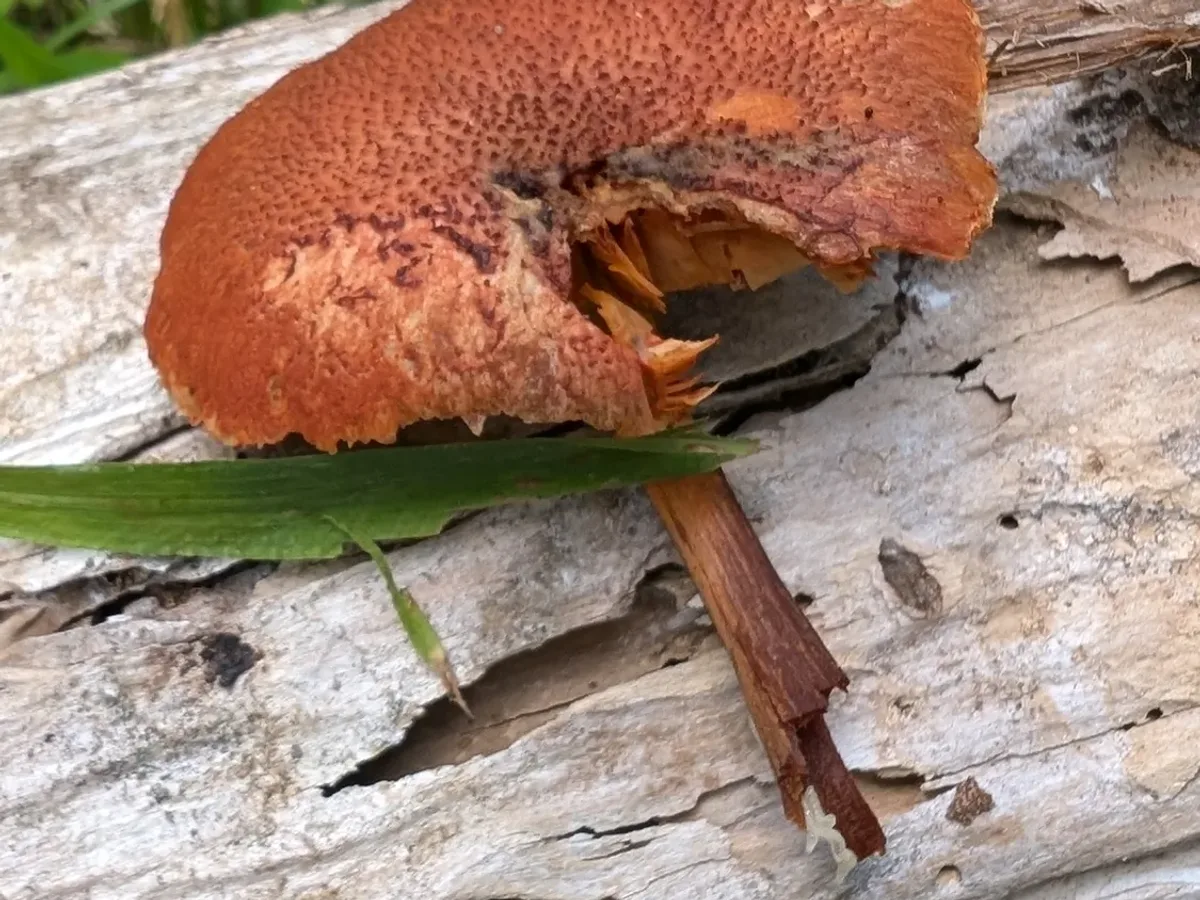 © Atsushi Nakajima (CC BY)
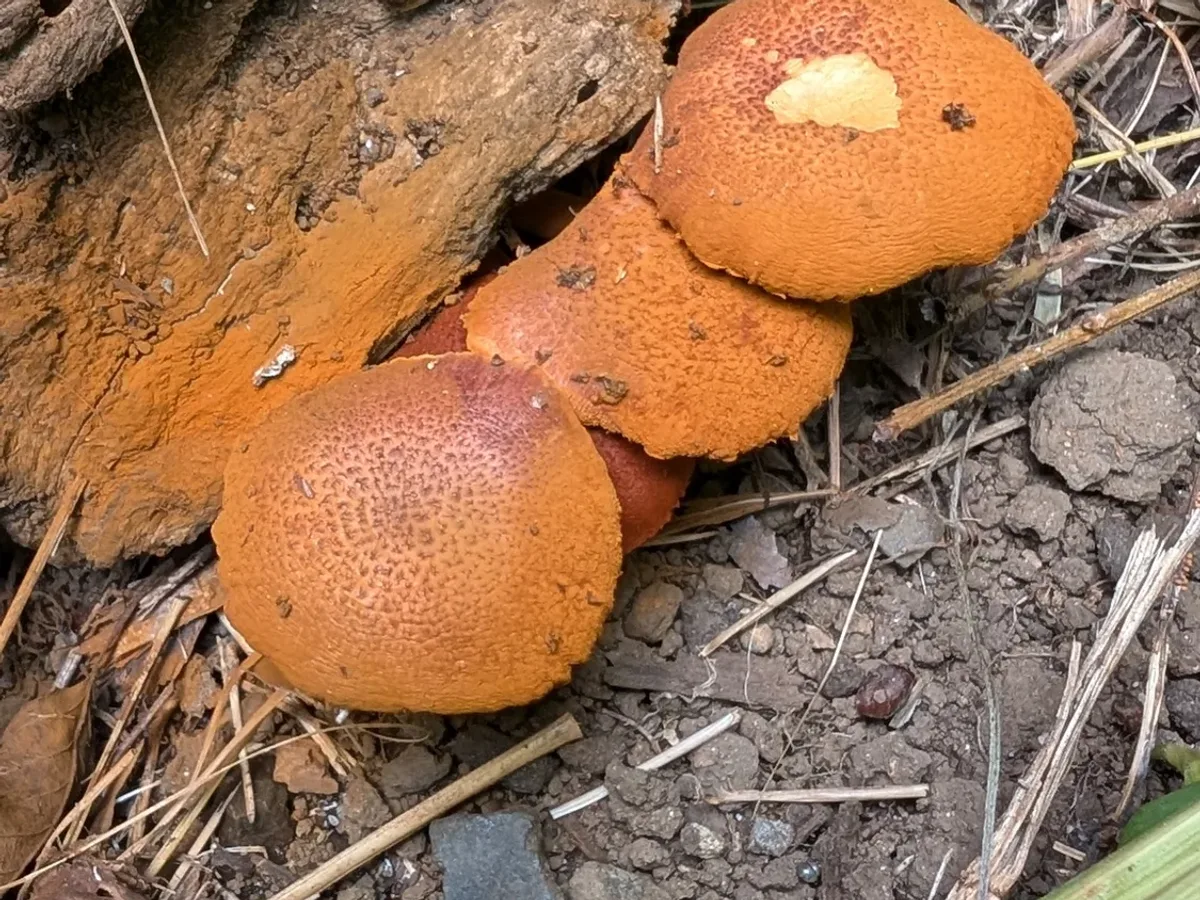 © Atsushi Nakajima (CC BY)
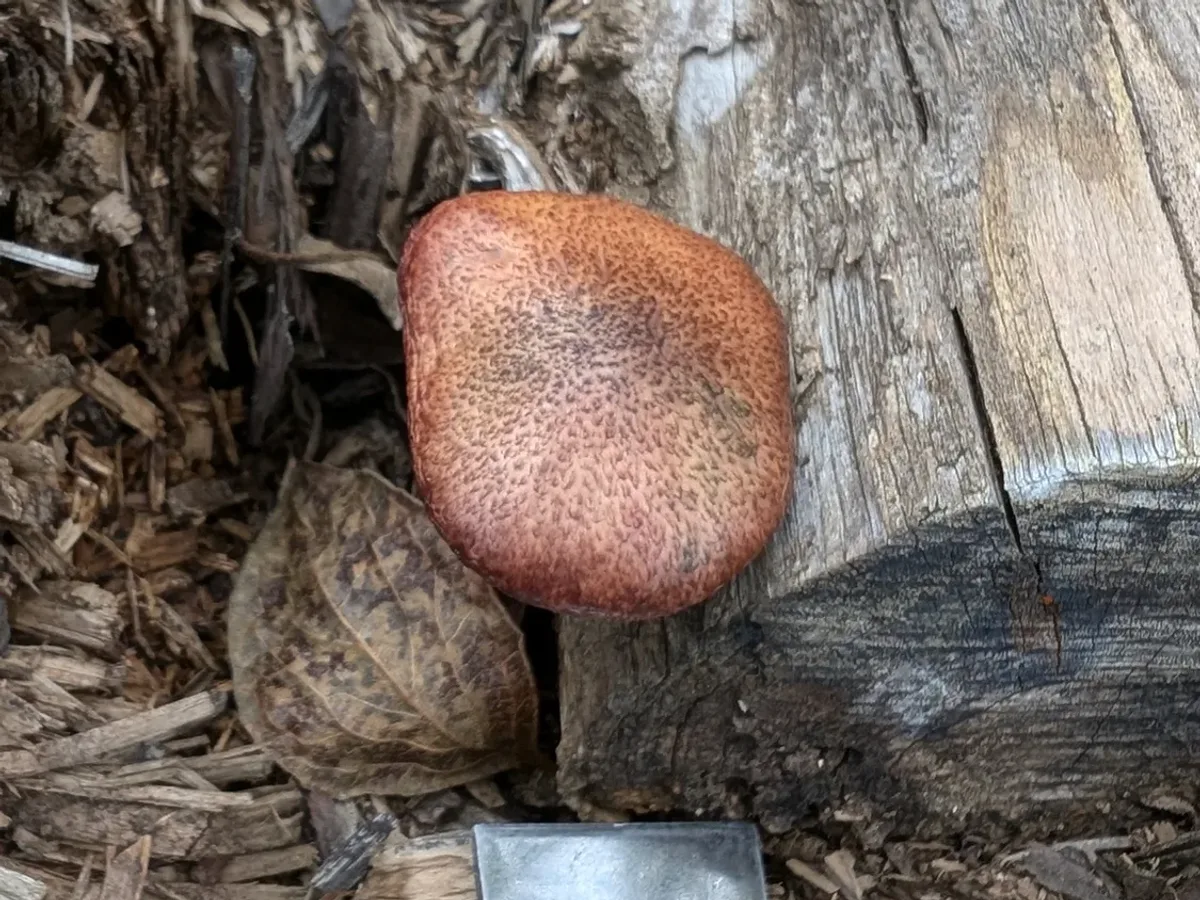 © Atsushi Nakajima (CC BY)© Atsushi Nakajima (CC BY)© Atsushi Nakajima (CC BY)
Edible only with the right preparation - or safe for some people but not others. Learn the caveats first.
Never eat a mushroom you are not 100% sure of - check the look-alikes below, and always cook wild mushrooms.
How to recognise it
Gymnopilus aeruginosus is one of the most visually distinctive members of its genus, precisely because of a character virtually unique in macrofungi. The cap surface of fresh, vigorous specimens shows patches, zones, or overall colouration of vivid blue-green, teal, or verdigris - reminiscent of patinated copper - overlying a base tone of ochre-yellow to rusty-orange-brown.
This remarkable pigmentation is especially pronounced in young, recently emerged fruit bodies and in specimens growing in humid conditions. It fades with age, drought, or handling, and older or dried specimens may appear as plain tawny-rust mushrooms without any blue-green hint.
The bluing phenomenon is not restricted to the cap surface: when the flesh of the cap margin, gills, or stem is cut or broken, the exposed surface stains blue-green within one to several minutes - a direct consequence of psilocin oxidising to blue-coloured quinone forms on contact with air.
This bluing reaction, combined with the initial cap colouration, is the primary field character separating G. aeruginosus from all other rustgills in its range.
Cap
The cap runs 30-120 mm, expanding from convex through umbonate to nearly plane.
Gills
Gills progress from pale rusty-yellow when young to ferruginous-brown as the rusty-brown spore print develops.
Stem
The stem is fibrillose, rusty below and paler above, with an evanescent cortinate veil that leaves at most a faint fibrous ring zone.
Smell & taste
Taste is intensely bitter - stronger than most Gymnopilus - and this bitterness alone should deter consumption regardless of any other character.
Spore print rusty-brown. Microscopically, spores are warted and dextrinoid.
Why it's dangerous
The principal dangers are:
- 1Psychoactive effects in unexpected exposure, which can be psychologically severe and cause secondary harm.
- 2Legal risk - possession or consumption is a controlled-substance offence in most of the species' range countries.
- 3Misidentification risk in both directions - most critically, a collector who mistakes Galerina marginata for a Gymnopilus species may eat a lethal dose of amatoxins.
Never consume any rusty-brown gilled wood-growing mushroom without thorough multi-character identification. If any doubt exists about the presence of G. marginata in a Gymnopilus collection, discard everything.
Toxin
Psilocybin (4-phosphoryloxy-N,N-dimethyltryptamine) and its dephosphorylated form psilocin (4-hydroxy-DMT) are the primary psychoactive constituents. Both act as partial agonists at serotonin 5-HT2A receptors in the central nervous system, producing altered perception, visual disturbance, and mood changes.
Gymnopilus aeruginosus also contains bis-noryangonin and other hispidin-type styrylpyrones that may modulate the effects or contribute additional pharmacological activity.
The blue-green staining reaction (bluing) is caused by psilocin oxidising to blue quinone pigments when exposed to air - an elegant and reliable chemical indicator of psilocin presence.
Psilocybin content in G. aeruginosus has been confirmed analytically in Japanese and North American specimens.
Symptoms
Psychoactive effects appear typically 20-60 minutes after ingestion and last 4-6 hours, depending on dose:
- visual and auditory disturbances
- altered time perception
- emotional lability
- euphoria or anxiety
- in higher doses, frank hallucinations
Autonomic effects include dilated pupils, elevated heart rate and blood pressure, nausea, and occasionally vomiting (partly from bitterness, partly from the compounds themselves).
Adverse psychological reactions ('bad trips') - including acute anxiety, panic, paranoia, and dissociation - are not rare, particularly in unexpected exposures.
The bitter compounds may also contribute to gastrointestinal distress independent of the psilocybin effect.
There are no reported direct fatalities attributable to psilocybin from mushrooms, but secondary harm (accidents, cardiovascular events in vulnerable individuals, psychological harm) is well-documented.
Staying safe
Gymnopilus aeruginosus is poisonous through its psychoactive constituents - primarily psilocybin and psilocin. In most countries in its range, its possession or collection for consumption is illegal regardless of intent.
Its intensely bitter taste is a natural deterrent that makes accidental consumption of a large dose unlikely, but poisonings have occurred in Japan and elsewhere.
The psychoactive effects are dose-dependent, potentially alarming in naive individuals or in contexts where the experience is unexpected. They can be dangerous if the affected person is in an insecure environment (near water, operating vehicles, at height).
There is no antidote; treatment is supportive and typically involves a calm, safe environment and, in severe agitation cases, benzodiazepines.
The greater practical danger for most foragers is the reverse confusion: picking Galerina marginata believing it to be Gymnopilus - a confusion that can be fatal.
Always confirm the bluing reaction and bitter taste to confirm Gymnopilus identity before accepting any rusty-spored wood-grower at face value, and never eat a wood-growing rusty-brown gilled mushroom without a firm, multi-character identification.
Where & when it grows
Habitat
A wood saprotroph of broadleaf and mixed forest across East and Southeast Asia, decomposing the lignin and cellulose of dead and decaying hardwood.
It is most frequently encountered on oak, chestnut, and related Fagaceae, but also on bamboo and a variety of other tropical and subtropical tree species. Conifers (pine, cryptomeria) host it in the cooler parts of the range.
It fruits from:
- stumps at ground level
- partially buried roots (where it can appear to emerge from bare soil)
- cut log ends
- occasionally the base of dying or damaged standing trees
Because it is saprotrophic rather than mycorrhizal, it is not dependent on a live tree partner and can persist at a site as long as adequate decaying wood remains.
It is widespread and not uncommon wherever large-diameter decaying hardwood is available in humid forest settings, from lowland subtropical forest in Southeast Asia to temperate broadleaf woodland in Japan and Korea.
When
The fruiting season spans summer through autumn in temperate East Asia - roughly June through November in Japan and northern China. It peaks July through October, when warm, humid post-monsoon conditions keep wood moisture high.
In the subtropical and tropical portions of the range (southern China, Southeast Asia), the season is broader and tied to the warm wet season rather than a strict calendar window.
Individual flushes are triggered by precipitation events that rehydrate the wood substrate after dry intervals, particularly when ambient temperatures remain above about 15 °C.
In Japan, it is a characteristic late-summer through mid-autumn species in humid deciduous and mixed woodland.
How it grows
Appears singly, in loose scattered groups of two to five, or occasionally in small but non-dense clusters from a shared wood substrate.
Each fruit body emerges rapidly once moisture and temperature conditions are met, expanding fully within three to seven days.
Because the mycelium colonises the interior of dead wood (brown rot type), the productive substrate can continue to support fruiting across multiple seasons as the wood is progressively broken down, making known sites reliably revisitable.
The bluing reaction visible when cut is a useful on-site confirmation character, but should not be elicited through unnecessary handling of specimens you do not intend to collect for scientific purposes.
Fruiting conditions
Wood-decay saprotroph; fruiting is triggered when accumulated rainfall or high humidity rehydrates the decaying wood substrate and temperatures are in the warm range (14-28 °C). Because the mycelium is within dead wood rather than mineral soil, flushes respond to wood moisture more than to soil temperature per se. In the East Asian monsoon zone, the post-rainy-season period (late July through October) is the classic flush window. Wood exposed after typhoon events can produce heavy flushes. The short lag (4-10 days) reflects rapid mycelial mobilisation within already-colonised substrate.
Look-alikes
Several dangerous confusions are possible.
The most serious is Galerina marginata (deadly), a small to medium agaric that also grows on decaying wood, produces a rusty-brown spore print, and has a similar fibrillose brown stem with a ring zone.
Galerina marginata does NOT blue when cut, has a distinctly hygrophanous cap (date-brown when moist, drying to pale ochre), is typically smaller (cap 2-6 cm), and lacks the blue-green cap tones and intensely bitter taste of G. aeruginosus. G. marginata contains amatoxins and is lethal.
Gymnopilus junonius (spectacular rustgill, syn. G. spectabilis) is the most frequently confused close relative - a large, imposing rusty-orange mushroom of similar size and habitat, also bitter, also saprotrophic on wood. It does not blue when cut (or only weakly in some reports), lacks blue-green cap tones, and has been shown to have variable and sometimes negligible psilocybin content. It is considered inedible due to bitterness and possible toxicity, but not reliably psychoactive across its range.
Pholiota species (scalycaps) can occupy similar wood substrates and produce rusty-brown spore prints, but Pholiota caps are typically sticky-viscid and prominently scaly, and they do not blue.
Kuehneromyces mutabilis (edible sheathed woodtuft) has a prominently scaly stem below the ring, hygrophanous cap, and cinnamon-brown (not ferruginous-rust) spore print; it does not blue.
Galerina marginata also grows on decaying wood and produces a rusty-brown spore print with a fibrillose ring on the stem, making it superficially similar to Gymnopilus aeruginosus. Key separators: G. marginata does not blue when cut or bruised; its cap is hygrophanous (dark date-brown when moist, drying to ochre from the centre outward - a two-tone effect); it is smaller (cap usually 2-6 cm); it lacks the blue-green cap colouration of fresh G. aeruginosus; its taste is not intensely bitter; and its spore surface under the microscope is verrucose but not as strongly as Gymnopilus. G. marginata contains amatoxins causing fatal liver failure. Never accept any rusty-spored wood-growing agaric without confirming both the bluing reaction and the intensely bitter taste.
A smaller, plainer species (cap 20-60 mm) of conifer wood with a dry, smooth to finely fibrillose cap in plain tawny-orange without blue-green tones; no bluing reaction; no persistent ring (veil remnants minimal). Bitter taste present but less intense. Inedible but not significantly toxic.
Pholiota scalycaps have sticky to viscid caps with well-developed dry recurved scales, grow in dense clusters at the bases of living or dead trees, and produce a dark brown (not rusty-ferruginous) spore print. No bluing reaction. The scaly, clustered habit and darker spore print easily separate Pholiota from Gymnopilus.
Edible species with a strongly hygrophanous cap (moist: date-brown with a darker margin; drying centrifugally to ochraceous), a prominently scaly lower stem below the ring, cinnamon-brown spore print (not ferruginous-rust), and mild odour without bitterness. No bluing reaction. Grows in clusters. The scaly lower stem and hygrophanous cap together are diagnostic.
The largest and most impressive Gymnopilus in the Northern Hemisphere: cap 50-200 mm, dry, fibrillose-scaly, bright orange-yellow to tawny-orange without blue-green tones; does not blue when cut (or only very weakly in some specimens); has a persistent, well-developed ring on the stem (not merely a faint zone); and is consistently bitterly inedible. G. junonius psilocybin content is variable and often negligible compared to G. aeruginosus. The reliable absence of bluing and the more prominent ring separate it from G. aeruginosus in the field.
A reference guide - never an edibility guarantee. When in doubt, leave it out.