Pig's ears
Gomphus clavatussyn. Cantharellus clavatus, Nevrophyllum clavatum, Merulius clavatus, Clavarella clavata
 © Grze Swis (CC BY 4.0)
 © Mandy Hackney (CC BY)
 © Mandy Hackney (CC BY)
 © Dutza K. (CC BY)
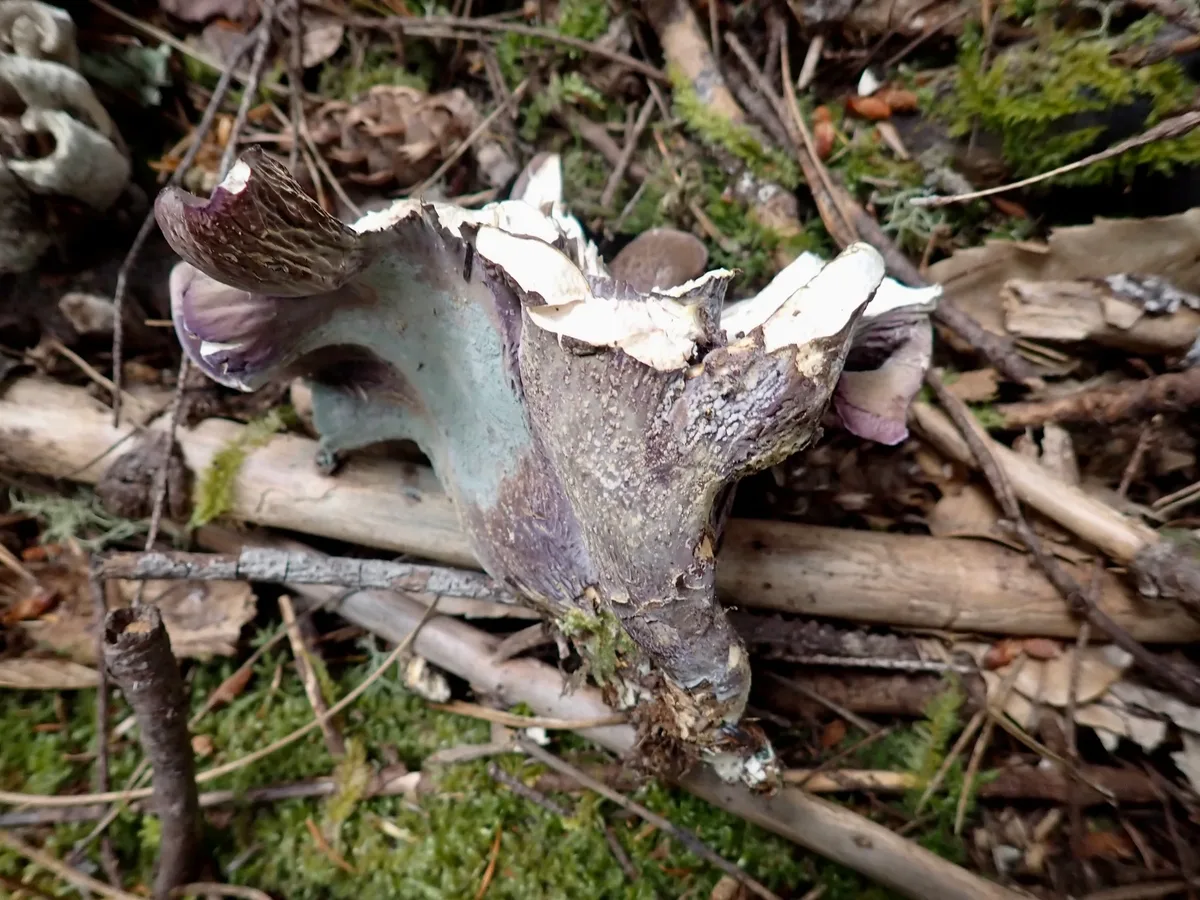 © Dutza K. (CC BY)
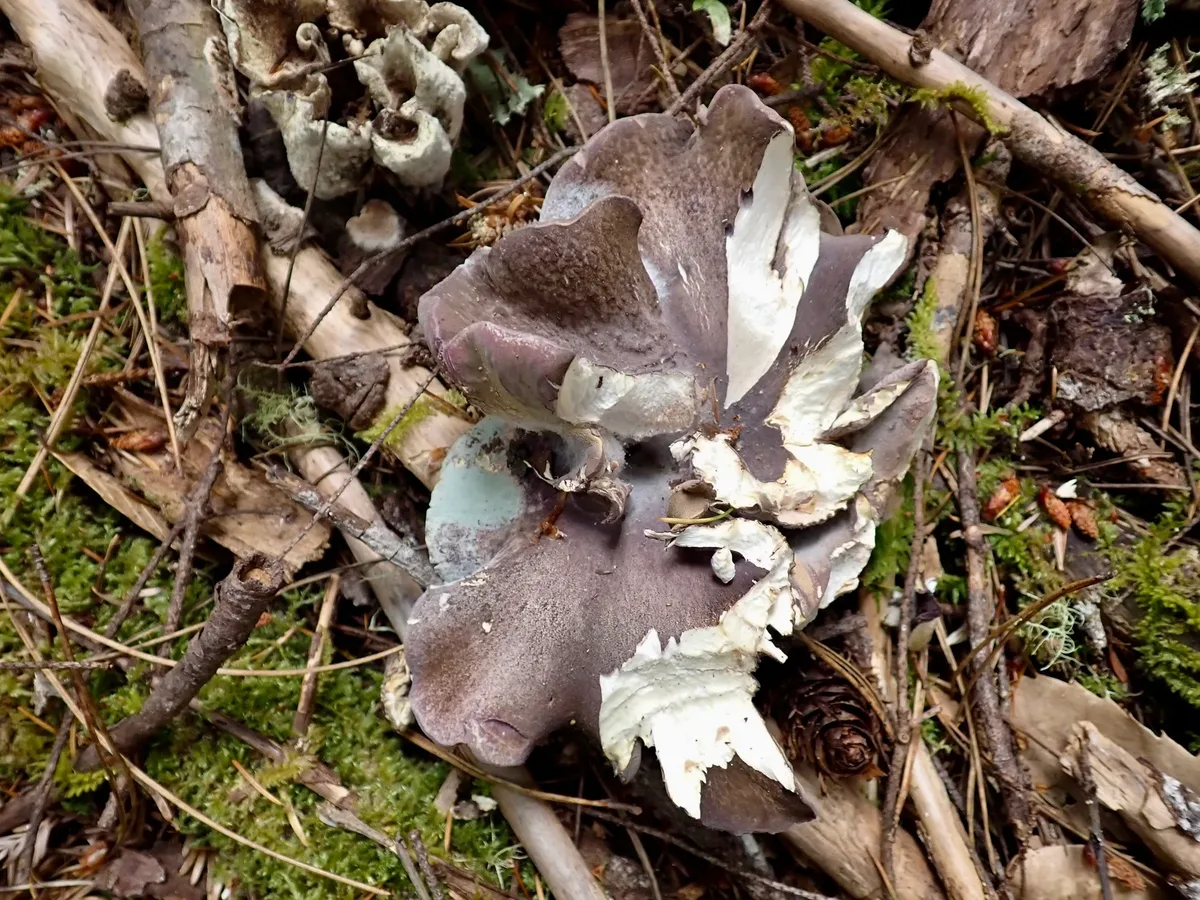 © Dutza K. (CC BY)
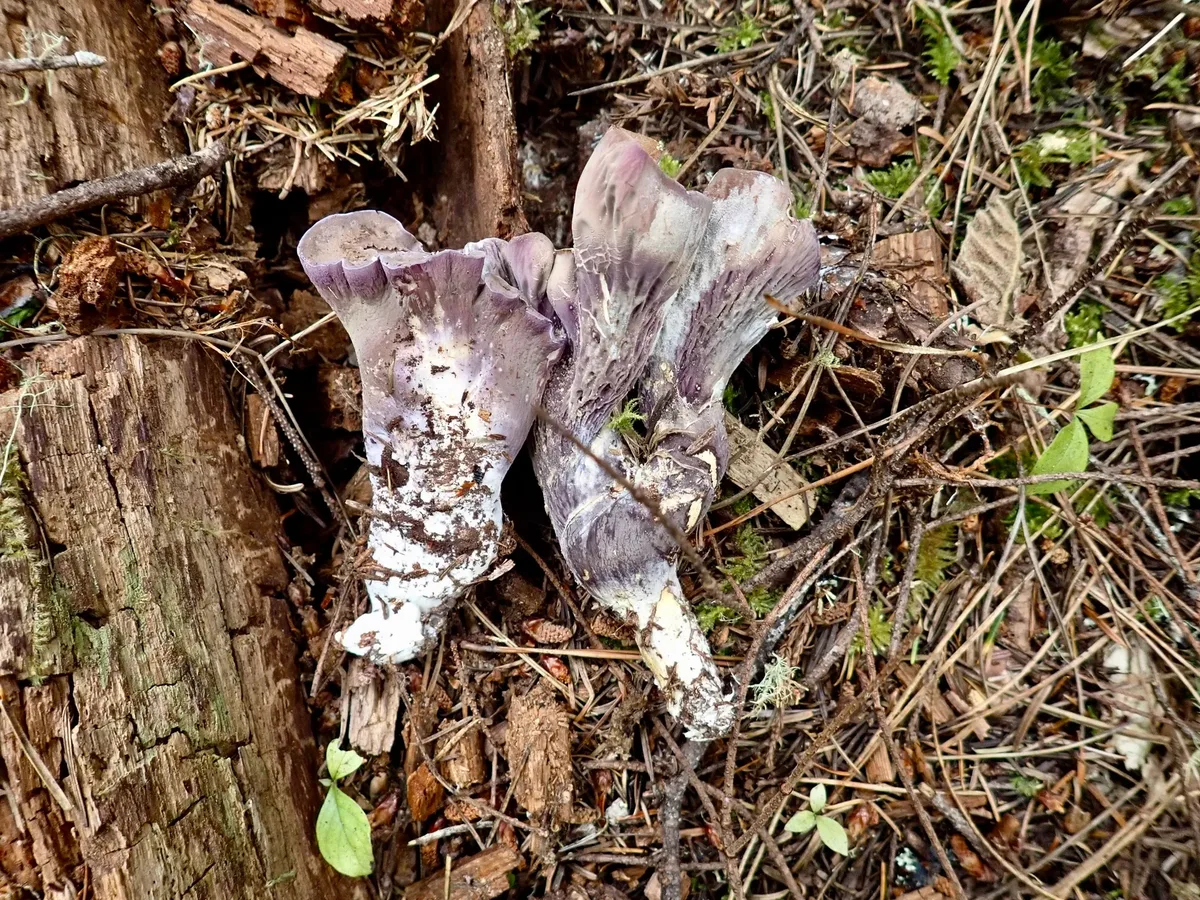 © Dutza K. (CC BY)
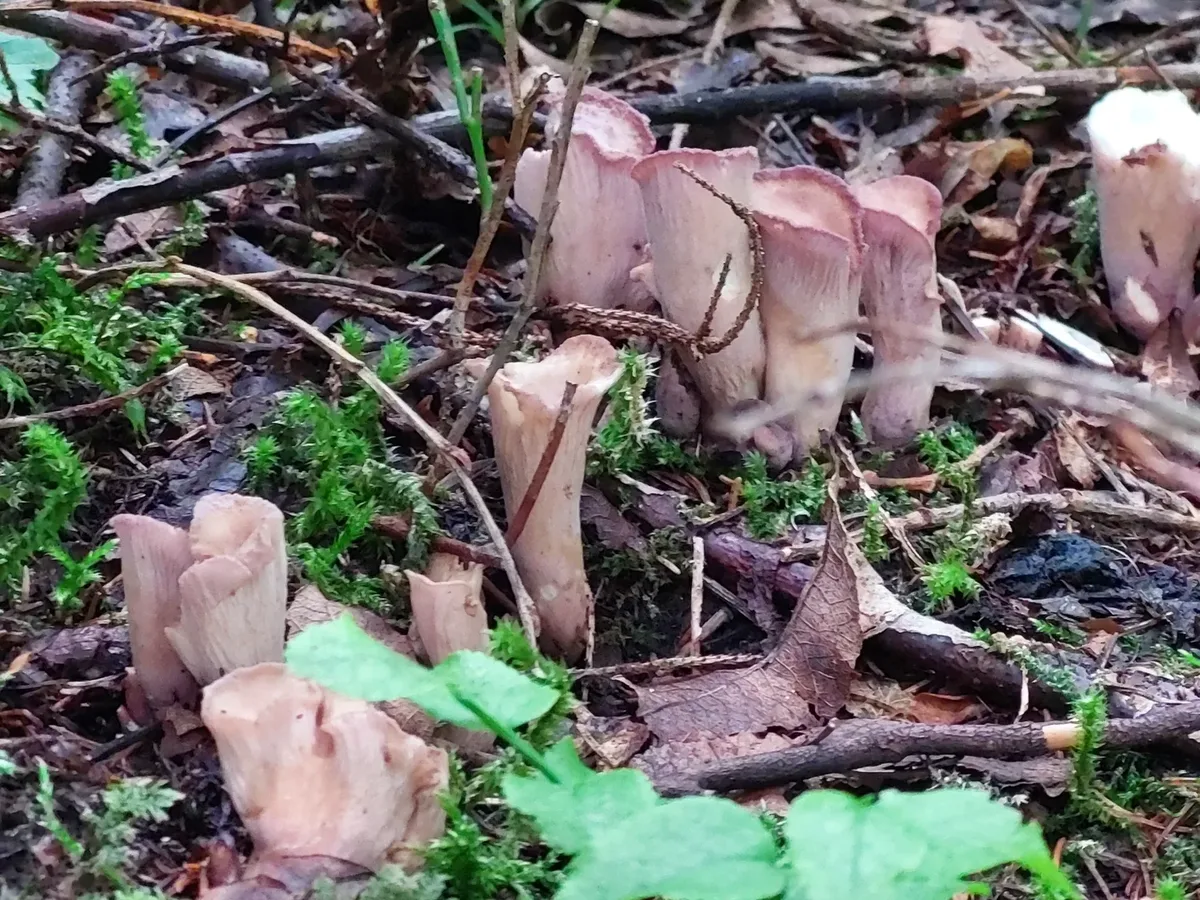 © vcpd (CC BY-SA)
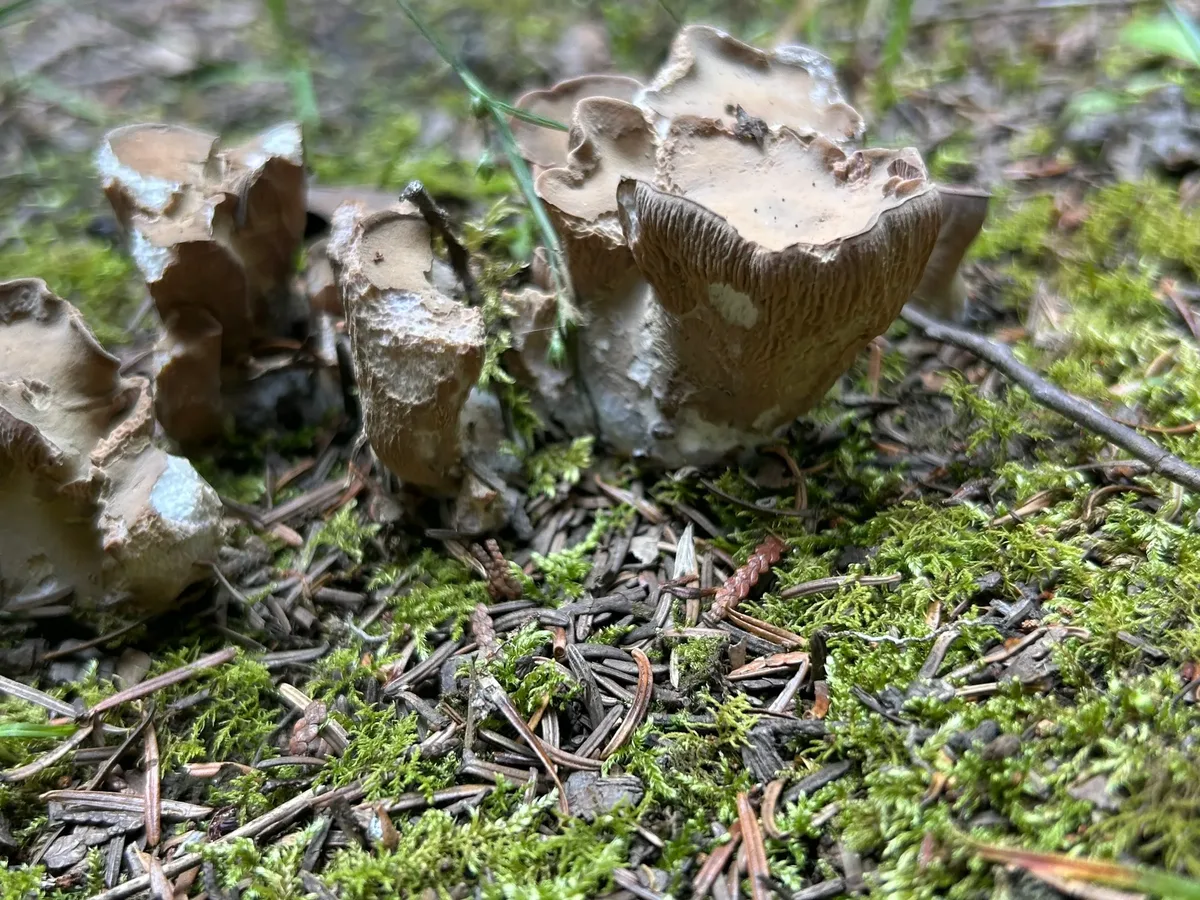 Allan Harris (CC0)
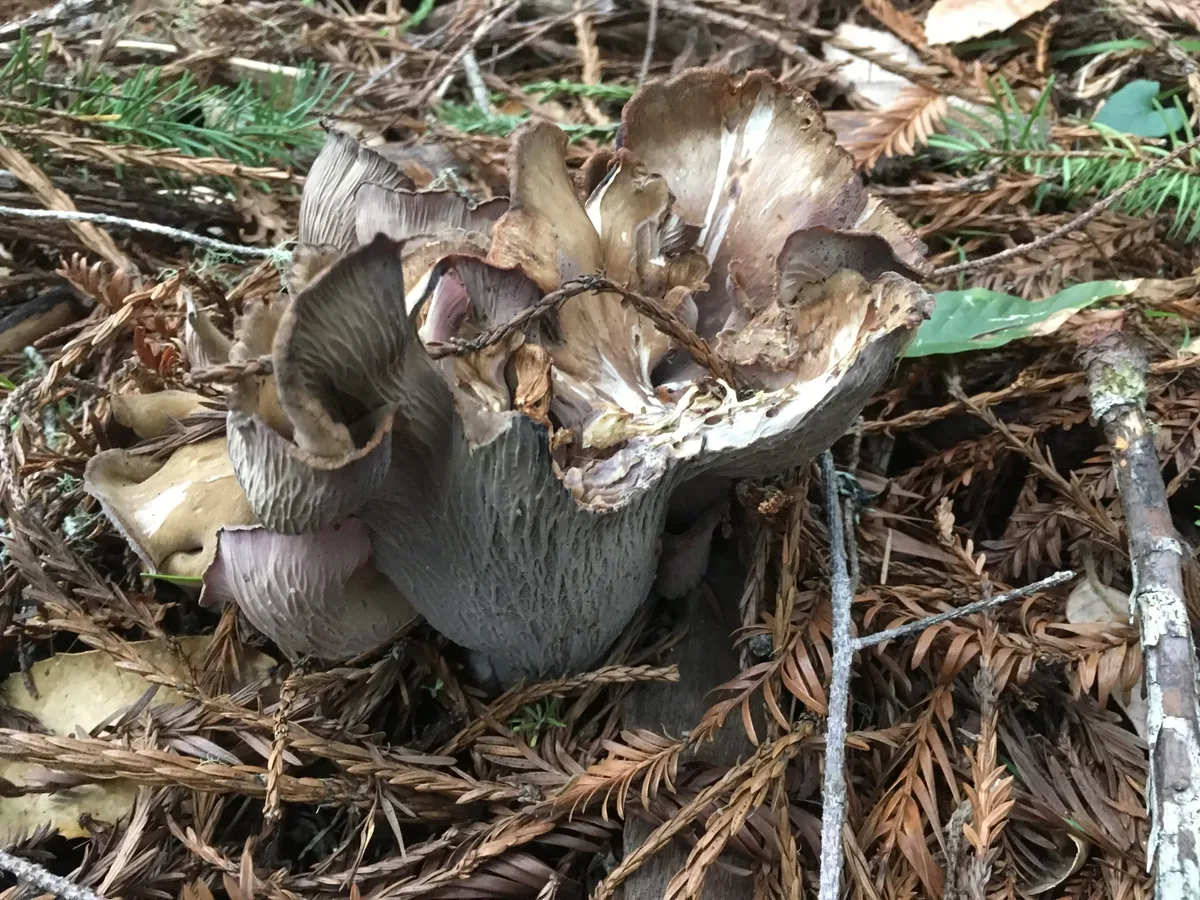 scurfytwigles (CC0)
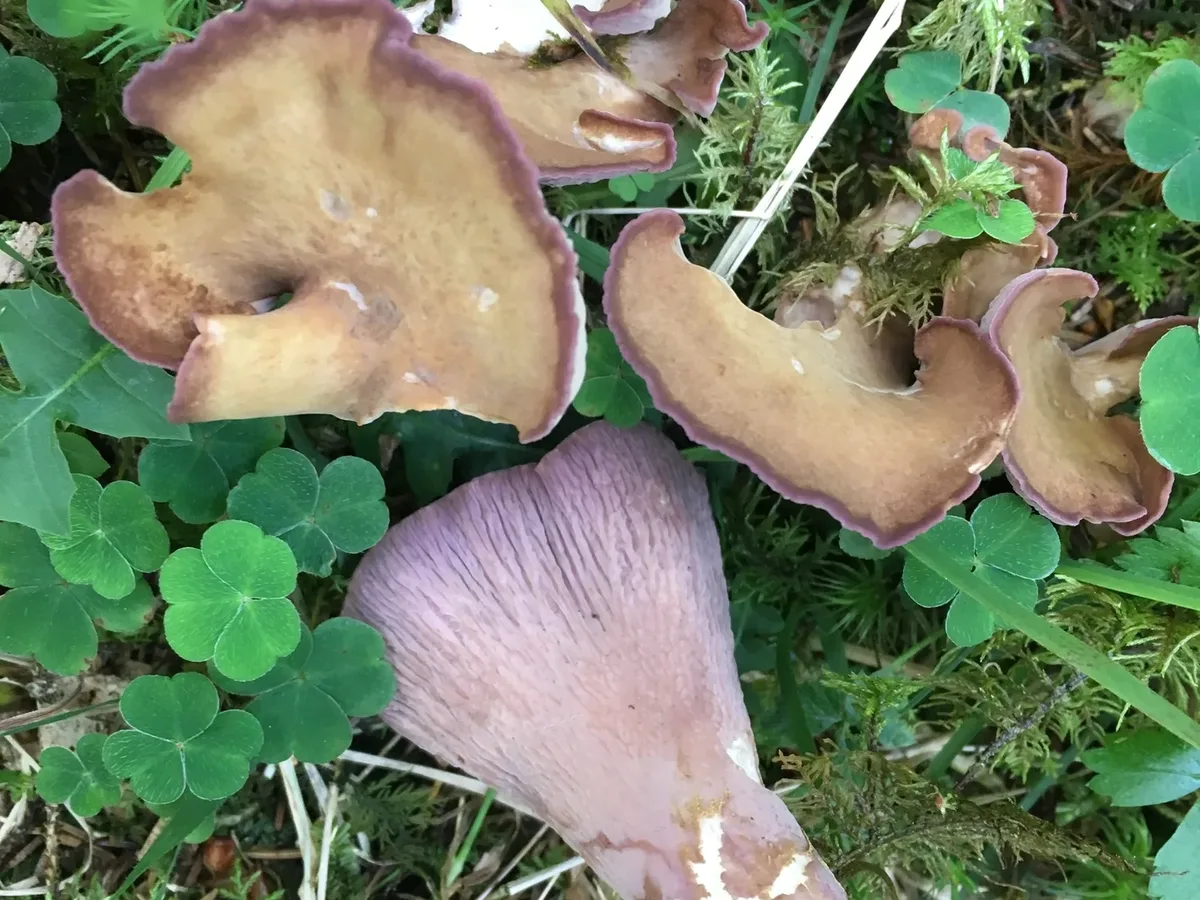 © Sigrid Jakob (CC BY 4.0)
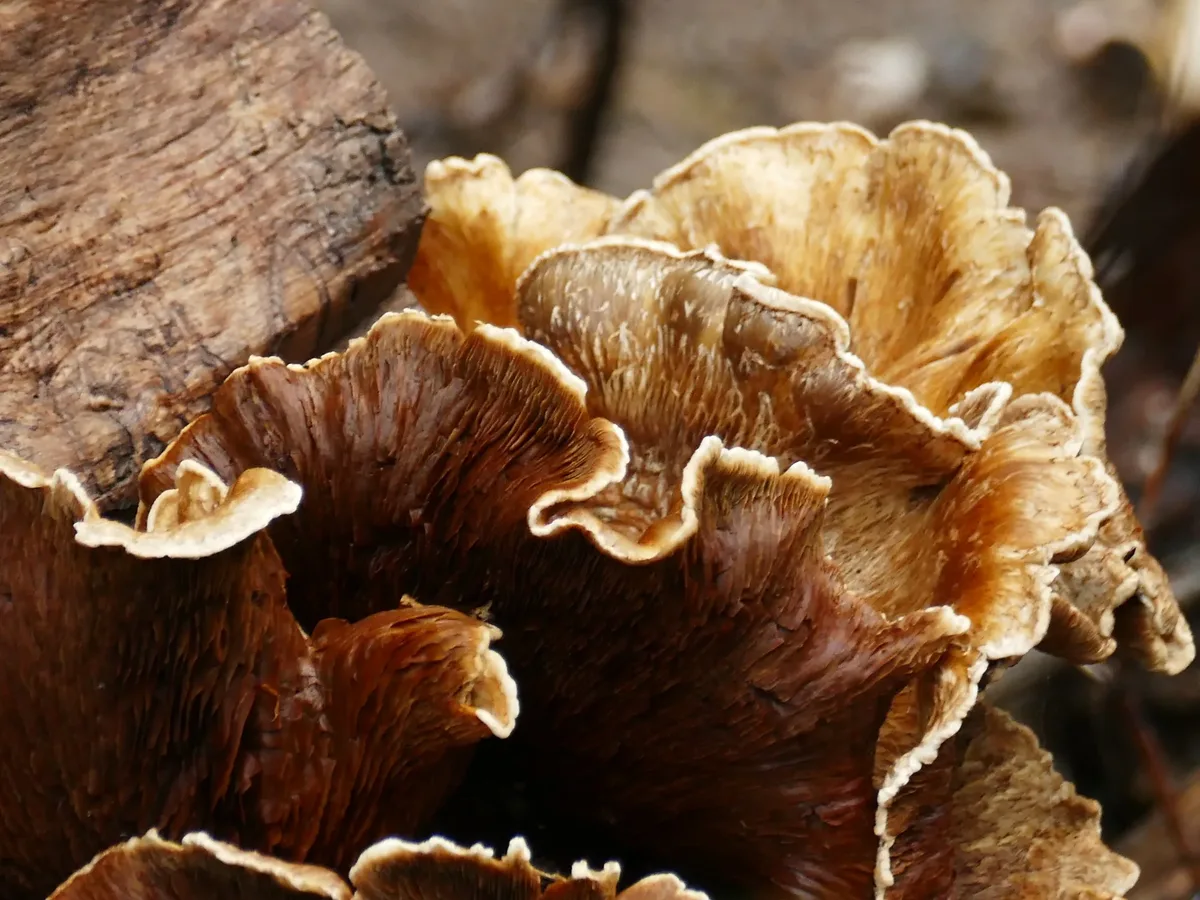 © Wendy McCrady (CC BY 4.0)
 © Alan Rockefeller (CC BY 4.0)
 © Owen Strickland (CC BY 4.0)© Grze Swis (CC BY 4.0)© Mandy Hackney (CC BY)
Good to eat, once you have identified it with certainty and cooked it through.
How to recognise it
Gomphus clavatus is one of the more immediately recognisable autumn fungi once you have met it once.
Cap
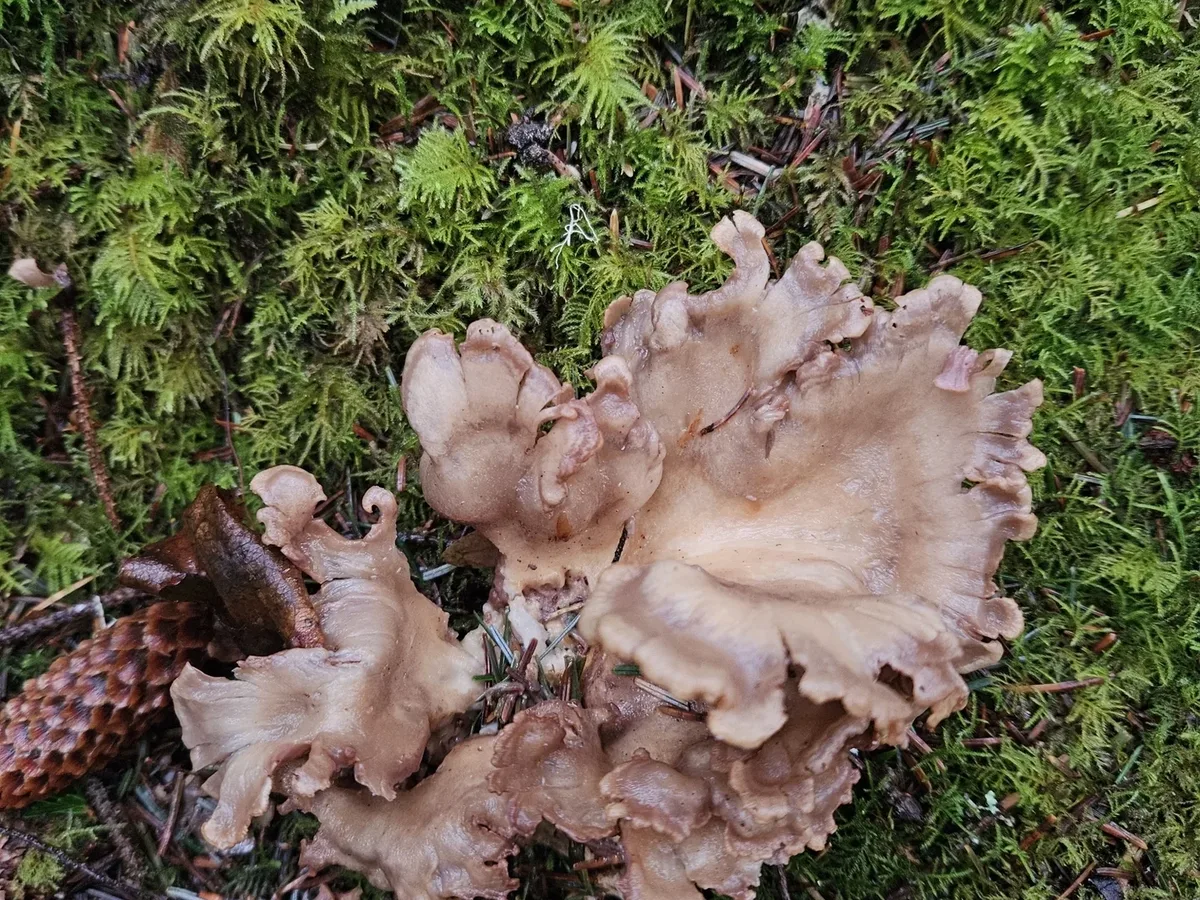
Young fruitbodies push up from the needle duff as compact, rounded clubs - looking at first like an odd chanterelle bud - then open into a deeply funnel-shaped cap (4-15 cm broad) with wavy, lobed, irregular margins.
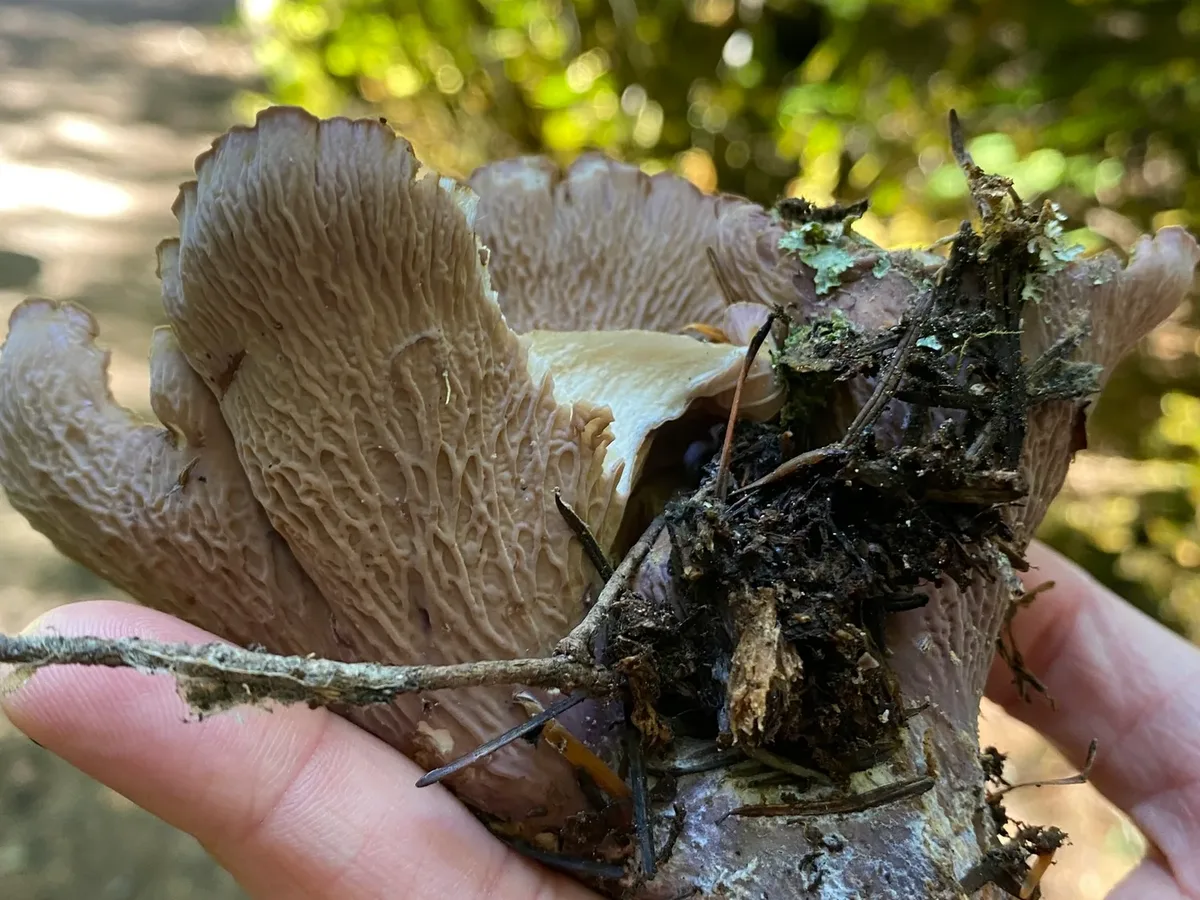
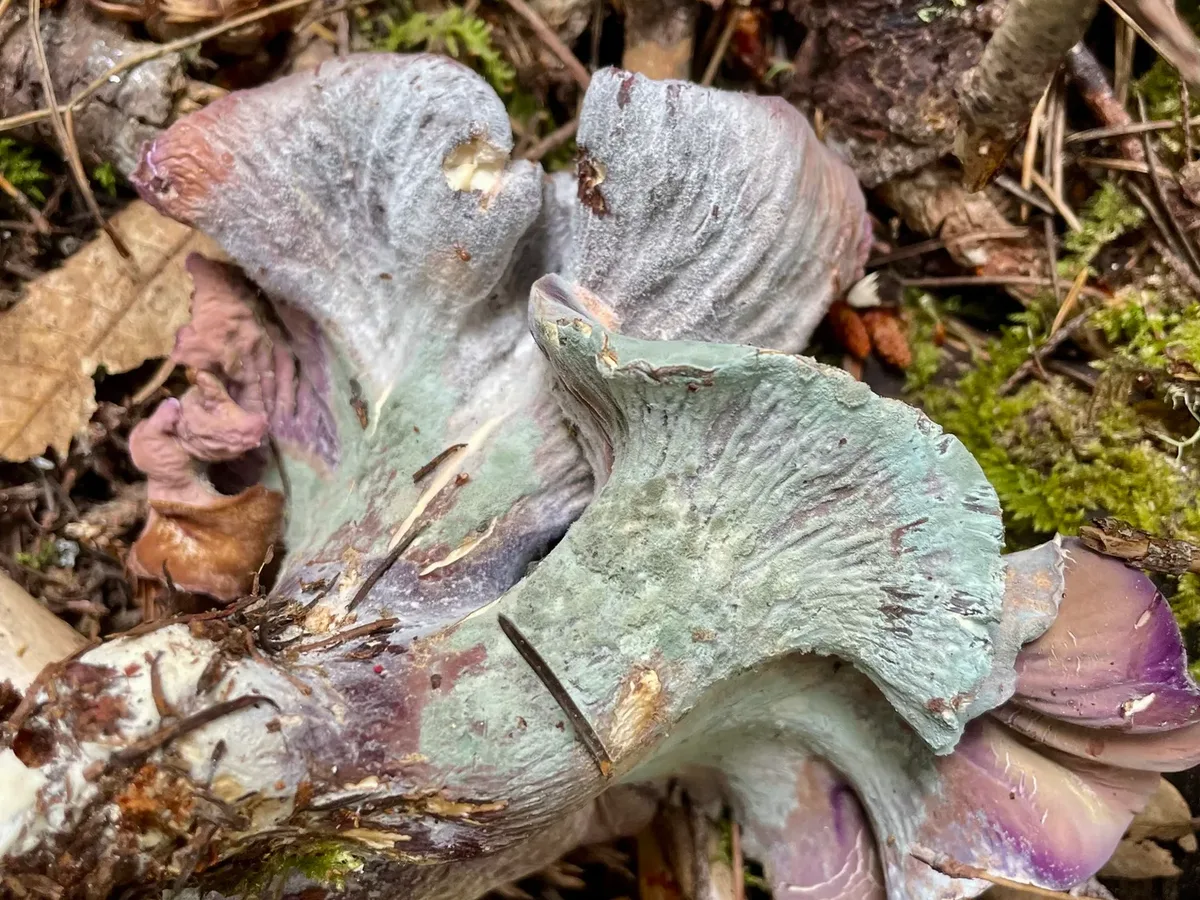
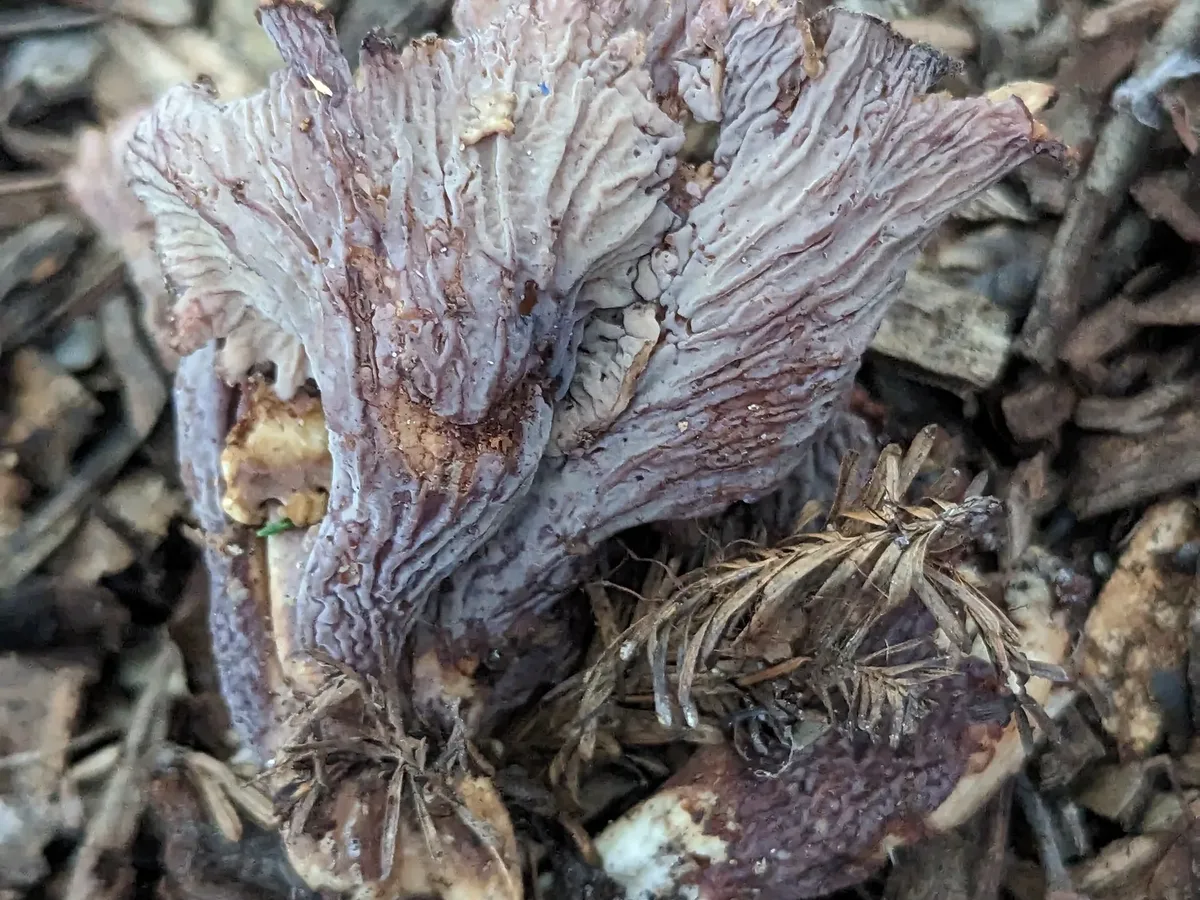
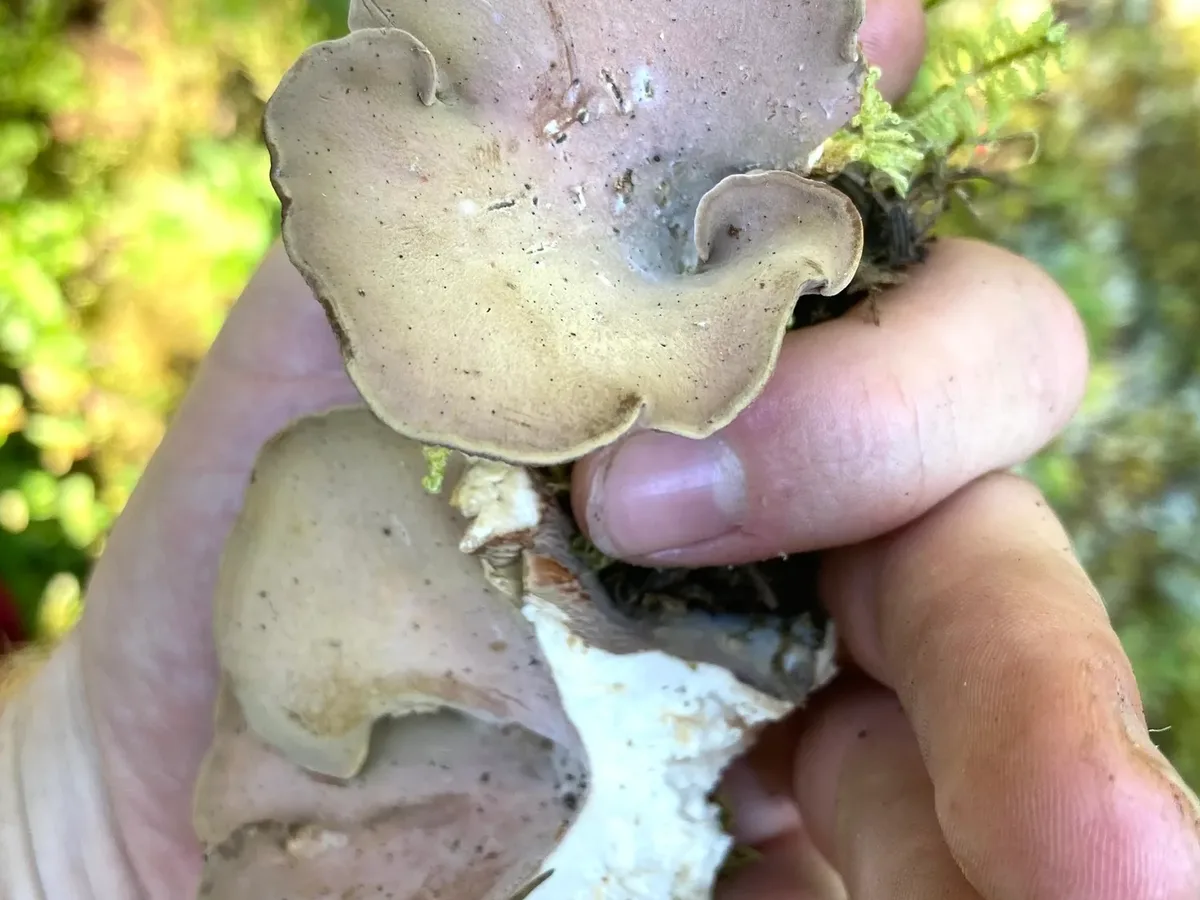
The dry, finely scurfy upper surface ranges from ochre-buff to tan with a distinct pinkish-lilac tint, especially at the margin on fresh specimens; this lilac blush is the single most useful field mark and fades to dull tan or buff as the fruitbody ages.
Gills / Pores
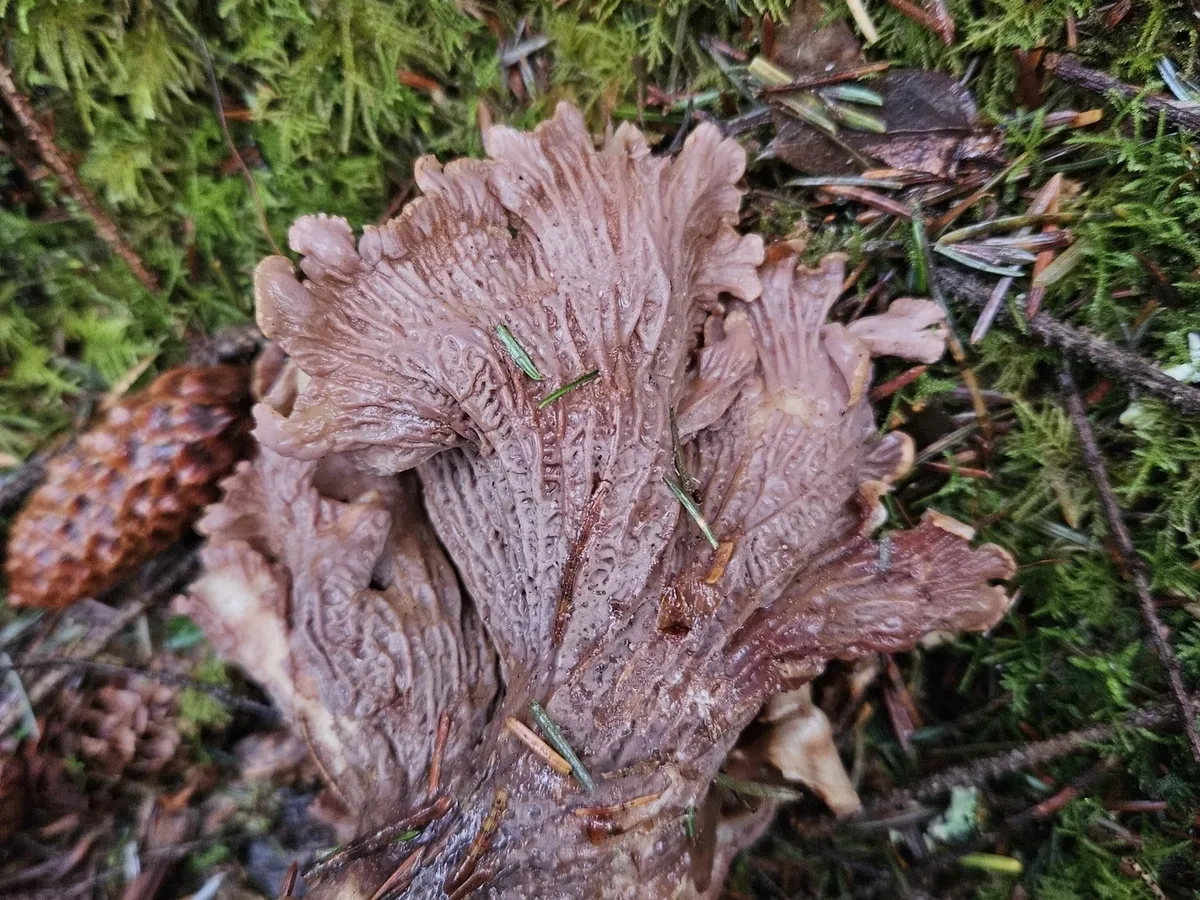
Flip it over and the underside is just as distinctive: shallow, forking, blunt-edged ridges - not true gills, not pores, but something like wrinkled folds - run down onto the stem and are a vivid lilac to violet-purple when fresh, a colour essentially unmatched by any other fleshy European fungus.
Stem
The stout stem (3-8 cm tall, 1-3 cm wide) is solid and concolorous with the cap, and is often fused at the base with its neighbours; Gomphus clavatus almost always grows in dense clusters of 3-20 individuals, which adds to its character in the field.
Flesh
The flesh is firm, white, and doesn't change colour when cut.
Spore print ochre-yellow to buff; spores 10-14 × 4-6 µm, ellipsoidal with fine longitudinal ridges.
Where & when it grows
Habitat
Gomphus clavatus is a strict mycorrhizal partner of mature conifers - in Europe almost always silver fir (Abies alba) and Norway spruce (Picea abies) - and it will only fruit where those partnerships are intact.
That means old-growth or near-old-growth montane and subalpine forest: the Alps, Pyrenees, Carpathians, Vosges, Black Forest, and Jura in Europe; the Pacific Northwest and Rockies in North America (with Abies grandis, A. amabilis, and Picea sitchensis).
The soil it prefers is deep needle duff over well-drained, humus-rich mineral soil, and the forest around it needs to be structurally undisturbed - this species vanishes quickly after clear-cutting or heavy thinning.
The mycorrhizal relationship that sustains it may have been running for decades beneath a single stand; when the trees go, so does Gomphus.
Where conditions remain stable, clusters reliably reappear in the same small patch year after year, which is why experienced foragers keep these spots closely guarded.
When
The main European season runs from mid-July through October, with the best fruiting at elevations of 600-1,600 m in August and September.
In Scandinavia's boreal fringe it can emerge as early as July; in milder lower-elevation sites like the Black Forest valleys or the Vosges, October flushes are not unusual.
One thing that makes Gomphus clavatus particularly unpredictable: it is not reliably annual. At some sites it may skip two or three years in a row, apparently tied to cycles in mycorrhizal network readiness and soil moisture.
When it does appear, the trigger is typically a burst of heavy August rain followed by warm settled weather - the same recipe that brings many late-summer mountain mushrooms to the surface.
How it grows
Fruitbodies emerge from the soil as ectomycorrhizal partners of the trees above them - the underground network has been building for years before anything visible appears.
They almost always come up in dense tufts of 3-20 individuals fused at the base, sometimes expanding over time into loose arcs or irregular patches that hint at the extent of the mycelium below.
They push up through deep needle duff and can remain partly buried and mound-like before fully unfurling.
Growth is moderate - a fruitbody goes from button to full maturity in 5-8 days under good conditions. In undisturbed old-growth sites the same patch can fruit productively for decades.
Fruiting conditions
Requires settled cool-to-warm weather after late-summer rain; flushing is erratic and not reliably annual at any given site; soil temperature must remain below about 16 °C for sustained fruiting; high soil moisture in needle duff layer is critical.
Look-alikes
Gomphus clavatus is one of the easier large fungi to identify with care, because no other common European species combines the funnel-shaped cap, forking decurrent ridges (not true gills), and the distinctive lilac-violet colouration of the fresh hymenium. However, several species warrant attention:
- 1Cantharellus cibarius (golden chanterelle) - the classic confusion species cited in older literature. The golden chanterelle is entirely yellow-orange without any lilac tinting, and its forking ridges are shallow, blunt, and dichotomously branching in the same characteristic way; however it is typically smaller, brighter orange-yellow, lacks the tufted growth and the lilac hue, and the cap margin is less deeply lobed and irregular. No danger from this confusion - chanterelle is choice-edible.
- 2Craterellus cornucopioides (black trumpet) - darker, grey to black, much thinner-fleshed, funnel-shaped but with a narrow hollow interior, and growing as separate individuals rather than tufts; no lilac.
- 3Turbinellus floccosus (scaly vase chanterelle) - North American species, much larger and more vase-shaped, with coarse orange-red scales on the inner cap, and considered mildly toxic; lacks the lilac ridges.
- 4Phaeotremella and other jelly fungi - sometimes cause confusion in wet conditions when collapsed, but jelly texture distinguishes them instantly.
- 5Ramaria species (coral fungi) - branched club-like structures, entirely different overall form; some Ramaria (e.g. R. formosa) are mildly toxic.
None of the true lookalikes are deadly.
Grey to black, thin-fleshed, hollow throughout, no lilac ridges; grows as individual fruitbodies, not tufted clusters; no confusion risk when seen side-by-side.
Branched coral-like structure with wine-red to pink-tipped branches; entirely different branched form from the funnel-shaped Gomphus clavatus; mildly laxative if eaten in quantity. No realistic confusion for an observer who examines the fruitbody.
Has a slimy cap and true gills (decurrent but distinct), grey to purplish-grey cap; associated with Suillus and spruce; very different slimy texture and true gill structure; edible but mediocre.
Entirely golden-yellow to egg-yolk orange with no lilac tints; grows as separate individuals not in dense fused tufts; cap less deeply funnel-shaped and less irregular; edible and choice.
North American only; much larger vase shape; interior surface has coarse orange-red to salmon scales; considered mildly toxic (GI irritant); lacks the lilac ridge colouration entirely.
In the kitchen
Picking & cleaning
Pick only mature, fresh fruitbodies with intact, firm flesh and clear lilac tinting still evident on the ridges and cap margin - these are the best flavour and quality.
Use a knife to cut at the base, leaving the mycelium undisturbed in the soil. Fruitbodies in tufted clusters should be separated individually; the fused bases of neighbouring stems need a clean cut.
The firm flesh means Gomphus clavatus handles rough terrain well and can be carried in a basket without undue damage.
However, the species is legally protected in Germany, Switzerland, the Netherlands, and several other European countries - collecting is prohibited or strictly regulated. Always check local and national regulations before picking.
Even where legally collectable, harvest conservatively from large clusters only, and never from small isolated groups.
Clean gently with a brush; the ridged hymenium traps soil particles.
Cooking
Gomphus clavatus has firm, meaty, dense flesh that holds up excellently to cooking and makes it a versatile culinary mushroom. The flavour is mild to moderately mushroomy with a pleasant earthiness; not as intensely aromatic as chanterelles but more substantial in texture.
Cleaning is the most labour-intensive step: the ridged underside traps soil and debris and benefits from a stiff brush and occasional light rinse, drying thoroughly before use.
The firm flesh benefits from longer cooking than delicate mushrooms - sautéing in butter over medium-high heat for 8-12 minutes until golden is the classic preparation; the flesh reduces somewhat but retains good body.
- Excellent in cream sauces, pasta, risotto, and as a side vegetable.
- Pairs well with lard, bacon, game, and alpine cheeses.
- Can be dried (sliced 5-8 mm thick and dehydrated at 50 °C) with good results; reconstitutes to a pleasant texture.
- Pickling in mild brine is traditional in central European Alpine cuisine.
Not suitable for eating raw.
Good to know
Gomphus clavatus is a good edible mushroom with no documented serious toxicity in healthy adults when properly cooked. However:
- 1As with many wild fungi, it should always be cooked - raw consumption may cause mild gastrointestinal upset in sensitive individuals.
- 2Some individuals report mild GI sensitivity even to well-cooked specimens, so first-time tasters should eat a small portion and wait 24 hours before consuming larger amounts.
- 3The edibility applies to fresh, mature fruitbodies only - overripe, worm-eaten, or decomposing specimens should be discarded.
- 4There is a legally protected status in much of Europe - foragers must verify local regulations before collecting; harvesting a protected species carries fines in several countries.
There are no known deadly lookalikes in Europe or North America.
In North America, Turbinellus floccosus (which is superficially similar in form) is considered mildly toxic and should not be eaten; Gomphus clavatus lacks the orange scaling and coarse inner cap surface of that species.
A reference guide - never an edibility guarantee. When in doubt, leave it out.