Rosy spike
Gomphidius roseussyn. Agaricus roseus Fr., Gomphidius roseus (Fr.) Fr., Gomphus roseus (Fr.) Kuntze
 © Nina Filippova (CC BY 4.0)
 © Wolfgang Wollschweber (CC BY 2.0)
 © Morten Pettersen (CC BY)
 © Fredrikke Monsen (CC BY)
 © Gry Handberg (CC BY)
 © Siv Moen (CC BY)
 © Siri Lie Olsen (CC BY)
 © Siri Lie Olsen (CC BY)© Nina Filippova (CC BY 4.0)© Wolfgang Wollschweber (CC BY 2.0)
Good to eat, once you have identified it with certainty and cooked it through.
How to recognise it
Gomphidius roseus is one of the most distinctively coloured small fungi of European pine forests.
Cap
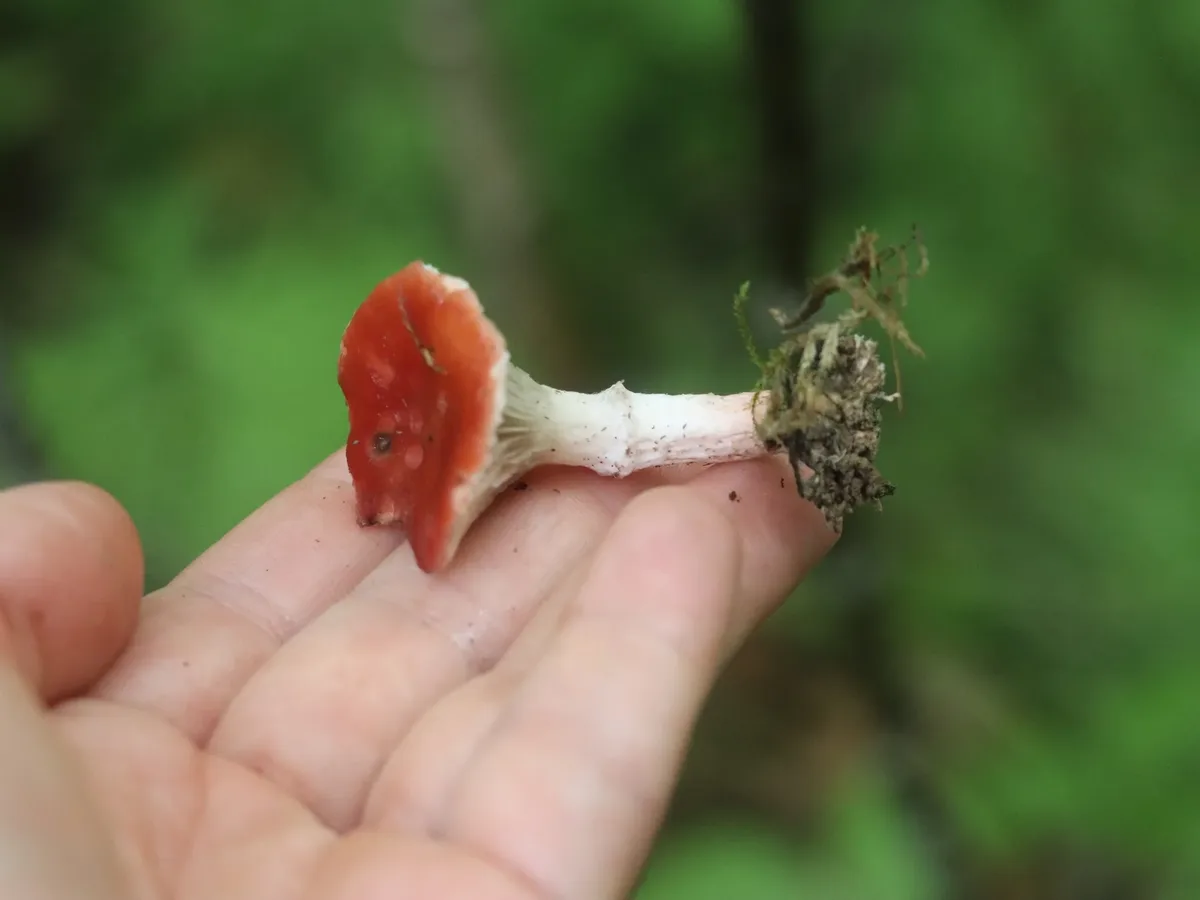
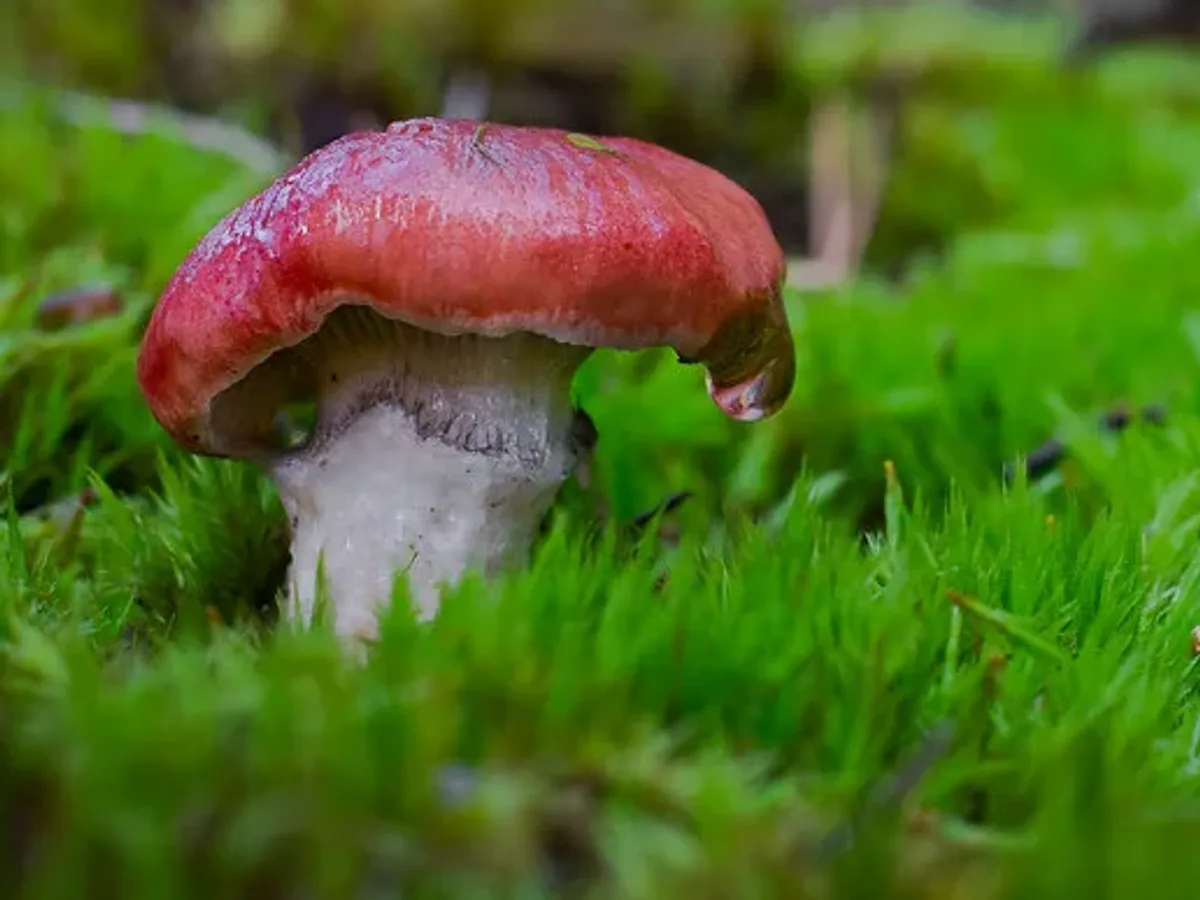
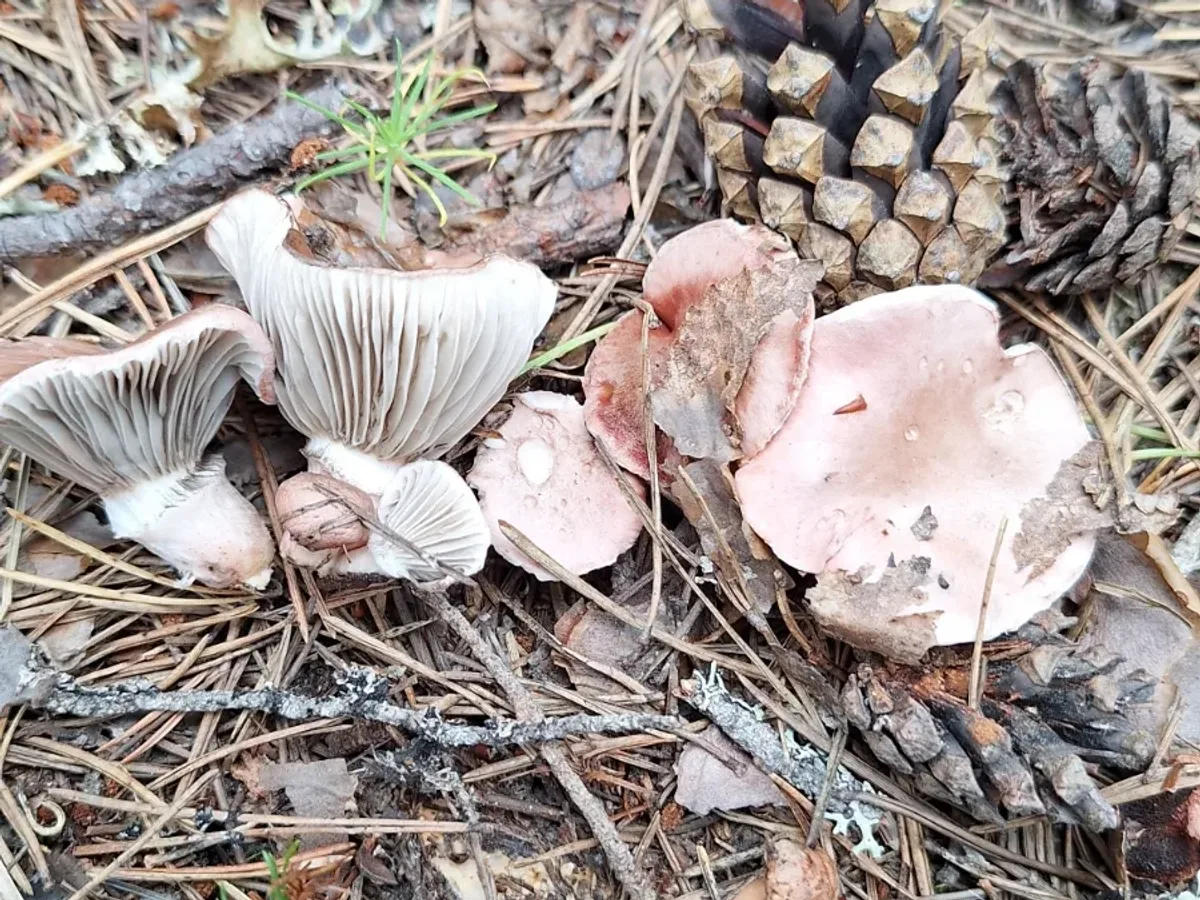
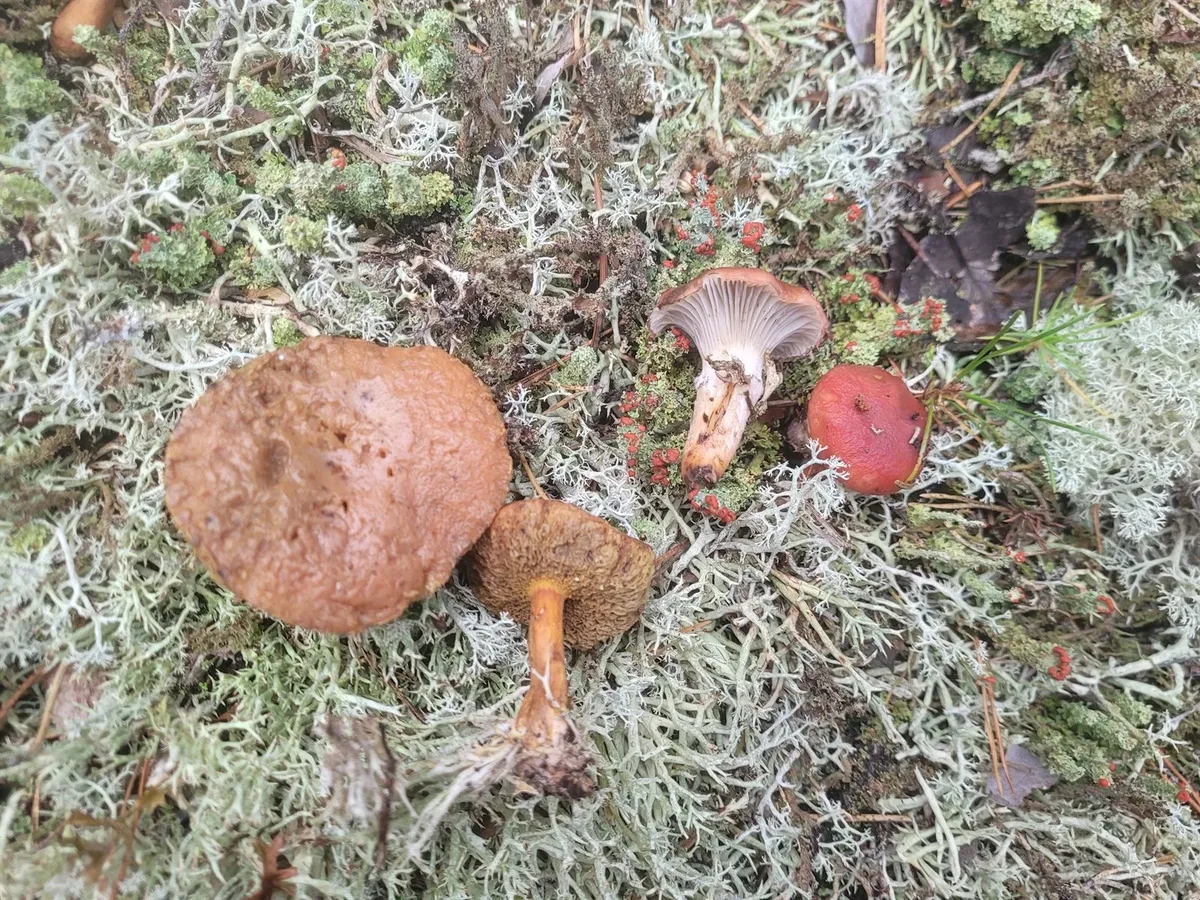
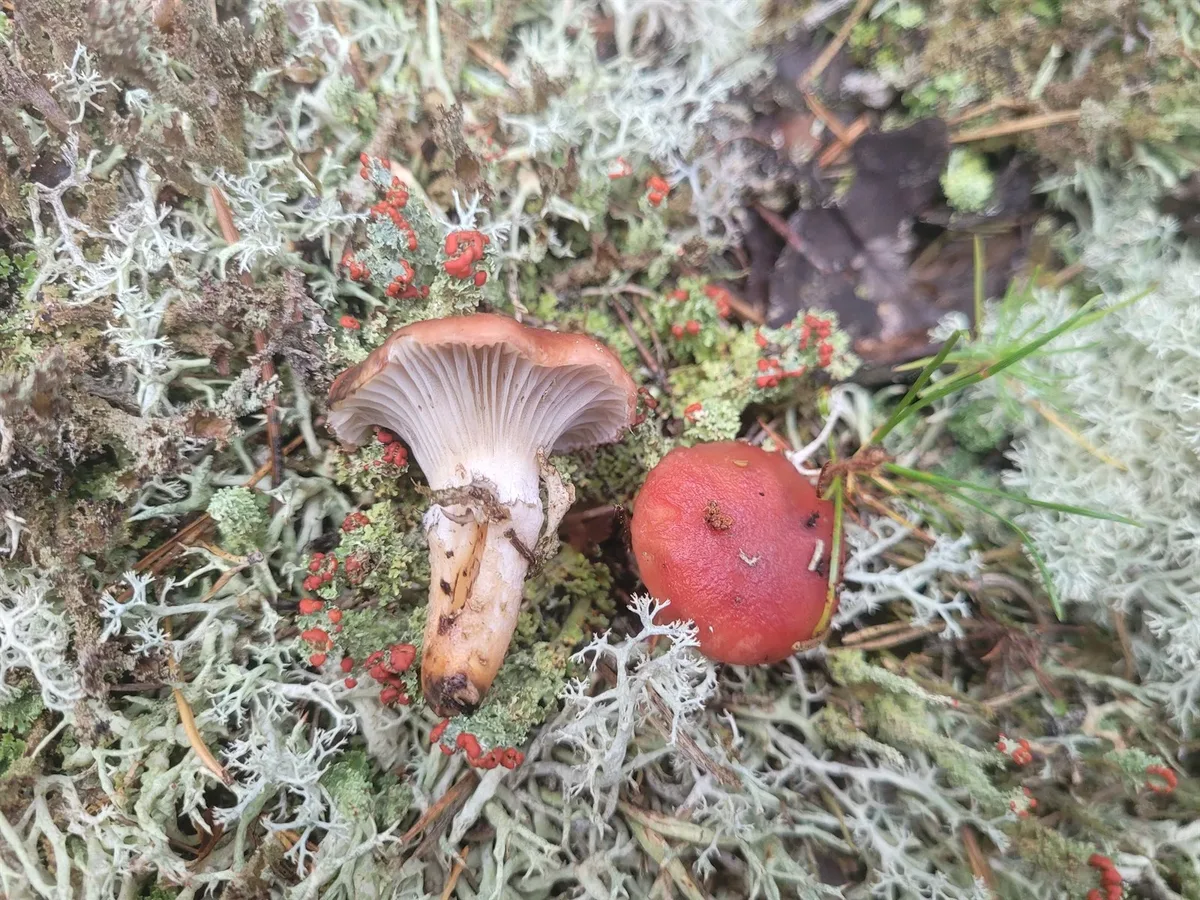
The cap (2-5 cm across) begins convex and cushion-like before flattening and developing a shallow central depression. Its surface is notably viscid to glutinous in wet weather - slimy enough to coat a finger - and the rosy-pink to coral-salmon or rosy-red colour is immediately distinctive.
In older or dried specimens the colour can fade to buff-pink, but fresh caps retain their warm pink hue. The cuticle peels cleanly from the margin inward, much like that of its relative Gomphidius glutinosus.
Gills
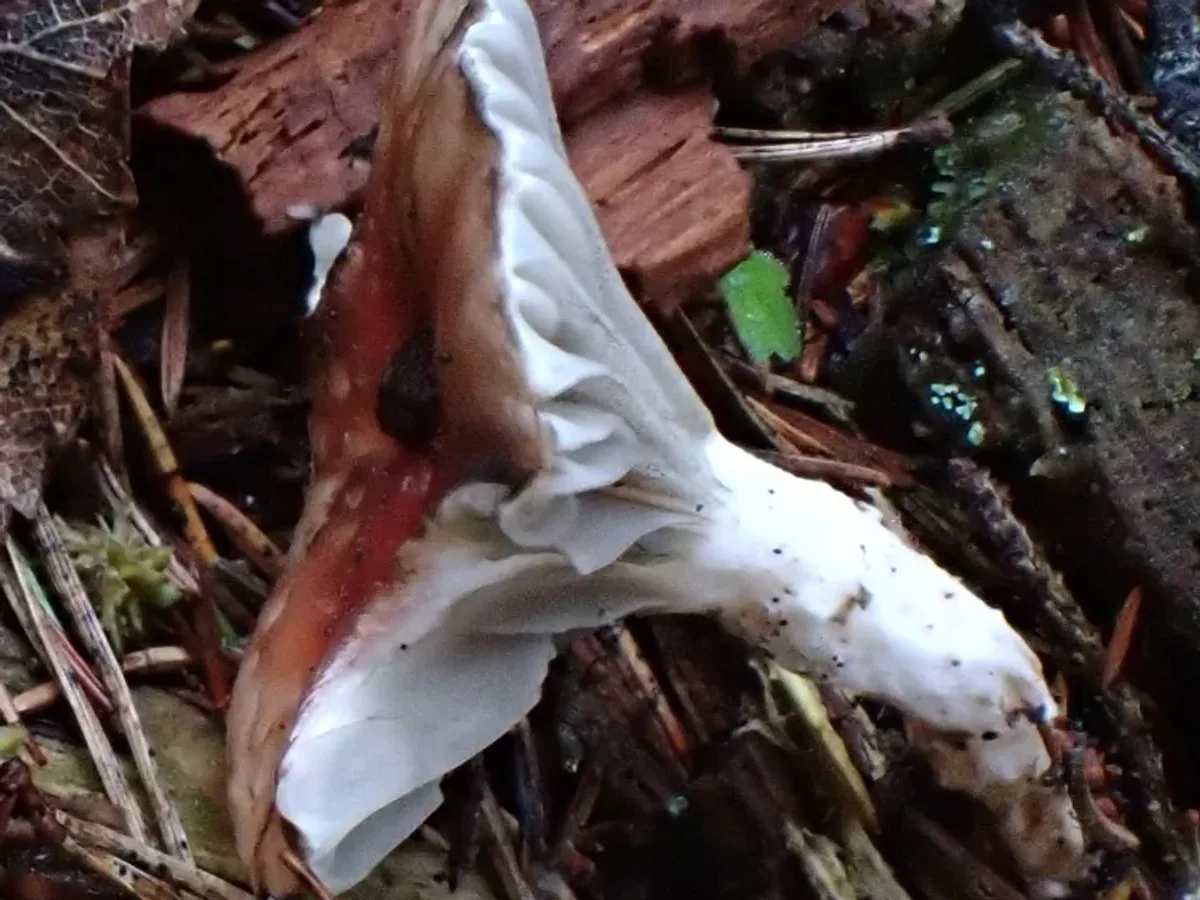
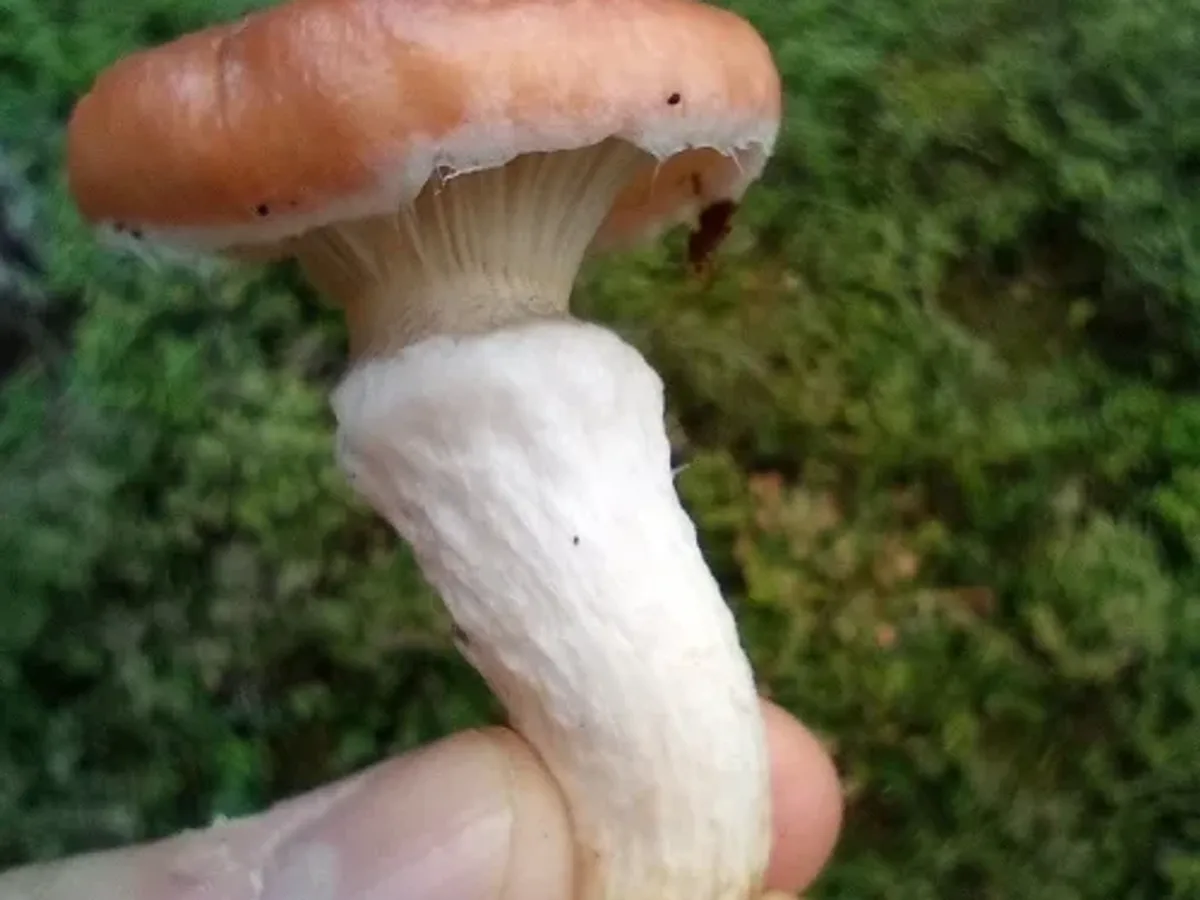
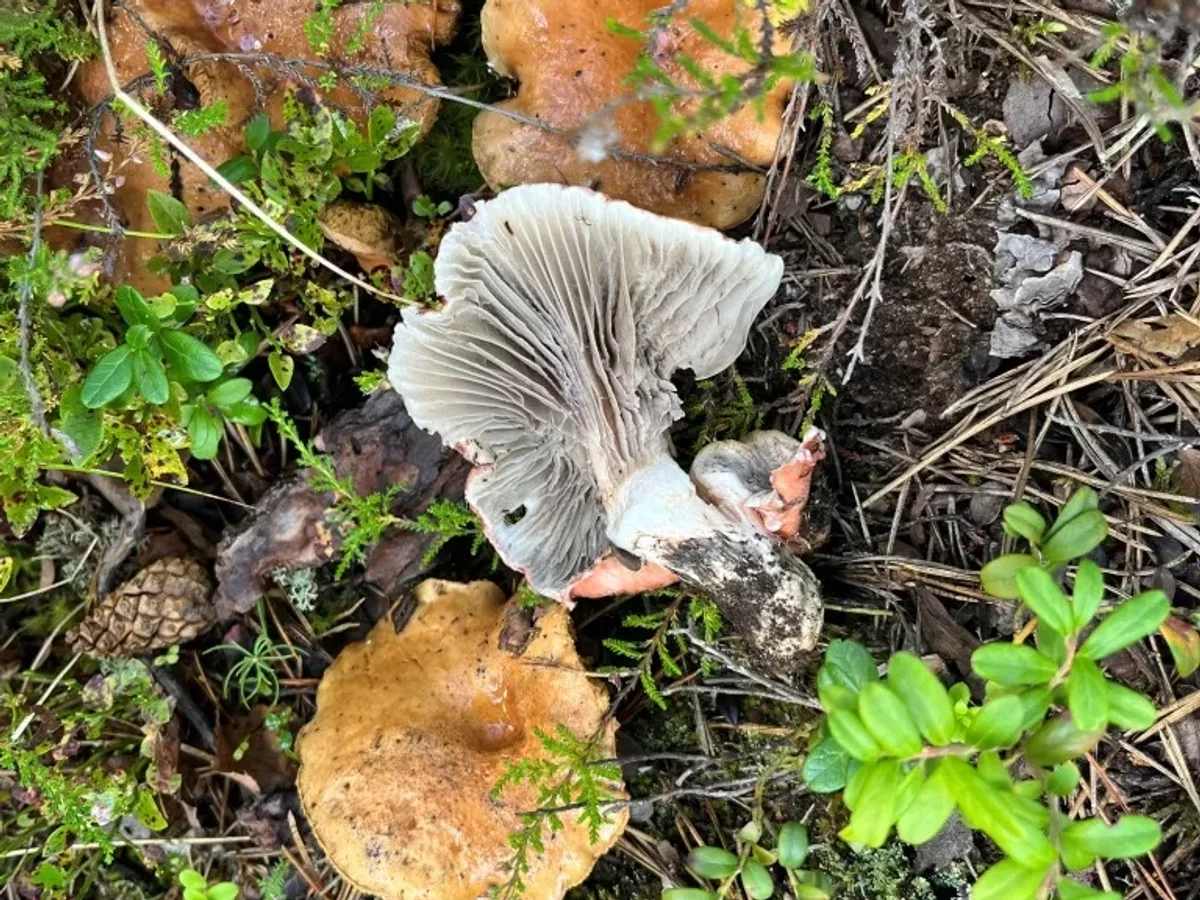
The gills are the diagnostic family hallmark: thick, waxy-looking, distant (widely spaced), and deeply decurrent, running well down the stem.
Young gills are whitish to pale grey; they mature through mid-grey to slate and finally near-black as the dark spores ripen. At this stage the contrast between the pink cap and blackening gills is striking.
Stem
The stem (2-6 cm × 0.5-1 cm) is pale, whitish to grey, slimy from the remains of the partial veil, and may show a faint yellowish tinge at the base (less prominent than in G. glutinosus).
Flesh
Flesh is white throughout, firm, and does not change colour when cut. Spore print is dark sepia-brown to near-black; spores are large (15-21 × 5-6.5 µm) and fusiform.
The overall combination of rosy-pink slimy cap + decurrent waxy gills darkening to near-black + dark spore print is unique among common European fungi.
Where & when it grows
Habitat
Gomphidius roseus grows in one habitat: pine woodland (primarily Scots pine, Pinus sylvestris) on acidic, sandy, nutrient-poor soils. It does not occur under broadleaved trees, spruce, or fir.
The reason is its remarkable biological dependency on Suillus bovinus. G. roseus is a mycoparasite whose hyphae quietly invade and extract carbohydrates from the S. bovinus mycelial network already threaded through the pine roots below - an intimate theft that has been running in pine heathlands for as long as both species have existed there.
This creates a highly practical field rule: wherever you find Gomphidius roseus, Suillus bovinus is present in the same soil, whether or not its fruitbodies are visible above ground.
Conversely, hunting through a dense patch of S. bovinus caps will often turn up small rosy spikes tucked among the needle litter nearby. The two species together make one of the most ecologically intriguing partnerships on the European pine forest floor.
When
Fruits from July through November, with peak abundance from late August through October across temperate and boreal Europe. The season precisely mirrors that of Suillus bovinus.
- In northern Scandinavia and Finland, fruiting is compressed into August-September.
- In milder maritime climates (e.g., British Isles, Atlantic France) the season can extend into early November.
Because fruiting depends on an active S. bovinus mycelium, conditions that favour S. bovinus - warm, humid late summer to autumn after good rainfall - equally favour G. roseus.
How it grows
Emerges singly or in small loose groups in pine needle litter, always in close spatial proximity to Suillus bovinus fruitbodies - though the S. bovinus can be underground, not yet pushing through the surface.
The young fruitbody appears as a small rosy button coated in slime, cap margin incurved and protected by a thin slimy partial veil. As the cap expands the veil breaks, leaving residual slime on the stem.
Because G. roseus cannot establish without an active S. bovinus mycelium already in place, fruitbodies are tied to spots where that invisible partnership with the pine has already taken hold.
Individual fruitbodies are typically short-lived - around 7-10 days - and flushes often show specimens at every stage of development within a small area.
Fruiting conditions
Fruiting is directly coupled to the activity of Suillus bovinus mycelium: G. roseus cannot fruit without an active S. bovinus population. Consequently, the same conditions that trigger S. bovinus - at least 20 mm of rain in the preceding 14 days and soil temperatures between 7 and 18 °C - are necessary for G. roseus. Warm, humid late-summer and early-autumn weather following the main pine forest fungal flush is the primary window.
Look-alikes
No dangerous species closely resembles Gomphidius roseus. The relevant lookalikes within the genus are all edible:
- Gomphidius glutinosus (slimy spike) is much larger (cap 4-15 cm versus 2-5 cm), grey-brown to smoky brownish-violet in colour rather than pink, and has a very bright chrome-yellow stem base. It grows under a range of conifers including spruce, not just pine.
- Chroogomphus rutilus (copper spike) grows under pine and is similar in size; its cap is orange-rusty to copper-brown (not pink) and the surface is only slightly viscid rather than truly glutinous. The gills are copper to reddish-ochre when young. Edible.
- Chroogomphus helveticus (woolly pine spike) has a dry to very slightly viscid pale ochre cap with a woolly or fibrillose texture; gills pale ochraceous; a mountain species. Edible.
The rosy-pink colouring might superficially suggest waxcap species (Hygrocybe / Cuphophyllus), but all waxcaps have white or coloured spore prints (never near-black), lack the slimy cap surface, and do not have the thick, waxy, far-decurrent gill architecture of Gomphidiaceae. Waxcaps also grow in unimproved grassland, not under pines.
A beginner might potentially confuse Gomphidius roseus with young Cortinarius species of pinkish tone, but cortinarii have rusty-brown spore prints, a fibrous cobweb-like cortina (partial veil), and a radically different gill structure (adnate to sinuate, never decurrent and never waxy-looking).
Cortinarius species should be avoided generally, but none that could be confused with G. roseus in pine forest are lethal lookalikes specifically of this species.
Cap orange-rusty to copper-brown (not pink), dry to only slightly viscid rather than truly glutinous; gills copper to reddish-ochre when young; under pine. Edible.
Much larger (cap 4-15 cm vs 2-5 cm), grey-brown to smoky brownish-violet colour rather than pink, and has a very prominent chrome-yellow stem base. Also grows under spruce and fir, not only pine.
Dry to very slightly viscid pale ochre cap with woolly-fibrillose texture; gills pale ochraceous; mountain species under Pinus cembra or P. mugo at high elevation. Edible.
In the kitchen
Picking & cleaning
Collect young, firm specimens before the gills have blackened.
The slimy cap skin should be peeled before cooking, as with Gomphidius glutinosus - pinch the skin at the margin and peel back toward the centre; it strips away cleanly.
The flesh is soft and mild, without particularly strong flavour. Because G. roseus is small and has thin flesh, large quantities are needed for a meaningful dish; it is more commonly taken as a supplementary species alongside other forage.
Check the stem for insect larvae. G. roseus grows in the same patch as Suillus bovinus, so the two are often collected together and cooked together.
Cooking
Gomphidius roseus is mild-flavoured with a soft, somewhat gelatinous flesh that thickens sauces. It can be used in any recipe calling for sautéed wild mushrooms, though its small size and modest flavour mean it is best used to complement more flavourful species rather than as the sole ingredient.
Peel the slimy cap skin, slice, and sauté in butter over medium-high heat for 4-6 minutes until the moisture has evaporated and the flesh is just golden at the edges.
- Pairs well with Suillus bovinus (its constant companion) in mixed sautés or cream sauces.
- Can be pickled in mild vinegar brine in the Scandinavian tradition.
- Not suitable for drying due to its thin, gelatinous flesh.
Good to know
Gomphidius roseus is considered edible and free of known toxins. It has no deadly lookalikes among the species it could realistically be confused with.
Cook thoroughly before eating, as raw consumption of any wild fungus risks gastrointestinal irritation. Remove the slimy cap skin before cooking.
The flesh is mild and soft, and some individuals sensitive to Gomphidiaceae may experience mild stomach discomfort, particularly from large quantities; this is a low risk.
An important contextual note: Gomphidius roseus invariably co-occurs with Suillus bovinus, which in turn grows in the same habitat as Paxillus involutus (brown roll-rim), a deadly species.
These three species are not look-alikes of each other - Paxillus is gilled-but-not-waxy, inrolled-margined, brown, and bruises dark. But any forager harvesting in pine heathland should be confident in distinguishing Paxillus involutus from any bolete or Gomphidius they are collecting alongside.
A reference guide - never an edibility guarantee. When in doubt, leave it out.