Slimy spike
Gomphidius glutinosussyn. Agaricus glutinosus Schaeff., Agaricus mucosus Bull., Cortinaria viscida Gray, Gomphus glutinosus
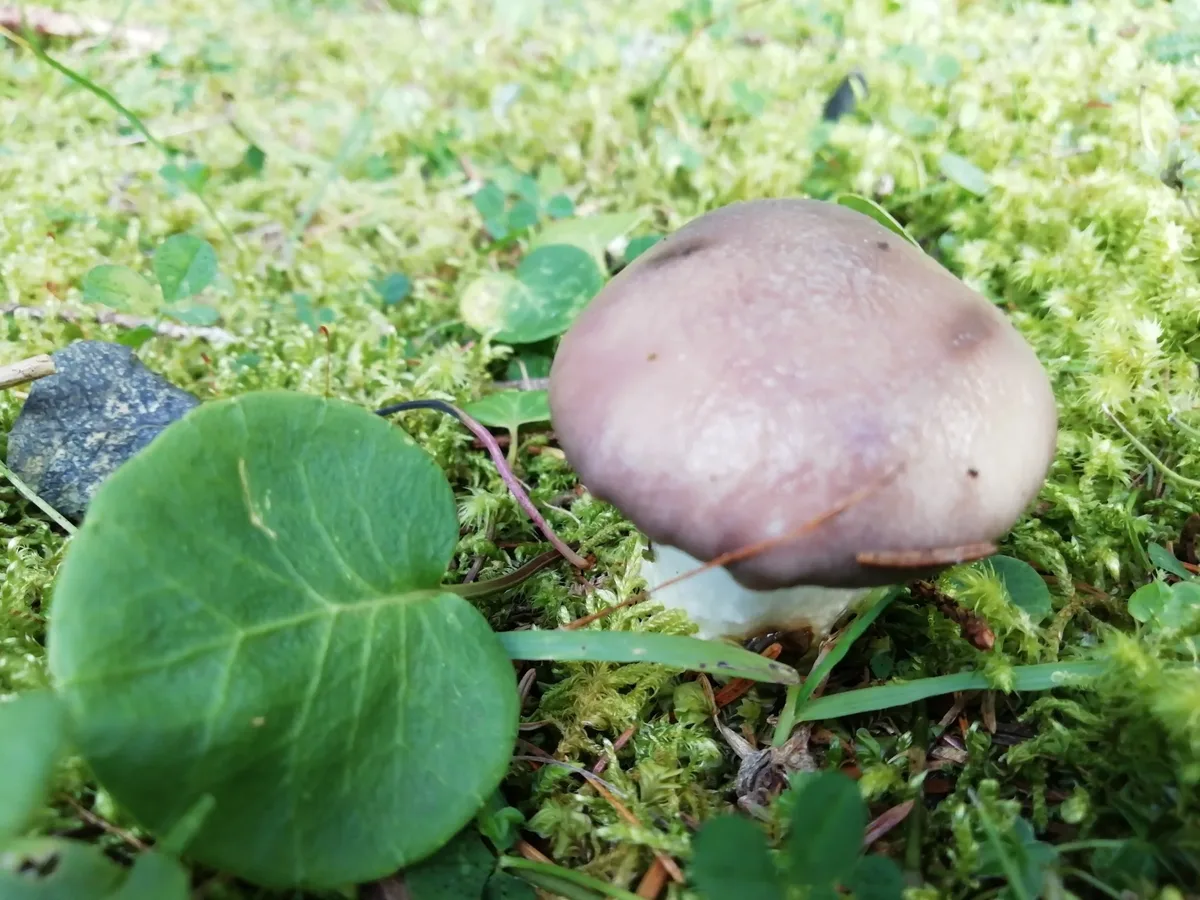 Lorenzo Colcergnan (CC0)
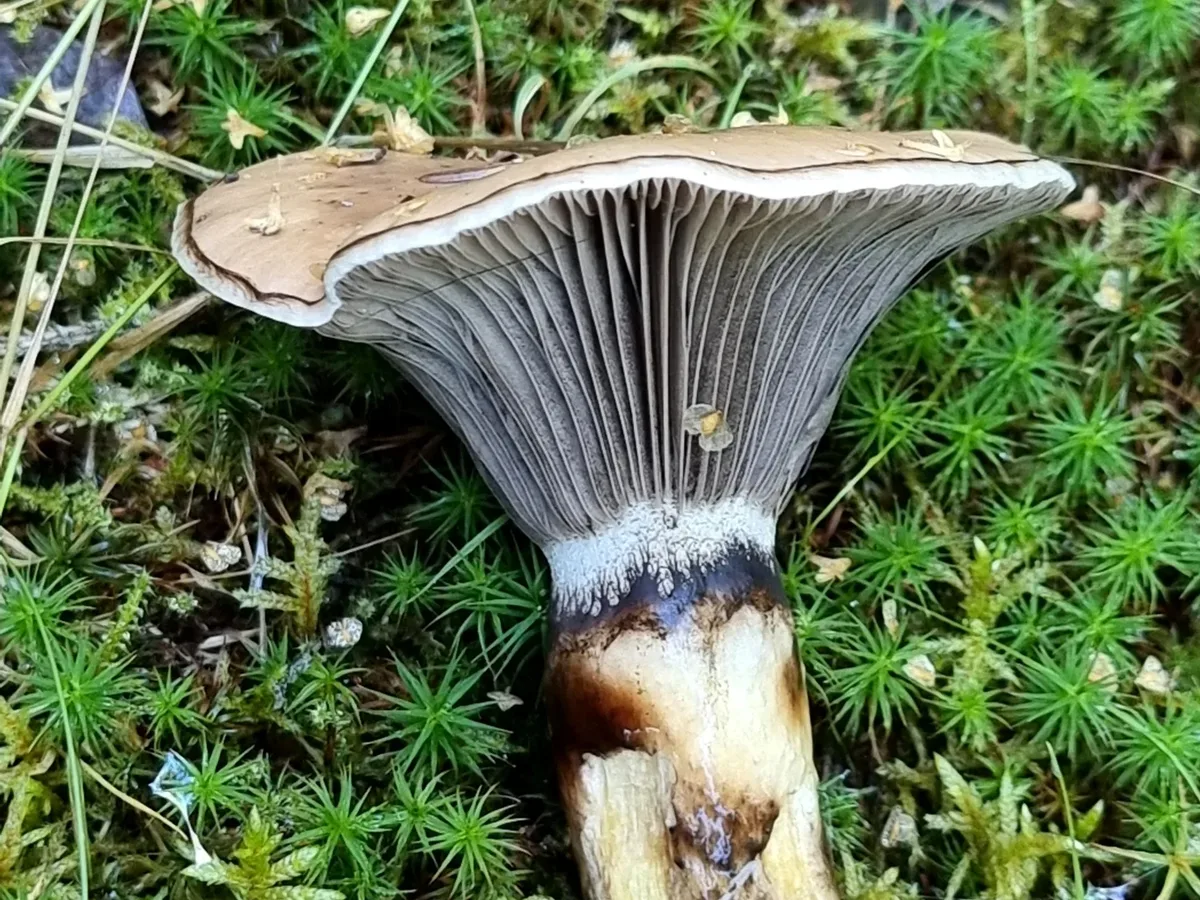 © Ilkka Tuunainen (CC BY-SA 4.0)
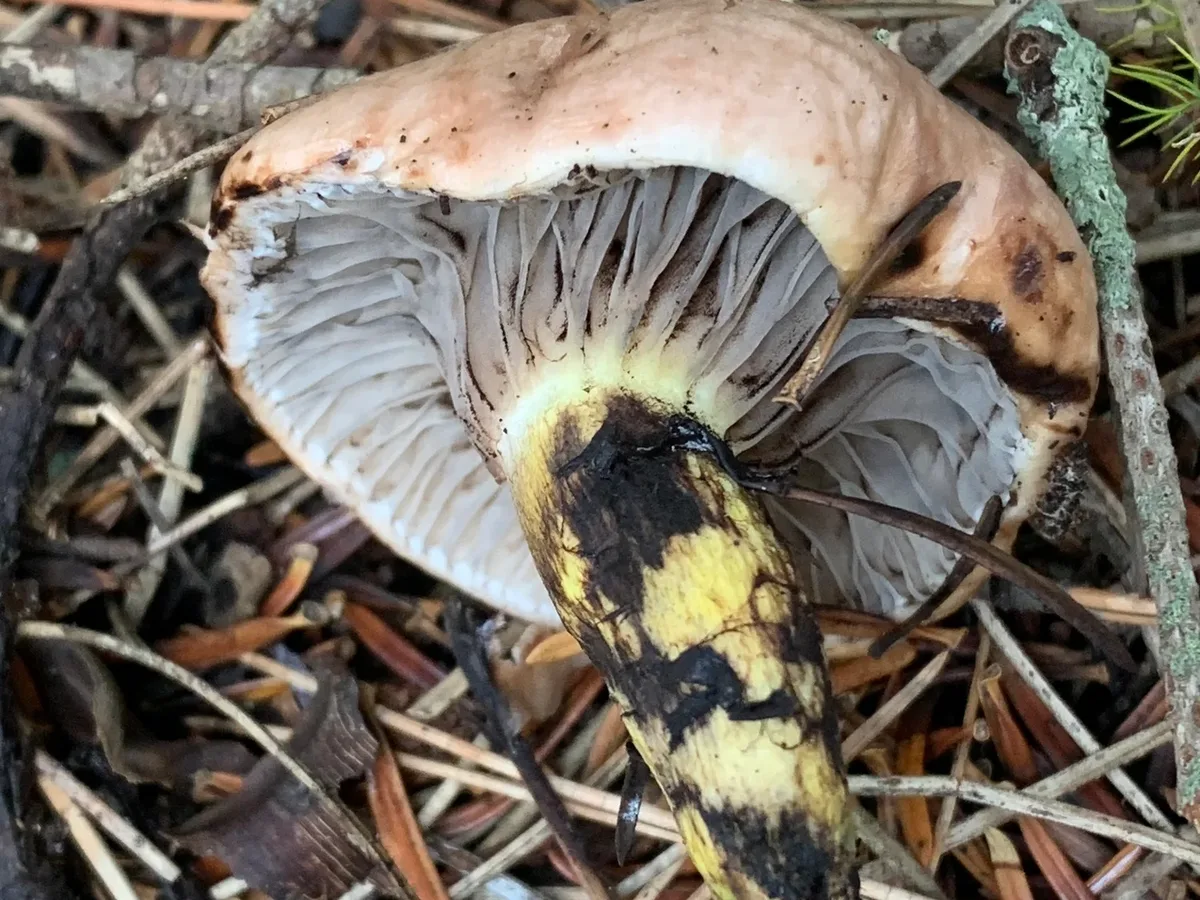 © Manuela Fiorini (CC BY)
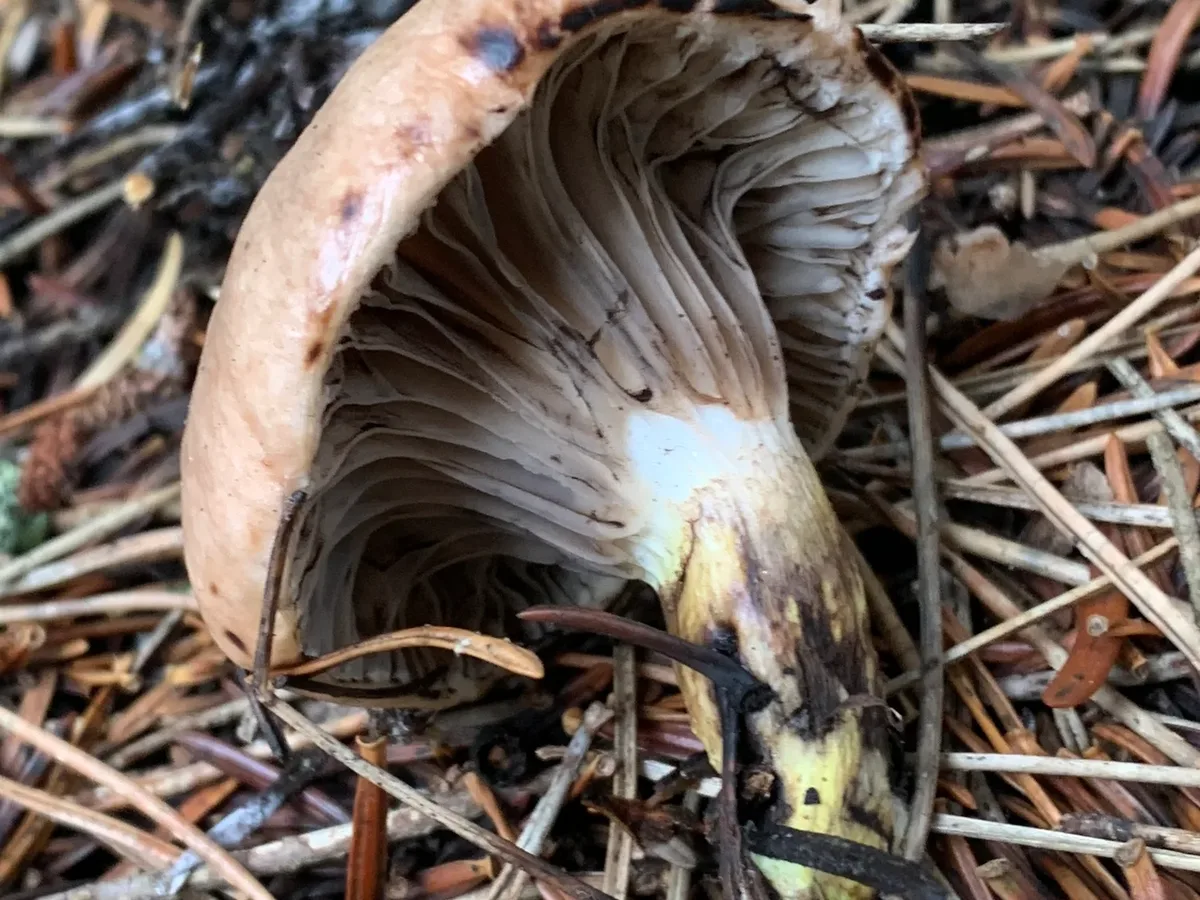 © Manuela Fiorini (CC BY)
 © Manuela Fiorini (CC BY)
 © Sebastian Källman (CC BY-SA)
 © Sebastian Källman (CC BY-SA)
 © Anastasiia Samokhvalova (CC BY)
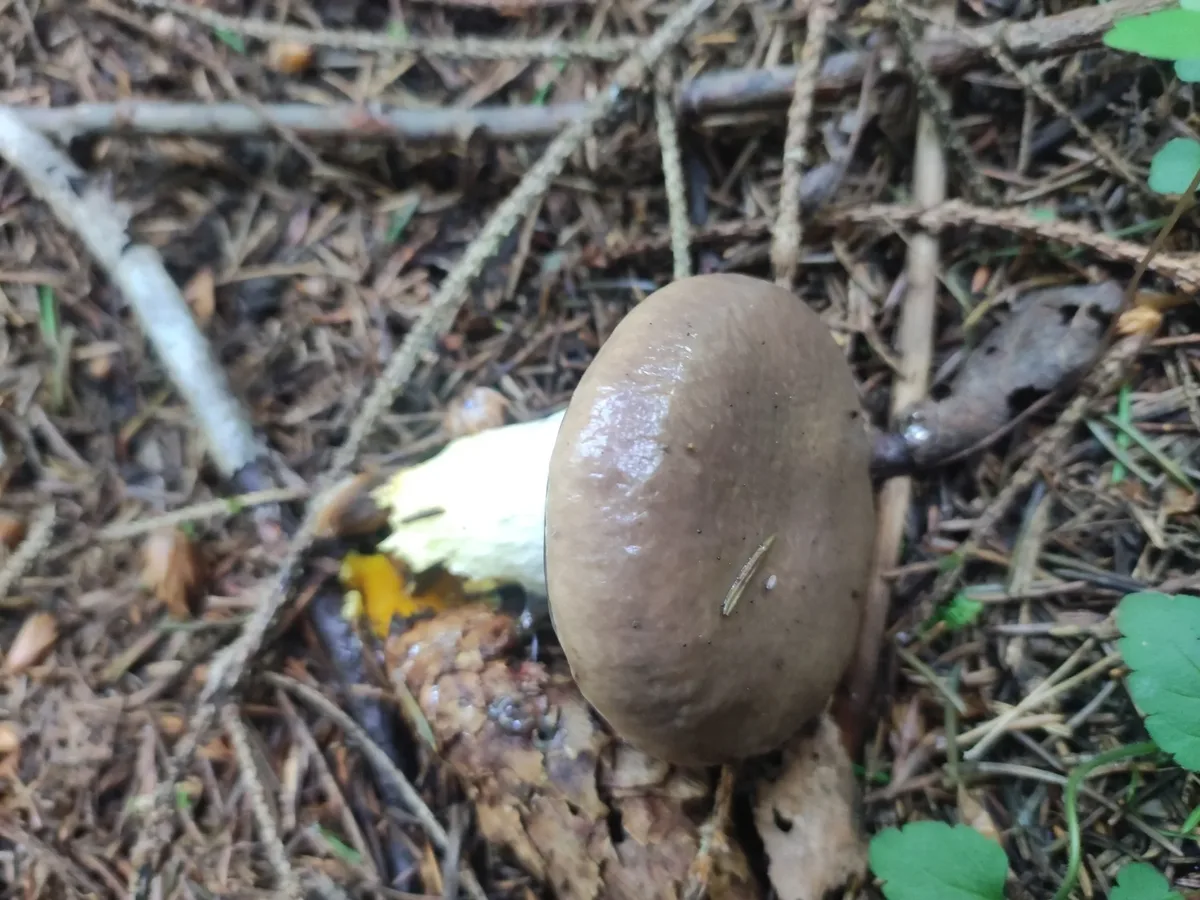 © Anastasiia Samokhvalova (CC BY)
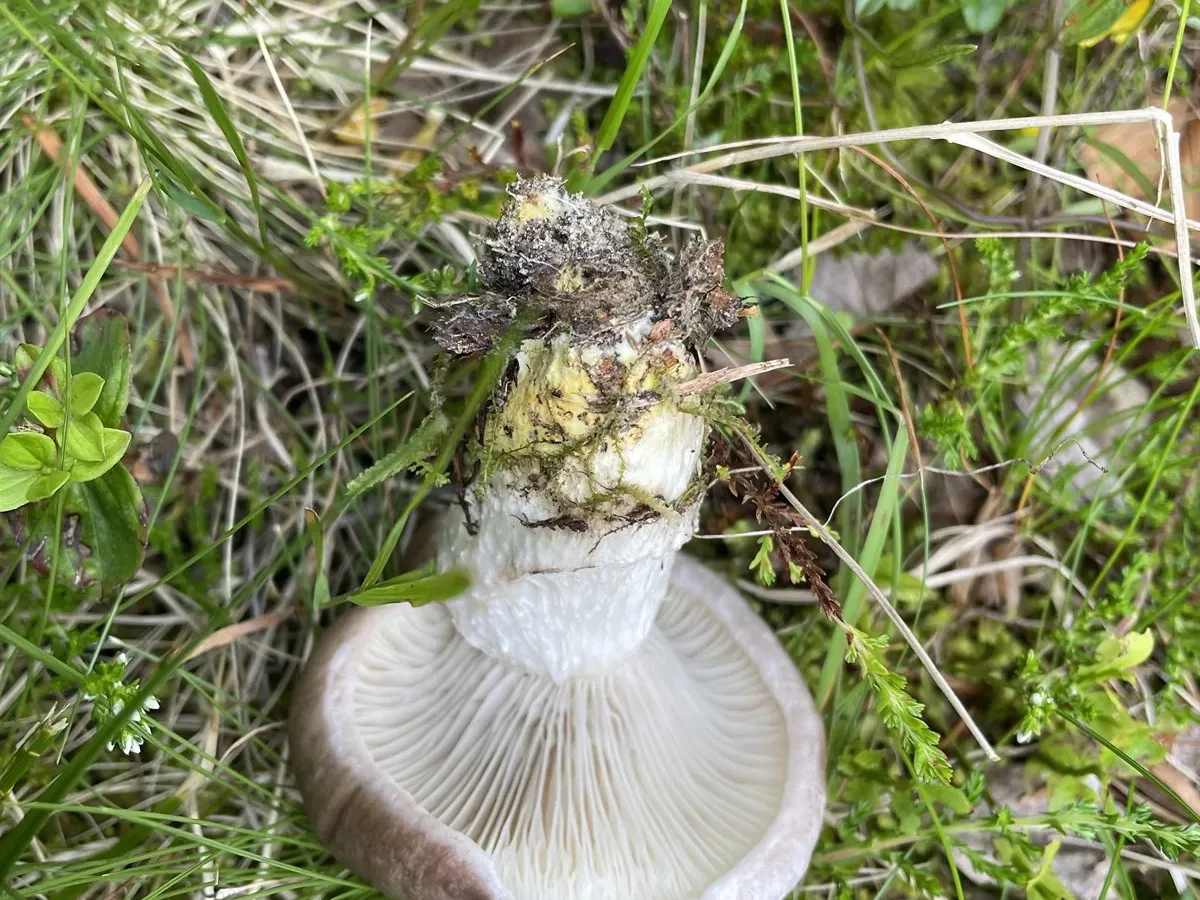 © Bjørn Eidhammer (CC BY)Lorenzo Colcergnan (CC0)© Ilkka Tuunainen (CC BY-SA 4.0)
Good to eat, once you have identified it with certainty and cooked it through.
How to recognise it
Few fungi announce themselves quite as boldly as Gomphidius glutinosus.
Cap
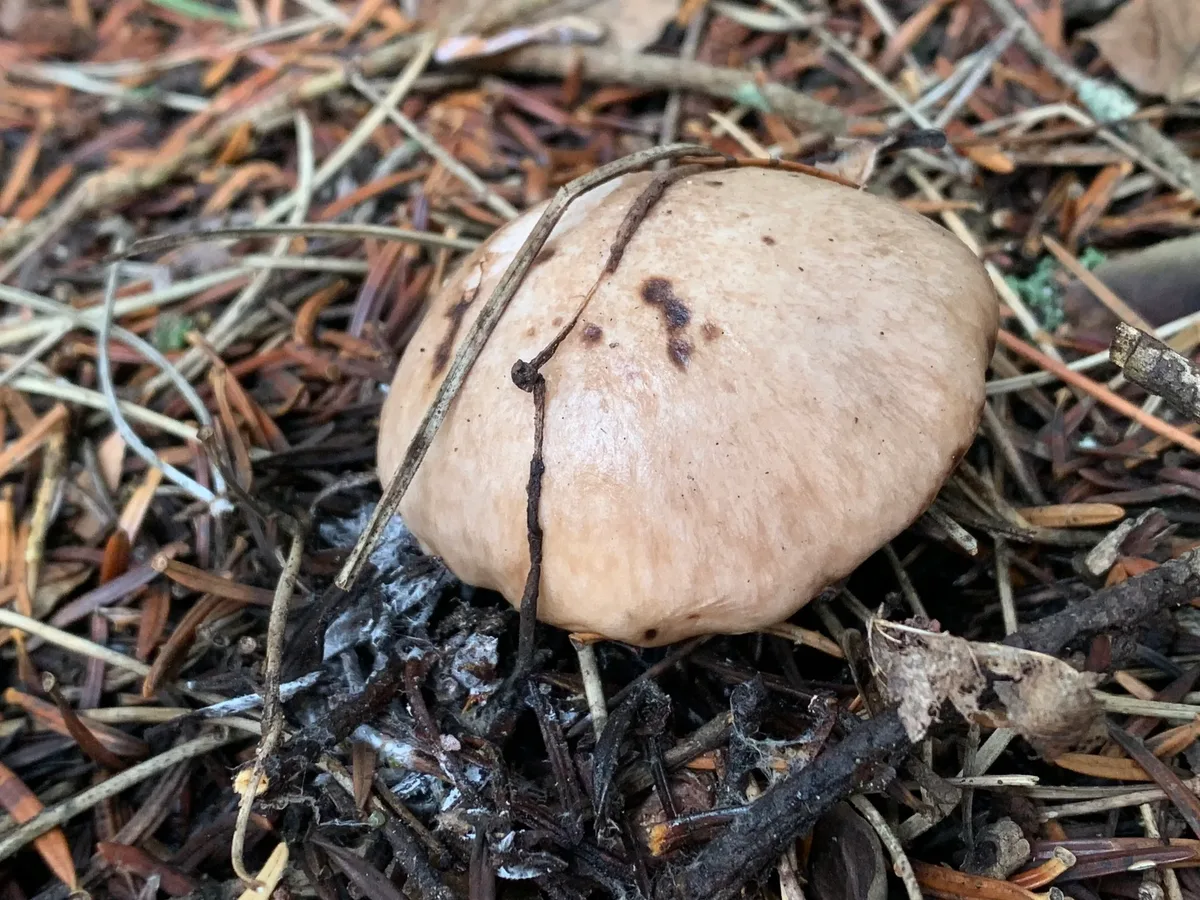
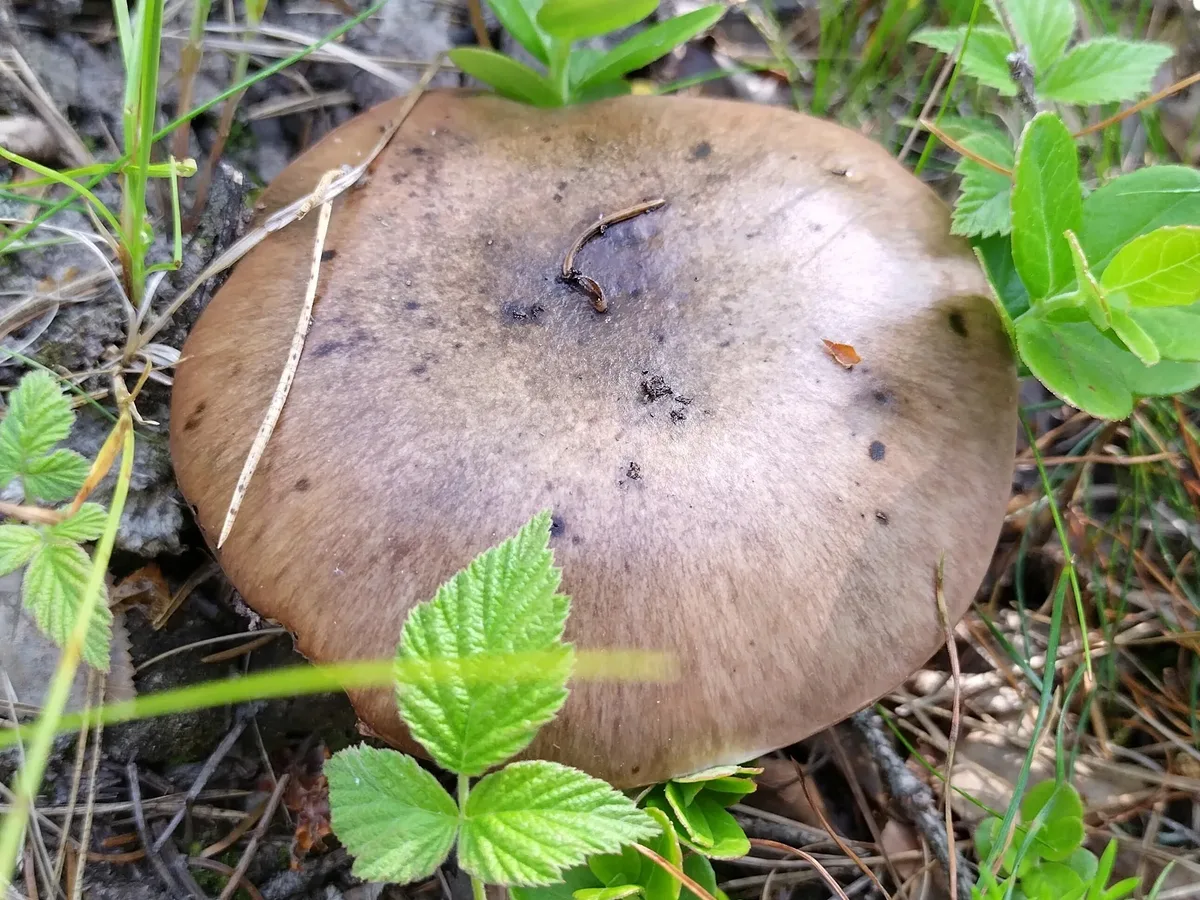
The cap - 4-15 cm across - starts out broadly convex with a strongly incurved margin, then flattens and becomes shallowly funnel-shaped.
Its colour runs from dark smoky brown to brownish-violet or lead-grey, and the whole surface is coated in a remarkably copious, persistent glutinous slime. In dry weather the slime dries to a shiny lacquer-like film, but the first rain rewets it instantly.
Flesh
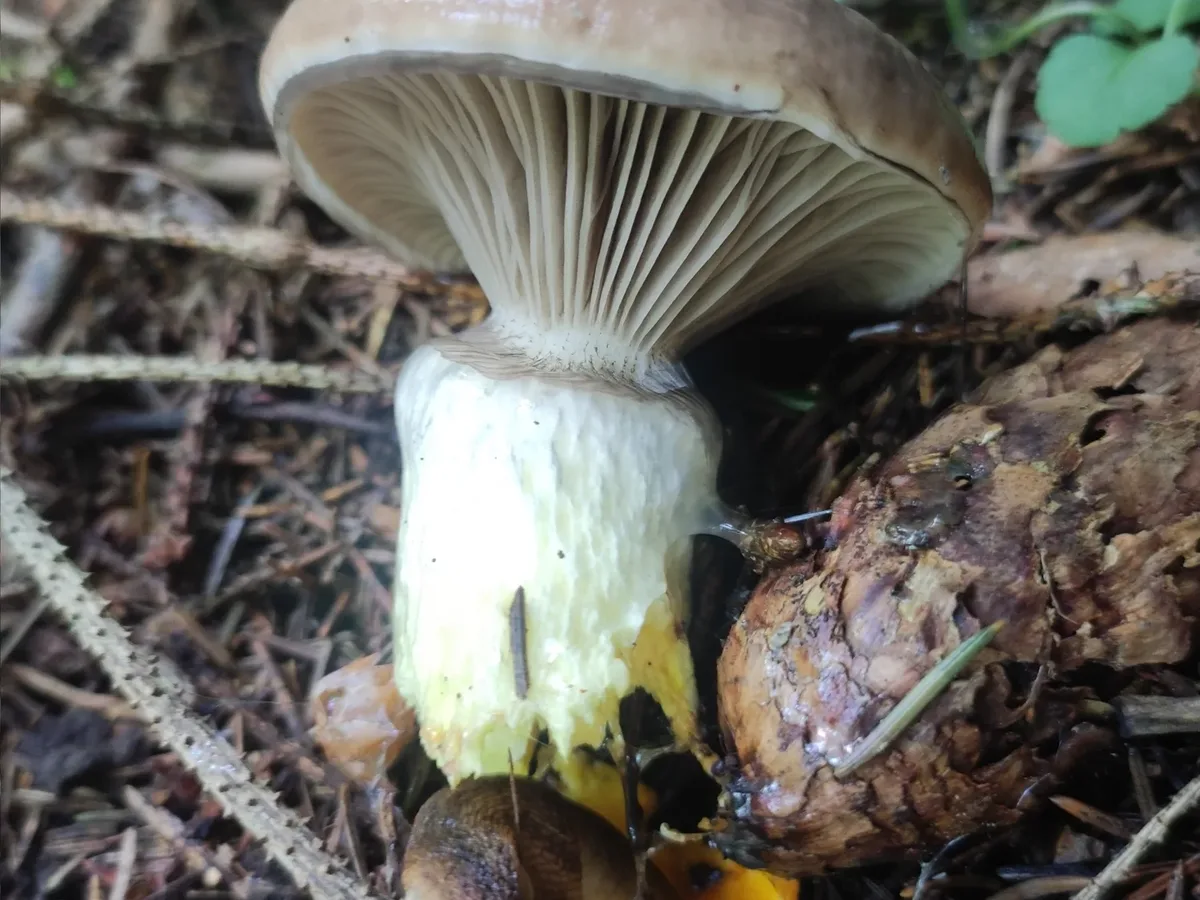
The flesh is thick, firm, and white throughout - except at the stem base, where it is a vivid chrome-yellow that stains fingers and cutting boards alike.
Gills
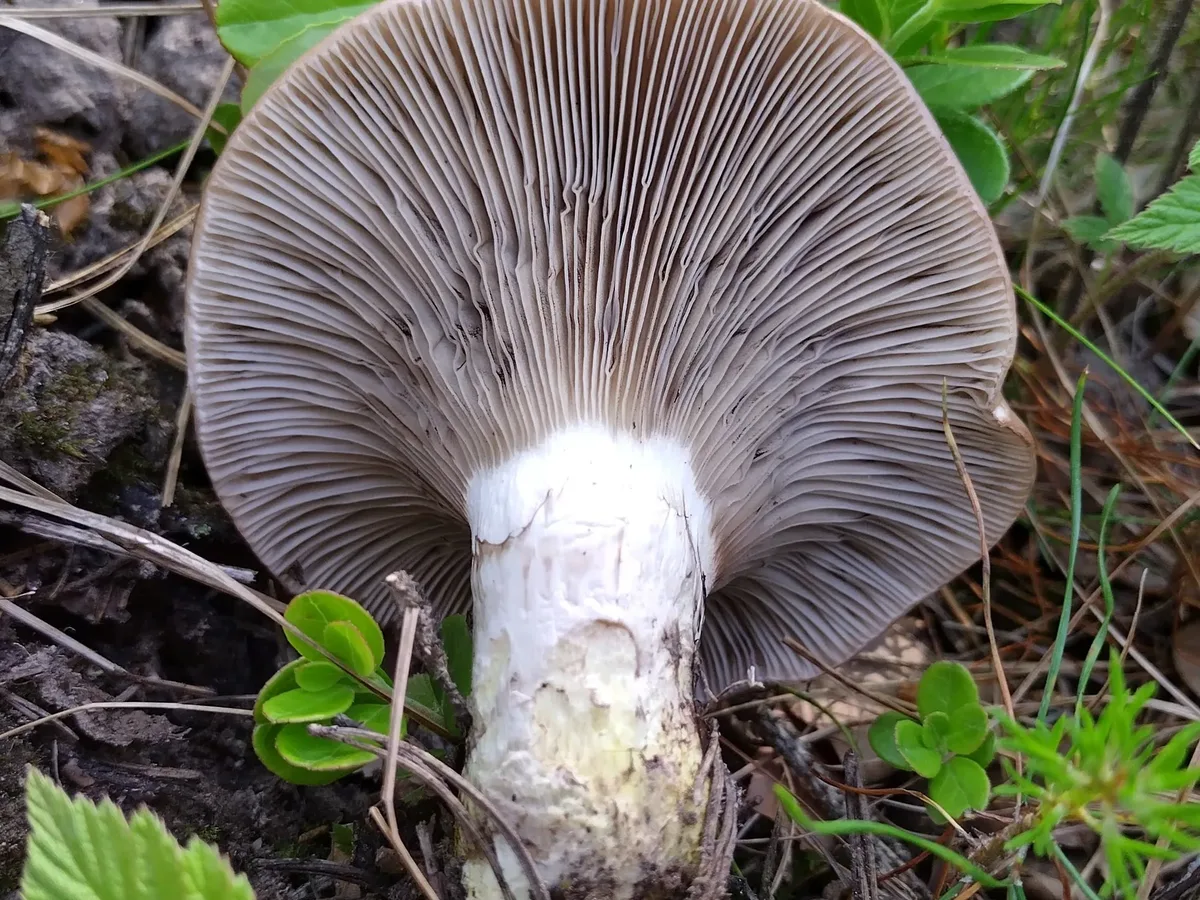
The gills are truly distinctive: thick, widely spaced, deeply decurrent, and carrying a waxy, almost cartilaginous sheen.
Young gills are whitish to pale grey; they darken to slate and then sooty-black as the spores ripen.
Stem
The stem is stout - 3-10 cm tall, up to 2 cm wide, and club-shaped at the base - with a bright lemon-yellow base that is the single most reliable field mark on this species.
The upper stem is whitish and smooth; the ring zone is slimy and soon blackened by falling spores.
Spore print
Spore print is dark sepia-brown to near-black; spores are large (15-20 × 5-7 µm), fusiform (cigar-shaped), and smooth.
The combination of near-black spore print, decurrent waxy gills, extreme cap slime, and yellow stem base is found in no dangerous species.
Where & when it grows
Habitat
Most frequently found under Scots pine (Pinus sylvestris) across Europe, but also occurring under Norway spruce (Picea abies), Sitka spruce, balsam fir, grand fir, and other conifers.
It is an ectomycorrhizal partner of conifers - threads of its mycelium are woven around the host's finest roots, exchanging minerals for sugars in one of the forest's oldest mutual arrangements.
There is also intriguing evidence that it may tap into the mycelial network of Suillus bovinus nearby, a relationship that may explain why the two species co-occur so reliably.
It grows in needle litter, mossy hummocks, and the deep duff of long-established conifer woods, often in slightly damp, sheltered spots. It is at home in managed pine plantations and ancient Caledonian-type pinewood alike.
When
Fruits from late summer through mid-autumn, typically August to November in temperate Europe and Scandinavia.
Peak abundance falls in September and October - the cool, wet weeks that follow the first real autumn rains are usually the most productive.
Regional timing varies:
- In boreal Scandinavia it is often among the last reliable cap-fungi before the first hard frosts end the season.
- In the British Isles and central Europe it can emerge as early as late July in warm, wet years.
- In mountain areas it appears later, sometimes not until October.
How it grows
Grows singly, in pairs, or in loose small groups in conifer needle litter; rarely in tight clusters.
Young fruitbodies push up as rounded buttons almost entirely engulfed in slime, the partial veil stretching from cap margin to stem like a small slimy curtain. As the cap expands the veil breaks, leaving the slimy ring zone on the upper stem.
The whole fruiting body - cap, gills, stem, veil - seems designed to be wet; even in a dry spell the slime is never entirely absent.
Mature fruitbodies persist for one to two weeks before the gills darken completely and the cap begins to soften and decay.
Fruiting conditions
Requires sustained late-summer rainfall following moderate temperatures; fruits most reliably after cool wet spells in September. Co-fruiting with Suillus bovinus is a reliable indicator of suitable conditions. Sensitive to ground frost - stops fruiting quickly once hard frosts arrive.
Look-alikes
None of the common Gomphidius or Chroogomphus species are dangerous:
- Gomphidius roseus (Rosy spike) is smaller, pink-capped, and grows specifically with Suillus bovinus in pine woods - edible and easily separated by pink cap colour.
- Gomphidius maculatus grows under larch, has a more reddish-brown cap, and lacks the yellow stem base - also edible.
- Chroogomphus rutilus (copper spike) is closely related, grows under pine, has a more orange-rusty cap with a dry to slightly viscid surface, copper-tinted gills, and a dry or barely slimy stem - edible.
The near-black spore print and deeply decurrent gills might superficially suggest a darkly pigmented species of Clitocybe or Tricholoma to beginners, but those genera lack near-black spores and slimy surfaces.
The waxy gills could suggest a waxcap (Hygrocybe/Cuphophyllus) but those have white, coloured, or yellow spore prints and never the extreme slime.
In summary, the combination of near-black spores + extreme slime + yellow stem base is unique and renders confident identification straightforward.
Cap orange-rusty to copper-brown, dry to only slightly viscid (not glutinous); gills copper to reddish-ochre when young; stem lacking distinct yellow base; found under pine. Edible.
Grows exclusively under larch (Larix spp.), not pine; cap more reddish-brown and less slimy; stem base pale, not yellow. Edible.
Much smaller cap (2-4 cm), distinctly pink to rosy-red in colour; grows specifically with Suillus bovinus in pine woods; stem base may be yellowish but cap colour is unmistakable. Edible.
Cap pale ochre to buff-brown, dry to only slightly viscid, often with woolly-fibrous texture; gills pale ochraceous; mountain species primarily under Pinus cembra or Pinus mugo at high elevation. Edible.
In the kitchen
Picking & cleaning
Collecting G. glutinosus requires accepting its extreme sliminess - gloves and a plastic bag or rigid container are advisable.
The thick slime must be removed before cooking: peel the cap cuticle back with your fingers (it strips cleanly, like peeling a ripe grape) and wipe the stem.
The yellow stem base is edible but sometimes slightly bitter; many guides recommend removing it. Young, firm specimens are far preferable to mature blackened ones.
Because it grows with conifers, forest floor debris and pine needles stick readily to the slime - clean carefully. Slice longitudinally to check for insect larvae, which are common in the stem.
Cooking
Once the slimy skin is removed, G. glutinosus has a mild, pleasant flavour with a slightly mucilaginous flesh that thickens sauces and soups, making it a useful ingredient in creamy mushroom soups and stews.
Sauté in butter over high heat to drive off excess moisture - the flesh releases a good quantity of liquid. It pairs well with game, pork, and root vegetables.
In Scandinavia it is commonly pickled or preserved in vinegar (the slime helps form a natural gel around the mushrooms when cold). It can be dried, though the texture becomes leathery and it is less favoured than fresh use.
Avoid overcooking, which darkens the gills visually; brief high-heat cooking preserves the pale grey colour of the gills. The yellow stem base can be slightly bitter and is often discarded.
Good to know
Gomphidius glutinosus is widely eaten across Scandinavia and central Europe with no significant safety concerns from toxicity or dangerous lookalikes. No lethal look-alikes share its combination of features.
It should always be cooked - raw specimens may cause mild gastric irritation in some individuals, as is common with many fungi. Fresh young specimens cooked thoroughly are generally well-tolerated.
Remove the slimy cuticle and any very darkened gills before cooking to improve palatability and digestibility.
IMPORTANT - RADIOACTIVE CAESIUM: G. glutinosus is a documented hyperaccumulator of radioactive caesium-137 (Cs-137), capable of concentrating it more than 10,000-fold above background levels.
In regions affected by the Chernobyl nuclear fallout (parts of Belarus, Ukraine, Poland, Scandinavia, Germany, and Austria) and potentially areas affected by Fukushima fallout, fruitbodies may carry Cs-137 at levels that exceed food-safety limits.
Do not collect this species from areas with known or suspected radioactive soil contamination. This concern does not apply in uncontaminated woodland but is a material risk in affected zones of Eastern and Northern Europe.
A reference guide - never an edibility guarantee. When in doubt, leave it out.