Stick Ear
Gloeosoma vitellinumsyn. Aleurodiscus vitellinus, Corticium vitellinum, Asterostroma vitellinum, Gloeocystidiellum vitellinum
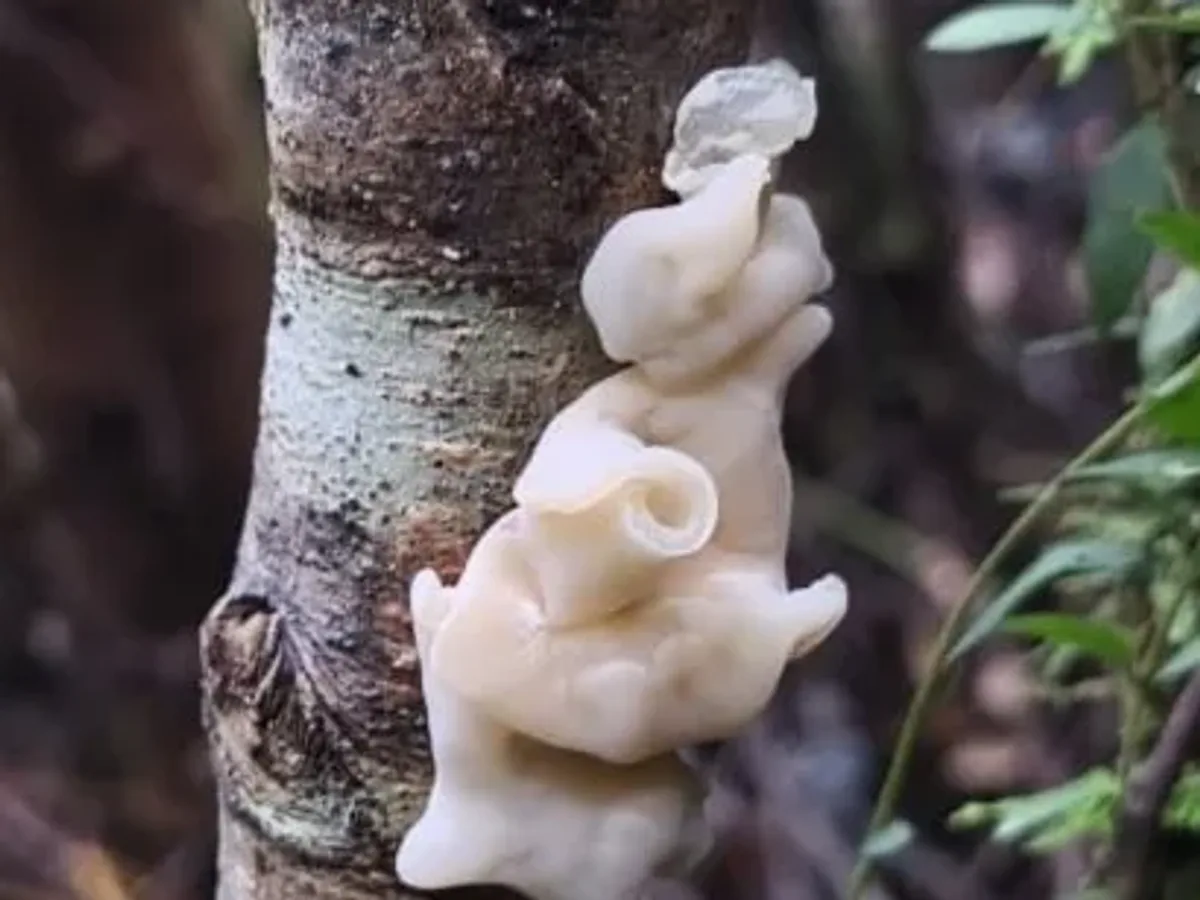 Ricardo Barrientos (CC0)
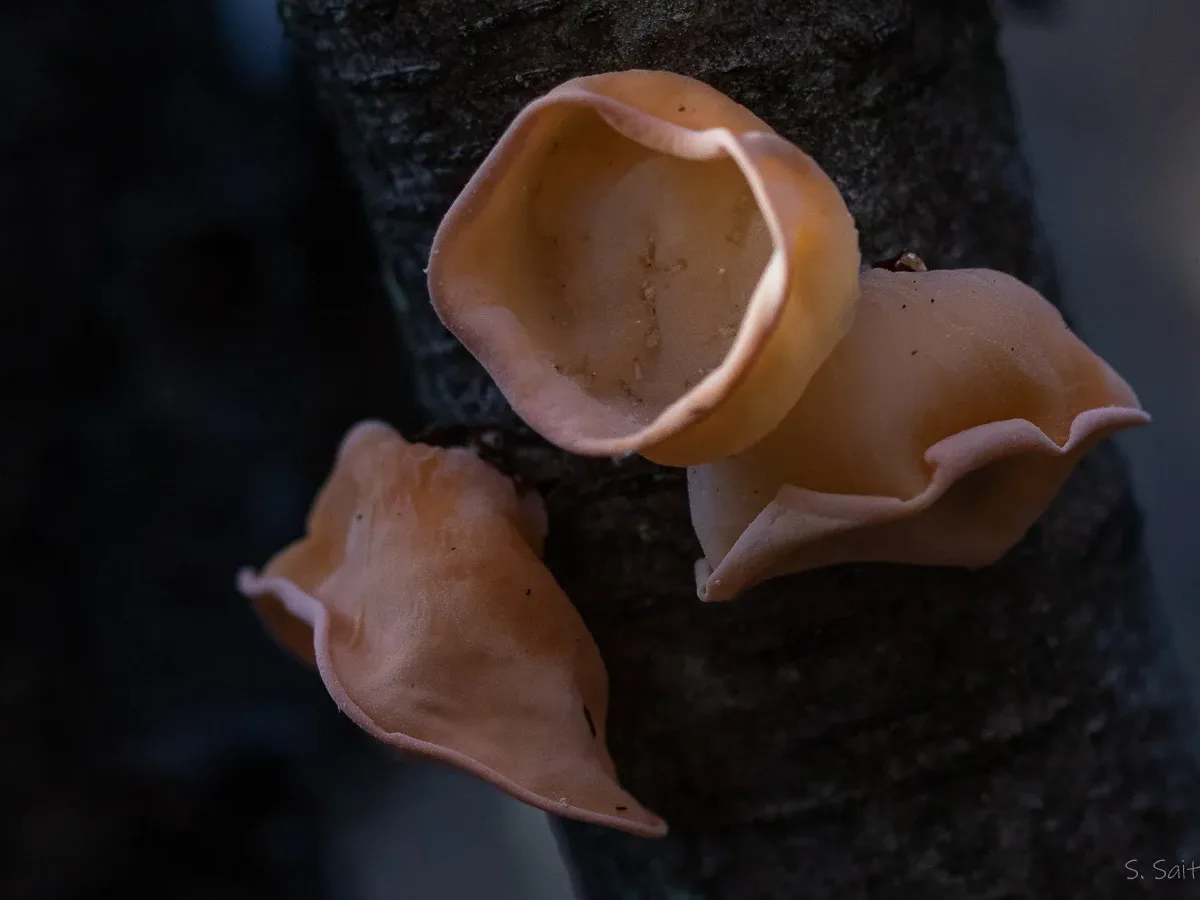 © Sebastián Saiter V. (CC BY)
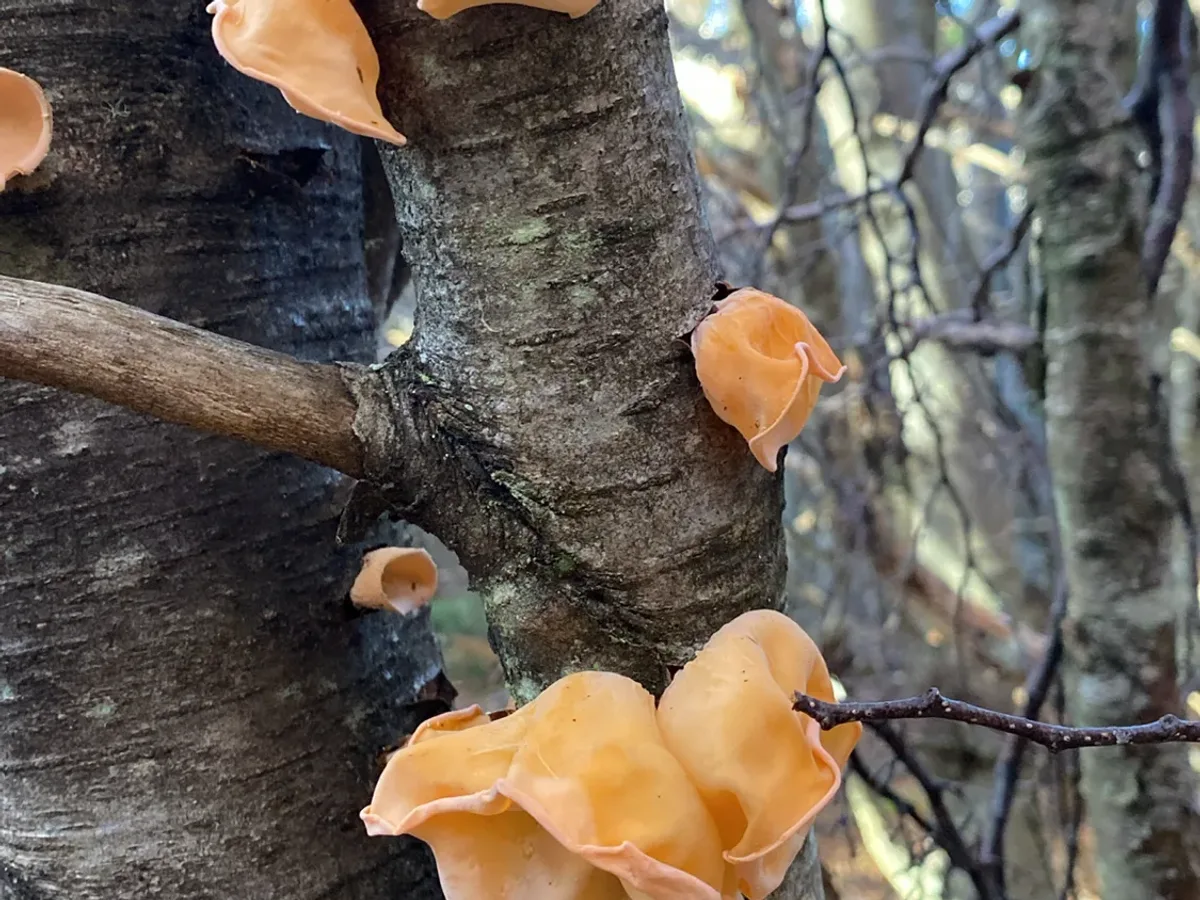 © Sebastián Saiter V. (CC BY)
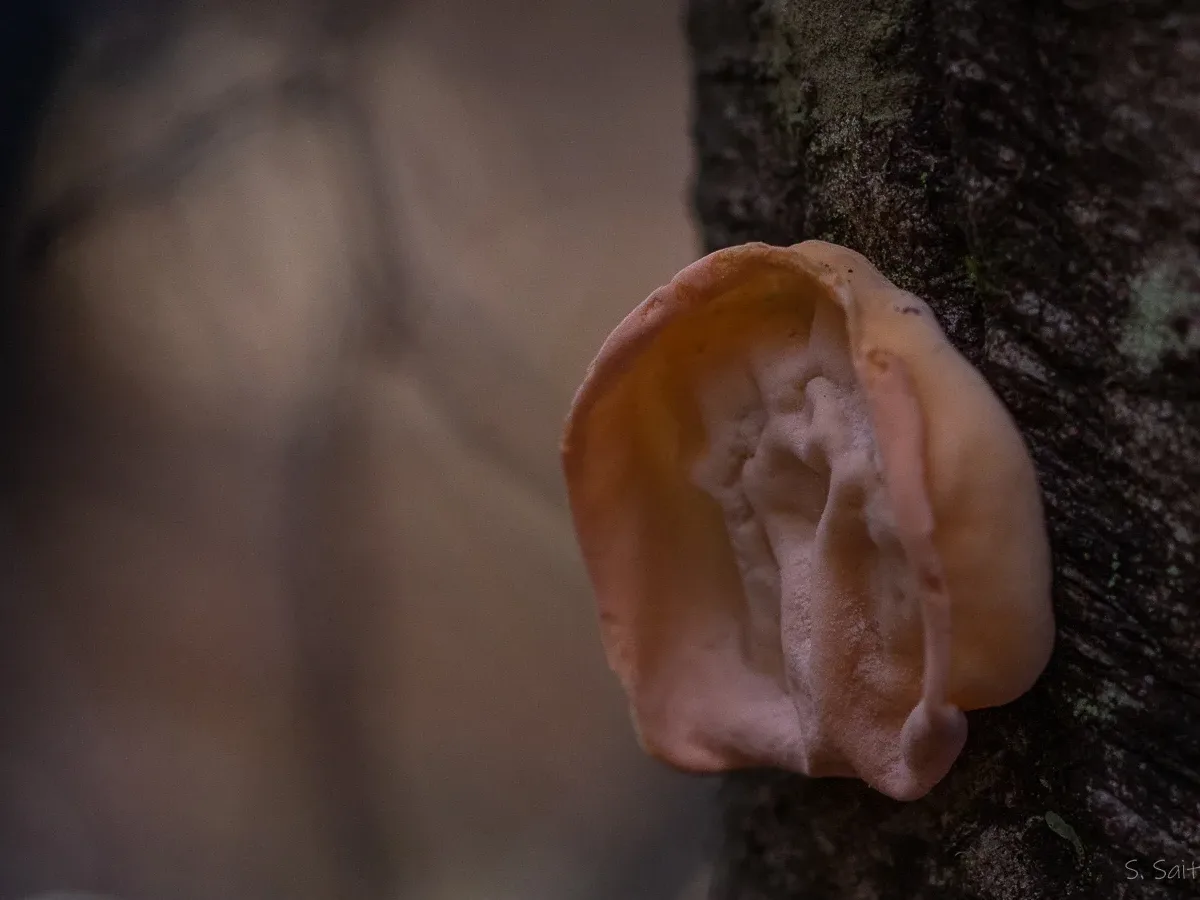 © Sebastián Saiter V. (CC BY)
 © Sebastián Saiter V. (CC BY)
 © Sebastián Saiter V. (CC BY)
 Ricardo Barrientos (CC0)Ricardo Barrientos (CC0)© Sebastián Saiter V. (CC BY)
Edible only with the right preparation - or safe for some people but not others. Learn the caveats first.
How to recognise it
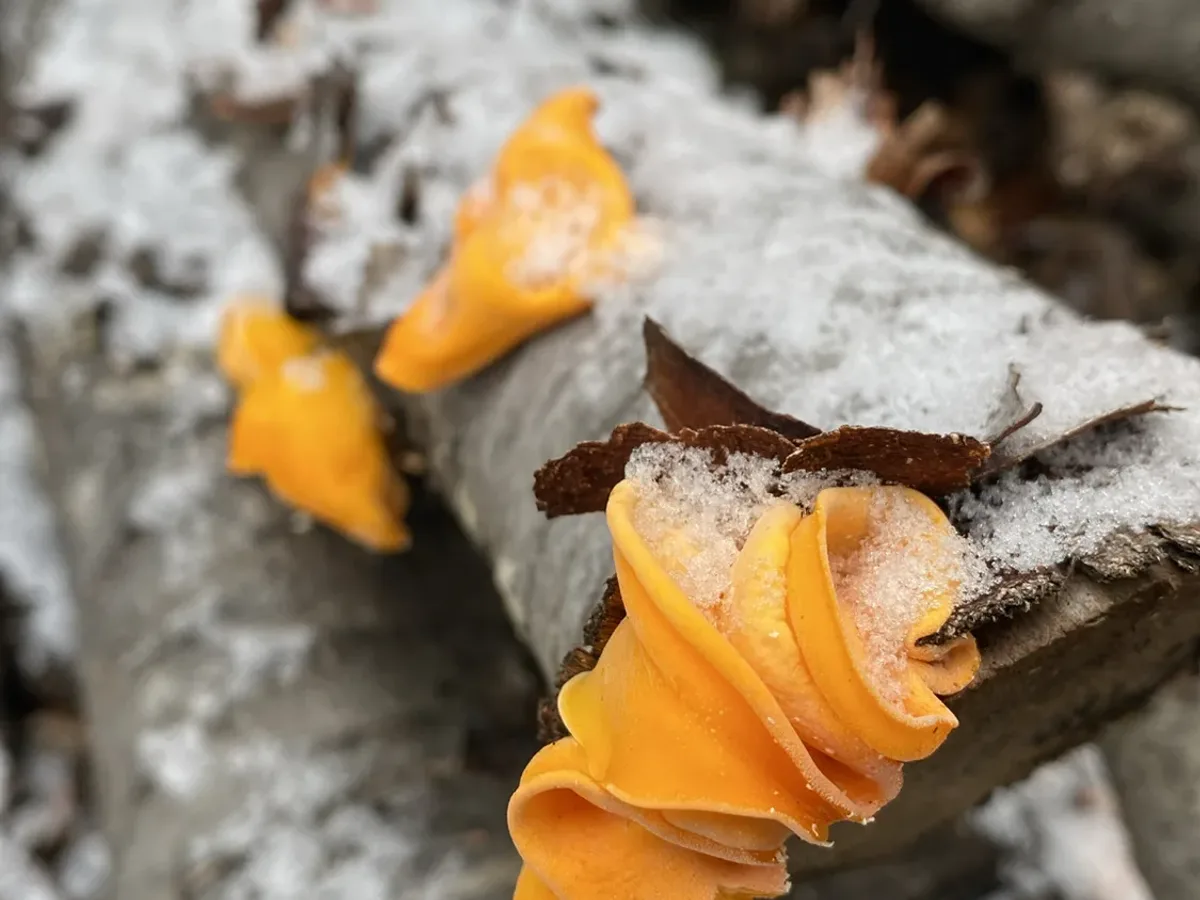
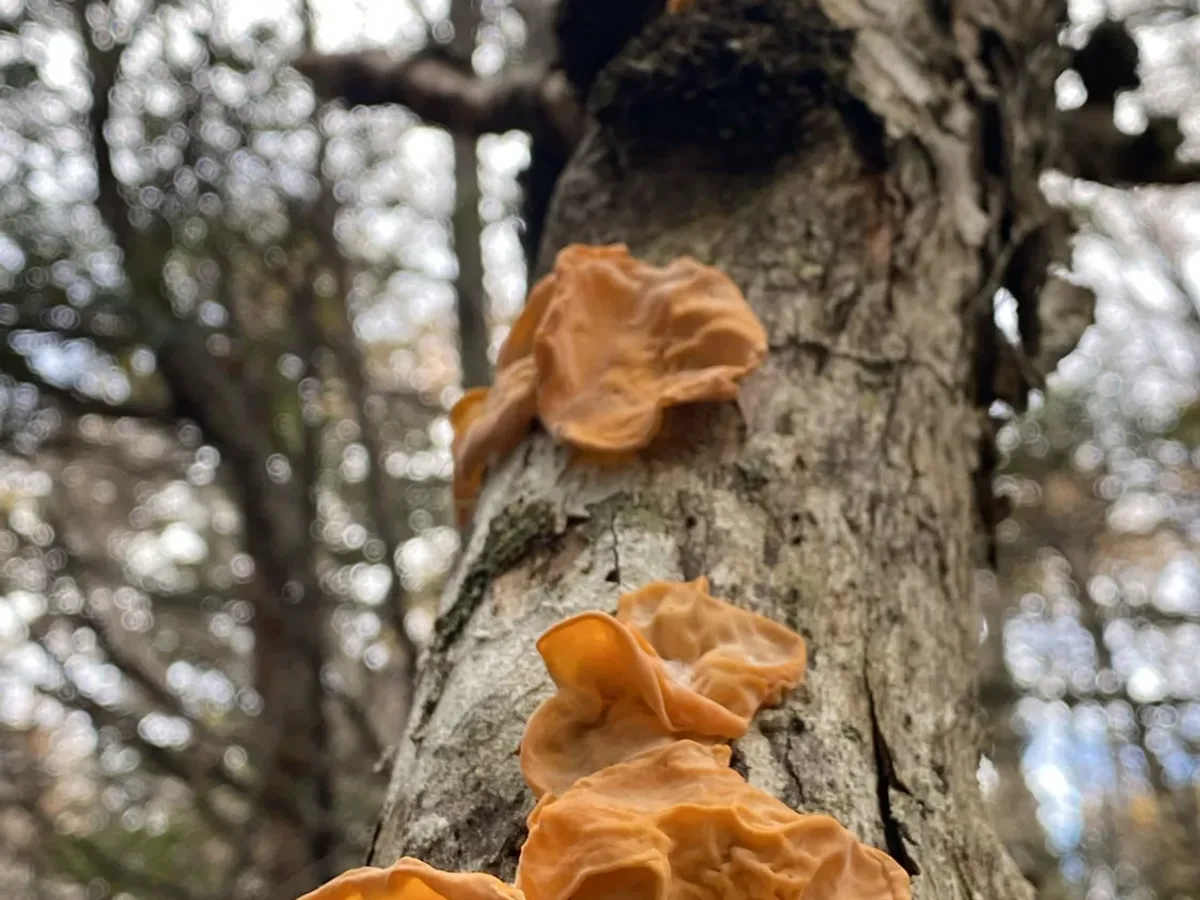
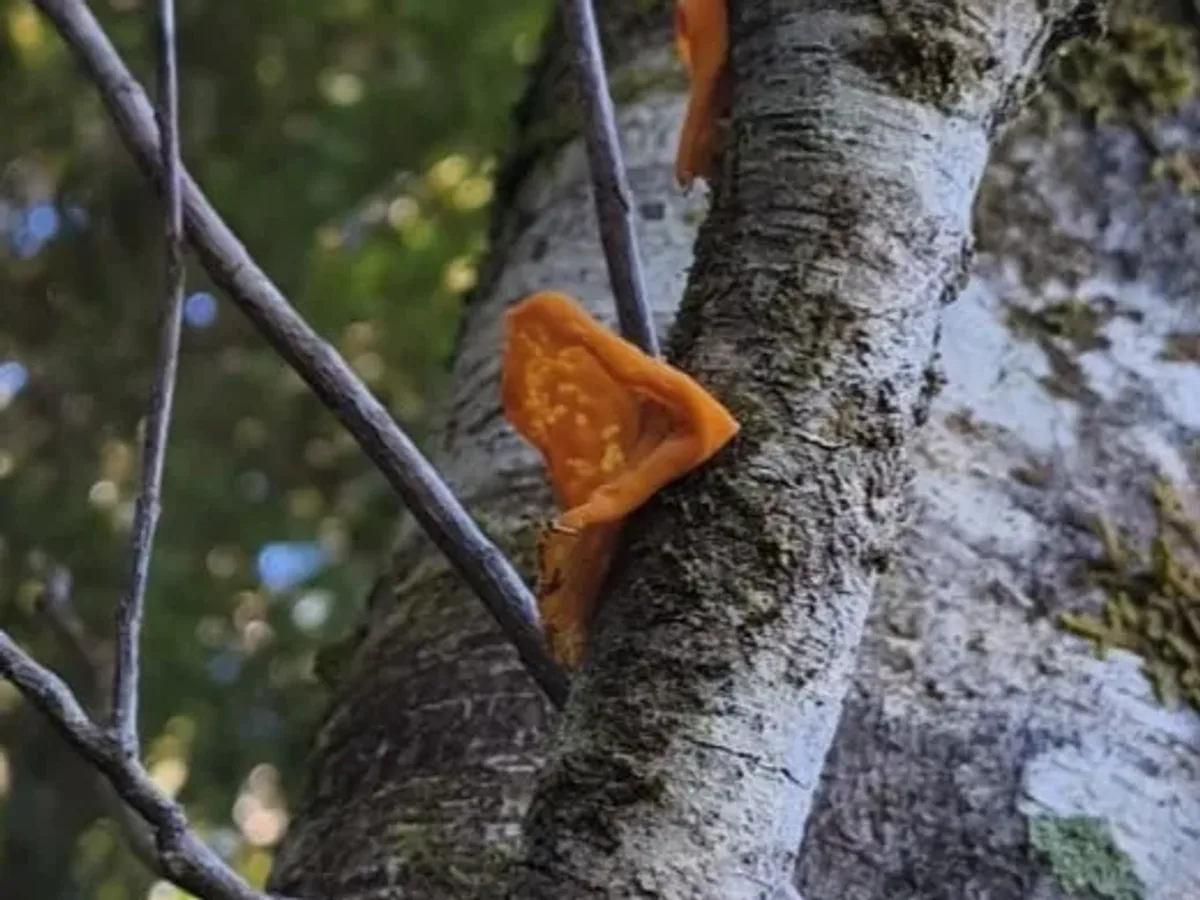
Gloeosoma vitellinum belongs to an unusual guild of edible fungi that produce no cap, no gills, no stem - just a gelatinous crust spread directly across wood. The first time you encounter one, you may not recognise it as a mushroom at all: it looks like a patch of vividly coloured jelly or thick yellowish paint applied to a log.
That egg-yolk yellow to warm ochre colour - vitellinum in Latin, meaning exactly that - is the key identification anchor, striking against the dark, moist wood of Nothofagus logs.
Fresh patches are smooth, rubbery, and slightly translucent, typically 2-15 cm across, and thick enough (1-4 mm) to have a satisfying, jelly-like give when pressed. The margin is thin, waxy, and whitish, graduating into the vivid yellow centre.
When conditions dry, the patch shrivels to a thin pale crust; when rain returns, it rehydrates within hours and the egg-yolk colour returns.
The gelatinous texture is the other diagnostic feature: if a yellow resupinate crust on Nothofagus feels rubbery and gelatinous - not powdery, not waxy-hard, not brittle - you are most likely looking at G. vitellinum.
Where & when it grows
Habitat
This species is a wood-rotting saprobe inseparably tied to the Nothofagus-dominated temperate rainforests of Patagonia. Nothofagus (southern beech) is the ecological cornerstone of this biome, and the fallen logs, branches, and stumps of these trees provide essentially the entire substrate base for G. vitellinum in the wild.
Look for fruiting bodies on large-diameter, well-rotted Nothofagus logs lying on the forest floor, especially on the shaded underside or north-facing (shade-facing) vertical surfaces that stay damp longest.
The species ranges across the Andean Patagonian forest zone from roughly the Bio-Bio region of Chile south to Tierra del Fuego, and in the adjacent Argentine provinces of Neuquén, Río Negro, Chubut, and Santa Cruz.
It appears to prefer mature, structurally complex forest with high log-decay diversity, rather than younger or disturbed stands. Because it is strictly saprotrophic, there is no mycorrhizal partnership to track: the substrate is the habitat.
When
Gloeosoma vitellinum is a cool-season fungus that peaks in austral autumn and winter. The trigger for active growth is sustained cool, wet conditions: fallen Nothofagus logs must remain persistently moist, and air temperatures between roughly 5 and 15 °C appear optimal for fruiting body development.
In Patagonia this means the main fruiting window is March through August (Southern Hemisphere autumn and winter).
The gelatinous body is resilient - it desiccates during dry spells and revives on rehydration - so existing patches can remain identifiable (if dormant and shrunken) outside the main season. Collectors working Patagonian forests after significant rain in autumn will find the brightest, most hydrated, most distinctive patches.
How it grows
As a white-rot or brown-rot saprobe, G. vitellinum colonises dead Nothofagus wood, secreting extracellular enzymes that break down the structural polymers of the cell wall. (The precise rot type for this genus requires confirmation, but corticioid Aleurodiscus-allied fungi are typically associated with white rot.)
The resupinate fruiting body is energetically efficient: the entire upper surface is hymenium (spore-producing tissue), maximising spore output for a given biomass investment. This makes the form particularly adaptive in the low-light, high-humidity forest interior where G. vitellinum thrives.
New patches can appear and expand relatively rapidly after rain. Old patches persist and can enlarge over multiple seasons if the log substrate remains intact.
Fruiting conditions
Fruiting is triggered by sustained cool, wet conditions typical of Patagonian autumn and winter. The wood substrate (Nothofagus logs) must remain persistently moist rather than intermittently wet. A sustained rainfall period of at least 25 mm over 14 days, combined with cool temperatures (4-15 °C), correlates with active fruiting body development. Lag from saturating rain to visible new patches: 5-14 days. The gelatinous body can enter a dormant desiccated state and revive rapidly (within hours) on rehydration, so individual patches are not strictly limited to a single flush.
Look-alikes
Because G. vitellinum is a resupinate (crust-forming) jelly fungus, its realistic lookalikes are other resupinate or ear-like fungi on wood - a class of fungi largely unfamiliar to general foragers. The egg-yolk yellow gelatinous crust on Nothofagus is sufficiently distinctive that dangerous confusion is unlikely, but the following species should be known:
- Phlebia radiata (Wrinkled crust) - resupinate on hardwood logs, but orange to coral-red with a strikingly radially wrinkled surface; not gelatinous; not edible (tough, unpalatable), but not seriously toxic.
- Dacrymyces palmatus and related jelly fungi - orange to golden jelly-like bodies on dead conifers and hardwoods, somewhat similar in colour; these are also edible, but grow as lobed, brain-like masses rather than a flat crust, and are strongly associated with conifers. The growth form (3D lobes vs. flat crust) distinguishes them.
- Tremella spp. - gelatinous, lobed or brain-like fungi on bark; often translucent cream, yellow, or orange; structurally always 3D-lobed rather than flat-resupinate.
- Corticioid and crust fungi of other genera (Stereum, Byssomerulius, Merulius) - various species form flat or slightly bumpy crusts on Nothofagus wood; none are egg-yolk yellow and gelatinous; most are leathery, waxy, or dry-papery. None are documented as lethally toxic.
No species genuinely likely to be confused with Gloeosoma vitellinum in its Nothofagus context is documented as lethally dangerous. Nevertheless, confirm the gelatinous texture and the vivid egg-yolk yellow colour before collecting any resupinate crust for consumption.
Orange to golden jelly-like fungus on decaying wood; similar in colour and gelatinous consistency, but grows as three-dimensional lobed or brain-like masses projecting from the substrate - not as a flat crust. More commonly on conifers. Also edible. The structural difference (3D lobed mass vs. flat crust) is the key distinction.
Forms pale pinkish-white to pale orange-tan irregular crusts and brackets on dead hardwood, with a distinctly poroid or wrinkled gill-like lower surface - not smooth. Gelatinous-waxy, but the maze-like surface texture and pinkish-white (not egg-yolk yellow) colour are diagnostic. Not toxic.
A very common resupinate-to-bracket corticioid on hardwood; orange-yellow but develops distinct bracket-like lobes lifting from the wood surface, with a hairy upper surface and smooth yellow-orange lower hymenium. Not gelatinous - the flesh is thin, tough, and leathery. Bitter and unpalatable but not toxic.
Gelatinous and somewhat similar in texture, but white to translucent, lobed into a frilly mass, and most commonly a parasite on other fungi rather than a direct wood decomposer. Colour (white vs. egg-yolk yellow) and form (lobed vs. flat-crust) differ. Also edible and widely cultivated.
Also a resupinate corticioid fungus on dead hardwood logs, but orange to coral-red or pinkish-purple with a strongly radially wrinkled or ridged surface texture - never the smooth, flat, egg-yolk yellow gelatinous sheet of G. vitellinum. Leathery rather than gelatinous. Unpalatable but not seriously toxic.
In the kitchen
Picking & cleaning
The harvesting technique for a resupinate mushroom is entirely different from picking a capped species. You cannot pull or twist G. vitellinum from the wood - it is fused to the substrate surface.
Instead, use a knife or sturdy spatula to carefully scrape and peel the gelatinous patch away from the wood, keeping as much of the fruiting body intact as possible. Work gently: the rubbery jelly tears easily and can shred if pulled too fast.
- Take only well-developed, brightly coloured (egg-yolk yellow, not pale or faded) patches from large logs where the species is abundant; leave thin, marginal patches to continue developing.
- Collect into a shallow, rigid container rather than a bag, as the gelatinous body compresses and sticks easily.
- Use within 24-48 hours of harvest; refrigerate and keep moist to prevent desiccation.
The fresh jelly is fragile and does not dry into an attractive product, so process fresh.
Cooking
The gelatinous, rubbery texture of Gloeosoma vitellinum places it in the company of other jelly fungi (Auricularia, Tremella, Dacrymyces) that are valued in various cuisines precisely for their unusual mouthfeel rather than intense flavour. The flavour itself is mild and subtly earthy - the wood-like forest character comes through gently.
Traditional preparations play to that texture:
- Patagonian cooks use the fresh jelly directly in soups and stews, where it imparts a silky body to the broth and a pleasing chewy-gelatinous texture.
- It also works well sautéed quickly in butter or olive oil with garlic and salt, where it firms slightly and becomes translucent-golden.
Avoid overcooking, which breaks down the gelatinous structure and reduces it to a watery mass. The bright yellow colour does not survive cooking (it fades to cream or pale tan in heat), so do not rely on colour for identification after cooking.
Pairs well with lamb, smoked meats, root vegetables, and dark forest greens - flavour pairings typical of the Patagonian culinary landscape.
Clean before use by gently rinsing under cool water and picking off any adhered bark fragments.
Good to know
Gloeosoma vitellinum has been consumed by communities in Patagonian Chile and Argentina, and is documented in ethnomycological records of the region as a locally eaten wild fungus associated with Nothofagus forest. There is no documented toxicity for this species in the peer-reviewed or ethnographic literature.
The identity confirmation criteria - egg-yolk yellow gelatinous flat crust on dead Nothofagus wood - are reasonably distinctive within its native range. As with all wild fungi, collection of unambiguously identified, fresh, clean specimens is essential.
The main practical safety rule is straightforward: do not collect grey, pale, desiccated, or heavily contaminated patches that cannot be colour-confirmed as egg-yolk yellow when fresh.
Anyone unfamiliar with resupinate fungi should confirm their find with a local mycologist or an experienced forager who knows the Patagonian species before eating for the first time.
A reference guide - never an edibility guarantee. When in doubt, leave it out.