Parrot waxcap
Gliophorus psittacinussyn. Hygrocybe psittacina, Agaricus psittacinus, Hygrophorus psittacinus
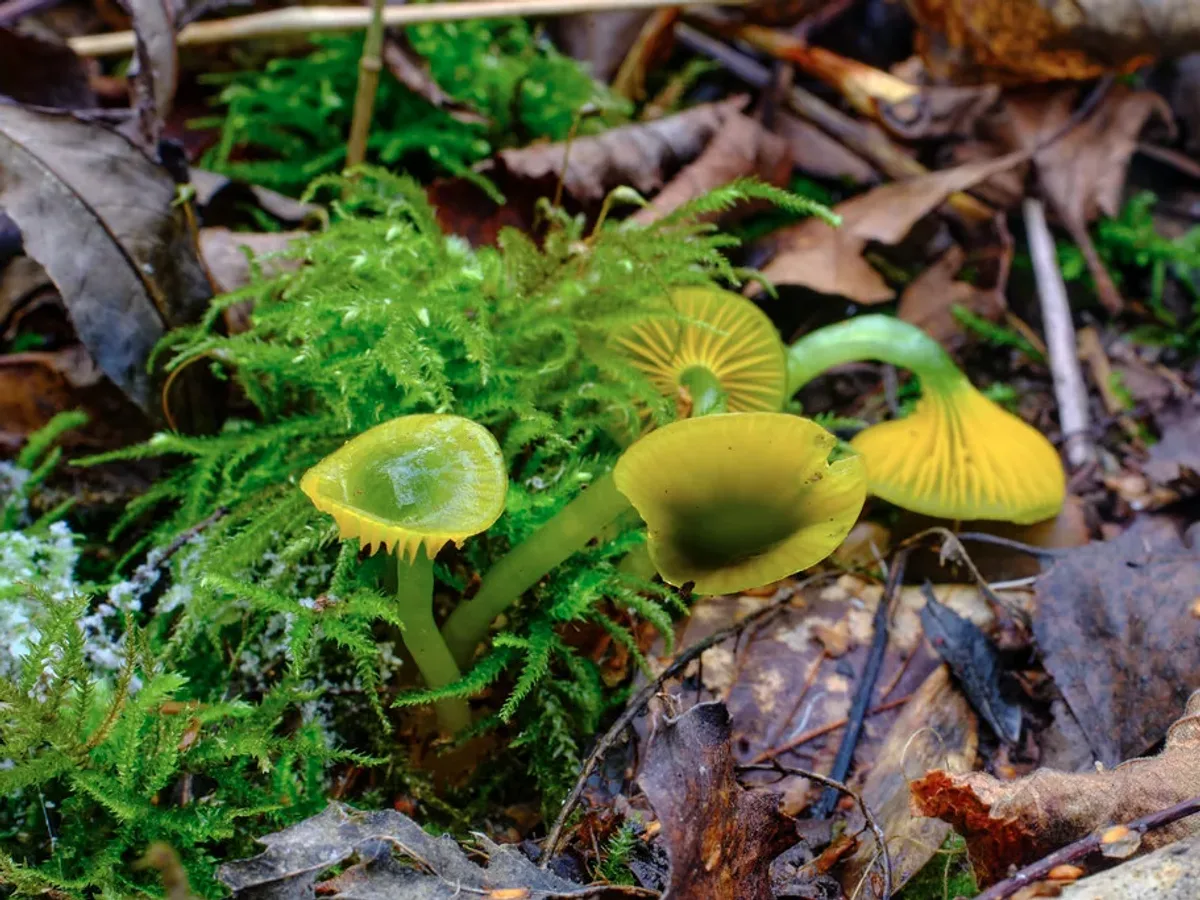 © Lukas Large (CC BY-SA 2.0)
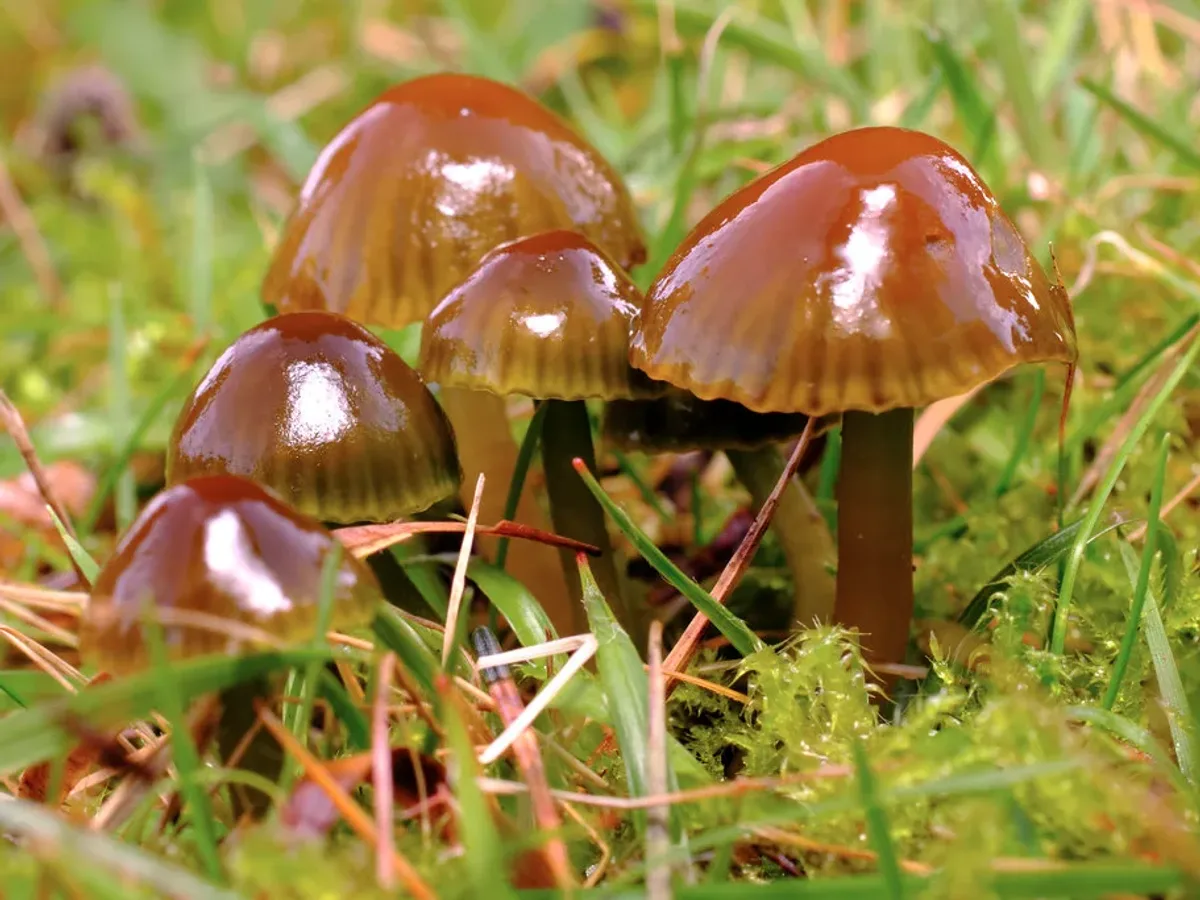 © Lukas Large (CC BY-SA 2.0)
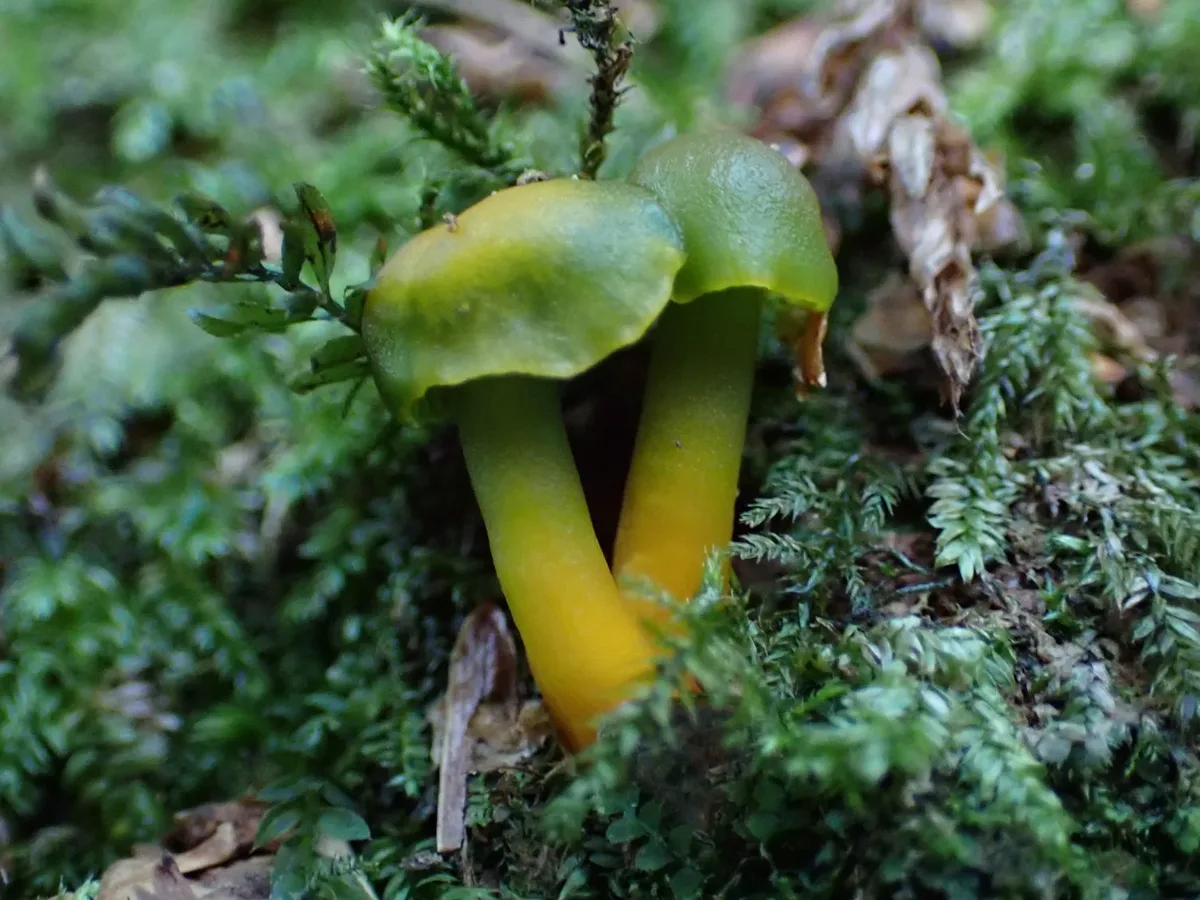 © Shane Austin (CC BY)
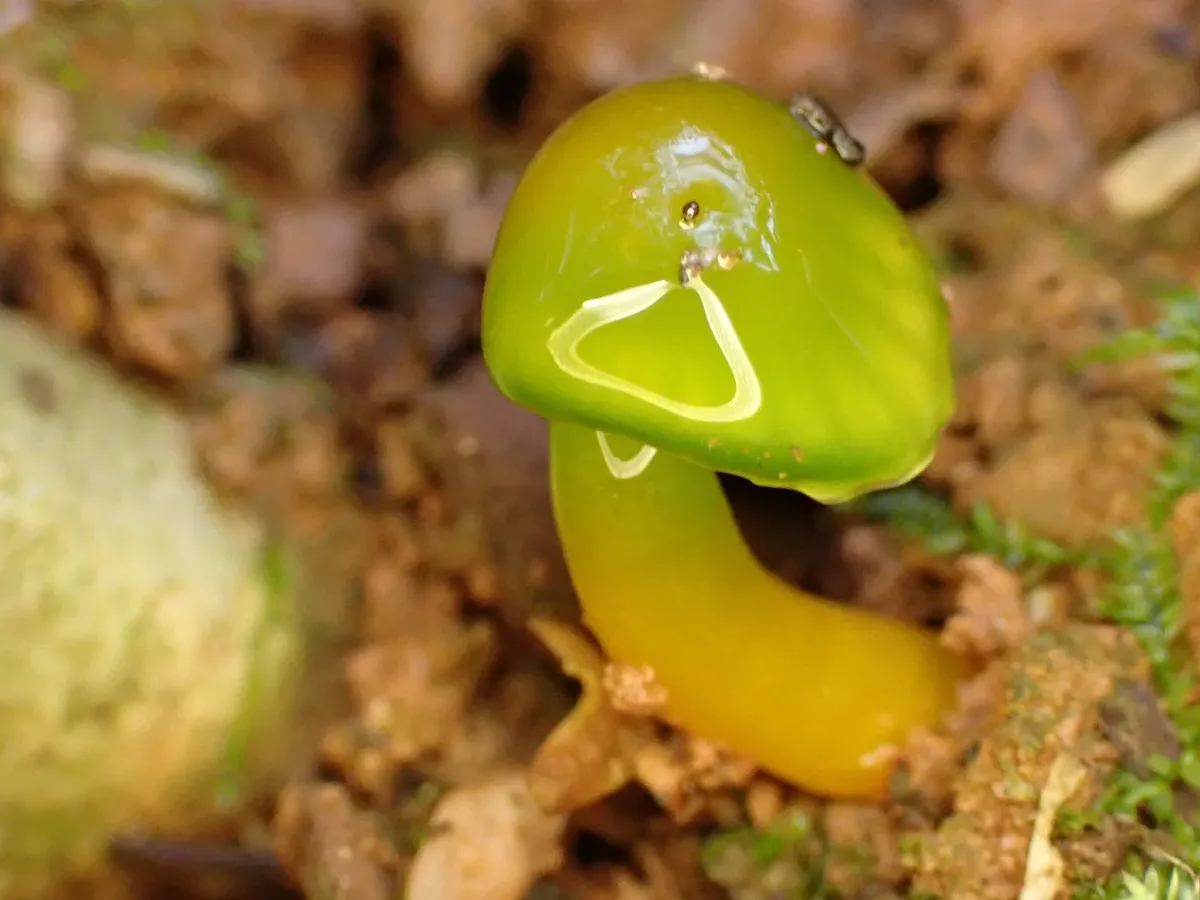 © Shane Austin (CC BY)
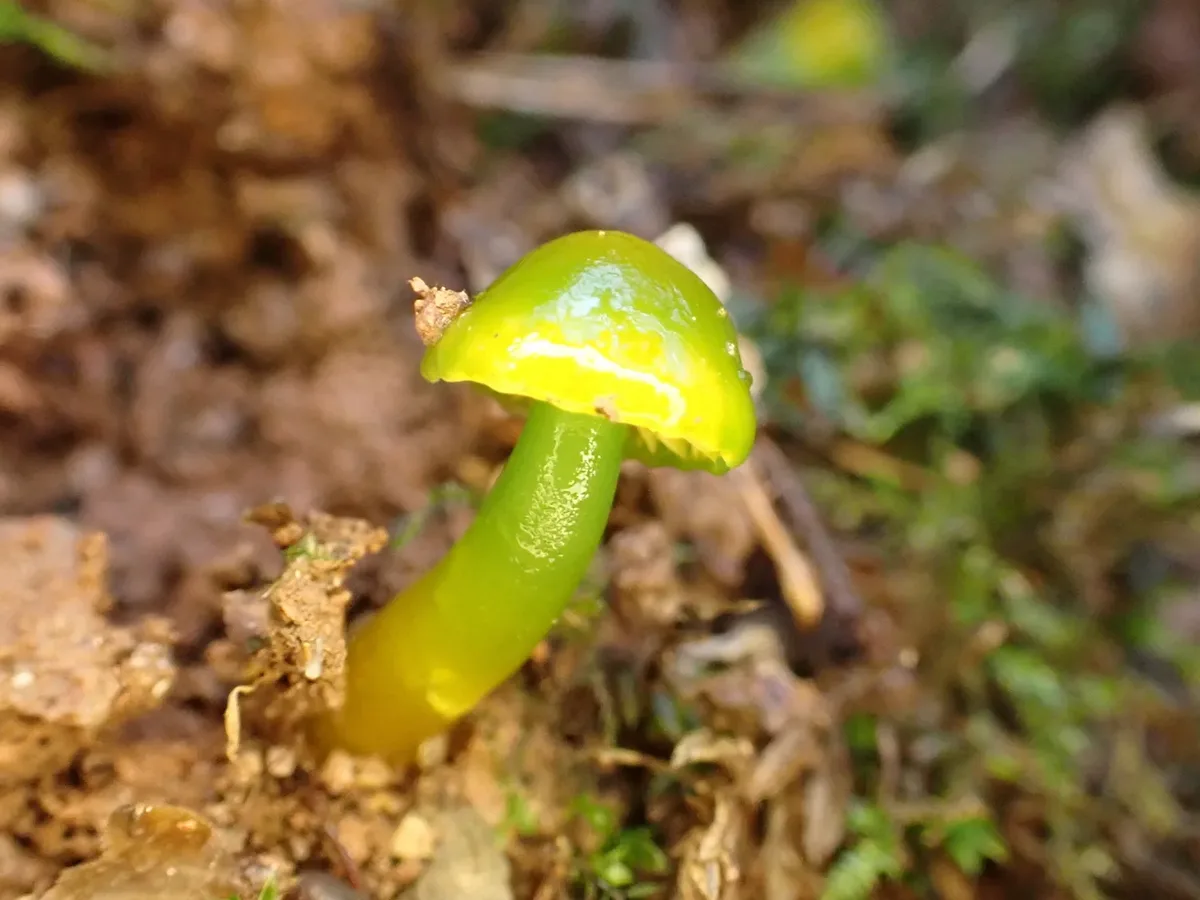 © Shane Austin (CC BY)
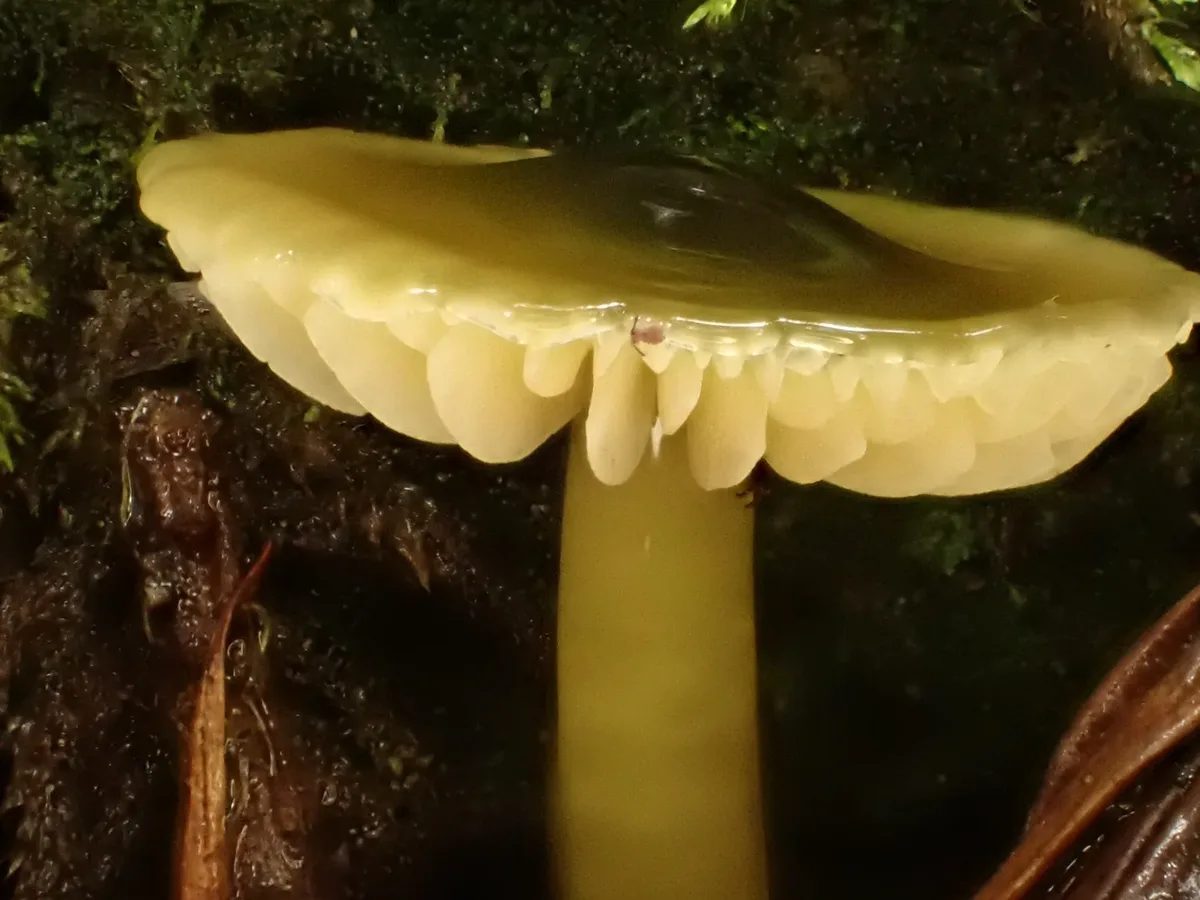 © reagan peschke (CC BY)
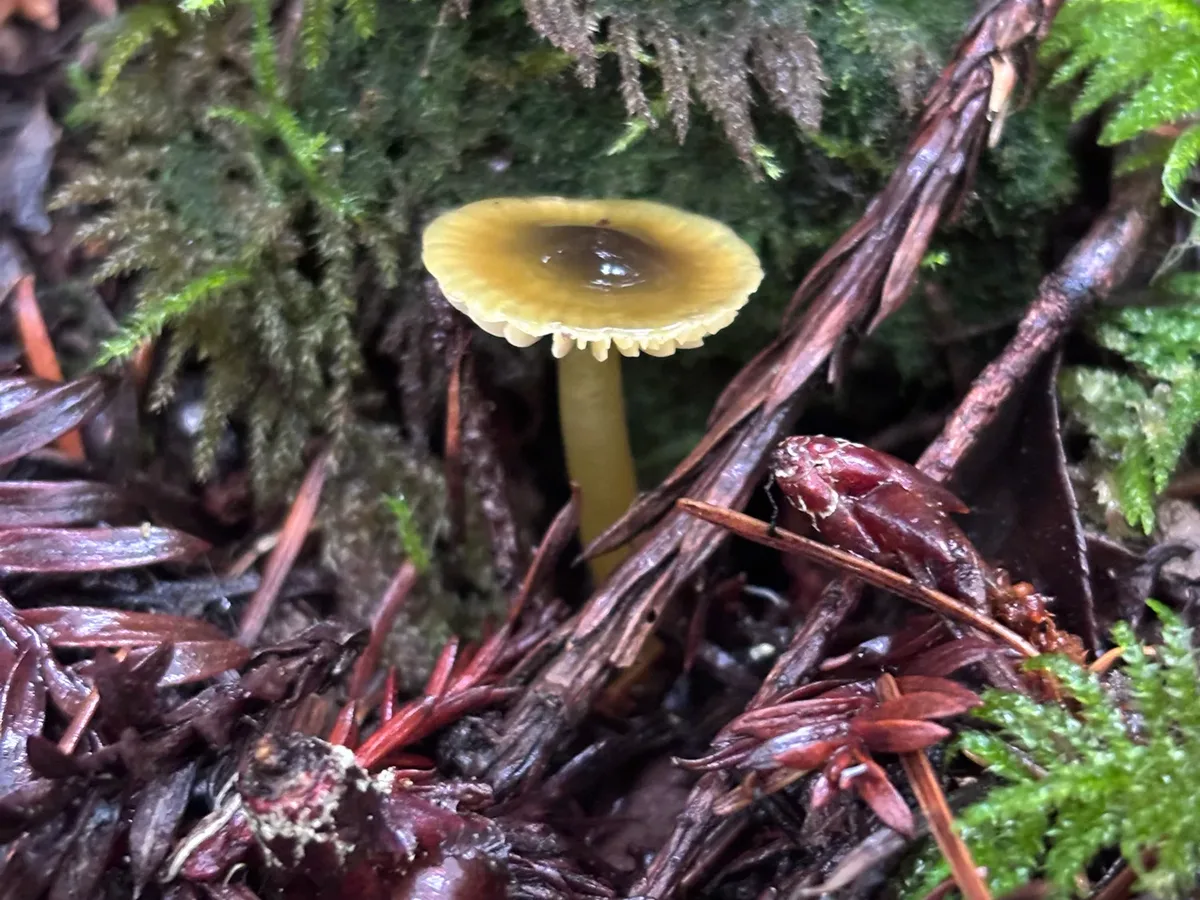 © reagan peschke (CC BY)
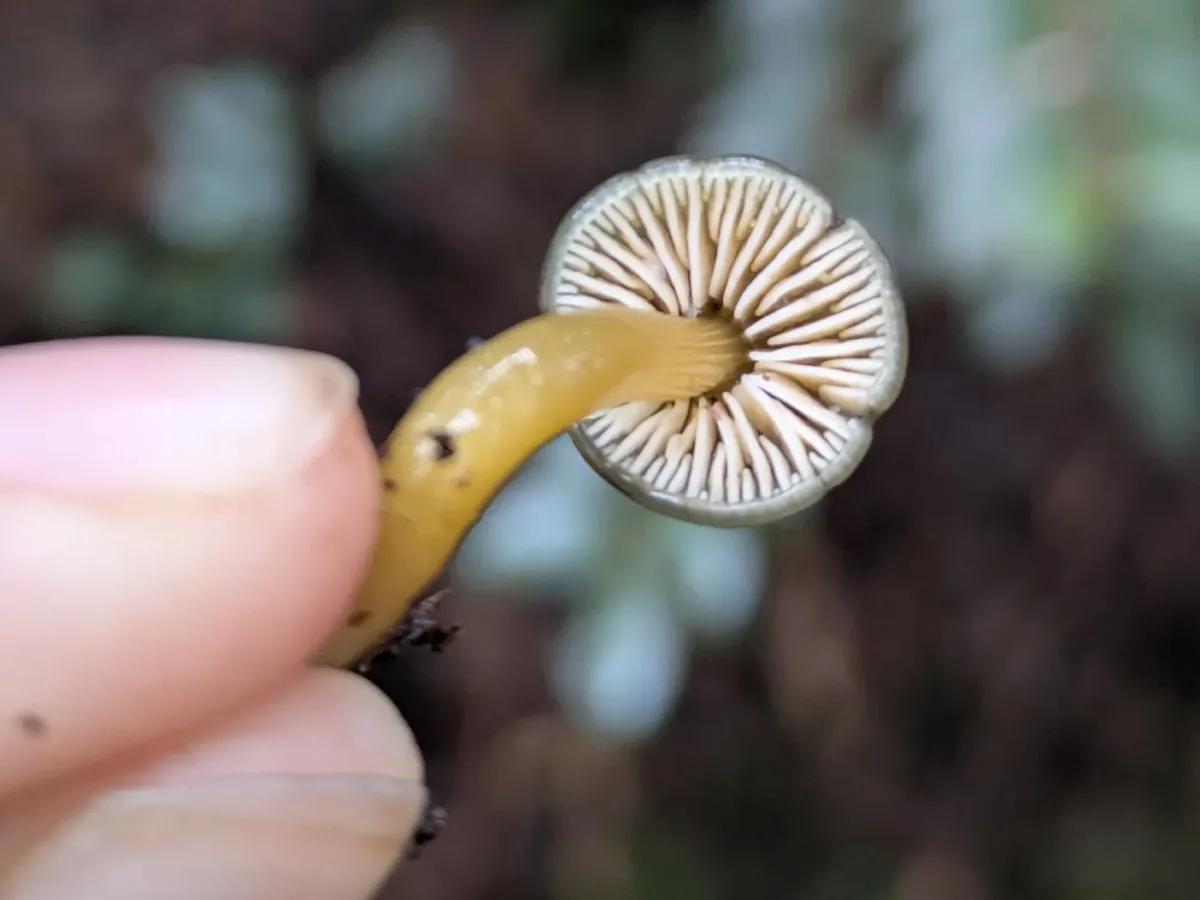 © My-Lan Le (CC BY)
 Chuck Wilson (CC0)
 Chuck Wilson (CC0)
 © Lukas Large (CC BY-SA 2.0)© Lukas Large (CC BY-SA 2.0)© Lukas Large (CC BY-SA 2.0)
Edible only with the right preparation - or safe for some people but not others. Learn the caveats first.
How to recognise it
The parrot waxcap is among the most visually striking of all grassland fungi.
Cap
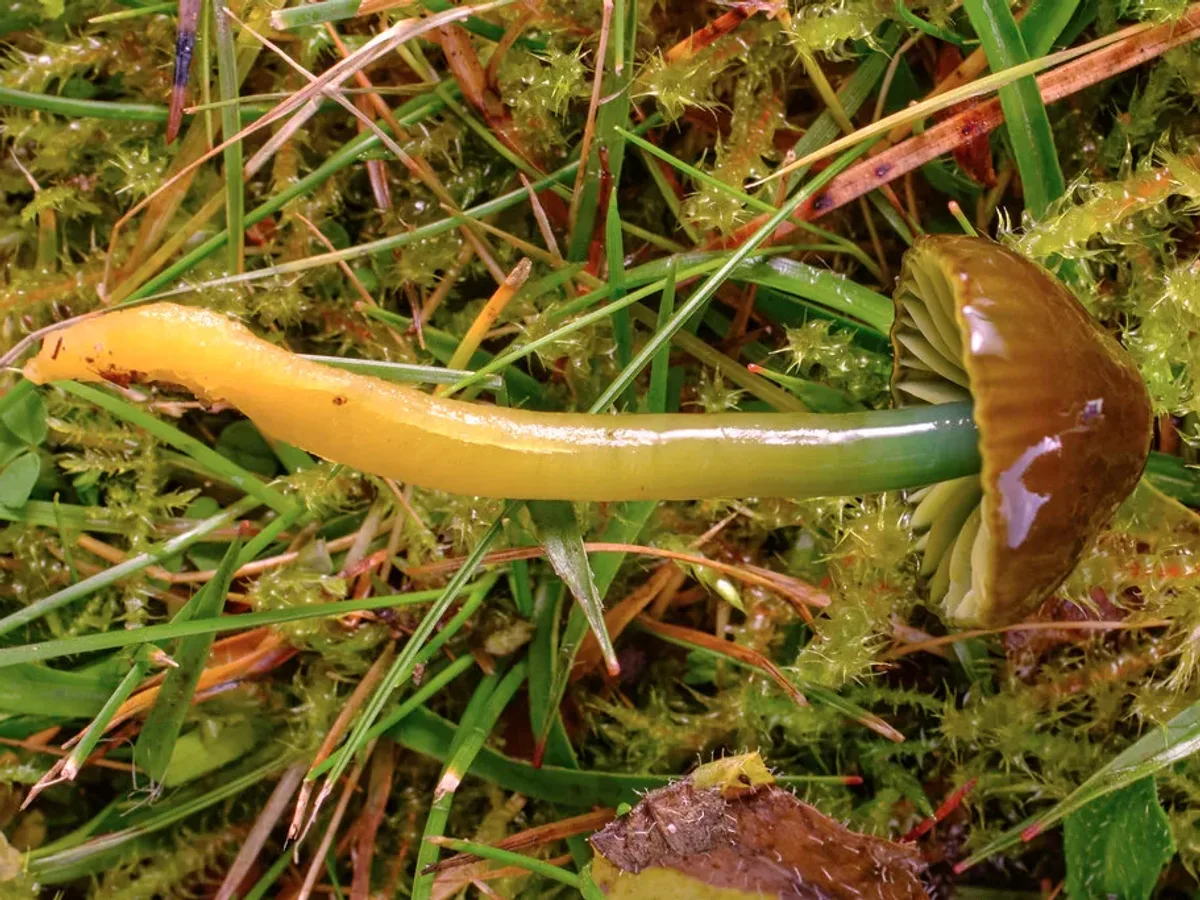
Young caps are a vivid, unmistakable grass-green or blue-green, typically 1.5-4 cm across and broadly conical at first, then expanding to broadly umbonate.
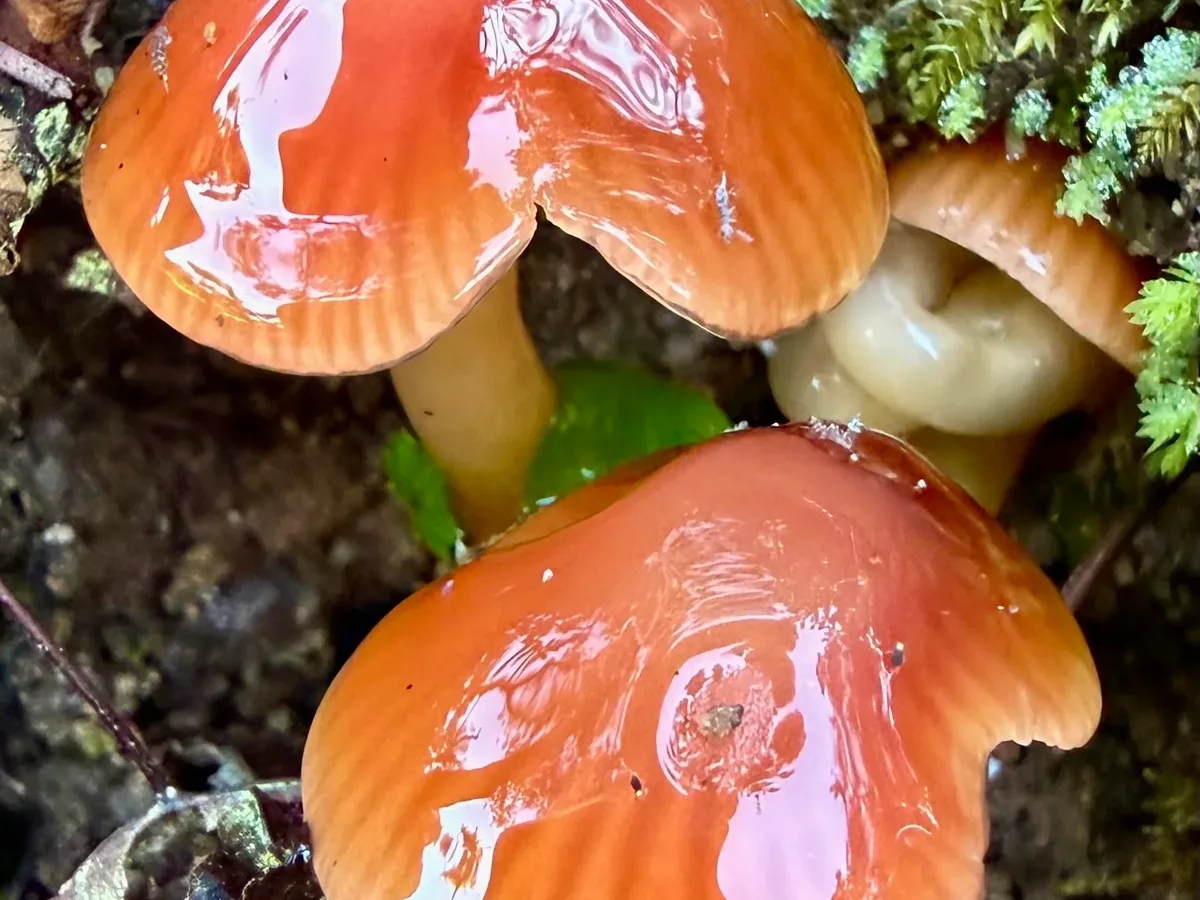
The entire surface is clothed in a thick, glistening slime layer - far more so than most other waxcaps - so that fresh specimens look as though they have been lacquered.
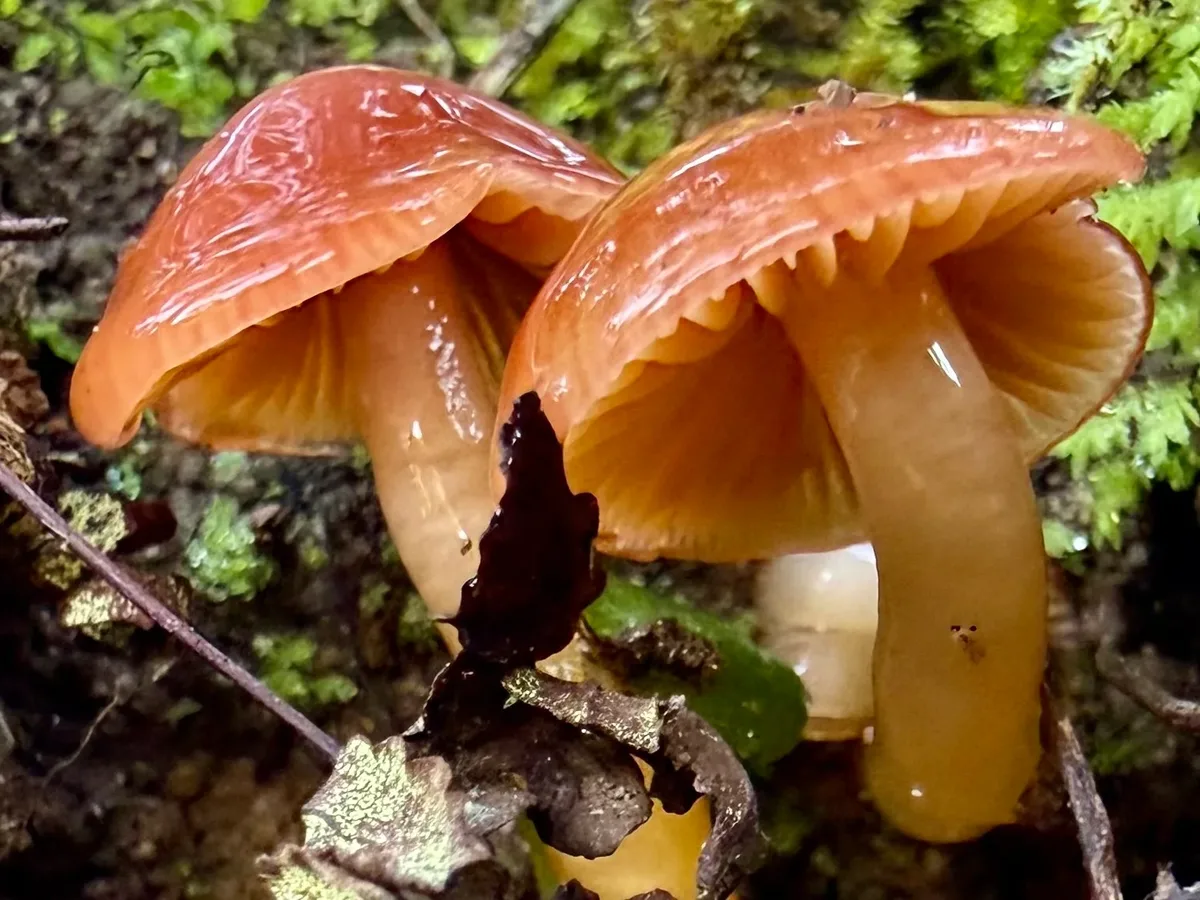
As the fruiting body matures or dries, the green is progressively replaced by yellow-green, then yellow, then orange-yellow or buff, sometimes with different colours appearing simultaneously on cap, gills, and stem.
Gills
Gills are adnate to slightly decurrent, broadly spaced, thick, waxy, and share the green-to-yellow colour progression.
Stem
The stem is equally or more glutinous than the cap, its slimy sheath giving it an almost translucent appearance; it is hollow and fragile, snapping cleanly.
Flesh
Flesh is thin, pale, and insubstantial.
Spore print white; spores ellipsoid, smooth, 6-9 × 4-5 µm.
Why it's dangerous
This species is not considered lethal and no fatalities are attributed to it in the medical literature. However, it must not be dismissed as harmless.
Unpredictable psychoactive effects in an uncontrolled setting carry genuine risk of psychological harm, accidents, or a serious drug interaction - particularly in:
- children
- elderly individuals
- people with underlying psychiatric conditions (including undisclosed personal or family history of psychosis or schizophrenia)
- anyone taking serotonergic medications (SSRIs, MAOIs, triptans)
Serotonin syndrome, though uncommon, is a potentially life-threatening complication when serotonergic agents are combined.
Children are at disproportionate risk because even a small dose relative to body weight could produce pronounced effects.
Beyond the pharmacological risk, possession and consumption of psilocybin-containing fungi is a criminal offence in most European countries and many others worldwide.
If any quantity of this mushroom has been eaten - especially by a child or an adult with a known mental health condition or medication - call emergency services or a Poison Control Centre immediately. Do not wait for symptoms to develop before seeking help.
- UK: 111 or the National Poisons Information Service
- US: 1-800-222-1222
- Sweden: 112 / Giftinformationscentralen 010-456 67 00
Bring a photograph or sample of the mushroom to assist identification.
Toxin
The active compounds are psilocybin (4-phosphoryloxy-N,N-dimethyltryptamine) and psilocin (4-hydroxy-N,N-dimethyltryptamine), both serotonergic psychedelic indole alkaloids.
Their presence in Gliophorus psittacinus was first reported by Jochen Gartz in 1992, and subsequently confirmed and quantified by Blei et al. (2020), who used modern LC-MS/MS analysis.
Psilocybin is a prodrug: after ingestion it is rapidly dephosphorylated in the body to psilocin, the primary psychoactive species, which acts as a partial agonist at 5-HT2A (and other serotonin) receptors in the central nervous system.
Measured concentrations in this species are generally low compared with classically 'magic' species such as Psilocybe cubensis or P. semilanceata, but they are real, variable between collections, and cannot be eliminated by cooking.
No gastrointestinal toxin has been formally isolated, though the dense polysaccharide slime coat may contribute to digestive irritation in some individuals.
The full phytochemical profile of the species has not been exhaustively characterised, and the possibility of additional minor indole derivatives or other bioactive compounds cannot be ruled out.
Symptoms
Because documented human poisoning cases are rare and typically go unreported (accidental ingestion in small amounts by foragers who mistake it for an edible waxcap), the clinical picture is reconstructed largely from the known pharmacology of psilocybin/psilocin rather than a large case series.
Onset of psychoactive effects following ingestion of a meaningful quantity would be expected within 20-60 minutes as psilocybin is absorbed and converted to psilocin.
Early symptoms may include nausea, abdominal cramping, and loose stools, followed by or concurrent with neurological effects:
- altered visual and auditory perception (intensified colours, geometric patterns, distortion of shapes)
- mood shifts ranging from euphoria or laughter to anxiety
- disorientation, a sense of unreality or depersonalisation
- difficulty concentrating or communicating
In higher doses - which could arise because concentrations vary unpredictably between specimens and collections - more intense perceptual disturbance, confusion, agitation, rapid heart rate, and elevated blood pressure are possible.
The episode typically resolves within four to six hours as psilocin is metabolised, though residual fatigue or mood changes may persist.
Purely gastrointestinal symptoms (nausea, vomiting, diarrhoea) without significant psychoactive effects are also plausible, particularly after very small ingestions or in individuals who are more sensitive to the slime polysaccharides.
Staying safe
CAUTION - NOT RECOMMENDED FOR CONSUMPTION.
Gliophorus psittacinus has been confirmed by peer-reviewed research (Gartz 1992; Blei et al. 2020) to contain psilocybin and psilocin, psychoactive indole compounds.
These are controlled substances under drug legislation in most European countries and elsewhere; possession and consumption may be illegal regardless of the source.
The amounts detected are generally low but variable, and effects in individuals could be unpredictable.
Older mycological literature describing this species as 'edible' predates these findings and should not be relied upon. The species should be treated as not for consumption.
If a child or adult ingests this fungus, contact a Poison Control Centre immediately.
Apart from the psychoactive compounds, some individuals have experienced mild gastrointestinal upset, possibly due to the polysaccharide-rich slime layer. The small size and copious slime make any culinary value negligible in any case.
Where & when it grows
Habitat
The parrot waxcap is an obligate of unimproved, low-nutrient, traditionally managed grasslands - one of the most prized and ecologically sensitive habitats in temperate Europe.
It thrives in ancient permanent pasture that has never been ploughed, fertilised, or treated with herbicides, and is frequently found alongside other waxcap species (Hygrocybe, Cuphophyllus, Camarophyllopsis), earthtongues (Geoglossum, Microglossum), and fairy-club fungi that together constitute the 'waxcap grassland' community.
Sites include:
- hillside sheep pastures
- coastal headlands and cliff-tops
- churchyard lawns
- old rectory gardens
- traditional hay meadows
- roadside verges with long continuity
In Scandinavia it can occur in open, mossy woodland clearings and forest paths.
It is a reliable indicator of an undisturbed ecological history - its presence is used in conservation assessments to designate Sites of Special Scientific Interest (SSSIs) and other protected areas.
When
Fruits from August through November across most of its European range. Regional timing varies:
- Atlantic-influenced regions such as the British Isles, Ireland, and western France: October is the peak month
- Scandinavia: the season shifts slightly earlier, running August to October
- Central Europe's warmer, more continental climates: fruiting is typically September to November
Warm, humid weather punctuated by cooler nights and autumn rains triggers the most spectacular flushes.
In exceptional years with prolonged mild, moist autumns, fruit bodies can persist into December.
How it grows
Solitary, scattered, or in small groups of two to five, never densely clustered.
Fruit bodies emerge directly from the soil surface among grass stems or moss, sometimes appearing overnight after autumn rain as though conjured from the damp turf.
The mycelium beneath - threading slowly through ancient, low-nutrient soil - is believed to depend on a complex, poorly understood soil microbiome rather than forming the recognisable ectomycorrhizal partnerships seen in woodland fungi.
Individual fruit bodies are fragile and short-lived, collapsing within a few days, especially in bright sun.
Fruiting conditions
Flushes correlate with cool, moist autumn conditions; persistent morning dew and moderate rainfall in the preceding fortnight are reliable triggers; heavy frost ends fruiting
Look-alikes
The vivid green slime in young specimens makes fresh parrot waxcaps unlike almost anything else in European grasslands.
As the colour fades to yellow or orange in older specimens, some confusion with other waxcaps becomes possible:
- Hygrocybe chlorophana (yellow waxcap) is bright yellow without any green phase and lacks the thick, greenish slime layer
- Hygrocybe ceracea (butter waxcap) is similarly yellow, smaller, and barely viscid
- Hygrocybe vitellina is deep egg-yolk yellow and non-slimy
No species with the same young blue-green, heavily glutinous appearance occurs in European grasslands.
In Scandinavia and northern Britain, where the faded amber phase could be confused with other waxcaps, always check for residual green coloration on the stem slime.
Entoloma incanum has a greenish cap but is easily separated by its lack of slime, strongly sinuate gills that turn pink with age, pink spore print, and strong smell of mice or burnt horn.
Tiny (cap under 2 cm), uniform butter-yellow to pale orange, only slightly greasy rather than thickly slimy, and entirely lacks green pigmentation
Also very slimy and similarly sized but coloured pink, salmon, or grey-lilac rather than green; fades to paler buff; no green phase
Small, greenish cap but lacks any slime, has sinuate gills that turn pink with age, pink spore print, and smells strongly of mice or burnt hair; rarely as brilliantly green as a fresh parrot waxcap. Mildly toxic (causes gastrointestinal upset).
Orange-buff to pale apricot, dry or only slightly moist cap, decurrent gills, never green or slimy
Pure white to cream, dry to slightly waxy, no slime, no green coloration
Uniformly bright lemon-yellow at all ages with no green phase; viscid but not as heavily glutinous as the parrot waxcap; lacks any green colouration on stem or cap
A reference guide - never an edibility guarantee. When in doubt, leave it out.