Reishi
Ganoderma lucidumsyn. Boletus lucidus Curtis, Polyporus lucidus (Curtis) Fr., Fomes lucidus (Curtis) Cooke, Ganoderma japonicum (Fr.) Sawada, Ganoderma ostreatum Pat.
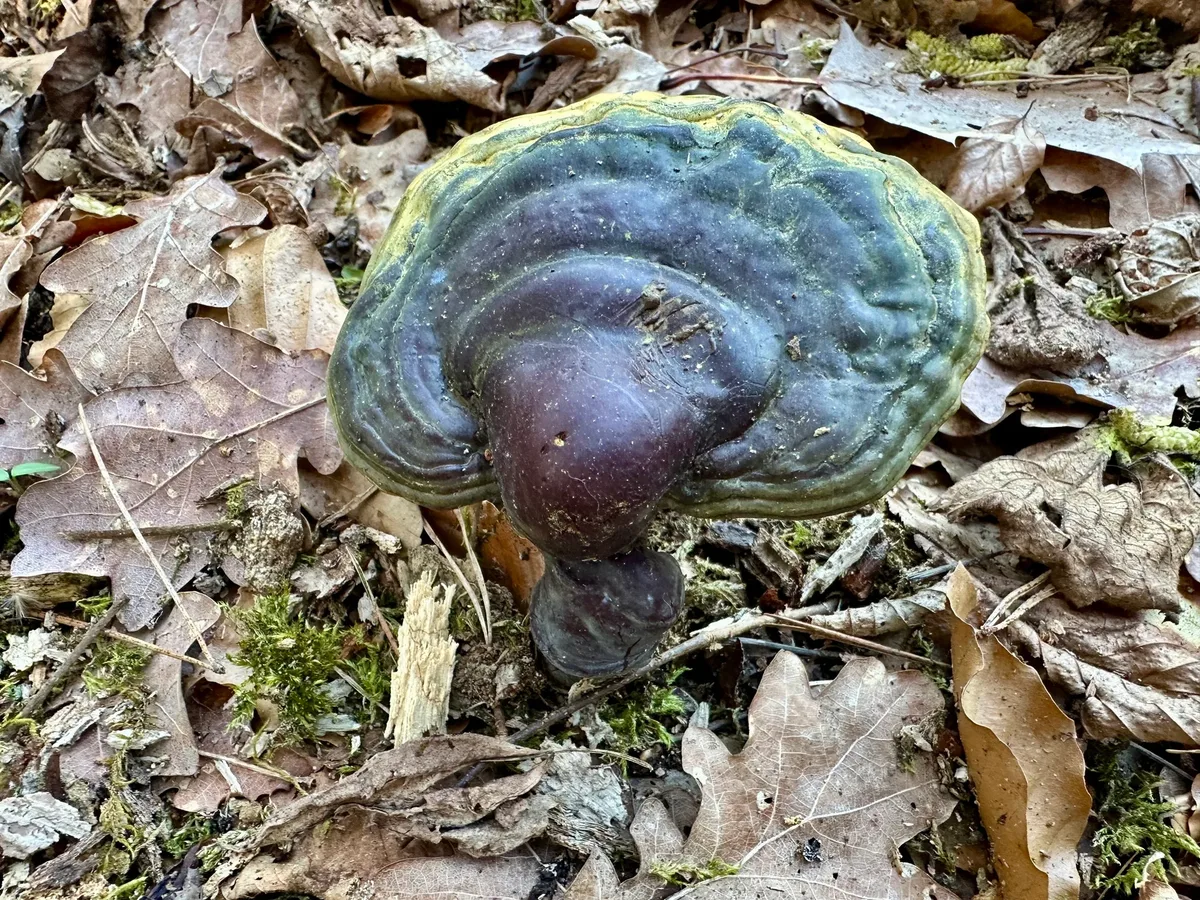 © Katrin Simon (CC BY)
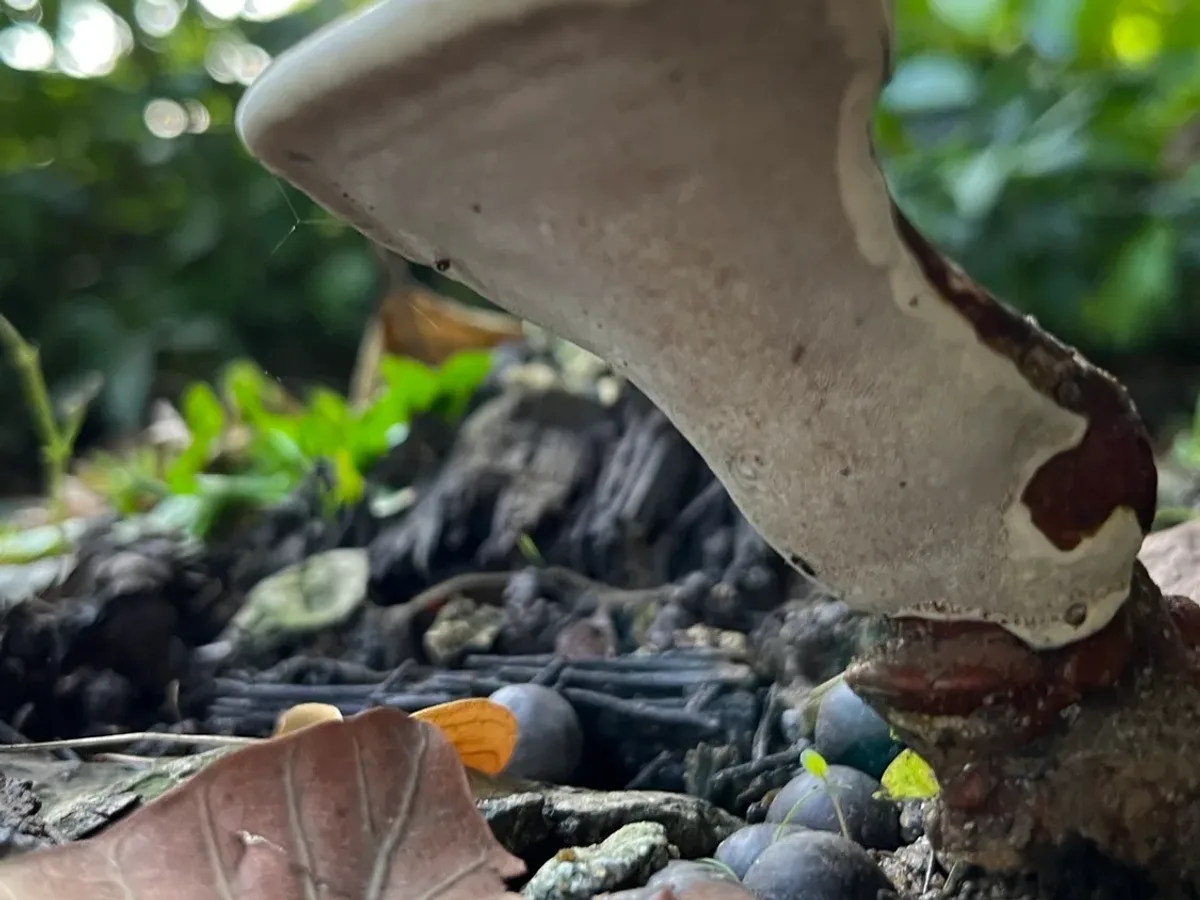 © Павлик Лисицын (CC BY 4.0)
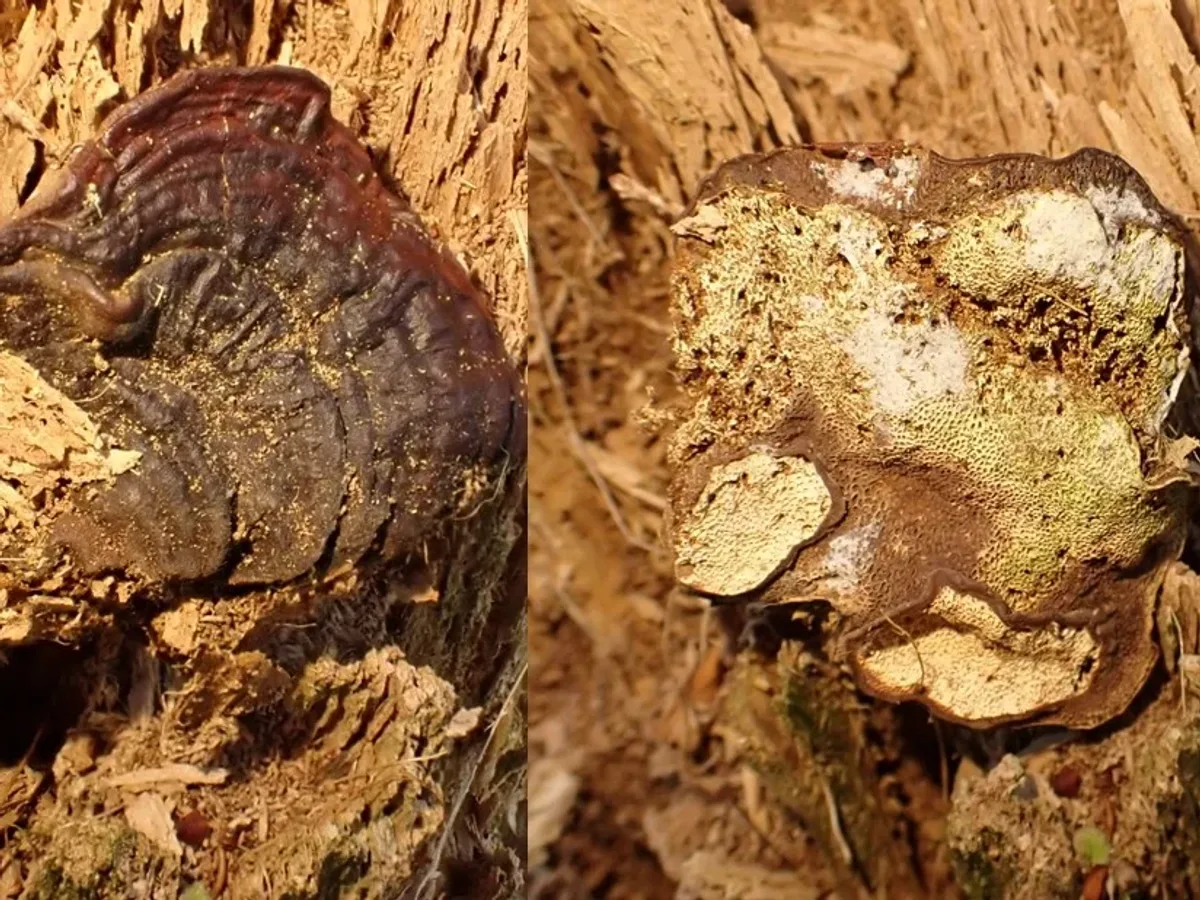 © Perry Gunnar Larsen (CC BY)
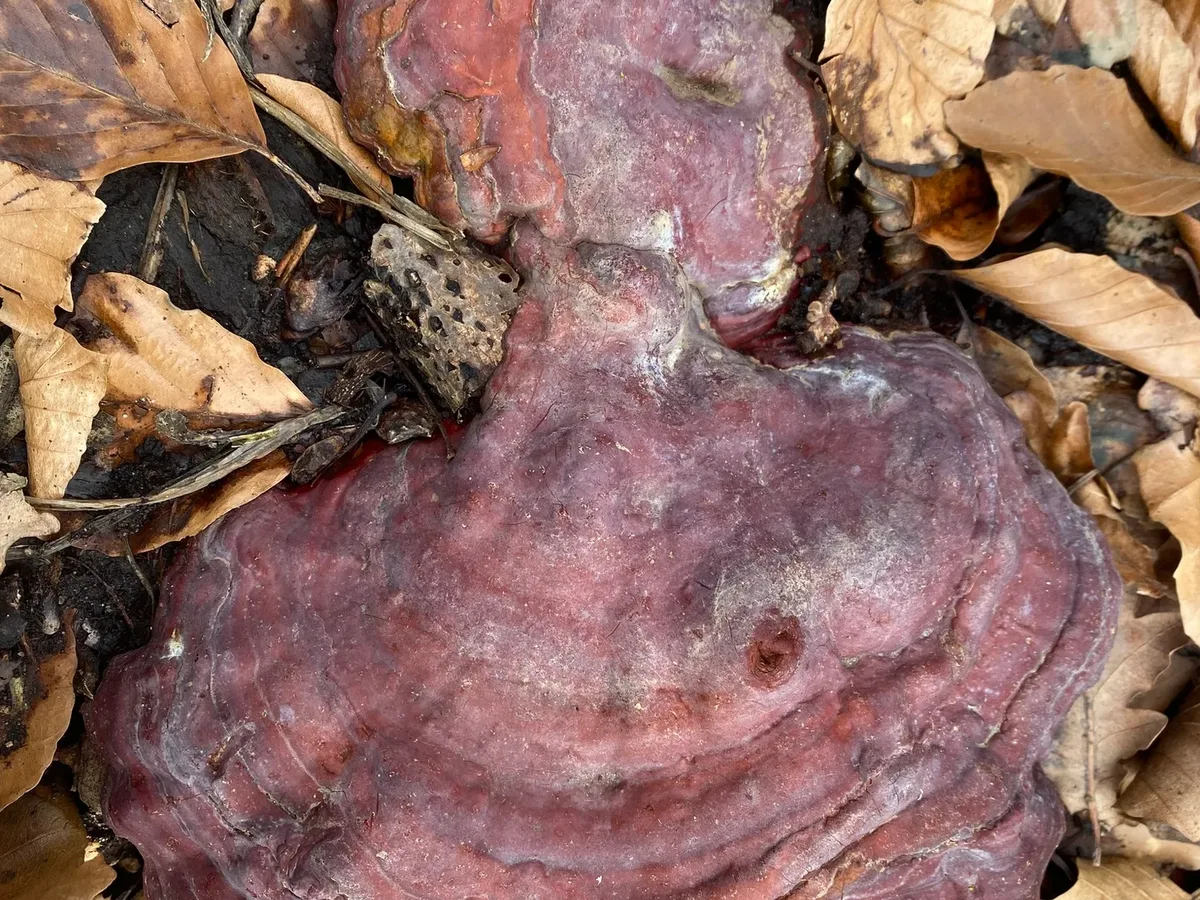 © Katharine Khamhaengwong (CC BY)
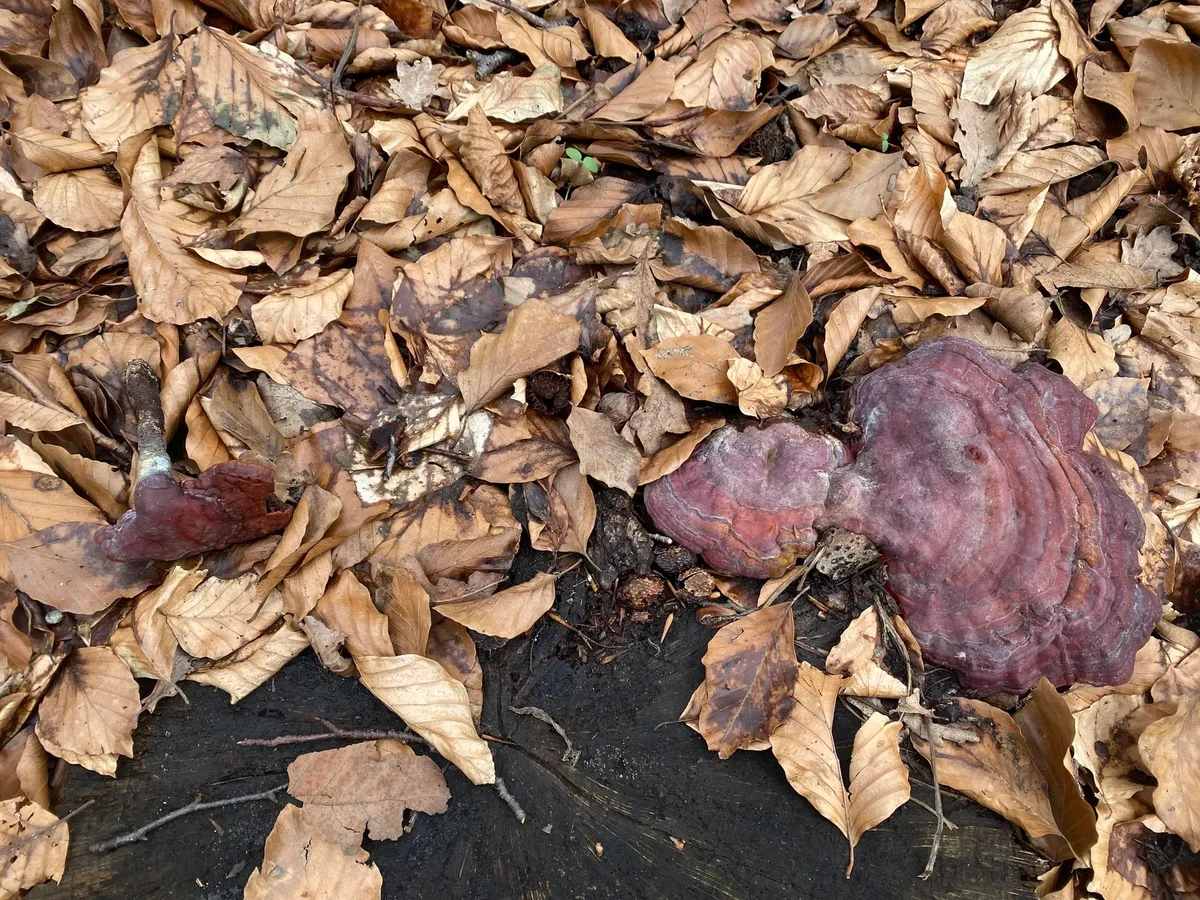 © Katharine Khamhaengwong (CC BY)
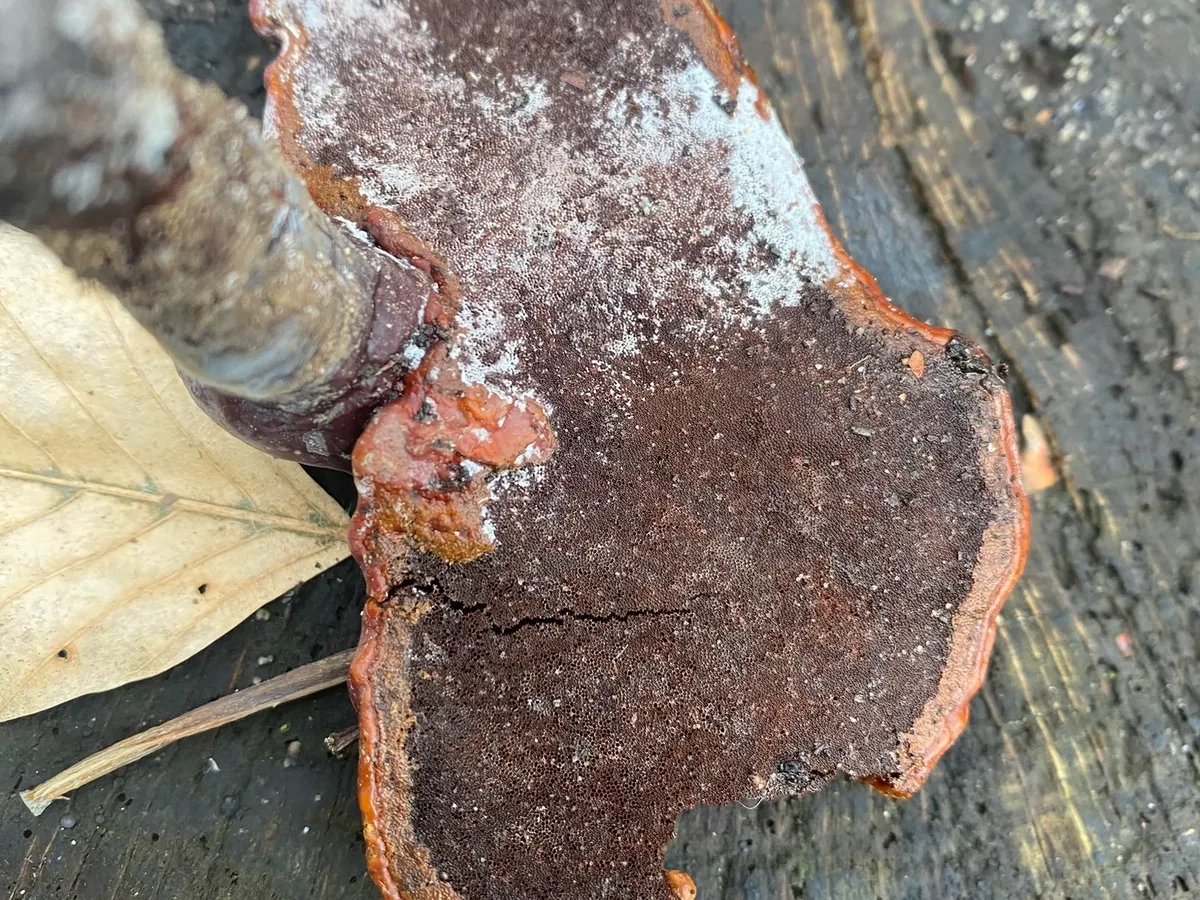 © Katharine Khamhaengwong (CC BY)
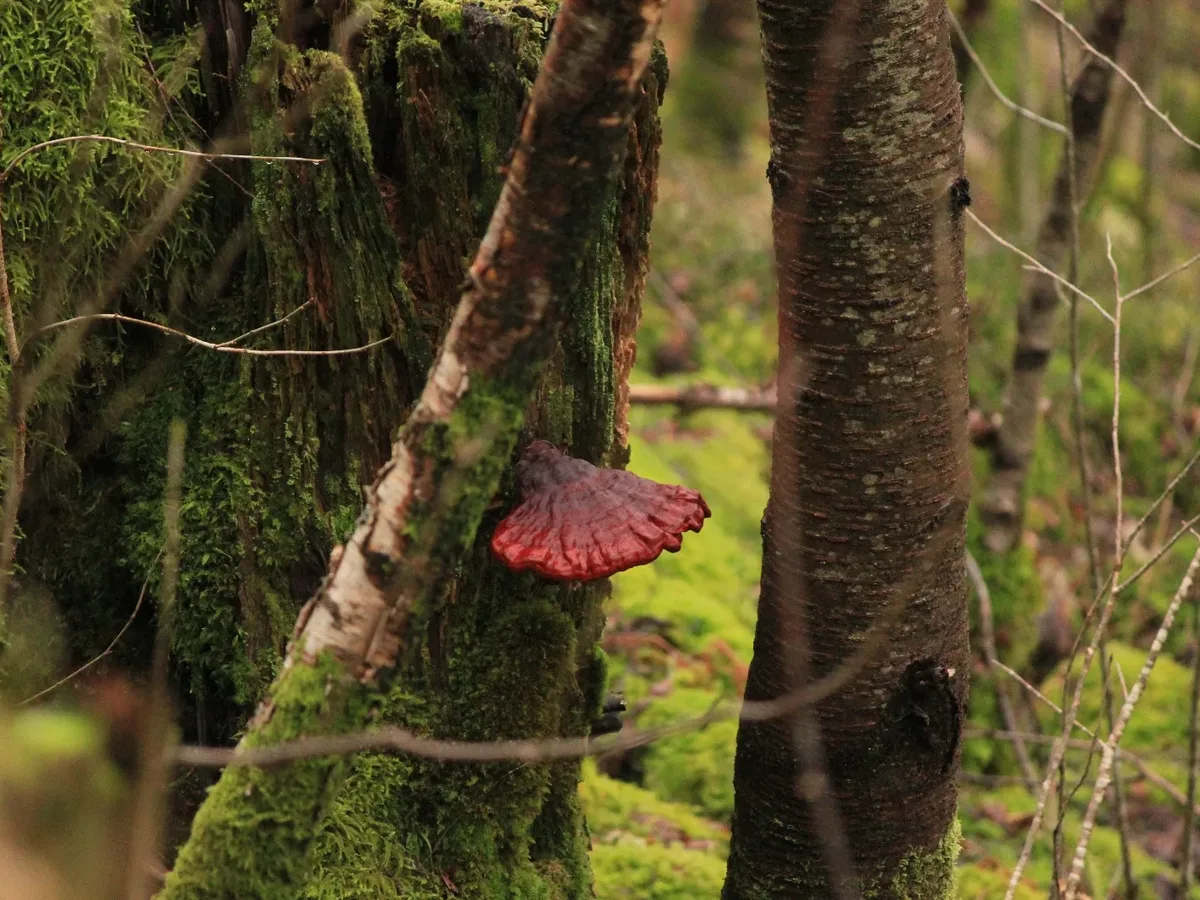 © Axel Snorrason (CC BY)
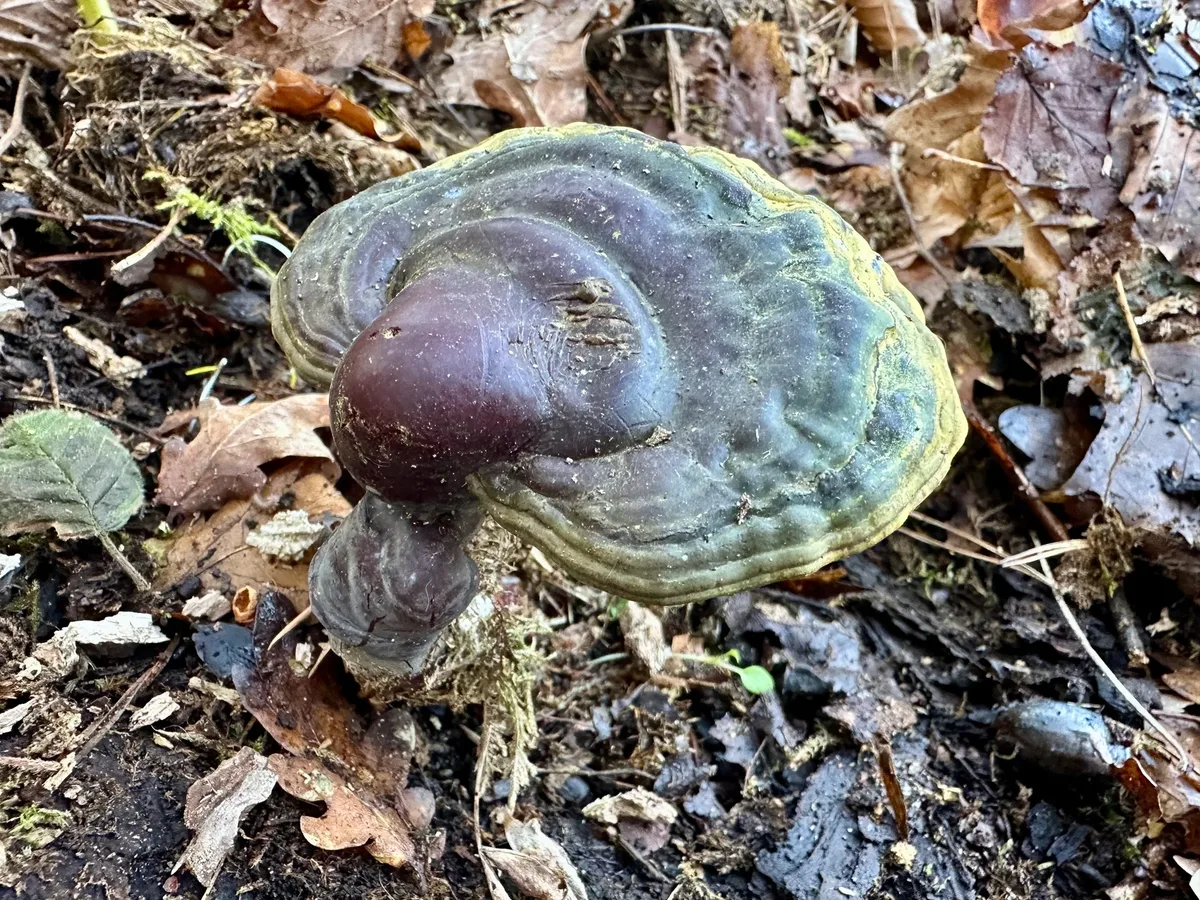 © Katrin Simon (CC BY)© Katrin Simon (CC BY)© Павлик Лисицын (CC BY 4.0)
Not poisonous, but not worth eating - too tough, bitter, or bland for the pot.
How to recognise it
Few fungi stop you in your tracks quite like Ganoderma lucidum.
Cap
The cap - 5-30 cm across, kidney- to fan-shaped - has the appearance of hard shellac: a concentrically ridged surface banded in maroon, chestnut, orange-red, and cream toward the pale growing margin, glowing with a deep, waxy sheen.
This finish is not a trick of the light; it is structural, produced by thick-walled cells that form the cap's outer crust. Even fresh material feels hard and woody underhand.
Gills / Pores
The underside is a fine cream-white pore surface (4-6 round pores per mm) that slowly bruises tawny-brown when handled.
A rusty-brown spore print is characteristic - at full maturity, clouds of cocoa-brown spores can visibly drift from nearby colonies and dust the surrounding vegetation.
Under a microscope the spores are distinctively double-walled, with truncated pillar ornaments on the inner wall.
Stem
The stem is always lateral or eccentric and carries the same varnished crust as the cap.
Flesh
Cut flesh is white to buff, firm, and corky; it neither bleeds nor changes colour.
Where & when it grows
Habitat
Ganoderma lucidum is a white-rot saprotroph and latent pathogen of hardwood trees, working quietly within the heartwood long before any bracket appears.
In the wild it grows at the base of living or recently dead broadleaved trees. In Europe, oaks, chestnuts, beeches, plums, and maples are all recorded hosts; in East Asia the host list is considerably longer, including Cinnamomum, Liquidambar, and many tropical genera. It causes a basal butt rot that can ultimately kill the host.
In Europe it is an uncommon find, scattered in lowland deciduous woodland, old parkland, and orchards. Across China, Japan, Korea, and Southeast Asia it is considerably more frequent, growing from lowland subtropical forest up into montane zones.
The fungus requires warm summers and humidity to fruit, which explains its rarity at northern latitudes.
Where it does establish, the same tree base may produce brackets over multiple years - the mycelium persists within the wood, and each season's fruitbody is simply its outward signal.
When
New fruitbodies begin forming from late spring, identifiable by the vivid cream-yellow advancing margin still soft and growing.
Peak expansion and spore release occurs in mid-summer - July and August in temperate Europe and East Asia. Brackets harden and darken through autumn, eventually becoming the grey-brown woody relics that can persist on the stump through winter.
Unlike many bracket fungi whose brackets are long-lived and perennial, individual Ganoderma lucidum fruitbodies are annual - each season brings a new one from the same infection below.
In subtropical and tropical Asia, fruiting is possible year-round given adequate moisture. European foragers are most likely to encounter it in July-September at the base of oak stumps and living trees in warm, sheltered lowland woodland.
How it grows
Ganoderma lucidum grows as a single bracket or, from heavily infected root systems, as a cluster of several overlapping brackets.
Growth begins with a pale knob-like primordium that expands into a fan or kidney shape over a period of weeks. The lacquered crust develops as the cap enlarges; the active growing margin stays pale cream-yellow and soft before hardening. The stem elongates and hardens concurrently.
At full maturity, massive spore release begins - the cocoa-brown powder can coat surrounding vegetation.
A mature bracket lives approximately one season, hardening to woody texture by autumn and eventually falling or remaining attached as a grey-brown relic. The white-rot mycelium colonising the heartwood is far longer-lived, persisting for years within the affected tree.
Fruiting conditions
Requires warm soil temperatures and moderate humidity to initiate primordia; long lag between rain event and visible fruitbody development reflects the slow growth rate of the woody bracket. In temperate Europe, fruitbodies require sustained warm spells (>18 °C air temperature) over several weeks. In East Asian cultivation, temperature and humidity are closely managed.
Look-alikes
Several Ganoderma and related species can be confused with G. lucidum.
- Ganoderma resinaceum - larger and more resinous, with a broader, darker brown to red-brown pileus and often a stouter, shorter stem; it favours oaks and chestnuts in southern Europe.
- Ganoderma applanatum (artist's conk) - lacks a stem, is perennial and shelf-like, has a whitish to grey upper surface without the brilliant lacquer, and leaves a permanent brown 'drawing' when the pore surface is scratched. It is not consumed medicinally in the same way.
- Ganoderma australe (southern bracket) - similar to G. applanatum but larger, also perennial and sessile.
- Ganoderma tsugae - common in eastern North America on hemlock, very closely related and nearly identical to G. lucidum, but has a distinctly whitish to cream-buff underside that bruises brown more readily and is tied to coniferous substrates.
- Ganoderma oregonense (syn. G. lucidum var. oregonense) - of the Pacific Northwest, larger, with a paler pileus, and also grows on conifers.
None of the Ganoderma species are known to be acutely toxic, but none should be eaten as fresh mushrooms.
The risk of misidentification in this genus is low for experienced observers given the distinctive lacquered pileus; the main confusion risk is between closely related Ganoderma species that differ in host association and minor morphological details.
Perennial, sessile bracket lacking any stem; upper surface dull grey-brown to grey, concentric zones but no brilliant lacquer; pore surface white, scratches permanently brown (used for 'etching'); far larger at maturity (up to 80 cm); spore print chocolatey brown. Not used medicinally in the same way.
Perennial, shelf-like, no stem; upper surface grey-brown, matt; cream pore surface bruising brown very rapidly; very large; usually on beech and other large hardwoods. Distinguished from G. applanatum by larger spores (11-14 × 7-10 µm) and southern distribution.
Pacific Northwest species on conifers (fir, spruce, hemlock); very large brackets (up to 50 cm) with paler, cream-buff to light orange-brown lacquered surface; pore surface cream bruising brown quickly. Closely related and also used medicinally.
Larger fruitbodies with a darker, resinous-brown pileus lacking the vivid reddish-maroon lacquer of G. lucidum; pore surface more rapidly bruising dark brown; stem stouter and shorter; favours large-diameter oaks and chestnuts in southern Europe. A close relative with similar medicinal properties; not hazardous.
Nearly identical to G. lucidum in lacquered appearance and medicinal use; distinguished primarily by strict association with hemlock (Tsuga) and other conifers in eastern North America; pore surface cream to white bruising brown; some authorities consider it conspecific with G. lucidum.
Overlapping shelf brackets with a vivid yellow to orange upper surface and bright sulphur-yellow underside (no gloss, no lacquer); flesh bright yellow in young specimens, white inside; no stem; entirely different colour palette. Edible when young.
In the kitchen
Picking & cleaning
Ganoderma lucidum is not harvested for eating as a conventional food because the flesh is entirely too tough and woody to be palatably cooked. Its culinary and medicinal value lies in dried sliced, powdered, or extracted forms.
For medicinal or craft use, collect young to mature brackets with intact pore surfaces before they become heavily spore-dusted or insect-damaged. Use a knife to cut cleanly from the wood; prying risks tearing the flesh.
Brackets intended for drying should be sliced 5-10 mm thick (or the whole cap halved) and dried at 40-60 °C. The resulting dried slices are used in long-simmered teas, soups, and tinctures in East Asian tradition.
Any suspected wild Ganoderma should be confirmed against the description above before use; several lookalike bracket fungi are not suitable even for medicinal use.
Cooking
Ganoderma lucidum is used exclusively in processed or extracted forms, never as a fresh culinary ingredient.
The traditional East Asian preparation is a long-simmered decoction: dried slices are simmered in water for 1-2 hours to produce a bitter, mildly woody tea ('Lingzhi tea') consumed for its reputed adaptogenic and immune-supporting properties. In Chinese herbal medicine it is combined with dates, astragalus, and other herbs.
Modern preparations include:
- dual-extract tinctures (hot-water and alcohol extraction to capture both water-soluble polysaccharides and alcohol-soluble triterpenes)
- powdered capsules
- concentrated extracts
The pronounced bitter flavour (due to ganoderic acid triterpenes) limits culinary creativity; in practice most users take it in capsule or tea form rather than cooking with it.
Simmer whole or sliced dried brackets in broth-based soups (do not eat the bracket itself - remove before serving) to impart a woody depth; the flavour is present but muted in broths.
Good to know
Ganoderma lucidum is not poisonous, but it is not edible as a fresh mushroom - the flesh is leathery-woody and effectively indigestible in raw or simply cooked form. It should never be eaten as you would eat a cap mushroom.
Medicinal preparations (decoctions, powders, extracts) made from dried material are generally considered safe at recommended doses, but some users experience dry mouth, dizziness, or gastrointestinal upset. Long-term high-dose use may affect blood-clotting and interact with anticoagulant medications.
People taking blood thinners or immunosuppressants should seek medical advice before use.
Commercially cultivated Ganoderma is typically G. lingzhi or G. sichuanense rather than true G. lucidum sensu stricto, and the taxonomy of the 'lucidum complex' remains under revision. Wild-collected material in Europe and North America is often a different species (G. resinaceum, G. tsugae) from the Asian medicinal species.
Do not attempt to use any Ganoderma specimen as a food mushroom.
A reference guide - never an edibility guarantee. When in doubt, leave it out.