Lingzhi
Ganoderma lingzhisyn. Ganoderma lucidum sensu auct. asiat., Ganoderma lucidum var. sinense Zhao, Xu & Zhang, Boletus lucidus auct. non Curtis, Ganoderma japonicum auct.
 Atlas of Living Australia (CC0)
 Supportstorm (CC0)
 © TecheOldFox (CC BY-SA)
 © TecheOldFox (CC BY-SA)
 Atlas of Living Australia (CC0)Atlas of Living Australia (CC0)Supportstorm (CC0)
Not poisonous, but not worth eating - too tough, bitter, or bland for the pot.
How to recognise it
Ganoderma lingzhi is perhaps the most visually arresting of all Asian bracket fungi, and its appearance has earned it a central place in East Asian art and symbolism for over two thousand years.
Cap
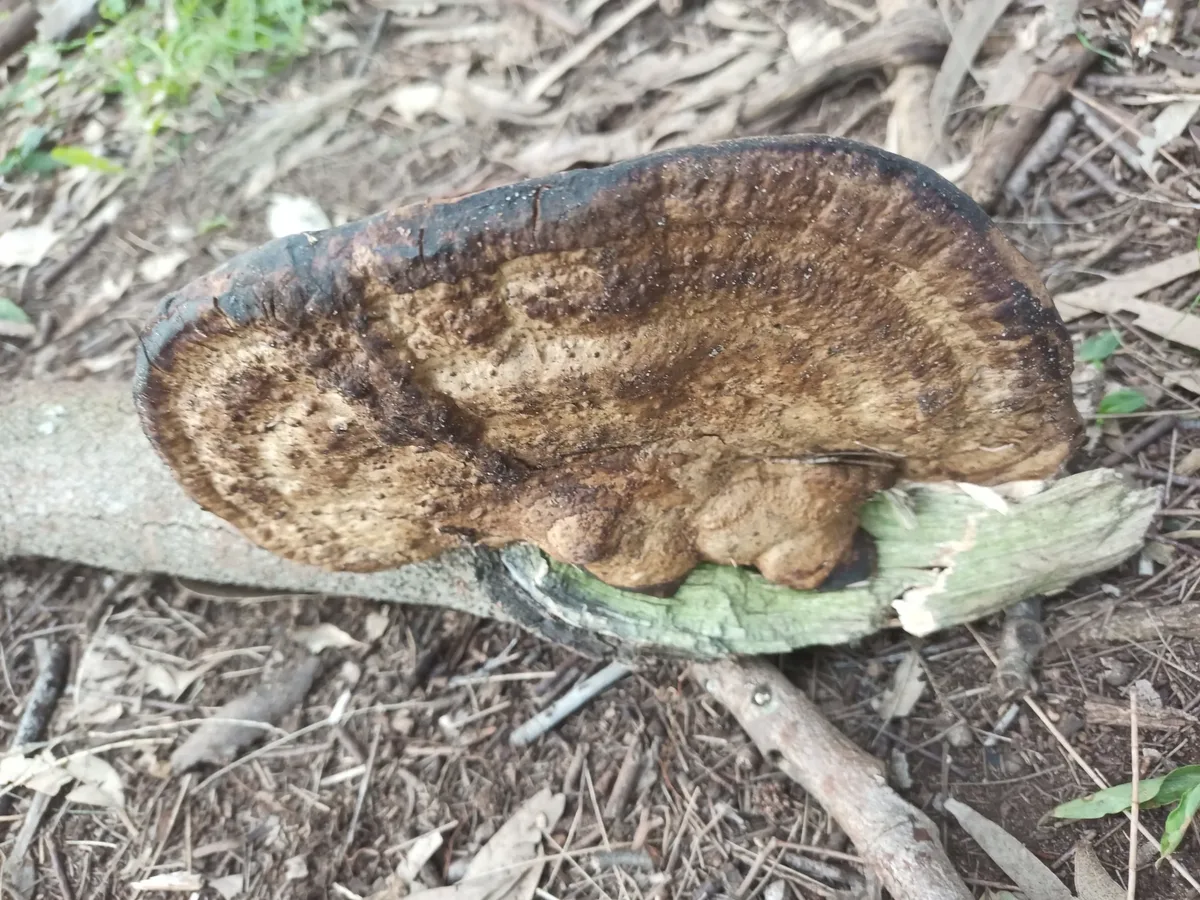
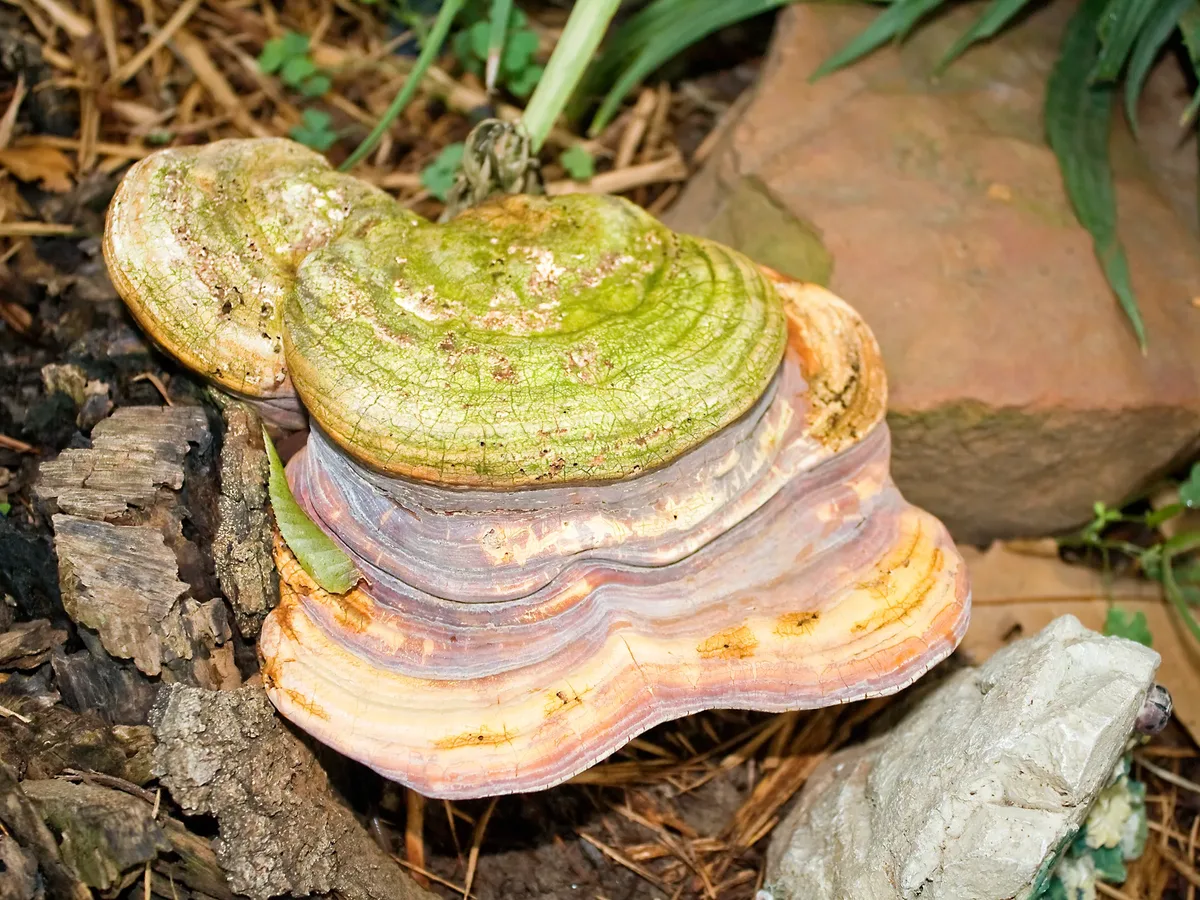
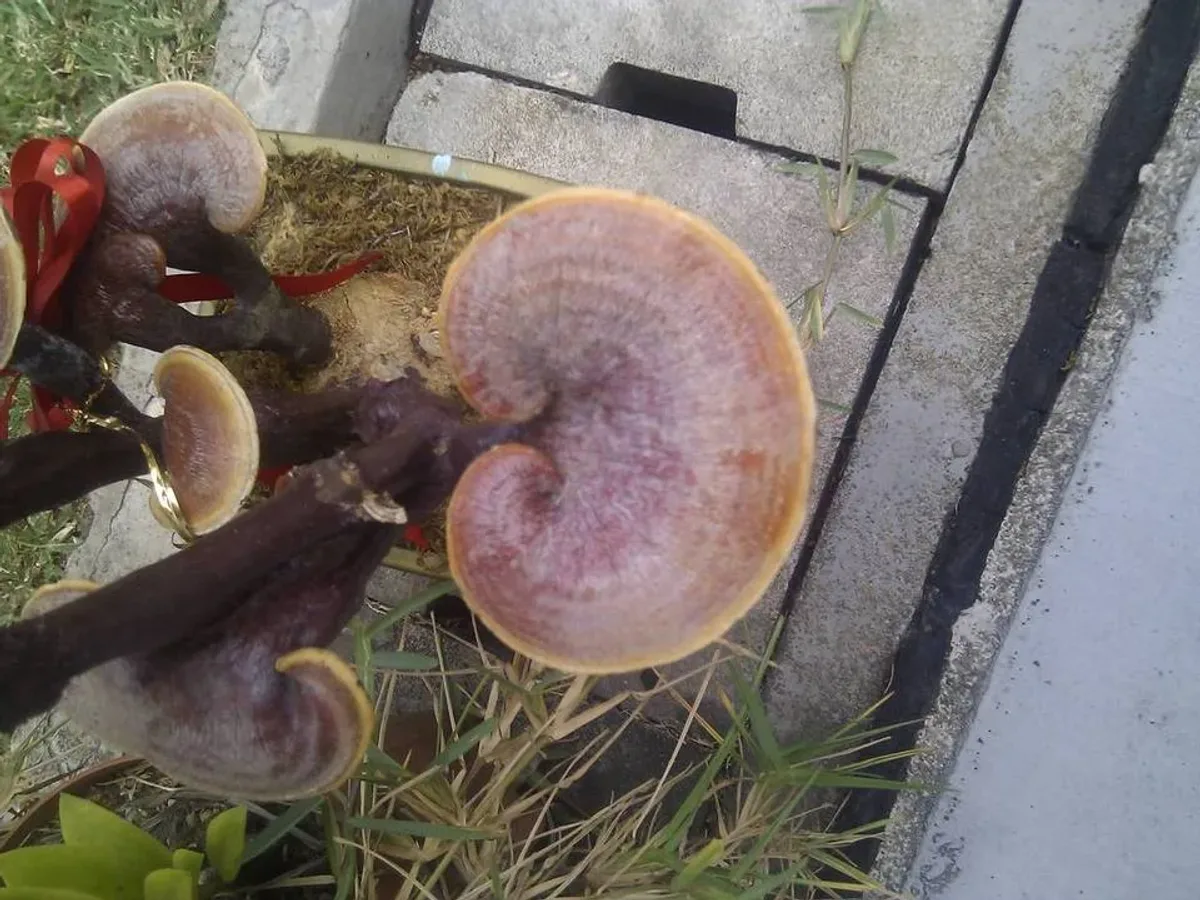
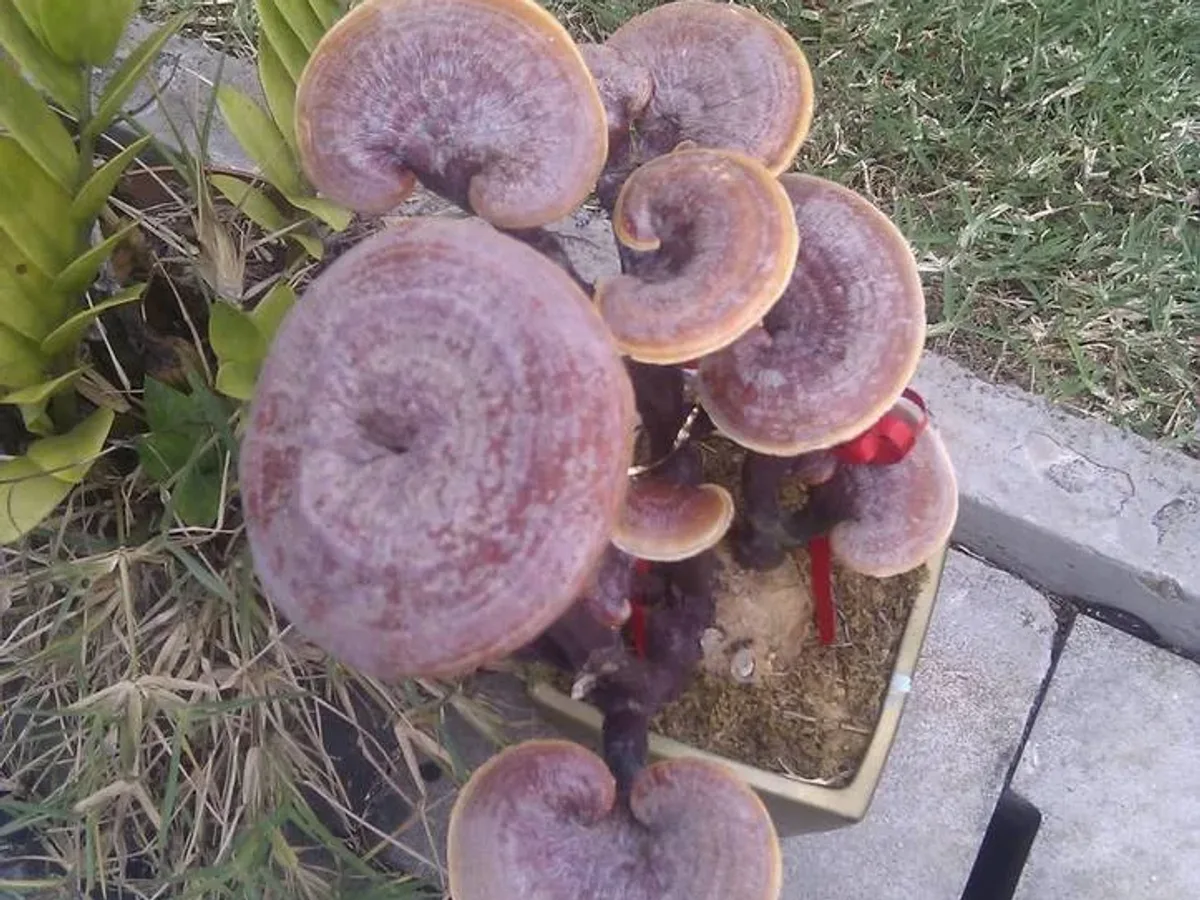
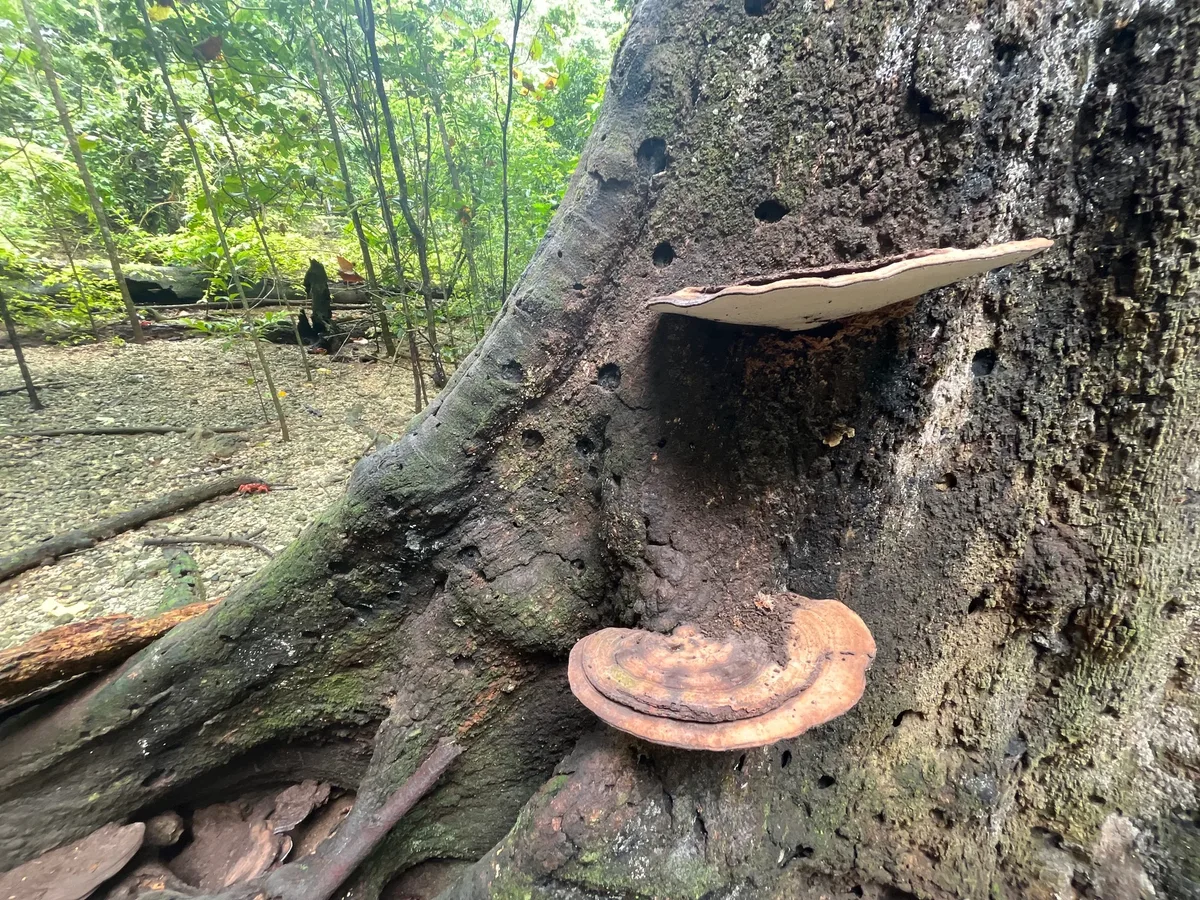
The cap - 5-30 cm across, kidney- to fan-shaped - looks as though it has been lacquered by hand: concentrically ridged and banded in deep reddish-maroon, chestnut, orange-red, and pale cream toward the growing edge, with a brilliant, waxy, high-gloss sheen that makes it look almost artificial.
This sheen is not a surface coating but a biological structure - the cuticle is formed from tightly packed, thick-walled cells whose alignment produces the optical effect of polished enamel. Even handled roughly, the lacquered surface does not rub off.
The pale cream to orange growing margin is the only soft part of the cap and shows where active extension is occurring; once a region of the cap ceases to grow it hardens to woody firmness within days.
Gills / Pores
The underside carries a fine, cream-white pore surface (4-6 round pores per mm) that bruises tawny to ochre-brown when pressed.
Stem
The lateral stem is always present and bears the same varnished crust as the cap, an important separation from the sessile, stem-less Ganoderma applanatum.
Flesh
Cut the bracket open and the flesh is white to buff, firm, and layered like compressed felt - nothing like edible mushroom flesh.
A cocoa-brown rusty spore print is characteristic of the genus, and at peak maturity the spore release is dramatic: fine brown powder drifting visibly from the bracket and coating the surrounding substrate.
Where & when it grows
Habitat
In the wild, Ganoderma lingzhi is a warm-loving species of deciduous and subtropical broadleaf forests across East and Southeast Asia.
It causes heart rot and butt rot in a wide range of hardwood hosts, colonising trees through wounds, natural root connections, and exposed heartwood, then persisting for years within the dead wood as the bracket emerges season after season from the same infected site. The mycelium within is perennial even though each season's bracket is new.
Wild fruiting bodies appear at the base of living or dead oaks, chestnuts, maples, and numerous subtropical tree genera, often in humid, sheltered valley positions with deep soils and good moisture retention.
The species is considerably more common across China, Japan, Korea, Taiwan, Vietnam, and neighbouring countries than the related Ganoderma lucidum (now understood to be a distinct, more European species).
Look for the lacquered reddish bracket low on the trunk or apparently emerging from bare soil over buried roots, in warm-temperate lowland to montane forest.
In cultivation - which accounts for almost all commercial material - it grows on oak logs, supplemented sawdust blocks, or glass jars of grain substrate in controlled growing environments. The cultivated form can sometimes develop unusually elongated antler-like or branched 'antler-form' brackets when CO₂ levels are elevated.
When
Wild specimens appear from late spring, beginning when soil temperatures consistently exceed 15 °C and humidity is reliably high.
In the core of the species' range - southern and central China, Japan, and Korea - peak wild fruiting runs from June through August, with brackets developing over weeks from small cream knobs to full-sized glossy fans.
A single bracket may continue enlarging for four to six weeks before hardening completely and beginning spore release.
Old brackets persist through autumn and winter, fading from reddish-maroon to dull grey-brown, remaining attached to the host until they eventually fall or are overgrown.
In tropical Southeast Asia, fruiting can occur at any time of year given adequate rainfall and warmth.
For medicinal harvesters, the ideal collection window is when the bracket has reached full size and spore release has just begun - the pore surface will appear faintly dusted with rusty powder.
How it grows
Each fruitbody begins as a white to cream primordium pushing from the host wood, rapidly developing a short stem and an expanding fan-shaped cap.
The lacquered surface develops progressively outward from the stem, while the cream growing margin marks the zone of active cell division and extension.
Growth rate is slow compared with most gilled mushrooms but fast for a woody bracket - a bracket can enlarge from 5 cm to full size over two to four weeks under good conditions.
The mycelium within the wood is far longer-lived than the annual bracket, persisting within the heartwood for years and rebuilding a new bracket each season. An established root zone may produce brackets for a decade or more.
In controlled cultivation the sequence runs:
- 1Substrate colonisation (spawn run) takes four to eight weeks.
- 2Primordium initiation follows under a humidity shock.
- 3Bracket development takes a further three to six weeks.
Fruiting conditions
Bracket development is slow - a woody polypore requires sustained warmth (soil and air temperatures above 15 °C) and moderate to high humidity over several weeks. The long flush lag reflects the slow cellular construction of the lacquered cap rather than a rapid mycelial response. In tropical Asia, fruiting can initiate with relatively modest rain triggers when temperatures are already high. In cultivation, humidity shocks (misting) and temperature drops are used to synchronise primordium initiation.
Look-alikes
Within Ganoderma, several species share the glossy, varnished appearance and require careful attention to separate.
In practical field use across East Asia, any stalked, glossy, reddish bracket on hardwood is most likely G. lingzhi (or closely related G. sichuanense).
- Ganoderma lucidum sensu stricto - now understood as the true European species, taxonomically distinct from G. lingzhi - is extremely similar in appearance; reliable separation requires either geographic context (European specimens are G. lucidum, Asian are G. lingzhi) or molecular analysis.
- Ganoderma applanatum (artist's conk) - far larger when mature, entirely sessile (no stem), with a dull grey to grey-brown upper surface without any lacquer sheen, and it leaves a permanent brown line when the cream pore surface is scratched - a classic artist's trick.
- Ganoderma australe - similar to applanatum, also sessile, with an even more rapidly browning pore surface and larger spores.
- Ganoderma tsugae (hemlock reishi) of North America - looks nearly identical to G. lingzhi but is tied exclusively to hemlock (Tsuga) and other conifers.
- Ganoderma sichuanense, described from China - the most closely related species, reliably separated from G. lingzhi only by molecular methods or detailed spore measurement; it is sometimes used interchangeably in commerce.
None of these lookalikes are known to be toxic or dangerous - the risk from confusion within Ganoderma is one of medicinal misuse rather than acute poisoning.
Perennial, sessile bracket entirely lacking a stem; upper surface dull grey to grey-brown without any lacquer sheen, often coated in brown spore powder; pore surface cream-white, turning permanently brown when scratched (used for artistic 'etchings'); much larger at maturity (up to 80 cm across). The absence of a stem and absence of lacquer gloss are conclusive.
Perennial, sessile, no stem; upper surface dull grey-brown and matt; cream pore surface bruises dark brown very rapidly (within seconds of pressure); very large at maturity; typically on beech and other large hardwoods. Distinguished from G. applanatum by larger spores (11-14 × 7-10 µm) and southern distribution.
Virtually identical in field appearance - same glossy reddish cap, lateral stem, cream pore surface, cocoa spore print. Reliable separation requires geographic context (European specimens are G. lucidum, Asian hardwood specimens are G. lingzhi) or molecular analysis. Both are inedible woody brackets used medicinally; the species are pharmacologically similar. Not a safety issue.
Larger fruitbodies with a darker resinous brown to chestnut pileus, often a stouter shorter stem, and a pore surface that bruises very dark brown quickly. Common in southern Europe on large oaks. Not the Asian medicinal species.
The most closely related species, also from East Asia; visually indistinguishable from G. lingzhi in the field. Separation requires molecular sequencing or detailed spore measurements. Both species are sold interchangeably as 'lingzhi' or 'reishi' commercially. No safety distinction.
Eastern North American species; nearly identical lacquered appearance but tied exclusively to hemlock (Tsuga) and other conifers rather than hardwoods. Relevant only if encountering conifers. Also used medicinally.
In the kitchen
Picking & cleaning
Ganoderma lingzhi is not harvested for eating in the conventional sense - the flesh is entirely too tough and fibrous to chew or digest, and its culinary and medicinal value lies entirely in extracts, decoctions, or powders made from dried material.
For medicinal or traditional use, collect fully developed brackets before they become heavily insect-damaged or begin to decay. The spore-dusting stage (pore surface lightly coated with rust-brown powder) marks peak maturity.
Use a sharp knife to cut cleanly at the base of the stem rather than prying the bracket, which tears the host wood unnecessarily.
Brackets are typically sliced 5-10 mm thick and dried at 40-60 °C, then stored in airtight containers.
Wildcrafting should be done only where permitted; in China and Japan many old-growth forest sites with wild lingzhi are protected. Commercially grown lingzhi is far more reliably available and of consistent quality.
Cooking
Ganoderma lingzhi is used exclusively in processed or extracted forms and is never eaten fresh as a culinary mushroom.
The traditional East Asian preparation is a long-simmered decoction: dried slices are simmered in water for one to two hours, producing a bitter, mildly resinous tea consumed for its reputed adaptogenic, immune-modulating, and anti-inflammatory properties.
In Chinese herbal medicine (Traditional Chinese Medicine, TCM) it is combined with dates, astragalus, goji berries, and other herbs into tonifying preparations.
The pronounced bitter flavour arises from ganoderic acid triterpenes and is considered a sign of quality in Chinese tradition.
Modern supplement preparations include:
- dual-extract tinctures (hot-water extraction captures polysaccharides and beta-glucans; alcohol extraction captures triterpenes)
- powdered capsules
- concentrated liquid extracts
For culinary purposes, dried whole or sliced brackets can be simmered in broth-based soups to impart a woody, slightly bitter depth - the bracket itself is removed before serving and not eaten.
Good to know
Ganoderma lingzhi is not poisonous, but it is not edible as a fresh mushroom - the flesh is leathery-woody, indigestible, and entirely unsuitable for eating in raw or simply cooked form. No known acute toxins have been isolated from this species.
Medicinal preparations (decoctions of dried slices, powdered fruiting body capsules, hot-water and alcohol extracts) are generally well tolerated at standard doses, but some users report:
- dry mouth
- dizziness
- transient nausea
- loose stools
Long-term or high-dose use may affect platelet aggregation and interact with anticoagulant medications such as warfarin. People taking blood thinners, immunosuppressants, or with clotting disorders should seek medical advice before using lingzhi supplements.
Sporadic reports of hepatotoxicity exist from very high-dose powdered forms, though causation is debated and may involve adulterated or contaminated products.
The spore clouds released during fruiting can be a respiratory irritant in enclosed spaces (relevant to commercial cultivators).
As a safety note on taxonomy: most commercially sold 'reishi' or 'lingzhi' is G. lingzhi or G. sichuanense rather than G. lucidum sensu stricto, and the two names are frequently conflated on product labels - this is a commercial labelling issue rather than a safety risk, since the species are pharmacologically similar.
A reference guide - never an edibility guarantee. When in doubt, leave it out.