Sphagnum bell
Galerina sphagnorumsyn. Galerina hypnorum var. sphagnorum, Galera sphagnorum, Pholiota sphagnorum
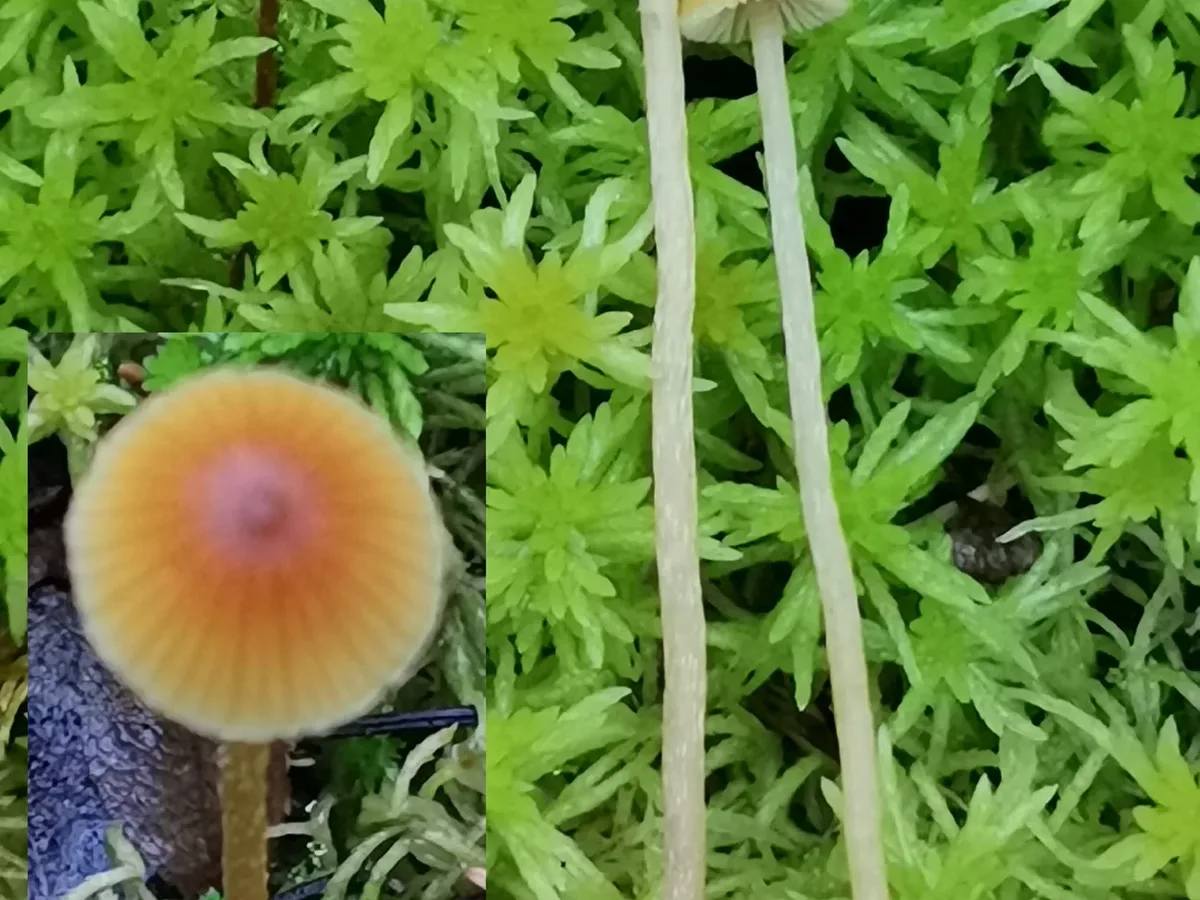 © Seppo Huhmarniemi (CC BY-SA)
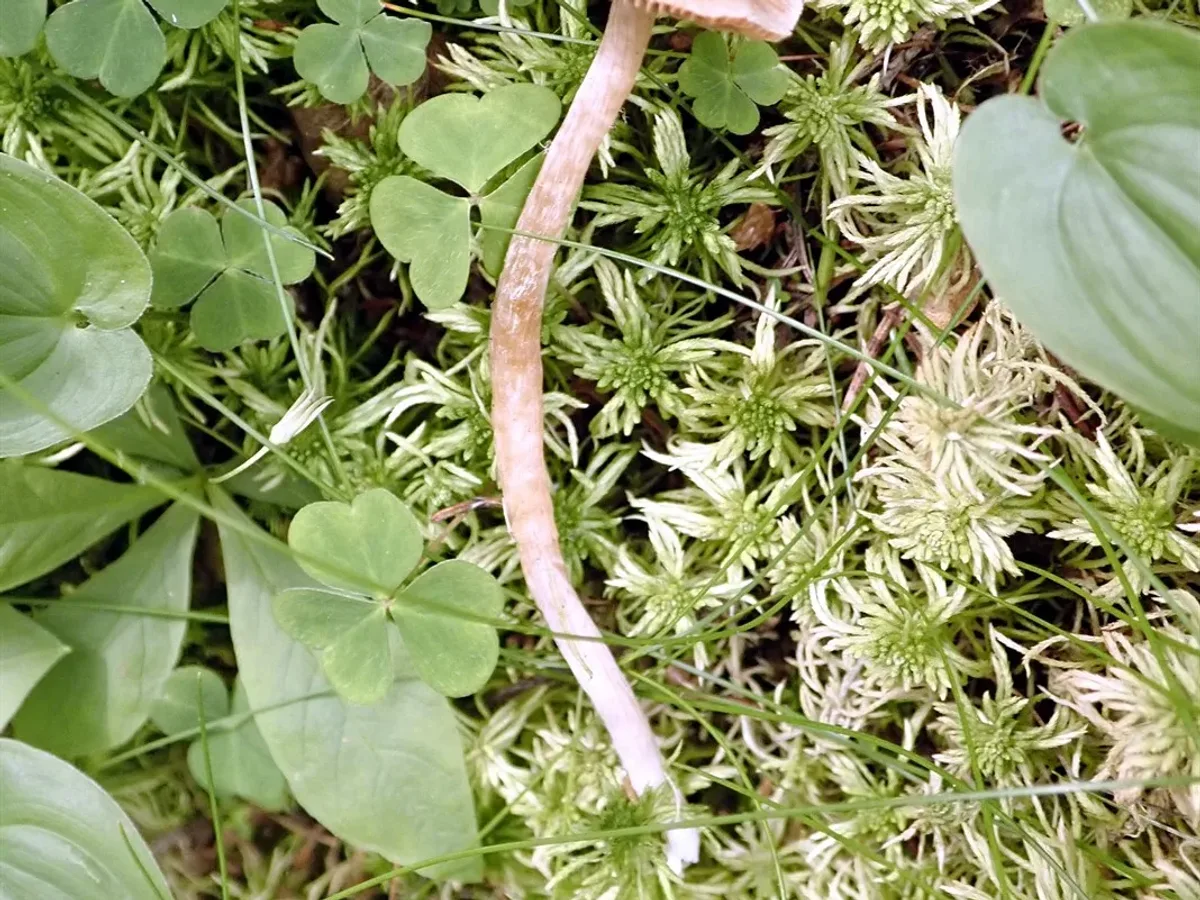 © Tove Jacobsen (CC BY)
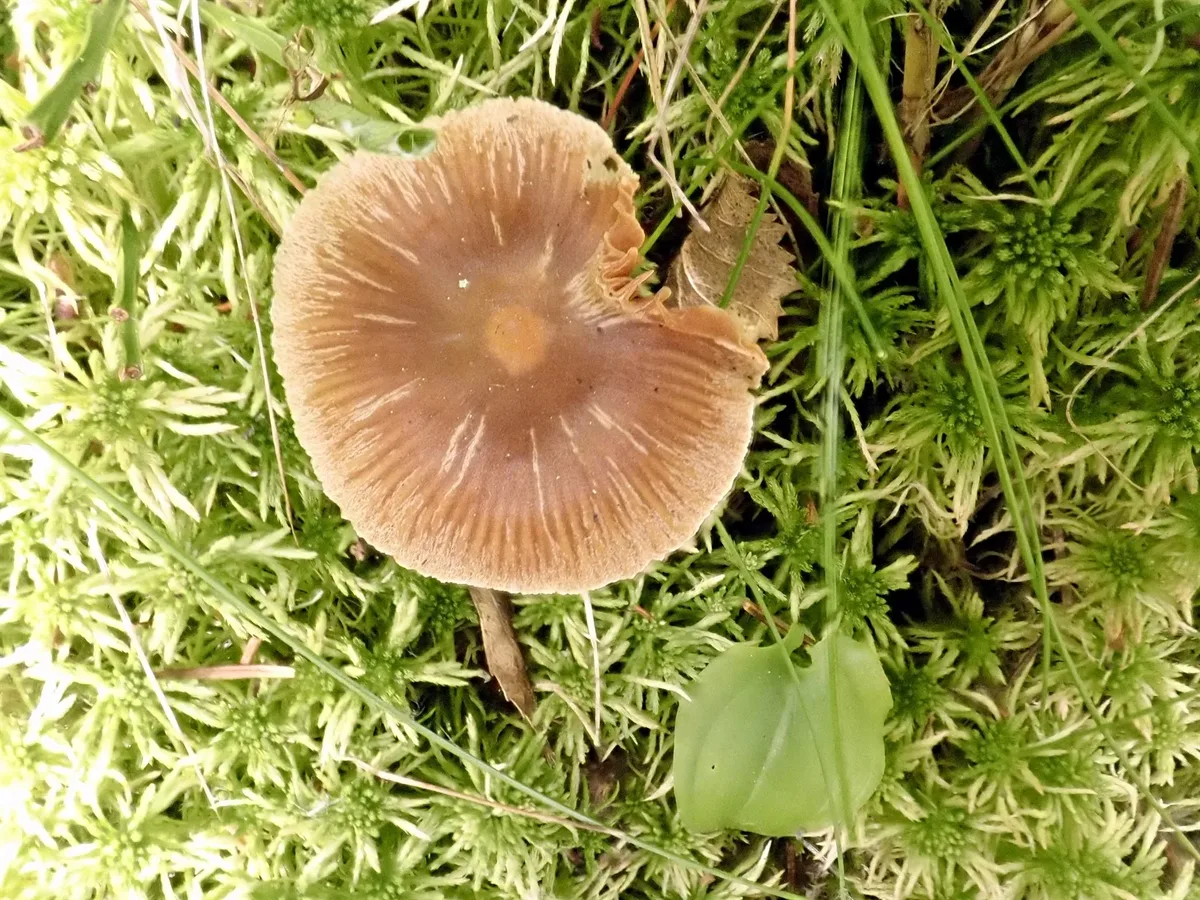 © Tove Jacobsen (CC BY)
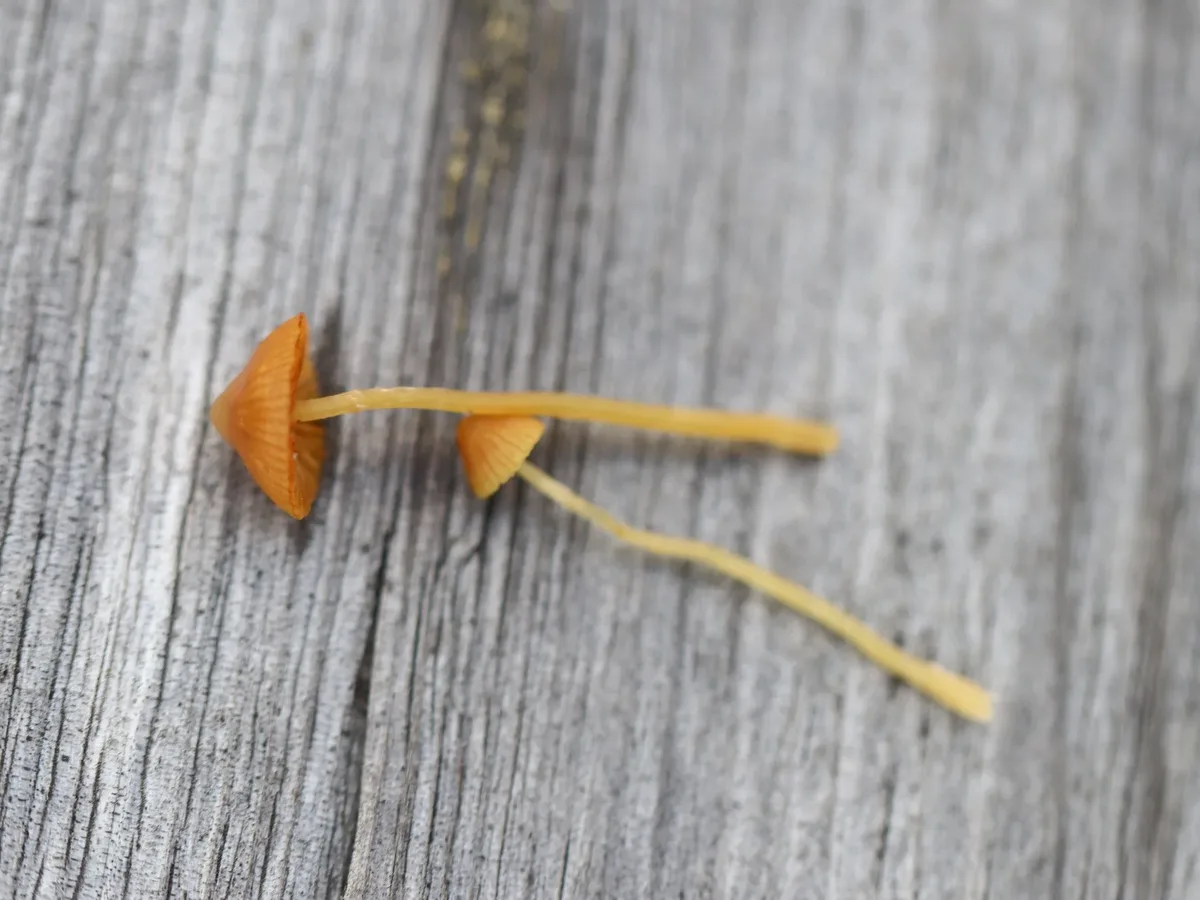 © Nina Filippova (CC BY)
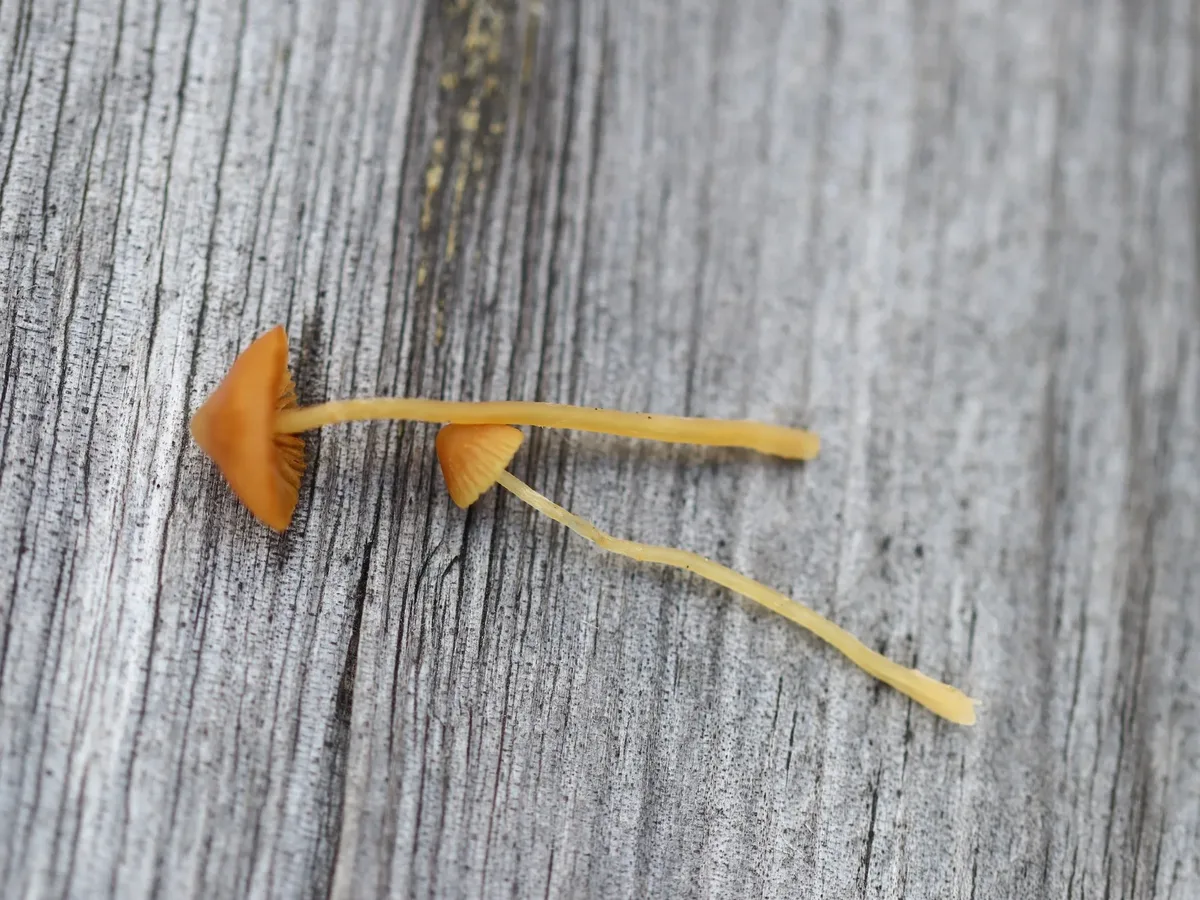 © Nina Filippova (CC BY)
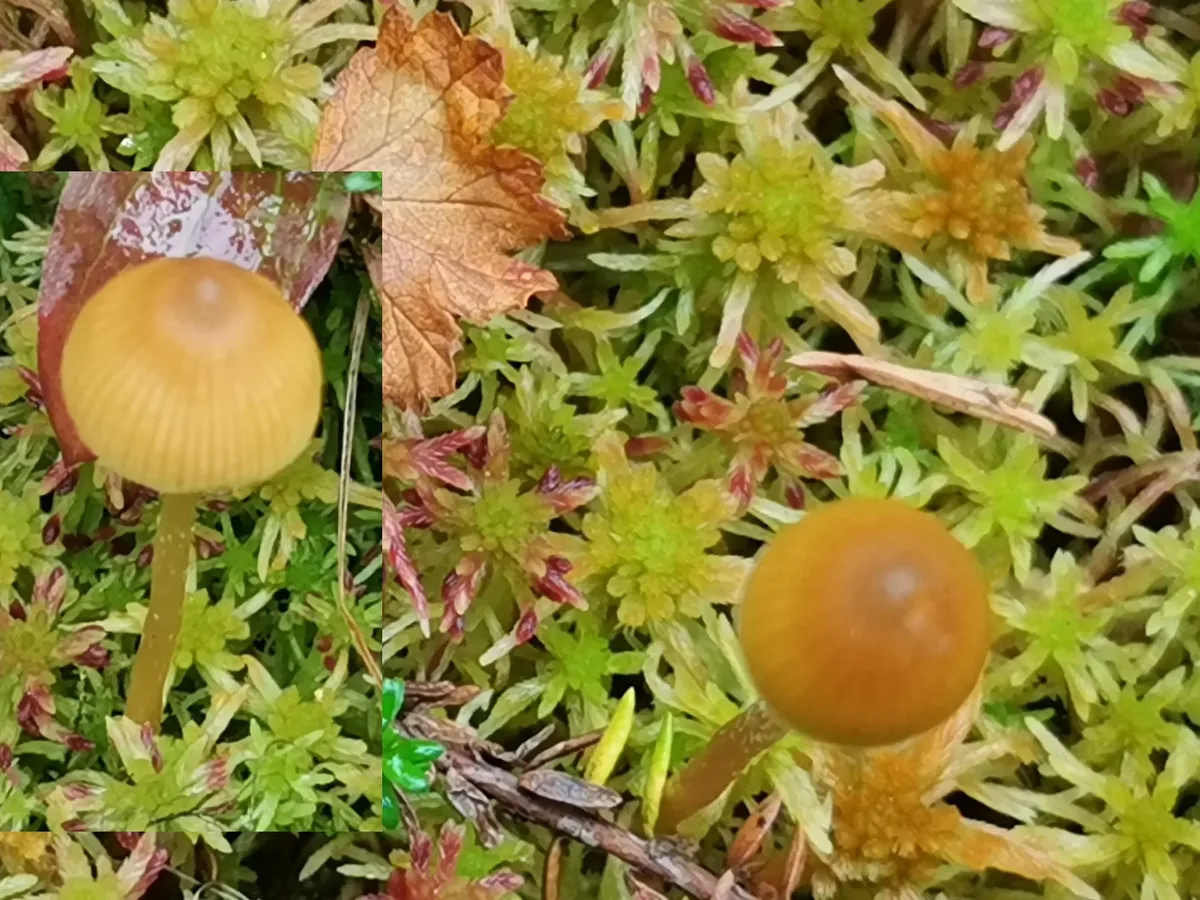 © Seppo Huhmarniemi (CC BY-SA)© Seppo Huhmarniemi (CC BY-SA)© Tove Jacobsen (CC BY)
Toxic - and the most serious cases can be fatal. Never eat it, and wash your hands after handling.
Never eat a mushroom you are not 100% sure of - check the look-alikes below, and always cook wild mushrooms.
How to recognise it
Galerina sphagnorum is one of several deadly amatoxin-containing Galerinas that inhabit northern European bogs - and it looks exactly as unremarkable as that sounds.
Cap
Only 0.5-2.5 cm across, broadly bell-shaped and expanding to convex, smooth and hygrophanous. Richly honey-brown to rusty tawny when wet, drying to pale buff from the centre outward, so that moist and dry caps can look almost like different species.
Gills
Pale brown, ripening to dull rusty cinnamon.
Stem
Slender (1.5-3 mm), 3-8 cm tall, fibrillose, and carrying a thin but usually distinct membranous ring (annulus) that often catches the falling rusty spores. The base is typically embedded in Sphagnum cushions, frequently coated with pale mycelial threads.
Spore print
Rusty brown - a critical diagnostic feature shared across the deadly Galerina group.
There is nothing visually alarming about this mushroom: its danger lies precisely in its drab, ordinary appearance.
Why it's dangerous
Amatoxin poisoning from Galerina species is a documented cause of death in northern Europe.
Because G. sphagnorum grows in the same bogs where berry pickers and nature enthusiasts wander, and because it looks entirely unremarkable, the risk of accidental ingestion is real.
The species is not abundant or visually striking enough to be a common poisoning cause, but any poisoning by it is life-threatening.
If there is any possibility of ingestion of this or any unidentified small brown mushroom from a bog, treat it as a medical emergency:
- go to hospital immediately
- bring a specimen or photograph
- tell the clinician 'possible Galerina ingestion', so that amatoxin protocols are initiated without waiting for symptoms
Toxin
Amatoxins - primarily alpha-amanitin, a bicyclic octapeptide that irreversibly inhibits RNA polymerase II, halting messenger RNA synthesis in eukaryotic cells.
The liver and kidneys are the primary target organs, due to their high metabolic turnover and active uptake of the toxin via organic anion transporters.
The toxins are heat-stable, water-soluble, and are neither broken down by cooking nor neutralised by the digestive tract. They are absorbed intact and then undergo enterohepatic recycling, prolonging exposure and worsening liver damage.
The concentration in Galerina species is generally lower than in Amanita phalloides by dry weight, but fruitbodies are collected in multiples and the small size masks the cumulative dose.
Symptoms
Classic amatoxin syndrome in three phases.
- 1Latent period (6-24 hours after ingestion): no symptoms, deceptively suggesting the meal was harmless, while toxin is absorbed and liver damage begins.
- 2Gastroenteritis (12-36 hours): sudden onset of violent, profuse watery diarrhoea, vomiting, abdominal cramps and severe dehydration, mimicking a gastrointestinal infection and causing the mushroom connection to be missed.
- 3False recovery, then organ failure (2-7 days): symptoms may ease temporarily (false latent phase), then progressive hepatic and renal failure, jaundice, coagulopathy, hypoglycaemia, encephalopathy, and potentially death without intensive intervention.
The delay makes this one of the most insidious poisoning syndromes - always suspect amatoxins in any mushroom-related illness even if symptoms started more than 12 hours after eating.
Staying safe
DEADLY POISONOUS. Galerina sphagnorum contains amatoxins - the same bicyclic octapeptide poisons (alpha-amanitin and related compounds) found in the Death Cap (Amanita phalloides) and Funeral Bell (Galerina marginata).
Because of its small size, a single fruitbody can deliver a significant fraction of the LD₅₀ to a child, and several together can deliver a lethal adult dose.
Amatoxins are thermostable and water-soluble: cooking, boiling, drying, and freezing do not destroy them. There is no home test that reliably differentiates this species from anything edible.
If ingestion is even suspected, go to an emergency room immediately. Do not wait for symptoms - the dangerous delay between ingestion and symptom onset (6-24 hours) means the window for early medical intervention is often wasted.
This species has no antidote; treatment is intensive supportive care and potentially liver transplantation.
Where & when it grows
Habitat
A committed specialist of Sphagnum moss habitats - you will not find it in ordinary woodland or on mineral soil.
It grows in living or dead Sphagnum carpets across the boreal and subarctic zones of northern Europe, in:
- raised bogs
- blanket bogs
- wet heathland
- boggy spruce/pine forest clearings
- fen margins
The substrate is the first clue: look for it emerging from the soft green or reddish Sphagnum cushions, its slender stem threading down through the moss into the partially humified peat beneath.
In Scandinavia it is a regular component of bog mycota from the lowlands to the lower subalpine zone.
The boggy setting is not inherently safe - Nordic bogs host no distinctly edible small brown LBMs that could be confused at the family level, so any small brown Galerina-like fruitbody growing from Sphagnum should be avoided categorically.
When
Late summer to mid-autumn is the main fruiting window - roughly August through October in Scandinavia, with peak productivity in late August and through September.
Sphagnum is hygroscopic and holds water like a sponge, so the bog stays saturated long after the surrounding forest has dried out.
This means fruiting is less strongly pulse-driven by individual rainfall events than in most grassland or woodland species. Instead, cool-to-mild temperatures (soil around 7-16 °C) combined with the bog's built-in moisture reservoir create extended fruiting conditions.
Expect fruitbodies to emerge within 3-7 days of cool wet weather following a warm spell, and look again in sheltered bog hollows into early November in mild years.
How it grows
Saprotrophic-bryophilous: the mycelium threads unseen through dead Sphagnum stems and the partially humified organic matter beneath the living moss layer, quietly decomposing what the bog has already half-preserved.
Fruitbodies emerge scattered to gregarious, sometimes in small loose troops directly from Sphagnum cushions, the long slender stem threading down through the moss to meet the network below.
Because it is not mycorrhizal, it can fruit in open bog vegetation well away from any tree - the Sphagnum itself is all it needs.
Fruitbodies are fragile and short-lived, persisting only a few days before collapsing.
Fruiting conditions
Bogs are intrinsically moist environments; fruiting is triggered more by temperature than by individual rainfall events. Cool-to-mild temperatures (7-16 °C soil) and sustained bog saturation are the key drivers. Fruitbodies appear 3-7 days after cool moist weather establishes following a summer warm spell. The 20 mm rainfall threshold reflects the minimum that sustains adequate bog moisture for fruiting; in practice, established Sphagnum bogs retain moisture and fruit even after dry weeks.
Look-alikes
Several species can be confused with Galerina sphagnorum in boggy habitats.
- Galerina paludosa (Bog bell, Sphagnum skullcap): the closest morphological and ecological twin - it also grows in Sphagnum, with a similar ring, rusty spores and brown hygrophanous cap. It is also toxic and likely contains amatoxins. The two species are sometimes treated as synonyms or varieties of one another, and separating them reliably requires microscopy. Neither is safe.
- Galerina pumila: another small Galerina of wet moss, typically smaller and lacking a well-defined ring in some collections; it too should be avoided.
- Hypholoma elongatum (the Bog Hypholoma): a common companion in Sphagnum bogs - it has a dry, not hygrophanous cap, no ring, a distinctly greener or yellow-tinged cap, and a purple-brown spore print, quite different on close inspection.
- Mycena species: occur in Sphagnum but are tiny, have white spore prints, and typically lack any ring.
The danger is in not looking carefully: in a bog, every small brown ringed mushroom with rusty spores is potentially lethal.
The most critical confusion: G. paludosa is an extremely close relative also restricted to Sphagnum habitats, has the same rusty-brown spore print, persistent membranous ring, and hygrophanous brown cap. It is also toxic - likely amatoxin-bearing - and some authorities treat it as a synonym of G. sphagnorum or as overlapping in the same species complex. Reliable separation requires microscopy (spore dimensions and ornamentation, pleurocystidia morphology). In the field, treat any small brown ringed Galerina in Sphagnum as dangerous regardless of which species it is.
The most notorious amatoxin-bearing Galerina and a confirmed killer. G. marginata typically grows on dead wood, logs and woodchip rather than Sphagnum, and is somewhat more robust, but it can occasionally occur on woody debris embedded in bog edges. Both species share rusty-brown spore print, persistent ring and deadly toxins. If you are near a bog and see a small brown ringed mushroom, the distinction between these two species is irrelevant - both are lethal.
A widespread small Galerina of moist mossy habitats including Sphagnum, typically smaller (cap under 1.5 cm) and sometimes lacking a clear ring. Still rusty-spored and suspected to contain amatoxins. The absence of a ring in some specimens does not make it safe. Any tiny brown Galerina in moss should be avoided.
A very common Sphagnum-bog companion and the most likely 'harmless' species to share the same clumps of Sphagnum. H. elongatum has a dry, fibrillose-scaly cap (not hygrophanous-smooth) that is typically more yellowish or buff without the rusty tawny tones, a purple-brown to blackish spore print (not rusty), no membranous ring (only slight veil remnants), and often a distinctly sulphur-yellow stem. A spore print immediately separates it: purple-brown vs rusty brown. H. elongatum is considered inedible (bitter) but not deadly - it is included here to clarify a realistic bog confusion, not because it is edible.
Various small Mycena species grow in bogs and mossy habitats; M. epipterygia is notable for its slimy, viscid, yellowish cap and viscid, pallid stem. All Mycenas have white spore prints and no persistent membranous ring, making them readily distinguishable from Galerina sphagnorum with a spore print. Mycenas in bogs are not edible but are not amatoxin-bearing.
A reference guide - never an edibility guarantee. When in doubt, leave it out.