Bog Bell
Galerina paludosasyn. Galera paludosa Fr., Pholiota paludosa (Fr.) Gillet, Agaricus paludosus Fr., Flammula paludosa (Fr.) P.Kumm.
 © Anita Engler (CC BY)
 © Anita Engler (CC BY)
 © considerthelilies (CC BY)
 © Anita Engler (CC BY)
 © Anita Engler (CC BY)
 © Fyodor Pudovikov (CC BY)© Anita Engler (CC BY)© Anita Engler (CC BY)
Toxic - and the most serious cases can be fatal. Never eat it, and wash your hands after handling.
Never eat a mushroom you are not 100% sure of - check the look-alikes below, and always cook wild mushrooms.
How to recognise it
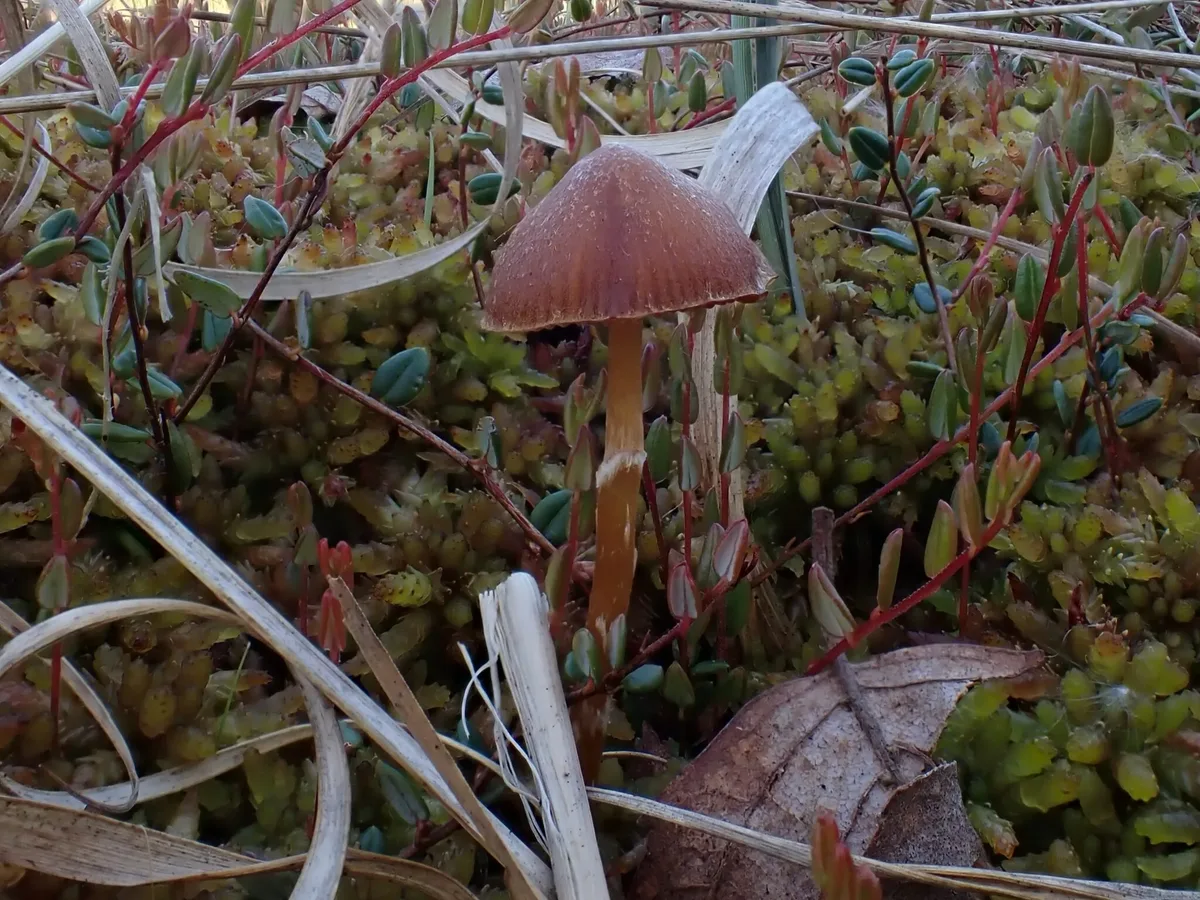
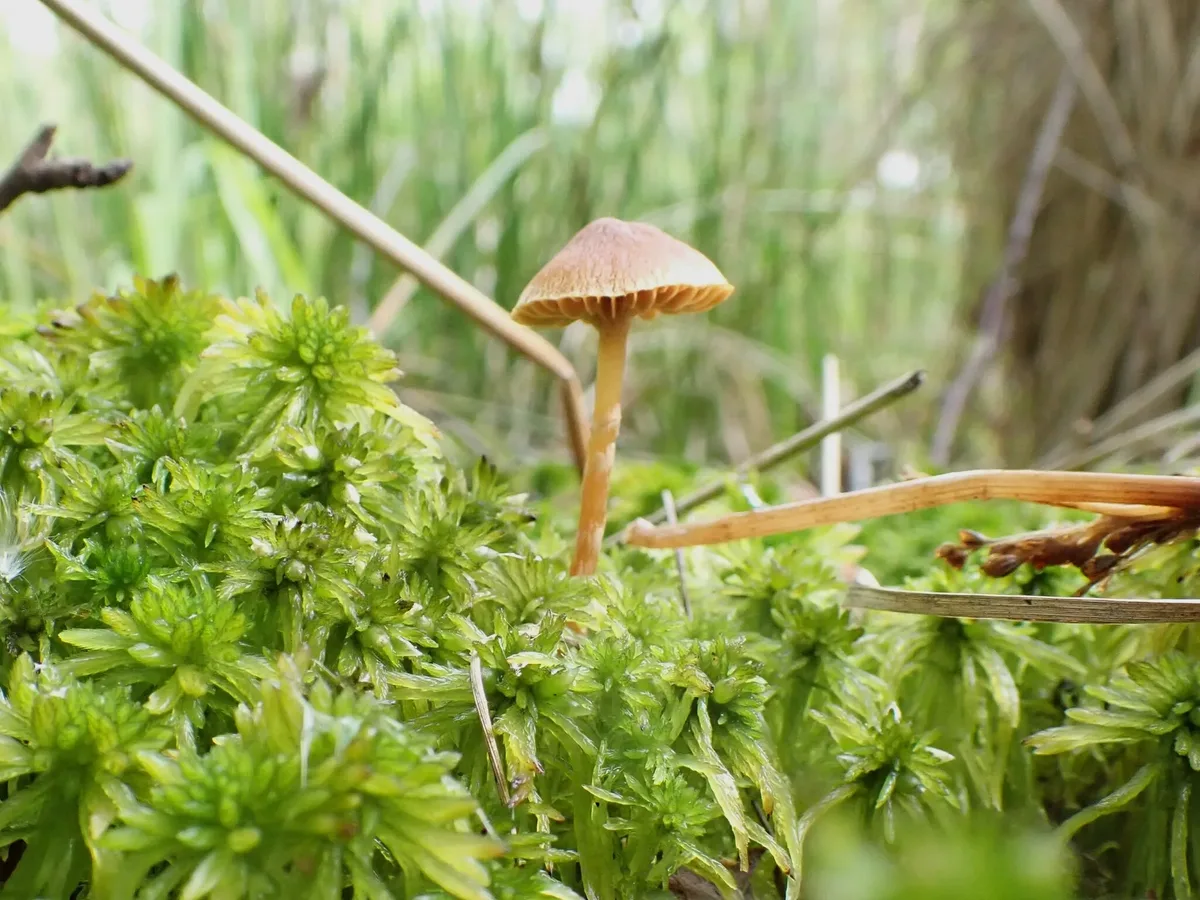
Galerina paludosa is a deceptively small and fragile mushroom whose entire life is played out in Sphagnum bog.
Cap
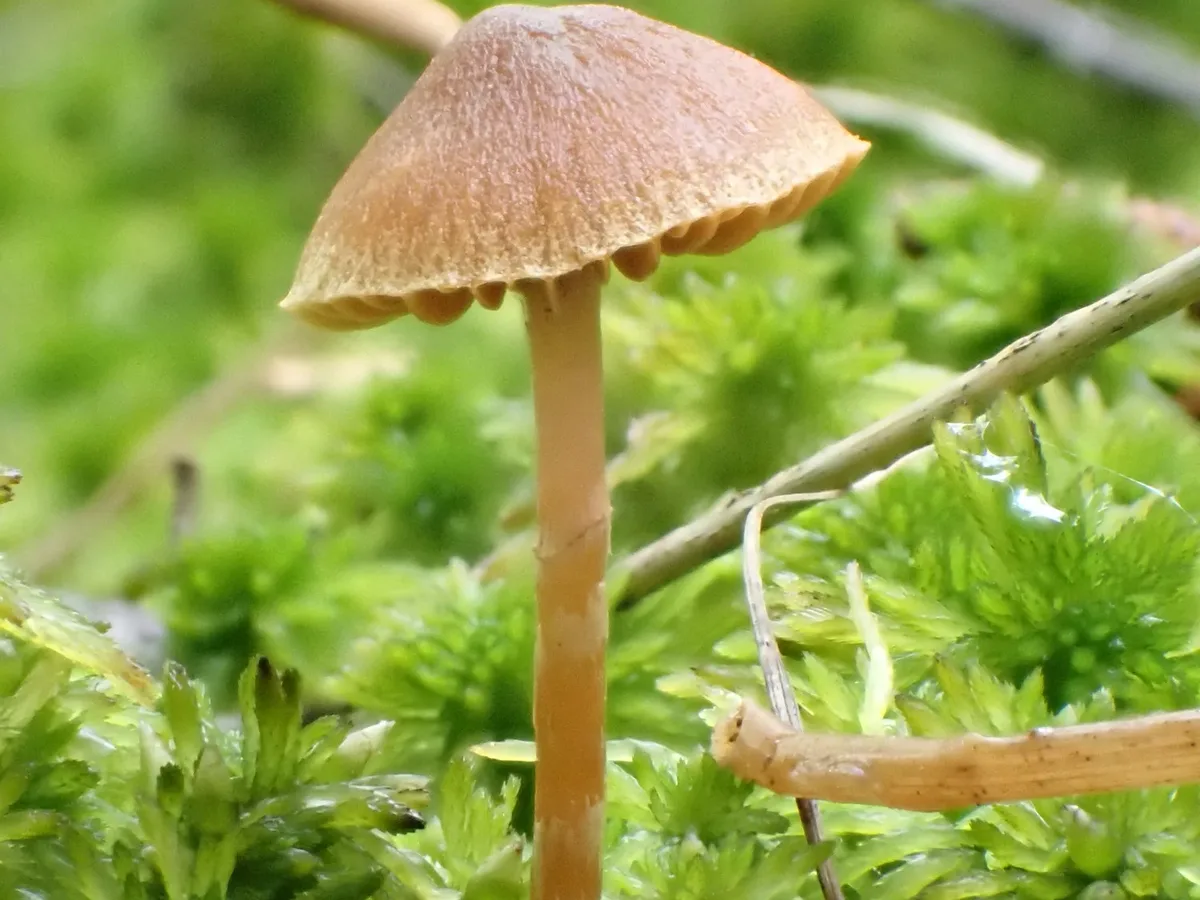
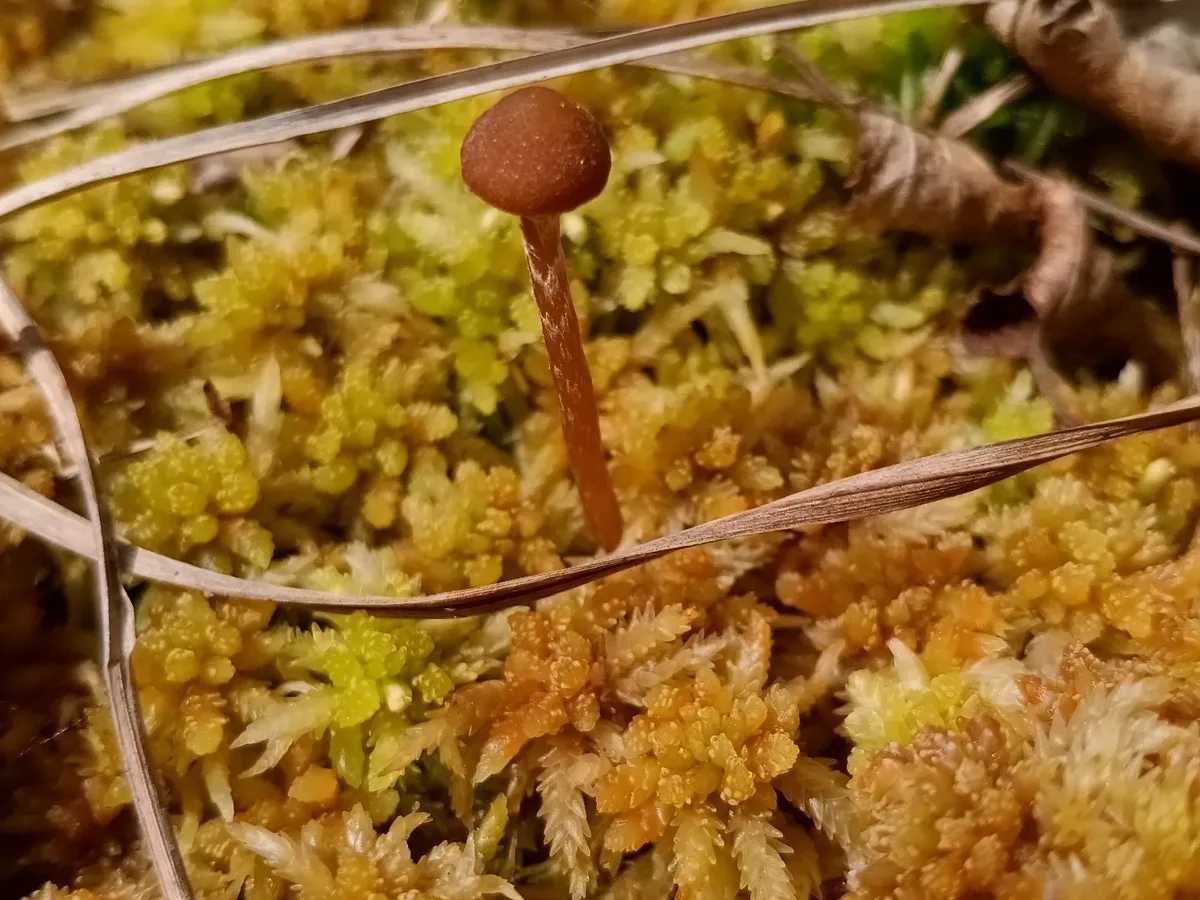
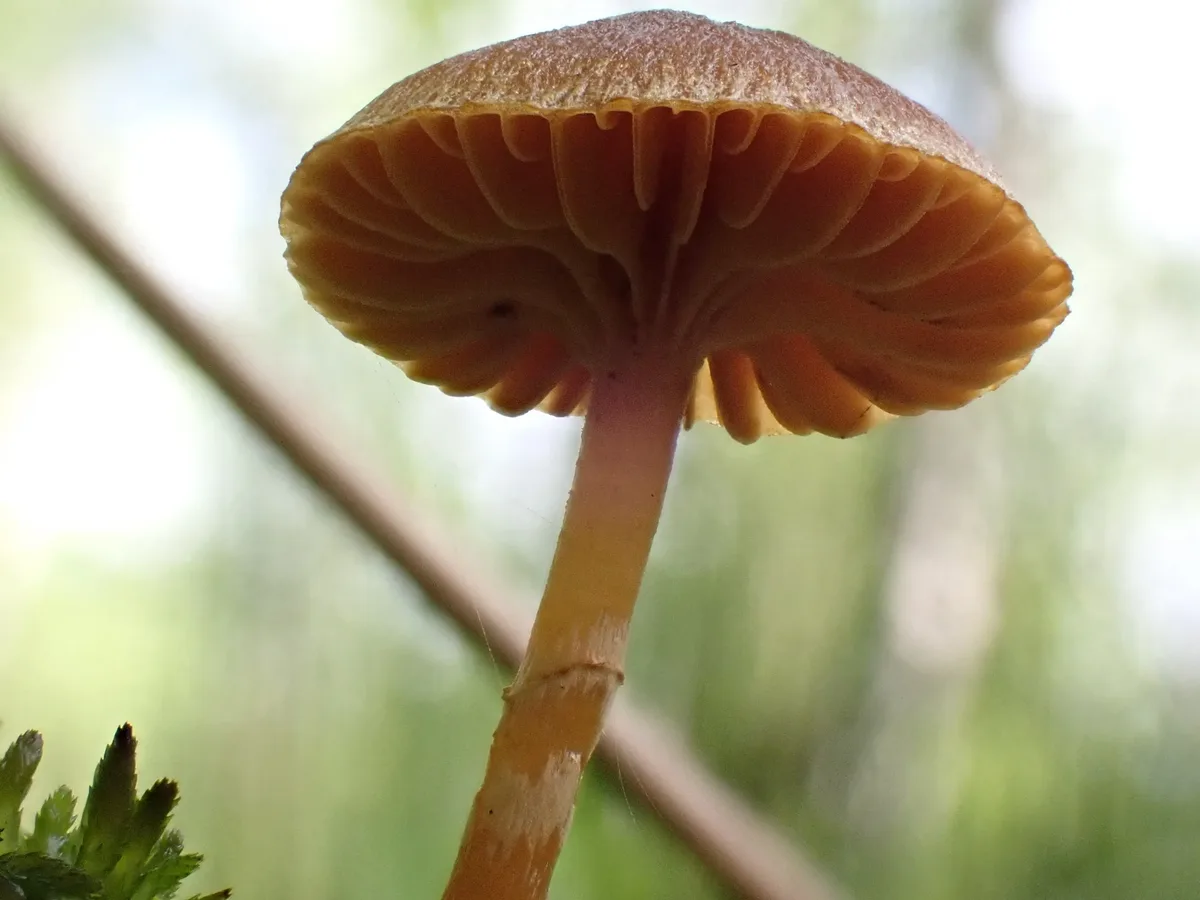
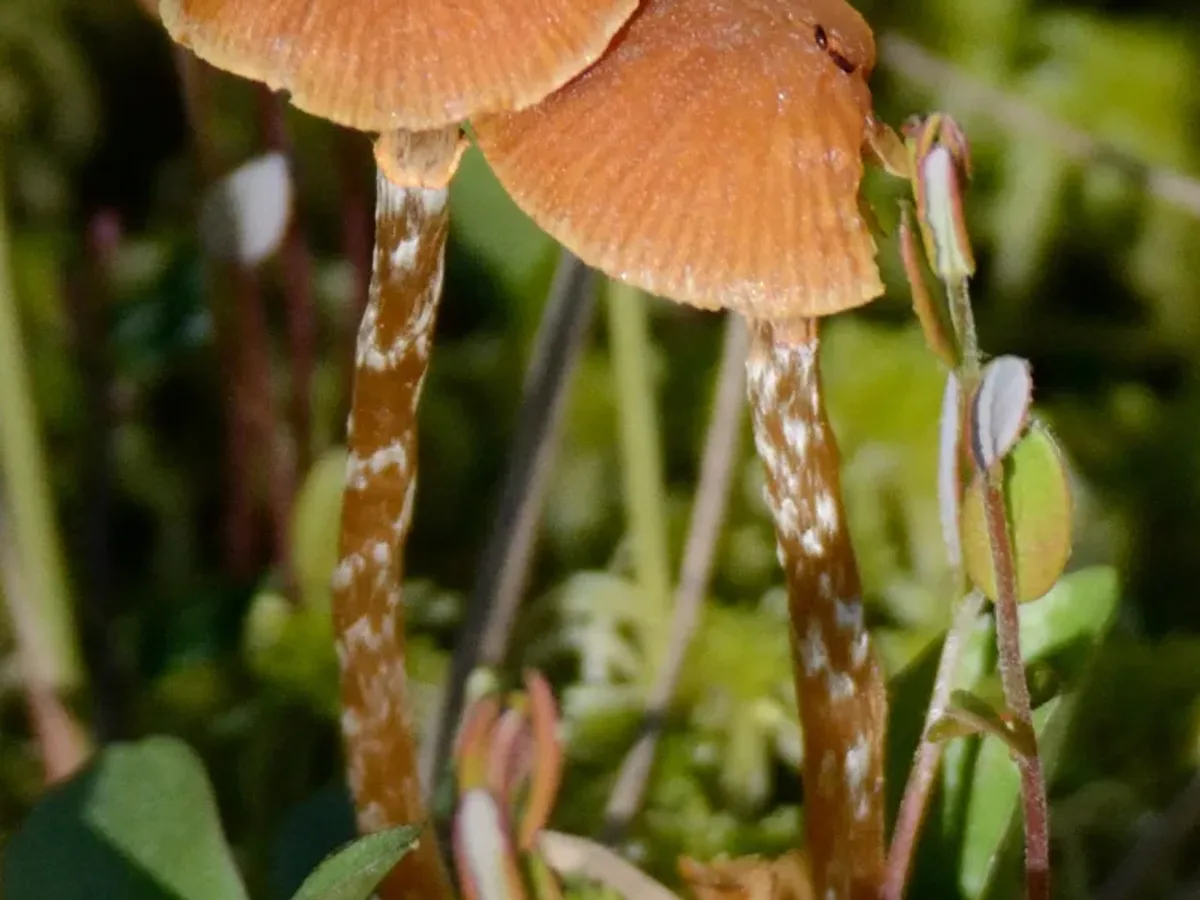
The cap rarely exceeds 3 cm and is distinctly bell-shaped, especially in youth, then slowly broadens without fully flattening.
The surface is hygrophanous and prominently striate toward the margin when wet - a useful feature that disappears as the cap dries to a uniform pale buff.
Colour shifts from a warm honey-brown or tawny ochre when moist to a paler straw-yellow when dry; the two-toned, centre-darker appearance during drying is characteristic.
Gills
The gills begin pale yellow and ripen to a definite rusty-cinnamon brown, consistent with a rusty-brown spore print.
Stem
The stem is disproportionately tall and thin - sometimes 8-12 cm - which lets the fruitbody project above the living Sphagnum.
The stem surface is fibrillose and brownish, darker toward the base; it carries a thin ring (annulus) that may be persistent or may collapse onto the stem, often accumulating a rusty spore deposit.
The combination of strict Sphagnum habitat, bell-shaped hygrophanous cap, rusty spore print, and tall slender ringed stem is diagnostic within its niche. Do not rely on the ring alone - it can disappear - but its presence, even as a faint fibrillose zone, is a key marker.
Why it's dangerous
Amatoxin poisoning is a life-threatening medical emergency. The deceptively long delay before symptom onset means poisoning is often misdiagnosed as gastroenteritis or food poisoning, and the victim is not correctly treated until organ failure has begun.
If anyone has eaten, or may have eaten, any small brown ringed mushroom from a bog habitat - or any unidentified mushroom - they should go immediately to an emergency department, bringing a specimen if available.
Treatment is intensive supportive care:
- aggressive fluid and electrolyte management
- silibinin (silymarin from milk thistle)
- penicillin G and/or N-acetylcysteine infusions (in protocols where used)
- monitoring of liver function
Liver transplantation may be required in severe cases. The prognosis is significantly better when treatment begins before the organ failure phase.
Toxin
The toxins are amatoxins, a family of bicyclic octapeptide cyclopeptides of which alpha-amanitin is the primary agent.
They work by irreversibly inhibiting eukaryotic RNA polymerase II - the enzyme responsible for producing messenger RNA in cells. This halts protein synthesis in rapidly dividing and metabolically active cells, causing hepatocellular necrosis (liver cell death) and acute kidney injury.
Amatoxins are heat-stable and water-soluble, meaning they:
- survive any cooking method
- leach into cooking water (but the water retains full toxicity)
- are not destroyed by drying
They are rapidly absorbed through the gastrointestinal tract after ingestion.
Symptoms
Amatoxin poisoning from Galerina paludosa follows the same three-phase pattern as Death Cap (Amanita phalloides) poisoning.
- 1Latent period (6 to 24 hours after ingestion): no symptoms, or very mild nausea; this delay is clinically dangerous because victims often dismiss any connection to a meal eaten the previous day.
- 2Gastrointestinal phase (roughly 6-24 hours after symptom onset): sudden onset of severe cholera-like watery diarrhoea, vomiting, abdominal cramps and profound dehydration; this phase can last 24-48 hours and may cause fluid and electrolyte imbalances requiring hospitalisation.
- 3Organ failure phase (3-8 days after ingestion): apparent recovery is followed by progressive hepatic and renal failure - jaundice, coagulopathy, hypoglycaemia, hepatic encephalopathy and potential fatal multi-organ failure.
Death, if it occurs, typically follows within 6-16 days without transplantation.
Staying safe
TREAT AS LETHAL. Galerina paludosa has been confirmed to contain amatoxins - principally alpha-amanitin - by chemical analysis (Stijve and Kuyper, 1985; confirmed in subsequent European surveys).
The concentration of amatoxin per gram of dry tissue is in the same order of magnitude as Galerina marginata and, relative to body weight, a small number of fruitbodies is sufficient for a lethal dose in an adult.
There is no antidote, no safe preparation method, and cooking, drying or boiling does not destroy the toxin or its activity. Do not taste even a fragment.
If ingestion is suspected, proceed immediately to the nearest emergency department and do not wait for symptoms - the characteristic latency of amatoxin poisoning (6-24 hours before onset) means symptoms appear long after the toxin has been absorbed.
Where & when it grows
Habitat
This species is an ecological specialist and will only be found in genuine Sphagnum mires:
- raised bogs
- blanket bogs
- valley fens with Sphagnum
- the boggy moss-carpeted floors of boreal spruce or pine forests
The Sphagnum is not merely a substrate but is essential - the fungus grows from within the living or partly decomposed moss carpet, with the stem base buried in the green shoots. Habitats that lack Sphagnum, even if wet, are very unlikely to host this species.
In Nordic countries the classic site is a Sphagnum-filled hollow in spruce-birch forest or an open raised bog. The ecological restriction to Sphagnum is the most reliable single piece of habitat information for this species.
When
The fruiting window runs from midsummer to early autumn - in Scandinavia broadly July through October, with the peak in August and September (ISO weeks 31-40).
Unlike woodland species that flush dramatically after a single downpour, bogs hold moisture steadily in the Sphagnum mat, so fruiting here is shaped by sustained warm, wet spells of several weeks rather than individual rain events.
The fruitbodies themselves are brief visitors: delicate and short-lived, they commonly collapse within a few days of emerging.
Cold nights after mid-September slow activity progressively, and the first hard frost brings the season to a close.
How it grows
Galerina paludosa is saprotrophic, feeding on dead Sphagnum cell contents and the organic matter slowly accumulating in the bog matrix - a modest living, wrested from one of the most nutrient-poor environments a fungus can occupy. It has no mycorrhizal relationship; it simply decomposes what the bog provides.
Fruitbodies emerge scattered or in small loose groups of three to ten from among the Sphagnum shoots.
The constantly waterlogged, highly acidic (pH 3-4), oligotrophic conditions keep populations sparser than those of woodland Galerina species - but the species is well at home here, quietly recycling matter that few other fungi can reach.
Fruiting conditions
Bog habitat maintains persistent moisture in the Sphagnum mat; sustained warm-wet periods drive fruiting more than single rainfall events. A longer flush lag than woodland species reflects the buffered, slow-draining bog environment. Optimal peat surface temperatures are 10-16 C, broadly July-September in the Nordic zone.
Look-alikes
Within the Sphagnum bog, the most realistic confusion is with Hypholoma elongatum (Sphagnum Tuft), a common, non-deadly species that also grows exclusively in Sphagnum. It differs in several ways:
- usually found in denser tufts or troops
- has a more yellowish cap that does not striate prominently
- lacks a true membranous ring (though may have veil remnants on the cap margin)
- has greyish-purple to dark grey-olive gills (not cinnamon-brown)
- has a dark purplish-brown to chocolate spore print - a completely different colour from the rusty-brown spore print of G. paludosa
Spore print colour alone is thus a critical separator.
Within the genus Galerina:
- G. sphagnorum is a very similar Sphagnum-associated species (sometimes treated as conspecific or closely related to G. paludosa) and is also considered toxic
- G. vittiformis grows in Sphagnum and grassland and may lack a ring
- Galerina marginata (Funeral Bell), the most dangerous European Galerina, is an equally deadly amatoxin-bearing species typically associated with dead wood rather than open Sphagnum, though it may appear in forest-edge Sphagnum patches; it is overall larger, darker-capped and more wood-associated
No edible species reliably occurs in the same strict Sphagnum habitat, which makes any small brown ringed mushroom from a genuine Sphagnum bog a red flag.
Never rely on habitat alone - collect a spore print and, if in doubt, involve a professional mycologist.
Galerina sphagnorum is a closely related Sphagnum-associated species sometimes treated as a variety or close relative of G. paludosa, and is also considered toxic (amatoxin content suspected or confirmed in the broader paludosa aggregate). The two are best separated microscopically by spore ornamentation details. From a safety standpoint treat them identically - both are deadly.
Both are small, brown, ringed, amatoxin-bearing Galerina species. Galerina marginata is typically associated with dead wood and woodchip rather than open Sphagnum, is usually somewhat larger and stouter with a darker honey-brown to orange-brown cap, and has a more persistent and well-defined ring. In forest-edge Sphagnum patches both species could in principle co-occur. Distinguishing them matters only for the record - both contain lethal amatoxins and neither is ever edible.
Kuehneromyces mutabilis is also small, brown, hygrophanous and ringed, but it grows in dense clusters on dead wood - stumps, logs, fallen branches - not in open Sphagnum. Its stem below the ring bears distinctive dark brown recurved scales and the ring is more robust. It would be encountered near Sphagnum only if bog wood is present; even then the wood-base habit and scaly stem are decisive. The edible woodtuft is a common source of dangerous confusion for novices in general, and the ringed small brown mushroom rule applies everywhere: inspect carefully and take a spore print.
The most common confusion in genuine Sphagnum bog habitat. Hypholoma elongatum typically grows in denser clusters or troops, has a yellower cap that does not striate markedly, lacks a true membranous ring (may have veil remnants at the cap margin), and most critically has greyish-lilac to dark purplish-grey gills and a dark purplish-brown spore print - a completely different colour from the rusty-cinnamon spore print of G. paludosa. Collecting a spore print is the definitive field test. Hypholoma elongatum is not considered edible either, but it is not known to contain amatoxins.
A reference guide - never an edibility guarantee. When in doubt, leave it out.