Galerina badipes
Galerina badipessyn. Agaricus badipes (Fr.) Fr., Tubaria badipes (Fr.) W.G.Sm.
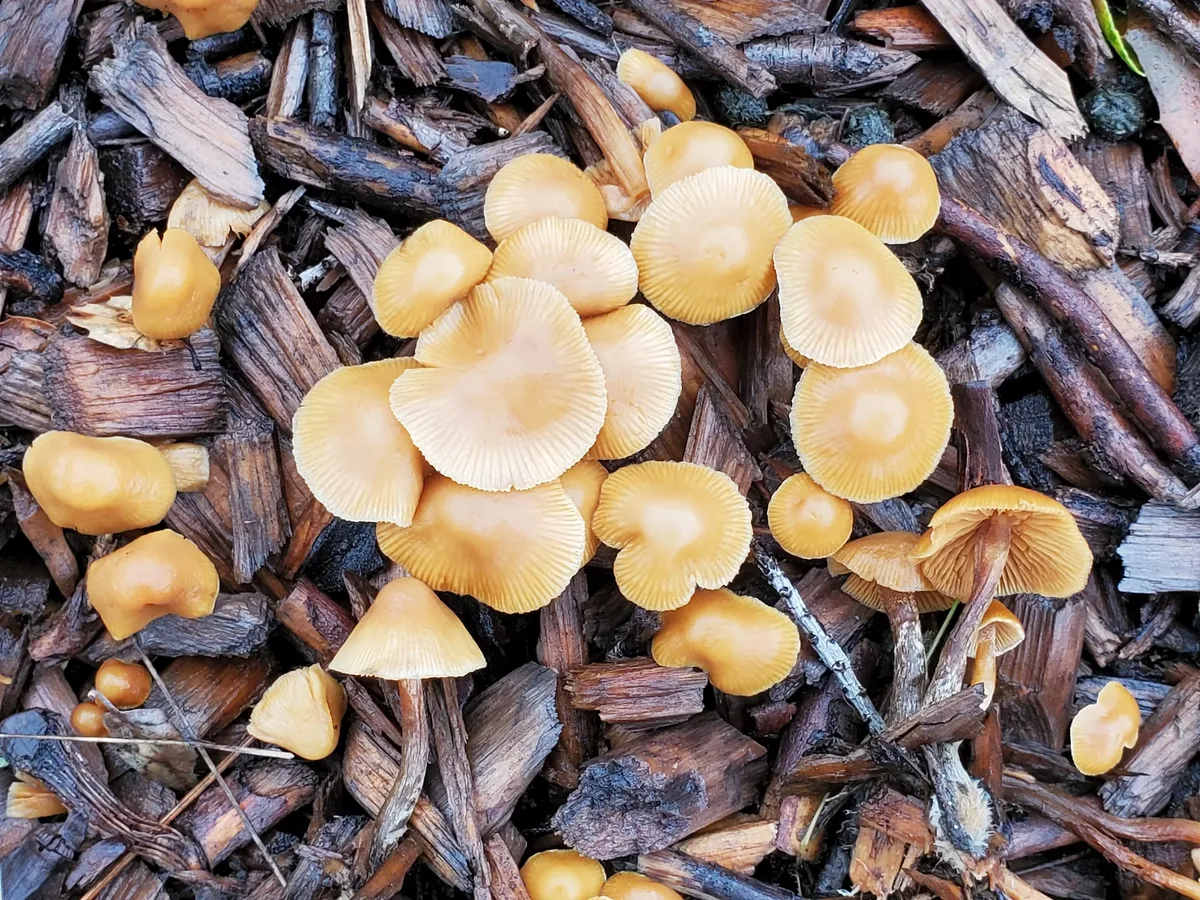 © Alex (CC BY)
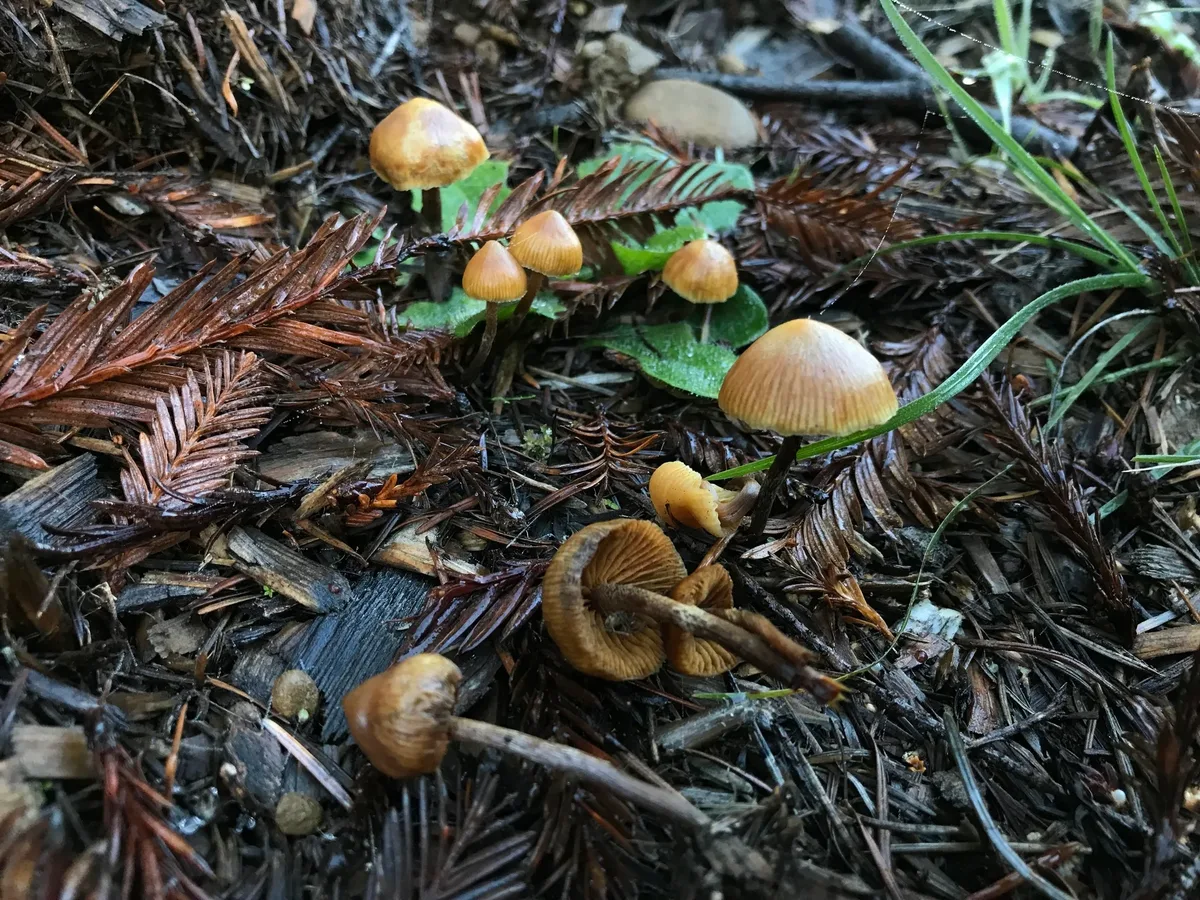 © Matthew Rozanoff (CC BY)
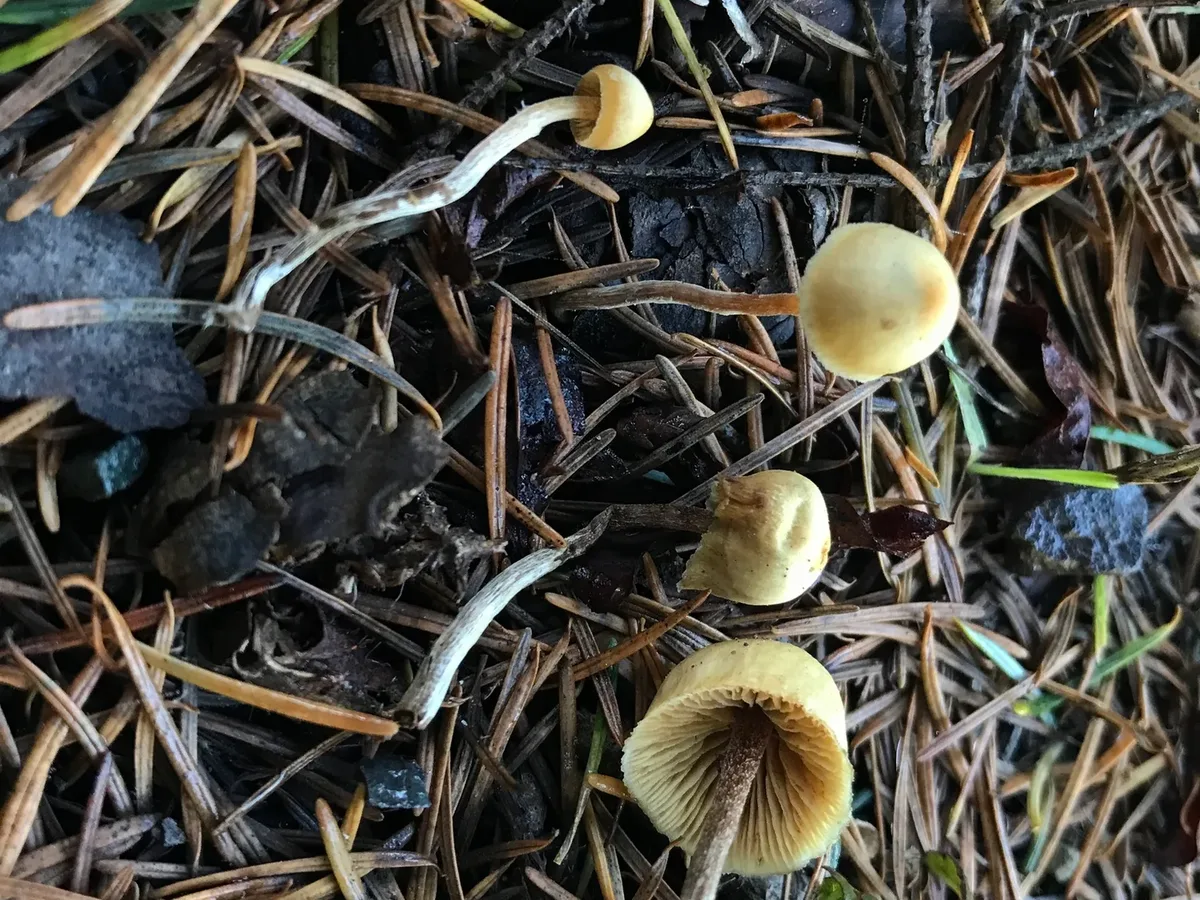 © Matthew Rozanoff (CC BY)
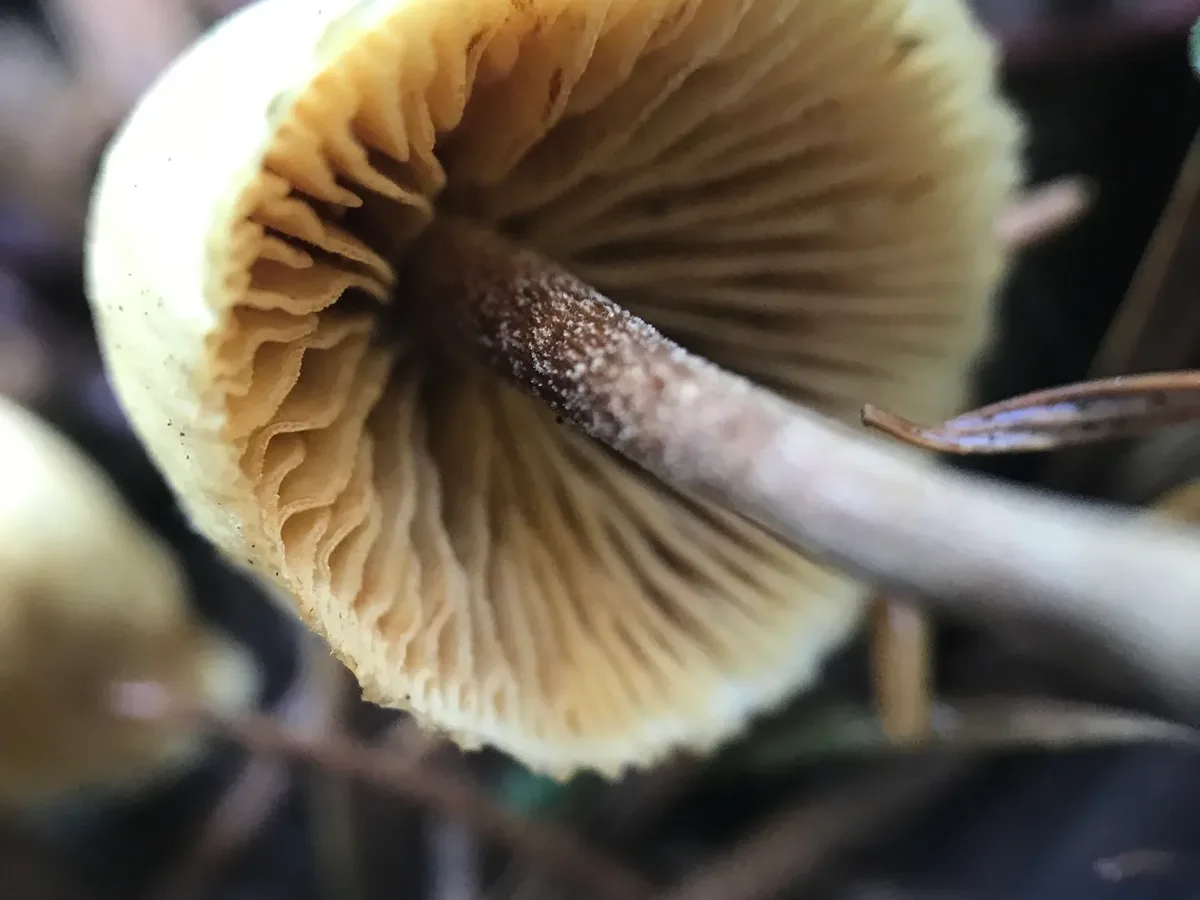 © Matthew Rozanoff (CC BY)
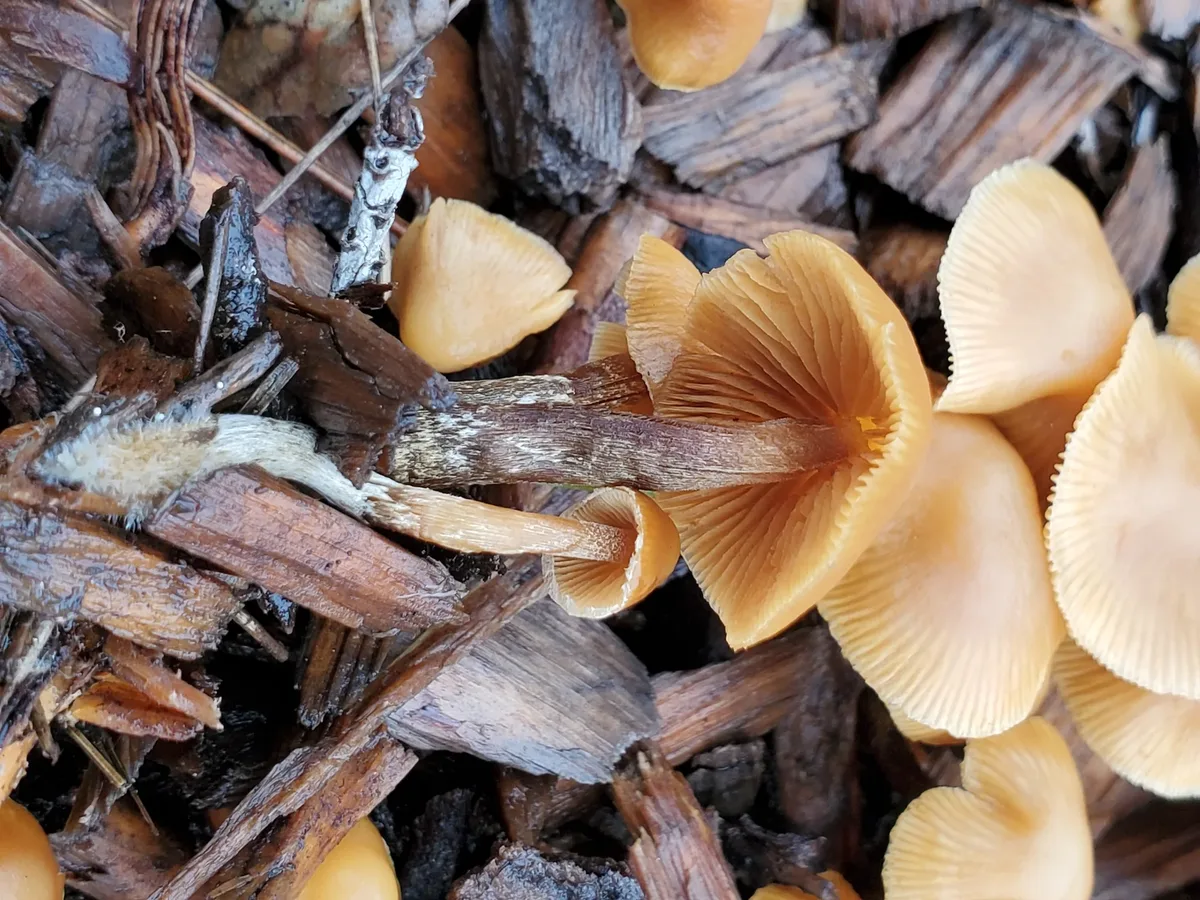 © Alex (CC BY)
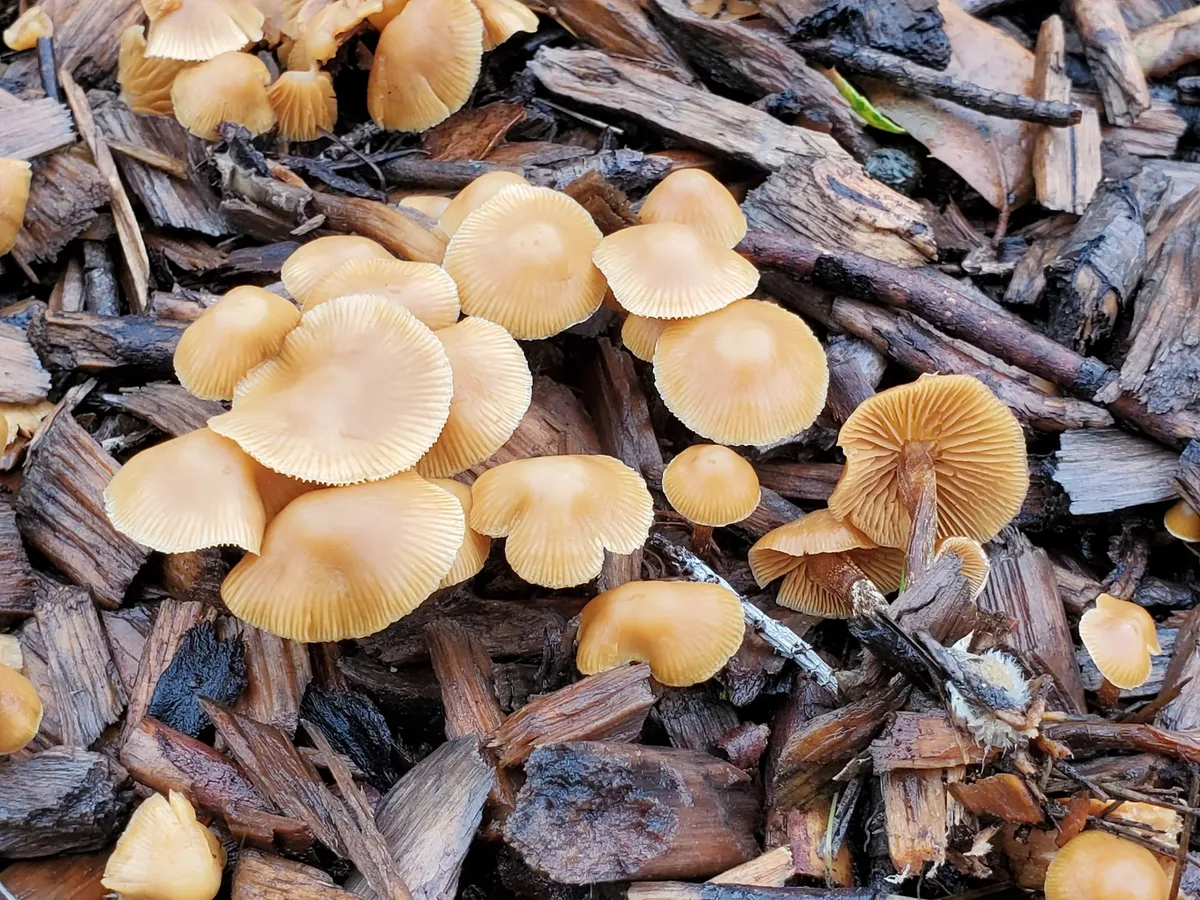 © Alex (CC BY)
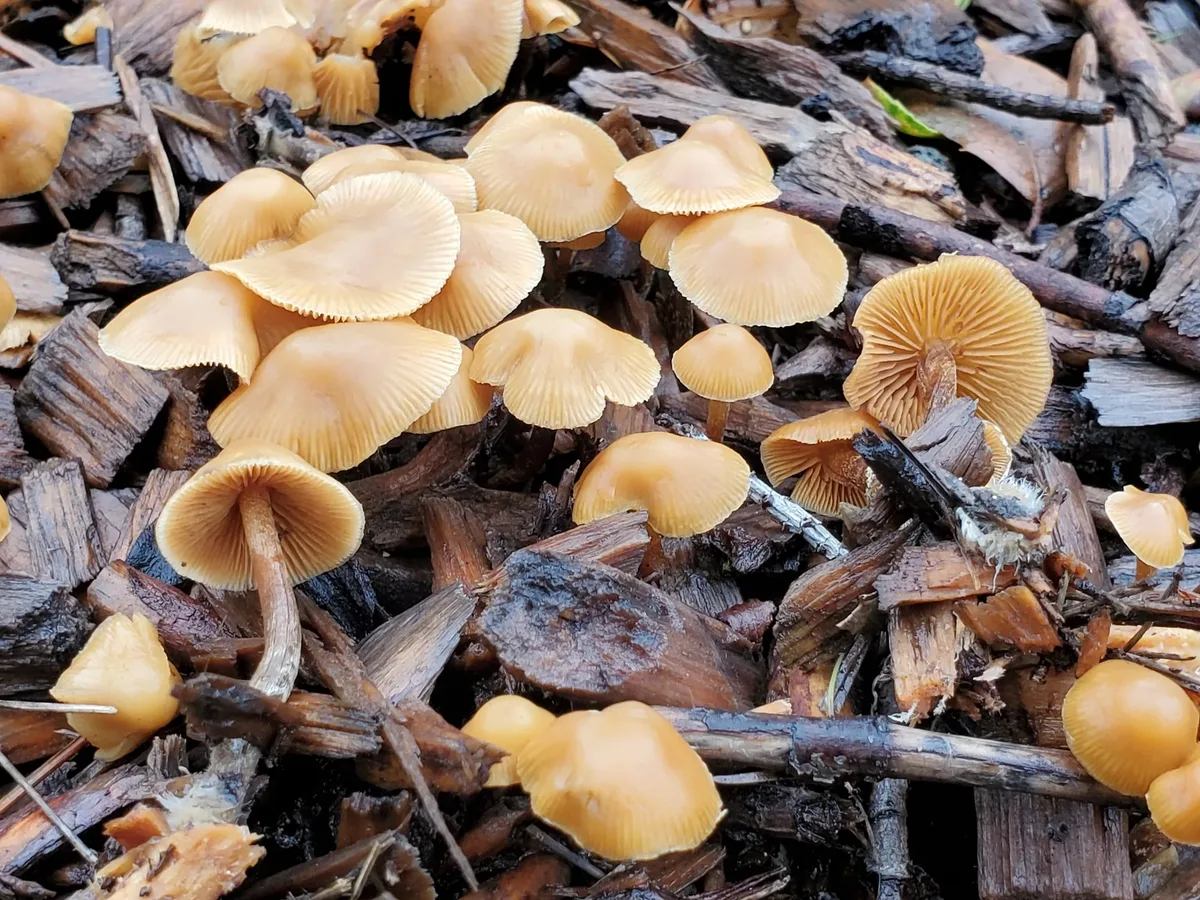 © Alex (CC BY)© Alex (CC BY)© Matthew Rozanoff (CC BY)
Toxic - and the most serious cases can be fatal. Never eat it, and wash your hands after handling.
Never eat a mushroom you are not 100% sure of - check the look-alikes below, and always cook wild mushrooms.
How to recognise it
Galerina badipes is a classic 'little brown mushroom' - small (cap 1-3 cm), drab, and easy to walk past without a second glance.
Cap
The cap starts convex or bell-shaped and flattens with age, sometimes keeping a low central hump (umbo).
One of its most useful identification clues is that it is hygrophanous: the cap colour shifts dramatically depending on moisture - a rich ochre to rusty tawny-brown when wet, fading to dull honey-buff as it dries.
A mushroom that looked one colour in the morning rain can look like an entirely different species by afternoon, which is part of why this group is so often misidentified or overlooked. The cap centre is typically darker than the margin.
Gills
Gills start pale and gradually deepen to a dull rusty cinnamon-brown as the spores ripen.
Take a spore print on white paper after at least an hour: rusty-brown is the result, and that distinguishes it from many outwardly similar but non-toxic LBMs.
Stem
The stem gave the species its name: 'badipes' is Latin for 'bay-footed', and true to that, the lower stem is a distinctive reddish-brown to chestnut-bay, paler above - a small but consistent detail worth noting.
The stem is slender, fragile, and fibrillose.
Critically, the ring that typically marks Galerina marginata is absent in G. badipes, or only fleetingly present as a faint fibrillose fringe - do NOT read the absence of a ring as a safety signal.
Why it's dangerous
Amatoxin poisoning is a life-threatening emergency requiring immediate hospital admission.
- Do not wait for symptoms.
- Do not attempt home remedies.
- Do not induce vomiting without medical instruction.
- Go to the emergency room at once.
- Bring a sample or photograph of the mushroom.
- Note the time of ingestion.
Treatment is intensive and supportive:
- rehydration
- activated charcoal if presentation is very early (within ~1 hour of ingestion)
- silibinin or N-acetylcysteine infusion (where available)
- intensive monitoring of liver and kidney function
- in cases of fulminant liver failure, urgent liver transplantation evaluation
Prognosis depends almost entirely on how quickly treatment begins. Presentation within hours of ingestion is survivable with intensive care; presentation after Phase 2 ('recovery') has passed is associated with much worse outcomes.
In Nordic countries, contact the national Poisons Information Centre immediately:
- Sweden - 08-33 12 31
- Finland - 09-471 977
- Norway - 22 59 13 00
- Denmark - 82 12 12 12
Toxin
Alpha-amanitin and beta-amanitin - bicyclic octapeptide cyclopeptides (amatoxins). They are potent inhibitors of RNA polymerase II, the enzyme responsible for transcribing DNA into messenger RNA in eukaryotic cells.
By halting mRNA synthesis they prevent protein synthesis in rapidly dividing, metabolically active cells. The liver (primary site of detoxification) and kidneys (excretion) bear the greatest toxin burden and suffer the most severe damage.
Hepatocellular necrosis and, in serious cases, acute kidney injury follow within days of ingestion.
Amatoxins are water-soluble, heat-stable, and absorbed intact through the intestinal wall. Enterohepatic recirculation prolongs their residence in the body, which is why symptoms are delayed and recovery, even with treatment, is prolonged.
Symptoms
Amatoxin poisoning from Galerina badipes follows the same three-phase course as Death Cap poisoning.
- 1Phase 1 (latent, 6-24 hours): the delay after ingestion is treacherously long - no symptoms for hours, which causes victims to underestimate the seriousness. When symptoms begin: sudden onset of severe cholera-like gastroenteritis, violent watery (sometimes bloody) diarrhoea, vomiting, abdominal cramps and rapidly progressing dehydration.
- 2Phase 2 (apparent recovery, ~24-72 hours): gastroenteritis eases, the victim feels better - but liver enzyme levels are already rising as hepatocellular damage accumulates. This false recovery is dangerous because it delays or interrupts medical care.
- 3Phase 3 (organ failure, day 3-6+): jaundice, coagulopathy (bleeding tendency as clotting factors fail), hypoglycaemia, hepatic encephalopathy, and fulminant liver failure progressing to death or liver transplantation in severe cases. Renal failure can co-occur.
The six-hour-or-more delay before any symptom appears is the toxicological hallmark and the reason the link to mushroom ingestion is so often missed.
Staying safe
Treat as lethal. Galerina badipes contains amatoxins - the same cyclopeptide toxins responsible for the majority of fatal mushroom poisonings worldwide, best known from the Death Cap (Amanita phalloides) and Funeral Bell (Galerina marginata).
Analysis of Galerina species has confirmed the presence of alpha-amanitin and beta-amanitin in G. badipes.
The toxin is present in every part of the fruitbody, is not destroyed by cooking, boiling, drying, freezing or any other food preparation method, and has no antidote beyond supportive hospital care.
The lethal dose is low - even a single small fruitbody could deliver a clinically dangerous dose in a child or small adult.
The absence of a ring does NOT make this safe: the ring is not the locus of the toxin.
If this or any unidentified small brown forest mushroom has been eaten, do not wait for symptoms - go to hospital immediately with a specimen of the mushroom if available.
Where & when it grows
Habitat
Galerina badipes lives as a wood-rotter in the fine debris of conifer forest floors - not on obvious fallen trunks, but in the quieter layer of small fallen pine and spruce twigs, fragments of decaying bark, moss-cushioned litter, and partly buried woody scraps.
Fruitbodies push up directly from this substrate, and because the wood is so thoroughly embedded in needles and moss, they can look as though they are simply growing from the ground.
The humid, shaded understorey of mature Scots pine and Norway spruce forest is its classic setting, especially where the litter layer is deep and perpetually damp.
This is exactly the kind of forest floor where foragers are searching for chanterelles, boletes, and other good edibles - which is what makes the risk of inadvertent contact real.
When
The main fruiting season is late summer into autumn - August through November in Scandinavia and the wider Nordic region, peaking September-October. Fruiting is triggered by the cooling temperatures and increased rainfall of early autumn.
Because the fruitbodies are small and inconspicuous, they are easily overlooked even when present in numbers.
Fruitbodies persist only a few days before decaying, so any given site may produce successive brief flushes through the season after each rain event.
How it grows
Galerina badipes is a saprotrophic wood-rotter, meaning it feeds on dead wood rather than forming any partnership with living trees.
Its white mycelium threads through small twigs, bark fragments, and buried woody debris in the conifer litter layer, quietly breaking down these materials through enzymatic decomposition and returning their nutrients to the forest soil - a modest but real ecological role in forest recycling.
Fruitbodies appear in scattered groups or small clusters, popping up from the debris after autumn rains.
Because it depends on its wood substrate rather than a specific host tree, it is not mycorrhizal, but it remains tightly bound to forested habitats where that substrate is found.
Fruiting conditions
Cool-season species that requires a drop in temperature into the autumn range (soil below ~14 °C) combined with adequate moisture from autumn rains (typically 20+ mm over the preceding 14 days). Flush lag is longer than warm-season species because mycelial activity slows at lower temperatures. Flushes follow the classic Nordic autumn pattern: first autumn rains after the late-summer dry spell, with peak fruiting as canopy drops and humidity rises in September-October.
Look-alikes
The most dangerous confusion is with Galerina marginata (Funeral Bell / Gifthätting), which is equally deadly, also contains amatoxins, and grows in the same forest habitats on woody debris.
Galerina marginata typically bears a persistent membranous ring (annulus) on the stem, whereas G. badipes usually lacks or has only a faint, evanescent ring - but this difference is subtle and unreliable, and both species are lethal regardless of ring presence.
- Kuehneromyces mutabilis (Sheathed Woodtuft / Tuvskivling): an edible species growing on stumps, confused with Galerina marginata and by extension with G. badipes. It can be distinguished by its coarser scaly stem below the ring (when ring is present) and pleasant non-mealy smell, but these differences demand careful examination.
- Hypholoma capnoides (Conifer Tuft / Grå flamskivling): an edible species growing in clusters on conifer stumps, with gills that become grey-lilac with maturity, not rusty-brown, and a dark grey-lilac to blackish-brown spore print - do a spore print to separate them.
- Agrocybe praecox (Spring Fieldcap): usually stouter, grows in grass or mulch rather than conifer debris, and has a duller brown (not rusty) spore print.
No small LBM growing on woody conifer debris should ever be eaten unless identified with certainty by an expert - amatoxin poisoning is silent until the damage is irreversible.
The most important and most dangerous confusion: G. marginata is closely related, grows in the same forest habitat on woody debris, and contains the same lethal amatoxins. The primary morphological distinction is that G. marginata typically bears a persistent membranous ring (annulus) on the stem while G. badipes usually lacks one or has only an evanescent fibrillose zone. However, the ring in G. marginata can wear away in wet weather, making a ring-less specimen indistinguishable from G. badipes in the field. Both are lethal and must be avoided absolutely. Do not attempt to separate them as a basis for any food decision.
Mycena galericulata is a very common small brown mushroom on decaying wood but has white to very pale pinkish spores (spore print white to pale pink), gills that are grey to whitish (not rusty), and a tough, wiry, non-fragile stem. The rusty-brown spore print of Galerina badipes immediately distinguishes it.
Hypholoma capnoides grows in dense clusters on conifer stumps and has a yellowish to ochre cap; crucially, its gills turn greyish-lilac with maturity (not rusty-brown) and its spore print is purplish-grey to black-brown - a stark contrast to the rusty-brown spore print of Galerina badipes. The clustered growth habit on large stumps also helps separate it. Spore print is the safest distinguishing test.
Kuehneromyces mutabilis is an edible species that grows in dense clusters on stumps and logs, mostly deciduous wood. It has a two-toned cap (darker toward the margin when moist), a persistent ring on the stem, and distinctive coarse, dark, downward-pointing scales on the lower stem below the ring. Smell is pleasant and not mealy. The spore print is rusty-brown, similar to Galerina. The confusion is the primary reason beginners are warned against picking K. mutabilis unless very experienced: Galerina marginata (and by extension G. badipes) can grow alongside or among it. When in doubt, do not pick.
Flammulina velutipes fruits in autumn-winter, often in cold weather and even after frost, on deciduous wood (especially elm and ash). Its stem is characteristically velvety-dark brown to black, contrasting with the pale cap; the spore print is white. Both colour of the stem (dark velvety vs. pale to reddish-brown in G. badipes) and white spore print reliably distinguish it.
A reference guide - never an edibility guarantee. When in doubt, leave it out.