Birch polypore
Fomitopsis betulinasyn. Piptoporus betulinus, Boletus betulinus, Ungulina betulina, Polyporus betulinus
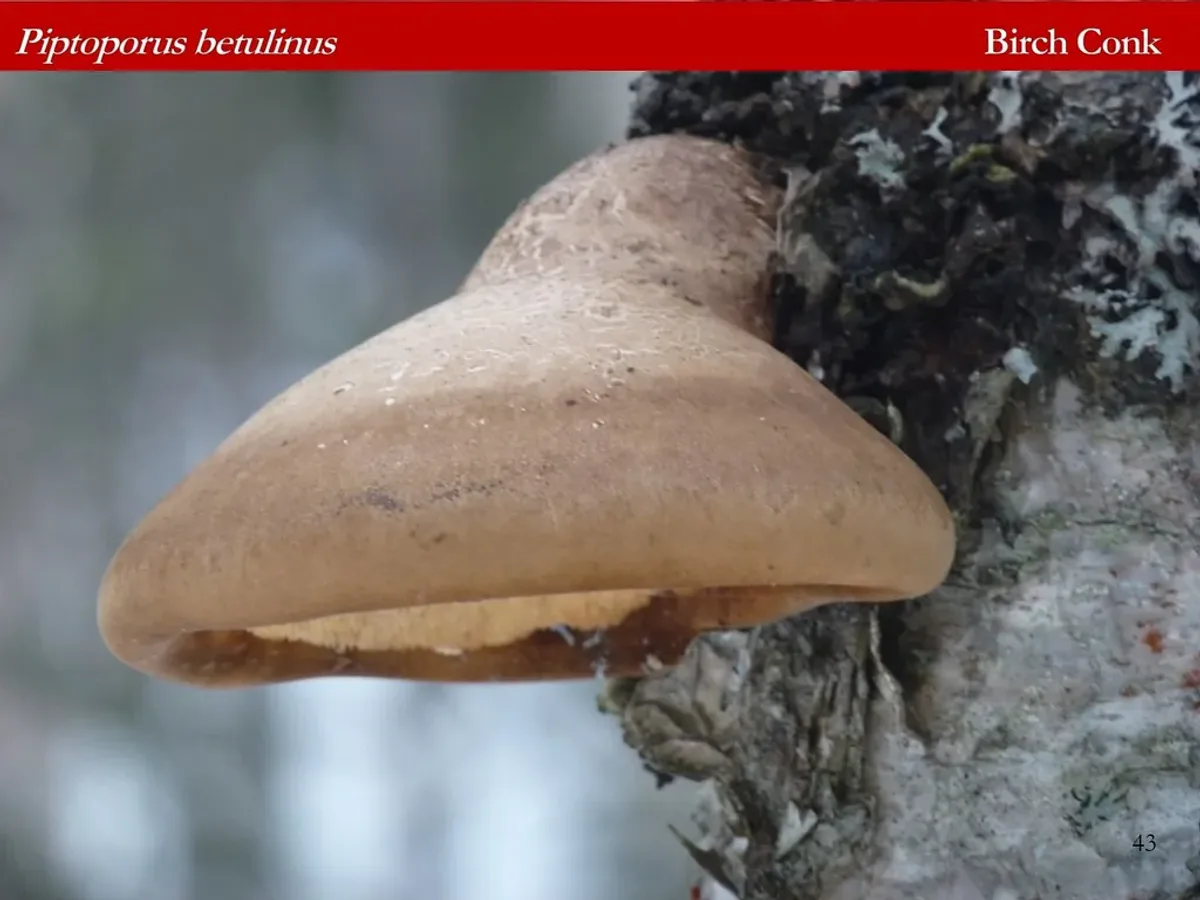 Forest Health Protection, Forest Service, USDA, AK (Public domain)
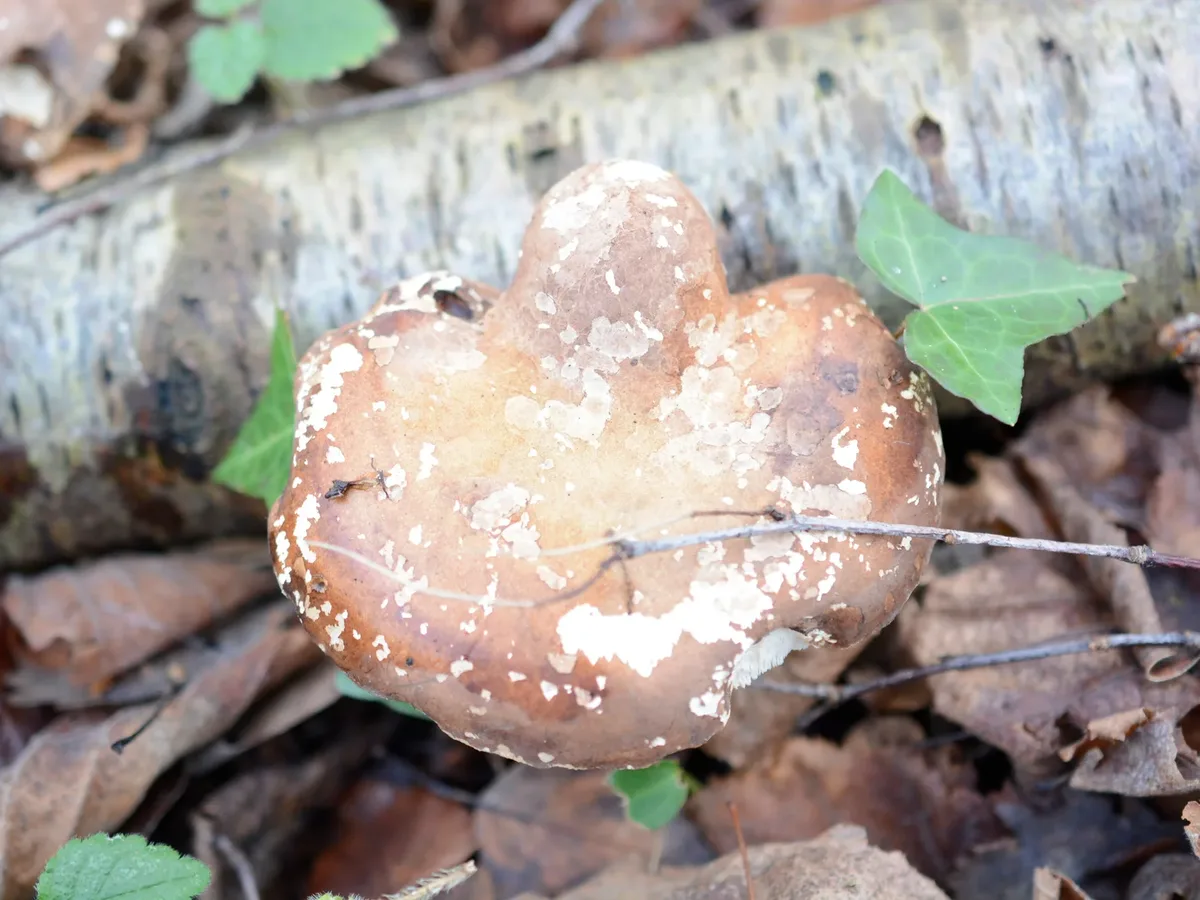 © Cara Ennis (CC BY)
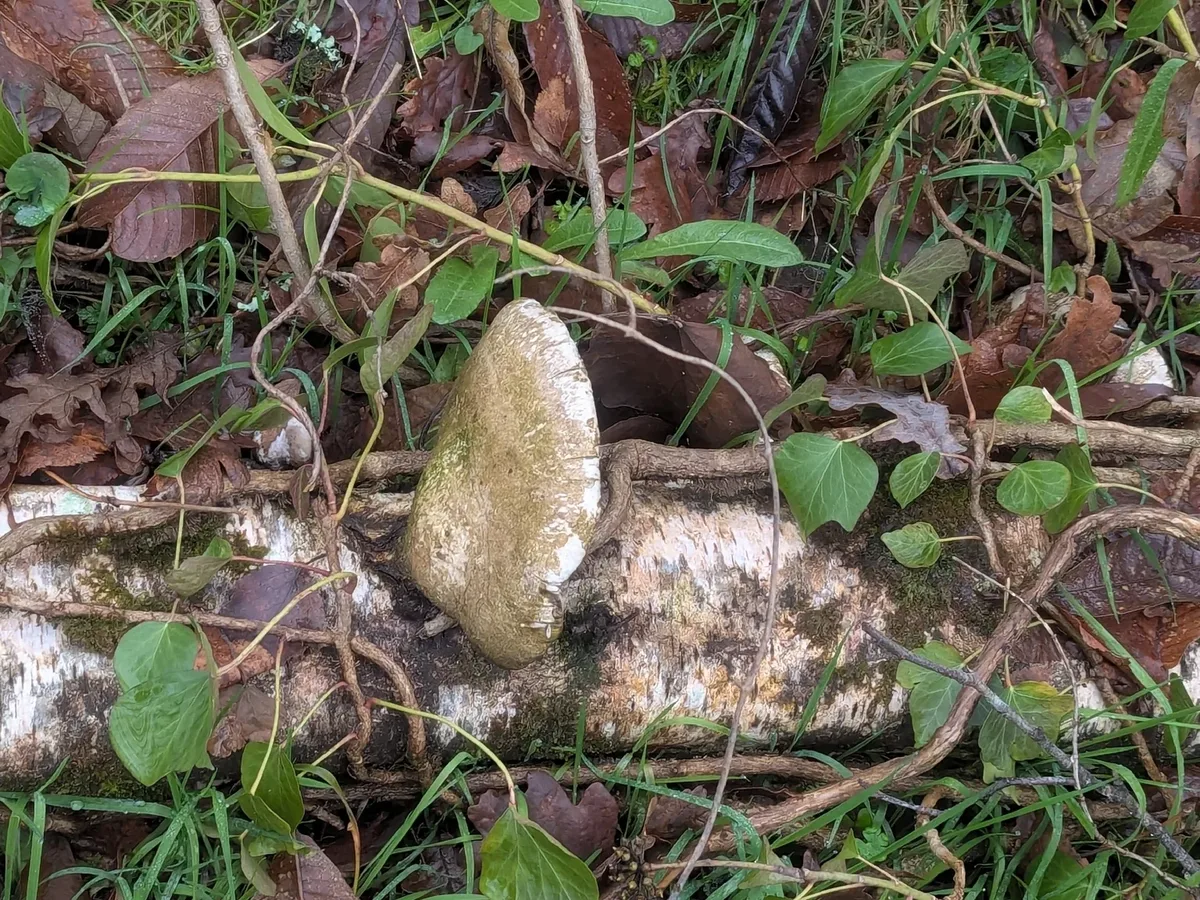 © Óscar Sampedro (CC BY)
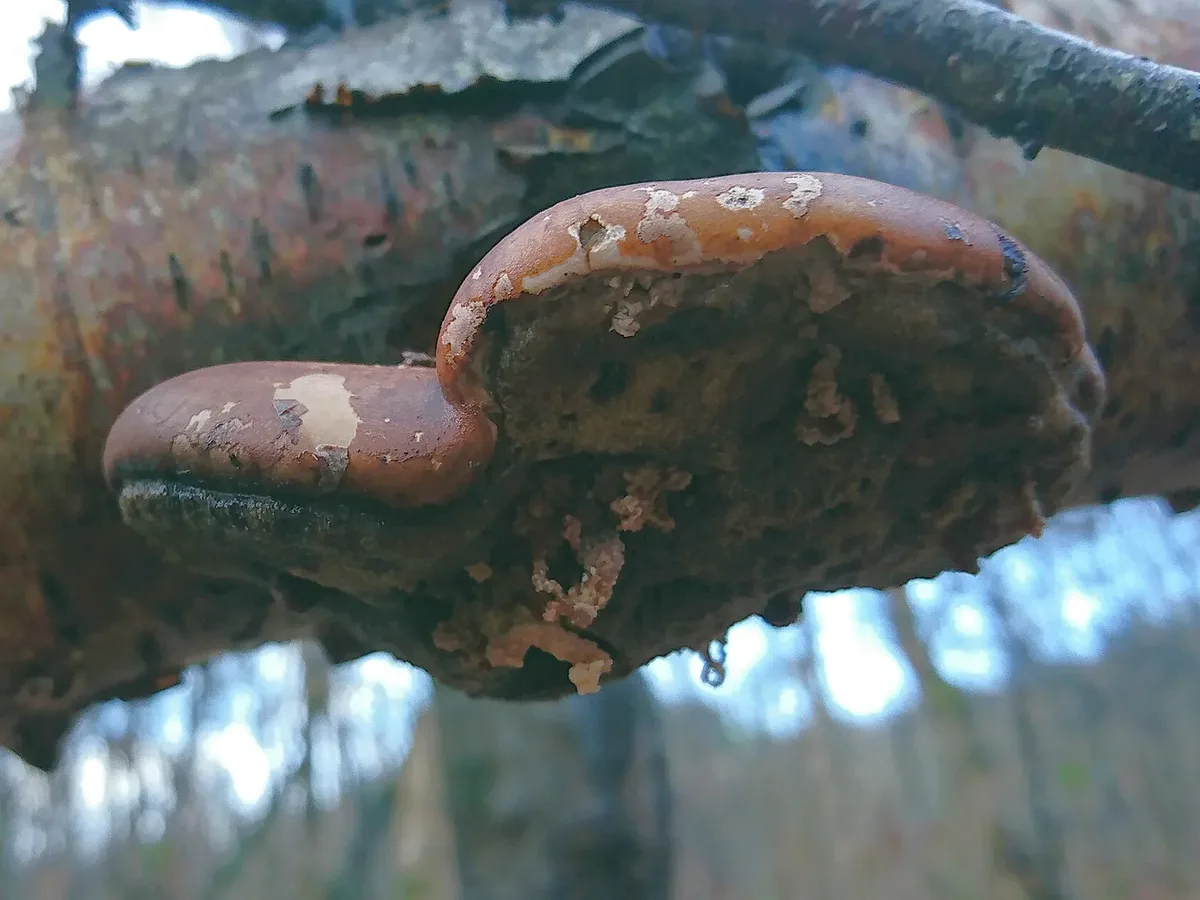 K. (CC0)
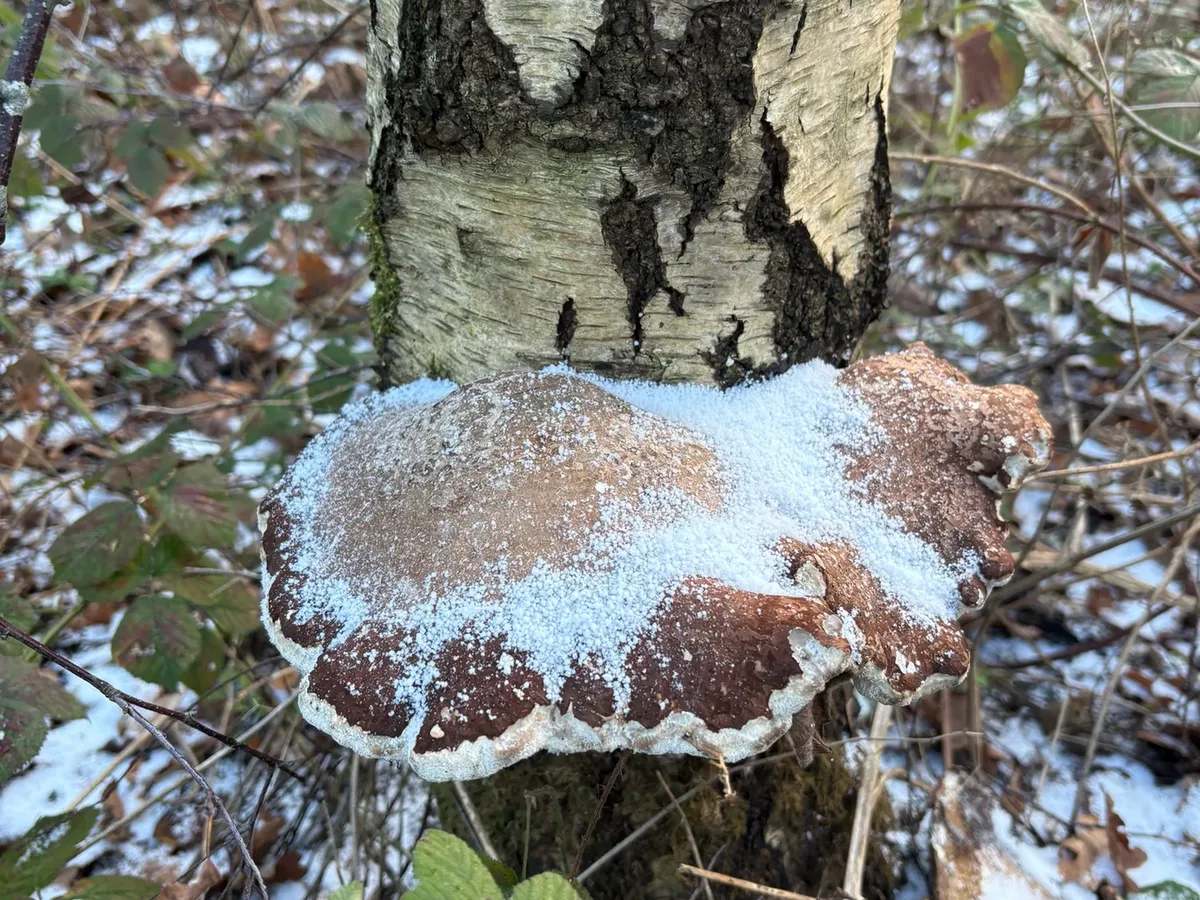 Ed Bailey (CC0)
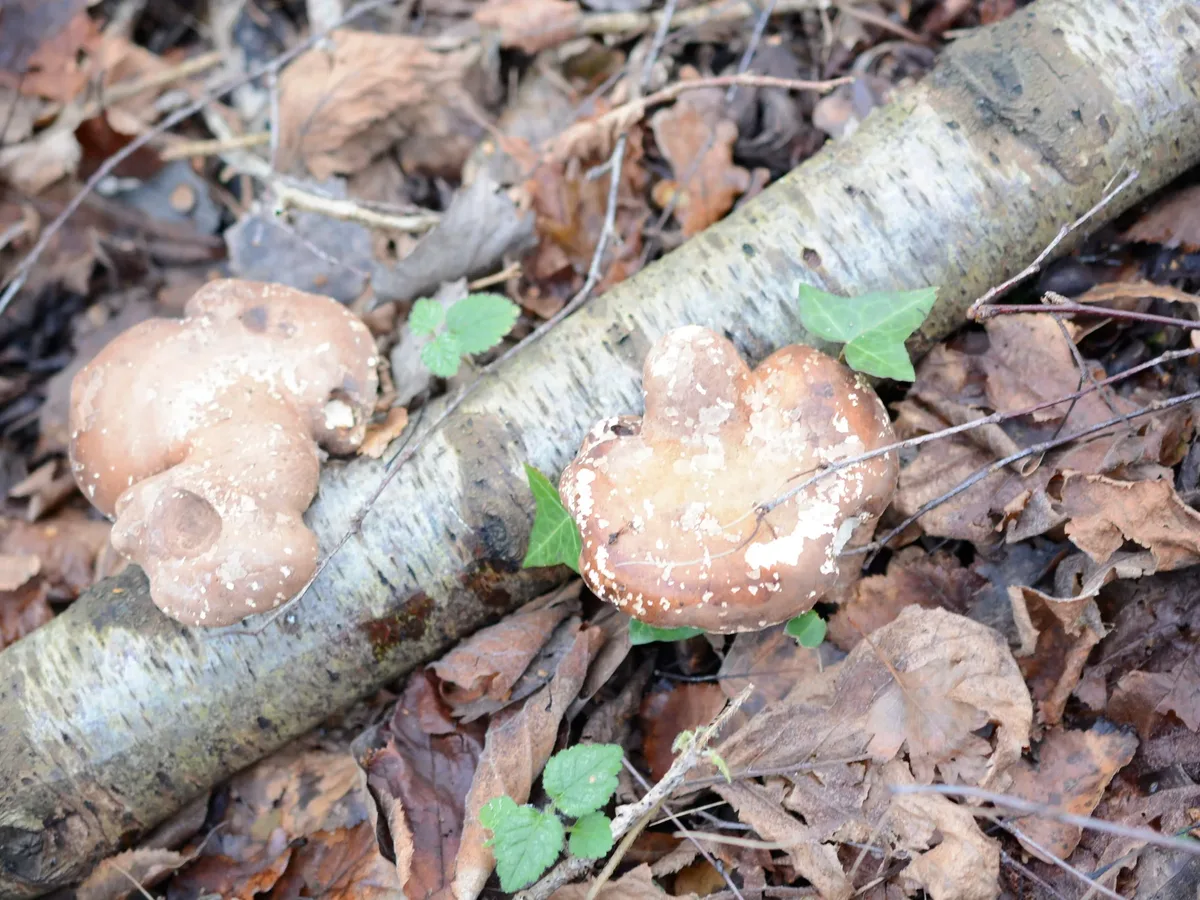 © Cara Ennis (CC BY)
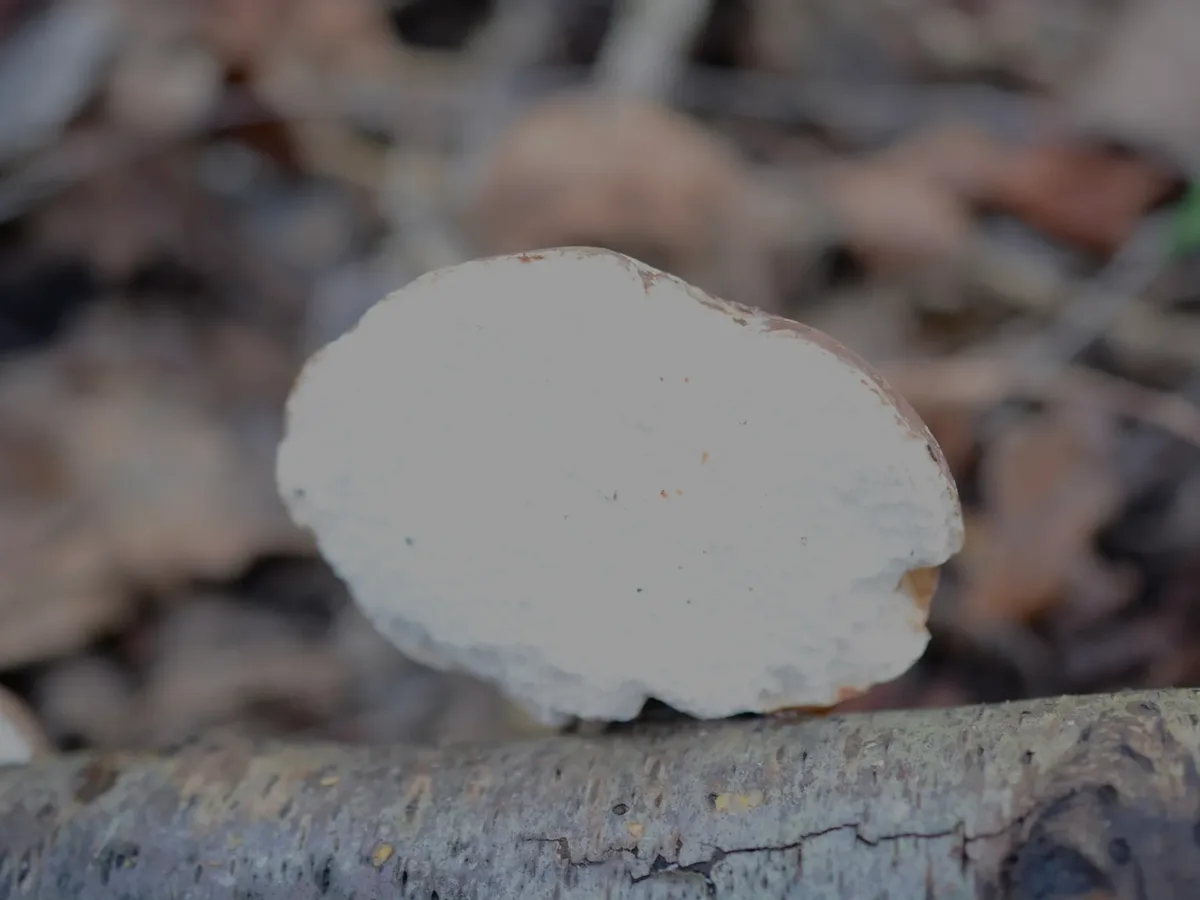 © Cara Ennis (CC BY)
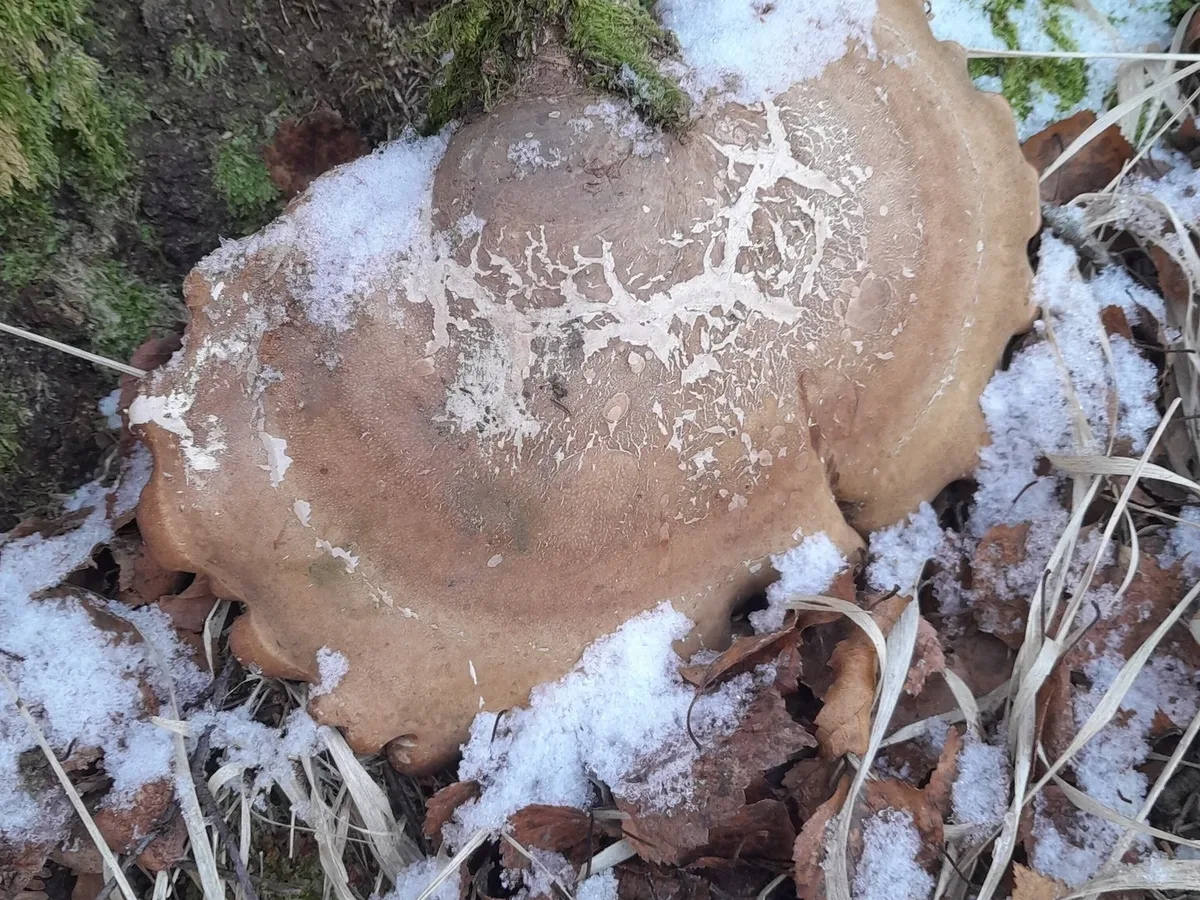 Arthur Pearson (CC0)
 Forest Health Protection, Forest Service, USDA, AK (Public domain)Forest Health Protection, Forest Service, USDA, AK (Public domain)© Cara Ennis (CC BY)
Not poisonous, but not worth eating - too tough, bitter, or bland for the pot.
How to recognise it
Fomitopsis betulina (widely known under its former name Piptoporus betulinus) produces one of the most immediately recognisable brackets in northern forests, almost always growing directly from birch bark.
Cap
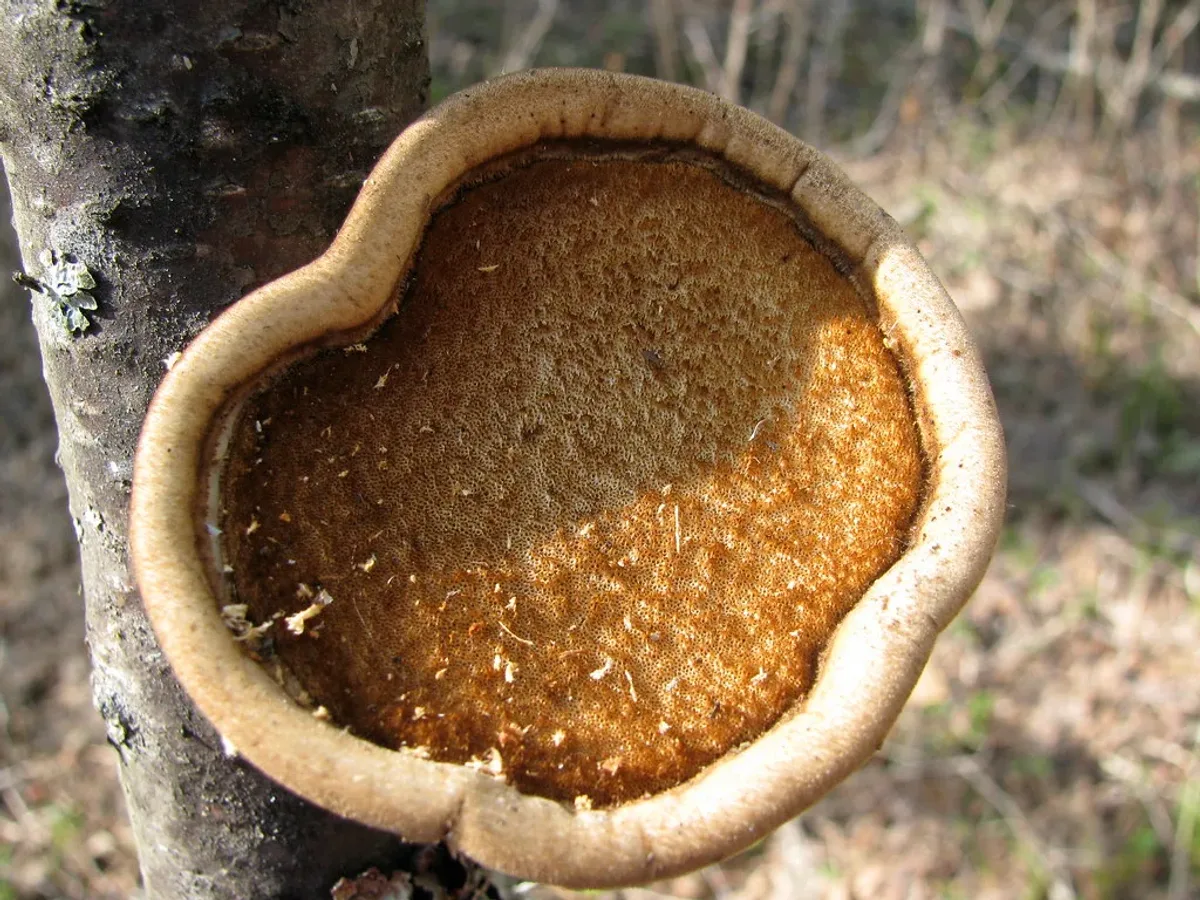
Young fruiting bodies emerge as rounded, pale cushion-like knobs, white and somewhat waxy in texture. As they mature they flatten and expand into kidney- or fan-shaped shelves 10-40 cm across and up to 6 cm thick.
The upper surface is smooth and initially white, quickly ageing to grey-buff or pale ochre-brown. The thin skin peels away cleanly from the firm white flesh beneath, a useful identification feature.
The margin stays rolled under and paler than the cap surface.
Gills / Pores
The pore surface on the underside is pure white to cream, very fine (3-4 pores per mm), and eventually cream-tan with age or bruising.
Spore print white; spores cylindrical and smooth.
Flesh
Flesh is white and firm.
Smell & taste
Faintly acidic or slightly 'mushroomy' smell when cut fresh; taste is intensely bitter.
Stem
The bracket has no true stem, attaching directly to wood via a constricted base or very short stub.
Where & when it grows
Habitat
An obligate associate of birch (Betula spp.) - if the tree is not birch, this is not Fomitopsis betulina.
It functions as a saprotroph, colonising dead or dying birch and causing a brown cubical rot that ultimately destroys the heartwood.
Brackets grow singly or in small overlapping tiers on standing dead trunks, fallen logs, and stumps, in:
- boreal and temperate birch woodland
- mixed broadleaved forest with birch
- forest edges
Throughout Scandinavia and northern Europe, the birch polypore is exceedingly common wherever stands of dying or fallen birch occur. It is equally at home in lowland birch woodland and upland or subarctic birch scrub.
When
New brackets emerge mainly from July through November, peaking in August-October.
Old specimens may persist on the host tree through winter in a dry, corky state and well into the following year, eventually collapsing as brown crumbling husks.
Foragers searching for fresh, white-fleshed brackets should look in late summer to mid-autumn after mild, wet periods. Even in the peak season the flesh quickly becomes tough and leathery.
How it grows
Saprotrophic on dead or moribund birch.
Long before a bracket becomes visible, the mycelium has been threading through the sapwood and heartwood, breaking down lignin and cellulose and producing the distinctive brown cubical rot that will eventually crumble the wood to nothing.
The bracket itself is the fungus's reproductive output - a brief above-surface moment in a much longer underground story. Individual brackets can grow for several months in a single season, then persist dried or weathered on the host for a year or more.
A single fallen trunk often carries brackets in very different states, a whole timeline of decay rendered visible:
- some still white and actively expanding
- others grey-brown and leathery
- others reduced to papery husks
Fruiting conditions
New bracket initiation is favoured by mild, moist conditions in late summer; as a wood-decaying saprotroph, soil temperature is less directly relevant than ambient temperature and wood moisture content. Established brackets continue to grow through dry spells once initiated.
Handle with care
Toxin
No significant toxins identified. Contains bitter triterpenoids (including polyporenic acids) that render flesh unpalatable.
These compounds cause gastric discomfort if large amounts are consumed, but are not associated with serious systemic poisoning.
Symptoms
Ingestion of raw flesh may cause gastric discomfort due to bitterness and indigestibility, but is not associated with serious poisoning.
Look-alikes
In its strict host specificity the birch polypore is largely self-identifying. No truly dangerous confusion species exists.
- Fomitopsis pinicola (red-belted conk) is similarly shaped but grows on conifers and many other hardwoods, has a hard lacquered crust with a distinctive red-brown to orange zonate margin, and is far harder when mature.
- Ganoderma applanatum (artist's conk) is larger, browner, and grows on many hardwoods, with a much harder, grey-brown crusted upper surface.
- Trametes versicolor forms thin, multicoloured velvety brackets usually in dense overlapping tiers, on a wide range of dead hardwoods.
None of these are dangerous.
Why it matters
Low. No fatalities or serious poisonings on record from F. betulina.
Consumption of large quantities of raw material on an empty stomach might cause nausea and stomach upset.
G. applanatum is very large, hard, and perennial with a dull grey-brown crusted upper surface that never peels; it grows on a wide range of hardwoods and its underside bruises brown when scratched. Fomitopsis betulina is softer, white-fleshed, annual, and birch-exclusive.
Lenzites betulina has a gill-like (lamellate or maze-like) underside rather than a true pore surface, and it is much thinner; upper surface is zonate and velvety. Grows on birch and other hardwoods but is easily distinguished by the gills beneath.
F. pinicola has a hard, lacquered crust with a conspicuous reddish-orange zonate margin, grows on conifers and many other hardwoods (rarely birch exclusively), and the flesh is distinctly harder and woody. Fomitopsis betulina has a soft, peelable, whitish skin and grows only on birch.
Trametes versicolor forms thin, multicoloured, velvety brackets in dense overlapping tiers on many dead hardwoods; pores are minute but visible (3-4/mm). Far thinner and more colourful than the thick, pale birch polypore, and not restricted to birch.
In the kitchen
Picking & cleaning
Not collected for eating due to unpalatably bitter, tough flesh.
Young brackets (white, firm, easily cut with a knife) are occasionally harvested for:
- medicinal or ethnobotanical study
- use as natural razor strops (hence 'razor strop fungus')
- a substrate for knife honing
If collecting for any purpose, slice from the base with a sharp knife and avoid old, discoloured specimens. They dry readily in a warm, ventilated space.
Cooking
Not used in the kitchen due to bitterness and leathery texture.
Young white flesh can technically be infused in hot water to produce a mildly bitter tea, a practice in some Scandinavian folk medicine, but this is not a culinary preparation.
Any edible culinary use is negligible.
Good to know
Fomitopsis betulina is not toxic, but its flesh is extremely bitter and too tough and leathery to be pleasantly edible. There are no known dangerous toxins.
Its main safety relevance is that it should not be confused with edible bracket fungi. However, the combination of the following makes misidentification to any harmful species essentially impossible:
- birch exclusivity
- white pore surface
- peelable skin
- intensely bitter taste
Extracts are used in traditional medicine and ongoing pharmaceutical research (including anti-inflammatory triterpenoids and polyporenic acids), but oral consumption of raw or cooked flesh is not recommended.
A reference guide - never an edibility guarantee. When in doubt, leave it out.