Velvet Shank
Flammulina velutipessyn. Agaricus velutipes, Collybia velutipes, Gymnopus velutipes, Flammulina velutipes var. velutipes
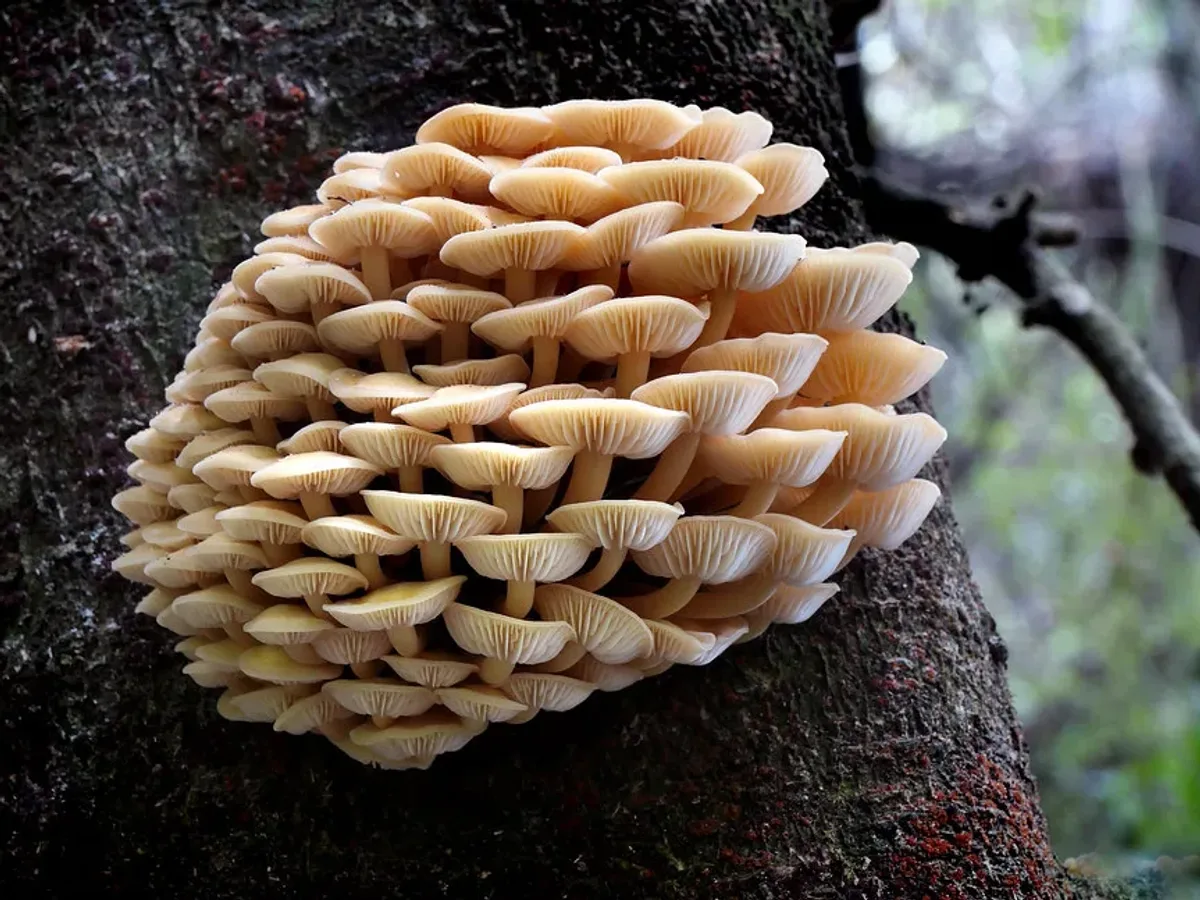 Bernard Spragg (Public domain)
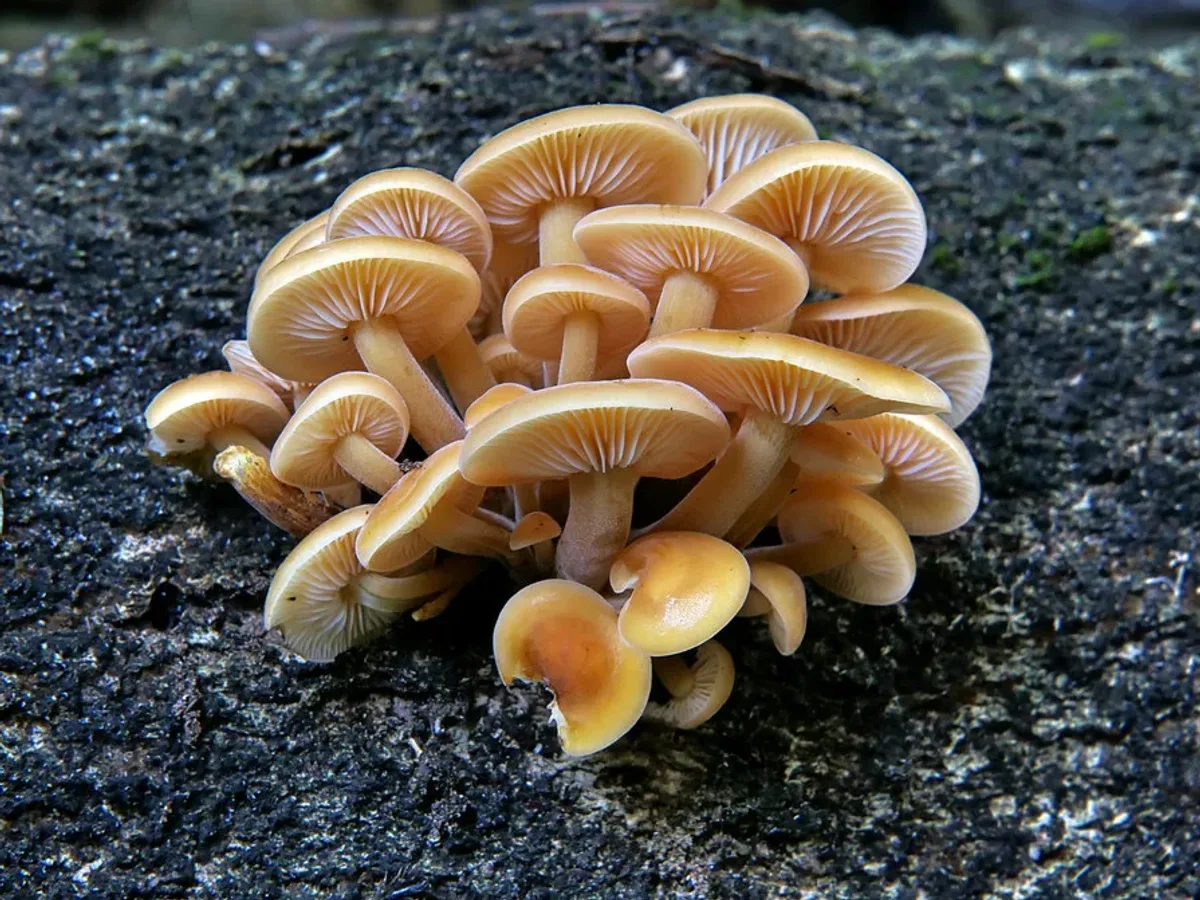 Bernard Spragg (Public domain)
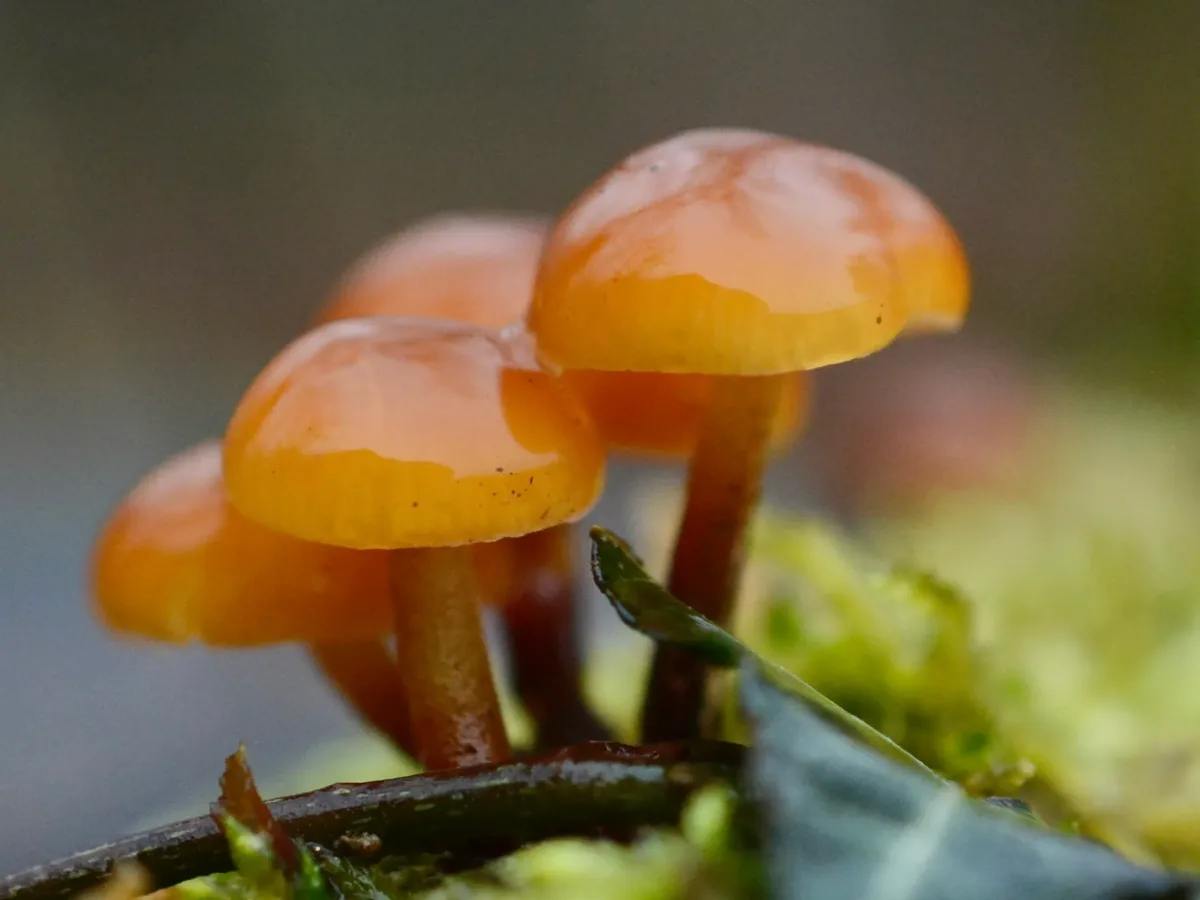 © Cara Ennis (CC BY)
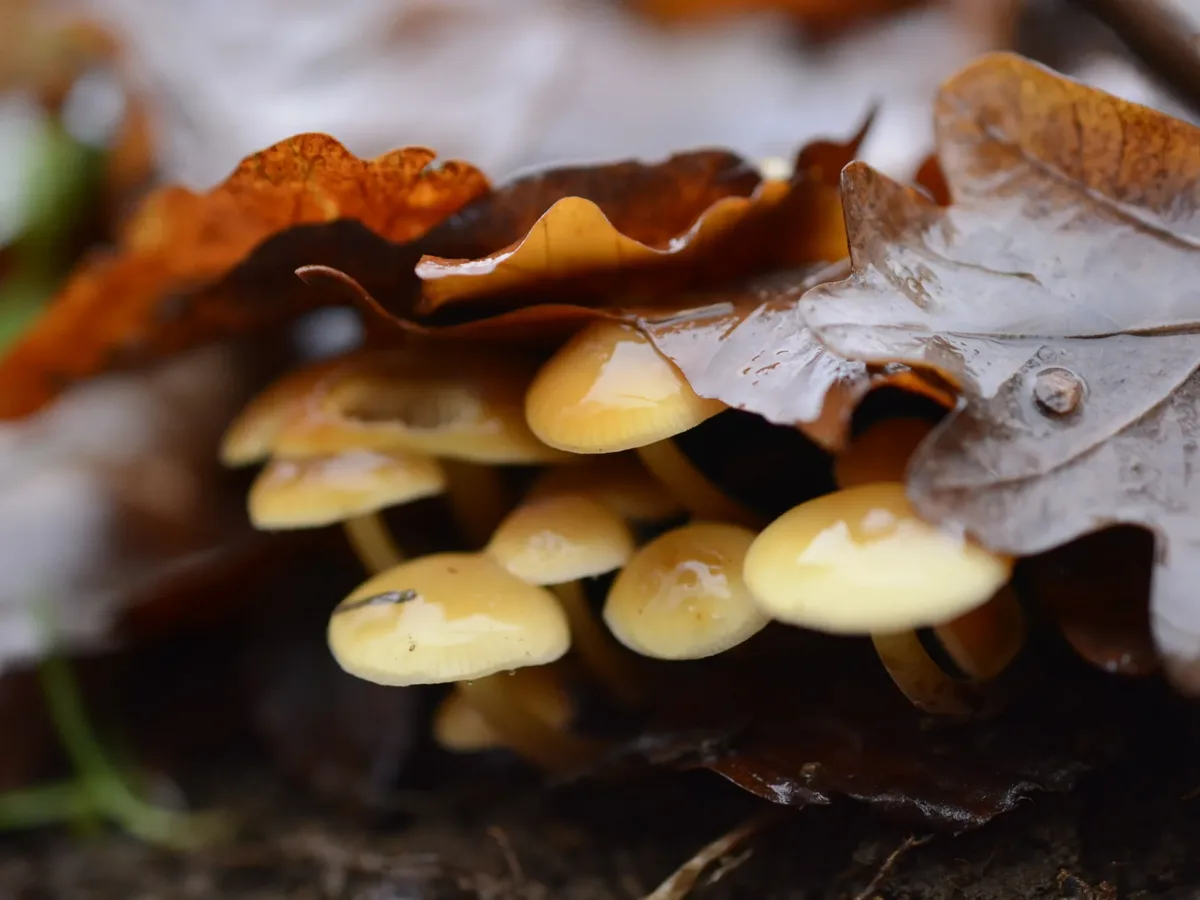 © Cara Ennis (CC BY)
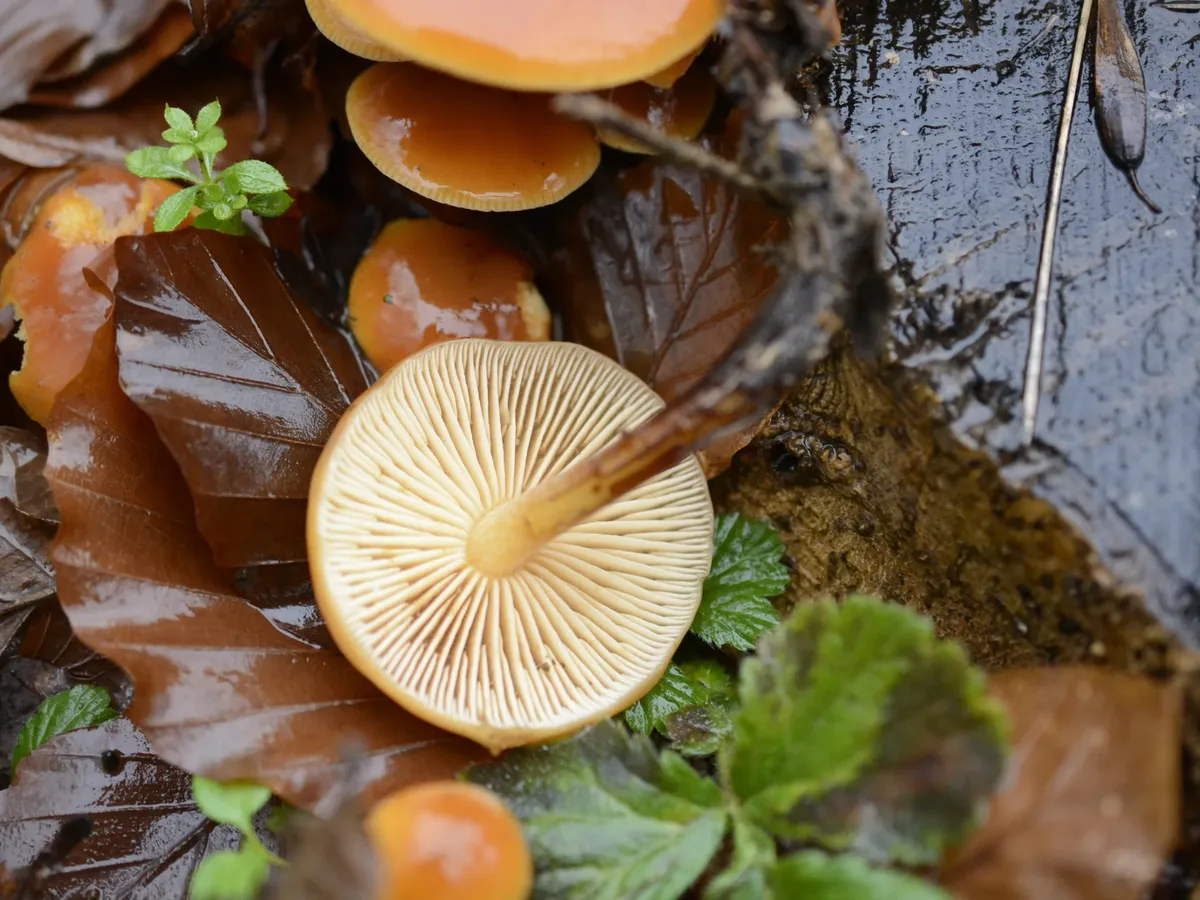 © Cara Ennis (CC BY)
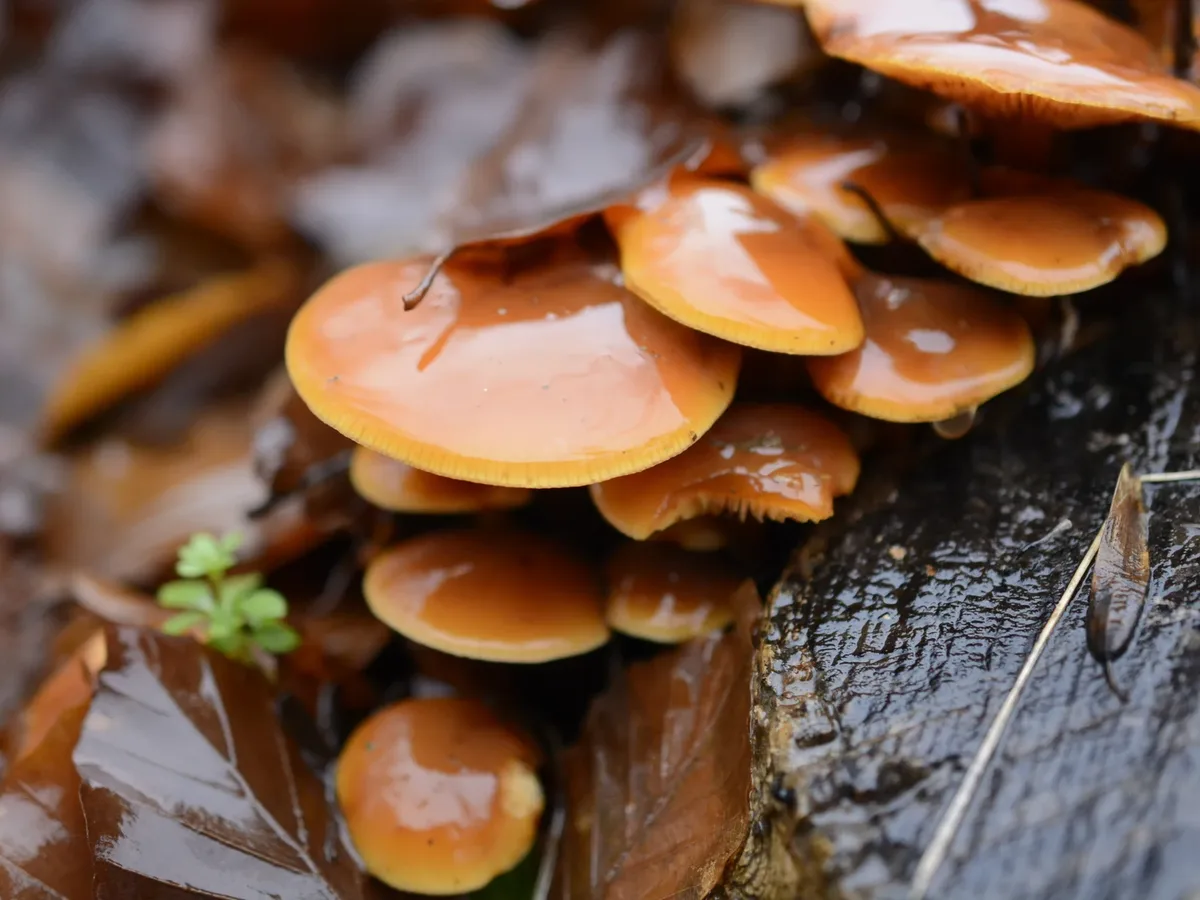 © Cara Ennis (CC BY)
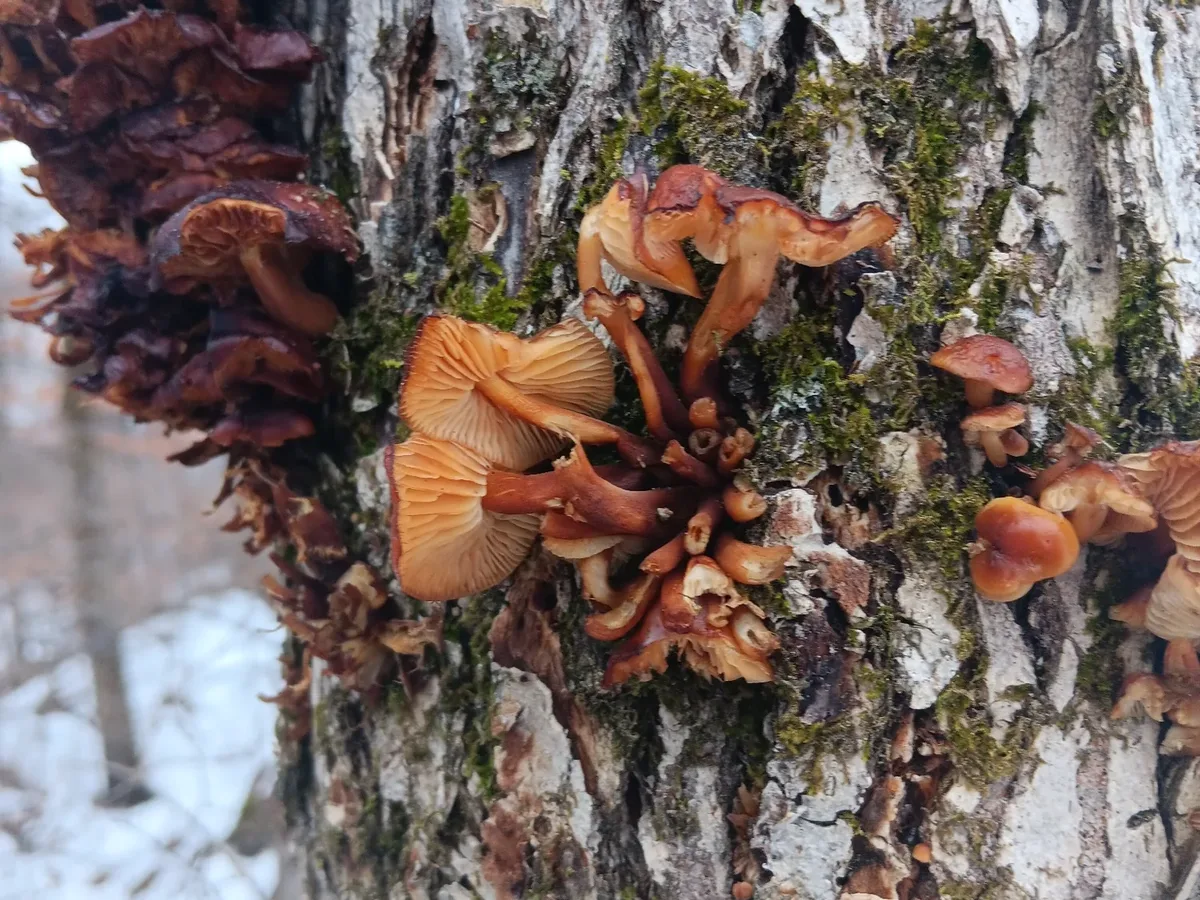 © Grace Merkert (CC BY)
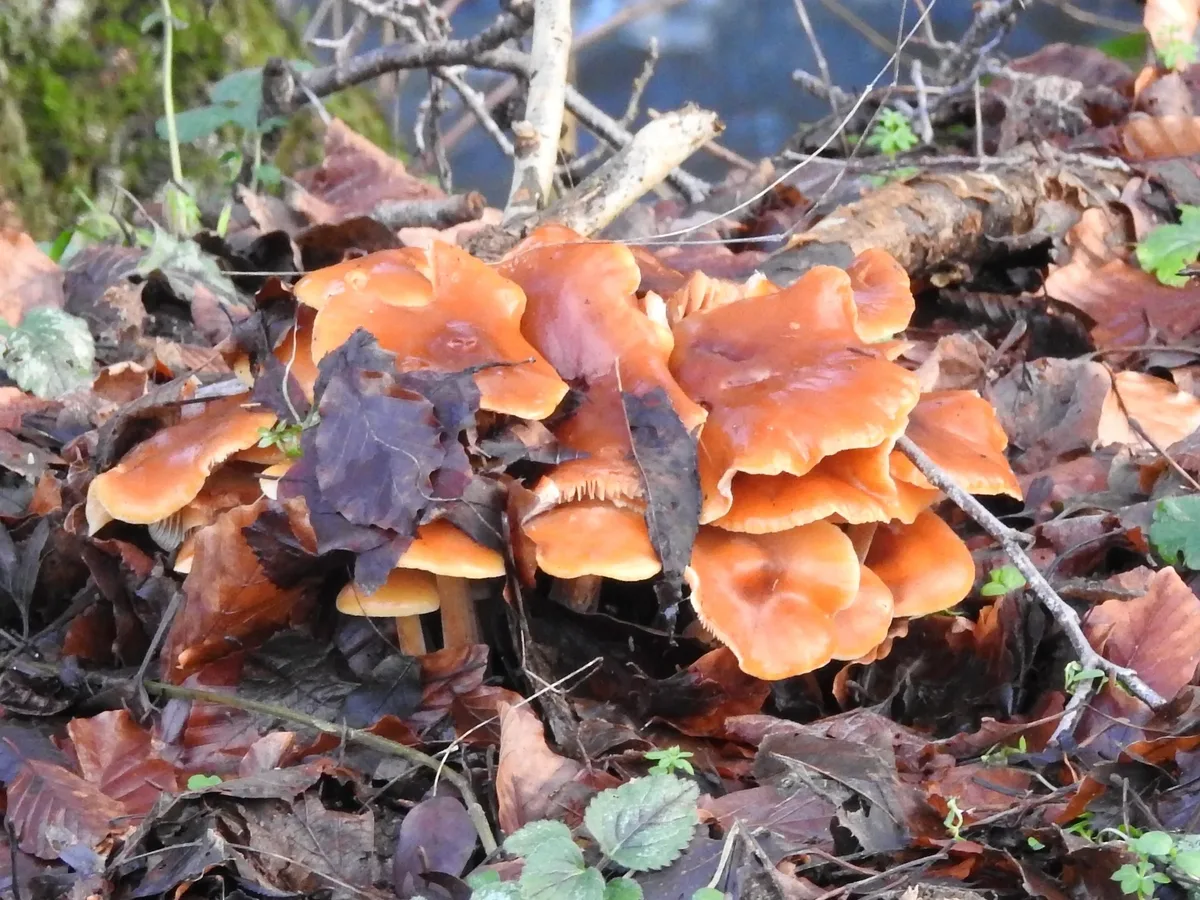 © Cara Ennis (CC BY)
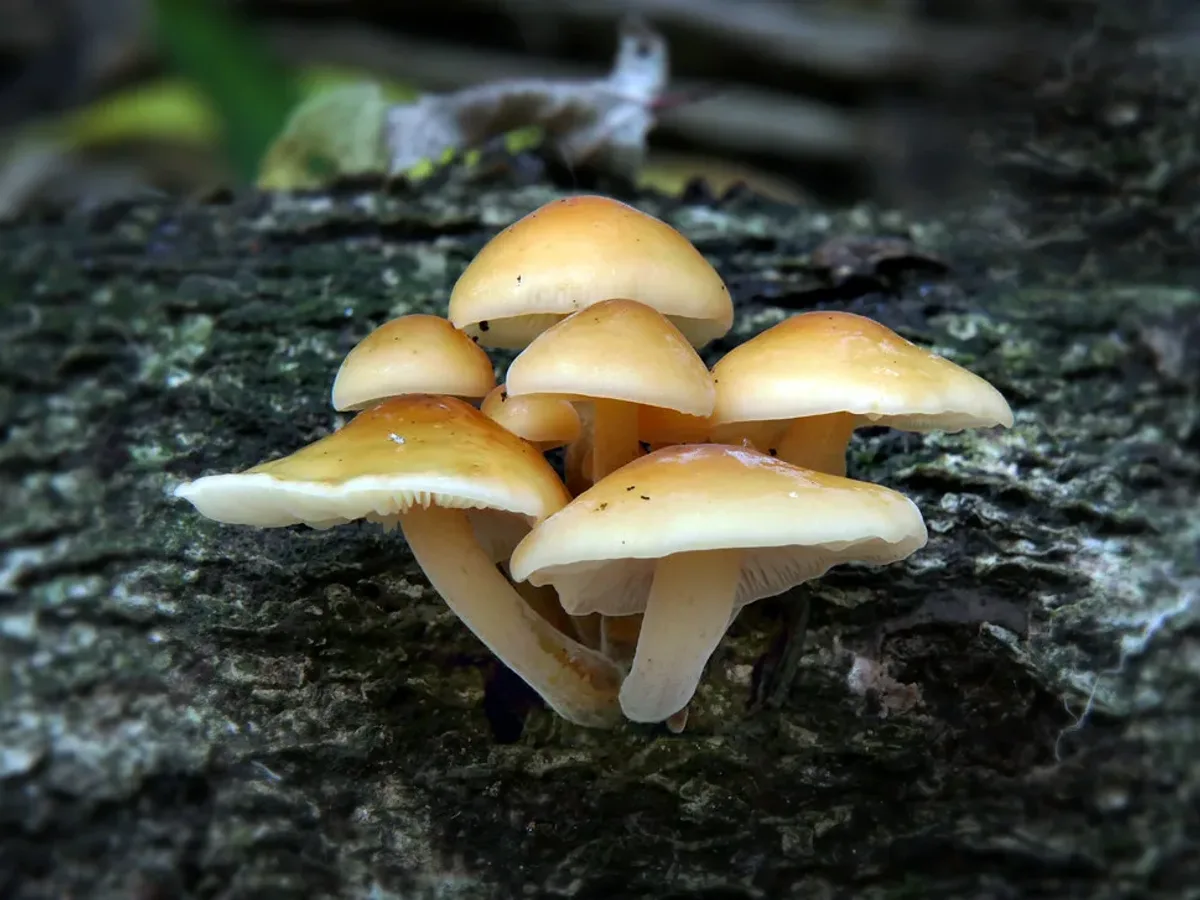 Bernard Spragg (Public domain)Bernard Spragg (Public domain)Bernard Spragg (Public domain)
Good to eat, once you have identified it with certainty and cooked it through.
Never eat a mushroom you are not 100% sure of - check the look-alikes below, and always cook wild mushrooms.
How to recognise it
Velvet Shank is a small to medium clustered woodland mushroom built for cold weather.
Cap
The cap ranges from about 2 to 10 cm across, opening from convex to broadly convex and finally flat.
Its most striking feature is the surface: smooth, distinctly slimy or sticky and glossy when moist, coloured a warm tawny-orange to honey-yellow that deepens to amber or reddish-brown at the centre and fades to a paler yellow at the margin.
Gills
Beneath the cap the gills are moderately broad, fairly well spaced, adnate to almost free, and white to pale cream or faintly yellow - importantly they never turn rusty-brown.
Stem
The stem is the clinching diagnostic: 3-10 cm long and only a few millimetres thick, tough and almost wiry, yellowish at the very top but covered over its lower two-thirds with a dense, dark brown to blackish velvety down, giving the 'velvet foot' that the name celebrates.
There is no ring on the stem.
Flesh
The flesh is thin, pale, and notably pliant and rubbery rather than crumbly.
Wild Velvet Shank bears no resemblance to the spindly white commercial 'enoki' on supermarket shelves, which is blanched and elongated by growing it in darkness under raised carbon dioxide; the cultivated enoki is now generally recognised as a separate Asian species, Flammulina filiformis, long confused with and formerly treated as the same species as F. velutipes.
Where & when it grows
Habitat
A wood-rotting saprotroph, never associated with living roots as a partner.
It colonises dead and dying hardwood:
- standing dead trunks
- old stumps
- fallen branches and logs
- the dead wood and frost-cracks of otherwise living deciduous trees
It favours elm, willow, poplar, ash, beech and oak among many other broadleaves, and is common in damp woodland, along hedgerows, in parks and in gardens.
The fruit bodies erupt in dense overlapping clumps and tiers, frequently dozens at a time from a single point of infection.
It is widespread right across the temperate Northern Hemisphere and has also been carried to the Southern Hemisphere.
When
This is the classic winter mushroom and one of the best reasons to keep foraging once the main autumn season has ended.
It typically begins fruiting in October, continues through the coldest months, and can persist into March or April.
Remarkably frost-hardy, it freezes solid in hard weather, thaws, and simply carries on growing - so the same cluster can yield over a long stretch.
The richest pickings come in November through February during mild, wet spells, and clusters will sometimes appear after a thaw with snow still lying around them.
How it grows
Grows gregariously in tightly packed, overlapping bunches and tiers directly from dead wood, with many caps fused at the stem bases.
New flushes are triggered by drops in temperature combined with moisture - which is why Velvet Shank appears just as warmer-season fungi disappear.
It has the unusual ability to freeze solid in hard frost, thaw out, and simply carry on growing as if nothing happened.
Individual caps enlarge slowly even in near-freezing conditions, and a colony will keep producing successive flushes from the same piece of wood across an entire winter and over successive winters until the wood is fully exhausted.
Fruiting conditions
Cold-triggered fruiter: flushes follow drops in temperature combined with rain or thaw moisture. Tolerates freezing and resumes growth on warming; optimal fruiting in the roughly 0-10C range, unlike most autumn fungi.
Look-alikes
The overriding concern is the DEADLY Funeral Bell, Galerina marginata, which also fruits on wood in cold weather, clusters similarly, and can show a brownish, slightly sticky cap.
Galerina is separated by:
- its RUSTY-BROWN spore print (Velvet Shank's is white)
- its brown gills at maturity
- the presence of a ring or ring-zone on the stem
- a finely fibrous - not velvety dark-brown - stem
ALWAYS take a spore print before eating.
Sheathed Woodtuft (Kuehneromyces mutabilis) is another wood-clustering brown mushroom that is itself edible but is also confusable with Galerina, so the same white-spore-print discipline applies.
Sulphur Tuft (Hypholoma fasciculare) grows in similar clusters on wood but is greener-yellow, has a bitter taste, purple-brown spores and greenish gills, and is poisonous.
The Honey Fungus group (Armillaria) is larger, usually ringed, and not slimy-capped.
Why it matters
Velvet Shank itself is not toxic. Its danger lies entirely in mistaken identity: it shares season, woody habitat and clustering habit with the lethal Funeral Bell (Galerina marginata), which contains the same amatoxins as the Death Cap.
A confusion error can be fatal, so the species carries a real-world risk for the careless or inexperienced forager.
DEADLY (contains amatoxins, same as the Death Cap). Same cold season, wood habitat and clustering habit. Distinguished by a RUSTY-BROWN spore print (Velvet Shank is white), brown mature gills, a ring or ring-zone on the stem, and a fibrous brown stem rather than a dark velvety one. Always take a spore print before eating Velvet Shank.
Larger and clustered on wood but usually has a ring on the stem, a dry to scaly (not slimy) cap, white spore print, and lacks the velvety dark lower stem.
Edible itself but clusters on wood and is brown-capped; lacks the dark velvety stem and is easily confused with deadly Galerina, so apply the same white-spore-print check. Has a scaly stem and a ring zone.
Tough-stemmed clustering wood-associated mushroom but has a dry, grooved, spindle-shaped stem without the slimy cap or the dense dark velvet of Velvet Shank.
Poisonous (causes gastric illness). Grows in tufts on wood but is sulphur-yellow to greenish, dry-capped, very bitter, with greenish gills and a purple-brown spore print; stem not dark and velvety.
In the kitchen
Picking & cleaning
Cut or pinch the clusters at the base, taking the firm, fresh, brightly coloured caps and leaving any that are waterlogged, slug-eaten or going soft.
The tough lower stems are best discarded as they remain chewy however long you cook them.
Because it grows on wood it is clean and grit-free, but check each cap's gill colour and confirm the velvety dark stem before bagging.
Collect into a basket and keep cold; it stores well in the fridge for several days and being a winter species there is little spoilage pressure.
Cooking
Discard the tough stems and use the caps.
They are good cooked slowly - sauteed, added to soups, stews, stir-fries and noodle dishes, or braised - where they take on a slightly slippery, gelatinous texture and a mild, pleasant flavour.
They are not suitable for eating raw and benefit from thorough cooking, which also improves digestibility.
The wild form has more flavour and a firmer bite than the pale cultivated enoki, which is the closely related Asian species Flammulina filiformis, but both share a characteristic slight chewiness. They combine well with stronger-tasting ingredients and absorb flavours readily.
Good to know
Velvet Shank is a good edible BUT it grows in exactly the season, habitat and clustered habit of the deadly amatoxin mushroom Galerina marginata, and beginners have been poisoned by confusing the two. Treat this species as one only for foragers confident with spore prints.
The non-negotiable safety check is the SPORE PRINT: Velvet Shank drops WHITE to pale cream spores; Galerina drops RUSTY-BROWN.
Also confirm:
- the dark velvety stem with no ring
- pale (never brown) gills
Some people experience mild gastric upset if the mushroom is undercooked, and raw fruit bodies should not be eaten; always cook thoroughly. As with any wild mushroom, eat only a small amount the first time.
A reference guide - never an edibility guarantee. When in doubt, leave it out.