Enoki
Flammulina filiformissyn. Flammulina velutipes, Hypsizygus marmoreus, Lyophyllum shimeji, Pholiota microspora
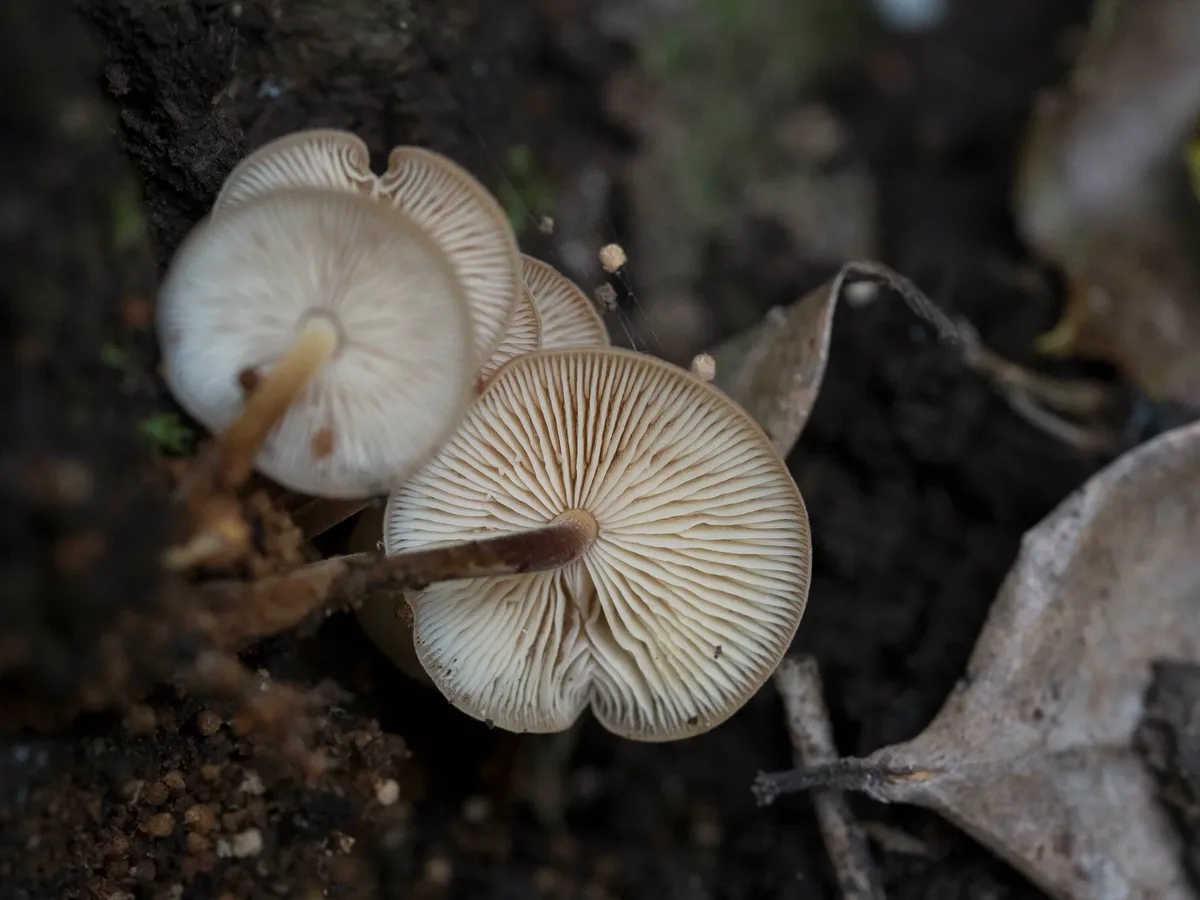 © Licheng Shih (CC BY 4.0)
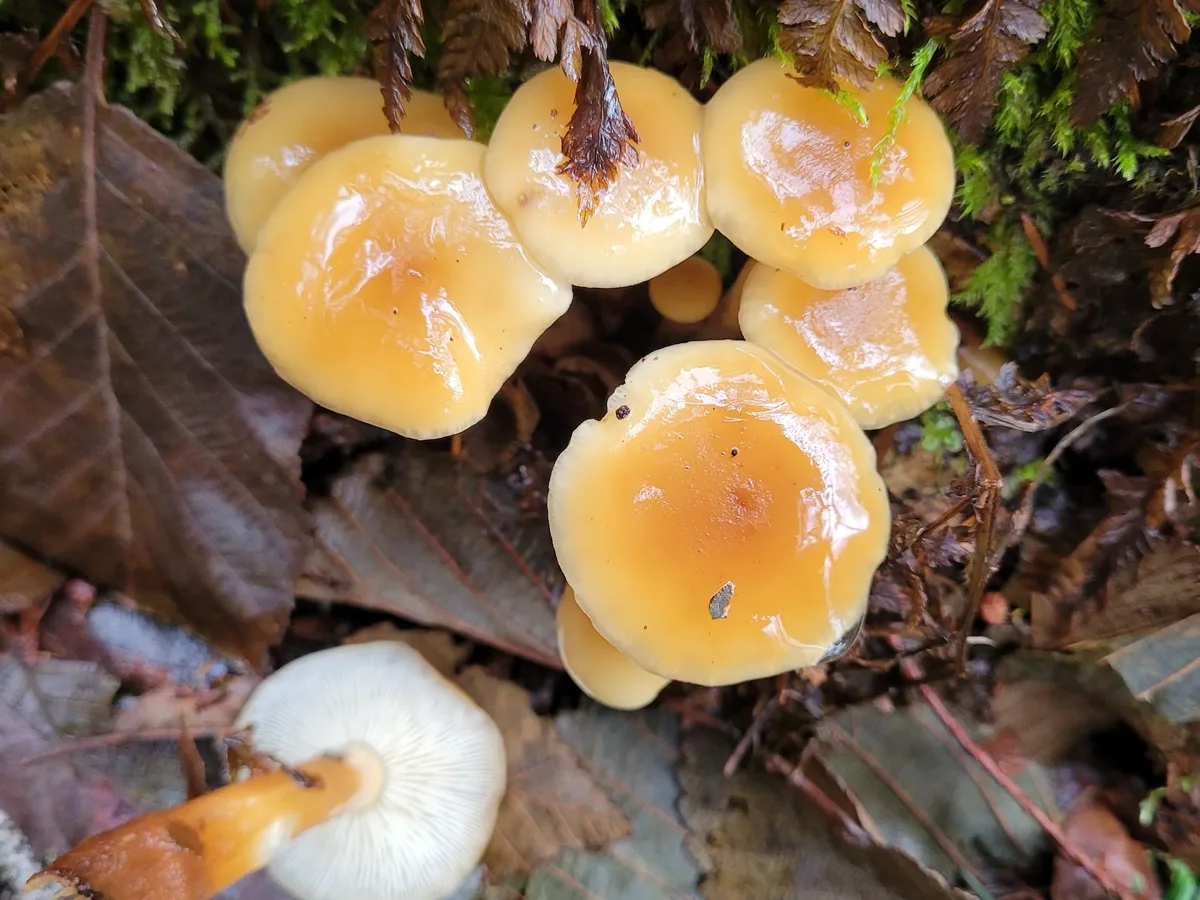 © Kathleen Dobson (CC BY 4.0)
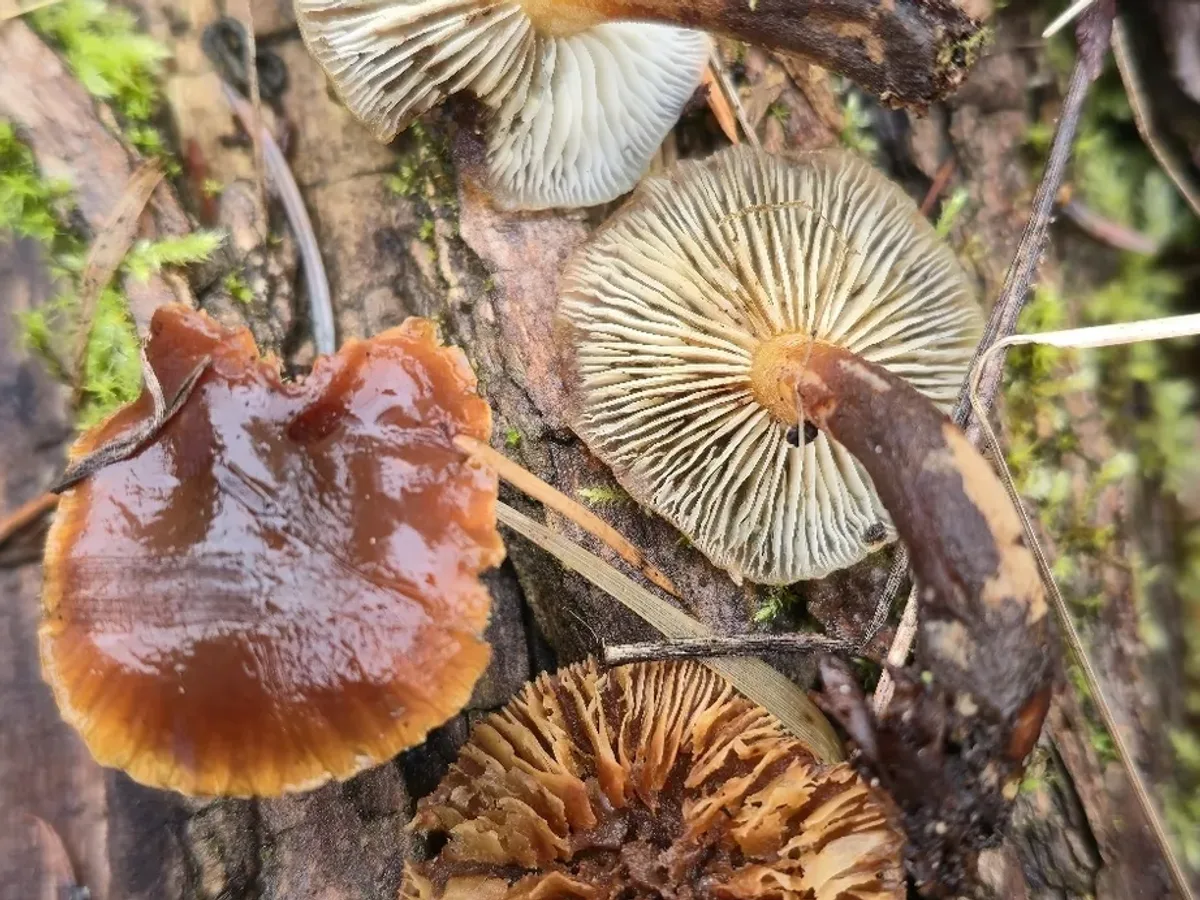 Leanne Stacy Reitan (CC0)
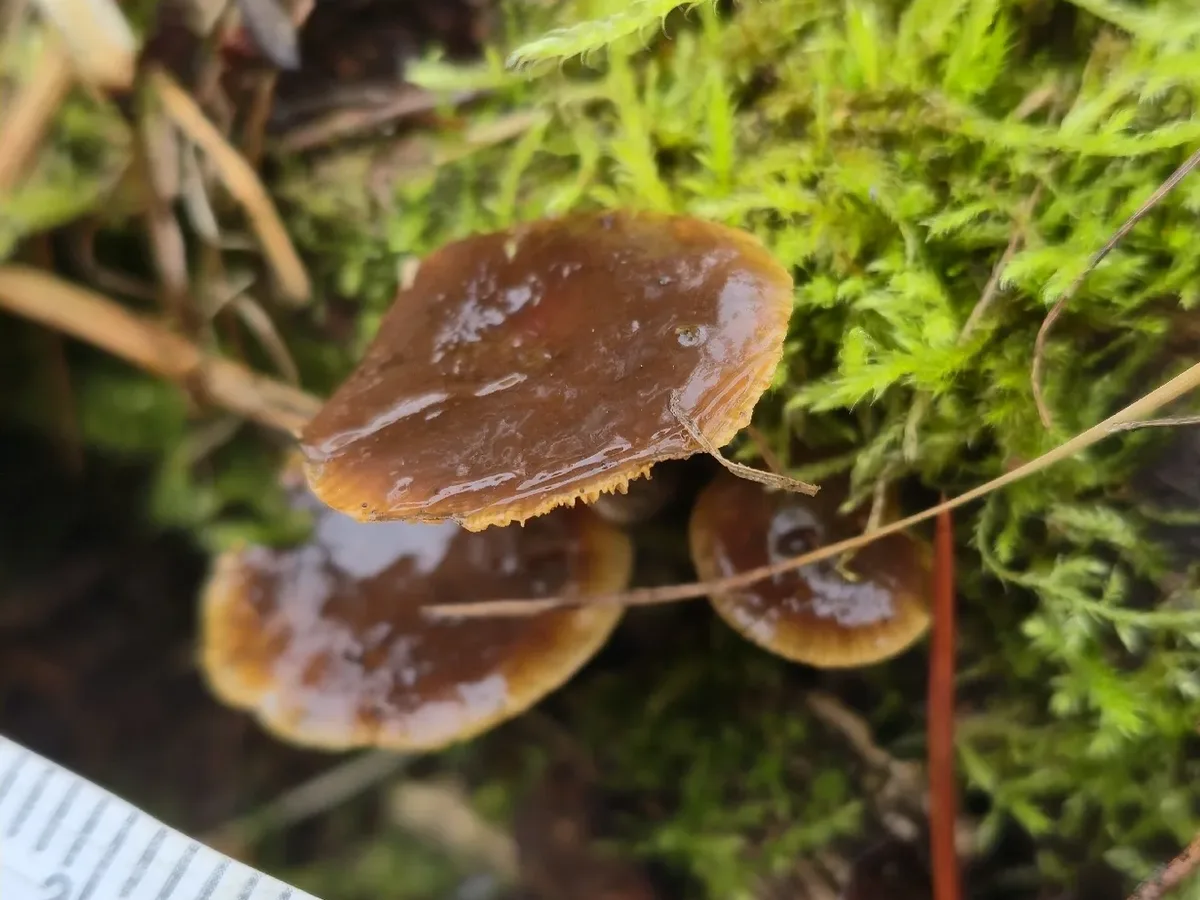 Leanne Stacy Reitan (CC0)
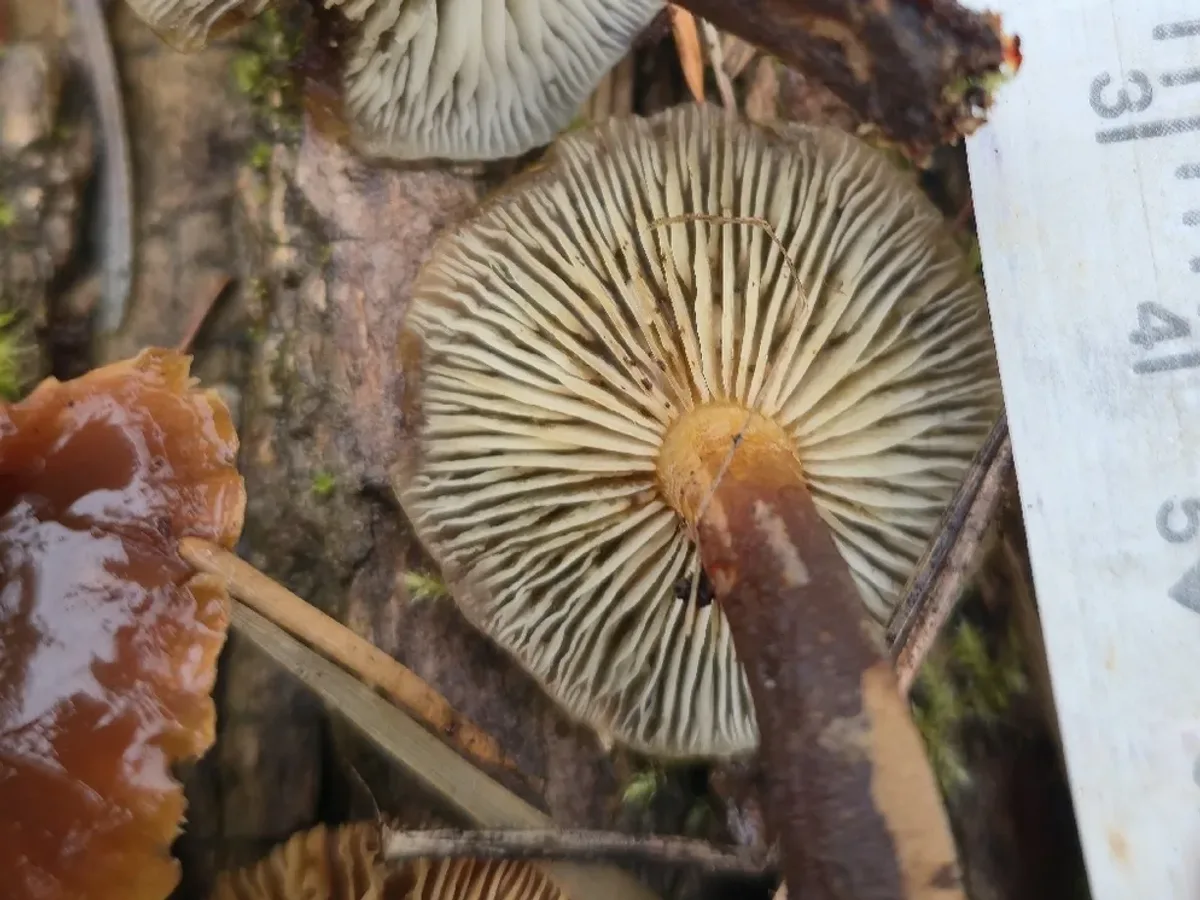 Leanne Stacy Reitan (CC0)
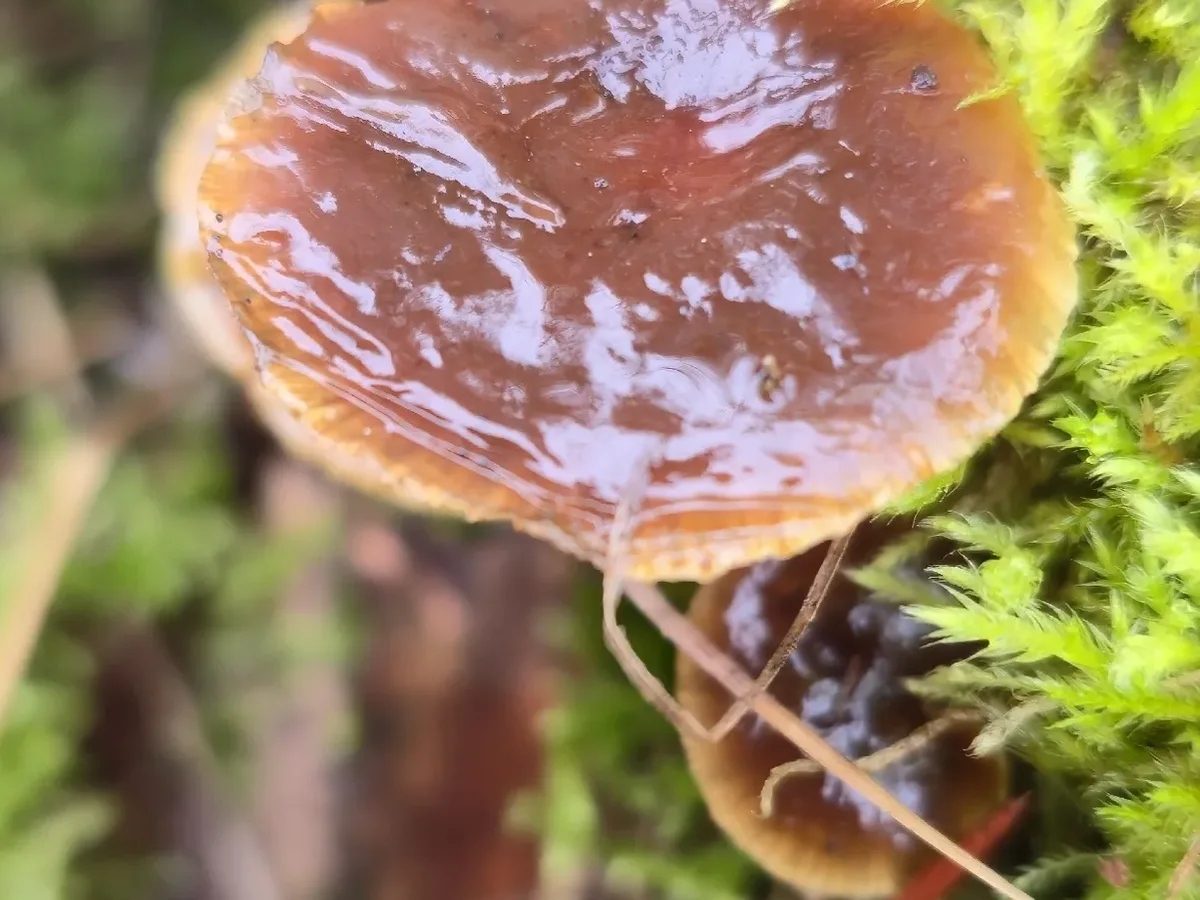 Leanne Stacy Reitan (CC0)
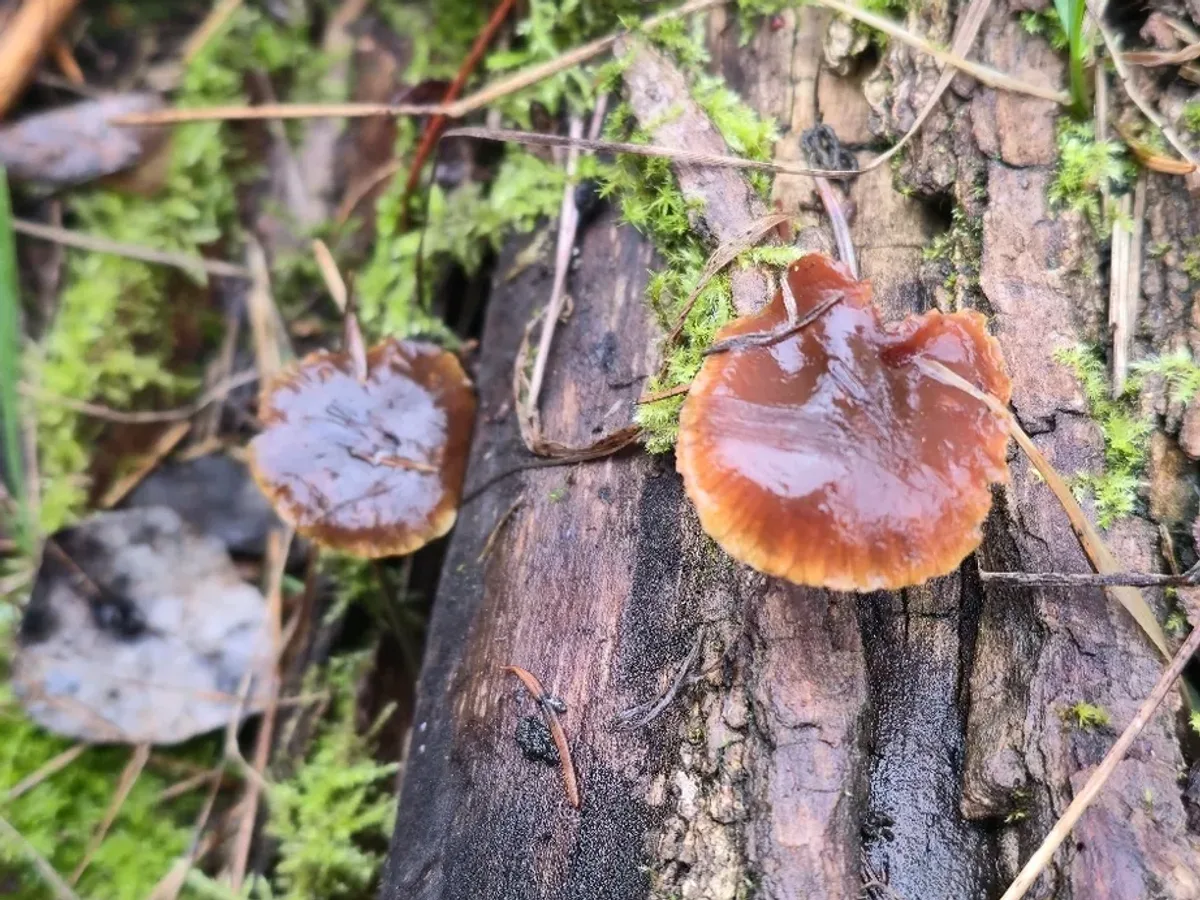 Leanne Stacy Reitan (CC0)
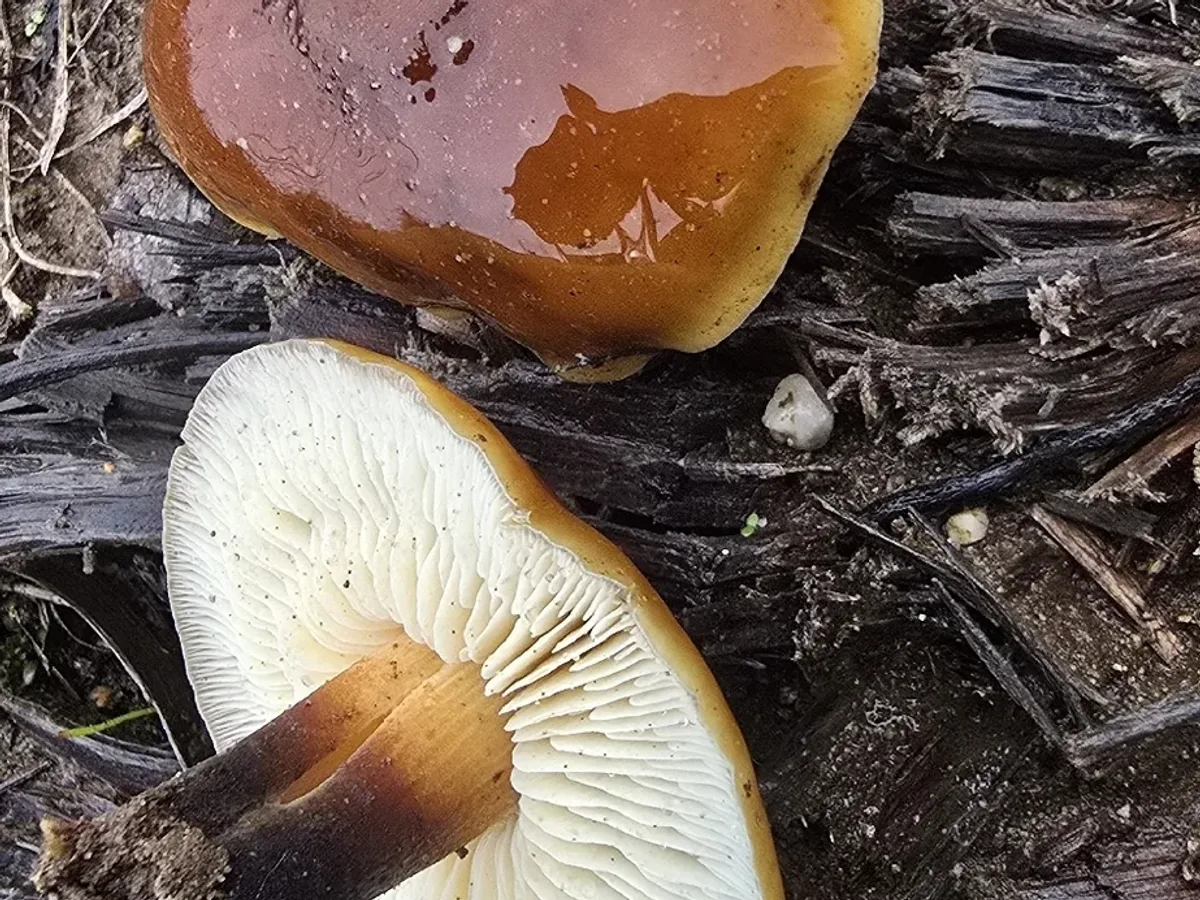 Leanne Stacy Reitan (CC0)
 © Kathleen Dobson (CC BY 4.0)
 © Kathleen Dobson (CC BY 4.0)
 © Licheng Shih (CC BY 4.0)© Licheng Shih (CC BY 4.0)© Kathleen Dobson (CC BY 4.0)
Good to eat, once you have identified it with certainty and cooked it through.
Never eat a mushroom you are not 100% sure of - check the look-alikes below, and always cook wild mushrooms.
How to recognise it
Few mushrooms illustrate the plasticity of fungal development as vividly as cultivated enoki. Under near-total darkness and elevated CO₂ - the twin stresses of a commercial grow-bag - the fruitbody responds by stretching its stipes to extraordinary lengths (12-20 cm in commercial product) while suppressing cap expansion to a pale button of 0.5-2 cm diameter. The entire cluster blanches to white because light is required to trigger carotenoid synthesis.
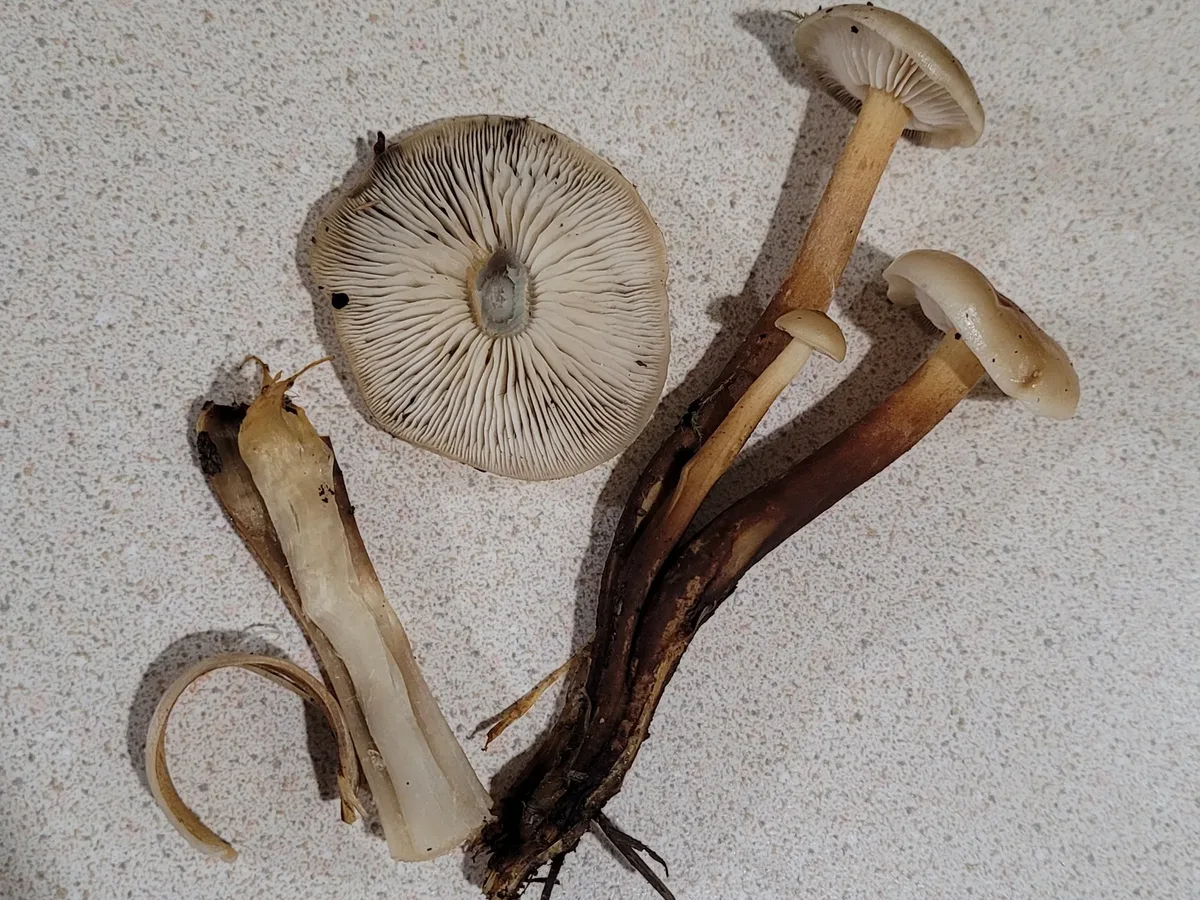
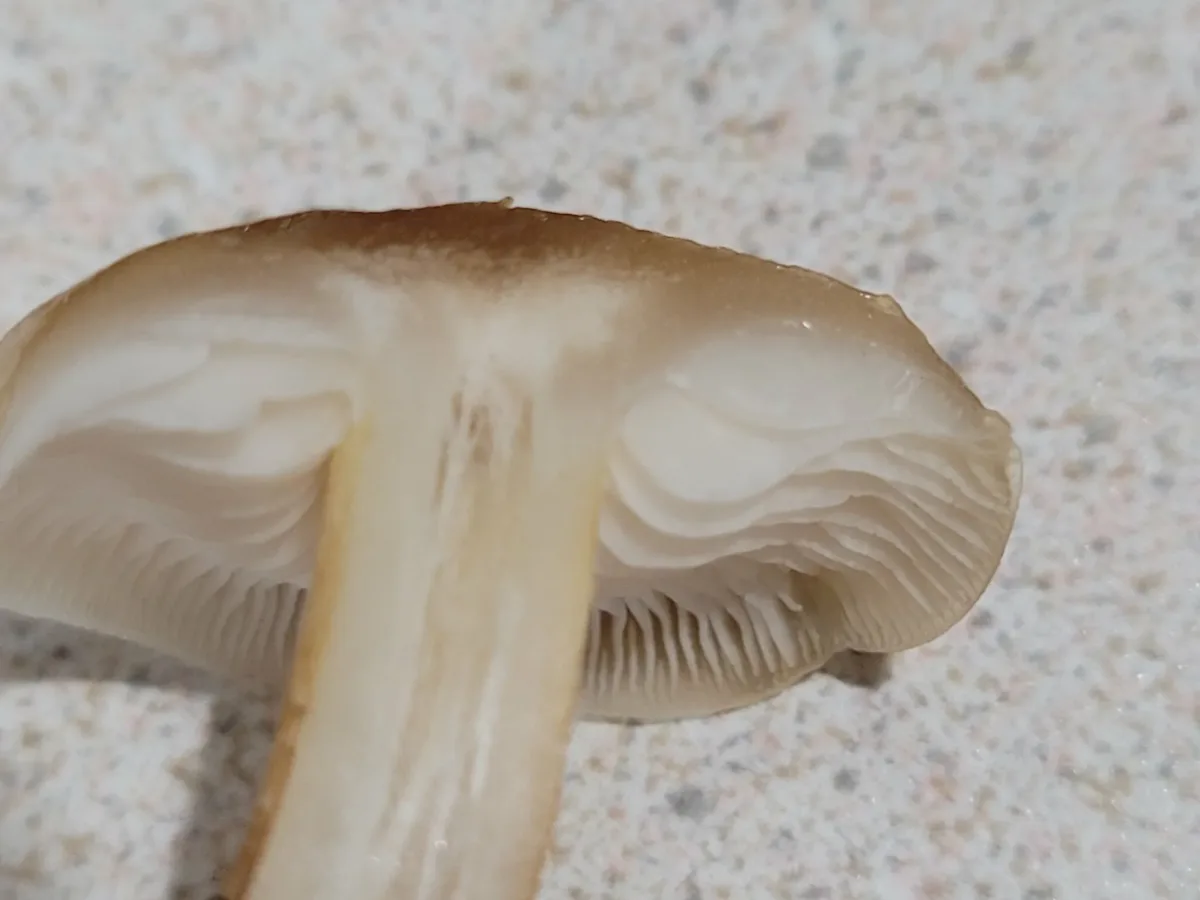
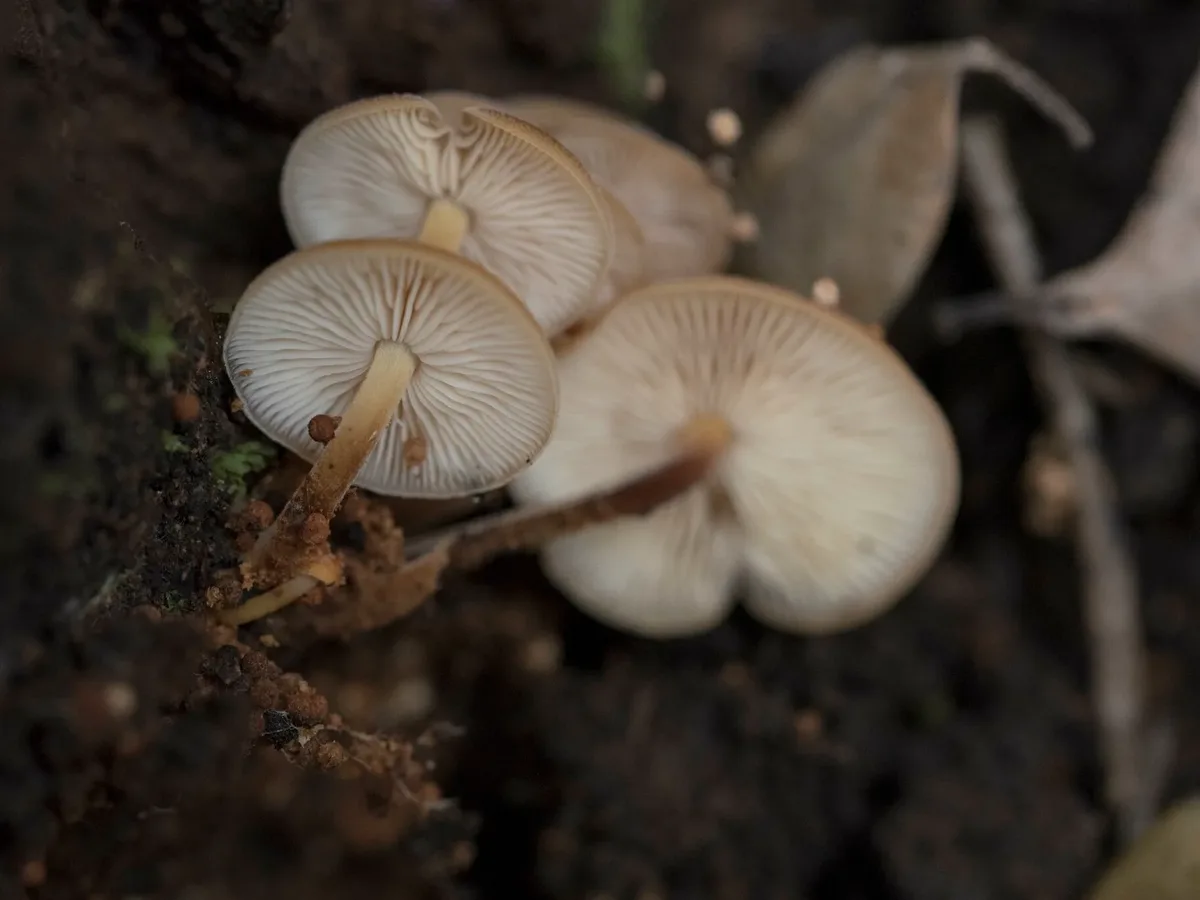
In the wild the same genome produces something strikingly different: caps 2-8 cm across, honey-yellow to orange-brown, with a smooth surface that becomes viscid in wet weather. Stipes are 3-8 cm long, brownish-ochre above, shading to a characteristically dense, dark velvety or velutinous covering of brown hairs toward the base - a texture so consistent that it anchors one of the mushroom's English names, 'velvet foot'. The gills are pale cream to yellowish, broad, and moderately crowded.
Bunashimeji (Hypsizygus marmoreus) is quite distinct: the mature cap (3-7 cm) shows irregular buff-brown tones with faint water-stain-like mottling that gives the marbling impression, the gills are whitish and closely spaced, and the stipe is solid, white, and unremarkable. The cultivated white bunapi form loses the mottling.
Nameko (Pholiota microspora) is unmistakable at close range: an amber-orange convex cap (2-5 cm) enclosed in a heavy gelatinous pellicle that slides off in a slick sheet, young specimens with a partial veil that breaks into a rudimentary ring.
Where & when it grows
Habitat
All three species are saprotrophic on hardwood, operating as efficient lignocellulose decomposers rather than forming the mycorrhizal partnerships that define so many prized wild mushrooms.
Wild Flammulina filiformis colonises stumps and fallen trunks of broadleaf trees - historically described from birch (Betula spp.) and paper mulberry (Broussonetia papyrifera) but recorded from many hardwood genera across its East Asian range.
Hypsizygus marmoreus is closely associated with beech (Fagus spp.) in montane forest, often fruiting from wounds or cavities on living trees as well as from deadwood - a semi-parasitic habit shared with a handful of other white-rot fungi. Nameko (Pholiota microspora) likewise favours beech and other broadleaf logs in humid, shaded ravines.
In commercial production all three are grown on sterilised sawdust substrate (typically beech, oak, or rice-bran-enriched mixes) sealed in polypropylene bags or bottles, reproducing the enclosed, moist microenvironment of a forest log.
Wild populations of all three exist in China, Korea, and Japan, with Flammulina also recorded across temperate Eurasia, though the East Asian strains are taxonomically distinct from the European velvet shank (Flammulina velutipes sensu stricto).
When
Wild Flammulina filiformis occupies an unusual ecological niche among forest fungi: it is an obligate cold-season fruiter, initiating fruitbodies as deciduous trees shed their leaves and temperatures drop toward the freezing point.
Fruiting runs from late autumn through winter and into early spring. The genus is physiologically adapted to synthesise its structural proteins and membranes efficiently at 0-12 °C, and individual fruitbodies can survive brief episodes of freezing and thaw without structural collapse - a tolerance involving the accumulation of cryoprotective compounds in mycelial cells.
This cold-preference is exploited directly in commercial cultivation, where grow-rooms are chilled to 5-10 °C to initiate pinning. Both wild and cultivated enoki share the same cold window, while bunashimeji and nameko are also predominantly autumn-winter croppers in the wild, their commercial counterparts fruited year-round in insulated facilities.
The winter timing of wild enoki is ecologically consequential in a foraging context: it coincides precisely with the fruiting window of Galerina marginata, the deadly lookalike, making season alone unreliable as a distinguishing criterion.
How it grows
Flammulina filiformis is among the most commercially productive mushrooms on earth. That status rests on a combination of:
- fast mycelial growth
- tolerance of simple lignocellulosic substrate
- forgiving fruiting conditions
The commercial cycle from inoculation to first harvest typically runs 45-70 days.
China's national output of enoki was estimated at approximately 1.57 million tonnes in 2010 and has grown substantially since. Japan adds roughly 140,000 tonnes annually, with most Japanese product grown in individual plastic bottles from which the elongated clusters emerge in a uniform upward column.
Hypsizygus marmoreus (bunashimeji) posed a serious cultivation challenge for decades, due to the belief - now partially revised - that wild strains required mycorrhizal cues. The commercially farmed varieties are fully saprotrophic, and Japan's bunashimeji industry now produces hundreds of thousands of tonnes per year.
Nameko (Pholiota microspora) is also widely farmed, its gelatinous cap arising from a polysaccharide-rich mycelial exudate that the substrate releases at harvest.
In the wild, the mycelium of all three persists within decaying wood for multiple seasons, producing flushes repeatedly from the same log as conditions cycle through wet-cold periods. It breaks lignocellulose down through the action of white-rot enzyme systems (laccase, manganese peroxidase) that are actively studied for industrial bioconversion applications.
Fruiting conditions
Wild Flammulina fruits in cold weather (late autumn through winter, even under snow), tolerating near-freezing temperatures; cultivated forms are grown year-round under controlled conditions.
Look-alikes
The single critical lookalike for this species group is Galerina marginata (funeral bell), which shares nearly every gross habitat and timing feature with wild Flammulina: both grow in clusters on decaying hardwood, both fruit in autumn and winter, and young Galerina at the button stage can closely resemble wild enoki in cap colour (honey-brown) and size.
Galerina marginata contains alpha-amanitin, the same cyclic peptide amatoxin responsible for Amanita phalloides fatalities. It inhibits RNA polymerase II, causing delayed-onset hepatorenal failure that has proven fatal in confirmed cases.
The distinguishing features are structural and reliable when examined carefully:
- 1Stipe ring: Galerina bears a fibrous, skirt-like annulus on the stipe that persists into maturity (though it may erode with age and rain - check the stipe surface for a ring scar). Wild Flammulina filiformis has no ring at any stage.
- 2Spore print: Galerina produces a distinctive rusty-brown print; Flammulina prints white.
- 3Stipe texture: wild enoki has the defining dark velvety covering of short brown hairs on the lower stipe - absent in Galerina.
No other species in this group has a documented deadly lookalike. Cultivated forms sold in sealed retail packaging carry no meaningful lookalike risk.
Galerina marginata grows on wood in the same winter season as wild enoki and shares the brown-capped, clustered habit. Distinguish by three structural features absent in Flammulina: (1) a fibrous annulus (ring) on the stipe, usually visible as a ragged skirt; (2) a rusty-brown spore print - Flammulina prints white; (3) a smooth stipe lacking the dark velvety texture characteristic of wild enoki. Contains alpha-amanitin; confirmed fatal cases are documented.
In the kitchen
Picking & cleaning
Cultivated enoki, bunashimeji, and nameko are almost universally purchased rather than foraged, and the harvest method reflects this: the intact cluster is cut or twisted at the sawdust line, and the compacted lower stipe section - dense with substrate - is trimmed away before use.
For cultivated enoki the trimming removes 2-4 cm of the base, leaving clean white strands. For bunashimeji the cluster base is a single woody plug from which individual stipes diverge; cut across the base and the cluster separates naturally.
Wild Flammulina, where foraged by experienced harvesters, is taken from the log with a knife at the stipe base to leave the mycelium undisturbed for future flushes.
Wild picking requires unambiguous confirmation of species identity before anything is collected. The minimum checks are:
- the presence of a velvety dark-brown stipe base
- a white spore print
- the absence of a stipe ring
Any cluster on winter deadwood that shows a ring on the stipe, a rusty-brown spore print, or a smooth stipe surface should be left in place. If there is any uncertainty, do not pick.
Cooking
Enoki's long white strands are prized for their delicate texture and mild, faintly sweet flavour. They need only brief heat - 60-90 seconds in hot soup or broth is enough - and longer cooking causes them to become limp and lose their visual appeal.
They are a fixture in Japanese hot pot (nabe, shabu-shabu) and Korean budae jjigae, and in Chinese cuisine they are frequently wrapped in thin slices of beef or pork before being briefly seared or dipped in hot broth. A simple preparation - strips of enoki rolled into bacon rashers and grilled until the bacon crisps - has become widely popular across East Asia and beyond.
The wild brown form has a firmer stipe that benefits from slightly longer cooking.
Bunashimeji is prized for its firm, compact flesh and pleasantly bitter undertone that mellows on heating. It holds its structure through long sautéing, braising, and roasting, making it a good candidate for pan-frying in butter until golden, or roasting with soy and sesame oil. It is equally at home in pasta, risotto, or miso soup.
Nameko's defining attribute is its gelatinous pellicle: the thick slime dissolves partially on heating and gives miso soup a silky, slightly viscous body. The classic preparation is in miso soup with tofu or alongside grated daikon radish, where the slime texture is considered a textural asset. Nameko also pairs well with dashi-based sauces and can be lightly pickled in rice vinegar for use as a condiment.
Good to know
All three cultivated species - enoki (Flammulina filiformis), bunashimeji (Hypsizygus marmoreus), and nameko (Pholiota microspora) - are widely eaten without issue and classified as safe edibles.
However, commercially packaged enoki in particular has been linked to multiple documented outbreaks of listeriosis caused by Listeria monocytogenes contaminating the packaged product. Several of these outbreaks (notably in the United States in 2020) resulted in hospitalizations and deaths among immunocompromised individuals.
The contamination is a post-harvest packaging issue, not intrinsic to the mushroom, but it establishes a clear food-safety rule: cultivated enoki should be cooked thoroughly before consumption and must not be eaten raw, especially by pregnant individuals, the elderly, or the immunocompromised.
Nameko is traditionally cooked - its gelatinous surface is unpleasant raw and the mushroom is universally served heated. Bunashimeji is also routinely cooked.
The wild form of Flammulina carries additional risk from Galerina marginata confusion (see lookalikes). This hazard is entirely avoided by purchasing cultivated product from reputable suppliers and not foraging wild enoki unless identification is certain beyond any doubt.
A reference guide - never an edibility guarantee. When in doubt, leave it out.