Fistulinella prunicolor
Fistulinella prunicolorsyn. Boletus prunicolor, Pulveroboletus prunicolor
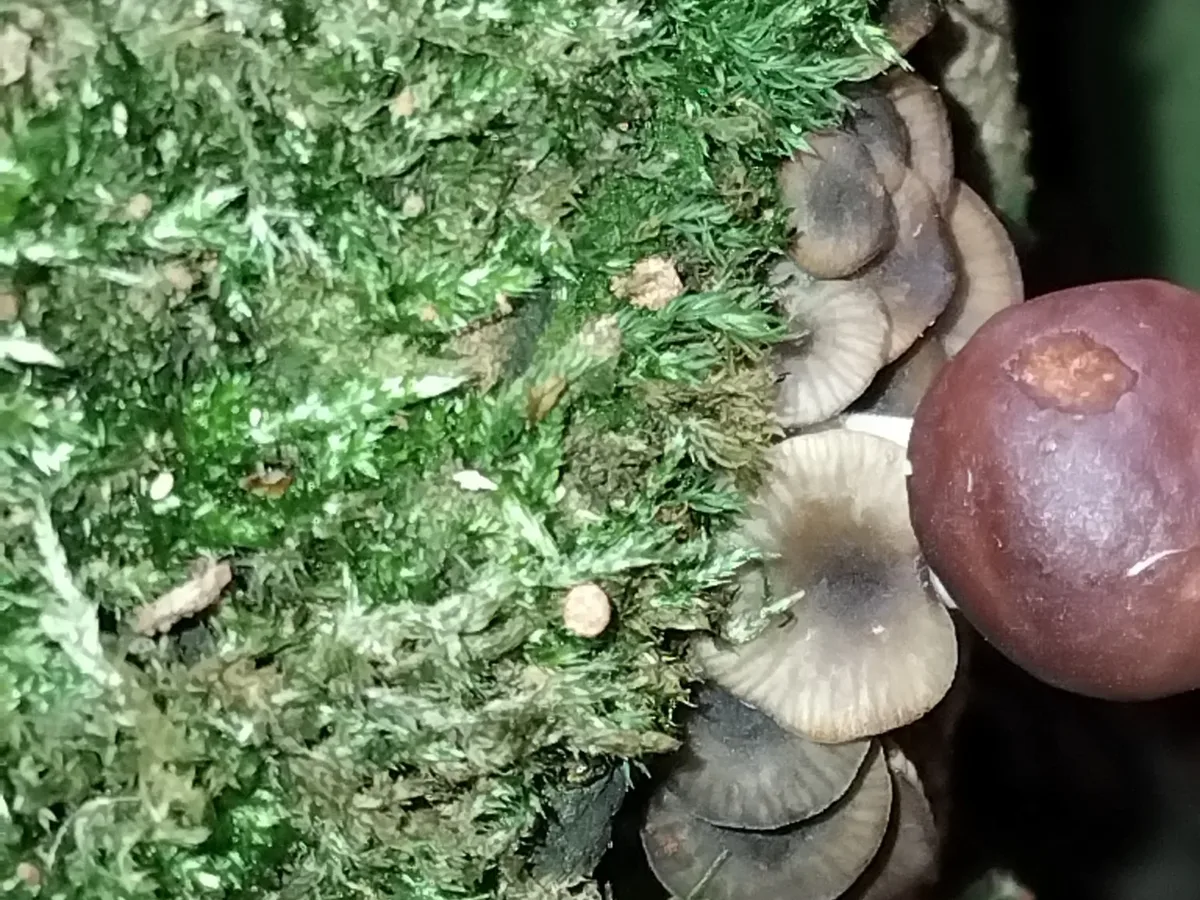 © Sofia Zvolanek (CC BY)
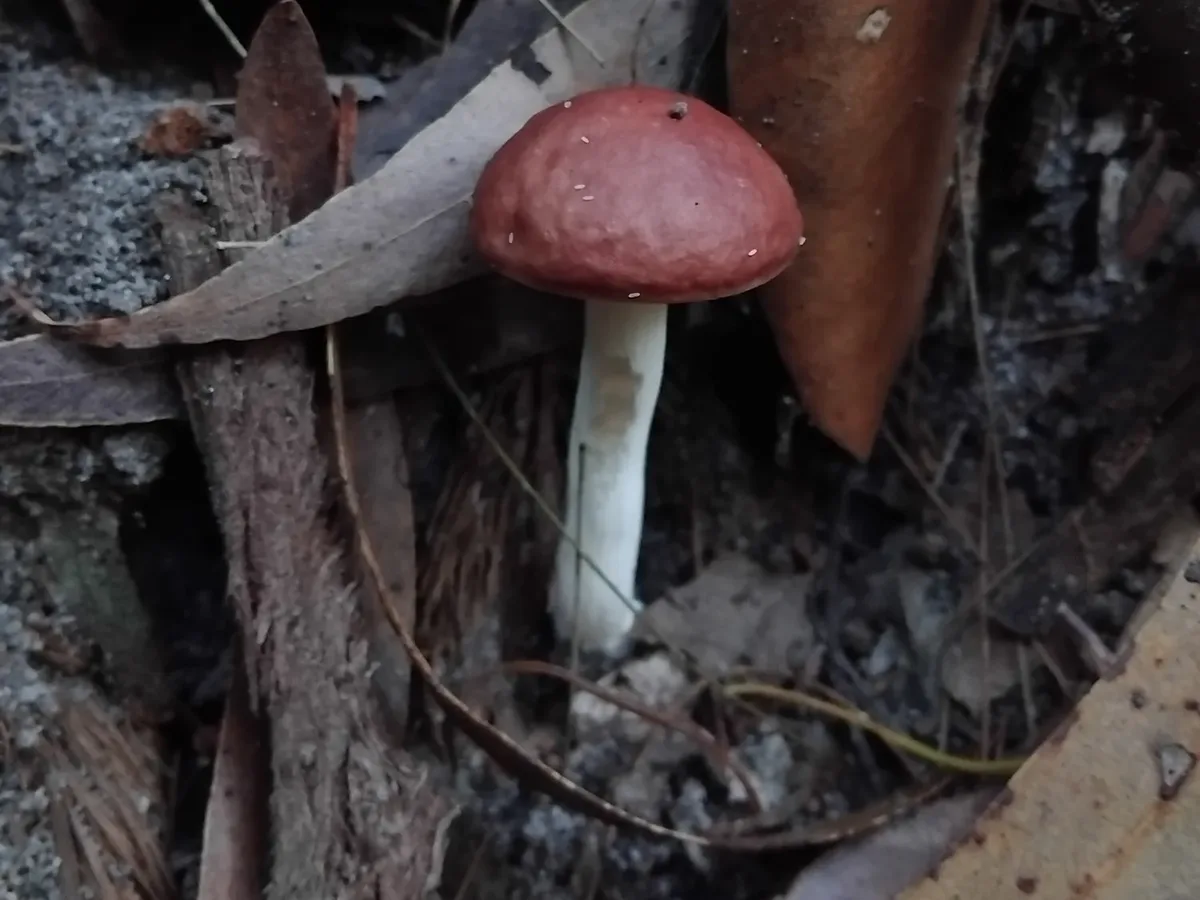 © Sofia Zvolanek (CC BY)
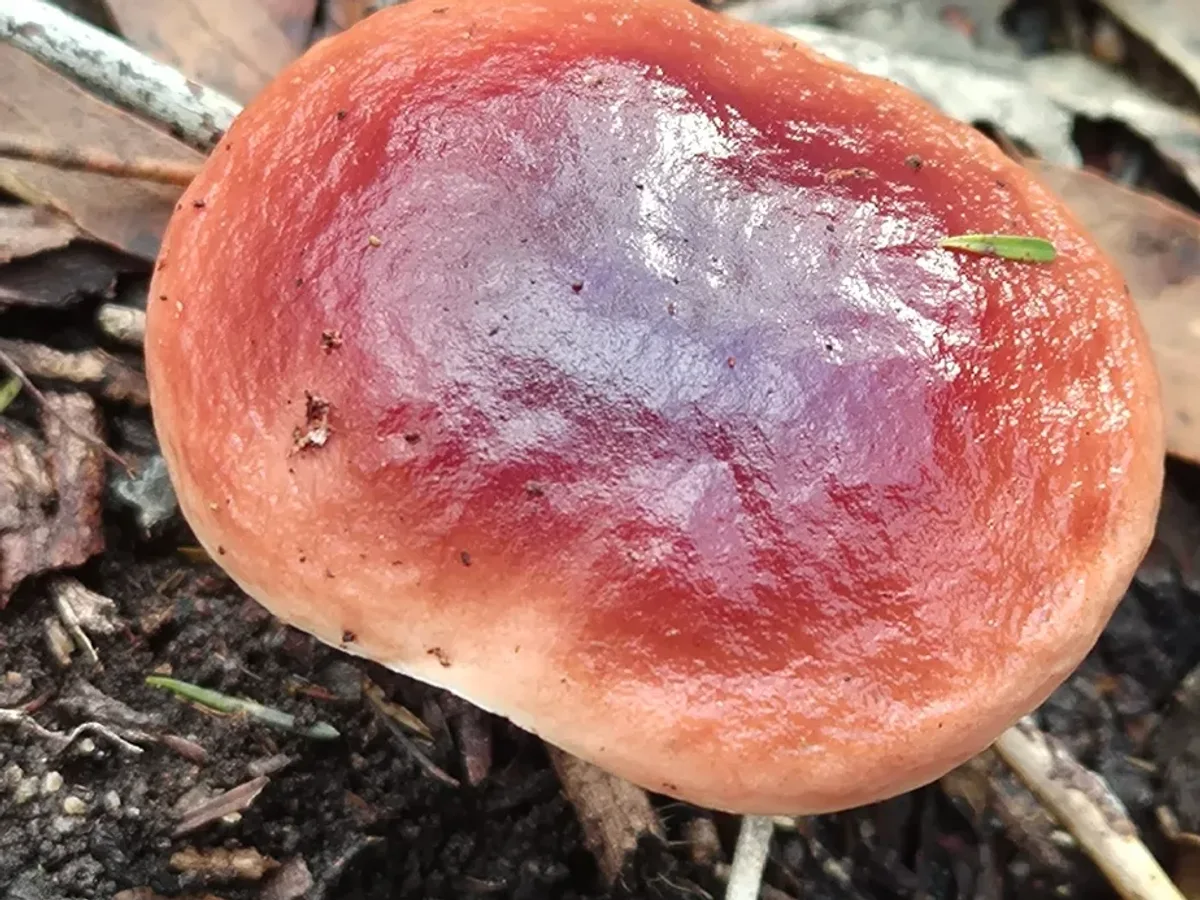 Eileen Laidlaw (CC0)
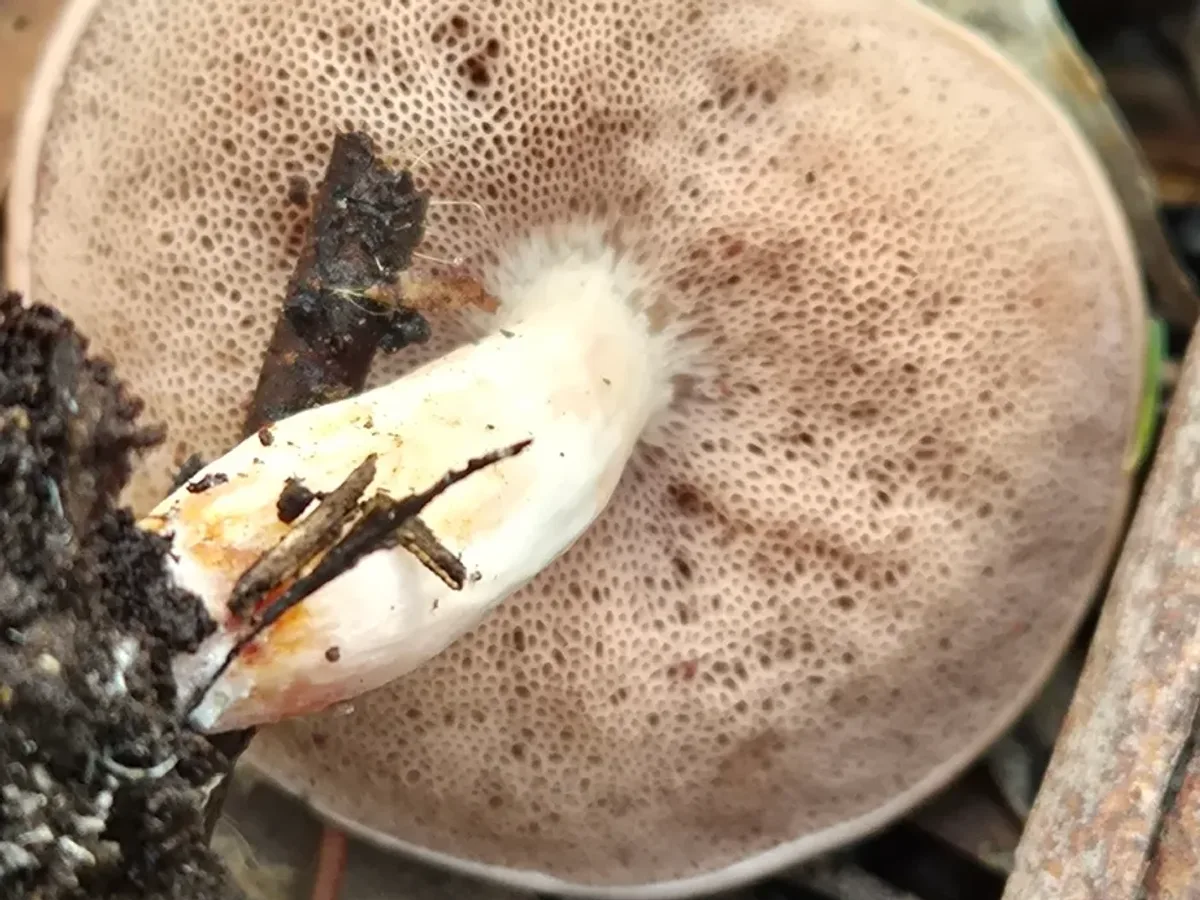 Eileen Laidlaw (CC0)
 © Sofia Zvolanek (CC BY)
 © Sofia Zvolanek (CC BY)
 © Sofia Zvolanek (CC BY)© Sofia Zvolanek (CC BY)© Sofia Zvolanek (CC BY)
Edible only with the right preparation - or safe for some people but not others. Learn the caveats first.
How to recognise it
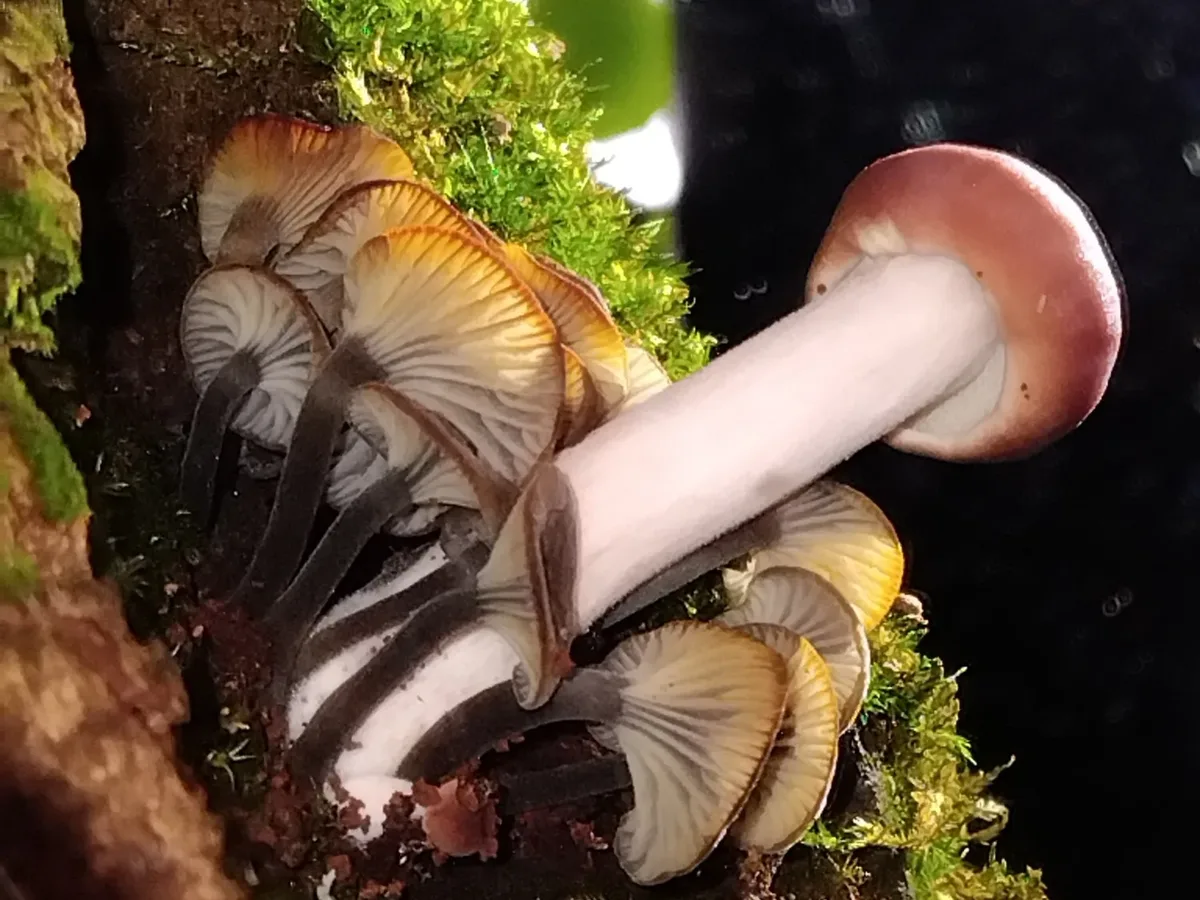
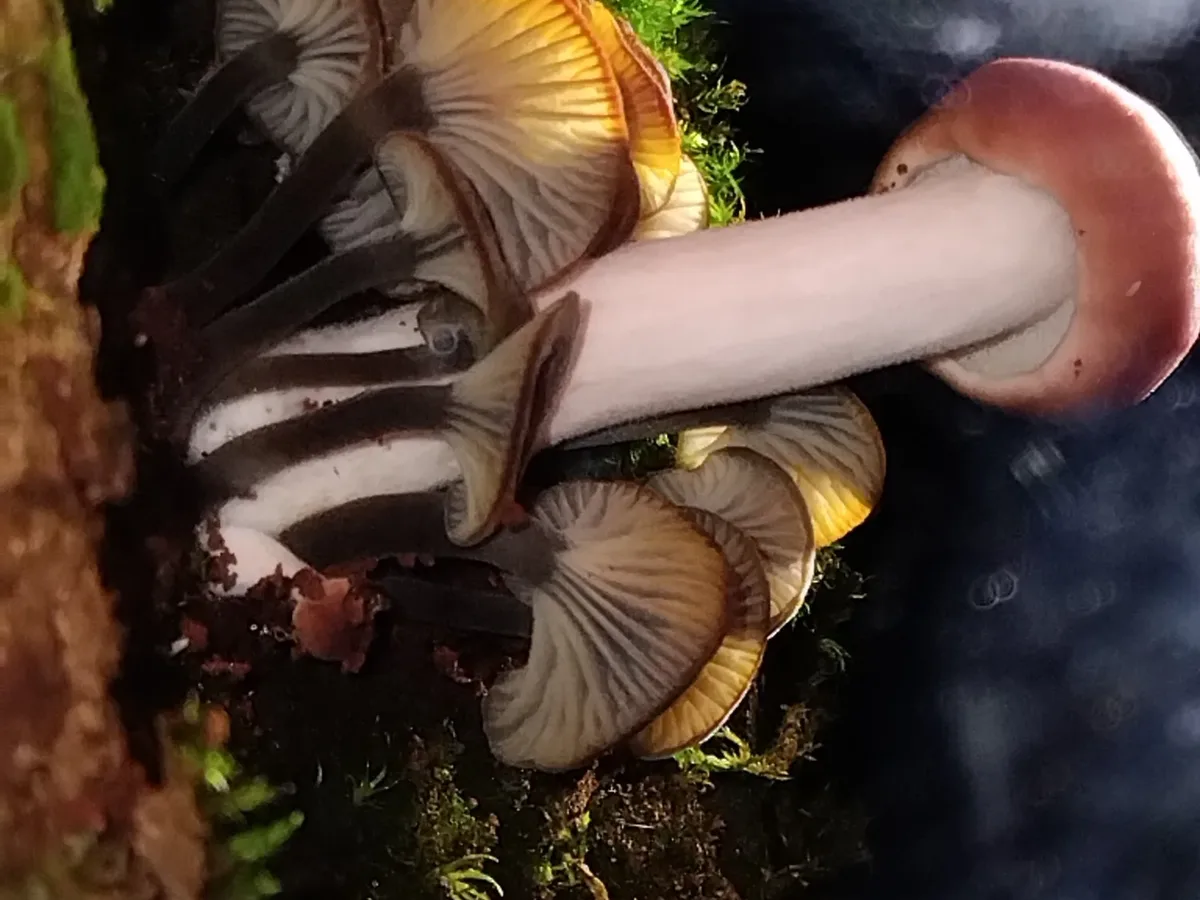
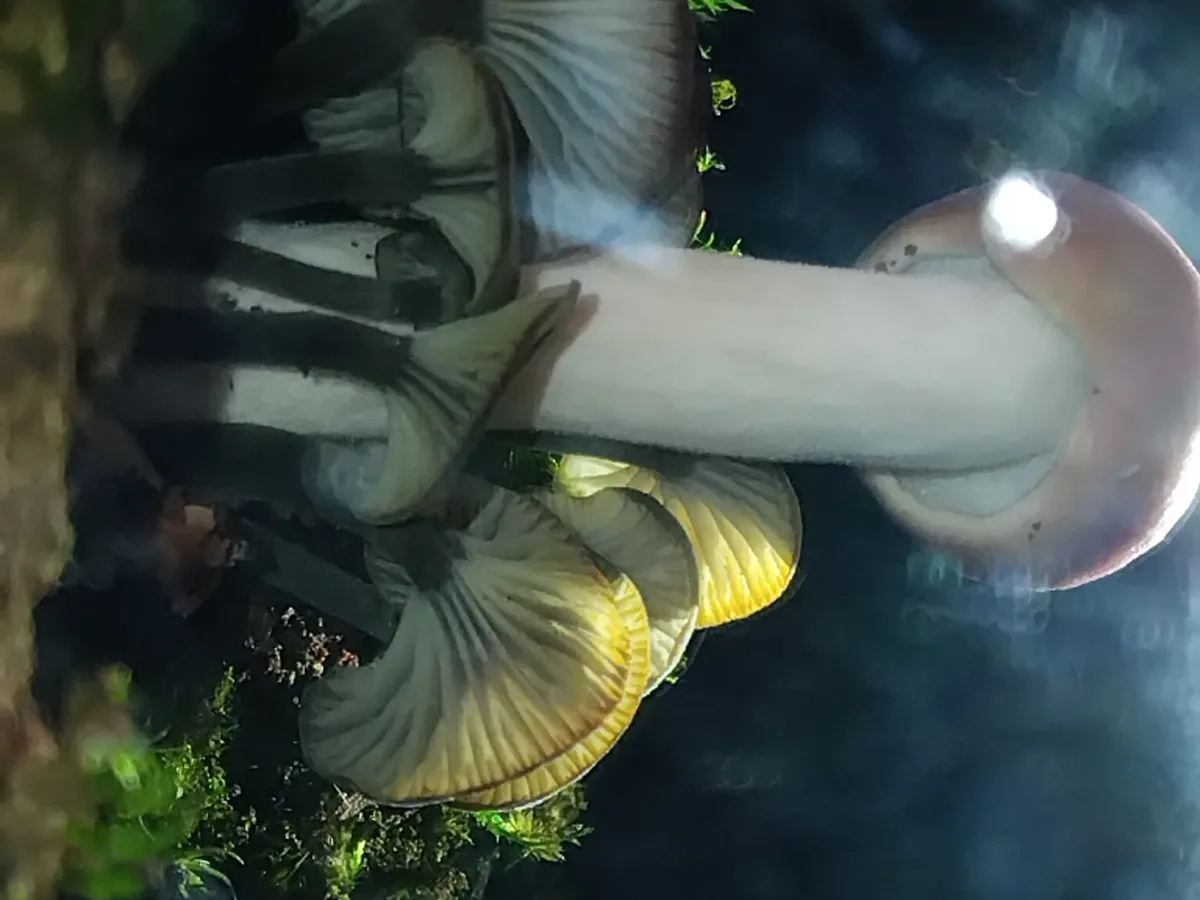
Fistulinella prunicolor is one of the most visually distinctive of Australia's native boletes, identifiable at a glance by the plum-purple to wine-red cap - a colour unlike almost any other Australian bolete. The word prunicolor in the Latin name means exactly that: plum-coloured, and the name is honest.
Cap
The cap (4-10 cm) is broadly convex when young, flattening with age, with a dry surface that feels finely granular or powdery (pruinose) at close range, like the frosted bloom on a fresh plum.
The colour is most vivid in young specimens fresh from the ground - a rich reddish-violet or dark lilac-red - and fades toward dull reddish-brown or greyish-purple as the cap ages or dries.
Pores
Turn the cap over and the pore surface is yellow to lemon-yellow when fresh, ageing to ochre, angular-pored, and at most only weakly and slowly bluing where bruised or cut - in contrast to the instant dramatic bluing of species like Boletellus obscurecoccineus.
Stem
The stem is similarly pruinose, yellowish above and flushed purplish-lilac below, without any ring, volva or reticulate network.
Flesh
Cut the flesh and it is pale yellow throughout, barely changing colour.
Spore print is olive-brown. The combination of plum-purple dry pruinose cap, yellow pores, non-staining pale flesh, and olive-brown spore print is the identification suite.
Where & when it grows
Habitat
This bolete lives as a hidden partner to living Eucalyptus trees, woven into their root tips in an ectomycorrhizal exchange - the fungus provides the tree with phosphorus and water-scavenging capacity from the soil in exchange for sugars from photosynthesis.
The fruiting bodies we see above ground are only the brief sexual stage of an organism that may have been underground for decades.
Fistulinella prunicolor is known from subtropical to warm-temperate eastern Australia, particularly southeastern Queensland and northern New South Wales, in dry sclerophyll forest and open eucalypt woodland.
The soil is typically sandy to loamy, acidic, and well-drained. Find it growing among leaf litter and sparse understorey beneath mature Eucalyptus, singly or in small loose groups.
Because it depends entirely on living native trees, it simply does not appear in cleared paddocks, pine plantations, or recently disturbed bushland - where you find it, you know you are in ecologically significant intact forest.
When
Fruiting begins in Southern Hemisphere late summer and runs through autumn - broadly February to May, occasionally extending to June in cooler or wetter coastal sites in Queensland and northern NSW.
The peak coincides with the period when soils begin to cool after summer but before mid-autumn dryness sets in: March and April are the months to search.
The practical trigger is a meaningful rain event of 20 mm or more over one to two weeks, combined with soil temperatures falling from their summer peak through the mid-teens Celsius.
Fruit bodies push through within 7-14 days of that trigger, persist briefly, then collapse - they have none of the multi-week durability of shelf fungi. The season is entirely over well before the southern winter arrives.
How it grows
Like all ectomycorrhizal boletes, Fistulinella prunicolor fruits singly or in small scattered groups rather than in dense clusters.
The mycelium is perennial and lives underground throughout the year in a quiet, invisible partnership with eucalypt roots. The above-ground fruit bodies are its seasonal investment in reproduction.
Because the mycelial network is established over years or decades, the same general area reliably produces fruit bodies each autumn when conditions are suitable - a known spot from one season is usually worth returning to the following year.
Fruit bodies develop rapidly once conditions are met, typically over a matter of days, and decompose quickly after spores are shed.
Fruiting conditions
Southern Hemisphere late summer to autumn bolete. Fruiting is triggered when meaningful autumn-onset rainfall (20+ mm over 14 days) coincides with soil temperatures beginning to fall below approximately 22 °C after the summer peak. Flush lag estimated at 7-14 days based on standard ectomycorrhizal eucalypt bolete phenology. Peak fruiting March-April; season ends as soils cool further through June.
Look-alikes
Fistulinella prunicolor's plum-purple pruinose cap is highly characteristic and makes serious confusion with other Australian boletes relatively unlikely for a careful observer. The most realistic confusion risks are within the genus and with other purple-toned boletes.
- Other Fistulinella species in the Pacific-Australian region may share broadly similar coloration and dry pruinose caps, and species-level identification within the genus requires attention to subtle differences in cap colour, stem colour distribution, pore size, and spore dimensions - if any doubt exists between Fistulinella species, treat all as of unknown edibility, since none are confirmed safe to eat.
- Suillus species in Australia (introduced under pine) have a slimy cap and ring on the stem, immediately distinguishing them.
- Native bluing boletes such as Boletellus obscurecoccineus have a very different dark scarlet scaly cap and instantly blue flesh.
No Amanita or other amatoxin-containing species shares the bolete pore structure, so the basic bolete form - spongy tubes rather than gills - already excludes the most lethal confusion risks.
There are no known deadly species that could be convincingly confused with Fistulinella prunicolor by any moderately experienced forager.
A native Australian bolete in similar habitat, but Austroboletus lacunosus has a distinctive deeply pitted (lacunose) brownish-red stem surface and a pale to reddish-brown cap that lacks the clear plum-violet tones of Fistulinella prunicolor. Its pore surface is white to pale cream rather than yellow.
Several poorly resolved Fistulinella species in the Australian-Pacific region share the dry pruinose cap and yellowish pore surface. Separating them to species level requires careful attention to cap colour nuances, stem colour patterns, pore dimensions, and microscopic spore measurements. All should be treated as of unknown edibility - none are confirmed safe to eat.
Also native to eastern Australia under Eucalyptus, but Boletellus obscurecoccineus has a dark crimson-scarlet cap covered in coarse fibrous scales (not smooth-pruinose), bright lemon-yellow pores that blue intensely and instantly on contact, and flesh that turns vivid blue throughout within seconds of cutting - all features absent in Fistulinella prunicolor. The colour is also quite different: scarlet-crimson rather than plum-purple. Treated as a gastrointestinal irritant.
Introduced Suillus boletes (e.g. Suillus luteus, Suillus granulatus) occur under introduced pines in the same geographic region. They are immediately distinguished by a slimy, viscid cap surface (not dry and pruinose), the presence of a ring on the stem in most species, and habitat strictly under pines rather than native Eucalyptus. The cap colour is yellow-brown to ochre, never plum-purple.
In the kitchen
Picking & cleaning
Fistulinella prunicolor is not recommended for collection as a food species. No established culinary tradition exists for this bolete in Australia, and its edibility has not been formally assessed in the scientific literature.
On the precautionary principle that applies to all understudied native Australian boletes, it should be treated as of unknown edibility - which in a safety context maps to caution.
If picking a specimen for scientific identification or photography, cut the stem cleanly at the base with a knife rather than pulling, to preserve the mycelial network for future fruiting.
Do not handle specimens and then touch eyes or mouth without washing hands.
Good to know
Do not eat this species. Fistulinella prunicolor has not been confirmed as edible in any scientific or culinary source, and no established safe-use tradition exists for it in Australia.
The precautionary principle for understudied native boletes is clear: without both a confirmed edible track record and full toxicological clearance, treat as of unknown edibility.
The species is not known to be toxic, but the absence of a confirmed poisoning record is not the same as safety confirmation.
The plum-purple cap is distinctive enough that misidentification as something actively dangerous is unlikely, but eating any wild bolete without certainty of identification and edibility status is inadvisable.
If accidental ingestion of this or any unknown bolete is suspected and symptoms develop, contact the Poisons Information Centre (Australia: 13 11 26; NZ: 0800 764 766) and seek medical advice.
A reference guide - never an edibility guarantee. When in doubt, leave it out.