Marshmallow Bolete
Fistulinella mollissyn. Boletus mollis, Phylloporus mollis
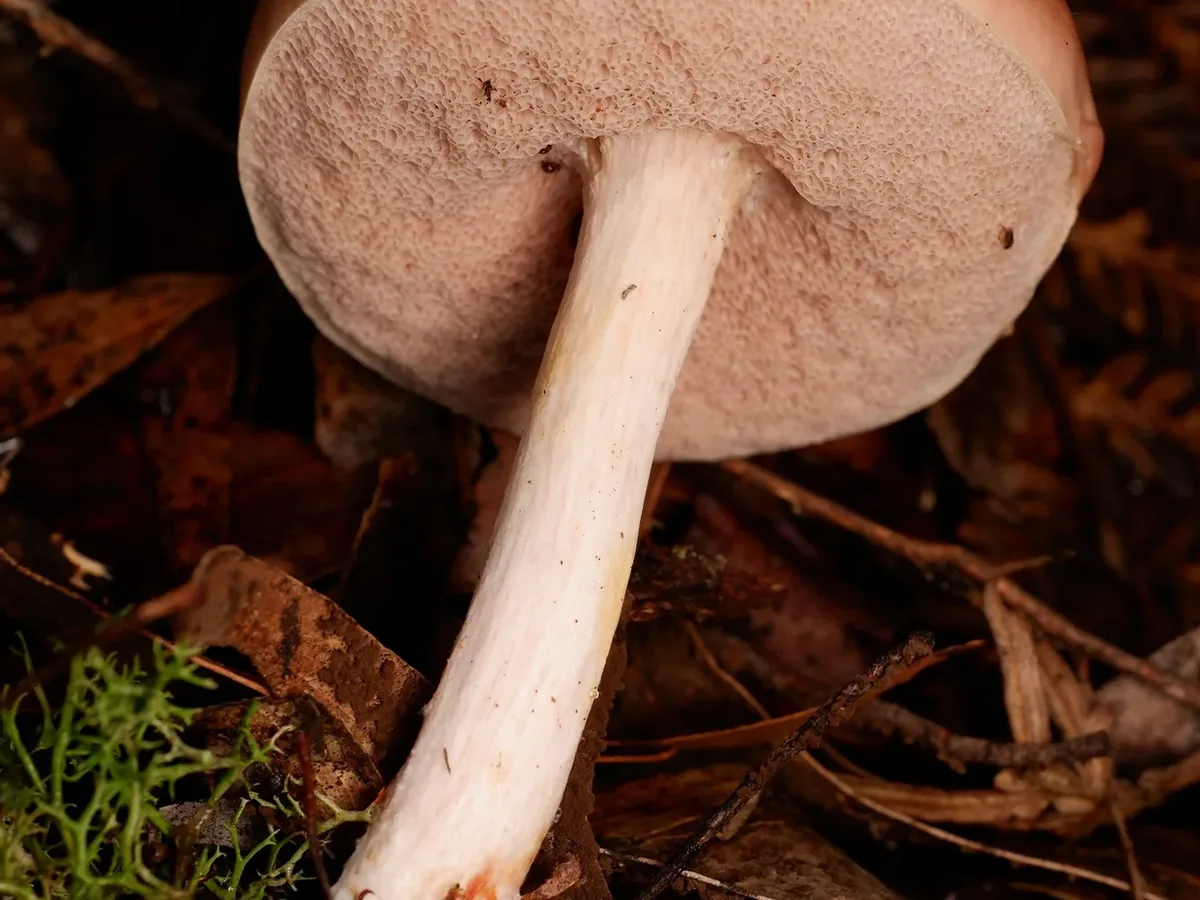 © Heather Merrylees (CC BY)
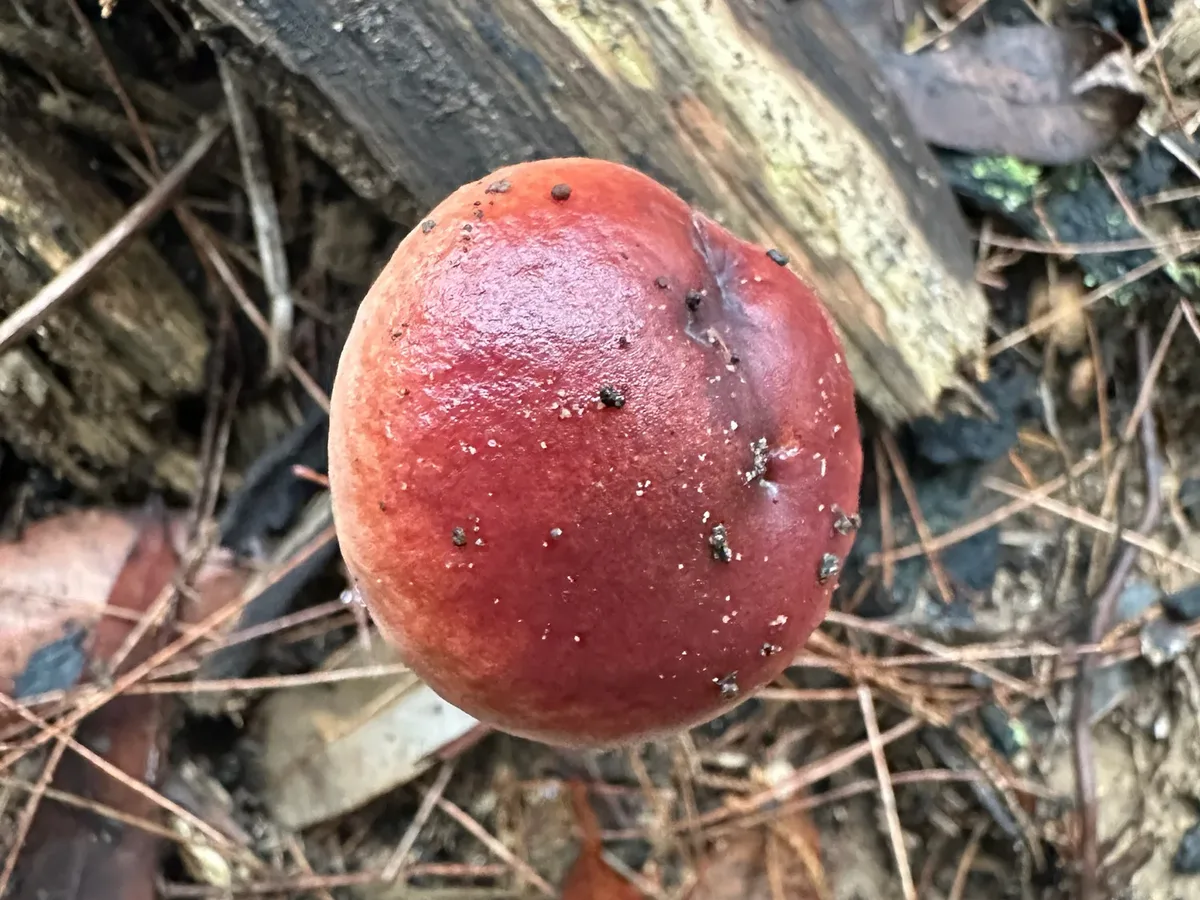 © prossington (CC BY)
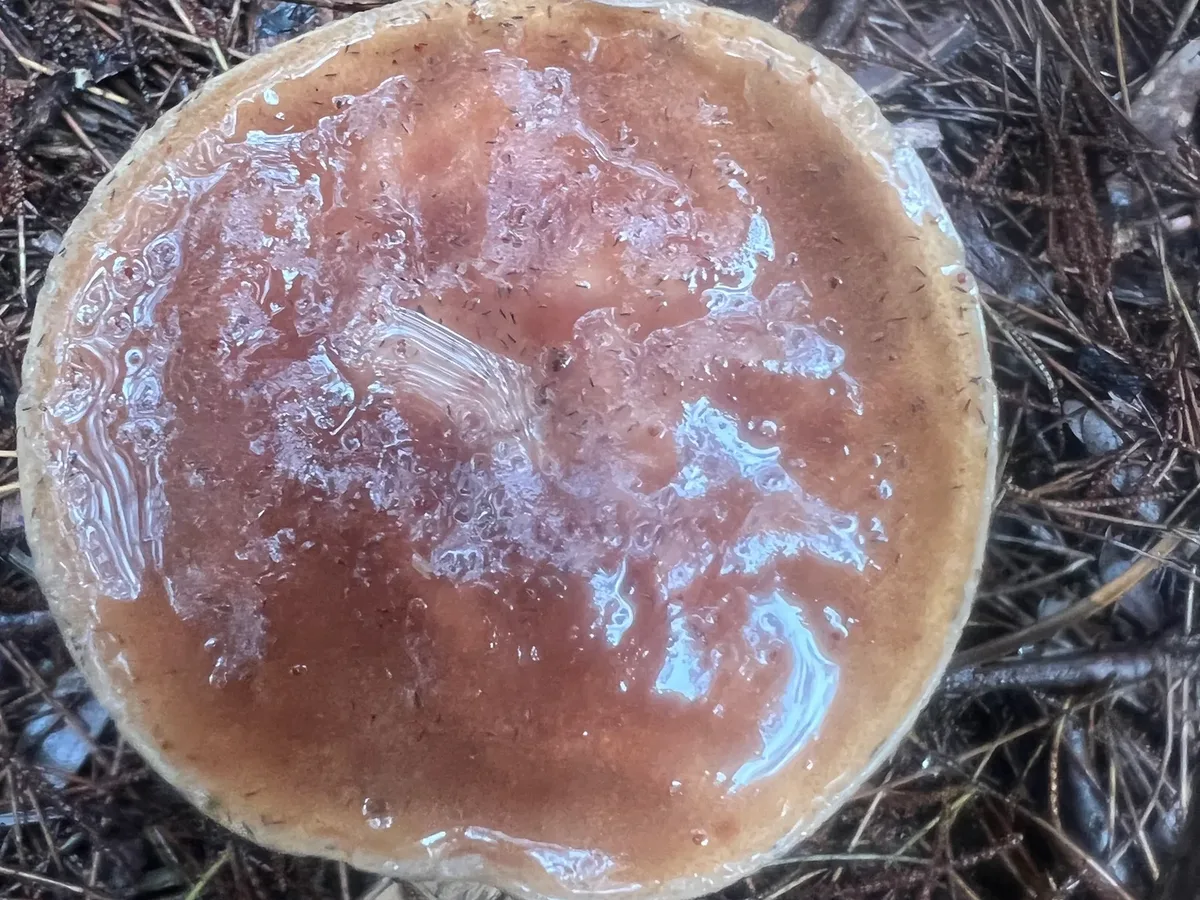 © Steve Llewellyn (CC BY)
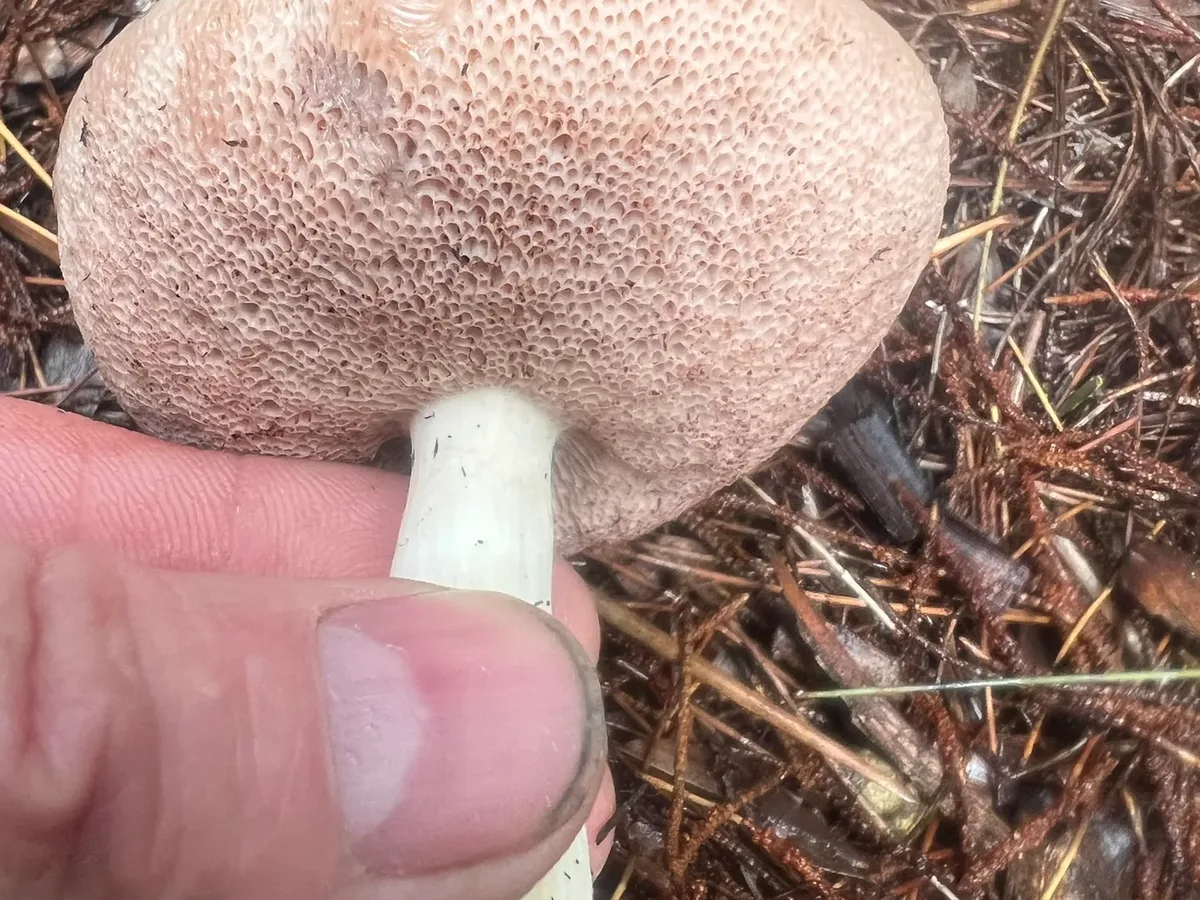 © Steve Llewellyn (CC BY)
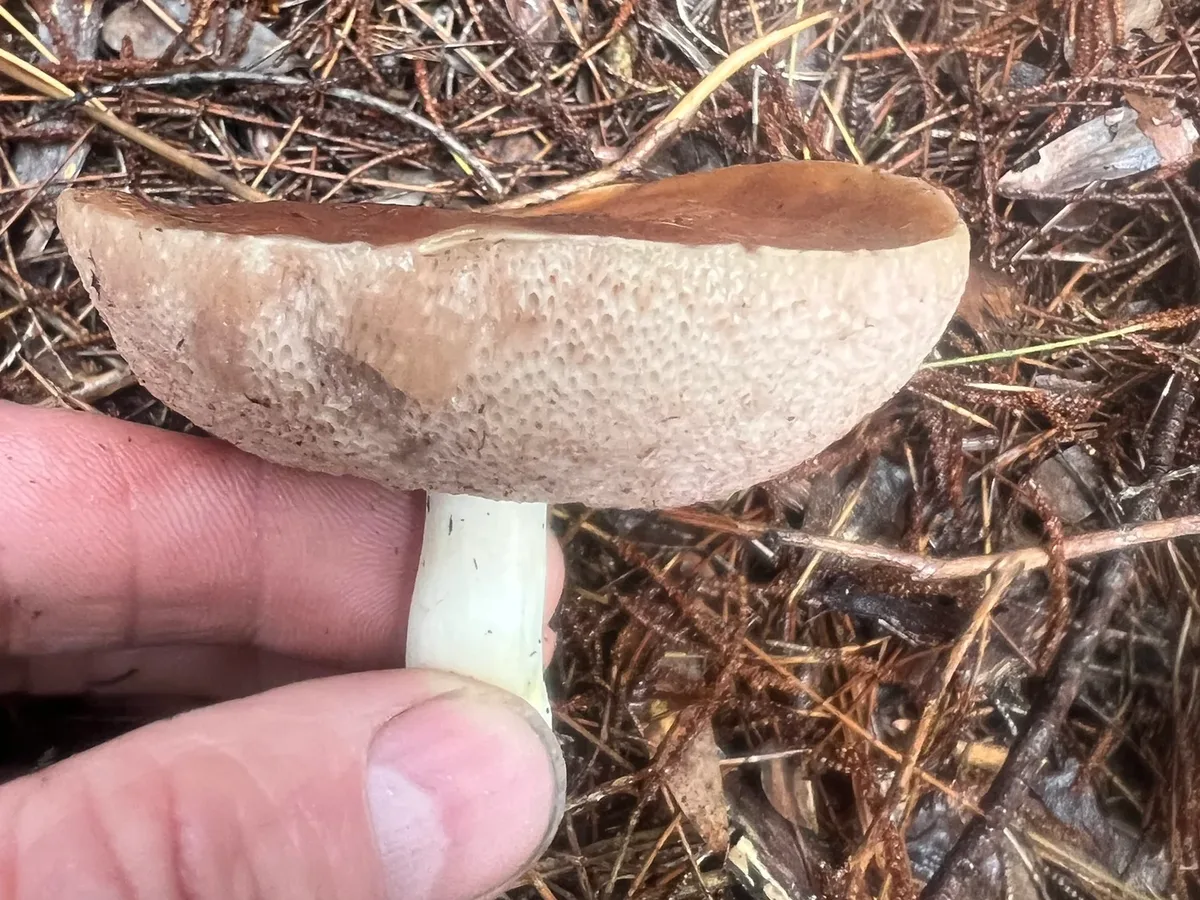 © Steve Llewellyn (CC BY)
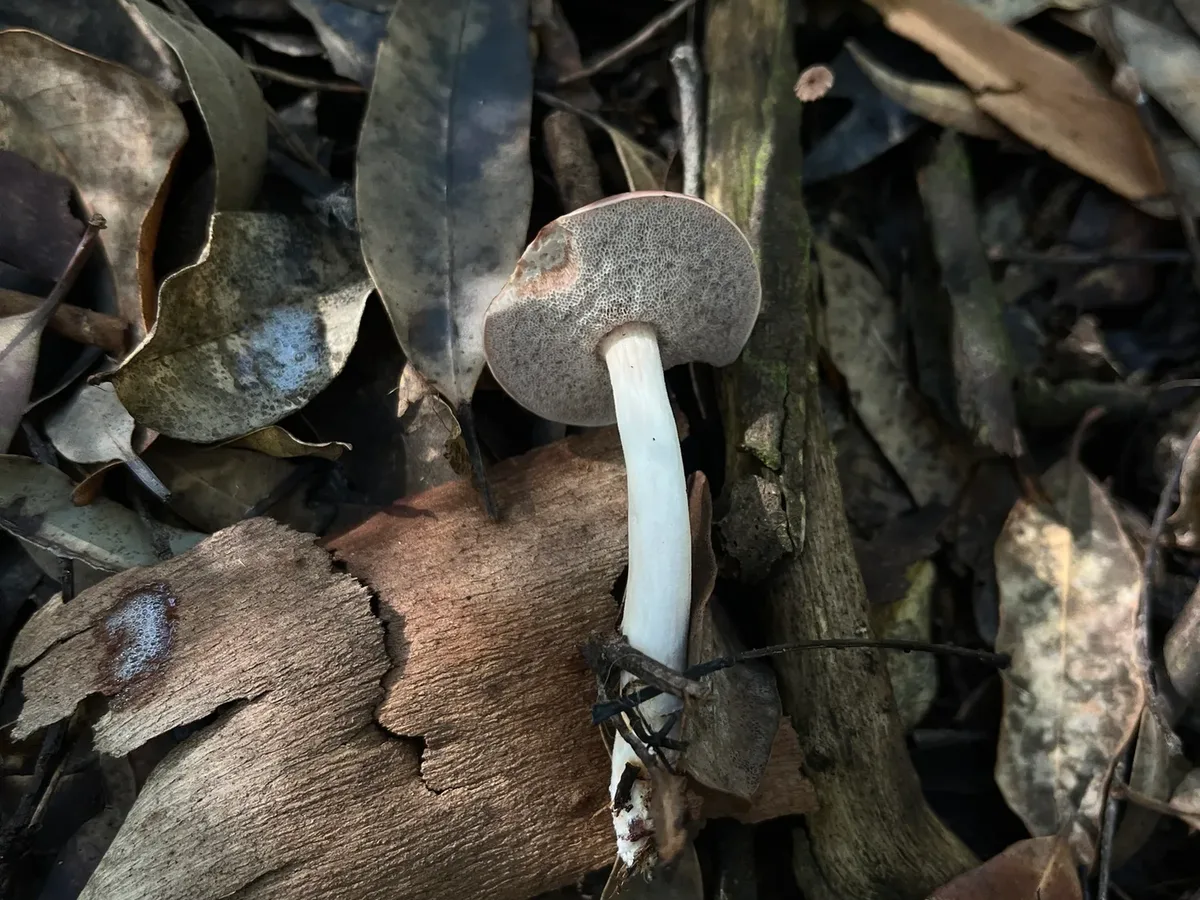 © Todd Huang (CC BY)
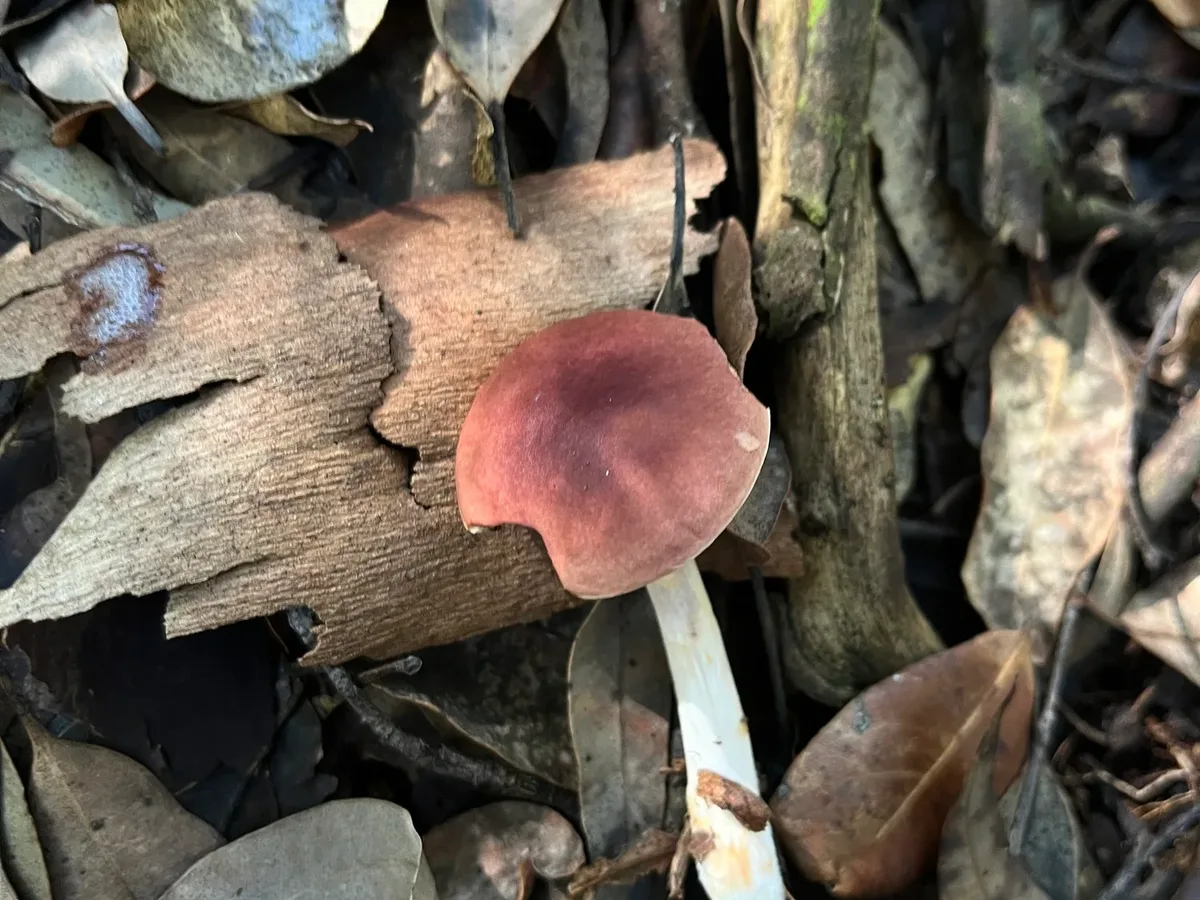 © Todd Huang (CC BY)
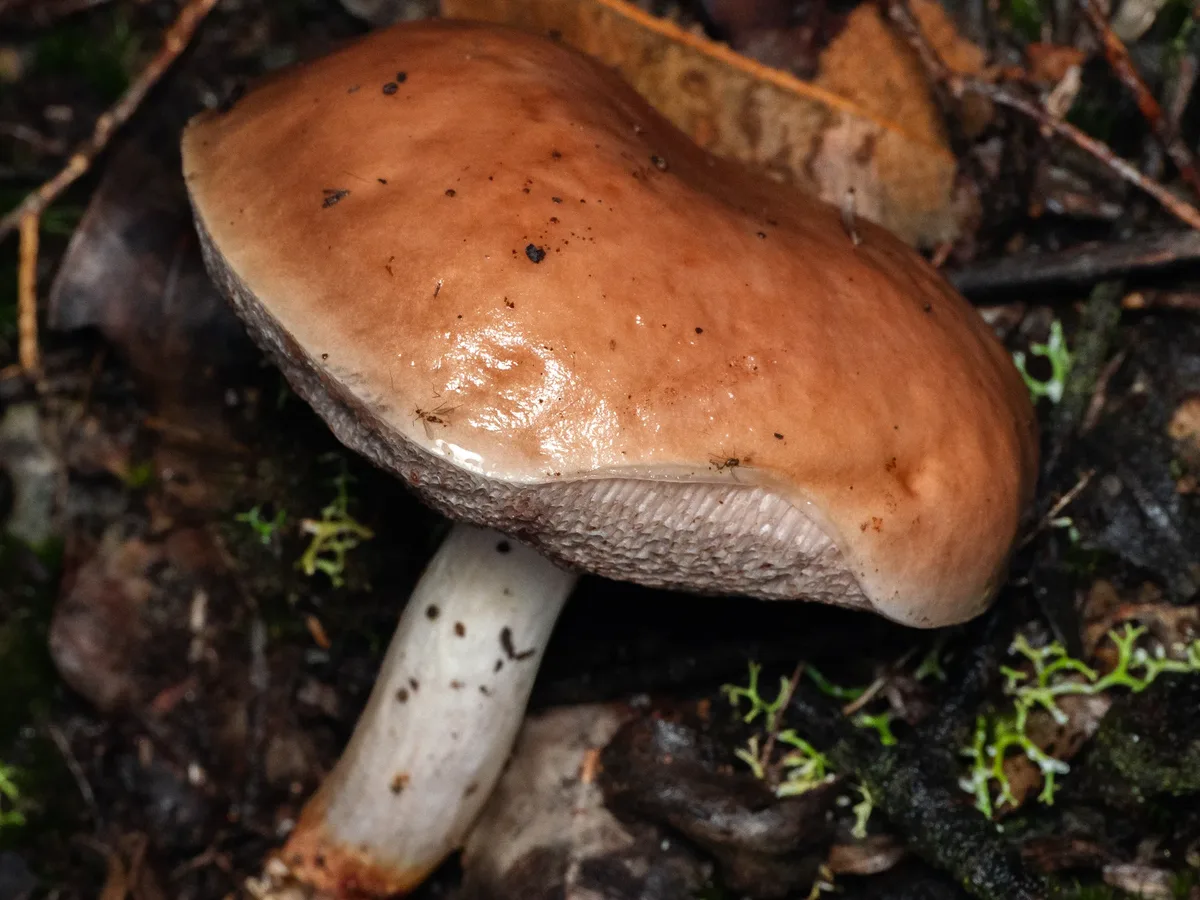 © Austen Armstrong (CC BY)
 © Austen Armstrong (CC BY)© Heather Merrylees (CC BY)© prossington (CC BY)
Edible only with the right preparation - or safe for some people but not others. Learn the caveats first.
Never eat a mushroom you are not 100% sure of - check the look-alikes below, and always cook wild mushrooms.
How to recognise it
Fistulinella mollis is one of the more distinctive pale boletes of Australasian native forest, principally by virtue of what it lacks rather than what it displays: there is no bold colour, no strong odour, no dramatic blue staining, and no pronounced surface texture.
Cap
The cap is broadly domed, opening to nearly flat with age, with a surface that is genuinely smooth and soft - pressing it gently with a fingertip leaves an impression that recovers slowly, giving the marshmallow texture that characterises the species.
The colour is pale and clean: cream, ivory, pale buff, or whitish, occasionally with a faint warm tinge of yellow or pink, always paler at the margin.
Gills / Pores
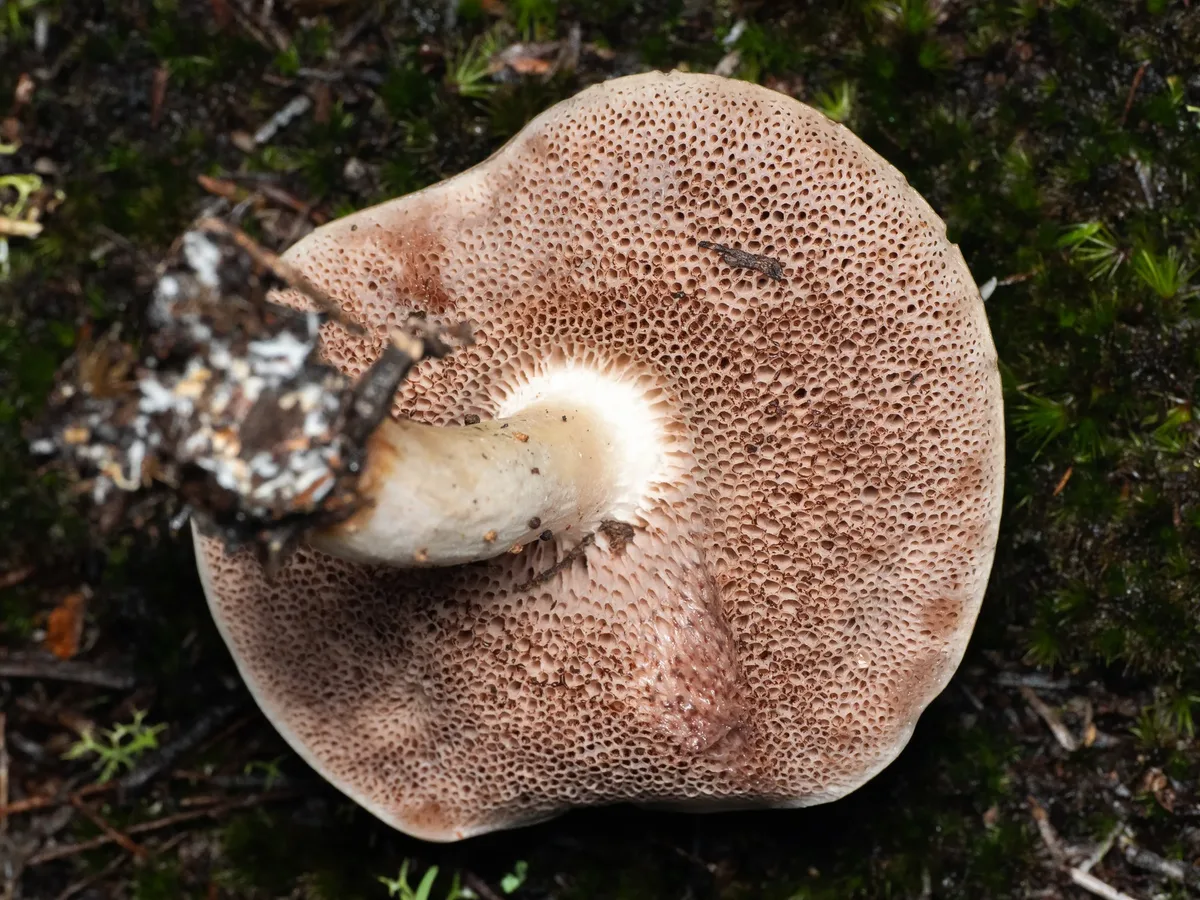
Under the cap, the pore surface is fine and white to cream in fresh specimens, ageing slowly to pale yellowish.
Stem
The stipe is concolorous with the cap, smooth, and without any strong reticulation or pitting.
Flesh
Flesh throughout is white to pale cream, thick, and soft - a quality more pronounced in this species than in most boletes, where firmness is typical.
Critically, cutting or bruising any part of the fruit body does not produce a blue or green reaction - a useful safety check when examining pale Australasian boletes.
The spore print is olive-brown to dull yellowish-brown, consistent with the family.
Where & when it grows
Habitat
An ectomycorrhizal species of mature native Australian and New Zealand forest, Fistulinella mollis cannot establish without its host trees and is confined to undisturbed or well-established native woodland.
In Victoria, New South Wales, and Tasmania, it is associated most often with tall open eucalypt forest - E. regnans (mountain ash), E. obliqua (messmate), and E. delegatensis (alpine ash) on moister soils - and with drier sclerophyll species at lower elevations.
In New Zealand and Tasmanian cool-temperate rainforest, Nothofagus cunninghamii (myrtle beech) and N. menziesii (silver beech) serve as hosts.
The species shows a preference for undisturbed soil with well-developed organic horizons, appearing most reliably where forest has not been logged or significantly disturbed for many decades. This habitat fidelity makes it an informal indicator of forest continuity and maturity.
It is absent from introduced pine plantations, which are instead colonised by Suillus and Rhizopogon species.
When
Fruiting is a Southern Hemisphere autumn phenomenon, triggered by the combination of post-summer soil cooling and the arrival of meaningful seasonal rainfall. Across most of the range this means March through June, with the most reliable and productive flush occurring in April and May.
The physiological cue is primarily soil temperature: as summer heat dissipates and soil temperatures fall through the 10-16 °C range, combined with 20-30 mm or more of rainfall over a two-week period, mycelial activity transitions to reproduction. Caps typically emerge 10-18 days after the triggering rain event.
At higher elevations in the Australian Alps and central Tasmania, the season can begin earlier (late February to March) and may persist slightly longer in sheltered hollows.
Warm, dry autumns compress or delay the season significantly; cold snaps below 4 °C at soil level inhibit fruiting. The species does not fruit in summer or winter.
How it grows
Produces fruit bodies singly or in small scattered groups of two to five, rarely forming dense clusters.
As an obligate ectomycorrhizal species, the underground mycelial network is long-lived and perennial, tethered to the root systems of its host trees. Consequently, fruit bodies return to the same locations in successive years under appropriate conditions, and experienced collectors revisit known spots.
Population density is not high - finding more than a handful of specimens in a single outing is unusual. Combined with the species' restricted habitat requirements, this makes it an uncommon find rather than a reliable harvesting target.
The soft flesh means fruit bodies deteriorate quickly after maturation: they are seldom in prime condition for more than two to four days.
Fruiting conditions
Southern Hemisphere autumn species, fruiting March-June (peak April-May). Triggered by post-summer soil cooling below ~16 °C combined with 20+ mm rainfall over the preceding two weeks. Flush lag from triggering rain event to emergent caps is typically 10-18 days. Does not fruit in summer heat or winter cold.
Look-alikes
Fistulinella mollis is one of several pale, cream-to-buff boletes in southeastern Australian and New Zealand native forests. Confident identification requires attention to the combination of its soft texture, non-bluing flesh, pale pores, and ectomycorrhizal woodland habitat.
- Austroboletus lacunosus shares the same habitat and season but is immediately distinguished by its deeply lacunose (pitted) stipe - a dramatic surface texture completely absent in F. mollis, whose stipe is smooth.
- Suillus species colonise introduced pine plantations, have slimy caps in wet weather, and often display a gelatinous ring or viscid pore layer; they do not occur in native eucalypt or Nothofagus forest.
- Various pale Cortinarius species have gills rather than pores - that single character absolutely separates them. Any pale gilled mushroom in Australasian native forest warrants extreme caution, as the genus Cortinarius contains deadly orellanine-bearing species (notably C. archeri and C. rotundisporus).
- Amanita species that are white or pale-coloured are not boletes - they have gills, often a volva at the stem base, and typically a ring on the stem; the tube layer of F. mollis immediately separates it from any Amanita.
Several undescribed or poorly known pale Australasian boletes may be encountered in the same habitat; when in doubt about any pale bolete, photograph it thoroughly and seek expert identification before eating.
Pale or whitish Cortinarius species occur in native Australasian forest and some share a superficially similar pale appearance at a distance. However, Cortinarius species invariably have gills rather than pores, a rust-brown to cinnamon-brown spore print, and a cobwebby partial veil (cortina) visible in young specimens. The tube layer under the cap of F. mollis - small circular pores opening into cylindrical tubes - absolutely excludes all Cortinarius species, which never have tubes. Confirmed deadly species including C. archeri and C. rotundisporus contain orellanine nephrotoxins. Always check for pores versus gills before handling any pale woodland mushroom.
White or pale-capped Amanita species including A. virosa-group (destroying angels) and related deadly taxa have gills - not a tube layer - under the cap. They also have a distinctive sac-like volva at the base of the stem, typically a ring (skirt) on the upper stem, and a white spore print. These four characters (gills, volva, ring, white spore print) are present in no bolete and are completely absent in F. mollis. The pore surface of F. mollis makes confusion impossible if the underside of the cap is examined. Never collect any pale mushroom without checking the underside of the cap first.
Southeastern Australia and New Zealand harbour numerous undescribed or incompletely characterised bolete species, some of which may be pale-capped. In the absence of a definitive reference collection and formal description, these cannot be reliably distinguished in the field from F. mollis without specialist mycological input. Photograph all visible features - cap, pore surface, stipe, flesh on cut, and habitat - and consult a regional mycological society before eating any uncertain pale bolete.
Suillus species grow exclusively beneath introduced pines (Pinus spp.) in Australia - never in native eucalypt or Nothofagus forest. They typically have viscid (slimy) caps in wet weather and often a gelatinous partial veil or ring on the stipe. Habitat alone is the most reliable separator: if you are not beneath pines, you are not looking at Suillus.
Occurs in the same habitat and season, and shares a pale buff to ochre-brown cap with non-bluing flesh. The stipe of A. lacunosus is deeply and unmistakably lacunose (heavily pitted with irregular channels), a dramatic textural character that is completely absent in the smooth stipe of F. mollis. The cap of A. lacunosus also tends toward warmer ochre and reddish-brown tones rather than the very pale cream or ivory of F. mollis. Both are considered edible, but the distinction is important for correct identification.
In the kitchen
Picking & cleaning
If you have positively identified the species and choose to collect, select only young to mid-maturity fruit bodies in which:
- the cap is still firmly convex;
- the pores are white to cream rather than yellowed or discoloured;
- the flesh is firm, without soft patches or signs of insect infestation.
The characteristic softness of the flesh is greatest in fresh young specimens; older caps become waterlogged and unpleasant in texture.
When collecting:
- Cut the stipe close to the soil with a knife, leaving the mycelial mat undisturbed.
- Carry specimens in a wicker or mesh basket - the soft cap is easily bruised and should not be stacked or compressed.
Because this species is uncommon and its populations depend on mature, undisturbed forest, collect only what you will use and leave a proportion of any population unharvested.
The species should not be collected for consumption without full confidence in identification; pale boletes in Australasian forest can be confused with other species of uncertain edibility.
Good to know
Fistulinella mollis is not documented as a poisonous species, and there is limited but positive indication in Australian mycological literature that it is edible. However, formal toxicological testing has not been carried out, and systematic culinary tradition around this species is essentially absent - it is uncommon, and most foragers in southeastern Australia are not specifically targeting it.
The caution tier is warranted not because of known toxicity but because the evidence base for its safety is insufficient to recommend it as reliably edible without caveat. The combination of limited reporting, an uncommon and easily overlooked species, and the broader principle that pale Australasian boletes should be individually verified before eating all support a cautious stance.
Before eating:
- Do not consume this species without a confident, expert-verified identification.
- Do not consume if any confusion with lookalike species remains.
- Try only a small amount on a first occasion and wait 24 hours before eating more.
- Discard any specimen that shows unusual colouration, odour, or staining that does not match the description above.
- As with any bolete, never eat raw.
A reference guide - never an edibility guarantee. When in doubt, leave it out.