Fistulinella campinaranae
Fistulinella campinaranae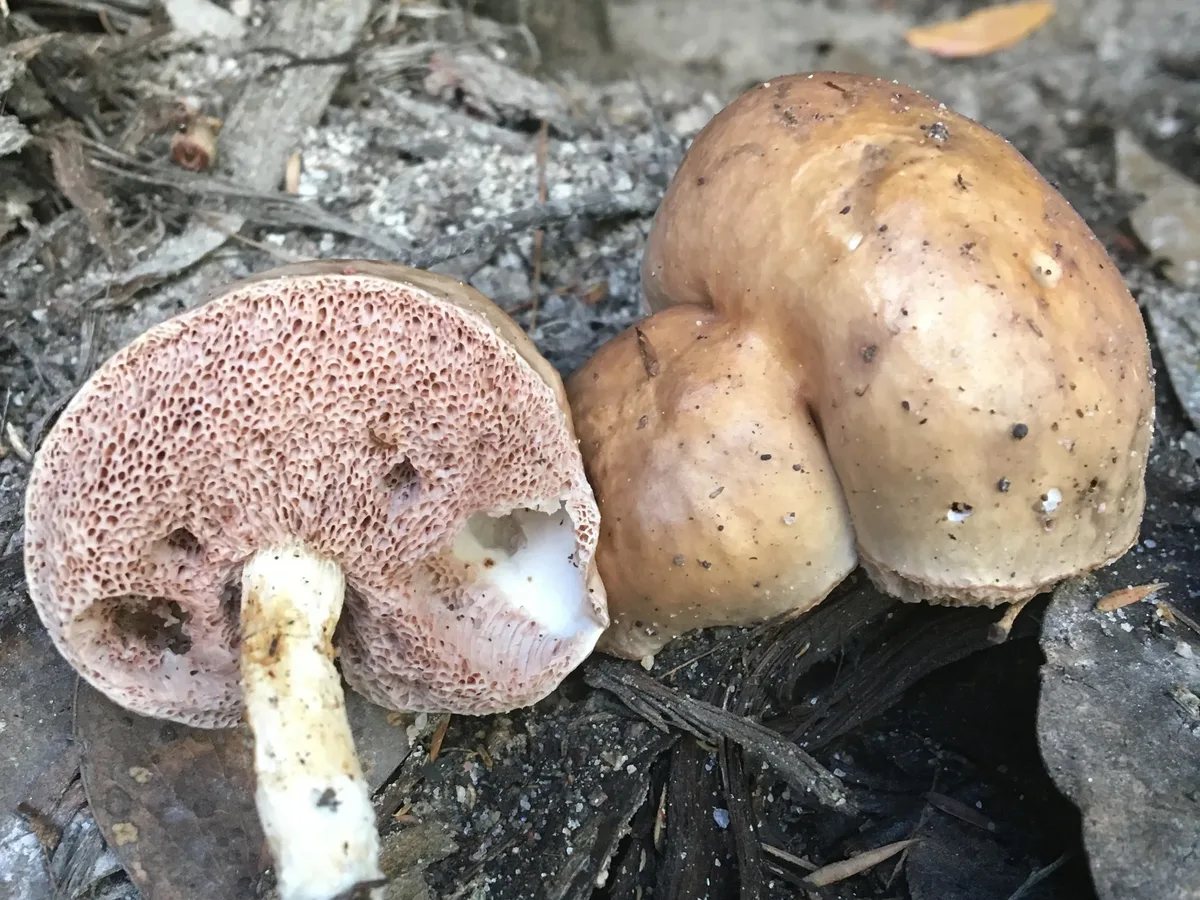 Atlas of Living Australia (CC0)
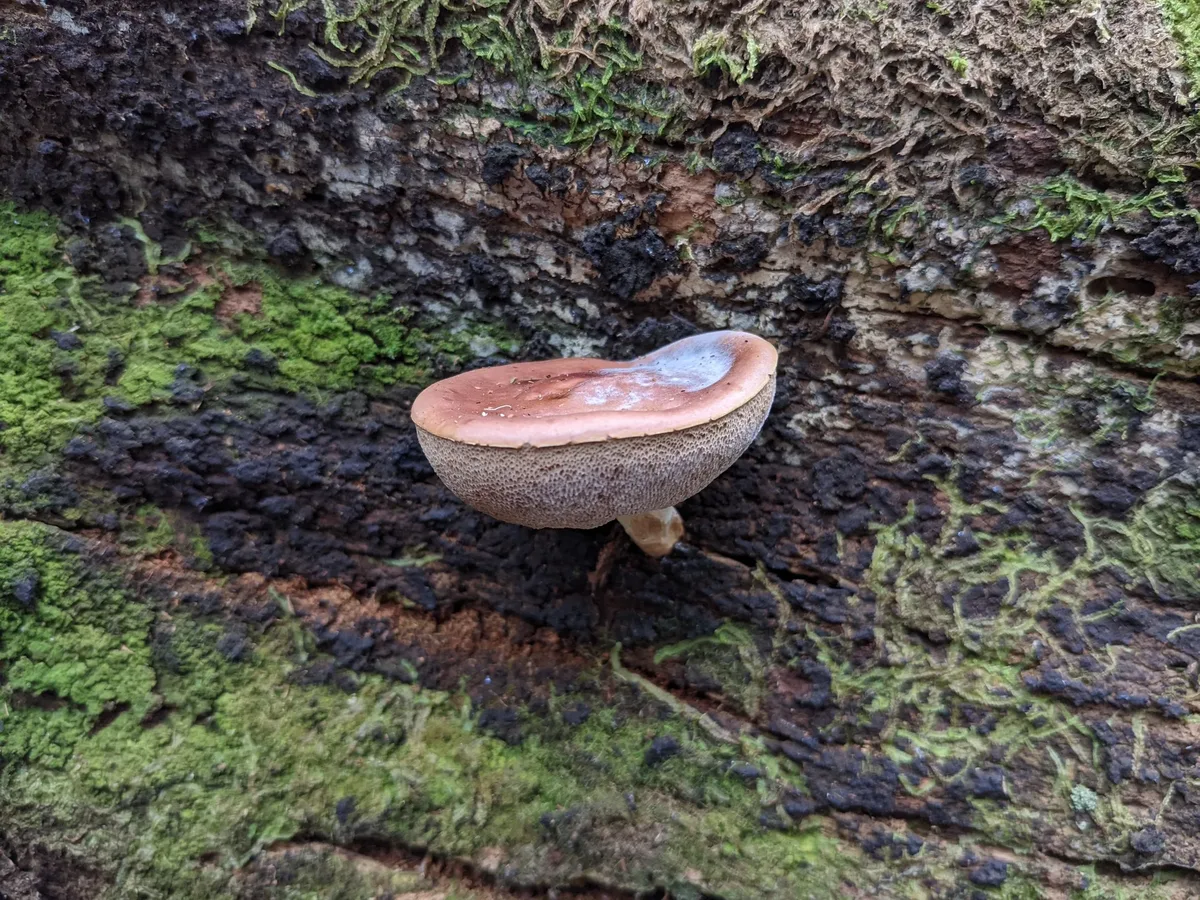 Atlas of Living Australia (CC0)
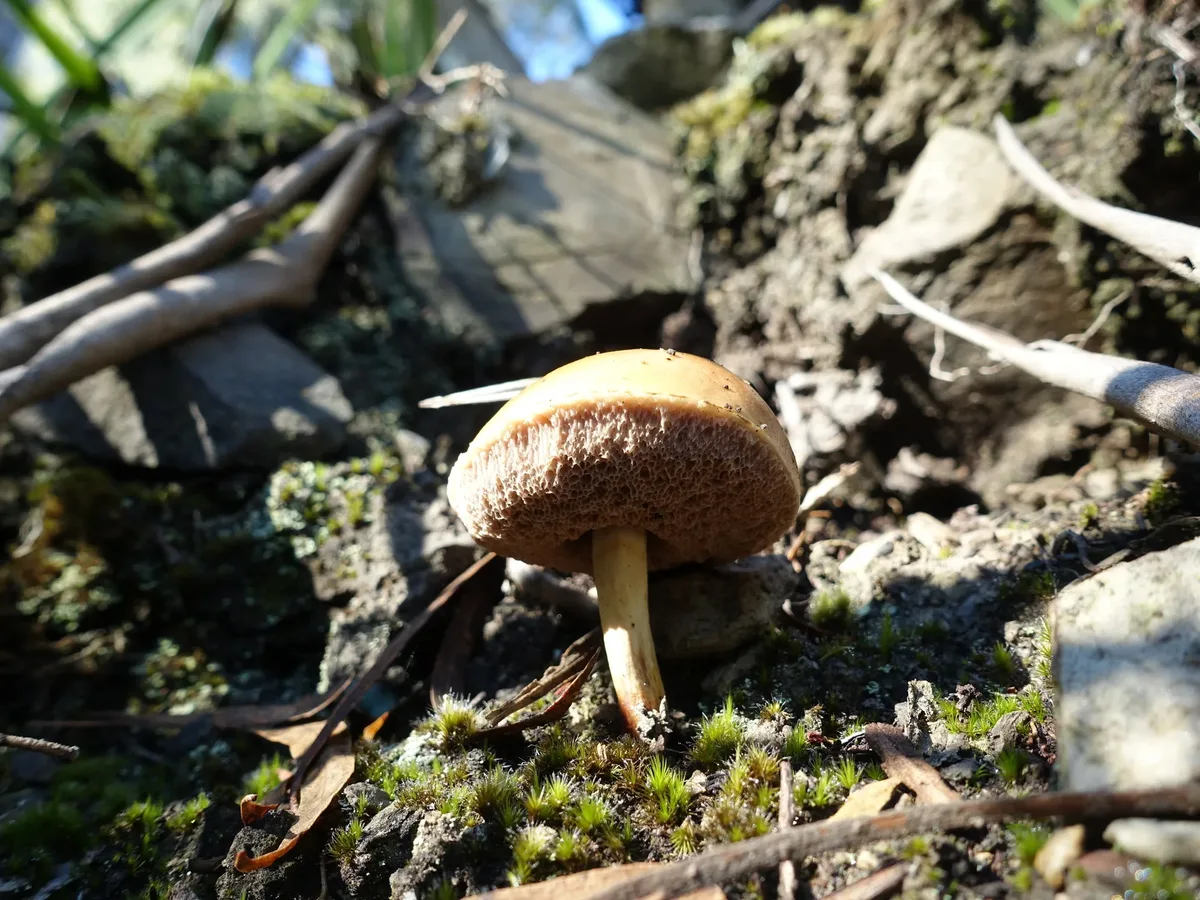 Atlas of Living Australia (CC0)
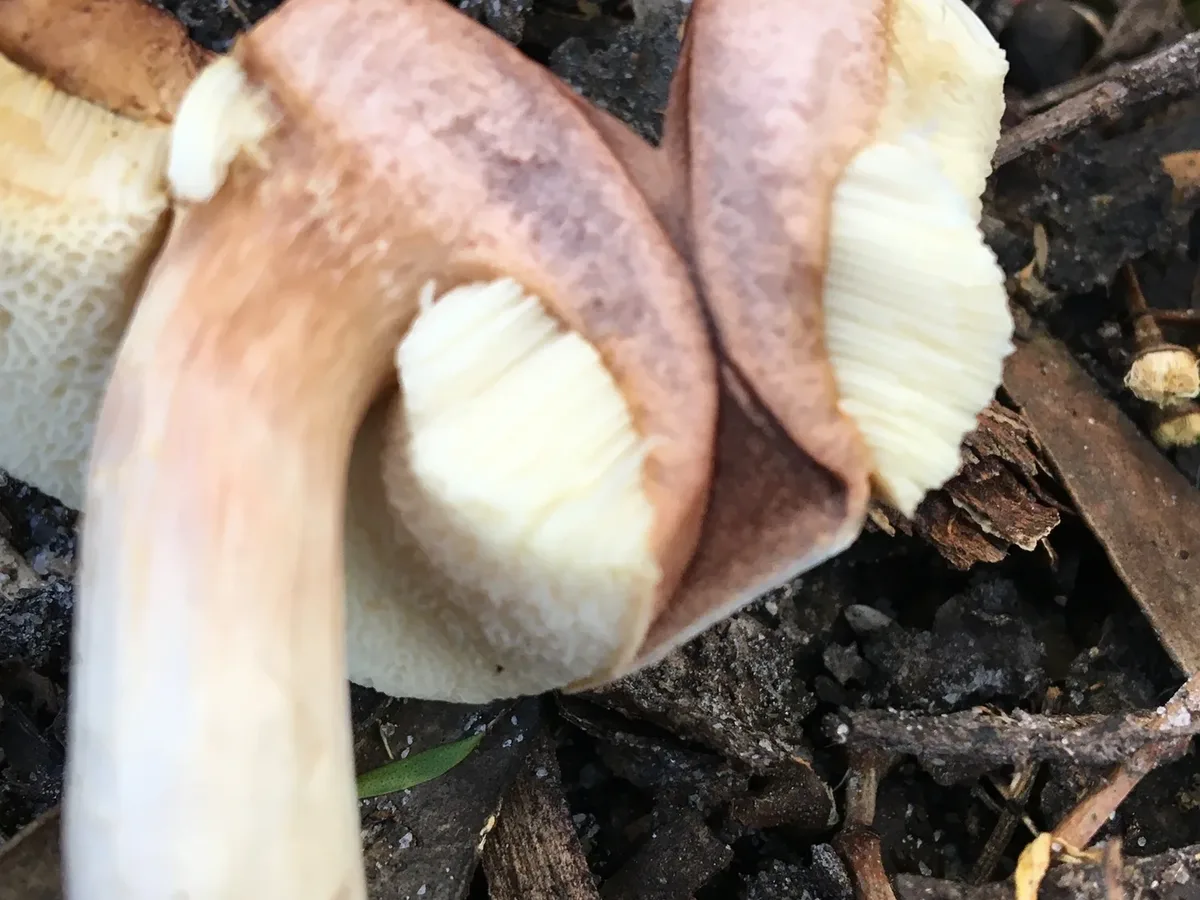 Atlas of Living Australia (CC0)
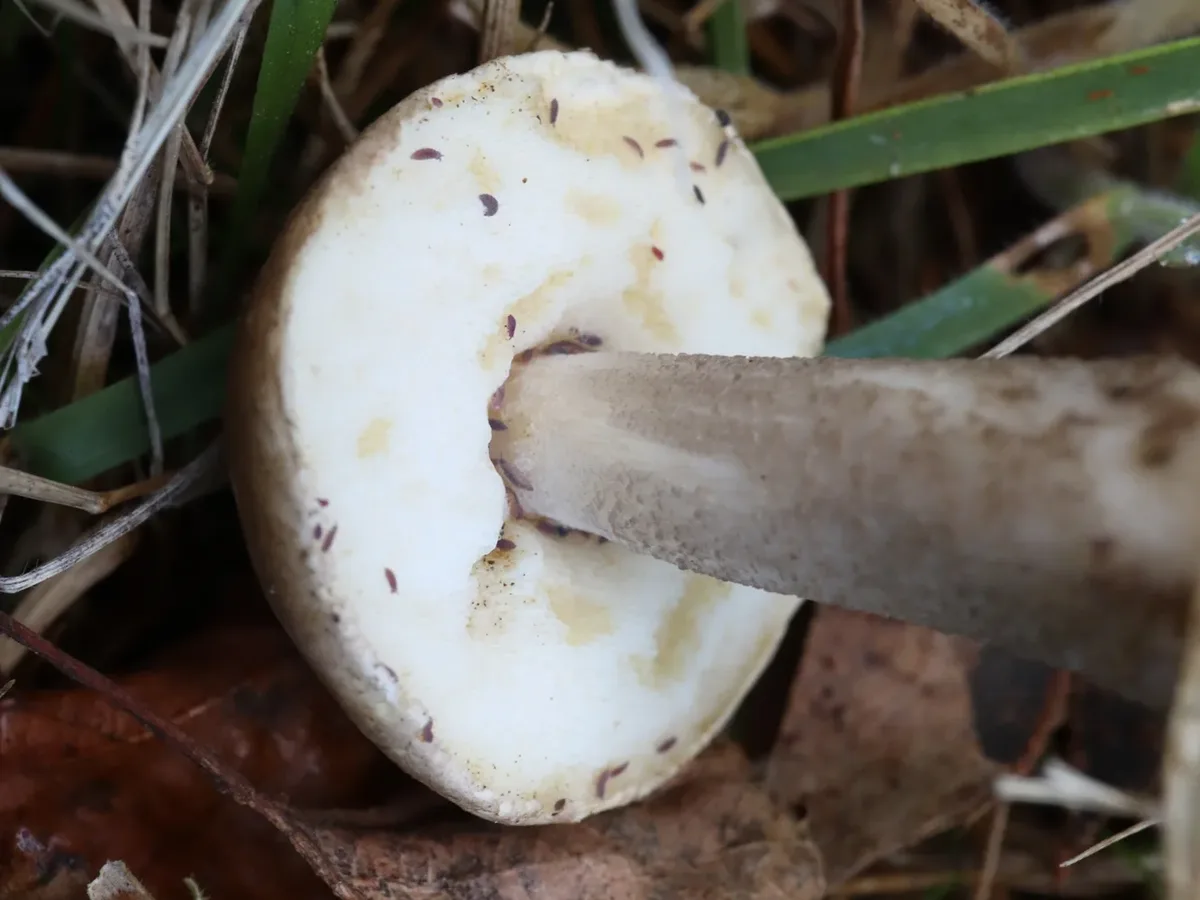 Atlas of Living Australia (CC0)Atlas of Living Australia (CC0)Atlas of Living Australia (CC0)
Not poisonous, but not worth eating - too tough, bitter, or bland for the pot.
How to recognise it
Fistulinella campinaranae is a moderately sized bolete.
Cap
Dry to faintly tacky, tawny-brown to reddish-brown, 4-10 cm. Smooth to minutely velvety at the centre and paler toward the margin.
Flesh
Pale yellowish to whitish, and does not blue when cut - a key observation, because many tropical boletes do stain blue and the absence of that reaction is useful here.
Pores
The pore surface underneath the cap is pale cream to pale yellow, small-pored (1-2 pores per mm), and does not dramatically discolour on bruising.
Stem
Firm and solid, longitudinally fibrous-streaked rather than reticulate, and coloured much like the cap.
Spore print olive-brown.
As with many tropical Boletaceae, the overall impression is of a sturdy, earth-toned bolete lacking any dramatic colour-change chemistry - its identity rests on the combination of habitat (campinarana white-sand forest), host tree association, and microscopic characters of the spores.
Where & when it grows
Habitat
This species exists in one of the most ecologically unusual habitats in the Amazon: the campinarana, a patchwork of white-sand savannas, scrub, and low open forest growing on nutrient-poor, bleached podzol soils.
These islands of specialised vegetation are embedded within the great Amazon rainforest and have a distinctive, largely endemic flora and fungal community shaped by extreme nutrient poverty, soil waterlogging, and periodic drought stress.
The campinarana's ectomycorrhizal trees - including species of Aldina, Eperua, and Humiria - depend heavily on mycorrhizal partnerships to scavenge nutrients from this impoverished substrate, and Fistulinella campinaranae is one of the ectomycorrhizal fungi that mediates that exchange.
Finding this bolete means you are in genuine campinarana; its presence is itself an ecological signal.
The habitat is threatened by conversion, drainage, and climate shifts, making every observation of its specialist fungi scientifically valuable.
When
The Amazon's seasonality is driven by rainfall rather than temperature, which stays warm year-round. The main wet season peaks from around November to May.
Ectomycorrhizal boletes in the campinarana tend to fruit most prolifically during and just after the wettest months - broadly March through August based on collection records - when soil moisture is highest and the mycelial networks in the white-sand substrate can sustain large reproductive events.
A secondary, smaller flush may occur at the transition back into the wet season (October-November).
Outside the wet season, soil dryness in white-sand substrates can be extreme, and fruiting drops sharply.
How it grows
Grows singly or in small scattered groups on bare white sand or under the sparse leaf litter of campinarana vegetation, always in proximity to the roots of the characteristic ectomycorrhizal trees.
The partnership is obligate: Fistulinella campinaranae cannot fruit without a living host.
The mycelium explores the nutrient-poor sand, extending the effective root surface of its host trees enormously, and in exchange receives photosynthetically fixed carbon.
In a system as nutrient-limited as the campinarana, these mycorrhizal fungi are not incidental guests - they are structural components of the ecosystem, without which the trees themselves could not persist on such impoverished substrate.
Fruiting conditions
Fruiting in the Amazon campinarana is driven by soil moisture in the white-sand substrate rather than temperature, which remains warm year-round (24-32 °C). The white-sand podzols of campinarana drain and dry rapidly when rain stops, so sustained high rainfall over at least 14 days is required to bring soil moisture to levels sufficient for mycelial growth and sporulation. Flush lag from onset of adequate rain to visible fruit bodies is estimated at 6-16 days based on Amazonian bolete ecology generally; specific data for this species are not published. Peak fruiting broadly coincides with the height of the Amazon wet season (March-June).
Look-alikes
In the campinarana, other Boletaceae occur, including species of Phlebopus, Rubinoboletus, and other Fistulinella relatives.
The key separation is habitat specificity - a brownish bolete on white-sand substrate under campinarana trees is most likely a white-sand specialist.
Globally, Fistulinella species can superficially resemble Boletus sensu lato and various tropical boletes, but most of those occur in different habitats.
No specific deadly lookalike has been documented for F. campinaranae in its campinarana habitat, though the general caution with tropical boletes applies: several tropical Boletaceae (e.g., Rubinoboletus species, some Pulveroboletus) are toxic, and unknown tropical boletes should never be eaten without expert identification and established edibility data.
Multiple Fistulinella species occur in Amazonian and other South American forests. They share similar general morphology - dry to faintly viscid brown caps, cream to ochre pore surfaces, non-bluing flesh, olive-brown spore prints. Separation to species is based on subtle macroscopic features (cap colour, stem texture) and microscopic spore dimensions; habitat and host tree association are critical data points. None are established as edible or known to be lethally toxic, but all should be treated as inedible in the absence of evidence.
Large to very large tropical boletes occurring broadly in South America; typically larger (cap to 30+ cm), with strongly irregularly-shaped, angular, yellowish pores that bruise brownish, and a robust often eccentric or off-centre stem. Phlebopus is saprotrophic rather than strictly ectomycorrhizal and grows in a wider range of habitats including disturbed ground, gardens, and roadsides. Some Phlebopus are reported edible; others cause gastrointestinal upset - do not consume without positive identification.
Some tropical boletes in the broader Boletaceae produce gastrointestinal toxins. Species with red or orange pore surfaces, or those that intensely blue on cutting, warrant heightened caution. Fistulinella campinaranae lacks red pores and does not blue dramatically - any brownish bolete in campinarana with red pores or strong bluing should be assumed distinct from F. campinaranae and treated with additional suspicion.
In the kitchen
Picking & cleaning
Fistulinella campinaranae has no documented food use and should not be collected for consumption.
There are no edibility data, no toxicology data, and no culinary tradition associated with this species. The remote, protected, and ecologically sensitive nature of campinarana habitat makes foraging inappropriate here in any case.
If collecting as a scientific voucher:
- 1Remove the entire fruit body carefully from the sand, exposing the base and any volval remnants.
- 2Record the host tree, GPS coordinates, and habitat type.
- 3Press or dry the specimen promptly in the tropics to prevent rapid deterioration.
Good to know
Fistulinella campinaranae has no documented edibility and no documented toxicity.
It is classified as inedible not because it is known to be poisonous, but because there is:
- no evidence it is safe to eat
- no culinary tradition supporting its consumption
- no scientific edibility testing
In the context of tropical South American boletes - a group that includes both edible species and some genuinely toxic ones - the precautionary approach is the only defensible one. Do not consume this mushroom.
The campinarana is also a specialised and threatened habitat; collecting any organisms from it without scientific justification and appropriate permits is inadvisable.
A reference guide - never an edibility guarantee. When in doubt, leave it out.