Spring pinkgill
Entoloma vernumsyn. Rhodophyllus vernus, Nolanea verna, Agaricus vernus
 © Ben Gruhot (CC BY)
 © Mark Richman (CC BY 4.0)
 © Ben Gruhot (CC BY)
 © Ben Gruhot (CC BY)
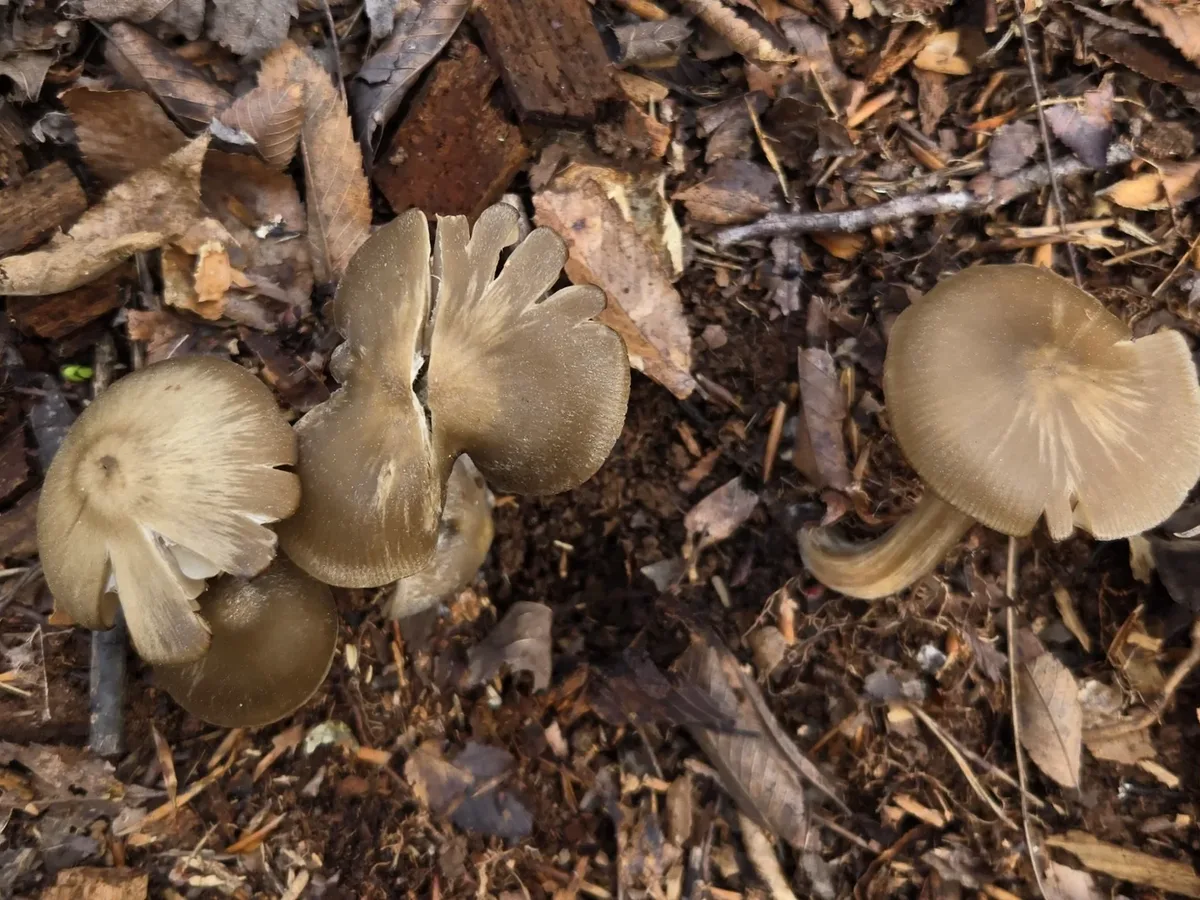 © Ben Gruhot (CC BY)
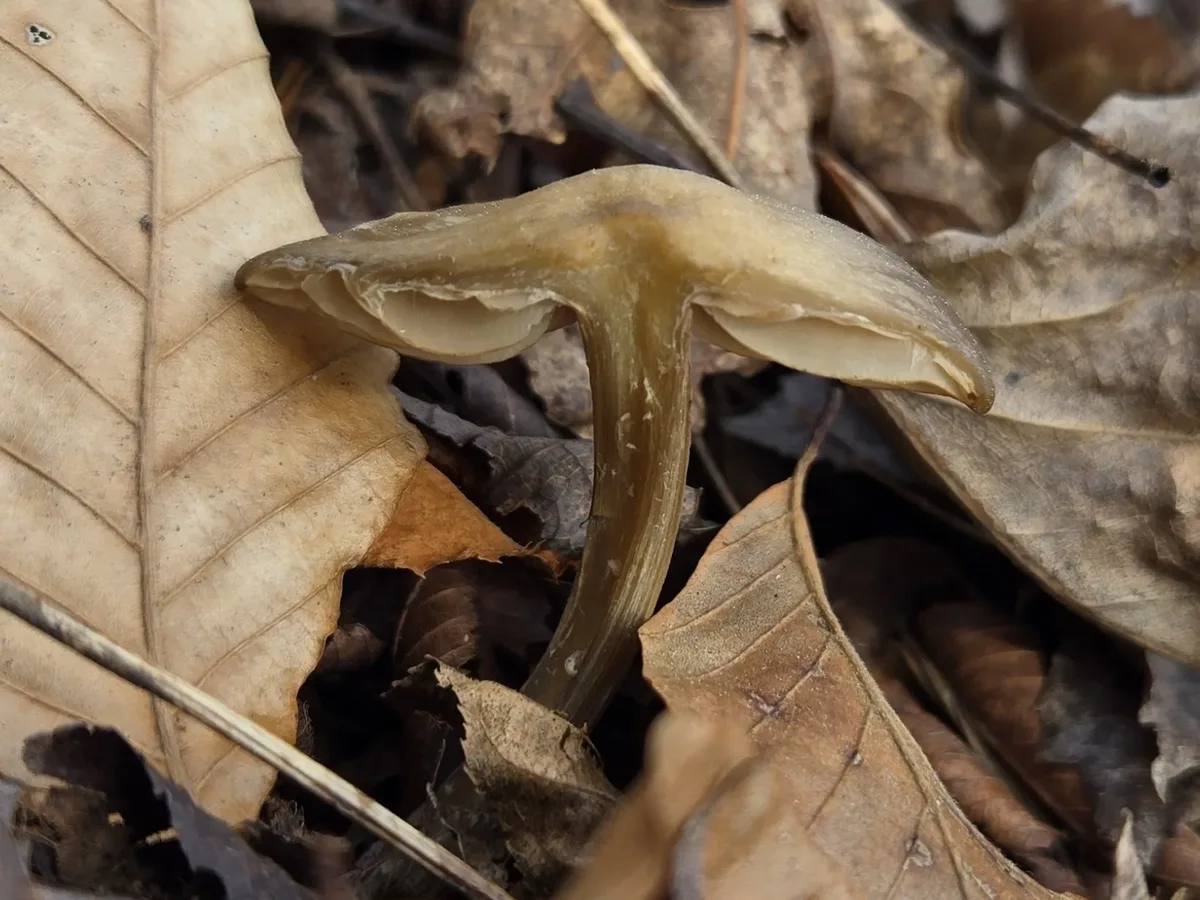 © Ben Gruhot (CC BY)
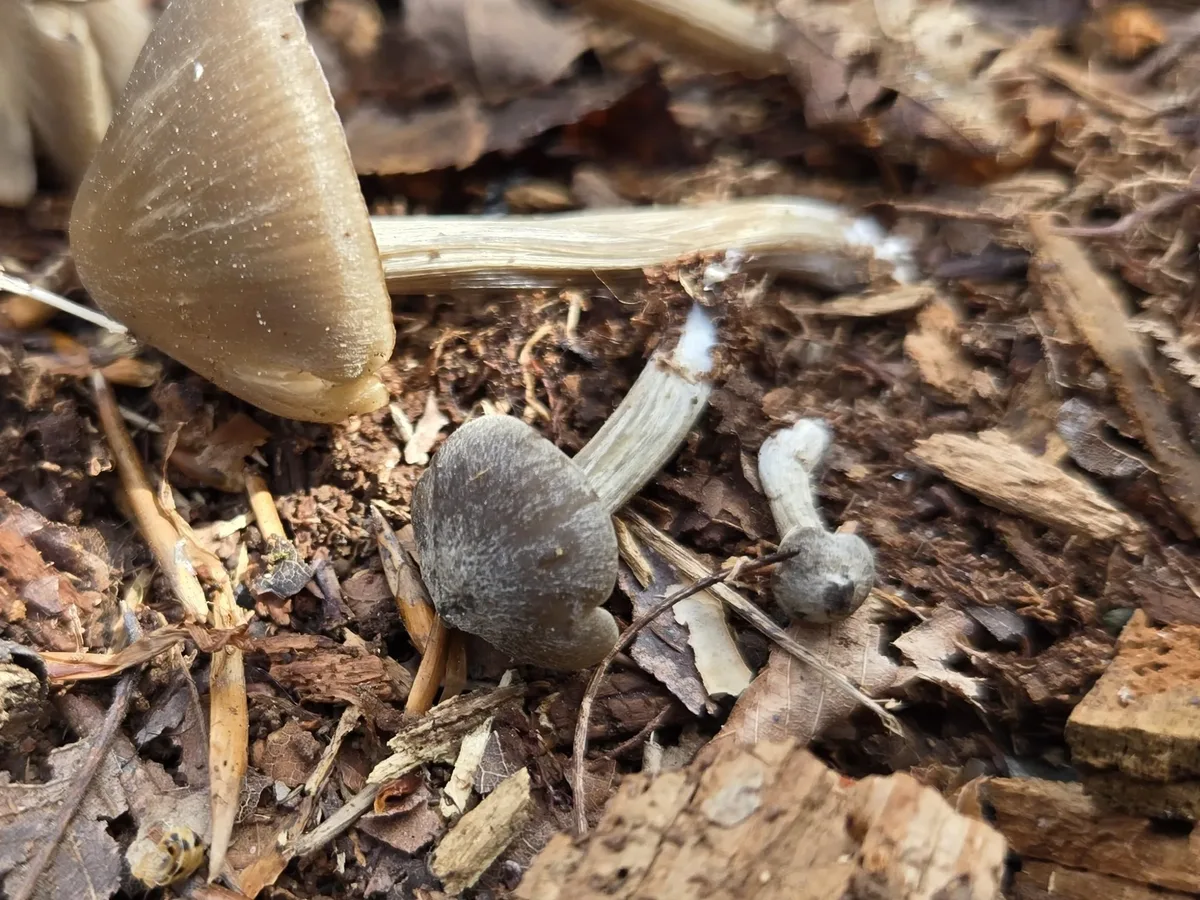 © Ben Gruhot (CC BY)
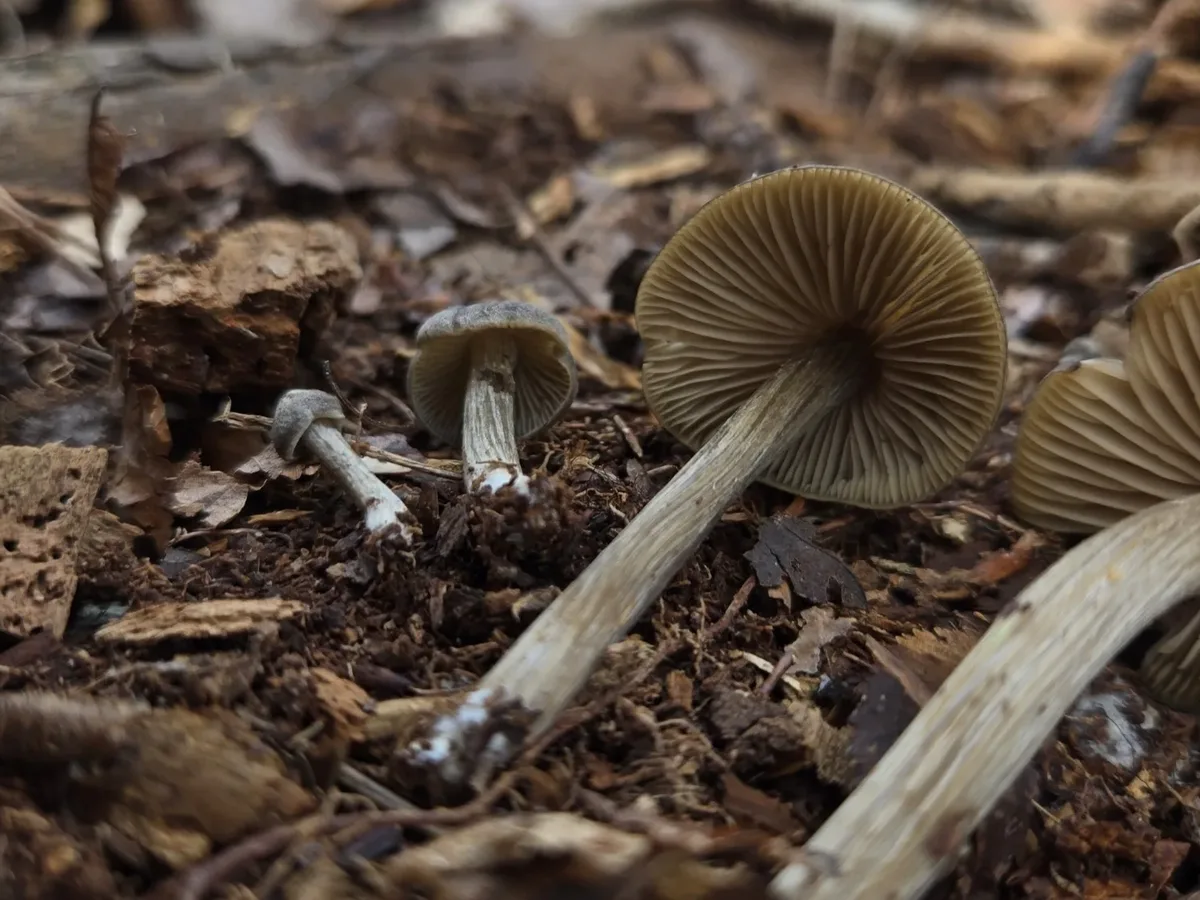 © Ben Gruhot (CC BY)
 © Ben Gruhot (CC BY)
 © Ben Gruhot (CC BY)© Ben Gruhot (CC BY)© Mark Richman (CC BY 4.0)
Edible only with the right preparation - or safe for some people but not others. Learn the caveats first.
How to recognise it
Entoloma vernum is one of the most reliably identifiable Entoloma species if you know what to look for, but it demands careful attention to multiple features used together.
Cap
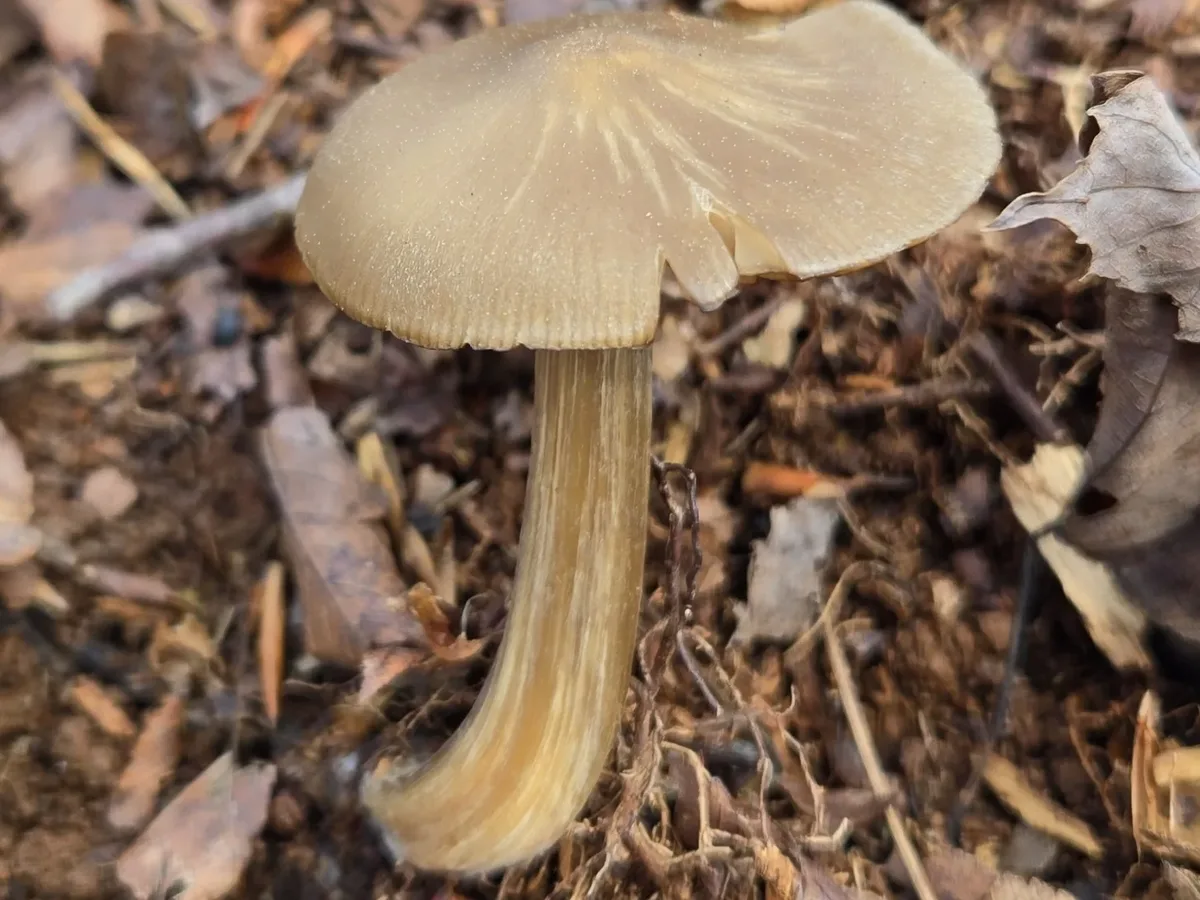
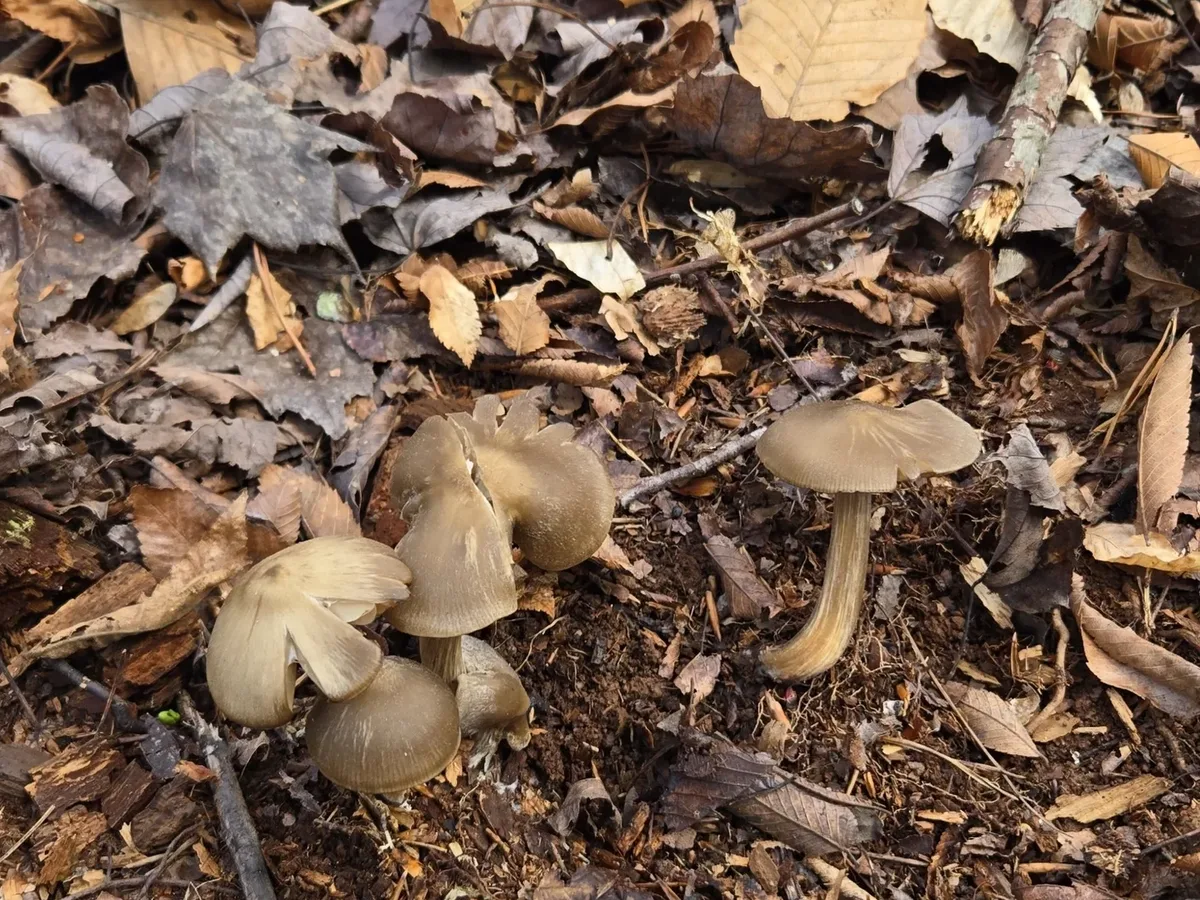
The cap is 2-6 cm across, starting bell-shaped or conical and expanding to broadly umbonate or nearly flat, often retaining a low pointed or rounded central boss (umbo).
The most striking feature is the cap's dramatic color change with moisture: when wet it is dark grey-brown to sooty sepia - almost chocolate-coloured at the very center - while when dry it fades to pale greyish-buff, straw, or even off-white.
This hygrophanous behavior can make the same mushroom look like two entirely different species depending on recent rainfall and time of day. The cap surface is smooth and silky; no scales, no stickiness, no grooves.
Gills
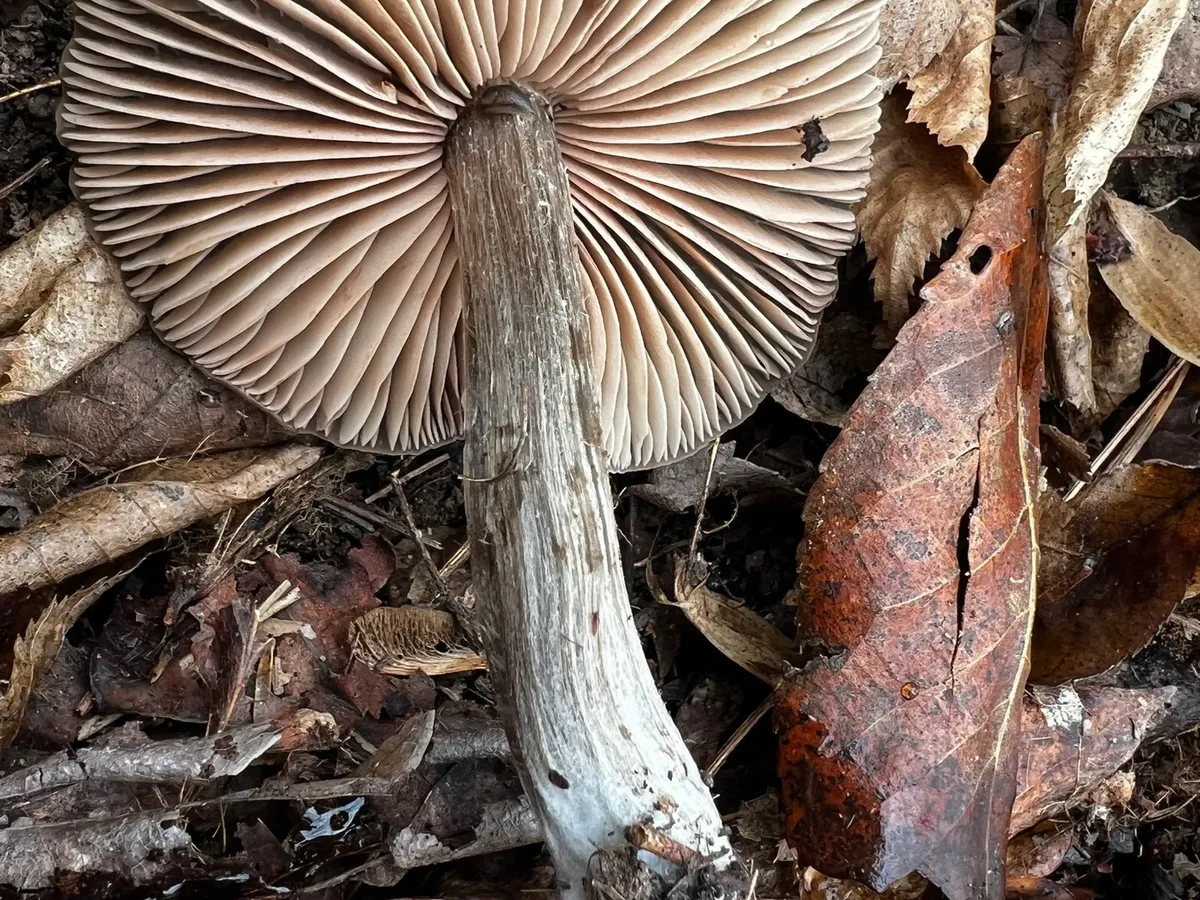
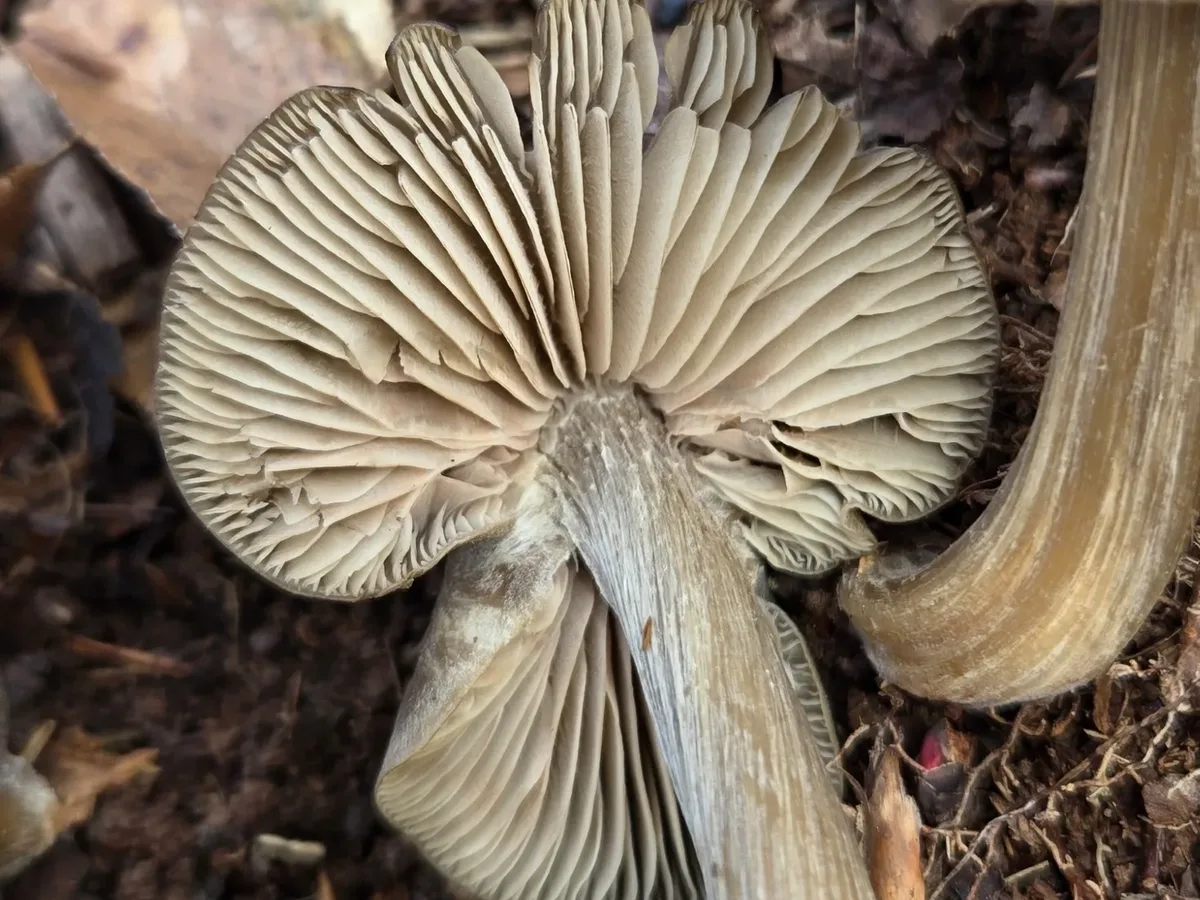
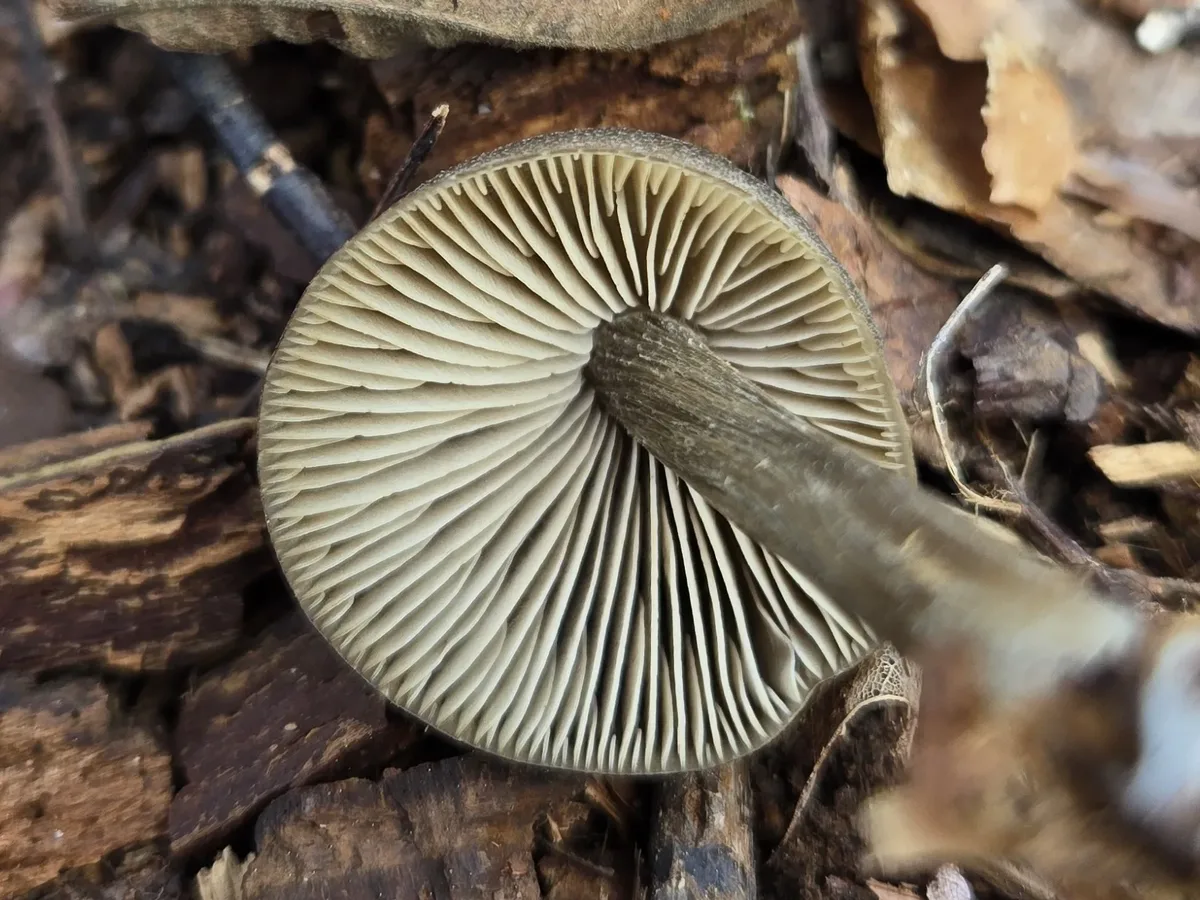
The gills are the critical identification feature in the genus: they start out grey, but as spores mature they become distinctly pink to salmon-pink. This pink gill color in a dark-capped, spring-fruiting grassland mushroom is nearly diagnostic for the genus Entoloma at this time of year.
Stem
The stem is slender and relatively tall for the cap size, pale grey to whitish, with a faint silky fibrous texture and sometimes a subtle blue-grey cast. It is hollow or finely stuffed.
Flesh
The flesh is thin, grey to white.
Smell & taste
It smells distinctly floury or mealy - like fresh flour, wet grain, or cucumber - a smell characteristic of many Entoloma and Clitopilus species.
Spore print must be confirmed for species-level confidence: salmon-pink to pinkish-brown. Spores are angular (polyhedric), a feature that distinguishes Entoloma from most pink-spored lookalikes.
Why it's dangerous
Entoloma vernum poses a moderate danger as a poisonous grassland species that shares habitat and season with sought-after spring edibles, particularly Calocybe gambosa. The risk is not from a single encounter but from systematic confusion during spring foraging.
Across Scandinavia and Central Europe, outbreaks of spring grassland Entoloma poisoning occur regularly, predominantly involving inexperienced foragers who mistook pinkgill species for Calocybe gambosa. Children are at increased risk because the GI toxin effect relative to body weight is greater.
The species is not lethal under normal circumstances, but its broader genus includes species (E. sinuatum) that cause very severe gastrointestinal illness.
Any doubt about grassland spring mushroom identity should be resolved by spore print before eating.
Toxin
The toxic principle in Entoloma vernum has not been definitively identified. Gastrointestinal irritant compounds are suspected, possibly including irritant peptides or uncharacterized phenolic compounds.
The toxins are not amatoxins (which cause delayed liver and kidney failure), and poisoning does not produce the characteristic delayed-onset severe organ damage of Amanita phalloides-group species.
Symptoms are relatively rapid-onset (within 30 minutes to 3 hours) GI distress.
Symptoms
Symptoms of Entoloma vernum poisoning include:
- nausea
- vomiting
- diarrhea
- abdominal cramps or pain
Onset is typically within 30 minutes to 3 hours of ingestion. Symptoms are self-limiting in most cases and resolve within 24-48 hours with rest and fluid replacement.
In vulnerable individuals - young children, the elderly, those with compromised health - vomiting and diarrhea can lead to significant dehydration requiring medical attention.
If poisoning is suspected, contact a poison control center or medical professional and provide a description or photo of the mushroom.
Staying safe
Entoloma vernum is a confirmed poisonous species. Consumption causes gastrointestinal poisoning characterized by nausea, vomiting, abdominal cramps, and diarrhea, typically developing within 30 minutes to 3 hours after ingestion.
The responsible toxins have not been fully characterized but are believed to be gastrointestinal irritants of unknown structure; they are not amatoxins, orellanin, or gyromitrin.
Recovery is usual within 24-48 hours with supportive care, but severe cases - particularly in children, elderly individuals, or those with underlying health conditions - can require medical attention for fluid replacement. The species has caused poisoning incidents across Scandinavia and Central Europe.
The primary danger in practice is accidental collection while foraging for Calocybe gambosa (St George's mushroom): both fruit in spring grasslands, and an inexperienced forager relying solely on cap color or smell (both can be broadly similar) may mix in Entoloma vernum.
The definitive safety check is the spore print: Entoloma gives a salmon-pink print, Calocybe gives a white print. This single test, if performed reliably, prevents the confusion.
Do not eat any spring grassland mushroom with a pink spore print.
Where & when it grows
Habitat
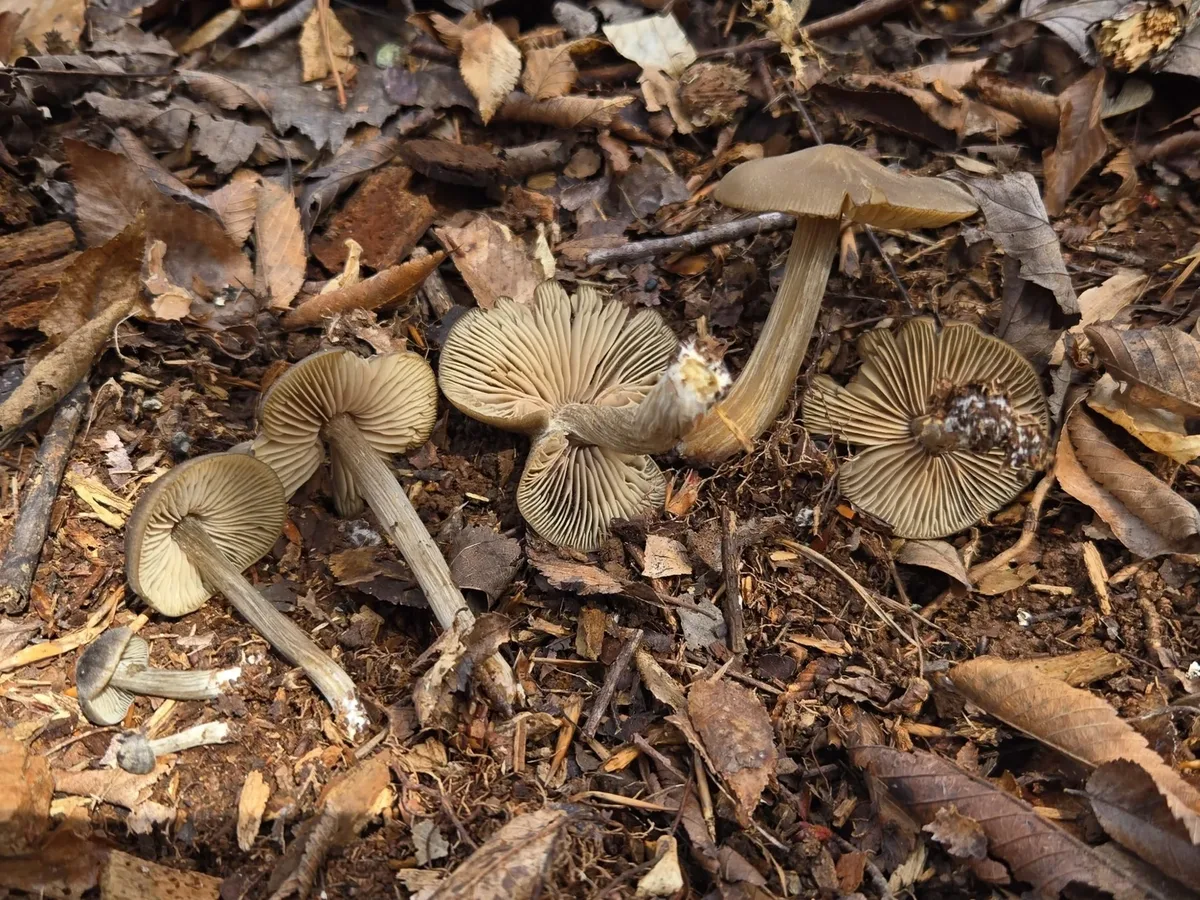
Spring pinkgill is a grassland and meadow species. It grows as a saprotroph in the top layer of soil and decaying plant matter, not from wood and not in association with tree roots.
The best habitat is old, stable, unimproved grassland:
- hay meadows
- permanent pastures
- grassy forest margins
- roadside verges with diverse herbage
- parks
- lawns that are not heavily fertilized
It thrives in moist, humus-rich soils and is particularly associated with calcareous grassland in Central Europe. In Scandinavia it is one of the characteristic grassland Entoloma species of the spring season.
It often grows in loose groups of 3-15 fruitbodies scattered across a grassy area.
Crucially, its spring season means it fruits at a time when few other grassland species are active - this unusual timing is itself a useful field clue but also raises the risk of confusion with genuinely edible spring grassland species.
When
Entoloma vernum is one of the very first agarics to appear each spring in northern and central Europe. It fruits from late March through June, peaking in April and May, often before many other grassland species have emerged.
In southern Scandinavia (Sweden, Denmark, Norway) the peak falls in mid-April to mid-May; in Finland and further north or at altitude, the season shifts two to four weeks later.
The fruiting trigger is spring soil warming: once topsoil reaches around 5-8 °C after snowmelt and spring rain, the first fruitbodies can appear.
In mild springs it can overlap with late-season morels and with the early flush of Calocybe gambosa (St George's mushroom), making the risk of confusion with that highly desirable edible species seasonally elevated.
Fruitings may be brief, lasting one to two weeks in a given location, with new flushes following each significant spring rain event.
How it grows
Entoloma vernum is a saprotrophic soil fungus that decomposes organic matter in the upper soil horizon. Fruitbodies arise singly or in small scattered groups from soil or matted grass litter. There is no mycorrhizal association.
The mycelium persists perennially in stable grassland communities, and the same patch of ground may fruit reliably year after year. No fairy rings are formed (distinguishing it from ring-forming species like Marasmius oreades).
Because it fruits early - often in the same weeks as sought-after edibles like Calocybe gambosa - awareness of its presence and field characters is important for spring foragers.
Fruiting conditions
Spring pinkgill is triggered by spring soil warming and moisture, not summer rains. Fruiting begins once topsoil reaches approximately 5 °C following snowmelt or prolonged mild rainy weather. A 10-15 mm rain event after the first significant spring warm spell reliably triggers a flush within 5-10 days. The season is short - typically 6-10 weeks - and is over before summer heat dries grassland soils.
Look-alikes
Several edible and toxic spring grassland species can be confused with Entoloma vernum.
- 1Calocybe gambosa (St George's mushroom) is the most important confusion risk: it is one of the most highly prized edible spring mushrooms in Europe and fruits at the same time in the same habitats. C. gambosa is typically larger (cap 5-15 cm), paler (white to cream, not grey-brown), has a strong and distinctive floury/mealy smell, white spore print (NOT pink), white crowded gills, and a much stouter stem. The spore print difference is absolute: always do a spore print on any pale grassland spring mushroom - if it is pink, it is an Entoloma and should not be eaten.
- 2Entoloma clypeatum (shield pinkgill) is a closely related Entoloma species that fruits in spring, often under hawthorn and other rosaceous shrubs. It is larger, cap grey-brown with a more prominent umbo, and also has a pink spore print. It is also considered poisonous (gastrointestinal irritant) in most European mycological literature, though some older sources listed it as cautiously edible. Do not eat it. The habitat association with rosaceous shrubs is a useful field character.
- 3Entoloma cetratum is a smaller, very similar Entoloma of autumn occurrence in boreal forests - field separation from E. vernum is largely by season and habitat.
- 4Melanotus horizontalis and other small dark grassland species are sometimes encountered in the same season, but differ in spore color and microscopic features.
- 5Marasmius oreades (fairy ring champignon) is an edible spring-to-autumn grassland species, but it is much smaller (cap 1-4 cm), tan to buff, dries to pale buff without going grey, and characteristically grows in distinct fairy rings or arcs. Its gills are widely spaced and white to cream, and it has a white spore print. The leathery, reviving-when-wet quality of the cap is diagnostic.
An edible spring-to-autumn grassland species. Much smaller (cap 1-4 cm), tan to buff with a distinctive boss (umbo) but lacking the dark grey-brown hygrophanous color of E. vernum. Grows in characteristic fairy rings or arcs (E. vernum does not form rings). Gills are widely spaced and white (not pink); spore print is white. Dried caps revive when remoistened - E. vernum does not have this leathery, reviving quality.
A larger, severely toxic Entoloma species causing violent gastrointestinal poisoning. E. sinuatum fruits later (summer to early autumn), is much larger (cap 8-20 cm), pale ochre-white to fleshy-grey, and has sinuate (notched) gills, a robust fleshy stem, and a rancid or mealy smell. Not typically confused with the small, spring-fruiting, dark-capped E. vernum, but listed here because it represents the severe-end toxicity of the genus.
A closely related toxic Entoloma species that also fruits in spring. E. clypeatum is larger (cap 5-10 cm), greyer-brown with a more prominent umbo, and characteristically grows under hawthorn (Crataegus) and other rosaceous shrubs rather than open grassland. Both have pink spore prints and are poisonous - field separation matters for reference but both should be avoided for eating.
The most important practical confusion: Calocybe gambosa is a highly prized edible that fruits at the same time in the same spring grassland habitats. C. gambosa is larger (cap 5-15 cm vs 2-6 cm), paler (white to cream, never dark grey-brown), has a strong floury smell, and crowded white gills. The spore print is WHITE in Calocybe, PINK in Entoloma - this one test is absolute and unambiguous. Always do a spore print on any pale spring grassland mushroom before eating it.
An edible pink-spored grassland species (spore print very pale pink) with crowded, strongly decurrent gills and a funnelled cap that lacks any umbo. The strong sweet floury smell is distinctive. Gills run clearly down the stem - E. vernum gills are adnate to adnexed, not decurrent. Also fruits mainly in summer and autumn, not spring. The confusion risk is low but the pink spore print difference from Calocybe and the habitat overlap with Entoloma make it worth noting.
A reference guide - never an edibility guarantee. When in doubt, leave it out.