Snow-white pinkgill
Entoloma niphoidessyn. Rhodophyllus niphoides
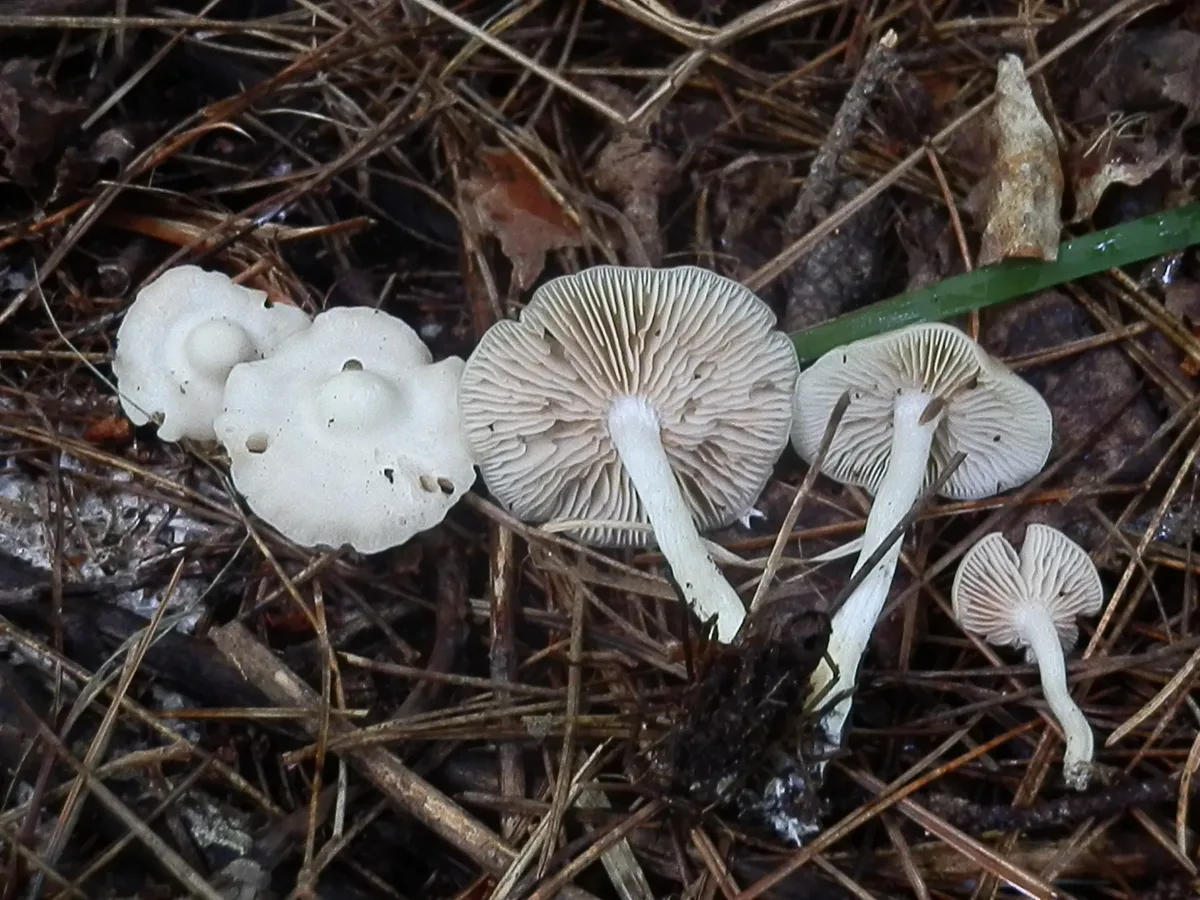 © pinonbistro (CC BY-SA)
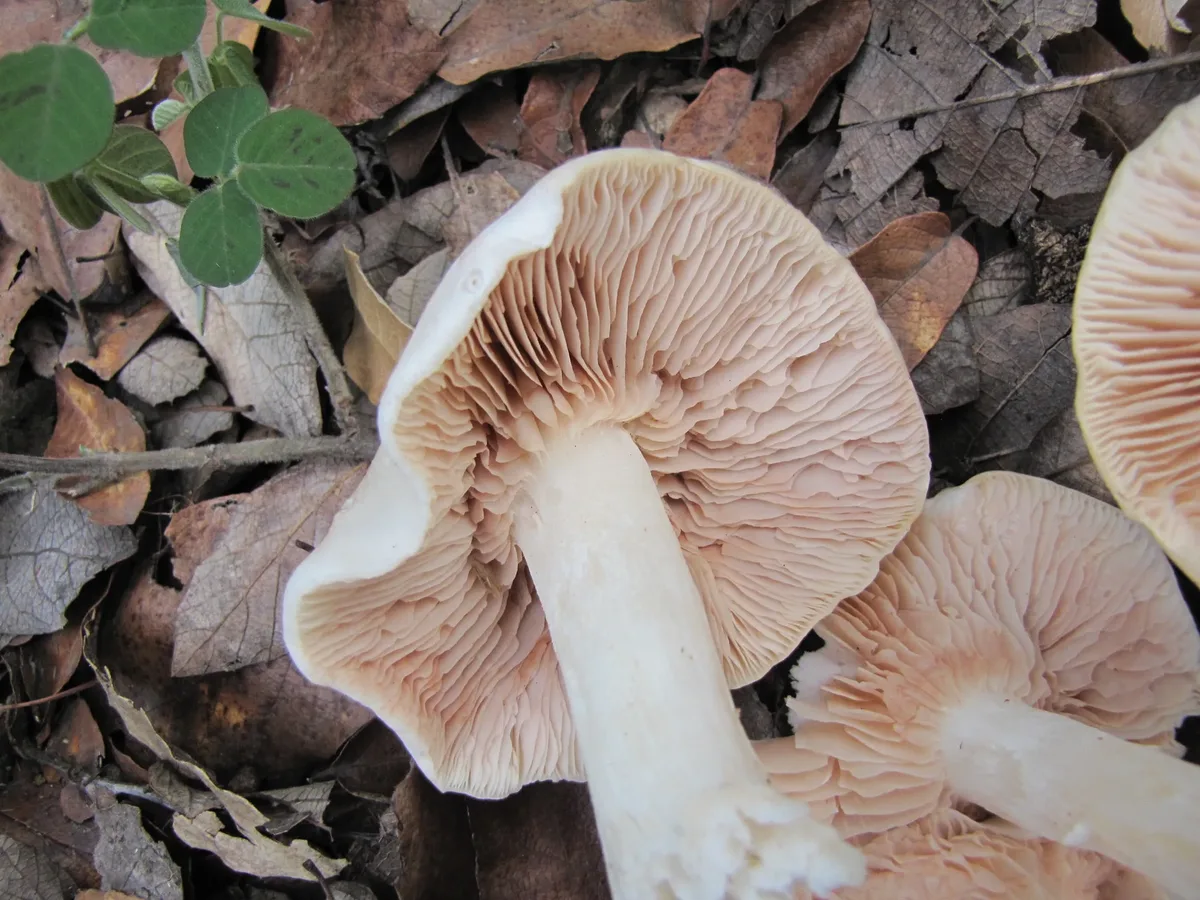 © Alan Rockefeller (CC BY 4.0)
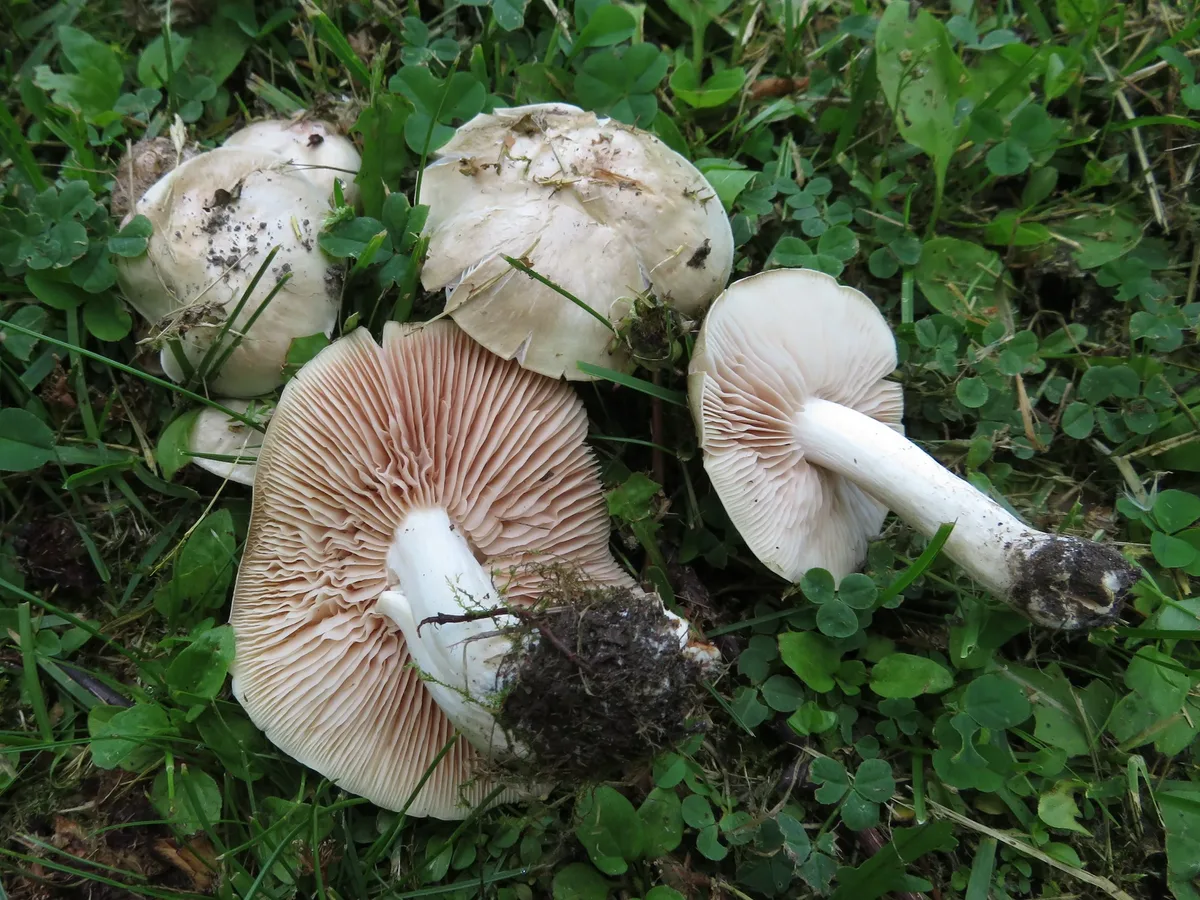 © Mikko Veräjänkorva (CC BY-SA)
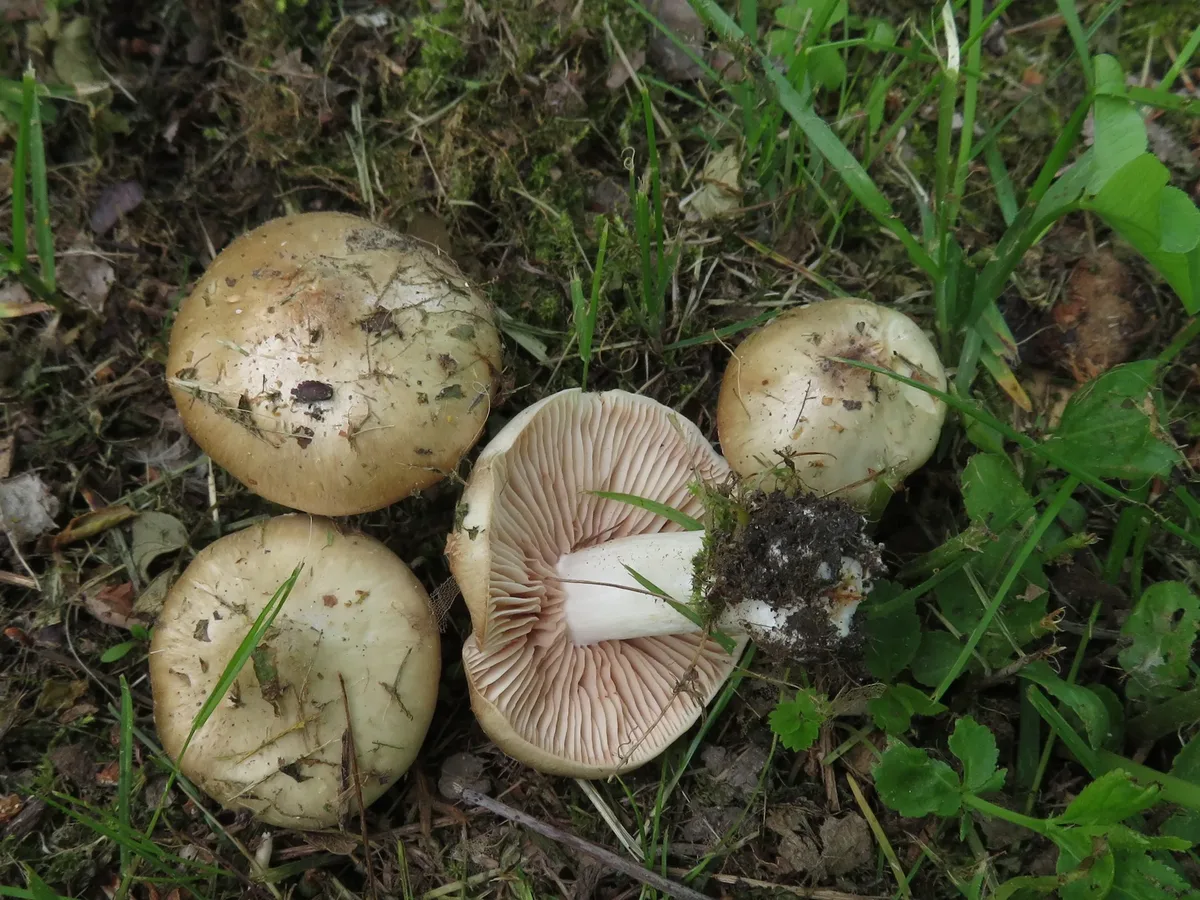 © Mikko Veräjänkorva (CC BY-SA)
 © pinonbistro (CC BY-SA)
 © pinonbistro (CC BY-SA)© pinonbistro (CC BY-SA)© Alan Rockefeller (CC BY 4.0)
Edible only with the right preparation - or safe for some people but not others. Learn the caveats first.
Never eat a mushroom you are not 100% sure of - check the look-alikes below, and always cook wild mushrooms.
How to recognise it
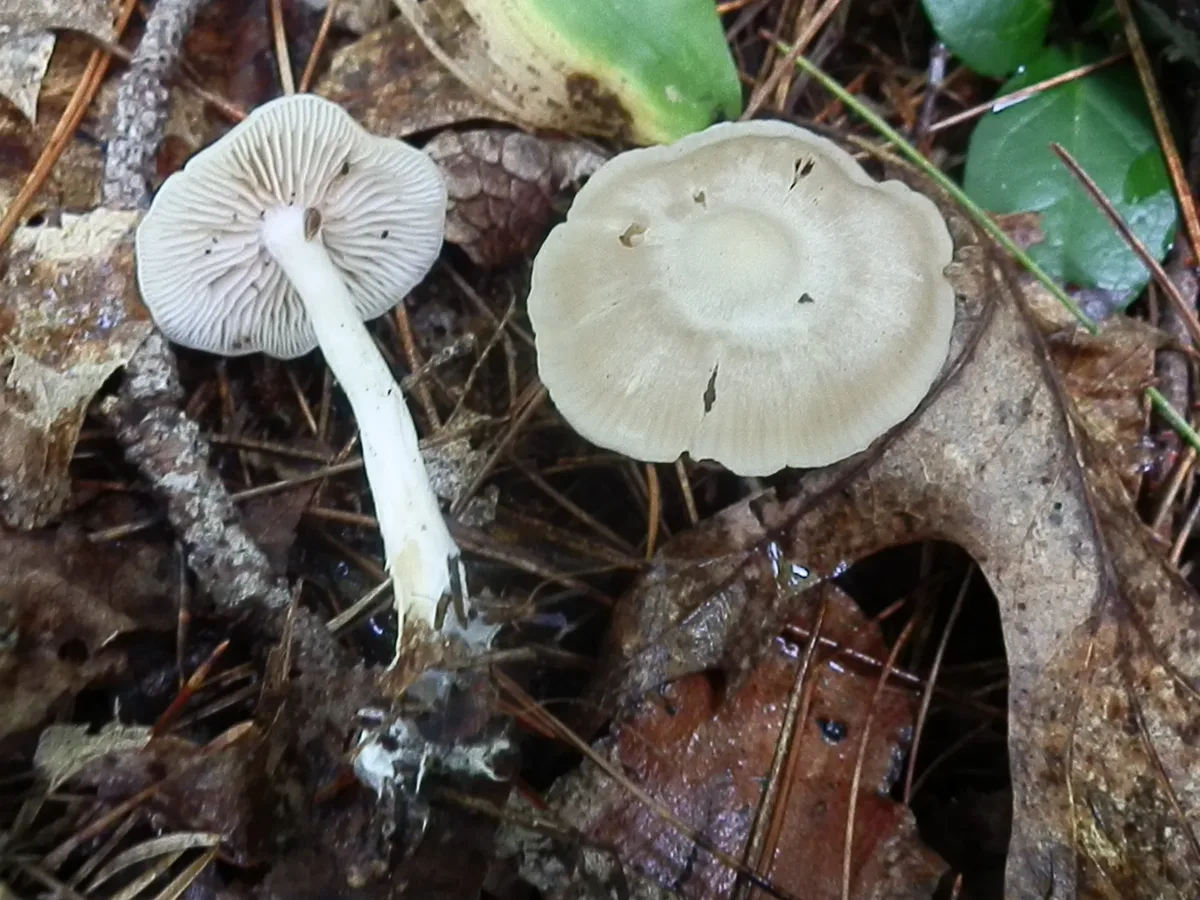
The defining character of Entoloma niphoides is its strikingly clean, snow-white appearance from cap to stem base - combined with the pink spore print that reveals its Entoloma identity.
Cap
The cap starts convex and smooth, expanding to broadly plane with a slight central boss; in age the margin may become undulate or slightly lobed. The all-white surface does not dramatically change color with moisture, making it less hygrophanous than many other Entoloma species.
Gills
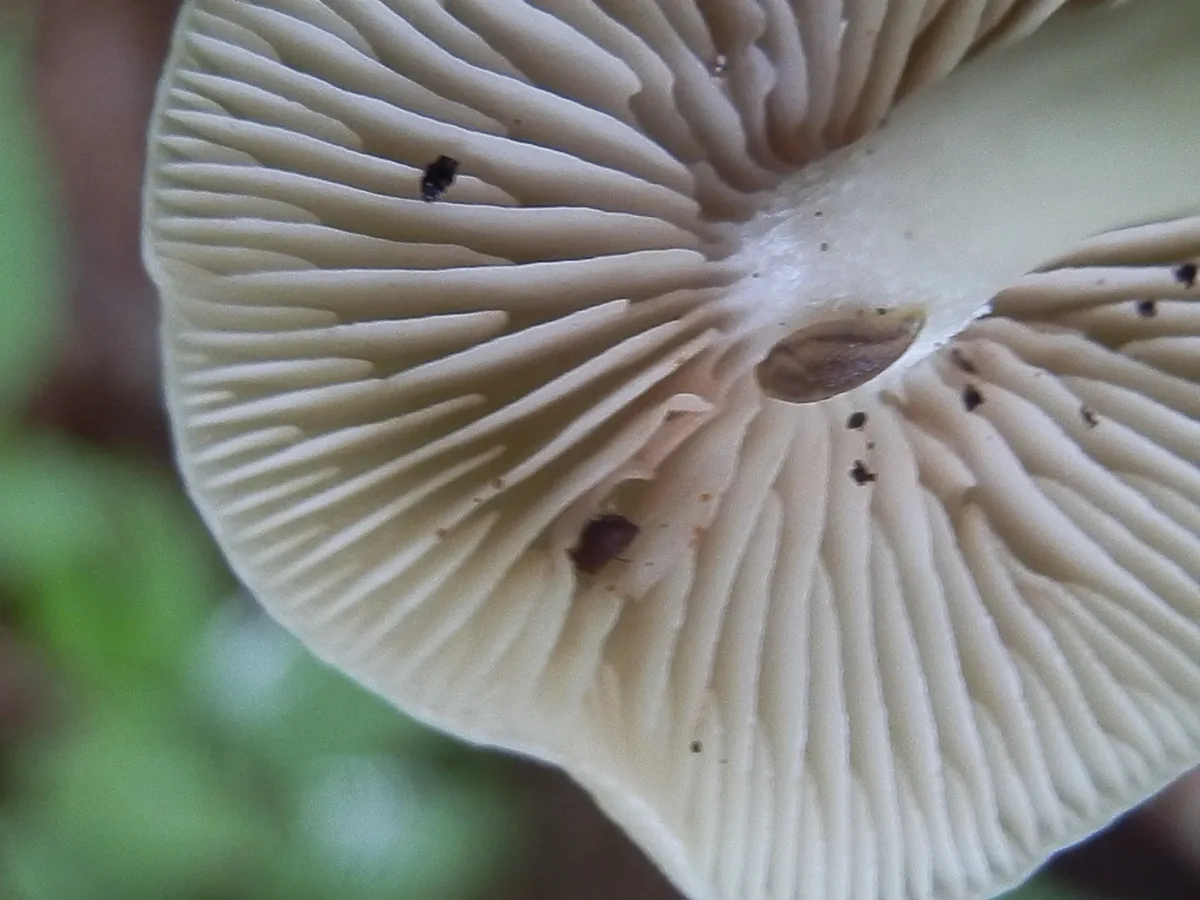
The gills begin white, then gradually acquire a characteristic salmon-pink flush as the angular spores ripen - watch for this color shift, which is most visible in mature or slightly older fruitbodies. If the gills look pinkish in an otherwise white mushroom in autumn Mediterranean woodland, suspect Entoloma immediately.
Stem
The stem is plain white, cylindrical, with a clean smooth to finely fibrous surface; there is no skirt (ring), no volva (cup at the base), and no basal scales - absence of these features distinguishes it from Amanita species at a glance, though this check must be deliberate and thorough, especially in young specimens where Amanita veils may not yet have ruptured.
Smell & taste
The smell is mealy and floury - like fresh flour or a damp grain store - which is characteristic of the genus but shared with some lookalikes.
The most reliable identification tool in the field is the spore print: salmon-pink to pinkish-brown on white paper. No truly dangerous edible produces this color on a spore print.
Why it's dangerous
Entoloma niphoides poses a moderate direct danger from its own gastrointestinal toxins, but an elevated indirect danger through visual overlap with deadly white Amanita species.
The all-white appearance in autumn woodland is a high-risk profile: any mistake in identification that results in a Amanita virosa collection instead carries a risk of fatal poisoning.
The habit of performing thorough base-of-stem examination and spore print tests on any white woodland mushroom is, in the Mediterranean context, a potentially life-saving practice. Never rely on color alone to identify white woodland mushrooms.
Toxin
The toxic principle in Entoloma niphoides, as in most other gastrointestinal Entoloma species, has not been definitively characterized. Gastrointestinal irritant compounds are responsible - possibly irritant peptides or uncharacterized phenolics.
These are not amatoxins: there is no delayed hepatotoxic or nephrotoxic effect, and the syndrome does not progress to the severe organ failure seen with Amanita phalloides-group poisoning.
Onset is rapid (30 minutes to 3 hours), differentiating it from the 6-24 hour delay typical of amatoxin poisoning.
Symptoms
Nausea, vomiting, diarrhea, and abdominal cramps developing within 30 minutes to 3 hours of ingestion.
Symptoms are self-limiting in most healthy adults, resolving within 24-48 hours with rest and fluid replacement. In children, elderly individuals, or those with underlying health conditions, dehydration from vomiting and diarrhea may require medical attention.
If you suspect you may have eaten a white Amanita species instead - note that Amanita amatoxin poisoning has a delayed onset of 6-24 hours followed by apparent recovery and then severe deterioration - seek emergency medical care immediately and do not wait for symptoms to escalate.
Staying safe
Entoloma niphoides is a poisonous species causing gastrointestinal illness in anyone who eats it. The primary toxicological concern, however, is not the species itself but the serious identification hazard it represents in the field: a small, all-white autumn woodland mushroom is a plausible confusion with the destroying angel (Amanita virosa) and related deadly Amanita species.
The risk is asymmetric:
- Entoloma niphoides will cause unpleasant but survivable GI poisoning.
- Amanita virosa causes fatal amatoxin poisoning affecting the liver and kidneys, with a delayed onset that means the patient initially recovers before severe organ failure sets in 2-5 days later.
Any all-white autumn woodland mushroom must be approached with the assumption of potential lethality until ring, volva, and spore print are all checked and confirmed.
The GI symptoms of Entoloma niphoides poisoning - nausea, vomiting, diarrhea, abdominal cramps - begin within 30 minutes to 3 hours of ingestion and normally resolve within 24-48 hours. Seek medical advice if symptoms are severe or prolonged.
Where & when it grows
Habitat
This species occupies autumn woodland and scrub in the warmth-loving Mediterranean zone. Look for it in:
- Holm oak and cork oak woodland
- Cistus and Arbutus scrub
- Sheltered valley slopes with deep humus
It grows from the soil directly, appearing in leaf litter or bare humus patches under trees and shrubs. It is not a grassland or meadow species (unlike some other white Entoloma), and it does not grow from wood.
The Mediterranean autumn mushroom season - triggered by the first significant rains after summer drought - brings this species out alongside chanterelles, milk caps, and various edible boletes, which is precisely the foraging context where the risk of accidental collection is highest.
Mixed baskets of Mediterranean autumn species are a known poisoning vector for toxic white Entoloma.
When
Entoloma niphoides is strictly an autumn to early-winter species in the Mediterranean basin.
The summer drought prevents fruiting from June through September. The species first appears after the first substantial autumn rains (typically 20-40 mm over 2-3 days) once soil temperatures have dropped below about 18 °C.
Peak abundance falls in October and November, corresponding to ISO weeks 41-46. In coastal Mediterranean areas with mild winters the season may extend into December or early January; at higher elevations or in continental-Mediterranean zones it ends by late November.
The overlap with the main edible mushroom season - prized species such as Cantharellus, Lactarius deliciosus, Boletus edulis, and Pleurotus eryngii fruit at the same time - is what makes awareness of this species important for Mediterranean foragers.
How it grows
Fruitbodies push up from humus and decaying leaf matter as the mycelium quietly threads through the upper soil horizon, breaking down organic material in the way saprotrophic fungi have done for hundreds of millions of years.
Unlike mycorrhizal species that depend on a living tree partner, this Entoloma works alone - recycling the season's fallen leaves back into the forest floor.
Fruitbodies appear singly or in small scattered groups of 2-6, occasionally in loose troops spread across a wider area. No fairy rings are formed. The same productive patches may fruit reliably year after year where conditions suit.
Because the fruitbodies are entirely white they can be surprisingly easy to overlook against pale limestone soil or dried leaf litter; they stand out more clearly against darker humus or damp earth.
Fruiting conditions
Mediterranean autumn fruiting pattern: dormant through summer drought, first flush triggered by the initial significant autumn rain event (20+ mm over 2-3 days) once soil temperatures fall below about 18 °C. Flush lag of 5-14 days after rain. Peak fruiting in October-November. A second minor flush may follow mid-November rains in mild coastal areas.
Look-alikes
Several dangerous and edible species share the white coloration and woodland habitat of Entoloma niphoides.
- 1Amanita virosa (destroying angel) is the most critical concern: it is deadly, entirely white, and grows in the same woodland habitats in autumn. Amanita virosa is distinguished by the presence of a white membranous ring (skirt) on the stem, a prominent volva (white cup or basal sheath buried in the soil - dig carefully), free gills, and a white spore print. Entoloma niphoides has none of these features: no ring, no volva, adnate or sinuate (not free) gills, and a pink spore print. However, young Amanita virosa buttons have the entire fruitbody enclosed in the universal veil, making the volva less obvious and the overall shape broadly similar to a young white Entoloma. Always dig to expose the base when examining any white woodland mushroom.
- 2Clitocybe dealbata (ivory funnel) is a small to medium white mushroom that grows in grassland and woodland margins, is toxic due to muscarine, and can resemble pale Entoloma species. Its gills are strongly decurrent (running down the stem), it has a strongly fruity or mealy smell, and gives a white spore print.
- 3Leucoagaricus leucothites (white dapperling) is a white grassland and ruderal species that is edible for most people but can cause allergic reactions. It differs by having a persistent ring on the stem (though sometimes fragile), free gills, and a white spore print. It is not typically a woodland species.
- 4Clitopilus prunulus (the miller) is an edible white to greyish-white mushroom with strongly decurrent gills, a very distinctive mealy smell, and a pale pink spore print. The decurrent gills are the key tell - E. niphoides gills are adnate to sinuate, not decurrent. The pale pink spore print similarity to Entoloma makes the gill attachment check critical.
- 5Other white Entoloma species (e.g., Entoloma sericeum in its pale forms, Entoloma album) are also toxic GI irritants and field separation at species level is largely an academic exercise - all should be avoided.
Amanita virosa is deadly (amatoxins), all-white, and grows in the same woodland habitats in autumn. The critical distinguishing features: Amanita virosa has a prominent membranous ring (skirt) on the upper stem, a distinct volva (white basal cup buried in the soil - always dig to expose the base), free gills (not touching the stem), and a white spore print. Entoloma niphoides has NO ring, NO volva, adnate to sinuate gills, and a salmon-pink spore print. Confirming the absence of ring and volva and the presence of a pink spore print is mandatory before dismissing any white autumn woodland mushroom as non-Amanita.
Toxic (muscarine). A small white mushroom of grassland and woodland margins. Differs from Entoloma niphoides by its strongly decurrent gills (running down the stem), white spore print, and lack of mealy smell. Typically smaller (cap 2-5 cm) and more funnel-shaped in age.
Several other small white or pale Entoloma species (E. album, E. sericeum pale forms) are also poisonous GI irritants with pink spore prints and similar morphology. Field separation at species level requires microscopy. All white Entoloma species should be treated as poisonous.
An edible white to greyish mushroom with a very strong floury/mealy smell. Gills are strongly decurrent - they run clearly down the stem - whereas Entoloma niphoides gills are adnate to sinuate. Clitopilus gives a very pale pink spore print similar to Entoloma; gill attachment is the key separating character. Cap often lobed and wavy in age, grey-white rather than pure white.
A white to pale cream woodland edge and ruderal species. Distinguished by a ring (annulus) on the stem, free gills (not attached to the stem), and a white spore print. Edible for most but can cause allergic reactions in some individuals.
A reference guide - never an edibility guarantee. When in doubt, leave it out.