Nitrous pinkgill
Entoloma nidorosumsyn. Agaricus nidorosus Fr., Rhodophyllus nidorosus (Fr.) Quél., Entoloma nidorosum (Fr.) Quél.
 © Jason Grant (CC BY 4.0)
 © Niko Ioannidis (CC BY 4.0)
 © Marte Kristoffersen (CC BY)
 © Marte Kristoffersen (CC BY)
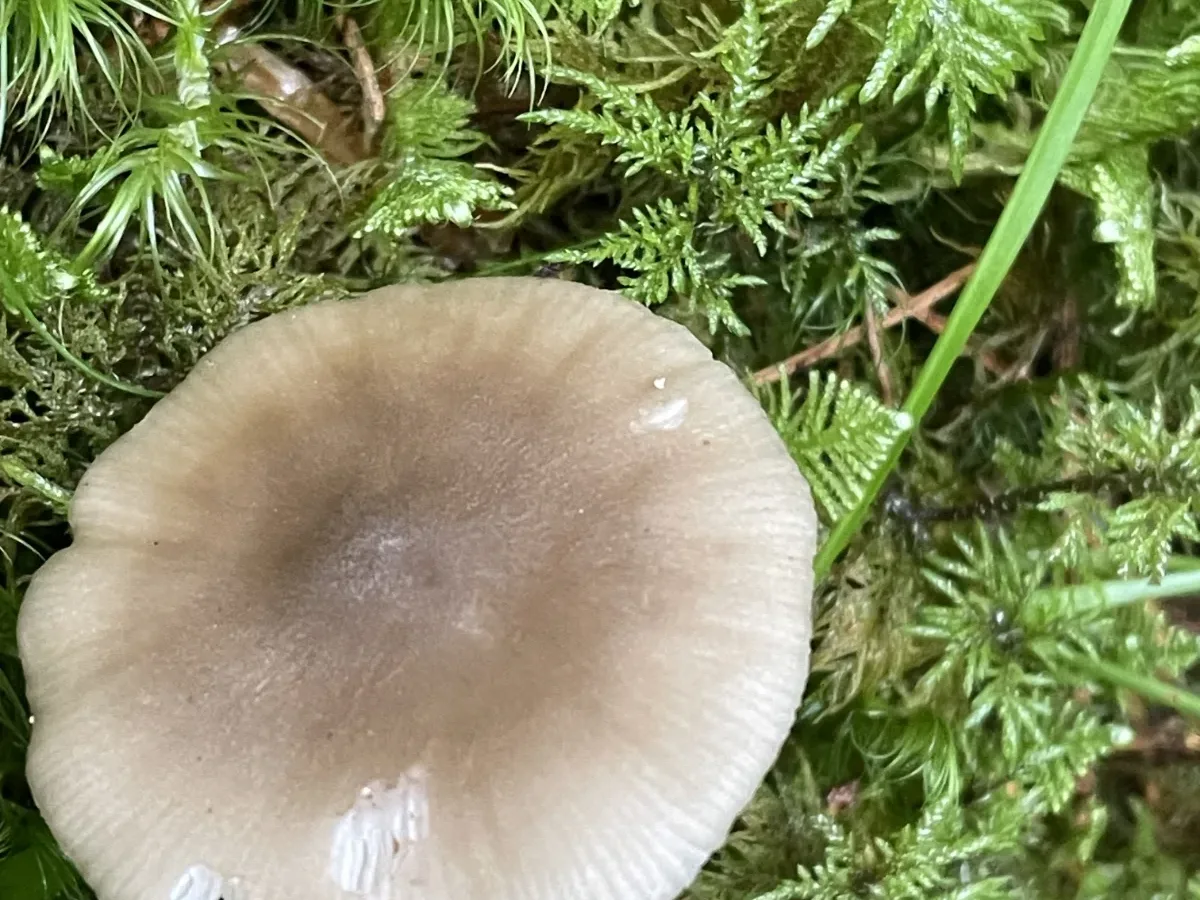 © Marte Kristoffersen (CC BY)
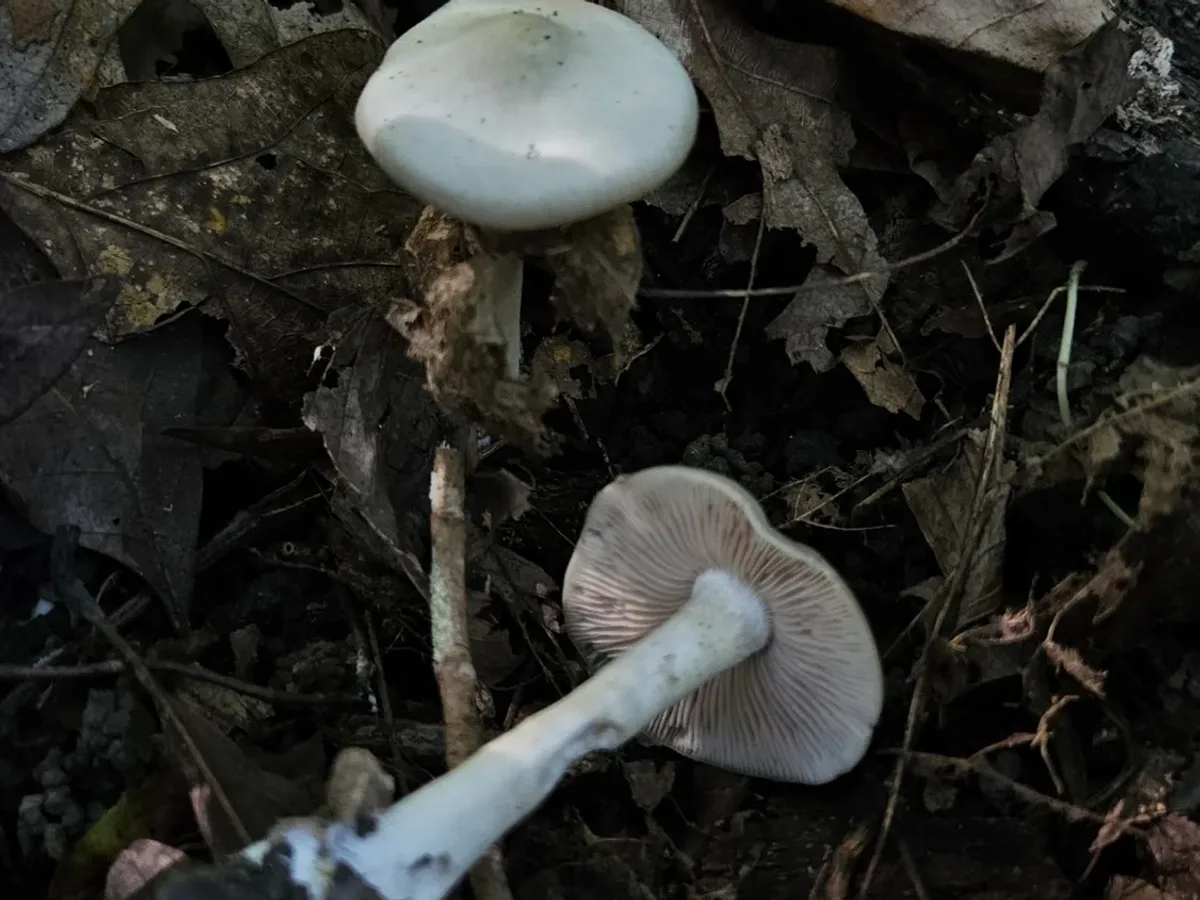 © Sam Bucciarelli (CC BY)
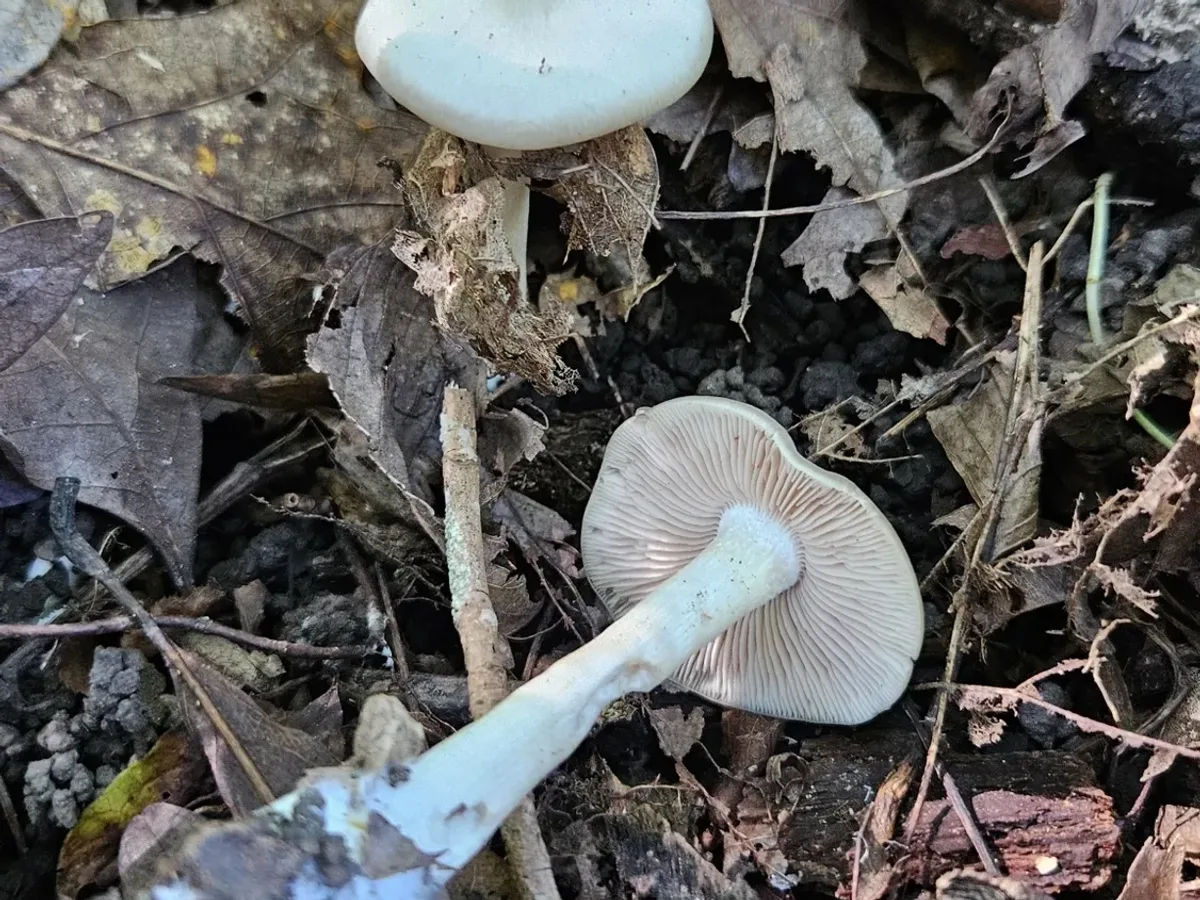 © Sam Bucciarelli (CC BY)
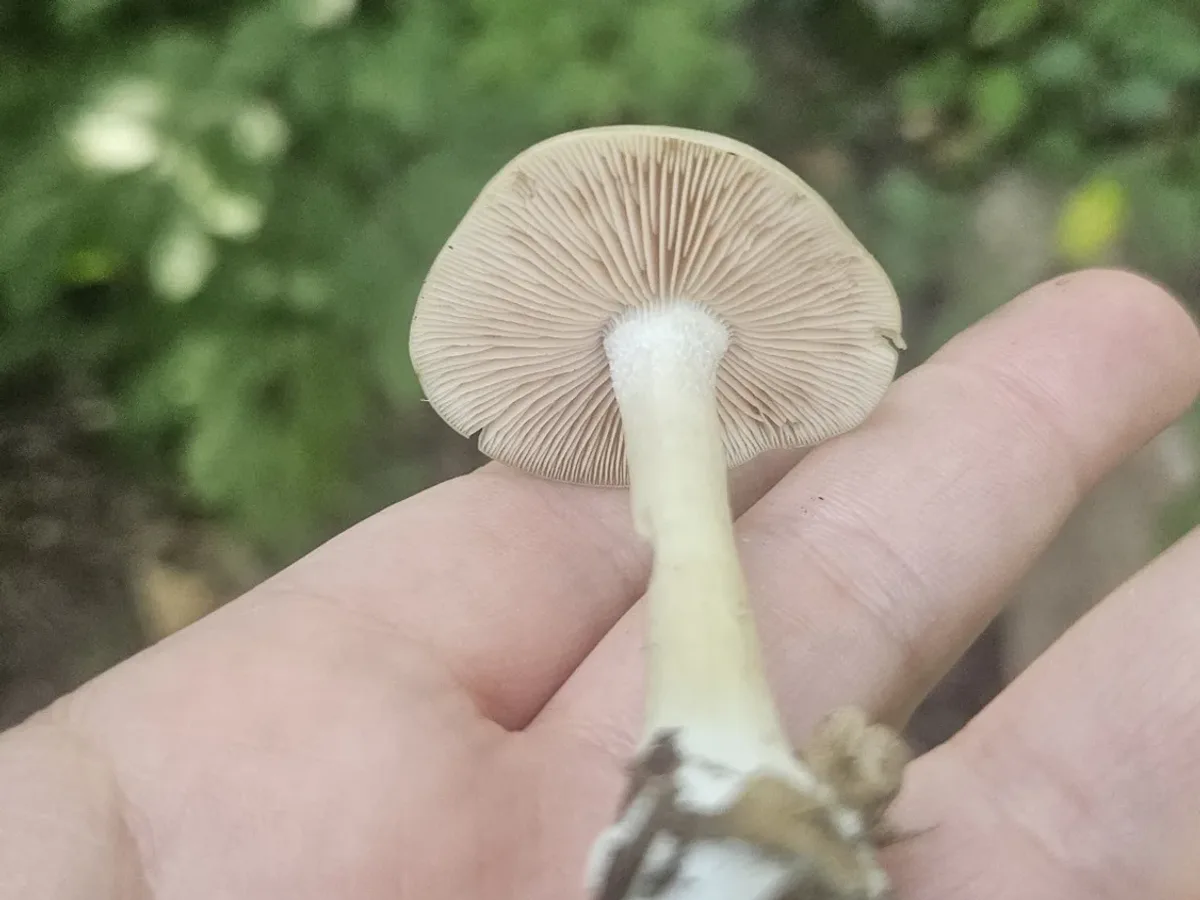 © Sam Bucciarelli (CC BY)
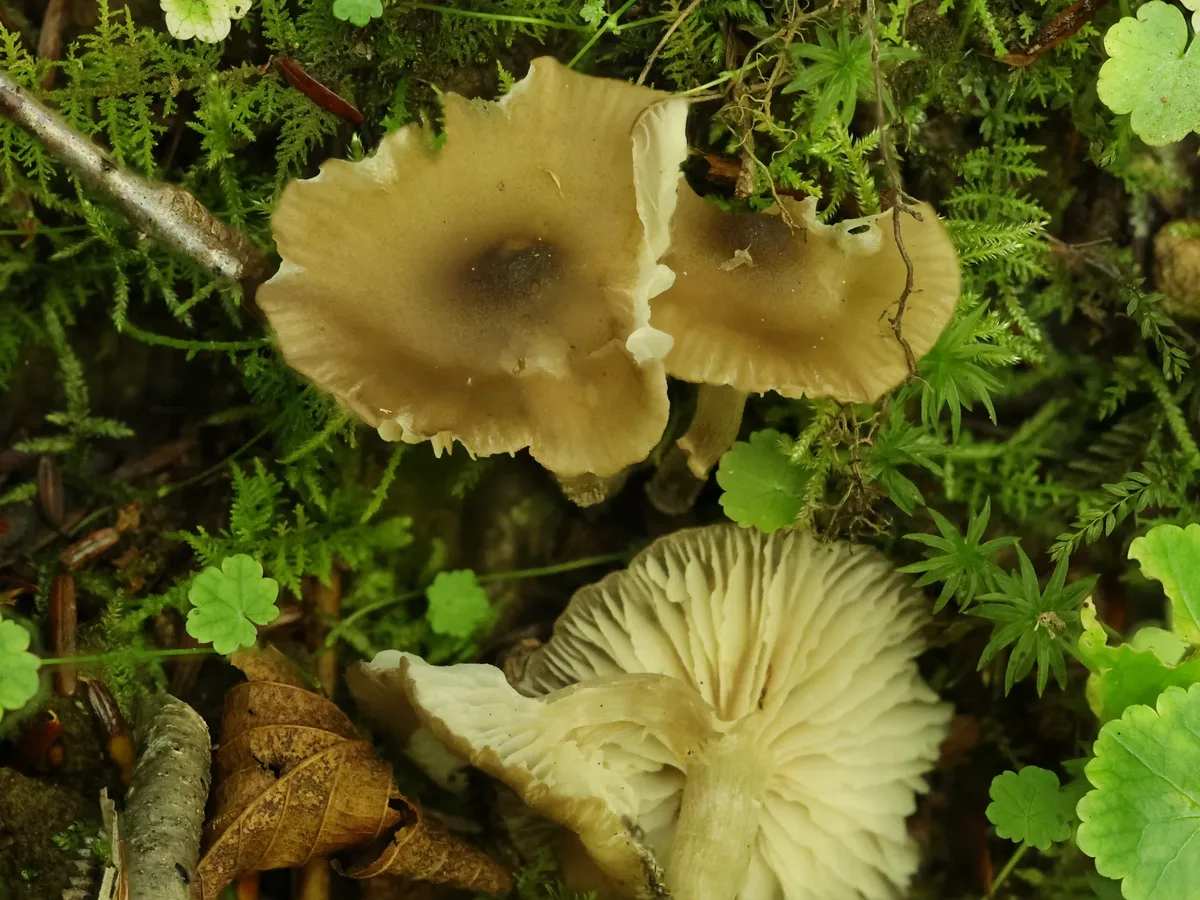 © Richard Jacob (CC BY)
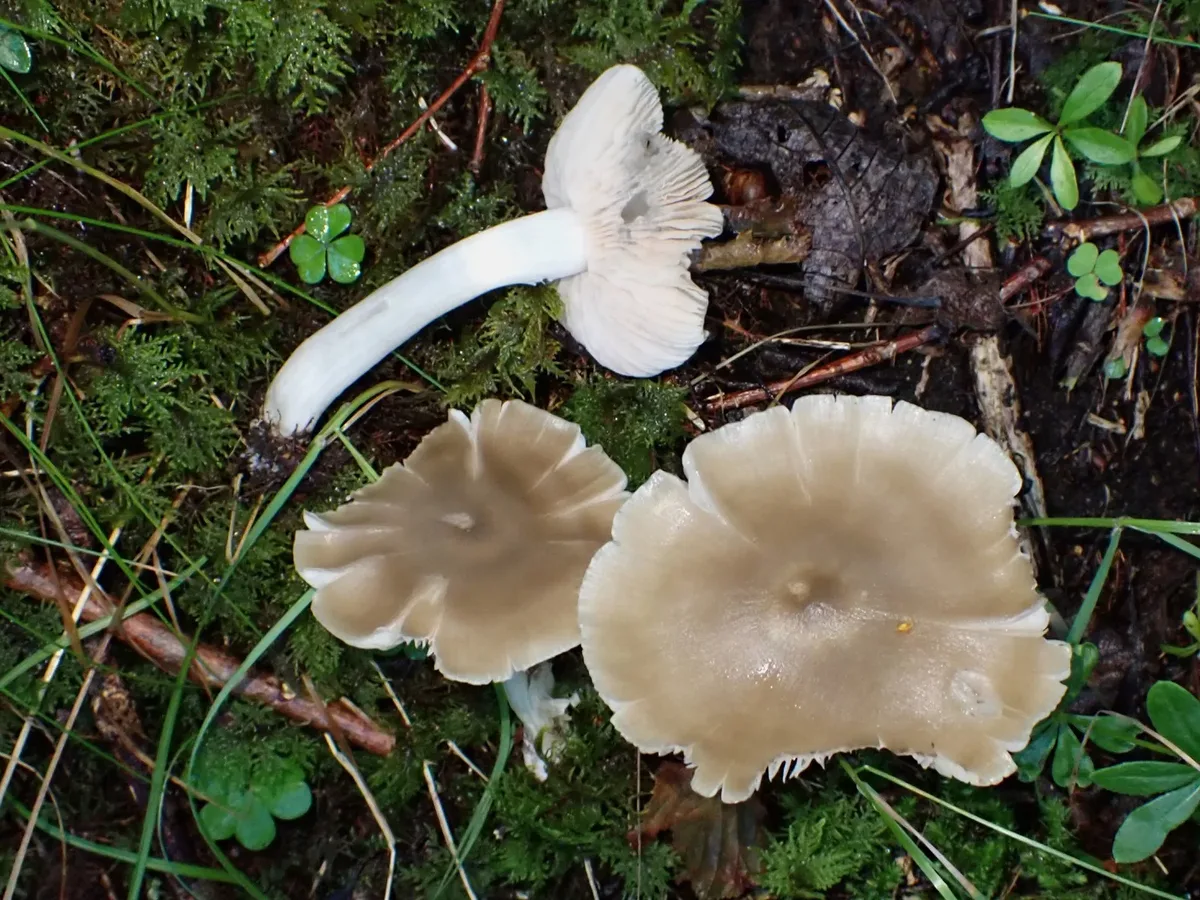 © Perry Gunnar Larsen (CC BY)
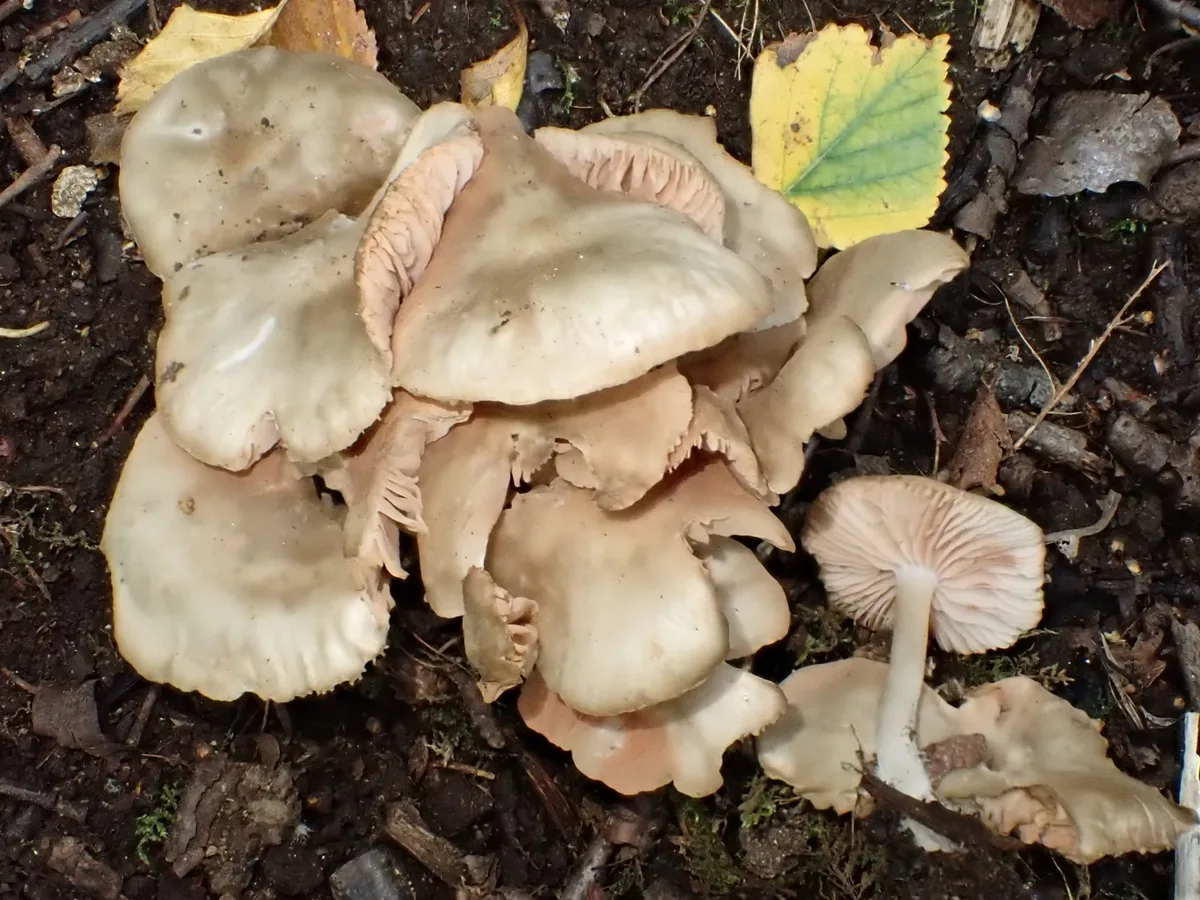 © Perry Gunnar Larsen (CC BY)© Jason Grant (CC BY 4.0)© Niko Ioannidis (CC BY 4.0)
Edible only with the right preparation - or safe for some people but not others. Learn the caveats first.
How to recognise it
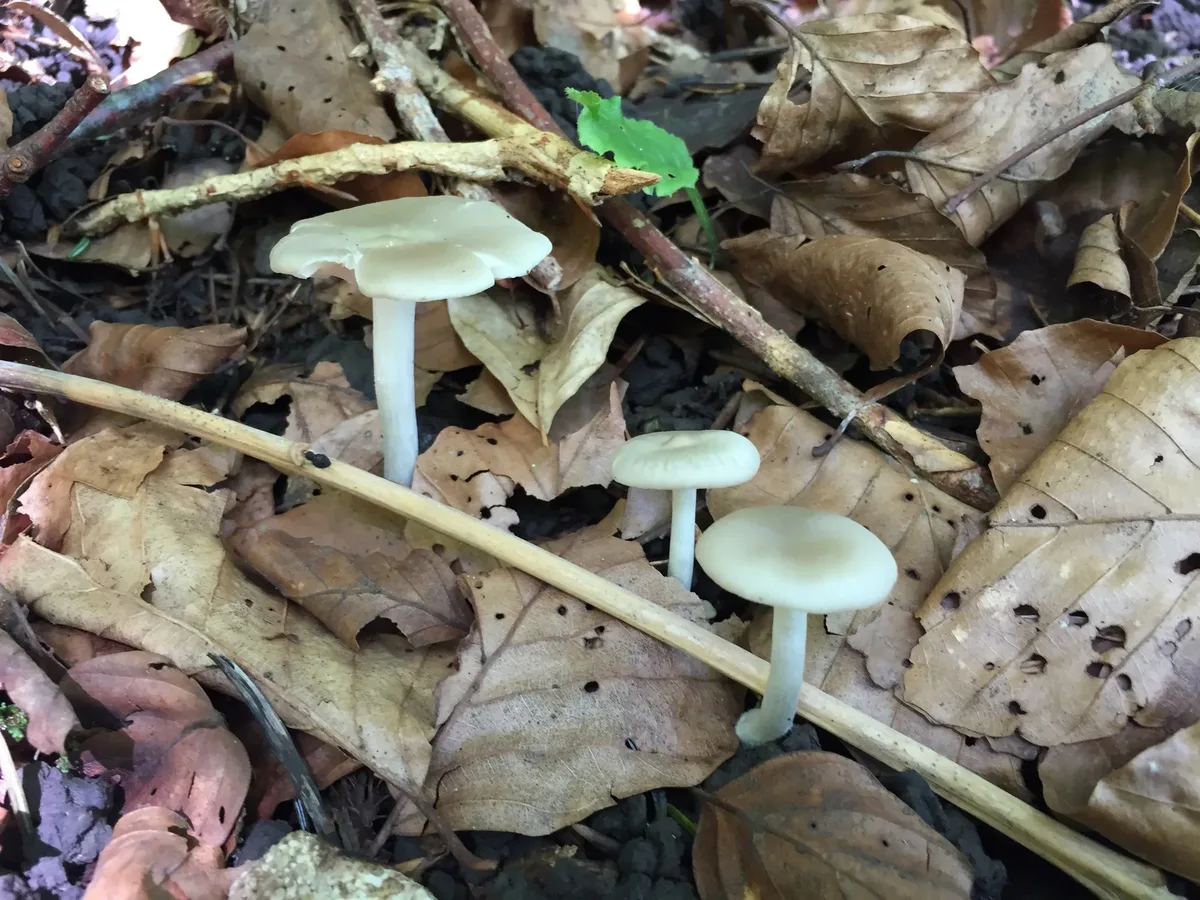
Entoloma nidorosum is a medium-sized grey-brown pinkgill of woodland habitats whose most arresting characteristic is its smell - once encountered it is virtually impossible to mistake for something pleasant.
Cap
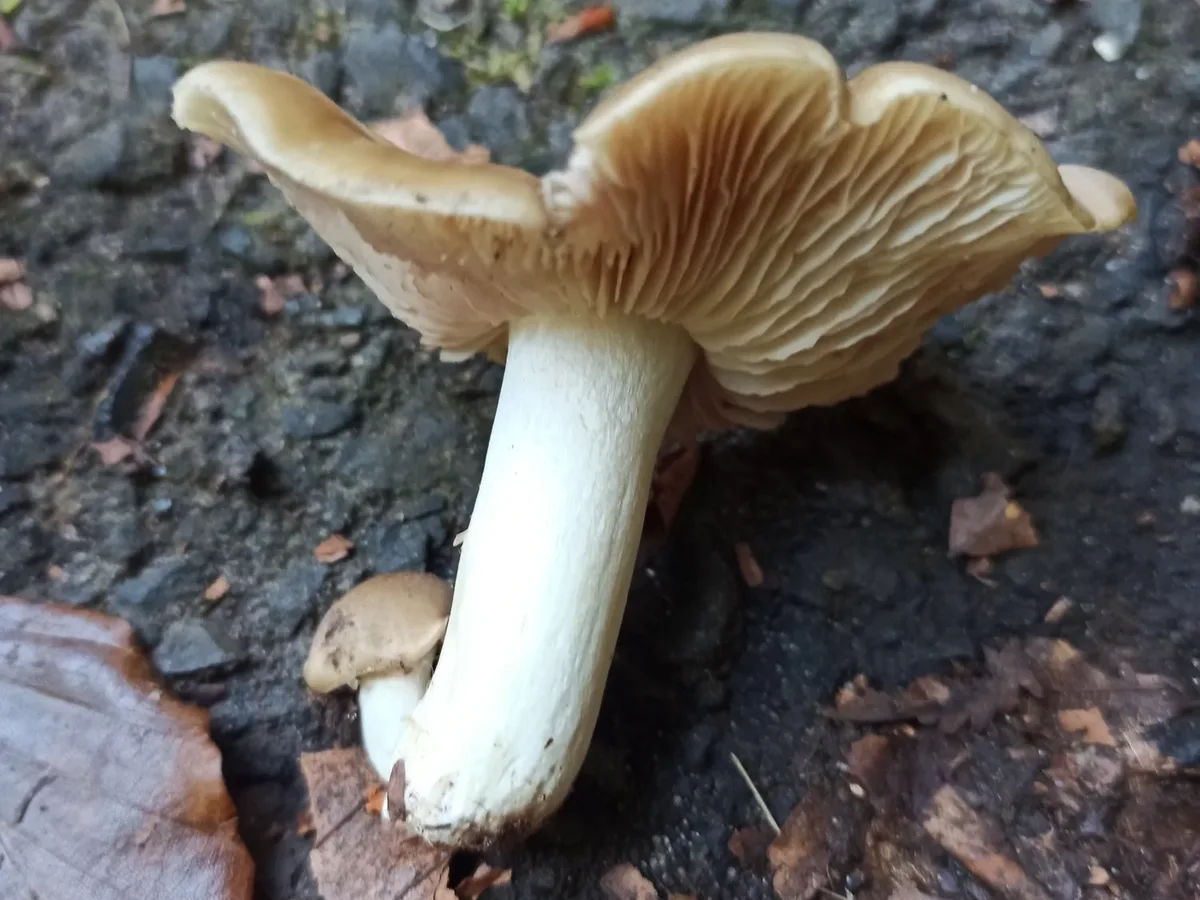
The cap reaches 4-10 cm across and is hygrophanous, meaning its colour changes visibly as it dries. When fresh and wet it is a fairly uniform mid-grey to grey-brown (darker at the centre, more greyish-beige toward the margin), but on drying it fades markedly to pale buff, cream, or almost whitish, sometimes retaining only a ghost of grey at the centre.
Young caps have a slightly inrolled margin that straightens with age; the surface is smooth and silky-fibrous when dry, weakly viscid in wet weather.
Gills
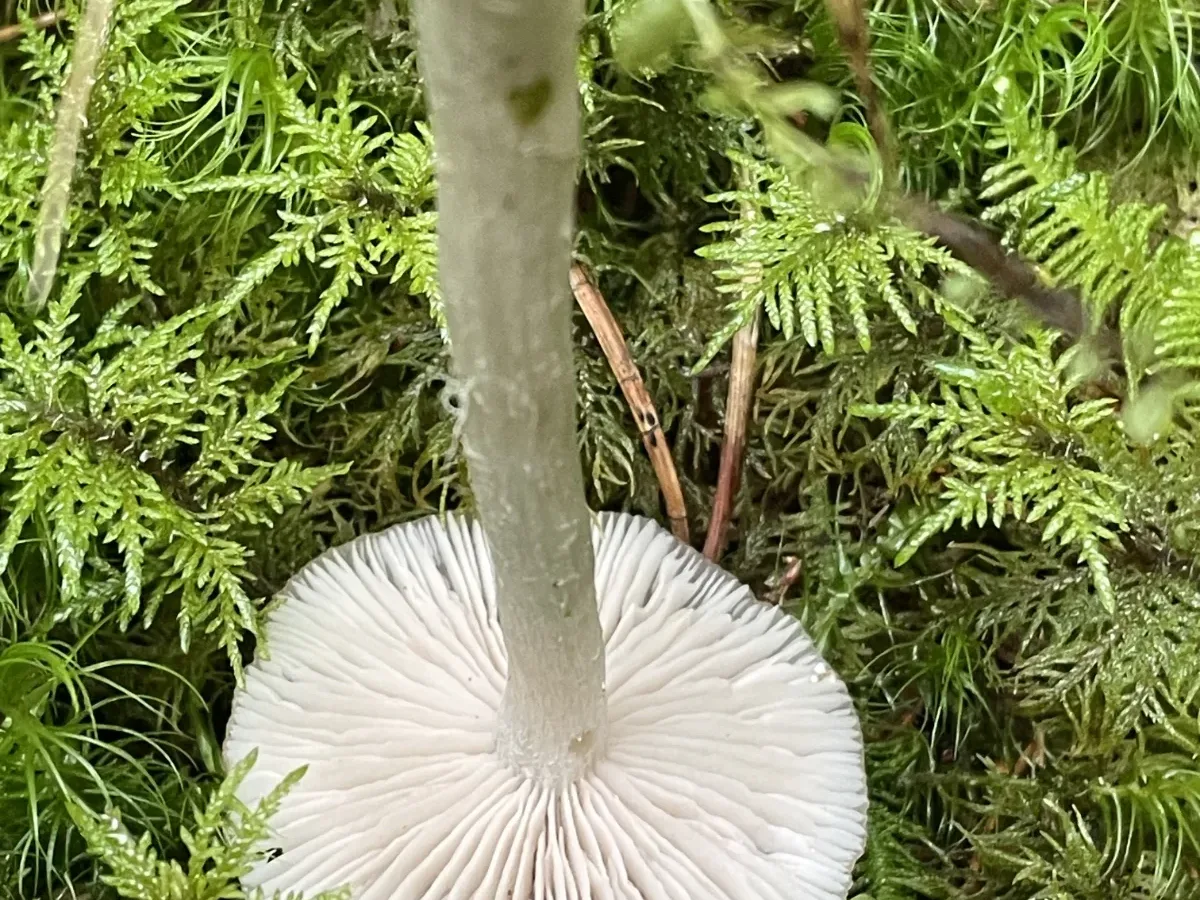
The gills are a critical identification point. They start greyish-white - the same tone as the cap surface - and slowly become distinctly salmon-pink to flesh-pink as the angular spores ripen, a colour change that occurs over hours to days.
This gill pinkening is not a sudden dramatic transformation; in mid-maturity the gills can appear a muted pinkish-grey. The gill attachment is sinuate (a distinct notch near the point where they meet the stem), never deeply decurrent.
The spore print, obtained by resting the cap gills-down for an hour, is salmon-pink to flesh-pink - typical of the genus Entoloma - and is one of the two key features for genus-level identification (the other being the angular, multi-sided spores visible under a microscope).
Stem
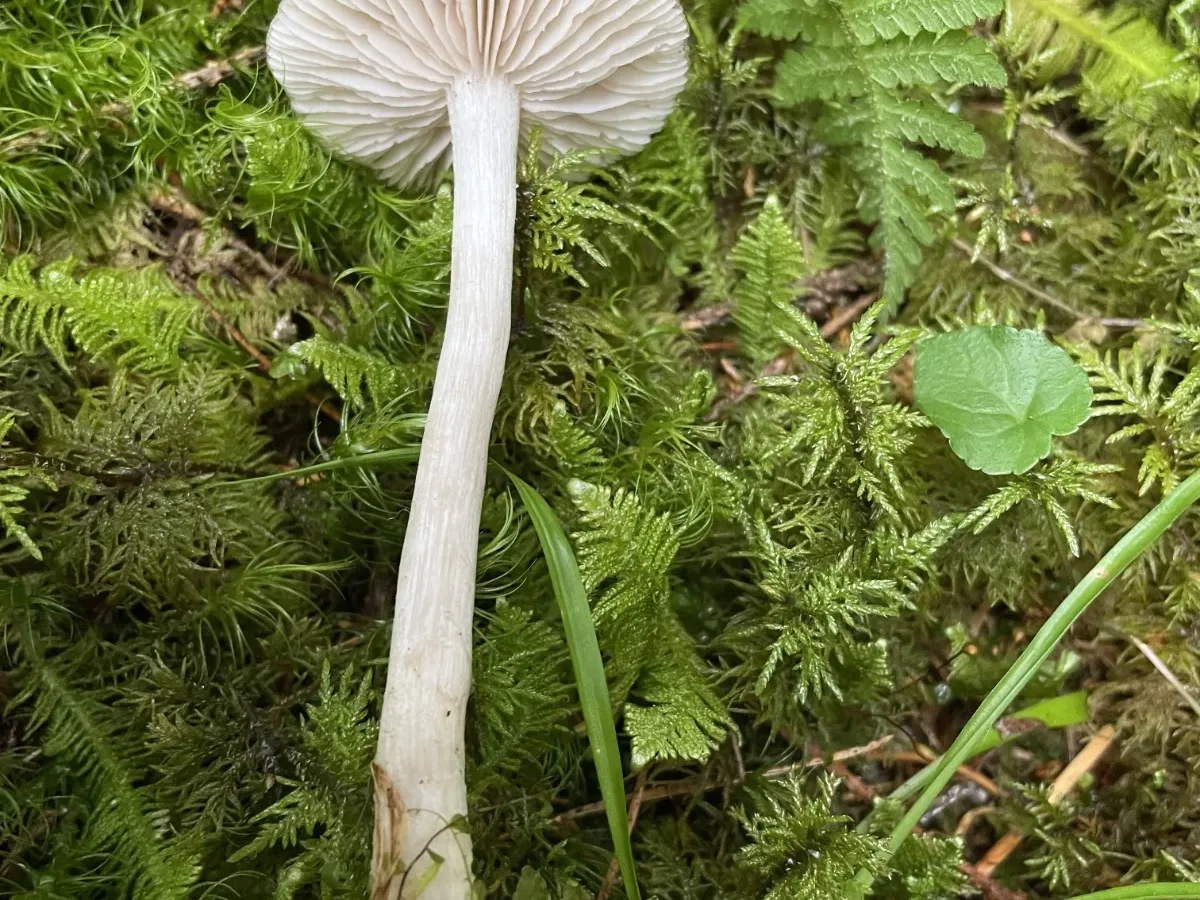
The stem is typically 5-10 cm tall and relatively slender for the cap size, longitudinally fibrous-striate in texture, white to pale grey, occasionally with a faint lilac wash when young. It is solid when young, becoming stuffed to hollow as the fruit body ages.
Flesh
The flesh is white throughout, thin, and does not change colour when broken or cut.
Why it's dangerous
Moderate. Not typically fatal in healthy adults, but can cause significant and unpleasant gastrointestinal illness.
The species should be treated as toxic and avoided entirely as a food item.
Toxin
Gastrointestinal irritant compounds; precise chemical identity not fully characterised.
The genus Entoloma is known to contain a range of toxic lipids, sesquiterpenes, and other compounds that cause mucosal irritation.
No amatoxins, orellanin, muscarine, gyromitrin, or recognised major mycotoxins have been identified in E. nidorosum specifically.
Symptoms
Nausea, vomiting, abdominal cramps, and diarrhoea, typically appearing 30 minutes to 3 hours after ingestion.
Symptoms are usually self-limiting and resolve within 12-24 hours in most cases, though severe episodes may persist longer.
Medical evaluation is advised if symptoms are intense or prolonged.
Staying safe
Entoloma nidorosum is a toxic species and must not be eaten. It causes gastrointestinal poisoning - nausea, vomiting, stomach cramps, and diarrhoea - typically within one to three hours of ingestion.
The toxins responsible are not fully characterised but are presumed to be GI-irritant compounds within the cell matrix of the fruit body.
The severity of symptoms varies between individuals; some report only mild discomfort while others suffer prolonged illness. The species is not known to cause organ damage or fatality in documented modern cases, but the GI effects can be severe enough to require medical attention, particularly in children, elderly individuals, or people with underlying health conditions.
The critical identification features that distinguish E. nidorosum from edible species are:
- 1The strong, penetrating nitrogenous or nitrous smell - the most reliable single character, and one that cannot be confused with the mealy-floury smell of edible species like Clitopilus prunulus.
- 2Sinuate gill attachment (notched near the stem), not decurrent.
- 3A pink spore print confirming genus Entoloma, which contains no edible species of note in Europe.
If the smell is not unambiguously nitrogenous, the specimen may be a different Entoloma species - many of which are also toxic. Never eat any grey-brown woodland mushroom with sinuate or adnexed gills and a pink spore print.
Where & when it grows
Habitat
Entoloma nidorosum favours humid, sheltered woodland on moist, humus-rich soils.
Its most reliable habitats in central-western Europe are beech and mixed beech-oak woodland, particularly in valley positions, along stream banks, and in shaded hollows where leaf litter accumulates deeply and soil moisture remains high through the summer.
It also occurs at woodland edges, along hedgerows with large trees, and occasionally in scrub or rough pasture near hedges.
The species is associated with mildly acidic to neutral mesic soils and tends to avoid very acidic or very dry sites. It is strictly terrestrial, growing from mineral soil or deep humus, never from wood.
The nutritional mode within Entoloma is complex - the genus spans true saprotrophic species and mycorrhizal species - and E. nidorosum is most often characterised as occurring near beech, oak, and hornbeam, suggesting at least a loose association with broadleaf trees.
When
In central-western Europe, Entoloma nidorosum is predominantly a late summer and autumn species, typically appearing from late August onwards and continuing through November.
The main fruiting window is September and October, coinciding with the cooling temperatures and increased rainfall of the continental and Atlantic European autumn.
Warm, moist weather following the first significant autumn rains is the principal trigger for fruiting, and a known site can produce a small flush within a week of suitable conditions arriving.
The species is rarely encountered before August and is essentially absent from winter months. It may fruit as scattered individuals or in small groups of two to five fruit bodies.
Like many Entoloma species it is not a reliable or abundant fruiter - known sites where it appears tend to produce modestly in most years when conditions allow.
How it grows
Fruit bodies emerge singly or in small scattered groups directly from mineral soil or deep leaf-litter humus - never from wood.
The mycelium persists unseen through the humus layer between seasons; the species is not known to form fairy rings.
Fruiting is irregular from year to year and closely tied to autumn moisture: a dry autumn may yield nothing at a site that produced well the previous year.
The fruit bodies themselves are relatively fragile and short-lived, deteriorating within a few days of emergence, particularly in warm or dry weather - which is one reason the species is encountered less often than its actual distribution would suggest.
Fruiting conditions
Fruiting triggered by autumn cooling combined with soil moisture after rain; best conditions are temperatures of 8-14 °C with consistent soil moisture in humus-rich woodland. Peak flush follows first significant autumn rains in September-October.
Look-alikes
The principal confusion risk for Entoloma nidorosum flows in a particular direction: foragers seeking edible species may pick this toxic pinkgill in place of something edible. The mealy-smell Entoloma species (such as E. rhodopolium, which also lacks the nitrogenous odour but is likewise toxic) present a closely related risk.
The strong nitrogenous smell of E. nidorosum is its most reliable distinguishing feature and makes confusion with most edible species unlikely for attentive foragers - though in older or dried specimens the smell can be reduced.
Entoloma rhodopolium (wood pinkgill) is very closely related and similarly toxic. It shares the grey-brown hygrophanous cap and pink gills, but its smell is mealy-floury (like flour or cucumber) rather than nitrous - some authorities treat the two as a species complex. Both are toxic and both should be avoided.
Entoloma sinuatum (lead poisoner / livid pinkgill) is the most seriously toxic Entoloma in Europe, causing severe gastrointestinal poisoning and occasional fatalities in historically reported cases (though modern analysis suggests fatality from E. sinuatum alone is rare). It is considerably larger than E. nidorosum (cap 8-20 cm), paler and more cream-white to buff rather than grey-brown, and has a mealy-floury smell rather than a nitrous one. Spore print deeper salmon-pink. Both are in the same genus and share the sinuate gill attachment and pink spore print.
Clitopilus prunulus (the miller) is an edible species with a similar grey-beige to cream colouration and grows in similar habitats. It is readily distinguished by its strongly decurrent gills (running far down the stem, not notched), its robust solid stem, strongly inrolled cap margin in youth, and its intense floury-mealy smell that is pleasant rather than nitrogenous. Spore print pale pink. This confusion is dangerous because the miller is the edible species that inexperienced foragers may seek; picking a pinkgill in its place is the classic error.
Lepista nuda (wood blewit) and Lepista nebularis can superficially resemble grey-brown Entoloma species but are distinguished by violet tinges in gills and stem, a fruity vinous smell (blewit) or unpleasant but non-nitrogenous smell (nebularis), and a pale pinkish-brown rather than salmon-pink spore print.
Tricholoma species with grey-brown caps grow in similar woodland habitat but have white spore prints, non-sinuate or emarginate gill attachments, and characteristically differently textured caps (often with fine radial fibrils or a felt-like surface).
Larger, cap grey to grey-beige with a distinct felted surface, gills short-decurrent and crowded (not sinuate), smell mealy-earthy or unpleasant but not nitrous, spore print white to pale cream (not pink); causes GI distress in many people
Considerably larger (cap 8-20 cm vs 4-10 cm), cap paler cream-white to buff rather than grey-brown, smell mealy-floury not nitrous, grows in more open woodland and woodland edges often under oak; causes severe GI poisoning. Both species are toxic; E. sinuatum is typically listed as the more dangerous of the two due to its larger size producing greater ingested dose.
Edible species that may be sought in the same habitats; distinguished by gills that are deeply decurrent (running far down the stem, never sinuate/notched), strongly inrolled cap margin when young, very robust solid stem, intense pleasant mealy-floury smell (not nitrous), and pale salmon-pink spore print. Confusion is dangerous because the miller is the edible being sought and the toxic pinkgill is the accidental pick.
Distinctly violet to blue-violet tints in gills, stem, and often cap; fruity vinous smell rather than nitrous; pale pinkish-buff spore print; grows in deep woodland litter
Very closely related and similarly toxic; cap grey-brown and hygrophanous in the same way, but smell is mealy-floury (flour or cucumber) not nitrous-nitrogenous; some authorities treat the two as a species aggregate. Both are toxic and must be avoided.
A reference guide - never an edibility guarantee. When in doubt, leave it out.