White livid pinkgill
Entoloma lividoalbumsyn. Rhodophyllus lividoalbus, Agaricus lividoalbus
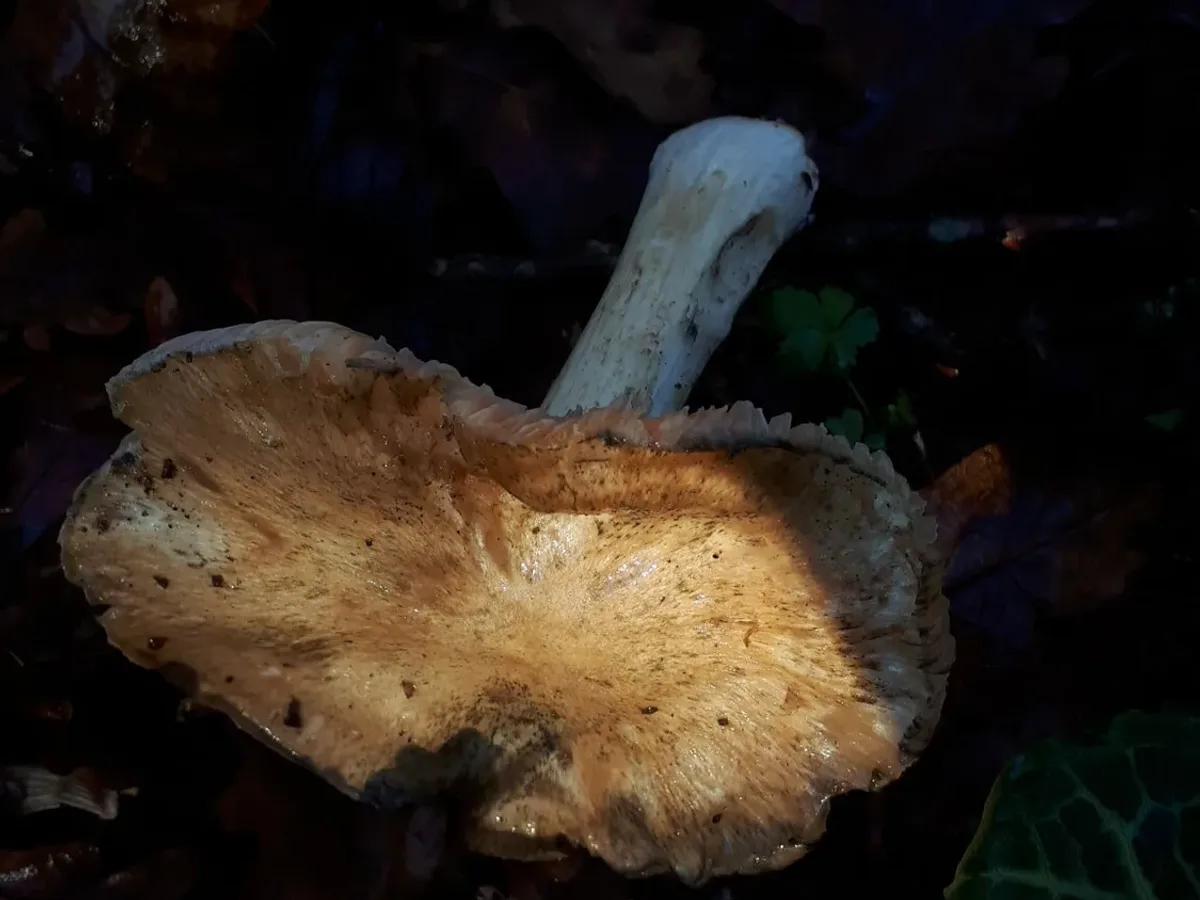 Florent (CC0)
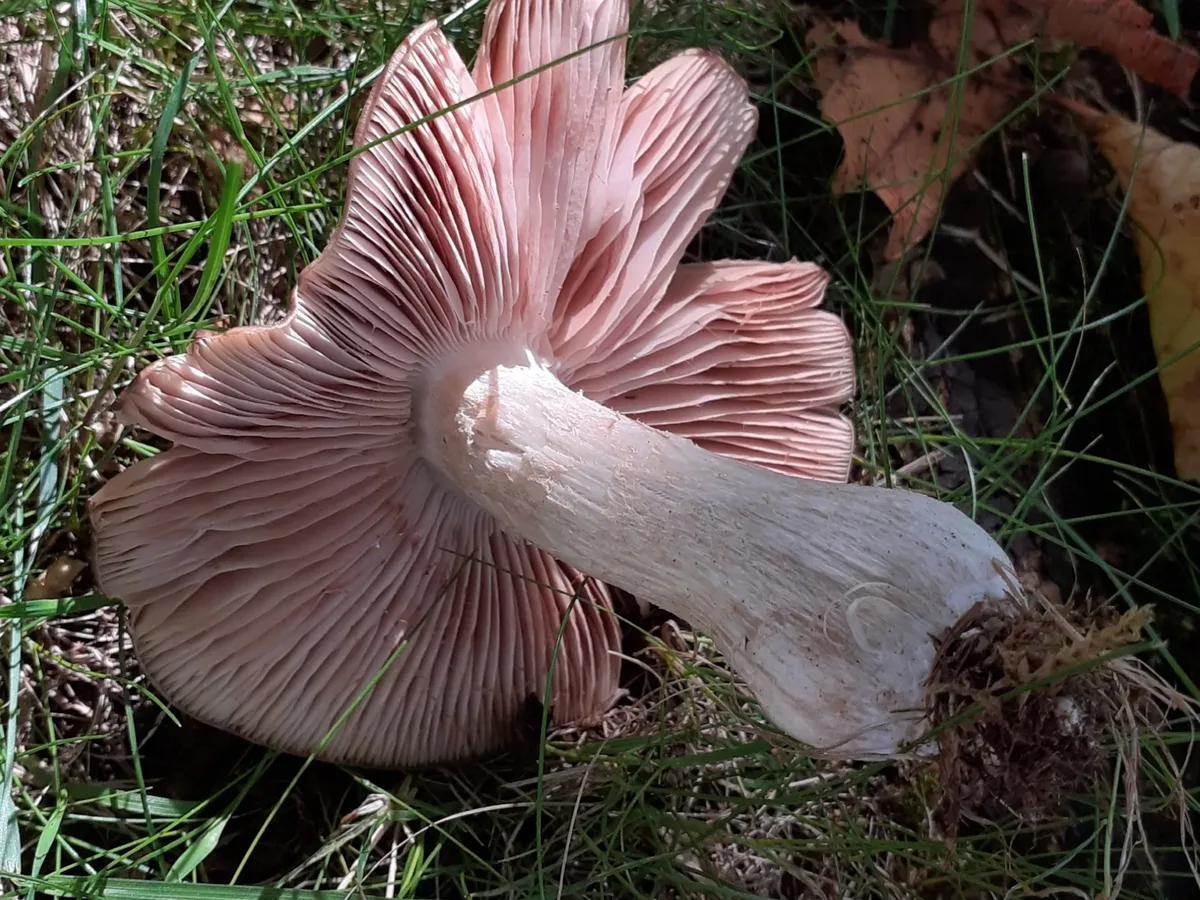 © bogsuckers (CC BY)
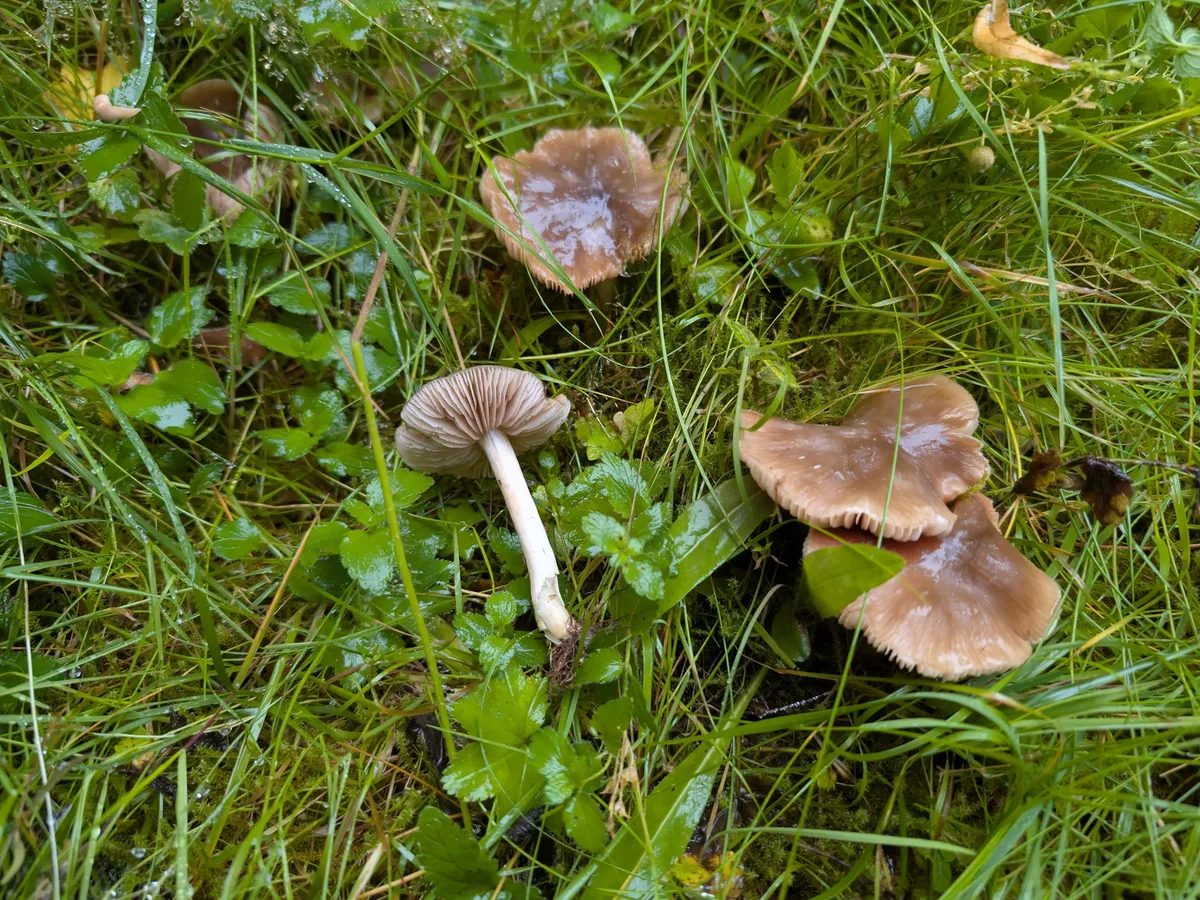 © Petri Roponen (CC BY-SA)
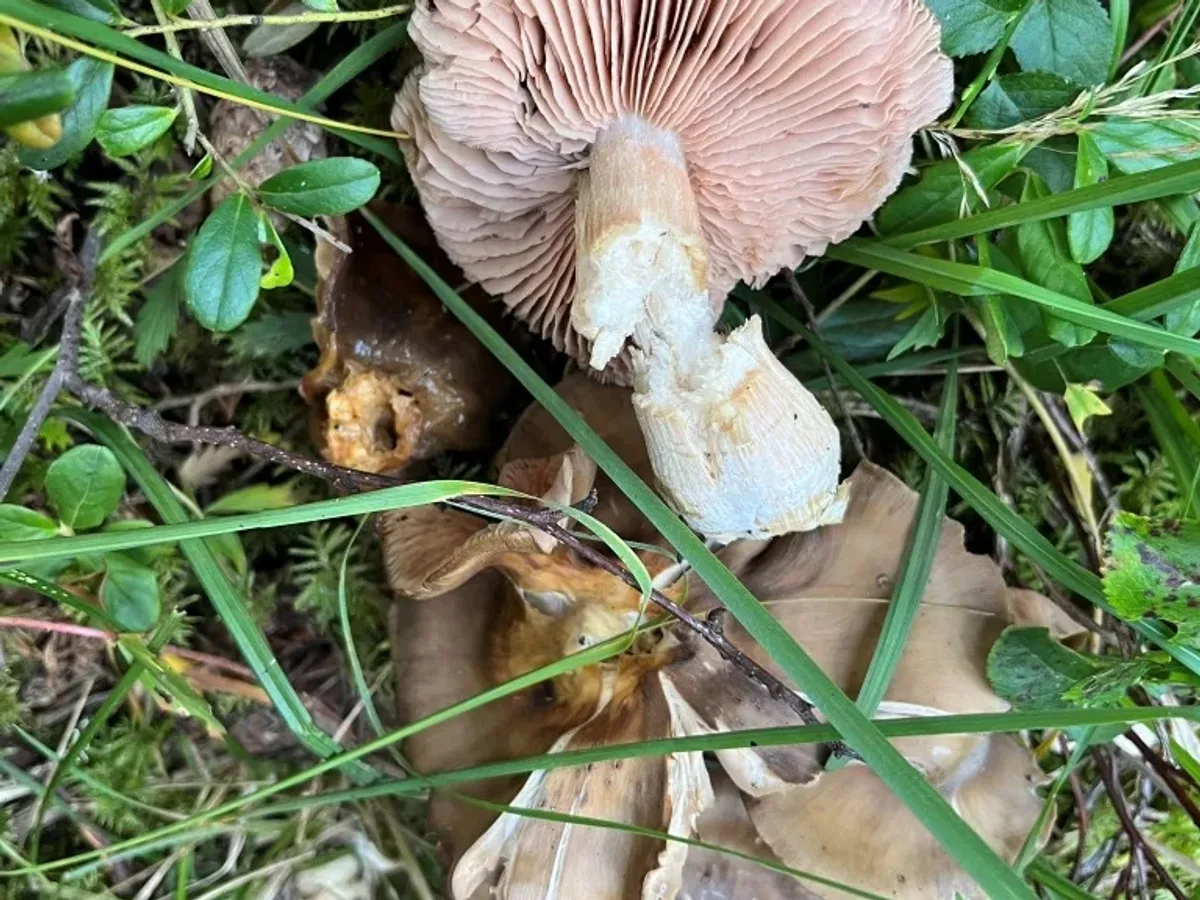 © Siv Moen (CC BY)
 © Rob van Kruining (CC BY)
 © Rob van Kruining (CC BY)
 © bogsuckers (CC BY)
 © bogsuckers (CC BY)
 © Björn Sothmann (CC BY-SA)Florent (CC0)© bogsuckers (CC BY)
Edible only with the right preparation - or safe for some people but not others. Learn the caveats first.
How to recognise it
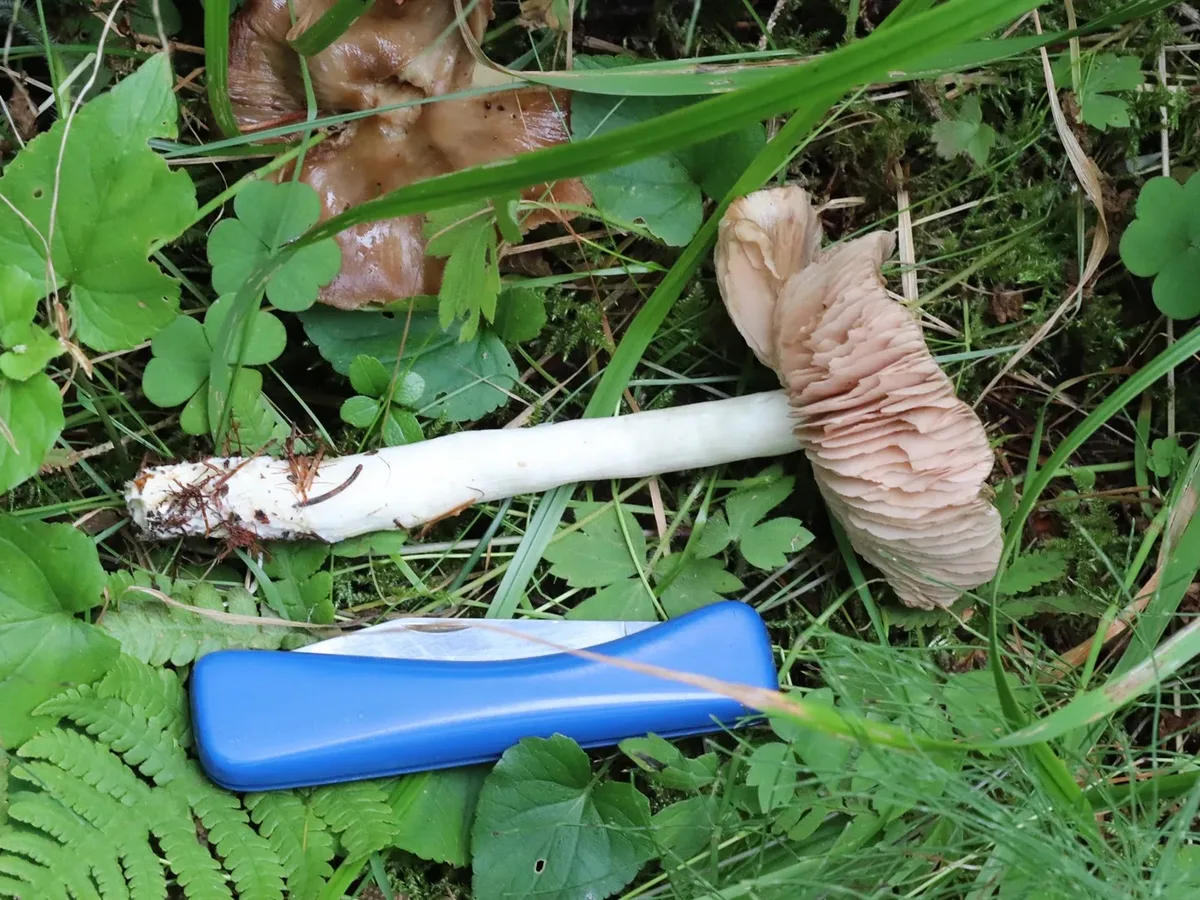
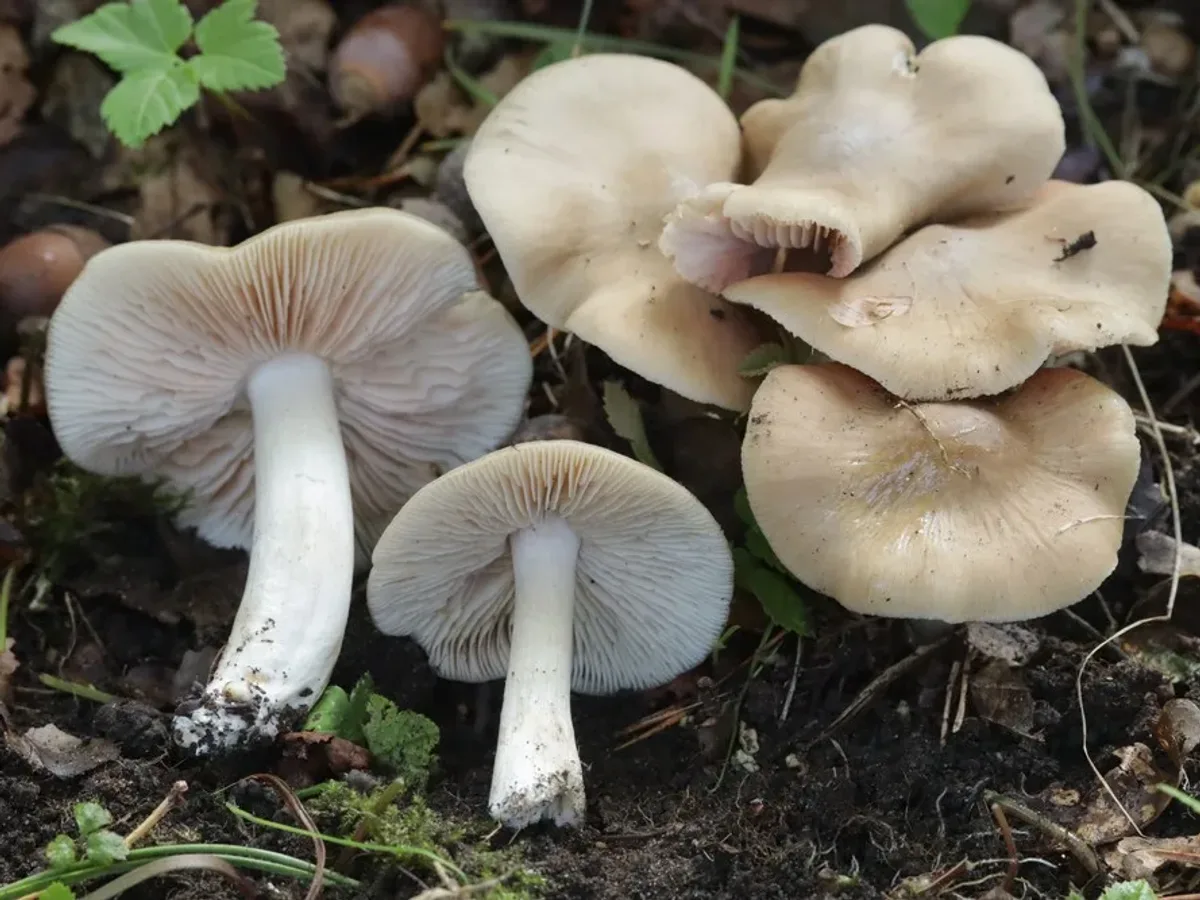
Entoloma lividoalbum is a medium to large, solidly built mushroom whose most striking feature is its colouring - an ivory-white to pale cream that immediately separates it from the more familiar, greyer Entoloma sinuatum.
Cap
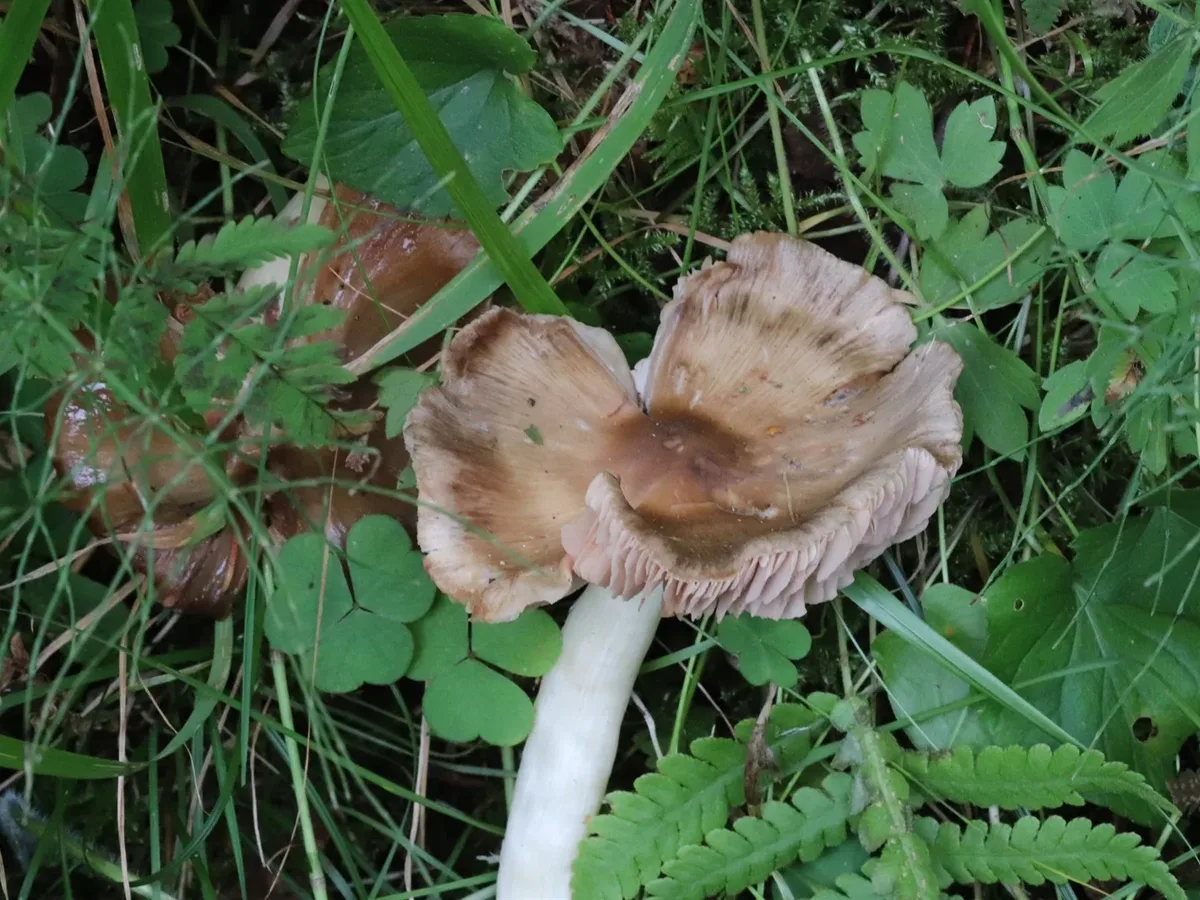
The cap starts out convex with an inrolled margin, then gradually flattens and broadens to 4-12 cm across, often developing a shallow central bump and a gently wavy, irregular edge in older specimens.
The surface stays dry throughout, with a smooth, silky-fibrous texture and a consistently pale tone: white to ivory, at most picking up a faint buff or tan tinge at the centre.
Gills
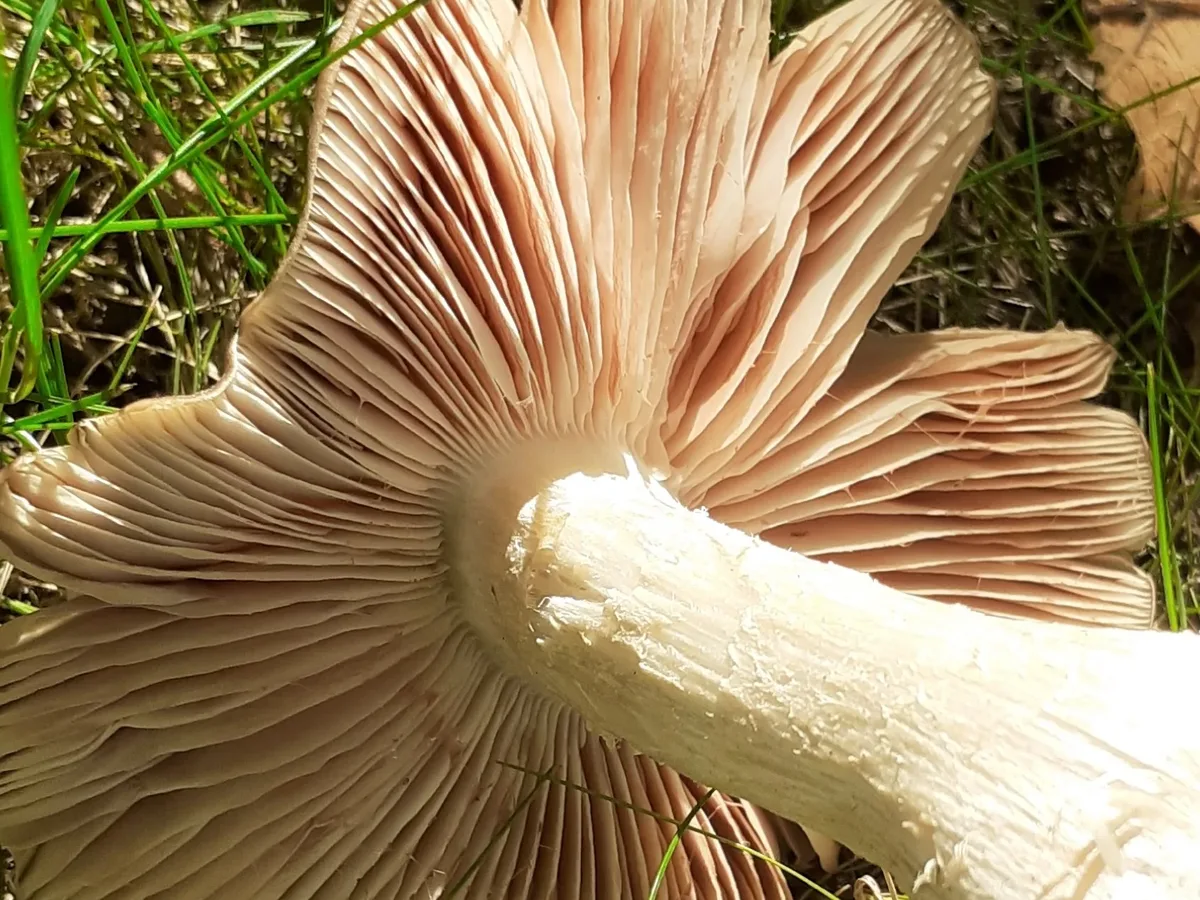
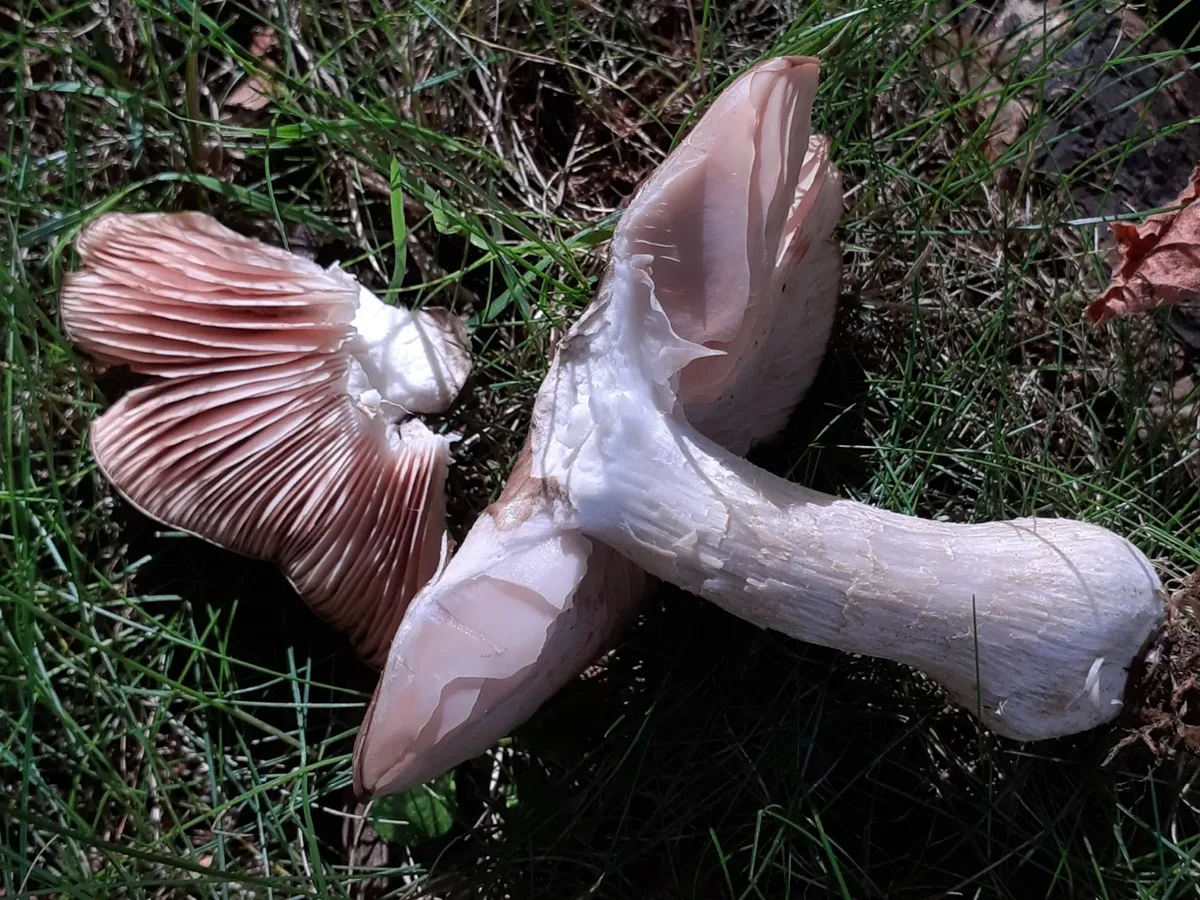
The gills attach broadly to the stem (adnate, sometimes with a sinuate notch at the junction) and start out pale cream, but as the spores ripen they shift to a characteristic salmon-pink to pinkish-brown - the calling card of the Entoloma genus.
A spore print on dark paper confirms this: salmon-pink to pinkish-orange, angular spores measuring 8-11 × 6-8 µm with 5-7 angles.
Stem
The stem is 4-10 cm tall and 1-2 cm thick, firm and solid when young, becoming slightly hollow with age, white to pale greyish with longitudinal silky fibres.
There is no ring (annulus) and no volva - the absence of a ring is a useful check against Agaricus species.
Flesh
The flesh is firm and white, unchanging when cut.
Smell & taste
The smell is distinctly mealy or floury, like freshly ground grain or raw potato, and is shared by several related species - useful as a genus indicator, but not sufficient on its own for safe identification.
Why it's dangerous
A documented cause of gastrointestinal poisoning in central and western Europe, most often from confusion with Clitopilus prunulus (the miller) or, less commonly, with St George's mushroom.
Seldom fatal but can require medical attention. Higher risk for children, the elderly, and immunocompromised individuals.
Toxin
Gastrointestinal irritant toxins typical of the genus Entoloma.
The precise chemical identity of the active compounds in E. lividoalbum has not been fully characterised, but the clinical syndrome is consistent with the muscarine-group and irritant peptides responsible for 'Entoloma gastroenteritis' across the genus.
Symptoms
Nausea, vomiting, abdominal cramps, and diarrhoea, with onset 1-4 hours after ingestion. Symptoms may persist 24-48 hours.
Rarely life-threatening in healthy adults, but severe and debilitating.
Staying safe
Entoloma lividoalbum is a gastrointestinal toxin-producing species. Eating it causes nausea, vomiting, abdominal cramps, and diarrhoea with onset typically 1-4 hours after ingestion.
The illness is rarely life-threatening in healthy adults but can be severe, prolonged (24-48 hours), and debilitating. As with E. sinuatum, children, elderly people, and immunocompromised individuals face higher risk of serious complications.
The toxins are not removed by cooking, boiling, or any other domestic preparation.
This species has caused documented poisonings in Europe, particularly where it has been confused with Clitopilus prunulus. There is no treatment beyond supportive care; seek medical attention if symptoms are severe or prolonged.
The pale, ring-less, mealy-smelling white mushrooms of the genus Entoloma - including E. lividoalbum - are collectively one of the more significant groups of poisonous woodland fungi in temperate Europe.
Where & when it grows
Habitat
A woodland and woodland-edge species of central and western Europe, most at home in deciduous and mixed forests on clay-rich, base-rich, or calcareous soils.
It is mycorrhizal, with its underground mycelium woven into the roots of broadleaf trees - particularly oak, beech, hornbeam, lime, and ash - and it tends to return to the same productive spots year after year as long as the tree partnership persists.
It also turns up in parkland, along woodland margins, and occasionally in species-rich calcareous grassland close to trees.
Fruitbodies appear singly or in small scattered groups rather than in obvious clusters or rings. Look for it in sheltered, humus-rich hollows where leaf litter accumulates.
The pale cap blends easily against light-coloured soil or dry leaves; the mushrooms become more conspicuous after rain saturates the litter.
When
Entoloma lividoalbum fruits from late summer (August) through late autumn (November), with the main flush concentrated in September and October across central and western Europe.
Like other mycorrhizal woodland fungi, it waits for two things to align:
- enough autumn rainfall to wet the soil
- a drop in soil temperatures that signals summer's end
In a typical year the first fruitbodies emerge a week or two after the first significant autumn rains, and the season closes when hard frost penetrates the ground.
A warm, moist September followed by a clear temperature drop into October tends to produce the most reliable fruiting.
How it grows
Mycorrhizal - Entoloma lividoalbum forms a mutual partnership with the roots of broadleaf trees, trading mineral nutrients for the sugars the tree photosynthesises.
The mycelium threads silently through the soil for years, invisible until weather conditions are just right, then pushes up fruitbodies singly or in scattered groups.
Like all mycorrhizal fungi, it cannot be cultivated; it depends entirely on a living tree partner. A spot that produces fruitbodies one autumn is likely to yield them again in future years, as long as the host trees remain.
Fruiting conditions
Typical mycorrhizal autumn flush: fruitbodies appear 7-14 days after significant autumn rainfall (20+ mm over 14 days) once soil temperatures fall into the 8-16 °C range. Season tracks the main deciduous woodland fungal flush across central and western Europe.
Look-alikes
The primary danger of Entoloma lividoalbum is that it is mistaken for edible species:
- 1The miller, Clitopilus prunulus, is a prized edible with a similar pale cap and mealy smell. The critical difference is gill attachment: the miller's gills run down the stem (decurrent), whereas E. lividoalbum's gills are adnate or sinuate (notched at the stem, never decurrent). The miller also has a more strongly greyish to buff cap and a deeper, more insistent floury-bread smell. Spore prints of both are pink, so the spore print alone does not separate them - gill attachment is the decisive character.
- 2St George's mushroom, Calocybe gambosa, is a spring-fruiting edible (April-June) that occupies a completely non-overlapping season; confusion is only possible if season is not checked. Calocybe gambosa has a white spore print, crowded cream gills, and a firm but more squat fruitbody.
- 3Field mushrooms, Agaricus campestris and relatives, always have a ring (annulus) on the stem and dark brown (chocolate) spores - neither feature is shared with Entoloma lividoalbum.
- 4Entoloma sinuatum (the livid entoloma) is itself toxic; it is closely related but has a more grey-brown to buff cap rather than the distinctive ivory-white of E. lividoalbum. Distinguishing the two is of academic interest only since both are poisonous.
- 5Leucopaxillus giganteus and related large white funnel-capped species can superficially resemble a young E. lividoalbum but have strongly decurrent gills, a funnel shape in maturity, and a white spore print.
Edible. Always has a ring (annulus) on the stem and produces dark brown (chocolate) spores - both features are completely absent in E. lividoalbum. Check for a ring and do a spore print before eating any pale-capped gilled mushroom.
Also toxic. A very closely related species; both cause gastrointestinal poisoning. E. sinuatum tends to have a more grey-brown to buff (less purely white) cap and is generally larger. Separating the two requires microscopy and is only of academic interest - both must be avoided.
Edible and choice. Separated by season: St George's mushroom fruits in spring (April-June), not autumn. Also has a white spore print (not pink), more densely crowded gills, and a stouter, more compact fruitbody.
Large, white, funnel-capped; gills strongly decurrent (running down the stem); white spore print. The funnel shape in maturity and decurrent gills immediately distinguish it from E. lividoalbum.
Edible and prized. Most dangerous confusion: both are pale, ring-less, mealy-smelling, and produce a pink spore print. Decisive character: the miller's gills are decurrent (run down the stem); E. lividoalbum's gills are adnate or sinuate (attached but not running down). The miller also has a more uniformly grey cap and a stronger, sweeter floury-bread odour.
A reference guide - never an edibility guarantee. When in doubt, leave it out.