Shield pinkgill
Entoloma clypeatumsyn. Agaricus clypeatus, Rhodophyllus clypeatus, Entoloma clypeatum var. clypeatum
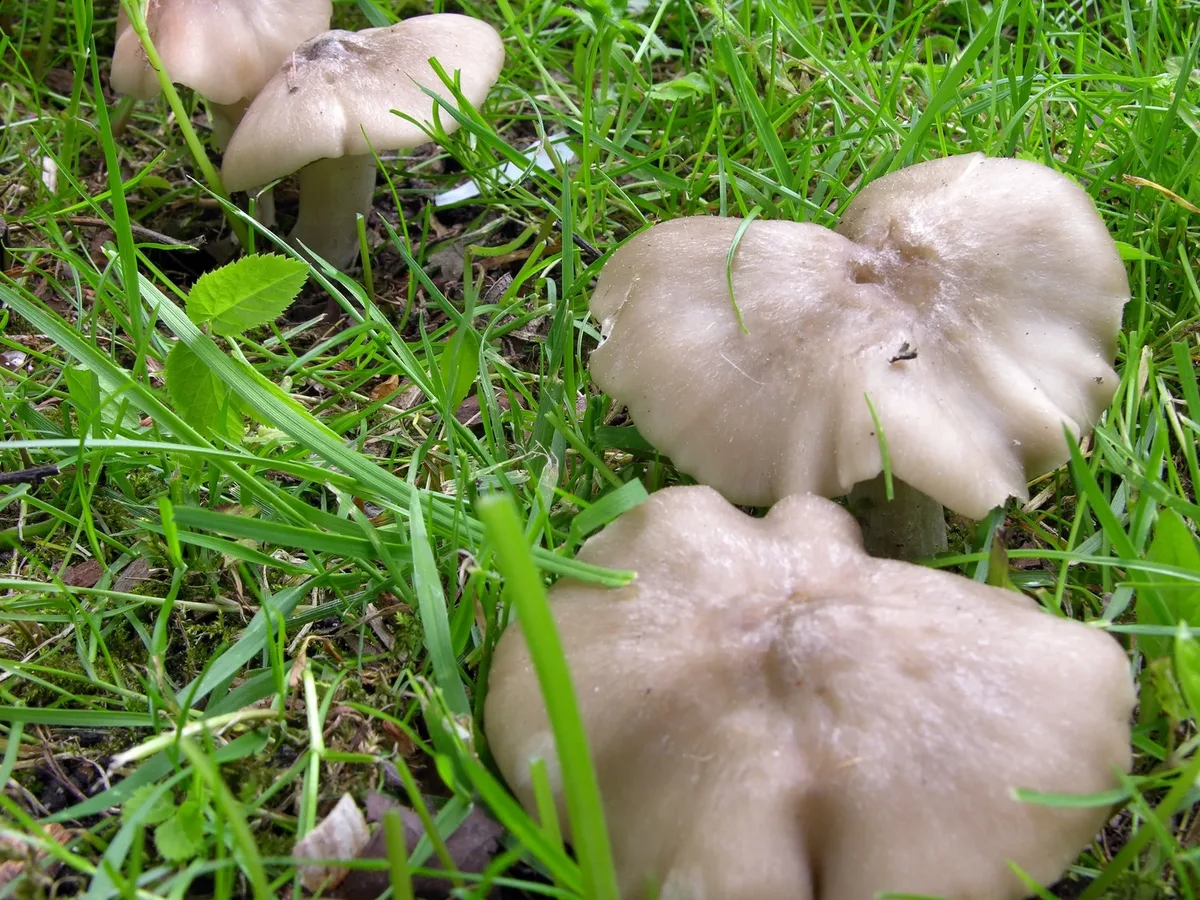 © Michael Hansen (CC BY 4.0)
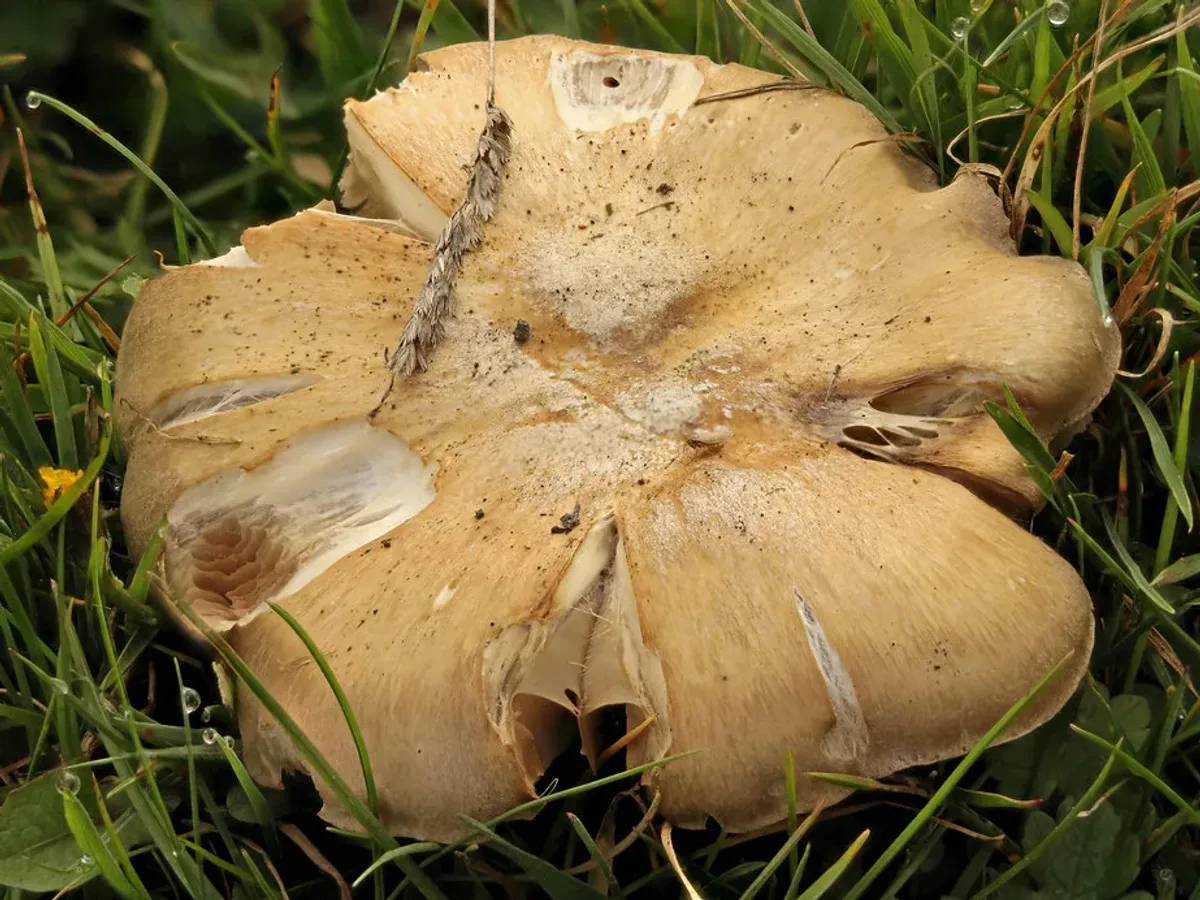 janetgraham84new (CC0)
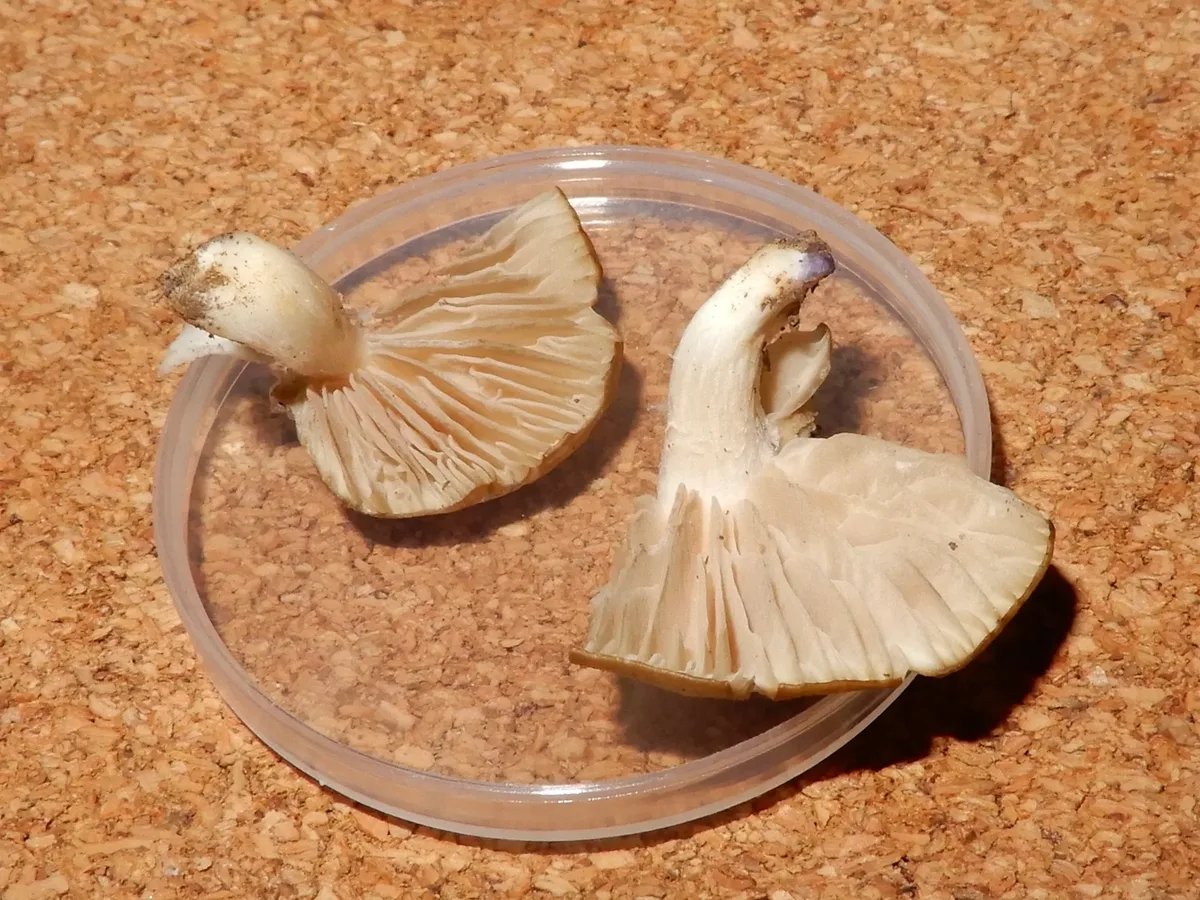 © Cara Ennis (CC BY)
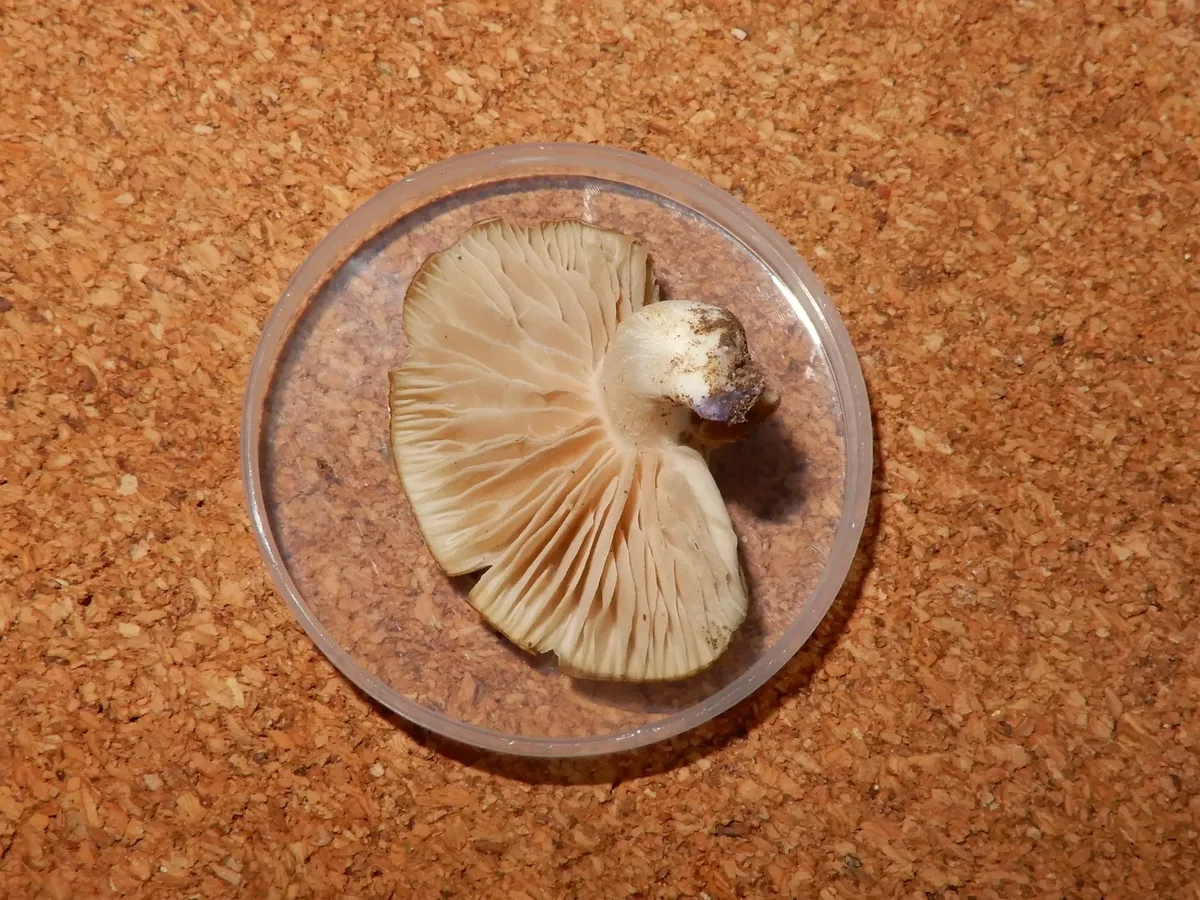 © Cara Ennis (CC BY)
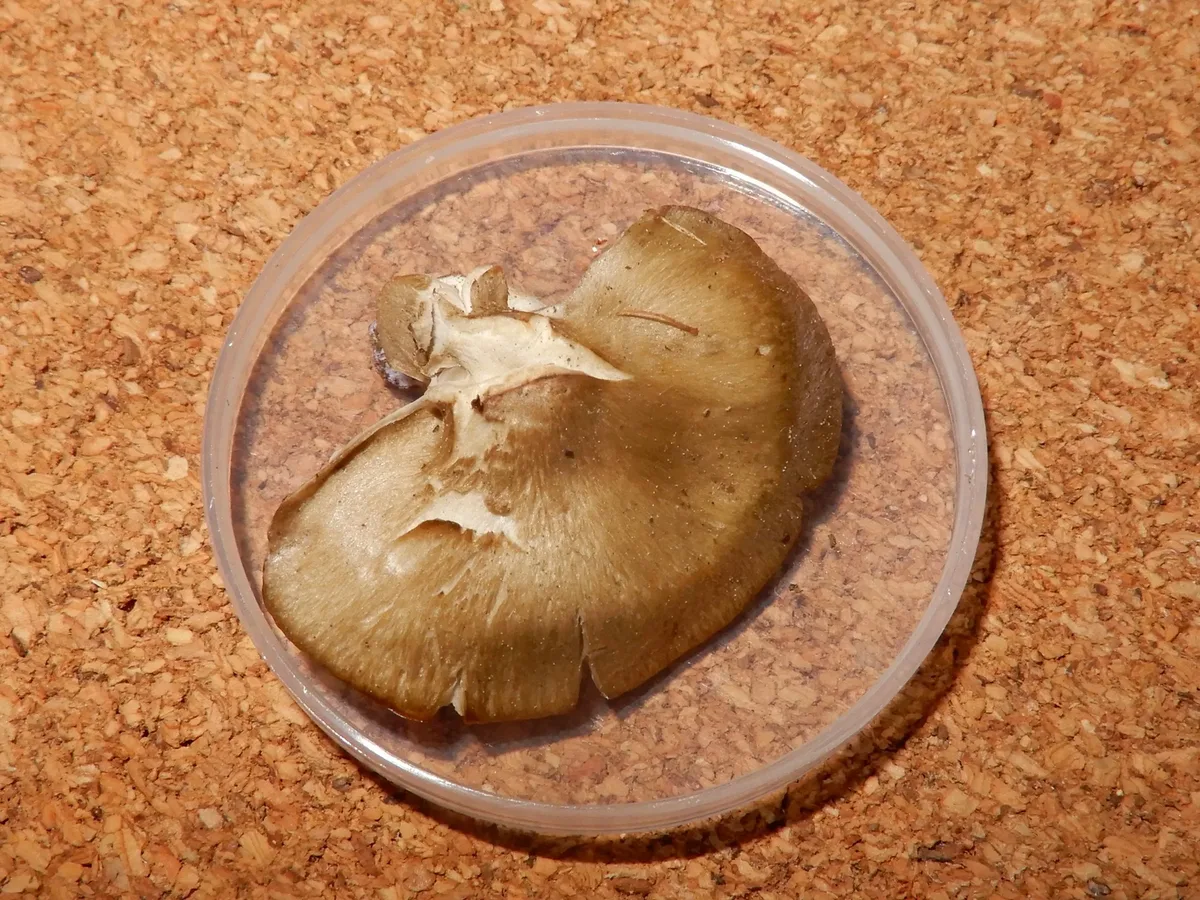 © Cara Ennis (CC BY)
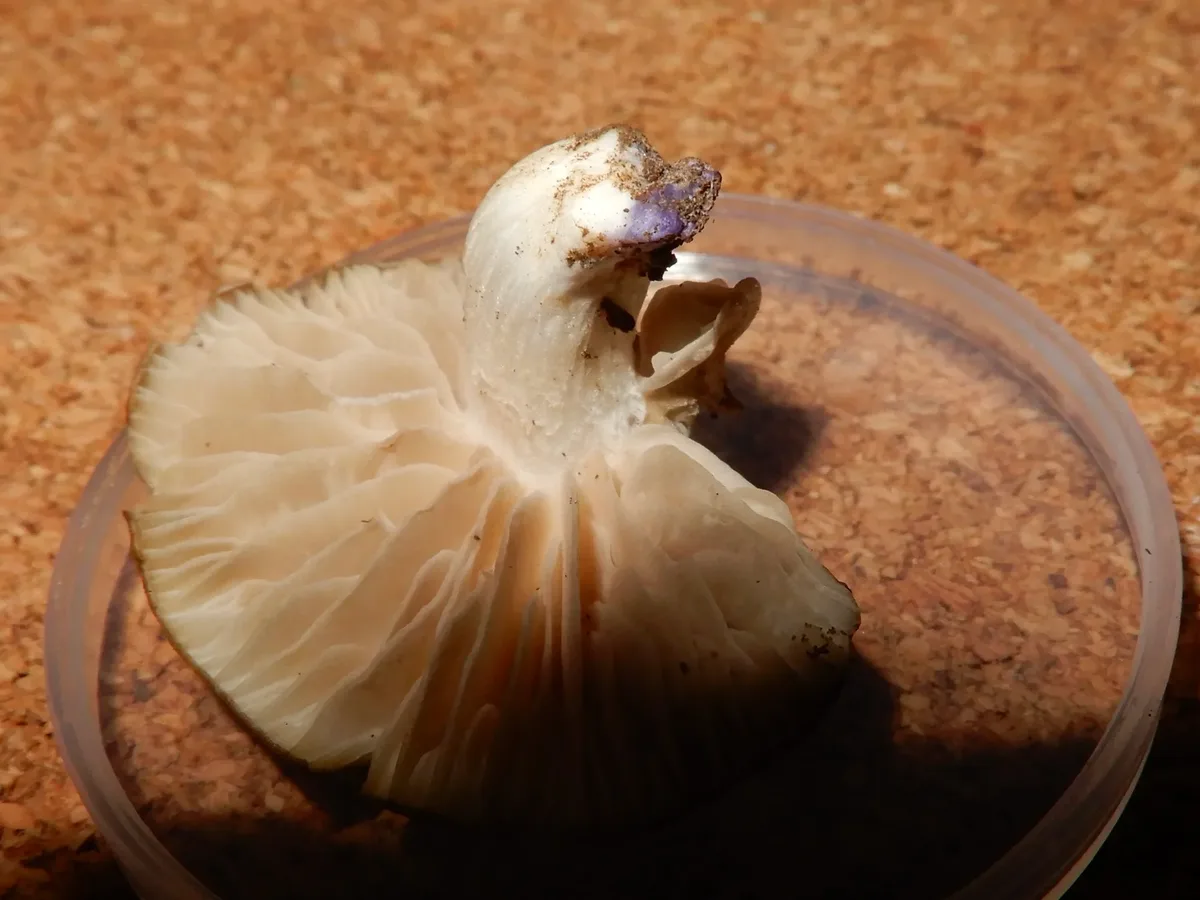 © Cara Ennis (CC BY)
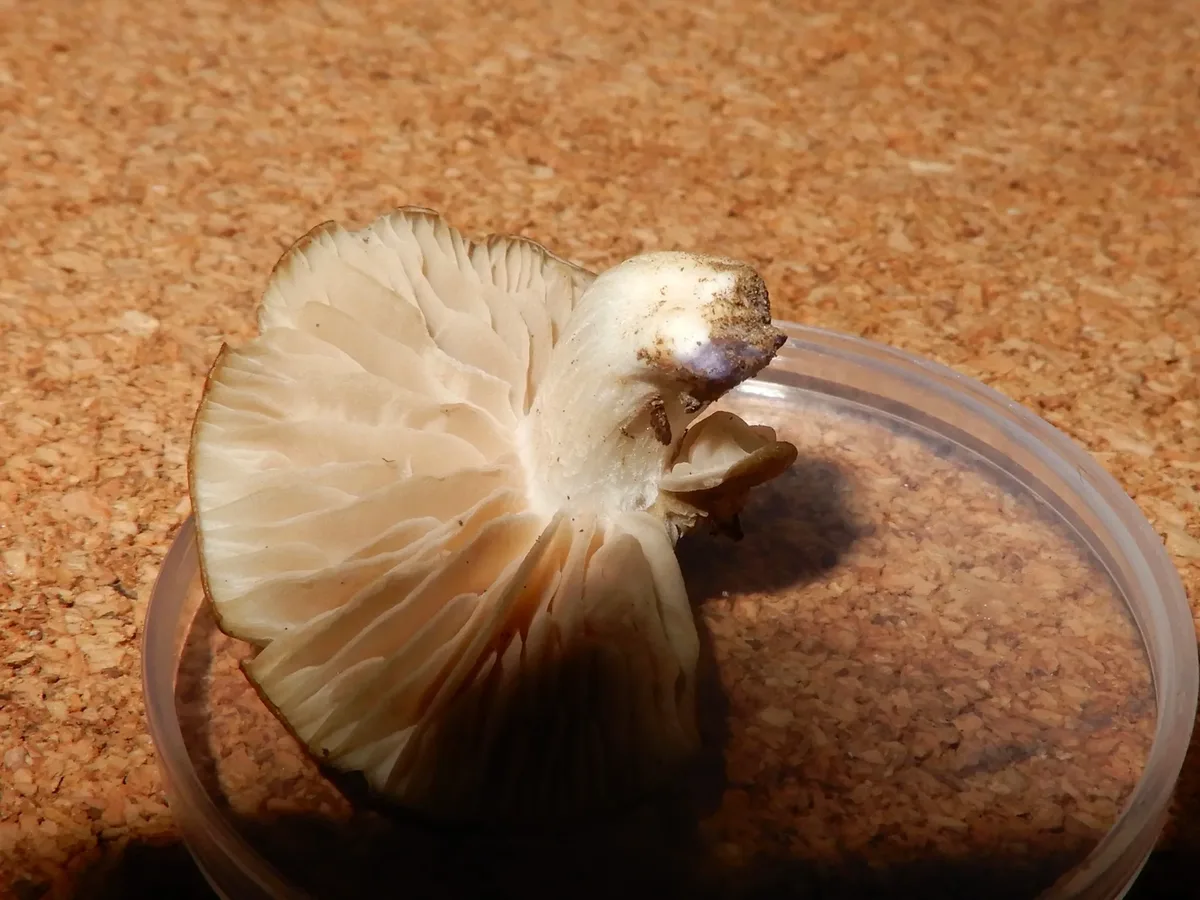 © Cara Ennis (CC BY)
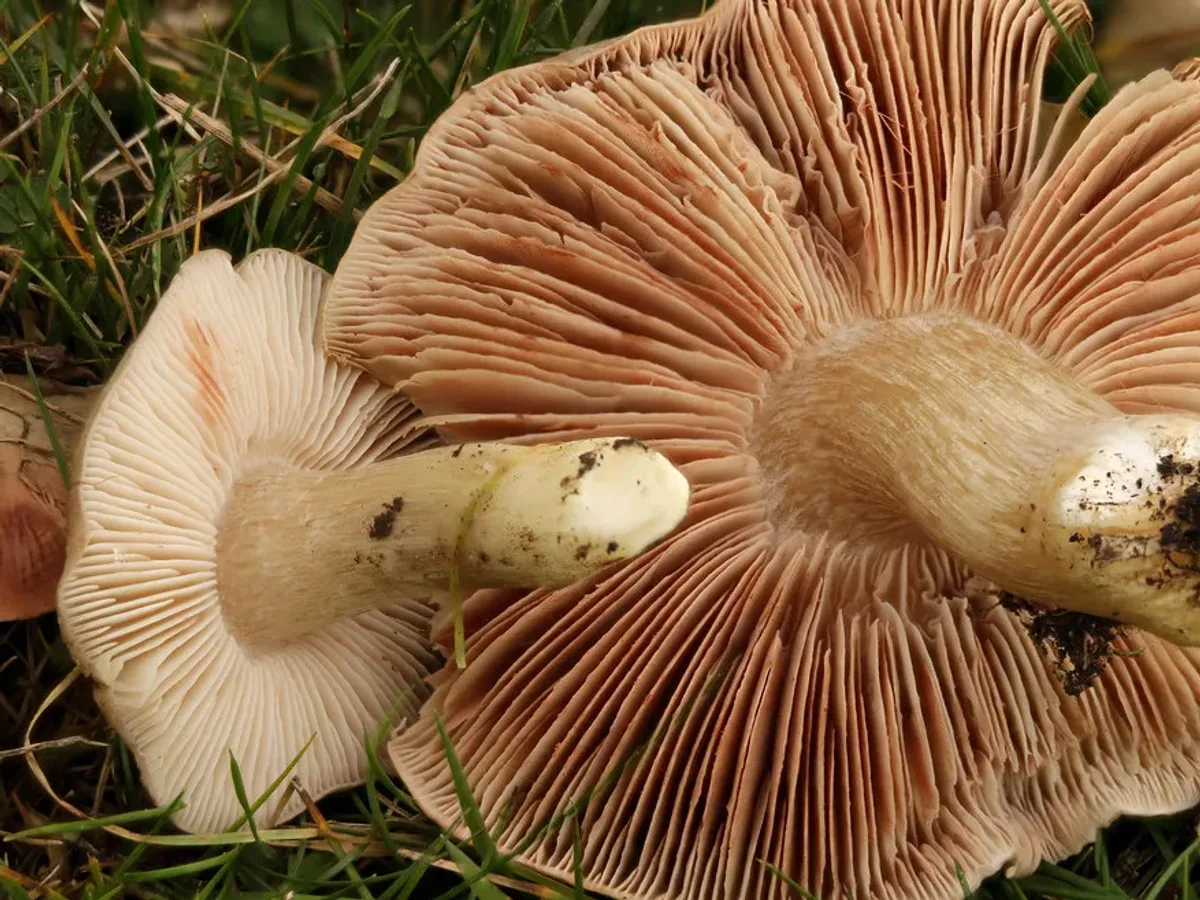 janetgraham84new (CC0)© Michael Hansen (CC BY 4.0)janetgraham84new (CC0)
Edible only with the right preparation - or safe for some people but not others. Learn the caveats first.
How to recognise it
Shield pinkgill is a medium to fairly large grey-brown mushroom whose shield-shaped umbonate cap gave it its Latin name - clypeatum means 'furnished with a shield'.
Cap
The cap (4-10 cm) opens from a hemispherical dome with a prominent central boss that persists through maturity, keeping that distinctive 'clypeus' silhouette.
Watch the cap in changing conditions: it is hygrophanous, darkening to a vivid grey-brown when wet and then paling back to buff-grey from the margin inward as it dries, leaving a concentric two-tone ring that is a genuine field cue once you know to look for it.
The surface is smooth and radially silky-fibrous, never scaly or grainy.
Gills
The gills are the defining character of the genus: they begin pale whitish-grey, then quietly flush through flesh-pink to a dull salmon-pink as the spores ripen - that pinkening on an otherwise grey mushroom is diagnostic for Entoloma and rules out nearly every realistic confusion species.
Stem
The stem is white to greyish-white and fibrous-silky throughout.
Flesh
Flesh is white, firm, and smells unmistakably of flour or raw grain; the mealy odour is one of the most consistent characters of both this species and the genus.
Confirm the identification with a spore print on dark paper: the salmon-pink to brick-pink print is characteristic of Entoloma.
Why it's dangerous
While not fatal under normal circumstances, E. clypeatum poisoning can cause significant debilitation and requires supportive medical care if severe. The danger is primarily through confusion with spring edibles, especially Calocybe gambosa.
If ingestion is suspected:
- seek medical advice
- stay well hydrated
- bring a specimen or photograph to the hospital
Particular caution is warranted for children, the elderly, and anyone immunocompromised or with gastrointestinal disease.
Do not attempt to induce vomiting unless directed by a medical professional.
Toxin
The specific toxins responsible for Entoloma clypeatum's gastrointestinal effects have not been definitively isolated and named, unlike the well-characterised amatoxins, orellanin or muscarine.
The genus Entoloma is known to contain various uncharacterised phenolic compounds, sesquiterpenes, and peptides that irritate the gastrointestinal mucosa. The mechanism is primarily direct GI mucosal irritation rather than systemic (liver/kidney/neurological) toxicity.
This means the onset is relatively rapid (1-3 hours) and the course is generally self-limiting, though unpleasant. The toxins are not destroyed by cooking.
Symptoms
Gastrointestinal symptoms appear 1-3 hours after ingestion:
- nausea
- profuse vomiting
- abdominal cramps
- diarrhoea
- malaise
Sweating and pallor may accompany the GI symptoms.
There are no neurological effects (no sweating of the muscarinic pattern, no pinpoint pupils, no bradycardia), no liver damage, and no kidney failure - these organ-toxic features are absent, distinguishing E. clypeatum poisoning from amatoxin or orellanin poisoning.
Most cases resolve within 12-48 hours with hydration and rest, but severe vomiting and diarrhoea can cause significant dehydration, particularly in children and the elderly.
Staying safe
Entoloma clypeatum is poisonous and must not be eaten. It causes gastrointestinal poisoning characterised by nausea, vomiting, diarrhoea and cramps, typically within 1-3 hours of ingestion.
The toxin is of the gastrointestinal irritant type; the specific compound(s) responsible have not been fully characterised, but are not amatoxins, muscarine, orellanin or gyromitrin. Recovery usually occurs within 24-48 hours with supportive care, but the illness can be severe and incapacitating.
The most dangerous scenario is confusion with Calocybe gambosa or Clitopilus prunulus in spring - experienced but insufficiently careful foragers are occasionally poisoned in exactly this way. The species' pleasant mealy smell, firm texture and attractive spring timing can all mislead.
The definitive safety check is always a spore print: pink or salmon confirms Entoloma, which rules out any edible use. Do not rely on visual inspection alone in the field, especially in spring.
Where & when it grows
Habitat
The single most powerful identification aid for this species is where it is growing. Entoloma clypeatum grows almost exclusively in close association with rosaceous trees and shrubs - hawthorn, blackthorn, apple, cherry, plum, rowan, wild pear - and rarely strays far from them.
Look for it:
- at the base of hawthorn-and-blackthorn hedgerows
- in old orchards
- under established fruit trees in country parks
- along woodland margins with a rosaceous understorey
- on roadside verges thick with Crataegus and Prunus
The link is consistent enough that a grey-gilled-then-pink mushroom found with no rosaceous host in sight should prompt serious doubt about the identification.
In central and western Europe the species is widespread but patchy, thriving wherever traditional hedgerow and orchard habitat survives - particularly in English and French hedgerow country, old German Streuobst orchards, and Scandinavian hedgerows with established hawthorn.
When
Entoloma clypeatum is one of the clearest phenological markers of the spring foraging season: it appears when hawthorn and blackthorn are blossoming (late April to May), which experienced foragers use as a coincident cue.
The main window is late March through June (peaking April-May), making it temporally distinct from the vast majority of Entoloma species, which are autumn fungi.
The same spring window overlaps precisely with the prized St. George's mushroom (Calocybe gambosa) and sweetbread mushroom (Clitopilus prunulus), both of which are white and mealy-smelling - the most dangerous coincidence.
Spring flushing is driven by soil warming above 8-10 °C after adequate winter moisture, typically following mild spells in April when hawthorn is starting to leaf and flower.
How it grows
How exactly Entoloma clypeatum makes a living is still debated: it appears to be a facultative root associate or saprotroph living in close contact with rosaceous roots rather than a strict mycorrhizal partner or a pure decomposer.
What is clear is that it does not fruit on dead wood, and it does not stray far from living host roots. Fruitbodies push up singly or in small scattered groups from mineral soil or humus at the base of host shrubs, sometimes in short arcs that trace root lines beneath the surface.
A productive spot under an old hawthorn hedge can flush year after year, the mycelium quietly persisting between seasons in the soil below.
Spores are wind-dispersed; their angular, nodulose surface likely helps them catch on bark and soil particles. No visible rhizomorphs or cords are produced.
Fruiting conditions
Spring fruiting driven by soil warming above 8 °C after adequate winter and early spring moisture. Typically appears 5-14 days after warm wet spells in April when hawthorn begins to blossom. A dry spring can suppress or delay fruiting significantly. Soil temperature, not just air temperature, is the primary trigger - late cold springs push fruiting into late May or early June. Coincides with the St. George's Day phenological window (April 23) in most years in southern England and France.
Look-alikes
The most important and practically dangerous confusion species for Entoloma clypeatum are the spring edibles it grows alongside.
- 1Calocybe gambosa - the St. George's mushroom - is the most critical and common confusion. It grows in the same habitats, at the same time (April-May, around St. George's Day, 23 April), has a mealy smell, and is white to cream-buff. However, C. gambosa has white gills that remain white (no pinkening), a white spore print, and a much more robustly fleshy cap that is typically cream to ochre-buff rather than grey-brown; it also lacks the hygrophanous colour change and the distinct central umbo of E. clypeatum. Always take a spore print: white = Calocybe (edible); pink = Entoloma (poisonous).
- 1Clitopilus prunulus - the sweetbread mushroom - is another spring edible with a strong mealy smell. It has decurrent (downward-running) gills that are white ageing pinkish, a funnel-shaped to depressed cap without an umbo, a white-to-pale-pink spore print, and typically grows in open grassland rather than hedgerow base. The absence of an umbo and the decurrent gills distinguish it; but again, a spore print is definitive.
- 1Entoloma sinuatum (Livid pinkgill) is itself toxic and is a larger, more robust species with a pale ochre or cream cap (not grey-brown hygrophanous), fruiting mainly in autumn under oak and beech rather than spring under Rosaceae; it shares the pinkening gills but differs in size, colour, season and habitat.
- 1Various grey Clitocybe or Tricholoma species - particularly Tricholoma terreum and Clitocybe nebularis - share grey colouration and mealy smell but have white gills that do not turn pink, and different cap shapes.
None of the realistic lookalikes are deadly; the risk is ingesting a poisonous species (E. clypeatum) while believing it to be a safe edible (Calocybe gambosa or Clitopilus prunulus).
A larger and more robustly built Entoloma, mainly an autumn species under deciduous trees (especially oak and beech in parkland), with a pale ochre-cream to ivory cap that is not distinctly hygrophanous grey-brown and lacks a strong umbo. The pinkening gills and pink spore print are shared features, confirming both as Entoloma and therefore poisonous. Distinguishing them is mycologically interesting but practically irrelevant - both are toxic and neither should be eaten.
Entoloma saundersii is a closely related spring Entoloma also associated with rosaceous shrubs, slightly smaller and with a more purely white cap. It shares the pink spore print and mealy smell. The distinction matters only academically - both are poisonous Entoloma species. Any white-to-grey spring mushroom with pink gills and a pink spore print under hawthorn should be treated as toxic Entoloma regardless of the exact species.
Only superficially similar at a glance: Pleurotus ostreatus grows in shelf-like clusters on dead wood, has a lateral or off-centre stem, white decurrent gills with a white-to-pale-lilac spore print, and no mealy odour. It does not grow from soil under hawthorn. Included because inexperienced foragers sometimes confuse pale-gilled gilled fungi generally - here the substrate difference (wood vs. soil) and growth pattern are immediately diagnostic.
The most dangerous and common confusion: both grow in April-May in hawthorn-rich grassland and hedgerow, both have a mealy smell and firm white flesh. Calocybe gambosa is cream to ochre-buff (not grey-brown hygrophanous), lacks a distinct umbo, and crucially has white gills that never turn pink and a white spore print. A spore print is definitive: white means Calocybe (safe to eat); pink/salmon means Entoloma (poisonous). Never substitute visual inspection for a spore print when collecting spring fungi near hawthorn.
Another spring edible with a strong mealy smell. Clitopilus prunulus has a funnel-shaped to depressed cap (no umbo), gills that run down the stem (decurrent rather than sinuate), grows more commonly in open grassland and forest edges rather than specifically under rosaceous shrubs, and has a pale pink spore print from smooth (not angular) spores. The cap lacks the grey-brown hygrophanous quality of E. clypeatum. Again, spore print: smooth pale pink spores (ellipsoid) from C. prunulus vs. angular salmon-pink spores from E. clypeatum - visible under a hand lens with practice.
A reference guide - never an edibility guarantee. When in doubt, leave it out.