Cup morel
Disciotis venosasyn. Peziza venosa, Acetabula venosa, Discina venosa, Aleuria venosa
 Sarah Adamson (CC0)
 © jufox (CC BY 4.0)
 © Virn Stothers (CC BY)
 © Patrick Bayan (CC BY)
 © vuikaan (CC BY)
 © vuikaan (CC BY)
 © vuikaan (CC BY)
 © vuikaan (CC BY)
 Rosie (CC0)
 Rosie (CC0)
 Rosie (CC0)Sarah Adamson (CC0)© jufox (CC BY 4.0)
Edible only with the right preparation - or safe for some people but not others. Learn the caveats first.
Never eat a mushroom you are not 100% sure of - check the look-alikes below, and always cook wild mushrooms.
How to recognise it
Cap
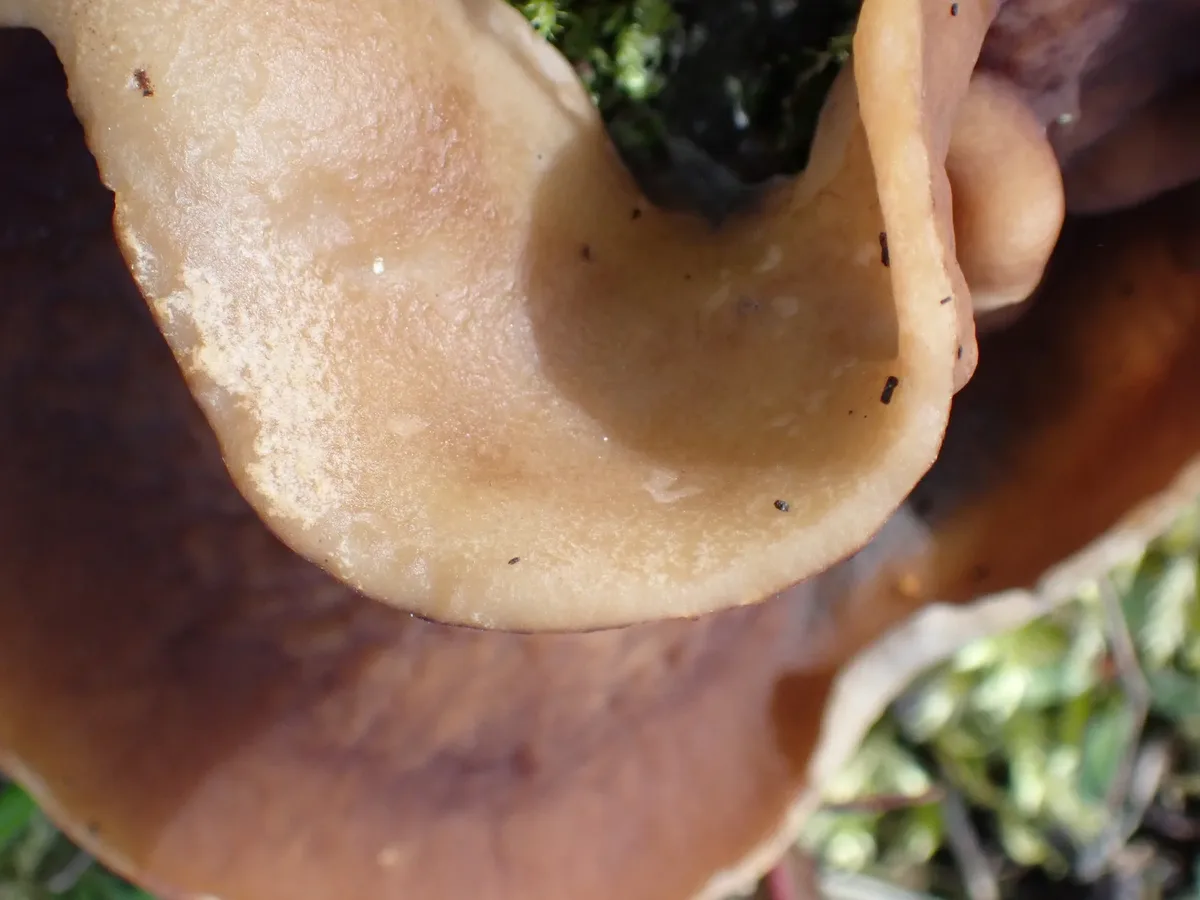
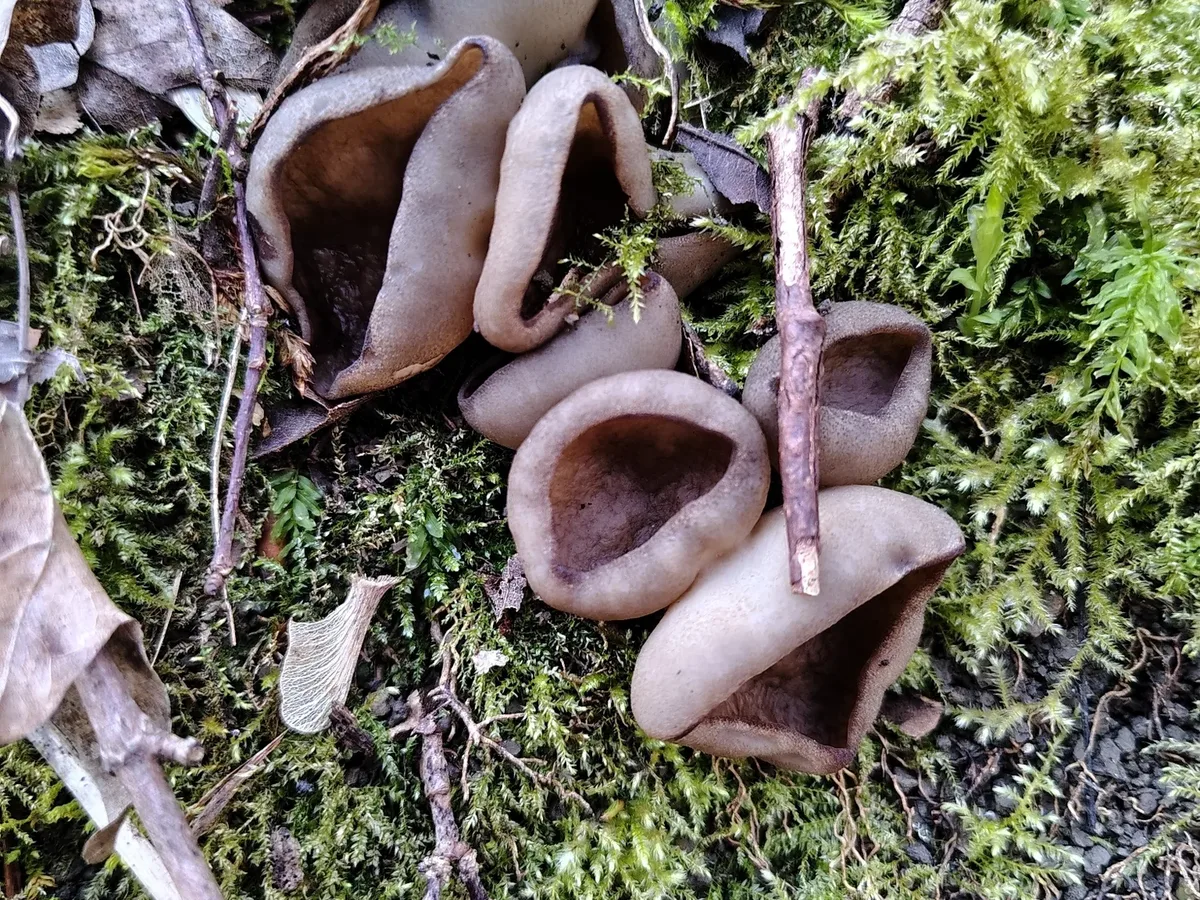
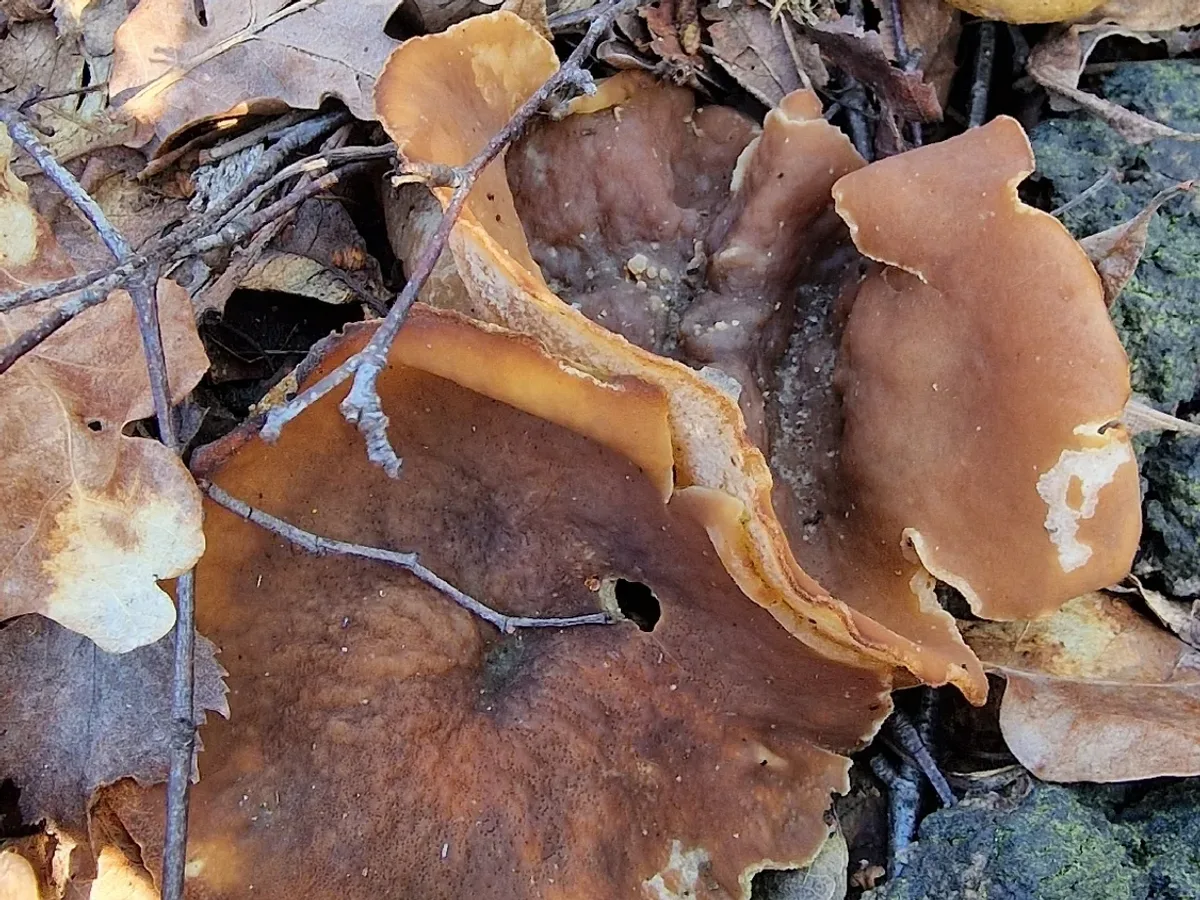
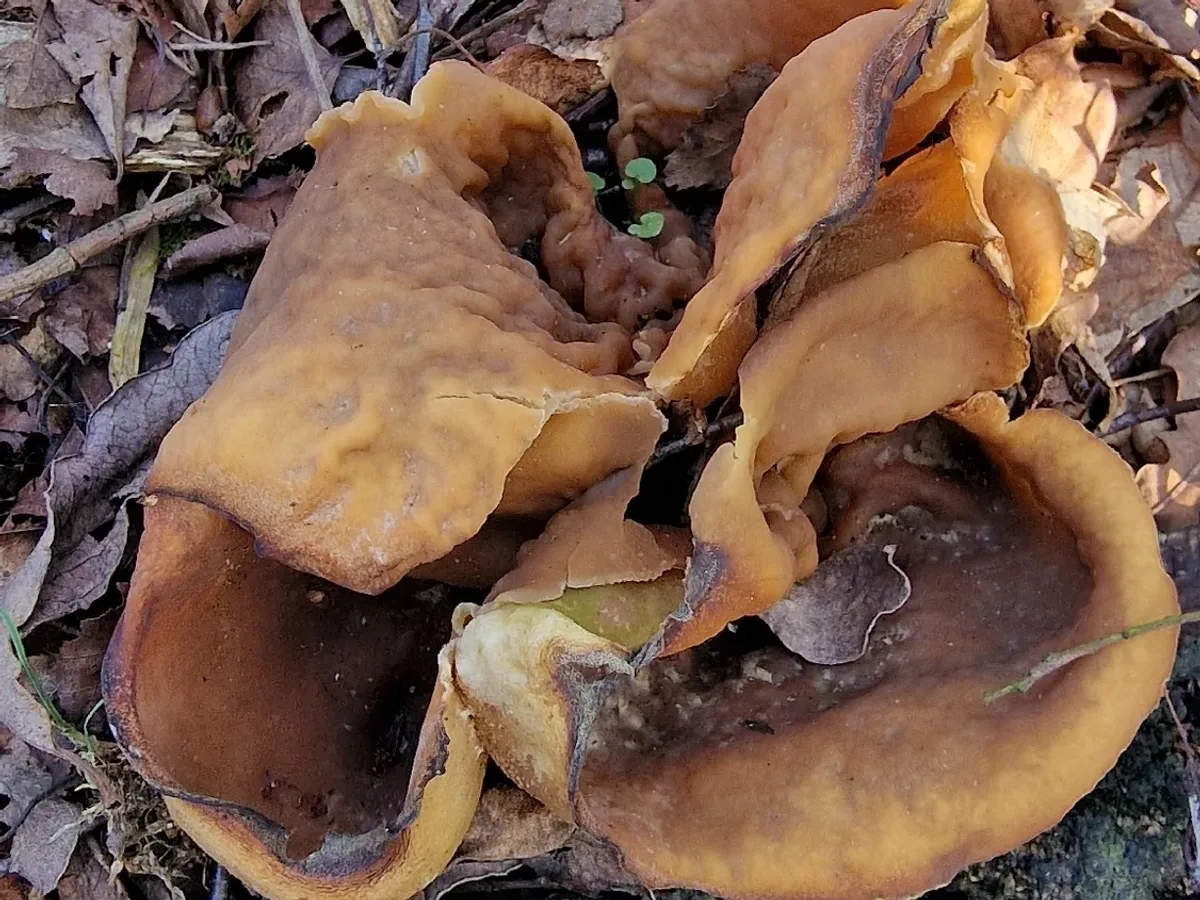
Disciotis venosa is one of the largest spring cup fungi in Europe, producing broad, shallow apothecia that can exceed 20 cm in diameter - closer in scale to a dinner plate than to the small cups most foragers picture when they think of ascomycetes.
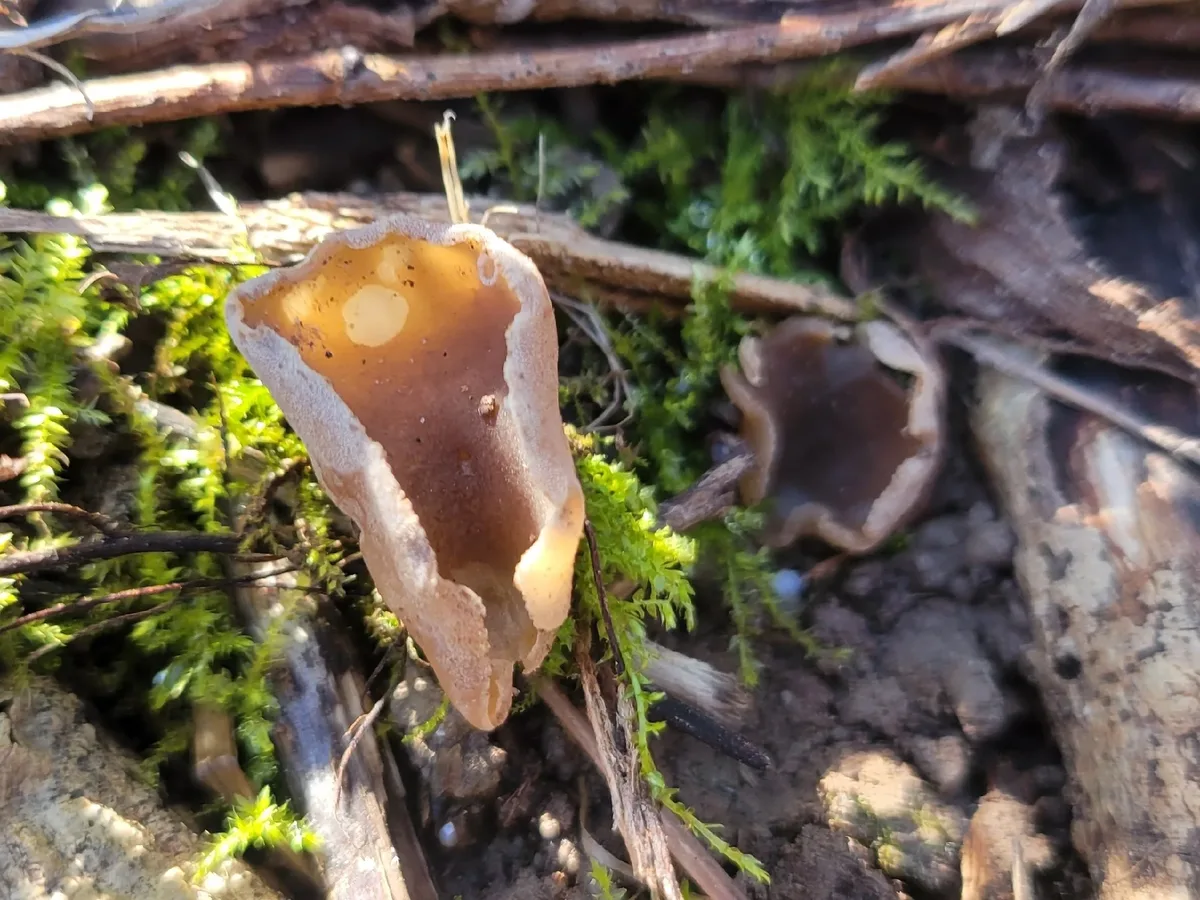
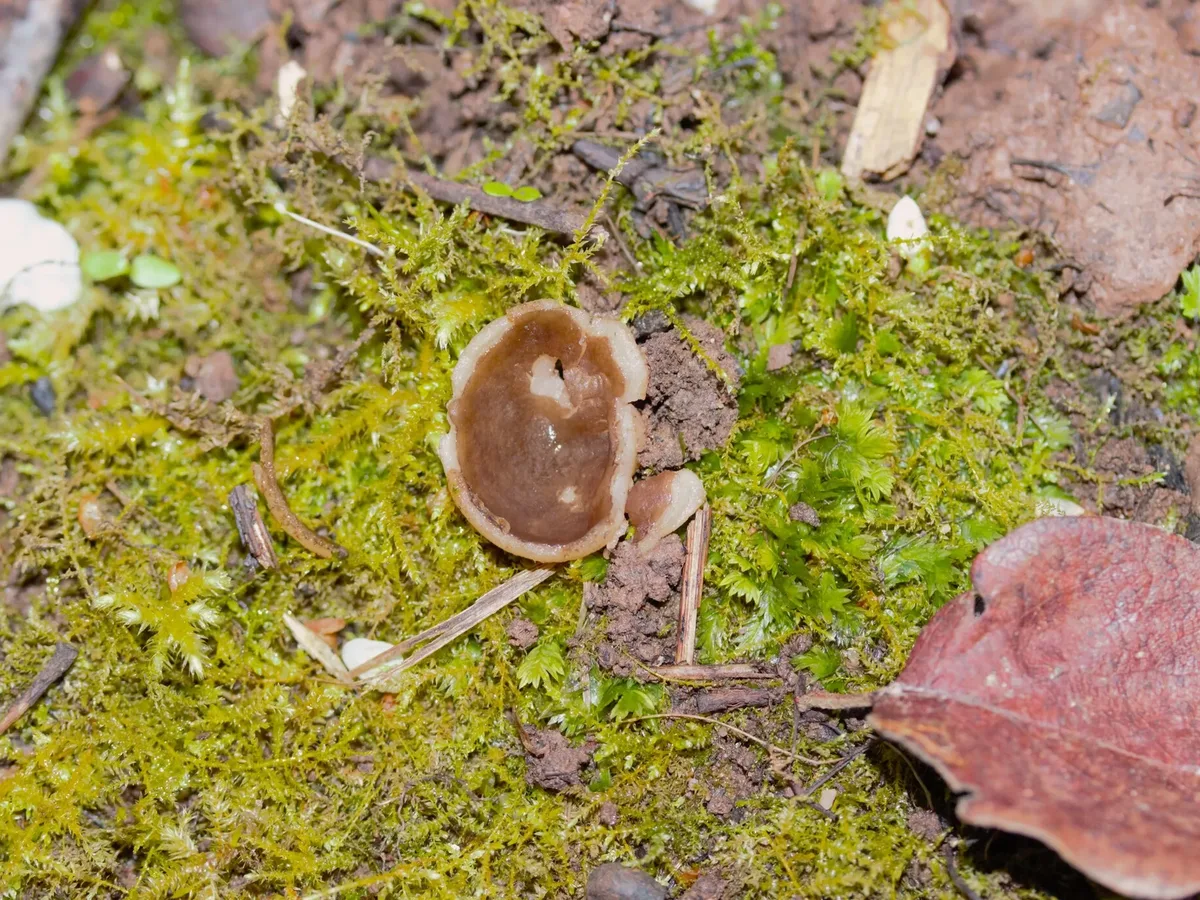
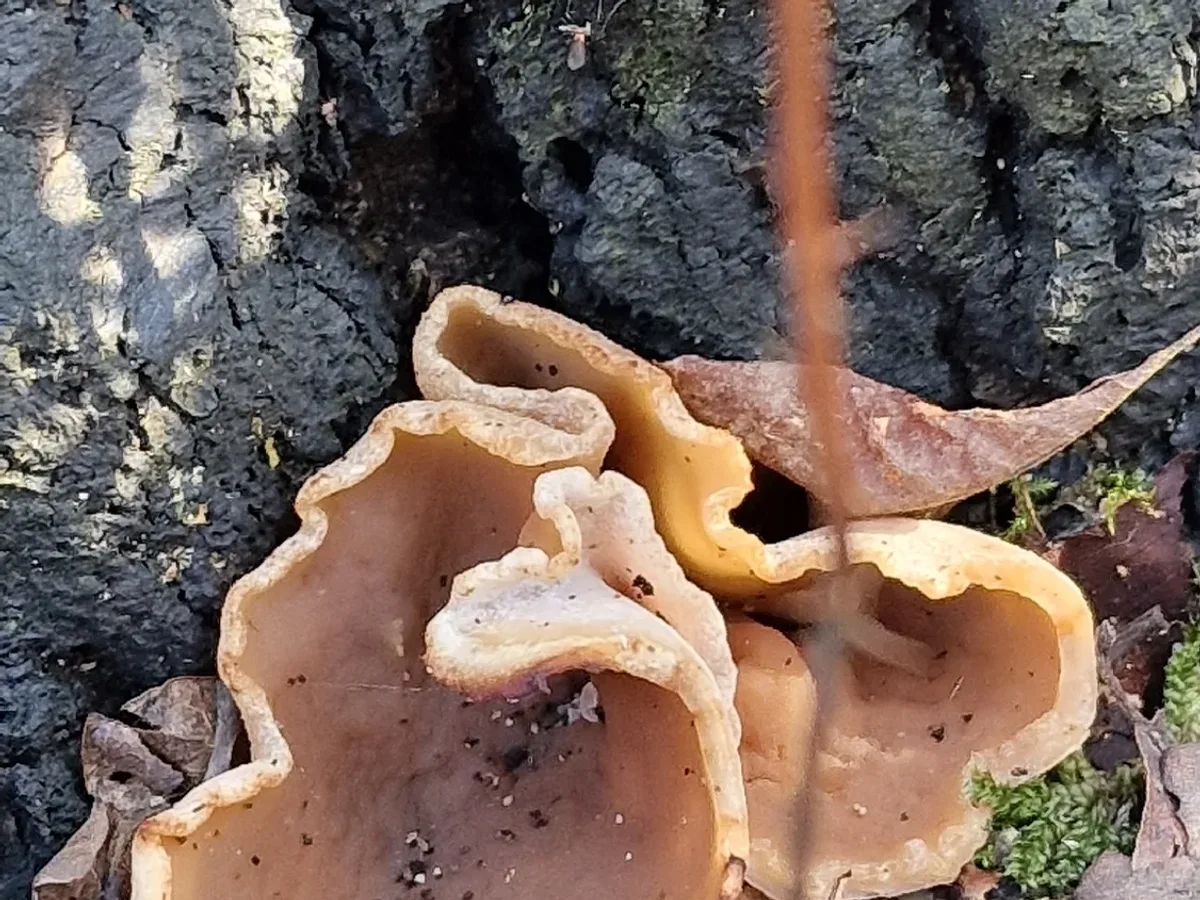
Young fruiting bodies are deeply cupped or bowl-shaped, often partially buried in litter with only the rim visible. As they mature, the cup opens and flattens to a broad saucer or irregular disc, sometimes becoming wavy, lobed, or saddle-shaped in older specimens.
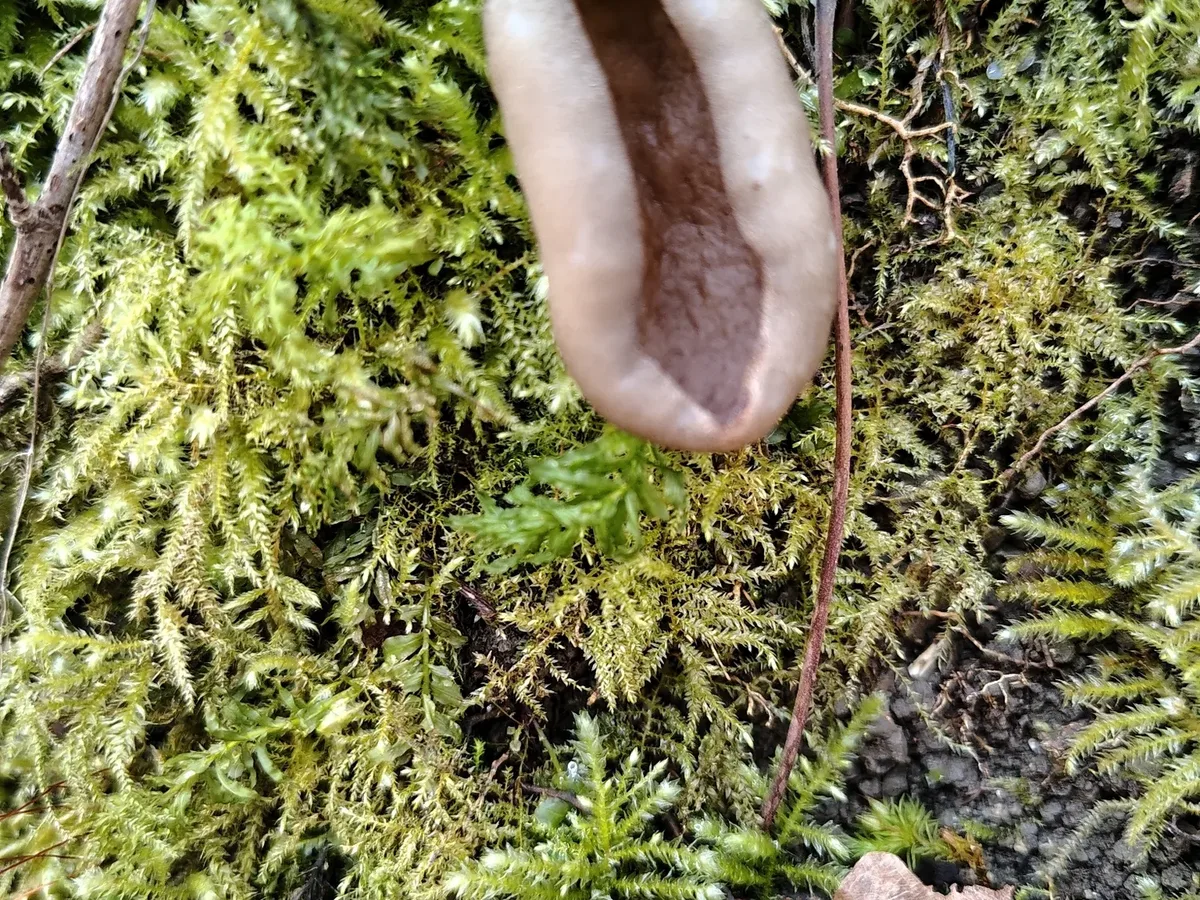
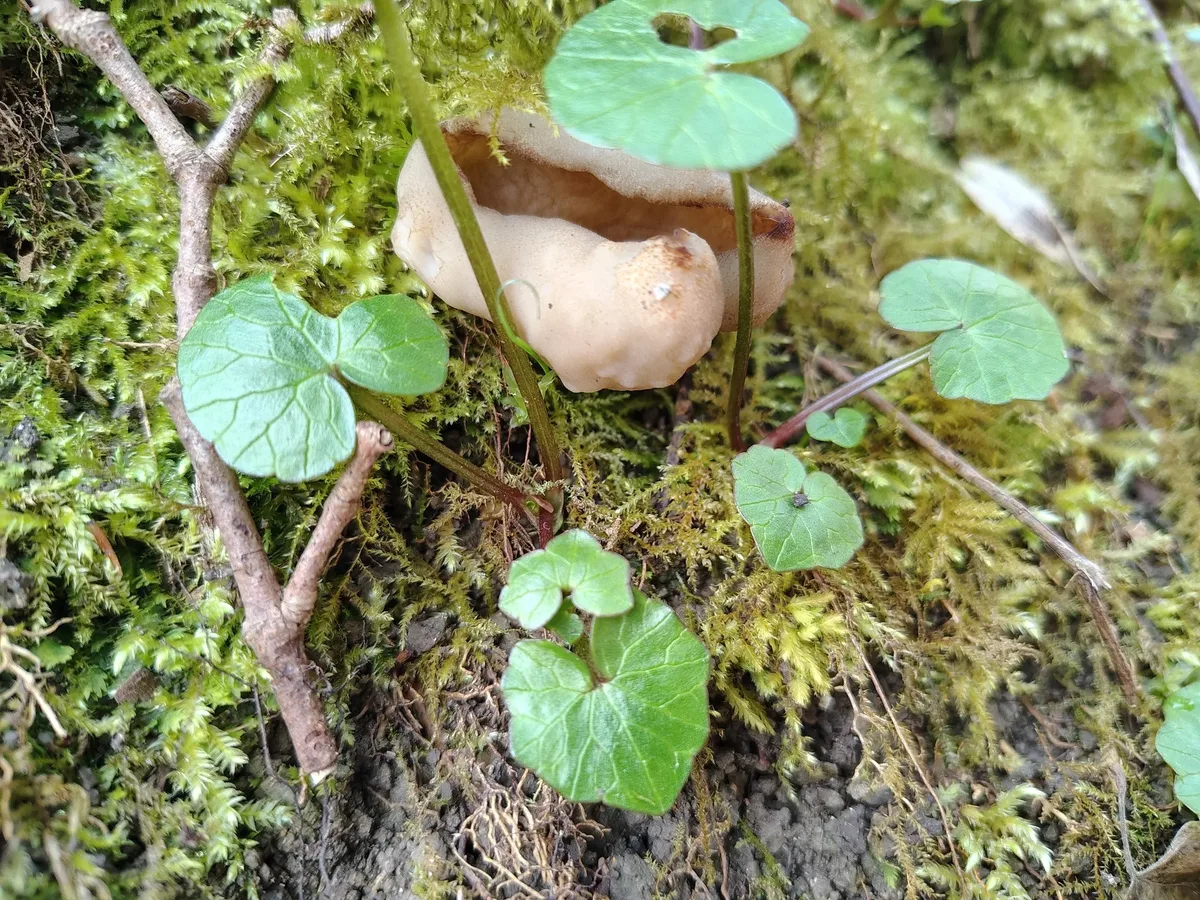
The outer surface is paler - whitish, cream, or pale ochre - with a slightly scurfy or granular texture. The margin of young cups is distinctly inrolled; in mature specimens it becomes ragged and sinuous.
Gills / Pores
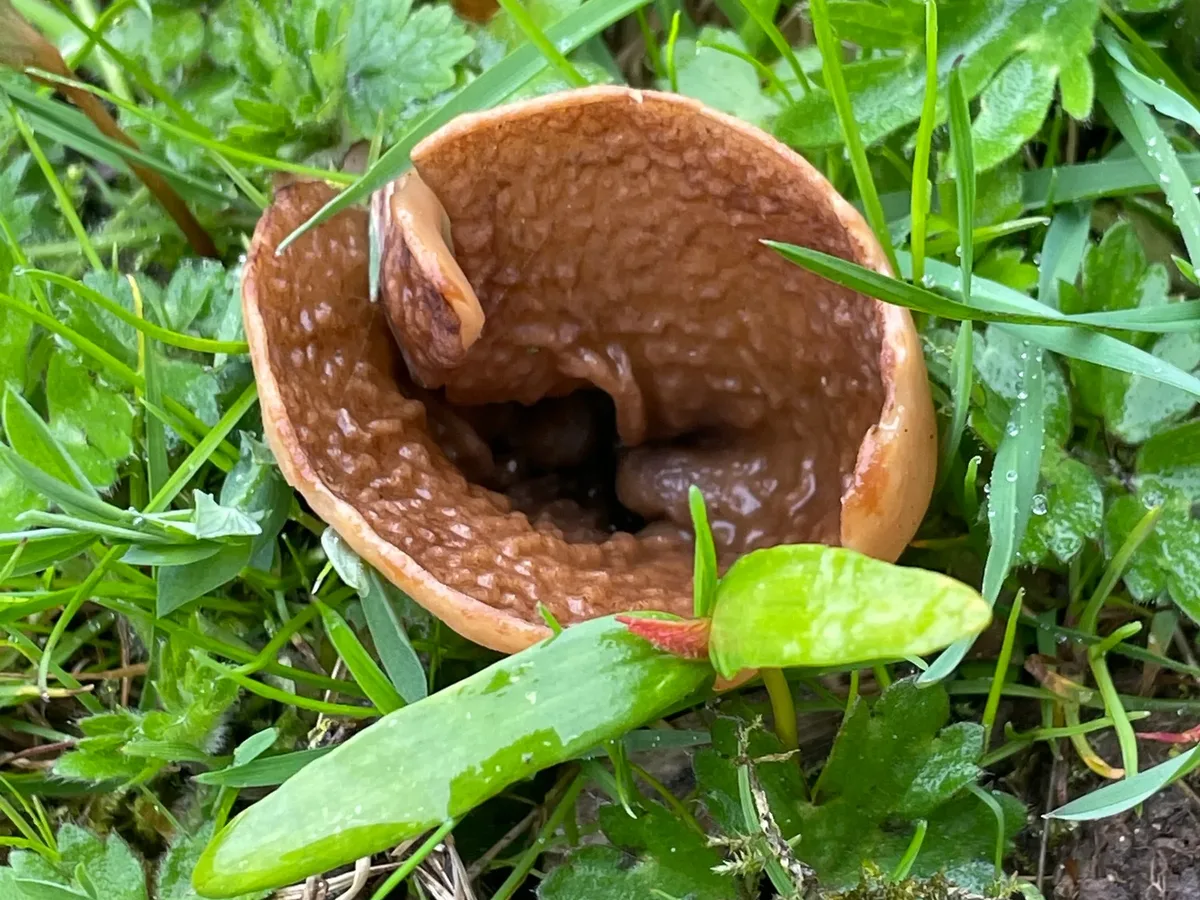
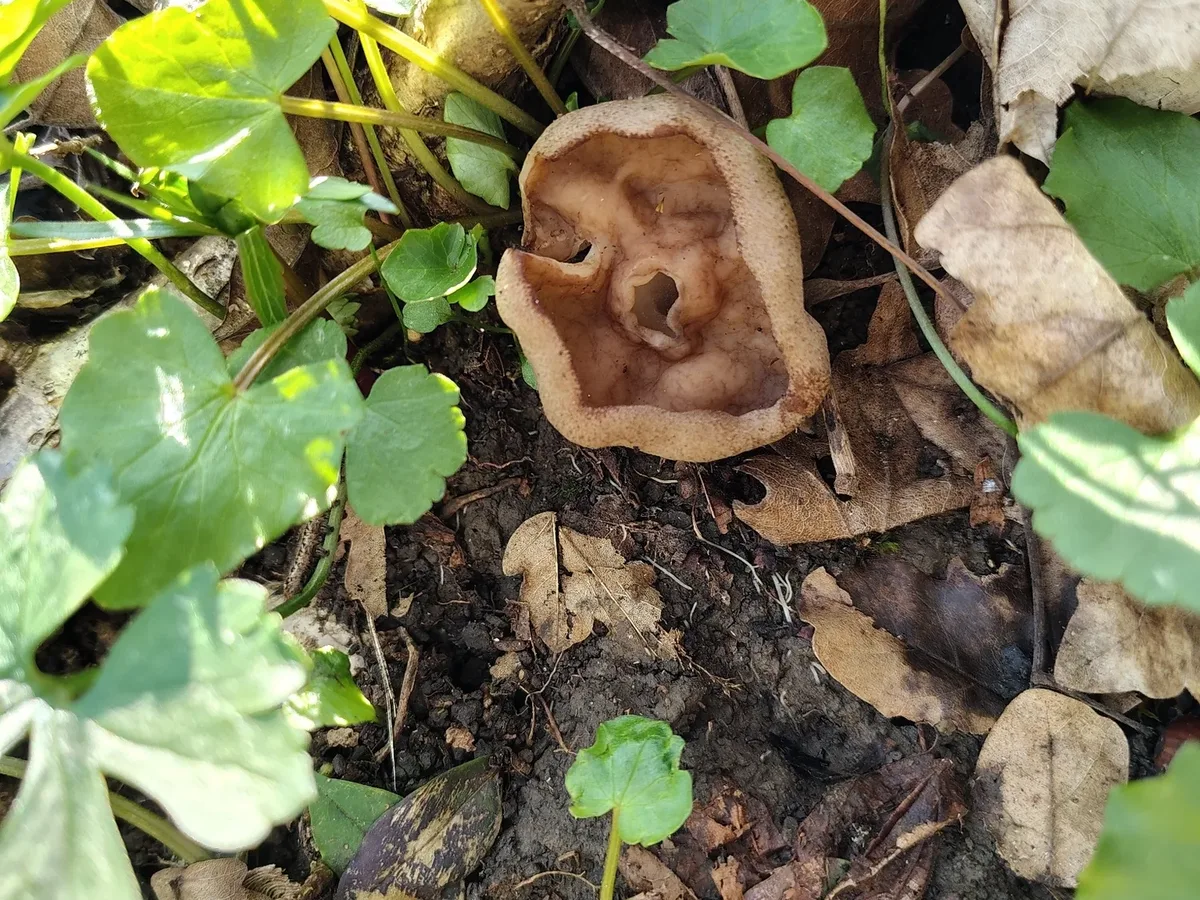
The most striking and diagnostic feature is the inner (hymenial) surface, which is brown to reddish-brown and marked by a network of prominent raised veins or ribs radiating outward from the centre.
The effect is something like a topographic map of a river delta, or the branching pattern inside a leaf - a natural geometry that makes this species unlike almost any other cup fungus you are likely to encounter.
Spores are large (20-24 × 12-14 µm), ellipsoid, biguttulate (two internal oil drops), smooth to very finely ornamented, and hyaline. Asci are operculate, 8-spored. Paraphyses are slender and cylindrical.
Flesh
Flesh is white to pale tan, moderately thick, brittle, and shatters rather than tears.
Smell & taste
The smell is powerful and very characteristic: most describers liken it strongly to chlorine bleach, iodoform, or medicinal antiseptic, and this chlorine odour is one of the safest field diagnostics available for this species.
Where & when it grows
Habitat
Disciotis venosa is a decomposer rather than a mycorrhizal partner - it breaks down buried organic matter and fallen debris rather than threading its mycelium through tree roots.
Look for it in moist deciduous and mixed woodland, especially beech-oak and ash-dominated forests on base-rich, calcareous soils.
It has a clear preference for places where organic matter accumulates:
- Stream edges
- Shaded woodland paths
- Disturbed banks
- Slopes above flood plains where leaf litter builds up
It tolerates deep shade and fruits well beneath a closed canopy. It often appears in the same micro-habitats as morels - and the two species occasionally grow just metres apart, which makes cup morel territory worth searching carefully. It occasionally fruits on very rotten, buried wood.
The species is widespread across temperate and boreal Europe, with sparser records in North Africa, the Caucasus, and western Asia. It is most commonly encountered in central and western Europe, though it does occur in southern Scandinavia.
When
Fruiting is almost exclusively confined to spring: March through May in lowland temperate Europe, peaking in April. The species is one of the earliest large ascomycetes to appear, often emerging while night frosts are still possible.
In the Mediterranean zone it may begin fruiting in late February. At higher altitudes and latitudes, fruiting may be delayed until May or even early June in subalpine sites.
It is closely synchronised with the emergence of Morchella esculenta and Morchella elata, and experienced foragers use the appearance of Disciotis venosa as a reliable indicator that morel season has begun.
Single flushes rather than repeated crops are the norm; individual fruitings last 1-3 weeks.
How it grows
Fruiting bodies emerge singly or in scattered groups of two to six, occasionally forming loose clusters where mycelium is dense. They push up through leaf litter and soil, initially appearing as pale, inrolled cups barely visible above the surface.
Like so many spring fungi, they make the most of a narrow warm window: a small button can expand to full size in four to seven days once temperatures stabilise above 8 °C. It is one of those quiet reminders that the mycelium has been waiting all winter beneath the soil, ready to fruit the moment conditions allow.
Older specimens bleach and collapse quickly after spore discharge, leaving a papery, tan remnant.
Fruiting conditions
Fruiting is triggered by sustained soil warming above 7-8 °C at 5 cm depth, combined with adequate soil moisture from spring rains or snowmelt. A lag of 7-14 days between warm wet conditions and visible fruiting bodies is typical. Late spring frosts can abort developing apothecia.
Handle with care
Toxin
The precise toxicological profile of Disciotis venosa is incompletely characterised. Gastric symptoms following inadequate cooking are documented, but the causal compounds have not been definitively identified or quantified.
Claims in older literature of gyromitrin-related hydrazine compounds in this species are not supported by primary analytical evidence. The irritant substances are likely unrelated volatile or thermolabile compounds destroyed by heat.
Disciotis venosa is not in the same hazard class as Gyromitra esculenta.
Symptoms
Raw or inadequately cooked specimens may cause nausea, vomiting, abdominal cramps, and diarrhoea within 1-6 hours of ingestion.
Symptoms are generally self-limiting and mild. No fatalities attributed to Disciotis venosa are documented in the literature.
Look-alikes
Several species could be confused with Disciotis venosa, and correct identification is important.
- True morels (Morchella esculenta, M. elata, M. importuna) are hollow and have a pitted, honeycombed cap attached to a stalk - a fundamentally different structure.
- Gyromitra esculenta (false morel) has a saddle-shaped or brain-like convoluted reddish-brown cap on a stout pale stalk; it is deadly if eaten raw or inadequately cooked and contains gyromitrin / monomethylhydrazine. Disciotis venosa has no stalk and its cup shape and venation are quite distinct, but both species can fruit simultaneously and in similar habitats.
- Peziza species (bay cup, blistered cup, etc.) are smaller, lack the prominent venation, and typically lack the powerful chlorine odour.
- Discina ancilis (shield-shaped Discina) is a closely related large brown spring cup in the same order; it lacks the strongly ribbed inner surface venation of Disciotis and has a more wrinkled, shield-like appearance, but the two can be confused when Disciotis is young or old and the venation is less visible.
- Helvella lacunosa (elfin saddle) and H. crispa have a saddle-shaped or lobed cap on a distinctly ribbed, chambered stalk - again, structurally quite different.
- Acetabula vulgaris (syn. Helvella acetabulum) is a smaller spring cup with a short ribbed stalk and lacks the strong venation.
The bleach odour of Disciotis venosa is unique among common spring cup fungi and serves as a reliable corroborating character.
Why it matters
Low when properly prepared (parboiled and cooking water discarded). Never eat raw.
The greatest danger when foraging for this species is misidentifying the deadly Gyromitra esculenta, which fruits in the same season and habitats.
Gyromitra esculenta has a distinctly stalked fruiting body with a brain-like, convoluted reddish-brown cap that is hollow/chambered when cut longitudinally. Disciotis venosa is cup-shaped with no distinct stalk and has a venose (ribbed) hymenial surface. Both fruit in spring in similar habitats, so care is needed. The bleach odour of Disciotis is absent in Gyromitra. Gyromitra is deadly if eaten raw or inadequately cooked.
Peziza badia is smaller (3-10 cm), darker reddish-brown to dark umber, cup-shaped but lacking pronounced surface venation, and has no chlorine odour. Spores are warted.
Peziza vesiculosa grows in dung-enriched or compost soil, is smaller and more deeply cupped, whitish to pale ochre inside, and lacks venation and the bleach smell.
Morchella esculenta has a distinctive honeycomb-pitted cap on a hollow stalk; cap and stalk are fully fused and the interior is completely hollow. Disciotis venosa is a broad, stalkless cup with raised veins, not pits. Both fruit simultaneously and in the same habitats.
Helvella acetabulum (syn. Acetabula vulgaris) is a spring cup but is smaller (3-8 cm), has a short distinct ribbed stalk running partway up the outer surface, lacks the pronounced inner venation and bleach odour of Disciotis venosa.
Discina ancilis is a closely related large brown spring cup (up to 15 cm) in the same order (Pezizales) and can share habitats. It has a more wrinkled, shield-like or saddle-shaped irregular appearance and lacks the strongly pronounced radiating vein network that characterises Disciotis venosa. Discina ancilis also lacks the powerful chlorine odour. Neither species is known to be deadly, but both require thorough cooking.
In the kitchen
Picking & cleaning
- Choose firm, young to mid-maturity cups where the cup is still clearly formed and the flesh is thick.
- Avoid old, flattened, or waterlogged specimens that have begun to decay.
- Cut at the base with a knife rather than pulling, to preserve the mycelium.
- The cups are fragile and shatter easily; collect in a rigid basket with minimal stacking.
The strong chlorine odour is less prominent once the mushroom is cooked. Always cook thoroughly - do not eat raw. Discard the cooking water from blanching.
Collect only what you can use promptly, as shelf life in the refrigerator is 1-2 days at most.
Cooking
After thorough parboiling (boil in a large pot of water for 5-8 minutes, drain, discard water), Disciotis venosa can be:
- Sautéed in butter with garlic and herbs
- Added to spring vegetable soups
- Incorporated into egg dishes such as omelettes or frittatas
- Used anywhere a mild, earthy mushroom flavour is desired
The texture is soft and slightly gelatinous after cooking. The flavour is mild and pleasant, somewhat reminiscent of morels though less pronounced.
Some traditional European recipes use it as a morel substitute or stretcher. The chlorine odour vanishes entirely with cooking.
Do not use the parboiling water as stock.
Good to know
Disciotis venosa is generally considered edible after thorough cooking but is placed in the 'caution' tier because:
- 1It contains thermolabile irritants (incompletely characterised in the literature) that cause gastric upset if eaten raw or only lightly cooked.
- 2It must never be eaten raw.
- 3Parboiling in a large volume of water and discarding the cooking water before further preparation significantly reduces residual risk.
- 4Some individuals show sensitivity even after thorough cooking.
The powerful chlorine smell dissipates with cooking. It is not in the same danger category as Gyromitra esculenta, but care is warranted.
Anyone trying it for the first time should consume a small quantity. Do not serve to children, pregnant women, or immunocompromised individuals without medical advice.
IMPORTANT: This species shares spring woodland habitats with the deadly Gyromitra esculenta (false morel); always confirm identification before consuming - Gyromitra has a stalked, brain-like cap, not a cup.
A reference guide - never an edibility guarantee. When in doubt, leave it out.