Spotted Descolea
Descolea maculatasyn. Descolea maculata Bougher
 © Grey Smith (CC BY)
 © David Orlovich (CC BY)
 © David Orlovich (CC BY)
 © David Orlovich (CC BY)
 © David Orlovich (CC BY)
 © David Orlovich (CC BY)
 © David Orlovich (CC BY)
 © Pat Leonard (CC BY)
 © Pat Leonard (CC BY)© Grey Smith (CC BY)© David Orlovich (CC BY)
Edible only with the right preparation - or safe for some people but not others. Learn the caveats first.
Never eat a mushroom you are not 100% sure of - check the look-alikes below, and always cook wild mushrooms.
How to recognise it
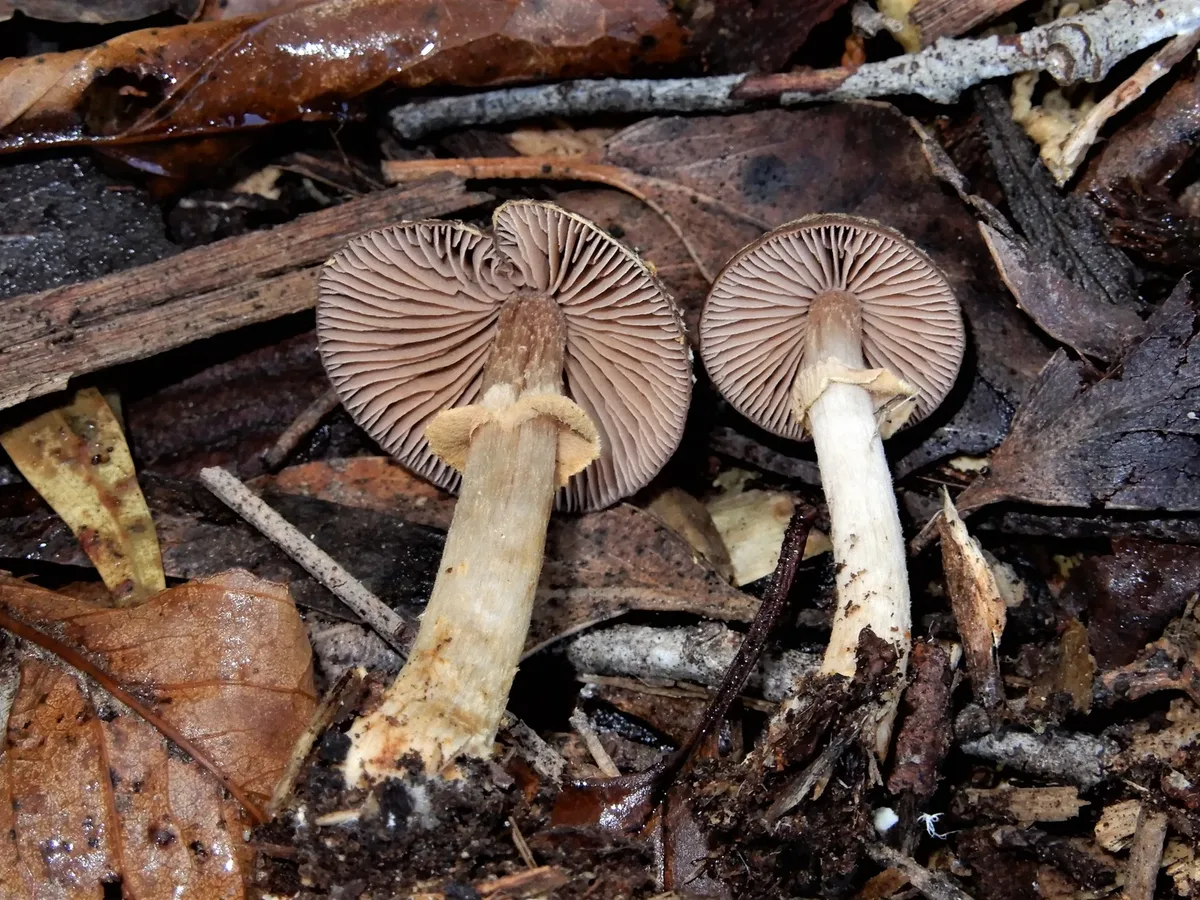
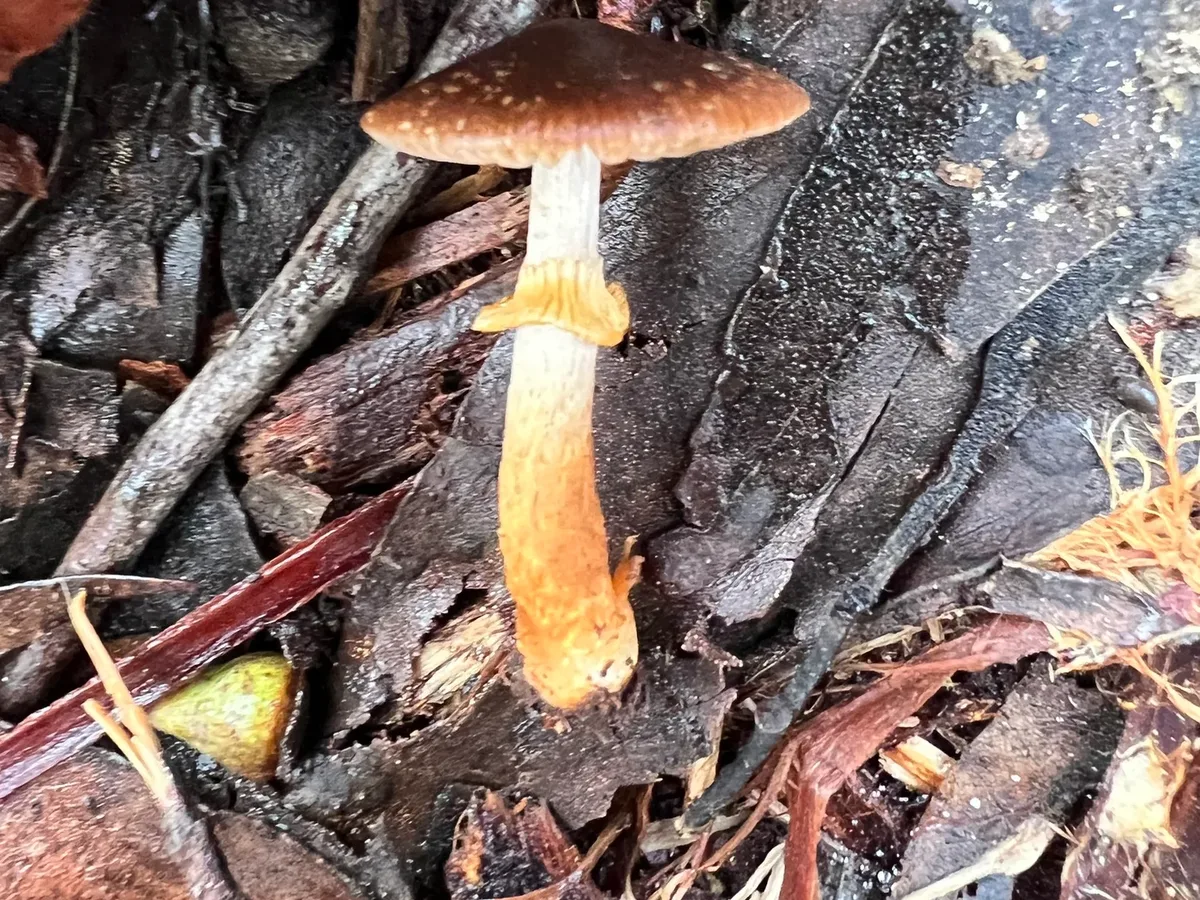
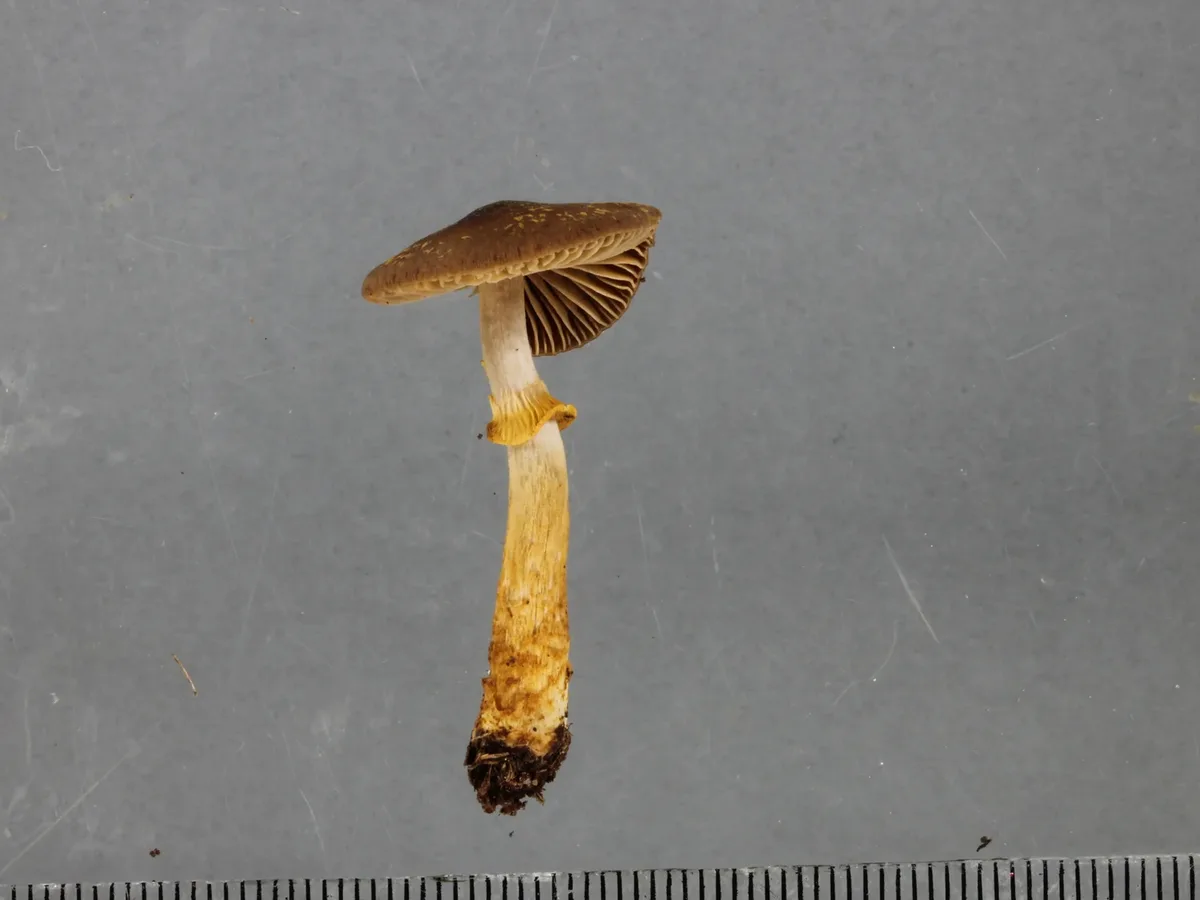
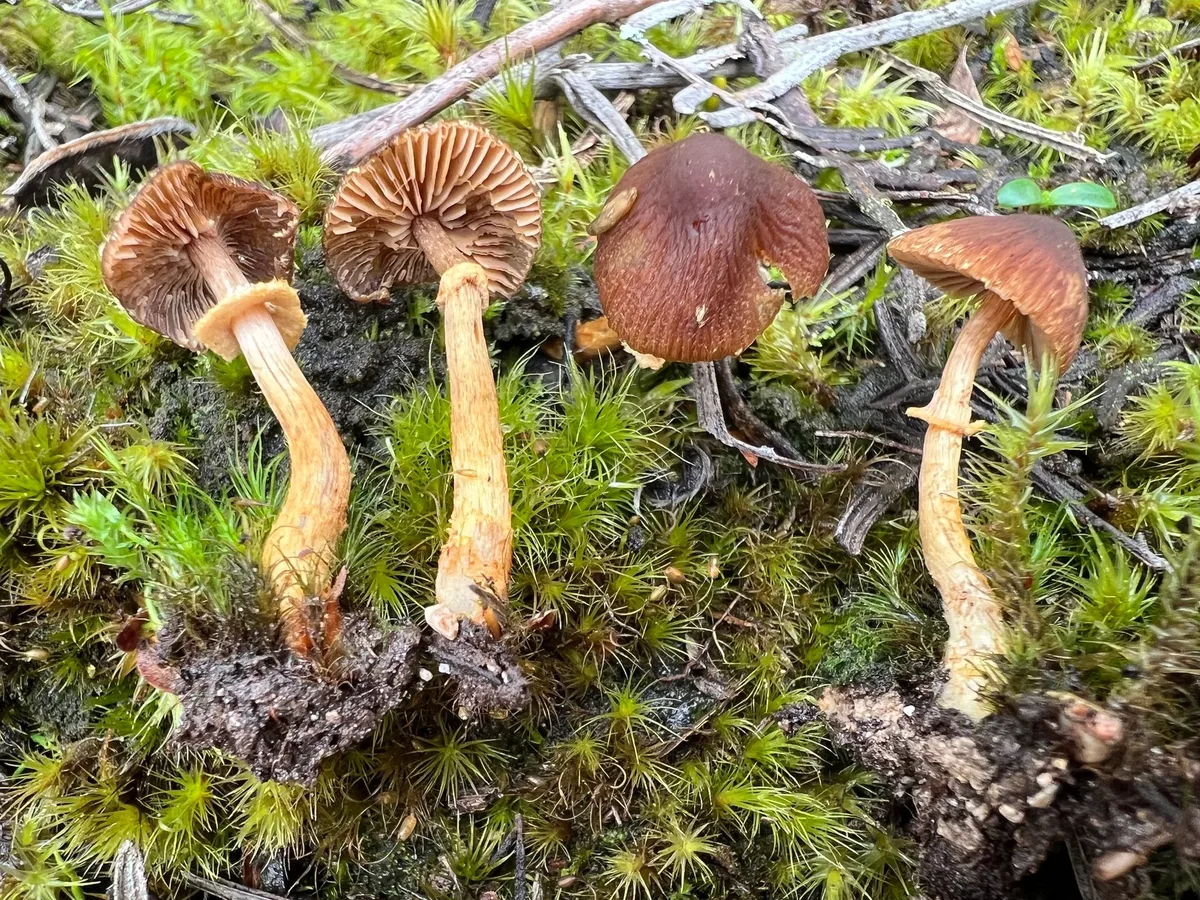
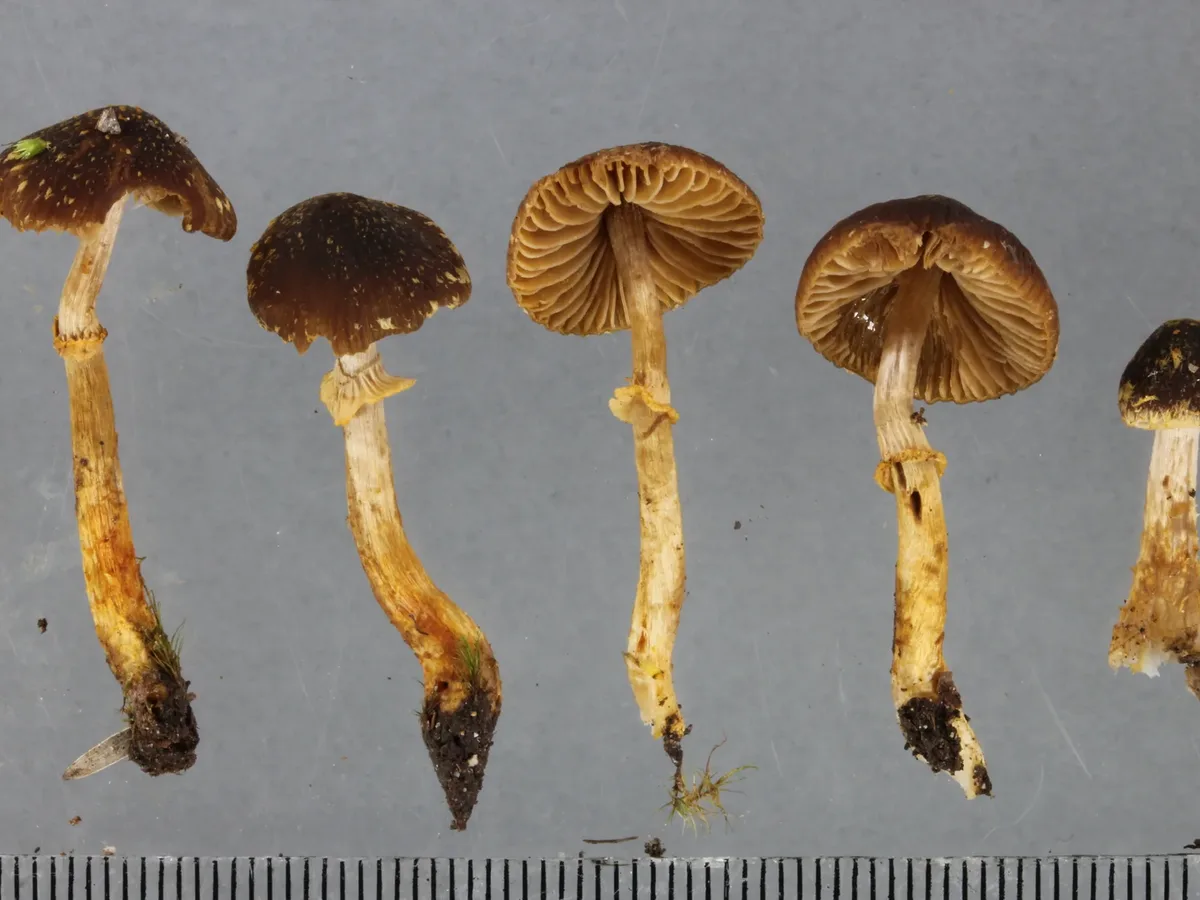
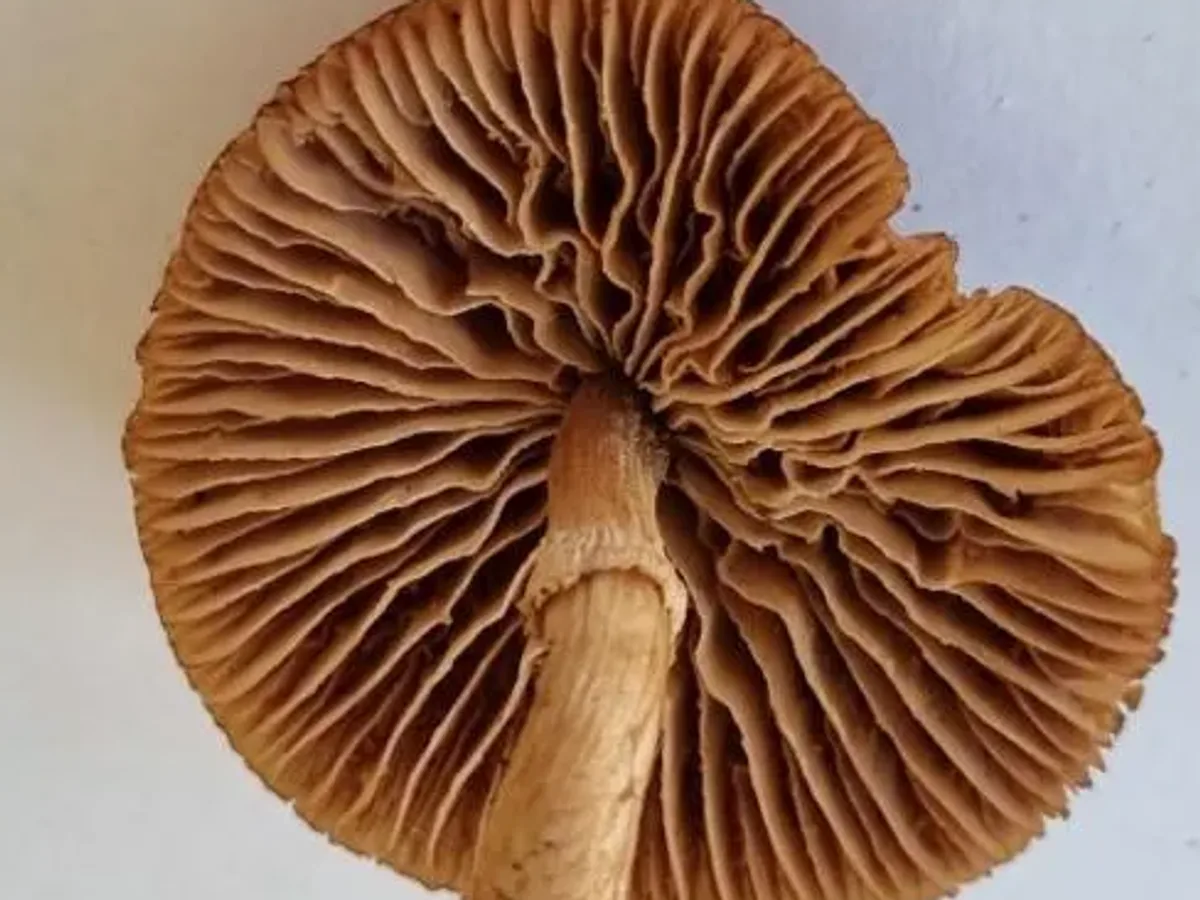
Descolea maculata is immediately distinguished among Australian agarics by the combination of a tawny-ochre cap covered with flat, darker brown scales or patches - the 'spotted' texture that gives the species its name - together with a sturdy, persistent membranous ring on the stem and a rusty-brown spore print.
No other commonly encountered mushroom in Australian eucalypt forest combines all three of these features.
Cap
The cap begins convex and scales are dense and well-defined in young fruitbodies; as the cap expands the scales may spread slightly and pale at their centres, but they remain visible even in fully mature specimens.
Gills / Pores
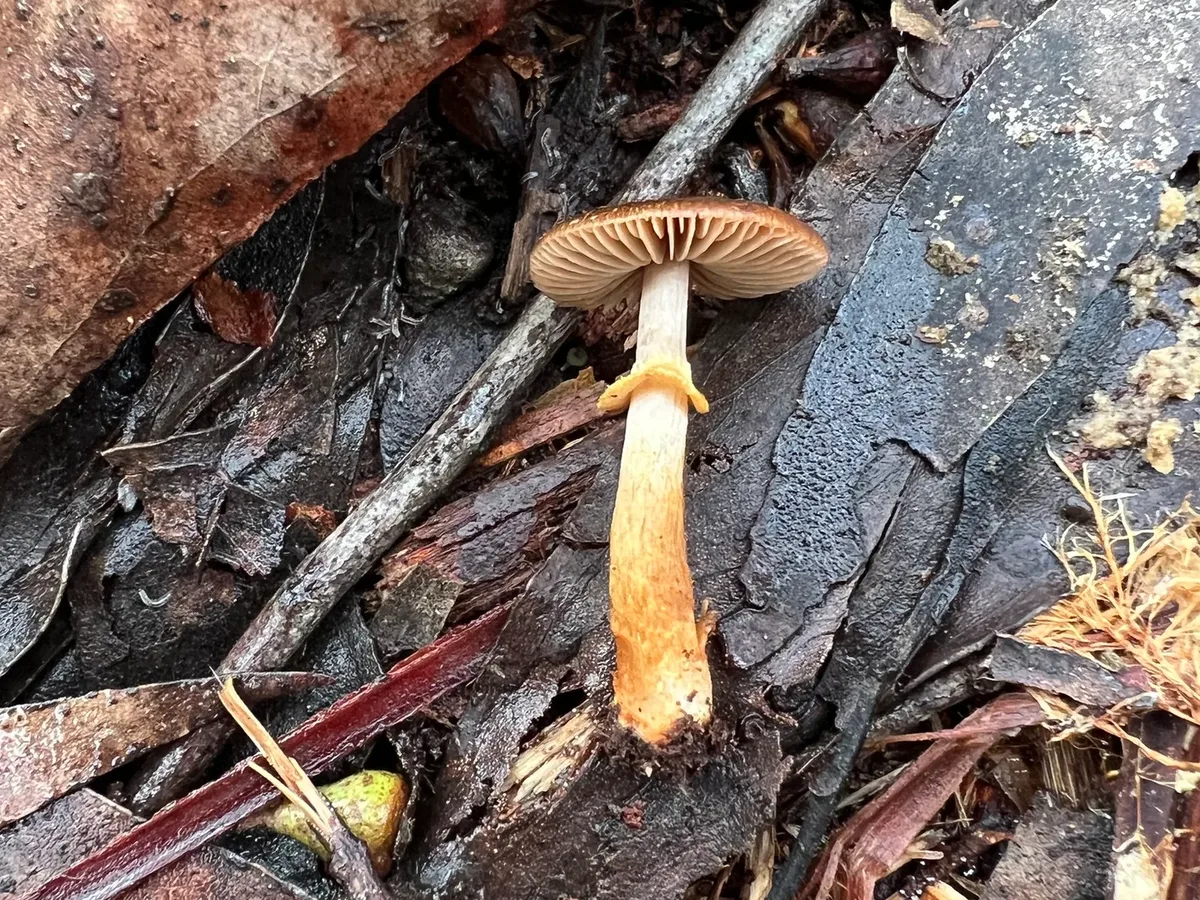
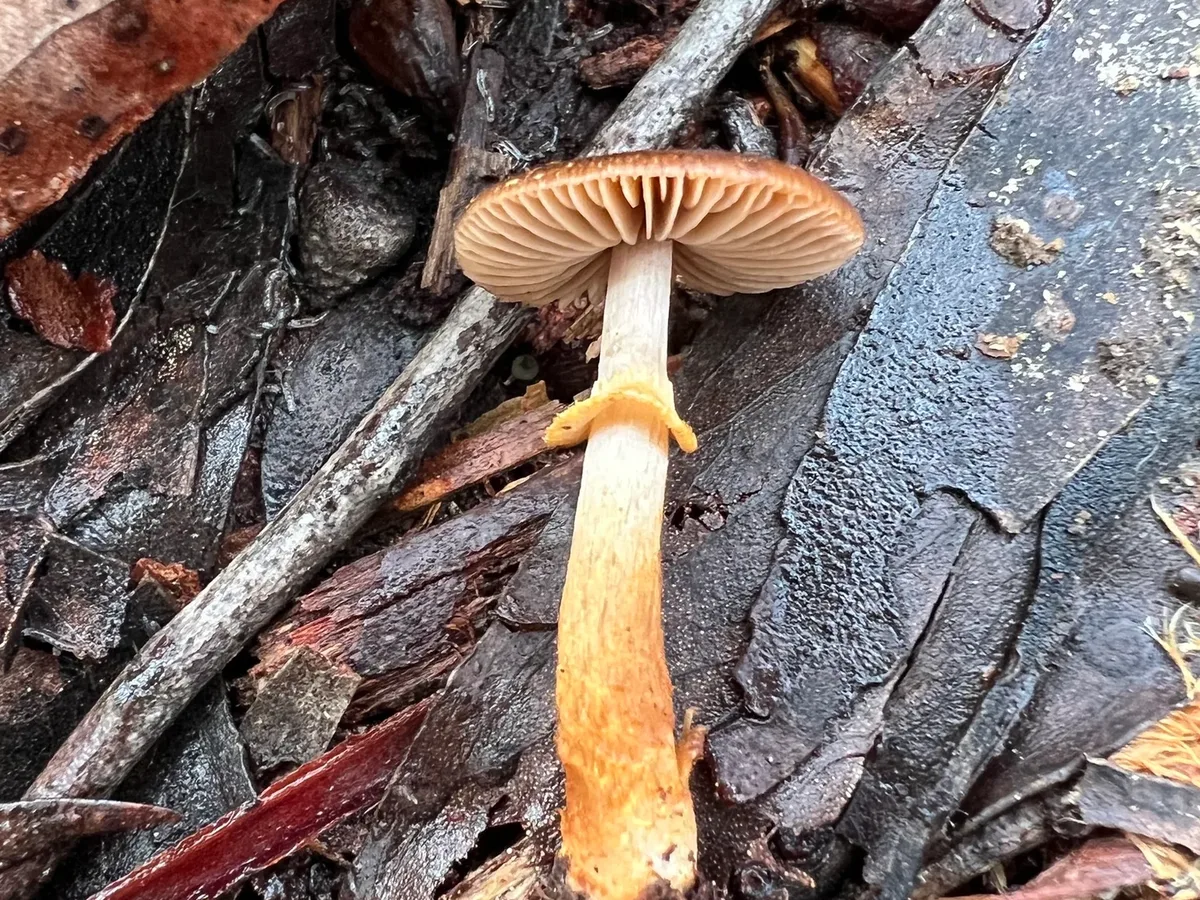
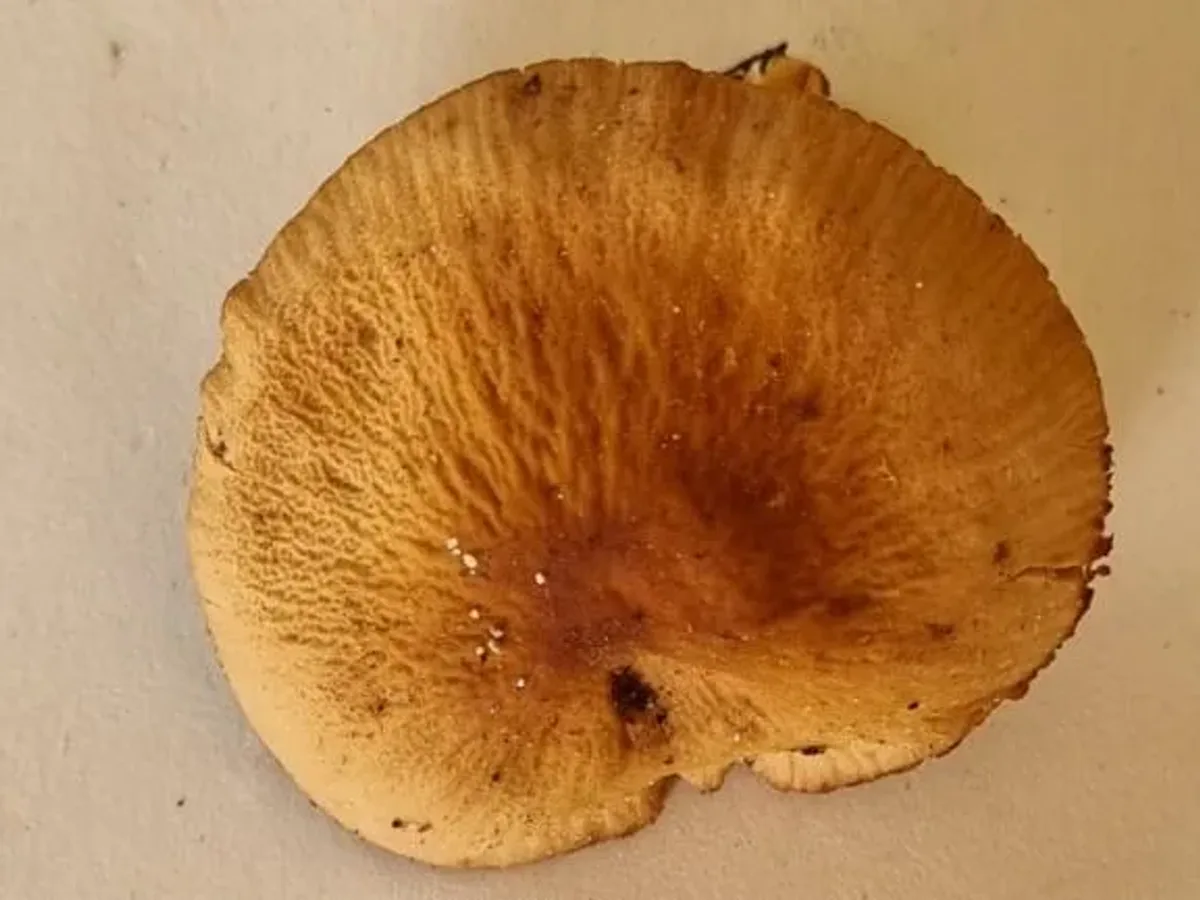
The gills undergo the characteristic Descolea colour progression: pale ochre at first, ageing to rusty cinnamon-brown, which explains the rusty spore deposit.
Stem
The ring is one of the most dependable field marks: membranous and skirt-like, positioned high on the stem, often striated on its upper surface, and persisting well into maturity - unlike the fragile, evanescent cortina of Cortinarius or the often-disappearing ring of Galerina.
The base of the stem lacks any volva or cup (the feature that would indicate Amanita), which is worth checking by digging the base free before any other identification steps.
Where & when it grows
Habitat
This species cannot grow without a living eucalypt or closely related ectomycorrhizal tree partner; it is not a decomposer.
Its mycelial threads are woven through the root tips of Eucalyptus and Corymbia trees, exchanging soil-derived minerals and water for photosynthetically fixed sugars - an ancient and mutualistic trade.
When you find Descolea maculata it will almost always be within a few metres of a mature eucalypt trunk, usually appearing along root lines that radiate outward from the tree base.
In planted forests and arboreta where Eucalyptus or Pinus radiata has been established for decades, the species can also appear, having colonised the exotic hosts.
The key habitat marker is a living host tree in a soil undisturbed enough to have allowed a stable ectomycorrhizal network to develop - recently cultivated or disturbed soils rarely support this species.
When
Descolea maculata follows the same cool-moist autumn fruiting rhythm characteristic of many ectomycorrhizal eucalypt forest fungi in southern Australia.
The fruiting season runs broadly from March to July, with the peak typically in April-June.
The trigger is the convergence of meaningful autumn rainfall - generally 15-25 mm or more over a one- to two-week period - with soil temperatures falling through the 10-15 °C range as summer warmth dissipates.
Practically, the first substantial autumn rains after summer drought, arriving in March or April in Victoria and New South Wales, reliably prompt initial fruiting, and subsequent flush events follow each significant rainfall.
In cooler, higher-altitude sites and in wetter parts of South Australia and Western Australia, fruiting may persist into July.
The species is entirely absent during the hot, dry Australian summer.
How it grows
Fruitbodies emerge singly or in small scattered groups of two to five, rarely more, arising from the soil rather than from wood.
The same mycelial network, which persists perennially in association with the host tree's roots, can produce fruitbodies in multiple consecutive years, meaning a productive site under a mature eucalypt may yield fruit annually.
Individual fruitbodies develop over several days from initial pin stages to full maturity, and in undisturbed forest can persist for one to two weeks before deteriorating.
Dense tight clusters are not typical of this species.
Fruiting conditions
Southern Australian eucalypt forest species. Fruiting triggered by autumn rainfall (15+ mm over 14 days) combined with soil temperature cooling below approximately 15 °C. Typical flush lag 10-20 days after triggering rain event. Peak April-June; may extend to July at cooler or higher-altitude sites. Absent in summer (soil too warm and dry) and mid-winter (soil too cold).
Look-alikes
The most dangerous confusion is with Galerina marginata (funeral bell / deadly skullcap), a cosmopolitan species that grows on decaying wood or woody debris in forests where D. maculata also occurs.
Both species are brownish with a ring and a rusty-brown spore print - exactly the combination most likely to cause a fatal misidentification.
The key separating features are:
- Substrate: Galerina grows directly from dead wood or woody debris embedded in the soil; Descolea grows from mineral soil near living tree roots.
- Cap texture: Galerina is hygrophanous - dark brown when wet, pale buff with translucent marginal striations when dry - and smooth to finely fibrillose, lacking the flat dark scales of D. maculata.
- Ring quality: the Galerina ring is more fragile and evanescent, often disappearing; the Descolea ring is thick and persistent.
- Overall stature: Galerina is typically more slender and thinner-fleshed.
However none of these distinctions is infallible in field conditions, and the consequence of error is lethal amatoxin poisoning.
Cortinarius species (webcaps) also occur in the same eucalypt forest habitat and can produce rusty-brown spore deposits; Cortinarius never has a true membranous ring - only a cobwebby cortina or a rusty ring-zone from cortina collapse - and several Australasian Cortinarius species contain the deadly orellanin nephrotoxin.
Pholiota species are also superficially similar (scaly cap, ring, rusty-brown spores on some species), but typically grow in clusters on wood and are not ectomycorrhizal; most are bitter, inedible, or mildly toxic.
Amanita species (potentially deadly) are separated by the presence of a volva (basal cup or remains) and white spore print; always check the base before any other assessment.
Galerina marginata is a deadly amatoxin-containing species occurring in the same eucalypt and pine forest habitats. Both species are brownish-ochre with a ring and a rusty spore print. Key differences: Galerina grows directly from dead or decaying wood (not mineral soil near living roots); its cap is hygrophanous - dark honey-brown when wet, drying pale buff with translucent striations near the margin - and smooth to finely fibrillose, lacking the flat darker scales characteristic of D. maculata; its ring is thinner and more evanescent, often disappearing; its stature is typically more slender and thinner-fleshed. None of these distinctions is reliable enough to use as a foraging safety test. If in doubt, treat any ring-bearing rusty-spored agaric in this habitat as Galerina.
Various Cortinarius species occur under Eucalyptus and Nothofagus in Australia and New Zealand and produce rusty-brown spore prints. Cortinarius species lack a true membranous ring - their cobwebby cortina collapses to leave only a rusty spore-dusted zone on the stem but never a proper skirt. Several Australasian Cortinarius species (including C. archeri and C. rotundisporus) contain the deadly orellanin nephrotoxin, which causes delayed kidney failure 2-3 weeks after ingestion. The absence of a prominent membranous ring in Cortinarius is the key separator, but in aged or damaged specimens this distinction may not be obvious; treat any rusty-spored webcap in native forest as potentially deadly.
Pholiota species can share a scaly-capped, ring-bearing, rusty-spored appearance with D. maculata, but Pholiota nearly always grows in dense clusters directly on dead or dying wood or at the base of living trees in a manner that reflects wood-rotting rather than soil-based ectomycorrhizal fruiting. Pholiota caps are often more viscid or slimy, and the flesh tends to be bitter. Not deadly, but most Pholiota species are inedible to mildly toxic (causing gastrointestinal upset) and are not eaten.
This distinctive Australian Amanita has a tawny to ochre-yellow cap that can superficially resemble D. maculata in colour, and it also fruits in eucalypt forest in autumn. However Amanita always bears a volva (basal cup or remains) at the base of the stem, which Descolea absolutely lacks - digging the base free and checking for this structure is the most important first step in any Amanita identification. The spore print of Amanita is white, not rusty-brown. A. xanthocephala causes gastrointestinal toxicity but is not deadly; misidentification with other Amanita species could be far more dangerous.
In the kitchen
Picking & cleaning
Not recommended for collection as a food species.
Descolea maculata has no established culinary tradition in Australia or New Zealand, is not assessed as reliably edible in any authoritative regional guide, and has not been formally evaluated for safety by food authorities.
The most serious reason to avoid collecting it, however, is the presence in the same habitat of the deadly Galerina marginata - a species that is superficially similar, bears a ring and rusty spore print, and contains alpha-amanitin at lethal concentrations.
The margin for safe identification in the field is unacceptably narrow.
If you encounter a ring-bearing, rusty-spored agaric in Australian eucalypt or pine forest, leave it alone.
Cooking
Descolea maculata has no culinary application and must not be prepared as food.
Its edibility is unassessed, no traditional preparation exists, and - most importantly - the lookalike risk posed by the deadly Galerina marginata in the same habitat makes any attempt to use ring-bearing, rusty-spored agarics from eucalypt or pine forest as food an unacceptable safety risk.
No cooking method neutralises amatoxins or orellanin; if a Galerina or toxic Cortinarius has been collected by mistake, cooking it does not make it safe.
- Discard any specimen.
- Wash all cooking surfaces it may have contacted.
- Do not proceed.
Good to know
Treat Descolea maculata as a species to observe, not to eat.
Its own toxicity status is not established: it has not been confirmed toxic in the literature, but neither has it been confirmed safe, and it carries no culinary tradition.
The overriding safety concern is lookalike risk: the deadly Galerina marginata shares habitat, season, ring, and rusty spore colour, and can be misidentified as Descolea species even by experienced foragers under field conditions.
Alpha-amanitin, the primary toxin in Galerina marginata, destroys liver cells progressively and causes a characteristically delayed, three-phase poisoning syndrome:
- 1Initial gastrointestinal illness (6-24 hours).
- 2Apparent recovery (1-2 days).
- 3Catastrophic liver and kidney failure at 3-7 days, which can be fatal without emergency medical intervention including possible transplantation.
There is no antidote.
If any ring-bearing, rusty-spored mushroom has been eaten and Galerina poisoning is suspected, seek emergency hospital care immediately without waiting for symptoms to develop.
- In Australia, contact the Poisons Information Centre (13 11 26).
- In New Zealand, contact the National Poisons Centre (0800 764 766).
A reference guide - never an edibility guarantee. When in doubt, leave it out.