Beech orange
Cyttaria gunniisyn. Cyttaria hookeri, Cyttaria gunnii var. australis
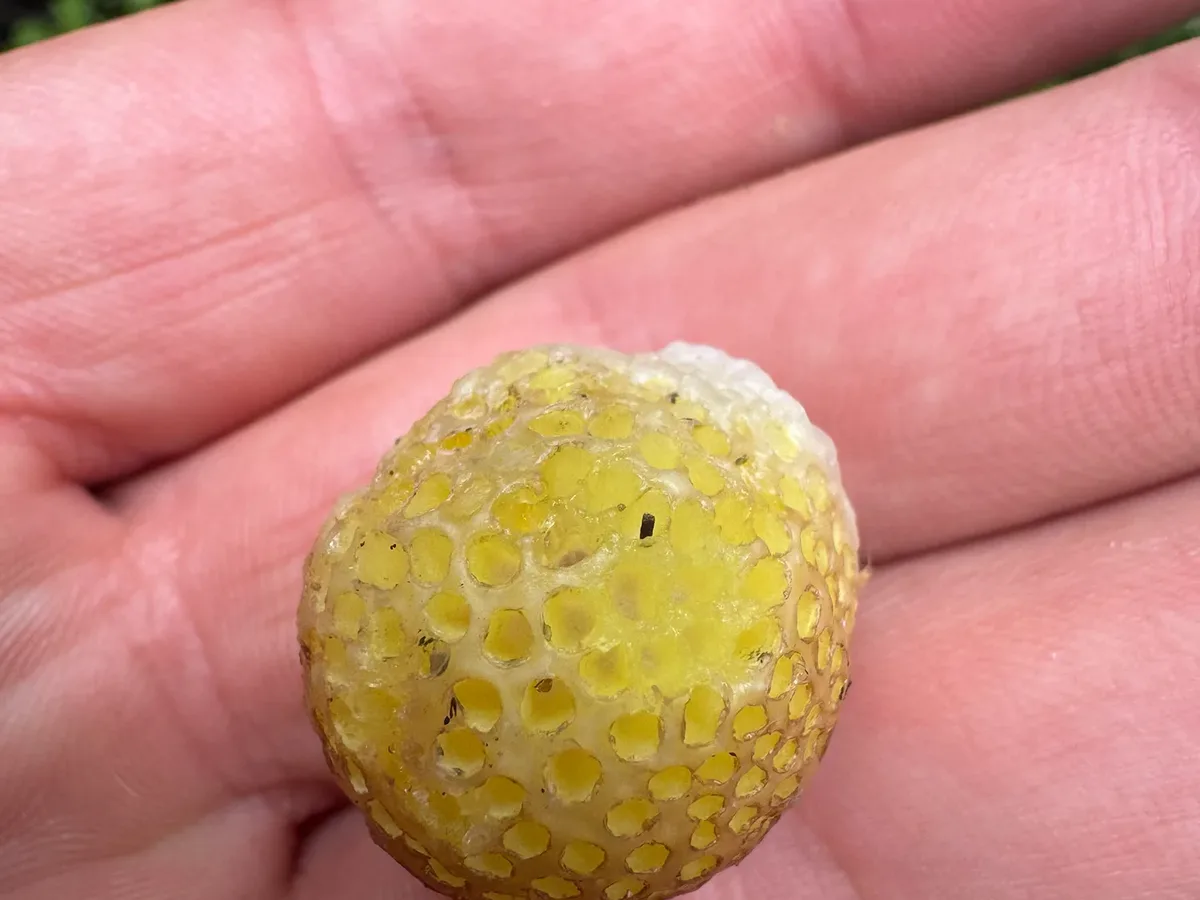 © David Thompson (CC BY)
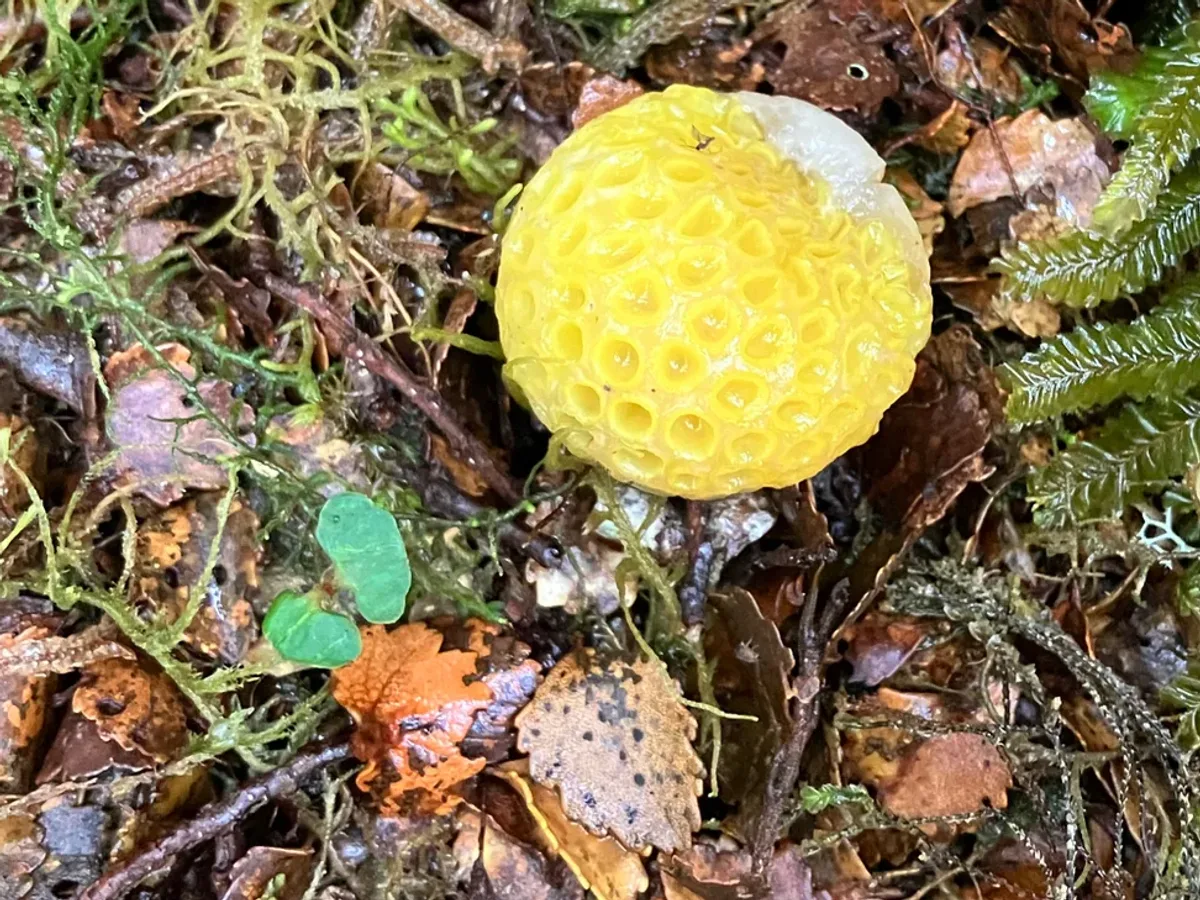 © Cara-Lisa Schloots (CC BY)
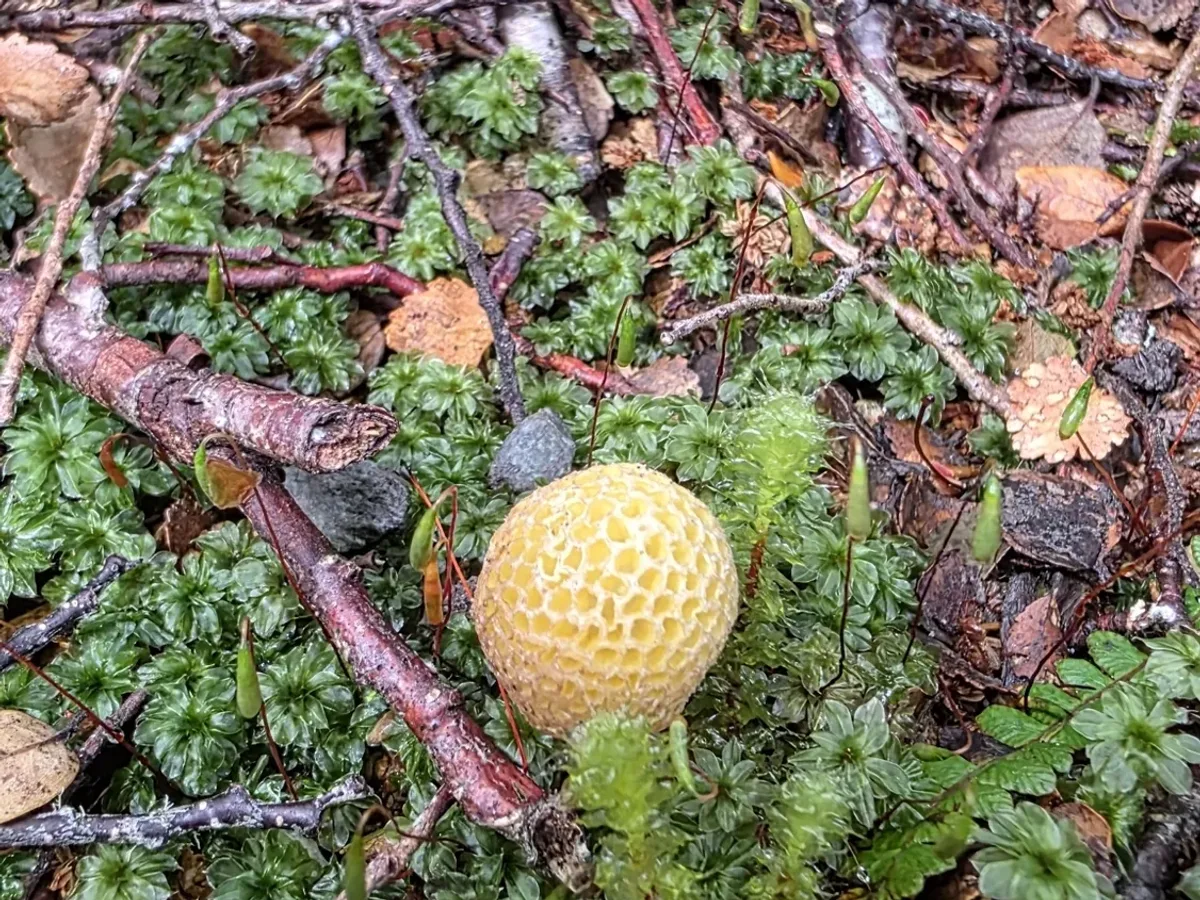 © Leandro Sanchez (CC BY)
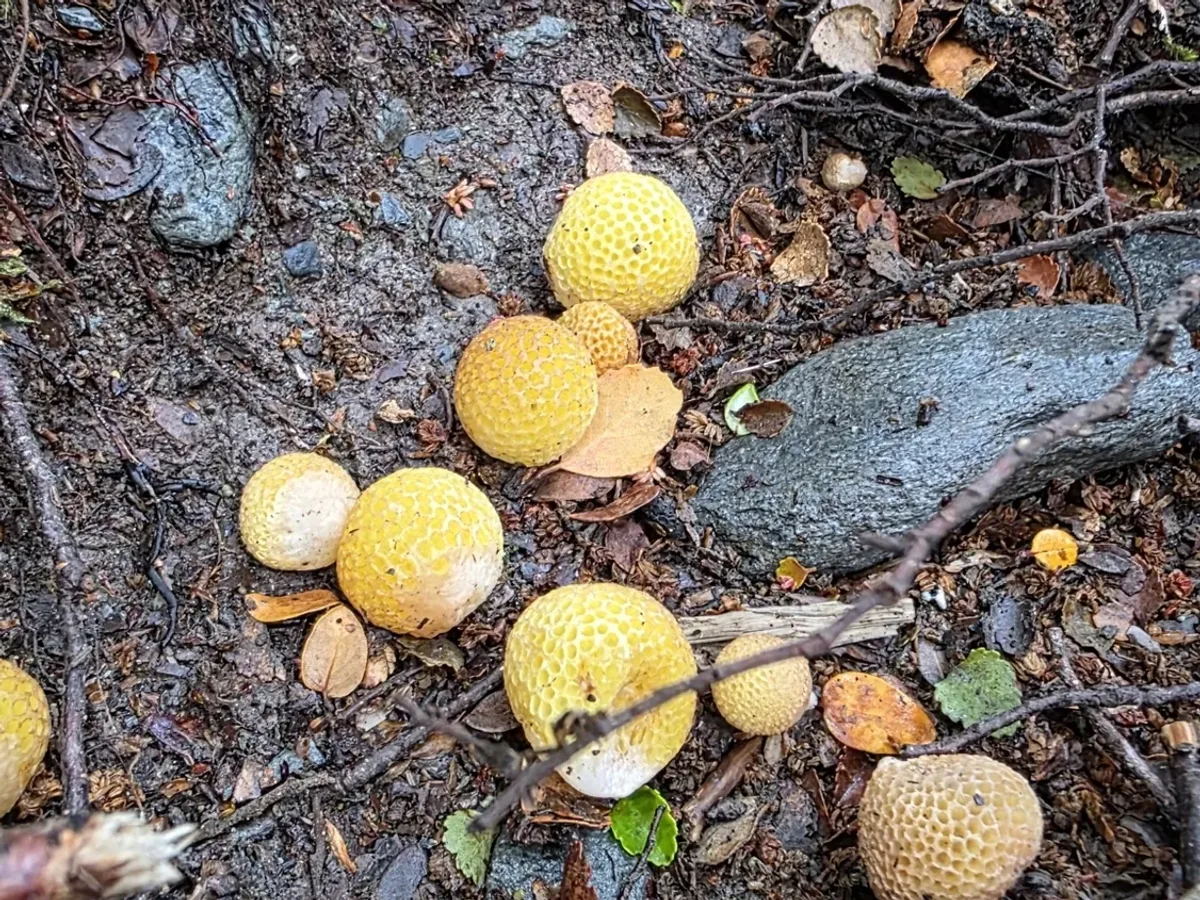 © Leandro Sanchez (CC BY)
 © Leandro Sanchez (CC BY)
 © Leandro Sanchez (CC BY)
 © Leandro Sanchez (CC BY)
 © Leandro Sanchez (CC BY)
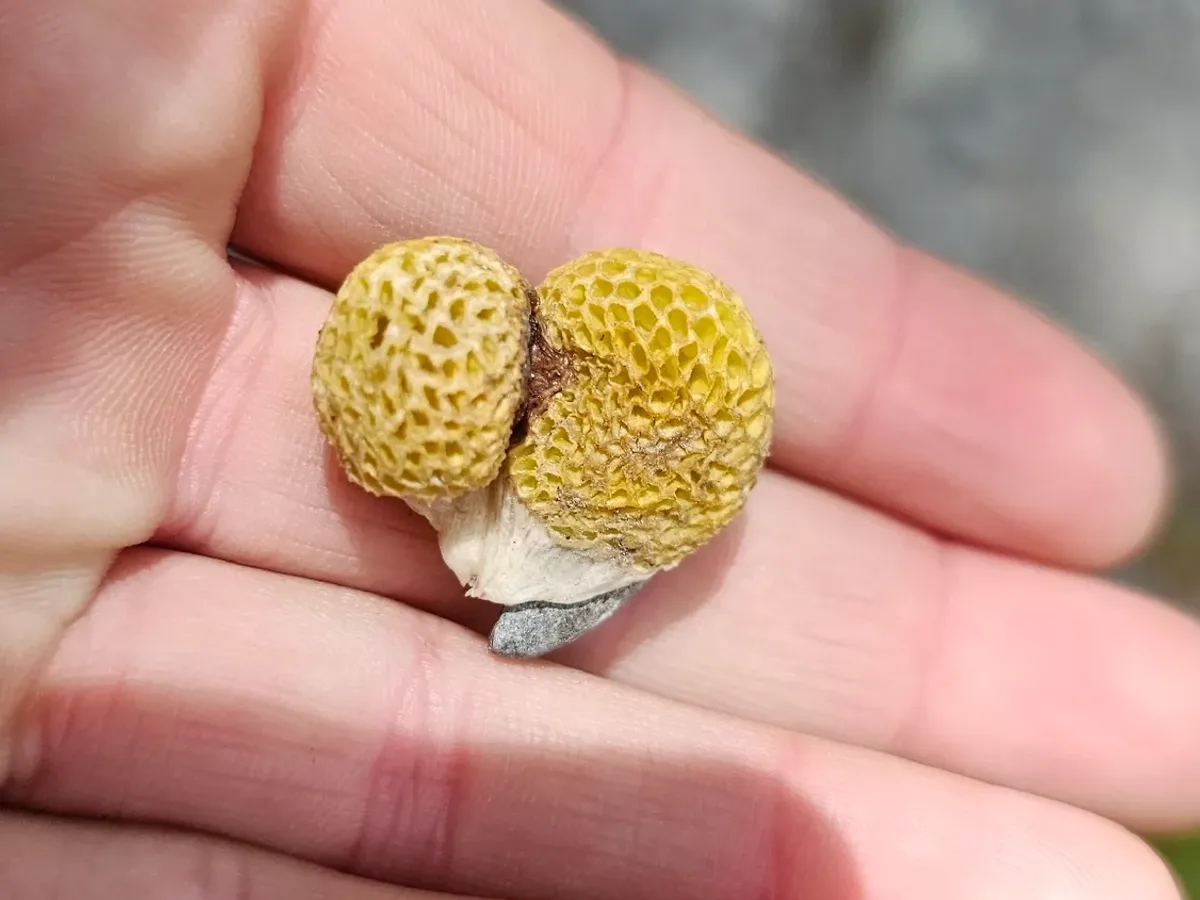 Henry Hart (CC0)
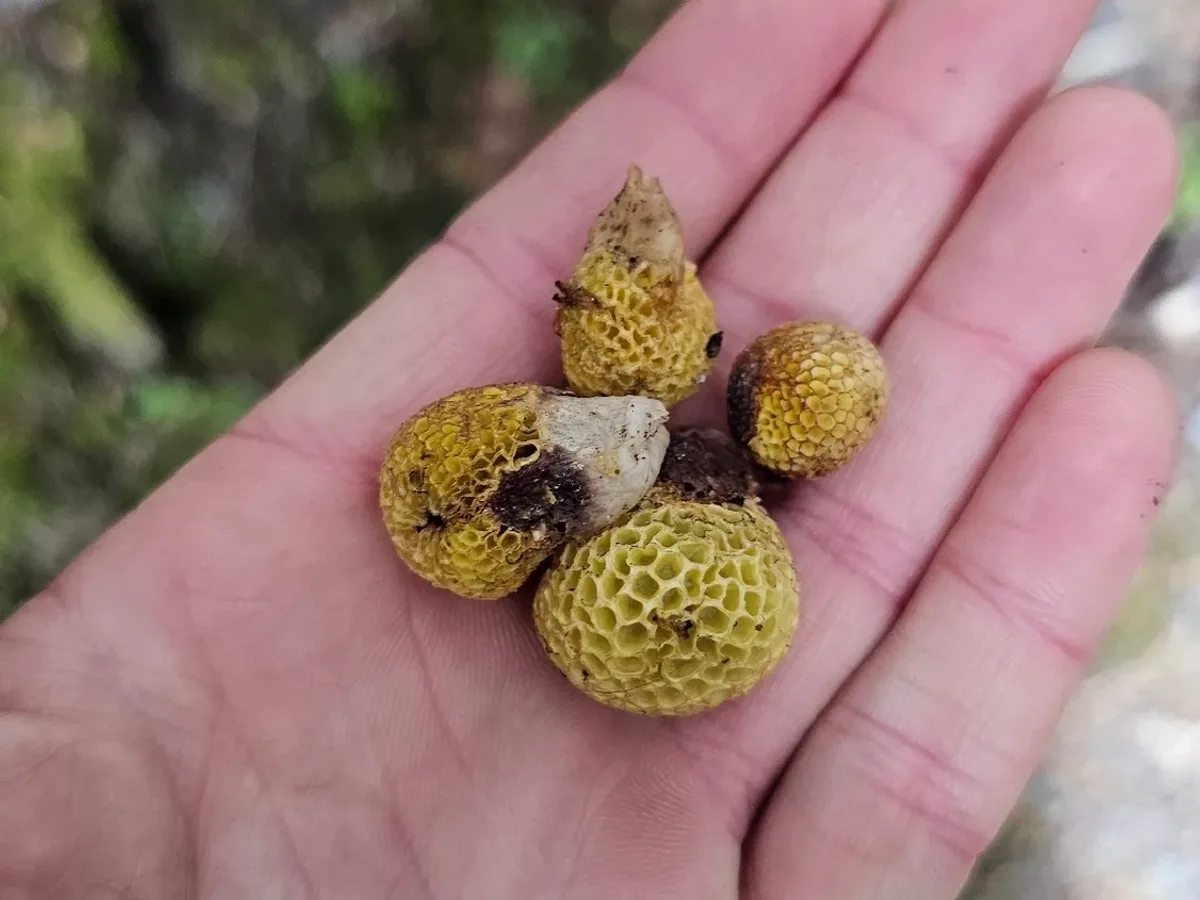 Henry Hart (CC0)© David Thompson (CC BY)© Cara-Lisa Schloots (CC BY)
Good to eat, once you have identified it with certainty and cooked it through.
How to recognise it
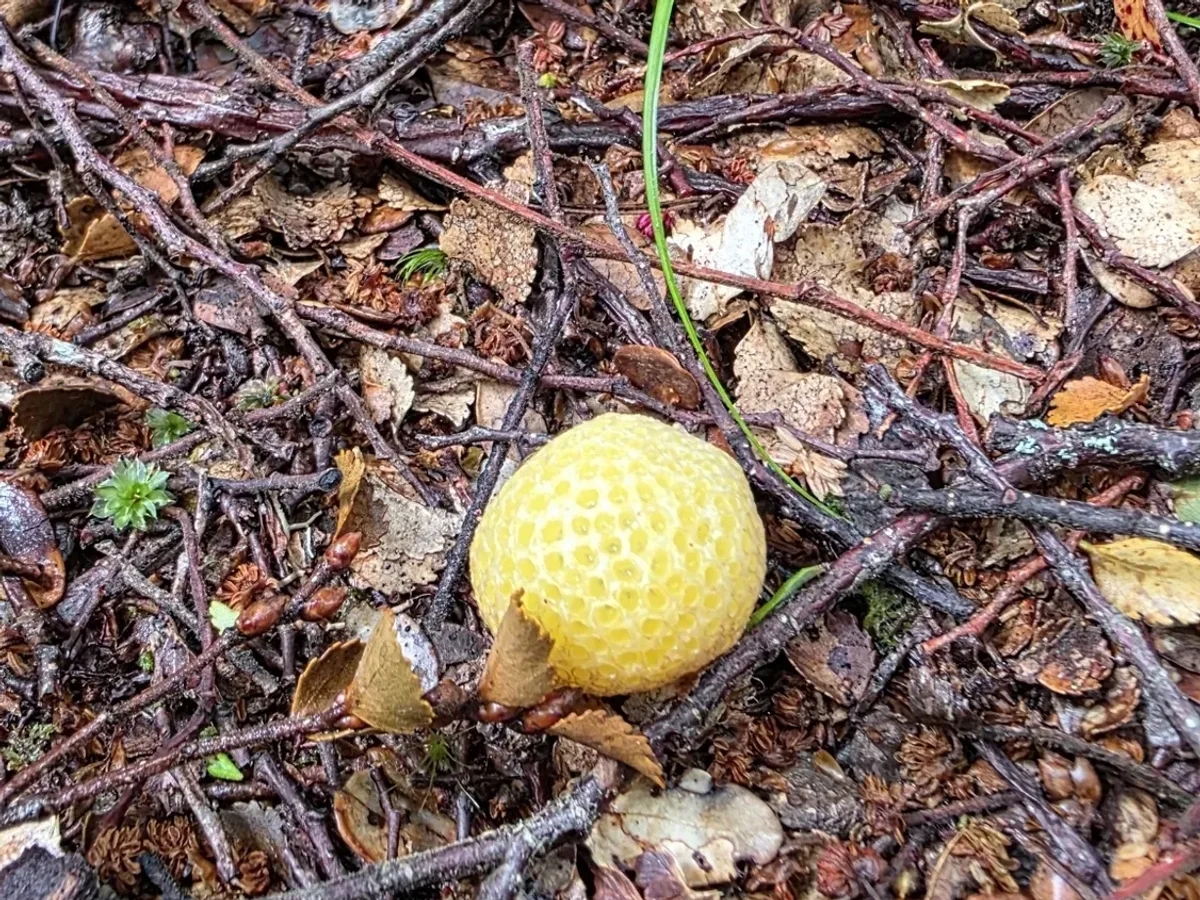
Cyttaria gunnii is one of Australia's most immediately distinctive fungi - not so much a typical mushroom as a cluster of bright orange balls attached to a swollen gall on a beech branch.
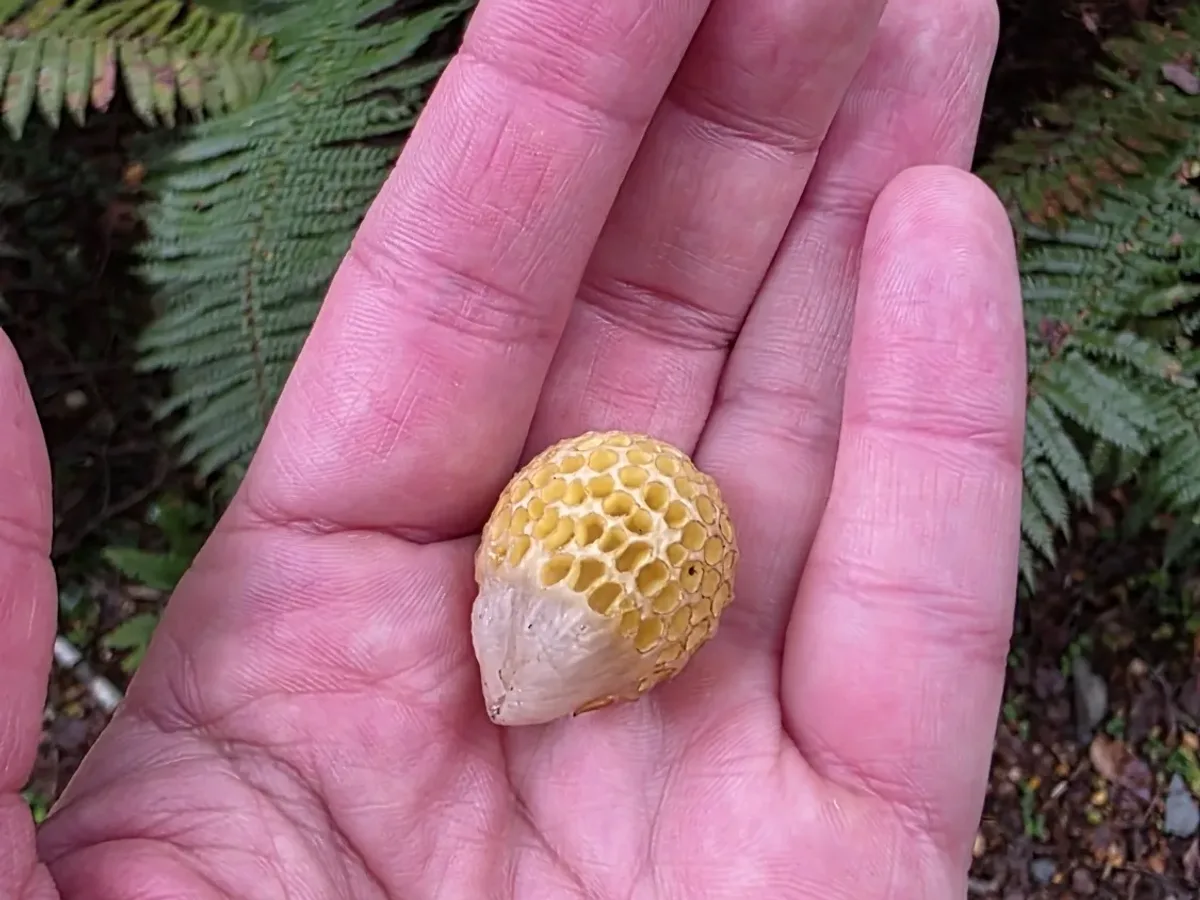
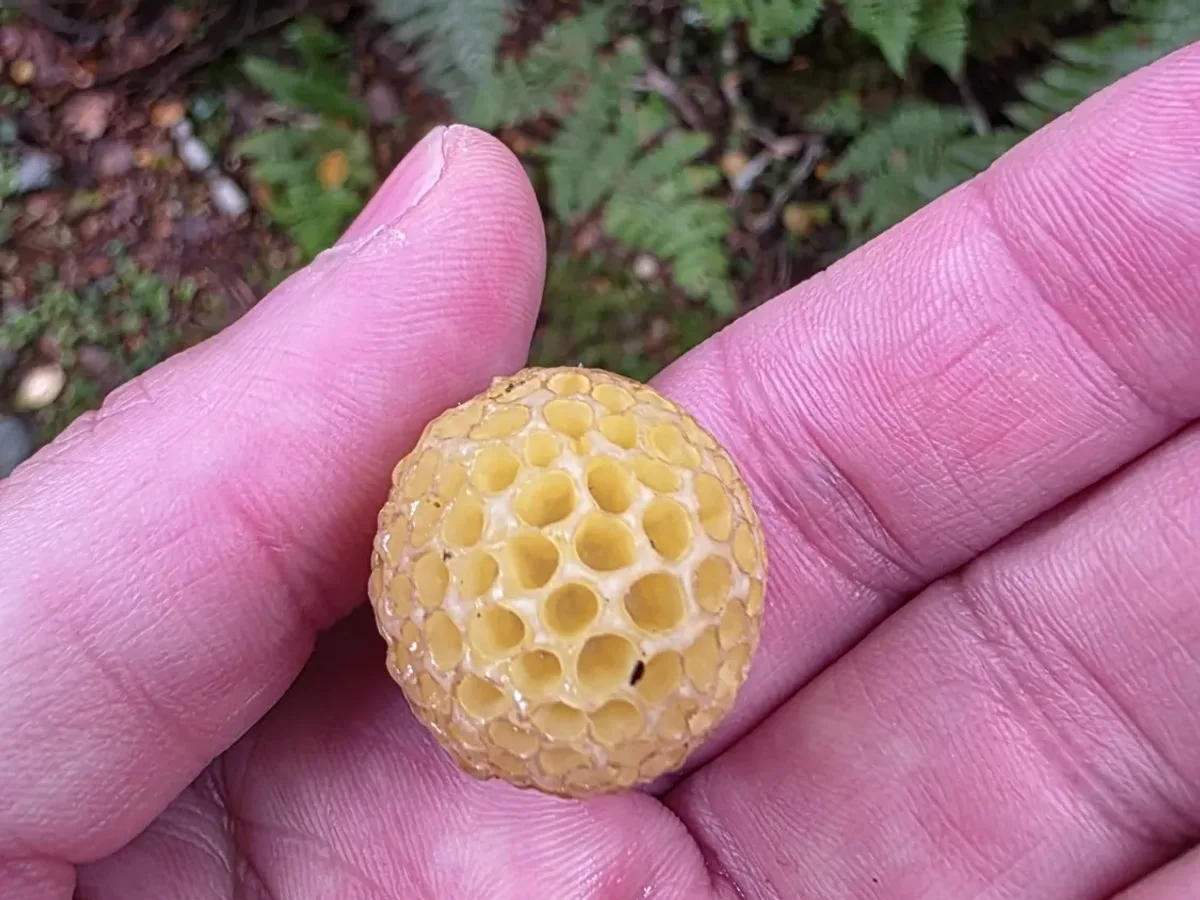
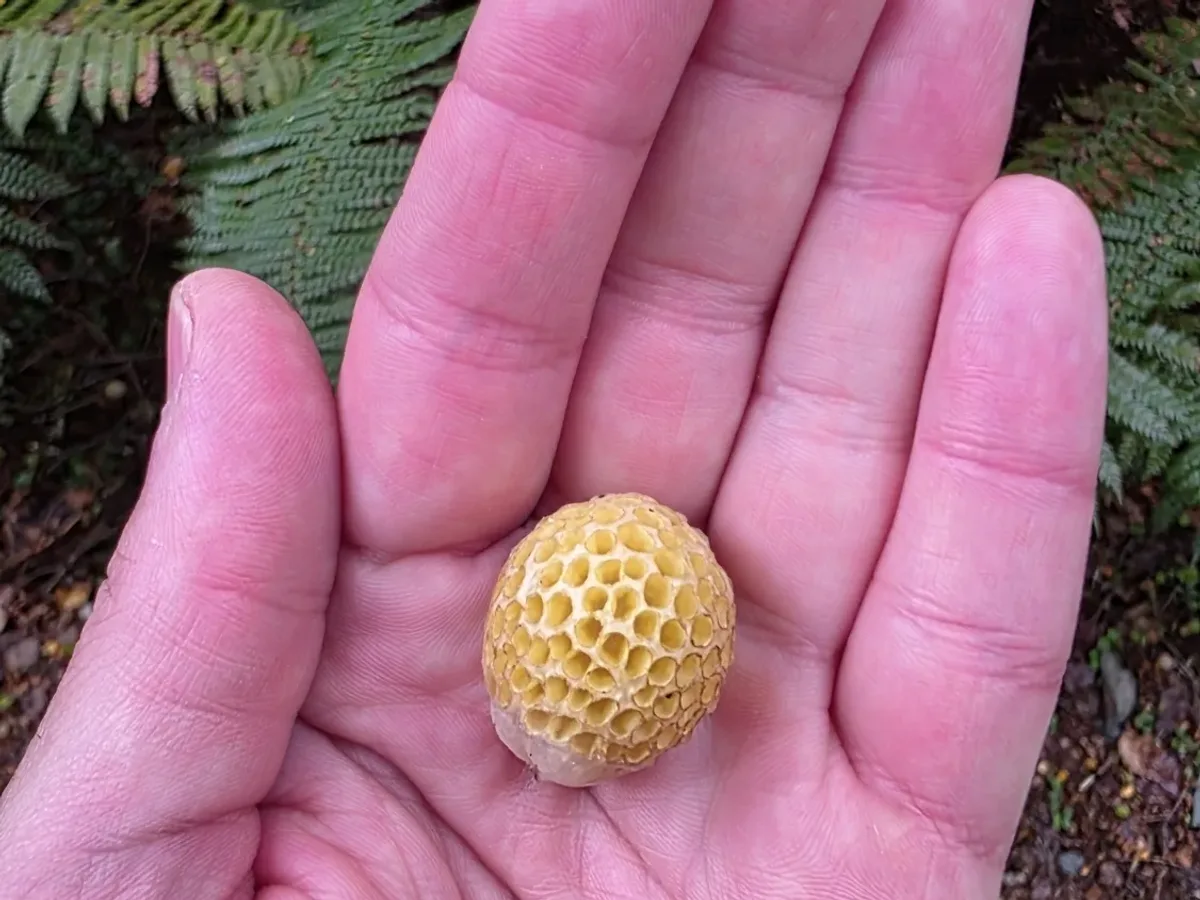
The individual fruitbodies are globose to slightly flattened, ranging from roughly 1 to 4 cm across, and are massed in tight clusters of a few to twenty or more erupting from the surface of a perennial woody gall.
When young, each body is firm, taut, and smooth, coloured a vivid orange to orange-yellow, and feels slightly elastic when gently squeezed. This is the best moment to collect them for eating: the flesh is most texturally interesting and the flavour mildly sweet.
As they mature the outer surface transforms - shallow depressions develop, deepen, and multiply across the whole surface until the fruitbody wears a pronounced honeycomb pattern. These pits are the functional ascomata, the cups in which spores are formed and from which they are ultimately shed. The ridges between them remain bright orange while the pit interiors may appear slightly darker or more ochre.
Ripe bodies feel softer and increasingly hollow; the flesh becomes progressively more watery and gelatinous. Very old fruitbodies collapse inward, lose colour, and shrivel.
There is no stalk, ring, or any cap-and-stem structure: Cyttaria is an ascomycete and does not have the typical anatomy of a basidiomycete mushroom.
The galls from which the clusters arise are themselves worth noting - irregular, hard, reddish-brown or grey-brown woody swellings on branches, sometimes the size of a tennis ball or larger, scarred and knobbly from years of fungal colonisation.
Where & when it grows
Habitat
The habitat search for Cyttaria gunnii begins and ends with one question: are there Nothofagus trees present? The fungus is an obligate parasite of southern beech and cannot grow on any other host.
In Australia, this means primarily Nothofagus cunninghamii - the myrtle beech - whose cool-temperate rainforests are concentrated in Tasmania (where they form continuous stands at middle and higher elevations) and in the wetter upland ranges of Victoria (notably the Otway Ranges, Strathbogie Tablelands, and remnant stands further east).
N. moorei, the Antarctic beech, supports the species further north in the highland rainforests of the Border Ranges of northeastern New South Wales and southeastern Queensland, though the populations there are smaller and more fragmented.
These forests share characteristic conditions:
- Persistent high humidity
- Cool temperatures year-round
- Often a moss-carpeted forest floor
- Canopy structures that exclude direct sunlight from lower branches
Cyttaria gunnii tends to be most abundant on mid-to-lower branches within the forest interior, where humidity remains highest and the galls have been able to develop undisturbed over many years. It does not occur in logged regrowth or disturbed beech margins where the canopy has been opened.
When
The appearance of Cyttaria gunnii is one of the most reliable seasonal markers in Australian cool-temperate rainforest. Fruiting is tied directly to host phenology: as Nothofagus cunninghamii breaks its winter dormancy in September and October and the new season's leaves begin to unfurl, the perennial galls on living branches respond by producing fresh clusters of fruitbodies.
This makes the timing of emergence quite predictable from year to year in a given location. Peak fruiting runs through October and November across most of Tasmania and highland Victoria, corresponding roughly to ISO weeks 40-46 in the Southern Hemisphere calendar.
In sheltered gullies at lower elevation, emergence may begin as early as late September; at higher elevations or in seasons with a late spring, fruitbodies may not appear until November. By December the fruitbodies of the main flush have aged, softened, and mostly collapsed, though stragglers persist.
Unlike many macrofungi whose emergence is primarily moisture-driven, Cyttaria is relatively insensitive to short-term rainfall variation within the spring season, because the mycelium resides within the host tree rather than in the soil. Extended drought or an unusually warm, dry spring can curtail fruiting, but the principal cue is biological rather than meteorological.
How it grows
Cyttaria gunnii belongs to the ancient family Cyttariaceae, a small group of ascomycete fungi with no close relatives in the Northern Hemisphere. It is confined entirely to the southern hemisphere landmasses and their associated Nothofagus forests.
The mycelium lives within the living cambial and wood tissue of the host tree, inducing the formation of distinctive, perennial woody galls that grow slowly over many seasons.
These galls are not purely defensive responses by the tree - rather, they represent a restructuring of host tissue under the direction of the fungus. A gall can persist on a branch for a decade or more, enlarging gradually, producing new fruitbodies each spring, and sometimes coalescing with neighbouring galls.
Infected branches are not necessarily killed; heavily galled trees can carry the infection for the lifetime of the host.
The fruitbodies emerge from the gall surface in clusters, expand over a period of one to three weeks as they fill with gelatinous tissue, and ripen their spores within the shallow pit-ascomata. Spores are released passively; wind and possibly rain-splash disperse them to new host tissue or new trees.
The intimate co-evolutionary relationship between Cyttaria and Nothofagus is ancient - molecular clock estimates place the association well within the Gondwanan epoch, predating the separation of Australia, South America, and Antarctica. This is why related species (C. darwinii, C. hariotii, C. espinosae) occur in southern South America on the same host genus.
Fruiting conditions
Fruiting is driven primarily by host-tree phenology - the spring dormancy-break of Nothofagus - rather than soil moisture or temperature triggers. Soil and rainfall parameters are not applicable. Reliable emergence each spring from established perennial galls on living Nothofagus branches, roughly September-December in the Southern Hemisphere.
Look-alikes
The distinctive combination of bright orange globular fruitbodies erupting from hard galls on Nothofagus branches is essentially unique in Australian mycology. No dangerous or toxic fungi share this set of features.
The only realistic lookalikes are other Cyttaria species:
- In New Zealand, C. septentrionalis and C. gunnii (which may extend across the Tasman) occur on Nothofagus; they are virtually identical in form and edibility, and the distinction is of no practical foraging consequence.
- In South America, several Cyttaria species (C. darwinii, C. hariotii, C. espinosae) are the ecological counterparts and are also edible.
There are no poisonous or deadly lookalikes for Cyttaria gunnii: no other Australasian fungus produces orange, globose, honeycomb-pitted fruitbodies in clusters on beech galls. Even the galls themselves are distinctive - no common Australian gall-forming pathogen produces structures closely mimicking Cyttaria fruitbodies. Misidentification within the Cyttaria genus is harmless.
Very similar orange, globose, honeycomb-pitted fruitbodies on Nothofagus galls in New Zealand. Virtually indistinguishable in the field from C. gunnii; microscopic spore characters differ. Both are edible and the distinction has no practical foraging consequence.
All Cyttaria species share the same basic morphology (globose, orange to yellow, honeycomb-pitted when ripe, on Nothofagus galls) and all are considered edible. No harmful species closely resembles Cyttaria in the field.
In the kitchen
Picking & cleaning
Harvest young, firm fruitbodies before the honeycomb pitting has developed deeply - these are both the most flavourful and structurally sound. Bodies at the smooth to lightly-pitting stage, still taut and clearly orange, are ideal.
Twist or cut cleanly at the gall surface, leaving the gall intact so it can continue to fruit in subsequent years and seasons. A single large gall may carry 10-20 fruitbodies in a flush; take what you will use and leave the rest, particularly leaving any very young bodies to mature and complete their spore release.
Because Nothofagus rainforest in Australia is limited in extent and the trees are slow-growing and ecologically sensitive, restrain collection and do not damage the host branches or galls in harvesting. In Tasmania, cool-temperate rainforest is a listed threatened ecological community in parts of its range, and any collection should respect local regulations and the vulnerability of the habitat.
Once collected:
- Rinse fruitbodies gently to remove any debris from the gall surface.
- Carry in a rigid container, as the gelatinous flesh bruises easily.
- Use within a day or two of picking.
Cooking
The flavour of Cyttaria gunnii is mild, faintly sweet, and slightly gelatinous - qualities that make young, fresh fruitbodies enjoyable raw as well as lightly cooked. Aboriginal Tasmanians ate them as gathered, and this remains a perfectly satisfying way to try them in the field.
The gelatinous texture softens further with heat, so brief cooking is preferred: a short sauté in butter or olive oil is sufficient to warm them through and develop a light caramelised edge without collapsing the flesh.
They work well as a garnish or accompaniment to forest-foraged dishes - alongside wild greens, fern shoots, or as a contrast to richer, earthier fungi like slippery jacks or saffron milk caps.
Light pickling in a mild vinegar brine (as is traditional for the South American Cyttaria species) preserves them for weeks and concentrates the gentle sweetness slightly. They do not dry well due to their high water content.
Nutritionally modest - primarily water and gelatinous carbohydrates - but historically important as a supplementary spring food in environments with limited plant diversity.
Good to know
Cyttaria gunnii has a long history of use as food by Aboriginal Tasmanians, for whom it was a seasonal delicacy gathered in spring during visits to Nothofagus forest. European colonists in Tasmania also adopted the practice, and it has been recorded in popular press and field guides since the 19th century.
No toxic compounds have been identified in any Cyttaria species, and no credible reports of poisoning attributable to this species are in the literature. There are no deadly lookalikes.
The primary safety considerations are:
- Collect from the correct host tree (Nothofagus, not any other species), and from the fruitbodies rather than the gall tissue itself.
- Discard very old, collapsed, or obviously decomposing fruitbodies.
- As with any foraged food, eat a small amount first if trying the species for the first time, as individual sensitivities vary.
Cyttaria gunnii can be eaten raw or cooked with no known risk.
A reference guide - never an edibility guarantee. When in doubt, leave it out.