Black poplar mushroom
Cyclocybe cylindraceasyn. Agrocybe cylindracea, Agrocybe aegerita, Pholiota aegerita, Cyclocybe aegerita
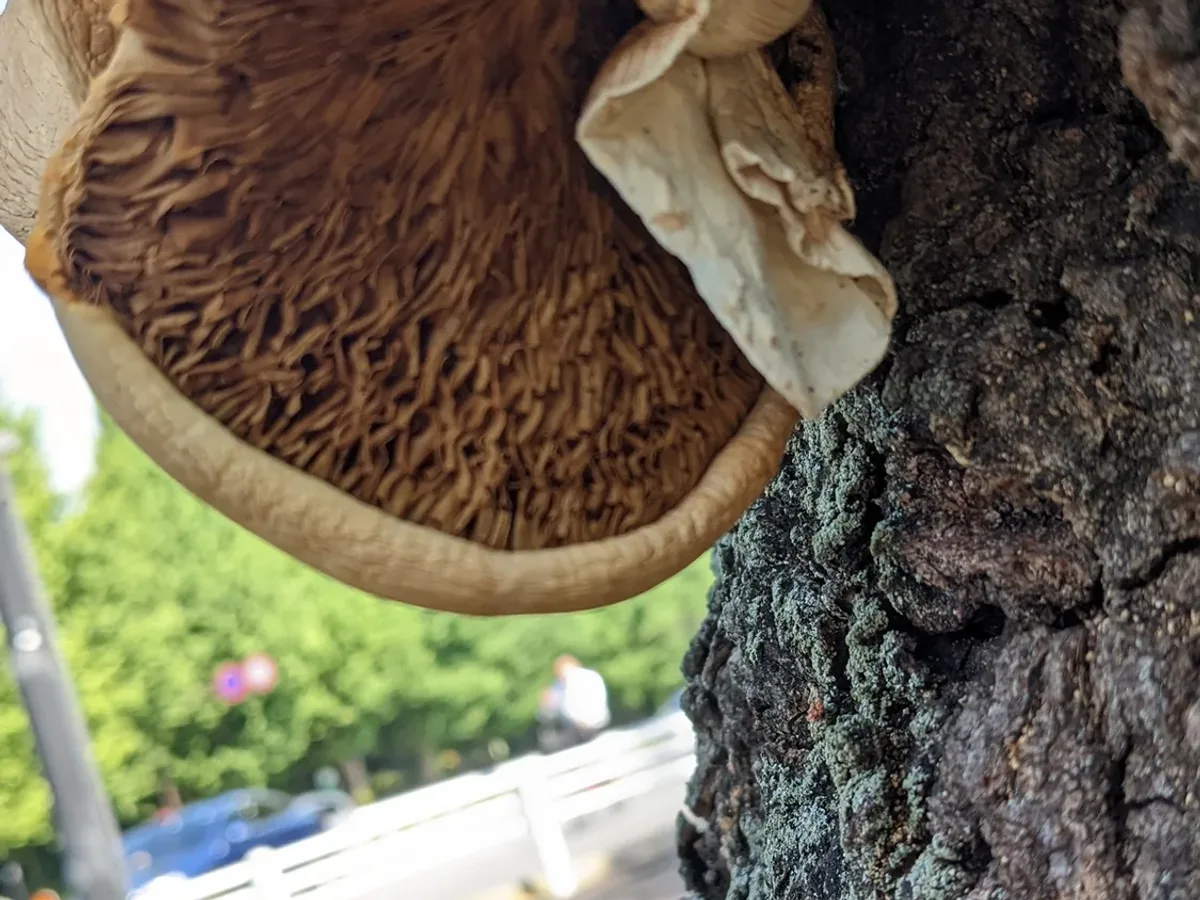 © Atsushi Nakajima (CC BY 4.0)
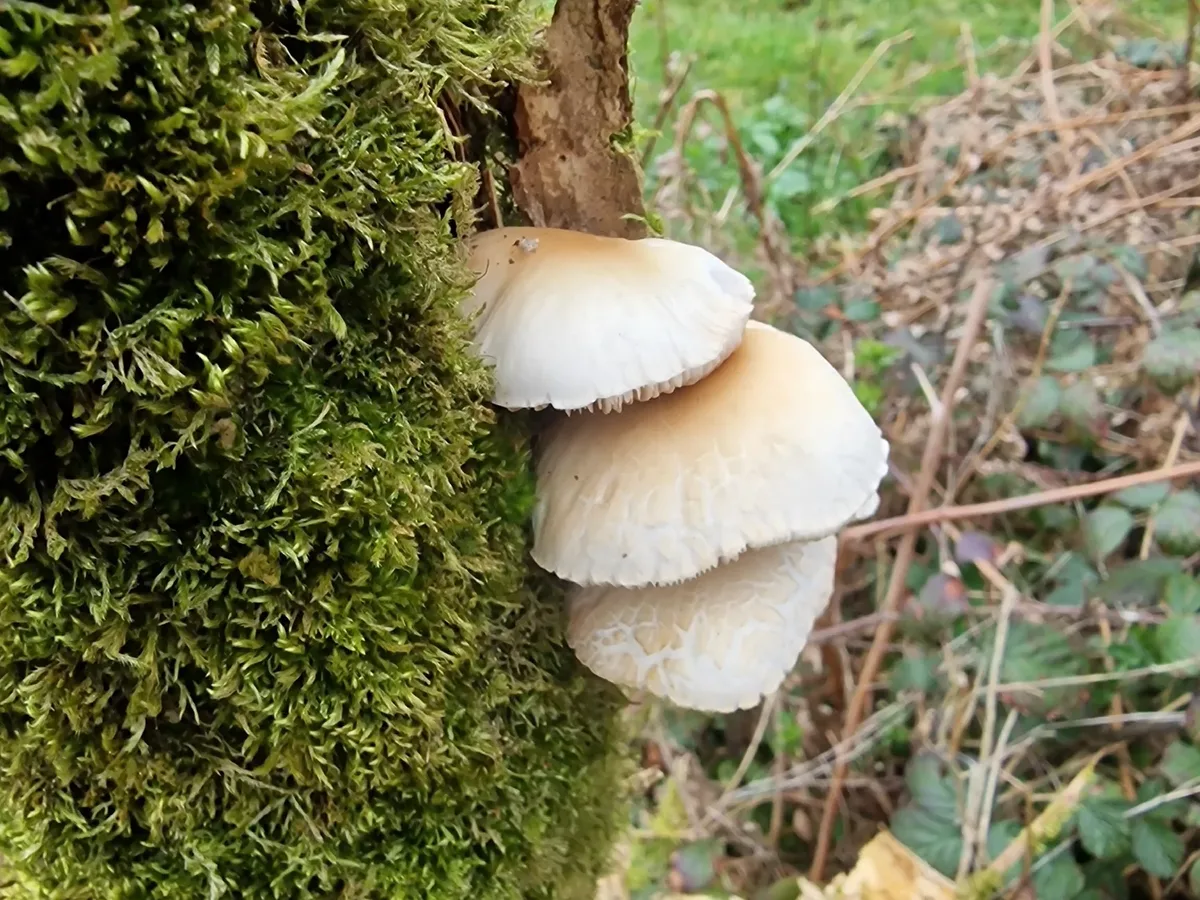 Sim Elliott (CC0)
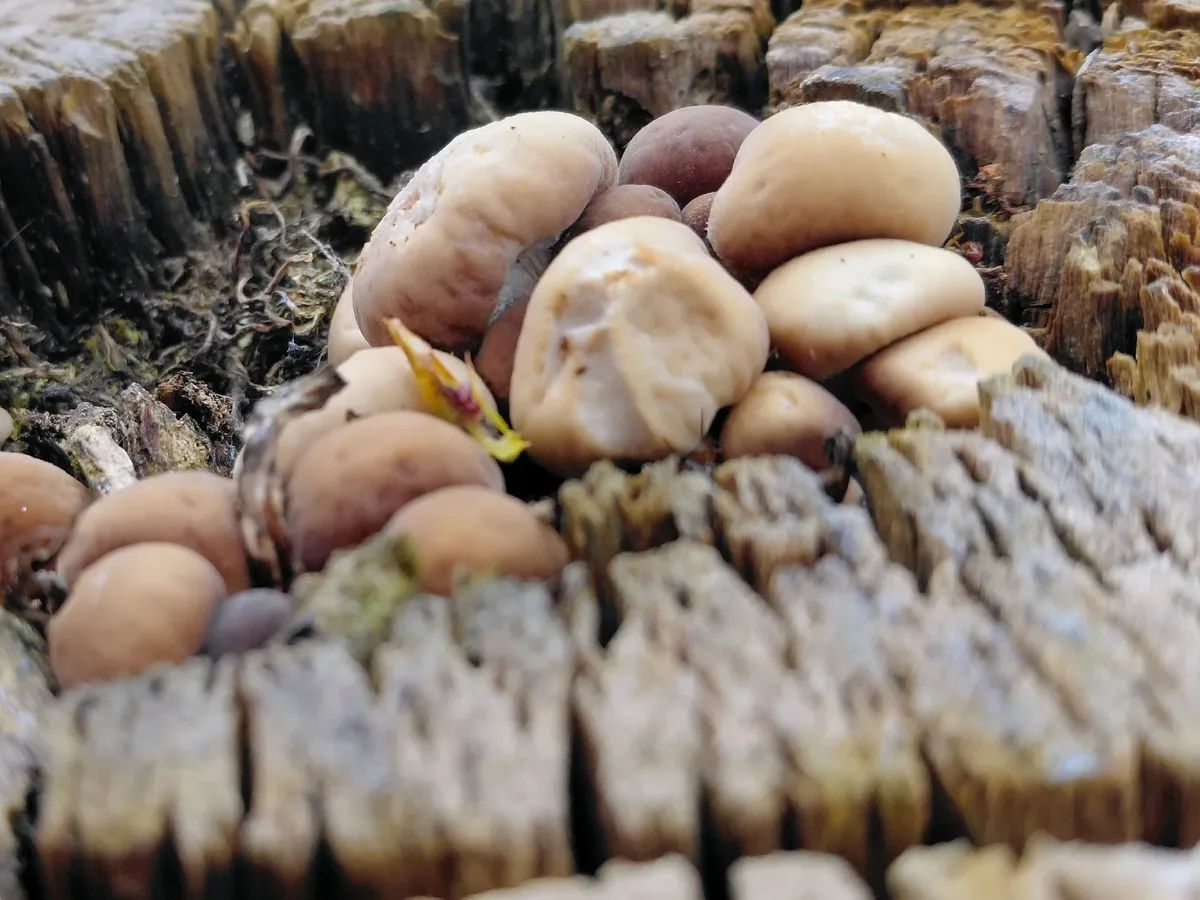 © Gianni Del Bufalo bygdb (CC BY)
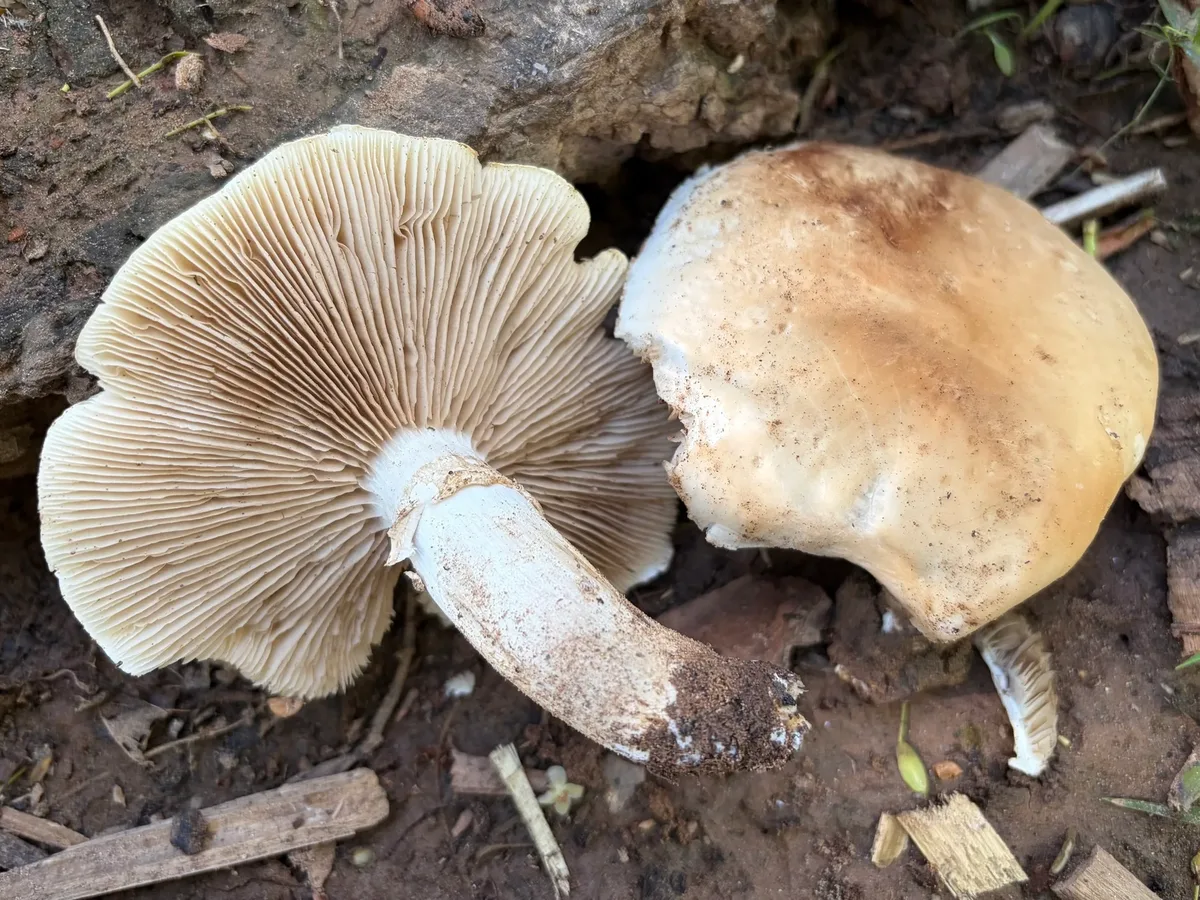 © Lucian Clanet (CC BY)
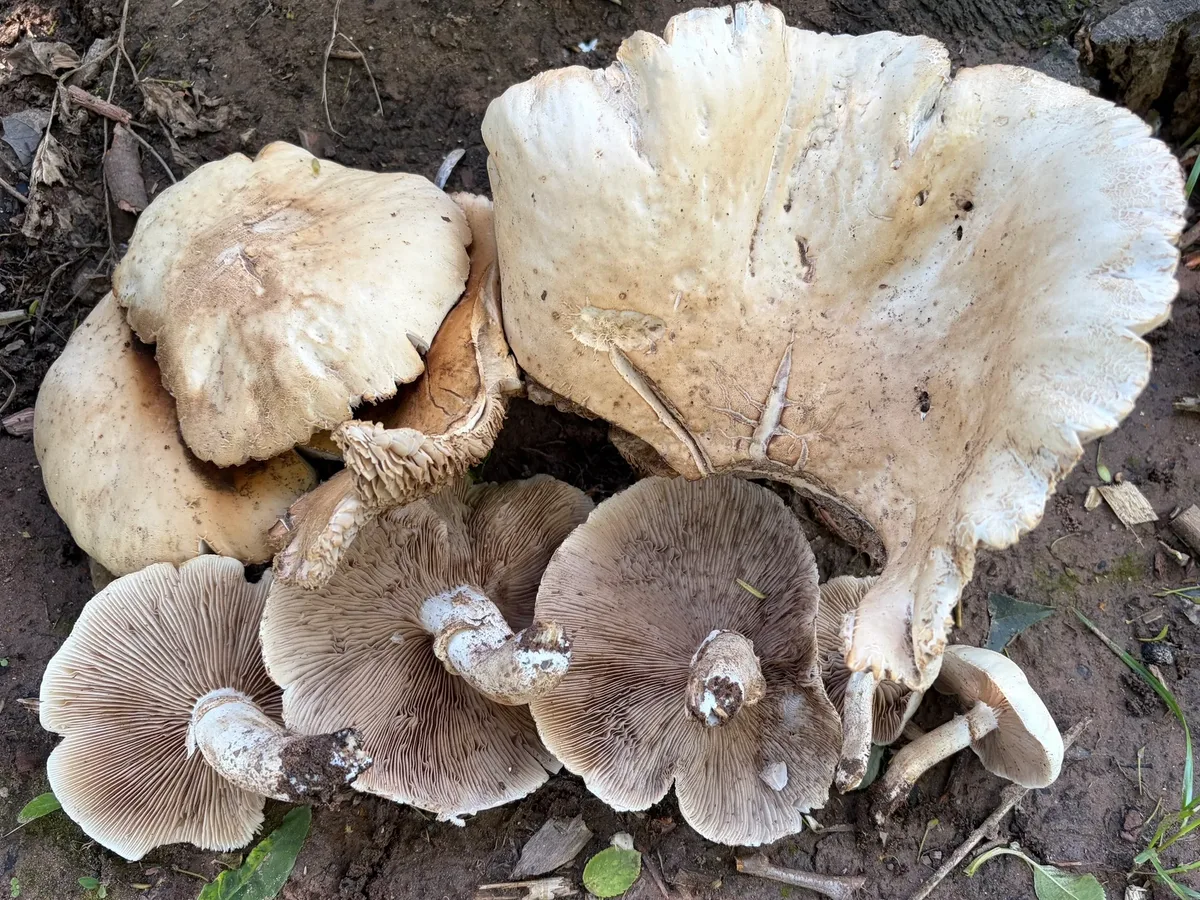 © Lucian Clanet (CC BY)
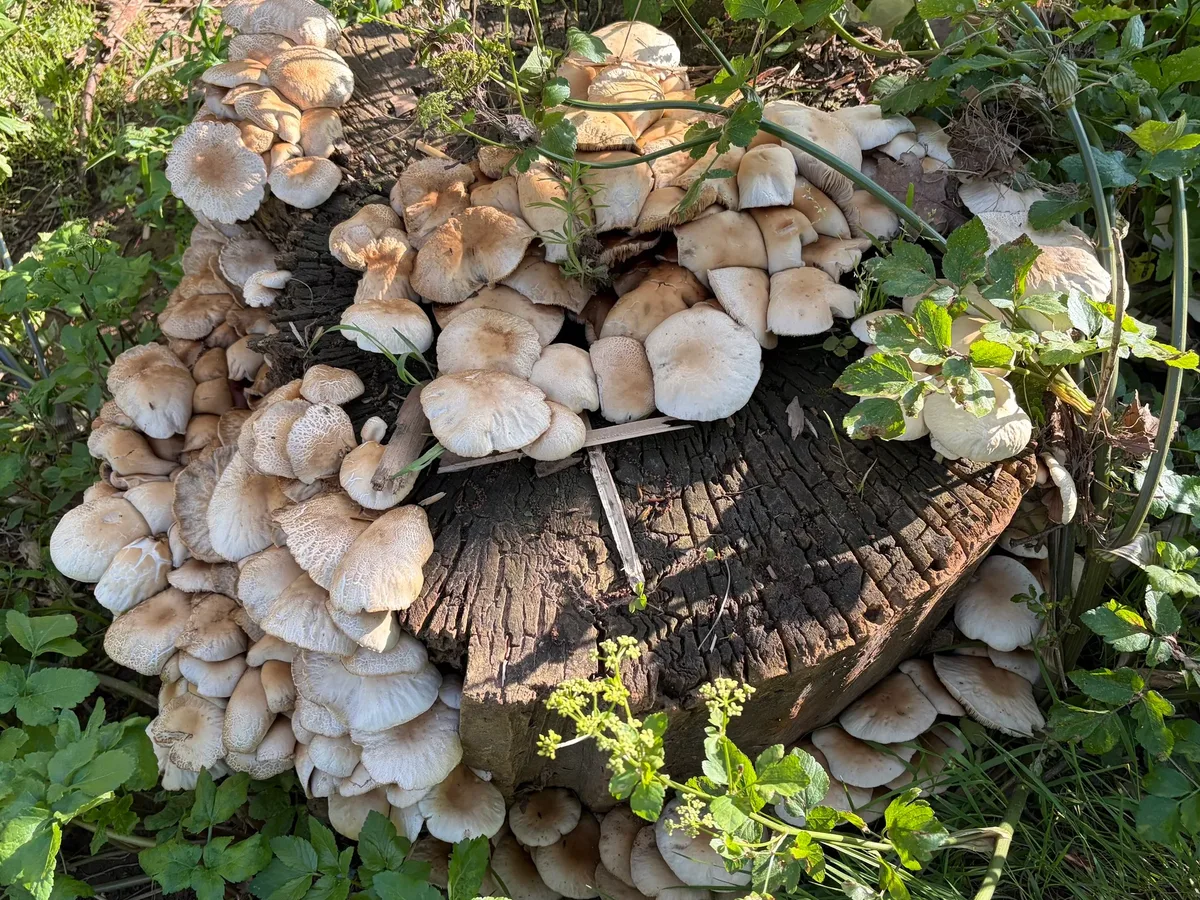 © Lucian Clanet (CC BY)
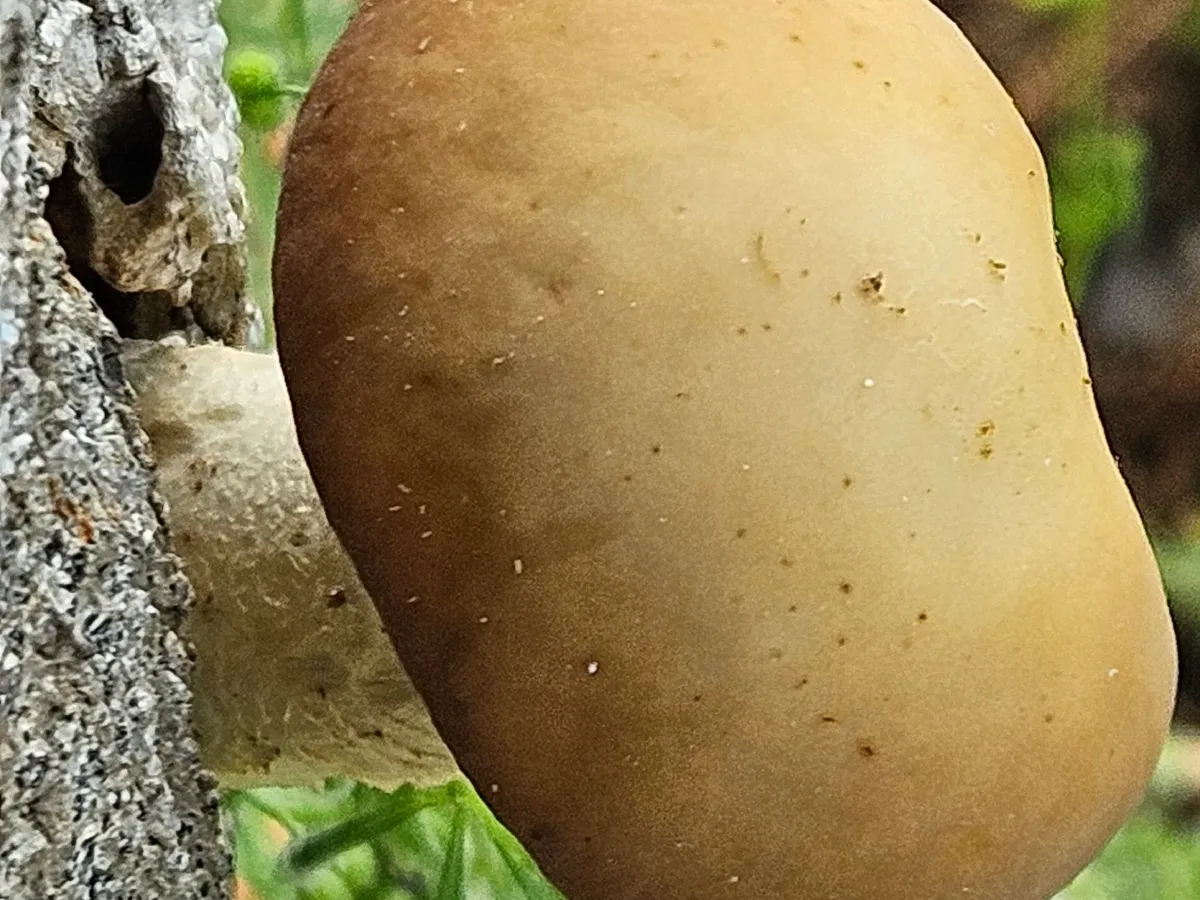 © willingarden (CC BY)
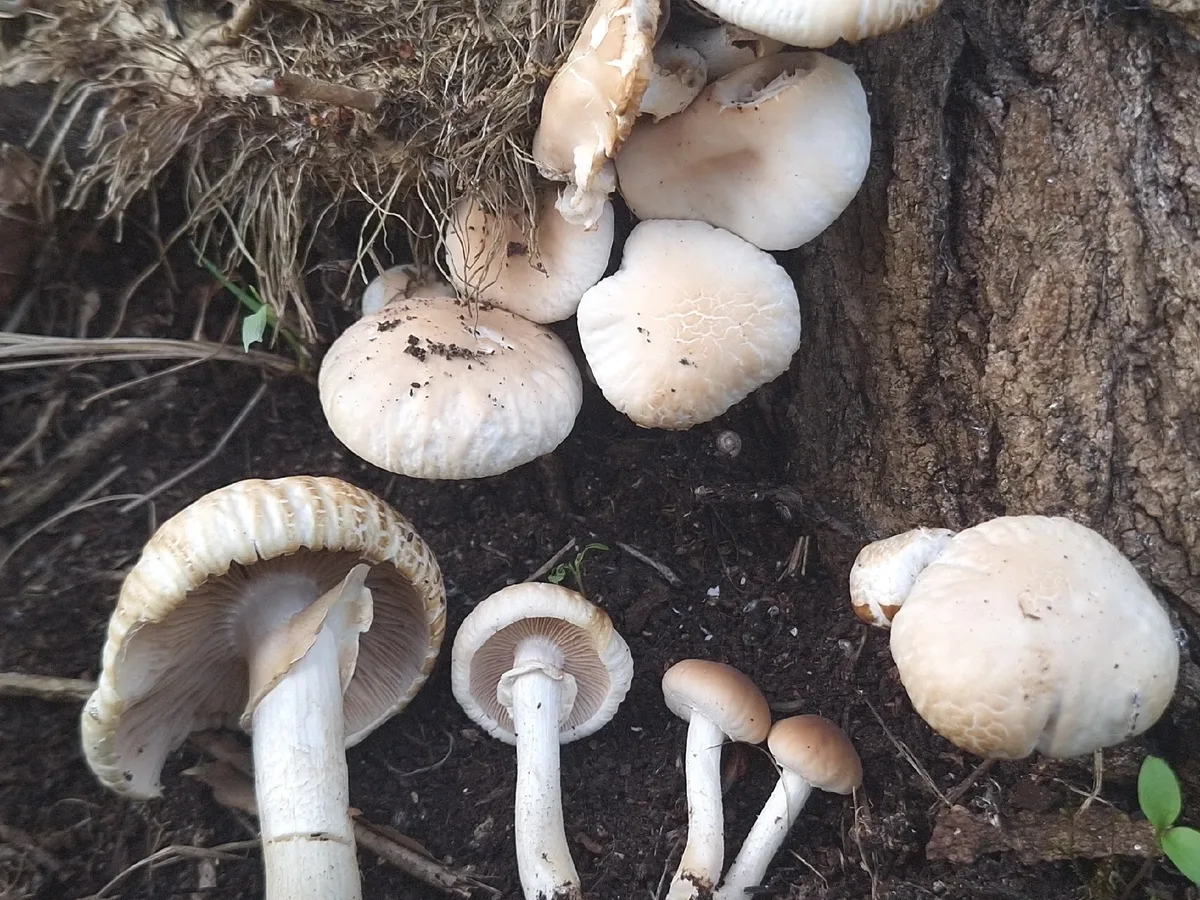 © yellowplant (CC BY)© Atsushi Nakajima (CC BY 4.0)Sim Elliott (CC0)
One of the best mushrooms you can bring home - once you are certain of the identification.
Never eat a mushroom you are not 100% sure of - check the look-alikes below, and always cook wild mushrooms.
How to recognise it
Cyclocybe cylindracea is a handsome, medium-to-large agaric that fruits in dense, often spectacular clusters from dead or dying poplar wood.
Cap
The cap ranges from 4 to 12 cm across and passes through a characteristic developmental sequence: tightly domed and smooth in youth, expanding to broadly convex or plane with a low central umbo.
The surface is hygrophanous - honey-brown, tawny-ochre, or warm caramel when moist, rapidly losing colour from the centre outward to pale buff or nearly cream-white as it dries. This two-toned appearance (darker margin, paler disc) in partly dried caps is a reliable field character.
The margin of young caps is often decorated with whitish partial-veil remnants and becomes slightly striate when wet.
Gills
Gills are closely spaced, run slightly onto the stem (adnate), and mature through white → pale clay → chocolate-grey as the dark-brown spore deposit develops.
Stem
The stem is stout (6-14 cm × 0.8-1.5 cm), cylindrical to slightly swollen at the base, firm and fibrous, whitish above the ring and conspicuously fibrous-striate, becoming tawny to dark brown below it.
The membranous, persistent ring is one of the most important features: it sits in the upper third of the stem, is white to pale ochre, often has a fringed or striate upper face, and leaves a clear demarcation between the paler upper stem and the darker lower portion.
Flesh
Flesh is white, firm in the cap, stringy-fibrous in the stem, unchanging when cut.
Smell & taste
The smell is pleasant and faintly floury; the taste is mild to nutty.
Spore print warm tobacco-brown.
Under the microscope, spores are smooth, thick-walled, ellipsoidal with a conspicuous apical germ pore (9-12 × 5-6 µm).
Where & when it grows
Habitat
Look for this species wherever old poplars and willows grow near water. Its heartland is the riverine forest of the Mediterranean and Central Europe - the alluvial plains along the Po, Rhône, Ebro, and Danube, where stands of black poplar (Populus nigra) and white poplar (P. alba) have had decades to mature and begin to decline.
The pioppino is a wood-rotter, not a soil mushroom: its mycelium threads through dead, dying, or structurally weakened wood, and the clusters push out from stumps, basal wounds, buried roots, or the base of standing trees.
While poplars and willows are its clear preference, it will also colonise elder, elm, walnut, mulberry, and black locust - especially older trees beginning to fail. It has never been found on conifers.
Beyond the countryside, it turns up reliably in town parks and avenue plantings wherever ornamental poplars are used, making it one of the more accessible choice edibles for urban foragers. The same stump can host it for many seasons running.
It is also widely cultivated on sterilised poplar-sawdust logs, which is where the pioppino sold in Italian and Asian markets comes from.
When
This species has two distinct moments in the year.
In temperate Mediterranean and Central European climates, a spring flush runs from late February or March through May, nudged into life by warming soils and the first significant rains after winter. It often breaks ground around the same time poplar leaves are unfurling.
A second, usually more prolific autumn flush follows from September through November, peaking through October, triggered by cooling temperatures and the first soaking rains after summer drought.
In the cooler oceanic and continental parts of its range - central France, Switzerland, southern Germany - only the autumn flush reliably occurs. Along warm Mediterranean coasts and in southern Italy and Spain, mild wet winters can keep fruitings going almost year-round at lower altitudes.
Active fruitbodies are killed by hard frost, so the season closes whenever temperatures drop sharply. Sites that have fruited before are worth returning to: a productive stump rarely misses a year.
How it grows
Cyclocybe cylindracea grows in dense, overlapping clusters (caespitose tufts) arising from a common mycelial base, typically at the base of standing trees, on stumps, or from buried roots. Clusters can be extraordinarily large - dozens to over a hundred caps in a single tuft.
The mycelium produces whitish rhizomorphs that permeate the host wood and surrounding soil. The species is a white-rotter, breaking down both lignin and cellulose.
Fruiting is triggered by changes in temperature and moisture; warm days followed by cool nights and rain are ideal.
Individual fruitbodies are relatively short-lived (5-10 days at peak), but in favourable sites the same stump may produce multiple flushes within a single season and return reliably over many years. Growth can be extremely rapid - caps visible at evening may be fully expanded by morning.
Fruiting conditions
Fruiting is strongly triggered by a combination of cooling temperatures (dropping below ~20 °C in autumn) and rainfall after a dry period. In spring the trigger is warming soils and the first significant rains. The lag from rain to visible fruiting is typically 7-18 days depending on mycelial readiness. Prolonged summer drought followed by heavy autumn rain produces the most prolific flushes.
Look-alikes
The most dangerous confusion is with Galerina marginata (Funeral bell), a deadly poisonous species containing the same amatoxins as the death cap. Galerina marginata also grows in tufts on dead wood, has a brown cap, brown spore print, and a ring on the stem.
It is distinguished from Cyclocybe cylindracea by its much smaller size (cap 1-5 cm versus 4-12 cm), more slender stem, ring often becoming flattened and soon disappearing in wet weather, and distinctly mealy or floury smell.
Galerina's spore print is rusty-brown to ferruginous (Cyclocybe's is warm tobacco-brown), and its spores are roughened and warty under the microscope (Cyclocybe's are smooth with a germ pore). In North America and Europe, Galerina marginata can grow in mixed clusters with edible wood-rotters and has caused fatal poisonings from this confusion.
Hypholoma fasciculare (Sulphur tuft) is another common cluster-forming wood-rotter that could confuse a beginner. It is distinguished by its vivid sulphur-yellow gills (becoming greenish-grey), intensely bitter taste, purplish-brown spore print, and yellowish-green tones on cap and stem - and it lacks a free membranous ring (only a cortinate fibrous zone).
Pholiota species (various scalycaps) may fruit from similar substrates and share the brown colouration and ring; they typically have fibrous or slimy-scaly caps and a markedly different smell (earthy, pungent, garlic-like in some species).
Kuehneromyces mutabilis (sheathed woodtuft) is edible and shares brown, hygrophanous colouration and clustered growth on wood but is much smaller (cap 2-7 cm), has a brown-granular ring zone rather than a free, membranous ring, and has a strongly two-toned cap.
Armillaria species (honey fungi) can share the habitat and clustered growth but have white spore prints and whitish gills.
Galerina marginata is far smaller (cap 1-5 cm vs 4-12 cm), has a slender stem, a ring that often vanishes in wet weather (not a persistent free-hanging membranous skirt), and spores that are roughened and warty under the microscope (Cyclocybe's are smooth with a germ pore). Galerina has a mealy smell and a rusty-brown to ferruginous (not warm tobacco-brown) spore print. Fatal amatoxin poisonings are documented from confusion with pioppino; treat any small brown ringed wood-cluster mushroom as Galerina unless proven otherwise.
Armillaria grows in similar clustered habits on wood but has a white spore print, pale to cream gills, and a whitish ring with yellow-brown scales below. Caps often have small dark scales on an ochre background. Requires thorough cooking; some individuals are sensitive.
Pholiota species share brown colouration and ring but typically have fibrous, appressed, or viscid scales on the cap; many smell pungent or garlicky. Spore print is more distinctly rusty-brown. Most are inedible or cause gastrointestinal upset.
Edible but much smaller (cap 2-7 cm), strongly two-toned (dark brown at margin, pale ochre at centre when moist), with a ring zone that is dark-brown-granular and striate rather than a free white membranous skirt. Stem typically darker and scaly below the ring. Spore print cigar-brown.
Sulphur tuft has vivid sulphur-yellow to greenish gills (not white to clay-brown), a purplish-brown spore print, an extremely bitter taste, and yellowish-green tones on cap and stem. It lacks a free membranous ring - only a cortinate fibrous zone. Toxic - causes gastrointestinal illness.
In the kitchen
Picking & cleaning
Harvest Cyclocybe cylindracea when caps are still domed to broadly convex and the partial veil is intact or just beginning to tear. Once the gills darken to chocolate-brown and the veil has ruptured, the texture deteriorates and flavour is reduced.
Twist or cut the entire cluster at its base, or select individual stems by cutting cleanly. Trim the tough, fibrous lower stem in the field.
Keep cool and use within 2-3 days; the species deteriorates faster than most robust boletes. Do not collect from trees treated with pesticides or from polluted roadside plantings.
Always confirm the presence of the persistent membranous ring and the brown spore print before harvesting - these exclude the most dangerous lookalikes.
Cooking
Pioppino is a genuinely useful kitchen mushroom: the flesh is firm and white, holds its shape through long cooking, and absorbs surrounding flavours without falling apart the way softer species do.
The flavour is mild to nutty and clean - not as intense as porcini, but pleasant and versatile. In Italian cooking it is a natural for risotto al pioppino, braised with garlic and white wine, or tossed through pasta with olive oil and parsley.
The caps are the prize; the lower stems are tough and fibrous, so slice them thinly if using them at all, or save them for stock.
The mushroom dries well and rehydrates fully, gaining some depth of flavour in the process. Blanching before freezing keeps colour and texture.
Do not eat raw. Cultivated pioppino from Asian supermarkets behaves identically to foraged material and is a perfectly good substitute.
Good to know
Cyclocybe cylindracea is an excellent, safe edible species used by millions in southern Europe and East Asia.
However, EXTREME CARE is required because Galerina marginata - a lethal amatoxin-bearing species - can grow from the same substrate, at the same time, and even within the same cluster. Multiple fatalities are documented from this confusion worldwide.
Before consuming any batch, verify every individual specimen:
- Check size - reject any cap under ~4 cm.
- Confirm the spore print is warm tobacco-brown (not purplish-brown as in Hypholoma, and not rusty-brown to ferruginous as in Galerina).
- Ensure the ring is a well-developed, free membranous skirt, not a fragile cortina or fibrous zone.
Never eat raw - cooking eliminates any mild gastric irritants. The species has no known toxins when properly identified, but individual intolerance is rarely reported. Do not collect from contaminated or chemically treated trees.
A reference guide - never an edibility guarantee. When in doubt, leave it out.