Meadow waxcap
Cuphophyllus pratensissyn. Hygrocybe pratensis, Camarophyllus pratensis, Agaricus pratensis, Hygrophorus pratensis
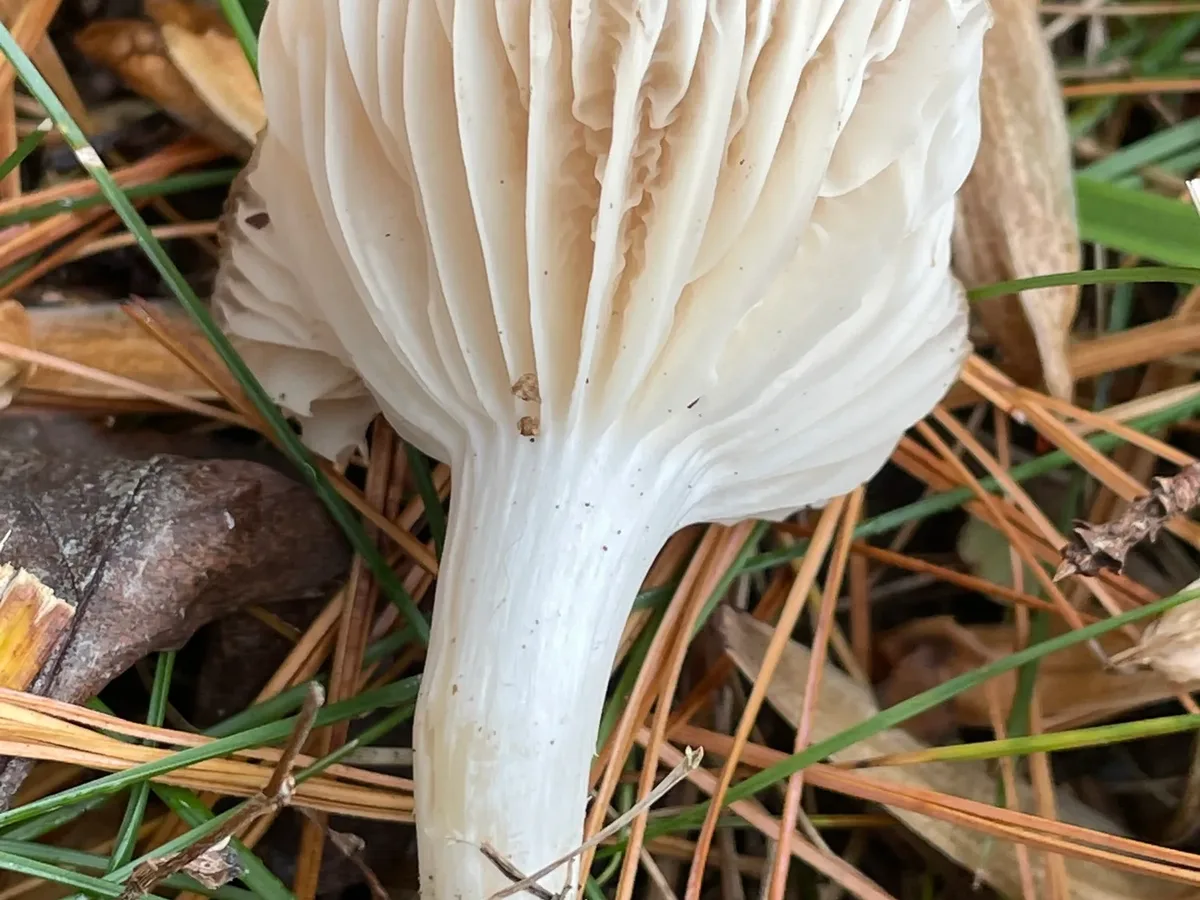 © Annie Weissman (CC BY 4.0)
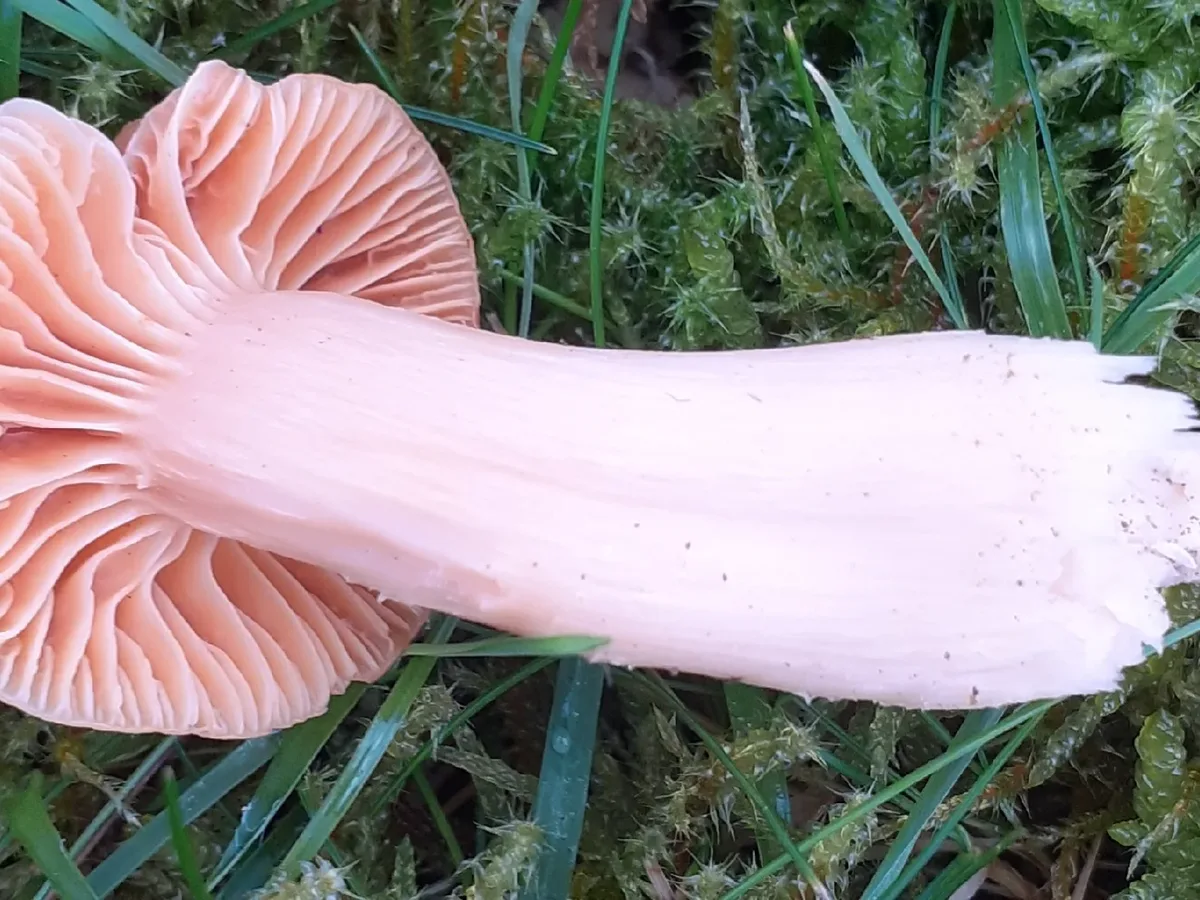 © bogsuckers (CC BY)
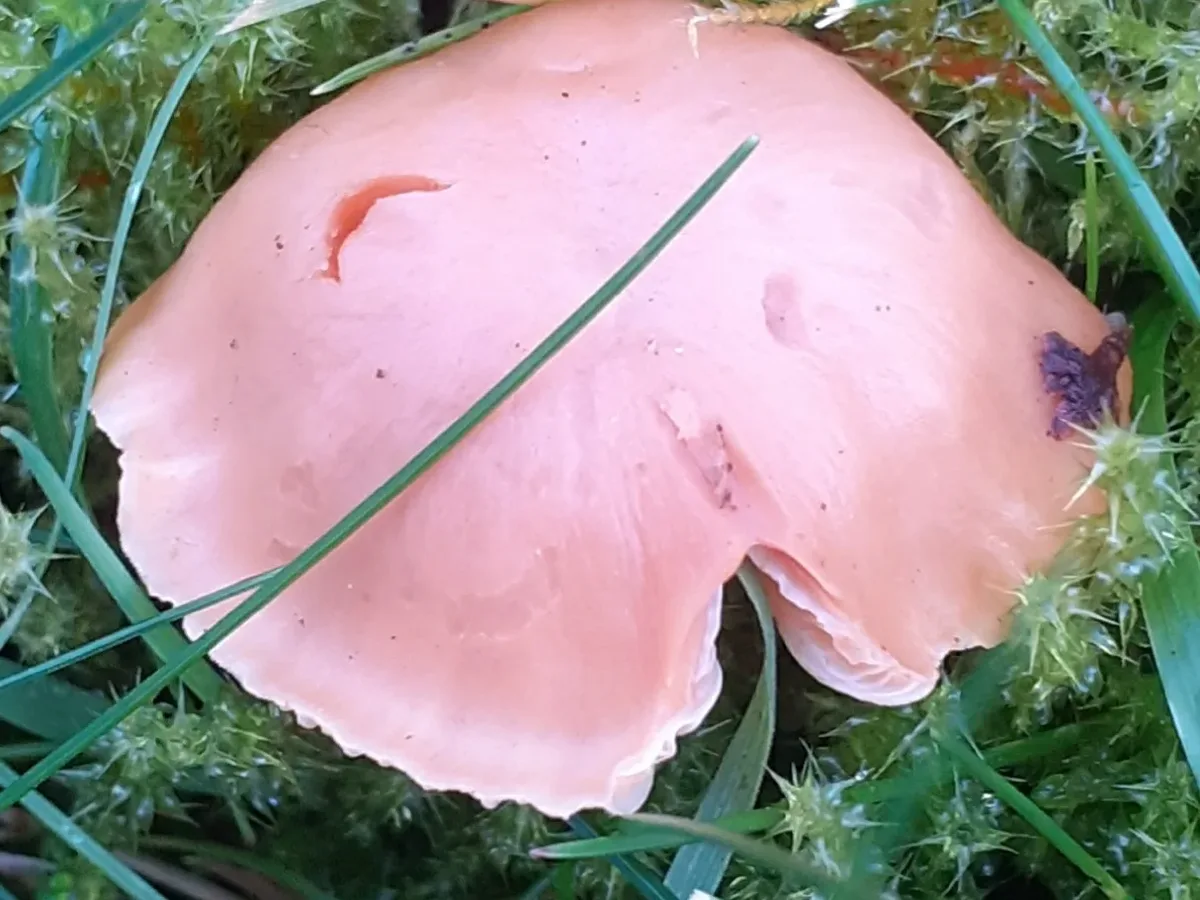 © bogsuckers (CC BY)
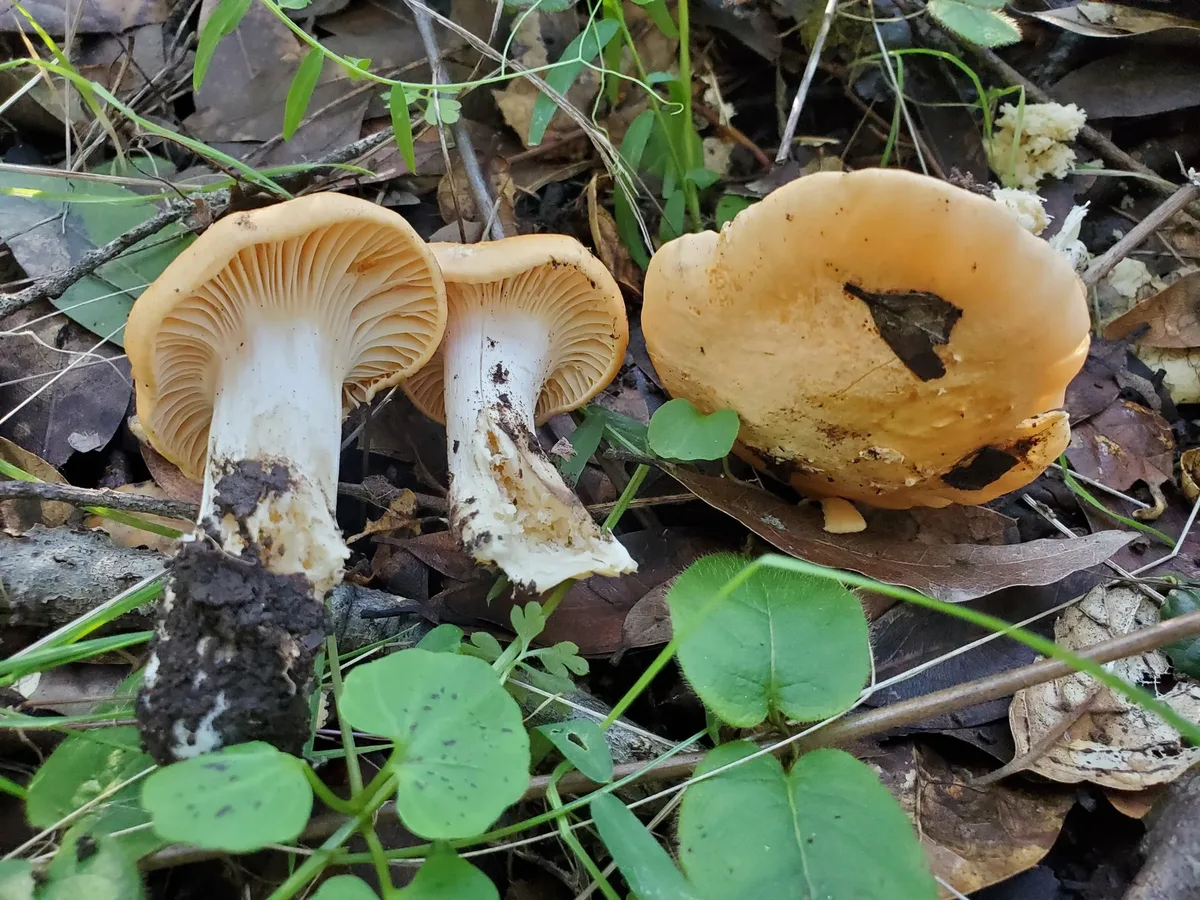 © Alex (CC BY)
 © Alex (CC BY)
 © Alex (CC BY)
 Chuck Wilson (CC0)
 © Nick Butcher (CC BY)
 © Nick Butcher (CC BY)
 © muffinn (CC BY 2.0)© Annie Weissman (CC BY 4.0)© bogsuckers (CC BY)
Good to eat, once you have identified it with certainty and cooked it through.
Never eat a mushroom you are not 100% sure of - check the look-alikes below, and always cook wild mushrooms.
How to recognise it
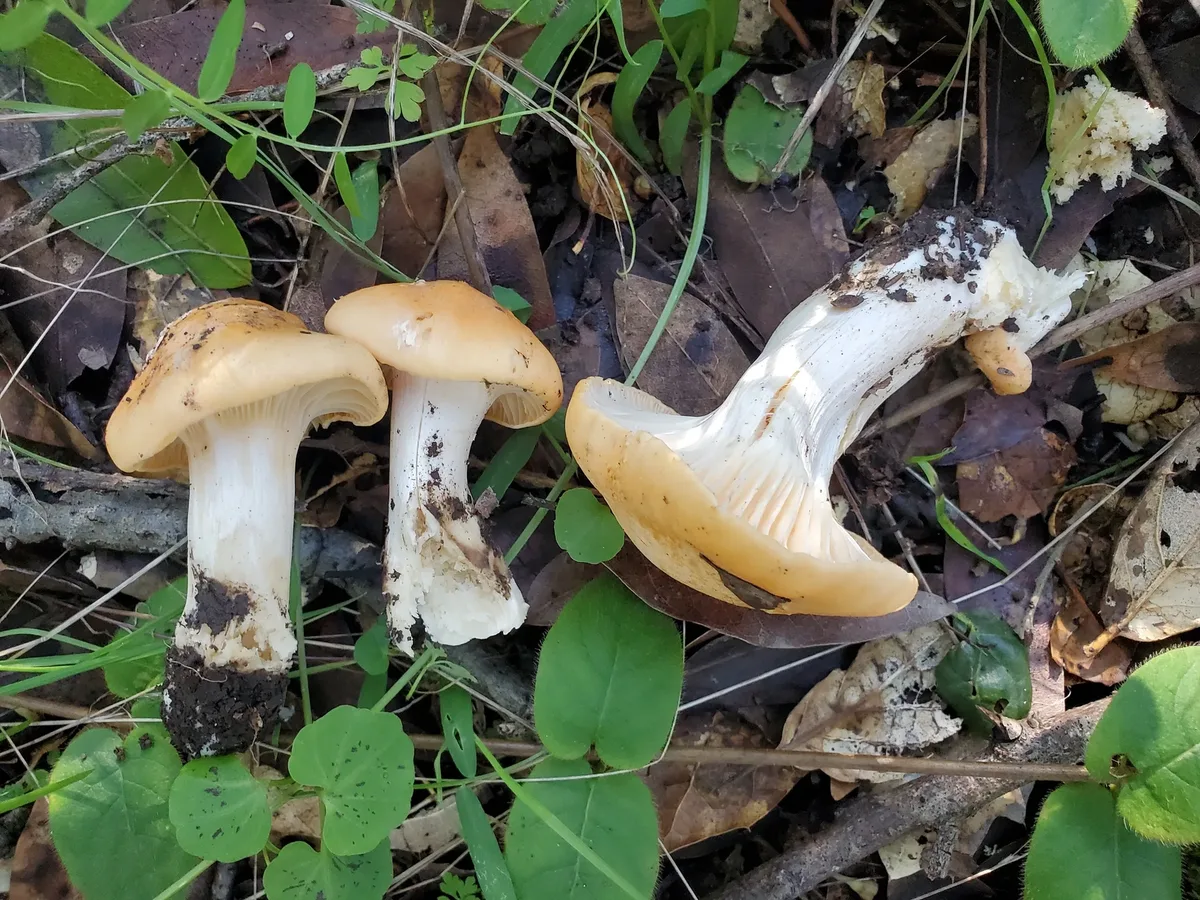
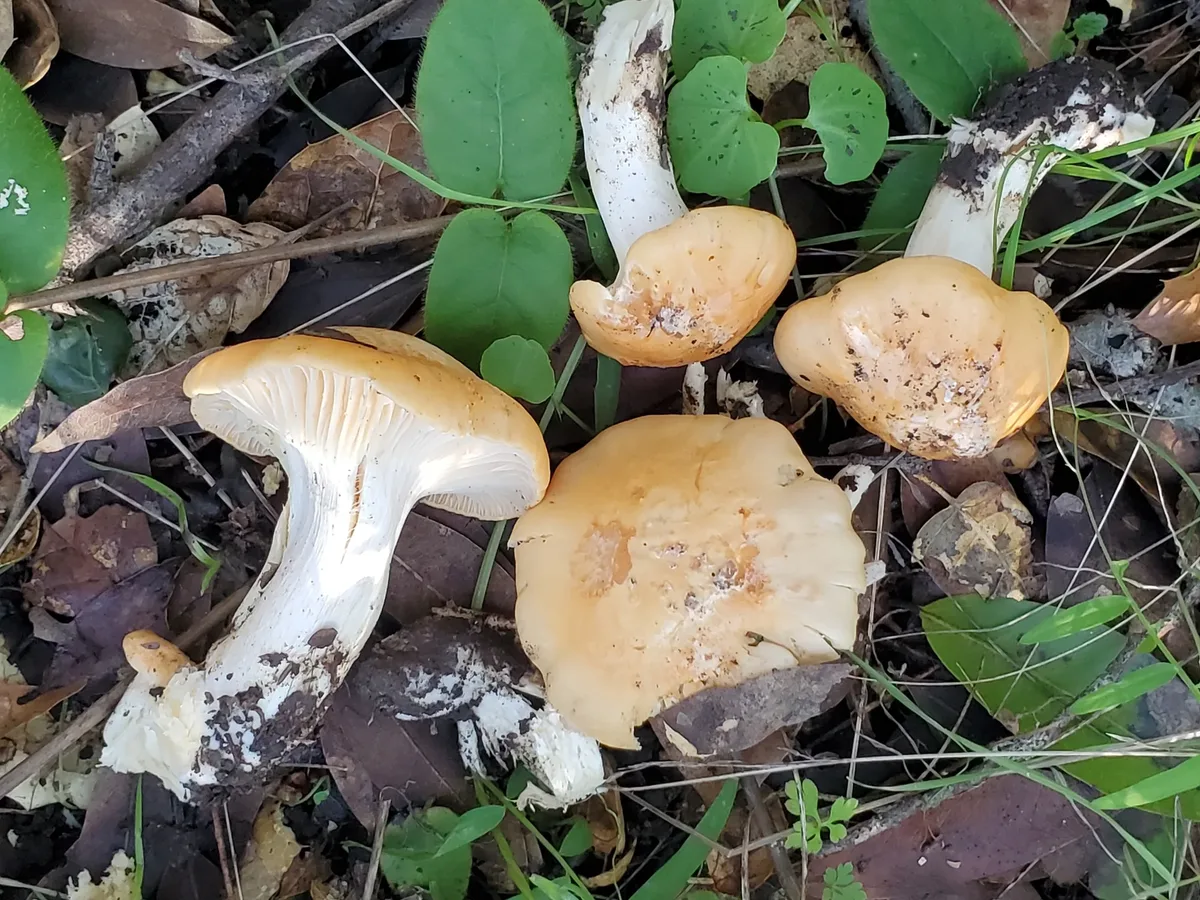
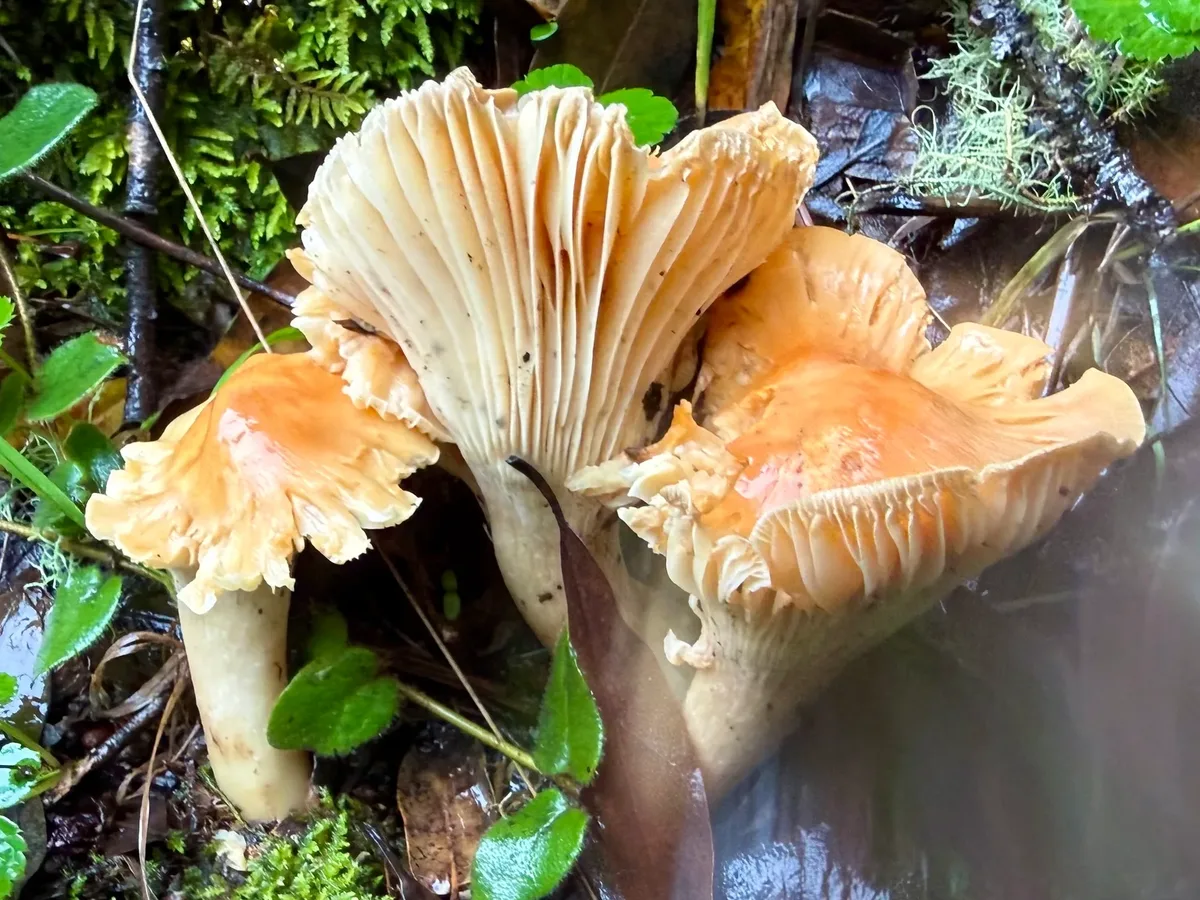
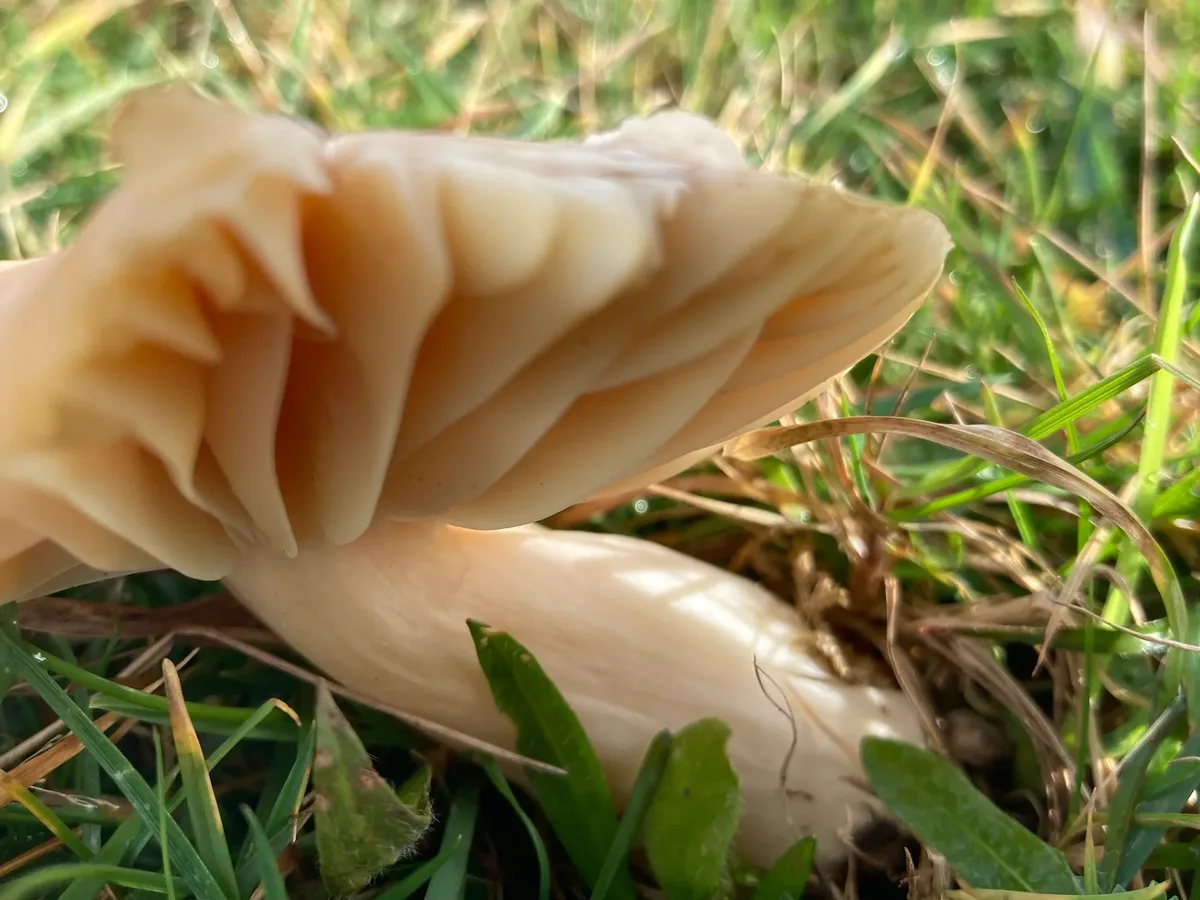
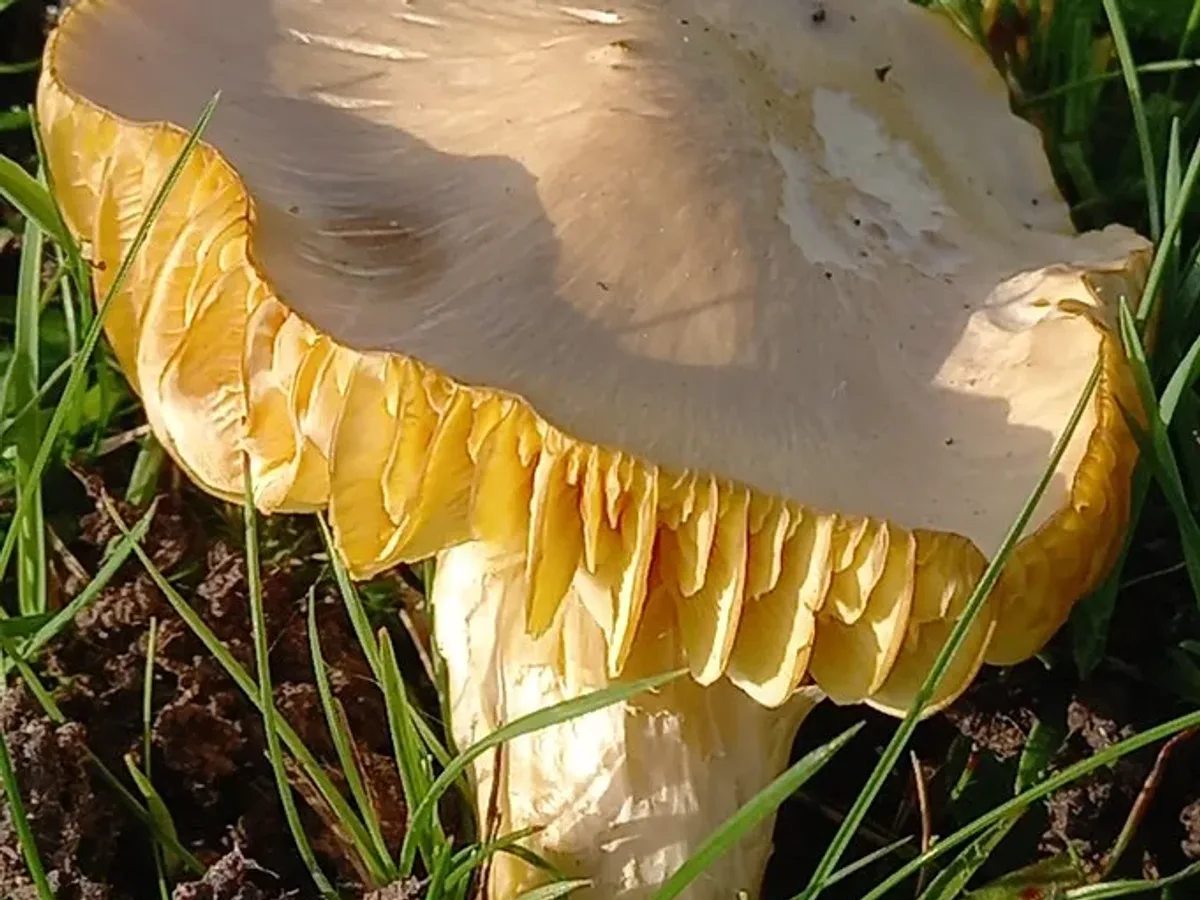
Cuphophyllus pratensis is immediately recognisable by its combination of apricot-buff to salmon-orange cap, widely-spaced, deeply decurrent, waxy-feeling gills, and firm, tapering stem.
Cap
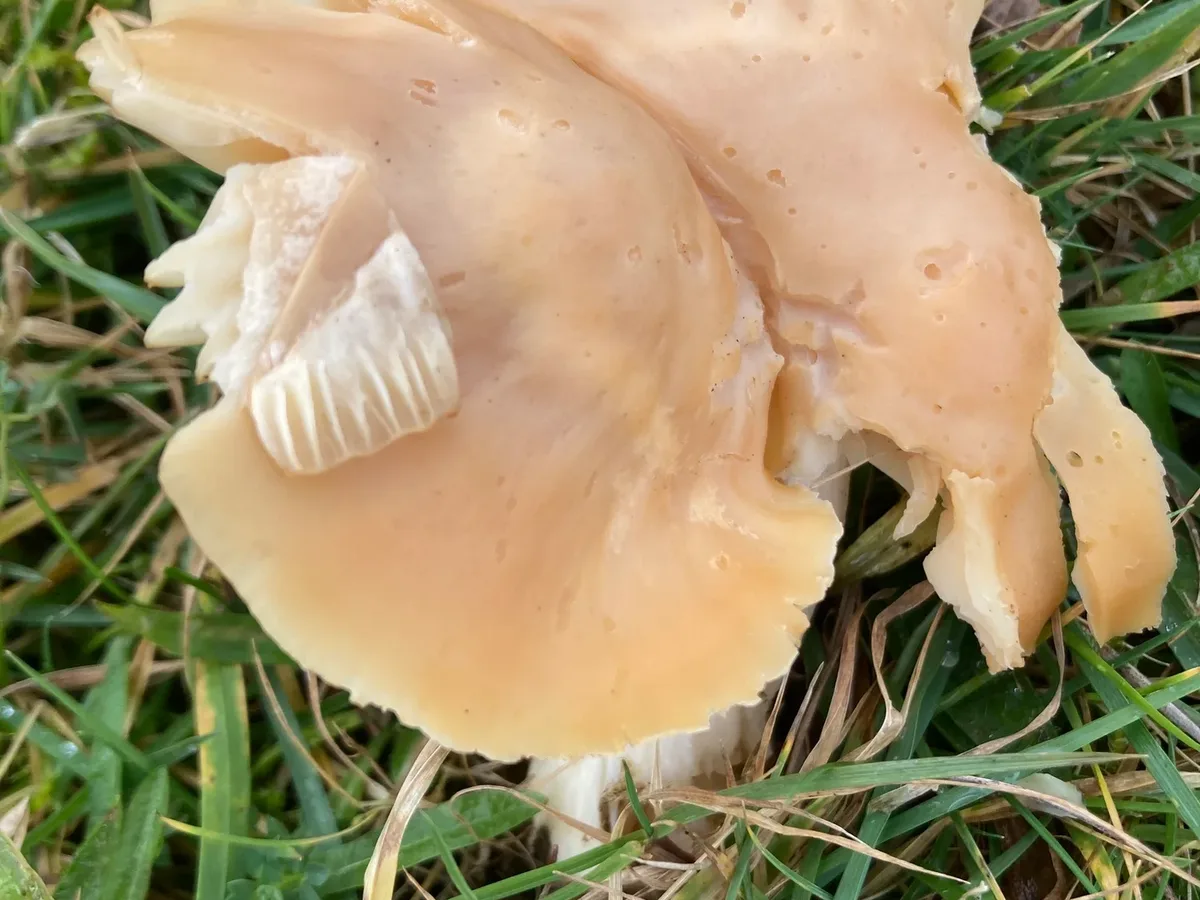
The cap begins broadly convex with a low umbo and flattens or becomes shallowly funnel-shaped as it matures, reaching 3-8 cm across.
The surface is smooth and moist (not viscid), warm apricot or pale tawny at the centre, frequently fading to cream or pale buff at the margin, especially in dry conditions.
Gills
The gills are one of the most distinctive features: they are thick, widely spaced (far fewer than in a typical agaric), strongly decurrent - running well down the stem - and have a characteristic waxy, almost candle-wax feel when rubbed between the fingers, a quality shared across the waxcap family (Hygrophoraceae).
Their colour mirrors the cap: pale apricot to cream.
Stem
The stem is 3-7 cm tall and 0.8-1.8 cm wide, solid throughout (never hollow), firm, smooth, and tapers gently toward the base. There is no ring and no volva.
Flesh
Flesh is thick, firm, white to faintly apricot, does not change colour when cut or bruised.
Smell & taste
The smell is mild and pleasant, sometimes faintly mealy or faintly of honey. Spore print white.
Where & when it grows
Habitat
This species is one of the classic waxcap grassland fungi and an internationally recognised indicator of high nature-value grassland.
It grows in places that have been managed at low intensity, without ploughing, re-seeding, or heavy fertilisation, for at least several decades and often centuries:
- unimproved meadows
- ancient pastures
- traditional hay meadows
- churchyard lawns
- road verges with long grassland history
- upland grasslands
- dune slacks
Such grasslands are rare and still declining. Waxcap meadows in the UK hold globally significant concentrations of species including C. pratensis, and their loss to agricultural improvement is a genuine conservation concern.
The fungus grows gregariously, often in rings or loose arcs, favouring close-grazed or hay-cut swards with an open canopy and mineral-poor soils.
It is not mycorrhizal; it is thought to be a highly specialised organic-matter decomposer with exceptionally narrow habitat requirements - which is why finding it in a meadow tells you something important about that place's history.
When
Fruits in autumn, from late August or early September through November in temperate regions, with a peak in October in lowland Britain and much of central and western Europe.
In Scandinavia and upland areas the peak is September to early October. During mild, moist autumns with warm soils the season extends into December.
Fruiting is triggered by autumnal cooling and rainfall following summer drought; extended dry spells in August and September can delay or suppress flushes.
The species occasionally appears in spring in Mediterranean climates.
How it grows
Grows scattered to gregarious, sometimes in loose rings, arcs, or clusters, emerging directly from short grassland turf.
Individual fruitbodies arise singly, but several may appear within centimetres of each other when conditions are optimal.
Growth is relatively slow compared with many grassland species; caps expand over several days.
The mycelium forms a long-lived association with the soil organic layer of ancient grasslands and does not transplant readily.
Fruiting conditions
Requires autumnal soil cooling combined with adequate moisture; typically fruits 1-2.5 weeks after significant autumn rainfall once soil temperatures have dropped below about 15 °C. Extended summer drought followed by autumn rains often produces the best flushes. Soil disturbance, fertiliser, or compaction suppresses fruiting.
Look-alikes
The most important lookalike in terms of edibility risk is Clitocybe dealbata (ivory funnel) and Clitocybe rivulosa (fool's funnel). Both grow in similar grassy habitats and are dangerously poisonous.
They contain muscarine at levels sufficient to cause severe cholinergic toxidrome:
- excessive salivation
- sweating
- lacrimation
- bradycardia
- bronchospasm
These Clitocybe species are small to medium white funnelled fungi with:
- gills that are narrow and densely crowded (never widely spaced and waxy)
- thin flesh
- a strong mealy smell
The apricot-salmon colour of C. pratensis combined with widely spaced, waxy, deeply decurrent gills and a firm solid stem essentially defines this species and should separate it from all dangerous lookalikes - but only if each feature is positively confirmed, not assumed.
Camarophyllopsis species are similar but have grey, dry-looking colours.
Clitocybe gibba (common funnel) is brownish-buff with crowded narrow gills and lacks the waxy feel.
Greyish-buff with concentric watermark zones on cap; gills crowded and non-waxy; thin flesh; similar grassland habitat; DEADLY - muscarine at levels sufficient to cause fatal SLUDGE-syndrome cholinergic poisoning; never confuse with C. pratensis
White to pale grey-white, not apricot or buff; gills crowded, narrow, not widely spaced or waxy; flesh thin; strong mealy smell; muscarine poisoning risk - confirm widely-spaced waxy gills before eating any funnel-shaped grassland fungus
Tan to pale brown, deeply funnel-shaped, thin-fleshed; gills crowded, narrow, not waxy; smell more strongly mealy; grows in woods rather than open unimproved grassland
Smaller, with scarlet to orange-red cap; dry, not moist; very deeply funnel-shaped; found in mossy grassland and woodland edges
Paler cream-white variant of the same species; same widely-spaced waxy gills; considered equally edible
White to cream throughout cap, gills and stem; same widely-spaced waxy decurrent gills and grassland habitat; edible; separated from C. pratensis by absence of any apricot or buff tones
In the kitchen
Picking & cleaning
Cut or carefully twist and pull at the stem base, leaving as much of the mycelium undisturbed as possible - these waxcap meadows are internationally protected habitats and the fungi are valuable indicators of grassland continuity.
Pick only from sites where harvest is permitted; many waxcap grasslands in Britain and Scandinavia are SSSIs, SACs, or nature reserves.
Select firm, young fruitbodies; older specimens collapse quickly.
The caps are delicate and should be laid gill-side up in a shallow basket to avoid bruising. They deteriorate within a day or two of picking.
Cooking
The flavour is mild, delicate, and slightly sweet with a faint honey or apricot note. The texture is firm and the thick flesh holds up well to gentle heat.
Best in simple preparations that let the subtle flavour show:
- sautéed in butter with a little garlic and parsley
- folded into scrambled eggs
- added to a cream sauce for pasta
Avoid strongly flavoured accompaniments that would mask the delicate taste.
The large, waxy gills can become a little slippery when heavily cooked; a brief, hot sauté over high heat gives the best texture.
Not usually dried, as the flavour does not concentrate as well as boletes or chanterelles.
Good to know
Cuphophyllus pratensis is a genuinely edible species with a long history of consumption in Europe and no known cases of poisoning attributable to it when correctly identified.
However, foragers must exercise strict discipline. The habitat (unimproved grassland) is shared with Clitocybe dealbata and C. rivulosa, which contain muscarine at levels sufficient to cause severe cholinergic toxidrome:
- excessive salivation
- sweating
- lacrimation
- bradycardia
- bronchospasm
These have on rare occasions contributed to fatalities in vulnerable individuals.
Always confirm the widely-spaced, deeply decurrent, waxy gills - Clitocybe spp. have crowded, narrow, non-waxy gills.
Do not harvest from meadows where you are unsure of the grassland history, or where white small funnels are growing in the same patch. If in any doubt, do not eat.
A reference guide - never an edibility guarantee. When in doubt, leave it out.