Blackening chanterelle
Craterellus melanoxerossyn. Cantharellus melanoxeros, Merulius melanoxeros
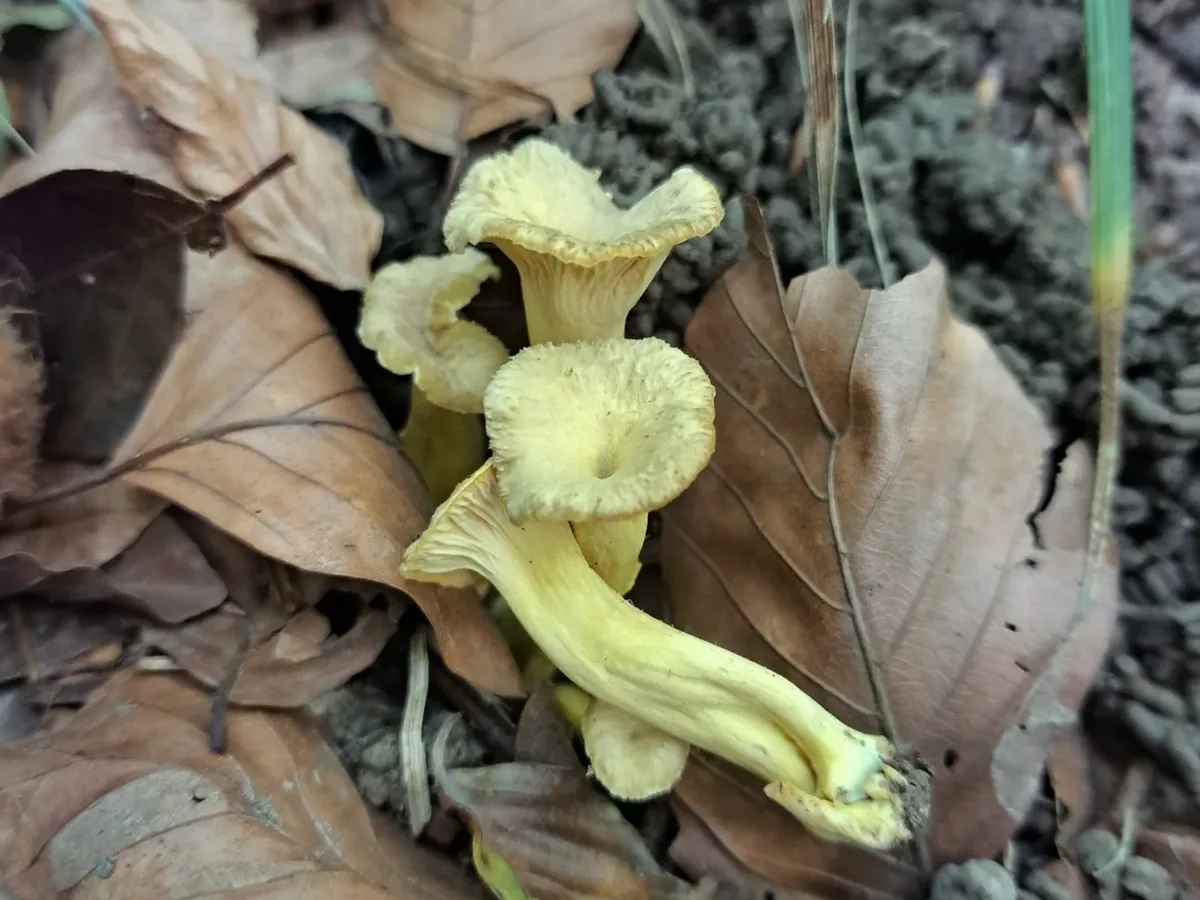 © ionafraser (CC BY)
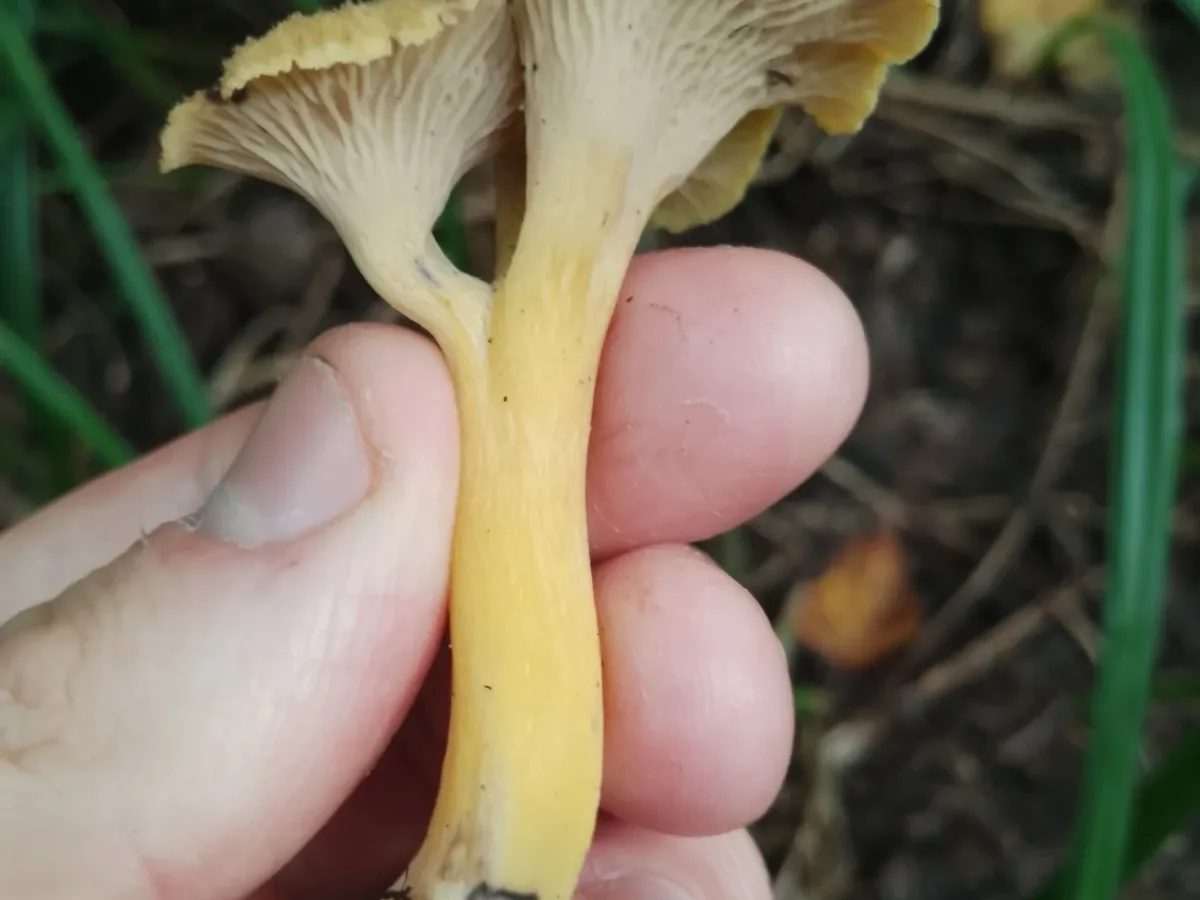 © Мирослав Соболев (CC BY)
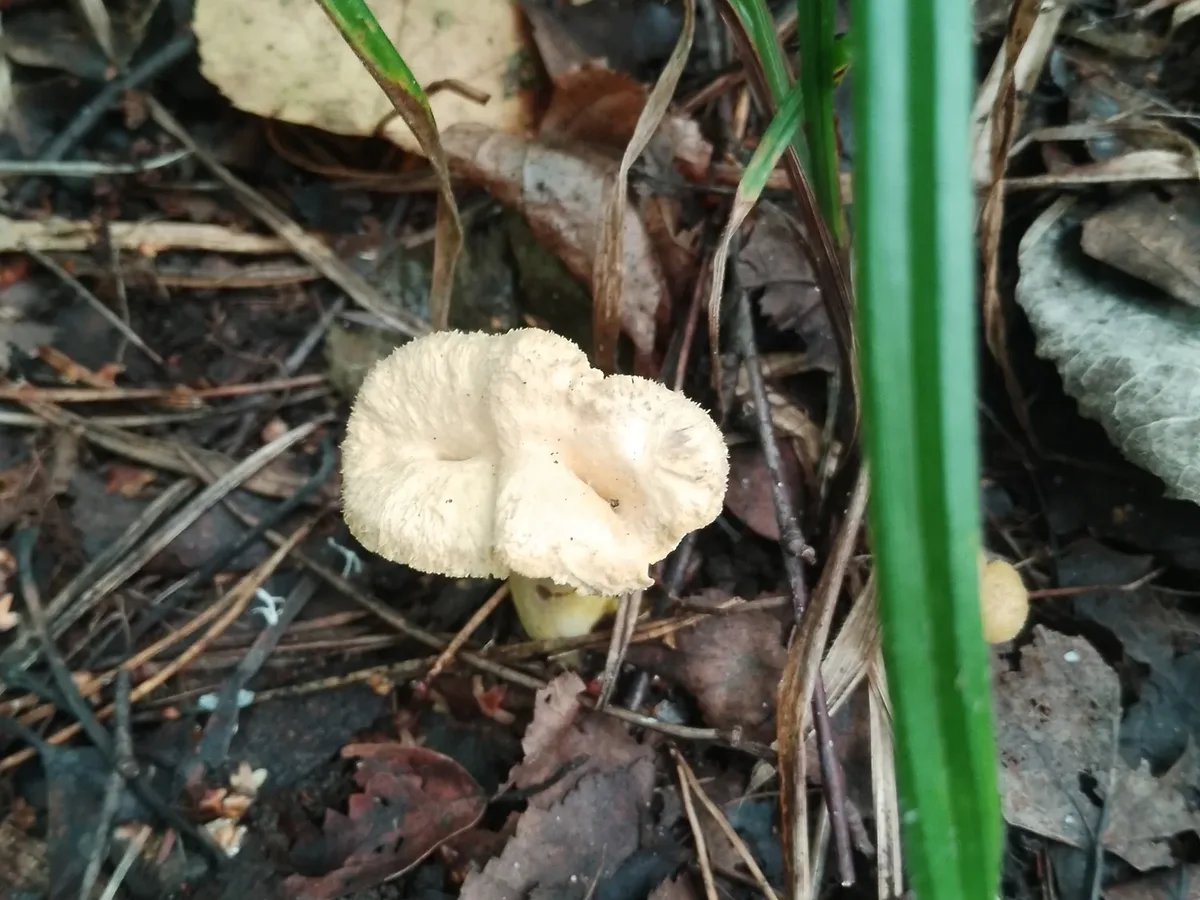 © Мирослав Соболев (CC BY)
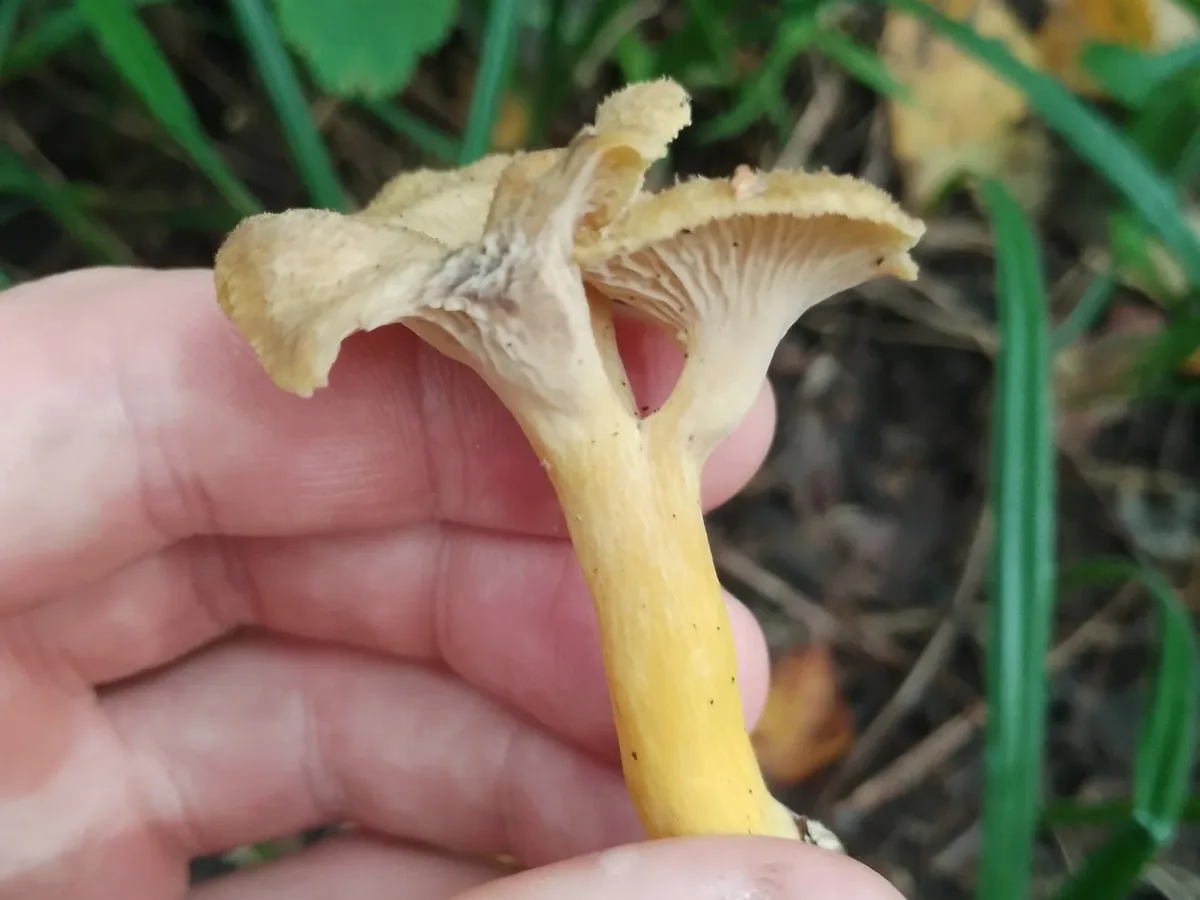 © Мирослав Соболев (CC BY)
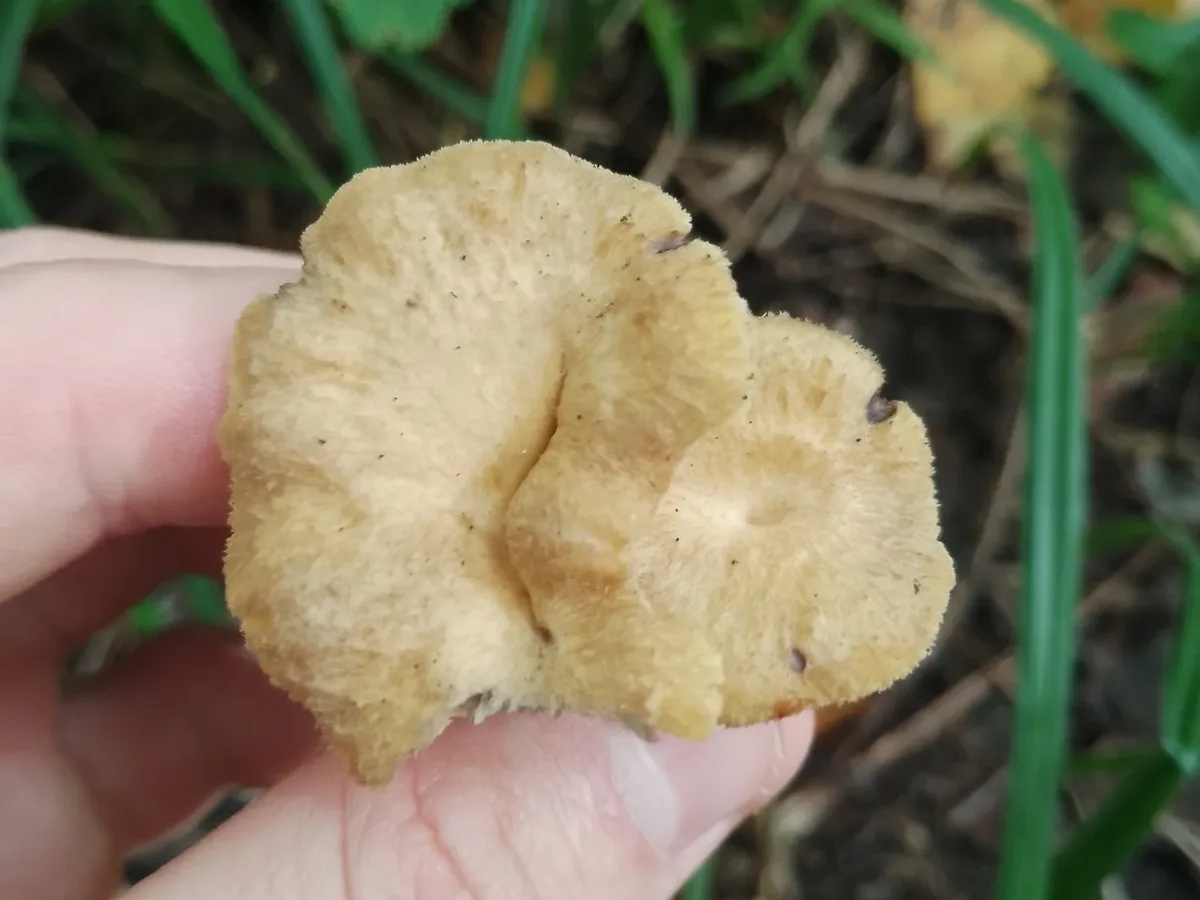 © Мирослав Соболев (CC BY)
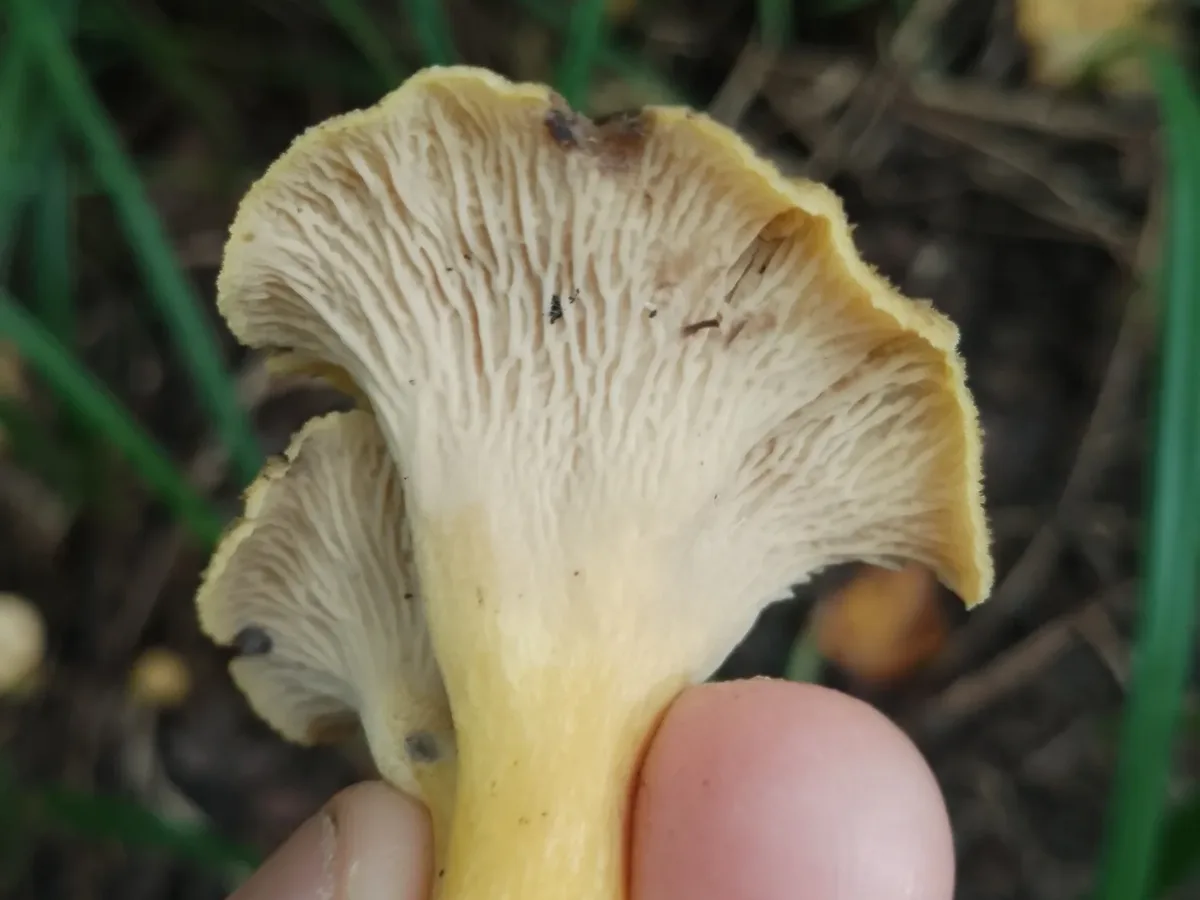 © Мирослав Соболев (CC BY)
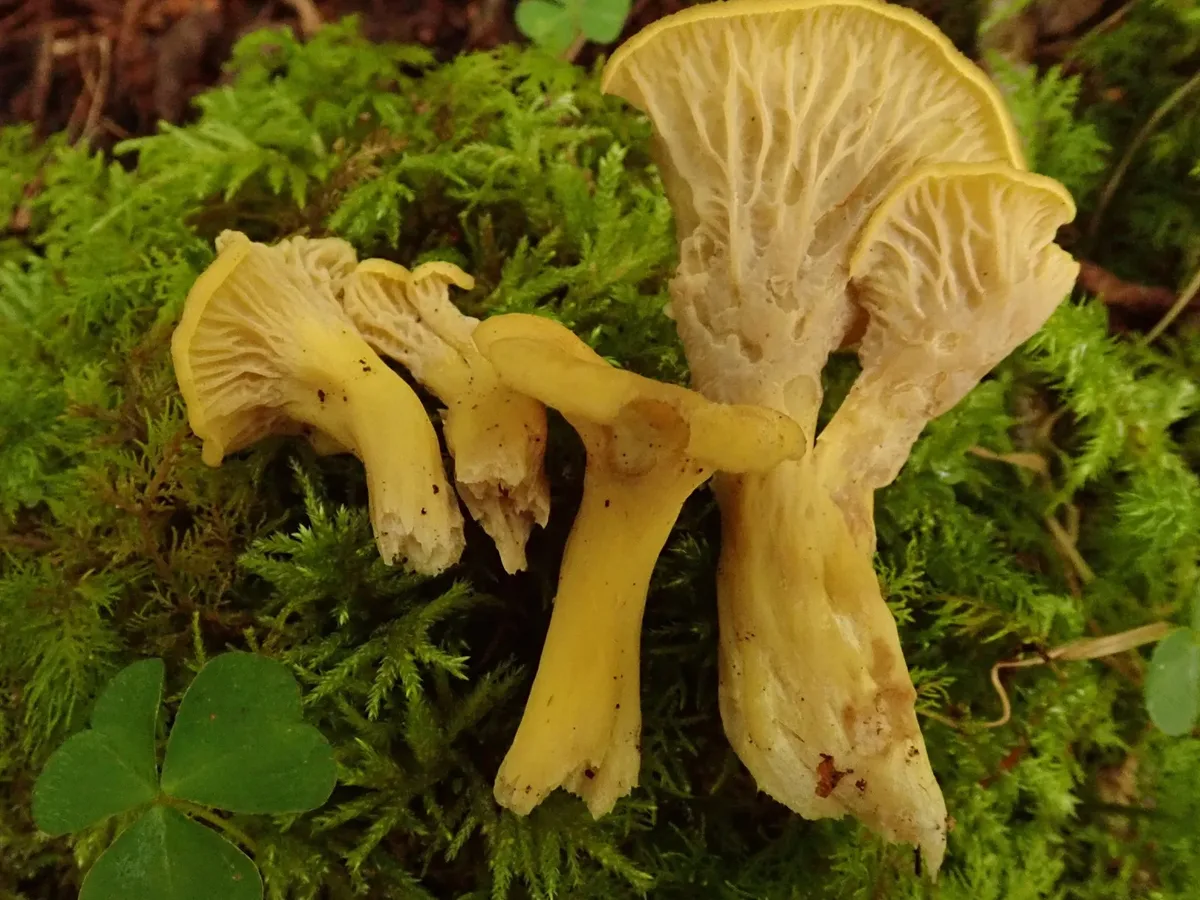 © Anders Røynstrand (CC BY)
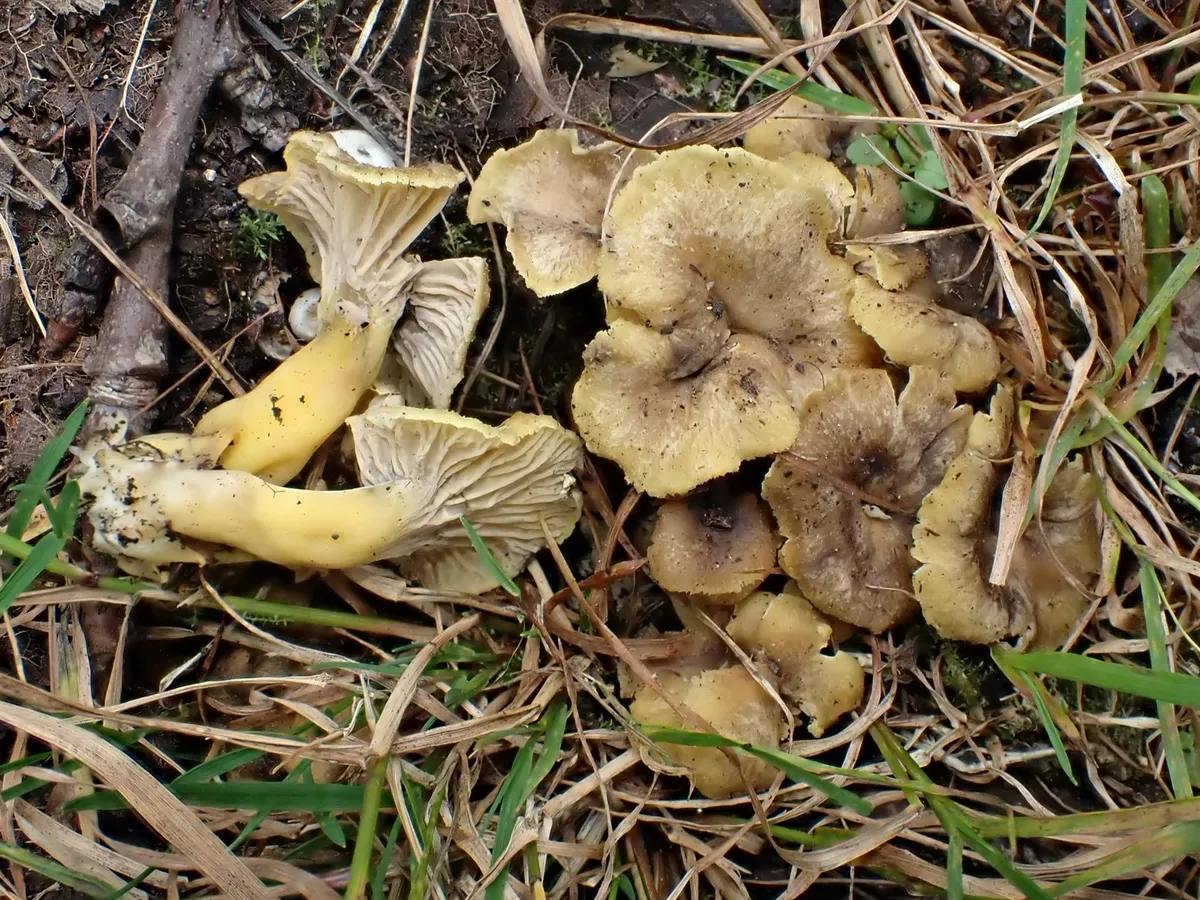 © Perry Gunnar Larsen (CC BY)
 © Kari Ekeberg Nilsen (CC BY)© ionafraser (CC BY)© Мирослав Соболев (CC BY)
One of the best mushrooms you can bring home - once you are certain of the identification.
How to recognise it
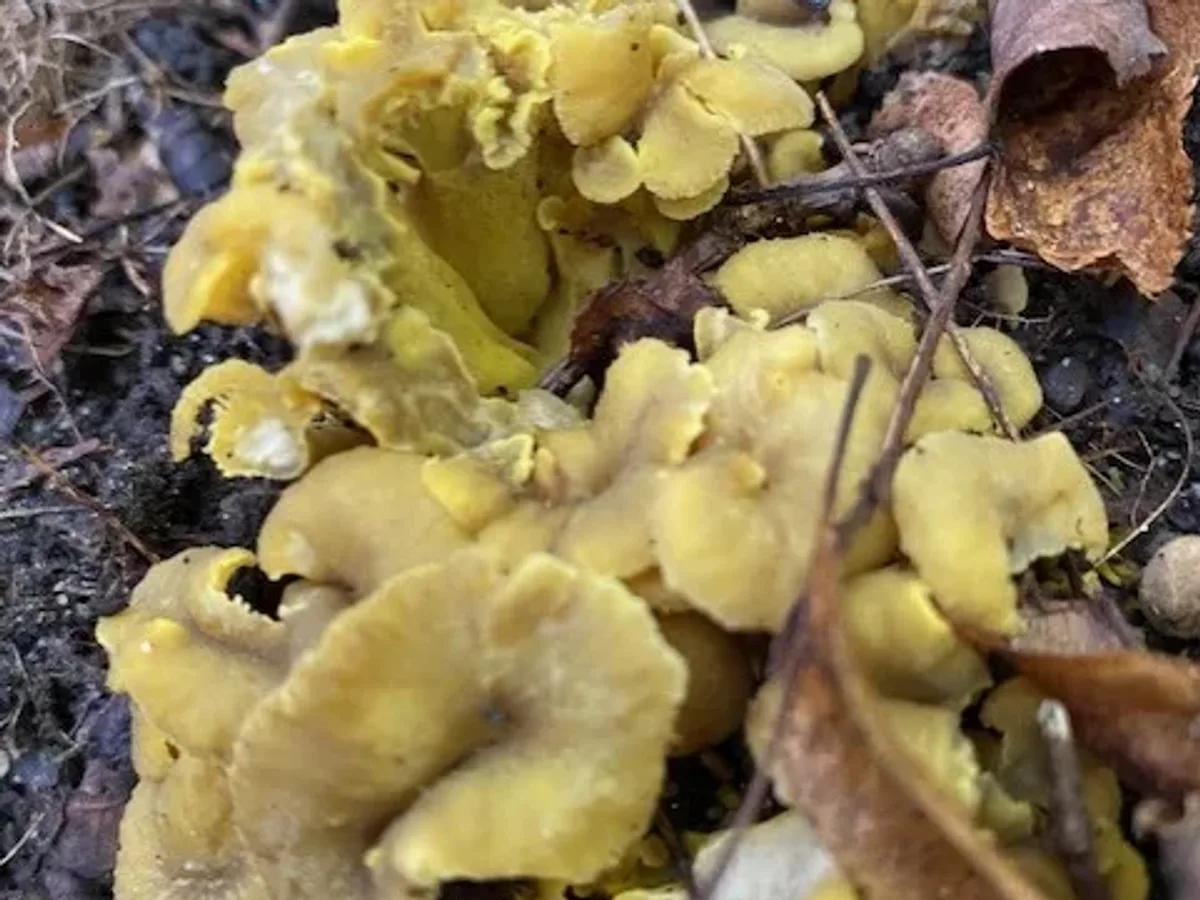
The blackening chanterelle looks, at first glance, like a subdued cousin of the golden chanterelle: the same funnel-shaped cap, the same blunt vein-like ridges on the underside (not true blade-like gills), the same graceful form.
The difference is color - it comes in shades of grey-brown to dark charcoal - and one unmistakable trick: cut it, bruise it, or simply press it firmly, and the flesh turns dark grey to black within moments. That reaction is rapid, reliable, and unique among the chanterelle family in Europe.
Young specimens can look rather plain and grey-brown, but the chanterelle structure is clear from the start: the funneling cap, blunt decurrent ridges, solid grey stem, and total absence of any ring or volva.
The stem blackens just as the cap flesh does. Spore print is white to pale cream.
Where & when it grows
Habitat
This species is an obligate mycorrhizal partner of deciduous trees, particularly oak and beech.
It selects mature, undisturbed broadleaf woodland on moderate to well-drained soils, often where deep humus and thick leaf litter accumulate.
In western France and Iberia it is one of the more frequently encountered chanterelle-family species in oak woodlands, typically fruiting in the same habitats as Cantharellus cibarius but sometimes at slightly higher elevations or in more shaded positions.
The presence of calcareous parent rock or at least mildly base-rich soils seems to favour abundance, though it also occurs on more acidic substrates.
Look for it in dappled light under mature oak and beech, on moderately sloping ground with good moisture retention, sometimes partly buried in leaf litter. It does not occur in pure coniferous forest.
When
The blackening chanterelle is a summer-to-autumn species.
In western France and northwestern Iberia, fruiting can begin as early as July following summer thunderstorms, with the main flush typically in August and September.
In central Europe (Germany, Switzerland, Austria) the season is compressed toward September and October.
The species tends to require soil temperatures above about 10 °C for fruiting to begin, and the main flush follows significant rainfall that permeates the leaf litter and recharges soil moisture after summer dryness.
It is not notably frost-tolerant, and the season generally ends by late October or November as soil temperatures drop below 8 °C.
Checking known sites after 20-30 mm of rain over a week, when soil temperatures are between 10-18 °C, gives the best chance of finding productive flushes.
How it grows
Fruits singly or in loose troops of several individuals scattered under the canopy of host trees, occasionally in loose rings or arcs following the spread of the underground mycorrhizal network.
The mycelium is perennial, and productive patches return year after year at the same sites if the forest is undisturbed.
Individual fruiting bodies develop over several days and can persist in good condition for a week or more in cool, moist conditions.
They are less likely to be badly maggot-infested than summer-fruiting Cantharellus cibarius, because they tend to peak later in the season when fly activity has declined.
The blackening reaction means collected specimens will darken during transport. This can surprise foragers unfamiliar with the species but does not impair quality.
Fruiting conditions
Fruiting is triggered by significant rainfall (20+ mm over the preceding two weeks) permeating deciduous leaf litter, with soil temperatures between 10-18 °C. Less cold-tolerant than boreal Craterellus species; season ends when soil temperatures drop below about 8 °C. Peak flushes follow late-summer and early-autumn rain events in western Europe, typically August-October.
Look-alikes
The blackening reaction of the flesh is the definitive distinguishing feature of C. melanoxeros and effectively eliminates confusion once the forager is aware of it.
Among chanterelle-family species:
- Craterellus cornucopioides (black trumpet / horn of plenty): similar in overall color - dark grey to blackish - but genuinely trumpet-shaped (deeply hollow throughout), with a much thinner wall, and does not blacken on cutting (the flesh is grey but does not change color on bruising). It has an almost smooth to finely scaly underside with only rudimentary veining rather than the distinct blunt ridges of C. melanoxeros. Both species are excellent edibles, so confusion is not dangerous, but they are distinct.
- Cantharellus cibarius (the golden chanterelle): superficially similar in form but vividly egg-yolk yellow to orange, never grey, and does not blacken.
- Cantharellus pallens and related pale chanterelles: pale cream to buff and do not blacken.
- Clitocybe nebularis (clouded funnel): superficially resembles funnel-shaped grey mushrooms but has true, crowded, decurrent gills (not blunt ridges), a mealy smell, and is a much larger, more robust fungus.
None of the realistic lookalikes are deadly: there is no deadly species that closely resembles C. melanoxeros given the combination of grey-black coloring, blunt vein-like false ridges (not true gills), and the blackening flesh reaction.
Also dark grey to blackish, also in deciduous forest, but is genuinely hollow and deeply trumpet-shaped throughout (thin-walled), does not blacken on cutting, has only rudimentary veining on the outer surface rather than distinct blunt ridges, and the cap wall is noticeably thinner and papery. Both species are excellent edibles; confusion has no safety consequence.
Much larger and more robust; pale grey to buff cap but with true crowded decurrent gills (thin blade-like, not blunt ridges); strong mealy to rancid odor; flesh does not blacken; solid stem. Clitocybe nebularis is considered suspect and can cause gastrointestinal upset; not easily confused with C. melanoxeros once the gill structure is checked.
Vivid egg-yolk yellow to orange cap and stem; flesh does not blacken on cutting or bruising; pale apricot-fruity aroma is stronger. Same blunt forking ridges and funnel form but color difference is unmistakable.
In the kitchen
Picking & cleaning
Harvest by twisting gently or cutting cleanly at the base, leaving the mycelium undisturbed and avoiding uprooting surrounding leaf litter.
Note that specimens will darken significantly during collection - this is normal and does not indicate spoilage.
Carry in an open basket to allow air circulation; plastic bags cause sweating and rapid deterioration. The solid, firm flesh holds up well to transport.
Clean in the field by brushing off leaf debris. The dark color of the surface makes dirt less obvious than on pale-fleshed species, so a careful check is worthwhile. Trim the base if soiled.
Specimens can be stored refrigerated for 2-4 days.
Cooking
The blackening chanterelle has firm, flavorful flesh with a mild chanterelle-like aroma.
The dramatic color change to grey-black on cooking is purely aesthetic and does not indicate any chemical change or toxicity - the flavor and texture remain excellent.
It is used in much the same way as other chanterelles:
- Sautéed in butter or olive oil with garlic and shallots.
- Used in sauces for meat, game, or poultry.
- Incorporated into pasta, risotto, or egg dishes.
- Added to soups and consommés.
The darker color of cooked specimens creates visually striking dishes and has led to their use as a contrast element alongside pale-fleshed mushrooms or eggs.
They dry well: the firm flesh dehydrates cleanly and rehydrates in water with good retention of flavor. Frozen (after a brief sauté) for winter use.
Cooking is recommended to optimize digestibility, as with most wild mushrooms.
Good to know
Craterellus melanoxeros has no documented toxicity and is regarded as an excellent edible. It is widely collected and eaten in France and Iberia in particular, where it is a respected culinary mushroom.
Confirmed identification relies on:
- 1Funnel to trumpet form.
- 2Dark grey to charcoal-grey coloring of cap and stem.
- 3Blunt, vein-like ridges on the underside (not true blade-like gills).
- 4Flesh and surface visibly darkening to grey-black on bruising or cutting.
- 5Deciduous forest habitat, especially under oak and beech.
- 6Absence of ring or volva.
The blackening reaction is so reliable and distinctive that it renders this species among the safer chanterelle-family fungi to identify once the feature is known.
Beginners should nonetheless perform the cut test to confirm blackening and verify the absence of true gills before consuming any specimen.
A reference guide - never an edibility guarantee. When in doubt, leave it out.