Golden chanterelle
Craterellus lutescenssyn. Cantharellus lutescens, Cantharellus xanthopus, Craterellus xanthopus, Pseudocraterellus lutescens, Cantharellus aurora
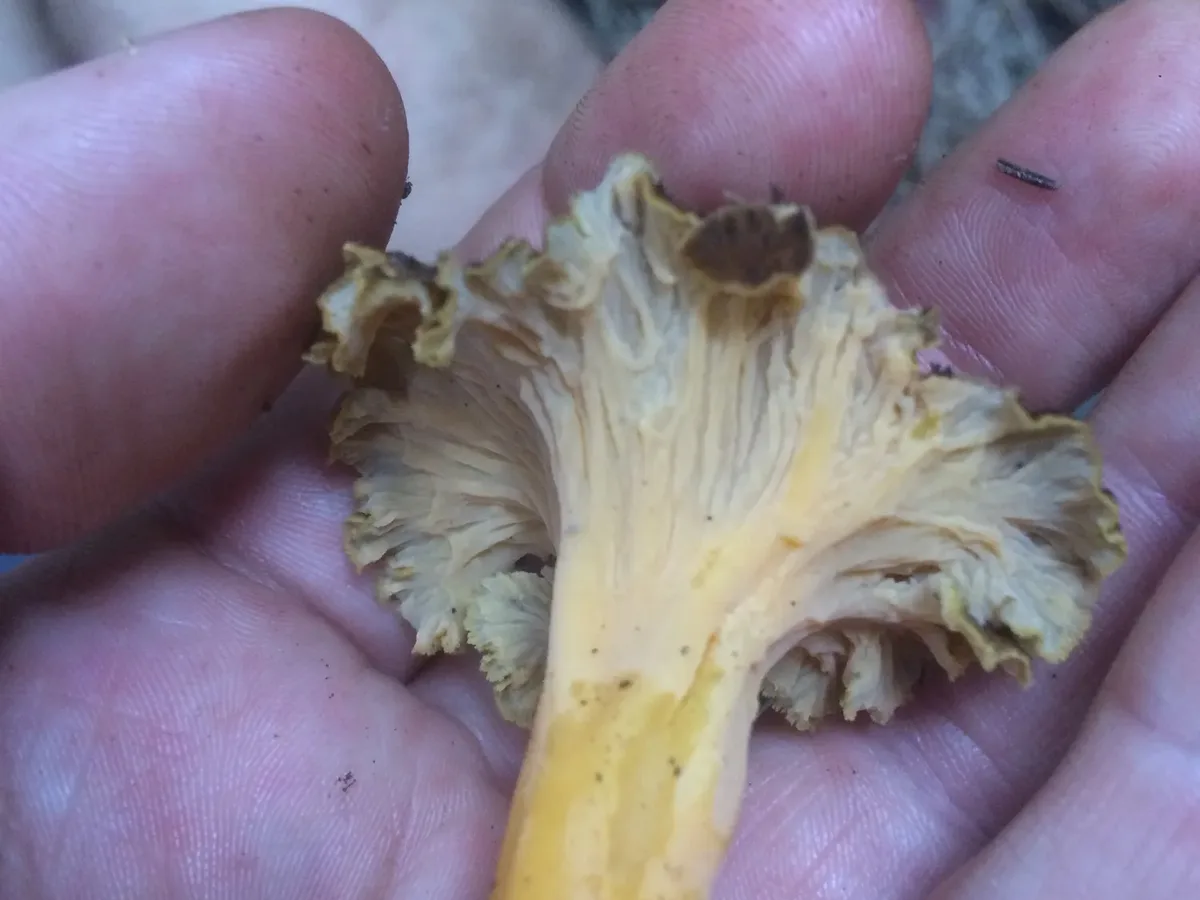 © Daniel Ellehammer Larsen (CC BY 4.0)
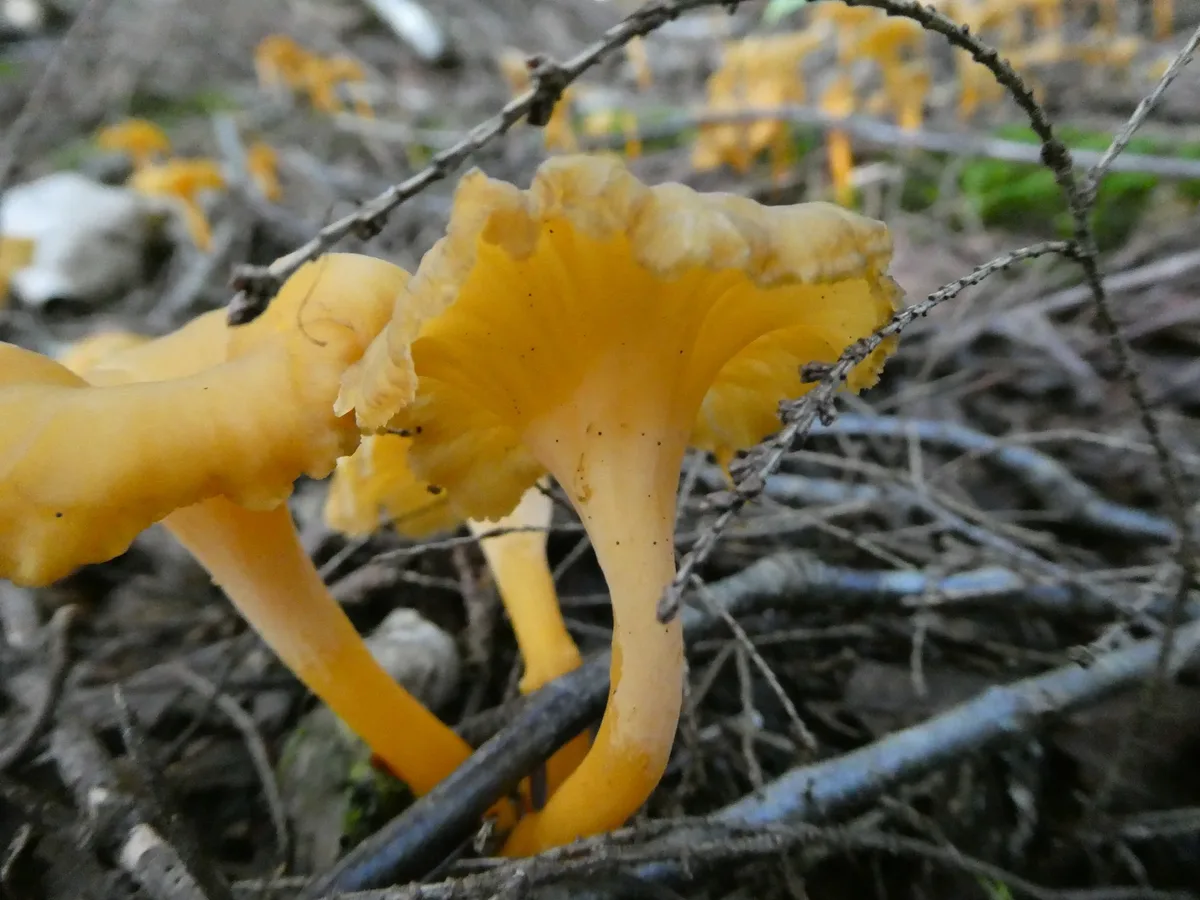 Bruce Cook (CC0)
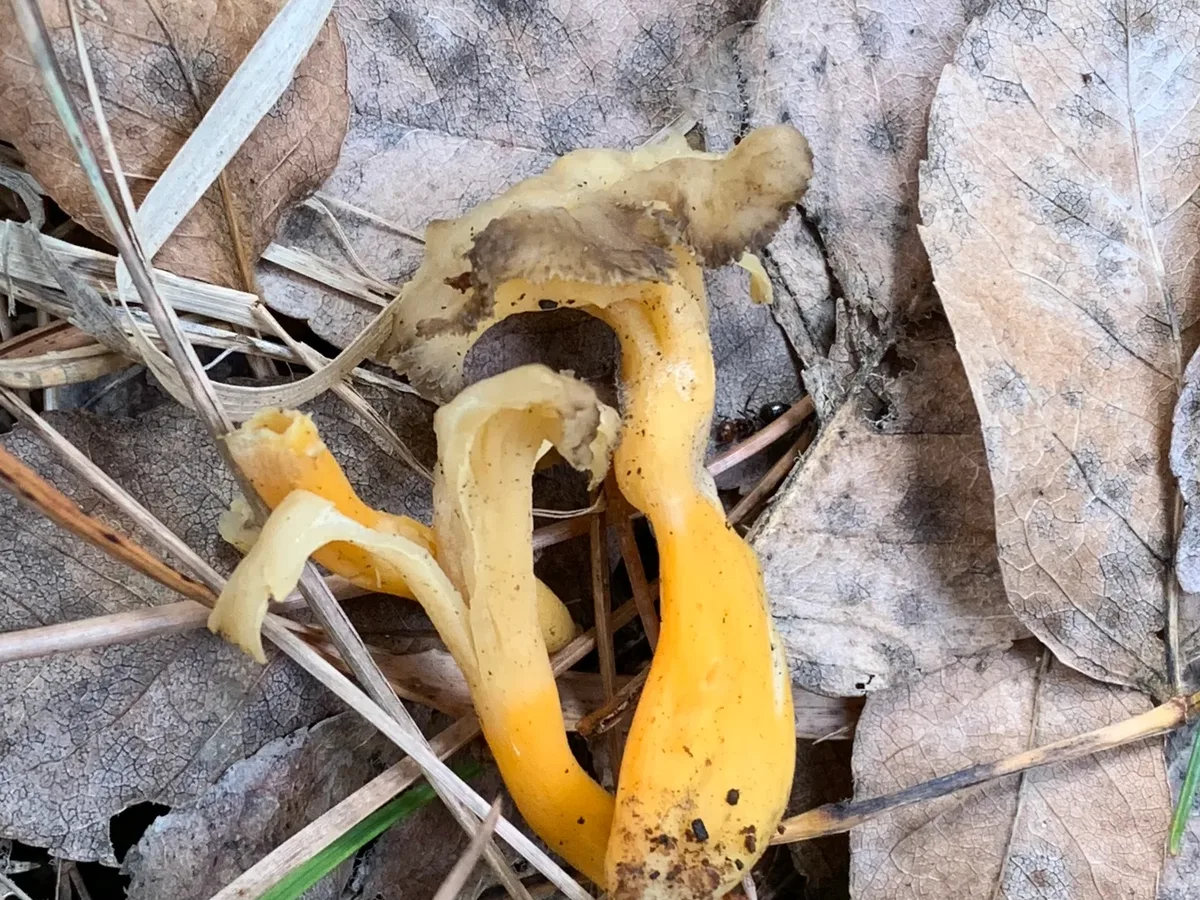 © Manuela Fiorini (CC BY)
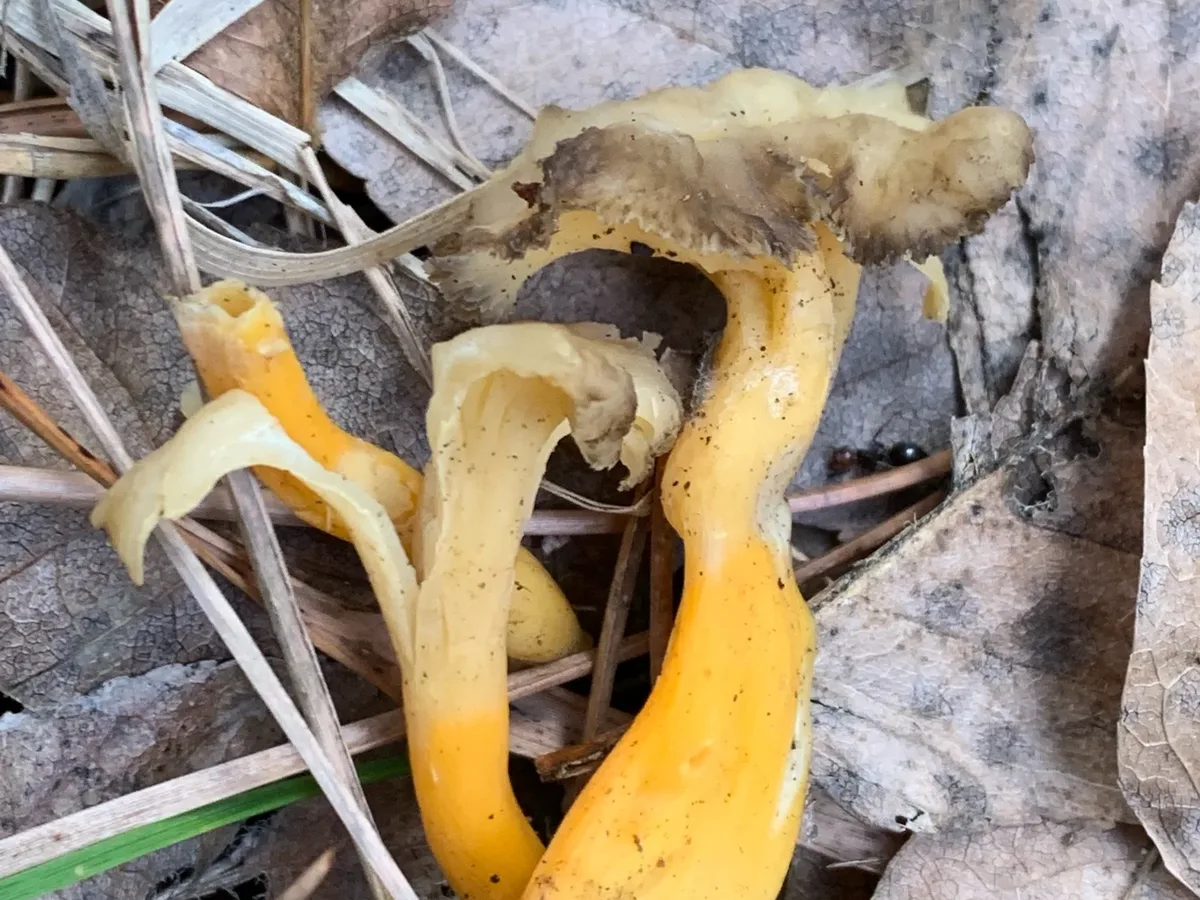 © Manuela Fiorini (CC BY)
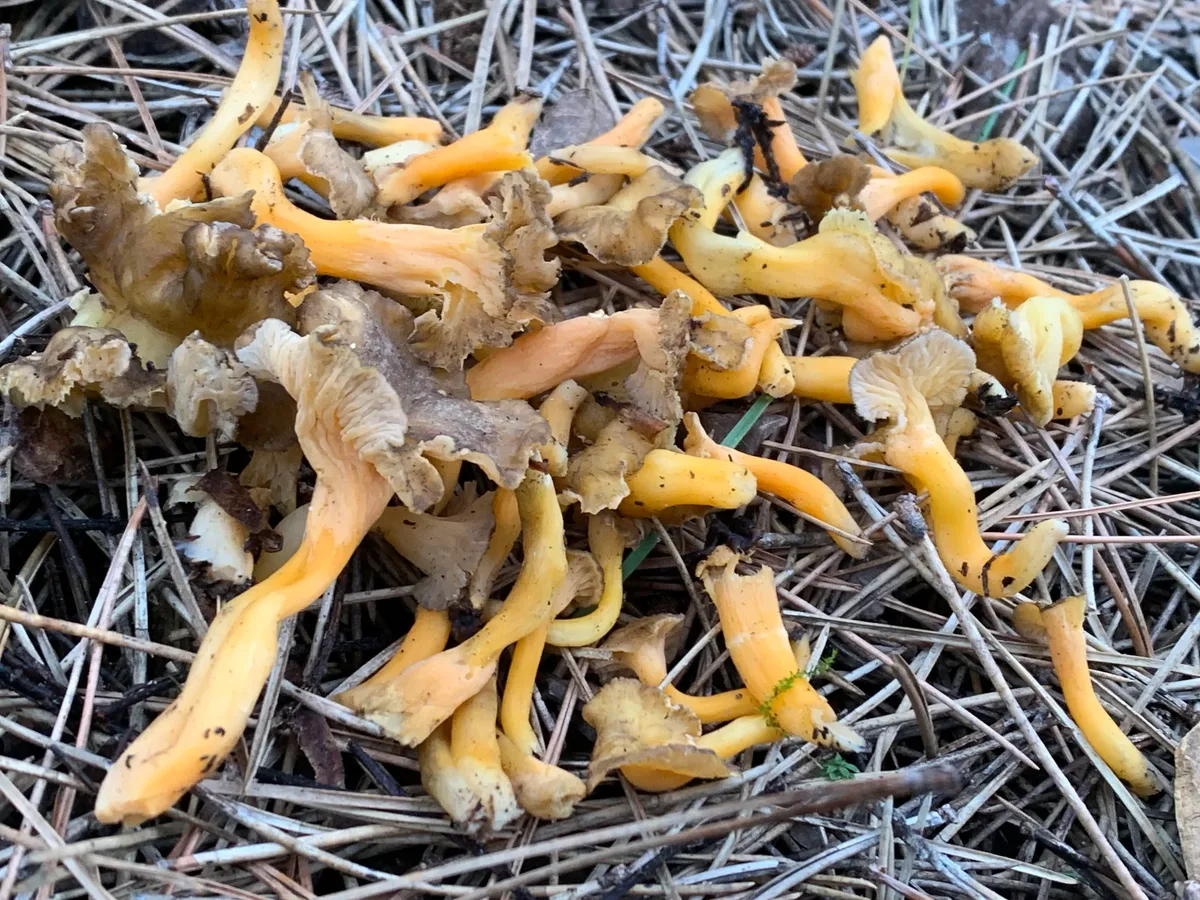 © Manuela Fiorini (CC BY)
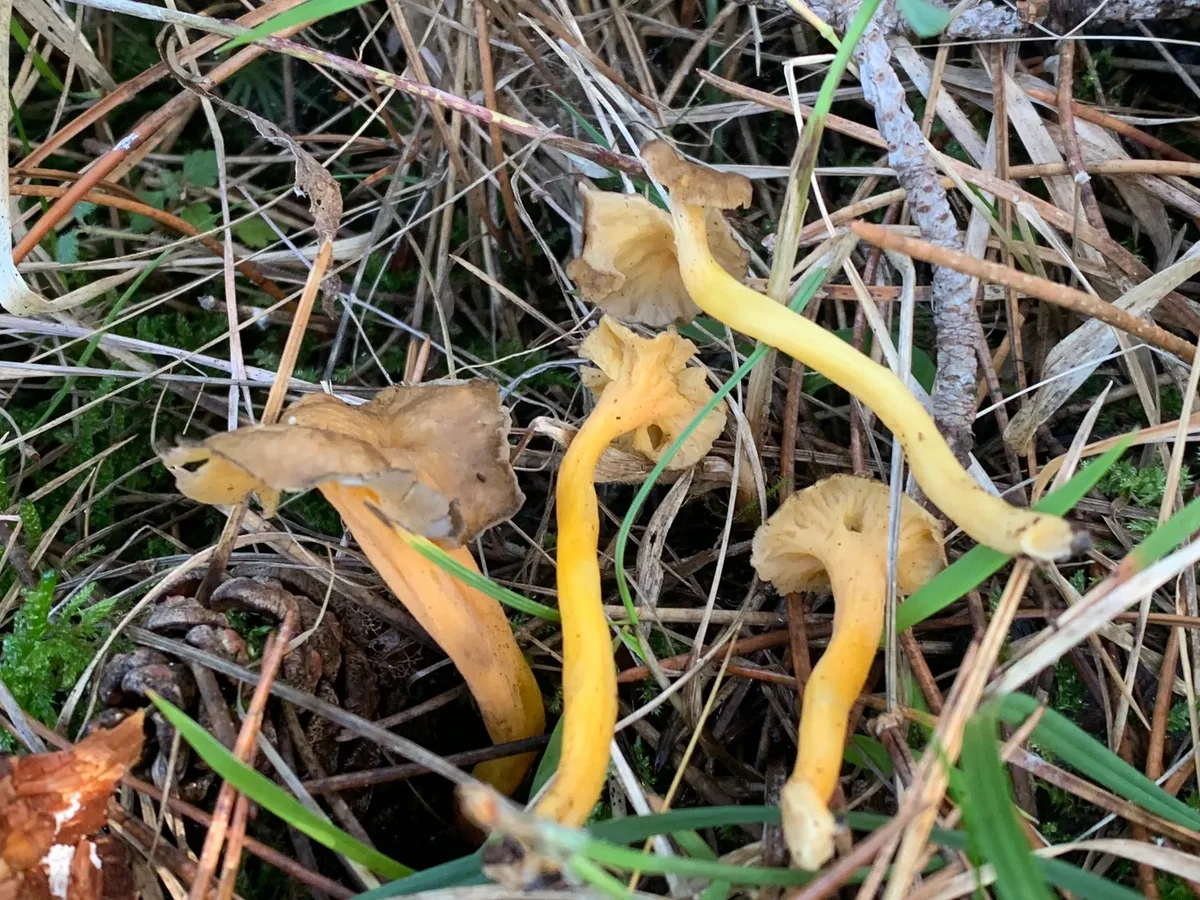 © Manuela Fiorini (CC BY)
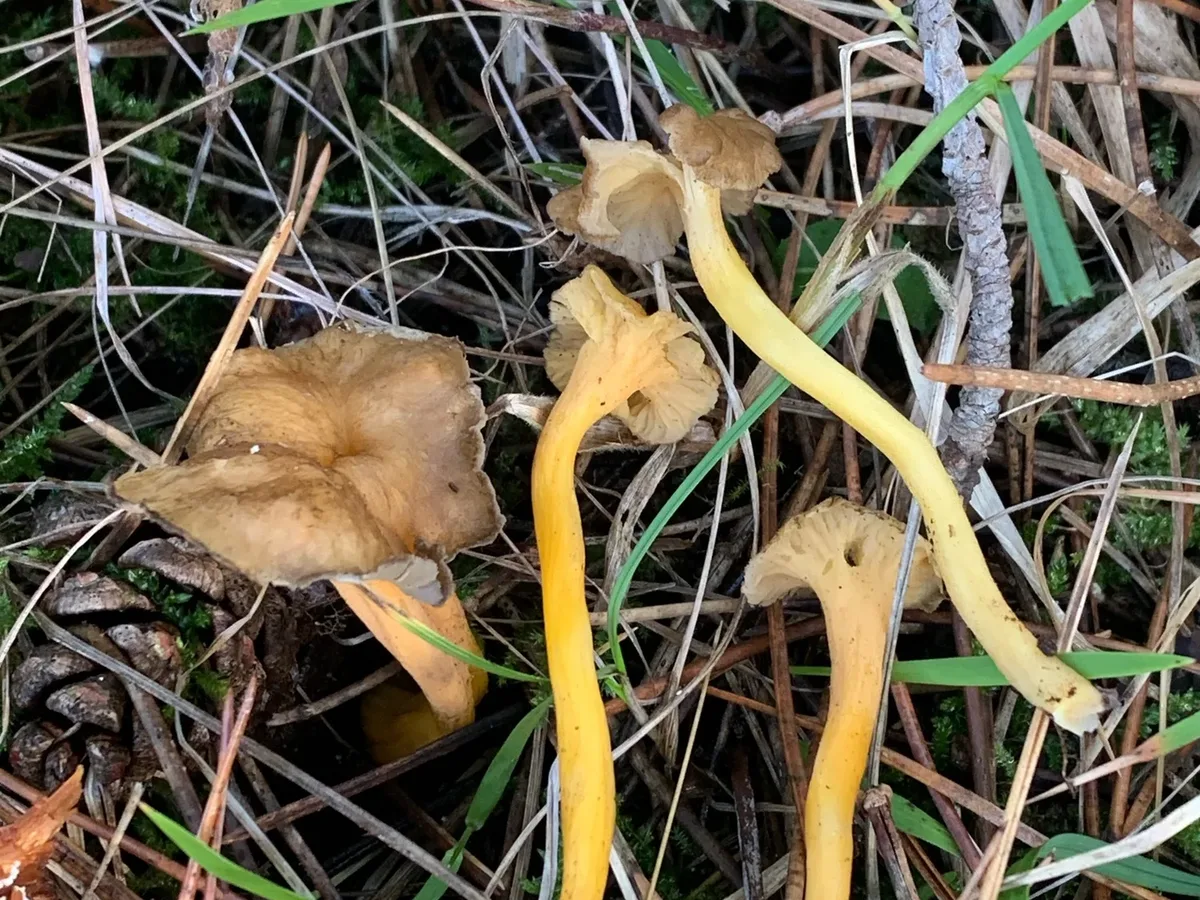 © Manuela Fiorini (CC BY)
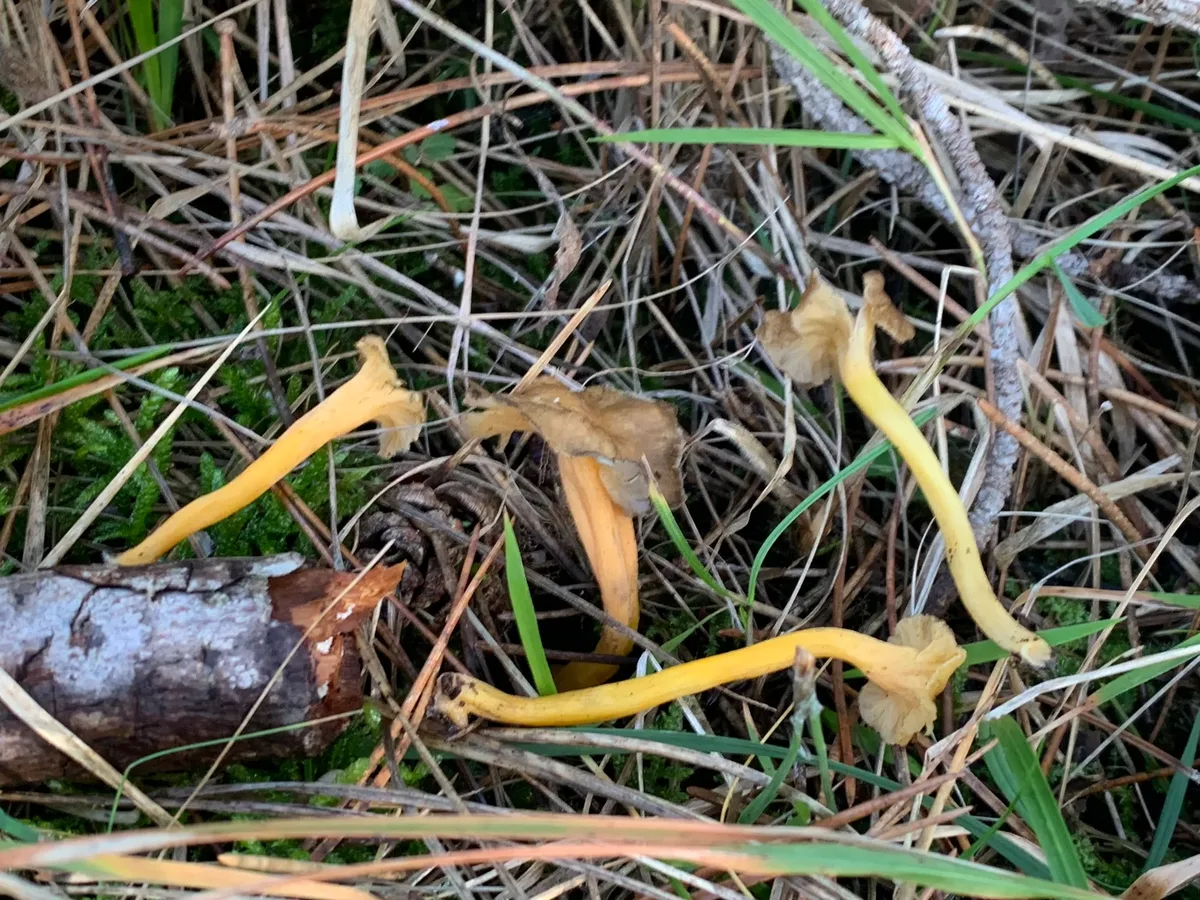 © Manuela Fiorini (CC BY)
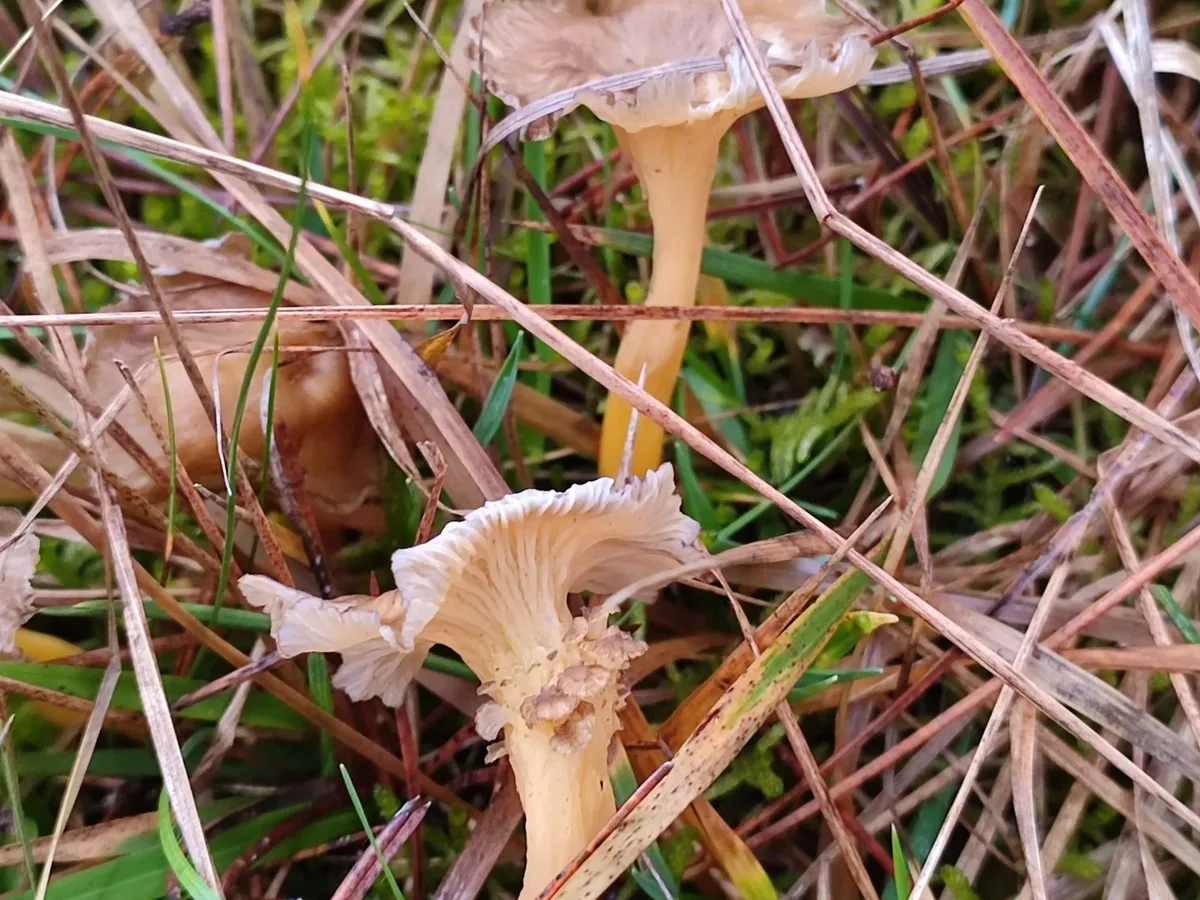 © victor laborde (CC BY)
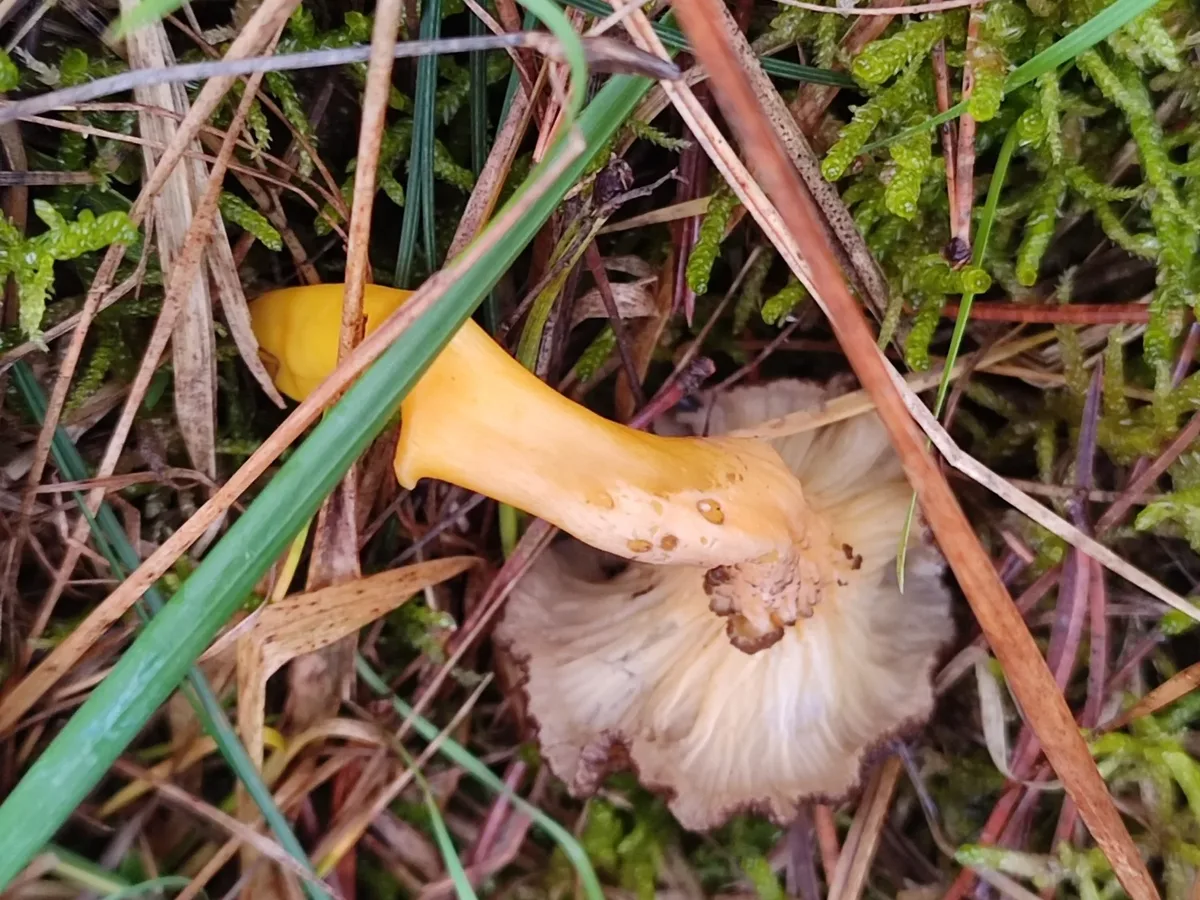 © victor laborde (CC BY)
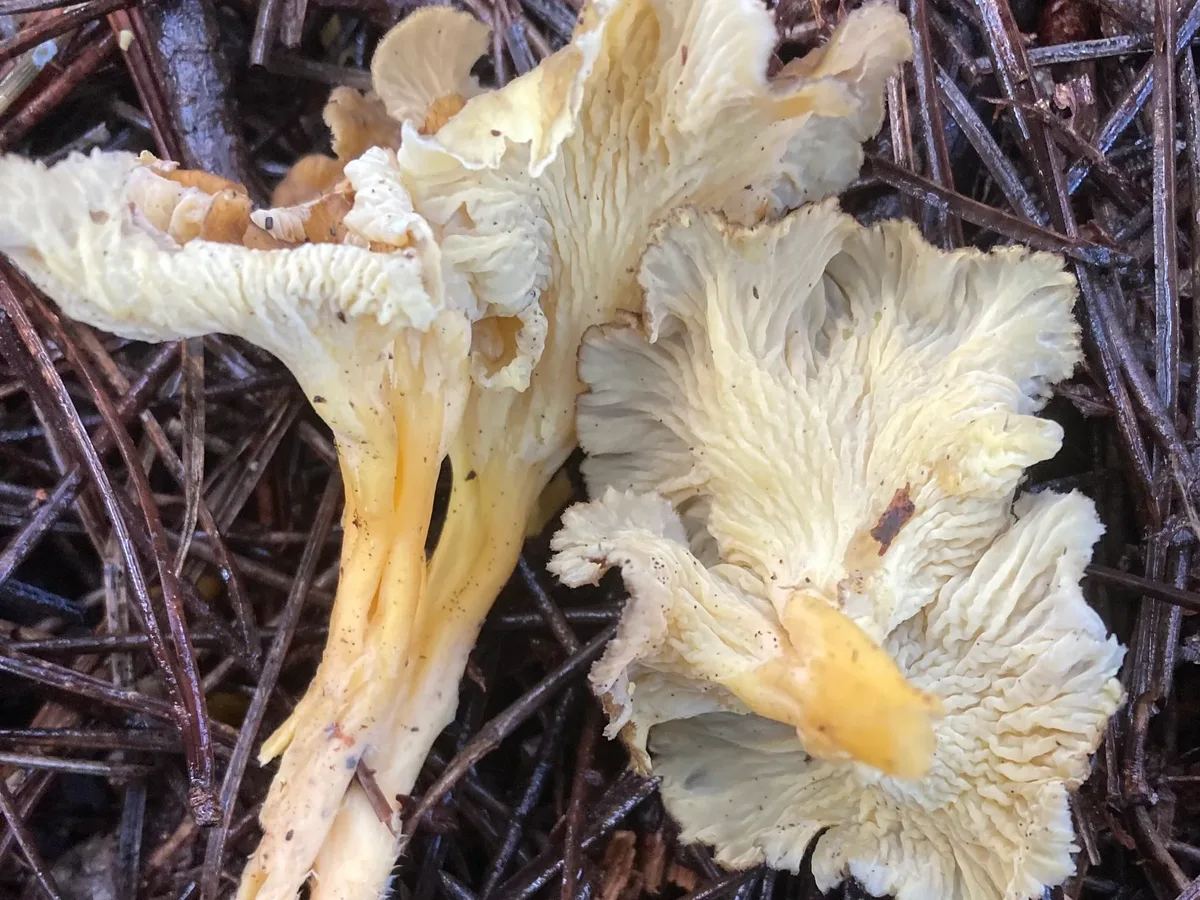 © Lucian Clanet (CC BY 4.0)© Daniel Ellehammer Larsen (CC BY 4.0)Bruce Cook (CC0)
One of the best mushrooms you can bring home - once you are certain of the identification.
How to recognise it
Craterellus lutescens is a graceful, trumpet-shaped chanterelle of moderate size.
Cap
The cap begins convex with a tightly inrolled margin in young specimens but rapidly opens and deepens into a wide funnel or trumpet shape, with the depression extending all the way through the hollow stem.
In full maturity the cap margin is typically wavy, irregularly lobed, and often split or torn.
The upper surface is smooth or very finely velvety, dry to slightly slippery when wet, and colored a characteristic tawny to deep golden-orange or amber, occasionally brownish-orange toward the center and brighter toward the margin.
Gills / Pores
The underside bears the defining chanterelle hymenophore: rather than true gills, it carries blunt, shallow, irregularly forking vein-like ridges or wrinkles of pale yellow to cream-ochre or pale orange, which run noticeably down onto the upper stem (decurrent).
These false ridges are far shallower and more vein-like than the blade-like true gills of Omphalotus species.
Stem
The stem is a standout feature: distinctly hollow throughout its entire length (easily confirmed by slicing the stem lengthwise), and colored brighter, more vivid orange-yellow than the cap - sometimes almost orange.
The stem is smooth or finely longitudinally fibrous and lacks any ring or basal volva.
Flesh
Flesh is thin and pale yellowish-white. The spore print is white to pale cream.
Smell & taste
The flesh emits a mild but characteristic fruity-apricot or flowery aroma shared by other chanterelles. The taste is delicate, mildly fruity, and pleasant.
Where & when it grows
Habitat
An obligate mycorrhizal partner, C. lutescens is essentially confined to old-growth or mature coniferous forest, with an overwhelming preference for Norway spruce (Picea abies) in Europe and related spruces in North America.
It consistently selects stands with deep, continuous moss carpets (particularly Sphagnum, Polytrichum, and feather-mosses) growing on moist, acidic, humus-rich soils. It is rarely or never found in dry, well-drained sites or in purely deciduous forest.
Look for it in older spruce plantations and natural boreal forest with thick litter layers, often in wetter areas or beside streams where the moss cover is unbroken.
Because it is largely hidden beneath the moss, careful inspection and gentle parting of the moss mat is often necessary to locate fruiting bodies.
It grows scattered to gregarious, sometimes in loose troops or loose arcs.
When
Golden chanterelle is a late-season specialist.
In Scandinavia and the Baltic states it typically begins appearing in August or early September and reaches peak abundance in October through early November.
It is famously frost-tolerant and continues to fruit - and remains in good culinary condition - even after repeated overnight frosts have decimated other species. This tolerance makes it one of the last edible mushrooms available to foragers in the boreal zone.
In the Alps and Carpathians the season is generally September-October. In Pacific Northwest North America (where it is less common), similar timing applies.
After hard freezes it may die back temporarily but resumes fruiting during mild spells. The fruiting bodies can be found into December in unusually warm years.
How it grows
Fruits singly or, more commonly, gregariously in clusters or troops numbering dozens of individuals erupting from or just beneath the moss layer.
The mycorrhizal network beneath the moss is perennial - the same invisible web of hyphae that has quietly partnered with spruce roots for years will push up fruiting bodies in the same spot season after season, making a good patch genuinely worth remembering.
Individual fruiting bodies develop slowly and can persist in good condition for a week or more, aging gradually rather than rotting quickly.
The hollow stem makes them somewhat prone to colonization by small flies and their larvae in warm conditions, but late-season cold temperatures generally reduce this problem.
Yields per patch can be substantial - the combination of gregarious growth and late-season timing makes this a highly prized foraging find.
Fruiting conditions
Requires sustained soil moisture maintained by moss layer; less dependent on individual rain events than surface-fruiting species because moss acts as a moisture reservoir. Fruiting continues at low soil temperatures (near 3-5 °C) and is not stopped by light frost. Peak flushes in Scandinavia correlate with cool, moist conditions in September-October following adequate late-summer rainfall.
Look-alikes
The most important lookalike is Craterellus tubaeformis (yellowfoot / winter chanterelle), which is very closely related and often grows in the same habitat at the same season.
C. tubaeformis has a brownish-grey to dark umber-brown cap (not orange-yellow), a yellow or yellow-brown stem that is hollow but typically less vividly orange, and grey-lilac to grey-yellow forking ridges on the underside. It is also edible and choice.
The two species frequently co-occur and are easily separated by cap color - C. lutescens is unmistakably orange-golden, while C. tubaeformis is brown-grey.
Some authorities have treated C. lutescens and C. tubaeformis as varieties of the same species or of Cantharellus tubaeformis; recent molecular work consistently separates them.
Omphalotus olearius (jack-o'-lantern) is the most dangerous confusion risk in Mediterranean and southern European contexts, but it has true blade-like gills, grows in dense clumps at the base of hardwood trees (especially olive and oak), has a foul smell, and bioluminesces faintly in darkness - none of these apply to C. lutescens.
In North America, Omphalotus olivascens and O. illudens present similar contrast.
Hygrophoropsis aurantiaca (false chanterelle) is another orange funnel-shaped species that could superficially resemble C. lutescens but has true thin blade-like gills (not ridges or wrinkles), a solid (not hollow) stem, and a deeper, more saturated orange coloring throughout; it grows in sandy, acidic soil near conifers.
Hygrophoropsis aurantiaca causes gastrointestinal upset and should not be eaten.
Gymnopus (Cantharellula) umbonatus is a superficially similar grey-brown species but smaller, with a central umbo and less vivid coloring.
Small Clitocybe species could theoretically be confused but have true gills, typically white to buff-white caps, and lack the orange-yellow coloration and hollow stem.
Has true thin, crowded, blade-like gills (not blunt ridges or wrinkles); stem is solid (not hollow); orange color is typically deeper and more uniform throughout including the flesh; grows in sandy soil near conifers. Causes gastrointestinal upset and should not be eaten.
True blade-like gills, cluster growth at wood or roots, solid stem, rank smell, bioluminescent gills in darkness. Causes severe gastrointestinal illness; do not eat. Not found in boreal spruce-moss habitat.
Has true thin blade-like gills (not vein-like ridges), grows in dense tufted clusters at base of hardwood trees (especially olive, oak), has a rank or unpleasant smell, is solid-stemmed, and bioluminesces faintly in darkness. Does not grow in boreal spruce forest with moss. Causes severe gastrointestinal illness; do not eat.
Cap is brown-grey to dark umber, not golden-orange; forking ridges on underside are grey-lilac to grey-yellow rather than pale cream-orange; stem similarly hollow but typically less vividly orange. Both species are edible and choice; the main distinction is cap color - golden-orange vs. brown-grey.
In the kitchen
Picking & cleaning
Cut or twist cleanly at the base, taking care not to uproot the moss mat, which protects the mycelium and the site for future harvests.
Because fruiting bodies often emerge partly hidden beneath moss, some foragers gently part the moss to check for immature specimens that should be left to develop.
The hollow stem makes the mushrooms lightweight relative to their volume, and they are somewhat fragile; collect in a shallow basket to avoid crushing.
Trim the stem base in the field if muddy or slimy.
Because C. lutescens is nearly always found in acidic boreal forest, the soil and moss can be very moist - boots and gaiters are advisable.
Clean before storing: brush off debris and store loosely in a paper bag or basket; they keep for several days refrigerated.
Cooking
Golden chanterelle is considered one of the finest edible fungi of the boreal autumn harvest. Its delicate fruity-apricot aroma and subtle, refined flavor intensify beautifully when cooked.
Because the flesh is thin and the fruiting bodies are partly hollow, they cook quickly and are best used in ways that highlight their aroma.
Classic preparations include:
- Sautéed in butter with shallots and fresh thyme, used as a garnish or sauce component for fish or poultry.
- Stirred into cream-based pasta or risotto.
- Incorporated into egg dishes (omelets, scrambled eggs).
- Used to flavor game sauces or consommés.
- Simply sautéed and served on toast or crispbread.
The species dries exceptionally well - the hollow structure allows rapid moisture loss - and dried golden chanterelles release their fruity aroma powerfully when rehydrated, making them valuable in stocks, soups, and sauces through the winter.
They can also be frozen after a brief blanch or sauté.
Avoid using very high heat for extended periods, as this destroys the delicate aroma.
Some foragers combine them with C. tubaeformis and other late-season species in mixed autumnal preparations.
Good to know
Craterellus lutescens has no documented toxicity and is universally regarded as safe and choice.
Confirmed identification rests on the combination of:
- 1Golden-orange to tawny cap with clearly funnel-shaped profile.
- 2Pale yellow, vein-like (not blade-like) false ridges on the underside.
- 3Distinctly hollow orange-yellow stem.
- 4Fruity, apricot-like aroma.
- 5Coniferous (especially spruce) forest habitat with moss.
The absence of true gills is critical - if you see thin, blade-like gills, do not eat the specimen.
Beginners should carry cross-sectioned specimens to confirm the hollow stem and should compare with illustrations of C. tubaeformis (very similar, equally safe) and Hygrophoropsis aurantiaca (false chanterelle, has true gills, mildly toxic).
Individuals with general mushroom sensitivities should introduce new species cautiously.
A reference guide - never an edibility guarantee. When in doubt, leave it out.